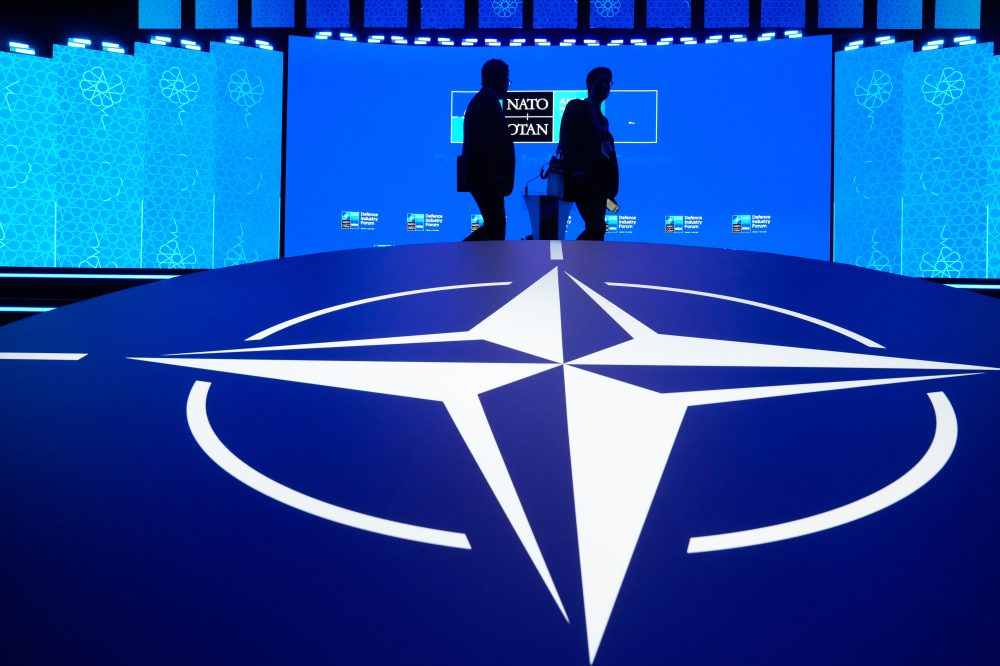

ANKARA, Turkey — President Donald Trump blindsided NATO leaders gathered in Turkey when he ordered a wave of strikes against Iran late Tuesday night and canceled the license that had permitted Tehran to trade its oil on the global market. The dramatic move reshaped a summit that had been carefully planned to highlight how alliance members were ramping up their defense budgets and rallying behind Ukraine in its ongoing war with Russia.
The military action came in response to attacks on three merchant vessels in the Strait of Hormuz, and it exposed just how fragile the temporary ceasefire between the two nations really is. Trump gave the order shortly after stepping away from a dinner hosted by Turkish President Recep Tayyip Erdogan, where all 32 NATO member nations had gathered ahead of Wednesday’s formal talks on defense spending progress.
Trump made no direct public statement about the strikes Tuesday night. It is uncommon for a sitting U.S. president to order military action while traveling abroad, though in 2011 former President Barack Obama did authorize strikes against Libya while visiting Brazil.
European allies and Canada had already been on edge, worried Trump might air new grievances about the U.S.-Israeli war on Iran — a conflict they were never consulted about. Trump had called for “loyalty” from allies and labeled NATO a “paper tiger” after several member nations refused to open their military bases for U.S. forces to use in attacks on Iran.
During a Tuesday meeting with Erdogan, Trump revealed he had essentially been testing NATO allies when he asked for their support in the Iran conflict. “Italy turned us down and Germany turned us down and France turned us down,” Trump said. “And that’s OK. But, you know, why are we spending hundreds of billions of dollars and they’re not there for us?”
NATO summits are traditionally meant to project a united front — a signal of strength intended to discourage potential adversaries. That unity is considered more critical than ever as Russia presses on with its war against Ukraine and fears grow that other European nations could eventually be targeted.
Last month, in an effort to keep Trump satisfied, NATO Secretary-General Mark Rutte traveled to Washington to celebrate what he called the “Trump Trillion” — the $1.2 trillion that European allies and Canada have added to their defense budgets since Trump first took office in 2017.
As world leaders arrived in Ankara, Rutte hosted a special event to highlight the major contracts tied to that spending — a large portion of which is expected to flow to American companies and generate thousands of U.S. jobs.
NATO officials had hoped Trump would embrace the moment as a victory, but based on comments he has made since arriving in Turkey, the alliance appears headed for another round of criticism from the U.S. president.
Trump also stirred up a familiar controversy on the eve of the summit, once again insisting the United States should control Greenland rather than NATO ally Denmark. That stance directly contradicts one of NATO’s founding principles — that member nations defend one another’s territory rather than threaten to take it.
Trump has long maintained that the U.S. shoulders a disproportionate share of NATO’s defense costs. At last year’s summit, alliance members agreed to invest 5% of their gross domestic product on defense — 3.5% on military budgets and 1.5% on infrastructure like roads, bridges, and ports to allow faster movement of troops and equipment during a crisis.
Ahead of this year’s gathering, Rutte called on member nations to present “clear, concrete and credible plans” for reaching the alliance’s spending benchmarks.
New data released by NATO on Tuesday showed that Slovenia, Belgium, Spain, and the Czech Republic may face scrutiny from the Trump administration, as all four countries are struggling to even meet the older, lower target of spending 2% of their GDP on defense.
The Trump administration has been pushing for a leaner, more capable “NATO 3.0” model in which Europe takes primary responsibility for its own security — including Ukraine — using conventional weapons, while the United States maintains its nuclear deterrent.
Despite that vision, European allies and Canada are still waiting for a clear answer on how significantly Trump plans to reduce the number of U.S. troops stationed in Europe.
The Pentagon has launched a six-month review of that troop presence, and any reductions could hinge on how quickly European nations increase their defense spending and whether they are willing to allow greater access to their military bases.
Ukrainian President Volodymyr Zelenskyy used the occasion to again push for Ukraine’s admission into NATO, arguing that his country’s battle-hardened military would strengthen the alliance’s overall capabilities. Zelenskyy, who is scheduled to meet with Trump in Ankara on Wednesday, pointed to Ukraine’s ability to strike deep inside Russian territory, hit oil refineries, and attack other energy infrastructure. He said Ukrainian forces are eliminating an average of 30,000 Russian troops every month.
Anxiety is also rising among northern, central, and eastern European nations over the possibility that Russia may be planning a hybrid assault on the continent — blending traditional military tactics with tools like cyberattacks — as Russian President Vladimir Putin struggles to achieve a clear win in Ukraine.
Trump is also set to meet with Syrian President Ahmad al-Sharaa, a former insurgent who led the military campaign that removed longtime autocrat Bashar Assad from power in December 2024. Al-Sharaa, despite his past as an al-Qaida fighter, has gained Trump’s support as Syria works to rebuild and restore its relationships with Western nations.
Trump has repeatedly suggested al-Sharaa would be more effective than the Israeli military at rooting out Hezbollah in Lebanon — a claim that has raised alarm in both Lebanon and Israel. Al-Sharaa himself has stated he has no interest in taking on that role.