
BEIRUT — A Lebanese pop star who abandoned his music career to become a militant has walked free on bail, according to judicial officials, after spending months behind bars awaiting a new trial.
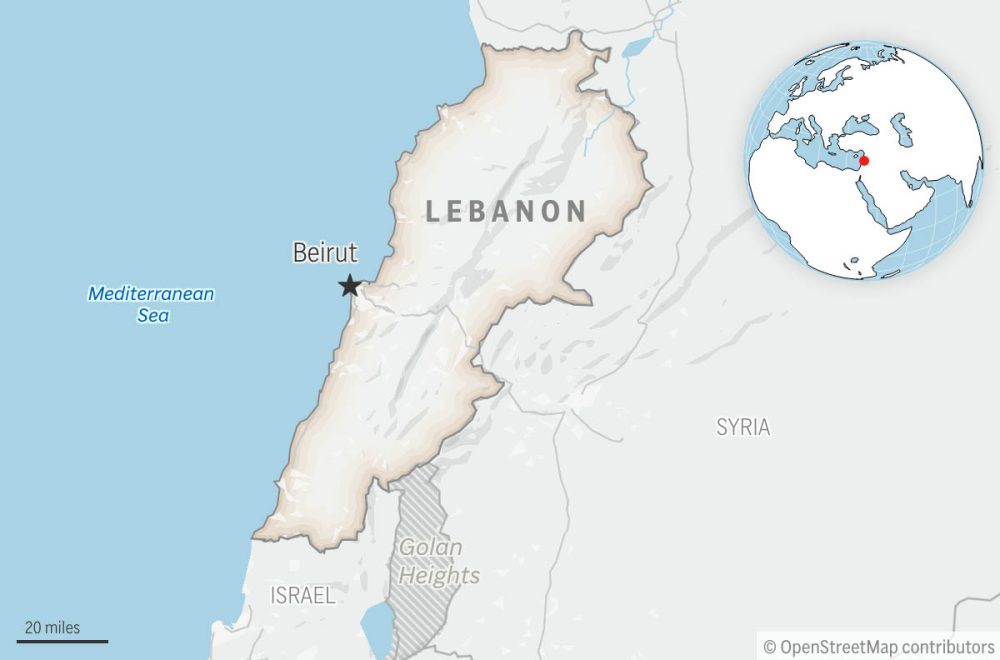
Fadel Shaker turned himself in to Lebanese military intelligence last October, ending more than a decade on the run. He had been hiding inside the Palestinian refugee camp of Ein el-Hilweh, located near the port city of Sidon.
In 2020, Shaker was convicted in absentia and handed a 22-year prison sentence for supporting what was classified as a “terrorist group.” The charges stemmed from violent street fighting that broke out in 2013 between Sunni militants and soldiers from the Lebanese army in the area around Sidon.
Four judicial officials told The Associated Press — speaking anonymously in accordance with regulations — that Shaker paid 500 million Lebanese pounds, equivalent to roughly $5,500, to secure his release. Before being freed Wednesday, he was questioned about multiple allegations, including participation in an armed group, financing armed factions, money laundering, and most critically, direct involvement in the 2013 Sidon clashes.
Those cases remain open as investigators continue their work. Following his release, Shaker departed a military facility located in a suburb of Beirut, where he had been held, and has since moved into a rented apartment, the officials said. Neither Shaker nor his attorney responded to requests for comment.
After his October surrender, Lebanese law required that his original conviction be set aside and a new trial be initiated. That retrial began in January. During his testimony, Shaker acknowledged having been close to Sunni Muslim cleric Ahmed al-Assir and said he had received threats from the Lebanese militant group Hezbollah and from backers of ousted Syrian President Bashar Assad.
Al-Assir was found guilty in 2017 and sentenced to death for his role in the 2013 clashes, which left 18 soldiers dead. That trial lasted two years, and al-Assir remains on death row.
During his January testimony, Shaker said his relationship with al-Assir had cooled and that the two had disagreements before the 2013 violence erupted. He firmly denied any personal involvement in the fighting near Sidon.
Despite those denials, a video posted to YouTube during the 2013 clashes shows a bearded Shaker hurling insults at his enemies and taunting the military. In the footage, he says “we have two rotting corpses that we snatched from you yesterday,” an apparent reference to two pro-Hezbollah fighters killed during the clashes.
The 2013 violence deepened the sectarian divide between Sunni and Shiite Muslims in Lebanon, tensions that were being stoked by the civil war raging in neighboring Syria, where Hezbollah fighters had joined forces with Assad against predominantly Sunni rebel and militant groups.
Before his transformation into a militant figure, Shaker had been a celebrated entertainer across the Arab world, rising to fame with a major hit in 2002. His fans were stunned when he began appearing at rallies beside al-Assir, and he later announced he had given up singing to draw closer to God.
Even while living as a fugitive, Shaker continued releasing music. A song recorded with his son Mohammed last July spread widely across the Arab world after going viral.