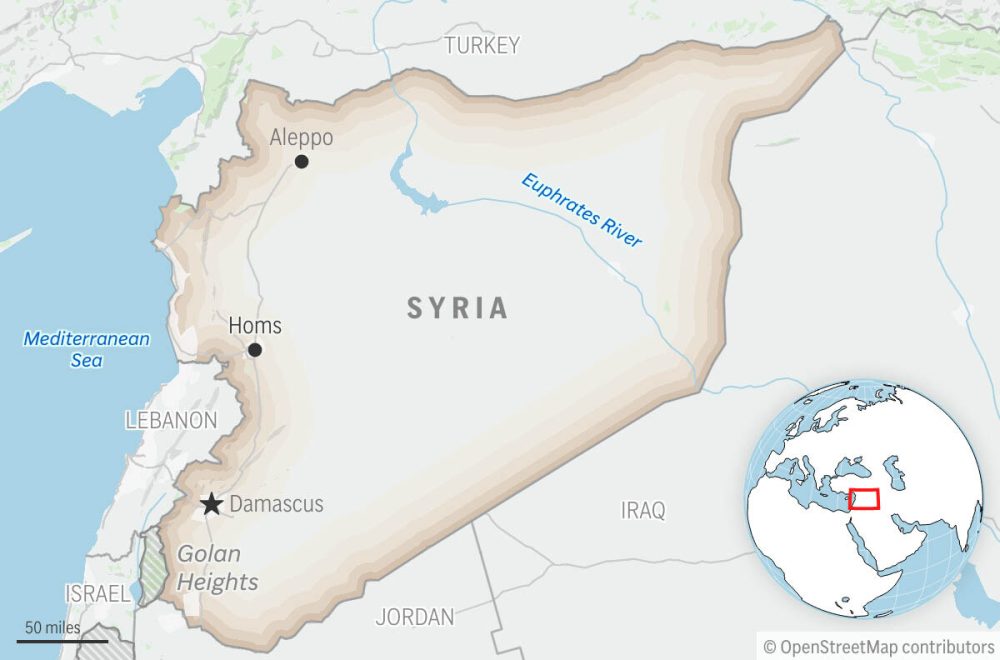
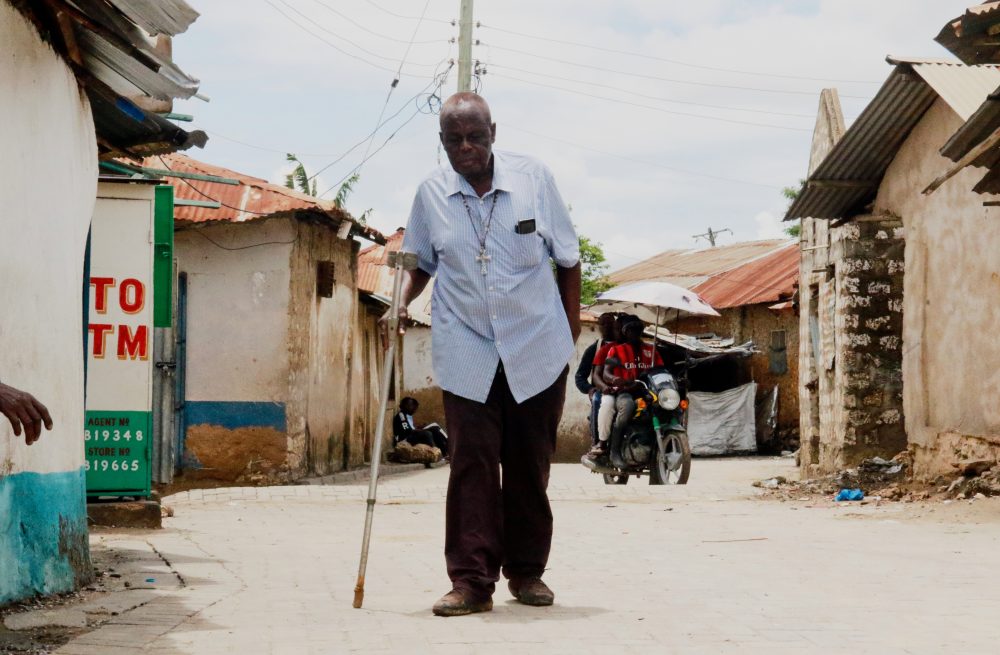
BEIRUT (AP) — For more than ten years, Ahed Badawi made her home in Bahrain, a tiny Gulf nation that offered peace and stability unlike her war-torn homeland of Syria.
The small country served as sanctuary for Badawi, her sister, and their aging mother throughout Syria’s devastating 14-year civil conflict.
“Nothing at all ever happened there,” she explained. “I mean, the Bahrainis don’t even know what war is.”
However, when the United States and Israel launched attacks against Iran, triggering a broader regional conflict, Bahrain and other Gulf nations suddenly became targets in Iran’s retaliation. The family made the surprising decision to return to their home in Aleppo, once a battleground of Syria’s bloodiest fighting but now offering unexpected safety.
The conflict-scarred nation has emerged as an unusual pocket of stability during the region’s current crisis. Syrian leadership has been working to repair diplomatic ties with Arab and Western nations that had isolated Syria during Bashar Assad’s rule, before rebels removed him from power in December 2024 and established new leadership.
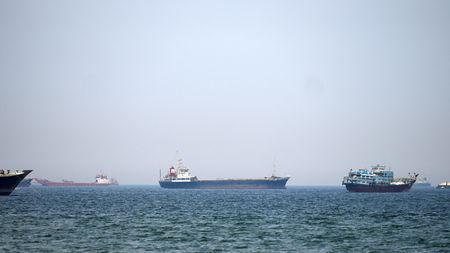
Following the start of the U.S.-Israeli conflict with Iran and Iran’s blockade of the Strait of Hormuz, Damascus has capitalized on this chance to strengthen international relationships by maintaining neutrality.
Syria has “presented itself as the solution to strategic crises in the region,” explained Obayda Ghadban, a Syrian Foreign Ministry representative.
Following the U.S.-Israeli strikes, Iran launched missiles not just at Israel but also targeted Gulf nations that house American military installations. In Lebanon, fighting resumed between Israel and Hezbollah, the Iran-supported militant organization. Iraq, hosting both Iranian-backed militias and U.S. military bases, became caught between opposing forces.
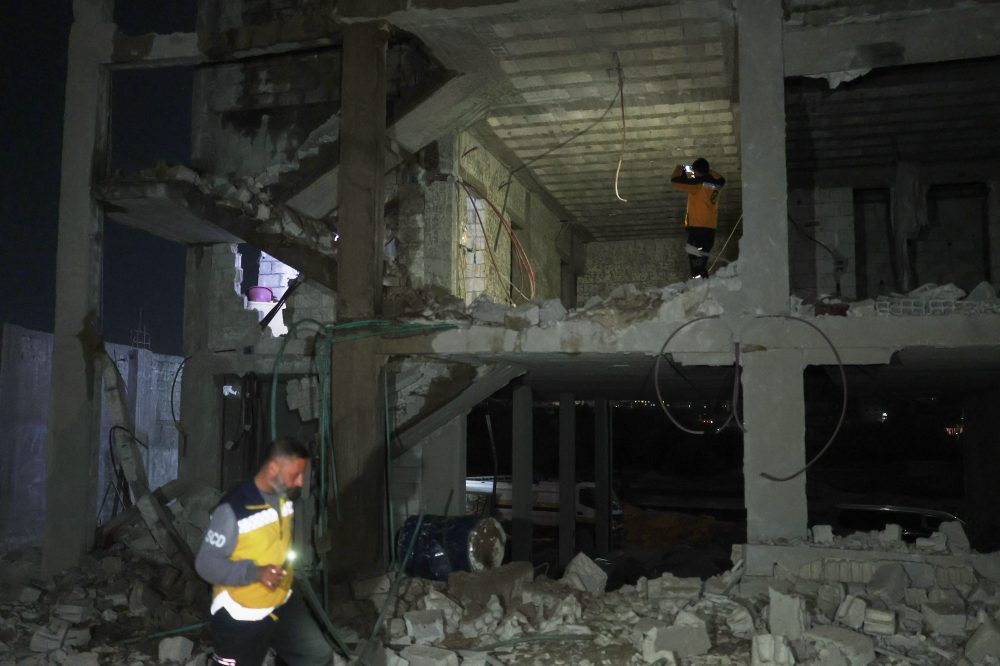
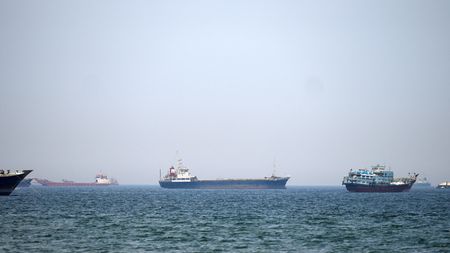
Even with missiles crossing Syrian airspace and occasionally landing within its borders, Syria successfully remained uninvolved while establishing itself as an alternate shipping route for oil that can no longer pass through the blocked strait.
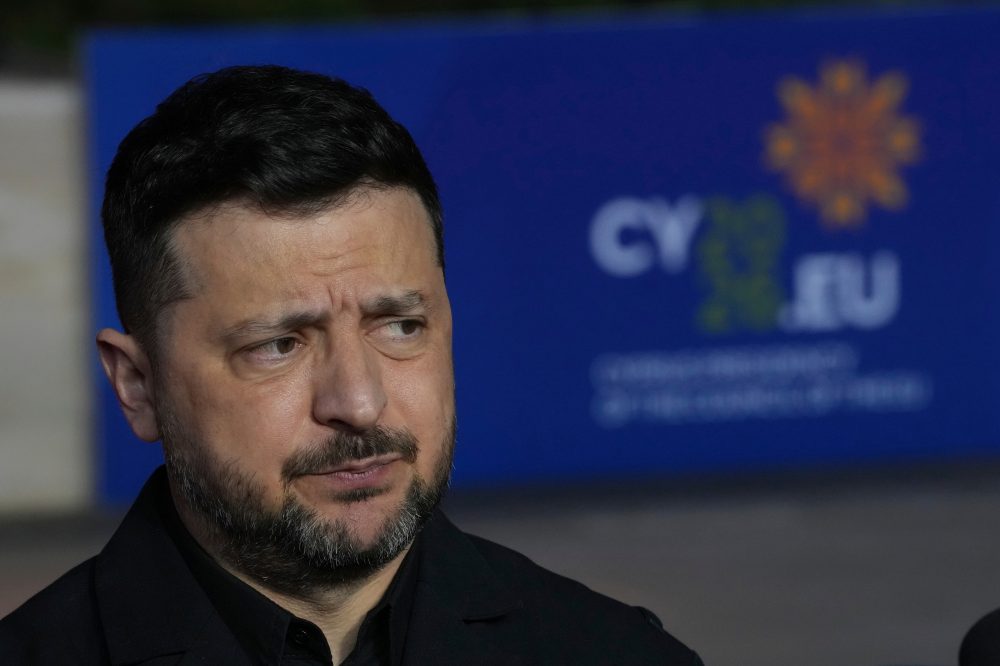
“Syria, which was once an arena for others’ conflicts, has today chosen, through the will of its people and institutions, to be a bridge to security and a fundamental pillar of the solution,” interim Syrian President Ahmad al-Sharaa declared during a recent gathering of European officials in Cyprus.
He promoted his nation as “the alternative and secure artery connecting Central Asia and the Gulf to the heart of the European continent.”
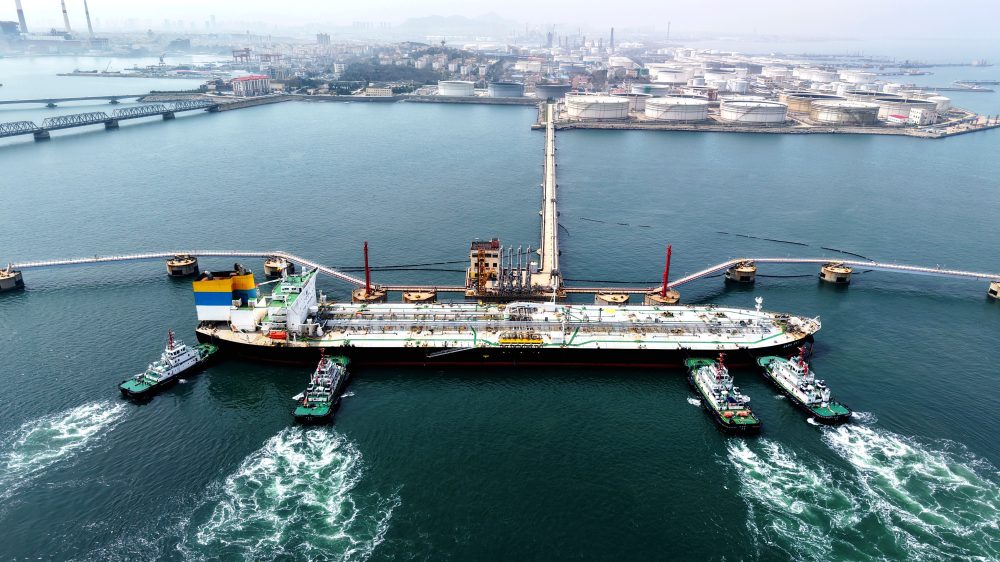
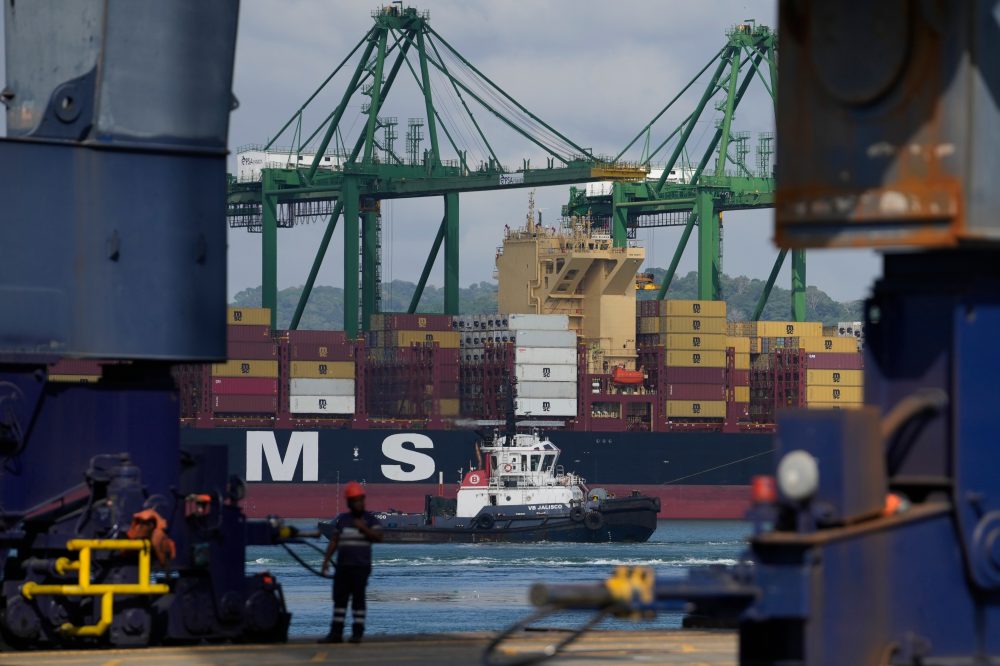
With Iran controlling access to the strait, oil shipments now travel by truck from Iraq into Syria before being transported to European customers through Syria’s Baniyas port, avoiding the Hormuz passage. A crucial border crossing linking northern Iraq and Syria resumed operations last month after more than a decade of closure, with authorities promoting it as another pathway for energy shipments.
This land-based route costs more and operates less efficiently than maritime transport through the strait, but it offers a viable alternative while Iran maintains control over the waterway.
Ghadban emphasized that his nation had no desire to align with either warring faction.
“The parties participating in it are strategic enemies of Syria, whether we talk about Iran and its affiliates, or if we talk about Israel and its aggressive expansionist policy in Syria,” he stated. “Both parties have an interest in weakening Syria.”
Iran served as Assad’s crucial supporter during the civil war, alongside Hezbollah and allied Iraqi militias. This alliance put them at odds with the groups currently governing Damascus.
Israel has maintained suspicion and sometimes open hostility toward Syria’s new Islamist leadership. Following Assad’s removal, Israeli forces took control of a UN-monitored buffer zone in southern Syria and continue their occupation.
During the initial phase of the U.S.-Israeli war with Iran, some observers predicted Syria might enter the conflict to retaliate against Hezbollah.
Instead, Syrian military forces remained inactive, while al-Sharaa and other officials emphasized their lack of interest in Lebanese involvement.
Noah Bonsey, who serves as senior adviser on Syria with the International Crisis Group, noted that while “Damascus was really clear from the beginning that it wanted no part of this war and signaled to everyone accordingly,” its successful neutrality resulted partly from favorable circumstances.
American troops had maintained bases in eastern Syria for years, but the U.S. had reduced its military presence before the Iranian conflict began.
When clashes erupted between Syria’s central government forces and the Kurdish-led Syrian Democratic Forces in the northeast during January, U.S. military personnel relocated thousands of detained Islamic State suspects from Syrian facilities to Iraq. The military also reduced its Syrian presence, where preventing IS resurgence had been the primary objective.
“Because the withdrawal had gone so far by the time the war (with Iran) started, there were very few U.S. assets and personnel still in the country” that might have attracted Iranian attacks, Bonsey observed.
While Syria may have gained diplomatic advantages through its neutral stance, the nation will still face economic consequences from the regional conflict, according to Bonsey.
Damascus had anticipated that Syria’s post-conflict reconstruction would attract investment from prosperous Gulf Arab nations previously recognized for their commercial centers and modern architecture.
However, these countries will now have reduced resources and “less bandwidth to spare for lower-priority issues” as they concentrate on “shoring up their own defense and getting their own economies back up to speed” following the war, Bonsey explained.
Although Syria might eventually benefit from infrastructure developments like proposed railway connections and gas pipelines linking the Gulf to Turkey and European markets, such projects would require years to complete, if they materialize at all.
Currently, Syria’s new administration confronts growing public dissatisfaction over the nation’s struggling economy.
Despite these challenges, Badawi remains content with her decision to return home.
“There’s nothing like being in your own country,” she reflected. “When you’re in your own country, you feel a different kind of security.”
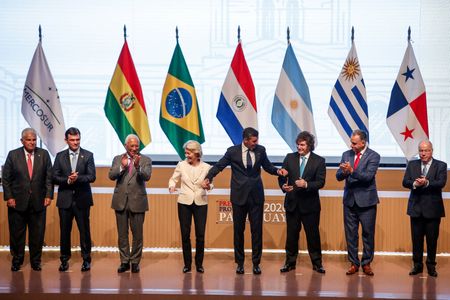
A groundbreaking trade agreement between the European Union and South American nations began provisional implementation on Friday, establishing what officials describe as a massive trans-Atlantic marketplace worth an estimated $22 trillion and serving 720 million consumers.
The historic pact between the EU and the Mercosur bloc – comprising Brazil, Argentina, Uruguay, and Paraguay – was formally signed on January 17th during a South American group meeting. However, European Commission President Ursula von der Leyen’s decision to bypass EU Parliament approval and implement the deal provisionally has sparked a legal challenge that could halt the agreement.
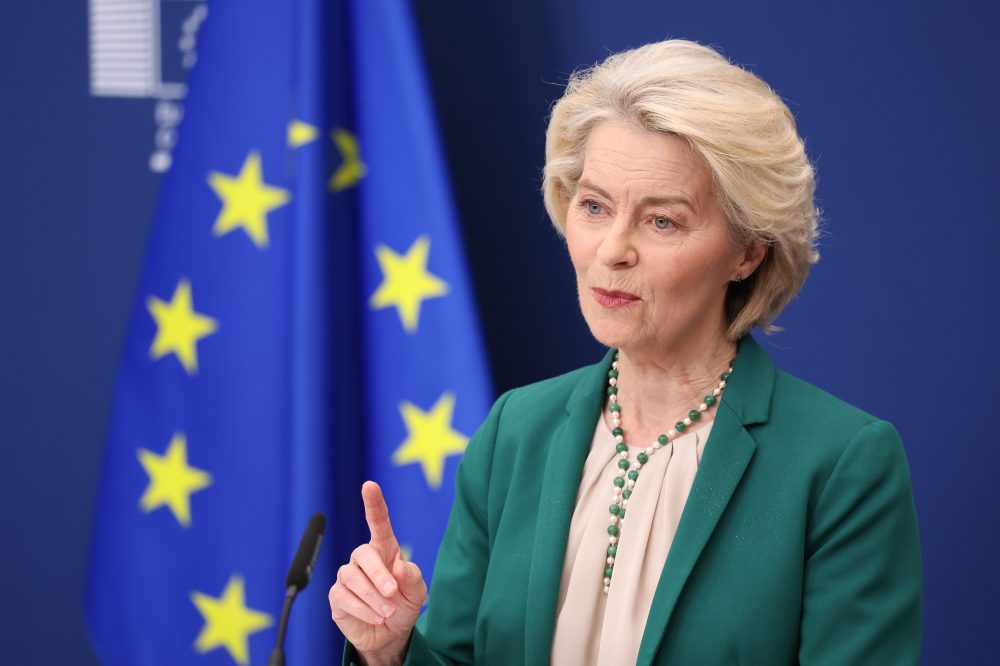
“This is good news for EU businesses of all sizes, good news for our consumers and good news for our farmers, who will gain valuable new export opportunities, with full protection for sensitive sectors,” von der Leyen stated Thursday.
The European Commission President is scheduled to participate in a virtual meeting Friday with leaders from all four Mercosur member countries to mark the agreement’s launch.
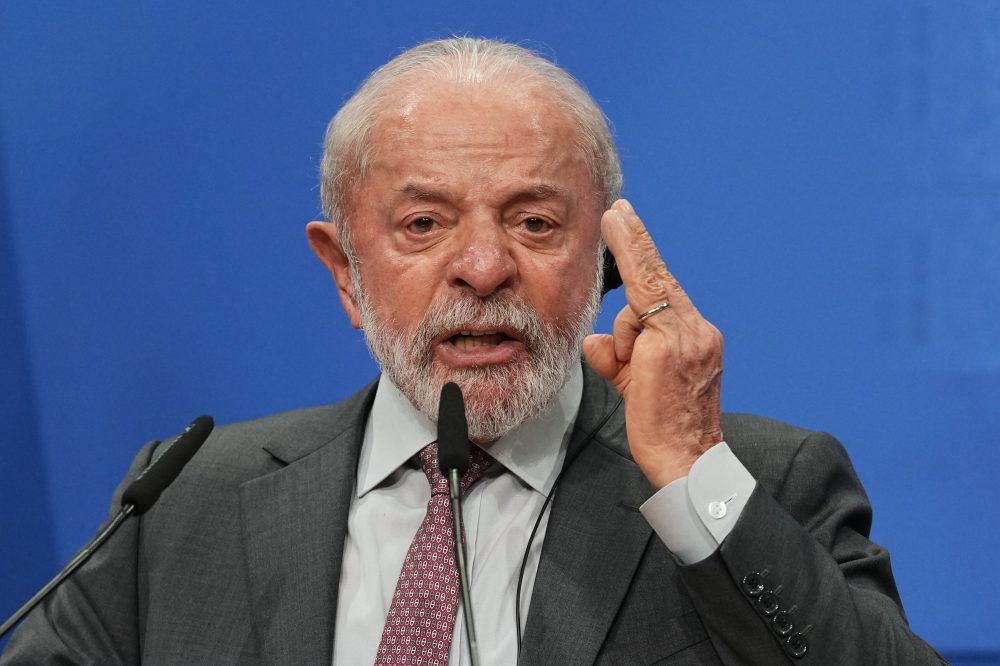
Brazilian President Luiz Inácio Lula da Silva, a strong advocate for the deal, officially endorsed it through a presidential decree earlier this week. He characterized the agreement as Brazil’s answer to unilateral trade policies implemented by U.S. President Donald Trump last year and a commitment to international cooperation.
“Nothing better than believing in the exercise of democracy, in multilateralism, and in cordial relations between nations,” Lula declared during a celebration ceremony in Brazil’s capital city of Brasilia, marking the culmination of more than 25 years of negotiations.
Brazil’s Vice President Geraldo Alckmin, who participated in the deal’s negotiations, told The Associated Press and other media outlets last week that failing to secure this EU partnership would have left South American nations at a disadvantage while competitors formed alternative trade relationships.
As Mercosur’s dominant economic force, Brazil maintains a gross domestic product projected to exceed $2.3 trillion in 2025.
Lia Valls, a research associate at the Rio de Janeiro-based think tank Fundacao Getulio Vargas, believes the agreement represents a strong counter to growing global unilateralism.
“The EU and Mercosur are showing that it is possible for big blocs to reach a deal in this world where that multilateral system is being very weakened and where the U.S. clearly operates to do that,” Valls explained to the AP. “It is a very positive sign.”
The pact encountered significant resistance from European agricultural interests and environmental advocates, causing delays in December before being submitted to the EU’s highest court for review.
South American agricultural sectors, particularly beef, fruit, and mineral exporters, anticipate substantial growth in European market access. Meanwhile, European automotive manufacturers, pharmaceutical companies, and technology firms see new opportunities in Mercosur territories.
However, the deal has generated concerns on both sides. Mercosur-based companies worry about intensified competition from European technology firms, while European farmers express anxiety about pricing pressures and imports that may not meet comparable environmental standards.
French President Emmanuel Macron, a vocal opponent of the agreement, has consistently pushed for protective measures to prevent major economic disruption within the EU, stricter regulations in Mercosur countries including pesticide limitations, and enhanced inspection procedures for imports at European ports.
The comprehensive agreement systematically eliminates trade barriers and tariffs between both regions while maintaining economic protection clauses that allow European countries to shield certain industries from overwhelming competition, including poultry, beef, sugar, and fruit sectors.
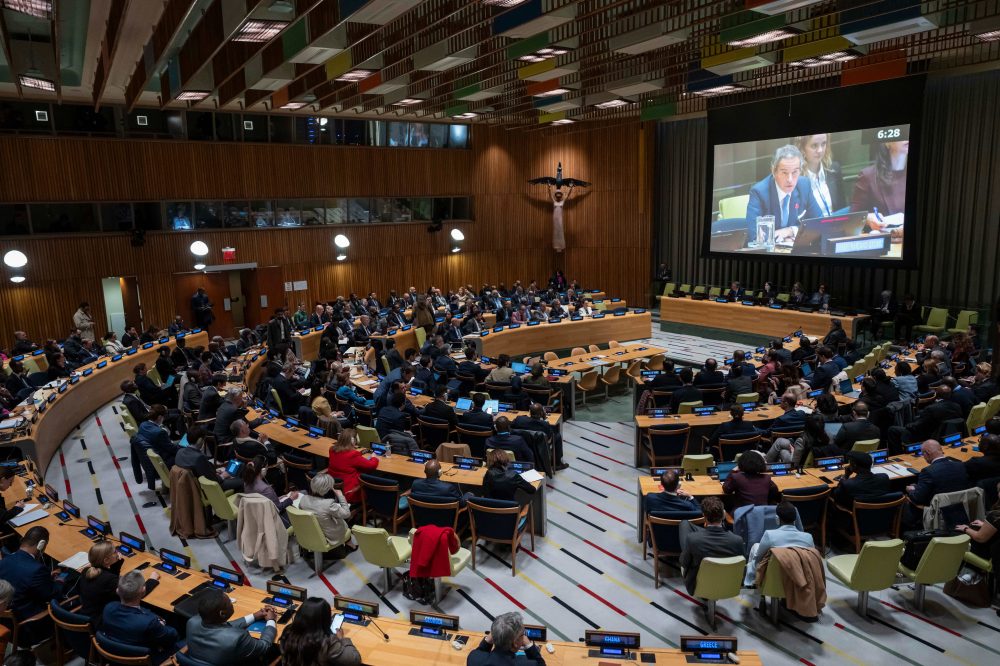
United Nations Secretary-General Antonio Guterres delivered a stern message Thursday regarding America’s outstanding debt to the international organization, declaring the multi-billion dollar obligation cannot be subject to conditions following reports that Washington was demanding reforms in exchange for payment.
According to development news outlet Devex, the United States circulated two diplomatic communications outlining nine specific “quick-hit” changes required before additional funding would be released, encompassing further budget reductions and initiatives to diminish China’s role within the UN.
When reporters questioned Guterres about these developments, he emphasized the nature of the payments. “The money we are talking about is referred to as assessed contributions,” Guterres stated. “Assessed contributions are an obligation of member states. They are non-negotiable.”
While Guterres acknowledged ongoing reform initiatives driven by member state pressure, particularly from the United States, he stressed the UN’s commitment to improvement. The organization would continue working “to make sure that we make this organization as effective and as cost-effective and as able to deliver for the people we care for,” he explained.
“But these are two separate things,” Guterres emphasized.
The reported American demands for budget reductions encompassed significant changes to UN operations, including restructuring the organization’s pension system, eliminating business-class air travel for certain senior staff and all mid-level employees, reducing senior leadership positions, and implementing a 10% decrease in prolonged, underperforming peacekeeping operations.
Additionally, the conditions reportedly sought to prevent China from directing tens of millions of dollars annually into a discretionary account managed by the secretary-general’s office, representing an effort to curtail Chinese influence within the organization.
The U.S. mission to the United Nations declined to address the reports. American officials have consistently stated their intention to maintain pressure on the UN for organizational changes, following this year’s withdrawal from numerous UN agencies and last year’s funding reductions totaling millions of dollars.
Earlier this year in January, Guterres cautioned that the UN was approaching “imminent financial collapse” due to outstanding member contributions, with the majority owed by the United States. February reports indicated America had remitted approximately $160 million toward its total debt of more than $4 billion to the international body.
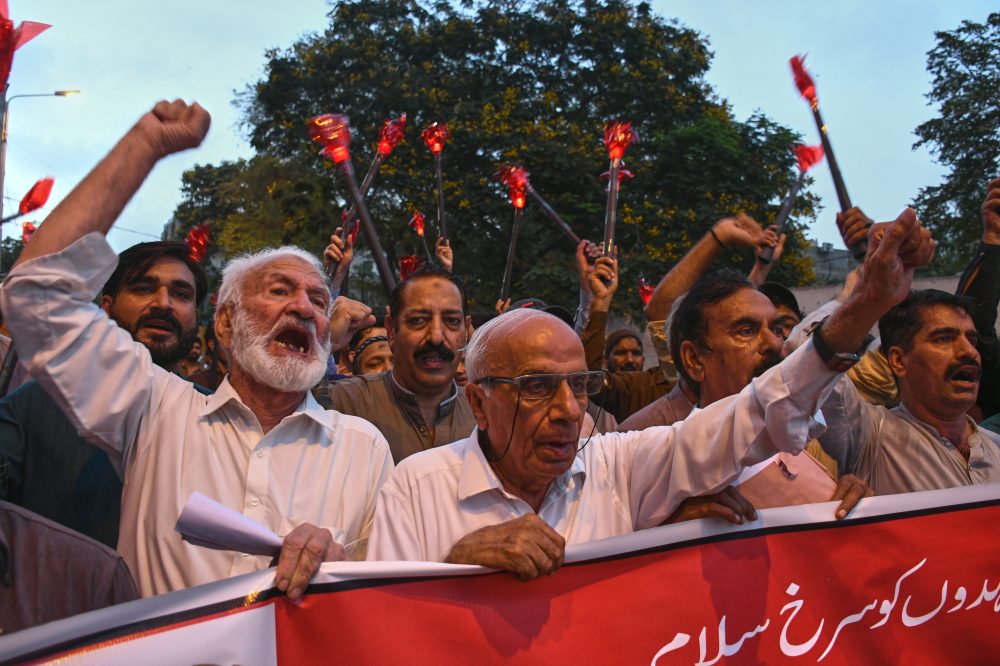
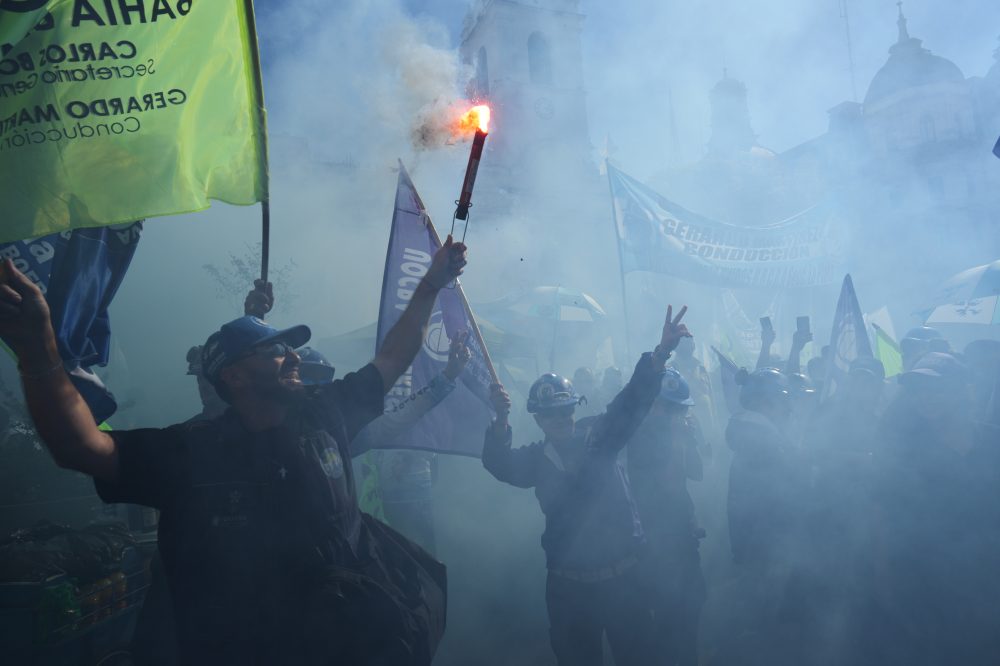
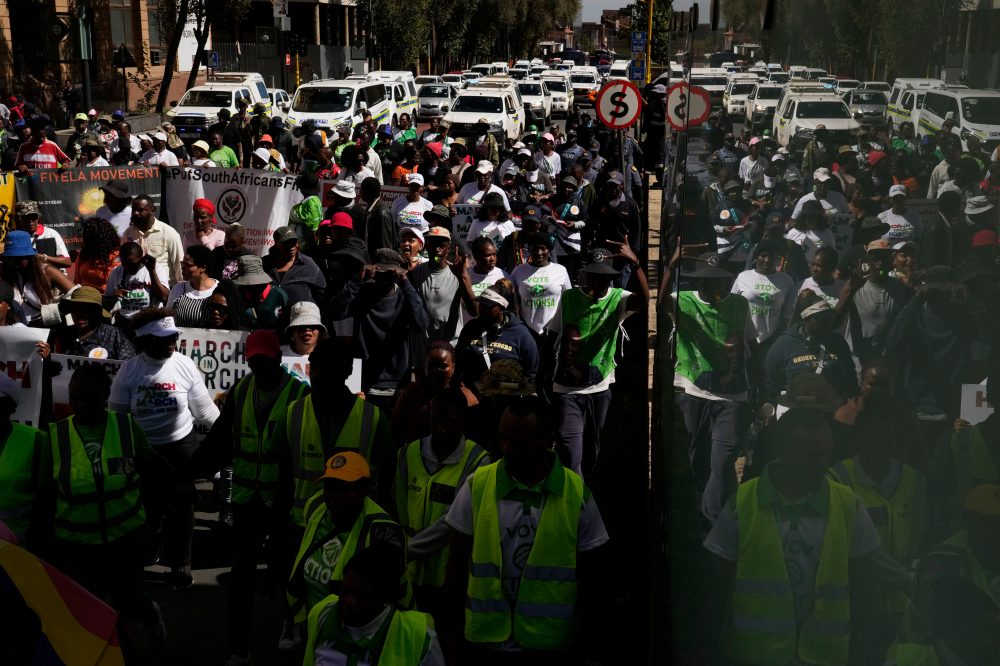
Labor activists around the world are preparing for International Workers’ Day demonstrations on Friday, demanding improved wages and workplace conditions while workers struggle with increased energy expenses and reduced buying power connected to Middle East conflicts.
The annual observance serves as a public holiday in numerous nations, with demonstrations planned for major metropolitan areas globally. Some previous rallies have resulted in violence.
“Working people refuse to pay the price for Donald Trump’s war in the Middle East,” declared the European Trade Union Confederation, representing 93 labor organizations across 41 European nations. “Today’s rallies show working people will not stand by and see their jobs and living standards destroyed.”
Across the United States, groups opposing President Trump’s policies have organized marches and economic boycotts for the holiday.
Economic hardship stemming from Middle Eastern conflicts is anticipated to dominate Friday’s demonstrations worldwide.
Philippine organizers in Manila predict large turnouts among laborers. “There will be a louder call for higher wages and economic relief because of the unprecedented spikes in fuel prices,” Renato Reyes, a leader with the left-wing organization Bayan, told reporters.
“Every Filipino worker now is aware that the situation here is deeply connected to the global crisis,” explained Josua Mata, who heads the SENTRO coalition of labor groups.
Indonesian trade unions have cautioned about deteriorating economic conditions domestically. “Workers are already living paycheck to paycheck,” stated Said Iqbal, president of Indonesia’s Trade Union Confederation.
While Pakistan observes May Day as an official holiday featuring demonstrations, many daily laborers cannot afford to miss work.
“How will I bring vegetables and other necessities home if I don’t work?” questioned Mohammad Maskeen, a 55-year-old construction worker near Islamabad.
Increased petroleum costs have driven inflation to approximately 16% according to government estimates, affecting a nation that depends heavily on International Monetary Fund assistance and support from allied countries.
Labor organizations historically utilize May Day to advocate for wage increases, pension protections, inequality reduction and broader political concerns.
Demonstrations are scheduled from Seoul, Jakarta and Istanbul to European Union capitals and American cities nationwide.
French unions have organized rallies in Paris and other locations using the theme “bread, peace and freedom,” connecting workers’ everyday struggles to conflicts in Ukraine and the Middle East.
Italy’s government this week approved nearly 1 billion euros ($1.17 billion) in employment incentives before May Day, designed to promote job stability and combat workplace exploitation. The measures extend tax reductions to encourage hiring young people and disadvantaged women while addressing problems in platform-based employment. Opposition politicians criticized the package as “pure propaganda.”
In Portugal, proposed employment law modifications by the center-right administration triggered a general strike and street demonstrations last year. After nine months of discussions with unions and employers, no agreement has been reached. Labor groups argue the proposals would undermine worker protections by expanding overtime requirements and reducing certain benefits.
This year’s May Day holds particular significance in France following intense discussion about permitting employees to work on the nation’s most protected public holiday — the sole day when most workers receive mandatory paid time off.
Nearly all businesses, retail stores and shopping centers remain closed, with only essential services like hospitals, transportation and hotels operating.
A recent legislative proposal to expand work permissions for the holiday generated significant opposition from unions and left-wing politicians.
“Don’t touch May Day,” labor unions declared in a collective statement.
Responding to the controversy, the government introduced legislation this week to allow bakeries and flower shops to operate on May Day. French tradition involves giving lily of the valley flowers on the holiday for good fortune.
“May 1 is not just any day,” explained Small and Medium-sized Businesses Minister Serge Papin. “It symbolizes social gains stemming from a century of building social rules that have led to the labor code we know in France. It is indeed a special day.”
Activists and labor organizations are coordinating street demonstrations and boycotts throughout the United States, where May Day lacks federal holiday status.
May Day Strong, a coalition of activist organizations and unions, has urged people to participate under the slogan “workers over billionaires.”
Expressing strong resistance to Trump’s policies, organizers have listed thousands of May Day events nationwide and seek an economic shutdown through “no school, no work, no shopping.”
Their demands include taxing wealthy individuals and ending the Trump administration’s immigration enforcement efforts.
Although labor and immigrant rights have historically been connected, American May Day rallies shifted focus to immigration in 2006. That year, approximately 1 million people, including nearly 500,000 in Chicago alone, protested federal legislation that would have made unauthorized residence in the U.S. a felony.
May Day, also known as International Workers’ Day, originated over a century ago during a crucial period in American labor history.
During the 1880s, unions advocated for eight-hour workdays through strikes and demonstrations. In May 1886, a Chicago gathering turned fatal when a bomb detonated and police responded with gunfire. Several labor advocates — most of them immigrants — were found guilty of conspiracy and other charges; four received execution.
Unions subsequently designated May 1 to commemorate workers. A memorial in Chicago’s Haymarket Square honors them with the inscription: “Dedicated to all workers of the world.”
May Day is now recognized globally across Europe, Latin America, Africa and Asia.
The United Nations Security Council approved a significant reduction in peacekeeping personnel for South Sudan on Thursday, cutting troop levels from 17,000 to 12,000 as the African nation continues to struggle with political turmoil and renewed violence.
The resolution, written by the United States, passed with 13 votes in favor and abstentions from Russia and China. The measure also extends the peacekeeping mission’s authorization through April 30, 2027.
U.S. Ambassador Mike Waltz explained that the resolution aims to return the mission to its core responsibilities of maintaining peace, safeguarding civilians, and ensuring humanitarian organizations can deliver aid. “Back to basics,” Waltz told the council.
South Sudan achieved independence from Sudan in 2011 amid great optimism, but the oil-rich nation descended into brutal civil conflict by December 2013. The war pitted forces supporting President Salva Kiir, who belongs to the Dinka ethnic group, against troops backing Riek Machar, an ethnic Nuer leader.
The devastating conflict claimed over 400,000 lives before ending with a 2018 peace accord that established a unity government with Kiir remaining as president and Machar serving as vice president. However, tensions escalated again when Kiir’s administration placed Machar under house arrest in March 2025, alleging he engaged in subversive behavior. Machar now confronts treason accusations.
The detention of Machar has coincided with a surge in violence and the effective collapse of the 2018 peace framework, even as the country prepares for long-delayed presidential elections scheduled for December.
Ambassador Waltz expressed American concerns that Kiir’s administration is “exploiting international support and obstructing those that are genuinely trying to help.”
Waltz detailed how UN peacekeepers documented more than 480 instances between October and March where their operations faced interference, including blocked access, prevented humanitarian deliveries, disrupted repatriation flights, and forced base closures that resulted in millions of dollars in losses.
The ambassador emphasized that America views UN peacekeeping operations as temporary measures designed to assist governments in addressing security and peace challenges.
Russia’s deputy ambassador Anna Evstigneeva opposed the troop reduction, arguing for maintaining current force levels. “The mission must be ready for any scenario and security challenges,” she stated. “It should have a sufficient level of resources for that.”
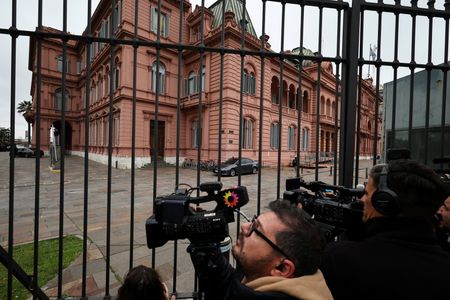
BUENOS AIRES, April 30 – The Argentine presidential palace will restore media access beginning Monday, ending a week-long ban on credentialed reporters, according to a presidential spokesperson who spoke with Reuters Thursday.
President Javier Milei’s administration had prohibited journalists from entering the Casa Rosada on April 23, claiming “illegal espionage” occurred when a television station broadcast video captured using smart glasses technology.
The government building serves as the venue for official press briefings and media events.
The United Arab Emirates declared Tuesday it will depart from OPEC and OPEC+, concluding almost 60 years of membership in the oil producers’ organization. This decision eliminates the cartel’s third-biggest producer just one day before members were scheduled to convene in Vienna, occurring during the ninth week of conflict between Iran and the US-Israeli coalition.
The departure becomes effective May 1, granting Abu Dhabi complete authority over production capacity it has developed for years toward 5 million barrels daily, liberating the UAE from the quota framework through which Saudi Arabia has managed Gulf oil policy for decades.
Rauf Mammadov, formerly with SOCAR, Azerbaijan’s state oil company and currently at Fuld & Company, informed The Media Line the OPEC departure represented “a significant blow to OPEC and particularly to Saudi Arabia.” Riyadh, according to Mammadov, has faced challenges maintaining market control since 2015, when global oil production balance started shifting from OPEC to non-cartel producers. He calculated UAE production represents 9%-11% of OPEC output and approximately 5% of OPEC+ output, the expanded producer alliance including Russia and other non-OPEC exporters.
UAE Energy Minister Suhail Mohamed Al Mazrouei informed CNBC the nation selected this timing to reduce disruption to remaining producers and explained the decision to The National, an Abu Dhabi newspaper, as a policy-driven evolution matching long-term market fundamentals.
The declaration occurred alongside two additional breaks within the Gulf alliance this week. Both indicated Abu Dhabi was no longer prepared to contribute its political influence to Saudi-led wartime coordination.
Mohamed bin Zayed Al Nahyan, the UAE president, refused to attend the “Decisiveness Summit” Crown Prince Mohammed bin Salman organized in Jeddah on Tuesday, dispatching the foreign minister instead. The meeting, designed as the GCC’s primary wartime gathering in the ninth week of the Iran conflict, generated calls for accelerated completion of a Gulf joint missile warning system and expediting new oil, gas, and water projects, according to Jasem Mohamed AlBudaiwi, secretary general of the Gulf Cooperation Council, the six Arab Gulf monarchies bloc. The Emirati president’s absence deprived the summit of head-of-state authority necessary to convert declarations into binding commitments. The communique’s appeals for accelerated joint defense reflected what the GCC’s most influential non-Saudi member had declined to endorse personally.
Anwar Gargash, diplomatic adviser to the UAE presidency, spoke at the Gulf Influencers Forum in Abu Dhabi on Monday. He utilized the platform to openly criticize the Gulf Cooperation Council’s wartime performance. He distinguished between the GCC’s logistical coordination, which he said had operated effectively, and the council’s diplomatic and military stance, which he said had failed. “Politically and militarily, I think their position has been the weakest historically,” Gargash stated, referring to the GCC. The rupture with Riyadh was the public delivery of criticism by a senior Emirati presidency figure, made twenty-four hours before bin Zayed snubbed the Jeddah summit and the UAE departed OPEC.
Ebtesam Al Ketbi, president of the Emirates Policy Centre, described the OPEC departure on social network X as a transition from collective quota-based commitments to sovereign flexibility in managing production. The change, she wrote, would enable faster response to disruptions such as those connected to the Strait of Hormuz.
An analyst at a Dubai-based research center, requesting anonymity, told The Media Line that Vienna, the Jeddah summit, and Gargash’s remarks were not coincidental. The three signals, the analyst explained, are synchronized elements of deliberate diplomatic messaging by Abu Dhabi, with Gargash’s public criticism establishing ideological groundwork, the Jeddah absence serving as visible diplomatic gesture, and the OPEC departure delivering as the operational decision.
The three ruptures this week extended a Saudi-Emirati break visible since New Year’s Eve, when Saudi forces struck an Emirati arms shipment at Yemen’s Mukalla port on December 30, 2025. The UAE withdrew its troops from Yemen on January 3, and the UAE-backed Southern Transitional Council dissolved on January 9. The pattern had been openly developing for four months.
Bar-Ilan University energy specialist Elai Rettig told The Media Line the OPEC announcement was both economic and political. The UAE, Rettig explained, has spent years following OPEC production quotas while observing most other members produce above their quotas, misrepresent their production figures, and leave the Saudis and Emiratis to absorb the cost. Departing OPEC, he said, represents the UAE’s declaration that it will no longer comply with Saudi terms.
Brent crude declined after the UAE news before recovering as traders reassessed the risk premium they attach to Gulf production. The political signal overshadowed the market response. The UAE selected a moment when Saudi Arabia faced its weakest Gulf negotiating position in a generation to make the most public possible declaration that the joint Saudi-Emirati posture supporting US Middle East policy for two decades is finished. Riyadh and Abu Dhabi had operated as paired pillars of the security and energy architecture Washington constructed after 2003, with the Abraham Accords formalizing the convergence in 2020. That convergence concluded this week.
The Dubai analyst told The Media Line the timing reflected Abu Dhabi seizing a unique opportunity. Global markets lack reliable supply, the analyst said, and the UAE possesses both spare capacity and infrastructure to deliver it. Adhering to OPEC+ quotas in this specific crisis environment, the analyst said, had become strategically impossible.
Amer Al-Shobaki, an economic researcher specializing in energy affairs, told Al Jazeera the move marks a transition to deeper conflict over oil market leadership, dangerous because it comes from a central Gulf producer with high productive capacity rather than a marginal one.
The Iran war eliminated 7.88 million barrels per day of OPEC production in March, The National reported. OPEC output fell 27% to 20.79 million barrels per day, the largest single-month supply drop for the group in recent decades.
The Strait of Hormuz closure affected Gulf producers unevenly. Saudi Arabia, with the East-West Crude Oil Pipeline running from eastern oil fields to Red Sea terminals, weathered the disruption better than Qatar, whose liquefied natural gas exports have no comparable alternative, or Bahrain, which depends on imports through the channel. The UAE has invested extensively in the Habshan-Fujairah pipeline, routing crude past Hormuz to a Gulf of Oman terminal.
Iran stated Tuesday it has the right to take “necessary and proportionate measures” in the strait, blaming Washington for shipping disruptions.
The Dubai analyst commented the asymmetric Hormuz disruption fundamentally changed the risk-reward calculation of OPEC+ membership for Abu Dhabi. Producers relying entirely on the strait had stopped extraction as their storage filled, while the UAE maintained physical ability to export crude directly to the Gulf of Oman through the Habshan-Fujairah pipeline. Remaining inside OPEC+, the analyst said, effectively meant the UAE was limiting its own unencumbered exports to maintain solidarity with a cartel whose other major members could not physically reach the market. The coordination mechanism, the analyst said, was no longer distributing market burdens fairly and had begun forcing the UAE to “absorb the cost of a geopolitical crisis it possessed the infrastructure to bypass.”
Rettig has monitored the energy logic of the war as it has developed. He told The Media Line that Washington’s temporary lift on Iranian oil sanctions reflected a calculation that the United States was willing to pay short-term market costs to buy time for more decisive action against Iran’s ability to close the strait. The Hormuz closure, the professor added, means the UAE will struggle to export all the oil it can produce, but over the medium-term Abu Dhabi will be able to release more oil onto the market without aligning itself with OPEC quotas.
The same pressure was reshaping other Gulf arrangements that the Iran war had stress-tested. Cartel discipline was one. Qatar’s hosting of Hamas was another.
Qatar’s Adjustment
Israeli political analyst Amit Segal reported earlier this week, citing unnamed sources, that Doha was preparing to end its 20-year hosting of Hamas. Gerd Nonneman, professor of international relations and Gulf studies at Georgetown University in Qatar and editor of the Journal of Arabian Studies, told The Media Line the reporting was not surprising, but its framing missed how the arrangement actually functioned.
“Qatar never considered itself as Hamas’ patron,” Nonneman said. Doha hosted Hamas’ political office and channeled funds to Gaza at Washington and Israel’s request, with Gaza funds moving through Israel itself. The arrangement had been losing utility as mediation efforts stalled. Hamas’ response to Iranian strikes on Qatari territory, Nonneman said, may have proven the tipping point of a policy whose value to Doha had already diminished sharply.
The adjustment extended beyond Hamas to a wider Gulf grievance with Egypt and Al-Azhar. Imad K. Harb of Arab Center Washington DC wrote on April 21 that Gulf intellectuals had publicly criticized Egypt’s reluctance to act more directly supporting the GCC, even after President Abdel Fattah el-Sisi visited Saudi Arabia, Bahrain, Qatar, and the UAE to condemn Iran’s strikes. Al-Azhar’s institutional condemnation of Iranian attacks did not arrive until March 17, and Sheikh Ahmed el-Tayeb’s personal statement came on April 7, more than five weeks after strikes began. Skeptics in the Gulf, Harb wrote, were now “asking whether Cairo really has the GCC’s interests at heart.”
The Saudi-Emirati split has extended beyond Yemen and OPEC. February was the turning point. Hesham Alghannam, a Saudi political scientist and nonresident scholar at the Malcolm H. Kerr Carnegie Middle East Center, made the rivalry visible to Washington in a report identifying the Saudi-UAE rivalry as a central GCC fault line. Despite Riyadh’s historical closeness to Abu Dhabi compared with Doha, Alghannam wrote, the Kingdom viewed the Emirates’ assertive foreign policy with alarm, particularly when Saudi and Emirati positions diverged over access to the Arabian Sea and the Bab al-Mandeb Strait, the chokepoint linking the Red Sea to the Indian Ocean. Absent binding GCC mechanisms to manage such divergences, he warned, the council was liable to “drift toward inconsequentiality.” On Al Jazeera Arabic on Monday evening, hours before the OPEC announcement, Alghannam said Gulf states had capacity to absorb prolonged pressure from the Hormuz crisis longer than Iran could.
Nonneman characterized Riyadh’s response to the OPEC departure as restrained, expecting regret rather than substantive retaliation.
Mammadov said the cascade question for Vienna was whether Kuwait or Bahrain among original OPEC members, or Azerbaijan or Kazakhstan among newer OPEC+ participants, would follow the UAE out. Qatar left OPEC in January 2019, during the diplomatic and trade blockade that Saudi Arabia, the UAE, Bahrain, and Egypt imposed on Doha from 2017 to 2021. Two Gulf monarchies have now left the cartel during periods of rupture within their own bloc.
The Vienna meeting on Wednesday was the final OPEC gathering in nearly six decades to count the UAE as a member. Russia, the second-largest OPEC+ producer, said Tuesday it would remain in the group and hoped Abu Dhabi’s departure would not unravel the cartel. Saudi Arabia’s options narrowed sharply this week. Riyadh can pressure remaining members to honor agreed production limits and watch Abu Dhabi capture market share, or ease those limits and accept a price collapse.
The Dubai analyst noted that production sovereignty gives Abu Dhabi a diplomatic lever it could not exercise inside the cartel. Outside OPEC+, the UAE can position itself as the sole reliable Gulf supplier during a Hormuz blockade and trade unique export capacity for bilateral security partnerships with major global powers desperate for energy security.
Rettig said the UAE departure forces Saudi Arabia and remaining OPEC members into deeper dependence on Russia, the partnership that has held OPEC+ together since 2016. Moscow’s weight in OPEC+ decisions, he said, will now grow. The shift, Rettig said, means Washington must now coordinate Gulf production diplomacy directly with Abu Dhabi rather than through Saudi Arabia alone, with both governments aligned on keeping the global market well-supplied as the Trump administration manages pressure on Iran and Russia. The UAE, freed from OPEC restrictions, is likely to increase production by roughly 1 million barrels per day, Rettig told The Media Line, “without having to take into account the interests of Saudi Arabia or Russia.”
Israeli military officials confirmed Thursday that a 19-year-old soldier lost his life during combat operations in southern Lebanon when Hezbollah forces launched a deadly drone attack.
The fallen soldier, Sergeant Liam Ben Hamo, served with the Golani Brigade’s Battalion 13 when the fatal strike occurred. A second Israeli Defense Forces member sustained moderate injuries in the same incident and was transported to a medical facility for care.
In a separate attack earlier Thursday, military officials reported that a dozen soldiers were hurt when an explosive drone targeted forces in northern Israel. Two of those injured suffered moderate wounds while ten others received minor injuries.
Military sources revealed that Hezbollah operatives deployed two explosive drones against the 7th Brigade combat team stationed in the Qantara region. While one drone detonated near the troops, Israeli forces successfully intercepted and destroyed the second device.
Israeli Prime Minister Benjamin Netanyahu expressed his condolences, stating: “Together with all the citizens of Israel, my wife and I mourn the fall of Golani fighter Sgt. Liam Ben Hamo, who was killed in combat in southern Lebanon.” Netanyahu emphasized that “Liam fought bravely and courageously against the Hezbollah terrorist organization in order to protect the security of Israel.”
Defense Minister Israel Katz also offered his sympathies, saying: “On behalf of the entire defense establishment, I send heartfelt condolences to his dear family, embrace you in this difficult hour, and wish a speedy recovery to all our heroic soldiers who were wounded.”
According to reports from Walla news, a security official indicated that Katz is weighing potential retaliation measures against Hezbollah while diplomatic discussions between Lebanon and Israel remain active. Israeli Air Force units responded by targeting Hezbollah facilities across southern Lebanon, focusing on communities where drone launches against Israeli personnel and territory originated.
Authorities in Syria and Iraq have successfully broken up an international drug trafficking operation, seizing roughly 1.73 million Captagon pills that were set to be smuggled across international borders to nearby nations.
This collaborative security effort represents a significant example of intelligence sharing between the two countries, according to officials who announced the operation’s success.
Syria’s Interior Ministry media office revealed that the mission stemmed from coordinated intelligence work between agencies in both nations, following extensive surveillance that tracked the criminal organization’s activities and movements both within Syria and in other regions.
Anti-narcotics units conducted coordinated strikes at multiple sites throughout Damascus countryside and Homs province, locations that investigators believe served as drug storage facilities and preparation centers for smuggling operations, the ministry reported.
The raids led to the confiscation of the complete drug shipment and resulted in eight arrests of individuals believed connected to the trafficking ring, including one woman.
Initial findings suggest the disbanded organization operated an international smuggling network using various transportation routes to move drugs between multiple nations, exploiting connected border areas and regions that are challenging to monitor effectively.
Iraq’s Interior Ministry verified its role in the operation through intelligence sharing and coordinated field activities, emphasizing that this partnership was crucial in locating the network’s operations, completely dismantling the organization, and preventing the attempted smuggling of the confiscated drugs.
Law enforcement officials from both nations described the operation as the outcome of extended collaborative efforts, which involved intensive surveillance of the network’s operations and members, plus monitoring their financial backing and distribution channels, allowing for coordinated strikes that ended their criminal activities.
This breakthrough occurs as regional security initiatives intensify their fight against drug trafficking, especially Captagon, which has become increasingly common throughout the region in recent years.
Multiple nations are strengthening security partnerships and information sharing to combat the operations of international criminal networks active in drug trafficking.
Relevant agencies confirmed that coordination between Damascus and Baghdad will continue to investigate any remaining network connections and pursue additional suspects both domestically and internationally, as part of a comprehensive approach focused on eliminating organized smuggling operations and disrupting their supply chains.
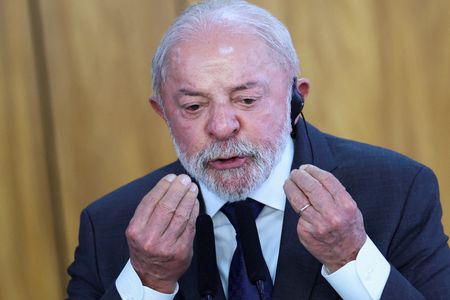
Brazilian President Luiz Inacio Lula da Silva is preparing to submit another Supreme Court nomination to lawmakers following an unprecedented rejection of his initial choice, according to two sources familiar with his plans.
The rejection marks a historic first – no Brazilian president has had a high court nominee turned down by Congress in 132 years. The defeat highlights growing political tensions in the capital as the country prepares for October’s general election, where Lula seeks a fourth non-consecutive presidential term.
Opposition lawmakers argue the next president, who takes office in January, should make the appointment instead. This strategy mirrors what happened in the United States when Republican lawmakers blocked President Barack Obama’s Supreme Court nominee before the 2016 election.
“The next nominee to the Supreme Court should be defined after the elections, with legitimacy and new criteria,” Senator Rogerio Marinho, the opposition leader, posted on X.
The stakes are significant. If senators fail to confirm a justice this year, the incoming president could potentially name up to four court members, dramatically shifting the judicial balance. Currently, two of the 11 justices were chosen by former President Jair Bolsonaro, a far-right politician.
Recent polling shows a tight race between Lula and Senator Flavio Bolsonaro, the former president’s son, for this year’s election.
“There is no sense in waiting and risking being unable to make an appointment after the elections,” one source close to Lula explained. “If the Senate chooses not to vote, the responsibility lies with them.”
Wednesday’s setback came when senators rejected Solicitor General Jorge Messias for the position. This follows Lula’s earlier successful appointments of his personal attorney and a cabinet member to the court, despite facing a conservative-majority Congress.
Conservative lawmakers criticized the president for attempting to place another political ally on the high court. Senate President Davi Alcolumbre was particularly upset with the Messias selection, preferring a different candidate for the opening.
Sources indicate Lula now intends to nominate a woman for the vacancy, believing this strategy will make it politically harder for senators to reject his selection during an election period when public attention is heightened.
The Supreme Court currently has just one female justice among its 11 members. Justice Carmen Lucia is set to retire in 2029.
Some presidential advisers question whether Lula should risk another embarrassing congressional defeat.
Senator Randolfe Rodrigues, the government’s congressional leader, said appointment decisions rest solely with the president.
“But I believe that the president should exercise his authority to submit a nominee, whether a man or a woman,” he stated.
Two teenagers lost their lives when a Ukrainian drone struck their motorcycle in Russia’s Belgorod region along the southern border, according to regional authorities who announced the incident Friday morning.
Regional Governor Vyacheslav Gladkov confirmed the fatalities through a post on the Telegram messaging platform in the early hours of Friday.
The Belgorod region has repeatedly come under fire from Ukrainian forces throughout the conflict, making it a common site for cross-border attacks.
IRBIL, Iraq (AP) — Turkey has effectively put peace negotiations with Kurdish militants on hold, according to a senior commander who spoke out Thursday about the stalled diplomatic efforts.
The militant leader, along with another official from his organization, claims Turkey’s government has not followed through on necessary legal and political changes required to advance the peace process. These accusations contradict recent positive remarks made by Turkish President Recep Tayyip Erdogan about the negotiations.
In an interview with the PKK-affiliated ANF news service, Murat Karayilan, who helped establish the Kurdistan Workers’ Party (PKK) and serves as one of its top commanders, stated his organization has made significant commitments to the peace efforts, including implementing a ceasefire and ending military operations.
“The process is currently frozen. That’s what we’ve been able to see and what has been reported to us,” ANF quoted Karayilan as stating. “We, as a movement, have fulfilled our responsibilities at this stage. It is clear that we have done everything necessary for the government to take action.”
Turkish officials have not yet responded to Karayilan’s statements.
In the previous year, the PKK announced it would surrender weapons and dissolve following instructions from its jailed leader, Abdullah Ocalan. The organization conducted a ceremonial weapon surrender in northern Iraq and subsequently moved fighters from strategic Turkish positions back to Iraq.
A Turkish legislative committee proposed various reforms this year to support the peace initiative, including allowing former PKK members who reject violence to rejoin society. However, the committee emphasized that legal measures should depend on security agencies confirming the group has given up its arsenal.
According to Karayilan, Turkish government and ruling party representatives had designated April as when parliament would receive legislation to move the process forward. That timeframe has elapsed without any proposed law being submitted.
He criticized Turkey’s government for not implementing fundamental measures the committee suggested, such as freeing imprisoned opposition leaders and activists.
Ocalan continues to be incarcerated. Karayilan explained that the PKK’s 12th Congress decision to cease fighting and disband was conditional on Ocalan directly overseeing the disarmament process, which means the group’s internal authorization cannot proceed while their leader stays imprisoned.
Zagros Hiwa, who speaks for the Kurdistan Communities Union, a political group connected to the PKK, told The Associated Press separately that his organization had implemented multiple measures following Ocalan’s instructions. However, Hiwa noted that Turkish military forces remain active in northern Iraq, government-appointed officials still hold positions meant for elected Kurdish mayors in Turkey, and thousands of Kurdish and Turkish political detainees remain behind bars.
“The Turkish state has taken no legal and political steps towards peace and has been continuing war-time policies under new rhetoric,” he stated, noting that Ocalan remains in isolation on Imrali island near Istanbul, where he has been held since his 1999 capture.
Hiwa claimed Turkey’s government is “instrumentalizing” the negotiations to strengthen the ruling party’s control and improve its electoral prospects, rather than pursuing genuine resolution.
“What happens next totally depends on the attitudes of the Turkish state,” Hiwa stated, warning the deadlock could have “precarious implications.”
The PKK officials’ claims that peace efforts have reached an impasse conflict with Erdogan’s recent remarks to his party’s lawmakers, where he described the peace efforts as progressing positively.
“The process is proceeding as it should,” Erdogan stated. “Those who write pessimistic scenarios about the process are acting entirely on their delusions, not on facts.
Since 1984, the PKK has conducted an armed rebellion that has resulted in tens of thousands of deaths and extended into neighboring Iraq and Syria. Turkey, the United States, and the European Union classify it as a terrorist organization.
The organization originally pursued an independent Kurdish nation but later modified its goals to seek autonomy and greater rights within Turkey.
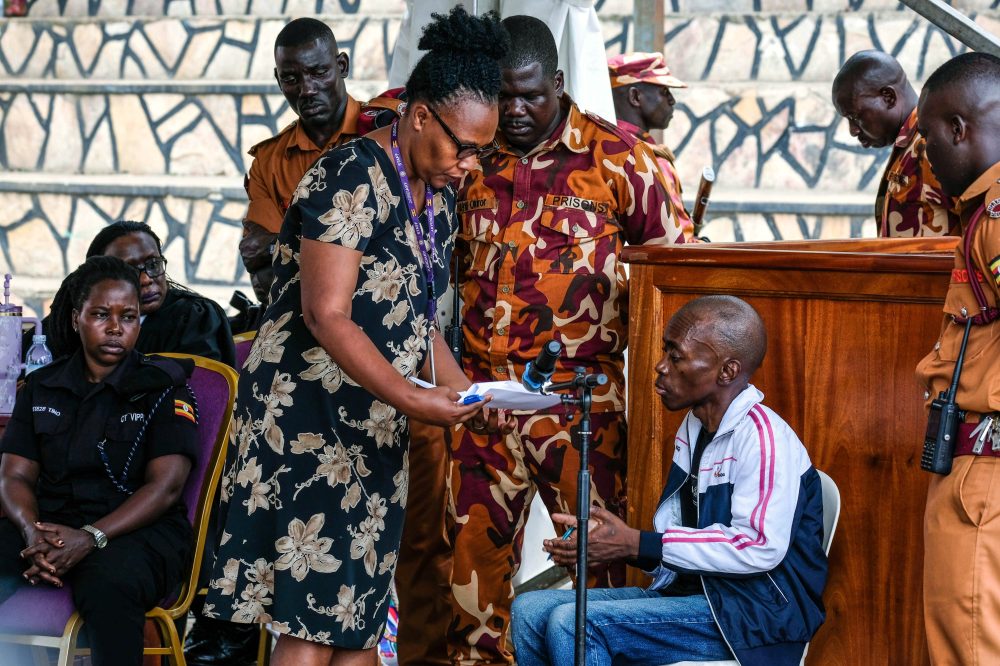
WAKISO, Uganda — A court in Uganda has condemned a man to death for the brutal slaying of four young children at a nursery school facility this past April.
Christopher Okello, 38, received the capital punishment sentence on Thursday after a judge dismissed his mental illness defense regarding the horrific incident that shocked the East African nation on April 2nd.
Spectators gathered under a large tent burst into applause when the magistrate declared that Okello must “suffer death” for his crimes.
According to the court, the defendant “failed to adduce any evidence to support this claim that he was not mentally okay” during the commission of the violent acts.
Authorities say Okello carried out a machete assault on the children at the educational facility located in a Kampala suburb. The nursery school, called the Gaba Early Childhood Development Program, became the scene of tragedy when the attacker allegedly posed as a parent to gain access.
According to eyewitness accounts, the perpetrator spoke briefly with school staff before securing the entrance gate and launching his attack on the young victims.
Uganda’s President Yoweri Museveni directed the judicial system to expedite the criminal proceedings using “mobile courts” — outdoor hearings that enabled hundreds of grieving community members and other observers to watch the legal process unfold.
However, questions arose regarding the accused man’s psychological state throughout the proceedings. Observers noted his anxious behavior and instances of unprompted laughter during the trial. The Uganda Law Society criticized the proceedings as “a judicial lynching rally.”
Court officials justified their decision to hold a rapid and highly visible trial, stating it demonstrated their “commitment to taking justice closer to the people through innovative approaches.”
While Uganda maintains capital punishment, executions are seldom performed in the nation. Numerous individuals facing death sentences have remained incarcerated for extended periods.
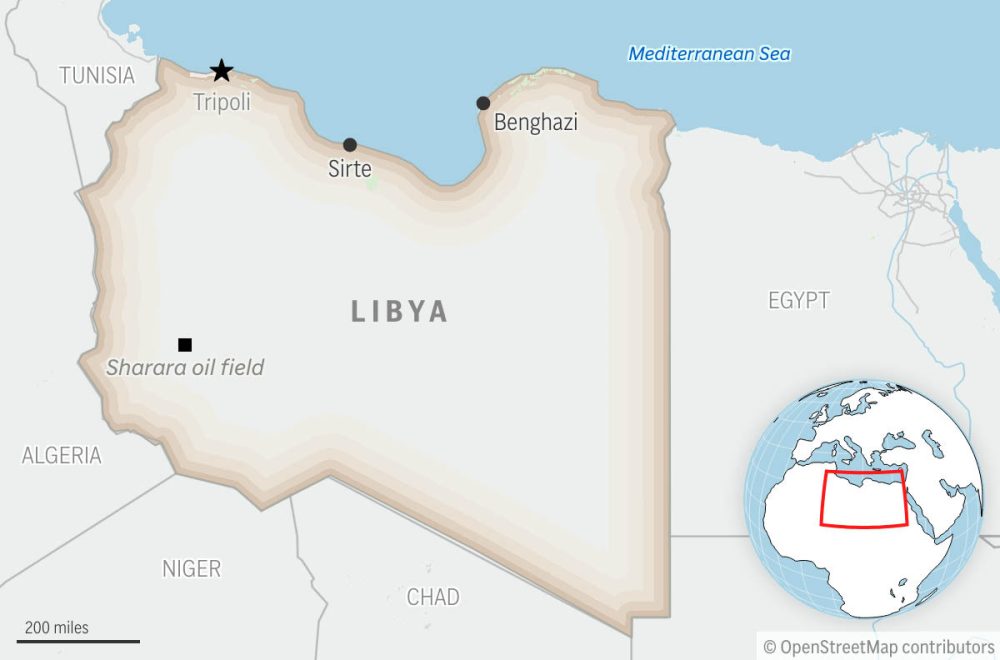
CAIRO (AP) — Tragedy struck in Mediterranean waters when a vessel transporting 33 Sudanese migrants overturned near Tobruk, Libya, resulting in 17 confirmed fatalities and nine individuals still unaccounted for, United Nations officials reported Thursday.
Just seven passengers managed to survive the maritime disaster, according to the U.N. refugee agency’s announcement on X.
The exact timing of when the vessel overturned remains unknown.
According to the U.N. International Organization for Migration (IOM), rescue teams found survivors who had been floating at sea for multiple days, with some migrants perishing from starvation and dehydration.
The vessel had departed from Tobruk with Greece as its destination when it overturned approximately 100 kilometers (60 miles) northwest of the coastal city, IOM reported. Recovery efforts involved Libya’s naval forces, coast guard units, and Red Crescent personnel.
Thursday social media posts from the Libyan Red Crescent included images of the rescue mission, showing personnel handling multiple bodies placed in black bags.
The health status of those who survived has not been disclosed.
Libya continues serving as a primary departure point for migrants escaping conflict and economic hardship across Africa and the Middle East. The nation descended into turmoil following the 2011 rebellion that resulted in longtime ruler Moammar Gadhafi’s death.
Just weeks ago, over 80 migrants disappeared when their boat sank in central Mediterranean waters after leaving Libya’s coastline.
IOM reported in early April that 2026 marked the most lethal beginning to any year for Mediterranean crossings since 2014. The Central Mediterranean region alone recorded 765 deaths, representing approximately 150% more fatalities than the corresponding timeframe in the previous year.
IOM Director General Amy Pope recently told The Associated Press that the organization is documenting increasing numbers of migrants from Bangladesh, Pakistan, Afghanistan and Sudan attempting Mediterranean crossings.
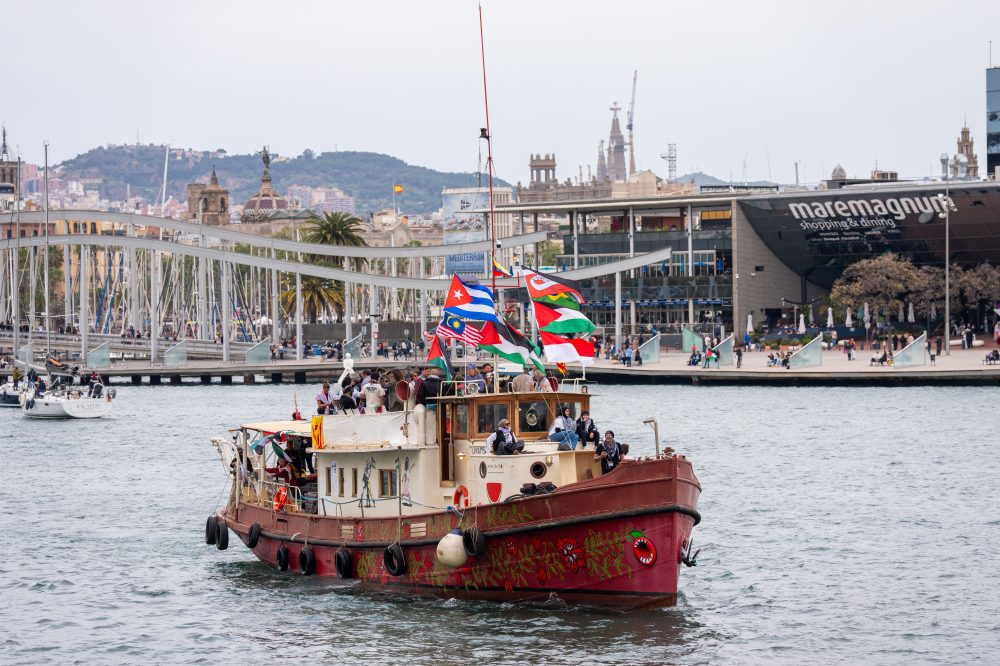
Israeli naval forces stopped and seized control of aid ships attempting to reach Gaza, confronting the vessels in international waters near Crete on April 30, 2026.
The ships belonged to the “Global Sumud” flotilla, which organizers described as a humanitarian mission aimed at delivering aid while challenging Israel’s naval blockade of Gaza. Israeli forces boarded multiple vessels hundreds of miles from their destination and redirected them toward Israeli ports.
According to Israeli Army Radio, the navy had begun taking command of the Gaza-bound aid ships. The operation took place in international waters close to Greece, where several boats were commandeered and their occupants detained.
Organizers of the flotilla condemned the Israeli action, characterizing it as “piracy” and an “unlawful seizure” conducted on international waters.
The Global Solidarity Foundation posted on Instagram: “Our boats were approached by military speedboats, self-identified as ‘Israel,’ pointing lasers and semi-automatic assault weapons, ordering participants to the front of the boats and to get on their hands and knees. Boat communications are being jammed, and an SOS was issued.”
Defense Minister Israel Katz defended the seizure as legally justified, referencing Israel’s Counterterrorism Law that allows action against vessels and assets designated for terrorist activities. Katz stated that the Global Sumud flotilla “violates UN Resolution 2803, which stipulated that aid to Gaza should enter through accepted official channels.”
The defense ministry dismissed the mission as publicity-seeking rather than genuine humanitarian work. “Like previous provocations, this is nothing but a PR stunt: a provocation without humanitarian aid,” the ministry stated. “As international media have exposed, these are professional provocateurs on pleasure cruises, addicted to self-promotion.”
This incident mirrors a comparable but smaller maritime operation that occurred in 2025, when Israeli forces similarly intercepted vessels attempting to break the Gaza blockade.
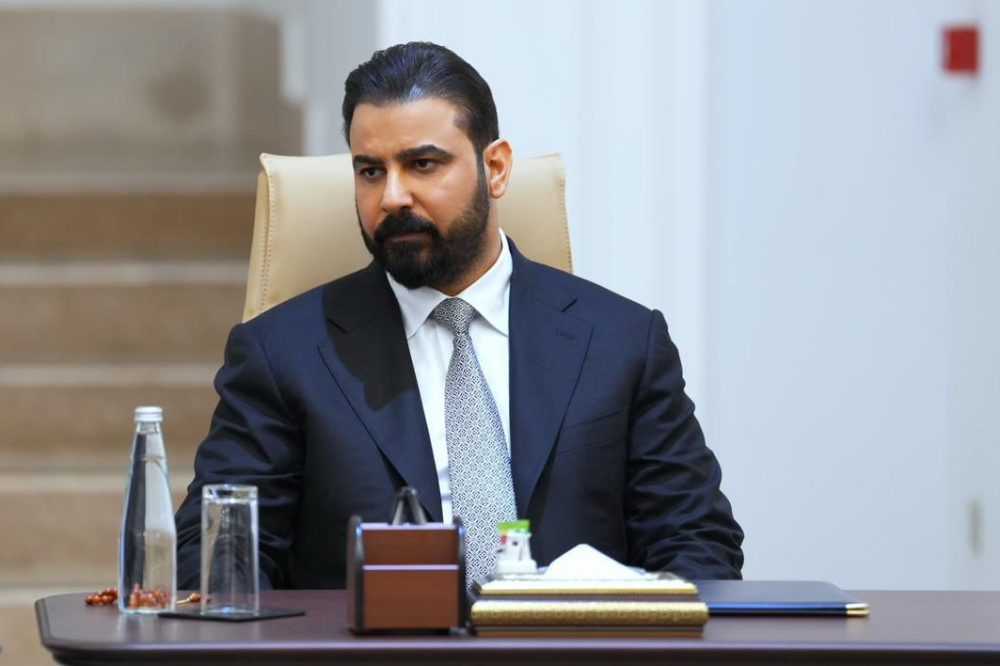
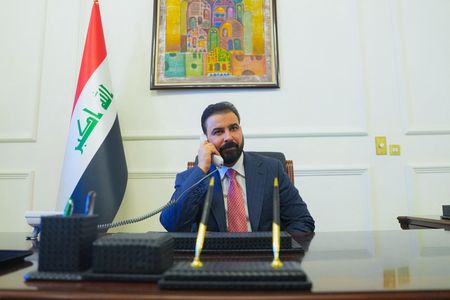
BAGHDAD — President Donald Trump reached out by phone Thursday to Iraq’s newly chosen prime minister-designate, offering him an invitation to the White House once he successfully establishes his government, according to a statement from the Iraqi prime minister’s office.
Following the conversation, Trump took to his Truth Social platform to congratulate Ali al-Zaidi and express hopes for his “success as he works to form a new Government free from terrorism that could deliver a brighter future for Iraq.”
“We look forward to a strong, vibrant, and highly productive new relationship between Iraq and the United States,” the post said. “This is the beginning of a tremendous new chapter between our Nations — Prosperity, Stability, and Success like never seen before.”
The telephone conversation and social media message indicate Washington’s approval of al-Zaidi, a business executive with no prior political experience, following Trump’s earlier rejection of another contender for the position.
Iraq’s leading parliamentary group, known as the Coordination Framework — a Shiite party alliance with ties to Iran — selected al-Zaidi for the prime minister role Monday after extensive internal discussions among coalition members.
The alliance had initially indicated support for former Prime Minister Nouri al-Maliki, whom the U.S. considers too closely aligned with Iran. Trump openly opposed al-Maliki’s candidacy and warned of potential aid cuts to Iraq if he received the appointment.
Despite al-Maliki’s resistance to Trump’s interference, the parliamentary bloc ultimately chose a different candidate as a compromise.
Al-Zaidi, who serves as chairman of Al-Janoob Islamic Bank, gained momentum in the final selection rounds due to his financial expertise and business connections. He has never served in government before.
In 2024, Al-Janoob was among several banks prohibited by Iraq’s central bank from conducting dollar transactions as the U.S. pressured Iraq to combat money laundering and fund transfers to Iran. Neither the bank nor al-Zaidi face U.S. sanctions.
After receiving the nomination, al-Zaidi pledged to work toward making Iraq “a balanced country, regionally and internationally.”
“This appointment comes at a sensitive time that requires concerted efforts from all political and social forces,” he said.
Constitutional rules give the designated prime minister 30 days to submit a Cabinet proposal to parliament, which needs 167 votes for approval.
The incoming government will face challenges from the Iran conflict’s political and economic consequences, which have affected Iraq, while Strait of Hormuz closures have disrupted the oil exports that drive Iraq’s economy.
WASHINGTON — The United States government has levied financial sanctions against Joseph Kabila, the former leader of the Democratic Republic of Congo, accusing him of backing armed rebel factions attempting to destabilize his nation’s current government.
Federal officials from the Treasury and State departments revealed Thursday they have frozen any U.S.-based assets belonging to Kabila, who led Congo from 2001 through 2019. The sanctions also block any financial transactions involving the former president that pass through American banking systems.
According to Treasury Secretary Scott Bessent, Kabila has been providing assistance to the M23 and Congo River Alliance militant organizations, both backed by Rwanda and working to overthrow Congo’s existing leadership.
The action comes amid efforts to preserve a U.S.-brokered peace agreement between Congo and Rwanda established last year to resolve the persistent violence in eastern Congo. While President Trump frequently highlights his role in negotiating that deal, the accord has faced significant challenges due to repeated ceasefire violations.
“President Trump is paving the way for peace in the Democratic Republic of the Congo, and he has been clear that those who continue to sow instability will be held accountable,” Bessent said. “Treasury will continue to use its full range of tools to support the integrity of the Washington Accords.”
State Department officials released their own statement declaring: “The United States stands with the Congolese people and calls on all regional leaders to reject those who perpetuate violence and instability. Today’s action sends a clear message: we will hold accountable anyone who obstructs peace efforts in the DRC.”
During a field visit to southern Lebanon, Israel Defense Forces Chief of Staff Eyal Zamir announced that military operations will continue despite successfully completing objectives established by the nation’s political leadership, particularly stopping direct attacks on northern Israeli communities.
“The mission assigned by the political leadership to prevent direct fire on the communities – has been achieved,” Zamir stated. “Everything the political leadership defined for us regarding the current campaign in Iran and Lebanon we achieved and even beyond. And with this we created the operational conditions for the processes now being led by the political leadership.”
The military commander emphasized that combat activities remain ongoing. “On the combat front there is no ceasefire – you continue to fight and remove direct and indirect threats from the communities of the north,” he added.
In a related incident on Wednesday, air raid sirens sounded in Zar’it in the Western Galilee region due to hostile aircraft infiltration warnings. Military officials confirmed they are investigating the circumstances.
Israeli forces have intensified their campaign against Hezbollah positions over recent days. Military officials confirmed that over 30 Hezbollah weapons storage facilities, command centers, and infrastructure locations were targeted in southern Lebanon during the past 48 hours. Morning operations saw the Air Force working alongside the 91st Division’s fire brigade to strike approximately 20 Hezbollah infrastructure positions.
The Hezbollah-linked Lebanese Al-Mayadeen television network documented attacks in the southern Lebanese villages of Zibqine and Qabrikha, and reported what they called a “significant explosion” in Bint Jbeil.
Two earlier incidents involved Hezbollah launching multiple explosive drones that exploded near Israeli military personnel in southern Lebanon, though military spokespersons confirmed no injuries occurred. Israeli forces also eliminated a rocket launcher that had been positioned within a civilian structure in southern Lebanon.
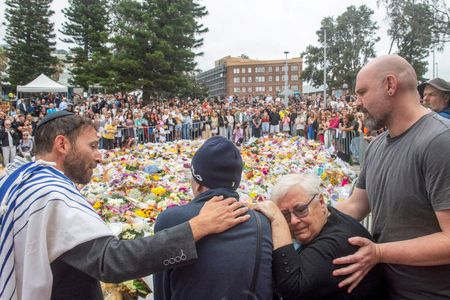
Italy’s Jewish community is raising alarm about escalating hostility following confrontations during the country’s Liberation Day commemorations in April that saw Jewish participants expelled from a historic anti-fascist march in Milan.
The annual April 25th celebration, which honors Italy’s liberation from Nazi-fascist rule, began traditionally with partisan songs and flags. However, tensions erupted when the Jewish Brigade contingent joined the procession alongside other Jewish organizations and dialogue groups.
Demonstrators hurled insults at the Jewish participants, shouting “assassins,” “genocidal pigs,” and “you should have been soap” – a reference to Holocaust imagery. The confrontation escalated from verbal attacks toward physical threats before police stepped in and removed the Jewish Brigade from the march for safety reasons.
The situation in Milan was further complicated by a separate incident in Rome, where authorities arrested 21-year-old Eitan Bondì in connection with shooting two members of the National Association for Italian Partisans (ANPI) near Parco Schuster during Liberation Day activities. Italian media reports indicate Bondì, described as belonging to Rome’s Jewish community, allegedly confessed to firing an air gun at the victims.
The two injured individuals, Rossana Gabrieli and Nicola Fasciano, suffered non-life-threatening wounds to their neck, face, and shoulder areas. Police tracked down the suspect using surveillance footage and a white scooter’s license plate. A search of Bondì’s residence reportedly uncovered knives, ammunition, air guns, and Israeli flags, though investigators have not yet located the weapon used in the attack.
Rome’s Jewish community president Victor Fadlun expressed the community’s “dismay and indignation” over the arrest, emphasizing that the community “condemns and distances itself without reservation from any form of antidemocratic violence.” Fadlun urged political leaders and civil society to avoid exploiting the incident in ways that could promote hatred and trigger additional violence.
The Jewish Brigade organization denied any association with Bondì, stating they had no knowledge of him and no member with that name. They warned that connecting the Brigade’s name to the attack would dishonor those who served under its banner. Other Jewish organizations throughout Italy also condemned the violence and distanced themselves from the incident.
Some Jewish community members expressed concern that the focus on Bondì’s alleged actions was being used to deflect attention from the antisemitic hostility faced by Jewish participants during Liberation Day events and to shift discussions about antisemitism toward questions of Jewish accountability.
The historical significance of excluding the Jewish Brigade from the Milan march has not been lost on observers. The Brigade was established in 1944 as part of the British Army, composed of Jewish volunteers from Mandatory Palestine who fought alongside Allied and partisan forces in Italy’s liberation during World War II’s final phase. Brigade members are interred in Italian military cemeteries, and the group has traditionally participated in Liberation Day ceremonies.
Carlo Riva, who leads the Italian Federation for Progressive Judaism, characterized the events as marking a significant shift in public sentiment. “What happened on April 25 is not just another episode of tension. It marks a turning point. What we are witnessing is a shift from political criticism of Israel to something broader—a generalized aversion toward anything perceived as Jewish. That is a different phenomenon, and a much more concerning one,” Riva explained.
He noted that the hostility is no longer limited to extremist groups. “What struck us most was not only the hostility itself, but who was expressing it. This is no longer confined to radical fringes or organized groups. It has extended into wider segments of society—people who would normally be perceived as moderate,” Riva observed.
The symbolic contradiction troubled Riva, whose father fought as a partisan in the Resistance. “We are talking about a march that commemorates the liberation of Italy from Nazi fascism. The Jewish Brigade fought in that liberation. To see Jews effectively pushed out of that space is something that is both symbolically and historically contradictory,” he stated.
Walker Meghnagi, president of Milan’s Jewish community, directly criticized ANPI for creating conditions that allowed antisemitic hostility to flourish. He described the episode as “a very bad day” and blamed organizers for enabling the confrontational atmosphere. Reports indicate the Jewish Brigade was blocked from marching for over two hours before being removed for security purposes.
ANPI rejected antisemitism accusations, instead attributing the breakdown to tensions related to some Jewish Brigade participants’ conduct and certain symbols they displayed. The organization’s leadership maintained the incident should be viewed within the context of heightened polarization surrounding the Gaza conflict, while reaffirming their commitment to antifascist principles and inclusivity.
Milan Mayor Giuseppe Sala suggested tensions had been anticipated but that the presence of Israeli flags was unexpected, implying their display may have contributed to the escalation. Participants disputed this interpretation, pointing to the regular presence of other political symbols, including Palestinian flags, at such events.
Data from the Center of Contemporary Jewish Documentation’s Observatory on Antisemitism reveals a sharp increase in antisemitic incidents across Italy in 2024, including vandalism, harassment, and physical attacks. In Milan, weekly cases jumped from approximately 30 before October 7 to peaks of 80 to 90.
Alex Zarfati, an adviser to Rome’s Jewish community, described rapid changes in Jewish life since October 7. “From October 7 onwards, we witnessed a very rapid closure of the spaces of Jewish life in Italy. Activities that were once normal—open, shared with civil society—have become increasingly difficult,” Zarfati said.
“Living a full Jewish life today is no longer possible in the same way as it was even a few years ago,” he continued, explaining that the concern extends beyond isolated incidents to broader environmental changes. “There are events that are no longer organized, invitations that do not arrive, and collaborations that become more difficult. What has changed is not only the level of hostility, but the level of normal interaction.”
Zarfati noted generational differences in perception, citing a gap between older leaders shaped by awareness of Jewish history and European responsibility, and younger people exposed primarily to single narratives. He also pointed to the media environment’s role, arguing that constant exposure to certain narratives makes it difficult for people to distinguish between information and propaganda.
In Bologna, Carmen Dal Monte, president of the Jewish Reform Community, identified what she called “institutional antisemitism.” “What we are seeing is a form of antisemitism expressed through institutional behavior—through choices, silences, and symbols. It is less explicit, but precisely for that reason more pervasive,” she explained.
Dal Monte organized an alternative civic demonstration on April 23, bringing together Israeli flags alongside Iranian anti-regime, Ukrainian, and Venezuelan flags. “The question was whether we are still capable of recognizing resistance when it is expressed by others, under different flags. Different communities share the same necessity—to resist to exist,” she stated.
The events in Milan and Rome suggest that April 25th, traditionally a shared civic reference point where different resistance movements converge, is no longer neutral territory. Jewish institutions remain under constant security protection, and some Israelis have begun avoiding public identification due to hostile reactions or fear of negative responses.
Community leaders view these developments not as isolated incidents but as part of a broader transformation redefining how Jewish identity is perceived and expressed in Italian society. The boundary between political expression and social exclusion appears increasingly unstable, making the civic space more difficult to reconstruct once that line shifts.
Video testimonies made public by Syria’s Interior Ministry show former air force pilots from the previous regime admitting they carried out bombing campaigns under direct orders from the highest levels of government, including the former president and defense ministry.
The recorded statements demonstrate that air attacks were not random acts but part of a systematic approach where target coordinates and strike zones were transmitted directly from air force headquarters, working closely with the defense minister and former president’s office.
These accounts show how air operations intensified over time during the war. Initially, helicopter attacks were the primary method, but by 2013, fighter aircraft entered the conflict, dramatically expanding both the number of strikes and their geographic reach.
A former senior pilot revealed that leadership placed special confidence in certain officers, assigning them to carry out heavy bombing campaigns, especially targeting the Eastern and Western Ghouta areas, which experienced some of the war’s most devastating military actions.
The statements expose a structured approach to managing air attacks. Flight crews received precise target coordinates before missions, with exact identification of strike locations. Some pilots also disclosed receiving monetary compensation for completing bombing runs, showing financial incentives were tied to these military operations.
Most attacks originated from key military airfields, particularly Al-Dumayr Military Airport near Damascus, along with al-Sin and Khalkhala bases. All operations followed centralized coordination between air force leadership and top military command.
The confessions include acknowledgments of striking civilian locations, including Douma’s marketplace, which faced intense bombardment using powerful vacuum missiles that caused massive casualties. Pilots also confirmed attacking the town of Deir al-Asafir in Eastern Ghouta during what they described as some of the most lethal operations.
Regarding targeted operations, one aviator admitted participating in the 2015 airstrike that killed Jaysh al-Islam leader Zahran Alloush, demonstrating the sophisticated intelligence and military planning behind certain attacks.
These revelations emerge as Syria pursues legal and security measures against individuals connected to the former government. Officials have announced arrests of multiple pilots and officers involved in bombing campaigns, including those facing international sanctions.
Legal experts suggest these testimonies could serve as crucial evidence in future accountability proceedings, both domestically and internationally, especially given ongoing accusations about using air power against civilian populations during the war.
If confirmed authentic, these confessions offer clearer insight into how air military operations functioned throughout the Syrian war. They underscore the centralized nature of military decision-making and political leadership’s role in directing strikes, potentially reigniting discussions about individual and institutional accountability in the conflict.
From the Syrian conflict’s start in 2011, air power became one of the most deadly weapons of war, especially in regions beyond government authority, where forces depended heavily on aerial bombardment, including barrel bombs and high-explosive missiles. United Nations Office of the High Commissioner for Human Rights data shows the Syrian war resulted in at least 306,887 civilian deaths by 2022, averaging roughly 84 civilian fatalities daily during the conflict’s early period.
While pinpointing exact responsibility for individual airstrikes remains challenging, numerous human rights investigations conclude that Syrian government forces and their allies caused the largest portion of civilian deaths. The Syrian Network for Human Rights reports more than 200,000 civilians killed by regime forces since the conflict began, the highest number among all warring parties.
These statistics show aerial bombardment was a leading factor in this devastating toll, particularly from 2012 to 2018, which marked peak usage of both warplanes and helicopters against populated areas. Cities including Aleppo, Eastern Ghouta and Idlib became sites of intensive bombing targeting residential districts, markets, and essential infrastructure, causing massive casualties and widespread displacement.
Field documentation by humanitarian groups, including the Syrian Civil Defense, verifies that tens of thousands of civilians died or suffered injuries from air attacks. Rescue workers extracted more than 125,000 people from debris during the war years, showing the scope and severity of the bombardment.
Annual documentation also records that bombing was not an isolated occurrence but a consistent practice. In 2022 alone, hundreds of civilians were documented as killed by regime forces, despite reduced operational pace compared to peak years, demonstrating continued dependence on air power even in the conflict’s later phases.
Human rights analysis shows that deploying warplanes in populated areas, particularly with weapons having extensive destructive capability, directly contributed to rising civilian casualties and led to repeated accusations of grave violations of international humanitarian law, including disproportionate or indiscriminate attacks.
While various sources provide different casualty estimates, the shared conclusion remains that aerial bombardment was among the primary causes of civilian deaths in Syria and that its impact went beyond human losses to include infrastructure destruction and creation of one of the contemporary world’s largest humanitarian crises.
The United Arab Emirates has declared its intention to depart from the Organization of the Petroleum Exporting Countries and the broader OPEC+ coalition, with the exit scheduled for May 1, 2026. Officials say the departure represents a strategic shift toward greater production independence and enhanced domestic energy investment.
The Gulf nation revealed its plans through the government-operated WAM news service, explaining that the choice came after an extensive evaluation of the country’s energy policies. UAE leaders described the departure as a “policy-driven evolution” designed to provide more freedom in establishing output levels and adapting to worldwide market conditions.
“This decision reflects the UAE’s long-term strategic and economic vision and evolving energy profile, including accelerated investment in domestic energy production, and reinforces its commitment to a responsible, reliable, and forward-looking role in global energy markets,” the UAE said.
The new strategy will enable the UAE to incrementally boost petroleum production, breaking away from current OPEC+ output restrictions. This approach is anticipated to bolster the growth of the Abu Dhabi National Oil Company (ADNOC) as it expands its operations as a comprehensive global energy enterprise.
This departure represents a substantial shift in the UAE’s position within the oil-producing organization and is seen as a considerable blow to the OPEC+ partnership, which has managed production volumes to impact international petroleum prices. The announcement arrives while member nations engage in ongoing conversations about preserving unity despite external political pressures.
UAE representatives indicated that this transition demonstrates the nation’s requirement for increased operational flexibility as it expands production capabilities and works to broaden its economic base.
The declaration also emerges during escalating disagreements between the UAE and Saudi Arabia, especially concerning economic strategies and the continuing conflict in Yemen involving Iranian-supported Houthi forces.
The UAE’s departure will conclude its decades-long participation in OPEC and reshape its position in international energy markets as it pursues an independent production approach beyond the organization’s collaborative structure.
A knife attack in a London neighborhood home to thousands of Jewish residents left two people wounded Wednesday, according to local authorities and community groups who say the attacker specifically sought out Jewish victims.
The incident unfolded in Golders Green, a northern London community where roughly half of the 15,000 residents are Jewish based on 2021 census figures. A local Jewish patrol organization called Shomrim reported capturing a male attacker who was “attempting to stab Jewish members of the public.”
Emergency responders from Hatzolah, a volunteer medical service, treated the two wounded victims at the scene. London police later arrived and used a taser to subdue the suspect before making an arrest, according to the patrol group’s account.
British Prime Minister Keir Starmer spoke about the violence during parliamentary proceedings, describing it as “deeply concerning.” He told lawmakers that officials were reviewing what happened and stressed the government’s commitment to be “absolutely clear in our determination to deal with any of these offences, the likes of which we’ve seen too much recently.”
The Golders Green area features numerous synagogues along with dozens of Jewish educational institutions and restaurants serving the community.
This latest violence adds to a string of anti-Jewish incidents across the United Kingdom. Recent weeks have seen arson attacks damaging multiple Hatzolah emergency vehicles, various assaults on synagogue buildings, and another attempted arson reported in the same area just Monday.
Police continue investigating the circumstances surrounding Wednesday’s attack.
SAO PAULO — Brazilian lawmakers voted Thursday to slash the prison sentence of former President Jair Bolsonaro, who was serving a 27-year term for orchestrating a failed coup attempt.
The legislative action could potentially cut Bolsonaro’s incarceration time by approximately two decades, though political experts note the exact reduction remains uncertain. Bolsonaro, who started his sentence in November and is currently confined to house arrest, may see significant relief from the congressional decision.
The measure faced strong opposition from current President Luiz Inácio Lula da Silva, who blocked the proposal in December. However, lawmakers successfully overturned Lula’s veto during Thursday’s session, with multiple opposition representatives referencing the upcoming October elections during debate.
Political tensions remain high as Lula seeks another presidential term, facing fierce competition from Sen. Flávio Bolsonaro, the former president’s son, who has emerged as a leading challenger.
The congressional legislation broadly reduces sentences for various offenses, particularly those involving attacks on democratic institutions and coup-related activities.
Other Bolsonaro allies who received similar convictions for comparable charges may also see their sentences reduced under the new law.
Legal analysts expect the decision will face immediate challenges before Brazil’s highest court.
Thousands of workers flooded the streets of Buenos Aires on Thursday during May Day celebrations, voicing their opposition to President Javier Milei’s sweeping changes to Argentina’s worker protection laws.
Argentina’s biggest labor organization, the General Confederation of Labor (CGT), organized the demonstration to “defend decent employment” in response to Milei’s modifications to employment regulations that had provided extensive worker safeguards since 1974. While these protections benefited employees, they also created expensive operational costs for businesses that deterred international investment.
For years, previous Argentine leaders attempted to make the job market more business-friendly but were unsuccessful due to strong opposition from the country’s influential labor organizations. However, Milei successfully enacted his employment law changes in February despite ongoing demonstrations and a countrywide work stoppage, marking a significant win for his market-oriented policies.
Opposition groups continue pursuing legal challenges questioning whether the new law violates Argentina’s constitution. Labor representatives plan to submit additional legal documents after a judge recently reversed a temporary order that had halted the law’s enforcement following union requests. The matter is anticipated to reach the nation’s highest court.
These employment reforms have particularly upset citizens in a country where labor unions helped establish the left-wing Peronist political movement that has influenced Argentine politics since the 1940s. The changes also come as Milei’s primary goal of stopping inflation has stagnated while joblessness rates have risen.
“Social discontent is being felt everywhere, and not only due to the drop in consumption,” said Jorge Sola, a CGT leader, speaking to local media before Thursday’s demonstration. “It is due to family debt, job losses and worse working conditions than what we had before.”
The updated legislation permits businesses to extend daily work schedules from eight hours to twelve hours, lengthen trial employment periods, and terminate employees with greater ease.
The new rules also restrict workers’ ability to go on strike and reduce judges’ flexibility in determining compensation payments. Supporters argue the previous system trapped employers in expensive legal battles and discouraged official hiring practices. Currently, nearly half of Argentina’s workforce operates without formal employment contracts.
SAO PAULO, April 30 – Brazilian lawmakers delivered a crushing blow to President Luiz Inacio Lula da Silva on Thursday when they successfully voted to override his veto of legislation that dramatically slashes former President Jair Bolsonaro’s prison sentence for attempting a coup following his 2022 election loss.
The congressional action reduces Bolsonaro’s 27-year sentence to slightly more than two years, representing another significant political setback for the leftist president’s legislative agenda. This marks Lula’s second major congressional defeat this week, following Wednesday’s Senate rejection of his Supreme Court nominee Jorge Messias – the first time in over a century that lawmakers have blocked a president’s high court selection.
The legislation, which lawmakers initially passed in December, also reduces penalties for individuals convicted in connection with the January 2023 attack when Bolsonaro’s supporters stormed and vandalized Brazil’s presidential palace, Supreme Court building, and congressional chambers.
Lula had rejected the measure in January, maintaining that substantial evidence supported the convictions of Bolsonaro and others involved in the coup attempt.
The 71-year-old Bolsonaro started serving his sentence in November and was initially held in prison before being transferred to what officials call “humanitarian house arrest” due to medical issues.
The former president has undergone multiple surgical procedures following a 2018 stabbing incident during a campaign rally and was hospitalized for several weeks in March while battling severe pneumonia.
Former President Donald Trump offered his congratulations Thursday to Ali al-Zaidi after the Iraqi politician was selected as the nominee for the country’s next prime minister position.
The Coordination Framework, which represents Iraq’s Shiite political coalition, announced Monday that they had chosen Zaidi as their candidate for the leadership role, according to a statement from the alliance.
In a message posted to his Truth Social platform, Trump expressed his hopes for Zaidi’s success in the position.
“We wish him success as he works to form a new Government free from terrorism that could deliver a brighter future for Iraq,” Trump wrote in his social media post.
“We look forward to a strong, vibrant, and highly productive new relationship between Iraq and the United States.”
The endorsement comes months after Trump issued warnings in January that the United States would pull its backing from Iraq if former Prime Minister Nouri al-Maliki received the appointment to lead a new cabinet.
MILAN (AP) — Days before the world’s most prestigious contemporary art exhibition was set to open, the entire international jury for the Venice Biennale stepped down Thursday amid controversy over Russia’s participation in the event.
The arts organization announced that jury president Solange Farkas along with members Zoe Butt, Elvira Dyangani Ose, Marta Kuzma, and Giovanna Zapperi had all resigned, though officials provided no official explanation for the unprecedented decision.
The resignations occurred after Italian Cultural Ministry representatives visited the Biennale on Wednesday to investigate the reopening of Russia’s pavilion. Italy’s leadership has publicly criticized the exhibition’s choice to welcome Russian participation.
Originally, the jury was scheduled to announce winners of the coveted Golden Lion award and other honors when the exhibition officially launches May 9. With the jury’s departure, organizers announced that attendees will now vote for two recognition categories: Best Participant in the 61st curated Exhibition “In Minor Keys” and Best National Participation among the 100 country pavilions. Winners will be revealed on the final day, November 22.
When questioned about the resignations, Prime Minister Giorgia Meloni restated her administration’s disagreement with allowing Russian involvement while recognizing the Biennale’s independence. She indicated uncertainty about whether the resignations were linked to her Culture Ministry’s inspection decision.
Cabinet Minister Matteo Salvini praised the shift to public voting, calling it “a great idea” by Biennale leadership. “So it will be an autonomous and democratic Biennale,” he said. “It doesn’t get any better than that.”
Last week, the European Union reduced its financial support to the Venice Biennale by 2 million euros ($2.3 million) due to Russia’s return to the exhibition for the first time since Moscow’s 2022 Ukraine invasion.
Russian artists pulled out of the 2022 event, and Russia didn’t mount an exhibition in 2024 for its permanent pavilion space, instead lending it to Bolivia. Russia’s last participation in the International Art Exhibition occurred in 2019.
In a statement, the Biennale explained it “does not have the authority to prevent a country from participating. Any country recognized by the Italian Republic may request to participate.”
Because Russia owns its pavilion constructed in 1914 within the historic Giardini grounds, it needed only to notify organizers of its intention to participate, according to Biennale officials.
“La Biennale di Venezia rejects any form of exclusion or censorship of culture and art. The Biennale, like the city of Venice, continues to be a place of dialogue, openness and artistic freedom, encouraging connections between peoples and cultures, with the constant hope for an end to conflicts and suffering,” the organization stated.
The Venice Biennale contemporary art showcase stands as the globe’s oldest and most significant exhibition of its kind, featuring a central exhibition alongside individual country pavilions that participating nations curate independently.
Historically, the Biennale has resisted external pressure to ban countries from participating, including previous calls to exclude Iran and Israel.
KYIV, Ukraine — Ukraine’s President Volodymyr Zelenskyy announced Thursday that his administration is working to gather more information about a temporary halt in fighting that Russia’s Vladimir Putin suggested to President Donald Trump.
Putin floated the idea of pausing combat on May 9 — a date that marks Russia’s Victory Day celebration — during a telephone conversation with Trump earlier this week, the Kremlin confirmed.
“We have instructed our representatives to contact the United States president’s team and clarify the details of the Russian proposal for a short-term ceasefire,” Zelenskyy said.
The diplomatic developments came as violence continued on both sides, with Russian strikes overnight claiming one life in Dnipro and injuring dozens in the port city of Odesa. Ukraine maintained its own offensive operations, targeting Russian industrial sites for the second consecutive day.
A vessel that sparked tensions between Israel and Ukraine left Israeli waters Thursday without offloading what Ukrainian officials claimed was grain stolen from occupied Ukrainian territories.
Yuri Ushakov, an advisor to Putin, confirmed that the Russian leader had brought up a potential ceasefire during the May 9 holiday — when Russia commemorates its World War II victory over Nazi Germany — in Wednesday’s call with Trump.
However, Kremlin spokesman Dmitry Peskov indicated Thursday that no final arrangements have been established, emphasizing that Putin would determine any specific conditions.
“For now, no concrete decision has been made,” Peskov stated.
Zelenskyy indicated Ukraine favors a more extended pause in hostilities. “We will find out exactly what is being discussed, whether it’s a few hours of security for a parade in Moscow or something more,” he wrote on Telegram.
The controversial grain ship had been stationed near Haifa port for multiple days before departing Thursday morning, according to MarineTraffic.com vessel tracking data.
The Israel Grain Importers Association reported that the nation’s primary grain importing business turned down the shipment due to the delicate circumstances involving Ukraine, Israeli news outlets said. “The Russian supplier of the wheat cargo will be forced to find another destination to unload the cargo,” the association stated.
Ukraine’s Foreign Minister Andrii Sybiha praised the outcome.
“This demonstrates that Ukraine’s legal and diplomatic actions have been effective,” he wrote on X.
Zelenskyy had warned of potential sanctions against Israel earlier this week if the ship was allowed to unload. Israeli Foreign Minister Gideon Saar announced that the country’s tax authorities had launched an inquiry into the vessel.
In Dnipro, drone strikes resulted in one death and five injuries, according to Dnipropetrovsk regional leader Oleksandr Hanzha, who reported damage to a store, residential structure and vehicles.
Odesa region chief Oleh Kiper said Russian forces conducted multiple waves of drone assaults on homes and civilian infrastructure overnight, injuring 20 people.
Kiper noted that while Ukrainian air defense systems intercepted many incoming threats, successful hits and debris from destroyed drones damaged apartment buildings, a hotel, a kindergarten and a government facility. The attacks also sparked fires in several areas that were subsequently extinguished.
Ukraine’s Security Service, known as the SBU, conducted strikes in Russia’s Perm region in the Ural Mountains for the second straight day, a security source revealed.
The source, speaking anonymously due to lack of authorization for public comment, said the drone assault disrupted operations at the Lukoil-Permnefteorgsintez refinery, situated more than 1,500 kilometers from Ukraine.
Regional Governor Dmitry Makhonin confirmed an industrial site was struck but reported no casualties or major damage, declining to elaborate further.
In a separate incident, Krasnodar regional governor Veniamin Kondtratyev announced online that firefighters had extinguished a blaze caused by a Ukrainian drone attack on a Russian oil facility in the Black Sea port of Tuapse after it burned for nearly two days, with petroleum products spilling onto city streets.
Ukraine’s Navy reported striking two Russian ships in the Kerch Strait using maritime drones in overnight operations leading into Thursday.
The naval forces said the attacks damaged a Russian patrol vessel called “Sobol” and another ship named “Grachonok.”
The Kerch bridge, finished in 2018, connects mainland Russia to the Crimean Peninsula, which Russia illegally seized in 2014.
DEIR AL-BALAH, Gaza Strip — The sound of approaching water trucks sends the Abu Daqqa family into action, rushing to fill whatever battered plastic containers they can find, each marked with their family name to avoid confusion in the chaos that follows.
Yehia Abu Daqqa carefully divides the precious resource among her children, allowing just one container per child and carefully pouring small amounts into a sippy cup for her daughter outside their temporary shelter in Muwasi, a massive tent settlement now home to hundreds of thousands of displaced Palestinians.
“The water truck arrives, and some 500 to 1,000 people throw themselves at it,” Abu Daqqa said. “They start fighting. It’s real suffering.”
The ongoing water crisis has plagued Palestinians for over half a year since the ceasefire agreement between Israel and Hamas brought an end to most combat operations in Gaza. United Nations officials report that nearly 90% of the territory’s water systems were demolished during the conflict, including facilities that remove salt from seawater and plants that process sewage.
Prior to the conflict, both government agencies and private businesses supplied water through truck deliveries and underground pipeline networks. Wastewater moved through underground pipes to processing centers. Rebuilding this infrastructure remains a top priority for Gaza’s recovery efforts, though progress has stalled as Israel insists Hamas must completely give up its weapons first.
The WASH Cluster, a UN-coordinated group of humanitarian organizations working on water and sanitation issues, calculates that roughly 80% of Gaza’s population depends on truck-delivered water at central pickup locations. For resident Azmy Abu Lehya, this means walking more than 500 meters to his neighborhood’s distribution site, sometimes successfully obtaining water to carry back through Muwasi, and sometimes returning empty-handed.
“On two days, the water trucks come, and on the other two days, they don’t,” he said.
Israeli officials state they no longer impose restrictions on water imports. COGAT, the military organization handling humanitarian matters in Gaza, claims it has facilitated pipeline access to provide adequate water for sanitation, sewage treatment, drinking, and washing purposes, and has not restricted bottled water imports.
However, Palestinians report that bottled water — primarily delivered by private companies and sold in local markets — costs far more than most can afford, especially with Gaza’s economy devastated and residents unable to find employment or reliable income sources.
Muwasi resident Sharif Abu Helal avoids even looking at water bottles in his local market because he knows they’re beyond his financial reach.
“I am not ready to buy each person a bottle of water,” he said. “I have eight people. Is a gallon of water enough for them?”
Numerous materials essential for water cleaning and transportation — including pipes, fuel, cement, and chemicals like chlorine — fall under Israel’s “dual use” category and face restrictions due to concerns they might be converted into weapons or missile components.
Water access problems and shortages have been a constant challenge throughout the Gaza conflict, with pipeline systems destroyed, water delivery trucks struck by military attacks, and unexploded ordnance contaminating underground water sources that supply many wells.
In a water and sanitation assessment released this week, Doctors Without Borders (MSF), a humanitarian organization, charged Israel with weaponizing water access, “systemically depriving” residents in what they describe as a “campaign of collective punishment.” Similar charges have been made by other organizations, including Human Rights Watch.
“While Gazans are deprived of water and sanitation, Israeli authorities are using aid as a tap, closing or opening slightly to allow only drops of aid to enter the Strip,” the report said.
MSF ranks as Gaza’s second-largest water provider. Drawing from interviews conducted in late 2025 following the October ceasefire, the organization reported that Israel frequently prevented essential infrastructure components like water pumps from entering Gaza, forcing aid workers to repair old or broken parts to maintain desalination and water treatment systems. According to MSF, water shortages create widespread problems for Gaza’s 2.1 million residents, leading to sewage system failures, sanitation breakdowns, and increased rates of water-related and hygiene-related diseases.
“Israeli authorities know that without water life ends, yet they have deliberately and systematically obliterated water infrastructure in Gaza, while consistently blocking water-related supplies from entering,” said Claire San Filippo, MSF emergency manager.
While the report focused on past conditions rather than current circumstances, the organization urged Israel to permit entry of water and sanitation materials, noting that restrictions continue: “There are also not enough pipes available to create distribution networks,” the report said.
COGAT firmly rejected the MSF report’s accusations, calling them “a desperate attempt to regain legitimacy.” The organization stated that Israel permits over 70,000 cubic meters of water — approximately 33.3 liters (8.8 gallons) per person — to enter daily. Humanitarian organizations estimate individuals require at least 15 liters (4 gallons) daily for cleaning, washing, drinking, and bathing needs.
BEIRUT (AP) — Syrian authorities acknowledged Thursday that they are holding a German reporter who vanished several months ago.
Eva Maria Michelmann, 36, disappeared on January 18 alongside a Kurdish-Turkish coworker when Syrian government troops allegedly apprehended them during the capture of Raqqa amid combat operations targeting the Kurdish-controlled Syrian Democratic Forces, according to the Committee to Protect Journalists, which issued a statement earlier this week.
The press freedom organization has demanded her freedom.
Syria’s Information Ministry released a statement saying Michelmann and a Turkish individual — whom CPJ identified as Kurdish-Turkish reporter Ahmed Polad — were discovered during an Interior Ministry sweep of Raqqa inside a structure previously utilized by the SDF as a “security headquarters.”
According to the ministry, both foreign individuals had “refused to disclose their true identities and possessed no official documentation verifying who they were.” The statement indicated that during preliminary interrogation, they “claimed to be engaged in humanitarian work and made no mention of any journalistic role” and falsely stated they were employed by the United Nations.
The Information Ministry reported they subsequently tried to flee and were apprehended again on “suspicions that they may be foreign fighters present in Syria illegally.”
The announcement indicated both individuals were “formally detained, and legal proceedings have been initiated in preparation for referral to the competent judicial authorities.” No specific accusations against them were revealed.
CPJ reported both reporters were employed by Istanbul-based Etkin News Agency ETHA and Özgür TV, which broadcasts from multiple European locations.
Frank Jasenski, a lawyer representing Michelmann and her relatives in Germany, stated earlier this week, “We assume that her health is very, very poor and we demand her immediate release.”
Germany’s Foreign Office confirmed last week it had contacted the imprisoned journalist but provided no additional information, referencing privacy regulations.
Syrian government troops captured Raqqa, previously under SDF control, during a January offensive. The SDF and Damascus subsequently established a ceasefire and announced a deal integrating the SDF into the national military.
The truce continues while the integration agreement progresses gradually. Syria’s current leadership has faced challenges establishing complete control over the war-ravaged nation since overthrowing former President Bashar Assad in December 2024, following nearly 14 years of civil conflict.
Family members and community mourners carried the body of a young Palestinian through the streets of Ramallah on Thursday, following his death in what officials describe as part of an ongoing wave of deadly encounters in the region.
Ibrahim Al-Khayyat lost his life after sustaining gunshot wounds to his torso and stomach area in Hebron, as confirmed by Palestinian health authorities and emergency medical services. Family members told reporters the young man had been walking to a nearby convenience store when the shooting occurred on Wednesday.
Military officials from Israel stated that their forces opened fire on Palestinian individuals during a security operation in Hebron after coming under attack from thrown stones.
Al-Khayyat’s educator, Mumtaz Shabaneh, characterized the fatal shooting as part of a broader campaign of aggression targeting Palestinians across Gaza and the West Bank, calling it an effort “to break our will and undermine our perseverance to remain steadfast on this land.”
Wednesday’s violence claimed a second Palestinian life when Abdulhalim Hamad, 37, was killed during an Israeli military operation in Silwad, located northeast of Ramallah. Palestinian media reported that Hammad died in his residence during the raid.
These latest fatalities bring the year’s total to more than 40 Palestinians killed by Israeli military personnel and settlers in the occupied West Bank, according to United Nations humanitarian coordination officials. Young people have been disproportionately affected, with three teenagers losing their lives in the previous week alone.
Meanwhile, an aerial attack struck Gaza City, resulting in three deaths, according to medical personnel at Shifa Hospital who received the victims. Israeli military representatives had not provided immediate comment regarding the strike.
Although major combat operations throughout the Gaza Strip have diminished following an unstable ceasefire agreement between Israel and Hamas in October, Israeli forces continue conducting nearly daily military strikes across the territory. Gaza health officials report more than 820 Palestinian deaths from these ongoing operations. The health ministry, operating under Hamas governance, keeps casualty statistics that international agencies and independent analysts generally consider credible, though they do not distinguish between civilian and combatant deaths.
NEW YORK — Celebrity-filled spring fundraising events are nothing new in New York City, but Wednesday night’s King’s Trust Global Gala had an extra royal touch that made all the difference.
King Charles III made his debut at the annual charity event, marking the first time in the gala’s five-year existence that the monarch has attended the fundraiser supporting his organization that assists young people in finding employment opportunities.
Though his visit was brief — lasting just three and a half minutes for his speech — the king’s presence created a noticeable excitement among the high-profile attendees at Christie’s New York auction house. Guests including Lionel Richie and Vogue editor Anna Wintour were spotted positioning themselves along velvet barriers and stretching to catch a glimpse of the royal visitor.
The anticipation was clear even before the event began. British makeup mogul Charlotte Tilbury approached Martha Stewart, who had chosen a shimmering blue gown for the occasion, asking her to mention to Charles that she selected “royal blue just for you.” Meanwhile, Natasha Poonawalla, who serves as executive director at the Serum Institute of India, the globe’s biggest vaccine producer, observed that “everyone’s been waiting for him.”
“I think the fact that he’s here is going to strengthen the presence of the foundation so much more,” Poonawalla remarked.
The royal attendance appears to have paid off financially. Event coordinators announced a record-breaking fundraising achievement of more than $3 million, validating expectations that having the king and Queen Camilla present would increase donations as the charity works to create an endowment for its UK operations and expand relationships across more than 24 nations.
This appearance caps off Charles’s inaugural American visit since becoming king, a four-day journey designed to commemorate 250 years since America’s independence from Britain while working to repair strained diplomatic ties between the nations.
The King’s Trust has touched the lives of 1.5 million individuals globally through its educational and job training initiatives spanning five decades. During his short address before the dinner portion began, Charles highlighted how many program graduates eventually return to mentor other disadvantaged youth facing similar challenges.
“Only now do quite a lot of them actually admit they were started (here),” the king quipped.
Former British Vogue editor-in-chief Edward Enninful, who served as a gala co-chair, has witnessed the trust’s influence firsthand in West London. He shared that his own family members, including cousins and brothers, have been able to build successful lives despite being dismissed by society as “not worthy.”
Enninful characterized Charles’s participation as the charity’s “glory moment.”
“He’s set the example that philanthropy matters,” Enninful explained to The Associated Press. “No matter how well you are doing, you’re not doing enough unless you’re passing it on to a newer generation.”
This year’s gathering was more exclusive than in previous years, hosting approximately 160 attendees. Musical entertainment was notably absent, with Richie announcing upfront that he wouldn’t be performing, which prompted Charles to joke that the Rock & Roll Hall of Fame member “must gargle with port.” The guest list also featured supermodels Karlie Kloss and Iman, actors Leo Woodall and Meghann Fahy, plus fashion designers Donatella Versace and Stella McCartney.
Stewart reflected on her own fortunate path while building her multimillion-dollar lifestyle and media brand focused on cooking, entertaining, and home management. The business mogul noted that scholarships enabled her to afford her “fine education” and that she was blessed with consistently “excellent” employment opportunities.
“But I know today there’s a big challenge in getting a good job, a big challenge in getting a good education,” she stated. “And we’re here to help those people.”
Internal discord among Lebanon’s highest-ranking officials is undermining Saudi Arabia’s diplomatic efforts to help the nation establish a cohesive approach toward potential peace discussions with Israel, according to Lebanese sources and international diplomats who spoke with Reuters Thursday.
The Saudi kingdom, which brokered the 1990 accord that concluded Lebanon’s lengthy civil conflict, has increased its diplomatic involvement with Lebanon in recent weeks. This comes as a fragile U.S.-mediated ceasefire has struggled to completely end the nearly two-month conflict between Israel and the Iranian-supported militant organization Hezbollah.
Relations between Saudi Arabia and Lebanon had deteriorated over several years due to Hezbollah’s dominant influence in Lebanese governance and security matters. However, the Sunni-majority kingdom now perceives an opportunity following the militant group’s significant weakening during its 2024 confrontation with Israel.
The April 16 ceasefire between Israel and Lebanon was designed by the United States to pave the way for direct peace negotiations, potentially reshaping Lebanon’s internal political landscape and regional position. However, Lebanese leadership remains divided on both the format and objectives of such negotiations.
Lebanese President Joseph Aoun has advocated for direct meetings with Israel in Washington and stated the ceasefire should evolve into “permanent agreements.” While he hasn’t explicitly endorsed a comprehensive peace treaty, two sources with knowledge of Aoun’s stance revealed to Reuters that he has privately indicated willingness to establish normal relations with Israel to end the conflict.
Parliament Speaker Nabih Berri, who maintains ties with Hezbollah, opposes direct negotiations, mirroring the Shiite militant organization’s stance. According to two Lebanese sources familiar with his views, Berri favors pursuing a non-aggression agreement with Israel rather than a comprehensive peace treaty.
Saudi envoy Prince Yazid bin Farhan traveled to Beirut last week to urge Aoun, Berri, and Lebanese Prime Minister Nawaf Salam to develop a unified negotiating position and demonstrate solidarity through a joint meeting, according to two senior Lebanese political sources who met with bin Farhan and a Western official briefed on the discussions.
However, plans for such a gathering this week collapsed due to escalating tensions after Berri publicly criticized Aoun’s statements about negotiations as “inaccurate, to say the least,” all three sources confirmed.
Neither Aoun’s office nor Saudi government media representatives immediately responded to requests for comment. The presidency announced Thursday that Aoun met with Salam, notably excluding any mention of Berri.
The disagreements between Aoun and Berri, whose positions are determined by Lebanon’s sectarian power-sharing arrangement, mirror wider societal divisions regarding negotiations with Israel.
Some Lebanese citizens view direct talks and rapid peace agreements as the only solution to end Lebanon’s long history of Israeli military incursions.
However, Hezbollah and much of the broader Shiite Muslim community, who have suffered the heaviest casualties from Israeli attacks, strongly reject face-to-face negotiations and diplomatic normalization. Protesters opposing talks earlier this month demanded the government’s removal.
Saudi Arabia’s intervention with Lebanese officials was motivated by concerns about potential instability and worries that Lebanon was advancing toward peace with Israel too rapidly, according to a Gulf source with knowledge of the situation, the two senior Lebanese political sources, and the Western official.
Bin Farhan obtained assurances that Hezbollah would not attempt to overthrow the Lebanese government and warned Lebanese leaders last week that Beirut’s peace progress with Israel should not exceed Saudi Arabia’s pace, the four sources indicated.
Saudi Arabia has consistently maintained it will only join the Abraham Accords normalizing relations with Israel if there’s agreement on a framework for Palestinian statehood.
U.S. President Donald Trump, eager to expand the accords, announced this month he would invite Aoun and Israeli Prime Minister Benjamin Netanyahu to the White House for discussions.
Bin Farhan recommended that Lebanese authorities postpone any meeting between Aoun and Netanyahu, the two senior Lebanese political sources reported.
Nevertheless, Saudi Arabia does support Lebanon working toward a “detente” with Israel that would end regional instability, according to the Gulf source and one of the Lebanese sources.
Israeli military actions have resulted in over 2,500 deaths in Lebanon and displaced more than 1.2 million people since the current round of fighting between Israel and Hezbollah commenced March 2, Lebanese authorities report.
The April 16 ceasefire, which enabled separate negotiations regarding the Iran conflict, halted strikes on Beirut and its southern suburbs but continued in other Lebanese regions. An Israeli attack in southern Lebanon Tuesday resulted in three civil defense workers’ deaths.
Mali conducted a state funeral Thursday for Gen. Sadio Camara, the former defense minister who orchestrated the West African nation’s military alliance with Russia following recent coups.
Camara died during a weekend series of coordinated militant strikes that marked the most significant assault on the country in more than ten years.
Experts suggest his death, along with the substantial losses suffered by Mali’s military forces and their Russian mercenary partners, may cause rifts within the ruling military government and potentially force a reassessment of ties with Moscow.
Following two days of official mourning, military leader Gen. Assimi Goita attended Camara’s funeral service, which was televised nationally. Officials placed the casket beneath Mali’s green, yellow and red flag while oversized photographs of the deceased minister surrounded the ceremony venue.
Born in 1979 in the garrison community of Kati near capital city Bamako, Camara was killed at that same location when a vehicle bomb detonated near his residence Saturday.
During his early military career, he served in northern Mali during the late 2000s as armed insurgencies connected to Al-Qaeda began emerging. Following his graduation from military school, he completed multiple international training programs, including coursework at a Russian military institution.
Malian citizens first encountered Camara in August 2020 when he appeared on state television as a colonel alongside four other military officers who had removed President Ibrahim Boubacar Keita from power.
The military group criticized Keita for accepting French support while failing to adequately address widespread militant violence throughout the nation. They promised enhanced security measures.
After seizing control, the new military government established Russia as its primary security ally, removing French forces and United Nations peacekeeping personnel.
Camara became instrumental in developing Russia as Mali’s principal security collaborator. He held the defense minister position under both military administrations — initially after the 2020 takeover and again following a second coup in May 2021 that elevated Goita to leadership.
Ulf Laessing, who directs the Sahel program at Germany’s Konrad Adenauer Foundation, described Camara as the “architect of cooperation with Russia,” noting his role in bringing Russian mercenaries in 2021 and removing the U.N. peacekeeping operation called MINUSMA.
According to Laessing, Camara’s regular visits to Moscow and his crucial involvement in both coups made him essential to the military government despite worsening security conditions across the country.
The newly established Africa Corps — a Russian military formation answering to Moscow’s defense ministry with approximately 2,000 personnel in Mali — announced Monday that its forces had retreated from Kidal, following separatist claims of capturing the strategic northern city.
Rida Lyammouri, a senior fellow at Morocco’s Policy Center for the New South think tank, suggested Camara’s death combined with increasing dissatisfaction among citizens and military officials regarding Russian mercenaries’ failure to control insurgencies might prompt the junta to reconsider its Moscow partnership.
Laessing noted that Goita, who met with Russia’s Mali ambassador Tuesday, “seems open to collaboration with some Western countries, such as the United States.”
MEXICO CITY — Mexican President Claudia Sheinbaum declared Thursday that her administration will not tolerate interference from the United States in Mexican sovereignty, announcing that the country’s attorney general will examine accusations from a New York federal indictment charging 10 current and former Mexican officials with collaborating with the Sinaloa Cartel in drug trafficking operations.
The federal charges have identified several active officials from Sinaloa state, including members of Sheinbaum’s progressive Morena political party, creating significant political controversy as the new president works to balance pressure from Washington while maintaining support from her domestic political base. Following the indictment’s release, Mexican authorities confirmed they had received extradition requests from the United States for 10 Mexican nationals, though they declined to identify the individuals.
Among those named in the charges, Sinaloa Governor Rubén Rocha Moya represents the most prominent figure, serving as a leading Morena party member and trusted associate of former President Andrés Manuel López Obrador, who served as Sheinbaum’s political mentor.
During Thursday’s announcement, Sheinbaum explained that Mexican legal authorities will conduct their own examination of the cases and compile independent evidence to “determine whether there is evidence establishing that the allegations made by U.S. authorities have a legal basis for requesting arrest warrants.”
The Mexican leader has previously stated that she has not observed any supporting evidence for the American accusations.
Sheinbaum indicated her willingness to take a firm stance should their investigation reveal “no clear evidence” that the accused individuals engaged in criminal activity.
“If it is evident that the Justice Department’s charges are politically motivated, let there be absolutely no doubt: under no circumstances will we allow a foreign government to interfere in decisions that are the exclusive prerogative of the Mexican people,” Sheinbaum said.
LONDON (AP) — The mysterious street artist known as Banksy has taken credit for a sculpture that materialized overnight in London’s heart, showing a figure stepping away from a pedestal while a flowing flag obscures his vision.
The secretive artist revealed his involvement Thursday through a comedic Instagram video displaying clips of the nighttime installation process. The artwork was positioned during the early morning hours Wednesday on a pedestal located on a traffic island at Waterloo Place, not far from Buckingham Palace.
Prior to Banksy’s social media confirmation, curious onlookers and visitors had already suspected the piece belonged to the famous artist due to his distinctive signature carved into the pedestal’s base.
The new installation sits in proximity to monuments honoring King Edward VII, who ruled from 1901 to 1910, and celebrated nurse Florence Nightingale, along with the memorial commemorating the Crimean War.
Three-dimensional sculptures represent a departure from Banksy’s usual medium. The artist gained recognition primarily through his graffiti work on building walls, beginning his career in the early 1990s in Bristol, located in southwestern England. His influence has expanded worldwide, with his artwork and installations commanding millions at auction houses. His public pieces frequently become targets for theft and destruction.
The artist, whose true identity remains unknown to the public, belongs to a movement of underground creators who consider the clandestine placement of their work a form of rebellious artistic statement.
The Norwegian Nobel Committee revealed Thursday that 287 candidates are being evaluated for the 2026 Nobel Peace Prize, with President Donald Trump expected to be included among the nominees.
Committee Secretary Kristian Berg Harpviken disclosed that this year’s submissions include 208 individual candidates and 79 organizations, representing a significant number of fresh nominations compared to the previous year.
“Since I am new in the job, one of the things that has to some extent surprised me is how much renewal there is from year to year on the list,” Harpviken explained during an interview. He assumed his role in January 2025.
Even as global conflicts increase and international collaboration faces challenges, Harpviken emphasized the continued importance of the peace award.
“The Peace Prize is even more important in a period like the one we’re living in,” he stated. “There is as much good work, if not more, than ever.”
TRUMP’S NOMINATION SUGGESTED BUT UNCONFIRMED
Officials from Cambodia, Israel and Pakistan have publicly announced their intention to nominate Trump for this year’s honor. If submitted, these nominations would have occurred during spring and summer 2025, meeting the January 31 deadline requirements.
However, verification remains impossible since nomination records stay confidential for five decades, and Harpviken refused to confirm Trump’s inclusion on Thursday.
The committee clarifies that receiving a nomination does not constitute an endorsement from the award organization.
Beyond committee members, thousands of individuals globally hold nomination privileges, including government officials, parliament members, current heads of state, university professors in history, social sciences, law and philosophy, plus previous Nobel Peace Prize winners.
Betting websites feature numerous potential winners, including Yulia Navalnaya, widow of deceased Russian opposition figure Alexei Navalny, Pope Leo, and Sudan’s Emergency Response Rooms volunteer aid organization.
WORRIES OVER IMPRISONED IRANIAN WINNER’S CONDITION
Harpviken expressed serious alarm regarding 2023 Peace Prize recipient Narges Mohammadi’s deteriorating health following a heart attack while incarcerated in Iran.
Advocates warned Wednesday that the Iranian human rights activist faces life-threatening circumstances.
“Her sister was able to visit her in prison yesterday and the reports coming out after that are actually quite alarming as to her health condition,” Harpviken noted.
“We see there is a lot of international pressure now. So we hope that the Iranian authorities do pay attention to that and release her so that she can have proper medical treatment.”
ADDITIONAL POTENTIAL CANDIDATES
Other possible contenders include Alaska Senator Lisa Murkowski and Danish Parliament member Aaja Chemnitz, who represents Greenland, according to the Norwegian legislator who put forward both names.
“Together they have worked relentlessly to build trust and to secure a peaceful development of the Arctic region over many years,” explained nominator Lars Haltbrekken.
Greenland has attracted heightened attention recently due to Trump’s persistent efforts to purchase the territory from Denmark, a NATO partner.
The 2026 Nobel Peace Prize winner will be revealed October 9, with the awards ceremony scheduled for December 10.
Venezuela’s Maria Corina Machado received last year’s prize.
Caribbean voters in Antigua and Barbuda will cast ballots Thursday in an unexpected general election where American visa restrictions have become the dominant campaign issue, as Prime Minister Gaston Browne campaigns for his fourth consecutive term.
The election discourse has been shaped largely by the United States’ January decision to halt visa processing for citizens of Antigua and Barbuda — creating significant hardship for residents who depend on regular travel to America for employment opportunities.
The visa suspension stems from American officials’ concerns about Antigua and Barbuda’s investment-based citizenship program, which allows foreign nationals to obtain citizenship through financial contributions. US authorities worry that criminal elements could abuse this system to gain unauthorized entry into the United States.
Browne’s government maintains it is collaborating with American officials and has implemented new measures to strengthen oversight and transparency within the Citizenship by Investment Program.
Opposition leader Jamale Pringle of the United Progressive Party has similarly committed to working with Washington to reinstate visa privileges for the island nation’s citizens.
The ruling Labour Party, which has governed since 2014, announced the surprise election last month — calling for new voter approval two years before the scheduled election date, citing the need for a fresh mandate during ongoing international challenges.
The 59-year-old prime minister, who previously worked in banking and business, has consistently urged the United States and other developed nations to increase support for Caribbean countries struggling with mounting climate change costs.
Before parliament was dissolved for the election, Browne’s Labour Party controlled 9 of the 17 parliamentary seats. The United Progressive Party, which previously held power for two terms before 2014, represents the primary opposition challenge.
JAKARTA, Indonesia — The children’s gaming platform Roblox announced Thursday it will implement facial scanning technology to verify the ages of users under 16 in Indonesia, marking the company’s response to new government restrictions on youth access to digital platforms.
During a Jakarta press conference, Nicky Jackson Colaco, who serves as Roblox’s vice president and global head of public policy, revealed these changes represent some of the most stringent measures the platform has ever enacted worldwide.
The company has created two distinct account types specifically for Indonesian users: Roblox Kids designed for children ages 5 to 12 without any chat capabilities, and Roblox Select for teens ages 13 to 15, which allows limited chat functions only with parents or approved family members and friends.
This implementation will automatically affect 23 million existing accounts that were identified as belonging to users under 16, requiring them to complete age verification through facial scanning technology.
“Any user in Indonesia who has not used that tool, who has no facial age estimated, will be automatically placed in a Roblox Kids account and will not have access to chat,” Jackson Colaco explained.
The verification process requires users to record a video selfie that analyzes their age, though Jackson Colaco emphasized the information is immediately destroyed afterward. “We don’t keep anything,” she stated.
According to Communication and Digital Affairs Minister Meutya Hafid, Indonesia hosts roughly 45 million Roblox users, with approximately 23 million being children.
Indonesian authorities designated Roblox as the sole gaming platform classified as high-risk, resulting in access limitations for children that differ from other social media platforms.
Beyond age-based account categories and interaction restrictions, the gaming platform will also organize available games by age groups. Government regulations have also pushed Roblox to establish usage time limits aimed at preventing children from developing platform addiction.
“To address concerns about addiction, screen time limits are now in place. Parents can set specific times or hours for their children to play games,” Hafid noted.
Indonesia launched new government regulations in late March that prohibit children under 16 from accessing digital platforms that might expose them to addiction, pornography, online fraud, and cyberbullying.
Among the eight platforms identified as high-risk, seven companies including YouTube, TikTok, Facebook, Instagram, Threads, X, and Bigo Live have agreed to implement access restrictions for children.
Beyond age-based access controls, Indonesia is also requesting social media companies and digital platforms to provide data on suspended accounts as part of enforcing the new regulations protecting children.
The European Union launched a major trade agreement with South American nations on Friday, moving forward with a disputed deal aimed at helping European businesses weather the impact of American tariffs.
The pact with Mercosur countries represents the EU’s most significant tariff-cutting agreement ever, concluding negotiations that stretched across 25 years. European officials hope the deal will provide relief to exporters struggling under U.S. trade restrictions while reducing dependence on China for essential materials.
Nations like Germany and Spain champion the agreement as necessary protection against President Donald Trump’s tariff policies. However, France leads opposition voices who worry the deal will flood European markets with inexpensive beef and sugar, hurting local agricultural producers. Environmental groups also express concern about increased Amazon rainforest clearing.
The European Parliament challenged the agreement in court earlier this year, with a ruling potentially two years away. Despite this legal challenge, the European Commission chose to begin provisional implementation starting May 1st.
Since Trump’s return to office, European leaders have accelerated efforts to secure trade partnerships with India, Indonesia, Australia and Mexico. These agreements aim to strengthen global free trade principles while Trump’s tariffs and Chinese restrictions on critical materials threaten established international commerce rules.
European officials project their exports to America could drop 15% or more, potentially reducing the region’s economic output by 0.3% this year alone.
Economic experts remain skeptical about these new partnerships fully replacing American trade relationships. Carsten Brzeski from ING Research noted the significant difference in purchasing power.
“Put simply, GDP per capita in the U.S. is by far larger than in these new trading partners,” he said.
The European Commission estimates the Mercosur deal will increase EU economic output by just 0.05% by 2040. Even the India agreement, which officials call the “mother of all deals,” would only add 0.1% to GDP according to the Kiel Institute for the World Economy.
These modest gains won’t materialize for at least a decade when agreements reach full implementation, while Trump’s tariff effects hit immediately.
European companies also face intense competition from Chinese businesses that have spent twenty years building market presence in these regions.
“The elephant in the room is China,” said Lucrezia Reichlin, an economics professor at London Business School.
“And this is not just about tariffs. If you look at what China has done in Asia and in Africa, it has been about investment and the energy transition, too.”
Maximiliano Mendez-Parra from ODI Global explained that circumstances have shifted dramatically since his 2020 research predicted modest EU benefits from the Mercosur agreement. Chinese companies have significantly expanded sales of vehicles and machinery – the same products European businesses want to export.
While reduced tariffs should help European firms compete against typically lower-priced Chinese products, the competitive challenges continue growing.
China has already begun compensating for U.S. tariff impacts, achieving a record trade surplus approaching $1.2 trillion in 2025 through increased exports to non-American markets.
Global Trade Alert research shows U.S. tariffs redirected approximately $150 billion worth of Chinese exports, with Southeast Asian nations absorbing over $70 billion in additional Chinese goods, alongside substantial increases to Latin America, sub-Saharan Africa and Gulf regions.
While these new trade agreements should provide some assistance, European officials recognize that replacing lost American exports requires internal focus as well. Since 60% of EU exports flow between member countries, creating a more efficient and competitive internal market could easily compensate for external losses.
French authorities have launched a formal criminal investigation targeting a 15-year-old suspected of infiltrating the nation’s identification database and attempting to auction off personal information belonging to millions of citizens through underground online marketplaces.
Paris prosecutors announced Thursday that the minor was taken into custody on April 25 for questioning after investigators connected him to the online handle “breach3d.” This cybercriminal had advertised between 12 and 18 million stolen data records on hacker forums, according to the prosecutor’s statement.
Under French law, illegally accessing and stealing government-managed information can result in up to seven years imprisonment and fines reaching 300,000 euros, equivalent to approximately $350,000.
ANTS, the government agency responsible for maintaining French citizens’ sensitive data including identification cards, passports, driver’s licenses, and vehicle registrations, verified that the compromised information being sold was genuine. The agency reported discovering “unusual activity” within its computer systems on April 13.
This same organization also operates France’s age-verification system designed to block children under 15 from accessing social media platforms.
Nine days following the security breach, on April 22, ANTS notified millions of French residents via email about the cyber incident. The agency warned citizens to exercise heightened vigilance regarding suspicious phone calls or emails and emphasized never sharing personal details with unknown contacts.
While ANTS stated that appropriate security measures had been implemented, officials did not elaborate on the specific actions taken to address the vulnerability.
The security incident has sparked debate throughout France regarding the risks associated with consolidating all citizen information within a single centralized government database system.
Pakistan officially launched its first advanced Hangor-class submarine during a ceremony in China on Thursday, representing a significant advancement in the nation’s naval capabilities through its growing defense alliance with Beijing, military officials announced.
The launch ceremony took place in Sanya, a port city in southern China, with Pakistani President Asif Ali Zardari serving as the primary dignitary. Navy Chief Admiral Naveed Ashraf and high-ranking military leaders from both nations attended the event. Zardari has made numerous official trips to China in recent years as part of strengthening bilateral relations.
During his official Chinese visit, Zardari described the submarine’s introduction as a “historic milestone” for Pakistan’s naval forces, demonstrating the country’s commitment to maintaining effective and balanced military capabilities. He emphasized that Pakistan possesses the ability to safeguard its national sovereignty, defend maritime assets, and protect crucial economic shipping routes.
Military experts widely consider the Hangor-class vessel to be derived from China’s Type 039A submarine design. The vessel accommodates 38 crew members with extra space for special operations personnel, and features torpedo systems and anti-ship missile capabilities. Pakistan has contracted to obtain eight such submarines total, with the remaining four scheduled for construction at Karachi Shipyard & Engineering Works in the nation’s southern coastal region.
Pakistan has historically depended on submarine warfare capabilities as a cornerstone of its military deterrence strategy against India, its neighboring rival with whom it has engaged in three conflicts since both countries achieved independence in 1947. During the previous year’s border tensions concerning Kashmir, Pakistan deployed Chinese-manufactured J-10C fighter aircraft and reported shooting down Indian military planes, including French-built Rafale jets, though India has not verified these claims.
Admiral Ashraf addressed the gathering, noting that disruptions at crucial maritime passages increasingly endanger international commerce and energy supplies, highlighting the importance of maintaining a modern naval force. He explained that the Hangor-class submarines, featuring sophisticated detection equipment, weaponry, and air-independent propulsion technology, will contribute to regional stability and protect essential shipping channels throughout the Arabian Sea and broader Indian Ocean waters.
The Admiral noted that the “Hangor” designation holds special meaning, honoring a Pakistani submarine that destroyed an Indian naval vessel in 1971 — marking the first such naval victory since World War II. He characterized the submarine’s commissioning as a new phase in the enduring military cooperation between Pakistan and China.
In the previous year, Pakistan and China committed to enhancing economic collaboration and investment through the China-Pakistan Economic Corridor, a major component of China’s international Belt and Road Initiative.
MUNSTER, Germany — For the second time in recent years, President Donald Trump has suggested the United States might withdraw its military forces from Germany, one of America’s most important NATO partners and Europe’s economic powerhouse. European officials say they’ve heard similar warnings before.
The president’s Wednesday social media message came after German Chancellor Friedrich Merz criticized the U.S., saying Tehran was “humiliating” America through slow diplomatic progress regarding the ongoing U.S.-Israel conflict with Iran.
This isn’t the first time Trump has floated the idea of pulling American troops from German soil, and he has recently criticized NATO allies for not supporting the U.S. in its two-month military engagement.
NATO partners have been anticipating potential troop withdrawals since the Trump administration took office, with warnings that European nations would need to handle their own defense responsibilities, including protecting Ukraine.
Currently, between 80,000 and 100,000 American military personnel are typically deployed across Europe, with numbers fluctuating based on training exercises, operations, and troop rotations. NATO officials expect that forces deployed following Russia’s 2022 invasion of Ukraine would likely be withdrawn first.
Germany houses multiple crucial U.S. military installations, including European and Africa command headquarters, Ramstein Air Base, and the Landstuhl medical facility that treats wounded American service members from conflicts in regions like Afghanistan and Iraq. The country also hosts U.S. nuclear weapons.
Ed Arnold, a European security specialist at London’s Royal United Services Institute, believes America benefits significantly from its German military presence through logistics support and coordination for Middle Eastern operations, making a complete withdrawal unlikely.
Arnold characterized Trump’s latest statement as probable “bluster.”
“There is a difference between the military view and the political view,” Arnold said. “The issue with some of these threats is that they are not quite as galling as they were a couple of years ago.”
Neither NATO leadership nor German officials provided immediate responses to the president’s comments.
While visiting military personnel at a training facility in northern Germany’s Munster on Thursday, Chancellor Merz avoided directly addressing Trump’s remarks but referenced working “shoulder to shoulder for mutual benefit and in deep trans-Atlantic solidarity.” He emphasized his administration’s efforts over the past year to “strengthen Germany’s security.”
According to Arnold, European leaders are more worried about practical concerns like the U.S. moving Patriot missile systems and ammunition from Germany to Middle Eastern operations, plus notifications to countries like Estonia about delays in American weapons deliveries due to U.S. government priorities.
A high-ranking Western official told The Associated Press they weren’t aware of any ongoing discussions between the U.S. and Germany or other allies about potential German troop reductions.
The official, speaking anonymously about sensitive diplomatic matters, pointed out that Europe and Germany are assuming greater responsibility for continental security, with Germany recently unveiling its updated military strategy.
Last October, the U.S. confirmed plans to reduce forces along NATO’s Ukrainian border. The decision to cut 1,500 to 3,000 troops came with little advance notice and concerned ally Romania, where NATO operates an air facility.
The current administration informed allies early last year about reviewing its military “posture” throughout Europe and other regions. Results from that assessment were expected to be released by late 2025 but haven’t been made public.
Nevertheless, the U.S. promised to give allies advance warning about any modifications to prevent security vulnerabilities while Russia remains increasingly aggressive.
Multiple European leaders worry that Russian President Vladimir Putin might attempt attacks elsewhere in Europe before the decade ends, particularly if he succeeds in Ukraine.
The U.S.-Israel conflict with Iran has increased withdrawal possibilities, prompting numerous meetings between administration officials, NATO Secretary-General Mark Rutte, and European leaders since fighting began February 28.
Throughout the past year, European allies and Canada have recognized they’ll need to provide Europe’s conventional defense capabilities. America’s primary NATO deterrence contribution going forward will likely be nuclear weapons presence and limited troop deployment.
The Trump administration has previously created European confusion with defense support announcements.
In September, plans to suspend some security assistance funding for European countries bordering Russia caused confusion when Baltic defense officials said they hadn’t received official notification.
Beyond uncertainty about American personnel levels, allies have adapted to Trump’s public outbursts, enduring insults like being called “cowards” or hearing NATO described as a “paper tiger” by their strongest ally in recent weeks.
Continuous threats about complete withdrawal or issues related to defense spending have made them less sensitive to social media posts suggesting Trump might be considering various actions.
The most significant damage to NATO unity came from Trump’s focus on Greenland and his intention to annex the island, which is a semi-autonomous territory of ally Denmark, including sending family members and administration officials there.
Executives from more than two dozen prominent news organizations worldwide are demanding that Israel end restrictions preventing foreign journalists from independently covering Gaza, barriers that have remained in effect since fighting began in 2023 and continue despite a ceasefire lasting over six months.
The statement, released Thursday morning at 5 a.m. ET, included leadership from major outlets ranging from The Associated Press and BBC to CNN, Reuters, The Washington Post, and German news agency dpa.
“Being on the ground is essential. It allows journalists to question official accounts on all sides, to speak directly with civilians and report back what they witness firsthand,” the executives wrote. “That is why news organizations send their reporters into the field, often at great personal risk.”
According to the media leaders, Israeli officials have not responded to their attempts to discuss the matter, and they’re challenging the government’s justifications for maintaining these limitations.
Israel initially defended the restrictions by claiming foreign reporters could compromise Israeli troop locations and safety. Officials also cited the active combat zone’s dangers as reasoning. While the military has occasionally escorted foreign journalists on tightly supervised visits, news organizations are seeking unrestricted access.
The editors argue circumstances have changed significantly. “The heaviest fighting is over and there is a ceasefire in place,” their statement noted. “The hostages have come home. Journalists do not pose a threat to Israeli troops. There is a mechanism in place—however restrictive—that allows aid workers to enter and exit the territory. Why not journalists?”
Legal efforts to challenge the ban are ongoing. The Foreign Press Association, representing international media covering Israel, Gaza and the West Bank, has awaited an Israeli Supreme Court decision on their 2024 petition for independent Gaza access. However, rulings have faced repeated postponements, including one in January.
Without foreign correspondent access, reporting on ground conditions has fallen entirely to local Palestinian journalists. These reporters face extraordinary challenges beyond typical war coverage dangers, including destroyed homes, killed family members, and severe food shortages that prompted concerns from Agence France-Presse, AP and Reuters about their colleagues’ survival.
Thursday’s statement emphasized this burden: “This has pushed the responsibility for covering this devastating war and its aftermath almost entirely on our Palestinian colleagues… They should not have to shoulder this burden alone, and they should be protected.”
The Committee to Protect Journalists reports that over 200 journalists and media workers have died in this conflict, exceeding casualties in other conflicts like the Russia-Ukraine war.
Among the victims was 33-year-old visual journalist Mariam Dagga, who freelanced for AP and other organizations. She died alongside four other journalists, including Reuters cameraman Hussam al-Masri and freelancer Moaz Abu Taha, in an Israeli strike on a medical facility last August where journalists were known to gather.
AP’s reporting questioned the Israeli government’s justification for targeting the hospital, and both AP and Reuters subsequently demanded explanations and protective measures for reporters.
The media executives timed their Thursday statement during Press Freedom Week. “Freedom of the press is a basic value in any open society. It is time for the delays to end. Let us into Gaza.”
DUBAI, United Arab Emirates — Iran’s top leader delivered a combative message Thursday, declaring that the nation will defend its nuclear and ballistic missile programs as essential national resources, drawing a firm stance while President Trump pursues broader negotiations to solidify the current fragile ceasefire.
Ayatollah Mojtaba Khamenei delivered his remarks through a written declaration broadcast by state television, as has been his practice since assuming the role of supreme leader. He adopted an aggressive posture, declaring that Americans have no business in the Persian Gulf except “at the bottom of its waters” and proclaimed that a fresh era was unfolding in regional affairs.
These statements emerge while Iran’s petroleum sector faces mounting pressure from a U.S. naval blockade preventing Iranian oil vessels from reaching international waters. Oil markets responded sharply Thursday, with Brent crude futures for June climbing to $126 per barrel as Iran continues controlling the Strait of Hormuz, the critical waterway that handles one-fifth of global oil and natural gas shipments.
These developments are creating additional economic strain worldwide as Trump considers his next moves.
“By God’s help and power, the bright future of the Persian Gulf region will be a future without America, one serving the progress, comfort and prosperity of its people,” Khamenei stated in the declaration, delivered in the same manner as all his public statements since he allegedly sustained injuries in the February 28 attack that claimed his father’s life — the 86-year-old Supreme Leader Ayatollah Ali Khamenei.
“We and our neighbors across the waters of the Persian Gulf and the (Gulf) of Oman share a common destiny. Foreigners who come from thousands of kilometers away to act with greed and malice there have no place in it — except at the bottom of its waters.”
As an unstable ceasefire holds, Washington and Tehran remain deadlocked over the strategic waterway. The American blockade aims to cut off Iran’s oil revenue while potentially forcing Tehran to halt production due to storage limitations.
Iran’s closure of the strait has created political pressure for Trump, as fuel costs have surged before important midterm elections, while also affecting his Gulf partners who depend on the passage for their energy exports.
Iran recently proposed delaying discussions about its nuclear activities. Trump has cited preventing Iranian nuclear weapons development as a primary justification for military action. Tehran consistently claims its nuclear work serves peaceful purposes, despite enriching uranium to 60% purity — approaching weapons-grade levels.
During remarks commemorating Persian Gulf Day in Iran, Khamenei’s words indicated that nuclear matters and missile development would not be negotiated away.
“Ninety million proud and honorable Iranians inside and outside the country regard all of Iran’s identity-based, spiritual, human, scientific, industrial and technological capacities — from nanotechnology and biotechnology to nuclear and missile capabilities — as national assets, and will protect them just as they protect the country’s waters, land and airspace,” Khamenei declared.
He used the term “Great Satan” when referring to America, an epithet Iranian officials have employed against the United States since the 1979 Islamic Revolution.
Khamenei’s comments suggested Iran intends to maintain dominance over the waterway, which passes through Iranian and Omani territorial waters. Reports indicate Iran has demanded approximately $2 million from vessels seeking passage through the strait.
“Islamic Iran, by giving practical thanks for the blessing of exercising control over the Strait of Hormuz, will make the Persian Gulf region secure and put an end to the hostile enemy’s abuses of this waterway,” Khamenei said. “The legal rules and new management of the Strait of Hormuz will bring comfort and progress for the benefit of all the region’s nations, and its economic gains will gladden the hearts of the people.”
International law recognizes the strait as open waters accessible to all nations without fees. Arab Gulf states, particularly the United Arab Emirates, have condemned Iran’s strait control as maritime piracy.
WASHINGTON, April 30 – British monarchs King Charles and Queen Camilla concluded their four-day American state visit Thursday with official farewell ceremonies alongside President Donald Trump and First Lady Melania Trump at the White House.
Following their White House departure, the king planned to honor America’s fallen servicemembers by placing a wreath at Arlington National Cemetery in Virginia. The hallowed grounds serve as the final resting place for thousands of military personnel, along with two former presidents and several retired Supreme Court justices.
The royal delegation’s visit to America, designed to mark the 250th anniversary of the Declaration of Independence that severed colonial ties with Britain, occurred during a period of strained US-British relations. President Trump has publicly criticized British Prime Minister Keir Starmer over what he perceives as insufficient British support in the ongoing US-Israeli conflict with Iran.
Charles and Camilla were scheduled to depart for Bermuda Thursday night following their Virginia engagements.
The highlight of the royal tour occurred Tuesday when King Charles delivered remarks to a joint session of Congress, followed by an elegant state dinner hosted by the Trumps at the White House.
Throughout the visit, Charles emphasized the enduring military and cultural bonds linking Britain and America, while also highlighting NATO’s significance during a time when Trump has questioned the alliance’s commitment to providing military support in the Iran conflict.
Wednesday saw the royal couple honoring victims of the September 11, 2001 terrorist attacks in New York City, where they placed flowers at the memorial site where the World Trade Center towers previously stood.
FRANKFURT, Germany — Energy costs driven higher by Iran’s ongoing military conflict have caused inflation to climb across Europe during April, while economic growth remains weak, creating a challenging scenario for both consumers and European Central Bank officials.
Price increases in the 21 nations using the euro currency reached 3.0% annually, jumping from March’s 2.6% rate, driven primarily by energy costs that surged 10.9%, according to Thursday’s report from Eurostat, the European Union’s statistics office. Oil prices have climbed above $120 per barrel, a significant increase from approximately $73 before hostilities began on February 28.
Economic expansion in the eurozone disappointed during the year’s first quarter, managing only a modest 0.1% growth compared to the previous three-month period.
Iran’s decision to block the Strait of Hormuz has created substantial disruption to global markets, cutting off the strategic waterway that previously carried roughly 20% of worldwide oil shipments from Persian Gulf producers to international buyers. These elevated oil costs have rapidly appeared in gasoline prices and aviation fuel expenses.
The troubling mix of weak economic expansion and rising prices, known as “stagflation,” is creating difficulties for European Central Bank decision-makers, who are anticipated to maintain their key interest rate at current levels Thursday, despite inflation now exceeding the institution’s 2% goal.
This inflationary pressure is particularly concerning given the backdrop of limited economic growth. Central banks typically combat rising prices by increasing benchmark interest rates, though this approach can hamper growth by making borrowing more expensive. When inflation appears temporary, officials often choose to wait since monetary policy changes require months to influence economic conditions.
However, if central banks delay action until higher prices become embedded throughout the economy via increased costs for food and manufactured items, along with elevated wage expectations, removing inflation becomes significantly more difficult and requires more aggressive rate increases.
Both Japan’s central bank and the U.S. Federal Reserve maintained their current rates during this week’s policy meetings, while England’s central bank was also anticipated to keep rates steady Thursday.
Consequently, the ECB and other major central banks remain in a holding pattern, carefully monitoring inflationary pressures while avoiding both rate increases and decreases. The European institution’s key rate has remained at 2% since June 2025.
Iranian-American communities across North America find themselves deeply divided as a temporary ceasefire continues between the United States, Israel, and Iran, with no clear resolution in sight.
At a Sunday demonstration in Toronto, Iranian expatriates expressed conflicting views about the path forward. Some participants voiced support for continued military action by President Trump, hoping it would lead to the overthrow of Tehran’s government. However, other Iranian-Americans, despite opposing the Islamic Republic, argued that warfare has only increased hardship for Iranian citizens without bringing democratic progress.
This disagreement reflects a persistent division within Iran’s diaspora community about whether external military force can effectively remove Iran’s religious leadership, or if such change must originate from within the country itself.
Government statistics indicate that between 5 and 10 million Iranians reside outside their homeland, with most concentrated in North America and Western Europe. Those who departed Iran following the 1979 Islamic Revolution generally oppose the current clerical government, though they disagree about foreign military involvement.
The current ceasefire has temporarily halted American and Israeli attacks that started February 28, but negotiators have not reached any permanent settlement. The fighting has resulted in thousands of Iranian casualties and driven up global oil costs, contributing to worldwide inflation concerns and economic uncertainty.
Toronto’s demonstration, which drew approximately 300 participants from one of North America’s largest Iranian populations, featured American and Israeli flags as protesters demanded an end to Tehran’s theocratic rule, which they hold responsible for decades of oppression.
Earlier this year, hundreds of thousands participated in anti-government demonstrations in the city. Many displayed the pre-revolution Lion and Sun banner, commonly used to show allegiance to opposition leader Reza Pahlavi, the exiled heir of Iran’s former monarchy.
“The Islamic regime is our main enemy. We want countries like the U.S. and Israel to help us bring this regime down,” stated Ali Daneshfar, who coordinates operations for Cyrus the Great, a Toronto-based Iranian organization. Daneshfar explained that repeated domestic protests had been brutally suppressed, leaving Iranians with limited alternatives.
Nasser Sharif, who leads the California Society for Democracy in Iran, offered a contrasting perspective, supporting the ceasefire and cautioning that bombing campaigns would only consolidate the government’s authority. Los Angeles hosts the world’s largest Iranian immigrant population.
“We believe that bombing the regime is not going to bring democratic change in Iran,” Sharif explained, noting his support for the National Council of Resistance of Iran, an opposition alliance. “The regime is using the war to suppress more, execute more people and terrorize the population inside the country.”
Sharif suggested the ceasefire might provide opportunity for Iranians to reorganize following weeks of conflict, maintaining that lasting change must be driven by Iranians rather than imposed externally.
“That is the least costly option, without foreign troops and without prolonging the suffering,” he stated.
The death of Supreme Leader Ayatollah Ali Khamenei during the conflict’s opening day, and the subsequent rise of his injured son Mojtaba, have left the Islamic Republic intact but under different leadership dominated by Islamic Revolutionary Guard Corps commanders.
Sharif observed that the IRGC continues to be integral to the governing system, with no significant structural changes despite the departure of certain officials.
According to Akaash Maharaj, a University of Toronto Munk School of Global Affairs fellow who researches diaspora politics and authoritarian governments, divisions among overseas Iranians run particularly deep.
“On the one hand, what they’re concerned about is the well-being of people in Iran, their friends and their relatives who are often collateral damage to politics and to conflict. On the other hand, they want to be seen and to be understood as being patriotic citizens of the new countries, which they now call home,” Maharaj observed.
Mohammad Solehi, a Toronto resident originally from Iran, reported that contacts inside Iran described feeling increasingly trapped by the ongoing situation.
According to Solehi, his Iranian contacts said everyday life had become progressively more unpredictable, with neither continued fighting nor peace providing any relief.
“People expect fighting to resume at any moment and have no idea what comes next.”
Canada’s finance ministry announced Wednesday that the nation will serve as headquarters for a new international defense financing institution designed to support military rearmament efforts worldwide.
The proposed Defense, Security and Resilience Bank (DSRB) emerged from negotiations held in Montreal, where Canadian officials worked alongside allied nations to establish the bank’s founding charter. The finance ministry did not reveal which other countries participated in these discussions.
Former NATO security advisors, retired military leaders, and banking professionals developed the DSRB concept. Their goal involves creating a top-rated financial institution capable of generating $135 billion in funding for defense initiatives, with particular focus on nations that face difficulties securing affordable military financing.
“Participating countries unanimously supported that, once ratified, Canada, which hosted the negotiations, will serve as host country for the DSRB’s future headquarters,” the finance ministry stated.
The Globe and Mail newspaper initially broke the story about Canada’s selection as the bank’s host nation.
While Canada has emerged as the project’s primary supporter, with Prime Minister Mark Carney expressing backing for the initiative, the proposal has encountered obstacles. Both Britain and Germany have stepped back from participation in the venture.
Britain has pursued its own separate multilateral financing program alongside the Netherlands and Finland, focusing on attracting private investment for weapons, ammunition, and military equipment procurement.
Finance Minister François-Philippe Champagne emphasized the urgency of the project, stating: “These negotiations are a crucial step in taking the DSRB from idea to reality and launching this new defence-focused multilateral bank. The time to act is now, and I look forward to continuing working with our partners to establish and launch the DSRB.”
Several major financial institutions are collaborating with the DSRB development, including JPMorgan, Deutsche Bank, and Royal Bank of Canada.
LONDON — British officials declared antisemitism a national emergency Thursday, announcing plans to invest $34 million in enhanced security measures for Jewish communities following a violent stabbing attack and multiple arson incidents targeting Jewish facilities.
The funding allocation of 25 million pounds will boost police presence and protective measures at synagogues, Jewish schools, and community facilities after Wednesday’s attack in London’s Golders Green area left two Jewish men with serious injuries. The victims, ages 34 and 76, remain hospitalized in stable condition.
Authorities arrested a 45-year-old suspect on attempted murder charges and classified the incident as terrorism. Investigators are examining the attacker’s possible connections to Iranian-backed groups while working to establish a clear motive.
Anti-terrorism units are exploring potential connections between Wednesday’s stabbings and recent fire-bombing attacks on synagogues and other Jewish locations throughout London.
The unnamed suspect has “a history of serious violence and mental health issues,” according to police statements. Law enforcement searched a property in southeast London following reports the man was involved in a confrontation there hours before the Golders Green assault.
Home Secretary Shabana Mahmood described antisemitism as “an emergency” and called it “the top pressing issue in relation to security” currently facing her office.
Britain’s Jewish population represents a small but established community of approximately 300,000 people. Golders Green, located in northwest London, serves as a major Jewish cultural center featuring kosher dining establishments, religious schools, dozens of synagogues, and diverse Asian and Middle Eastern populations.
Reported antisemitic incidents across Britain have dramatically increased since Hamas militants attacked southern Israel on October 7, 2023, followed by the ongoing Gaza conflict, according to Community Security Trust data. The organization documented 3,700 incidents in 2025, compared to 1,662 in 2022.
Last October, an assailant drove into worshippers outside a Manchester synagogue during Yom Kippur services and fatally stabbed one person. A second individual died when police accidentally shot them during the response.
Some Jewish residents and supporters argue that pro-Palestinian demonstrations have moved beyond legitimate criticism of Israeli policies to create an environment of fear and hostility toward Jewish people.
While the protests have remained largely peaceful, certain chants like “From the river to the sea, Palestine will be free” are viewed by some as promoting anti-Jewish sentiment. Several demonstrators have faced arrest for showing support for Hamas, which Britain has designated as a terrorist organization.
Jonathan Hall, who previously served as the government’s terrorism legislation reviewer, urged temporary suspension of pro-Palestinian marches, arguing they have helped “incubate” antisemitism.
Conservative Party leader Kemi Badenoch supported the ban proposal, stating the demonstrations “are used as a cover for violence and intimidation against Jews.”
Since Iran’s involvement in regional conflicts began February 28, multiple arson attacks have targeted Jewish sites and facilities linked to Iranian government critics. Authorities have arrested and charged several suspects ranging from teenagers to individuals in their 40s for these fire-bombings, which have not resulted in physical injuries.
Multiple attacks have been attributed online to Harakat Ashab al-Yamin al-Islamia. Israeli officials identify this group, translated as the Islamic Movement of the Companions of the Right, as a newly established organization with suspected ties to Iranian proxy forces that has also claimed responsibility for synagogue attacks in Belgium and the Netherlands.
An online statement using the same group’s name claimed responsibility for Wednesday’s stabbing incident. Mahmood indicated authorities are investigating whether the claim represents genuine responsibility or “opportunistic” false attribution.
Officials announced Thursday they will introduce new laws to prosecute “individuals and groups acting on behalf of state-sponsored organizations.”
Myanmar’s military government has once again shortened the prison sentence of former leader Aung San Suu Kyi, according to legal sources and state media reports released Thursday. The reduction came as part of prisoner pardons connected to a Buddhist religious observance.
This marks the second amnesty in a two-week period, following a previous round of clemency on April 17 that freed more than 4,500 inmates. Officials have not disclosed how many political prisoners opposing military rule were included in Thursday’s pardons.
Legal sources, speaking anonymously due to safety concerns, confirmed that Thursday’s action reduced Suu Kyi’s sentence by one-sixth, though they did not provide the exact remaining term. Based on earlier sentence reductions, the 80-year-old Nobel laureate is believed to face more than 13 years of imprisonment.
Government media announced that 1,519 prisoners, including 11 foreign nationals, received amnesty, while other convicted individuals had their sentences reduced by one-sixth to commemorate the Full Moon day of “Kason,” marking Buddha’s Birthday and Demise.
These clemency measures follow the April 10 inauguration of Senior General Min Aung Hlaing as president after elections that critics characterized as orchestrated and unfair, designed to preserve military control.
During his swearing-in ceremony, he pledged his administration would offer pardons to advance social reconciliation, justice and peace.
Military forces detained Suu Kyi on February 1, 2021, during their seizure of power from her democratically elected administration.
Courts initially sentenced her to 33 years imprisonment in late 2022 on multiple charges that supporters and human rights organizations called fabricated attempts to discredit her and justify the military coup while blocking her political comeback.
Her sentence was first reduced to 27 years in August 2023, then cut by more than four years on April 17 when prison terms under 40 years were decreased by one-sixth.
Suu Kyi remains imprisoned at a secret facility in the capital city of Naypyitaw.
Unconfirmed reports last week suggested she might be moved to house arrest under the clemency program, but authorities have not verified this information.
Details about her physical condition remain strictly controlled. Reports from 2024 and 2025 suggested deteriorating health, including low blood pressure, dizziness and cardiac issues, though these accounts cannot be independently confirmed. Her attorneys have been prohibited from in-person visits since December 2022.
The 2021 military coup sparked widespread public opposition that was violently crushed, leading to an ongoing civil conflict that has claimed thousands of lives.
The Assistance Association for Political Prisoners, a human rights monitoring group, reports that 22,047 individuals have been detained in Myanmar since the army takeover.
Suu Kyi, daughter of Myanmar’s slain independence leader Gen. Aung San, previously endured nearly 15 years as a political prisoner under house arrest from 1989 to 2010.
Her unwavering opposition to military rule transformed her into an international symbol of peaceful democratic resistance, earning her the 1991 Nobel Peace Prize.
CARACAS, Venezuela — After a seven-year hiatus, direct commercial air travel between the United States and Venezuela resumed Thursday when the first flight touched down in the South American nation’s capital city.
The U.S. Department of Homeland Security had halted these flights indefinitely in 2017 due to safety and security issues, forcing travelers to use connecting flights through other Latin American nations.
This restoration of air service follows significant recent developments, including the dramatic capture of Nicolás Maduro during a nighttime operation at his Caracas residence in early January.
Additionally, the United States officially reopened its embassy in Venezuela’s capital last month after reestablishing complete diplomatic relations with the nation.
Envoy Air, which operates under the American Airlines brand, ran Flight AA3599 from Miami on Thursday morning. The aircraft departed at 10:16 a.m. Eastern time and completed the three-hour journey to Venezuela before returning to Florida that afternoon.
The carrier has announced plans to launch a second daily route connecting Miami and Caracas beginning May 21.
President Donald Trump addressed the development in late January, telling Venezuela’s interim President Delcy Rodríguez about his decision to reopen Venezuelan airspace to commercial traffic, enabling American travelers to visit safely.
“American citizens will be very shortly able to go to Venezuela, and they’ll be safe there,” Trump stated during his announcement.
This marks the first time since 2019 that passengers could travel directly between the two countries without stopovers. During the suspension period, travelers had to rely on foreign carriers and indirect routing through neighboring countries in the region.
When American Airlines initially announced the flight resumption in January, company officials emphasized it would allow passengers to reconnect with relatives and explore new commercial ventures.
American Airlines had been the final U.S. carrier serving Venezuelan destinations before suspending both its Miami-Caracas route and service to the petroleum center of Maracaibo in 2019. Delta and United Airlines had already discontinued their Venezuelan operations in 2017 during a political upheaval that led millions of citizens to leave the country.
TEL AVIV – Israeli authorities have prevented a cargo ship from unloading grain that Ukrainian officials claim was illegally taken by Russian forces, according to reports from Israeli news outlets on Thursday.
The Jerusalem Post and additional media sources referenced a public statement from Israel’s Grain Importers Association, which indicated that the importing company was compelled to reject the incoming vessel following Ukraine’s appeal to confiscate the shipment.
The importing firm, identified as Zenziper, has not yet provided a response to requests for comment regarding the situation.
Diplomatic tensions escalated between Ukraine and Israel this week after Kyiv criticized what it described as Israeli purchases of agricultural products grown in Ukrainian areas currently under Russian control. Ukrainian officials have warned of potential sanctions against entities seeking to profit from such grain transactions.
Ukrainian leadership maintains that all agricultural products harvested from the five territories under Russian occupation, including the Crimean Peninsula, constitute stolen goods and has objected to their international sale through Russian companies.
Russia asserts ownership over these five regions, though the international community continues to recognize them as Ukrainian sovereign territory. Russian officials have remained silent regarding the legal classification of grain harvested from these areas.
Israeli Foreign Ministry representative Oren Marmorstein stated on social media platform X on Wednesday that Ukrainian authorities had not yet supplied proof that the grain was illegally obtained. Marmorstein has not responded to follow-up inquiries about the cargo’s current status.
Chinese military officials announced Thursday that their naval and air units carried out combat readiness operations near Scarborough Shoal and adjacent waters in the contested South China Sea region.
According to a statement from China’s Southern Theater Command, the military exercises were designed to counter what they described as territorial violations and provocative behavior in the area. “Such patrols serve as an effective countermeasure to cope with all sorts of rights-violation and provocative acts. They are meant to resolutely safeguard China’s territorial sovereignty and uphold peace and stability in the South China Sea,” the military command stated.
Philippine diplomatic representatives in Beijing have not yet provided a response when contacted for comment regarding the Chinese military activities.
Israeli military forces have detained approximately 175 humanitarian activists after intercepting their flotilla in Mediterranean waters near the Greek island of Crete, according to organizers of the aid mission bound for Gaza.
The Global Sumud Flotilla departed Barcelona earlier this month with plans for more than 70 vessels and 1,000 participants from around the globe to challenge Israel’s maritime blockade of the Palestinian territory. Additional ships were scheduled to join the convoy as it traveled eastward across the Mediterranean Sea.
According to vessel tracking data published by the activist organization, 22 boats were seized in international waters west of Crete by Thursday morning, while 36 others continued their journey. Israel’s Foreign Ministry confirmed on social media platform X that it was transporting about 175 activists to Israel from more than 20 intercepted vessels.
The humanitarian group denounced the military action in a statement, saying: “Israel’s actions … mark a dangerous and unprecedented escalation, the abduction of civilians in the middle of the Mediterranean, over 600 miles from Gaza, in full view of the world.”
This marks the second consecutive year that Israeli authorities have thwarted the organization’s attempts to reach Gaza. Last year’s effort included Swedish climate activist Greta Thunberg among those arrested, detained and eventually deported by Israeli forces.
Turkey’s foreign ministry strongly criticized the seizure on Thursday, labeling it “an act of piracy.” The ministry stated: “By targeting the Global Sumud Flotilla, whose mission is to draw attention to the humanitarian catastrophe faced by the innocent people of Gaza, Israel has also violated humanitarian principles and international law.”
Turkish Foreign Minister Hakan Fidan discussed the maritime raid with Spanish Foreign Minister Jose Manuel Albares Bueno by telephone, according to ministry spokesman Oncu Keceli.
Greek activists announced plans for a demonstration Thursday afternoon outside Athens’ foreign ministry building, criticizing both the Israeli interception and Greece’s failure to respond despite the seizure occurring within Greek search and rescue jurisdiction.
Israel and Egypt have maintained varying levels of restrictions on Gaza since Hamas took control from competing Palestinian factions in 2007. Israeli officials justify the blockade as necessary to prevent weapons imports by Hamas, while opponents argue it constitutes collective punishment of Gaza’s Palestinian residents.
A fragile ceasefire agreement, now six months old, has reduced the most severe combat between Israeli forces and Hamas-led fighters in the Palestinian enclave. However, Israeli military operations have resulted in more than 790 deaths during the ceasefire period, according to Gaza’s Health Ministry.
The Hamas-controlled health ministry reports that 72,300 Palestinians have died since the conflict began with Hamas’s October 7, 2023 assault on Israel, which killed approximately 1,200 people, predominantly civilians.
Nearly 2 million Gaza residents continue living amid widespread destruction with severe shortages of food and medical supplies, receiving only limited humanitarian assistance through a single Israeli-controlled border crossing.
Flotilla coordinators expressed hope that their latest mission would draw international attention to Palestinian living conditions in Gaza, particularly as global focus has shifted toward conflicts involving the United States and Israel’s confrontation with Iran.
Last year’s blockade-breaking attempt involved dozens of vessels sailing near Gaza, with one crossing into territorial waters before all were ultimately intercepted, seized, or forced to retreat. Participants alleged mistreatment during Israeli detention, accusations that Israeli authorities rejected.
PHNOM PENH, Cambodia (AP) — An appeals court in Cambodia confirmed Thursday the treason conviction and 27-year prison term for opposition politician Kem Sokha, whose detention in 2017 triggered an extensive campaign by the government to suppress political adversaries throughout the nation.
The Phnom Penh Appeals Court additionally prohibited Kem Sokha from departing the country for five years following completion of his sentence, which he is currently serving while confined to his residence.
Critics have repeatedly charged Cambodia’s administration with weaponizing the court system to target dissidents and political rivals. While the government maintains it supports legal principles within a democratic electoral framework, opposition parties viewed as potential challengers have been disbanded through court orders or seen their leadership imprisoned or intimidated.
Kem Sokha, who is now 72 years old, received his conviction in 2023 after an extended period of pretrial imprisonment. Authorities alleged he plotted with the United States to overthrow Cambodia’s ruling government. The key evidence presented against him included footage showing him receiving political guidance from American pro-democracy organizations.
His Cambodia National Rescue Party served as the sole viable challenger to the governing Cambodian People’s Party, but the Supreme Court disbanded it following his detention, preventing it from participating in the 2018 electoral contest.
The political organization led by longtime Prime Minister Hun Sen then claimed every seat in the National Assembly. His son, Hun Manet, took over the leadership role in 2023 but has maintained the restrictive political environment.
During his appearance before the appeals court this month, Kem Sokha stated he had never plotted with any foreign nation in ways that would harm Cambodian lives or result in territorial losses, emphasizing his commitment to peaceful methods and national solidarity.
Kem Sokha’s attorney, Pheng Heng, expressed disappointment with the court’s ruling to media representatives and indicated he and his client must determine whether to pursue a further appeal with the Supreme Court. He called on the government to work toward national healing.
International diplomatic missions in Cambodia voiced concerns about the court’s decision.
“We would like to see Kem Sokha released and his political freedoms restored,” the British Embassy said in a statement. “We believe this would help strengthen democracy in Cambodia.”
Authorities in Australia announced Thursday they have discovered a body they believe belongs to a 5-year-old Indigenous girl who vanished from her remote community home over the weekend.
The child, who is now being called Kumanjayi Little Baby according to Indigenous traditions, was reported missing late Saturday from her home in a secluded area of central Australia.
Officers located the body of a young Indigenous girl around midday Thursday approximately 3 miles south of where the initial crime occurred in the community, according to police statements.
Investigators have identified 47-year-old Jefferson Lewis as their primary suspect. Lewis had recently been freed from prison and was present in the area when the girl disappeared, police said.
“The focus right now is to locate Jefferson Lewis. It is our sole job in this investigation right now,” Northern Territory Police Assistant Commissioner Peter Malley stated during a press briefing.
“I say to the family of Jefferson Lewis that we believe he’s murdered this child. Do not assist him. Get him to the police station and we’ll look after him,” Malley continued.
“And I say to Jefferson Lewis, we’re coming for you.”
Malley revealed that investigators had collected evidence from the crime scene, including children’s underwear. Laboratory analysis of the underwear revealed DNA from both Kumanjayi Little Baby and Lewis.
An autopsy will be conducted to determine the exact cause of death, and a coroner’s investigation will follow, police announced.
The disappearance of Kumanjayi Little Baby captured national attention, with hundreds of volunteers participating in ground and aerial searches across difficult desert landscape.
Australia has faced ongoing challenges in addressing issues affecting its Indigenous communities, who have called the continent home for approximately 50,000 years but faced marginalization under British colonial rule.
Many Indigenous families reside in settlements called camps on the edges of Alice Springs, where adequate housing and essential services are frequently lacking. Old Timers Camp, where Kumanjayi Little Baby lived with her family, houses only around 40 people.
While Indigenous Australians represent roughly 3.8% of the nation’s 27 million residents, they consistently rank lowest in nearly all economic and social measures, experiencing disproportionately high suicide and imprisonment rates.
Ukraine’s highest-ranking military official announced Thursday a new policy requiring frontline soldiers to be rotated from forward combat positions after serving no more than two months, as the war-torn nation grapples with personnel challenges in its ongoing conflict with Russia.
General Oleksandr Syrskyi issued the directive following numerous troubling accounts of Ukrainian forces remaining in dangerous forward positions for extended periods while facing continuous enemy fire and attempting to prevent gradual Russian territorial gains.
According to Syrskyi’s statement, the widespread use of unmanned aircraft has fundamentally altered battlefield conditions, creating what military analysts describe as extensive “kill zones” that have made supply operations more difficult and dramatically changed how combat missions are conducted.
“Commanders must ensure that conditions are in place for service personnel to remain at their posts for up to two months, followed by a mandatory rotation, which must take place within one month,” he said.
“Timely rotation is not only a matter of organizing service, but a matter of preserving the lives of our soldiers and the stability of defense.”
The general’s directive also mandates regular health assessments and ensures adequate supplies of food and military equipment reach troops stationed at the front lines.
This policy announcement follows recent public outcry after family members shared disturbing photographs showing severely malnourished soldiers from Ukraine’s 14th Separate Mechanized Brigade.
Throughout much of the conflict, Ukraine has faced significant personnel shortages, with military recruitment becoming increasingly difficult due to reports of inadequate training, insufficient support systems, and aggressive conscription practices that have diminished public willingness to serve.
In the Ukrainian village of Myrotske, teams of mine clearance specialists advance methodically through forests and farmland, using metal detectors to locate deadly explosives left behind during Russian occupation of the region located 25 miles northwest of Kyiv.
The painstaking work addresses a massive problem facing Ukraine, which has become heavily contaminated with mines and unexploded weapons after years of warfare.
“Unfortunately, Ukraine is the most heavily mined country in the world,” said Olena Shustova, media manager for demining charity HALO Trust. “Ukraine will not be demined in less than 10 years.”
HALO Trust initiated clearing operations in this particular area after a Ukrainian soldier stepped on an anti-personnel mine while gathering firewood two years ago, demonstrating the ongoing dangers that persist long after combat moves to other areas.
“Everywhere where there was occupation, there are minefields and explosive ordnance,” said Shustova. The international mine action organization employs 1,350 Ukrainian nationals in their demining efforts.
Government data from Demine Ukraine shows that more than 132,000 square kilometers – roughly equivalent to the entire state of Mississippi – remains littered with explosive devices. Teams have successfully cleared nearly 42,000 square kilometers so far.
Facing such an enormous challenge, HALO Trust has implemented artificial intelligence technology to examine detailed drone photographs of contaminated zones, training computer systems to recognize mines and explosive remnants with approximately 70% accuracy.
“The process may take decades, but advances in technology are helping to accelerate it,” Shustova said.
At a separate clearing site north of Kyiv, operator Oleksandr Liatsevych works from inside a protective steel enclosure, wearing virtual reality goggles and controlling a specialized excavator with a joystick. The remotely operated machine digs up contaminated soil and processes it through an industrial grinder designed to destroy explosive materials.
These unmanned excavators represent one method demining teams are using to clear dangerous areas more rapidly and with greater safety for workers.
“The difference between driving from a cabin and driving a remote joystick is big,” said Liatsevych, a 39-year-old former government worker and farmer from Huliaipole, a town on the front lines between Ukrainian and Russian forces.
“As I didn’t play many computer games as a child, it was difficult for me at first.”
In nearby wooded areas, deminer Olha Kava continues using traditional methods, wearing protective gear while carefully searching by hand for potential anti-personnel mines.
The former travel agent and mother of three decided to become a deminer after watching friends join the military following Russia’s full-scale invasion.
“Of course, there is fear,” she said. “It … motivates you to do your job correctly and responsibly.”
South Sudan’s President Salva Kiir has dismissed key government officials including his foreign and trade ministers, according to an official announcement made Wednesday.
The South Sudan Broadcasting Corporation reported late Wednesday that Kiir had removed Semeya Kumba from his position as foreign minister and dismissed Atong Kuol Manyang from the trade minister role.
The personnel changes also included the removal of Mawien Mawien Ariik from his role as director general of the Internal Security Bureau within the National Security Service. Kiir named Akec Tong Aleu as Ariik’s replacement.
Officials provided no reasons for the dismissals, which represent the most recent round of government restructuring under Kiir’s administration.
Political observers note that Kiir frequently reshuffles military and government positions as a strategy to maintain his grip on power while dealing with ongoing armed conflicts and questions surrounding his eventual successor.
An 18-year-old French student attending business school in Singapore now faces criminal prosecution after a social media prank video went viral, showing him contaminating a vending machine straw.
Didier Gaspard Owen Maximilien received formal charges on April 24 for mischief and public nuisance violations, according to reporting from The Straits Times, Singapore’s primary English-language publication. The incident took place at a shopping center on March 12, where surveillance allegedly captured him licking a straw from an orange juice dispenser before returning it to the machine.
On Wednesday, a judge approved Maximilien’s request to leave the country temporarily for an educational trip to Manila scheduled from May 2-25, which his school requires for graduation completion. His next court appearance is set for May 29.
The criminal charges carry significant potential consequences. Mischief violations can result in imprisonment up to two years, monetary penalties, or both punishments combined. Public nuisance charges are somewhat lighter, with maximum sentences of three months behind bars, fines, or both.
IJooz, the beverage vending company affected by the incident, contacted police authorities and took immediate action by thoroughly sanitizing the affected dispenser and replacing all 500 straws contained within the machine. The company announced plans to implement enhanced safety protocols, including individually wrapped straws and compartment locks that activate only after payment completion.
Legal representatives for the student, who remains enrolled at a French business institution in Singapore, refused to provide statements when approached by media outlets.
The city-state maintains strict oversight of public conduct and sanitation standards throughout its compact, heavily populated territory. These regulations encompass various restrictions, including chewing gum limitations and severe consequences for littering and property damage violations.
NAIROBI, Kenya (AP) — Residents in Kenya’s Owino Uhuru community continue battling lead poisoning effects years after a battery recycling facility closed, highlighting a dangerous trend as Africa’s renewable energy expansion creates widespread battery recycling hazards.
Faith Muthama, a 40-year-old mother of four, describes ongoing health struggles from the contamination.
“Life has never been the same,” she said, wiping away sweat. “I still struggle to do heavy chores as I suffer from breathing difficulties. When I was tested in 2012, I was found with high lead levels in my blood.”
Health specialists caution that comparable dangers are spreading throughout Africa as nations embrace renewable energy sources. Research published in February by the Centre for Global Development, a Washington and London-based independent research organization, highlighted concerns that Africa’s rapid adoption of off-grid solar installations and energy storage systems is creating unprecedented demand for battery processing.
Most recycling operations occur in unregulated or poorly supervised environments.
The Owino Uhuru contamination began in 2007 when Kenya Metal Refineries EPZ, a local branch of a Mumbai, India-based corporation, ran a lead-acid battery processing facility in the community.
Community members report that hazardous materials from the operation, which shipped processed lead to India, contaminated local soil and water sources, creating widespread health problems. The pollution has been connected to over 20 fatalities. Though the facility ceased operations in 2014, environmental damage persists.
Lead contamination causes brain damage, impaired mental development and lasting health consequences, especially affecting children with developing nervous systems.
In 2025, Kenya’s highest court granted approximately $12 million in compensation to roughly 3,000 community members following their successful class-action case against the smelting operation, representing an unusual legal win for industrial pollution victims. However, advocates report government delays in delivering promised compensation.
“I am just waiting for help as I have exhausted all my resources treating myself,” said Alfred Ogulo, 70, a village elder, his speech slightly slurred.
Ogulo explained that medical tests once revealed dangerously elevated lead concentrations in his bloodstream, resulting in nerve damage and mobility limitations.
“I cannot walk without a stick,” he said. “I also suffer from serious chest pain and coughs from the toxic fumes that we breathed in here when the factory was still in operation.”
Lead-acid batteries remain popular in developing markets due to lower costs compared to lithium-ion alternatives. However, proper recycling demands expensive equipment frequently unavailable in these regions. Consequently, informal processors often employ basic techniques that release lead contamination into air, ground, and water supplies.
“Off-grid solar could account for a substantial share of batteries entering the recycling stream in Africa,” said Lee Crawford, a senior research fellow at the Centre for Global Development, who reviewed the report. “That’s on top of existing demand from vehicles like cars and motorbikes.”
“Safe recycling is expensive and that creates a strong incentive to do it unsafely,” Crawford said, adding that since banning lead-acid batteries is unfeasible, the solution is to make recycling safer.
Throughout Africa and South Asia, research indicates that one-third to half of all children show elevated blood lead concentrations, establishing this as among the most pervasive environmental health threats globally. Inadequate enforcement of environmental protections worsens the situation in numerous nations. Although regulations typically exist, specialists note implementation remains spotty.
“This is a silent threat,” Crawford said. “It’s often invisible, but it affects health, cognitive development and economic productivity.”
The challenge extends beyond small unauthorized operations. Even larger processing centers may lack adequate safety measures, while international supply networks for recycled lead can hide responsibility.
“There needs to be accountability across the entire supply chain,” Crawford said.
Several nations are showing improvement. South Africa has implemented producer responsibility programs requiring manufacturers to oversee battery recycling, establishing more organized oversight. However, across much of the continent, especially where batteries are imported rather than manufactured domestically, determining responsibility remains challenging.
International funding organizations increasingly support lithium-ion technology, which avoids lead-related dangers. Nevertheless, lead-acid batteries will likely continue widespread use for years, particularly in off-grid solar applications.
This reality affects Owino Uhuru residents daily.
“It is sad that the state has ignored prioritizing the compensation payment as ordered by the court,” said Phyllis Omido, who leads the Centre for Justice Governance and Environmental Action (CJGEA) based in Mombasa and helped residents take their case to court. “These monies would have alleviated the current suffering these vulnerable residents are going through.”
“Is it fair that we are the ones still chasing justice while the company walks away?” said Mejumaa Hassan Nyanje, 60, as she fought back tears. “Will we all die before justice is served? It feels like we’ve been abandoned, like our lives and our health don’t matter.”
TEL AVIV, Israel — In the ongoing conflict between Israel and Hezbollah, the Iranian-backed Lebanese militant organization has introduced a new type of unmanned aircraft that poses unique challenges to Israeli defense systems: drones guided by fiber-optic cables as thin as dental floss that cannot be detected electronically.
These aircraft, which have seen extensive deployment in Ukraine’s war, are compact, difficult to monitor, and capable of causing significant damage.
Traditional unmanned aircraft can be disrupted by electronic interference from defense systems. Such interference typically causes the aircraft to malfunction or return to where it originated.
However, these fiber-optic guided aircraft operate differently. A thin wire provides direct connection between the operator and the aircraft, making electronic interference impossible.
The technology isn’t perfect, as wind conditions or other aircraft can cause the connecting wires to become entangled.
Yet, “if you know what you’re doing, it’s absolutely deadly,” stated Robert Tollast, who specializes in drone technology and conducts research at London’s Royal United Services Institute, describing how these aircraft can maintain low altitude and approach targets undetected.
Military analysts say armed forces must either destroy these aircraft in flight, which proves challenging given their compact size and brief flight duration, or develop methods to cut the nearly invisible connecting wire.
The Lebanese militant organization has primarily deployed these fiber-optic guided aircraft against Israeli military personnel operating in southern Lebanon and border communities.
An Israeli military spokesperson informed the Associated Press that these cable-guided aircraft represent a relatively recent threat in the current round of hostilities with Hezbollah. The organization appears to have adopted this technology because Israeli air defenses have proven effective against larger, more powerful rockets, missiles, and conventional drones, according to the official, who requested anonymity following military protocol.
Israeli intelligence suggests these aircraft are manufactured domestically and require minimal resources to produce — essentially combining a commercially available drone, small explosive devices, and transparent wire easily purchased in consumer markets, the official explained.
The spokesperson described these aircraft as the primary threat to forces operating inside Lebanon, noting that the Israeli military is developing technological countermeasures. Currently, Israel is implementing ground-based protective measures for troops, including installing nets and protective barriers on military vehicles.
These fiber-optic guided aircraft represent the newest development in an ongoing technological competition as Israel’s advanced defense systems work to counter emerging threats, particularly less sophisticated ones.
Ran Kochav, who previously commanded Israel’s military air defense operations, stated that Israel is struggling to defend against these cable-guided aircraft.
“They fly very low and very fast, and they are very small, it’s very difficult to detect them, and even after they’re detected, they are really hard to track,” he explained.
Kochav noted that Israel invested years strengthening its air defense capabilities to better protect against rockets and missiles. However, drone threats weren’t considered a primary concern.
He suggested Israel should have monitored the development of fiber-optic drone technology in Ukraine and anticipated that other Iranian allies would eventually adopt similar tactics, just as Russia has.
During Ukraine’s ongoing conflict, Moscow and Kyiv have continuously competed to advance new military technology.
Russia regularly attacks Ukraine with Shahed long-range assault drones — originally manufactured in Iran. While Moscow has enhanced these aircraft significantly, some remain vulnerable to electronic interference.
Cable-guided drones were created to overcome this vulnerability — though they lack the operational range of aircraft using radio communication or artificial intelligence for navigation.
Some fiber-optic drones have operated with cables extending up to 31 miles (50 kilometers), according to Tollast, the London-based expert.
Russia and Ukraine deploy numerous drone varieties “at a phenomenal scale,” he noted.
These cable-guided aircraft are so commonly used that video footage shows Ukrainian front-line communities covered with shiny, fishing line-like strands, creating the appearance of enormous spider webs gleaming in daylight.
Israel possesses adequate firepower to intercept drones, but early detection remains crucial, Kochav emphasized.
He noted that Israel already has appropriate technology that monitors light variations, identifies signals and communications, and can detect drone propeller sounds.
However, he said these surveillance systems haven’t been extensively positioned along the northern border.
In recent weeks, Hezbollah has broadcast videos through social media and its Al-Manar television network showing attacks using these new aircraft, particularly against Israeli forces in southern Lebanon.
These strikes have gained public attention. One attack resulted in one Israeli soldier’s death and wounded six others, some critically, last weekend. Another strike on Tuesday killed an Israeli civilian contractor in southern Lebanon.
In the fatal soldier attack, Hezbollah released video footage captured by the drone until it detonated among troops gathered near a vehicle. A second drone targeted the same location as a military helicopter arrived to evacuate casualties but missed narrowly.
Hezbollah announced it first deployed fiber-optic guided drones during the current fighting phase that started March 2, after using other drone types for years.
Israel also operates a drone fleet for surveillance and attack missions, though not necessarily using fiber-optic cables, to target Hezbollah fighters.
Zevik Glidai, a 78-year-old mathematics instructor and volunteer ambulance operator, found coils of transparent fiber-optic cables around a drone that crashed in his backyard in northern Israeli city Kiryat Shmona on April 13.
His residence sits 2 kilometers (1.5 miles) from the Lebanese border. He was at home when he heard a sharp whistle and small impact. His neighbor shouted that the yard was burning.
They extinguished the flames with a garden hose but noticed something unusual: The destroyed aircraft was encircled by loops and coils of white thread.
“We are very worried about these drones because there’s no way to shoot it down, because we can’t detect it,” Glidai said.
He reported no warning alarm sounded before the drone struck his house, and bomb disposal experts who responded called it miraculous that nearly 2 kilograms (4.4 pounds) of explosives failed to explode.
“They told me, ‘You have a lot of luck,’” said Glidai, who mentioned experiencing several generations of Hezbollah weapons during his 48 years in Kiryat Shmona. “They picked up all of the pieces that they could pick up, and they left me a few optical fibers as a keepsake.”
HAVELTE, Netherlands — With faces painted in camouflage patterns, soldiers move quietly through woodland terrain carrying Colt C7 rifles while carefully watching for potential dangers around them.
These military personnel belong to the 10th Infantry Battalion Guard Security Corps National Reserve, participating in weekend training exercises as the Netherlands strengthens its armed forces through an influx of new volunteers and recruits. Dutch leadership has pledged to expand military personnel numbers from the current 80,000 to 120,000 by 2035 — an initiative enjoying widespread political backing.
The recent decision by the nation’s queen and her eldest daughter to join as volunteer reservists appears to be making a significant impact, with officials now working rapidly to equip and prepare the growing number of new enlistees.
This recruitment push in the Netherlands mirrors similar efforts throughout Europe to strengthen and modernize military forces as leaders watch nervously as Russia’s ongoing war against Ukraine continues, while also considering U.S. President Donald Trump’s criticism of the NATO alliance that has served as Europe’s primary defense foundation since World War II devastated much of the continent.
A reserve battalion corporal, speaking anonymously due to service requirements, described witnessing changing priorities as global security has become increasingly unstable and unpredictable.
“When I first joined, there was almost no risk or almost no threat … and now it’s changing so we are more aware of it,” she explained. This has resulted in a focus shift toward “more what we call ‘green things,’ infantry things.”
She continued: “We are here to defend our country and to make sure to keep the threat down.”
European Union and NATO leadership consider this threat genuine, believing Russian President Vladimir Putin may be prepared to launch attacks elsewhere in Europe within three to five years, particularly if he achieves victory in Ukraine.
Recent NATO strategies designed to address this threat require member nations to prepare their military forces for large-scale conflicts, emphasizing more agile units capable of rapid deployment.
Dutch military recruitment received a major boost when Queen Maxima and her eldest daughter, heir apparent Amalia, Princess of Orange, joined as volunteer reservists. Images of Maxima during training exercises and practicing marksmanship at shooting ranges circulated globally.
This royal endorsement, combined with recruitment efforts spanning newspapers, billboards, and social media platforms, has proven remarkably effective, leaving the military working intensively to arm, train, and house all the new applicants.
Defense Ministry officials refer to this phenomenon as “the Amalia effect.”
“It’s really a thing, yes,” State Secretary for Defense Derk Boswijk explained to The Associated Press. “It’s very inspiring to see how members of our royal family inspired people to join our armed forces.”
Boswijk reported approximately 9,000 current reservists in the Netherlands, with recruitment goals targeting at least 20,000 by 2030.
“We have more applications than we can handle,” Boswijk noted. The military now faces challenges including “a lack of training capacity, a lack of housing. You have to give them all uniforms, you have to give them weapons.”
However, he emphasized: “It’s a luxury problem.”
German legislators are reviewing government proposals to provide improved compensation and conditions for short-term enlistees, along with enhanced training and greater flexibility regarding service duration.
The goal involves attracting adequate recruits without reinstating male conscription that ended in 2011. The proposal allows for limited mandatory recruitment if volunteer numbers prove insufficient.
Similar to the Netherlands, France is emphasizing voluntary service to strengthen its military. A September program aims to recruit 3,000 volunteers between ages 18-25. These individuals will serve in uniform for 10 months within France’s mainland and overseas territories exclusively. The initiative seeks to attract up to 50,000 annual volunteers by 2035.
In northern and eastern European regions, where Russian threats feel most immediate, some countries maintain conscription systems.
Finland operates a draft system for all males with voluntary participation for women. Sweden restored gender-neutral partial military service in 2017. When volunteer numbers fall short, lottery systems select individuals for remaining positions. Denmark employs a comparable system, as does Latvia since reviving its draft in 2023 following Russia’s Ukrainian invasion.
While the Netherlands never completely eliminated its draft system, call-ups have remained suspended since 1997 with no immediate plans for restoration. Instead, the Defense Ministry seeks to make military service appealing to diverse societal segments.
Modern threats have expanded beyond conventional battlefields into cyber and digital domains, Boswijk noted, “so we need all kind of skills, to keep our society, our country, our allies safe. So, yes, we need also people wearing hoodies, having blue hair, who can game perfectly.”
For some among the new generation responding to their nation’s military call, a painful lesson from Dutch history provides motivation.
“When I was in primary school, we were taught that in the Second World War it took (German forces) five days to take over Holland,” Lisette den Heijer shared during a recent military information session for volunteer reservists, expressing her desire to prevent historical repetition.
During exercises in eastern Netherlands, a reserve battalion private first class, also speaking anonymously due to employment with a defense-related company, described observing similar changes in recent years.
“So where we were just focused on peaceful operations in 2018, we’re now more focusing on protecting vital infrastructure,” he explained. This included participating in extensive security operations protecting last year’s NATO leaders’ summit in The Hague.
Dutch reservists commit to 300 annual service hours, including regular weekend training exercises. Traditionally deployed for domestic security and guard duties, they do not participate in overseas combat missions. They also respond during national emergencies, such as flood protection efforts involving sandbag placement.
Back in eastern Netherlands forests, the reservists suddenly halt and aim their weapons toward an innocuous-looking earth mound covered with dried leaves and wood.
A soldier — a unit member — emerges from the concealed foxhole where he was hiding and surrenders. The volunteers celebrate with high-fives before preparing to dismantle their camp and return to civilian employment.
KYIV, Ukraine — Ukraine’s top artificial intelligence defense official says rapid military adoption of AI technology has become vital to the nation’s survival in its ongoing conflict with Russia, though complete battlefield integration remains years away.
Danylo Tsvok, who heads Ukraine’s newly created Defense Artificial Intelligence Center, explained that AI technology is currently assisting Ukrainian forces in defending territory while minimizing soldier casualties against a larger and better-equipped opponent.
“We need to be faster than the enemy in decision-making,” Tsvok explained to The Associated Press, emphasizing that AI represents “not only a competitive advantage. It’s about our survival.”
The 35-year-old official now directs the Defense Artificial Intelligence Center, which the Defense Ministry created just last month. Before this role, Tsvok held the government’s highest civilian position focused on artificial intelligence.
Both Ukraine and Russia are engaged in an escalating competition to field increasingly automated military systems, ranging from flying drones to land-based and naval platforms. Central to this competition is maintaining operational capability despite intense electronic warfare interference.
Modern systems are being engineered to operate autonomously, keeping targets in focus even when facing hostile signal jamming.
Ukraine’s rapidly growing domestic weapons industry now encompasses over 2,000 manufacturing companies and defense technology businesses. Engineers are currently evaluating technologies that allow coordinated drone groups to work together, seeking to improve effectiveness while reducing demands on human controllers.
“We need to understand that the future belongs to autonomous systems,” Tsvok explained. “AI makes it possible to automate parts of the kill chain.”
In its advanced development, he explained, AI could support a connected battlefield where intelligent weapons function together through a single assessment system.
“That could happen within three to five years,” he predicted. “Within that time frame, front lines could be secured by tightly integrated hardware and software systems.”
For more immediate applications, he highlighted broader deployment of autonomous defense interceptors, increased utilization of ground-based robotic platforms, and enhanced electronic warfare technologies.
Certain components are already operational. Unmanned ground vehicles are increasingly deployed for supply transport, medical evacuation, and combat missions.
President Volodymyr Zelenskyy recently announced that land-based drones completed more than 20,000 battlefield operations during a three-month span this year, including medical evacuations, supply deliveries, and direct combat missions. He noted that one successful attack was conducted entirely without human soldiers present.
Tsvok emphasized the goal is not creating fully autonomous ‘killer robots,’ but rather developing a more coordinated system that speeds up decision-making and works more effectively with Western allies.
“It’s not about reaching 100% autonomy, it’s about being efficient on the battlefield,” he stated.
Ukraine is strengthening collaborations with Western nations and Gulf region countries to obtain funding, increase production capacity, and integrate into security partnerships, while also providing access to its extensive battlefield intelligence.
Tsvok’s organization receives financial backing from the U.K. Ministry of Defence, representing what he called both a military and political partnership.
“Democracies must develop strong defensive capabilities,” he stated. “Without AI, they cannot effectively protect peace. This is not only about Ukraine. It’s about global security.”
A television news reporter in New Zealand faces a five-day suspension from parliamentary coverage following violations of established media protocols, according to an announcement Thursday from Parliament Speaker Gerry Brownlee.
Maiki Sherman, who serves as the political correspondent for New Zealand’s public television network TVNZ, engaged in behavior while seeking an interview that “went beyond the prescription and spirit of the rules that had previously been agreed by the press gallery and parliament,” Brownlee stated.
In his official statement, the Speaker noted that “Ms Sherman, the TVNZ political editor, has informed me that it was not her intention to go beyond the rules, but accepts that she did, and has accepted also the decision on this matter.”
The parliamentary suspension affects Sherman’s access from May 1 through May 6, according to Brownlee’s announcement.
Brownlee also acknowledged that “Other outlets also breached parliamentary rules as they pursued a story relating to the National Party caucus activities on April 21.”
National Party Minister Simeon Brown took to social media platform X to describe the incident, claiming TVNZ personnel pursued National Whip Stuart Smith into a restricted interview area without proper authorization and “aggressively banged on his door for several minutes.”
Sherman has not yet provided a response to media requests for comment regarding the suspension.
DUBAI, United Arab Emirates — While Iran continues to disrupt global energy markets through its control of the Strait of Hormuz, the nation’s critical petroleum sector faces mounting pressure from American economic warfare.
Industry analysts warn that Iran could be compelled to halt production at numerous oil facilities within the next two weeks, as the country runs out of storage space and cannot ship its crude to international markets.
Although the crisis may not be as catastrophic as President Trump recently suggested when he claimed pipelines might begin bursting in the coming days, the long-term consequences could be severe. Energy experts note that Iran’s deteriorating oil infrastructure may not recover easily from extended shutdowns, potentially crippling the nation’s future petroleum capacity. Industry watchers believe Iran has already started reducing output to prevent complete facility closures.
The crisis intensifies as the Treasury Department increases enforcement against Iranian oil vessels already sailing international waters. American naval forces have captured at least two tankers in Asian waters suspected of transporting Iranian crude.
Iran’s constrained petroleum trade means less foreign currency entering an economy already devastated by ongoing conflict, civil unrest, and years of international penalties. Meanwhile, reduced Iranian oil shipments amplify the impact of the Hormuz blockade, creating jet fuel shortages and driving up gasoline costs globally.
Iranian officials are strongly opposed to closing production facilities because of the devastating long-term impact, according to Miad Maleki, who previously worked on sanctions at Treasury and now serves as a senior fellow at the Foundation for Defense of Democracies.
“They’ve been under sanctions, they’ve been isolated for 47 years now. Those oil wells are not maintained well. Their machinery is not maintained well,” Maleki explained. He added that once production stops, the facilities won’t easily “snap back after a few months.”
Before the current conflict, Iran produced more than 3 million barrels daily, with slightly over half consumed domestically. However, since the American blockade started April 13, loaded vessels have been trapped without export routes.
“It looks like there’s been a significant slowdown in production,” observed Antoine Halff, co-founder and chief analyst at environmental intelligence firm Kayrros, which monitors energy supply chains. He cited evidence that storage facilities at Kharg Island, Iran’s primary Persian Gulf export terminal, are filling more slowly than normal.
Halff noted that Iran likely stores some petroleum in tankers anchored near Kharg Island.
Commodities tracking firm Kpler estimates Iran has approximately two weeks of remaining storage capacity, even after cutting production.
“While the immediate revenue impact is limited, operational constraints are now forcing production cuts and setting up a delayed but significant financial squeeze,” wrote Kpler analyst Homayoun Falakshahi.
Oil analysis company Wood Mackenzie projects Iran will exhaust storage space in roughly three weeks.
“If the blockade persists, cuts become inevitable,” Wood Mackenzie’s Alexandre Araman wrote. Extended shutdowns lasting over a month “risk long-term damage” to Iranian oil reserves, with recovery of older fields remaining “uncertain.”
Since Iran discovered oil in 1908, the industry has been deeply connected to regional politics. Efforts to nationalize oil fields and remove British control triggered the CIA-supported 1953 coup that strengthened Shah Mohammad Reza Pahlavi’s power. This action also set the stage for Iran’s 1979 Islamic Revolution that overthrew the shah. During the revolution, petroleum workers struck and reduced daily production from 6 million barrels to approximately 1.5 million.
Iran’s oil sector never fully recovered and endured decades of international sanctions that allowed infrastructure to deteriorate.
During his first presidency, Trump implemented a “maximum pressure” strategy, imposing harsh sanctions that severely limited Iran’s oil exports. Required to store petroleum in offshore tankers, the Iranian government lost tens of billions in revenue. Despite this pressure, Tehran refused to negotiate a nuclear agreement with Washington.
Iran now confronts both increased sanctions and the naval blockade. Trump declared Tuesday that Iran was in a “State of Collapse.”
Treasury Secretary Scott Bessent reinforced this message on X, writing, “Iran’s creaking oil industry is starting to shut in production thanks to the U.S. BLOCKADE. Pumping will soon collapse. GASOLINE SHORTAGES IN IRAN NEXT!”
No immediate gasoline shortages have appeared in Iran. However, the country seems to be indirectly acknowledging the economic strain.
A state television program, controlled by hardline factions, featured journalists discussing potential oil storage problems. One commentator noted that if empty tankers cannot return to Iran, “we won’t be able to export.” Oil Minister Mohsen Paknejad praised terminal workers Monday for their “continuous perseverance.”
Maleki warned that continued blockade pressure leading to further production cuts or shutdowns could result in oil worker layoffs, potentially triggering new domestic unrest.
“In 1979 when the oil industry was disrupted, in the 1980s war with Iraq … you can go and look at to see how effective they were in really pressuring the regime,” he said. “It’s really going to affect some of the most strategic provinces in Iran and the most strategic industry.”
HARET SAIDA, Lebanon (AP) — Emergency notifications arrive without warning across Lebanon: cell phones buzzing with text messages, robocalls from unknown international numbers, and difficult-to-interpret maps posted online by Israeli military officials.
These evacuation maps sometimes encompass vast regions of Lebanon, while others pinpoint individual structures. Many airstrikes occur without any advance notification, continuing even after a temporary ceasefire agreement between Israel and the Iranian-supported Hezbollah organization.
These emergency alerts trigger frantic efforts to gather children and elderly family members, forcing families into heartbreaking decisions as they rush toward the unclear boundaries shown on the red-marked evacuation zones. Complete communities have been abandoned, with more than one million residents fleeing during the most intense periods of combat. Lebanon lacks Israel’s infrastructure of air raid warning systems, missile defense capabilities, or official emergency shelters.
Israeli officials claim these notifications serve to protect civilian populations from danger. They assert that Hezbollah has established military positions, underground tunnel networks and weapons storage throughout southern Lebanon’s residential areas, launching hundreds of unmanned aircraft and rockets toward northern Israeli communities without advance warning.
Specialists in international law argue that Israel’s evacuation notices lack consistency and frequently cover excessively large areas with indefinite timeframes. These concerns arise as Israeli officials announce plans to establish a 10-kilometer (6-mile) security buffer along the border and block civilian returns until Hezbollah threats are neutralized.
The current conflict began on March 2, when Hezbollah ended its restraint following a 2024 ceasefire agreement, firing a surprise missile attack into northern Israel as retaliation for joint American and Israeli operations against Iran.
Israeli forces have issued 132 digital evacuation notices during this period — including seven alerts affecting more than 50 southern Lebanese communities since the ceasefire began on April 17.
Local residents report that precisely targeted warnings frequently arrive with minimal advance notice, creating panic and disorder.
Ward Zein al-Din, 56, described hearing windows break from flying debris moments after her father received a call from Israeli military personnel that caused him to cry out. The family has since abandoned their southern community and found refuge in a school building. “I didn’t think we would survive,” she said.
Additionally, evacuation maps distributed through social media by Israel’s Arabic-language military representative, Lt. Col. Avichay Adraee, have instructed entire populations to relocate north beyond the Litani River, approximately 30 kilometers (20 miles) from the border, and sometimes even greater distances.
His comprehensive warnings also cleared Beirut’s densely populated southern neighborhoods, where Hezbollah maintains significant influence, although many residents have subsequently returned. United Nations officials report that substantial numbers of people remain displaced throughout the country, including more than 150,000 living in temporary tent settlements.
“A legal tool is being used to achieve forced displacement,” said Hussein Badreddine, a Lebanese expert in international law at the University of Sydney. “When you evacuate entire areas and keep the orders open-ended, that’s when the legality comes into question.”
Responding to multiple inquiries, Israeli military representatives stated they distribute warnings through telephone calls, text messages, radio announcements, social media platforms and aerial leaflet drops, following the “principles of distinction, proportionality and feasible precautions” under international law.
No advance notification was provided on April 8, when Israeli forces attacked one hundred locations in quick succession, resulting in more than 350 deaths, including casualties in central Beirut. This represented one of the most devastating attacks in Lebanon’s conflict-marked history.
Military officials stated that Hezbollah leadership and personnel “were expected to be present at many of the sites.” The exact number of Hezbollah casualties remains uncertain. More than 100 of those killed were women and children.
Some warnings have been issued without subsequent attacks. Earlier this month, Israeli officials threatened to target the primary border crossing between Lebanon and Syria, forcing its closure for multiple days. The promised strike never occurred.
Military aircraft struck the community of Kafr Tebnit when hostilities erupted. Adraee announced on X that residents should relocate to “no less than 1,000 meters (yards) outside the village.”
Hussein Farran traveled to Nabatiyeh city, where he maintains employment with an electrical utility. His wife, Rola Nahleh, and their 4-year-old daughter, Amal, joined extended family in Kfar Hatta, approximately 17 kilometers (10 miles) beyond Adraee’s designated danger zone.
One month afterward, at 11:29 p.m. on April 4, Adraee instructed residents to evacuate Kfar Hatta. This represented one of 26 emergency notifications issued during the conflict between 10:30 p.m. and 6:30 a.m.
“When warnings are issued in the middle of the night, on platforms that not everyone uses, you can’t expect everyone to get up and leave immediately,” said Kristine Beckerle of Amnesty International. “You have people stuck on the road for 12, 13 hours trying to leave. You have elderly people who can’t move quickly.”
Nahleh informed her husband by telephone that hundreds of people were evacuating, many still in their nightclothes. They decided it would be safer to wait through the disorder until morning.
Two Israeli rockets struck their residence around 3 a.m., killing Nahleh, her mother, father, brother, sister and Amal, who had recently begun kindergarten.
“Even if they gave us a warning, how does it justify killing a civilian family?” Farran asked, gazing at their graves — cardboard signs smeared with handwritten Arabic because the war has made a proper burial in their village impossible.
“They weren’t given a real chance,” he said.
Initially, Ali al-Salim suspected it was a fraudulent call, or a criminal attempting to burglarize his vacant home, as occurred to his family during an earlier conflict. The caller ID showed Germany, but the person claimed to be an Israeli officer and instructed al-Salim to evacuate northward immediately.
As bombing attacks moved closer, al-Salim, his wife and three sons abandoned their southern community of Siddiqin and reached a school in Haret Saida following 18 hours in gridlocked traffic.
Security analysts explain that Israeli military personnel frequently employ randomly generated international phone numbers since direct communication between the two nations, technically in a state of war for decades, is prohibited.
“There is no way to know if a call is real or fake,” said Roland Abi Najem, a Lebanese cybersecurity expert. “The Israeli military benefits from the chaos that helps create a mass exodus.”
Military officials declined to explain their methods for contacting Lebanese phone numbers.
Several days after evacuating, al-Salim learned that his residence was destroyed by an Israeli missile. The emergency shelter proved equally hazardous.
One location that Israel attacked without warning on April 8 was a nearby Shiite religious center, where displaced individuals used bathing facilities. The blast rendered al-Salim’s 14-year-old son, Ali, unconscious and severely damaged his left leg.
“The bombing can happen at any moment. There is no safety at all,” said Ali, now using crutches. “I’ve never felt this kind of fear.”
The ceasefire agreement has provided little reassurance.
Compelled to abandon his southern hometown of Shaqra when fighting began, Mohammad Shahadat delayed one week after the ceasefire before attempting to return. Encouraged by neighbors reporting peaceful conditions, he traveled home last week.
Days afterward, he was again living in a temporary tent in Beirut following another Israeli evacuation warning.
LONDON — Britain’s central bank is anticipated to maintain current interest rates Thursday as officials evaluate economic consequences from the Iran conflict and Tehran’s blockade of the Strait of Hormuz, a critical waterway that handles 20% of global oil shipments during normal times.
Financial experts believe the nine-person policy board may signal potential rate increases in coming months if Middle East tensions — currently under a fragile ceasefire — continue driving up British inflation.
The Monetary Policy Committee is projected to maintain the central bank’s primary rate at 3.75%, though one or two officials may advocate for a 0.25% increase as protection against rising inflation.
Prior to the conflict, financial markets anticipated rate cuts as inflation was forecast to decline toward the bank’s 2% goal this spring. The war has disrupted both the bank’s projections and broader global economic predictions.
Investec economist Sandra Horsfield noted that “repercussions of the conflict are still keenly felt and uncertainty about how the situation could evolve also remains high.”
The bank’s quarterly economic forecasts and Governor Andrew Bailey’s following press conference may prove more significant than the rate decision itself.
These projections will mark the first since U.S. and Israeli strikes against Iran initiated the war on February 28 — analysts expect higher inflation estimates and reduced growth forecasts.
Recent government data revealed British inflation rose in March following sharp fuel price increases due to war-related energy supply disruptions. Annual consumer price inflation reached a three-month peak of 3.3%, up from February’s 3%.
Inflation may climb further in upcoming months, potentially reaching 4%, as elevated energy costs affect household expenses.
Economic analysts don’t anticipate inflation approaching the four-decade peaks above 11% following Russia’s Ukraine invasion in February 2022, partly because energy price spikes have been more moderate and interest rates remain elevated.
However, Bank of England officials will monitor whether the apparent inflation surge spreads throughout the economy through mechanisms like wage increases. They’ll also watch for potential government measures to reduce inflation’s impact on families and businesses.
Treasury Secretary Rachel Reeves, whose cost-of-living objectives have been derailed by the Middle East crisis, stated this is “not our war, but it is pushing up bills for families and businesses” as a consequence.
MELBOURNE, Australia (AP) — Australian officials are calling for stricter firearm regulations following a devastating shooting that claimed 15 lives during a Hanukkah gathering in Sydney last December.
The Royal Commission on Antisemitism and Social Cohesion released its initial findings Thursday, issuing 14 recommendations after investigating the December 14, 2025 attack at Bondi Beach. Father and son duo Sajid and Naveed Akram allegedly carried out the shooting using weapons they legally possessed, according to authorities who say the Islamic State group motivated the assault.
Royal Commissioner Virginia Bell’s interim report included several public recommendations, though five remain classified for national security purposes. Among the key proposals: federal and state governments should fast-track the creation of uniform gun legislation nationwide and establish a weapons buyback program.
The commission noted that antisemitic incidents have surged throughout Australia since the Israel-Hamas conflict erupted on October 7, 2023. The report also warned that February’s joint U.S.-Israeli military action against Iran “likely to have increased the risk of attacks directed at the Australian Jewish community.”
Sajid Naveed died in a police shootout at the scene. Despite holding a valid shooting license and legally owning the weapons used in the attack, proposed federal restrictions would have prevented the Indian-born permanent resident from obtaining gun permits due to his non-citizen status.
His son survived the incident with injuries. Naveed Akram now faces charges including terrorism, 15 murder counts, and 40 attempted murder counts. He has not yet entered any pleas.
Federal proposals also include capping individual gun ownership at four weapons maximum and requiring regular license reviews. A compensation program would reimburse gun owners required to surrender firearms, with costs split between federal and regional governments, though some states have refused to participate financially.
Prime Minister Anthony Albanese announced his administration’s commitment to implementing all commission recommendations within federal jurisdiction.
“I certainly hope that that occurs and would continue to engage constructively with state and territory governments to say that this is reform which is necessary,” Albanese told reporters regarding the proposed gun changes.
The Prime Minister referenced Tuesday’s 30th anniversary of Australia’s most deadly modern mass shooting, when 35 people died in Tasmania on April 28, 1996. That tragedy led to sweeping national firearms legislation that essentially eliminated rapid-fire rifles.
“The nation is safer because of that,” Albanese said.
Despite identifying increased risks facing Australian Jewish communities, the report determined no immediate safety measures were urgently needed.
“There has been a rise in antisemitism. That is a global phenomenon,” Albanese said. “That is something that has happened right around the world. Governments need to respond to it. We are responding to it.”
The government has designated 102 million Australian dollars ($73 million) for enhanced security at Jewish facilities including synagogues and educational institutions. The Executive Council of Australian Jewry, the community’s primary representative organization, oversees the funding distribution.
Council co-chief executive Alex Ryvchin described the report as a crucial step toward restoring Jewish Australians’ sense of security.
“We need to get to a point where Jewish Australians at Hanukkah this year … feel safe, that we can gather again, that we won’t be targeted,” Ryvchin told Australian Broadcasting Corp.
“It’s going to be a long process to get us to that point. There’s a deep sense of trauma in the community and … a lot of unanswered questions, bit this is an important step in the process,” he added.
Public hearings for the inquiry will commence Monday.
Manufacturing activity in China continued its growth streak for the second consecutive month in April, demonstrating the nation’s economic strength even as Middle East conflicts drive up energy costs, according to official data released Thursday.
The government’s manufacturing purchasing managers index registered 50.3 in April, down marginally from March’s 50.4 reading, the National Bureau of Statistics reported. This figure exceeded analyst predictions and remains above the 50-point threshold that signals economic expansion on the 0-100 scale.
While new orders declined to 50.6 from the previous month’s 51.6, production activity showed modest improvement, climbing to 51.5.
Rising petroleum costs have yet to significantly impact China’s industrial sector, according to Capital Economics senior China economist Leah Fahy, who noted in a recent analysis that robust export demand appears to be fueling the recent uptick in manufacturing activity.
Fahy also pointed out that escalating oil prices are boosting worldwide appetite for environmentally friendly technologies, benefiting Chinese manufacturers who lead the clean energy equipment sector.
A separate survey conducted by S&P Global and Chinese firm RatingDog painted an even more positive picture. This private sector assessment, which emphasizes smaller export-oriented businesses, showed manufacturing activity jumping to 52.2 in April from March’s 50.8.
Following a Supreme Court decision earlier this year that reduced U.S. tariffs on Chinese goods previously imposed under former President Donald Trump’s trade policies, China’s exports to America may increase in the coming months, Fahy indicated.
A scheduled diplomatic meeting between Trump and Chinese President Xi Jinping in Beijing next month could potentially extend the year-long trade ceasefire the two nations established late last year.
China’s economic output grew at a 5% yearly rate during the first quarter, surpassing both the previous quarter’s performance and expert forecasts. Government officials have established an economic growth goal of 4.5% to 5% for 2026, marking the most conservative target since 1991.
While the country’s ongoing real estate downturn continues to dampen domestic spending and investment, export performance remains strong, with China achieving a record $1.2 trillion trade surplus in the previous year.
BANGKOK (AP) — Just over twelve months ago, Myanmar’s armed forces found themselves retreating across multiple fronts in the nation’s devastating civil conflict, losing control of vast territories in the northern regions to experienced militia coalitions while facing pressure from established resistance groups and newly-formed democracy fighters throughout the country.
The situation has dramatically shifted since then.
After recruiting tens of thousands of additional soldiers through conscription, Myanmar’s military forces, called the Tatmadaw, have regained some lost territory and seem prepared to launch new attacks, even as certain opposition factions have withdrawn from combat and others face internal conflicts and equipment shortages.
“I think we’re nearing a crescendo here where the Tatmadaw is going to reassert itself and the resistance movement is going to peter out,” said Morgan Michaels, a Singapore-based analyst with the International Institute of Strategic Studies who runs its Myanmar Conflict Map project.
“That doesn’t mean armed resistance will peter out — armed resistance will always continue in Myanmar until there’s a comprehensive, negotiated political solution, but the Tatmadaw has retaken the strategic initiative and everything is in the Tatmadaw’s favor.”
Meanwhile, following five years of warfare that has resulted in tens of thousands of deaths, including approximately 8,000 civilians, and displaced millions from their communities, exhaustion has set in among both military opponents and ordinary citizens, according to Aung Thu Nyein, a Myanmar political expert now based in Thailand.
“There are many saying that the local population doesn’t care much who will win the war, but (just want) to stop fighting,” he said in a text message.
Beijing is also applying considerable pressure for peace in Myanmar, also called Burma, which serves as a vital supplier of rare earth minerals and other natural resources needed to protect Chinese mining operations and business interests, he explained.
China has poured billions into Myanmar’s mining sector, petroleum pipelines, and infrastructure projects while serving as a primary weapons provider to the Tatmadaw alongside Russia.
Beijing also wields substantial influence over paramilitary organizations operating near the Chinese border, many composed of ethnically Chinese fighters.
China initially backed the October 27, 2023, military campaign launched against the Tatmadaw by the Three Brotherhood Alliance, primarily because Beijing was frustrated that the military government had permitted criminal organizations to flourish in border territories. However, China has since cut off weapons and ammunition to these militias while demanding they cease hostilities.
Among the Three Brotherhood Alliance groups, both the Myanmar National Democratic Alliance Army and the Ta’ang National Liberation Army accepted ceasefires in 2023 following Chinese-brokered negotiations, leaving only the Arakan Army actively engaged in combat with the Tatmadaw in western Rakhine state.
The Brotherhood Alliance consists entirely of established paramilitary organizations based on ethnic minority communities known as Ethnic Armed Organizations, or EAOs. The removal of Suu Kyi from power has also sparked the creation of pro-democracy fighting forces called People’s Defense Forces, or PDFs, many connected to the shadow National Unity Government formed by former members of Suu Kyi’s political party and allies.
Facing an expected escalation of Tatmadaw attacks, coordination at the highest levels between established EAOs and the NUG is essential for resistance operations, the Burma Liberation Democratic Front, a pro-democracy organization active in the Sagaing and Mandalay regions, informed The Associated Press.
“Although there is a shared understanding of the need to overthrow the military dictatorship and move toward a future federal union, there are still gaps and differences in overall grand strategy and tactics,” the group told the AP in a written response to questions.
“There are still differences in positions, perspectives, and approaches. Many continue to hold onto ethnic, regional, and organizational interests and attachments.”
The organization, which belongs to a coalition of 20 PDFs, noted that the Tatmadaw was actively “attempting to divide and weaken the situation by creating divisions between the public and revolutionary forces, among different ethnic groups, and even among revolutionary groups.”
The military commanders who removed Aung San Suu Kyi’s civilian administration in 2021 also recently conducted elections, despite criticism from United Nations experts who called them neither free nor fair due to suppressed opposition. Min Aung Hlaing, the senior general who ruled the nation with strict control after deposing Suu Kyi, took the presidential oath this month.
From a political standpoint, the elections seemed designed to create an appearance of legitimacy for his leadership to improve relationships with Southeast Asian nations and other countries as Myanmar faces international sanctions.
China, which had advocated for the election, immediately offered congratulations to Min Aung Hlaing and promptly dispatched its foreign minister for a face-to-face meeting. The TNLA militia organization also sent congratulatory messages, promising to maintain the China-mediated ceasefire.
Completing the elections also releases additional troops who had been assigned to provide extensive polling site security, Michaels noted.
Among his initial presidential actions, Min Aung Hlaing extended an invitation to the nation’s armed opposition forces for fresh peace negotiations, including both EAOs and PDFs. The National Unity Government was notably excluded from the invitation, and they immediately rejected the proposal as “aimed at prolonging people’s subjugation under military rule.”
The unclear proposal, published in the state-controlled Global New Light of Myanmar, established a July 31 deadline for groups to participate in discussions, with the condition that they should avoid presenting “unrealistic demands.”
No details were provided about potential consequences for groups declining to participate, and government officials did not respond to email requests for comment.
During this period, the Tatmadaw has maintained its military campaigns, including advancing a major operation in Sagaing to recapture the northern city of Indaw, which PDF groups seized with Kachin Independence Army EAO assistance in 2023.
Simultaneously, military forces have defended against an eastern offensive as they attempt to prevent the Karen National Liberation Army from advancing toward a Tatmadaw stronghold near the Thai border.
Through the peace talks offer, Min Aung Hlaing likely hopes to revive the Nationwide Ceasefire Agreements established with approximately half of Myanmar’s EAOs by former governments roughly ten years ago, which helped create relative stability.
However, given the apparent lack of current interest, more limited ceasefires may be the immediate objective, Michaels suggested.
“In the short term if you can agree to ceasefires with some groups, then you can redirect your resources toward other groups that are either unwilling to agree to a ceasefire or that the Tatmadaw is unwilling to agree to a ceasefire with,” he said.
“The Tatmadaw can always accept some degree of opposition and, in fact needs some level of active armed resistance to justify its rule and justify its behavior. But the current level of armed resistance across the country is not tenable.”
UNITED NATIONS (AP) — A top international nuclear official delivered a stark warning Wednesday about the potential consequences if major world powers proceed with nuclear weapons testing.
Robert Floyd, who leads the Comprehensive Nuclear Test Ban Treaty Organization, cautioned U.N. reporters that nuclear testing by the United States, Russia, or other nations could prompt a dangerous chain reaction of similar actions worldwide.
“That is a spiral that we do not want to see start, because it may never be able to be stopped,” Floyd stated during his briefing.
The warning comes after both superpowers — which possess the world’s most extensive nuclear weapons stockpiles — made threats to restart nuclear testing in recent months, sparking international concern.
Floyd noted the dramatic reduction in nuclear testing since the treaty was first opened for signatures three decades ago. While more than 2,000 nuclear tests had occurred before that time, fewer than a dozen have taken place since, with six of those conducted by North Korea.
His comments coincided with the United Nations beginning its review of a different nuclear non-proliferation agreement this week. The review occurs amid ongoing tensions related to Iran’s nuclear program, which President Donald Trump has cited as justification for military action to prevent Tehran from acquiring nuclear capabilities.
Although the nuclear test ban agreement was established in 1996, it remains inactive because nine of the 44 required countries have yet to ratify it for the treaty to take effect.
Several major powers have signed but not ratified the agreement, including the United States, China, Iran, Egypt, and Israel. Meanwhile, India, Pakistan, and North Korea have taken no action on the treaty. Russia previously signed and ratified the agreement but withdrew its ratification in 2023.
Floyd suggested that coordinated ratification by China, Russia, and the United States would represent “certainly be a powerful step forward” for the treaty’s implementation.
While both China and Russia claim to maintain voluntary testing moratoriums, U.S. State Department officials have publicly questioned the activities of both nations since 2019. Trump recently accused both countries of conducting tests and announced he had directed the Defense Department to begin nuclear weapons testing “on an equal basis.”
Russian Deputy Foreign Minister Sergei Ryabkov responded by stating Russia would only restart nuclear testing if the United States acted first.
Floyd revealed he recently traveled to Moscow to argue to Foreign Minister Sergey Lavrov “that it is not in any state’s interest to see an unconstrained return to testing.” He also mentioned meeting with U.S. State Department officials and expressed interest in speaking with Secretary of State Marco Rubio.
The treaty official emphasized that the international monitoring network can identify even relatively small nuclear explosions anywhere on Earth. Any country attempting to develop nuclear weapons would need to conduct tests, and “if they did it will be known to all,” Floyd explained.
Australian officials have released preliminary findings from their investigation into December’s tragic mass shooting at Sydney’s Bondi Beach, offering 14 recommendations to bolster the nation’s counter-terrorism defenses.
The December 14 attack during a Jewish Hanukkah celebration claimed 15 lives and represented Australia’s most devastating gun violence incident in three decades. Prime Minister Anthony Albanese announced Thursday that his administration will implement all suggestions from the Royal Commission’s initial assessment.
“This is as the government envisaged – that the first task of the Royal Commission, the priority, was to look at the security elements of these issues,” Albanese stated during a press briefing.
The 154-page preliminary assessment suggests enhanced protection for Jewish community gatherings and additional firearm legislation improvements. However, investigators determined that existing legal structures did not prevent security forces from addressing the threat.
Authorities identified the attackers as a father and son who drew inspiration from the Islamic State terrorist organization. The incident shocked Australia, a nation recognized for its stringent gun control measures, and sparked demands for stronger anti-Semitism protections and tighter weapon restrictions.
Key proposals include a thorough examination of joint counter-terrorism units, with results to be delivered to police leadership and security officials within three months. The commission also recommends extending security measures beyond the Jewish High Holy Days of Rosh Hashanah and Yom Kippur to cover additional significant Jewish observances and gatherings.
Further suggestions involve updating counter-terrorism guidelines more rapidly, incorporating high-ranking government personnel in terrorism response training, and expediting plans for a nationwide gun buyback initiative.
“The review has revealed aspects in which counter-terrorism capability at federal and state levels could be improved,” the assessment concluded.
Five recommendations remain confidential due to national security sensitivities, according to Albanese. The Royal Commission was formed in January after pressure from Jewish organizations and victims’ relatives, who had criticized the Prime Minister’s initial reluctance to authorize the investigation.
Public testimony sessions are set to begin next week, with the complete report expected by year’s end.
Officials in Taiwan have implemented emergency communication protocols for Dongyin island following damage to a critical undersea cable connection, according to government reports released Wednesday.
The cable disruption occurred when severe weather apparently caused shipwreck debris to shift and sever the underwater communication line, cutting off standard service to the remote territory.
Dongyin houses approximately 1,500 residents and holds significant military importance due to its position at the northern edge of the Taiwan Strait. The island depends on ferry transportation from Taiwan’s mainland, as it lacks airport facilities.
Taiwan’s Ministry of Digital Affairs confirmed that the damaged cable had provided the primary link between Dongyin and Beigan, which is part of the Taiwan-administered Matsu island chain located near China’s coastline.
Emergency microwave communication technology has been deployed to restore voice calling and internet access, with cellular phone services and data connections now functioning at normal levels on Dongyin.
However, cable television remains unavailable, and some online services may experience slight delays due to ongoing weather issues, ministry officials noted.
Chunghwa Telecom expects to complete cable restoration work by late July, though the timeline depends on favorable weather conditions for repair operations.
The incident highlights ongoing concerns about the fragility of undersea communication infrastructure connecting Taiwan’s remote territories. Last year, two separate cable breaks disconnected internet service to the Matsu islands entirely. Taiwanese officials attributed that disruption to two Chinese vessels, though they found no proof of intentional sabotage by Beijing.
In response to these recurring vulnerabilities, Taiwan has been developing enhanced communication backup systems for potential emergency scenarios, including possible military conflict with China. Current initiatives include testing low-Earth-orbit satellite technology for remote locations such as Matsu.
WELLINGTON, New Zealand — A three-judge panel in New Zealand’s Court of Appeal has denied an attempt by the Christchurch mosque shooter to withdraw his admissions of guilt for the 2019 terrorist attack that claimed 51 lives.
Brenton Tarrant, the Australian white supremacist now 35 years old, had argued that severe prison conditions compromised his mental state when he entered guilty pleas to terrorism, murder, and attempted murder charges. The March 2019 massacre occurred when Tarrant traveled to two Christchurch mosques during Friday prayers and unleashed gunfire with semi-automatic rifles, killing 51 worshippers and wounding dozens more.
When Tarrant entered his guilty pleas in March 2020, it provided comfort to grieving families and attack survivors who had been anxious about enduring a prolonged trial where the gunman might promote his extremist ideology. The rejection of his appeal — filed 505 days beyond the required deadline, as the court noted — has once again prevented such a trial from occurring.
During a five-day court proceeding in February, the attacker claimed his guilty pleas resulted from mental instability that temporarily caused him to reject his white supremacist beliefs. However, the judges determined his mental health assertions were contradictory and lacked backing from correctional officers, psychological experts, or his former legal counsel.
“He was not suffering from a mental impairment or any other form of mental incapacity which rendered him unable to voluntarily change his pleas to guilty,” the judges wrote. “He endeavoured to mislead us about his state of mind in a weak attempt to advance an appeal in circumstances where all other evidence demonstrated that he made an informed and totally rational decision to plead guilty.”
The court’s decision also disclosed that Tarrant attempted to withdraw his appeal following the February hearing. The judges denied this request as well, stating the matter was “of significant public interest and should be finally determined.”
The panel suggested Tarrant “began to form the opinion that the hearing was not proceeding in his favour, and as a result decided to file a notice of abandonment after the hearing concluded.” Under New Zealand law, judges are not obligated to permit an appellant to discontinue an appeal once proceedings have begun.
Tarrant, who has dismissed the attorneys who represented him in February, continues serving his sentence at Auckland Prison, where he received a life term without parole possibility in August 2020. The court permitted him to abandon his appeal of that sentence, which had been set for hearing in 2026.
The Australian native relocated to New Zealand in 2017 with intentions to carry out a mass shooting. He collected an arsenal of firearms and conducted surveillance of his intended targets before executing the attack.
The appellate judges noted that Tarrant had acknowledged the factual summary provided by police and the sentencing judge, emphasizing that evidence against him was “overwhelming.” This evidence included video footage the shooter recorded and broadcast live online, showing his face, along with a manifesto detailing his racist ideology that he published under his actual name prior to the attacks.
The United States is working to build a new international partnership designed to restore ship traffic through the Strait of Hormuz, according to a Wednesday report from the Wall Street Journal.
Maritime traffic has come to a standstill in the critical waterway, prompting American officials to reach out to other nations for support in forming what they’re calling the “Maritime Freedom Construct,” the newspaper reported.
According to the Journal’s reporting, which cited an internal State Department communication, this proposed alliance would focus on sharing intelligence, working together diplomatically, and assisting with sanctions enforcement efforts.
Reuters has not been able to independently confirm the Wall Street Journal’s reporting at this time.
Brazilian President Luiz Inácio Lula da Silva suffered a major political setback Wednesday when the nation’s Senate voted down his Supreme Court appointment in an unprecedented rejection spanning more than a century.
The Senate cast 42 votes against Jorge Messias, the country’s solicitor-general since 2023 and a trusted legal adviser to Lula, while only 34 lawmakers supported the nomination. The appointment required 41 favorable votes to succeed.
President Lula, who is campaigning for a fourth non-consecutive term in the upcoming October election, had selected Messias to fill the vacancy left by Luís Roberto Barroso’s resignation last November. The Supreme Court has been functioning with just 10 justices since Barroso’s departure.
The 46-year-old Messias had previously gained approval from a Senate committee, but lawmakers ultimately rejected him in a confidential ballot by the full chamber.
Messias received backing from other Supreme Court justices in addition to President Lula, and made efforts to win support from evangelical legislators who share his religious background.
The president must now select a different candidate, who will face the same confirmation process and Senate vote.
The last instance of Brazil’s Senate turning down a Supreme Court nomination occurred in 1894 during the presidency of Floriano Peixoto, the nation’s second president, amid conflicts with congressional leaders.
A senior government official announced Wednesday that Canada will serve as the home base for NATO’s newly proposed financial institution designed to lower military borrowing expenses for alliance nations.
The unnamed official revealed that nearly 20 founding NATO members participated in Canada-hosted discussions that led to the selection for the Defense, Security and Resilience Bank headquarters location.
This new banking institution aims to assist NATO countries and their partners in fulfilling defense budget obligations while cutting military expenditure costs through combined credit resources.
Speaking anonymously to The Associated Press due to lack of authorization before formal announcements, the source indicated uncertainty about which Canadian city would house the facility.
Ontario Premier Doug Ford responded to reports of Canada’s selection by advocating for Toronto as the location through social media, describing the opportunity as positioning Canada at the heart of international defense financing and production.
“As our nation’s financial capital, with a skilled workforce and unparalleled global connectivity, there’s no better place for the bank to be headquartered than Toronto,” Ford stated.
Prime Minister Mark Carney’s administration has committed to achieving NATO military spending requirements.
Alliance nations, Canada included, have promised to allocate 5% of their gross domestic product toward defense. Carney announced last year that the government would reach the previous 2% benchmark this year, then later pledged Canada would achieve the 5% goal by 2035.
European partners and Canada have significantly increased military investments, including weapons and ammunition purchases, following Russia’s comprehensive attack on Ukraine beginning February 24, 2022.
President Donald Trump has previously criticized Canada for insufficient military expenditures.
During King Charles III’s current visit to the United States, New York City Mayor Zohran Mamdani publicly urged the British monarch to give back a controversial diamond that has sparked international debate for decades.
Speaking at a Wednesday press conference before a September 11th memorial ceremony, the Indian American mayor addressed the issue of the Koh-i-Noor Diamond when questioned by reporters.
“If I were to speak to the king separately from that, I would probably encourage him to return the Koh-i-Noor Diamond,” Mamdani stated during the media briefing.
The mayor and King Charles later met face-to-face during the memorial service honoring victims of the 2001 terrorist attacks. However, Mamdani’s office has not disclosed whether the diamond controversy was discussed during their encounter. Buckingham Palace has refused to provide any statement on the matter.
The massive 105-carat gemstone has been the subject of repeated demands from India for its return to the country. Historical records show that Britain’s colonial governor-general orchestrated the diamond’s presentation to Queen Victoria in 1850, following the East India Company’s takeover of Punjab in 1849 and seizure of the precious stone from a defeated Indian ruler.
King Charles spent Wednesday paying tribute to those lost in the September 11th attacks, placing flowers at the memorial site where the World Trade Center towers previously stood.
The diamond dispute remains deeply connected to India’s colonial past, as the nation gained independence from British control in 1947. The harsh treatment and widespread injustices inflicted on Indians during the colonial era continue to be painful topics for the country.
Indian officials have previously described the diamond as a “valued piece of art with strong roots in our nation’s history.” Many Indians view Britain’s possession of the gem as representing the brutalities of colonial domination.
According to the Historic Royal Palaces charity, the diamond’s ownership history includes India’s Mughal rulers, Persian shahs, Afghan emirs, and Sikh maharajas before falling into British hands.
Federal prosecutors in New York announced drug trafficking and weapons charges against ten Mexican government officials Wednesday, alleging they facilitated the smuggling of dangerous narcotics into the United States on behalf of a major cartel.
The indictment, revealed in Manhattan federal court, targets current and former officials from Mexico’s Sinaloa state, with the most prominent defendant being Governor Rubén Rocha Moya, who has held office since November 2021.
Rocha previously supported former President Andrés Manuel López Obrador’s “Hugs, Not Bullets” approach, a strategy that emphasized avoiding direct military confrontations with drug trafficking organizations.
The governor issued a strong denial of the allegations, stating he “categorically and completely rejects” the accusations and describing them as unfounded. Rocha characterized the charges as an “attack” targeting Mexico’s governing party and its leadership.
“It is part of a perverse strategy to violate (Mexico’s) constitutional order, specifically on national sovereignty,” he wrote in a post on X on Wednesday afternoon. “We will show them that this slander doesn’t have any sort of foundation.”
According to the federal indictment, several of the accused officials allegedly took part in the Sinaloa Cartel’s violent operations and retaliation campaigns.
The charging documents claim the defendants worked closely with a wing of the Sinaloa Cartel controlled by the children of Joaquín “El Chapo” Guzmán, the former cartel boss currently serving life imprisonment in an American facility.
Federal authorities say these officials provided crucial assistance to help the Sinaloa Cartel transport fentanyl, heroin, cocaine and methamphetamine across the border from Mexico. The United States has classified the Sinaloa Cartel as one of eight Latin American criminal enterprises designated as terrorist organizations.
U.S. Attorney Jay Clayton described the Sinaloa Cartel as “a ruthless criminal organization that has flooded this community with dangerous drugs for decades.”
He added: “As the indictment lays bare, the Sinaloa Cartel, and other drug trafficking organizations like it, would not operate as freely or successfully without corrupt politicians and law enforcement officials on their payroll.”
Drug Enforcement Administration chief Terrance Cole said the indictment “exposes a deliberate effort to undermine public institutions and put American lives at risk.” The charged officials “used positions of trust to protect cartel operations, enabling a pipeline of deadly drugs into our country.”
The defendants include at least three officials connected to Mexican President Claudia Sheinbaum’s Morena party: Governor Rocha, the mayor of Sinaloa’s capital city, and a senator. Several other charged officials held non-partisan government positions.
These charges follow remarks last week from U.S. Ambassador to Mexico Ron Johnson, who announced plans for an anti-corruption initiative targeting Mexican officials allegedly connected to organized crime networks.
“Corruption not only hinders progress, it distorts it. It increases costs, weakens competition, and erodes the trust upon which markets depend. It is not a problem without victims,” Johnson said.
Mexican President Claudia Sheinbaum responded Monday by stating her administration has not received “any evidence” supporting the corruption allegations.
“Any investigation in the United States against any person in Mexico must have evidence reviewed by the (Mexican) Attorney General’s Office,” Sheinbaum said.
This case follows the 2023 conviction of former Mexican cabinet official Genaro García Luna, who was found guilty of accepting bribes to assist the Sinaloa Cartel while serving as the country’s public security secretary. García Luna received a sentence exceeding 38 years in prison, though he maintains his innocence and is pursuing an appeal.
None of the newly charged defendants are currently in custody, according to federal officials.
The United Nations human rights chief revealed Wednesday that Iran has put at least 21 people to death and detained more than 4,000 individuals on national security charges since the beginning of the conflict with the United States and Israel two months ago.
According to Volker Turk, the executions included at least nine people connected to January protests, 10 individuals accused of belonging to opposition organizations, and two people facing espionage allegations.
“I am appalled that – on top of the already severe impacts of the conflict – the rights of the Iranian people continue to be stripped from them by the authorities, in harsh and brutal ways,” Turk stated.
The UN official demanded immediate action from Iranian leadership: “I call on the authorities to halt all further executions, establish a moratorium on the use of capital punishment, fully ensure due process and fair trial guarantees, and immediately release those arbitrarily detained.”
January witnessed Iran’s most significant domestic upheaval since the 1979 Islamic Revolution, with government forces killing thousands during anti-government demonstrations. Human rights organizations report that authorities have intensified their suppression of dissidents throughout the ongoing conflict.
Iranian officials dismissed criticism from the UN Human Rights Council in January, labeling it as “politicized.”
The Norway-based Iran Human Rights organization reported last week that authorities have detained at least 3,646 people, with a minimum of 767 arrests documented after the ceasefire began on April 8.
Turk described disturbing treatment of detainees, stating that many among the thousands arrested “have been forcibly disappeared, tortured, or subjected to other forms of cruel, inhuman and degrading treatment, including coerced – and sometimes televised – confessions and mock executions.”
The UN official noted that ethnic and religious minority members face heightened danger.
“Dozens of prisoners have been transferred to unknown locations with no information on their fate, among them human rights lawyer Nasrin Sotoudeh,” Turk reported.
Nobel Peace Prize winner Narges Mohammadi’s health has reportedly deteriorated following a heart attack, with her medical situation worsened by pre-existing chronic conditions stemming from her detention, according to Turk.
At Chabahar Prison in southeastern Iran, security personnel allegedly killed at least five individuals and wounded 21 others during confrontations with people protesting extended suspension of food distribution, Turk said. He added that two additional detainees died while in custody at another facility, with evidence suggesting they had endured torture.
MEXICO CITY — Federal prosecutors announced Wednesday that they have filed criminal charges against Ruben Rocha, the governor of Mexico’s Sinaloa state, along with several current and former government officials for their suspected connections to a powerful drug trafficking organization.
According to the Justice Department, Rocha and the other defendants allegedly worked together with high-ranking members of the Sinaloa Cartel in a scheme to smuggle enormous amounts of illegal drugs across the border into the United States. In return, prosecutors say the officials provided political protection and accepted corrupt payments from the criminal organization.
PANAMA CITY — A diplomatic war of words erupted Wednesday between Washington and Beijing after the US State Department criticized China for allegedly undermining Panama’s sovereignty in a port-related shipping dispute.
The latest friction began in early April when Secretary of State Marco Rubio condemned China for “bullying” tactics, claiming Beijing temporarily detained or delayed dozens of ships flying Panama’s flag. This action came after Panama took control of two vital canal ports from a Hong Kong-based company’s subsidiary earlier this year. Chinese officials have rejected these accusations.
On Tuesday, the State Department issued a joint declaration alongside several regional allies — Bolivia, Costa Rica, Guyana, Paraguay, and Trinidad and Tobago — condemning what they called a “blatant attempt to politicize maritime trade.” The statement expressed unified support for Panama.
These developments unfold as President Trump has adopted an increasingly assertive approach toward Latin America, including capturing Venezuela’s leader in a nighttime operation, implementing sweeping Venezuelan reforms, establishing an oil embargo against Cuba, interfering in regional elections, and threatening military intervention against Mexican drug cartels.
“The sovereignty of our hemisphere is non-negotiable,” Rubio declared in a Tuesday evening social media message.
Chinese Foreign Ministry spokesman Lin Jian pushed back forcefully during Wednesday’s press briefing, dismissing the American statements as baseless and reality-distorting.
“Who occupied the Panama Canal for a long time, invaded Panama with its military, and arbitrarily trampled on its sovereignty and dignity? Who covets the Panama Canal, seeks to turn this international waterway — meant to remain permanently neutral — into its own territory, and disregards the sovereignty of regional countries? The answer is self-evident,” Jian said.
“The one who has politicized and securitized the issue of ports is the United States,” he added.
Panamanian President José Raúl Mulino responded by thanking allied nations for their support regarding the detained vessels while attempting to calm rising tensions.
“We do not wish to engage in controversy, as we value respectful relations with all nations,” he said.
Washington has consistently worked to counter Beijing’s expanding influence across Latin America. Panama has become particularly significant in this superpower competition due to the canal’s essential role in global commerce, especially after Trump last year accused China of controlling the strategic waterway.
A tragic structural collapse at a medical facility in Bengaluru, India has claimed seven lives, according to state officials reporting on the incident Wednesday.
The 8-foot hospital wall fell during severe weather, crushing a young child, four street vendors, and two individuals from Kerala state, announced D.K. Shivakumar, Karnataka’s deputy chief minister. Officials have yet to identify one additional victim.
Three additional people sustained injuries in the collapse and are currently receiving medical care, Shivakumar confirmed.
Indian Prime Minister Narendra Modi described the deadly incident as “unfortunate” in a social media statement.
A Reuters reporter observed medical personnel treating an injured woman who received emergency care before being transported for further evaluation.
The collapse occurred as Bengaluru experienced dramatic weather changes Wednesday. After enduring weeks of oppressive heat and high humidity, the city was suddenly hit by powerful storms featuring heavy rain, strong winds, and hail.
While the intense rainfall provided temporary relief from the sweltering temperatures, it also caused significant problems throughout the area, including flooding and downed trees across multiple neighborhoods.
President Trump held discussions with American oil industry executives about sustaining a potential extended naval blockade against Iranian ports, according to a White House official who spoke Wednesday. The president simultaneously called on Iran to “get smart soon” and enter into negotiations.
The meeting with energy sector leaders occurred Tuesday amid stalled diplomatic efforts to end the standoff that has prompted Washington to implement a naval blockade targeting Iran’s oil shipments in an attempt to force Tehran to reopen the Strait of Hormuz for commercial vessels.
The president has indicated Iran is welcome to initiate contact for discussions. In a Wednesday post on Truth Social before news of the executive meeting became public, Trump stated Tehran “couldn’t get its act together.”
According to the White House official, Trump and energy executives “discussed the steps President Trump has taken to alleviate global oil markets and steps we could take to continue the current blockade for months if needed and minimize impact on American consumers.”
Global oil markets responded with Brent crude prices jumping over 6% Wednesday to reach a month-long peak amid concerns about an extended blockade.
A senior Pentagon official revealed Wednesday that military operations have already cost the United States $25 billion, marking the first official financial estimate for the ongoing conflict.
Iranian leadership has vowed to maintain disruption of strait traffic while facing continued threats, potentially extending Middle Eastern oil supply interruptions from a conflict that has resulted in thousands of casualties and worldwide economic instability.
On Wednesday, Tehran issued warnings of “unprecedented military action” in response to continued American blockade operations against Iran-connected ships. While Trump has declared Iran cannot possess nuclear weapons, Iranian officials maintain their atomic program serves peaceful purposes.
“They don’t know how to sign a nonnuclear deal. They’d better get smart soon!” Trump wrote in his social media message, though he provided no specifics about such an agreement’s terms.
The post included a digitally altered photograph showing him wearing sunglasses and holding a machine gun with text reading “No more Mr. Nice Guy.”
Iran’s economic situation has deteriorated significantly as its currency dropped to an unprecedented low of 1,810,000 rials per U.S. dollar Wednesday, according to the Iranian Students’ News Agency. This decline reflects pent-up foreign currency demand from six weeks of fighting now entering open markets.
The rial has lost nearly 15% of its value in just the past two days, ISNA reported.
Central bank data shows inflation reached 65.8% for the period between March 20 and April 20, a situation likely to worsen due to the currency collapse.
Iran seeks American recognition of its uranium enrichment rights for what it describes as peaceful civilian applications. The country maintains approximately 440 kilograms (970 pounds) of uranium enriched to 60% purity, material that could potentially produce several nuclear weapons with additional processing.
Mohammad Baqer Qalibaf, Iran’s parliament speaker and chief negotiator, accused Trump of attempting to divide Iranians and force surrender through the blockade.
“The solution for confronting the enemy’s new conspiracy is only one thing: maintaining unity, which has been the bane of all the enemy’s conspiracies,” Qalibaf stated in a Telegram audio message.
Iran’s most recent proposal for ending the conflict, which has been paused since April 8 under a ceasefire arrangement, would postpone nuclear program discussions until formal conflict resolution and shipping problem solutions. This approach conflicts with Trump’s insistence on addressing nuclear issues immediately.
At senior administration officials’ request, U.S. intelligence services are analyzing potential Iranian responses if Trump declares unilateral victory, according to two U.S. officials and a knowledgeable source who spoke to Reuters.
Since February 28, when U.S. and Israeli airstrikes against Iran began, Tehran has effectively prevented all non-Iranian shipping through the Strait of Hormuz, a critical passage for global energy transportation. American blockade operations against Iranian vessels commenced this month.
Iran no longer maintains unified clerical leadership following the deaths of several top political and military officials, including Supreme Leader Ayatollah Ali Khamenei, during U.S.-Israeli attacks.
The appointment of Khamenei’s injured son, Mojtaba, as his replacement has shifted additional authority to hardline Islamic Revolutionary Guard Corps commanders, according to Iranian officials and regional analysts.
Domestically, Trump faces mounting pressure to conclude a conflict for which he has offered varying justifications to Americans dealing with rising fuel costs. His approval rating has dropped to 34%, the lowest point of his current presidency, according to Reuters/Ipsos polling data, down from 36% in previous surveys.
Defense Secretary Pete Hegseth defended the Iran conflict during heated congressional testimony, rejecting characterizations of it as a quagmire while calling Democratic critics “feckless” for opposing the unpopular military engagement.
Hundreds of South African demonstrators filled the streets of Johannesburg on Wednesday, demanding stricter controls on unauthorized immigration in protests that have heightened tensions between citizens and foreign residents.
The march represents part of a growing movement of demonstrations, following similar rallies in Pretoria on Tuesday. Groups opposing illegal immigration are pushing for rigorous enforcement of existing laws and widespread deportations.
South Africa’s status as one of Africa’s leading industrial nations draws migrants seeking economic opportunities, including both those who enter through legal channels and those without proper documentation.
The Johannesburg demonstrations prompted widespread business closures, affecting establishments owned by both citizens and immigrants, as owners worried about possible looting and criminal activity.
The rally was spearheaded by the anti-immigration organization March and March, drawing support from similar groups including Operation Dudula and political organizations ActionSA and Patriotic Alliance.
“We are not xenophobic, we just want the right thing to be done in South Africa, to put the South African first. We do want to live with foreigners in our country, but those foreigners must be legally in the country,” said Themba Mabunda of ActionSA, who participated in the march.
Current estimates for undocumented migrants in South Africa range widely, with commonly referenced numbers between 3 to 5 million people. Precise current data remains disputed since many foreign residents lack official documentation.
Groups opposing illegal immigration claim that unauthorized migration leads to overcrowded cities, workplace conflicts, reduced tax collections, and increased crime and border security risks in a nation where joblessness surpasses 30%.
Some anti-migration activists have forced foreign residents away from public healthcare centers, alleging they worsen medicine shortages and facility overcrowding.
United Nations Secretary-General António Guterres recently voiced alarm about reports of xenophobic violence and harassment targeting migrants and foreign residents in various South African regions, including KwaZulu-Natal and Eastern Cape Province.
An anti-migration demonstration in Eastern Cape Province last month led to violent destruction of minibus taxis and public property, while reported attacks against Ghanaian citizens in KwaZulu-Natal created a diplomatic crisis that resulted in South Africa’s ambassador to Ghana being called to account for the incidents.
South African authorities removed 109,344 undocumented immigrants during the previous two fiscal years as the country intensifies immigration enforcement efforts.
The World Health Organization announced Wednesday that violence targeting medical facilities and healthcare personnel has escalated worldwide, with a marked increase following the outbreak of recent Middle East hostilities.
Global incidents involving healthcare facilities and medical staff have climbed from an average of 3.7 daily occurrences to 4.3 since U.S. and Israeli forces conducted airstrikes against Iran in late February, according to WHO data.
“This is clearly showing that healthcare is the target,” stated Altaf Musani, Director of Emergency Health Interventions at the WHO, during a press briefing in Geneva.
The violent incidents encompass aerial bombardments and artillery strikes against medical centers and hospitals, along with detention and harassment of medical personnel.
“When healthcare is needed most, it is being attacked… These attacks are having a deep impact on functionality,” Musani explained.
Following the escalation of Middle Eastern hostilities, 50 medical facilities and private healthcare centers have ceased operations while 16 hospitals sustained damage throughout the region, WHO officials reported.
WHO Director-General Tedros Adhanom Ghebreyesus, who has consistently condemned these incidents and demanded accountability, pointed to Lebanon where 149 healthcare-related attacks have been documented.
Israeli airstrikes have resulted in more than 2,500 fatalities across Lebanon since March 2, following Iran-backed Hezbollah’s assault on Israeli positions that prompted Israel’s air and ground response. The UN Human Rights office stated last month that Israeli strikes targeting civilians, including medical workers, in Lebanon could constitute war crimes.
Israeli officials have consistently rejected claims of deliberately targeting healthcare personnel, maintaining they are focusing on Hezbollah installations.
Iran has experienced 26 documented attacks on medical sites since late February, Ghebreyesus noted.
Healthcare delivery in Gaza has been severely compromised by these incidents, with only one hospital remaining fully operational, while Sudan faces similar challenges with just 54% of hospitals functioning at full capacity, the WHO stated.
BIKFAYA, Lebanon — A former Lebanese leader who previously negotiated a failed peace agreement with Israel believes current circumstances present a new opportunity for diplomatic success.
Amin Gemayel, 84, discussed his views with The Associated Press Wednesday following the first direct negotiations between Lebanon and Israel since the 1980s, as both nations explore potential security arrangements or eventual diplomatic normalization. Gemayel represents one of Lebanon’s most influential political families and helped establish the Christian Phalange party, which maintained significant influence for many years.
The former president, who seldom grants interviews to international journalists, recognized that conditions have shifted dramatically since Lebanese officials renewed diplomatic efforts with Israel while maintaining a delicate ceasefire. The Washington-based discussions have sparked angry demonstrations as Israeli forces continue operations in southern Lebanon and areas of Beirut work to rebuild following devastating Israeli airstrikes earlier this month.
Notably, the Iranian-supported Hezbollah organization had just formed during Gemayel’s presidential term and lacked the substantial military and political influence it later developed. Hezbollah rejects direct negotiations with Israel and advocates for Lebanon to back Iran’s discussions with the United States, claiming Tehran possesses greater bargaining power.
However, Hezbollah has suffered significant setbacks, Gemayel observed, and he advocates for the group’s disarmament. Israeli operations in Lebanon over recent years substantially damaged the organization’s military strength. Additionally, the removal of long-term supporter Bashar Assad in Syria by Islamist-led opposition forces eliminated much of the porous border previously used for arms smuggling.
Regional dynamics have also shifted, Gemayel explained.
“During my time, discussing a peace agreement with Israel was an unforgivable fatal crime,” he said.
He now perceives greater regional receptiveness, citing Syria’s direct negotiations with Israel and the Abraham Accords, through which several Arab nations, particularly the United Arab Emirates, established diplomatic relationships with Israel.
Gemayel became Lebanon’s youngest president in 1982 when sworn in at age 40. The nation was experiencing a brutal 15-year civil conflict, with both Syrian and Israeli forces occupying territory.
He chose to participate in U.S.-mediated direct negotiations with Israel through a foreign ministry representative, achieving an accord in May 1983 that included terminating the war status existing between the nations since Israel’s establishment in 1948. Israeli forces would retreat from southern Lebanon while Lebanese troops would deploy to the area.
Despite support from U.S. President Ronald Reagan and overwhelming Lebanese parliamentary approval, the agreement never took effect. Gemayel attributed the failure to Syria and its Lebanese allies, who opposed Israeli negotiations from the beginning, as well as Israel itself.
“Israel, though we had finished the negotiations and reached the stage of signing, tried to impose an article outside of the framework of the agreement, which was the simultaneous withdrawal alongside the Syrian army in Lebanon. So the Israeli military wouldn’t withdraw unless the Syrians would,” Gemayel said.
“It gave the Syrian military a veto to the agreement … and a public atmosphere of doubt that (then-Syrian President Hafez) Assad and his crew created.”
Currently, Gemayel believes Lebanon’s leadership should pursue comprehensive peace arrangements. Even an armistice similar to the 1949 agreement that maintained border stability for 18 years could represent positive progress, provided it preserves national unity.
President Joseph Aoun has indicated he seeks an arrangement similar to the 1949 accord, rather than complete diplomatic normalization with Israel.
Aoun and Prime Minister Nawaf Salam’s decision to engage in direct Israeli negotiations has received both widespread support and criticism in the deeply polarized nation. Officials maintain these talks represent the only path to securing Israeli troop withdrawal and achieving lasting stability.
“There is an opportunity for the Lebanese government to go into negotiations to reach a solution that achieves peace, security, and stability in Lebanon,” Gemayel said.
“That would also satisfy the feelings of Lebanese who yearn for the bare minimum of calm, peace, stability, and an end to the war.”
During the most recent conflict between Israel and Hezbollah, which started two days after U.S. and Israeli operations against Iran on February 28, more than 2,500 Lebanese have died and over one million have been displaced.
Israeli troops maintain control over extensive areas of southern Lebanon and continue fighting Hezbollah militants despite an official truce. Both parties accuse the other of ceasefire violations.
Lebanese citizens have generally criticized Hezbollah’s decision to fire rockets into Israel on March 2, while also expressing horror at Israel’s bombing campaign and ground offensive.
Gemayel acknowledged the situation remains complex, particularly in a “boiling region” experiencing severe security and economic consequences from the Iran conflict.
“We have to see how far we can go,” he said. “We trust General Aoun to enter negotiations as far as they go while maintaining the interests of the country and the unity of Lebanon. And he knows exactly how far he can go in negotiations.”
LONDON — Three foreign nationals appeared in a British courtroom Wednesday facing charges they were recruited by a Russian-speaking individual to torch properties belonging to UK Prime Minister Keir Starmer in exchange for payment.
Prosecutor Duncan Atkinson informed the court that Roman Lavrynovych, 22, and Petro Pochynok, 35, both Ukrainian citizens, along with Romanian national Stanislav Carpiuc, 27, participated in a series of fires that occurred in London during a five-day period from May 8-12 of last year.
The trio faces conspiracy to commit arson charges, while Lavrynovych faces additional counts of property damage by fire with intent to endanger lives. Police investigators have identified Lavrynovych as the individual who actually started all three fires. All defendants have entered not guilty pleas.
“Three fires in the same area within five days would be pretty unusual. However, three fires all involving property linked to the same person were beyond a coincidence,” Atkinson stated during court proceedings.
According to the prosecution, the first incident involved a Toyota vehicle that was intentionally ignited during the early morning hours of May 8 in north London’s Kentish Town neighborhood. This was followed by house fires on May 11 and May 12.
Atkinson explained that both residential fires were started using comparable materials and “were set in the dead of night, when the occupants of the addresses would inevitably have been asleep,” suggesting the perpetrators intended to put lives at risk.
The targeted vehicle had previously been owned by Starmer, while the Ellington Road residence was managed by a business where the prime minister had served as both director and shareholder. The second home on Countess Road housed Starmer’s sister-in-law and remains under his ownership.
The prosecutor told jurors these attacks were “planned and directed, with those involved promised payment for their participation.” Evidence shows Lavrynovych received instructions and payment offers through the Telegram messaging platform from someone using the alias “El Money.”
Both house fires forced residents to flee for safety, according to testimony. During the May 11 incident, a top-floor tenant was awakened around 3 a.m. by smoke odors, discovered smoke-filled hallways, experienced breathing difficulties, and escaped to the roof.
The following night, Starmer’s sister-in-law heard loud noises around 1 a.m. and witnessed smoke pouring through her front door and up the stairway. She also had trouble breathing, while her 9-year-old daughter became “very frightened” during the ordeal.
Atkinson instructed the jury that determining the defendants’ motivations was unnecessary for their deliberations, noting it “does not matter whether they knew that the property they were targeting was connected to the prime minister or whether that formed part of their motivation.”
Investigators recovered over 320 messages between Lavrynovych and “El Money” dating back to September 2024, though Atkinson told jurors they should not concern themselves with the identity of “El Money” or their reasons for recruiting individuals to conduct these attacks. The court was not informed about the specific payment amounts offered or whether anyone sustained injuries in the fires.
MEXICO CITY – Following failed negotiations to eliminate US steel tariffs, Mexican President Claudia Sheinbaum declared Wednesday that all government construction projects must utilize steel manufactured by domestic companies.
“The commitment we are making here is that the government’s purchases will be steel produced in Mexico,” Sheinbaum stated during her regular morning news briefing.
This directive represents Mexico’s initial major attempt to decrease its heavy economic reliance on the United States. While Trump’s global trade policies have prompted nations like Canada to diversify away from US dependence, Mexico had previously avoided actions that might upset its primary trading partner, which purchases 80% of Mexican exports.
The announcement comes during the ongoing review of the U.S.-Mexico-Canada Agreement. Trump’s comprehensive tariff strategy included imposing 50% duties on steel and aluminum imports last year.
Mexican government representatives have consistently argued these tariffs are unjustified, particularly since the United States maintains a trade surplus with Mexico in both steel and aluminum products.
More than half of Mexico’s automotive and steel industry exports are shipped to the world’s largest economy.
Mexican negotiators had been working toward an agreement to eliminate the tariffs. One potential arrangement would have allowed a predetermined amount of Mexican steel to enter the US without duties or at reduced rates, while imports exceeding that threshold would face the complete 50% tariff.
However, during a recent visit to Mexico, US Trade Representative Jamieson Greer informed the country’s automotive and steel sectors that they should not anticipate the USMCA review process will result in tariff removal for their industries, according to an exclusive Reuters report.
Relatives of those killed and wounded in a devastating February school shooting in British Columbia have filed federal lawsuits against OpenAI, arguing the artificial intelligence company bears responsibility for not warning law enforcement about the attacker’s disturbing exchanges with its ChatGPT system.
Legal action filed Wednesday represents 12-year-old Maya Gebala, who suffered critical injuries during the attack, marking the beginning of what attorneys say will be dozens of similar cases from families in Tumbler Ridge, British Columbia. The lawsuits include claims of wrongful death, negligence and defective product design.
Chicago-based attorney Jay Edelson, representing the families, stated during an interview that choices made by OpenAI and CEO Sam Altman “have destroyed the town. The people are really resilient, but what happened is unimaginable.”
Last week, Altman issued a formal written apology to the community, acknowledging his company’s failure to contact law enforcement regarding the shooter’s online activities.
According to investigators, the attacker murdered her mother and 11-year-old stepbrother at home on February 10 before launching an assault at Tumbler Ridge Secondary School, where she fatally shot five students and one staff member before taking her own life. The rampage left 25 others wounded, making it Canada’s most lethal mass shooting in recent years.
The litigation underscores growing worries about dangers from overly accommodating AI chatbots and questions regarding the technology sector’s duty to monitor them or alert authorities about users planning violent acts. Earlier this month, investigators looking into the deaths of two University of South Florida doctoral students revealed the suspect had consulted ChatGPT about disposing of bodies before the students vanished.
OpenAI responded to the legal challenge with a written statement saying the “events in Tumbler Ridge are a tragedy. We have a zero-tolerance policy for using our tools to assist in committing violence.”
“As we shared with Canadian officials, we have already strengthened our safeguards, including improving how ChatGPT responds to signs of distress, connecting people with local support and mental health resources, strengthening how we assess and escalate potential threats of violence, and improving detection of repeat policy violators,” the company stated.
Edelson, who specializes in challenging technology companies, currently handles multiple prominent cases against OpenAI, including representation for relatives of a California teen who committed suicide following ChatGPT conversations and another involving heirs of an 83-year-old Connecticut woman killed by her son after ChatGPT allegedly reinforced the man’s “paranoid delusions.”
“This is not a passive technology,” Edelson explained, contrasting chatbot interactions with traditional internet searches. “What we’ve seen in the past is that (for) people who are mentally ill, the chatbot will validate what they’re saying and then amplify what they’re saying.”
Last week, Edelson traveled to the small community of Tumbler Ridge, meeting with dozens of residents in a visitor center basement. He also visited Gebala at a Vancouver children’s hospital, where she continues treatment and appeared alert but unable to communicate verbally.
“It was so heartbreaking,” he remarked.
Wednesday’s legal filings represent families of the five murdered students: Zoey Benoit, Abel Mwansa Jr., Ticaria “Tiki” Lampert and Kylie Smith, all age 12, plus 13-year-old Ezekiel Schofield, along with education assistant Shannda Aviugana-Durand.
Following the shooting, OpenAI disclosed that in June, the company had identified the shooter’s account for discussing violence against others.
The company explained it weighed whether to report the account to the Royal Canadian Mounted Police but concluded the activity didn’t warrant law enforcement notification at that time. OpenAI suspended the account in June for policy violations.
Wednesday’s lawsuits claim “the victims didn’t learn this because OpenAI was forthcoming, but because its own employees leaked it to The Wall Street Journal after they could no longer stomach the company’s silence.”
In his Friday letter, Altman wrote he was “deeply sorry that we did not alert law enforcement to the account that was banned in June.”
“While I know words can never be enough, I believe an apology is necessary to recognize the harm and irreversible loss your community has suffered,” Altman stated.
British Columbia Premier David Eby responded on social media, calling the apology “necessary, and yet grossly insufficient for the devastation done to the families of Tumbler Ridge.”
The Gebala case charges OpenAI with negligence for failing to notify law enforcement and “aiding and abetting a mass shooting.”
Beyond monetary compensation, the Gebala lawsuit requests judicial orders requiring OpenAI to permanently ban users whose accounts were suspended for violent misuse, and mandating the company notify law enforcement when systems detect individuals posing “real-world risk of violence.”
While an initial case was filed in British Columbia court, legal teams from both countries are working to consolidate related cases in San Francisco, where OpenAI maintains headquarters.
LONDON — Britain removed a Russian diplomat from the country Wednesday, striking back after Moscow kicked out a British official and launched what officials called a smear campaign against the UK.
The British Foreign, Commonwealth and Development Office announced it called in Russia’s ambassador to London to notify him of the “reciprocal action.” These back-and-forth diplomatic moves highlight the worsening relationship between Russia and Western nations.
“This behavior is wholly unacceptable, and we will not tolerate harassment or intimidation of our diplomatic staff,” the Foreign Office declared in its statement.
The British response follows Russia’s decision last month to remove a UK diplomat based on espionage accusations that Britain dismissed as “complete nonsense.”
Russia’s Federal Security Service, the FSB, which handles domestic security and counterintelligence operations, claimed the British official attempted to collect “sensitive information” about Russia’s economy through “unofficial meetings” with Russian specialists. Moscow gave the diplomat two weeks to depart the country.
Since Russia began its comprehensive military assault on Ukraine in 2022, Russia and countries belonging to NATO have engaged in several cycles of removing each other’s diplomatic personnel, pushing diplomatic ties to their worst state since the Cold War era.
President Trump met with oil industry leaders Tuesday to address how America might handle market disruptions if a naval blockade against Iranian ports extends for several months, according to White House sources.
The discussions come as diplomatic efforts remain stalled and the U.S. continues pressuring Iran’s oil exports through naval operations aimed at forcing Tehran to reopen the Strait of Hormuz for international shipping.
Taking to Truth Social Wednesday before news of the meeting broke, Trump criticized Iran’s leadership, saying the country “couldn’t get its act together.”
The president’s conversations with energy sector executives covered strategies for stabilizing oil markets during a potentially lengthy blockade, a White House spokesperson confirmed. Topics included domestic oil production levels, futures markets, shipping logistics, and natural gas supplies.
Market reactions were swift, with oil prices jumping nearly 4% Wednesday and Brent crude reaching its highest point in a month following initial Wall Street Journal reporting about possible blockade extensions.
Iran continues threatening to disrupt strait traffic as long as U.S. pressure persists, raising concerns about further Middle Eastern energy supply interruptions from the ongoing conflict that has claimed thousands of lives and created worldwide economic instability.
Iranian officials issued warnings Wednesday about “unprecedented military action” in response to continued American interference with Iran-connected vessels. Trump has repeatedly emphasized that Iran must not obtain nuclear weapons, while Tehran maintains it seeks only civilian nuclear capabilities.
“They don’t know how to sign a nonnuclear deal. They’d better get smart soon!” Trump wrote in his social media post, though he provided no specifics about what such an agreement might include.
His post included a digitally altered image showing him wearing sunglasses and holding a machine gun, captioned “No more Mr. Nice Guy.”
Iran’s economic situation continues deteriorating as its currency plummeted to historic lows of 1,810,000 rials per U.S. dollar Wednesday, according to Iranian Students’ News Agency reports. Demand for foreign currency accumulated during six weeks of fighting is now flooding open markets.
The rial lost nearly 15% of its value over just two days, ISNA noted. Iran’s central bank reported inflation reached 65.8% for the month spanning March 20 to April 20, a trend expected to worsen as currency values collapse.
Iran’s most recent proposal for ending the conflict, which has been suspended since April 8 under ceasefire terms, would postpone nuclear program discussions until the war formally concludes and shipping problems are resolved. This approach conflicts with Trump’s insistence on addressing nuclear concerns immediately.
U.S. intelligence services are analyzing potential Iranian responses if Trump declares unilateral victory, according to two government officials and one source familiar with the situation.
Since fighting began February 28, Tehran has essentially shut down all non-Iranian shipping through the Strait of Hormuz, a critical passage for global energy transport. American blockade operations against Iranian vessels started this month.
Iran’s power structure has shifted significantly since several top political and military leaders, including Supreme Leader Ayatollah Ali Khamenei, died in U.S.-Israeli attacks. The wounded son of Khamenei, Mojtaba, has assumed leadership roles, giving increased influence to hardline Islamic Revolutionary Guard Corps commanders, according to Iranian sources and regional experts.
Domestically, Trump faces mounting pressure to conclude a war he has justified with varying explanations to Americans dealing with rising fuel costs. His approval ratings dropped to 34% in recent Reuters/Ipsos polling, down from 36% previously and marking the lowest point of his current presidency.
International governments, especially in Asia, are implementing fuel conservation measures and spending billions on subsidies. The European Union relaxed state assistance regulations, allowing member nations to help agriculture, fishing, and transportation sectors manage increased fuel and fertilizer expenses through 2026, though usage restrictions remain absent.
Authorities in Lebanon have arrested a former Palestinian diplomat on corruption allegations after he landed at the country’s main airport, according to officials who spoke Wednesday.
Ashraf Dabbour, who previously served as Palestine’s ambassador to Lebanon, was taken into custody when he arrived at Rafik Hariri International Airport in Beirut on Tuesday evening. Four officials from judicial and security agencies confirmed the arrest but requested anonymity since they lacked authorization to discuss the matter publicly.
Palestinian leader Mahmoud Abbas had already removed Dabbour from his diplomatic position in Lebanon the previous year following corruption accusations from the Palestinian Authority.
According to Lebanese officials, Dabbour’s detention was carried out following an international arrest warrant issued through Interpol in late 2023.
Allegations suggest Dabbour participated in the unauthorized sale of real estate in Lebanon that belonged to the Palestine Liberation Organization, which had maintained its headquarters in the country before Israel’s military operation in 1982 forced its departure.
Officials confirmed that Dabbour was undergoing interrogation by a magistrate at the prosecutor’s office in Beirut.
LEHDE, Germany — After eagerly anticipating the arrival of spring for months, Andrea Bunar has returned to her distinctive role of transporting mail via barge through the winding waterways of the Spreewald Forest delta, located southeast of Berlin.
On Wednesday, the 55-year-old mail carrier resumed her position at the stern of her vessel, wielding a single lengthy oar to propel, direct, and guide her craft through the shallow channels.
“The start of the season is always special for me,” Bunar remarked as she stepped aboard the yellow barge wearing her postal service uniform. “After the long winter break, I enjoy being in the nature and back on the water.”
For 14 years, Bunar has been transporting correspondence and parcels to residents of Lehde, situated approximately 100 kilometers southeast of Berlin.
Throughout winter months, she uses an automobile to reach farms and residences, though this method proves challenging due to icy conditions and requires significantly more time than summer deliveries. Between April and October, she operates her 9-meter-long vessel, depositing mail Monday through Saturday into mailboxes that Lehde residents have positioned directly along the riverbank.
Her services extend beyond delivery, as she also provides stamps to those living along her remote route and collects outgoing mail from residents.
The Spreewald region is renowned for its extensive network of 300 kilometers of waterways, many winding through verdant forests and wetlands. This inland delta forms where the Spree River, which also flows through Berlin, divides into numerous small channels within the forest.
The area has earned UNESCO biosphere designation to safeguard its ecosystem, including the region’s varied plant and animal life.
Lehde holds the distinction of being Germany’s sole location where postal delivery occurs by boat. This village has received its mail via watercraft for 129 years.
Previously, residents collected their correspondence once weekly on Sundays at church following religious services. However, as populations migrated from rural areas to urban centers, the demand for frequent long-distance communication increased, prompting the German postal service to implement more regular delivery schedules — and in Lehde’s case, which resembles a verdant Germanic miniature of Venice, by boat.
Weekly, Bunar transports approximately 600 letters and 80 packages, requiring roughly two hours to navigate her barge along the 8-kilometer route.
In recent times, the postal worker has noticed a shift from letters to packages in her deliveries.
“I already delivered an e-scooter, a lawnmower and a fridge — sometimes my barge feels like a little container ship,” she explained. On Wednesday, her first day of the spring season, she transported a large saw to one resident, along with typical items including bills, registered mail, and personal correspondence.
“This is and has been my dream job all along,” Bunar said with a smile. “Being on the water is just so relaxing — it slows down life.”
JAKARTA, Indonesia (AP) — Indonesian officials are demanding that social media companies publicly reveal how many underage accounts they have suspended under new government restrictions protecting children under 16, authorities announced Wednesday.
“We will continue to insist that compliance alone is not enough; we must also report the figures to the public in the interest of transparency,” said Communication and Digital Affairs Minister Meutya Hafid.
The Southeast Asian nation launched new government restrictions in late March that prohibit children younger than 16 from using digital platforms where they might encounter pornography, cyberbullying, online scams and addiction.
According to Hafid, Indonesian youth spend as much as eight hours daily on the internet.
Several social media and digital platforms did not immediately follow the new restriction, which impacts approximately 70 million children and teenagers across Indonesia.
TikTok emerged as the first platform to demonstrate concrete compliance results, announcing it had shut down 1.7 million accounts owned by users under 16.
The nation’s massive population likely “explains the platforms’ reluctance to accelerate compliance with this regulation,” Hafid noted.
Among the eight platforms designated as high-risk, seven have pledged to limit children’s access to their services, including YouTube, TikTok, Facebook, Instagram, Threads, X, and Bigo Live.
Gaming platform Roblox remains the sole holdout, refusing to agree to block access for children under 16. The company has not responded to requests for comment from The Associated Press.
YouTube declared its commitment to blocking younger users three weeks following the implementation of restrictions, though it has not disclosed how many children’s accounts were located and deactivated.
“We remain focused on protecting the community and will continue working closely with the Indonesian government to support a secure digital future for the next generation,” a YouTube spokesperson said in a statement on Wednesday.
Age-based social media restrictions for children under 16 initially launched in Australia last December, where social media companies removed access to roughly 4.7 million accounts identified as belonging to minors.
Indonesia has become the first Southeast Asian nation to adopt similar measures.
Several other nations — including Spain, France and the United Kingdom — are implementing or exploring steps to limit children’s social media access due to mounting concerns about harm from uncontrolled social media content.
Hafid acknowledges ongoing challenges in enforcing the regulation, with the Indonesian government permitting platforms to choose their own account verification approaches.
“We understand the technology will continue to evolve rapidly. However, the platform is responsible for determining the best and most appropriate technology for its needs,” Hafid stated.
Critics have pointed to practical enforcement difficulties. Effective age verification typically requires gathering sensitive personal information, raising privacy and data security concerns. Some children will circumvent restrictions using false identification or their parents’ accounts, according to Nenden Sekar Arum, executive director of the Southeast Asia Freedom of Expression Network, or SAFEnet, a digital rights organization.
Arum emphasized the government must monitor each platform’s user identity verification processes to ensure uniform compliance.
“The core problem is not the presence of children in the digital space, but how that digital space is shaped into a safe ecosystem. And how to ensure that those who are actually making this ecosystem harmful are held accountable. That is what needs to be addressed,” Arum said.
Law enforcement officials in Bulgaria announced Wednesday that they have arrested three individuals and are actively searching for a fourth suspect following the discovery of an elaborate marijuana cultivation facility constructed within an abandoned zinc mine.
The operation, which authorities believe was designed for international drug distribution, has yielded significant seizures including approximately 154 pounds of cannabis, roughly $701,400 in cash, and 600 rounds of ammunition, according to Emil Borisov, who serves as deputy director of the General Directorate for Combating Organised Crime.
“The former mine was equipped with high-tech infrastructure and was likely used for large-scale production intended for trafficking abroad,” Borisov said.
The underground facility was discovered near Garlyano village, situated at the base of Osogovo mountain just a few kilometers away from the North Macedonia border.
Law enforcement officials indicated that their investigation remains active and could continue for several more months as they work to determine the mine’s ownership structure and assess the complete extent of the criminal enterprise.
BEIRUT (AP) — Thirteen Australian women and children with suspected connections to Islamic State militants remain stranded in Syria after their home country’s government blocked their return, Syrian authorities announced Wednesday.
The four families departed from Roj camp last Friday, a detention facility located near Iraq’s border that holds relatives of alleged extremist fighters, and made their way to Syria’s capital city.
A camp representative had indicated at the time that the families would spend approximately three days in Damascus before being transported back to Australia.
However, when the Associated Press inquired about their whereabouts, Syria’s information ministry revealed in an official statement that following the families’ departure from the camp, the foreign ministry learned that “the Australian government had refused to receive them.”
According to the information ministry’s statement, the families were prevented from accessing Damascus International Airport.
“These families are still awaiting a solution, which can only be achieved through coordination with the relevant international parties.”
During a Wednesday press briefing, Australian Prime Minister Anthony Albanese declared that “we are providing no support for repatriation and no assistance for these people.”
Syria’s information ministry reported that the families had secured passports through legal representation, which were provided by an unnamed “individual” while they remained in northeastern Syria under Kurdish-led Syrian Democratic Forces control.
Lebanese-Australian physician Jamal Rifi had previously informed Australian news outlets that he was facilitating the repatriation process. Attempts to contact Rifi for additional comments were unsuccessful.
An earlier repatriation effort in February involving 34 women and children from the same camp was also blocked by Syrian officials.
Following the collapse of Islamic State’s territorial control in Syria during 2019, former fighters from various nations and their family members have been detained in multiple camps and facilities throughout northeastern Syria. Despite the group’s defeat, dormant cells continue conducting lethal operations across Syria and Iraq.
The larger al-Hol detention facility has since been shuttered, with thousands of suspected Islamic State members previously detained in Syria being relocated to Iraq by U.S. forces to face prosecution.
These transfers occurred following clashes between government troops and the Syrian Democratic Forces in January. Government forces captured significant portions of SDF-controlled territory. During the resulting turmoil, numerous detainees escaped from al-Hol while others broke out of a separate detention facility.
Australian administrations have previously facilitated the return of Australian women and children from Syrian detention facilities on two separate occasions. Additional Australians have also returned home through independent means.
LONDON — A knife attack in London’s heavily Jewish Golders Green neighborhood left two victims hospitalized Wednesday morning, prompting authorities to arrest a 45-year-old suspect on attempted murder charges in what officials are calling an antisemitic assault.
Counterterrorism investigators are examining potential connections between this stabbing incident and multiple recent arson attacks targeting synagogues and Jewish facilities throughout London.
British Prime Minister Keir Starmer strongly denounced the violence, declaring that “attacks on our Jewish community are attacks on Britain.”
According to the Jewish security group Shomrim, the assailant “was seen running along Golders Green Road armed with a knife and attempting to stab Jewish members of the public” during Wednesday’s morning hours.
Shomrim volunteers subdued the attacker before police arrived and used a stun gun during the arrest, the organization reported.
Scotland Yard’s Metropolitan Police confirmed both victims — men aged in their 30s and 70s — received hospital treatment and remain in stable condition. Officials noted the suspect also attempted to attack responding officers, though no police were harmed.
While counterterrorism detectives have taken charge of the investigation, authorities have not formally classified the incident as terrorism.
Investigators are working to determine the suspect’s nationality and background, with Detective Chief Superintendent Luke Williams stating that “investigators are considering all possible motives.”
The attack comes after several weeks of arson incidents targeting Jewish institutions in London, including damage to charity ambulances in Golders Green and a nearby synagogue fire.
“It happens in Israel, but happening on our own doorstep, of course it’s shocking,” local resident Moishe Grunfeld told reporters. “I have kids, I have grandchildren.”
Golders Green serves as a major hub for Britain’s Jewish population of approximately 300,000, featuring numerous kosher establishments, Jewish educational institutions, and dozens of synagogues alongside diverse Asian and Middle Eastern communities.
London Mayor Sadiq Khan addressed the escalating situation, saying “London’s Jewish community have been the target of a series of shocking antisemitic attacks.”
“There must be absolutely no place for antisemitism in society,” Khan emphasized.
Counterterrorism officials are exploring whether Iranian-backed groups may be responsible for the recent arson campaign.
The fire-setting incidents caused no injuries but occurred within close proximity to each other, leading to arrests and charges against multiple suspects ranging from teenagers to individuals in their 40s.
Britain’s chief rabbi has warned that Jewish citizens face an organized campaign of violence and intimidation.
The Community Security Trust reports a dramatic surge in antisemitic incidents nationwide since Hamas’s October 7, 2023 attack on Israel and the ensuing Gaza conflict, with 3,700 recorded incidents in 2025 compared to 1,662 in 2022.
In October 2025, a separate attack outside a Manchester synagogue during Yom Kippur resulted in one person being fatally stabbed and another killed when police accidentally shot them during the response.