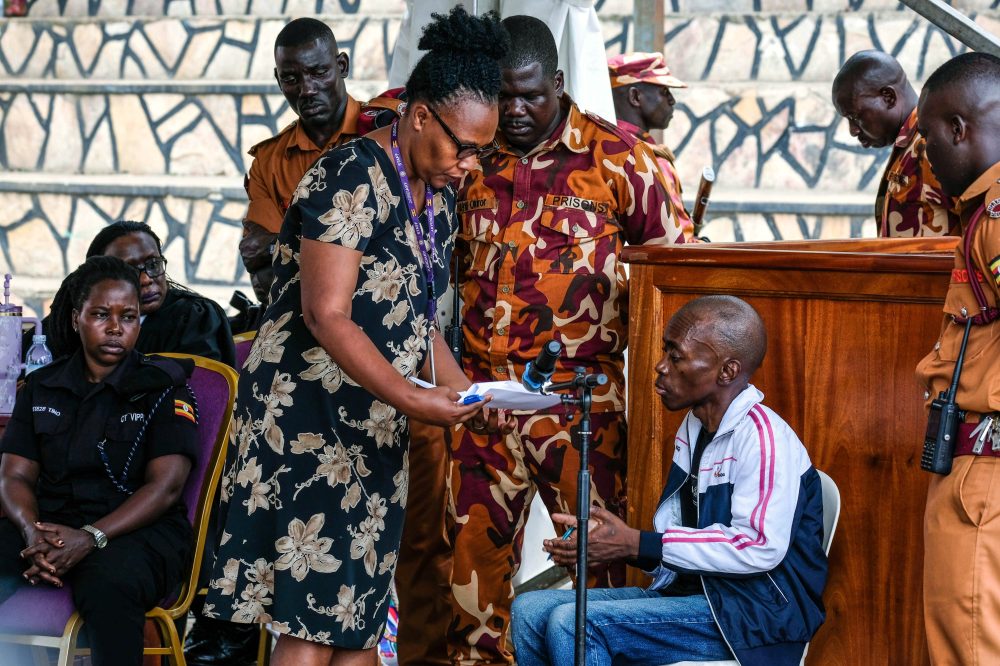

WAKISO, Uganda — A court in Uganda has condemned a man to death for the brutal slaying of four young children at a nursery school facility this past April.
Christopher Okello, 38, received the capital punishment sentence on Thursday after a judge dismissed his mental illness defense regarding the horrific incident that shocked the East African nation on April 2nd.
Spectators gathered under a large tent burst into applause when the magistrate declared that Okello must “suffer death” for his crimes.
According to the court, the defendant “failed to adduce any evidence to support this claim that he was not mentally okay” during the commission of the violent acts.
Authorities say Okello carried out a machete assault on the children at the educational facility located in a Kampala suburb. The nursery school, called the Gaba Early Childhood Development Program, became the scene of tragedy when the attacker allegedly posed as a parent to gain access.
According to eyewitness accounts, the perpetrator spoke briefly with school staff before securing the entrance gate and launching his attack on the young victims.
Uganda’s President Yoweri Museveni directed the judicial system to expedite the criminal proceedings using “mobile courts” — outdoor hearings that enabled hundreds of grieving community members and other observers to watch the legal process unfold.
However, questions arose regarding the accused man’s psychological state throughout the proceedings. Observers noted his anxious behavior and instances of unprompted laughter during the trial. The Uganda Law Society criticized the proceedings as “a judicial lynching rally.”
Court officials justified their decision to hold a rapid and highly visible trial, stating it demonstrated their “commitment to taking justice closer to the people through innovative approaches.”
While Uganda maintains capital punishment, executions are seldom performed in the nation. Numerous individuals facing death sentences have remained incarcerated for extended periods.