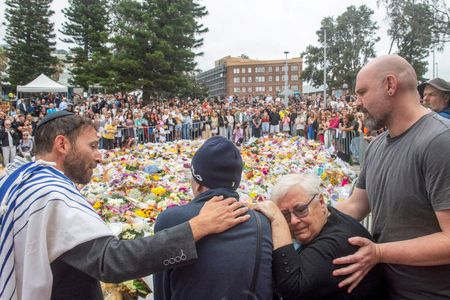

Australian officials have released preliminary findings from their investigation into December’s tragic mass shooting at Sydney’s Bondi Beach, offering 14 recommendations to bolster the nation’s counter-terrorism defenses.
The December 14 attack during a Jewish Hanukkah celebration claimed 15 lives and represented Australia’s most devastating gun violence incident in three decades. Prime Minister Anthony Albanese announced Thursday that his administration will implement all suggestions from the Royal Commission’s initial assessment.
“This is as the government envisaged – that the first task of the Royal Commission, the priority, was to look at the security elements of these issues,” Albanese stated during a press briefing.
The 154-page preliminary assessment suggests enhanced protection for Jewish community gatherings and additional firearm legislation improvements. However, investigators determined that existing legal structures did not prevent security forces from addressing the threat.
Authorities identified the attackers as a father and son who drew inspiration from the Islamic State terrorist organization. The incident shocked Australia, a nation recognized for its stringent gun control measures, and sparked demands for stronger anti-Semitism protections and tighter weapon restrictions.
Key proposals include a thorough examination of joint counter-terrorism units, with results to be delivered to police leadership and security officials within three months. The commission also recommends extending security measures beyond the Jewish High Holy Days of Rosh Hashanah and Yom Kippur to cover additional significant Jewish observances and gatherings.
Further suggestions involve updating counter-terrorism guidelines more rapidly, incorporating high-ranking government personnel in terrorism response training, and expediting plans for a nationwide gun buyback initiative.
“The review has revealed aspects in which counter-terrorism capability at federal and state levels could be improved,” the assessment concluded.
Five recommendations remain confidential due to national security sensitivities, according to Albanese. The Royal Commission was formed in January after pressure from Jewish organizations and victims’ relatives, who had criticized the Prime Minister’s initial reluctance to authorize the investigation.
Public testimony sessions are set to begin next week, with the complete report expected by year’s end.