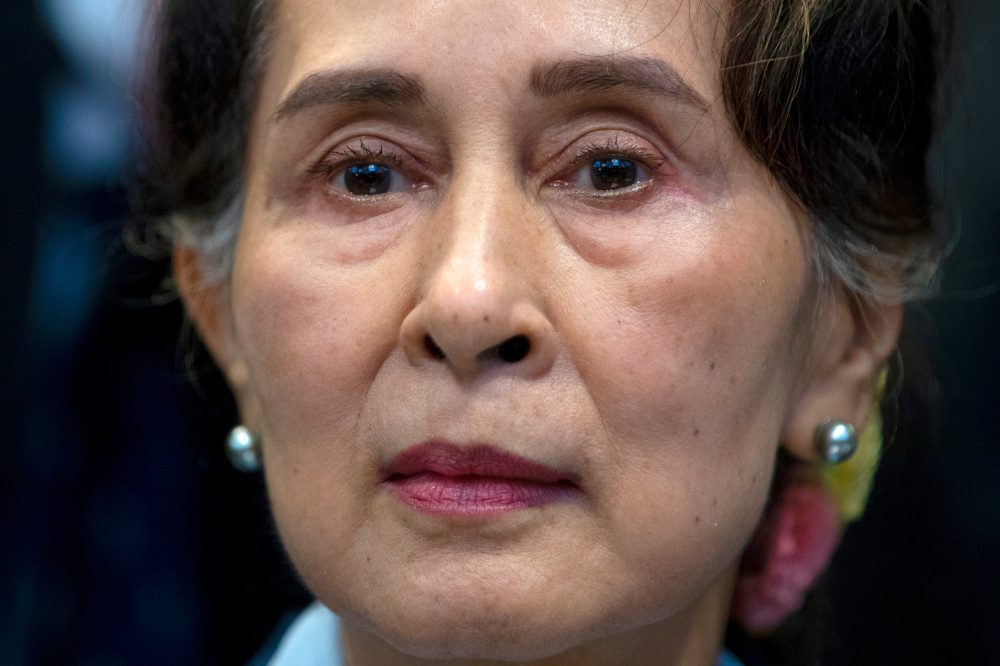

Myanmar’s military government has once again shortened the prison sentence of former leader Aung San Suu Kyi, according to legal sources and state media reports released Thursday. The reduction came as part of prisoner pardons connected to a Buddhist religious observance.
This marks the second amnesty in a two-week period, following a previous round of clemency on April 17 that freed more than 4,500 inmates. Officials have not disclosed how many political prisoners opposing military rule were included in Thursday’s pardons.
Legal sources, speaking anonymously due to safety concerns, confirmed that Thursday’s action reduced Suu Kyi’s sentence by one-sixth, though they did not provide the exact remaining term. Based on earlier sentence reductions, the 80-year-old Nobel laureate is believed to face more than 13 years of imprisonment.
Government media announced that 1,519 prisoners, including 11 foreign nationals, received amnesty, while other convicted individuals had their sentences reduced by one-sixth to commemorate the Full Moon day of “Kason,” marking Buddha’s Birthday and Demise.
These clemency measures follow the April 10 inauguration of Senior General Min Aung Hlaing as president after elections that critics characterized as orchestrated and unfair, designed to preserve military control.
During his swearing-in ceremony, he pledged his administration would offer pardons to advance social reconciliation, justice and peace.
Military forces detained Suu Kyi on February 1, 2021, during their seizure of power from her democratically elected administration.
Courts initially sentenced her to 33 years imprisonment in late 2022 on multiple charges that supporters and human rights organizations called fabricated attempts to discredit her and justify the military coup while blocking her political comeback.
Her sentence was first reduced to 27 years in August 2023, then cut by more than four years on April 17 when prison terms under 40 years were decreased by one-sixth.
Suu Kyi remains imprisoned at a secret facility in the capital city of Naypyitaw.
Unconfirmed reports last week suggested she might be moved to house arrest under the clemency program, but authorities have not verified this information.
Details about her physical condition remain strictly controlled. Reports from 2024 and 2025 suggested deteriorating health, including low blood pressure, dizziness and cardiac issues, though these accounts cannot be independently confirmed. Her attorneys have been prohibited from in-person visits since December 2022.
The 2021 military coup sparked widespread public opposition that was violently crushed, leading to an ongoing civil conflict that has claimed thousands of lives.
The Assistance Association for Political Prisoners, a human rights monitoring group, reports that 22,047 individuals have been detained in Myanmar since the army takeover.
Suu Kyi, daughter of Myanmar’s slain independence leader Gen. Aung San, previously endured nearly 15 years as a political prisoner under house arrest from 1989 to 2010.
Her unwavering opposition to military rule transformed her into an international symbol of peaceful democratic resistance, earning her the 1991 Nobel Peace Prize.