The commanding officer of U.S. Central Command reported that military operations targeting Iran are proceeding according to expectations, coinciding with Israel’s launch of what they described as extensive strikes against Iranian military infrastructure on Monday morning.
Navy Admiral Brad Cooper conducted his initial exclusive wartime interview with Iran International, a Persian-language satellite broadcaster, which was broadcast early Monday. Iranian news outlets documented fresh aerial attacks on Tehran but did not specify which locations were targeted.
On Sunday, Iranian officials issued warnings that they might strike American and Israeli energy facilities and critical infrastructure should either nation act on President Trump’s ultimatum threatening to “obliterate” Iran’s electrical grid unless the Strait of Hormuz is completely reopened.
Trump delivered this warning through social media while at his Florida residence over the weekend, facing mounting domestic pressure to secure the waterway as fuel costs continue climbing.
Casualty figures from the ongoing conflict have climbed beyond 1,500 fatalities in Iran, exceeding 1,000 deaths in Lebanon, along with 15 Israeli casualties and 13 American service members killed. Additional civilian deaths have occurred throughout Gulf region territories and waters. Displacement has affected millions across Lebanon and Iran.
During his interview with Iran International, Admiral Cooper stated the U.S. military campaign against Iran remains “ahead or on plan.”
Cooper emphasized that Iran’s persistent strikes against Gulf Arab nations and broader Middle Eastern targets endanger civilian populations.
The admiral revealed that American and Israeli forces are focusing on facilities that produce missiles and unmanned aircraft.
“We’re also going after the manufacturing,” he said. “So it’s not just about the threat today. We’re eliminating the threat of the future, both in terms of the drones, the missiles, as well as the navy.”
Cooper advised Iranian citizens against public demonstrations, despite statements from both Israeli and American officials expressing hope that popular uprising might overthrow Iran’s religious government following the strikes.
“They’re launching missiles and drones from populated areas and you need to stay inside for right now,” Cooper said. “There will be a clear signal at some point, as the president has indicated, for you to be able to come out.”
Regional developments included an Indian citizen residing in the United Arab Emirates suffering injuries from debris following the interception of a ballistic projectile over an industrial zone near Al Dhafra Air Base in Abu Dhabi on Monday.
Saudi Arabia’s military department announced Monday that defense systems stopped one ballistic missile aimed at Riyadh, while another impacted an “uninhabited area.”
The UAE confirmed its air defense networks were actively intercepting incoming Iranian missiles early Monday, providing no additional details.
Both Bahrain and Kuwait activated missile warning systems Monday morning due to Iranian rocket fire, though immediate damage assessments were unavailable.
TEL AVIV/JERUSALEM/WASHINGTON, March 23 (Reuters) – Tehran has issued a warning that it will target energy and water infrastructure throughout the Gulf region should President Donald Trump make good on his ultimatum to attack Iran’s electrical grid, sparking concerns about widespread disruption in an area that relies heavily on desalinated water for drinking.
Trump established a Monday evening deadline of approximately 7:45 p.m. EDT (2345 GMT), issuing a late Saturday warning that America would target Iran’s power facilities unless Tehran completely reopens the Strait of Hormuz within a 48-hour window.
The possibility of retaliatory attacks on civilian infrastructure has further destabilized oil markets, with prices beginning Monday’s Asian trading session with volatility.
Following more than three weeks of intensive bombardment by U.S. and Israeli forces that officials claim has significantly diminished Iran’s missile capacity, Tehran has maintained its ability to launch counterstrikes. Warning sirens echoed throughout northern and central Israel, including Tel Aviv and the occupied West Bank, during Sunday night hours as incoming Iranian missiles were detected.
Earlier, Israeli military officials announced the completion of strikes against Tehran, focusing on a military installation along with weapons manufacturing and storage sites.
The semi-official Mehr News agency reported that at least one fatality occurred during an air strike on a radio facility in Iran’s Gulf port city of Bandar Abbas, while air defense systems were activated in eastern Tehran early Monday.
Trump’s ultimatum emerged less than 24 hours after he suggested the United States might consider de-escalating the conflict, despite U.S. Marines and heavy landing vessels moving toward the region.
“If Iran’s fuel and energy infrastructure is attacked by the enemy, all energy infrastructure, as well as information technology…and water desalination facilities, belonging to the US and the regime in the region will be targeted pursuant to previous warnings,” Iranian military spokesman Ebrahim Zolfaqari stated, according to state media.
However, while electrical grid attacks could damage Iran, they would prove potentially devastating for neighboring Gulf states, which use approximately five times more electricity per person. Power makes their modern desert metropolises livable, partly through operating desalination facilities that supply 100% of water consumption in Bahrain and Qatar. These plants utilize seawater to fulfill over 80% of drinking water requirements in the United Arab Emirates and half of Saudi Arabia’s water supply.
Iran’s Parliament Speaker Mohammad Baqer Qalibaf reinforced the threat, posting on X that vital infrastructure and energy installations across the Middle East could face “irreversible destruction” if Iranian power facilities come under attack.
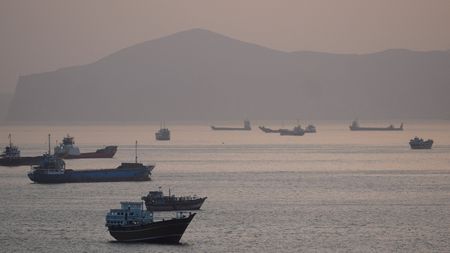
Iran’s influential Revolutionary Guards indicated this would also ensure the shipping corridor where one-fifth of global oil and liquefied natural gas typically passes along Iran’s southern coastline would stay closed.
“The Strait of Hormuz will be completely closed and will not be opened until our destroyed power plants are rebuilt,” the Guards declared in an official statement.
The conflict launched by the U.S. and Israel on February 28 has claimed over 2,000 lives, disrupting markets, increasing fuel prices, stoking global inflation concerns, and creating turmoil within the postwar Western alliance.
“President Trump’s threat has now placed a 48-hour ticking time bomb of elevated uncertainty over markets,” noted IG market analyst Tony Sycamore, who anticipates stock market declines when trading resumes Monday.
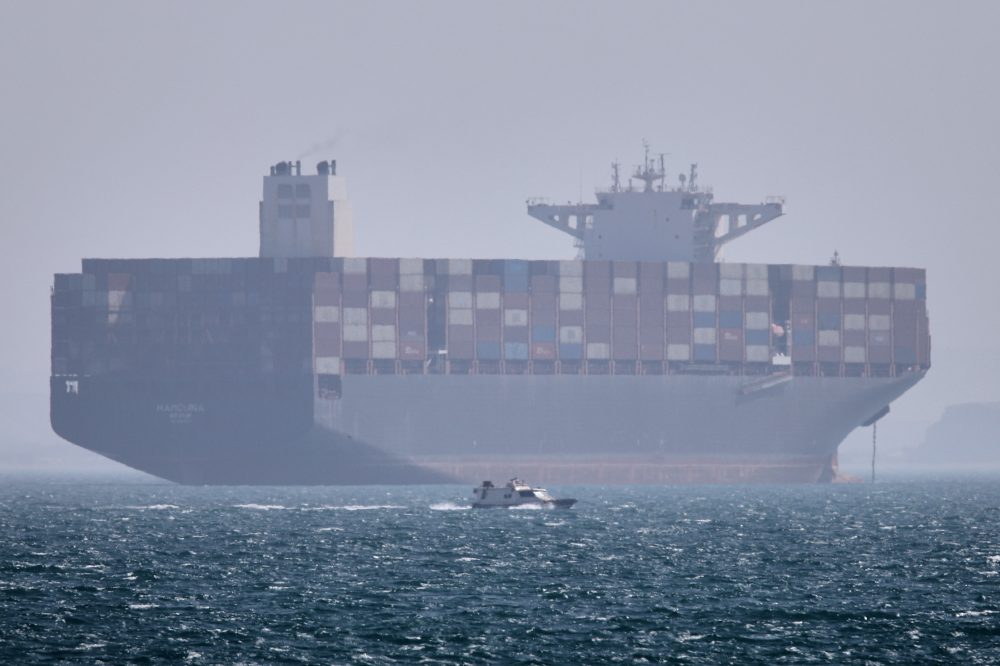
Iranian attacks have effectively shut down the Strait of Hormuz, creating the most severe oil crisis since the 1970s. The near-blockade drove European gas prices up as much as 35% during the previous week.
“If Iran doesn’t FULLY OPEN, WITHOUT THREAT, the Strait of Hormuz, within 48 HOURS from this exact point in time, the United States of America will hit and obliterate their various POWER PLANTS, STARTING WITH THE BIGGEST ONE FIRST!” Trump wrote on social media around 7:45 p.m. EDT (2345 GMT) Saturday.
Iranian media quoted the nation’s International Maritime Organisation representative as stating the strait remains accessible to all shipping except vessels connected to “Iran’s enemies.”
Ali Mousavi explained that transit through the waterway was achievable by coordinating security and safety protocols with Tehran.
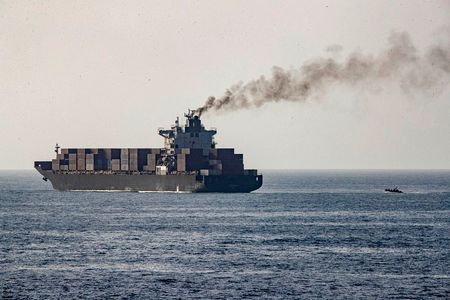
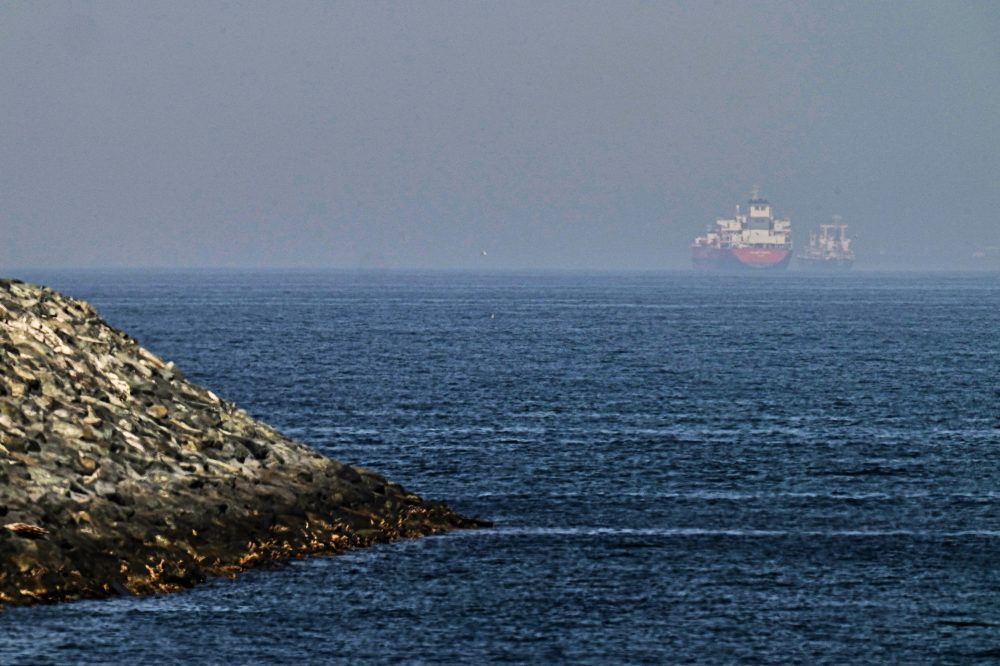
Vessel tracking information reveals some ships, including Indian-flagged vessels and a Pakistani oil tanker, have successfully navigated the strait. However, the overwhelming majority of ships remain sheltered in port.
The United States and Israel claim their three weeks of intensive air campaigns have substantially weakened Iran’s capacity to project military power beyond its borders. Nevertheless, Tehran launched its first confirmed long-range ballistic missiles with a 4,000 km (2,500 mile) range on Friday toward a U.S.-British Indian Ocean military installation, extending the threat of attacks beyond the Middle East.
On Sunday, Iranian strikes against two southern Israeli communities wounded dozens in what an Israeli medical facility characterized as a significant casualty incident. The targeted towns were situated near Israel’s classified nuclear facility and several military bases, including Nevatim Air Base, among the country’s largest.
The conflict has unfolded alongside a separate confrontation between Israel and Iran-backed Hezbollah in Lebanon, with Israel announcing Sunday that its forces had conducted raids on multiple armed group positions in southern Lebanon.
Israeli military spokesperson Brigadier General Effie Defrin informed reporters that Israel continues striking Iran continuously and anticipates “weeks more of fighting against Iran and Hezbollah.”
Hezbollah reported attacking several border regions in northern Israel. Israeli emergency responders confirmed one death at a kibbutz near the border. Israel later indicated it was investigating whether the fatality resulted from Israeli fire.
Hezbollah has launched hundreds of rockets at Israel since joining the regional conflict on March 2, triggering an Israeli offensive that has resulted in more than 1,000 Lebanese casualties.
Israel announced it had directed the military to accelerate the destruction of Lebanese residences in “frontline villages” to eliminate threats to Israelis, and to demolish all bridges crossing Lebanon’s Litani River, which it claimed were used for “terrorist activity.”
Israeli military leaders announced Sunday that their campaign against Hezbollah militants in southern Lebanon represents just the opening phase of what they describe as an extended operation to diminish the Iran-supported organization’s combat strength.
The escalated military action follows Hezbollah’s decision to restart missile launches into Israeli territory, marking the first such attacks since a ceasefire agreement took effect in November 2024. Israeli forces have responded by bombing strategic infrastructure, including river crossings and facilities allegedly controlled by Hezbollah.
“The operation against the Hezbollah terrorist organization has only begun … This is a prolonged operation,” stated IDF Chief of Staff Eyal Zamir during remarks made Sunday evening.
Israeli Defense Minister Israel Katz announced that military forces have received orders to speed up the demolition of Lebanese residences believed to be utilized by the militant organization. “We have ordered an acceleration in the destruction of Lebanese homes in contact-line villages to neutralize threats to Israeli communities, in accordance with the model of Beit Hanoun and Rafah in Gaza,” Katz explained. He noted that Lebanese civilians would receive safe corridors for evacuation toward northern areas.
Recent Israeli airstrikes destroyed the Zarieh Bridge, which military officials claimed served as a transportation route for Hezbollah fighters moving between Lebanon’s northern and southern regions. Additional bombing runs have focused on other Litani River crossings, including the Qasmiyeh bridge.
Lebanese President Joseph Aoun criticized “Israel’s targeting and destruction of infrastructure and vital facilities in southern Lebanon, particularly the Qasmiyeh bridge over the Litani River and other bridges.”
“These attacks represent a dangerous escalation and flagrant violation of Lebanon’s sovereignty, and are considered a prelude to a ground invasion,” Aoun declared.
The military campaign unfolds amid growing hostilities across the Israel-Lebanon frontier, with Israeli officials indicating their intention to maintain sustained strikes against Hezbollah strongholds throughout southern Lebanon.
Moshe Davidovich leads the Mateh Asher Regional Council in Israel’s Western Galilee, positioned directly along the Lebanese border. He paints a grim picture of daily life that has become frighteningly routine for his constituents: constant air raid sirens, ongoing uncertainty, and the mental burden of living under perpetual threat.
Davidovich spoke with The Media Line about the deteriorating conditions in his region. “The situation here in the north, in the conflict zone, is horrible,” he explained. “…during the war, most of our residents were evacuated by the government for more than a year. When they came back to their homes, they were promised that this area would be secure, without threat. But now we see Hezbollah, which is the long arm of Iran, launching missiles again against our residents. This situation brings everything back—the nightmare and the fear that we have lived with over the last two years.”
Rather than progressing toward healing, northern Israeli communities are reverting to old survival patterns. The period after October 7 had gradually permitted a delicate return to normalcy. Educational institutions reopened their doors, commercial enterprises resumed operations, and households started reconstructing their everyday routines. This recovery process has now been disrupted.
“When you see our area now with alarms every day, a few times a day, when children are once again living in fear, it means that the threat that was supposed to disappear is still here,” Davidovich stated.
“It is not just about security in the physical sense. It is about the feeling that there is no real change,” he continued.
The regional leader characterized the present war phase as one marked by multiple threats operating at various levels while intersecting in residents’ daily experiences.
“This situation is very confusing for the residents,” he explained. “On one hand, you have the big missiles coming from Iran, which create a national-level sense of danger. On the other hand, you have the drones and the attacks from Hezbollah, which are immediate and close.”
The consequences are evident in ordinary daily activities. Households that had recently returned to their communities are again structuring their schedules around warning sirens and shelter availability, continuously measuring how rapidly they can reach safety.
“We see it especially with the younger children,” Davidovich observed. “They are reacting again to the alarms, to the uncertainty, to the fear. This was supposed to be behind us, but it’s not. And when you understand that, you realize this is not something temporary.”
Among the most pressing deficiencies, he stressed, is insufficient civilian protection throughout substantial portions of the area.
“About 40% of our residents today do not have access to proper shelter,” Davidovich declared. “This is a very serious issue. There are families who, when there is an alarm, simply do not have a safe place to go. This is something that should have been solved a long time ago.”
During previous war stages, evacuation provided a temporary remedy for this vulnerability. Thousands of inhabitants were moved to more secure locations throughout Israel, frequently residing in hotels or temporary accommodations where immediate danger exposure was considerably diminished.
“In the previous period, people were spread across the country in protected areas,” he noted. “Now they are back in their homes, but the level of protection has not changed accordingly. That creates a very difficult situation. People want to live in their communities, but they also need to feel that they are safe.”
Davidovich reported that over 95% of Mateh Asher inhabitants have come back home. However, he warned that their return doesn’t necessarily indicate confidence in their safety.
“In places like Kiryat Shmona or Metula, you see a different picture,” he said. “Only about half of the population has returned. One of the main reasons is the lack of security. People are asking themselves whether anything has fundamentally changed—and for many, the answer is still unclear.”
This question about whether genuine change has occurred surfaces repeatedly, he indicated, particularly among families still weighing whether to return home.
“If you want communities to function, to grow, to recover, you need to ensure that they are protected,” Davidovich emphasized. “Otherwise, you are asking people to live in a reality that is not sustainable.”
The dangers are tangible, not abstract, and influence everyday behavior. “There are two main threats that we are dealing with right now,” he said. “One is the drones that Hezbollah sends several times a day. These are difficult to detect and can reach communities quickly. The other is the anti-tank missiles, direct-fire weapons that can hit villages very close to the border.”
Through discussions with government representatives, Davidovich reported increasing awareness that current protective measures fall short—but emphasized this recognition must translate into concrete action.
“We are in constant contact with the government,” he said. “There is an understanding that more needs to be done. We have been promised additional support, including for infrastructure and for mental health services, which are critically important at this stage.”
Nevertheless, he emphasized that time sensitivity remains the crucial factor.
“These are not long-term issues that can wait,” he said. “We are talking about immediate needs that are directly connected to saving lives. When people do not have shelters, when families are dealing with ongoing trauma, these are things that require immediate solutions.”
Psychological health, he added, has emerged as one of the most enduring challenges precisely due to the conflict’s accumulative nature.
“This builds over time,” Davidovich said. “It is not just one event. It is everything together. And what people feel now is that instead of moving forward, they are being pulled back into the same reality.”
For Davidovich, this sentiment connects to the war’s broader context, extending beyond border incidents.
“It is clear to everyone that Hezbollah is the long arm of Iran,” he said. “If you want to change the situation in the north, you need to address that connection.”
Yet for local residents, he noted, these larger geopolitical issues often seem remote compared to their immediate daily struggles.
Despite mounting pressure, Davidovich affirmed that area communities have no intention of abandoning their homes.
“We are strong, and we are committed to our communities,” he said. “But strength alone is not enough. People need to feel that there is a future.”
For those living along Israel’s northern frontier, that future remains questionable—measured not in extended plans, but in the intervals between successive air raid warnings.
Multiple United Nations Security Council members have acknowledged recent progress made by Syria’s government in fighting terrorism and improving domestic security conditions. The recognition indicates a potential diplomatic shift among some nations toward a more practical engagement strategy with the Middle Eastern country, while maintaining emphasis on respecting Syria’s sovereignty and territorial boundaries.
During a recent UN session focused on Syria, various nations highlighted observable improvements in both security conditions and economic indicators, though significant obstacles persist. UN Deputy Special Envoy for Syria Claudio Cordone urged Israel to comply with the 1974 Disengagement Agreement, cautioning against military escalation that could jeopardize the delicate ceasefire. Cordone noted that Damascus has increased communication with both regional and international partners to reduce tensions and prevent further conflict escalation.
Cordone identified preliminary indicators of economic recovery, especially following the restoration of certain external financial channels, which may help improve living standards despite continuing sanctions and infrastructure problems. He commended Syrian military actions against the Islamic State, observing that these operations have successfully weakened the terrorist organization’s capacity across multiple regions.
The UN session featured collaborative efforts from Russia, Turkey, China, Denmark, and other nations supporting Syrian stability while condemning Israeli violations and emphasizing the importance of maintaining Syria’s territorial unity. This cooperation, despite varying national interests, demonstrates increasing awareness of how continued instability threatens regional security.
US Special Envoy for Syria Thomas Barrack described Syria as having experienced what he called “profound transformations” during the previous 15 months, referencing changes that could affect international community involvement in addressing the crisis. Syria’s UN Permanent Representative Ibrahim Olabi stated that Syria continues advancing with a comprehensive national strategy that is gaining increased Security Council support.
These developments occur within a complicated regional environment, where Syria has remained central to competing international and regional agendas since fighting began in 2011, resulting in economic deterioration and severe political and territorial fragmentation.
While military action intensity has decreased in recent years, certain areas remain beyond government authority, and ongoing challenges include foreign military presence, economic sanctions, and reconstruction needs.
Syrian-Israeli tensions continue as a complicating factor, especially given repeated airstrikes, emphasizing the critical need to maintain the 1974 agreement to prevent wider conflict. Any security or economic improvements are considered modest steps within an extended and complicated journey toward stability.
The Security Council’s positive remarks suggest a tonal shift, with certain countries adopting more practical approaches focused on crisis containment and supporting gradual stabilization rather than demanding immediate, comprehensive transformation. However, disagreements remain regarding the political process’s future, the Syrian government’s role, and sanctions’ continuing effect on potential economic recovery.
Overall, Security Council deliberations demonstrate a combination of careful optimism and caution. While recognition comes alongside warnings, achieving a durable resolution will require broader international consensus and key players’ ability to tackle the crisis’s fundamental causes.
Israeli President Isaac Herzog toured the aftermath of an Iranian missile attack in Dimona on Sunday, delivering a forceful message to Tehran following the strike that injured 34 people but claimed no lives.
The Iranian projectile slammed into a residential facility that houses individuals with disabilities, devastating the surrounding community during Saturday night’s assault. Herzog surveyed the destruction firsthand, describing the scene during his visit.
“We are here in Dimona. … We are in a hostel for people with special needs. And of course, an incredible neighborhood, which was demolished last night,” he said.
While acknowledging the widespread damage, the president emphasized that quick action by residents saved lives when warning sirens activated. “But luckily, no one lost his life. Why? Because the municipalities and the people listened to the instructions,” he said.
Herzog then directed harsh criticism toward Iranian leadership, challenging their military strategy. “All I want to say is to our enemies out there in Iran, you’re mistaken. You will keep on carrying out crimes against humanity by sending missiles to kill human beings, not differentiating between anything, age and gender, religion, or even the disabilities that they may have,” he said.
The president expressed confidence in Israel’s ability to withstand the attacks and predicted Iran’s eventual defeat. “You’re wrong. We’ve always shown stronger resilience. We know that your leadership is in havoc and disarray. And we are sure, absolutely adamantly sure, that not only shall we overcome, but you will fall flat on your face,” Herzog said.
Looking ahead, Herzog established clear conditions for ending the ongoing hostilities. “The war will end when it is clear that Iran cannot have nuclear weapons and definitely Iran cannot have its ballistic capabilities.”
The president also highlighted broader security concerns, referencing Iran’s capacity to fire a “4,000-kilometer missile” at Diego Garcia, the joint US-UK military installation in the Indian Ocean, reflecting worries previously expressed by President Trump regarding American strategic interests.
“Obviously, this empire of evil has no limitations. And that is why this war is so vital and crucial for the future of the world,” Herzog said. “We are, from here, protecting Europe and protecting the free world.”
Tehran claimed the missile launch was retaliation for recent American and Israeli attacks on Iranian nuclear installations. The strike wounded 34 individuals, including a 12-year-old boy whose condition was later upgraded to serious and a woman in her thirties who was initially reported in moderate condition.
Medical personnel treated more than 20 additional victims for shrapnel injuries, wounds suffered while seeking shelter, and anxiety-related symptoms.
The Israel Defense Forces announced plans to examine why their defense systems failed to intercept the incoming missile.
Recent military actions targeting power infrastructure in the Middle East have sparked concerns among security experts that critical energy facilities may become primary targets in escalating regional conflicts.
The targeting of Iran’s South Pars natural gas facility by Israeli forces, combined with damage from missile debris at Haifa’s Bazan oil refinery, represents what analysts describe as a concerning escalation in warfare tactics.
Previously, both nations had largely refrained from directly attacking major energy installations. However, this unofficial understanding appears to have dissolved, leaving vital infrastructure exposed to potential strikes.
American Israeli environmentalist and entrepreneur Yosef Abramowitz warns this development leaves Israel “more vulnerable than ever.”
Iranian military officials escalated tensions Sunday when a spokesperson for the Armed Forces Unified Combat Command declared: “if the enemy attacks fuel and energy infrastructure, all energy, information technology, and desalination infrastructure belonging to the US and the regime in the region will be targeted.”
Security analysts point to Israel’s highly interconnected energy network as a particular vulnerability. The nation’s gas extraction platforms, processing facilities, fuel storage sites, electrical generation plants, and water desalination centers operate as an integrated system where damage to one component could cascade throughout the entire infrastructure.
A June 2024 analysis by the Institute for National Security Studies (INSS) highlighted Israel’s isolation from regional power networks, describing the country as an “electricity island” unable to import power from neighboring nations during crisis situations.
The research also identified Israel’s heavy reliance on natural gas as a critical weakness, noting delays in solar energy integration despite mounting security and environmental concerns.
According to the INSS findings, natural gas comprises more than 75% of Israel’s total energy production.
“The diversification of natural gas sources has improved due to the commercial operation of three reservoirs and the construction of two connections from the gas reservoirs to the coast,” the study’s authors noted. “However, Israel does not have facilities for storing natural gas, and damage to one of the reservoirs or pipelines is enough to seriously impair the electricity supply.”
While power generation facilities have been equipped with dual-fuel systems allowing diesel operation during emergencies, the report cautioned that maintaining adequate diesel supplies for extended periods could prove challenging.
Israel’s attack on South Pars represents the first instance of either nation directly targeting fossil fuel production infrastructure during the current conflict. The facility holds exceptional importance for Iran, generating approximately 70% of the country’s gas output and supplying roughly 90% of domestic energy needs, according to Dr. Tina Soliman Hunter, an energy and natural resources law professor at Macquarie University in Australia.
Iran’s retaliatory strikes Thursday afternoon may have aimed at the Bazan refinery, though officials report only minor damage from falling missile fragments during multiple bombardments.
Energy Minister Eli Cohen stated that “The damage to the electricity grid in the north [was] localized and not significant,” adding that “the barrage to the north did not cause any significant damage to infrastructure sites in the State of Israel.”
Environmental Protection Ministry officials confirmed no hazardous materials were released during the incidents.
The Bazan facility in Haifa Bay processes approximately 9.8 million tons of crude oil annually, supplying over half of Israel’s total fuel requirements. The refinery also produces between 50% and 60% of the nation’s diesel and gasoline supplies. Security experts have long identified the site as a known weak point, with Iran previously attempting to target the facility during attacks in 2025.
Abramowitz explained that environmental advocates and security professionals have expressed ongoing concerns about potential direct strikes on oil, gas, and power installations, particularly given their proximity to populated areas.
“Hezbollah has publicly threatened the gas rigs and specifically Haifa,” Abramowitz observed. “There’s been a sort of deterrence or an understanding that we won’t hit the fossil fuel assets of our enemies, and they won’t hit ours. That’s changed.”
While missile impacts on power plants could cause grid failures or significantly reduce available electricity, experts consider direct hits on offshore gas platforms the most catastrophic scenario due to potential energy disruptions combined with severe environmental consequences.
The Leviathan gas platform operates just 10 kilometers from Israel’s northern coastline, positioning it among the closest gas extraction facilities to populated areas globally.
A primary concern involves potential condensate releases from damaged platforms. This highly toxic byproduct of natural gas extraction could contaminate water sources and force closure of the country’s desalination infrastructure.
Condensate behaves differently than crude oil spills, with approximately half evaporating into atmospheric pollution while the remainder sinks beneath the sea surface. Unlike floating crude oil that can be recovered, sunken condensate proves extremely difficult to clean and could devastate marine environments and coastal areas.
“Eighty percent of our drinking water is essentially dependent on making sure that there’s no poisons and condensate in the Mediterranean, and hitting a gas rig is the easiest way to make Israelis vulnerable and thirsty,” Abramowitz explained, noting additional energy supply concerns. “When you hit an energy asset like a gas rig, ships will no longer agree to bring in coal or natural gas, even if we can take liquefied gas, because the insurance rates will go up.”
“A direct hit on a gas rig will lead to shutting down all our desalination plants, and the national grid would go down once emergency supplies of back-up coal and diesel are used,” Abramowitz continued. “We won’t be able to replenish these stocks because insurance rates on delivery boats will be prohibitive.”
“When you have 75% to 80% of your power plants operating on gas, and your gas is cut off, you get knocked back to the Stone Age,” Abramowitz warned.
Regional precedent demonstrates how infrastructure disasters can devastate urban centers. Beirut’s 2020 port explosion, involving approximately 2,750 tons of improperly stored ammonium nitrate, injured 6,000 people and killed around 200. The accidental blast destroyed large sections of the city, caused over $10 billion in infrastructure damage, and displaced roughly 300,000 residents. Many affected neighborhoods continue rebuilding efforts years later.
Similar incidents in Israel’s case would likely be intentional, potentially causing comparable devastation in Haifa. However, one major risk has been eliminated: Haifa’s 12,000-metric-ton ammonia storage facility, which previously handled all seaborne ammonia imports, was removed in 2017.
The INSS report outlined several risk reduction strategies, including expanded renewable energy systems with storage and management capabilities, plus further decentralization of production facilities.
For natural gas infrastructure specifically, researchers recommended regional cooperation to increase system redundancy and reduce vulnerabilities, expanded gas storage capacity, and maintained liquefied gas import capabilities for emergency situations.
Abramowitz noted that none of the INSS recommendations have been implemented over the past two years.
He criticized government inaction on longstanding energy vulnerability warnings.
“The government that was asleep at the wheel on October 7 is the same one that has prevented solar energy from truly scaling to power our energy and transportation and bring us to true energy independence,” Abramowitz stated. “An ‘infrastructure October 7’ is potentially imminent, and a future commission of inquiry will conclude that the same leaders were guilty and negligent.”
Syrian representatives revealed Wednesday in New York a major international initiative to eliminate chemical weapon arsenals left behind by the former government, describing the effort as groundbreaking in preventing future civilian attacks.
The initiative includes collaboration with Western nations such as the United States, United Kingdom, France, Germany, and Canada to establish a joint task force. This group will identify and secure chemical arsenals before destroying them using international safety protocols.
The effort operates under partnership with the Organisation for the Prohibition of Chemical Weapons (OPCW), which identified over 100 previously unknown locations requiring comprehensive examination to guarantee complete hazard elimination.
Mohamad Katoub, Syria’s Permanent Representative to the OPCW, acknowledged the mission “will take a significant amount of time,” citing logistical and security obstacles involved in destroying dangerous chemical materials in older regions with unknown or undocumented arsenals.
Katoub emphasized that global partnership would prove essential for safe operation execution, highlighting Syria’s dedication to following international protocols and preventing future chemical weapon deployment.
Syria’s UN Ambassador Ibrahim Olabi described the initiative as a vital step toward responsibility and preventing future chemical weapon attacks on Syrian citizens. Olabi stated the action demonstrates Syria’s intention to restore international community confidence, particularly following years of warfare when such weapons were used in multiple regions.
The Syrian proposal emerges as Western nations stress the critical need for complete chemical weapon elimination, whether in Syria or globally, under strict international agreements like the Chemical Weapons Convention. OPCW assessments suggest examining both known and unknown sites represents a complicated process requiring specialized equipment and expert technical knowledge to avoid accidents or releases threatening public safety.
This effort represents a possible watershed moment for Syria, extending beyond simple weapon destruction to symbolize enhanced international responsibility and future civilian chemical attack prevention. Success could also open pathways for additional international collaboration in security, chemistry, and weapon nonproliferation areas.
However, plan implementation faces numerous obstacles. Beyond technical and logistical dangers, political and security considerations include protecting sites in volatile, hard-to-reach locations. Ongoing international oversight will be essential to guarantee complete plan adherence and prevent future illegal chemical material usage.
The Syrian proposal offers a unique chance to resolve the chemical weapons matter through organized and secure methods, backed by extensive international support and global community attention. Officials anticipate this action will establish confidence between Syria and partner countries, beginning a new cooperation phase to prevent banned weapon usage, protect civilians, and encourage regional stability.
Israeli authorities have confirmed the identity of a man killed in a Hezbollah missile attack on Sunday morning as Ofer “Pushko” Moskovitz, who managed avocado farming operations at Kibbutz Misgav Am near the Lebanese border.
Emergency responders extracted Moskovitz from his burning vehicle after it was directly struck by an anti-tank missile, but he was declared dead at the location. The attack ignited a second nearby vehicle and occurred without any advance warning sirens alerting residents.
Moskovitz had become a respected figure throughout the Upper Galilee region, dedicating his career to agricultural work along the volatile border area. He oversaw the management and cultivation of 400 dunams of avocado groves at the kibbutz, earning widespread recognition for his contributions to the community.
During a recent N12 television interview conducted just one week prior to his death, Moskovitz discussed his deep attachment to the farming land and his determination to continue agricultural work despite persistent security dangers. “These are our lives, and we are building a new life here. These trees will be here long after I’m gone,” he stated. He expressed hope that his legacy would endure, adding that his grandchildren would one day say, “This is the orchard my grandfather planted.”
The missile barrage also inflicted damage on residential buildings within the kibbutz compound. Two houses received direct impacts, though occupants who had sought protection in reinforced safe rooms escaped without injuries.
Law enforcement officials reported that northern district police officers responded to the scene alongside Border Police personnel and explosive ordnance disposal specialists after receiving reports of munitions striking a vehicle near the Galilee Panhandle border region.
An Iranian ballistic missile attack on Sunday morning left fifteen people injured across Israel’s Tel Aviv metropolitan region, emergency medical service Magen David Adom reported. One victim suffered moderate injuries while the remaining fourteen sustained minor wounds.
Military analysts believe the weapon was a ballistic missile equipped with cluster bomb warheads that scattered across multiple targets.
The strike affected numerous communities throughout the Gush Dan metropolitan area, with impacts recorded in Tel Aviv, Ramat Gan, and Petah Tikva. A structure in Petah Tikva received a direct strike, while shrapnel and missile fragments scattered throughout downtown Tel Aviv. An automobile was damaged by the attack in Ramat Gan.
Video evidence revealed significant destruction surrounding Habima Square in Tel Aviv’s city center.
The major Ayalon Highway also suffered damage from the missile barrage, forcing officials to shut down two traffic lanes.
First responders rushed to numerous locations throughout the Tel Aviv region after receiving reports of bomblet strikes. Medical personnel and rescue teams searched various sites as powerful explosions echoed throughout central Israel and the Shephelah region.
Officials urged residents to follow Home Front Command safety protocols and avoid approaching impact zones to allow emergency crews to perform their duties safely.
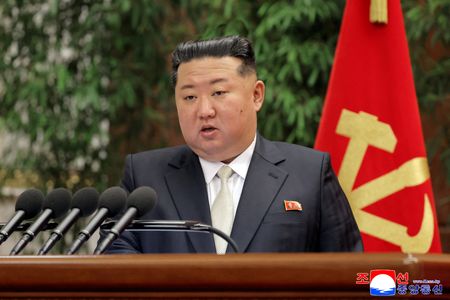
Kim Jong Un has been reinstated to his role as president of state affairs in North Korea, according to reports from the nation’s official news agency KCNA on Monday.
The announcement came following Sunday’s opening session of North Korea’s Supreme People’s Assembly, which took place in the capital city of Pyongyang.
During the legislative gathering, officials addressed potential changes and additions to the country’s socialist constitution, along with selecting leadership positions for the State Affairs Commission and various government bodies.
North Korea’s parliament, which serves as a formal legislative body that typically endorses government policies without opposition, usually convenes after major Workers’ Party meetings to codify party decisions into official law.
The assembly session also included discussions about the nation’s five-year economic development strategy that was unveiled during the ninth party congress in February, according to KCNA’s reporting.
Former President Donald Trump delivered a stark warning to Iran on Saturday, demanding Tehran restore full access to the Strait of Hormuz within two days or face devastating attacks on its electrical infrastructure.
The ultimatum comes as Iran maintains its partial blockade of the vital waterway, which handles approximately 20% of the world’s oil and natural gas shipments. Oil markets have seen price increases due to the ongoing disruption of this crucial shipping lane.
Iran has countered with its own threats, warning it would strike American infrastructure throughout the Gulf region, including energy installations.
The standoff has intensified as Tehran has broadened its military operations across the Gulf, conducting air strikes that have damaged important energy infrastructure and disrupted petroleum operations in several nations. Iranian forces have also attacked American military installations in the area, hitting U.S. personnel as part of the growing conflict.
International opposition to Iran’s actions has grown significantly, with Australia and the United Arab Emirates adding their names Saturday to a condemnation signed by 20 other nations. The diplomatic coalition now includes 22 countries total, featuring major powers such as the United Kingdom, France, Germany, Italy, the Netherlands, Japan, and South Korea.
The current crisis stems from ongoing hostilities between Iran and Israel. An Iranian missile struck the Bazan oil refinery in Haifa on Friday, causing harm to what officials described as “exterior infrastructure belonging to a third party, which is essential to the [refinery’s] activities, located outside the refinery site.”
Tehran launched further missile attacks on Saturday, wounding at least 100 individuals in the Israeli cities of Dimona and Arad. Iranian officials characterized these strikes as payback for Israeli military actions against Iran’s nuclear program facilities.
An Israeli civilian died when his vehicle was struck by a Hezbollah anti-tank missile near the northern border community of kibbutz Misgav Am, according to the Israel Defense Forces.
First responders extracted the victim from his burning car and declared him dead on site. No warning alarms sounded before the missile hit the area.
Emergency teams received reports of a second vehicle catching fire in the vicinity shortly after the initial attack.
According to the Israel Defense Forces, Hezbollah launched the missiles from across the northern border. A military spokesperson stated, “There is damage and casualties. The incident is under review.”
The missile barrage also directly struck two residential buildings within the kibbutz. However, no injuries occurred among residents who had taken shelter in protected rooms.
Law enforcement officials reported that northern district police, Border Police units, and explosive ordnance disposal teams responded after receiving reports of munitions hitting a vehicle near the Galilee Panhandle border region. Officers cordoned off the area and initiated response procedures working alongside emergency medical services.
Officials released a public advisory warning residents to stay away from impact areas. Police emphasized that civilians should not approach strike locations or touch debris, including fragments from intercepted projectiles, due to continued hazards at the scene.
Emergency personnel remained active in the region, concentrating on rescue operations and making impacted areas secure.
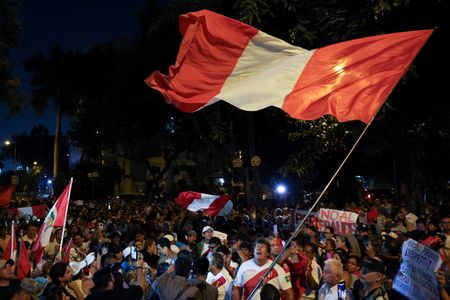
SANTIAGO, Chile — Large crowds gathered in Chile’s capital and 14 other cities on Sunday to observe World Water Day while demonstrating against newly-elected President José Antonio Kast’s elimination of environmental protection measures.
Kast, an arch-conservative leader, reversed numerous environmental regulations that had been established under his predecessor, left-leaning former President Gabriel Boric, whom he succeeded earlier this month.
Environmental groups organized the protests under the banner “Don’t ‘Kast-igate’ Nature,” drawing substantial participation across the nation’s urban centers.
According to Cristóbal Rodríguez, who serves as national spokesperson for the Movement for the Defense and Access to Water, Land and the Environment, Chile still faces significant challenges with 1.4 million residents lacking access to clean drinking water.
Rodríguez criticized the new president, stating he “represents a setback that reflects his Pinochet-era roots and is commodifying nature to levels never seen before.”
Just one day into his presidency, Kast suspended 43 environmental protection rules. These regulations had safeguarded wildlife including Darwin’s frog and the Humboldt penguin, established national parks, and created cleanup initiatives for areas like Lake Villarrica. The measures also controlled emissions from power plants.
When addressing reporters about his decision, Kast stated: “We want to generate the best possible public policy around full employment, always respecting the environment.”
The environmental advocate Rodríguez accused the new government of treating “nature as a battleground to favor the interests of big capital” and described the elimination of the “43 decrees shows an environmental chainsaw approach.”
Throughout his campaign and in his governing platform, Kast has recognized climate change as real but advocates for reducing economic regulations and emphasizing technical approaches over what he terms “environmental ideologies.”
Kast’s election represents Chile’s sharpest conservative shift since 1990, when the nation returned to democratic governance following 17 years under military dictator General Augusto Pinochet — a figure Kast supported during his younger years.
SÃO PAULO, Brazil — Pop sensation Chappell Roan found herself defending her actions Sunday following claims by soccer player Jorginho that security personnel treated his young stepdaughter poorly after she spotted the Grammy-winning artist at their hotel.
The Brazilian-Italian midfielder, who plays for Flamengo and goes by his first name professionally, detailed the incident in a bilingual Instagram post Saturday. According to Jorginho Frello, his wife and 11-year-old stepdaughter were eating breakfast at their São Paulo hotel when Roan, who is visiting Brazil for the Lollapalooza music festival, walked by their table.
“During breakfast, the artist walked past their table. My daughter, like any child, recognized her, got excited and just wanted to make sure it was really her,” Jorginho wrote. The young girl is the child of Catherine Harding, Jorginho’s spouse, and British actor Jude Law.
The soccer star emphasized that his stepdaughter remained quiet and made no requests, but claimed a security officer approached their table and addressed both his wife and daughter “in an extremely aggressive manner.”
Jorginho went on to suggest that Roan was unworthy of her supporters’ loyalty.
The “Good Luck, Babe!” singer took to Instagram the following day to share her perspective on what happened. Roan clarified that the security personnel involved were not part of her personal team and stated she never observed a woman with a child during the incident.
“It’s unfair for security to just assume someone doesn’t have good intentions,” Roan stated. “I do not hate people who are fans of my music. I do no hate children.”
The dispute caught the attention of Rio de Janeiro’s newly installed Mayor Eduardo Cavaliere, who inserted himself into the controversy Saturday evening. He declared that under his leadership, Roan would be banned from performing at Copacabana Beach, where international stars like Madonna and Lady Gaga have held concerts, and where Shakira is scheduled to perform in May.
“I doubt that Shakira would do that!” Cavaliere remarked, announcing that Jorginho’s stepdaughter would receive VIP treatment at the Colombian artist’s upcoming free beachside show. Cavaliere assumed office Friday, succeeding former Rio Mayor Eduardo Paes.
The 26-year-old performer, known for her openly queer identity and drag-influenced aesthetic, became a breakout star in 2024 with hits including “Red Wine Supernova” and “Hot To Go!” from her 2023 release “The Rise and Fall of a Midwest Princess.”
Roan claimed the Grammy Award for best new artist this past February, beating out Sabrina Carpenter for the honor.
Following the social media exchange, Jorginho shared footage of his stepdaughter’s enthusiastic response to attending Carpenter’s Lollapalooza performance. “Everything is well with the girls, and thanks for the messages,” he posted.
A senior Cuban diplomat announced this weekend that the island nation stands ready to defend itself against any possible military action by the United States, responding to recent aggressive statements from President Trump about taking control of Cuba.
Deputy Foreign Minister Carlos Fernandez de Cossio made the remarks during escalating tensions between the two countries, as discussions continue following Trump’s implementation of oil sanctions that have worsened Cuba’s economic struggles. On Monday, Trump intensified his language against the Communist nation, stating he anticipated having the “honor” of taking Cuba.
Speaking on NBC’s “Meet the Press” during Sunday’s broadcast, de Cossio explained: “Our country has historically been ready to mobilize as a nation as a whole for military aggression … We don’t believe it is something that is probable, but we would be naive if we do not prepare. We don’t see why it would have to occur, and we find no justification whatsoever.”
Media reports have indicated the Trump administration may be working to oust Cuban President Miguel Diaz-Canel from his position.
The Cuban deputy minister firmly rejected any notion that Cuba’s governmental structure or leadership would be part of negotiations with Washington.
He emphasized that regime change is “absolutely” not a topic for discussion in any talks between the two nations.
Meanwhile, the senior U.S. military commander responsible for Latin American operations informed Congress on Thursday that American forces are not conducting invasion preparations or actively planning military action to seize control of the island.
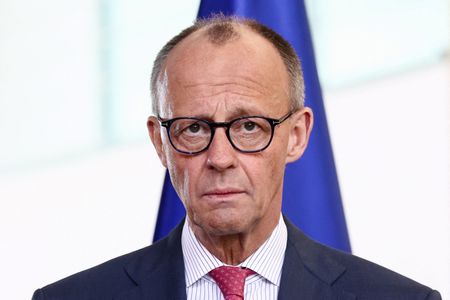
BERLIN – Initial projections from Sunday’s state election in Rhineland-Palatinate show German Chancellor Friedrich Merz’s Christian Democratic Union (CDU) capturing the lead with 30.5% of votes cast, according to forecasts aired on ARD public television following the close of polling stations.
The conservative party’s performance put them ahead of their coalition partners, the center-left Social Democrats (SPD), who garnered 27% of the vote in the western German state. This outcome signals a probable win for Merz following his party’s close defeat in the adjacent state of Baden-Wuerttemberg on March 8.
The projected victory comes as welcome news for Merz, who faces challenges including maintaining Western backing for Ukraine and confronting potential energy disruptions stemming from the Iran conflict. The win provides some consolation after the disappointing results his party experienced just two weeks prior.
Sunday’s results represent a significant setback for Merz’s SPD coalition allies in Berlin, who are still recovering from their poor showing in Baden-Wuerttemberg where they managed only 5.5% of votes – barely meeting the minimum threshold for parliamentary representation.
The far-right Alternative for Germany (AfD) party, which has solidified its position as the nation’s second-largest political force, was projected to capture 20% of votes, matching their performance in the previous Baden-Wuerttemberg contest.
Based on final tallies, the CDU and SPD might establish a state-level partnership similar to their arrangement in Berlin, with CDU candidate Gordon Schnieder positioned to succeed current SPD premier Alexander Schweitzer.
This Rhineland-Palatinate contest marks the second of five state elections scheduled for this year, preceding closely monitored September races in Berlin and the eastern regions of Mecklenburg-Vorpommern and Saxony-Anhalt, where the AfD aims to secure its first significant electoral victory.
Palestinian health authorities confirmed that four people died in separate Israeli military strikes across Gaza on Sunday, marking continued violence in the region.
Three members of the Hamas-controlled police force lost their lives when an Israeli airstrike targeted their vehicle in central Gaza’s Nuseirat camp, according to medical personnel and police sources. The same attack left ten additional people injured, medics reported.
A second strike earlier that day claimed the life of one person in northern Gaza’s Sheikh Radwan neighborhood. The victim was described by sources as a commander within one of Fatah’s militant wings, with an undetermined number of others sustaining injuries in that incident.
Israeli military officials stated they were reviewing both strikes.
According to local residents, medical staff, and regional analysts, Israeli military operations in Gaza had decreased following joint U.S.-Israeli strikes against Iran on February 28, but have recently intensified once more. Gaza health authorities report that Israeli military actions have resulted in dozens of Palestinian casualties since the Iran conflict began.
Violence has continued to flare periodically in Gaza despite a ceasefire that took effect in October, ending two years of intense warfare that began with Hamas-led attacks on Israel in October 2023.
Gaza’s health ministry reports that Israeli forces have killed at least 680 Palestinians since the October truce began. During the same timeframe, Israel reports that militants killed four of its soldiers in Gaza.
Both Israel and Hamas have accused each other of violating the ceasefire agreement.
DAMASCUS, Syria — Hundreds of Syrian citizens gathered in Damascus on Sunday to oppose new government regulations restricting alcohol sales throughout the capital, highlighting growing concerns that the nation’s Islamist leadership may curtail traditional secular liberties.
Demonstrators from various religious backgrounds assembled in a park within Bab Touma, a predominantly Christian district of Damascus, shouting “Syrians are united!” while displaying banners calling on officials to protect individual rights and religious minority communities.
“This is not about whether we want to drink alcohol, this is about personal freedom,” said Isa Qazah, a 45-year-old sculptor from the area who joined the protest along the medieval stone lanes near Damascus’ Old City. “We have come here to defend an idea.”
Armed security personnel encircled the demonstrators, though the gathering concluded peacefully without any confrontations.
The dispute began when Damascus’s governor announced new rules last week prohibiting “the provision of alcoholic beverages of all kinds in restaurants and nightclubs” throughout the city. The order gives establishments three months to eliminate their alcohol offerings, requiring bars and clubs to convert their licenses to cafe permits instead.
Officials claimed the policy was implemented “at the request of the local community,” as interim President Ahmed al-Sharaa’s government faces mounting pressure from conservative factions to enforce stricter religious standards. Al-Sharaa has remained silent on the alcohol controversy.
More than a year has passed since al-Sharaa’s movement removed former President Bashar Assad from power, yet Syria continues recovering from 14 years of civil conflict and five decades of authoritarian rule while working to establish its new direction.
Assad, who belonged to the Alawite religious minority, promoted secular policies to maintain support from other minority groups within the Sunni-majority country. While his family’s regime severely limited civic and political rights, citizens could consume alcohol, visit nightclubs, and choose their clothing freely.
Following his appointment as interim president, al-Sharaa promised to bring the nation together and honor diversity. He has generally avoided implementing social restrictions, though Syria’s numerous religious and ethnic communities remain anxious.
Violence by pro-government Sunni militants has resulted in hundreds of deaths among Alawites and Druze citizens during the past year.
Sunday’s protesters expressed worry that the new alcohol policies could intensify these divisions, particularly since the regulations permit alcohol sales exclusively in three mainly Christian areas.
However, businesses in Bab Touma, al-Qassaa, and Bab Sharqi cannot serve alcohol for on-site consumption, and stores in these districts may only sell sealed bottles for takeaway. Retailers must also maintain distances of at least 75 meters from mosques and schools, and 20 meters from police stations and government buildings.
Some residents argued that targeting Christian neighborhoods unfairly portrays them as responsible for what the decree calls “violations of public morals.” While Islamic law forbids alcohol consumption, Damascus includes many secular Muslims.
“How our are neighborhoods are violating public etiquette? The division this creates is unfair and irresponsible,” said Fawaz Bahauddin Khawja, a Christian lawyer at the rally. “This is the real face of Damascus. The only flag we raise is the Syrian flag.”
Following mounting criticism before the demonstration, Damascus officials released a statement Saturday evening expressing regret to the city’s Christian residents “for any misunderstanding or misinterpretation of the decision.” The statement also specified that hotels would be exempt from the alcohol restrictions.
“This decision does not interfere with citizens’ personal freedoms,” the statement read. “The regulation of alcohol sales exists in all countries, with differences in how it’s applied and enforced.”
ISTANBUL — Two structures crumbled to the ground Sunday following a natural gas blast in Istanbul’s Fatih district, prompting an urgent rescue mission.
Emergency responders rushed to the scene after the midday explosion and confirmed that nine individuals were trapped beneath the debris from the collapsed structures.
According to Istanbul Governor Davut Gul, rescue teams have successfully pulled seven people from the wreckage, all of whom have been transported to area medical facilities for treatment. Turkey’s state broadcaster TRT confirmed that an eighth victim has also been extracted and hospitalized. Emergency crews continue their efforts to locate the remaining trapped individual.
TRT’s reporting indicates that all rescued survivors are in stable condition with no life-threatening injuries.
The explosion brought down one two-story structure and another single-story building.
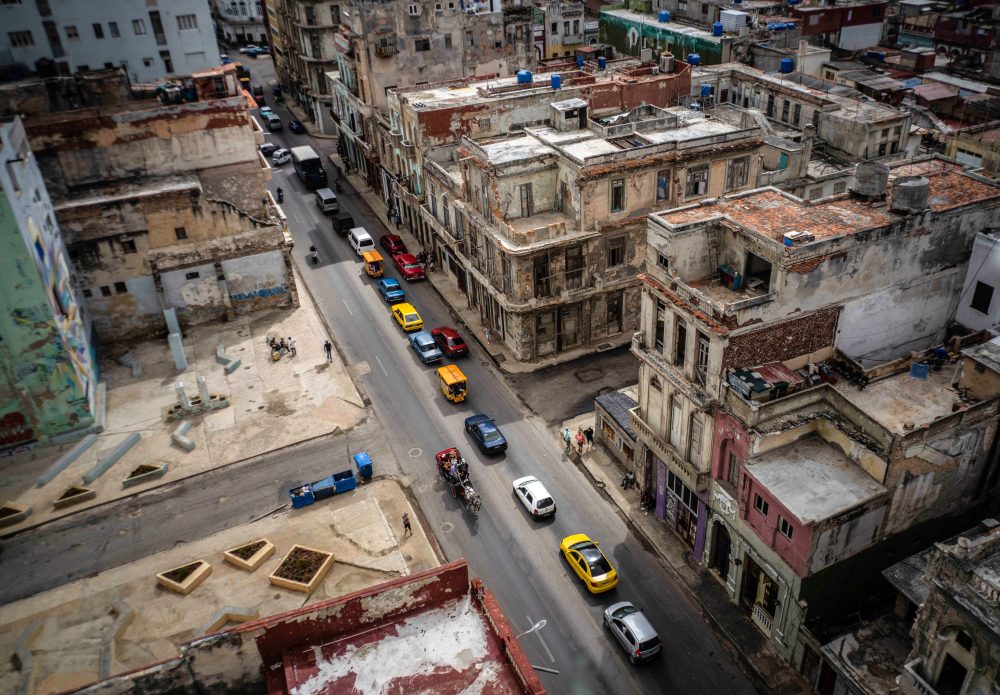
Cuban officials began efforts to restore electricity across the island Sunday following a complete power grid failure that plunged millions into darkness for the third occurrence this March.
By Sunday morning, approximately 72,000 customers in Havana had their power restored, including five medical facilities, according to reports from the state Electric Union and Ministry of Energy and Mines. However, this represents only a small portion of the capital city’s roughly 2 million residents.
Emergency power microsystems were established in Havana and other provinces including western Matanzas and eastern Holguin to supply critical facilities. Some residents in parts of the capital reported to The Associated Press that their electricity returned in the early morning hours.
The Caribbean nation is experiencing an unparalleled energy emergency. While its deteriorating electrical infrastructure has declined significantly in recent years, government officials have also attributed the outages to a U.S. energy embargo. President Donald Trump warned in January about imposing tariffs on nations that sell or supply oil to Cuba. His administration is demanding Cuba free political prisoners and pursue political and economic reforms in exchange for lifting sanctions. Trump has also mentioned the possibility of a “friendly takeover of Cuba.”
Cuba’s oil shortage has been worsened by the U.S. removal of Venezuela’s former President Nicolás Maduro, which stopped crucial petroleum deliveries from the nation that had been a loyal ally to Havana.
President Miguel Díaz-Canel has stated the island has not received oil from international suppliers for three months. Cuba generates only about 40% of the fuel required to operate its economy.
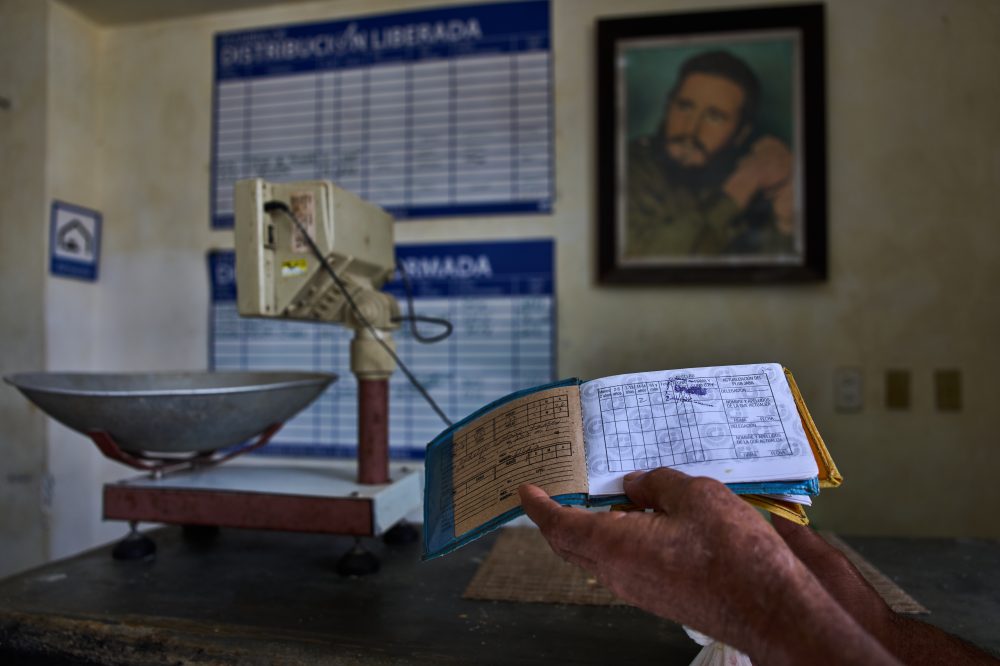
Frequent power outages severely affect residents, whose daily lives are disrupted by shortened work schedules, inability to cook with electricity, and damage to home appliances, along with numerous other problems.
“With the blackout and low voltage, my refrigerator broke — that was today. The day before yesterday, the voltage also dropped around 10 at night,” Suleydi Crespo, a 33-year-old woman with two small children, told AP on Saturday. “If there’s no electricity tomorrow, we won’t be able to get water.”
Citizens also voiced fatigue from the continuous outages, whether complete or partial.
The Cuban Electric Union, which operates under the Ministry of Energy and Mines, stated that the complete disconnection of the national power system resulted from an unexpected shutdown of a generation unit at the Nuevitas thermoelectric facility in Camaguey province, though they did not provide specifics about what caused the malfunction.
The previous nationwide power failure happened on Monday and required several days to fully restore service.
Saturday’s blackout marked the second occurrence in the past week and the third in March.
“We have to get used to continuing our usual routine. What else can we do? We have to try to survive. Get used to events, with or without electricity,” said Dagnay Alarcón, a 35-year-old vendor.
Government officials and Díaz-Canel have recognized the severity of the current energy crisis. Vice Minister of Energy and Mines Argelio Abad Vigo explained this week that the country has gone three months without receiving shipments of diesel, fuel oil, gasoline, aviation fuel or liquefied petroleum gas — all essential for the economy and electricity production.
Vehicle fuel sales are limited, airlines have canceled flights or reduced service, and many businesses have shortened operating hours.
Trump has repeatedly suggested for months that Cuba’s government is close to collapse. Following a previous electrical grid failure, Trump told reporters he believed he would soon have “the honor of taking Cuba.”
Sexual misconduct allegations against the International Criminal Court’s top prosecutor remain under active investigation, according to an internal staff memo released Sunday, contradicting weekend media reports suggesting the official had been exonerated.
Karim Khan, the ICC’s Chief Prosecutor responsible for investigating war crimes, genocide, and crimes against humanity worldwide, has temporarily removed himself from his duties while the court examines accusations of an inappropriate sexual relationship with a female attorney in his department. Khan maintains his innocence regarding all allegations.
Following a comprehensive year-long inquiry, the United Nations Office of Internal Oversight Services delivered its confidential findings report last December to the ICC’s governing body, called the Bureau of the Assembly of States Parties.
The Middle East Eye published a story Saturday claiming Khan had been vindicated of all charges.
However, Assembly President Paivi Kaukoranta directly contradicted those reports in her staff communication, which Reuters obtained. “The disciplinary process before the Bureau is ongoing and remains confidential. No decisions have been taken, and no weight should be given to recent media speculation,” Kaukoranta stated.
Multiple requests for comment sent Sunday to the court, prosecutor’s office, Assembly leadership, and Khan’s legal representatives went unanswered, likely due to the weekend timing.
The misconduct probe has unfolded alongside unprecedented U.S. sanctions targeting Khan and fellow ICC officials over their investigation into alleged Israeli war crimes in Gaza, which resulted in arrest warrants for Prime Minister Benjamin Netanyahu.
As the global tribunal of final appeal for international crimes, the ICC represents 125 member nations and faces what many consider an existential challenge due to the sanctions and the absence of its highest-profile leader.
Notable non-members include China, Russia, and the United States, all of which have criticized Khan’s decision to issue arrest warrants for current world leaders, including Russian President Vladimir Putin and Netanyahu.
Ukrainian President Volodymyr Zelensky is calling on international allies to maintain strong economic sanctions against Russia as peace negotiations between Ukrainian and American officials entered their second day on Sunday.
The discussions are taking place in Florida, with the U.S. delegation headed by special envoy Steve Witkoff and Jared Kushner, who is President Donald Trump’s son-in-law. Russian officials are not participating in these latest negotiations, which were initially planned for Abu Dhabi and were expected to include Russian representatives.
The conflict between Russia and Ukraine has now stretched into its fourth year since Moscow launched its full-scale invasion.
On Sunday, Zelensky emphasized the need for continued international pressure, particularly targeting Russia’s oil revenue streams and what’s known as its “shadow fleet” of vessels used to circumvent Western sanctions.
“Revenues give Russia a sense of impunity and the ability to continue the war. That is why pressure must continue and sanctions must work,” Zelensky posted on X.
He further stated: “Russia’s shadow fleet must not feel safe in European waters or anywhere else. Tankers that serve the war budget can and must be stopped and blocked, not just let go.”
Zelensky’s comments came after France’s Navy intercepted an oil tanker in the Western Mediterranean last week. French President Emmanuel Macron identified the vessel as part of Russia’s shadow fleet, a network of ships Moscow uses to export oil despite international sanctions. This shadow fleet has expanded significantly following Western sanctions designed to limit Russia’s oil revenues, helping Moscow maintain its export operations.
The peace proposal being discussed by U.S. officials reportedly includes provisions for a presidential election in Ukraine along with potential territorial concessions. Zelensky, whose presidential term has already ended, faces increasing pressure from Trump’s administration to conduct elections as Washington works to broker a peace agreement.
While Ukrainian law prohibits elections during wartime, Zelensky has indicated Ukraine would be prepared to hold democratic elections if the United States could guarantee a two-month ceasefire. This would provide time to prepare election infrastructure and establish security measures.
However, Ukraine’s former top military commander, Valeriy Zaluzhnyi, who now serves as ambassador to Britain and is viewed as a possible presidential contender, disagrees with the focus on elections.
“What Ukraine needs is not time to prepare for and hold elections, but a peace won through war, which will secure a future for our children,” Zaluzhnyi wrote in an article published Sunday by Ukrainian news outlet NV.
On Saturday, Zelensky had expressed willingness to continue negotiations if they could lead to a meaningful agreement to end the ongoing conflict.
Energy markets are preparing for another volatile week as crude oil costs appear headed for additional increases Monday, according to industry experts speaking Sunday. Petroleum futures had already climbed to nearly four-year peaks by Friday’s market close following escalating tensions between Washington and Tehran over critical energy infrastructure.
President Donald Trump issued an ultimatum Saturday, warning he would “obliterate” Iranian power facilities unless Tehran completely reopened the Strait of Hormuz shipping lane within two days. The aggressive stance marked a dramatic shift just one day after Trump discussed “winding down” the ongoing conflict, which has now entered its fourth week.
Iranian officials responded Sunday with their own warnings, threatening to strike American-connected infrastructure throughout the Gulf region, specifically targeting energy production and water desalination plants if Trump follows through on his ultimatum.
Friday’s trading session saw Brent crude futures for May delivery jump 3.26% to close at $112.19 per barrel, marking the highest level reached since July 2022.
Market analyst Tony Sycamore from IG warned that “President Trump’s threat has now placed a 48-hour ticking time bomb of elevated uncertainty over markets.” He predicted oil prices would surge Monday unless the administration reverses course on the ultimatum.
Energy Aspects founder Amrita Sen emphasized the gravity of the situation, stating “It clearly means more escalation which means higher oil prices. Some are incorrectly thinking, however, that Iran may cave.” She added that “Trump is trying to show he can out-escalate and that way ends in scorched earth for Gulf infrastructure.”
The ongoing conflict has already severely disrupted regional energy operations, with Iranian forces targeting petroleum facilities across Saudi Arabia, Kuwait, Bahrain, the United Arab Emirates and Qatar in response to attacks on their own infrastructure. The Hormuz closure has eliminated four complete days of worldwide oil supply, representing approximately 440 million barrels lost during the 22-day conflict period.
While Tehran has struck numerous facilities, officials have avoided targeting major desalination operations in Saudi Arabia and the UAE that provide drinking water for millions of residents. According to Atlantic Council analysis, significant damage to these water treatment facilities could render Gulf cities unlivable within weeks, potentially forcing mass population relocations and widespread electrical grid failures.
Last week’s trading showed Brent crude gaining roughly 8.8%, while West Texas Intermediate front-month contracts dropped about 0.4% compared to the previous Friday’s close. The price gap between WTI and Brent reached its widest margin in eleven years during Wednesday’s session.
International Energy Agency director Fatih Birol told the Financial Times Friday that restoring Middle Eastern Gulf supply chains could require up to six months once hostilities cease.
Reports from Axios Friday indicated the Trump administration is exploring options to either occupy or establish a naval blockade around Iran’s Kharg Island facility as leverage to force reopening of the Strait of Hormuz.
Iran’s Revolutionary Guards issued a stark warning Sunday, declaring they will fully block the Strait of Hormuz if President Trump carries out his threats against Iranian energy infrastructure.
The threat comes one day after Trump warned he would “obliterate” Iran’s power plants unless Tehran completely reopens the strategic waterway within 48 hours. This represents a dramatic escalation in tensions, occurring just days after the president spoke about “winding down” the ongoing conflict, which has now entered its fourth week.
In their Sunday declaration, Iran’s Revolutionary Guards went further, stating that any companies with U.S. ownership will be “completely destroyed” should Washington attack Iranian energy sites. The Guards also warned that energy infrastructure in nations hosting American military bases would become “lawful” targets for retaliation.
The Strait of Hormuz serves as a critical chokepoint for global oil shipments, making any closure a significant threat to international energy markets.
Visual documentation from the Middle East continues to emerge as the conflict involving Iran, the United States, and Israel moves into its fourth week of active hostilities.
The Associated Press photography team has assembled a collection of images capturing current conditions in the region during this ongoing period of military action.
The photo compilation was selected and organized by Associated Press editorial staff to document the situation as it unfolds.
Cuban officials launched restoration efforts Sunday morning following the nation’s second complete electrical grid failure within a seven-day period, as ongoing U.S. oil restrictions continue to strain the island’s struggling power infrastructure.
The nationwide blackout began Saturday at 6:32 p.m. local time when a critical power facility in Nuevitas, located in Camaguey province in eastern Cuba, experienced failure and shut down, according to grid operator UNE. This malfunction triggered a domino effect that left approximately 10 million Cuban citizens without electricity.
By early Sunday, Cuba’s energy and mines ministry reported establishing emergency microsystems – compact, isolated electrical circuits – across all provinces to provide power to critical facilities including medical centers, water treatment plants and food distribution networks.
Ministry officials confirmed via social media that two natural gas facilities operated by Energas were operational in Varadero and Boca de Jaruco, while the Santa Cruz oil-burning plant had successfully received electrical service.
As dawn broke Sunday in Havana, residents filled the streets and gathered on stoops, discussing their predicament with neighbors while dealing with insects in the mild morning air beneath clear skies.
“Life doesn’t change. We’re stuck in the same rut,” Havana resident Leoni Alberto stated, explaining he must resort to wood-burning stoves at least twice weekly due to frequent power failures. “It’s absolute madness. There’s no other way around it.”

Mobile phone networks and internet connectivity remained largely unavailable throughout most regions, cutting off communication channels for countless residents.
Cuban Prime Minister Manuel Marrero described the restoration process as occurring under “very complex circumstances.”
Cuba’s electrical infrastructure has remained unstable and on the verge of total failure for months, regularly leaving citizens in darkness for multiple hours daily, and sometimes extended periods, even during relatively stable times.
Saturday’s power failure represents the third significant outage this month, following a March 4 incident when a primary thermoelectric generation facility failed, affecting most of the system. The grid also experienced a complete shutdown Monday for undisclosed reasons.
While Cuba has endured multiple total blackouts in recent years, experiencing two complete nationwide outages within one week represents an unusual occurrence.
Following Washington’s January 3 removal of Venezuelan President Nicolas Maduro, U.S. President Donald Trump implemented measures blocking oil shipments to the Caribbean nation. Venezuela had previously supplied petroleum to its close partner under advantageous agreements.
Trump has since halted Venezuelan oil exports to Cuba and warned other nations of potential punitive trade measures if they provide petroleum to the island.
Cuban leadership has consistently blamed the U.S. trade embargo for economic problems including its outdated electrical system, while Washington points to Cuba’s Soviet-era centralized economy as the source of these deficiencies.
Residents of southern Israeli communities surveyed extensive destruction Sunday morning following an overnight Iranian missile barrage that wounded dozens of people in what officials described as one of the most devastating attacks on Israeli territory since the conflict began.
Dawn revealed the full extent of damage in the desert community of Arad, where one missile struck a residential apartment complex, completely destroying multiple floors and leaving gaping holes in the structure.
According to Uri Shacham, who leads Israel’s emergency medical services, the missile damaged no fewer than eight buildings and created a large crater near the apartment complexes.
Video footage confirmed by Reuters captured flames consuming the upper level of an apartment building immediately following the impact. Emergency crews conducted systematic searches through each floor of the damaged structures.

Military spokesman Lieutenant Colonel Nadav Shoshani confirmed that Iran launched both attacks using standard ballistic missiles. When questioned about preliminary results from a military review of the interception failures, he refused to provide details.
NETANYAHU CALLS LACK OF FATALITIES MIRACULOUS
Israeli citizens typically receive mobile phone warnings when Iranian launches are detected. Air raid alerts follow, giving residents several minutes to reach designated safe areas or community shelters.
“It is a miracle that no-one was killed,” Israeli Prime minister Benjamin Netanyahu said on Sunday, standing in the crater at the impact site in Arad.
While gesturing toward the destroyed apartment walls and then pointing to an intact reinforced wall leading to an underground shelter, Netanyahu cautioned Israelis against becoming overconfident. He emphasized that injuries could have been prevented if everyone had reached safety promptly.
Medical facilities in Arad treated 31 individuals, including 18 minors, with at least 9 patients in critical condition. Additional dozens sustained minor injuries.
Israeli officials accused Iran of deliberately targeting civilian areas. Iran’s Revolutionary Guards claimed their strikes focused on military and security installations as payback for Israeli attacks on Iranian facilities.
Both Arad and Dimona, the second targeted city, sit near Israel’s classified nuclear facility and multiple military installations, including the major Nevatim Air Base.
Hospital officials in Dimona reported treating 5 patients, including a 12-year-old boy in critical condition.
Following joint American-Israeli operations against Iran on February 28, Israel has faced continuous missile attacks from Iranian forces. The ongoing violence has claimed at least 20 civilian lives across Israel and Palestinian areas, including one Israeli fatality from a Sunday attack by Iran-supported Lebanese militia Hezbollah.
Emergency responders hospitalized at least 15 additional people Sunday during renewed Iranian strikes, including casualties from cluster munitions that hit Tel Aviv.
Iranian government sources report that Israeli and American military actions have resulted in at least 1,300 Iranian deaths. HRANA, an American human rights monitoring organization, has documented 3,320 fatalities, including 1,406 civilians and 1,167 military personnel, with remaining cases still under review. Reuters was unable to independently confirm these casualty figures.
BEIJING, March 22 – China’s top leadership announced Sunday it will work to create more equitable international trade relationships and welcome greater foreign business participation following a year of escalating trade disputes with the United States and European Union.
Speaking at the China Development Forum in Beijing, Premier Li Qiang committed to increasing purchases of quality international products while collaborating with worldwide partners to enhance balanced trade growth and expand global commerce opportunities, state media reported.
The two-day conference, wrapping up Monday, serves as Beijing’s platform to present economic strategies and investment prospects to international business executives, government officials, economists and scholars.
Li’s remarks follow China’s announcement of an unprecedented $1.2 trillion trade surplus for 2025, marking the world’s second-largest economy’s record performance.
Beijing faces mounting pressure to address growing international concerns about Chinese trade policies and industrial overcapacity, along with global dependencies on critical Chinese exports.
Though Li avoided directly addressing the massive surplus in his remarks, his commitments suggest recognition that the trade imbalance could strain diplomatic relationships during China’s current trade ceasefire with America.
President Donald Trump recently delayed his planned Beijing visit to meet Chinese President Xi Jinping due to the Iran conflict, postponing efforts to reduce tensions between the world’s largest economies.
Central bank chief Pan Gongsheng also addressed trade surplus concerns during a separate forum presentation.
“Analysing global economic imbalances requires looking not only at trade in goods but also services, and not only at the current account but also the financial account,” Pan stated in remarks published by the People’s Bank of China, noting China maintains the world’s biggest goods surplus alongside its largest services deficit.
Pan emphasized that China has no plans or desire to achieve trade advantages through currency devaluation.
The nation is attempting to reverse declining foreign investment, which dropped 5.7% annually to approximately 92 billion yuan ($13.36 billion) in January, following 2025’s 9.5% yearly decrease.
Last December, China expanded foreign investment incentives to 200 additional sectors, offering tax reductions and favorable land agreements focused on cutting-edge manufacturing, contemporary services, and environmental technology industries.
Li promised equal treatment for international and domestic companies, enabling businesses from all nations to operate confidently and achieve their objectives in China.
Commerce Minister Wang Wentao separately assured U.S. pharmaceutical industry representatives and executives from five major international drug manufacturers that China would enhance intellectual property safeguards and increase policy clarity.
Apple CEO Tim Cook delivered a keynote address stating the company would maintain partnerships with Chinese suppliers to advance industry development, according to state media coverage.
High-ranking officials from Samsung Electronics, Volkswagen, Broadcom Inc, Siemens, BASF and Novartis participated in the forum.
Major financial institutions including HSBC Holdings, UBS Group and Standard Chartered also sent delegation members.
President Donald Trump has delivered a stark 48-hour ultimatum to Iran, threatening to destroy the nation’s power facilities unless Tehran completely reopens the Strait of Hormuz shipping corridor.
The escalating confrontation comes as air raid warnings echoed throughout Israel early Sunday, alerting residents to incoming Iranian missiles following overnight attacks that injured dozens in the southern Israeli communities of Arad and Dimona.
Israeli forces announced Sunday they were launching strikes against Tehran in response to Iran’s assault on southern Israel.
Trump’s Saturday ultimatum represents a dramatic shift from his recent comments about “winding down” the month-long conflict. “If Iran doesn’t FULLY OPEN, WITHOUT THREAT, the Strait of Hormuz, within 48 HOURS from this exact point in time, the United States of America will hit and obliterate their various POWER PLANTS, STARTING WITH THE BIGGEST ONE FIRST!” the president wrote on social media Saturday evening.
Iran’s military leadership fired back Sunday, warning they would target American infrastructure throughout the Gulf region, including energy installations, if Trump executes his threat. This comes as U.S. Marines and heavy naval equipment continue deploying to the area.
The ongoing war, which began February 28, has claimed over 2,000 lives and created chaos in global markets while driving up fuel prices and sparking inflation concerns worldwide.
Market analyst Tony Sycamore from IG warned that Trump’s deadline has created a “48-hour ticking time bomb of elevated uncertainty over markets.” He predicted potential attacks on energy infrastructure in Saudi Arabia, the United Arab Emirates and Qatar could “deepen and prolong the pain of higher energy prices.”
Oil prices soared Friday to nearly four-year highs after Iraq suspended operations at foreign-developed oil fields, Israel struck an Iranian gas facility, and Tehran retaliated with attacks on Saudi Arabia, Qatar and Kuwait.
Iranian actions have effectively blocked the Strait of Hormuz, a crucial waterway handling approximately 20% of global oil and natural gas shipments, creating the worst energy crisis since the 1970s. European gas prices jumped 35% last week as the strait’s near-closure disrupted supplies.
According to Iranian media reports, Tehran’s representative to the International Maritime Organisation stated the strait remains accessible to all vessels except those connected to “Iran’s enemies.” Ali Mousavi indicated ships could navigate the waterway by coordinating safety protocols with Iranian authorities.
Tracking data shows some vessels, including Indian-flagged ships and a Pakistani tanker, have successfully negotiated passage through the strait. Pakistan maintains diplomatic ties with both Iran and the United States.
Iran’s Khatam al-Anbiya military command declared Sunday that any American assault on Iranian energy infrastructure would trigger retaliatory strikes against all U.S. energy, technology and water desalination facilities in the region.
Attacking Iran’s major power plants could cause widespread blackouts, disabling everything from oil pumps and refineries to export terminals and military command centers, given the interconnected nature of the country’s electrical grid and energy sector.
Tehran expanded the conflict’s scope Saturday by launching long-range missiles for the first time, with one Iranian strike landing dangerously close to Israel’s classified nuclear facility approximately 8 miles southeast of Dimona.
Israeli military commander Eyal Zamir reported that Iran fired two ballistic missiles with 2,500-mile range capabilities at the joint U.S.-British military installation at Diego Garcia in the Indian Ocean.
In southern Lebanon, Israeli forces conducted raids against Hezbollah positions Sunday, killing 10 militants according to Israeli reports. Hezbollah responded with attacks on northern Israeli border communities, resulting in one fatality at an Israeli kibbutz – the first Israeli death from Lebanese fire since March 2, when Hezbollah joined the conflict following the death of Iran’s Supreme Leader Ali Khamenei.
Israeli leadership announced plans to accelerate the destruction of Lebanese homes in “frontline villages” and immediately demolish all bridges crossing Lebanon’s Litani river, which they claim facilitate “terrorist activity.”
The Trump administration has delivered conflicting messages regarding American objectives in the conflict, leaving international partners uncertain how to respond. Trump has criticized NATO allies as cowardly for their hesitation to assist in reopening the Strait of Hormuz, while most allies express reluctance to join a war initiated without their consultation.
Japanese Foreign Minister Toshimitsu Motegi indicated Sunday that Japan might consider deploying military assets for mine-clearing operations in the Strait if a ceasefire is achieved.
A recent Reuters/Ipsos survey revealed 59% of Americans oppose military action against Iran, with only 37% supporting such measures. The conflict has become a significant political challenge for Trump as November’s congressional elections approach.
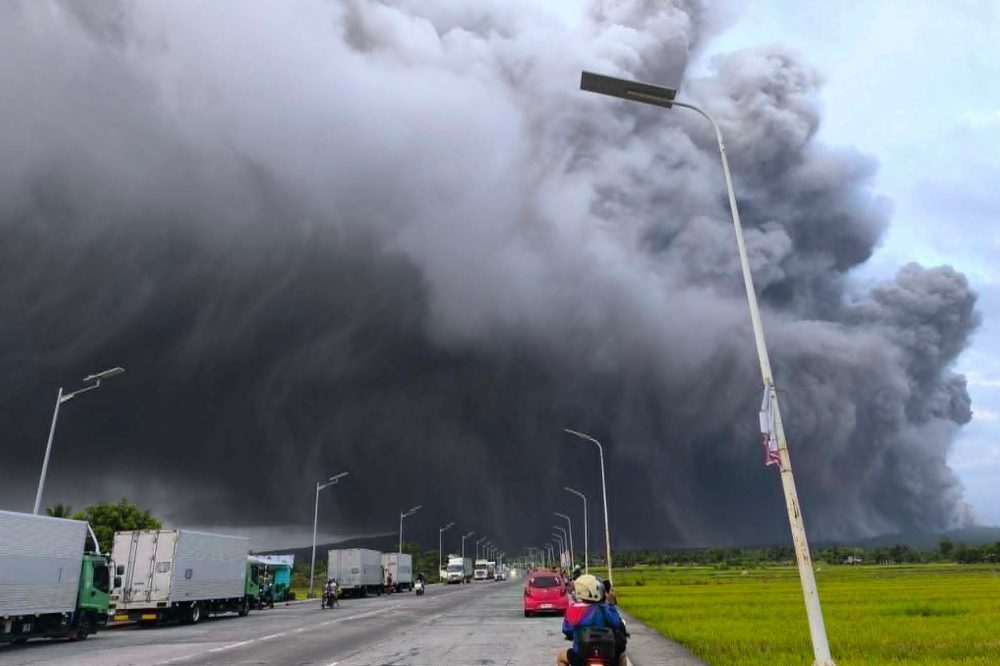
RAMALLAH, West Bank (AP) — Violence erupted across the occupied West Bank over the weekend as Israeli settlers conducted destructive raids through Palestinian communities, damaging vehicles, igniting fires, and injuring multiple residents during attacks that stretched from Saturday evening through Sunday.
According to the Palestinian news agency WAFA, the violent incidents occurred in no fewer than six different communities on Sunday. Medical officials from the Palestinian Red Crescent Society confirmed that three Palestinians from the village of Jalud required hospital treatment for head injuries sustained during confrontations with the settlers, who also reportedly sustained injuries during the clashes.
These incidents unfolded as Israel’s administration continues expanding settlement construction throughout the occupied West Bank territory. Such settler violence has escalated significantly amid the broader regional conflict that began with the Iran war.
Military officials from Israel acknowledged responding to reports of Israeli civilians conducting “arson against structures and property, as well as engaging in disturbances in the area,” though no arrests were announced and officials did not specify whether formal investigations had been launched.
WAFA documented violent incidents across several locations, including Silat al Dahr and Fandaqumiya near Jenin, Jalud and Salfit south of Nablus, plus the farming areas of Masafer Yatta and the Jordan Valley. The overnight violence included burning residences and vehicles, pepper spray attacks against Palestinians, and injuries to at least five individuals during what should have been the peaceful Eid al-Fitr celebration concluding Ramadan.
Statistics from the United Nations Office for the Coordination of Humanitarian Affairs show that 25 Palestinians had been killed by Israeli settlers and military forces as of March 15 this year. Palestinian Authority records also document numerous arson incidents targeting religious sites including mosques throughout the region.
A ship traveling in waters near the United Arab Emirates was struck by an unidentified projectile early Sunday morning, according to maritime authorities.
The incident occurred approximately 15 nautical miles north of Sharjah, as reported by the United Kingdom Maritime Trade Operations (UKMTO). Officials confirmed that all crew members aboard the vessel remained safe following the strike.
In a follow-up statement, the UKMTO indicated that investigators have been unable to definitively determine what the intended target was during the incident. Authorities continue to examine the circumstances surrounding the event.
LONDON, March 22 – A top British official dismissed suggestions Sunday that Iran possesses either the ability or plans to launch ballistic missile strikes against European targets.
The statement from British Housing Secretary Steve Reed came one day after Israel’s military forces claimed on social media that Iran maintains missiles “that can reach London, Paris or Berlin.”
“There is no assessment to substantiate what’s being said,” Reed stated during a BBC interview.
“I’m not aware of any assessment at all that they are even trying to target Europe, let alone that they could if they tried,” he added.
During a separate Sky News appearance, Reed addressed President Trump’s recent ultimatum threatening to “obliterate” Iran’s power facilities unless Tehran completely reopens the Strait of Hormuz within two days.
When pressed about Britain’s stance on Trump’s 48-hour deadline, Reed responded: “The U.S. president is perfectly capable of speaking for himself and defending what it is that he’s saying.”
“We’re not going to be dragged into the war, but we will protect our own interests in the region. We will work with our allies to de-escalate the situation,” Reed concluded.
MOSCOW, March 22 – Russian defense systems successfully intercepted Ukrainian drones attempting to strike the city of Ufa in the Bashkortostan region, according to regional governor Radiy Khabirov.
The intercepted drones were brought down in the vicinity of oil refining facilities in the city, though Khabirov did not specify which particular installations were targeted.
Falling wreckage from the destroyed drones sparked a short-lived blaze at a construction site in one of Ufa’s neighborhoods.
The Bashkortostan region, situated in the Ural Mountains, has faced multiple Ukrainian attacks in recent months. Ufa, the region’s capital city, sits approximately 1,400 kilometers (870 miles) away from the Russian-Ukrainian frontier.
A fatal helicopter accident in Qatar’s territorial waters has claimed six lives, with search efforts ongoing for one remaining missing individual, according to officials from the country’s interior ministry on Sunday.
Qatar’s defense ministry had previously confirmed that the aircraft went down following mechanical problems while conducting what they described as “routine duty.”
Authorities have not yet released additional details about the identities of those involved or the specific nature of the technical issues that led to the crash.
Iranian officials declared Sunday that the strategically crucial Strait of Hormuz will continue allowing passage for most maritime vessels, with the exception of ships connected to countries Tehran considers hostile nations, following President Donald Trump’s ultimatum demanding complete access to the waterway within two days.
The ongoing conflict between the United States, Israel, and Iran has created significant risks for commercial shipping, causing most vessels to avoid the critical passageway that handles approximately 20 percent of the world’s oil and liquefied natural gas transportation, raising concerns about potential global energy supply disruptions.
Iranian U.N. maritime representative Ali Mousavi announced Tehran’s willingness to work alongside the International Maritime Organisation to enhance maritime security and safeguard sailors operating in the Gulf region. He explained that vessels not associated with hostile nations could navigate the strait by establishing proper security and safety protocols with Iranian authorities.
“Diplomacy remains Iran’s priority. However, a complete cessation of aggression as well as mutual trust and confidence are more important,” Mousavi stated, attributing the current Strait of Hormuz crisis to ongoing military actions by Israeli and American forces against Iran.
Italian citizens started casting their ballots Sunday in a critical referendum that will determine the fate of controversial court system reforms championed by Prime Minister Giorgia Meloni, marking a significant political test for her conservative government with national elections approaching next year.
The referendum asks citizens to approve constitutional modifications that would create separate career tracks for judges and public prosecutors — a divisive topic that has dominated Italian political discourse — while also dividing the nation’s judicial oversight body into two distinct organizations.
Sunday’s voting marks the culmination of an intense campaign that saw Meloni’s ‘yes’ supporters square off against center-left parties advocating for ‘no’ votes. Polling stations will remain open until 3 p.m. Monday (1400 GMT).
Opposition leaders from the Democratic Party and 5-Star Movement have cautioned that these reforms could weaken the independence of Italy’s courts and create opportunities for political meddling, claiming such changes would enable Meloni to consolidate her authority.
Meloni’s administration has pushed back against these accusations, contending that reforms are essential to address the politicized selection process within the self-governing High Council of the Judiciary (CSM), particularly following corruption scandals that revealed behind-the-scenes negotiations over top prosecutor positions.
Political observers suggest a ‘yes’ victory would provide significant momentum for Meloni as she navigates challenges from ongoing conflicts involving Iran and Italy’s sluggish economic growth during the final phase of her term.
Should the center-left opposition prevail — despite currently polling behind Meloni’s coalition — it would bolster their efforts to forge a unified front capable of mounting a serious challenge to the prime minister.
Surveys conducted before the mandatory two-week polling blackout indicated an extremely tight race, with analysts noting that Meloni’s base appeared somewhat disengaged due to the technical complexity of the judicial issues at stake.
The World Health Organization announced Saturday that a devastating attack on a medical facility in Sudan’s western Darfur region resulted in the deaths of at least 64 individuals, with 13 of the victims being children.
WHO Director-General Tedros Ghebreyesus reported on X that Friday’s assault on Al Daein Teaching Hospital in East Darfur also left at least 89 people wounded and completely destroyed the hospital’s ability to operate.
Sudan descended into widespread conflict in April 2023 after tensions between the nation’s military forces and the competing paramilitary group known as the Rapid Support Forces escalated into full-scale warfare across the country.
The Rapid Support Forces have accused the military of carrying out the hospital attack.
Military leadership has rejected responsibility for the assault, though two army officials, speaking anonymously because they lacked authorization to comment publicly, indicated the strike was aimed at a police station located near the hospital.
The brutal conflict has claimed over 40,000 lives based on United Nations data, though humanitarian organizations believe this figure significantly underestimates the actual death toll, which could be substantially higher.
According to WHO statistics, attacks on healthcare facilities have resulted in more than 2,000 deaths since the war began.
“Enough blood has been spilled. Enough suffering has been inflicted. The time has come to de-escalate the conflict in Sudan,” said Ghebreyesus.
ROME (AP) — A weekend referendum on judicial reforms has become a defining political moment for Italy’s conservative Prime Minister Giorgia Meloni, with the two-day vote beginning Sunday serving as a broader evaluation of her leadership both within Italy and on the international stage.
What was initially framed as a technical adjustment to the country’s justice system has deepened political rifts and brought together center-left opposition parties, creating a symbolic battle over Meloni’s political power just one year before national elections are scheduled.
Current polling data indicates an extremely tight contest, with opponents of the reform building momentum in recent weeks amid a deeply divided political atmosphere where voter participation could determine the outcome.
Political analyst and polling specialist Lorenzo Pregliasco from YouTrend explained that defeating the reform would have major political consequences.
“A possible ‘No’ victory would send a political signal, weakening Meloni’s aura of invincibility, while pushing the center-left opposition to say that there is already an alternative in the country,” he told The Associated Press.
Initially, Meloni was cautious about connecting her political reputation too closely with the referendum outcome, recognizing that a loss could damage her position both at home and internationally.
She leads what has been Italy’s most stable administration in recent years, having earned respect among European partners as an effective leader. A successful referendum would bolster her domestic position while enhancing her global influence.
However, as voting approached and surveys showed a narrowing gap, the Italian leader changed course and threw her full support behind the “Yes” campaign.
Meloni has intensified her messaging, claiming that certain judicial elements are obstructing government efforts on immigration and public safety, and cautioning that rejecting the reform would empower unaccountable judicial “factions” while compromising public security.
“If the reform doesn’t pass this time, we will probably not have another chance,” she said at a campaign event last week. “We will find ourselves with even more powerful factions, even more negligent judges, even more surreal sentences, immigrants, rapists, pedophiles, drug dealers being freed and putting your security at risk.”
These forceful statements have prompted sharp backlash from judicial officials and center-left politicians, who contend that the proposed changes would compromise judicial independence and weaken constitutional protections.
Political observers note the referendum also carries consequences beyond Italy’s borders.
Meloni’s historical alliance with U.S. President Donald Trump, previously seen as politically beneficial, has become increasingly challenging as his foreign policy approach — especially regarding the U.S. and Israeli conflict with Iran — faces mounting criticism among Italian citizens.
“Meloni is facing what I would call the ‘Trump risk’ — which is appearing too subservient to the U.S. president, who is an extremely unpopular political leader in Italy and the rest of Europe and generates a lot of distrust, even among center-right voters,” Pregliasco said.
While a referendum defeat would not require Meloni to step down — her term extends through 2027 and she has consistently promised to serve it fully — it could weaken her influence within the European Union, where she is regarded as a stabilizing presence in a frequently unstable political landscape.
The referendum focuses on extensively discussed reforms designed to restructure Italy’s judicial framework.
One significant provision would create separate career tracks for judges and prosecutors, prohibiting them from changing positions — a practice currently permitted but seldom used.
Another substantial modification involves the High Judicial Council, the body responsible for magistrate appointments and disciplinary actions. The reform would divide it into three distinct chambers and modify the member selection process, replacing internal voting with random selection from qualified judges and prosecutors.
Tensions between Italy’s conservative leadership and the judiciary have been a recurring theme in Italian politics, reaching peak intensity during the administrations of the late conservative leader Silvio Berlusconi, who was among the strongest advocates for judicial reform.
Reform advocates maintain the changes will modernize a notoriously sluggish court system and improve oversight. However, opponents, including respected magistrates, argue the reform ignores genuine priorities while jeopardizing judicial independence.
Nicola Gratteri, Naples’ chief prosecutor and veteran anti-Mafia magistrate, delivered one of the sharpest criticisms.
“I don’t think this government has implemented the reforms needed to make trials work more effectively,” he told the AP. “Instead, it has made it virtually impossible to combat crimes against the public administration and to tackle white-collar abuse and corruption.”
As Italian citizens prepare to cast their ballots, this referendum represents a pivotal moment in Meloni’s leadership — a decision that could transform not only the justice system but also her government’s future direction, whatever the result may be.
KHARKIV, Ukraine (AP) — Under a star-filled sky in eastern Ukraine, soldiers from the 127th Brigade maintain their vigilant watch for incoming Iranian-made Shahed drones that Russian forces deploy in coordinated attacks.
These surveillance teams operate throughout Ukraine as part of an ever-changing strategy to combat the inexpensive loitering weapons that have emerged as lethal tools in contemporary conflicts spanning from Ukraine to Middle Eastern battlefields.
During quiet moments, the brigade members test and adjust their homemade interceptor aircraft, identifying potential problems that might compromise effectiveness when the distinctive buzzing of enemy drones fills the air. When Shahed drones initially emerged in fall 2022, Ukrainian forces possessed limited means to neutralize them. Now, specialized drone units successfully engage these threats mid-flight using constantly improving technology.
Ukraine’s homegrown drone defense industry has flourished in recent years, creating notable companies that showcase their innovations at global defense exhibitions. However, the true laboratories of rapid military advancement exist on the battlefield itself — where small units develop grassroots solutions driven by combat requirements that now attract worldwide attention.
President Volodymyr Zelenskyy reports that Middle Eastern U.S. partners have contacted Ukraine seeking assistance in protecting against Iranian drones, identical models that Russia has launched by the tens of thousands during the four-year conflict.
Iran has deployed these same aircraft in response to combined U.S.-Israeli operations, sometimes overpowering much more advanced Western air defense systems and demonstrating the necessity for more affordable and adaptable countermeasures.
“It’s not like we sat down one day and decided to fight with drones,” said a pilot with Ukraine’s 127th Brigade, sitting at his monitor after completing a preflight check. “We did it because we had nothing else.”
Minutes before, the aviator had cautiously brought his interceptor aircraft down to prevent damage. He requested anonymity since military regulations prohibited him from being identified publicly.
Despite being manufactured as expendable equipment, scarce resources force Ukrainian teams to salvage every available asset, frequently redeploying even single-mission drones to analyze their limitations and enhance performance.
“Just imagine — a Patriot missile costs about $2 million, and here you have a small aircraft worth about $2,200,” the pilot said. “And if it doesn’t hit the target, I can land it, fix it a bit and send it back into the air. The difference is huge. And the effect? Not any worse.”
Ukraine’s 127th Brigade is constructing an air defense division focused around interceptor drone teams — an approach increasingly embraced throughout the armed forces.
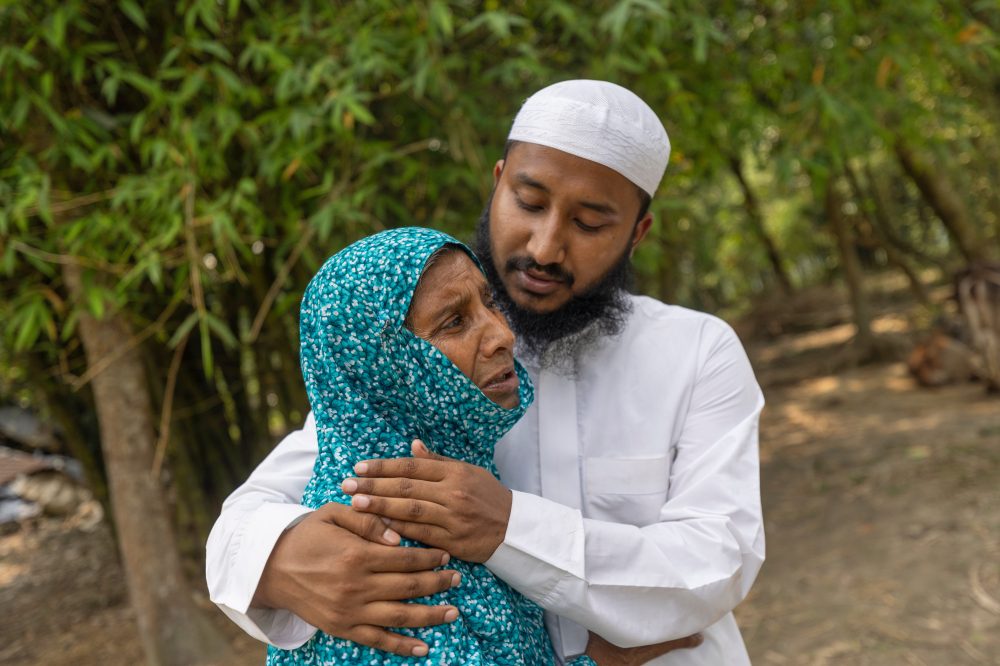
Directing the brigade’s initiative is a 27-year-old captain who previously worked in another unit where he had already assisted in establishing a comparable program. He also requested anonymity due to military protocols preventing public identification.
He vividly recalls the pivotal moment approximately two years ago when circumstances shifted dramatically. He explained being tasked with commanding a team of soldiers instructed to stop Russian surveillance drones using portable anti-aircraft missiles.
This strategy quickly demonstrated its limitations. Maneuverable drones equipped with cameras could effortlessly evade the slower, less-adaptable weapons, he explained.
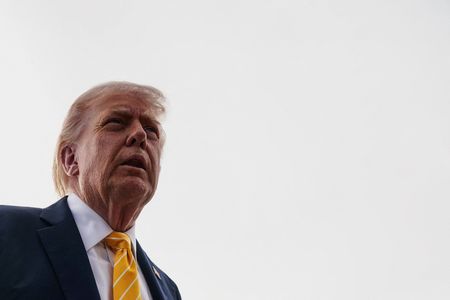
Committed to discovering an improved approach, the young commander began exploring alternatives, consulting fellow service members and civilian supporters assisting the front lines.
The solution proved surprisingly straightforward: deploying another drone.
The captain continues to recall the day a Russian Orlan surveillance drone hovered over a Ukrainian position, relaying coordinates to direct Russian artillery fire. A pilot from his unit eliminated it using another drone, he noted.
“That’s when I realized — this is a drone war. It had begun,” he said. “We had been moving toward it for some time, but that was the moment I saw it with my own eyes.”
They never located the Orlan wreckage, which ignited as it crashed to earth.
A new obstacle quickly surfaced: intercepting hundreds of swift, resilient Shahed drones operating far behind front-line positions.
The young captain’s quest for answers brought him to the 127th Brigade in Kharkiv and partnership with a regional defense contractor. Their collaborative work produced airplane-style interceptor drones capable of matching Shahed velocities.
Kharkiv serves not only as their workplace but as home to their families, a city frequently targeted by Shahed strikes.
Collaborating with the company enables soldiers to evaluate interceptor drones under actual combat conditions and rapidly improve the technology through immediate feedback.
The firm’s Skystriker drone distinguishes itself from more familiar interceptor platforms like Sting or P1-Sun, which utilize modified first-person view, or FPV, drone technology. Rather, it resembles a miniature airplane with wings, enabling extended flight duration.
“Yes, this is a joint effort,” said the director of the company, who spoke on condition he not disclose the name of the firm or his own identity for security reasons.
“It’s not enough just to build it. It has to work — and work properly — and perform real combat tasks,” he said. “That’s why communication with the military is so important. They give us feedback and help us improve it every time.”
Throughout Ukraine, collaboration frequently extends beyond military units and manufacturers. Volunteers regularly serve as intermediaries between the groups, sometimes even facilitating initial connections.
The Come Back Alive Foundation, a nonprofit research organization and charity that fundraises to supply Ukraine’s military, initiated a program called “Dronopad,” roughly meaning “Dronefall,” during summer 2024.
The concept emerged from battlefield accounts that FPV drone operators occasionally succeeded in tracking and eliminating aerial threats — preliminary instances that influenced strategies to counter the Shaheds.
“At that moment it wasn’t clear whether this was even a scalable solution or just isolated incidents,” said Taras Tymochko, who leads the project. “Our goal was to turn it into a system — to help units that already had their first successful cases build the capability and scale what they had achieved.”
The foundation partnered with drone producers to better comprehend what equipment soldiers required. As the program advanced, interceptor drone capabilities improved.
“At some point they were able to reach speeds of more than 200 kilometers per hour (124 mph), which made it possible to intercept targets like Shaheds in the air,” Tymochko said.
The team carefully tracked the rapidly expanding drone marketplace. A crucial element, he explained, was maintaining close collaboration between manufacturers and military personnel so engineers could obtain feedback promptly from combat testing.
“It’s always action and counteraction,” Tymochko said, noting both sides develop ways to counter enemy drones and improve their technology to neutralize each other’s responses. “That cycle is what drives the evolution of drone warfare.”
The technology itself, he noted, presents no particular difficulty to replicate. The genuine value exists in its application — and in the expertise of operators who have mastered effective use.
“People were very skeptical about the technology,” Tymochko said of the early days of interceptor drones. “Some thought it wouldn’t work, that within a month the Russians would come up with countermeasures and the drones would become useless.”
Almost two years afterward, the outcomes indicate otherwise.
“Many people called it air defense for the poor,” he said. “But it turns out that air defense for the poor can sometimes be more effective than air defense for the rich.”
LONDON — Long before social media transformed how we think about fame, the enigmatic street artist Banksy understood that true influence came not from celebrity status, but from remaining completely unknown.
For decades, the secrecy surrounding his true identity has been integral to his artwork’s appeal — pieces that have challenged authority on public walls worldwide and even famously self-destructed during auction sales. Now, after Reuters news agency reportedly revealed his identity, discussions are swirling about whether his creations will maintain their cultural significance and market worth.
The revelation has also sparked debate: Why destroy the enchantment of his mystique? Numerous Banksy admirers have expressed grief over losing the mystery and have criticized the news organization. One compared it to being abruptly informed that Santa Claus isn’t real.
“I feel like they are telling me how a magic trick is done,” said Thomas Evans, a Denver-based artist on Instagram. “Sometimes I just want to enjoy the magic trick.”
However, several art professionals believe his street murals and powerful messages will endure beyond any identity disclosure, since his popularity wasn’t built entirely on secrecy. His creations — both playful and somber — serve as testimony to injustice, oppression and social inequality across the globe, from his home country of England to the barriers of Bethlehem and battle-torn Ukraine. Remove the anonymity factor, experts argue, and his work continues to provoke thought and conversation.
“People buy his works because they absolutely love it,” said Acoris Andipa, director of the Andipa gallery in London. “The main feedback that I get is that they really, frankly, don’t care if they know who he is.”
The artist, widely believed to be Robin Gunningham born around 1972, emerged from a community of street artists who considered the covert placement of public art a rebellious form of creative expression. Bristol’s post-industrial environment served as his initial canvas and exhibition space. Urban walls in London, New York and other cities provided him with an international platform just as social media began emerging.
Among fellow artists who protect his secret, Banksy’s real identity has been common knowledge, and those seeking answers could easily find information online. In 2008, The Daily Mail published “compelling evidence suggesting” Gunningham was the artist’s birth name. Multiple news organizations, including The Associated Press in 2016, have reported this information while covering investigative efforts.
According to Reuters’ recent report, following The Daily Mail’s exposé, Banksy legally changed his name to David Jones — Britain’s second most common name. Coincidentally, this was also the real name of the late rock icon David Bowie, whose Ziggy Stardust persona influenced a 2012 Banksy artwork featuring Queen Elizabeth II.
Banksy’s legal representative did not respond to requests for comment, and the artist’s spokesperson declined participation in this coverage.
Reuters connected the dots showing that a David Jones traveled to Ukraine with a known Banksy associate in late 2022 — shortly before the artist’s work began appearing on Russian-bombed structures. Banksy subsequently acknowledged creating seven murals in the conflict zone, including one showing a child toppling an adult wearing a black belt. Russian President Vladimir Putin is known for practicing judo.
Evidence suggests even the establishment he protests has embraced Banksy. Authorities didn’t arrest him when the Royal Courts of Justice removed a Banksy stencil showing a traditionally-dressed judge striking an unarmed protester with a gavel. Some street artists have complained they might face arrest for similar graffiti — but when Banksy creates it, it’s considered art.
Court records reveal that on September 17, 2000, Robin Gunningham was arrested for vandalizing a Marc Jacobs billboard on a Hudson Street building in New York.
In his handwritten signed confession, he detailed that night’s activities: “I had been out drinking at a nightclub with friends when I decided to make a humorous adjustment to a billboard on top of the property,” according to court documents uncovered by Reuters and verified by the AP. “I painted eyeshadow a new mouth and a speach(sic) bubble” on a male model’s photograph. He faced misdemeanor charges.
The artist continues making headlines without needing identity revelations. He produced several pieces in London during 2025 and gained attention elsewhere when his artwork sold or was auctioned for millions. Banksy has cultivated a public persona focused on morality, justice and guerrilla methods — often compared to Robin Hood or Batman.
“Banksy woz ere,” he inscribed alongside his animal murals at London Zoo, which were removed in 2024.
Beyond disappointment, considerable speculation exists in art circles and social media that the artist himself orchestrated this latest naming. He hasn’t disputed the Reuters article.
This “would be very much in line with his practice of stunts and satire,” observed Madeleine White, senior sales and acquisitions consultant at London’s Hang-Up Gallery. “As they say, ‘all publicity is good publicity.’”
She pointed out that criticism targets the media — not the artist or his work’s impact. Reuters states it chose to publish some, but not all, information its reporters discovered about Banksy’s identity, citing his status as a public figure regardless of his name — and his substantial influence on public events and discourse. Additionally, much of his work appears on others’ property.
Whether identified or not, Banksy’s celebrity status persists, according to art experts.
His fame continues through the amazement at his ability to install new artwork right under authorities’ watch, even in our era of surveillance cameras and social media. His appeal stems from spectacle and cleverness that draws audiences in, while locations — such as bombed building remains or Israel’s massive wall along the West Bank border — encourage reflection. Supporters now watch for how and whether he’ll respond to news about Robin Gunningham and David Jones.
Joe Syer, a Banksy specialist and MyArtBroker founder, noted the artist has consistently reacted to global events. “And that’s where the real relevance, and value, sits.”
“If anything, Banksy’s anonymity has functioned less as a celebrity device and more as a way to keep the work universally accessible, detached from personality, ego, or biography,” he explained in an email. “It allows the work to sit in public space, politically and culturally, without being anchored to an individual in the way the mainstream press often frames it.”
Christopher Banks, founder of New York-based Objects of Affection Collection, interprets Banksy’s identification “not as a biographical event, but as a structural stress test” of how the artist manages his absence.
“Banksy’s best works carry their meaning without the author. He was there,” Banks wrote, referencing the artist’s Ukrainian murals and solidarity with war victims.
“The name matters less than the presence. The presence was always what the work was about.”
Vietnam’s ruling Communist Party has claimed an overwhelming victory in parliamentary elections, capturing 482 of the 500 available seats in the National Assembly, according to official results announced March 22nd.
The decisive win represents nearly 97% of all legislative positions and mirrors the party’s previous dominance in the outgoing parliament.
Election officials reported that voter participation in the quinquennial elections for both national parliament members and local council representatives surpassed 99%, consistent with historical turnout figures.
While the single-chamber legislature holds limited authority to oppose major party decisions, particularly regarding leadership appointments, it has occasionally modified draft legislation.
The newly elected National Assembly will convene for its inaugural extended session beginning April 6th. During this gathering, representatives are expected to approve fresh state leadership appointments designated by the party, including positions for prime minister and president.
Political observers anticipate that To Lam, who received confirmation as general secretary during the party’s January congress, will likely assume the presidency simultaneously.
Should Lam receive both positions, Vietnam’s governmental framework would more closely mirror that of neighboring China, where Xi Jinping holds dual roles as Chinese Communist Party general secretary and national president.
Both Vietnam and China rank among the world’s remaining communist-governed nations. Despite historical tensions and ongoing territorial disagreements, particularly concerning South China Sea islands and maritime boundaries, the two countries’ Communist parties maintain official cooperation.
These election results emerge as Vietnam confronts economic challenges stemming from escalating Middle East conflicts that continue affecting international commerce, energy sectors, and regional security.
BUCHAREST, Romania — More than 200 cats from around the world gathered Saturday in Romania’s capital for an international feline beauty contest known as the ‘Feline Oscars.’
The competition took place in Bucharest and featured cats competing for top honors in what organizers called a prestigious international event.
Images from the event captured the various breeds and contestants as they vied for recognition in the beauty competition.
President Donald Trump has issued Iran a 48-hour deadline to completely reopen the Strait of Hormuz, threatening to destroy the country’s electrical infrastructure if Tehran fails to comply with his demands.
The ultimatum comes as Iranian missile attacks successfully penetrated Israeli air defenses late Saturday, striking the southern cities of Dimona and Arad near Israel’s primary nuclear research facility, marking a significant escalation in the month-long conflict.
From his Florida residence over the weekend, Trump delivered his warning through social media, declaring the United States would target Iran’s electrical grid starting with the largest facilities first. He stated America would “obliterate” power plants if Iran doesn’t fully open the crucial waterway within his specified timeframe.
Iranian officials responded swiftly on Sunday, with military representatives warning through state media that any assault on the nation’s energy infrastructure would trigger retaliatory strikes against American and Israeli energy facilities throughout the region.
The Strait of Hormuz serves as a vital corridor linking the Persian Gulf to international waters and represents a crucial route for global oil transportation. Commercial shipping has virtually ceased through the passage due to ongoing attacks and continued threats, forcing major oil-producing nations to reduce output as their petroleum products cannot reach markets.
Israeli defense forces acknowledged their inability to stop the missiles that impacted Dimona and Arad, both located in the sparsely inhabited Negev desert region. This represents the first successful Iranian missile penetration of Israel’s air defense network in the vicinity of the nuclear installation.
“If the Israeli regime is unable to intercept missiles in the heavily protected Dimona area, it is, operationally, a sign of entering a new phase of the battle,” Iran’s Parliament Speaker Mohammad Bagher Ghalibaf said on X before word of the Arad strike spread.
Emergency responders reported extensive destruction in Arad, where a direct missile impact damaged at least ten residential buildings, with three structures severely compromised and at risk of collapse. Medical facilities treated 64 individuals injured in the attacks.
Dimona sits approximately 20 kilometers west of the nuclear research facility, while Arad is located roughly 35 kilometers to the north of the installation.
While Israel is widely believed to possess nuclear weapons as the sole Middle Eastern nation with such capabilities, Israeli leadership maintains its policy of neither confirming nor denying their nuclear arsenal. The United Nations nuclear monitoring agency confirmed via social media that no damage reports or abnormal radiation readings had been received from the Israeli facility.
The Iranian missile strikes followed an earlier attack on Tehran’s primary uranium enrichment complex at Natanz, located approximately 220 kilometers southeast of Iran’s capital.
Israeli officials denied involvement in the Natanz strike earlier Saturday. Iran’s judicial news service, Mizan, reported no radiation leakage occurred at the facility.
The International Atomic Energy Agency has indicated that most of Iran’s estimated 440 kilograms of enriched uranium is stored at its Isfahan facility, buried beneath debris. The agency announced through social media it was investigating the Natanz incident.
Pentagon officials refused to provide comments regarding the Natanz attack, which has been targeted during the conflict’s opening week and in a previous 12-day war last June. Russian Foreign Ministry spokesperson Maria Zakharova characterized such strikes as creating “real risk of catastrophic disaster throughout the Middle East.”
American and Israeli officials have presented varying justifications for the ongoing conflict, ranging from encouraging domestic Iranian revolt against current leadership to dismantling the country’s nuclear and missile capabilities and ending support for regional militant groups. No evidence of internal uprising has emerged, while internet restrictions limit information flow from Iran.
The conflict’s impact extends well beyond Middle Eastern borders, driving up global food and energy costs.
Former President Donald Trump has delivered a stark ultimatum to Iran, threatening to destroy the country’s electrical infrastructure unless Tehran reopens the Strait of Hormuz completely within the next two days. Iranian officials quickly responded by vowing retaliatory strikes against American and Israeli energy facilities and critical infrastructure.
During the same timeframe, Iranian rocket attacks targeted two towns in southern Israel late Saturday evening, damaging buildings and wounding dozens of people. The strikes occurred near Israel’s primary nuclear research facility.
These escalating events indicate the conflict is entering a more perilous phase as it begins its fourth week of fighting.
Trump delivered his warning through social media while at his residence in Florida, as domestic pressure mounts for him to address the strait’s closure amid skyrocketing fuel costs.
Casualties from the ongoing conflict have now exceeded 1,500 fatalities in Iran, surpassed 1,000 deaths in Lebanon, claimed 15 Israeli lives and resulted in 13 American service member deaths, along with numerous civilian casualties throughout the Gulf area. Displacement has affected millions across Lebanon and Iran.
Recent developments include:
Saudi Arabia’s defense systems detected three incoming ballistic missiles targeting Riyadh early Sunday morning, successfully intercepting one projectile while the remaining two landed in unpopulated territory, defense officials reported.
Military forces also destroyed six unmanned aircraft approaching the kingdom’s eastern provinces, a sparsely populated region bordering Iran that houses significant petroleum facilities.
Authorities reported no immediate injuries or property damage from these incidents.
A commercial vessel experienced an explosion after being struck by a projectile approximately 15 nautical miles north of Sharjah in the United Arab Emirates, according to the British military’s United Kingdom Maritime Trade Operations center early Sunday.
Officials confirmed the ship’s crew remained unharmed following the attack.
NAIROBI, Kenya (AP) — African nations may face higher costs for solar energy projects after China announced plans to eliminate tax rebates on solar panel exports and reduce incentives for battery storage manufacturing.
Starting April 1 for solar panels and next year for batteries, China will end value-added tax rebates that have helped keep equipment costs lower for international buyers. The policy shift could create challenges for Africa’s renewable energy expansion, as the continent depends largely on Chinese-made solar technology.
Energy analyst Wangari Muchiri, who specializes in Africa’s clean energy market, explained the potential impact. “We are likely to see solar panel prices increase in Africa because most of the inputs come from China,” Muchiri said. “Removing the rebate will add to existing costs, especially when you consider shipping, logistics, and other import fees.”
African countries already face steeper prices for solar equipment compared to other regions due to transportation expenses, smaller order quantities, and import duties.
The policy adjustment comes after intense competition among Chinese manufacturers drove solar panel prices down dramatically, from $0.25 per watt in 2022 to as low as $0.07 per watt in 2025. While this pricing helped accelerate worldwide solar adoption, it also resulted in substantial financial losses for many companies.
Many Chinese manufacturers had incorporated the VAT rebates into their export pricing strategies, essentially passing government subsidies along to international customers. Beijing is now reducing these payments as part of efforts to control overproduction and focus on more sophisticated technologies.
Industry experts anticipate gradual price adjustments rather than sudden cost increases, which should establish more stable global pricing.
John van Zuylen, CEO of the Africa Solar Industry Association, offered perspective on the changes. “The changes are significant, but not catastrophic,” van Zuylen said.
“The entire recent solar boom was built on artificially cheap Chinese pricing,” van Zuylen explained. “That era is now ending.”
Van Zuylen noted that companies typically respond to such policy changes in predictable ways. “When a structural rebate is removed, exporters typically either absorb the cost, raise prices, or reduce discounting,” he said. “African countries will likely feel this as a gradual upward shift in pricing rather than a single dramatic spike.”
Despite anticipated price increases, solar power is expected to maintain its competitive advantage across much of Africa, since it represents the most affordable energy source on the continent, according to Muchiri.
“Even with higher panel prices, it will still be significantly cheaper than alternatives like diesel,” she noted.
Sonia Dunlop, CEO of the Global Solar Council industry group, warned of potential supply chain disruptions. “It will increase project costs slightly and might delay the project construction pipeline due to supply chain shortages and contractual changes, stockpiling rush, congestion in shipment for the countries heavily reliant on Chinese imports,” Dunlop said.
Battery storage technology, essential for providing power during nighttime hours, may encounter greater obstacles as incentives are eliminated through 2027. Van Zuylen suggested that smaller-scale users could face the most significant impact from higher costs.
“Batteries matter more than panels for Africa because storage is what makes solar reliable for off-grid and backup users,” he explained.
Basil Abia, co-founder of Nigerian energy research company Truva Intelligence, provided historical context for battery usage in African solar projects. “Batteries have historically been expensive, and many solar installations in Africa were built without them,” Abia said.
“Only recently have we started seeing more systems combining solar with battery storage,” Abia added.
Abia emphasized that solar panels remain reasonably priced even without government rebates. Throughout 2024 and early 2025, panel costs dropped significantly from approximately $0.25 per watt in earlier years to as low as $0.07 per watt.
Solar energy currently accounts for 3% of Africa’s power generation, with demand expected to continue expanding as storage technology enhances system reliability. The continent’s heavy reliance on Chinese equipment has highlighted the limited local manufacturing capabilities.
“The VAT removal will slow, but not reverse Africa’s clean energy transition,” Abia concluded. “Countries that use this moment to accelerate local manufacturing will emerge stronger. Those that do not will remain exposed to Beijing’s next industrial policy adjustment.”
LJUBLJANA, Slovenia — Citizens of Slovenia cast their ballots Sunday in a closely watched parliamentary election between the country’s liberal government and right-wing opposition forces, with the outcome determining whether this small European Union member continues its current liberal direction or shifts toward populist policies.
The election is anticipated to produce narrow margins following a campaign season disrupted by claims of outside interference that shocked this typically centrist EU nation.
The contest centers on two primary contenders: current Prime Minister Robert Golob’s Freedom Movement and the right-wing Slovenian Democratic Party (SDS), headed by former three-term leader Janez Jansa, a populist figure who has expressed admiration for U.S. President Donald Trump.
The results will have implications beyond Slovenia’s borders within the 27-nation EU.
Golob’s administration has championed liberal positions within the European bloc, while a Jansa victory — given his close ties to Hungarian nationalist leader Viktor Orbán — would bolster Europe’s growing populist movements.
“Although Slovenia is a small Balkan country, the elections taking place there could be seen as another sign of the rise of illiberal tendencies in Europe,” Helen Levy, a researcher at the Robert Schuman Foundation, wrote in an analysis last month.
Slovenian sociologist Samo Uhan told The Associated Press that “the biggest differences between the government and the opposition are reflected in their understanding of global developments.”
Recent polling shows Slovenia’s leading parties in a virtual tie, with experts predicting neither will secure an outright majority in the 90-seat parliament, potentially giving smaller parties decisive influence in forming a government.
The result “is completely uncertain, which is nothing unusual for Slovenia as the electorate has always been polarized,” Uhan said.
Adding to the political tensions are accusations, initially raised by activist and journalist groups, that a series of covert video recordings depicting alleged government corruption were designed to influence voter behavior.
The claims further suggest connections between Jansa’s party and an international private intelligence firm behind the recordings, according to gathered evidence. While Jansa has confirmed contact with a Black Cube consultant, he has rejected allegations of election manipulation.
Official investigations have revealed that representatives from the private Black Cube intelligence company made four visits to Slovenia in recent months, including to a street in Ljubljana where Jansa’s party maintains its headquarters.
At an EU summit in Brussels Thursday, Golob called for European-level investigation into the matter.
“It is so important not to act now on behalf of Slovenia, but to act now to protect every other state that will come into election process in the next months,” Golob said. “I am absolutely confident that Slovenian voters will be able to recognize that foreign interference is something that shall never be allowed.”
Black Cube has not responded to requests for comment.
The firm, operated by two former Israeli intelligence officers, has been connected to several scandals in recent years, including covert work for film producer Harvey Weinstein aimed at undermining his accusers. The company maintains that its operations are conducted legally and ethically.
During his most recent tenure from 2020-22, Jansa faced criticism for restricting press freedoms and weakening democratic institutions in Slovenia. He has attacked Golob’s administration as a “crime syndicate” and vowed to “take back” what he calls a compromised state.
The 59-year-old Golob, a former energy sector executive, and his party emerged in 2022 as fresh alternatives for frustrated voters. However, his government has subsequently struggled with multiple cabinet changes, healthcare reform challenges, and frequent tax policy adjustments that have created an impression of instability.
On foreign policy, Golob’s government has adopted a strongly pro-Palestinian position, officially recognizing Palestinian statehood in 2024 and prohibiting senior Israeli officials from entering the country. Conversely, Jansa supports Israel and has sharply opposed Palestinian recognition.
Since gaining independence from Communist Yugoslavia in 1991, Slovenia has regularly alternated between these two political camps. This Alpine nation of 2 million joined both NATO and the EU in 2004.
French citizens went to the polls Sunday to choose mayors in runoff elections spanning Paris, Marseille, and more than 1,500 additional municipalities across the nation. These contests will measure the political power of far-right movements and traditional parties before the 2027 presidential campaign begins.
Municipal leaders oversee nearly 35,000 communities throughout France, ranging from major metropolitan areas to small villages with just dozens of inhabitants, and rank as the country’s most trusted public officials.
While numerous candidates secured victories during last Sunday’s initial voting round, competitive contests in France’s largest urban centers advanced to these decisive runoff elections.
A critical battle is unfolding in Marseille, France’s second-largest city, where the far-right National Rally (RN) faces off against the current Socialist mayor. An RN triumph there would represent a significant breakthrough for the party.
Polling data from Paris indicates the race between conservative and left-wing candidates remains too close to call, with results falling within statistical margins of error.
Ballot casting began at 8 a.m. local time and concluded between 6 p.m. and 8 p.m., with election outcomes expected throughout the evening hours.
The anti-immigration, European Union-skeptical RN has historically found limited success in municipal campaigns.
Initial round results delivered mixed outcomes for the organization, which secured reelection in multiple cities but failed to achieve substantial victories outside its established strongholds in southern and northern regions.
“It’s true that these 2026 municipal elections do not mark a landslide for the National Rally – far from that. But … it stands to confirm its territorial integration in France,” said Anne Muxel, a political science research director at Sciences Po university.
The RN’s prospects for capturing Marseille suffered when hard-left candidate Sebastien Delogu of France Unbowed (LFI) exited the second round, citing concerns that a divided left-wing vote might benefit the RN.
Meanwhile, in the French Riviera destination of Nice, Eric Ciotti, a renegade conservative allied with Le Pen’s movement, appears positioned to defeat a centrist-backed opponent.
Paris has remained under left-wing leadership since 2001, with the Socialist candidate leading after the first round. However, a far-right contender withdrew from the runoff to support Rachida Dati, a conservative former interior minister, creating an extremely tight competition for control of the capital.
These thousands of individual municipal elections typically center on hyperlocal concerns and don’t predict the April 2027 presidential winner.
Yet they reveal important trends regarding popularity levels and potential coalition arrangements within France’s increasingly divided political environment, along with voter responses to these developments.
A significant factor involves the impact of inter-round alliance formations or their absence.
Negotiations among local party organizations since Sunday’s first round have exposed fractures within the left, as Socialists formed partnerships with their hard-left rivals from LFI in certain cities like Lyon and Toulouse, while avoiding such agreements in places including Marseille and Lille.
Although LFI traditionally performs weakly in local contests, the party emphasized these elections more heavily this cycle, and its influential role in determining winners demonstrates its expanding political influence.
“We can clearly see that, because of the relatively good performance of France Unbowed in the municipal elections, this party and (leader) Jean-Luc Melenchon once again gain a position of power in what the balance of power in the left could constitute,” Sciences Po’s Muxel said.
TOKYO, March 22 – Japan’s Foreign Minister Toshimitsu Motegi indicated Sunday that his country might deploy military personnel to remove naval mines from the Strait of Hormuz following any potential ceasefire in the current U.S.-Israeli conflict with Iran.
Speaking on a Fuji TV program, Motegi outlined the possibility while emphasizing its conditional nature. “If there were to be a complete ceasefire, hypothetically speaking, then things like minesweeping could come up,” he stated. “This is purely hypothetical, but if a ceasefire were established and naval mines were creating an obstacle, then I think that would be something to consider.”
While Japan’s post-World War II pacifist constitution restricts military operations, security laws passed in 2015 permit the Self-Defense Forces to operate internationally when attacks on Japan or close allies pose existential threats and alternative solutions are unavailable.
The Foreign Minister noted that Tokyo currently has no immediate intentions to arrange safe passage for Japanese ships stuck in the strait. However, he emphasized the critical importance of ensuring all vessels can safely traverse the narrow passage, which handles one-fifth of global oil transportation.
Iranian Foreign Minister Abbas Araqchi discussed with his Japanese counterpart on Friday the possibility of allowing Japanese-affiliated ships to pass through the waterway, according to Japan’s Kyodo news agency.
The strait serves as the route for approximately 90% of Japan’s oil deliveries. Tehran has mostly blocked the passage during the ongoing conflict, which has entered its fourth week. Rising global oil costs have forced Japan and other nations to tap into their strategic petroleum reserves.
During a Washington meeting Thursday, U.S. President Donald Trump pressed Japanese Prime Minister Sanae Takaichi to increase involvement, as he continues unsuccessfully urging allies to deploy naval vessels to reopen the waterway.
Following their summit, Takaichi informed reporters that she had explained to Trump the extent of assistance Japan could legally provide in the strait under current legislation.
Four years have passed since a catastrophic China Eastern Airlines crash claimed 132 lives, yet Chinese aviation authorities continue to withhold critical details about their investigation into the nation’s worst air disaster in three decades.
The Boeing 737-800 aircraft mysteriously dove into a mountainous area of Guangxi province on March 21, 2022, approximately one hour into its journey from Kunming to Guangzhou. All passengers and crew members perished in the devastating crash.
China’s Civil Aviation Administration (CAAC) has now missed releasing mandatory annual investigation updates for two straight years, leaving grieving families without closure or explanations for the tragedy.
International aviation standards require investigators to publish preliminary findings within 30 days of an accident, followed by a comprehensive final report within one year. When these deadlines cannot be met, annual progress statements are expected to keep the public informed.
The last official communication from CAAC came in March 2024, consisting of only brief paragraphs that revealed minimal information. According to those limited updates, no mechanical problems were discovered with the aircraft or its engines prior to departure, and weather conditions posed no threat.
Chinese authorities confirmed that the flight crew possessed current certifications, had received proper rest, and cleared medical examinations before the fatal flight. No hazardous materials or dangerous weather were factors in the incident.
After ruling out equipment malfunctions, investigators turned their attention to examining the crew’s behavior during the flight, according to sources familiar with the probe. Air traffic controllers and nearby aircraft made multiple unsuccessful attempts to contact the pilots as the plane rapidly descended.
In May 2022, the Wall Street Journal cited U.S. officials in reporting that flight recorder data suggested the aircraft was deliberately crashed, though this remains unconfirmed.
CAAC dismissed such reports as speculation that “gravely misled the public” and hindered their investigation efforts. The agency promised to share information as their probe progressed but has remained silent since.
Both CAAC and China Eastern Airlines declined to provide comments when contacted recently.
The International Air Transport Association highlighted the importance of timely accident reporting in their 2025 safety analysis, emphasizing how delayed or incomplete investigations compromise aviation safety improvements worldwide.
“Accident investigation helps us improve safety, but many reports are not published in a timely, complete, or accessible way. Some are not made public while others lack clear recommendations,” stated IATA Director General Willie Walsh. “While compliance with this obligation is improving, anything less than 100% shortchanges everyone on opportunities to improve.”
Japan’s Foreign Minister Toshimitsu Motegi announced Sunday that one of two Japanese citizens being held in Iran has been freed and will return home.
During an appearance on a Fuji Television program, Motegi revealed that the individual had been held in Iranian custody since the previous year before being released this past Wednesday.
A second Japanese citizen who was taken into custody earlier in 2023 remains detained in Iran, according to Motegi.
The Committee to Protect Journalists has identified the person still being held as a reporter working for NHK, Japan’s national public broadcasting network.
Taiwan’s defense ministry announced that long-awaited F-16V fighter aircraft from the United States will finally begin arriving this year, with manufacturing now operating at maximum capacity following a high-level visit to the production facility.
The island nation, which confronts growing military pressure from China, has expressed frustration over recurring postponements of weapons deliveries from the U.S., its most crucial international ally and primary arms provider. Beijing considers Taiwan part of its territory.
In 2019, Washington authorized an $8 billion agreement for Lockheed Martin to sell F-16 fighter aircraft to Taiwan, a contract designed to expand the island’s F-16 fleet beyond 200 aircraft. However, the initiative has encountered various challenges, including technical software complications.
Deputy Minister Hsu Szu-chien and Air Force Deputy Chief of Staff Tien Chung-yi traveled to Lockheed Martin’s F-16V manufacturing facility in South Carolina this past Monday to inspect the initial aircraft, according to a defense ministry announcement released Saturday evening.
The ministry confirmed that aircraft deliveries would commence within the year but provided no additional timeline details.
Lockheed Martin has deployed several hundred workers to complete assembly of the remaining aircraft, and the ministry stated that “there are no bottlenecks in either parts supply or manpower; production is proceeding at full capacity on a two-shift schedule.”
In its own statement, Lockheed Martin expressed commitment to “delivering advanced deterrence capabilities to support Taiwan’s security goals.”
“We continue to work closely with the U.S. government to accelerate delivery where possible,” the company added.
The defense ministry noted that since the F-16V represents a new variant specifically engineered for Taiwan, additional test flights remain necessary to optimize its systems, requiring careful implementation of testing procedures.
Taiwan has already upgraded 141 older F-16A/B aircraft to the F-16V configuration and has purchased 66 additional new F-16Vs, which feature enhanced electronics, weaponry and radar capabilities designed to counter the Chinese air force, including its advanced J-20 stealth fighters.
Iran carried out the executions of three young demonstrators in the early morning hours Thursday, timing the hangings just one day before the country’s New Year celebrations in what human rights advocates are calling an act of “state terror.”
The three men – Saleh Mohammadi, 19, Saeed Davoudi, 22, and Mehdi Ghasemi, believed to be in his early twenties – were put to death on accusations of “participation in the murder” of law enforcement officers in Qom during violent confrontations that occurred January 8-9.
According to human rights organizations, the trio was detained after authorities violently suppressed the January demonstrations and were compelled through torture to admit guilt to offenses they did not carry out.
The executions took place at dawn in Qom, adding to growing concerns about the fate of hundreds of other detained protesters who may face similar retribution from the regime.
Rights activists maintain that the young men had retracted their coerced confessions when they appeared in court, but were still sentenced to death despite the torture allegations.
HAVANA (AP) — The island nation of Cuba plunged into complete darkness Saturday when its electrical system failed entirely, marking the third total power loss the country has experienced this March while officials grapple with crumbling infrastructure and energy sanctions from the United States.
Cuba’s government-operated Electric Union confirmed the complete loss of electrical service throughout the nation but did not specify what triggered the system-wide failure.
Officials stated they were actively working to bring electricity back online.
Both island-wide and regional electrical failures have grown increasingly frequent over the past two years as the nation’s outdated power infrastructure continues to deteriorate. These system failures are made worse by daily power cuts lasting up to 12 hours due to insufficient fuel supplies, which further destabilize the electrical network.
The most recent complete power loss happened just Monday. Saturday’s blackout marked the second occurrence this week and the third time in March that the entire grid has failed.
These widespread power failures severely affect Cuban citizens, disrupting work schedules, preventing cooking with electric appliances, and causing food to spoil when refrigeration stops functioning, creating numerous hardships in daily life.
Cuban President Miguel Díaz-Canel has stated that the nation has gone three months without receiving oil shipments from international suppliers. The country can only produce about 40% of the fuel required to operate its economy.
Cuba’s deteriorating electrical infrastructure has significantly worsened in recent years. However, government officials have also attributed the outages to energy restrictions imposed by the United States, particularly after former President Donald Trump warned in January about imposing tariffs on nations that sell or supply oil to Cuba. The Trump administration has demanded that Cuba free political prisoners and pursue political and economic reforms before sanctions would be lifted. Trump has also suggested the possibility of a “friendly takeover of Cuba.”
President Donald Trump issued a stark 48-hour ultimatum to Iran on Saturday, warning of devastating attacks on the nation’s electrical infrastructure if Tehran fails to completely reopen the critical Strait of Hormuz shipping lane.
“If Iran doesn’t FULLY OPEN, WITHOUT THREAT, the Strait of Hormuz, within 48 HOURS from this exact point in time, the United States of America will hit and obliterate their various POWER PLANTS, STARTING WITH THE BIGGEST ONE FIRST!” Trump declared on social media.
The ultimatum represents a sharp reversal from Trump’s previous statements about scaling back military operations, coming as Iranian threats have effectively blocked most shipping through the vital waterway that carries approximately 20% of the world’s oil and natural gas supplies.
The shipping disruption has already caused European gas prices to spike by as much as 35% in recent days, raising concerns about a global energy crisis that could impact American consumers ahead of November’s congressional elections.
The escalating tensions coincided with Iran’s deployment of long-range missiles for the first time in the conflict, according to Israeli military officials. Iran fired two ballistic missiles with a 2,500-mile range at the Diego Garcia military base in the Indian Ocean, marking a significant expansion of the conflict’s geographic scope.
Israeli military commander Eyal Zamir warned that these weapons pose a direct threat far beyond the Middle East region. “These missiles are not intended to strike Israel. Their range reaches European capitals – Berlin, Paris, and Rome are all within direct threat range,” Zamir stated.
The conflict took a dangerous turn Saturday evening when Iranian missiles struck the southern Israeli cities of Dimona and Arad, wounding dozens of civilians including children. Iran’s Revolutionary Guards claimed they targeted military facilities and security installations in southern Israel.
Israeli military spokesman Brigadier General Effie Defrin acknowledged on social media that the country’s defense systems failed to intercept the incoming strikes. “We will investigate the incident and learn from it,” he said.
The attacks occurred dangerously close to Israel’s classified nuclear facility, located just eight miles southeast of Dimona, and near major military installations including Nevatim Air Base.
Israeli Prime Minister Benjamin Netanyahu responded with determination following the Arad strike. “This has been a very difficult evening in the battle for our future,” Netanyahu said in an official statement. “We are determined to continue striking our enemies on all fronts.”
The Trump administration’s messaging has been inconsistent throughout the four-week conflict, creating confusion among international allies about American objectives. Saturday’s aggressive deadline marked the most dramatic policy shift yet, moving from discussions of military reduction to explicit threats against Iranian infrastructure.
Rising energy costs are contributing to inflation concerns that could become a significant political challenge for Trump as he seeks to maintain public support for the military action with congressional elections approaching.
Trump has also criticized NATO partners for what he called reluctance to assist in reopening the shipping route. While some allies have indicated they might consider involvement, most remain hesitant to join a conflict they say began without proper consultation.
Meanwhile, Iranian media reported that American and Israeli forces targeted the Shahid Ahmadi-Roshan Natanz nuclear enrichment facility Saturday morning. Technical assessments found no radioactive contamination, and local populations faced no immediate danger. Israeli officials denied knowledge of such an operation, while the International Atomic Energy Agency announced it was investigating the incident.
Additional strikes were reported at a passenger terminal in the southern Iranian port of Bushehr and an unoccupied passenger vessel near Kharg Island, where Iran processes nearly all of its oil exports.
Iran retaliated by launching drone attacks against American military bases in the United Arab Emirates and Kuwait that have been used to stage operations against Iranian positions in the Persian Gulf. In response to the escalating situation, Saudi Arabia expelled Iran’s military attaché and four other Iranian diplomatic personnel.
The conflict has also spread to Lebanon, where Israeli forces attacked Beirut targets associated with the Iran-supported Hezbollah organization. Hezbollah began supporting Tehran militarily on March 2, representing the most serious regional expansion of the conflict.
Israeli aircraft also conducted strikes on ballistic missile manufacturing facilities around Tehran, while Iranian media reported that three family members died when a residential building was hit in the city of Ramsar.
The ongoing conflict has resulted in more than 2,000 total casualties, with 15 deaths reported in Israel from Iranian attacks.
President Donald Trump delivered a stark ultimatum to Iran on Saturday, warning the United States will destroy Iranian power facilities if Tehran fails to completely reopen the Strait of Hormuz within 48 hours.
The president issued the warning through a social media post while spending his weekend at his Florida residence.
Trump stated he is providing Iran with exactly 48 hours to reopen the critical shipping lane or encounter a fresh series of strikes. He warned the U.S. would target “various POWER PLANTS, STARTING WITH THE BIGGEST ONE FIRST!”
The president is under mounting pressure to secure the waterway as petroleum costs continue climbing.
Meanwhile, Iran launched attacks on two towns near Israel’s primary nuclear research facility late Saturday, damaging structures and seriously wounding at least seven individuals. This occurred hours after Tehran’s principal nuclear enrichment location was struck, escalating the conflict into dangerous new territory as it enters its fourth week.
This marked the first instance Israel’s nuclear research facility has been targeted during the hostilities. Israeli forces reported they could not stop missiles that struck the southern communities of Dimona and Arad, the largest settlement near the facility in Israel’s thinly populated Negev desert.
“This is a very difficult evening,” Prime Minister Benjamin Netanyahu stated, noting that additional emergency resources were being dispatched to the area.
“The war is not close to ending,” Israel’s army chief, Gen. Eyal Zamir, remarked earlier Saturday.
Iran additionally struck the joint British-American Diego Garcia military installation in the Indian Ocean approximately 2,500 miles distant, indicating Tehran possesses missiles with greater range than previously recognized — or utilized its space program for an improvised launch.
The conflict’s impact extends well beyond the Middle East, driving up food and energy costs globally.
The extent of damage Iran has experienced from U.S. and Israeli strikes beginning February 28 remains unclear — as does who is actually leading the country. Supreme Leader Ayatollah Mojtaba Khamenei has not appeared publicly since assuming the position.
Video from Israel’s emergency services revealed a large crater beside what looked like residential buildings with exterior walls torn away. The missile seemed to have hit an open space.
Emergency responders reported the direct strike in Arad caused extensive damage to at least 10 apartment complexes, with three severely damaged and at risk of collapse. A minimum of 64 people were transported to medical facilities.
Dimona sits approximately 20 kilometers (12 miles) west of the nuclear research center while Arad is roughly 35 kilometers (21 miles) north.
Israel is thought to be the sole Middle Eastern nation possessing nuclear weapons, though its officials refuse to acknowledge or deny their existence. The UN nuclear monitoring agency reported on social media it had not received information about damage to the Israeli facility or unusual radiation readings.
Israel denied involvement in Saturday’s strike on the Natanz nuclear facility, located nearly 220 kilometers (135 miles) southeast of Tehran. The Iranian judiciary’s official news service, Mizan, reported no contamination occurred.
The International Atomic Energy Agency has indicated most of Iran’s estimated 970 pounds (440 kilograms) of enriched uranium is located elsewhere, buried beneath debris at its Isfahan facility. The agency stated on social media it was investigating the attack.
The Pentagon refused to comment on the Natanz strike, which was also hit during the war’s first week and in last June’s 12-day conflict. Russian Foreign Ministry spokesperson Maria Zakharova warned such strikes created a “real risk of catastrophic disaster throughout the Middle East.”
Iran responded with retaliatory strikes hours later.
British officials provided no specifics about Friday’s unsuccessful strike targeting the Diego Garcia base. Britain’s Ministry of Defense characterized Iran as “lashing out across the region.”
The proximity of the missiles to the island remains unknown. Iran has previously claimed it limits its missile range to under 2,000 kilometers (over 1,200 miles).
Military analysts suggested Iran may have employed its space launch vehicle for an improvised attack. “If you’ve got a space program, you’ve got a ballistic missile program,” explained Steve Prest, a retired Royal Navy commodore.
Israel’s army chief, however, claimed Iran had launched “a two-stage intercontinental ballistic missile.” Iran issued no official statement.
Britain has not joined U.S.-Israeli attacks but has permitted American bombers to operate from its bases for strikes on Iran’s missile installations. Friday, the U.K. government announced bombers could utilize Diego Garcia for attacks on sites used to target vessels in the Strait of Hormuz.
With Iran threatening shipping through the Strait of Hormuz, the United Arab Emirates joined 21 other nations including Britain, Germany, France and Japan in declaring “readiness to contribute to appropriate efforts to ensure safe passage.”
The Trump administration announced temporary suspension of sanctions on Iranian oil already loaded onto ships as of Friday, though this does not boost oil production, a key factor in rising prices. Iran’s oil ministry, which has circumvented sanctions for years, responded that it “essentially has no crude oil left in floating storage.”
U.S. Central Command chief Adm. Brad Cooper claimed Iran’s capacity to attack strait vessels had been “degraded.” He reported 5,000-pound (2,270-kilogram) bombs were dropped earlier this week on an underground coastal facility Iran used to store anti-ship cruise missiles and mobile launchers.
The U.S. is sending three additional amphibious assault vessels and approximately 2,500 more Marines to the Middle East, an official informed The Associated Press. Two other U.S. officials confirmed ship deployments without specifying destinations. All three requested anonymity to discuss the operations.
Gulf nations reported additional attacks. A missile warning sounded Saturday evening in Dubai. Saudi Arabia announced it intercepted 20 drones in its eastern region, home to major petroleum facilities.
Iran’s war casualties have exceeded 1,500, state television reported, citing the health ministry. In Israel, 15 people have died from Iranian missiles and four others have perished in the occupied West Bank. At least 13 U.S. military personnel have been killed, along with over a dozen civilians in Gulf states.
LJUBLJANA – Citizens of Slovenia cast ballots Sunday in a closely contested parliamentary election pitting current liberal Prime Minister Robert Golob against conservative challenger Janez Jansa, with political observers predicting neither candidate will secure enough seats to govern without coalition partners.
Recent polling data shows Jansa’s Slovenian Democratic Party (SDS) running neck-and-neck with Golob’s Freedom Movement (GS) following a contentious campaign marked by accusations of international interference and corruption scandals.
Political experts note that Jansa, who supports Donald Trump and is pursuing his fourth term leading the EU and NATO nation of 2 million residents, maintains a loyal voter base that could benefit from lower voter participation rates.
The election outcome will determine Slovenia’s domestic priorities and international relationships, as the current administration focused on healthcare and social policy reforms but saw declining approval ratings due to mixed achievements.
Jansa has pledged to implement corporate tax reductions while decreasing government support for nonprofit organizations, social programs and news media.
The Alpine nation, which has a strong industrial economy, weathered the breakup of Yugoslavia better than neighboring countries like Serbia and Bosnia, which faced prolonged conflicts, economic penalties and political turmoil.
Jansa, who supports Israel and maintains close ties with Hungarian nationalist Prime Minister Viktor Orban, would likely reverse Golob’s international policies that led Slovenia to recognize Palestinian independence and implement weapons restrictions against Israel last year.
The campaign season, which political watchers characterized as nasty from the beginning with incidents including dead animals being displayed on GS campaign materials, intensified recently when secret recordings appeared on an unnamed website allegedly showing government misconduct.
Golob has rejected all accusations of improper conduct.
This week, reports emerged claiming Jansa had meetings with representatives from Black Cube, an Israeli private intelligence company that LinkedIn accused in 2023 of conducting undercover surveillance operations targeting journalists and activists before Hungary’s 2022 elections.
While Jansa acknowledged meeting with a Black Cube consultant, he has denied any improper behavior. Black Cube has not responded to media inquiries for comment.
Golob has informed European Commission leadership about concerns regarding Slovenia’s democratic processes and has asked for an investigation into allegations of outside interference in the voting.
A Royal Navy nuclear submarine carrying cruise missiles has been deployed to the Arabian Sea, positioning the United Kingdom for potential long-range military operations as tensions continue to rise in the region, according to a Saturday report from the Daily Mail.
Reuters was unable to independently confirm the deployment. The British Ministry of Defence has not yet responded to requests for comment regarding the report.
According to the Daily Mail, HMS Anson departed from Perth earlier this month and traveled approximately 5,500 miles to reach its current position. The vessel carries Tomahawk Block IV missiles along with Spearfish torpedoes.
The submarine reportedly surfaces at regular intervals to maintain communication with the UK’s Permanent Joint Headquarters located in Northwood. Any authorization to launch missiles would require approval from the prime minister and would be transmitted through the chief of joint operations, the report stated.
This military positioning follows a recent decision by Downing Street to allow the United States to utilize British military installations for potential strikes against Iranian facilities that pose threats to the Strait of Hormuz shipping corridor.
Cuba experienced a complete electrical system failure on Saturday, plunging the entire island nation into darkness and affecting roughly 10 million residents, according to the country’s power grid management company.
The widespread blackout represents the second total power system collapse this week, following a similar incident that occurred on Monday. The national utility company UNE confirmed the outage through its social media channels and promised to provide ongoing updates about restoration efforts.
The power crisis comes as Cuba struggles with an aging electrical infrastructure that has been severely impacted by ongoing U.S. economic sanctions targeting oil imports to the Caribbean nation.
Jordan’s efforts to stay out of regional warfare collapsed Friday morning when missile fragments crashed into central Amman while King Abdullah attended Eid prayers in Aqaba. Emergency crews rushed to secure the debris site in the Wadi Saqra neighborhood, warning residents to avoid handling suspicious objects from what officials believe was Iranian missile interception remnants.
The kingdom that desperately wanted to avoid becoming a battleground now finds itself directly in the crosshairs. As Iran launched fresh ballistic missile strikes toward central Israel and Jerusalem on Eid morning, Jordan discovered that the difference between being targeted and caught in crossfire has essentially vanished.
Jordanian military officials revealed Saturday that Iran has launched 240 missiles and drones at Jordan during three weeks of warfare. The Royal Jordanian Air Force successfully intercepted 222 of these projectiles, but 18 managed to penetrate their defenses.
Ground crews have documented 414 separate debris incidents throughout the country, according to the Public Security Directorate. Missile pieces struck streets in Irbid, home to 800,000 residents in northern Jordan. Air defense systems engaged threats above Aqaba, the nation’s sole port city facing the Israeli resort of Eilat. Twenty-four individuals sustained injuries during these incidents, though all have since made full recoveries.
The conflict’s impact on Jordan has moved beyond theoretical concerns to tangible threats hitting urban areas, challenging the kingdom’s defensive capabilities and highlighting the impossibility of remaining uninvolved while public opinion remains focused on Gaza.
A child suffered wounds Monday when rocket debris hit his family’s residence in Beit Ras, located west of Irbid. Earlier, on March 3, air defense systems neutralized nine separate incoming threats in a single day, including ballistic missiles, cruise missiles, and drones.
Perhaps the most significant damage occurred at Muwaffaq Salti Air Base in Azraq, where Iranian strikes destroyed a U.S. radar installation. The Raytheon-manufactured system, valued at nearly half a billion dollars, detects incoming ballistic missiles and directs interceptor weapons toward them. A U.S. official confirmed the loss to Bloomberg, while CNN satellite imagery revealed two impact craters near the location, with all five trailer components destroyed or severely damaged around March 1 or 2.
More than 50 fighter aircraft had been stationed at that base since mid-February. Ukrainian President Volodymyr Zelenskyy acknowledged that Kyiv deployed drone specialists and equipment to help protect American installations in Jordan. U.S. officials report efforts are underway to replace the damaged radar equipment.
Jordanian analyst Bassam Badareen emphasized that Amman maintains it remains outside the conflict. “Jordan refuses to be a battlefield or a corridor for conflicts,” he stated. However, security analyst Amer Sabaileh argues the military statistics underestimate Jordan’s actual vulnerability, with current missile counts representing a floor rather than a ceiling.
“There are several risks Jordan could face, beyond direct or indirect targeting by missiles or drones if Iran decides to expand the level of chaos in the region,” Sabaileh explained to The Media Line. “Some of these missiles could have consequences that cannot be fully controlled, and they could strike sensitive areas inside Jordan.”
Deputy Prime Minister and Foreign Minister Ayman Safadi denounced the attacks on the conflict’s opening night, stating Iran had struck Jordan without justification despite the kingdom’s efforts to shield Iran by refusing to allow Jordanian territory or airspace for attacks against Iran while advocating for peaceful solutions. He also condemned concurrent Iranian strikes against the UAE, Bahrain, Saudi Arabia, Qatar, and Kuwait. Jordan joined a collective statement with the United States and Gulf nations condemning Iran’s attacks as territorial sovereignty violations endangering civilian populations.
Brig. Gen. Mustafa al-Hayyari, spokesman for Jordan’s armed forces, dismissed claims that Iranian projectiles were simply passing through Jordanian airspace en route to Israel. The missiles and drones specifically targeted Jordanian locations, he stated, including “vital installations inside Jordanian territory.”
Amman had informed all parties before hostilities began that it would not serve as a conflict zone. The strikes occurred regardless. Jordan has since activated defense cooperation agreements with partner nations for additional air protection, al-Hayyari announced during a joint press briefing in Amman, though he declined to identify specific partners. British Prime Minister Keir Starmer later confirmed UK aircraft based in Cyprus had been deployed to help defend Jordanian airspace.
On March 19, the United States approved a $70.5 million support package to maintain Jordan’s existing fleet of F-16 and F-5 fighter jets plus C-130 transport aircraft. The package provides spare parts, maintenance, logistics, and munitions support designed to keep the Jordanian air force operational under current circumstances.
However, the official government position faces domestic pressure. Pro-government newspapers, including Al-Rai and Addustour, have not simply defended Amman’s stance but have criticized both Israel and Iran, characterizing each as promoting extreme religious agendas threatening regional stability.
Jordan shares borders with Israel, Syria, Iraq, and Saudi Arabia while maintaining close security relationships with the United States and a peace agreement with Israel. The kingdom has historically attempted to balance these relationships while insisting its territory would not become a battlefield. This time, that diplomatic balancing act failed to prevent warfare from reaching Jordanian soil, with Iran directly striking Jordanian territory with 240 projectiles during the conflict’s first three weeks.
Even before the initial missile crossed Jordan’s border, domestic political opinion was already strained. On February 20, eight days before warfare erupted, Washington’s ambassador to Israel, Mike Huckabee, told Tucker Carlson it would be “fine” if Israel seized territory between the Nile and Euphrates rivers—land encompassing Jordan. President Donald Trump’s administration claimed the remarks were taken out of context, but Jordan’s parliament rejected that explanation.
Parliament Speaker Mazen Al-Qadi characterized the statements as “a blatant provocation and a serious breach of state sovereignty” violating international law and the UN Charter. Lawmakers urged the government to summon the U.S. ambassador in Amman for clarification. One legislator called for permanently removing the term “Israel” from official Jordanian discourse, replacing it with “the usurping entity.” The chamber voted unanimously to strike the word from that session’s official minutes.
One week later, Iran destroyed the American radar installation Jordan’s government was hosting on its territory. This contrast—parliamentary rhetoric on one side, strategic dependence on the other—has not escaped Jordanian attention.
As the war enters its fourth week, pressure on Jordan extends beyond military concerns. Israel launched a ground invasion of southern Lebanon on March 17. The Strait of Hormuz has effectively closed to commercial shipping. Oil prices have risen more than 40% since warfare began, particularly impacting Jordan, which imports nearly all its energy needs.
The fighting with Iran has not displaced Gaza in Jordanian public consciousness. Gaza’s ceasefire continues unraveling as Israel has closed all border crossings and blocked humanitarian aid, with negotiations on the next phase suspended. For many Jordanians, the new conflict has not replaced Palestinian concerns but has been layered on top of them.
This distinction carries significance. Jordanian public opinion is neither the unified position official statements suggest nor the passive civilian endurance often portrayed in outside reporting.
Political scientist Hassan Barari explained the pressures are reshaping public sentiment in ways the government cannot fully manage. “The escalation between Israel and Iran could affect public sentiment in Jordan in several ways,” he told The Media Line. “It may increase public tension and anxiety because of fears that the war could expand across the region and bring serious security and economic consequences.”
Still, Barari distinguishes between anxiety and alignment. “The escalation could strengthen public mobilization and expressions of solidarity against what many see as aggression toward Iran, especially as the war in Gaza continues,” he said. “Jordan finds itself in a sensitive position between its regional and international commitments and a public mood that strongly sympathizes with the Palestinian cause.”
That sentiment is not uniformly pro-Iran but rather anti-war, hostile to Israel’s military campaign, and deeply suspicious of being drafted into someone else’s conflict.
“Many Jordanians believe the war between Israel and Iran is part of a broader geopolitical struggle involving the United States and other powers,” Mohammed Abu Sharife, a writer and political researcher specializing in Israeli affairs, told The Media Line. “But they insist Jordan should not become a battlefield for those rivalries.”
Abu Sharife noted public perceptions remain influenced by Gaza rather than sympathy for Iran’s government. “For many people here, Iran is not seen as the main threat. The conflict with Israel and what is happening in Gaza remains the issue that shapes how people see the region.”
Meanwhile, these tensions are manifesting online. Former Jordanian Information Minister Samih Al-Maaytah called for legal action against individuals publicly celebrating Iranian missile attacks, warning that praising projectiles passing through Jordanian airspace toward Israel crosses legal boundaries. Jordan’s Cybercrime Unit reported detecting social media accounts spreading rumors, questioning state positions, or posting content that could inflame tensions. The unit warned it is monitoring online platforms and could pursue legal measures against anyone publishing material threatening national security or inciting unrest. The crackdown itself indicates government awareness that the official narrative is not resonating at the popular level.
On the street, calculations are more immediate. “We live in the middle of this region,” said Mohammad Al-Hussein, a 30-year-old day laborer from Mafraq. “When missiles start flying between Israel and Iran, people here feel that Jordan could become the next place affected. I don’t follow politics closely, but I know one thing: If this war expands, families like mine will pay the price first.”
The warfare erupted on Ramadan’s 10th day. Eid al-Fitr began Friday, March 20. Jordanians who expected to spend the holy month’s final nights at iftar tables with family, in Amman’s illuminated downtown markets, or traveling to visit relatives across the country are instead calculating whether air raid sirens will sound before or after children go to sleep.
Prime Minister Jafar Hassan announced the Eid holiday would run from March 20 to March 23. The Amman Chamber of Commerce reported clothing and shoe prices remained stable. The government is attempting to project normalcy into a holiday that does not feel normal. Eid began with the established pattern already in place—missiles at night, interceptions overhead, debris in the morning. What comes next remains uncertain in Amman.
The government briefly closed the country’s airspace when fighting started, then reopened it following a security review. Schools remained open, though the Cabinet considered shifting to remote learning based on security conditions.
Another area drawing attention is Central Badia on civil defense debris maps. The sparsely populated desert territory along the Iraqi border is widely viewed as a vulnerable corridor into Jordan. Iranian-backed Iraqi militias have threatened to expand attacks to regional countries hosting U.S. troops, specifically naming Jordan.
“This could move to other levels, not just chaos caused by military strikes, but also through the activation of sleeper cells operating inside the country,” Sabaileh warned. “There is also the possibility of militias being pushed toward Jordan’s borders or attempts to target vital areas inside the country. All of these scenarios are now possible.”
King Abdullah has incorporated these same pressures into his diplomacy. In conversations with regional leaders, he emphasized the need to protect worshippers’ access to Al-Aqsa Mosque during Ramadan, connecting the war, Gaza, and the holy month in a unified message directed at the Arab and Islamic world. Border crossings between Jordan and Israel have remained operational since warfare began, indicating Amman has not used the conflict as justification to suspend infrastructure supporting its peace treaty.
“Jordan does not want any of this,” Sabaileh concluded. “But the country has little choice but to strengthen its ability to intercept missiles and Iranian drones, maintain a high level of readiness along its borders, and increase internal awareness among citizens. What they must do now is take all necessary defensive measures and be prepared to respond if attacks occur.”
Emergency responders declared a mass casualty incident in the southern Israeli city of Arad on Saturday after a missile launched from Iran wounded more than 88 people, according to Magen David Adom (MDA), Israel’s emergency medical service.
The attack occurred during what officials described as the ninth wave of Iranian missile strikes targeting southern Israel in a 24-hour span. Channel 13 news reported “early indications of multiple fatalities,” though authorities have not yet officially confirmed any deaths.
Among the wounded, ten people suffered serious injuries, including a young girl aged 5. Another 19 victims sustained moderate injuries, while the remainder had minor wounds. Emergency teams deployed helicopters and numerous ambulances to respond to the crisis as rescue efforts remained ongoing.
“Four seriously wounded in two destruction sites, there are people trapped. We requested assistance from the Home Front Command,” MDA Director-General Eli Bin explained to N12 news. The missile impact devastated nine buildings, with some structures completely destroyed and others collapsing from the blast.
The assault on Arad happened two hours following another direct missile hit in the nearby city of Dimona. Israeli Defense Forces officials are examining why their defense systems failed to stop the missiles that reached Arad. Military analysts believe the projectiles contained conventional explosives weighing hundreds of kilograms.
Medical teams evacuated 37 wounded individuals from the blast zone, including four with critical injuries and 12 with moderate wounds. The emergency declaration triggered the deployment of additional resources, with Soroka Medical Center placed on high alert to treat incoming patients. Rescue helicopters landed at the Arad airstrip to help with patient transport.
Emergency medic Yakir Talker described the devastating scene to Channel 12: “This is a very difficult scene. We arrived with large forces of ambulances, intensive care units, and MDA motorcycles, and saw many injured with varying degrees of injuries as a result of a missile strike.”
Talker continued: “We immediately began setting up a casualty concentration point, triaged the injured according to severity, and provided life-saving medical treatment. There is extensive destruction and chaos at the scene. Teams are conducting thorough searches at this time and will continue to operate here as required.”
While rescue operations continued in Arad, Iran fired additional missiles toward northern Israel. Warning sirens activated twice throughout the region, stretching from the Golan Heights to Haifa. Israeli defense systems successfully intercepted all incoming missiles or they fell harmlessly in unpopulated areas.
Earlier Saturday evening, another Iranian missile barrage targeted Dimona and nearby communities, wounding 31 people across 12 impact locations. One building collapsed in that attack, with casualties including a 10-year-old boy and a 40-year-old woman who suffered moderate shrapnel injuries, while other victims sustained minor wounds.
BOGOTA, Colombia — During a weekend summit in Colombia, Brazilian President Luiz Inácio Lula da Silva denounced what he characterized as a revival of colonial-style interference in developing nations, specifically referencing the capture of former Venezuelan leader Nicolás Maduro and ongoing restrictions against Cuba.
Speaking at a high-level gathering that included African delegates and members of the Community of Latin American and Caribbean States, Lula appeared to target U.S. regional policies without directly mentioning the country. “It’s not possible for someone to think that they own other countries,” Lula declared. “What are they doing with Cuba now? What did they do with Venezuela? Is that democratic?”
The leftist leader also condemned military action by the U.S. and Israel against Iran that began February 28, drawing comparisons to the Iraq conflict. “Iran has been invaded under the pretext that Iran was building a nuclear bomb. Where are Saddam Hussein’s chemical weapons? Where are they? Who found them?” he questioned.
Addressing the assembled nations, Lula noted that all present countries had previously suffered exploitation of their natural resources including gold, silver, diamonds and other minerals. He warned that unnamed powers now seek control over critical minerals and rare earth elements. “After taking everything we had, now they want to own the critical minerals and rare earths that we have,” Lula stated. “They want to colonize us again.”
The United States has a lengthy record of regional intervention dating to President James Monroe’s declaration over two centuries ago claiming the hemisphere as America’s sphere of influence. Though major overt U.S. involvement decreased following the Cold War, recent Trump administration actions have revived these concerns.
Since taking office last year, Trump has authorized maritime operations against suspected Caribbean drug traffickers, implemented a naval embargo on Venezuelan oil shipments, and intervened in electoral processes in Honduras and Argentina.
Regarding Brazil specifically, Trump imposed a 50% tariff on Brazilian products last year, citing what he called a ‘witch hunt’ prosecution of former president Jair Bolsonaro. The U.S. has also expressed significant interest in Brazil’s rare earth mineral reserves.
Most recently, on January 3, U.S. forces apprehended Venezuelan leader Nicolás Maduro, transporting him to America to face drug trafficking and weapons charges.
While these measures have pleased right-wing leaders throughout the region, they have sparked alarm among leftist politicians who view them as American intimidation tactics.
“We cannot allow anyone to interfere and violate the territorial integrity of each country,” Lula emphasized Saturday.
The Brazilian president, who has announced plans to seek a fourth non-consecutive term in October’s elections, also criticized the United Nations for its inability to resolve ongoing global conflicts.
“What we are witnessing is the total and absolute failure of the United Nations,” Lula said, citing situations in Gaza, Ukraine and Iran while renewing calls for Security Council reforms.
The Security Council holds responsibility under the U.N. Charter for maintaining international peace and security, yet has proven ineffective in major conflicts due to veto authority held by five permanent members: the United States, Russia, China, Britain and France.
Reform efforts spanning decades have attempted to update the Security Council to reflect current geopolitical realities rather than the post-World War II landscape from 80 years ago when the United Nations formed. All such attempts have failed.
Colombian President Gustavo Petro, whom the U.S. Drug Enforcement Administration has labeled a “priority target,” supported Lula’s criticism of the United Nations.
The organization “is acting in impotence, and that is not what it was created for. It was created after World War II precisely to prevent wars. And yet, what we have today is war,” Petro observed.
However, Petro emphasized the world’s need for U.N. leadership on climate initiatives and global warming prevention. “The more serious humanity’s problems become, the fewer tools we have for collective action. And that path leads only to barbarism.”
Petro criticized U.S. Secretary of State Marco Rubio for promoting Western civilization and called for diplomatic dialogue instead.
The Colombian summit saw limited attendance from Latin American and Caribbean leaders, reflecting the region’s significant political divisions.
Attendees included presidents from Brazil, Uruguay, Burundi and Colombia, along with prime ministers from Guyana and Saint Vincent and the Grenadines, plus various deputy ministers, foreign ministers, and ambassadors.
The World Health Organization reported Saturday that a devastating attack on a medical facility in Sudan’s East Darfur region resulted in the deaths of at least 64 individuals, including young patients, healthcare workers, and other civilians.
WHO Director-General Tedros Adhanom Ghebreyesus announced the casualty figures through a social media post, detailing the Friday assault on Al Deain Teaching Hospital. The organization confirmed that the attack has completely disabled the medical center, eliminating crucial healthcare services for residents of the city.
The incident has left the community without access to the hospital’s medical care, creating a significant healthcare crisis in the region.
Ukrainian officials and American negotiators gathered in Florida on Saturday for the latest attempt to find a diplomatic solution to the ongoing conflict between Ukraine and Russia, now in its fourth year. Additional meetings are scheduled to take place through Sunday.
No Russian officials participated in Saturday’s discussions.
Chief Ukrainian negotiator Rustem Umerov posted on social media platform X that the teams “continued discussing key issues and the next steps within the negotiation track.” He noted that “particular attention was paid to aligning approaches for further progress toward practical results.”
This marks the latest in a series of diplomatic efforts, following two rounds of American-facilitated negotiations in the United Arab Emirates earlier this year and another session in Geneva last month. While those previous talks between Russian and Ukrainian representatives resulted in prisoner exchange agreements, no major diplomatic breakthroughs emerged.
The White House characterized Saturday’s meeting as “constructive,” stating that conversations “focused on narrowing and resolving remaining items to move closer to a comprehensive peace agreement.”
Both Umerov, who serves as a top Ukrainian security official, and Ukrainian President Volodymyr Zelenskiy confirmed that additional discussions would take place on Sunday.
Leading the American delegation are special envoy Steve Witkoff and Jared Kushner, who is President Donald Trump’s son-in-law.
During his evening video address, Zelenskiy emphasized the importance of maintaining diplomatic momentum. “It is important for all of us in the world that diplomacy continues and that we are trying to end this war. … No one wants this war,” he stated.
Zelenskiy also questioned Russia’s commitment to genuine peace efforts, saying, “The most important thing is to understand how ready the Russian side is to move toward a real end to the war and whether they are prepared to do so honestly and decently.”
On Friday, the Ukrainian president informed reporters that American and Ukrainian working groups would concentrate on bilateral agreements and explore an extensive drone partnership deal.
Drawing from its experience defending against Russian drone strikes, Ukraine is simultaneously working to complete agreements with eight Middle Eastern nations as tensions escalate in the U.S.-Israeli conflict with Iran, according to a knowledgeable source.
The Miami discussions were originally scheduled to include Russian negotiators and occur in Abu Dhabi, with the goal of finding a resolution to the four-year conflict that began with Russia’s comprehensive invasion in February 2022.
Territorial disputes remain the primary obstacle, with Russia demanding that Ukraine surrender the entire Donbas region in eastern Ukraine, including territories that Russian military forces have not yet seized.
Ukraine continues to reject this Russian requirement.
Two brothers return daily to a pile of debris in Tehran, desperately searching for their missing sibling who vanished when his butcher shop was leveled during what witnesses described as a double bombing of a commercial building.
Mahdi Mirzahosseini, 41, had worked as a butcher’s assistant for two decades before launching his own meat shop approximately one year ago. His family says he was determined to keep the business open to supply customers preparing for Persian New Year celebrations.
The youngest of seven children hasn’t been spotted since Monday’s attack that demolished the mixed-use building containing residences, retail shops, and a laundry facility on the ground level. His older brothers have conducted daily searches at the destruction site ever since.
Recovery teams using heavy machinery have only located Mirzahosseini’s jacket and vehicle key during their continuous excavation efforts, the family reported to Reuters on Saturday. He remains the sole person unaccounted for from the incident.
Emergency responders have pulled six bodies from the wreckage along with 18 survivors, rescue officials confirmed. Both a local resident and rescue personnel stated the building had no military connections and was hit twice in rapid succession shortly after midday.
Pir-Hossein Kolivand, who leads Iran’s Red Crescent Society, reported this complex was among more than 80,000 civilian buildings damaged in American and Israeli bombardments during the current three-week conflict.
The Red Crescent chief also noted that strikes have impacted nearly 500 educational institutions and 266 healthcare facilities, encompassing hospitals, medical clinics, and pharmacies. Reuters was unable to independently confirm these casualty figures or verify details surrounding the commercial complex attack.
“Attacks targeting residential neighborhoods and civilian infrastructure are becoming more frequent,” Kolivand stated. Both Israeli and American officials maintain they do not deliberately target non-combatants.
Six days after the bombing, a massive crater marks where the commercial center once operated, encircled by towering heaps of concrete and debris. Charred fabric remnants still dangle from a bare tree nearby.
Red Crescent emergency responder Amir Saeed-Jamshidi described arriving at the scene within minutes of the explosions to discover blazing fires and enormous piles of rubble. Local residents informed his team that people buried beneath the debris were making phone calls pleading for rescue.
Saeed-Jamshidi explained his crew excavated two separate tunnels to reach trapped survivors, including several people caught deep within an underground parking structure.
The blast’s shockwave damaged all neighboring structures, with one building losing every window.
According to his brother Hamid, Mirzahosseini had shuttered his shop during the conflict’s first two weeks, but customers began requesting meat and poultry for holiday meals. Their mother had begged him to remain at home for safety.
“Customers are calling. I have to go do my work,” Mirzahosseini told his family, according to his brother’s account.
The missing man’s relatives maintain their optimism for his safe return.
“God willing we will find him safe,” declared another brother, Khalil, while standing near his former butcher shop’s location and cradling his baby. “There is no trace of him.”
Thirty-four people were wounded Saturday night when Iranian missiles targeted Israel’s Dimona nuclear facility, marking a dangerous escalation in Middle East tensions as Iran claimed the assault was revenge for recent attacks on its nuclear infrastructure.
The casualties included a 12-year-old boy and a woman in her thirties who suffered moderate wounds, though medical officials later upgraded the child’s condition to serious. More than twenty additional victims received treatment for shrapnel wounds, injuries from rushing to bomb shelters, and stress-related symptoms.
Warning sirens blared throughout Dimona as Iranian missiles hit a dozen sites in and around the city. Israel’s military acknowledged it failed to intercept the incoming projectiles and announced plans for a full investigation into the defensive breakdown.
Iran’s official Tasnim news agency said the bombardment came “after the US and Israel attacked the Bushehr power plant and the Natanz facilities.”
The agency issued a stark warning, stating: “The enemy has once again received an unforgettable lesson. The missile attack on the Dimona area has once again conveyed a clear message: no area is safe from Iranian missiles. The enemy must surrender before it is too late.”
Dimona serves as the hub of Israel’s suspected nuclear weapons program, with critical installations spread across the surrounding Negev desert. Israeli officials have long refused to confirm or deny the country’s nuclear weapons capabilities.
Iranian officials say American and Israeli forces targeted the Natanz nuclear complex on March 21, though authorities reported no radiation leaks occurred. The International Atomic Energy Agency verified the attack while confirming radiation measurements stayed normal. Last Wednesday, the same watchdog agency reported that a projectile destroyed a building roughly 350 meters from Iran’s Bushehr nuclear reactor.
On Saturday, Israeli forces acknowledged striking a military research facility at Tehran’s Malek Ashtar University. Military officials described the target as a strategic development center where Iranian forces create components for nuclear weapons and ballistic missile systems.
Israeli commanders said the university operates under Iran’s Defense Ministry and faces international sanctions for advancing the country’s nuclear and missile programs.
PARIS, March 21 – Foreign ministers from seven major world powers announced Saturday their commitment to taking action when needed to safeguard international energy supplies while emphasizing the critical importance of protecting shipping lanes, particularly through the Strait of Hormuz.
Representatives from Canada, France, Germany, Italy, Japan, the United Kingdom, and the United States, along with the European Union’s chief diplomat, issued a joint declaration stating: “We … express support to our partners in the region in the face of the unjustifiable attacks by the Islamic Republic of Iran and its proxies.”
The Group of Seven officials also declared: “We condemn in the strongest terms the regime’s reckless attacks against civilians and civilian infrastructure, including energy infrastructure.”
Two skiers lost their lives Saturday when an avalanche swept through a mountainous area of Italy’s South Tyrol region, trapping 25 people on the slopes, according to Italy’s mountain rescue authorities.
The deadly slide occurred at approximately 7,874 feet elevation on Monte Tallone Grande (known locally as Hohe Ferse), a 8,757-foot peak located near Ratschings, just miles from the Austrian frontier.
Bolzano’s emergency operations center for the CNSAS rescue service confirmed that all 25 skiers were engulfed by the avalanche. Along with the two fatalities, five others sustained injuries – three described as serious and two with minor wounds.
The disaster struck at 11:40 a.m. local time, triggering an extensive search and rescue mission. ANSA, Italy’s national news service, reported that approximately 80 emergency personnel responded, including teams from CNSAS, the Alpine Association, law enforcement, and fire departments, supported by six helicopters.
This winter season has witnessed an alarming surge in avalanche-related deaths across Europe. Data from the European Avalanche Warning Services shows that while typical seasons average 100 fatalities, this year’s count reached 127 by mid-March since the season began October 1st. Italy has recorded 33 deaths, while France and Austria have seen 31 and 29 respectively.
February proved particularly deadly, with 13 Italian skiers perishing in a single week during the Winter Olympics period, including 10 in avalanche incidents.
Mountain safety specialists point to exceptionally unstable snow conditions and increased numbers of skiers venturing into unmarked backcountry areas following recent heavy snowfall as contributing factors.
Climate researchers suggest that warming temperatures combined with intensifying wind patterns are creating increasingly dangerous snow stability conditions.
AMSTERDAM – The European Union’s coordinator for combating racism delivered a stark warning Saturday that discriminatory practices continue to permeate institutions throughout the continent, calling on leaders to address the region’s colonial past.
Speaking at an Amsterdam conference focused on racial issues, Michaela Moua highlighted troubling statistics from the EU Agency for Fundamental Rights revealing that approximately half of African-descended residents within EU borders report experiencing discriminatory treatment. Many qualified individuals with college educations still encounter significant employment obstacles, she noted.
During her address to the symposium attendees, Moua emphasized that eliminating these persistent disparities represents a fundamental requirement for maintaining democratic values.
“Racism is not a relic of the past. It’s a living structure. It’s very tangible for many of us. We feel and we sense the urgency, especially in these political times,” Moua stated, emphasizing the critical need for improved data collection on equality metrics, as member nations continue to show significant variation in gathering racial and ethnic information.
The coordinator outlined how the organization’s recently developed anti-discrimination framework seeks to strengthen implementation of current legislation, enhance national response plans, and address prejudicial practices within government agencies.
However, the January-adopted initiative has faced pushback from advocacy organizations. The European Network Against Racism has criticized the approach, arguing it lacks meaningful dedication to restorative justice or addressing the lasting impacts of Europe’s historical actions.
Four people died Saturday when Ukrainian military forces targeted a public facility in Russia’s Belgorod border area, according to regional authorities.
Regional Governor Vyacheslav Gladkov announced via Telegram that the strike hit what he described as a “social site” in Smorodino village, though he did not provide additional specifics about the targeted building. Emergency responders recovered the remains of two women from beneath the debris, Gladkov reported.
The governor shared images showing flames engulfing structures in a developed area of the community.
The Belgorod region has experienced repeated Ukrainian military strikes throughout the ongoing four-year conflict that began with Russia’s comprehensive invasion.
PRAGUE — An estimated 200,000 demonstrators filled Prague’s streets Saturday in a massive show of opposition to Czech Prime Minister Andrej Babiš and his government’s controversial direction.
The peaceful gathering took place at Letná park, a location with deep historical significance as the site of major demonstrations in 1989 that helped topple communist rule.
Demonstrators traveled from throughout the Czech Republic to voice alarm that the billionaire leader and his coalition partners pose a danger to democratic institutions, moving the nation away from Ukraine support and toward authoritarian governance.
Crowds displayed Czech flags while banners proclaimed messages like “Let’s defend democracy.”
“We’re here to clearly stand against dragging our country onto the path of Slovakia and Hungary,” declared Mikuláš Minář, chief organizer from Million Moments for Democracy, referencing those nations’ pro-Russia and authoritarian tendencies.
Babiš regained control following his ANO (YES) party’s strong showing in October elections, subsequently forming a governing alliance with the anti-immigration Freedom and Direct Democracy party and the right-wing Motorists for Themselves.
This partnership with groups holding extreme positions has enabled the administration to dramatically reshape both international and domestic policy approaches.
The prime minister has challenged major European Union environmental and immigration initiatives while refusing Ukrainian financial assistance and rejecting guarantees for EU loans to the war-torn nation, aligning himself with Hungarian Prime Minister Viktor Orbán and Slovak Prime Minister Robert Fico.
Critics warn that proposed legislation mirrors Russian foreign agent laws, requiring nonprofit organizations and individuals engaged in broadly defined political activities who receive international funding to register or face substantial penalties.
“This law can easily be used to restrict personal freedom,” former Academy of Sciences director Václav Pačes told demonstrators.
Additional government plans include restructuring public broadcasting funding, which opponents argue would place state media under government influence.
Rally organizers cited parliament’s recent decision to maintain Babiš’s immunity from prosecution in a $2 million fraud case involving EU subsidies as motivation for the demonstration.
Parliamentary approval would have enabled immediate court proceedings, but the rejection means prosecution cannot occur until his legislative term concludes in 2029.
Legislators similarly blocked efforts to allow prosecution of lower house Speaker Tomio Okamura, who leads the Freedom party, on hate speech charges.
Million Moments characterized these decisions as creating two distinct groups: “the ordinary people and the untouchables.”
“I came to defend something that is extremely important to me,” explained Michael Černohlávek, a 19-year-old student. “I know that the system we have, our freedom, can’t be taken for granted and it is important for me to protect it.”
Additional demonstrations are scheduled to follow.
President Donald Trump has delivered a series of contradictory statements regarding the ongoing Iran conflict, creating uncertainty about his administration’s strategic direction over the past day.
During a span of just hours on Friday, the president spoke about potentially scaling back military operations while his administration simultaneously announced the deployment of additional forces to the Middle East. The White House also removed sanctions on certain Iranian oil shipments for the first time in decades, attempting to stabilize global energy markets by reducing economic pressure typically used as diplomatic leverage.
This combination of conflicting actions has intensified criticism from Trump’s opponents, who argue there is no coherent long-term plan for the military campaign that the United States and Israel initiated against Iran. The conflict, now entering its fourth week, continues along an uncertain trajectory with no clear resolution in sight, while global economic markets face ongoing disruption.
Following another difficult trading session, Trump posted on his social media platform Friday afternoon: “We are getting very close to meeting our objectives as we consider winding down our great Military efforts in the Middle East.”
The president claimed that U.S. forces have successfully weakened Iran’s naval capabilities, missile systems, and industrial infrastructure while blocking Tehran’s nuclear ambitions.
Trump then indicated the United States might withdraw from the conflict without ensuring stability in the Strait of Hormuz, the critical waterway that handles approximately 20 percent of global oil transportation. Iranian forces have severely damaged this shipping lane through missile strikes, drone attacks, and naval mines throughout the war.
“The Hormuz Strait will have to be guarded and policed, as necessary, by other Nations who use it — The United States does not!” Trump posted. However, contradicting himself again, he stated America would provide assistance if requested, “but it shouldn’t be necessary once Iran’s threat is eradicated.”
Although oil passing through the strait typically heads to Asia and other regions rather than North America, the disruption still impacts American consumers. Global oil markets mean that supply shortages affecting Asian nations drive up prices for American companies as well.
This situation, combined with an Israeli attack on Iran’s gas infrastructure and Iranian retaliation that damaged a major Qatari liquefied natural gas export facility, caused U.S. stock markets to plummet Friday, with the S&P 500 falling 1.5 percent. American fuel costs also rose sharply.
Despite Trump’s comments about scaling back the war effort, his administration revealed plans to send three additional warships carrying approximately 2,500 Marines to the Middle East. This marked the second troop increase announcement within the week, with military officials stating that roughly 50,000 personnel now support the conflict.
While Trump has rejected the possibility of ground combat forces, his administration has suggested potential special operations deployments or similar units might be considered.
The Marines heading to the region belong to an expeditionary force trained for rapid amphibious operations, though their deployment doesn’t guarantee a ground invasion. Military experts suggest that securing the strait may ultimately require American boots on the ground.
This troop buildup followed Thursday’s revelation that the Pentagon requested an additional $200 billion from Congress to finance the war effort. Such an enormous funding request contradicts any suggestion of scaling down operations.
The administration announced it would remove sanctions on Iranian oil sales, specifically for shipments already at sea as of Friday. This decision aims to reduce soaring energy costs by allowing freer distribution of oil that Iran has permitted through the strait, while also providing financial support to the Iranian government that Trump is simultaneously targeting.
Trump’s team has attempted various approaches to lower oil prices, including tapping strategic petroleum reserves and lifting certain Russian oil sanctions. Nevertheless, Brent crude remained at $112 per barrel Friday, with analysts predicting elevated prices for months regardless of future war developments.
Treasury Secretary Scott Bessent explained on X that while Iranian oil would eventually reach other countries, the United States and its allies can now compete for these supplies.
“At present, sanctioned Iranian oil is being hoarded by China on the cheap,” Bessent wrote. “By temporarily unlocking this existing supply for the world, the United States will quickly bring approximately 140 million barrels of oil to global markets, expanding the amount of worldwide energy and helping to relieve the temporary pressures on supply caused by Iran.”
However, 140 million barrels represents only a few days’ worth of global oil consumption.
Patrick De Haan, petroleum analysis chief at GasBuddy fuel-tracking service, said he doesn’t anticipate the temporary sanction suspension will significantly affect gas prices. The effective blockade of the strait has far greater impact, he noted. “Prices will likely still continue to rise so long as the Strait remains silent,” De Haan stated.
The contradictions became apparent in Bessent’s announcement, which described Iran as “the head of the snake for global terrorism.” He promised steps to prevent Tehran from profiting from these sales, though the implementation method remained unclear.
Even some Republicans expressed rare public doubt about these contradictory policies.
“Bombing Iran with one hand and buying Iran oil with the other,” Rep. Nancy Mace of South Carolina posted on X Saturday.
NICOSIA, March 21 — The United Kingdom has promised Cyprus that British military installations on the island nation will not serve as staging areas for offensive strikes during the ongoing Iran crisis, according to a Cypriot government official who spoke Saturday.
The assurance came during a telephone conversation between British Prime Minister Keir Starmer and Cypriot President Nikos Christodoulides, the government spokesperson revealed in a written statement.
“The British Prime Minister reiterated … that the security of the Republic of Cyprus is fundamental to the United Kingdom and, to that end, a decision has been taken to enhance the means contributing to the preventive measures already in place,” the spokesperson said in the statement.
“Finally, the Prime Minister reiterated that the British Bases in Cyprus will not be used for any offensive military operations.”
The conversation follows a March 2 incident where a Shahed-style drone, similar to Iranian models, struck Britain’s Akrotiri airbase in southern Cyprus, causing minor damage. Military forces successfully intercepted two additional drones during the same attack. No additional security breaches have been reported since that incident.
The UK maintained control over two military installations on Cyprus following the island’s transition from British colonial rule to independence in 1960.
Bahrain’s government disclosed Saturday that a U.S.-manufactured Patriot missile defense system successfully shot down an Iranian drone that was targeting a residential neighborhood earlier this month, contradicting earlier reports about the March 9 incident.
The kingdom’s officials revealed that Iranian forces launched multiple drone attacks that day, with the Patriot system managing to destroy one of the unmanned aircraft before it could strike homes in the Sitra district.
“During this incident, the Patriot air defence system intercepted an Iranian drone aerially,” a government spokesperson explained.
The official added that the successful interception likely prevented mass casualties, stating: “Had the Iranian drone impacted the residential area, it would have resulted in significant loss of life.”
Despite the successful shootdown, the March 9 attacks still resulted in injuries to 32 civilians, including children who needed medical care. U.S. military officials had initially described the incident as a direct strike by an Iranian drone on the residential area.
American Central Command previously rejected claims from Russian and Iranian media outlets suggesting that a U.S. Patriot missile had malfunctioned and accidentally hit civilian areas instead of stopping the incoming drone.
The Patriot defense system, manufactured in the United States, is specifically engineered to destroy incoming missiles, drones, and other airborne threats before they reach their targets.
Multiple Gulf nations, including Bahrain, Saudi Arabia, the United Arab Emirates, Kuwait, and Qatar, have deployed these American-made systems to shield their cities, oil facilities, and military installations from ongoing Iranian aerial attacks during the current regional conflict.
PRAGUE – A massive crowd of Czech citizens filled Prague’s streets Saturday in what organizers called the nation’s most significant anti-government demonstration since 2019, with roughly 250,000 people voicing opposition to Prime Minister Andrej Babis’s policies.
The demonstration took place at Letna plain, which provides a sweeping view of Prague’s historic district. Participants began gathering hours ahead of the scheduled event, many carrying flags of the Czech Republic and European Union.
Young protester Tomas Chaloupka, 22, explained his motivation for attending: “I’m here because I care about my country’s future. It upsets me that the current government is trying to manipulate the free and independent media, and freedom and democracy are paramount.”
Babis and his populist ANO party regained control of the government this past December following a four-year period out of power, now governing alongside right-wing and far-right coalition partners.
The demonstration was organized by Milion Chvilek (Million Moments for Democracy), a group that has expressed alarm about potential authoritarian trends similar to those seen in neighboring Slovakia and Hungary, both of which have faced European Union criticism over rule-of-law violations.
Teacher Hana Malanikova voiced these concerns, stating: “We don’t want to be Hungary. We don’t want to follow the Slovak Republic’s path. So it’s time to wake up.”
The current administration has faced criticism for multiple policy changes, including reductions to defense spending and proposed modifications to public television funding that opponents argue could compromise editorial independence. Critics also point to new restrictions on disclosure requirements for non-governmental organizations.
This weekend’s rally follows a February demonstration supporting President Petr Pavel, who has publicly disagreed with Babis’s government on defense budget allocations and ministerial appointments. That earlier protest drew approximately 90,000 participants.
Babis, whose wealth stems from business ventures in food production, chemicals, and agriculture, previously served as prime minister from 2017 to 2021. The same organizing group staged comparable protests in 2019 that attracted more than 200,000 demonstrators.
Iranian President Masoud Pezeshkian called for an “immediate cessation” of what he characterized as U.S.-Israeli military actions during a Saturday telephone conversation with Indian Prime Minister Narendra Modi, according to Iran’s embassy in India.
During their discussion, Pezeshkian emphasized the need for assurances that would prevent future occurrences of such “aggression” and urged the BRICS group of emerging economies to take an independent stance in stopping actions against Iran.
The Iranian leader put forward the idea of establishing a regional security arrangement involving West Asian nations to maintain peace without outside interference, the embassy reported on social media.
In his own social media statement from earlier Saturday, Modi expressed his condemnation of strikes targeting vital infrastructure throughout the Middle East during his conversation with Pezeshkian.
The Indian leader also stressed the critical need to protect maritime navigation rights and keep shipping routes open and safe for international commerce.
For the first time in nearly six decades, Muslim faithful were denied entry to Jerusalem’s Al-Aqsa Mosque during Eid al-Fitr celebrations on Friday, as Israeli officials implemented an extraordinary security lockdown of one of Islam’s most sacred locations.
The unprecedented ban forced thousands of Palestinian worshippers to conduct their holiday prayers in nearby streets under intense police surveillance, creating a dramatically different scene from the typical massive gatherings that characterize Eid observances at the holy site.
Friday afternoon brought the regional conflict directly to Jerusalem’s doorstep when pieces of an intercepted Iranian ballistic missile crashed into the Old City’s Jewish Quarter. Israeli military officials reported the projectile was successfully intercepted, though falling debris struck approximately 400 meters from both the Western Wall and Al-Aqsa complex, resulting in property damage.
This missile strike highlighted the dangerous security conditions that Israeli officials cited as justification for blocking access to the religious site, arguing such measures were essential to avoid potential mass casualties. Earlier incidents this week had already seen missile fragments land dangerously close to significant religious locations, including areas near Al-Aqsa and the Church of the Holy Sepulcher.
However, the mosque closure during this important Islamic holiday sparked fierce condemnation from Palestinian leadership and religious authorities, who characterized the action as an infringement on religious liberty and a break from established protocols that have historically governed site access.
Eyewitnesses reported an unusually quiet and anxious mood throughout Jerusalem, where Eid prayers normally attract tens of thousands of worshippers to the compound. Instead, the faithful gathered near entrance points and security barriers, with some making unsuccessful attempts to reach the mosque before being turned away by law enforcement.
Reports indicate this represents the first prevention of Eid prayers at Al-Aqsa since 1967, making it a historically significant closure that underscores the severity of current regional tensions.
The dual impact of restricted religious access combined with active missile threats in Jerusalem has intensified concerns that the already precarious situation surrounding the city’s holy sites may worsen as broader regional hostilities persist.
Iran attempted to strike Diego Garcia, a distant Indian Ocean island hosting a vital joint US-British military installation, though British officials report the missile assault failed to reach its target.
British authorities denounced what they called Iran’s reckless missile strike on the remote outpost. Officials have not disclosed how near the projectiles came to hitting the island, positioned roughly 2,500 miles away from Iranian territory.
American defense officials have characterized the Diego Garcia installation as virtually essential for conducting security missions throughout the Middle East, South Asia, and East Africa regions.
The facility houses approximately 2,500 personnel, predominantly Americans, and has provided logistical support for US military campaigns spanning from Vietnam through conflicts in Iraq and Afghanistan. The United States admitted in 2008 that the base had also served as a location for secret prisoner transfer flights involving terrorism suspects.
During last year’s intensive bombing operations against Yemen’s Houthi forces, the US stationed multiple B-2 Spirit stealth bombers capable of carrying nuclear weapons at Diego Garcia.
Initially, Britain declined to permit the installation’s use for joint US-Israeli strikes against Iran. However, following Iran’s aggressive actions toward neighboring countries, the UK authorized American aircraft to operate from Diego Garcia and another British facility for attacks on Iranian missile installations. On Friday, British officials announced this authorization extends to targeting sites used for assaults on vessels in the Strait of Hormuz.
The UK maintains that British military facilities may only support what it terms “specific and limited defensive operations.”
Iranian Foreign Minister Abbas Araghchi responded on social media platform X, warning that Prime Minister Keir Starmer “is putting British lives in danger by allowing UK bases to be used for aggression against Iran.”
Iran has voluntarily restricted its ballistic missile capabilities to a maximum range of 1,240 miles. Diego Garcia sits well beyond this self-imposed limitation. Nevertheless, US intelligence officials have long suspected Iran’s space technology development could enable the construction of intercontinental ballistic missiles.
Diego Garcia belongs to the Chagos Archipelago, a collection of over 60 islands situated in the central Indian Ocean near India’s southern tip. These islands have remained under British jurisdiction since 1814, when France surrendered control.
During the 1960s and 1970s, Britain forcibly relocated up to 2,000 residents from Diego Garcia to enable US military construction of the current base.
Recent years have brought increased condemnation of Britain’s administration of the archipelago and its forced removal of the indigenous population. Both the United Nations and International Court of Justice have called on Britain to terminate its colonial governance of the islands and transfer control to Mauritius.
Following extensive discussions, the British government reached an agreement last year with Mauritius to surrender sovereignty over the islands. Britain would subsequently lease the Diego Garcia facility back for a minimum of 99 years.
The UK government contends this arrangement will protect the base’s future operations, which currently face potential legal challenges. However, numerous British opposition leaders have criticized the agreement, arguing that relinquishing the islands creates opportunities for Chinese and Russian interference.
Several displaced Chagos residents and their families have also contested the arrangement, stating they received no consultation and remain uncertain whether they will ever be permitted to return home.
The US administration initially supported the agreement, but President Donald Trump reversed course in January, describing it as “an act of GREAT STUPIDITY.”
Starmer’s original refusal to allow US attacks on Iran from Diego Garcia further frustrated Trump, who stated earlier this month that “the U.K. has been very, very uncooperative with that stupid island that they have.”
British Parliament has suspended consideration of the UK-Mauritius agreement until American support can be restored.
TOKYO (AP) — High-ranking American and Japanese leaders typically avoid making public statements about Japan’s 1941 surprise assault on Pearl Harbor without extreme caution. That’s why officials in Japan felt uncomfortable and confused on Saturday when President Donald Trump casually referenced the World War II attack to explain his secrecy before initiating military action against Iran.
The awkwardness in Japan intensified because Prime Minister Sanae Takaichi was uncomfortably seated next to Trump during his remarks.
The reaction stems partly from Japan’s dependence on the United States as its primary regional ally for security and economic support. Simply put, Japan must ensure its relationship with America remains strong. This necessity brought Takaichi to Washington in the first place.
The response also demonstrates how politically sensitive discussions about Japan’s World War II actions remain today, eight decades after the conflict concluded.
High-ranking officials, including Takaichi, have maintained that Japan has offered sufficient apologies for wartime actions. Takaichi has recently suggested she might visit Tokyo’s divisive Yasukuni Shrine, which honors Japanese war criminals alongside 2.5 million war casualties.
Nevertheless, it remains surprising for Japan to witness these historical issues emerge during a White House meeting.
During Friday’s session, a Japanese journalist questioned why Trump failed to inform European and Asian allies before the American strike on Iran. Trump invoked Pearl Harbor to justify his choice, stating, “Who knows better about surprise than Japan? Why didn’t you tell me about Pearl Harbor, OK?”
The progressive Asahi newspaper declared in Saturday’s editorial that Trump’s remarks “should not be overlooked.”
“Making such a remark to justify a sneak attack and boast about its outcome is a piece of nonsense that ignores lessons from history,” Asahi said.
Online reactions varied from calling the American president ignorant and disrespectful to suggesting he doesn’t view Japan as an equal ally. Many demanded Japan formally object to Trump’s statements.
Tsuneo Watanabe, a senior fellow at the Sasakawa Peace Foundation, wrote in Saturday’s Nikkei newspaper that the remark showed Trump was “not bound by existing American common sense.”
“I get the impression that the comment was intended to bring the Japanese reporter (who asked the question) or Ms. Takaichi into complicity in order to justify his ‘sneak attack’ on Iran during diplomatic negotiations and without telling allied countries,” Watanabe said.
An unwritten agreement appears to exist between American and Japanese leadership to handle this topic delicately. Both nations depend on each other, with Washington counting on Japan to accommodate 50,000 military personnel and advanced weaponry, while Japan depends on American nuclear protection against threatening, nuclear-capable neighbors.
Japan’s postwar constitution prohibits using military force except for self-protection, though Takaichi and other leaders now want to broaden military responsibilities.
Regarding American-Japanese reconciliation, many Japanese citizens reference former leaders Barack Obama and Shinzo Abe, who jointly honored victims at Pearl Harbor’s Arizona Memorial and Hiroshima Peace Park in 2016.
Takaichi, known for her conservative positions, received praise for maintaining composure during Trump’s comments, responding only with an eye roll and glance toward nearby ministers.
Her summit’s purpose was strengthening ties with America, not relitigating World War II. She arrived after Trump indicated Japan was among countries slow to support his Strait of Hormuz protection initiative.
Some critics, however, faulted Takaichi for remaining silent.
Hitoshi Tanaka, a former diplomat and special adviser at the Japan Research Institute, posted on X that watching Takaichi flatter Trump embarrassed him.
“As national leaders, they are equals. … To make an equal relationship is not to flatter,” he said. “Just doing what pleases Trump and calling it a success if you are not hurt is too sad.”
Social media initially blamed the Japanese reporter whose question triggered Trump’s Pearl Harbor reference.
Reporter Morio Chijiiwa from TV Asahi later explained on a talk show that he posed the question representing Japanese citizens unhappy with Trump’s unilateral Iranian attack, especially since other nations including Japan were being asked to assist.
“So that’s why I asked the question. I was meaning to say, Why didn’t you tell us, why are you troubling us?” he said. “Then President Trump hit back with the Pearl Harbor attack. … I found it extremely awkward for him to change the subject.”
Junji Miyako, 53, said watching Takaichi flatter Trump bothered him more than the President’s Pearl Harbor comment.
“I was so frustrated to see Takaichi didn’t even say anything to Trump to stop the war,” he said. “I think Trump’s Pearl Harbor comment was stupid, but to me the war he started is a much bigger problem.”
Bahrain’s government has confirmed that a Patriot air defense system was used to intercept an Iranian drone that flew over a residential neighborhood on March 9, according to statements made to Reuters on Saturday.
A government spokesperson stated that the interception successfully prevented a drone strike and saved lives. However, the incident still resulted in injuries to civilians in the area.
The U.S. military had earlier reported that an Iranian drone had impacted a residential neighborhood on that same date, causing harm to civilians in the process.
The revelation provides new details about the March 9 incident and clarifies the role of the Patriot missile defense system in protecting the residential area from what officials describe as a potentially catastrophic attack.
LONDON — Authorities in Scotland have filed charges against two individuals who attempted to gain unauthorized access to a highly secure military installation housing Britain’s nuclear submarine fleet, officials announced Saturday.
A 34-year-old Iranian national and a 31-year-old Romanian woman are scheduled to make their first court appearance Monday at Dumbarton Sheriff Court, according to Police Scotland.
Following standard Scottish legal procedure, law enforcement officials have not disclosed the suspects’ identities or specified what criminal charges they will face prior to their scheduled hearing.
The two individuals were apprehended Thursday while attempting to gain entry to HM Naval Base Clyde, located approximately 40 miles northwest of Glasgow.
The military installation, commonly referred to as Faslane, serves as headquarters for Britain’s submarine operations, including vessels equipped with nuclear warheads.
The United Kingdom has maintained nuclear capabilities since the 1950s, with its current defense strategy centered on four Royal Navy submarines carrying Trident missile systems since the 1990s.
AL BASOUTA, Syria (AP) — Eight years ago, Abdul Rahman Omar was forced to abandon his home in Syria’s Afrin district when Turkish military forces launched an operation targeting Kurdish fighters throughout the region.
Today, Omar is part of hundreds of Kurdish families who have made their way back to Afrin. He participated alongside his community in marking Nowruz, the traditional spring celebration, for the first time since coming back from displacement and since Syria’s government officially recognized the festival as a national holiday.
The term Nowruz comes from Farsi and means “new year.” This 3,000-year-old celebration has Persian origins and is observed by Kurdish communities across Syria, Turkey, Iraq, and Iran. The festival features vibrant public gatherings and torch-lit marches that wind through mountainous terrain. With roots in Zoroastrianism, the ancient holiday brings together people of various faiths, including Zoroastrians, Muslims, Christians, Jews, and members of the Baha’i community, as well as millions living in diaspora communities worldwide.
On Friday evening, Omar participated in traditional line dancing with other young community members, moving to rhythmic music before climbing into the hills surrounding al-Basouta village. The group carried torches and Kurdish banners, using flames to create the word “raperin,” which translates to “uprising” in the Kurdish language.
Turkish military forces, working alongside Syrian opposition groups, captured Afrin in 2018 during a Turkey-supported campaign that drove out fighters from the Kurdish-led Syrian Democratic Forces along with thousands of Kurdish residents.
The Turkish government views the SDF as a terrorist entity due to its connections with the Kurdistan Workers’ Party, known as the PKK, a separatist movement that conducted a multi-decade insurgency within Turkey. Currently, peace negotiations are taking place.
Kurdish residents who stayed in Afrin reported facing discrimination and violations of their human rights. Many who fled found themselves unable or too frightened to return, as Arab Syrian families displaced by the nation’s civil conflict had moved into their former residences.
During his displacement, Omar lived in Aleppo city’s Sheikh Maqsoud district. This area became a conflict zone in January when government troops clashed with the SDF, which had established a semi-independent territory in northeastern Syria during the civil war that started in 2011.
The Aleppo conflict, combined with a government campaign that captured much of the SDF’s former territory, led to an arrangement integrating the Kurdish-led forces into Syria’s national military and placing key northeastern institutions back under central government authority.
The government also committed to helping displaced Kurdish families return to Afrin, including a group of 400 families who departed from SDF-controlled Hassakeh province this month.
Omar described his return as emotionally complex.
“When a person is away from his home for eight years, of course he misses and longs for it,” he said. However, the community he found upon returning differed significantly from his memories. Many former friends and neighbors who left Syria have not come back.
“There’s a feeling of emptiness, but at the same time, you’ve returned to your own house, you’ve seen the atmosphere of your own village and your memories come back,” he said.
Angelia Hajima, a young Kurdish woman who joined the mountain procession, praised Masoud Barzani, leader of the Kurdistan Democratic Party — the leading Kurdish political organization in Iraq — for helping negotiate the agreement between the SDF and Damascus that enabled the displaced to return.
“I hope that everyone can go back to their homeland now,” she said.
While conducting ceasefire talks with the SDF in January, Syria’s interim President Ahmad al-Sharaa issued an order expanding Kurdish rights. This action was interpreted as an effort to win support from the country’s Kurdish population, many of whom remain suspicious of his administration.
The order established Kurdish as an official language alongside Arabic and designated Nowruz as a national celebration. It also restored citizenship to tens of thousands of Kurds in northeastern Hassakeh province who had been stripped of their status during a 1962 population count.
Throughout the five-decade Assad family rule in Syria, which concluded when former President Bashar Assad was removed in December 2024, Kurdish communities faced marginalization and were prohibited from publicly celebrating Nowruz.
Omar remembered how Kurds previously had to light Nowruz torches in secret and sometimes faced pursuit by security personnel for these activities.
“This is the first time I go to the mountain and light the flame and I’m not afraid,” he said. “Of course it’s a feeling of joy that I, as a Kurd, am celebrating my holiday and speaking in my own tongue without being afraid.”
LONDON – Two foreign nationals are facing criminal charges following their alleged attempt to breach security at Britain’s primary nuclear submarine facility, according to Scottish authorities.
A 34-year-old Iranian citizen and a 31-year-old Romanian national were taken into custody Thursday after trying to gain unauthorized access to the highly secure naval installation, Police Scotland announced Saturday.
British news outlets have identified the pair as suspected intelligence operatives working for Iran.
The incident occurs during heightened tensions, coming three weeks after the start of military operations involving the United States and Israel against Iran. Though Britain has not directly participated in strikes against Iranian territory, British military forces have intercepted Iranian missiles and unmanned aircraft in Gulf waters.
The targeted facility, HM Naval Base Clyde, sits along Scotland’s western coastline and serves as a cornerstone of British national defense. The installation houses the nation’s fleet of nuclear-powered submarines equipped with atomic weapons, along with conventional attack submarines.
Both defendants are scheduled to make their initial court appearance at Dumbarton Sheriff Court on March 23, according to Police Scotland officials.
WASHINGTON, March 21 – As military operations against Iran enter their fourth week, President Donald Trump faces mounting challenges that appear to be spiraling beyond his control. Energy costs worldwide are climbing sharply, America finds itself without key allies, and additional military personnel are being readied for deployment despite Trump’s earlier assurance that the conflict would be merely a “short excursion.”
Taking a defensive stance, Trump criticized NATO partners as “cowards” for declining to assist in securing the Strait of Hormuz and maintained that operations were proceeding as planned. However, his Friday statement claiming the conflict “was Militarily WON” contradicted ongoing realities of Iranian resistance, including disrupted Gulf energy shipments and continued missile attacks throughout the region.
The president, who campaigned on avoiding “stupid” military interventions abroad, now seems unable to dictate either the results or the narrative of a conflict he helped launch. The absence of a defined withdrawal plan poses risks to both his presidential record and his party’s electoral chances as Republicans work to maintain slim Congressional control in upcoming November midterm races.
“Trump has built himself a box called the Iran war, and he can’t figure out how to get out of it,” said Aaron David Miller, a former Middle East negotiator for Republican and Democratic administrations. “That’s his biggest source of frustration.”
A White House official disputed this assessment, pointing to the elimination of numerous Iranian leadership figures through targeted operations, the destruction of most of Iran’s naval fleet, and significant damage to its missile capabilities.
“This has been an undisputed military success,” the official said.
CONSTRAINTS ON PRESIDENTIAL AUTHORITY
The boundaries of Trump’s influence – in diplomatic, military and political spheres – became starkly apparent during the past week.
According to another White House official who requested anonymity to discuss internal matters, the president was surprised by NATO allies and other international partners’ refusal to contribute naval forces for Strait of Hormuz security operations.
To avoid appearing diplomatically isolated, some White House advisers have recommended Trump quickly identify an “off-ramp” and establish boundaries for the military campaign’s scope, according to someone familiar with these conversations. However, it remains uncertain whether this counsel will influence Trump’s decisions.
Some experts believe allies’ reluctance stems not only from their hesitation about joining an uncoordinated military action, but also from resentment over Trump’s dismissive treatment of traditional American partnerships since returning to office 14 months ago.
Tensions with Israel have also emerged, with Trump claiming no advance knowledge of Israel’s attack on Iran’s South Pars gas facility, while Israeli officials maintain the strike was coordinated with American forces.
Trump now stands at a critical juncture in Operation Epic Fury with no clear indication of his next moves, according to analysts.
He could escalate American military action, potentially capturing Iran’s Kharg Island oil facilities or positioning ground forces along Iran’s coastline to target missile installations. Such moves would risk long-term military involvement that most Americans would likely oppose.
Alternatively, with both nations currently rejecting diplomatic talks, Trump could declare success and attempt withdrawal, potentially alienating Gulf partners who would face a weakened but still hostile Iran – one that might continue pursuing basic nuclear capabilities and maintaining control over Gulf shipping routes. Iran has consistently denied seeking nuclear weapons.
Reuters confirmed Friday that thousands of additional Marines and sailors are being sent to the Middle East, though no final decision has been made regarding ground deployment into Iran.
The conflict has also revealed weakening in Trump’s previously solid control over his MAGA supporters, with notable influencers voicing opposition to the military action. While his core supporters have largely remained loyal, analysts suggest Trump’s authority could diminish in coming weeks if fuel costs continue rising and troops are deployed.
“As the economics play themselves out,” Republican strategist Dave Wilson said, “people will start to say: ‘Why am I paying high gas prices again? … Why is the Strait of Hormuz now determining whether or not I can take a vacation next month?’”
STRATEGIC ERRORS
Since operations began February 28, administration officials have increasingly recognized that the conflict and its ramifications should have received more thorough advance planning, according to two sources aware of White House discussions. However, the first White House official maintained that the campaign received extensive preparation and adequate resources for potential scenarios.
Experts identify Trump’s primary error as underestimating Iran’s response to what it views as a threat to its survival.
Tehran has fought back using surviving missiles and armed drone fleets to compensate for military disadvantages, targeting neighboring Gulf nations and largely blocking the Strait of Hormuz, which handles twenty percent of global oil transport.
Regardless of whether Trump and his team anticipated these risks, they have struggled to address them successfully.
“They failed to think through the contingencies around ways in which a conflict with Iran could go sideways, where it might not go according to the plan as they laid out,” said former U.S. ambassador John Bass, who served in Afghanistan and Turkey.
As fighting continues, Trump’s frustration with his limited narrative control has become increasingly evident. Recently, he has attacked news organizations, making unsubstantiated “treason” accusations against reporting he considers harmful to military efforts.
“He’s finding it difficult to drive the news cycle, as he’s accustomed to, because he still can’t explain why he’s taken this country to war and what comes next,” said Brett Bruen, a former foreign policy adviser in the Obama administration who now heads the Situation Room strategic consultancy in Washington. “He seems to have lost his mojo on messaging.”
DAEJEON, South Korea — Emergency responders in South Korea pulled 14 bodies from the burned remains of an automotive parts manufacturing facility on Saturday, following a devastating blaze that also sent 59 people to area hospitals.
According to local fire department officials, 25 individuals sustained severe injuries in the incident, though authorities have not yet determined if any victims are fighting for their lives. Emergency teams numbering more than 500, including firefighters, law enforcement, and paramedics, were called in to battle the flames and search for survivors after the fire erupted on Friday afternoon.
Dramatic footage and images captured at the scene revealed massive plumes of dark smoke rising from the industrial complex, with some employees leaping from windows of the Anjun Industrial building to escape the inferno.
Nam Deuk-woo, the fire department chief for the city’s Daedeok district, explained that the flames completely gutted the factory structure, which rescue teams could not initially access due to concerns about structural collapse. Recovery efforts for missing workers commenced late Friday evening after crews used robotic firefighting equipment to cool the building and engineers completed safety assessments.
“Nine of the 14 dead were discovered in what is believed to have been a gym on the third floor, while three were found near a water tank on the second floor,” Nam stated. Officials confirmed that all previously unaccounted-for individuals have now been located.
South Korean President Lee Jae Myung traveled to the disaster site on Saturday afternoon, where he met with families of those killed and emphasized the importance of safety protocols to prevent the weakened structure from collapsing during ongoing search efforts.
The emergency call came in at approximately 1:18 p.m. on Friday. While Nam indicated the origin of the fire remains under investigation, the flames appeared to have moved quickly through the building, with eyewitnesses describing hearing an explosion. Emergency crews concentrated on stopping the fire from reaching neighboring buildings and securing dangerous chemical materials. Nam reported that workers removed more than 100 kilograms (220 pounds) of highly volatile chemicals from the facility.
Injuries occurred when people jumped from the structure to flee the fire, while others were harmed by smoke inhalation, according to officials. By Saturday morning, 28 individuals remained in hospital care, with four requiring surgical procedures for fractured bones and other trauma.
The response effort involved approximately 120 emergency vehicles and specialized equipment, including aircraft, an unmanned water cannon truck, and two robotic firefighting units designed for dangerous areas, alongside hundreds of emergency personnel.
President Donald Trump’s Board of Peace has delivered a formal written document to Hamas detailing how the Palestinian militant organization could surrender its arsenal, according to two sources familiar with the negotiations. This marks a significant development as the administration continues pursuing its Gaza peace initiative.
The document was delivered to Hamas representatives during negotiations held in Cairo within the past week, according to one source. The discussions included participation from Nickolay Mladenov, who serves as Trump’s Board of Peace representative for Gaza, and Aryeh Lightstone, an assistant to Trump’s special Middle East envoy Steve Witkoff.
The Gaza peace framework, which both Israel and Hamas accepted in October, calls for Israeli military forces to pull back from the territory while reconstruction efforts begin, contingent upon Hamas relinquishing its weapons.
Speaking on Thursday, Mladenov indicated that substantial progress was being made to provide assistance to the war-devastated region, with mediators having established a framework that could facilitate rebuilding efforts across the heavily damaged territory.
“It is now on the table. It requires one clear choice: full decommissioning by Hamas and every armed group, with no exceptions and no carve-outs. In this season of hope, may those responsible make the right choice for the Palestinian people,” Mladenov wrote on social media platform X during the Muslim celebration of Eid al-Fitr.
Hamas representatives could not be reached for immediate response on Saturday, during the second day of the religious holiday. The disarmament discussions had been suspended when the U.S.-Israeli conflict with Iran commenced on February 28.
According to U.S. officials, the Iran-supported Hamas organization might receive amnesty as part of any agreement requiring them to surrender both heavy military equipment and smaller weapons including firearms.
Individuals with knowledge of Hamas’s position indicate the organization would probably decline to surrender their firearms due to concerns about attacks from competing armed groups within Gaza, some of which receive Israeli support. Hamas and rival factions have conducted lethal operations against each other following the October ceasefire agreement.
One source noted that much depends on what terms Israel finds acceptable, as Israeli leadership insists on Hamas’s total disarmament.
Several high-ranking Hamas officials have categorically dismissed any disarmament requirements in recent months.
Israel has given no indication of withdrawing its military personnel, who currently control approximately half of Gaza’s territory, while Hamas maintains authority over the remaining portion of the territory and its two million residents, most of whom have been displaced by two years of intense warfare.
The source indicated that amnesty provisions and targeted Gaza investment programs were being presented as incentives for Hamas, though uncertainty remains about whether the Board of Peace would have sufficient funding available.
Trump secured approximately $7 billion in commitments this February from various nations, including Gulf states, before those same countries faced Iranian attacks as Middle East tensions escalated.
According to the source, only a minimal portion of those promised funds have actually been delivered, though specific amounts were not disclosed.
BAGHDAD – A military officer died Saturday following a drone attack carried out by what Iraqi authorities described as “outlaw groups” targeting the area around Baghdad’s National Intelligence Service headquarters.
The National Intelligence Service confirmed the casualty in an official statement released following the March 21st incident. The attack represents the latest security challenge facing Iraqi government facilities in the capital city.
American military forces have established operations in Nigeria, sending several MQ-9 surveillance drones and 200 service members to support the country’s fight against Islamic extremist organizations, according to officials from both nations who spoke with Reuters.
The American personnel are not participating in frontline combat operations with Nigerian forces, and the unmanned aircraft are being used solely for intelligence collection rather than conducting strikes, officials confirmed.
This deployment marks America’s renewed engagement in combating Islamic State and al-Qaeda affiliated insurgencies spreading throughout West Africa, following U.S. air operations against militants in Nigeria’s northwest region in late 2025.
The mission comes after the closure of America’s $100 million drone facility in neighboring Niger, which housed approximately 1,000 troops monitoring extremist activity across the Sahel region. That base was shuttered in 2024 when Niger’s military government demanded the departure of U.S. forces, reflecting a broader regional shift away from Western military partnerships.
Recent violence underscores the ongoing security challenges, including a suicide bombing attack on a northeastern Nigerian garrison town this week that demonstrated how the 17-year insurgency continues to threaten urban areas.
Extremist groups have also intensified operations in Nigeria’s northwest, along the borders with Benin and Niger, where existing criminal activity risks evolving into another stronghold for Islamic militants.
A U.S. defense official explained that Nigeria requested the drone deployment for intelligence gathering purposes. “We see this as a shared security threat,” the official stated.
Major General Samaila Uba, who serves as director of defense information at Nigeria’s Defence Headquarters, verified that American assets are operating from Bauchi airfield in the country’s northeast.
“This support builds on the newly established U.S.-Nigeria intelligence fusion cell, which continues to deliver actionable intelligence to our field commanders,” Uba explained to Reuters. “Our U.S. partners remain in a strictly non-combat role, enabling operations led by Nigerian authorities.”
Uba indicated that both countries will jointly determine how long the American deployment will continue.
The MQ-9 aircraft, also called Reaper drones, can remain airborne at high altitudes for over 27 hours and serve dual purposes for both surveillance and strike missions.
While neither Uba nor the American official discussed specific instances where U.S. intelligence resulted in Nigerian operations against militants, Uba noted that American forces are assisting Nigeria to “identify, track and respond to terrorist threats.”
Reuters previously reported that aircraft operating from Ghana conducted intelligence missions over Nigeria for the U.S. military late last year.
The United States, which has maintained a longstanding military partnership with Nigeria through training programs and weapons sales, conducted air operations in the northwest on Christmas Day, stating the action was necessary to prevent attacks on Christians in the region.
However, Nigerian government officials and conflict analysts have disputed claims of systematic anti-Christian violence, arguing such characterizations oversimplify a multifaceted crisis.
The perpetrators of the March 16 garrison town attack remain unidentified and under investigation, according to Uba.
He noted that both Boko Haram militants and ISWAP, an Islamic State affiliate, continue posing significant threats while evolving their operational methods.
“We continue to assess that these organisations will seek opportunistic targets and may attempt to demonstrate relevance through high-visibility attacks,” Uba said.
Military conflict in the Middle East has created what experts are calling the most severe global energy crisis ever recorded, forcing nations worldwide to implement drastic conservation measures while consumers face dramatically higher fuel costs.
Since U.S. and Israeli military operations against Iran commenced on February 28, the strategic Strait of Hormuz waterway has been effectively blocked, halting the flow of approximately 20% of global oil and natural gas shipments through the Iranian coastal passage.
Continued military exchanges between Iranian and Israeli forces have also struck critical energy facilities throughout the region, inflicting damage to natural gas fields, petroleum refineries, and shipping terminals that energy sector experts estimate will require years to fully restore.
The International Energy Agency has declared this disruption surpasses even the 1973 Arab oil embargo in severity, which previously held the record for causing the most widespread economic harm from fuel shortages.
“You’re not going to conserve your way around this. What it’s going to translate to is price rises high enough that people stop consuming,” explained Dan Pickering, chief investment officer for Pickering Energy Partners.
The crisis has already eliminated approximately 400 million barrels from global markets – equivalent to four days of worldwide supply – driving price increases of roughly 50%.
Energy products derived from oil and gas serve essential functions across modern society, powering transportation systems, heating buildings, operating industrial facilities, and manufacturing everything from plastic goods to agricultural fertilizers.
“The breadth of what is at risk here in fuels, chemicals, LNG and fertilizer inputs is what makes this moment qualitatively different from previous episodes of Gulf tension,” noted Aditya Saraswat, senior vice president at consultancy Rystad Energy.
Rising energy costs typically drive broader inflation, creating financial strain for both consumers and businesses. This economic pressure has become a significant political challenge for U.S. President Donald Trump as he works to maintain public support for the military campaign.
Trump has criticized NATO member nations for insufficient backing of the U.S.-Israeli military action against Iran, publicly labeling the traditional American allies “cowards.”
International benchmark crude oil prices have climbed more than 50% to exceed $110 per barrel since hostilities began. Middle Eastern oil varieties, which Asian economies rely on heavily, have reached record highs near $164 per barrel.
These increases have resulted in steep transportation fuel price hikes worldwide, prompting governments to take emergency steps to preserve available supplies.
Thailand has directed government employees to reduce energy use by canceling international travel and taking stairs rather than elevators, while Bangladesh has shuttered its universities.
Sri Lanka has implemented fuel rationing systems, China has prohibited refined fuel exports, and the United Kingdom’s emergency energy plan includes lowered speed limits to reduce fuel consumption.
The International Energy Agency released additional demand reduction recommendations on Friday, including remote work arrangements and limiting air travel, which has already faced severe disruptions after the conflict forced major Middle Eastern aviation hubs to close.
Earlier this month, the IEA authorized the release of a record 400 million barrels from emergency oil reserves. However, analysts consider this measure insufficient since 400 million barrels would only offset approximately 20 days of war-related supply losses.
JP Morgan analyst Natasha Kaneva emphasized that demand reduction represents the only viable solution when supply shortages occur.
“The market is facing an acute shortage of products (…) that cannot be consumed simply because they are not available,” she stated.
Prices continue climbing for all remaining available products.
European jet fuel prices have reached record levels around $220 per barrel – costs that airlines will likely pass directly to passengers through higher ticket prices. In the United States, which imports minimal Middle Eastern oil, retail gasoline prices have increased more than one dollar per gallon since February 28 to approximately $4 per gallon.
Natural gas prices across Europe and Asia are climbing after recent Israeli-Iranian strikes targeted Gulf region gas facilities. Consumer electricity costs could also rise substantially.
Israeli forces attacked Iran’s South Pars gas field on Wednesday, while Iranian forces struck Qatar’s massive Ras Laffan LNG complex the following day. QatarEnergy CEO Saad al-Kaabi informed Reuters that Iranian attacks will eliminate 12.8 million tons annually of LNG production – roughly 3% of global supply – for three to five years.
The situation poses critical risks since oil and gas products are essential for manufacturing pharmaceuticals, plastics, and fertilizers, according to Menelaos Ydreos, secretary general of the International Gas Union representing worldwide gas producers.
“We, again, call for an immediate stop to the targeting of energy facilities and for the resumption of cargo traffic through the Strait of Hormuz as fertilisers, petrochemicals for the pharmaceutical industry, oil, grain, and gas are all critical to our existence,” he stated.
The military conflict also threatens global food security by severely disrupting fertilizer markets, since approximately one-third of international fertilizer trade normally passes through the Strait of Hormuz and is currently blocked.
Nitrogen-based fertilizer products like urea, considered the most crucial fertilizer type, have seen price increases of 30% to 40% since fighting began. American farmers are already reporting empty store shelves as spring planting season approaches.
Fertilizer manufacturing facilities in India, Bangladesh and Malaysia are suspending orders, reducing production, or completely shutting down operations due to lack of raw materials.
If the conflict continues for just a few more weeks, global food supplies will face significant disruption, warned Maximo Torero, chief economist with the UN’s Food and Agriculture Organization.
“This will affect planting. … There will be a lower supply of commodities in the world – of staple cereals, of feed, and therefore of dairy and meat,” he explained.
Approximately half of the world’s food production depends on fertilizers, which in some nations account for up to half the cost of grain production.
The Middle Eastern conflict has now stretched into its fourth week, with President Trump indicating the United States may begin scaling back its military involvement in the region.
According to recent statements, the administration is exploring options to “wind down” its military operations while simultaneously addressing the ongoing energy crisis through potential policy changes regarding Iranian oil sanctions.
The President has suggested that lifting restrictions on Iranian oil currently stranded at sea could help alleviate energy supply concerns that have emerged during the prolonged conflict.
The conflict shows no signs of immediate resolution as it continues to impact both regional stability and global energy markets.
KYIV, Ukraine — Two civilians lost their lives when a Russian drone struck a residential home in Zaporizhzhia on Saturday morning, according to Ukrainian officials, as diplomatic efforts to revive peace negotiations continue.
Regional administrator Ivan Fedorov confirmed that both a man and woman died in the attack, while two children sustained injuries when the drone targeted the private residence.
The deadly assault occurred as Ukrainian and U.S. representatives prepared for discussions scheduled to take place in Miami later Saturday, according to Ukrainian state media reports.
Ukrainian President Volodymyr Zelenskyy announced Thursday evening that he had dispatched an official delegation to America with the goal of restarting the currently suspended U.S.-facilitated peace negotiations aimed at ending Russia’s military invasion.
The three-way discussions that include Russia have been stalled recently as global focus has shifted to the Iran conflict, despite failing to achieve significant progress on critical issues.
White House officials have not verified any scheduled meetings with the Ukrainian representatives.
Zelenskyy outlined that the delegation’s primary objectives in the United States include getting the trilateral negotiations back on track and securing Washington’s continued authorization for NATO allies to buy American military equipment for transfer to Ukraine.
A top Kremlin representative suggested Friday that renewed U.S.-mediated discussions between Moscow and Kyiv could happen in the near future.
“The pause is temporary, we hope it’s temporary regarding the continuation of the trilateral format,” Kremlin spokesman Dmitry Peskov stated.
Over the past year, Western European leaders have consistently criticized Russian President Vladimir Putin for stalling negotiations while attempting to leverage his larger military force to gain battlefield advantages and seize additional Ukrainian territory. Russian troops currently occupy approximately 20% of Ukraine.
The recent Middle East crisis that started February 28 with Israeli and American military actions against Iran has shifted global focus away from Ukraine’s situation.
Meanwhile, Russia benefits from a temporary U.S. exemption on petroleum sanctions, providing financial gains, while Ukraine faces severe budget shortfalls and continues awaiting a promised 90-billion-euro ($103 billion) European Union loan package.
Iran’s Revolutionary Guards completely restructured Hezbollah’s military operations following the Lebanese group’s devastating losses to Israeli forces in 2024, according to sources with knowledge of the Iranian activities.
The unprecedented reorganization by the IRGC came after Israel decimated Hezbollah’s leadership structure, including the assassination of longtime leader Hassan Nasrallah and numerous senior commanders throughout 2024.
Two sources familiar with the Iranian operations revealed that the Revolutionary Guards deployed officers to fill command gaps and completely overhaul the Shi’ite organization that Iran originally established in 1982.
This marked the first comprehensive restructuring in Hezbollah’s history, demonstrating Iran’s direct intervention following the severe damage inflicted during the previous conflict.
The Iranian investment appears to have succeeded in restoring Hezbollah’s capabilities in time for the current Middle East conflict, where the group has joined the fighting alongside Tehran after attacks by the United States and Israel.
According to the sources, IRGC personnel arrived in Lebanon to retrain fighters and supervise weapons replenishment efforts. The Iranian officers also redesigned command systems that Israeli intelligence had successfully penetrated, which had enabled the targeted killings of multiple Hezbollah leaders.
An Israeli military representative acknowledged on March 12 that despite three years of Israeli operations against it, Hezbollah continues to pose a significant threat.
Since joining the regional conflict on March 2, Hezbollah has launched hundreds of rockets toward Israel, triggering Israeli counterattacks that have resulted in over 1,000 Lebanese casualties. Ground fighting continues as Hezbollah militants engage Israeli forces occupying southern Lebanese territory.
However, questions remain about Hezbollah’s performance capabilities, as its strength has not yet returned to previous peak levels, particularly if facing a comprehensive Israeli ground invasion.
Israeli Prime Minister Benjamin Netanyahu stated in January that Hezbollah was actively working to rearm and reconstruct its infrastructure with Iranian assistance.
The IRGC officers assigned to assist Hezbollah’s recovery arrived shortly after the November 2024 ceasefire took effect, continuing their work despite ongoing Israeli airstrikes. One source indicated approximately 100 officers participated in the deployment.
The restructuring eliminated traditional hierarchical command in favor of a decentralized network composed of small, independent units with limited knowledge of other operations, enhancing security and operational secrecy.
Iranian officers also developed coordinated missile attack strategies targeting Israel that would be executed simultaneously from both Iran and Lebanon – a plan first implemented on March 11.
A senior Lebanese security official confirmed that Iranian commanders assisted Hezbollah in rehabilitating and reorganizing its military personnel. The official believes the Iranians are helping manage the pace of current hostilities rather than selecting specific targets.
Another informed source said the IRGC deployed officers to Lebanon in 2024 to conduct a comprehensive post-conflict assessment of Hezbollah and assumed direct oversight of its military operations.
Two additional sources confirmed that the IRGC embedded specialized advisers with Hezbollah throughout the previous year to guide military decision-making.
Andreas Krieg, a lecturer in security studies at King’s College London, explained that the IRGC “has basically reorganized Hezbollah as a far more flat system,” contrasting this with the political hierarchy that had developed around Nasrallah before his death.
“That decentralized model that they’ve now implemented is also a bit more like what Hezbollah looked like in the 1980s – very small cells,” said Krieg, who has studied the organization for 15 years. He characterized this as a “mosaic defence” strategy also employed by the IRGC within Iran.
The Iranian restructuring efforts proceeded simultaneously with attempts by Lebanon’s government and its U.S.-supported military to advance disarmament of the group, highlighting significant obstacles to achieving that goal.
Lebanon estimates approximately 100 to 150 Iranian nationals in the country maintain government connections extending beyond standard diplomatic roles, including IRGC affiliations, according to a Lebanese official.
The official said the government requested these individuals leave Lebanon in early March.
The sources familiar with IRGC activities confirmed that Guards officers were among more than 150 Iranians who departed Beirut on a March 7 flight to Russia.
IRGC personnel were among roughly 500 people killed in Israeli attacks on Lebanon during the 15 months between the 2024 ceasefire and the outbreak of renewed fighting. Approximately twelve additional IRGC members have died in Israeli strikes since the current war began, including casualties from a March 8 attack on a Beirut hotel.
The Revolutionary Guards have maintained close involvement with Hezbollah since establishing the group in Lebanon’s eastern Bekaa Valley to spread Iran’s 1979 Islamic Revolution and combat Israeli forces that invaded Lebanon in 1982.
Qassem Soleimani, the senior IRGC commander killed in a 2020 U.S. drone strike, had collaborated with Nasrallah during Hezbollah’s 2006 conflict with Israel. When Israeli airstrikes killed Nasrallah in a bunker in Beirut’s southern suburbs, an Iranian general died alongside him.
BUCHAREST, Romania — A special runway show in Romania’s capital city featured numerous models with Down syndrome who took to the catwalk in celebration of World Down Syndrome Day.
The annual observance focuses on celebrating individuals with Down syndrome while advocating for equal rights and opportunities, as well as increasing public understanding and awareness.
The fashion event highlighted the talents and abilities of the participating models as they confidently walked the runway in Bucharest.
KYIV, Ukraine – A Russian drone assault on Saturday knocked out electricity across most of Ukraine’s Chernihiv region in the country’s north, according to regional governor Viacheslav Chaus.
Chaus reported that crews were working to restore power following the infrastructure damage. The affected region sits along Ukraine’s borders with Russia and Belarus and was home to nearly one million people before the war began.
The regional capital city, which shares the same name as the region, lost all electrical service, city officials confirmed.
Since the conflict started, Russia has launched an extensive campaign targeting Ukraine’s power grid and energy infrastructure, resulting in frequent blackouts lasting several hours that affect communities nationwide.
Russian President Vladimir Putin delivered New Year greetings to Iranian leadership on Saturday, emphasizing Moscow’s unwavering commitment to its partnership with Tehran, according to Kremlin officials.
Putin extended his Nowruz congratulations to Iran’s Supreme Leader Ayatollah Mojtaba Khamenei and President Masoud Pezeshkian, marking the Iranian new year celebration.
“Vladimir Putin wished the Iranian people to overcome the harsh trials with dignity and stressed that in this difficult time Moscow remains a loyal friend and reliable partner of Tehran,” the Kremlin said.
However, questions remain about the actual depth of Russian assistance. Iranian sources have indicated they’ve received minimal concrete help from Moscow during what some consider Iran’s most significant crisis since the 1979 revolution that overthrew the U.S.-supported Shah.
Moscow has characterized recent U.S. and Israeli military actions against Iran as destabilizing forces that have pushed the Middle East toward chaos and created a significant global energy crisis. Putin has also denounced the assassination of Iranian Supreme Leader Ayatollah Ali Khamenei, calling it a “cynical” killing.
Reports emerged that Russia offered the United States a potential intelligence-sharing agreement, proposing to halt information exchanges with Iran in return for Washington ending intelligence support to Ukraine regarding Russian operations. U.S. officials rejected this proposal, while the Kremlin has labeled these reports as false.
The loss of Venezuelan leader Nicolas Maduro as an ally has affected Russia’s regional partnerships, though Moscow has gained economically from elevated oil prices resulting from Middle Eastern conflicts involving its strategic partner Iran.
Despite their partnership agreement, Russia and Iran’s alliance lacks mutual defense provisions. Moscow has consistently opposed Iranian nuclear weapons development, expressing concerns that such weapons could spark widespread nuclear proliferation throughout the Middle East.
Iranian military forces launched two intermediate-range ballistic missiles on Saturday aimed at the Diego Garcia military installation in the Indian Ocean, which houses both American and British personnel, according to Iran’s semi-official Mehr news agency.
Earlier reporting from The Wall Street Journal confirmed that Iran had deployed the ballistic missiles in the direction of the strategic base, though the projectiles failed to make contact with the facility.
According to Mehr’s coverage, the missile strike represented a “significant step … that shows that the range of Iran’s missiles is beyond what the enemy previously imagined.”
BUCHAREST, Romania — A special runway show in Romania’s capital city featured dozens of young models with Down syndrome wearing custom-designed outfits to commemorate World Down Syndrome Day and celebrate what organizers called “atypical beauty.”
The SEEN Anonymous Seamstresses Gala took place Wednesday at Bucharest’s Romexpo center, bringing together clothing designers from throughout Romania who crafted garments “with great kindness, care and creativity” specifically for youth with Down syndrome and other intellectual disabilities.
According to Georgeta Bucur, president of Down Plus Association Bucharest who organized the event, 50 volunteer seamstresses each designed and created an outfit for a young person they had never previously encountered.
“The costumes were created without anyone trying them on,” she explained. “But the most important thing is that the people gathered together again. This event is really special … it’s the most beautiful thing that could happen.”
Nineteen-year-old Antonia Voicu, dressed in a voluminous green netted gown and crowned with red roses, described taking the stage as fulfilling a longtime dream.
“I feel like I’m always fashionable, and I like to strike a pose, so I like to do like this,” she explained before walking the runway. “I’m not nervous at all.”
Diana Negres, Antonia’s caretaker, described the fashion show as “a big step” for Antonia, who had long fantasized about “being a star” performing on stage. “This event gives her exactly this,” Negres said. “This is her first time, we did no preparation at all, so everything will be spontaneous.”
Seamstress and event organizer Cristina Bucur explained that her inspiration for the fashion show stemmed from having a child with a disability.
“I wanted the other children to see what it’s like to wear a costume during a fashion show, what it’s like to be cheered on stage,” she said. “They enjoy it enormously because they see that someone looks at them, that someone does something for them.”
Statistics from the Romania Down Syndrome Federation indicate approximately 12,000 people in Romania have Down syndrome, while more than 6 million people worldwide live with the condition. Romanian data from 2022 showed one person with Down syndrome is born per every 847 births in the Eastern European nation.
Nine-year-old Marusika Burlaca, wearing a pink pearl-studded dress with styled hair, shared her excitement about the experience.
“On stage, us children go on a parade, and today I’m dressed in a nice dress and try to do some modeling,” she said.
Event organizer Larisa Bucur noted that while participants sometimes experience nervousness due to emotions, they genuinely enjoy being the focus of attention.
“We know that they want to be in the spotlight. I think it’s a very good opportunity for them,” she said. “Maybe they get a bit nervous at times, it’s the emotions, but they really like to be the center of attention.”
World Down Syndrome Day aims to celebrate the lives of individuals with Down syndrome while ensuring they receive equal rights and opportunities, and to increase public awareness. The United Nations General Assembly officially designated March 21 as the day of observance in 2011.
This year’s focus addresses combating loneliness, which the World Down Syndrome Day website notes affects people with Down syndrome disproportionately.
“Everyone feels lonely sometimes,” the organization states. “But for many people with Down syndrome and other intellectual disabilities, loneliness is a more common and painful experience.”
Russian government officials have employed creative justifications to shut down planned demonstrations against internet restrictions and the blocking of Telegram, the nation’s second-most popular messaging platform.
Local administrators cited everything from tree maintenance needs to snow clearing operations and lingering COVID-19 protocols to prevent rallies in nearly a dozen regions across Russia in recent weeks.
Their efforts largely succeeded. Aware of the harsh response to dissent following the invasion of Ukraine four years ago, protest organizers chose not to risk unauthorized gatherings, even for non-war related causes. Some pursued legal challenges to government denials of permits, while others shifted to smaller indoor meetings.
However, opposition continues to simmer across various political groups regarding restrictions on Russia’s second-most used messaging service, contributing to mounting public frustration over numerous national problems.
“Clearly the situation has changed, the laws have become stricter, but the protest hasn’t gone anywhere,” said Alexander Sustov, a legislator in Russia’s far eastern Primorye region where a pro-Telegram rally was blocked last month.
“Discontent remains. And any ban only fuels that discontent,” he said.
The Telegram restrictions represent Russia’s newest effort to bring internet communications under state oversight. Government censors have blocked thousands of websites and platforms, along with numerous virtual private networks that help users bypass restrictions. Extensive mobile internet shutdowns often leave only government-approved sites accessible.
Among Russian users, only WhatsApp surpasses Telegram in popularity, though it too faces severe limitations. Government agencies regularly use Telegram for official communications, as do pro-Kremlin commentators and military bloggers with massive followings.
Officials are promoting MAX, a government-supported messaging platform that critics describe as a surveillance mechanism.
Military bloggers have criticized the Telegram restrictions, contending the app serves as essential communication infrastructure for Russian forces in Ukraine and activists organizing fundraising efforts for Moscow’s military.
Initially, the government pledged not to limit Telegram access for battlefield use, but the Kremlin later sent mixed signals.
During an International Women’s Day meeting with Russian President Vladimir Putin, a servicewoman labeled Telegram “an adversarial communications tool” and endorsed his statement that “the use of communications systems that are not ours, not under our control, poses a danger to personnel” in combat.
Unverified media accounts suggest complete blocking of the application may occur in coming weeks. Telegram recorded 93.6 million monthly Russian users in December 2025, representing 76% of the population according to monitoring organization Mediascope.
The Telegram blocking has mobilized diverse political factions, including war supporters and general Kremlin backers.
The broad dissatisfaction and absence of clear justification for the restrictions has made “people feel like they can afford to protest here,” explained political analyst Abbas Gallyamov.
Last month, Other Russia members, an ultranationalist, pro-war organization, secured the entrance to Roskomnadzor’s Moscow headquarters with bicycle cables and displayed a sign reading: “Give us an internet without supervision, (and) Russia without Roskom-disgrace.”
In December, the group displayed a banner at the agency’s St. Petersburg location stating, “Roskomnadzor, ban this banner.”
All participants faced arrest, with the Moscow demonstrators receiving criminal charges.
Communist Party regional offices, typically Kremlin-supportive, attempted to coordinate rallies in multiple locations. Altai region officials in Siberia rejected their request, claiming assertions of internet restrictions were “at odds with reality.” Southern Krasnodar has approved a late March rally on the city’s periphery.
Communist Party members successfully conducted pickets in northern cities Naryan-Mar and Syktyvkar, carrying signs declaring “It is not up to officials to decide what we read” and “The internet is not a prison.”
These represented rare exceptions, as authorities elsewhere denied rally permits or canceled them last-minute.
Perm organizers in the Ural Mountains secured approval for a March 15 demonstration, but received notice two hours beforehand of a “potential emergency situation” making the site unsuitable for gatherings.
Some attendees still appeared. Viktor Gilin, 80, displayed a banner reading, “Vladimir Putin! I demand that you bring back freedom of thought and speech — the internet!” He faced immediate detention and fines.
In Siberian Novosibirsk, authorities detained 16 individuals this month at a planned pro-Telegram gathering site. Despite not requiring authorization for protests at that location, participants found the area cordoned off for an alleged “tree inspection,” activist Roman Malozyomov reported.
Malozyomov and fellow activists, journalists and bystanders were held briefly before release. He immediately proceeded to Lenin Square for a solo demonstration with a sign expressing his desire to “stay connected,” featuring a crossed-out Roskomnadzor logo.
This week, activists in several regions submitted requests for March 29 rally authorization. Some faced immediate rejection.
Public demonstrations have become uncommon since violent suppression of anti-war protests in 2022, with political prosecutions surging and dissent-restricting legislation expanding.
Smaller protests have persisted in some areas, including unauthorized ones. Military wives demonstrated at the Kremlin and Defense Ministry in 2024, while over 1,000 people assembled that year in Bashkortostan to oppose a local activist’s imprisonment, leading to widespread arrests.
Siberian farmers protested this month against what they consider unnecessary cattle culling. In northern Komi, woodworking plant employees rallied for overdue wages.
Hundreds participated in an authorized October rally in Vladivostok opposing increased vehicle registration costs, marking one of the Pacific coast city’s largest gatherings in years.
In Siberian Tomsk, activist Anton Isakov recently organized approved demonstrations against blocking the popular gaming platform Roblox and another addressing animal cruelty.
When authorities permit protests, participants readily appear due to numerous issues “that people want to speak out about,” he explained. His attempts to secure pro-Telegram rally permits have been unsuccessful.
Malozyomov, the Novosibirsk activist, noted that small, authorized rallies addressing issues like high utility costs often receive approval because “the authorities are trying to give people an opportunity to vent, so that the tension doesn’t build up.”
Some are pursuing alternatives to rallies.
Konstantin Larionov in Kaluga, southwest of Moscow, and 41 others filed legal action against Roskomnadzor and government officials last year, claiming Telegram and WhatsApp restrictions violate free speech and privacy rights.
Larionov encouraged others to join through court email petitions, expanding the plaintiff count to 105. He found it encouraging to see people “from different parts of the country” willing to participate.
The court ruled in favor of authorities. Larionov appealed unsuccessfully but intends to pursue the case to the Supreme Court.
He acknowledges diminished protest capabilities in Russia but believes continued efforts remain important.
“We are, maybe, retreating a little bit, but we’re not giving up,” he said.
Analyst Gallyamov characterizes the Telegram protests as signaling popular discontent rather than “fighting the regime.”
However, “it is another crack in the foundation” of Putin’s rule, he said.
A young East African refugee thought he was finally safe when a California immigration judge granted him protection after 13 months in detention. Despite his asylum denial, the court ruled he couldn’t be sent home due to safety concerns.
“He told me: ‘Welcome to the U.S.,” the 28-year-old told The Associated Press, sharing his legal paperwork. “You are now protected by the U.S. law, so you can leave the center, work and stay in this country.”
Instead of freedom, the man found himself shackled aboard a charter flight bound for Equatorial Guinea, a West African oil-rich dictatorship that made a covert agreement with the Trump administration to accept deported migrants. The nation now serves as a holding station for people who cannot legally be returned to their homelands.
The refugee, who asked to remain unnamed due to safety fears, said he escaped his birth country after facing violence and imprisonment based on his ethnicity.
He joins 28 others sent to Equatorial Guinea, which Senator Jeanne Shaheen, the leading Democrat on the Senate Foreign Relations Committee, has labeled “one of the most corrupt governments in the world.”
Seven African countries have made similar arrangements with the United States to accept third-country deportees, creating what legal advocates describe as a workaround to American protection laws. Most of those sent away had received court orders preventing their return home, according to their attorneys.
The Associated Press previously spoke with a Moroccan gay asylum-seeker who was flown to Cameroon and eventually felt pressured to return to Morocco, where homosexuality is criminalized.
During a telephone conversation, the 28-year-old described how Equatorial Guinea officials push him to leave despite filing an asylum request there, which AP reviewed.
“They told us there is no any asylum or any protection in this country for us,” he explained. “So the best option is to leave the country as soon as possible.”
However, he said going back to a nation torn by ethnic violence was “not an option.”
America is sending people to other nations “to circumvent laws that forbid sending a person to a country where their life or freedom would be threatened,” explained Meredyth Yoon, litigation director at Asian Americans Advancing Justice, who has assisted deportees in Equatorial Guinea.
Yoon confirmed key details of the asylum-seeker’s story.
“Once deported, these individuals face impossible alternatives: indefinite detention without access to counsel, or forced deportation to the very countries they fled from,” she stated.
The 29 deportees originated from Ethiopia, Eritrea, Mauritania, Angola, Congo, Chad, Georgia, Ghana and Nigeria, according to a visiting attorney who requested anonymity given the country’s poor human rights situation. Officials prevented him from meeting most detainees.
The refugee said his deportation occurred in January. Previously, Immigration and Customs Enforcement agents tried forcing him to sign papers claiming he wanted voluntary return to his homeland. He said they seemed shocked he could read the document, quoting one officer as saying: “I never knew Black people could read and write.”
After refusing to sign, he was moved to Arizona, where he spent five months in a windowless room with several others. Sanitation was poor and medical care was “very difficult” to obtain.
“One guy in my room became crazy and started shouting and hitting himself because he wanted to go home,” he recalled.
A judge rejected his asylum petition but approved protection under American law and the U.N. Convention Against Torture, which blocks return home while permitting transfer to a supposedly safe third nation.
“All the people told me that we are going back to Africa,” he remembered. “I needed to speak with my lawyer, but these ICE officers started using force, they started beating me.”
Following moves through California, Texas and Louisiana, he was handcuffed and transported to an airport during overnight hours.
The aircraft was operated by Omni Air International, a charter company, carrying others in similar situations, he said.
Upon landing, he learned their destination was Equatorial Guinea.
A Department of Homeland Security representative denied his allegations, stating ICE officers “did NOT beat, coerce, or use racial slurs” against him, calling him “an illegal alien” who “was processed as an expedited removal and was removed to Equatorial Guinea.”
“All of these illegal aliens deported to Equatorial Guinea received due process and had a final order of removal,” they added.
The man and fellow deportees are held in Malabo, the former capital city.
“It’s an old closed hotel and there are no other customers,” he described. “Most of us were sick because of the food. I was hospitalized for two days. There is also malaria here, two guys were hospitalized with that.”
Yoon said 17 detainees have been forced back to their origin countries after being told no alternatives exist, since Equatorial Guinea lacks asylum procedures.
“Everyone who I’ve talked to since they left is not in a good situation,” she noted. “Many of them are in hiding.”
One deportee returned to Mauritania still attempted requesting asylum from the prime minister’s office, according to documents reviewed by AP. The visiting lawyer forwarded copies to the United Nations refugee agency.
However, on Christmas Day, Equatorial Guinea authorities restrained him and placed him on an outbound flight.
“He alerted (authorities) to the fact that he had applied for asylum, and we contacted the U.S. Embassy in Malabo about his case but didn’t receive a response,” Yoon said.
The UN refugee agency declined commenting on specific cases. Larissa Schlotterbeck, regional head of external engagement, said Equatorial Guinea is developing asylum procedures and UNHCR is assisting with identifying people needing protection meanwhile.
The Trump administration allocated at least $40 million for deporting roughly 300 migrants to nations other than their homelands, based on a February Senate Foreign Relations Committee Democratic staff analysis. Other African partners include South Sudan, Rwanda, Uganda, Eswatini, Ghana and Cameroon.
Equatorial Guinea obtained $7.5 million, Senator Shaheen revealed.
In correspondence to Secretary of State Marco Rubio obtained by AP, Shaheen called the “highly unusual payment” concerning regarding taxpayer money usage, noting it surpassed American foreign aid to Equatorial Guinea during the previous eight years.
Last year, the State Department granted temporary sanctions relief allowing Teodorin Obiang, son of Equatorial Guinea’s president and the nation’s vice president, to visit America. Obiang met with Deputy Secretary of State Christopher Landau.
Neither the State Department nor Equatorial Guinea officials responded to comment requests.
The 28-year-old asylum-seeker remains trapped in uncertainty. He considers this the most difficult aspect of his experience.
“Before, we were immigrants with hope,” he said. “But here, there is no more hope.”
LONDON (AP) — Recent Iranian strikes against Qatar’s natural gas production facilities have created a significant threat to worldwide technology manufacturing, as the disrupted helium output could impact everything from computer chip production to medical equipment operations.
While most people recognize helium as the substance that lifts party balloons, this gas serves critical functions in semiconductor manufacturing, rocket launches, and medical imaging equipment.
According to the U.S. Geological Survey, Qatar provides approximately one-third of global helium supplies, but the country was forced to suspend operations when conflict began three weeks ago. Following the most recent Iranian attacks on energy infrastructure, Qatar’s government-owned gas corporation announced helium shipments would decrease by 14%.
Understanding helium’s industrial significance:
Helium emerges as a secondary product during natural gas extraction through a process called cryogenic distillation. Qatar, which controls the planet’s largest individual natural gas reserve, generates roughly 30% of worldwide helium according to U.S. Geological Survey data.
The nation’s helium comes from the Ras Laffan complex, recognized as the globe’s most extensive liquefied natural gas operation. However, the state-controlled energy firm QatarGas stopped LNG production and related materials on March 2 following Iranian drone strikes, then announced force majeure two days afterward, indicating contractual obligations cannot be met due to uncontrollable circumstances.
Following additional Iranian bombardments on Wednesday and Thursday that targeted Ras Laffan again, QatarGas documented widespread destruction requiring years of reconstruction and reducing yearly helium shipments by 14%.
“It makes the story worse,” said Phil Kornbluth, president of Kornbluth Helium Consulting. “Your best case scenario would be you’re back producing some helium in six weeks or something like that. As it looks right now, that’s highly unlikely.”
Market prices for helium have increased twofold since the crisis began and will likely climb higher, Kornbluth explained.
However, immediate market trading represents only approximately 2% of total transactions during typical periods, he noted. Helium operates as a specialty commodity primarily distributed through extended agreements.
Nevertheless, contract costs “could go up a lot,” Kornbluth stated. “There’s lots of room for price increase if this is an extended outage.”
Kornbluth explained the supply shortage hasn’t materialized yet, since helium shipments that should have been loaded when fighting started in early March would require additional weeks to reach Asian destinations.
“Nobody’s run out of helium yet. But it’s a few weeks out when the shortage really hits.”
Helium plays a vital role in semiconductor production, including advanced processors used in artificial intelligence systems manufactured at Asian facilities.
The gas excels at heat conduction and transfer, making it perfect for quick cooling applications.
Semiconductor manufacturers utilize helium to reduce temperatures of wafers — silicon disks containing microscopic electronic pathways. The gas is employed during etching procedures, when deposited materials are removed from wafers to create transistor formations, explained Jacob Feldgoise, an analyst at Georgetown University’s Center for Security and Emerging Technology.
Throughout the etching procedure, “you really want to maintain a constant temperature over the wafer. And in order to do that, you need to be able to draw heat away from the wafer that’s being processed,” Feldgoise said. “Helium is an excellent thermal conductor. And so chip fabs will blow helium over the back of the wafer in order to speed heat removal and keep heat removal consistent.”
Current semiconductor production methods lack any practical alternative to helium for wafer cooling, according to Jong-hwan Lee, a professor of semiconductor devices at South Korea’s Sangmyung University.
Healthcare facilities depend on helium to cool superconducting magnets that operate magnetic resonance imaging equipment.
Space companies utilize helium to clean rocket fuel storage systems, with demand projected to increase due to more frequent missions by organizations like SpaceX and Blue Origin.
Helium’s molecular characteristics create storage and transportation challenges.
As a gas, helium’s microscopic particles easily escape storage systems by seeping through even tiny openings.
Qatar’s energy company typically freezes helium into liquid state and stores it in specialized insulated vessels for shipment through the Strait of Hormuz. These custom containers maintain helium for 35 to 48 days. Beyond that timeframe, they begin heating up, causing helium to return to gas form and escape through safety release mechanisms.
Approximately 200 of these vessels remain trapped in the Middle East, Kornbluth reported. Each container costs roughly $1 million, so additional units aren’t readily available elsewhere.
“It’s going to take a fair amount of time to get these containers out of Qatar and to get them somewhere else where they might be able to be filled with helium,” he explained.
“So this initial period when you lose Qatar supply and have to rejig the supply chain and reposition containers, that’s going to be the worst part of the shortage most likely.”
Only a limited number of nations manufacture helium.
The United States leads production, generating 81 million cubic meters annually. Qatar, Algeria and Russia represent other major suppliers, though Russian materials are prohibited under United States and European Union sanctions.
USGS calculations show the United States possesses 8.5 billion cubic meters of extractable helium in underground formations, while other countries hold 31.3 billion cubic meters.
The conflict emphasizes the extensive international supply networks supporting South Korea’s semiconductor sector, which has experienced increased worldwide demand for its processors during the AI expansion.
Fitch Ratings released a report this week indicating the country — headquarters to Samsung Electronics and SK Hynix, the planet’s largest memory chip manufacturers — faces particular supply shortage risks because it imports approximately 65% of its helium from Qatar.
Samsung Electronics and SK Hynix probably maintain several months of stock, but they must urgently secure alternative sources, Lee emphasized, as the conflict could continue and potentially interrupt additional material supplies beyond helium.
Helium ranks among 14 semiconductor supply chain components the Seoul government monitors due to significant war-related vulnerability.
“Even disruptions affecting just a handful of materials could destabilize the entire semiconductor manufacturing process as each stage of production depends on the previous one,” Lee stated.
Nevertheless, a complete helium emergency remains unlikely, specialists indicated. During shortages, Kornbluth said the helium sector prioritizes distribution based on necessity, placing essential industries like chipmaking and healthcare first in line.
Since helium represents a minor portion of overall semiconductor production expenses, manufacturing facilities likely “would be willing to pay a higher price” to obtain supplies, Feldgoise noted.
Samsung and SK Hynix refused to answer questions regarding inventory levels or diversification strategies. The Korea Semiconductor Industry Association confirmed short-term supplies remain adequate and companies have been expanding their supply sources.
Major chipmaker Taiwan Semiconductor Manufacturing Company also stated it does not “anticipate any significant impact at this time” but will continue monitoring developments.