
Labor activists around the world are preparing for International Workers’ Day demonstrations on Friday, demanding improved wages and workplace conditions while workers struggle with increased energy expenses and reduced buying power connected to Middle East conflicts.
The annual observance serves as a public holiday in numerous nations, with demonstrations planned for major metropolitan areas globally. Some previous rallies have resulted in violence.
“Working people refuse to pay the price for Donald Trump’s war in the Middle East,” declared the European Trade Union Confederation, representing 93 labor organizations across 41 European nations. “Today’s rallies show working people will not stand by and see their jobs and living standards destroyed.”
Across the United States, groups opposing President Trump’s policies have organized marches and economic boycotts for the holiday.
Economic hardship stemming from Middle Eastern conflicts is anticipated to dominate Friday’s demonstrations worldwide.
Philippine organizers in Manila predict large turnouts among laborers. “There will be a louder call for higher wages and economic relief because of the unprecedented spikes in fuel prices,” Renato Reyes, a leader with the left-wing organization Bayan, told reporters.
“Every Filipino worker now is aware that the situation here is deeply connected to the global crisis,” explained Josua Mata, who heads the SENTRO coalition of labor groups.
Indonesian trade unions have cautioned about deteriorating economic conditions domestically. “Workers are already living paycheck to paycheck,” stated Said Iqbal, president of Indonesia’s Trade Union Confederation.
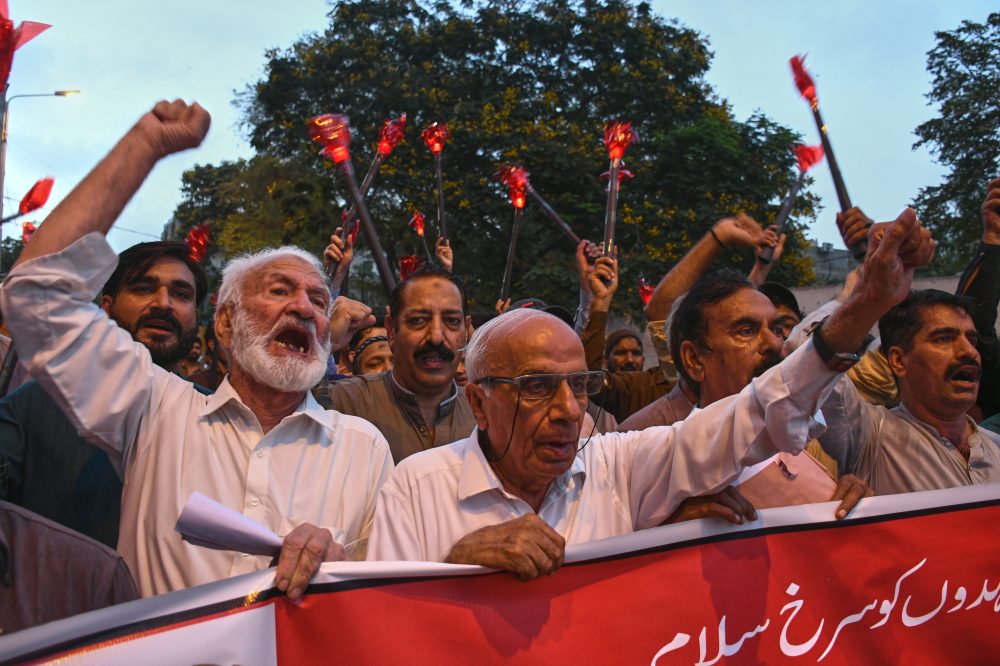
While Pakistan observes May Day as an official holiday featuring demonstrations, many daily laborers cannot afford to miss work.
“How will I bring vegetables and other necessities home if I don’t work?” questioned Mohammad Maskeen, a 55-year-old construction worker near Islamabad.
Increased petroleum costs have driven inflation to approximately 16% according to government estimates, affecting a nation that depends heavily on International Monetary Fund assistance and support from allied countries.
Labor organizations historically utilize May Day to advocate for wage increases, pension protections, inequality reduction and broader political concerns.
Demonstrations are scheduled from Seoul, Jakarta and Istanbul to European Union capitals and American cities nationwide.
French unions have organized rallies in Paris and other locations using the theme “bread, peace and freedom,” connecting workers’ everyday struggles to conflicts in Ukraine and the Middle East.
Italy’s government this week approved nearly 1 billion euros ($1.17 billion) in employment incentives before May Day, designed to promote job stability and combat workplace exploitation. The measures extend tax reductions to encourage hiring young people and disadvantaged women while addressing problems in platform-based employment. Opposition politicians criticized the package as “pure propaganda.”
In Portugal, proposed employment law modifications by the center-right administration triggered a general strike and street demonstrations last year. After nine months of discussions with unions and employers, no agreement has been reached. Labor groups argue the proposals would undermine worker protections by expanding overtime requirements and reducing certain benefits.
This year’s May Day holds particular significance in France following intense discussion about permitting employees to work on the nation’s most protected public holiday — the sole day when most workers receive mandatory paid time off.
Nearly all businesses, retail stores and shopping centers remain closed, with only essential services like hospitals, transportation and hotels operating.
A recent legislative proposal to expand work permissions for the holiday generated significant opposition from unions and left-wing politicians.
“Don’t touch May Day,” labor unions declared in a collective statement.
Responding to the controversy, the government introduced legislation this week to allow bakeries and flower shops to operate on May Day. French tradition involves giving lily of the valley flowers on the holiday for good fortune.
“May 1 is not just any day,” explained Small and Medium-sized Businesses Minister Serge Papin. “It symbolizes social gains stemming from a century of building social rules that have led to the labor code we know in France. It is indeed a special day.”
Activists and labor organizations are coordinating street demonstrations and boycotts throughout the United States, where May Day lacks federal holiday status.
May Day Strong, a coalition of activist organizations and unions, has urged people to participate under the slogan “workers over billionaires.”
Expressing strong resistance to Trump’s policies, organizers have listed thousands of May Day events nationwide and seek an economic shutdown through “no school, no work, no shopping.”
Their demands include taxing wealthy individuals and ending the Trump administration’s immigration enforcement efforts.
Although labor and immigrant rights have historically been connected, American May Day rallies shifted focus to immigration in 2006. That year, approximately 1 million people, including nearly 500,000 in Chicago alone, protested federal legislation that would have made unauthorized residence in the U.S. a felony.
May Day, also known as International Workers’ Day, originated over a century ago during a crucial period in American labor history.
During the 1880s, unions advocated for eight-hour workdays through strikes and demonstrations. In May 1886, a Chicago gathering turned fatal when a bomb detonated and police responded with gunfire. Several labor advocates — most of them immigrants — were found guilty of conspiracy and other charges; four received execution.
Unions subsequently designated May 1 to commemorate workers. A memorial in Chicago’s Haymarket Square honors them with the inscription: “Dedicated to all workers of the world.”
May Day is now recognized globally across Europe, Latin America, Africa and Asia.