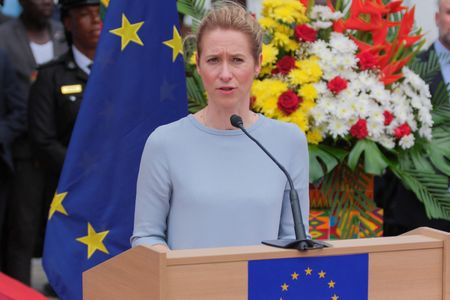
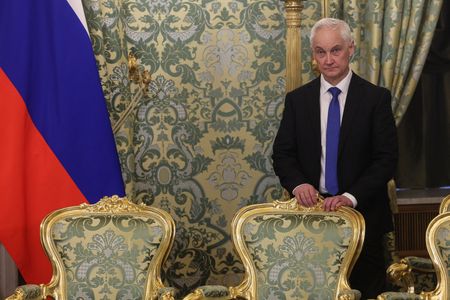
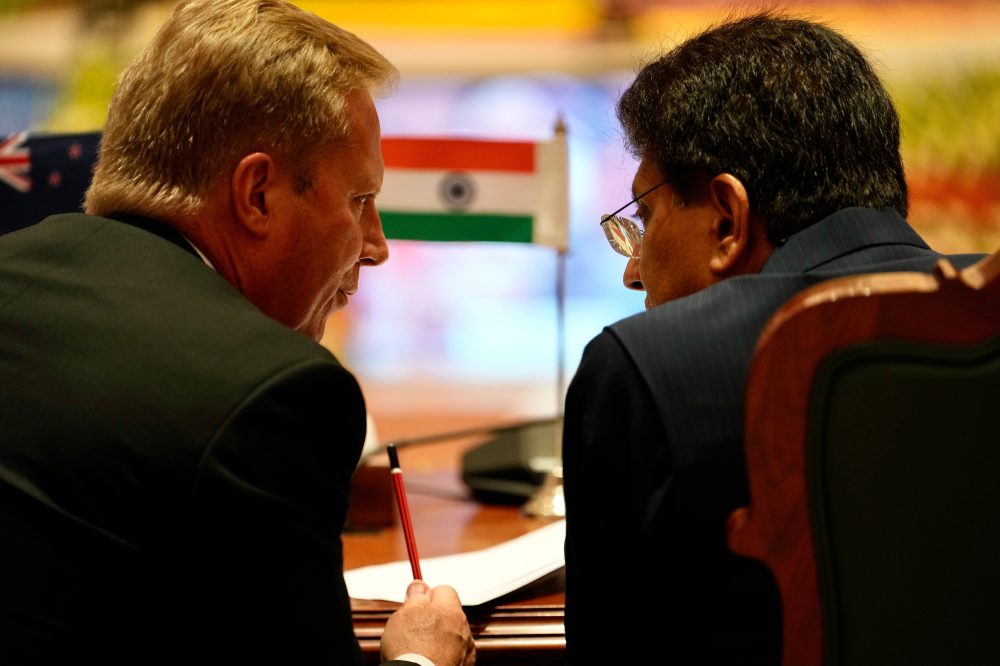
BANDAR SERI BEGAWAN, April 28 – During a diplomatic meeting in Brunei on Tuesday, European Union foreign policy chief Kaja Kallas encouraged Southeast Asian nations to avoid purchasing Russian oil as they navigate fuel supply challenges stemming from Middle East conflicts.
Earlier this month, the EU implemented new sanctions targeting Russia, which included stricter limitations on oil commerce, as part of efforts to weaken Moscow’s financial capacity to continue its military operations in Ukraine.
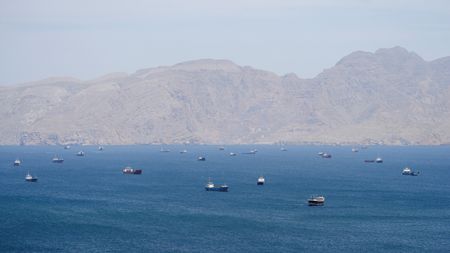
According to Kallas, Russia has gained advantages from the U.S.-Israeli conflict with Iran, which has resulted in the practical shutdown of the Strait of Hormuz – a crucial shipping lane that handles approximately 20 percent of global oil transportation and other essential commodities.
“Just let me remind you that the oil revenues are the revenues that Russia is using to fund this war (in Ukraine). We have an interest that this war stops,” she stated to journalists following her discussions with foreign ministers from the Association of Southeast Asian Nations (ASEAN).
“That’s why we are, of course, advocating for diversifying resources and finding them elsewhere, not from Russia,” Kallas added.
The EU diplomat did not clarify whether this topic was specifically discussed during her formal meetings with ASEAN officials.
According to previous Reuters reporting from last month, several Southeast Asian countries, including Vietnam, Thailand, the Philippines and Indonesia, have been exploring increased oil purchases from Russia.
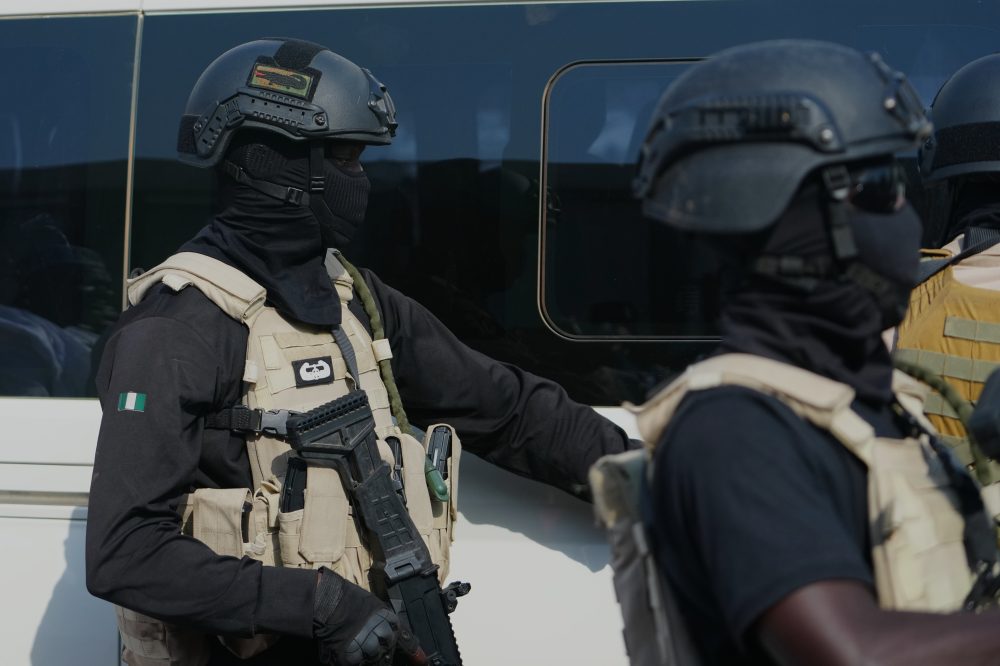
ACCRA, April 28 – Armed attackers ambushed a Ghanaian military convoy escorting 140 civilians through the northern town of Binduri on Monday, leaving three civilians dead and one wounded, according to military officials.
The convoy was traveling through Ghana’s Upper East Region from Bawku toward Bolga when unknown gunmen launched multiple attacks on the vehicles, military authorities reported in an official statement.
Binduri sits near the violence-plagued town of Bawku, where ongoing ethnic tensions between the Mamprusi and Kusasi communities have centered around disputes over traditional leadership appointments in the region.
This ethnic conflict has claimed over 300 lives since 2021, with the bloodshed now extending beyond Bawku’s city limits into surrounding areas like Binduri.
Local authorities had previously implemented nighttime curfews in Binduri Township starting in March 2025, which were lifted in February 2026 after security conditions showed signs of improvement.
Military personnel fought back against Monday’s assault, fatally shooting seven of the attackers, according to army officials. Following the confrontation, troops seized a G3 automatic rifle, two loaded magazines containing 20 rounds each, and an additional 176 rounds of ammunition from a suspect who had sought refuge in a local mosque.
Authorities have taken ten additional suspects into custody, who are now cooperating with ongoing investigations into the attack, military sources confirmed.
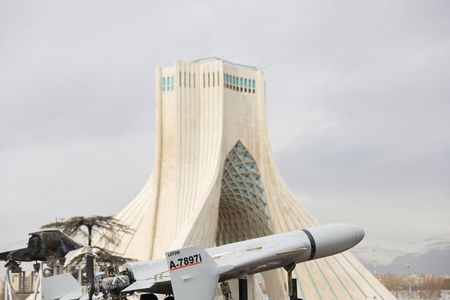
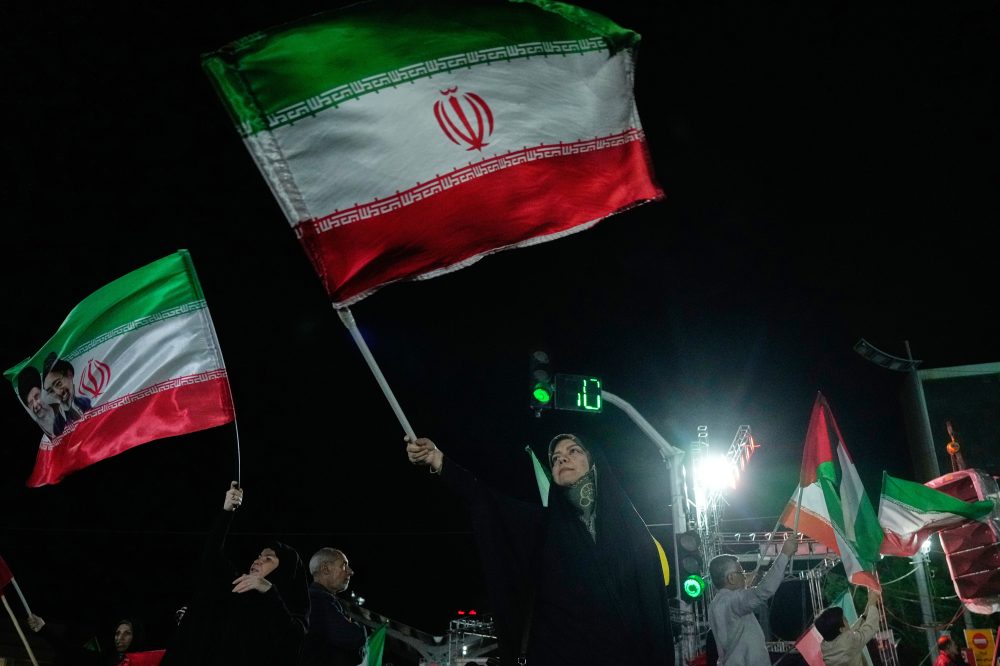
Iran’s Deputy Defense Minister announced Tuesday that the country stands ready to transfer its defensive military technology to allied nations, particularly those belonging to the Shanghai Cooperation Organisation, according to reports from Iranian state media.
Deputy Defense Minister Reza Talaei-Nik made the announcement during a defense ministers’ meeting in Kyrgyzstan’s capital city. The statement follows a two-month military confrontation between Iran and both the United States and Israel that stretched from late February through early April.
During that conflict, Iranian forces deployed multiple waves of unmanned drones and missile strikes targeting American military installations throughout the region and Israeli locations. Iran also successfully intercepted various U.S. aircraft, mostly drones, that entered Iranian airspace during the hostilities.
“We are ready to share the experiences of America’s defeat with other members of the organisation,” Talaei-Nik stated during the SCO defense ministers’ gathering.
The Iranian defense official has recently conducted discussions with military leaders from Russia and Belarus, with both Moscow and Minsk expressing their commitment to maintaining collaborative relationships with Tehran.
While a ceasefire declaration earlier this month has temporarily suspended the two-month military confrontation, diplomatic initiatives aimed at achieving a permanent resolution to the conflict have reached an impasse.
Iran has identified underwater internet cables running through the Strait of Hormuz as potential targets, sparking worries about threats to critical digital infrastructure that keeps the global internet running.
This strategic waterway, already crucial for worldwide oil transport, serves as an equally important pathway for digital communications. Multiple fiber-optic cables run along the ocean floor through the strait, linking nations from India and Southeast Asia to Europe through Gulf nations and Egypt.
These underwater cables carry approximately 99% of global internet traffic, according to the International Telecommunication Union, the UN’s digital technology agency. The cables also transport telecommunications signals and electrical power between nations, making them essential for cloud computing services and online communications worldwide.
“Damaged cables mean the internet slowing down or outages, e-commerce disruptions, delayed financial transactions … and economic fallout from all of these disruptions,” explained geopolitical and energy analyst Masha Kotkin.
Gulf nations, especially the UAE and Saudi Arabia, have poured billions into artificial intelligence and digital infrastructure as they work to reduce their dependence on oil revenues. Both countries have created national AI companies serving regional customers — all depending on these underwater cables for high-speed data transmission.
Key cable systems passing through the Strait of Hormuz include the Asia-Africa-Europe 1 (AAE-1), which links Southeast Asia to Europe through Egypt with connection points in the UAE, Oman, Qatar, and Saudi Arabia. The FALCON network connects India and Sri Lanka to Gulf states, Sudan, and Egypt. The Gulf Bridge International Cable System links all Gulf nations, including Iran. Several additional networks are currently being built, including one led by Qatar’s Ooredoo.
While submarine cable length has expanded significantly from 2014 to 2025, cable failures have held steady at approximately 150-200 incidents annually, according to the International Cable Protection Committee. Though state-sponsored sabotage remains a concern, 70-80% of cable damage results from accidental human activities, mainly fishing operations and ship anchors.
Additional threats include ocean currents, seismic activity, underwater volcanic activity, and severe storms, noted Alan Mauldin, research director at telecommunications research company TeleGeography. The industry mitigates these dangers by burying cables, adding protective armor, and choosing safer routes.
The Iran conflict, now approaching its second month, has caused unprecedented disruption to global energy supplies and regional infrastructure, including damage to Amazon Web Services data centers in Bahrain and the UAE. The submarine cables have remained undamaged thus far.
However, an indirect threat exists from damaged ships accidentally striking cables while dragging anchors.
“In a situation of active military operations, the risk of unintentional damage increases, and the longer this conflict lasts, the higher the likelihood of unintentional damage,” Kotkin stated. A comparable incident happened in 2024 when a commercial ship attacked by Iran-backed Houthis drifted in the Red Sea and cut cables with its anchor.
The extent to which cable damage might affect connectivity in Gulf countries depends heavily on individual network operators’ reliance on them and available backup options, according to TeleGeography.
Fixing damaged cables in war zones presents unique challenges beyond simply protecting them. While the actual repair work isn’t extremely complex, repair ship owners and insurance companies may hesitate due to risks from combat or mines, experts explain.
Getting permission to enter territorial waters creates another complication. “Often one of the biggest problems with doing repairs is you have to get permits into the waters where the damage is. That can take a long time sometimes and can be the biggest source (of problems),” Mauldin explained.
After conflicts end, industry operators must also re-examine the sea floor to identify safe cable locations and avoid ships or debris that may have sunk during fighting.
While potential submarine cable damage wouldn’t cause complete connectivity loss due to land-based connections, experts agree that satellite systems cannot serve as adequate replacements since they cannot manage the same traffic volume and cost significantly more.
“It’s not as though you could just switch to satellite. That’s not an alternative,” Mauldin emphasized, explaining that satellites depend on ground-based network connections and work better for mobile applications like aircraft and ships.
Low-Earth-orbit systems like Starlink represent “a boutique solution, which is not scalable to millions of users, at this time,” Kotkin added.
A South Korean appeals court on Tuesday handed down a four-year prison term to Kim Keon Hee, the country’s former First Lady, following her conviction on charges of stock manipulation and accepting bribes.
The Tuesday ruling represented an increase from her previous sentence, as the appeals court decided to impose harsher punishment for the financial crimes.
Kim Keon Hee faced charges related to illegally manipulating stock prices and receiving bribes during her time in the public spotlight.
German military officials have ruled out working with American defense technology firm Palantir, citing national security concerns about data access, according to statements made to a German business publication.
Thomas Daum, who oversees cyber defense operations for Germany’s armed forces, told Handelsblatt newspaper that such partnerships are not being considered currently. “I don’t see that happening at all at the moment,” Daum stated in the publication’s Tuesday edition.
The military official explained that while German forces recognize the potential benefits of the company’s database capabilities, security protocols prevent such collaboration. “As much as we are interested in the functionality for our own database, it is simply inconceivable at the moment to grant industry staff access to the national database,” Daum explained.
This decision comes as Palantir has secured significant contracts with the U.S. military. Last month, reports indicated that the company’s artificial intelligence technology had been formally adopted by the Pentagon for long-term use, particularly for weapons-targeting applications across American military branches.
German military leaders have been exploring artificial intelligence solutions to process battlefield information more quickly than traditional human analysis methods allow.
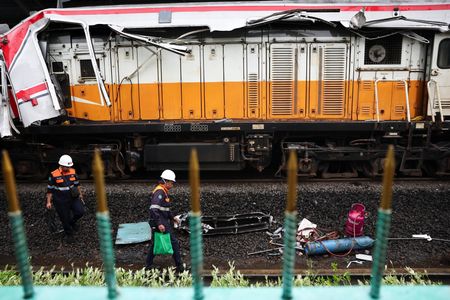
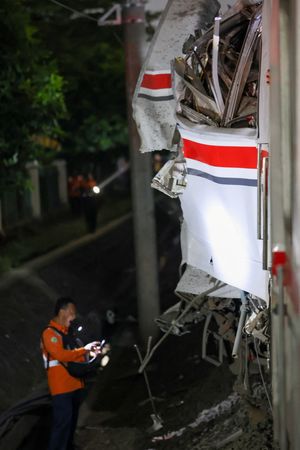
Rescue operations have concluded following a devastating train accident near Jakarta, Indonesia, with officials confirming 14 fatalities and 84 people wounded in the collision.
The tragic incident occurred Monday evening in Bekasi, located just outside Indonesia’s capital, when a commuter train and a long-distance train crashed into each other.
PT KAI, Indonesia’s state railway company, confirmed through CEO Bobby Rasyidin that the death count had reached 14 people.
Mohammad Syafii, who leads Indonesia’s search and rescue operations, announced Tuesday that all evacuation efforts had wrapped up. He described the complex nature of freeing passengers who were stuck inside the destroyed train cars.
“We needed to involve personnel with certain skills to perform a measured extrication,” Syafii explained, noting that while no additional passengers remain to be found, rescue workers will continue searching the debris for any remaining body parts.
The crash’s most severe damage occurred to a car designated exclusively for female passengers. According to Syafii, every person who died was a woman, with the majority crushed beneath twisted metal.
Emergency responders used specialized cutting equipment, including angle grinders, to slice through the metal compartments and reach those who survived before separating the trains.
Railway executive Bobby explained during a news briefing that the sequence of events began when the commuter train struck a taxi positioned on the railway tracks, followed by the long-distance train hitting the commuter train.
Green SM Indonesia, the taxi company involved, confirmed through social media that one of their vehicles was part of the accident. The company stated it provided information to investigators to help with their inquiry.
The taxi service operates as the Indonesian division of Green and Smart Mobility JSC, a Vietnamese electric vehicle company connected to Vingroup.
Following a visit to a Bekasi medical facility, President Prabowo Subianto announced plans to construct an overpass near the railway to address severe traffic problems in the area. He also promised a thorough investigation into the accident and acknowledged that significant portions of the country’s rail system lack proper maintenance.
The crash is currently under review by Indonesia’s National Transportation Safety Committee.
Family members and concerned individuals gathered at the train station Tuesday, many searching for missing relatives.
Heriyati, who was traveling on the train, shared that she had originally planned to board the women’s car but chose the one directly behind it instead. She was speaking with her husband by phone, arranging for him to collect her from the station, when the collision happened.
“I haven’t even finished with the call and the trains collided,” she recalled.
The commuter rail system serves as one of Jakarta’s busiest transportation networks in what ranks as the world’s most populated urban area. PT KAI announced that several commuter routes were shortened Tuesday due to the crash aftermath.
Adriansyah Yasin Sulaeman, who holds an executive position at the Forum Transport for Jakarta research organization, emphasized the need for government investment in upgrading the deteriorating railway infrastructure. He specifically recommended creating separate tracks for express long-distance services and local commuter trains.
“These commuter trains are a symbol for the working class,” Sulaeman stated. “It’s a big alarm for the government to seriously improve it.”
Transportation accidents involving land vehicles occur frequently throughout Indonesia. A separate train accident in West Java province during 2024 resulted in four deaths and numerous injuries.
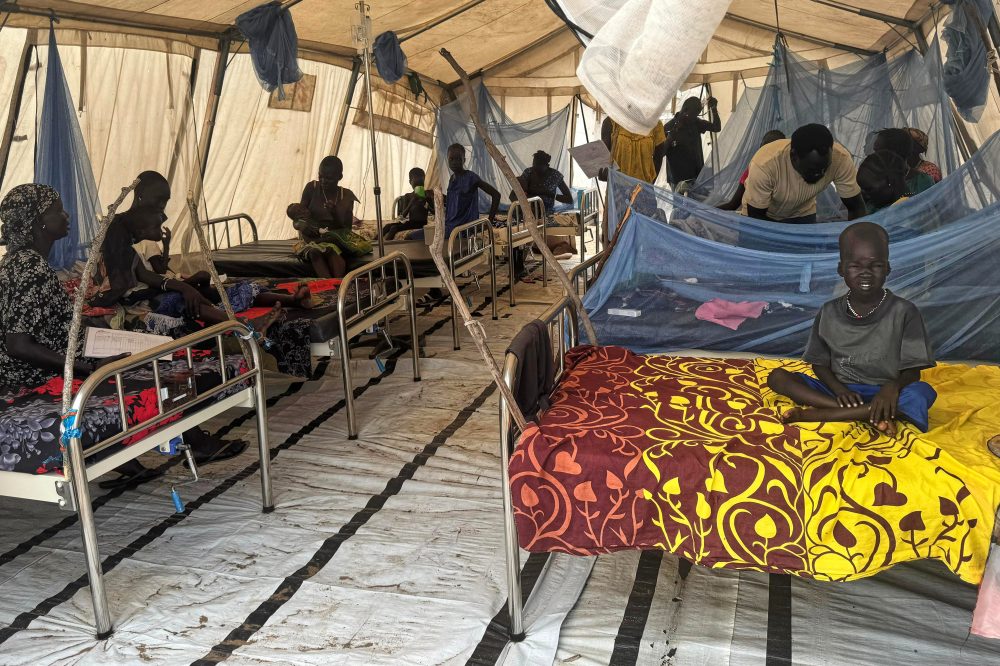
War-displaced civilians who sought safety in a remote South Sudan village have been cut off from critical humanitarian assistance by their own government, despite mounting casualties, according to witnesses and relief organizations.
The Associated Press interviewed individuals who recently escaped to Nyatim, a community surrounded by marshland. They reported severe food shortages and contaminated water sources in such an isolated location that satellite internet was their only means of requesting emergency help.
However, when humanitarian workers contacted South Sudan’s leadership requesting permission to provide emergency supplies, officials refused. Even reports indicating dozens had perished, some apparently from hunger, failed to change their decision.
“It was a ‘no’ from local and national authorities and from the military,” said Yashovardhan, the head of mission for Doctors Without Borders in South Sudan, who goes by one name. “Meanwhile, people are eating leaves and roots to survive.”
The U.N. World Food Program, typically cautious about addressing this ongoing issue in South Sudan, confirmed to the AP that authorities had prevented their assistance despite “numerous engagements with both national and local authorities,” according to the agency’s country director, Adham Effendi.
This pattern has repeated throughout South Sudan’s history, where citizens battled for independence from Sudan before civil conflict erupted internally. Whichever faction controls relief supplies stands accused of preventing the opposition from accessing them, leaving ordinary people to bear the consequences.
Current violence has escalated since Riek Machar, President Salva Kiir’s longtime political adversary, was removed from his position as first vice president and placed under house detention for alleged conspiracy last year. These leaders commanded rival armies during a brutal civil conflict that claimed approximately 400,000 lives before a 2018 peace accord established their unstable coalition government.
Last December, opposition troops supporting Machar captured military installations in Jonglei state. Government armies retaliated the next month.
On February 7, government soldiers approached Lankien town’s perimeter, where days before an air assault had targeted a Doctors Without Borders medical facility. Local residents described heavy weapons fire before troops invaded the settlement using armored vehicles.
Thomas Nim was among the evacuees. Accompanied by his expecting wife, three young children, and elderly mother, they navigated through wetlands, praying soldiers wouldn’t pursue them.
They joined many others who eventually reached Nyatim, roughly one day’s journey on foot.
“Some of the most vulnerable, like the elderly and children, ended up in Nyatim because they couldn’t make it any farther,” said Nim, a 43-year-old pharmacist.
As time went on and fatalities began occurring due to hunger and contaminated water, he requested assistance. Yet no help arrived.
Gatkhor Dual, an opposition representative managing relief efforts in Jonglei state, pointed to county commissioner James Bol Makuei for preventing humanitarian access. Makuei refuses aid to reach individuals who “support the opposition,” Dual explained, particularly when they’re located near government-controlled territories.
Makuei confirmed that entry to Nyatim had been limited but argued that population estimates of displaced persons — 30,000 according to Doctors Without Borders — were inflated. He charged South Sudan’s primary opposition movement, identified by its acronym SPLM-IO, with keeping civilians in Nyatim to draw aid and establish a strategic position near the county’s government center.
Nim, the pharmacist, insisted no opposition fighters were present in the region.
Worries about aid misappropriation have historical basis. Armed factions in South Sudan, including government forces, have extensively redirected humanitarian resources for military use. During recent Jonglei fighting, combatants ransacked more than two dozen humanitarian-operated medical centers, the U.N. reported.
Doctors Without Borders indicated it initially contacted authorities about Nyatim on February 22. The organization made another appeal on March 3 after receiving death reports. By March’s end, the medical organization released a public statement highlighting their efforts.
Providing assistance in South Sudan presents constant challenges. Transportation networks are inadequate. Water-based transport, when possible, faces attack risks. Official authorization remains mandatory.
The humanitarian emergency has worsened significantly. In March, more than half of over 1,000 children examined by Doctors Without Borders in Chuil, where South Sudan’s government has permitted humanitarian entry, showed severe malnutrition.
Relief workers face overwhelming demands. During February, Doctors Without Borders expanded a four-bed clinic to 60 beds, then 80. The facility is now expanding to accommodate 100 patients.
Meanwhile, some people are abandoning isolated Nyatim and returning to destroyed homes.
“People are returning to their homes,” said one of them, Koang Pajok. “There was no food and shelter.”
Unable to access the region through ground or water routes, the World Food Program has conducted airdrops of 415 metric tons of food supplies to Chuil since March, country director Effendi reported.
However, as civilians arrive seeking help, armed young men carrying assault rifles also appear. Some residents fear this could make Chuil a military target.
During an April morning, an aircraft circling above created nervous spectators.
“It’s a surveillance plane,” said Gal Wai Tut, who had reached the area days earlier with his wife and infant child. He remembered observing a similar aircraft over Lankien on the day he claimed a December bombing killed at least 11 civilians.
An elderly man warned against clustering together, explaining that groups are more vulnerable to attack.
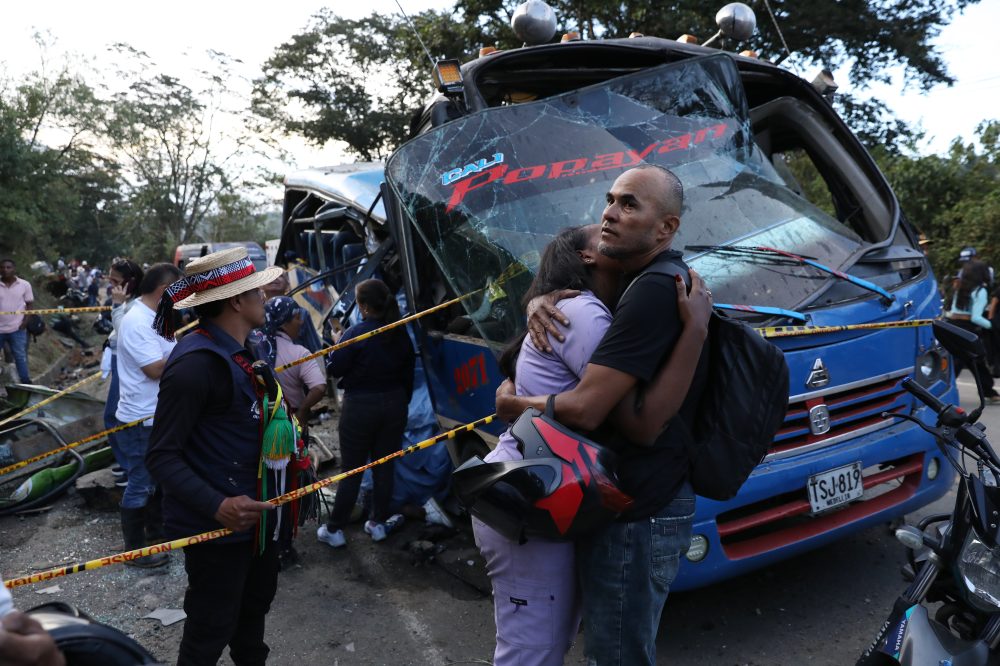
Security fears are mounting across Colombia as insurgent forces have launched a devastating campaign of violence just weeks before the nation’s May presidential election.
Since Friday, militant groups have carried out more than 24 violent strikes targeting both civilian populations and government military installations throughout Colombia’s southwestern regions.
The escalating attacks have heightened concerns about safety and stability as the country prepares for its upcoming presidential vote.
The violence represents a significant security challenge for Colombian authorities as they work to ensure safe conditions for the democratic process.
BEKASI, Indonesia — Emergency teams have finished retrieving the final casualties from a deadly railway accident that occurred just outside Indonesia’s capital city on Tuesday. The tragic collision took place Monday evening when a passenger train traveling long distances struck the back end of a commuter train that had stopped at the Bekasi station near Jakarta.
Recovery operations continued through Tuesday as rescue workers worked to extract all victims from the wreckage at the station located in the outskirts of the Indonesian capital.
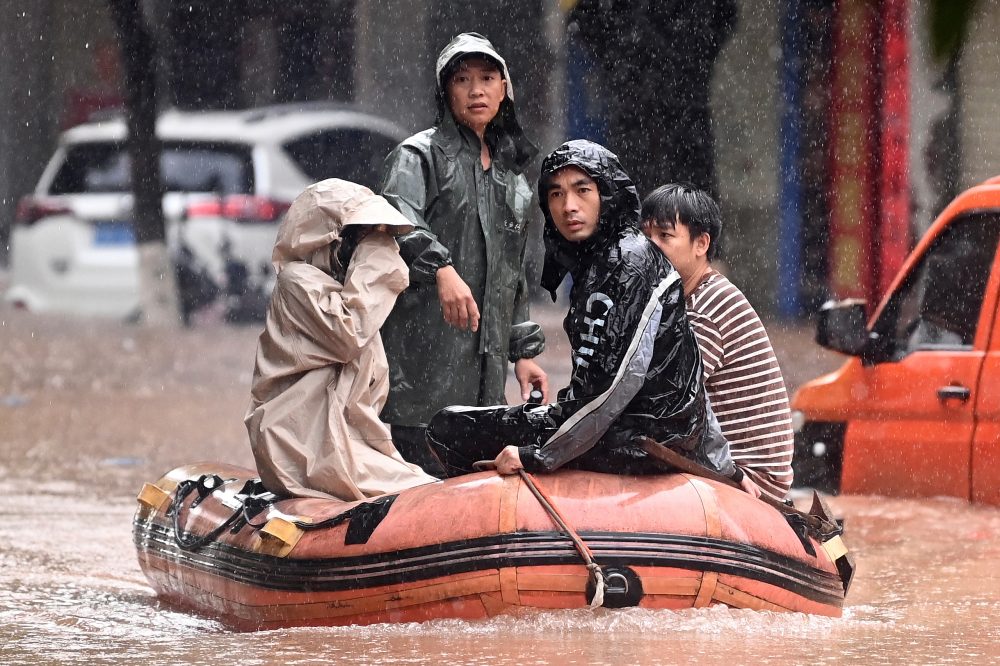
BEIJING (AP) — More than 200 people were forced from their homes after intense rainfall created dangerous flooding conditions in a southern Chinese city, according to state media reports released Tuesday.
Emergency responders used inflatable boats to reach residents who became trapped inside their homes in Qinzhou, located in the Guangxi region, the official Xinhua news agency reported. Video from the scene showed rescue workers moving through water that reached their chests, while firefighters physically carried elderly residents to safety.
Local officials in Qinzhou reported that weather monitoring equipment measured more than 270 millimeters of precipitation — approximately 10 inches — in the 24-hour span that concluded Monday morning at 8 a.m. This rainfall total set a new single-day record for the month of April in the area.
Weather expert Lin Nan explained in a social media post that this type of extreme precipitation normally doesn’t occur in coastal areas of southern China until the summer monsoon season begins in the middle to end of May. “It is rare to see such a heavy downpour in late April,” Lin said.
By Tuesday morning, educational institutions throughout Qinzhou had reopened for regular classes, and vehicle movement had returned to normal conditions in most areas of the city, according to reports from a news organization run by China’s emergency management officials.
The Trump administration showed little enthusiasm Tuesday for Iran’s diplomatic overture to halt current hostilities and restore access to the Strait of Hormuz in return for the United States ending its economic sanctions against the nation.
Iran’s proposal would delay negotiations regarding the country’s nuclear capabilities, an approach that Secretary of State Marco Rubio seemingly rejected during a Monday Fox News appearance.
“We have to ensure that any deal that is made, any agreement that is made, is one that definitively prevents them from sprinting towards a nuclear weapon at any point,” Rubio stated regarding the proposal, which Pakistan delivered to American officials.
White House officials confirmed that President Donald Trump’s national security advisors reviewed the Iranian offer and indicated Trump would respond to it at a later time.
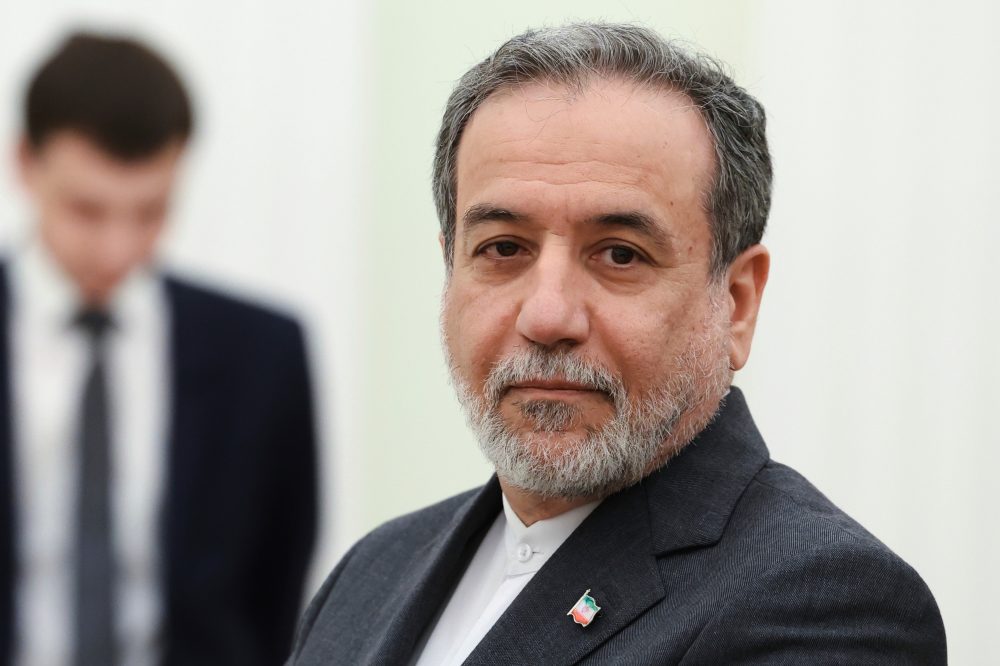
The diplomatic initiative surfaced Monday while Iranian Foreign Minister Abbas Araghchi conducted meetings in Russia, a nation that has historically supported Tehran. Officials have not clarified what support, if any, Moscow might provide in this situation.
Casualty figures from the ongoing conflict show at least 3,375 deaths in Iran and a minimum of 2,521 fatalities in Lebanon, where clashes between Israel and Iran-supported Hezbollah forces restarted just two days following the Iran conflict’s beginning. Additional deaths include 23 Israelis, more than a dozen people in Gulf Arab nations, 16 Israeli military personnel in Lebanon, 13 American service members in the region, and six United Nations peacekeepers stationed in southern Lebanon.
During his Fox News interview, Rubio addressed Iran’s latest diplomatic effort, which would delay nuclear program discussions while ending Iran’s control over the Strait of Hormuz if America removes its sanctions and concludes the war.
“There’s no doubt in my mind that at some point in the future if this radical clerical regime remains in charge in Iran, they will decide they want a nuclear weapon,” Rubio explained.
“That fundamental issue still has to be confronted,” he continued. “That still remains the core issue here.”
When questioned about Iranian sincerity regarding potential negotiations, Rubio characterized them as experienced diplomats seeking to gain additional time.
“We can’t let them get away with it,” Rubio emphasized. “We have to ensure that any deal that is made, any agreement that is made, is one that definitively prevents them from sprinting towards a nuclear weapon at any point.”
NAIROBI/GENEVA – The Middle East conflict involving Iran has created devastating consequences for Somalia’s most vulnerable population: severely malnourished children who were already facing the dual crises of potential famine and significant reductions in international assistance.
Medical facilities across Somalia are being forced to deny treatment to critically undernourished children and limit their supply distributions due to shortages of essential therapeutic nutrition products caused by maritime shipping interruptions, according to recent reporting.
Nearly 500,000 children below the age of 5 are experiencing severe acute malnutrition, also known as wasting – the deadliest category of hunger – and the transportation delays are amplifying the impact of reduced humanitarian funding.
Medical staff in the cities of Baidoa and Mogadishu report they must carefully ration their limited inventory of specialized milk products and nutrient-rich peanut-based therapeutic paste that are essential for saving these young lives.
“Since the needs are large and we don’t have a lot of supplies, we have had to keep reducing the amount we give children,” said nurse Hassan Yahye Kheyre.
Kheyre’s medical facility treats over 1,200 children but has only 225 containers of peanut paste remaining, which the International Rescue Committee estimates will be depleted in approximately two weeks.
“If treatment is on-and-off, the children will become very weak, physically and mentally. And it may not be possible to reverse it,” Kheyre explained.
Three humanitarian organizations, including the IRC, have confirmed that transportation setbacks and increased expenses connected to the Iranian conflict are compounding an already dire situation.
At the medical center in Baidoa’s southwestern region, operated by IRC partner READO, Muumino Adan Aamin, a mother of nine children, has repeatedly attempted to obtain peanut paste for her 11-month-old daughter Ruweido.
Although Ruweido requires three packets daily, Aamin has been denied treatment twice due to supply shortages at the clinic.
Aamin previously almost lost her daughter Anisa during a 2017 drought that brought Somalia close to famine conditions. The child was reduced to “just bone and skin” but survived thanks to peanut paste treatment, Aamin recalled.
Nine years later, another drought has left 6.5 million people – representing one-third of Somalia’s population – facing severe hunger, while aid organizations struggle desperately to address the gaps.
An IRC shipment of peanut paste sufficient to feed more than 1,000 children became stranded two months ago at Mundra port in India, which is now overcrowded with redirected cargo unable to reach Gulf ports, explained Shukri Abdulkadir, IRC’s Somalia coordinator.
When informed that the Indian-manufactured peanut paste would require at least 30 additional days to arrive, IRC canceled the shipment.
The organization then placed an urgent order for 400 containers from Nairobi and is transferring existing supplies from Mogadishu to Baidoa while waiting for the new delivery.
However, increased transportation and production expenses have driven the cost of individual containers from $55 to $200, according to CARE International, whose most recent purchase now provides supplies for only 83 children instead of 300.
During 2024, shipments of therapeutic milk and ready-to-use therapeutic food from Europe to Somalia normally required 30-35 days, extending to 40-45 days in 2025 as vessels rerouted around Africa due to Red Sea security concerns.
Following the February 28 U.S.-Israeli attack on Iran and Iran’s subsequent closure of Gulf access, vessel shortages have extended delivery times to 55-65 days, said Mohamed Omar, Health and Nutrition director at Action Against Hunger in Mogadishu.
Currently in Somalia, the IPC global hunger monitoring system indicates that over 2 million people have reached the “Emergency” classification, just one step below official famine status.
Between January and March, admissions of severely malnourished children to health centers supported by ACF increased by 35% compared to the previous year.
Personnel at Daynile General Hospital, currently treating 360 children for wasting, reported on April 20 that they possessed barely adequate supplies for one week.
“Some children’s nutritional status has already worsened,” stated health and nutrition supervisor Xafsa Ali Hassan.
Somalia was excluded from the 17 impoverished countries selected to receive portions of this year’s funding allocated to the U.N. Office for the Coordination of Humanitarian Affairs by the United States, which has implemented the most severe reductions among international aid contributors.
OCHA reports that more than 200 medical facilities have shut down and mobile treatment teams have been dissolved.
The organization announced in December that over 60,500 severely malnourished children had received no treatment as a consequence, with projections indicating this number could reach 150,000 if funding shortfalls continue.
When the Iranian conflict began, domestic fuel costs increased by 150%.
“Somalia is really hard hit by the Iran war because people are still reeling from the impact of the previous drought,” said IRC’s Abdulkadir. “It’s very difficult for people to absorb these shocks.”
OCHA has requested $852 million from international donors to prevent complete famine conditions.
This represents a significant decrease from last year’s $1.42 billion request, yet only 14% of the reduced amount has been received so far.
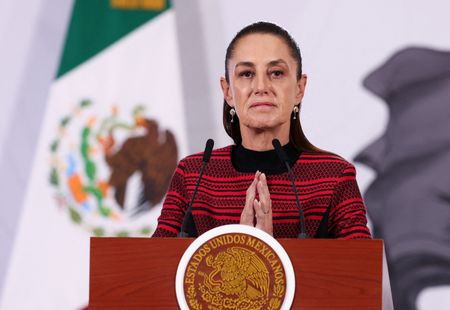
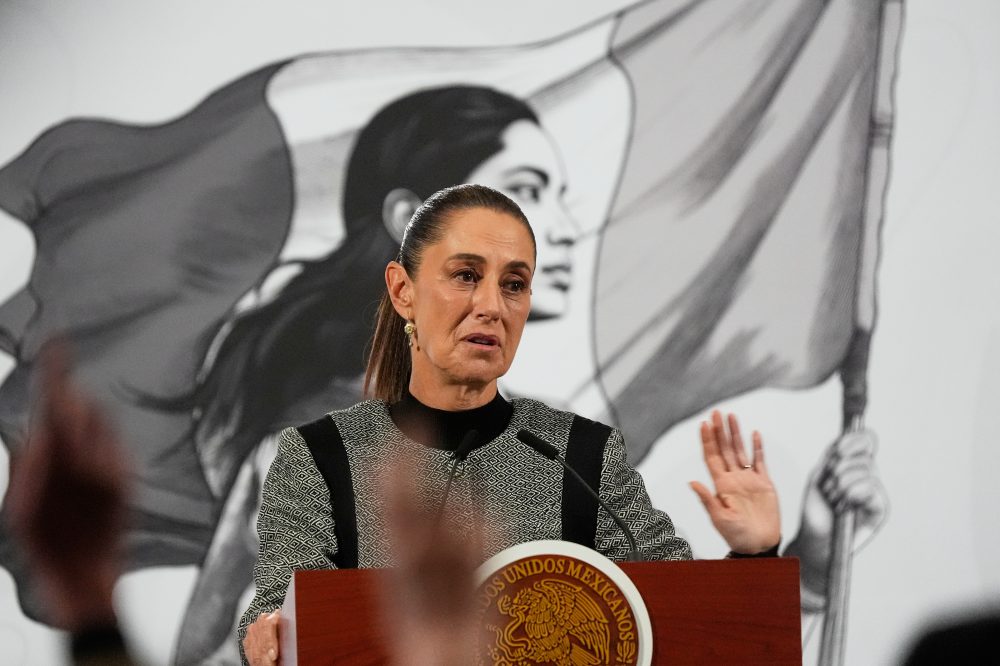
MEXICO CITY – Mexico’s President Claudia Sheinbaum announced Monday that her administration has formally complained to the United States through diplomatic channels about the unsanctioned participation of American officials in a counter-narcotics mission in northern Chihuahua state.
Four people died in a vehicle accident on April 19 following the drug operation – two American officials and two Mexican personnel. Sources have identified the U.S. officials as CIA operatives. The incident has reignited diplomatic friction between the neighboring countries regarding security collaboration.
The controversy led to the resignation of Chihuahua’s top prosecutor, Cesar Jauregui, late Monday evening. He stepped down after admitting he had given contradictory statements about what happened.
Sheinbaum emphasized that Mexico’s federal authorities had no knowledge that the American officials, reportedly CIA agents, were participating in the mission.
“What we told (the U.S.) was that the federal government didn’t know about the involvement of these people (in the operation) and we hope that it’s an exception,” Sheinbaum stated during her regular morning news briefing.
The Mexican leader said her country demanded that “our constitution and national security law should be followed,” and noted that Washington had expressed its understanding.
The participation of American personnel in anti-cartel missions remains an extremely contentious issue in Mexico. While Sheinbaum supports intelligence coordination and security partnership, she firmly opposes allowing U.S. agents or military forces to conduct operations within Mexican borders.
This stance contrasts sharply with U.S. President Donald Trump’s approach, who has consistently advocated for expanded American military involvement against Mexican drug cartels and has warned that the United States might act unilaterally if Mexico’s efforts prove insufficient.
Mexico’s security leadership revealed Saturday that the American officials lacked proper authorization to engage in security activities within the country, with one having entered Mexico using tourist documentation.
Initially, prosecutor Jauregui claimed the day after the crash that the U.S. officials had not participated in the laboratory raid itself, but were collected by Mexican operatives at a different location afterward. He said they were being transported to the state capital when the fatal accident happened.
However, Jauregui acknowledged Monday that his earlier statements contained inaccuracies, though he did not specify which details were wrong.
“Regarding the events that have come to light around the presence of individuals who identified themselves as alleged foreign officials, the information we initially had – and which I shared with the public – was inconsistent,” he stated in an announcement from the Chihuahua Attorney General’s office, which he also read during a news conference.
“There were omissions both in the information and in the institutional handling of points of contact with those individuals.” He expressed hope that his departure would help authorities “restore public trust.”
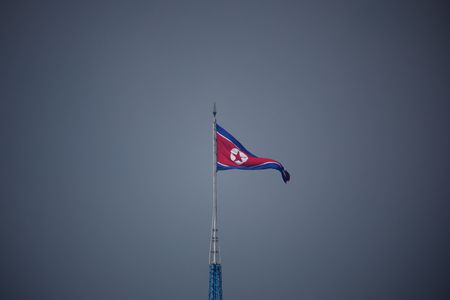
North Korea dramatically escalated its use of capital punishment during COVID-19 border restrictions, with the majority of death sentences connected to consuming prohibited foreign entertainment and religious activities, according to a human rights organization based in Seoul.
Research conducted by the Transitional Justice Working Group reveals that 148 individuals were executed in 60 separate incidents from 2020 through 2024, representing a significant jump from 41 death penalty cases during the preceding five-year span.
The organization compiled its findings through conversations with 880 North Korean refugees currently residing in South Korea and utilized satellite imagery to identify locations where executions took place. Researchers emphasized that their data should not be viewed as comprehensive.
Violations involving foreign cultural content and religious practices, such as viewing South Korean television programs and films, represented the highest percentage of execution cases, the study found.
Prior to pandemic restrictions, homicide had been the primary offense leading to death sentences.
Political crimes resulting in executions climbed to 28 cases from just four during the comparable earlier timeframe, as leader Kim Jong Un intensified efforts to suppress opposition during isolation measures.
Cultural offense executions also took place in the nation’s interior regions rather than solely near the Chinese border, indicating South Korean entertainment had penetrated across the entire country, according to Hubert Lee, who serves as the organization’s executive director.
North Korea has gradually begun loosening restrictions and permitted the 2023 return of citizens who had been overseas, while recently restoring passenger rail connections with China.
However, the count of North Korean defectors, which serves as a measure of the country’s external engagement, stayed minimal at 223 in 2025, down from 1,275 recorded in 2015, based on South Korean official statistics.
The expected leadership transition to Kim’s daughter, identified as Ju Ae, might also lead to increased executions, Lee suggested.
“The number of executions may surge when the time for Ju Ae to succeed is imminent, to remove the inner circle of her father and appoint her people,” Lee stated.
North Korean diplomatic missions in Singapore and London, along with Pyongyang’s permanent United Nations office, did not provide immediate responses to requests for comment regarding the report’s conclusions.
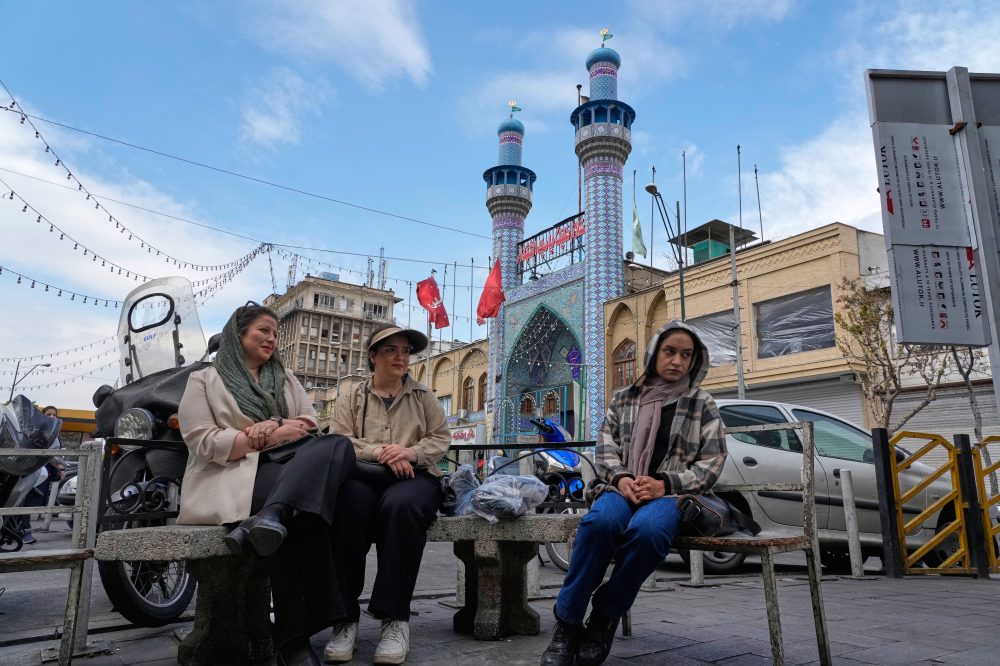
CAIRO (AP) — Iran’s renowned carpet manufacturing region has seen production come to a virtual standstill. Dairy companies can’t secure packaging materials for their milk and butter products. Massive steel production facilities that previously powered the nation’s economy have ceased operations. Hundreds of thousands have become unemployed, with millions more facing potential job losses.
Following more than five weeks of sustained attacks, American and Israeli military operations have targeted thousands of manufacturing facilities. The destruction is creating shockwaves throughout Iran’s economic system, threatening successive rounds of unemployment while Iranians confront dramatically rising costs. Chicken prices have surged 75% in the past month, while beef and lamb costs have climbed 68%. Numerous dairy items have seen price increases of 50%.
The situation may deteriorate further as America implements a naval blockade of Iranian harbors, severely restricting imports and petroleum exports worth billions annually. Economic hardships previously triggered widespread demonstrations that were violently suppressed before the current conflict and might once again drive citizens to protest publicly.
However, Iran possesses its own economic leverage against the world through its control of the Strait of Hormuz. Iranian officials declare they will only allow the crucial global energy passage to reopen when the blockade ends and hostilities cease. They’re wagering that an economy designed for self-sufficiency through decades of international sanctions can withstand hardship longer than U.S. President Donald Trump.
According to state media reports, Deputy Labor Minister Gholamhossein Mohammadi stated that Iran has lost no fewer than 1 million jobs directly due to the conflict.
However, the cascading consequences threaten between 10 million and 12 million positions — representing half of Iran’s workforce — according to Iranian economist Hadi Kahalzadeh’s warning.
Israel has asserted it targeted the industrial infrastructure of Iran’s paramilitary Revolutionary Guard. However, the attacks extended far beyond this scope, damaging facilities not controlled by the organization.
According to Kahalzadeh, a research fellow at Brandeis University, military strikes damaged 20,000 manufacturing plants, representing approximately 20% of the nation’s production facilities. Among the affected sites was Tofigh Daru, Iran’s largest pharmaceutical company, which produces cancer treatment medications and other medicines. Optical equipment and chemical manufacturing plants, along with aluminum and cement production facilities, also sustained damage.
Most significantly destructive were Israel’s attacks on Iran’s largest steel production and petrochemical manufacturing plants, primarily during a series of strikes just prior to the April 8 ceasefire. The nation’s two largest steel companies, Mobarakeh Steel and Khuzestan Steel, along with smaller operations, suspended production. Over 50 petrochemical facilities have ceased operations, according to Iran’s semiofficial Jamaran news agency.
This has severely damaged Iran’s two largest non-petroleum export sectors, causing price increases for everything from plastic products to piping, textiles and food packaging for items like milk, butter and cheese.
Military attacks aren’t the sole source of economic difficulties. Internet services have been mostly disabled since the protests began, devastating small and medium businesses dependent on online commerce. Even prior to the U.S. blockade, Iranian attacks on the United Arab Emirates, which supplied roughly one-third of Iran’s imports, prompted that nation to sever trade relations.
Approximately 80% of carpet and rug producers have halted operations in the industrial district of Kashan, the hub of Iran’s rugmaking sector, according to a rugmaker’s son. His family’s factory, which employs 20 to 30 workers and previously manufactured hundreds of rugs monthly using machines, is among those that have closed, though his father continues visiting the facility daily.
“Never have I heard my father so upset,” said the son, who lives in the United States and spoke on condition of anonymity for his family’s security.
Kashan, housing hundreds of carpet producers, “relies on the rug industry and unfortunately it’s been crippled,” he explained. Export sales have plummeted since the conflict started, and domestic purchases are nearly nonexistent. Synthetic fiber costs have jumped 30%-50% — partially resulting from damage to petrochemical plants, he noted.
Mehdi Bostanchi operates a ventilation and air conditioning manufacturing facility, plus a second plant producing household fans, employing more than 1,130 workers total. Both continue functioning. However, the HVAC factory depends heavily on the construction sector, and “construction is facing a massive shock,” he explained.
Most new construction projects are suspended, while iron sheeting prices have more than doubled.
Bostanchi, who serves on a council representing Iranian manufacturers, explained that “all the country’s industries in some way rely on our petrochemical industry.” Even businesses that don’t directly require steel or petrochemical materials have contracts with companies that do.
A chemical engineer employed at one of Iran’s largest private construction companies reported it eliminated half of its 180 headquarters employees and was forced to cancel a project with Mobarakeh Steel, eliminating 1,000 positions.
A Tehran resident resigned from his consulting engineering position just before the conflict began, and the new position he had secured is now uncertain.
“I am at the top 1% (of society), and I am without a job. I am super worried about my future,” he stated, noting that people’s savings will begin running out in coming weeks.
Both he and the chemical engineer requested anonymity due to security concerns.
Millions demonstrated in January’s protests initially sparked by worsening inflation but evolved into demands for ending the Islamic Republic, resulting in violent government suppression.
Government officials are attempting to assure citizens that Iran can endure the economic suffering. The administration has pledged to expand unemployment benefits. However, the strain on Iran’s social security system is increasing while its funding sources are being damaged, since it relies heavily on investments in petrochemical companies and other essential industries, Kahalzadeh explained.
The U.S. blockade threatens to eliminate export income: Iran earned approximately $98 billion from exports in 2025, with just under half coming from oil sales.
However, implementing a complete blockade presents challenges; roughly half of Iran’s non-oil commerce travels overland or through Caspian Sea harbors, according to economic expert Esfandyar Batmanghelidj.
Iran has also developed substantial resilience and “readiness for worst-case scenarios,” Batmanghelidj wrote for the Bourse and Bazaar Foundation, a research organization he leads focusing on economic development in West and Central Asia.
Iran maintains substantial reserves of essential materials. By the end of 2025, Iran had stockpiled enough electrical equipment for nearly eight months, cement supplies lasting nearly six months and sufficient steel and iron for four months, he wrote, noting that supplies could be extended further through rationing.
Bostanchi, the factory owner, expressed belief that Iran’s economy could recover after the conflict ends. However, the extent depends on whether Iran can achieve an end to international sanctions.
“If we cannot lift the sanctions in any agreements, then no, the optimistic forecast … will not happen,” he stated.
WIENER NEUSTADT, Austria — Legal proceedings commence Tuesday against a young man charged with swearing loyalty to ISIS and conspiring to launch an attack during Taylor Swift’s Vienna concert performances in August 2024.
While authorities successfully prevented the assault, officials made the decision to call off Swift’s trio of scheduled shows. Disappointed fans, called Swifties, had traveled internationally to witness her phenomenally successful Eras Tour but responded by transforming Vienna into an impromptu community for bracelet exchanges and group singing.
The accused, identified as 21-year-old Beran A. under Austria’s privacy protocols, confronts multiple charges including terrorism violations and terrorist group participation. A conviction could result in a maximum 20-year prison sentence.
Defense lawyer Anna Mair informed The Associated Press Monday that her client intends to admit guilt to several charges, though she declined to detail which specific accusations he would acknowledge.
Investigators allege he intended to harm crowds congregating outside Ernst Happel Stadium — potentially 30,000 nightly, plus 65,000 inside — using bladed weapons or improvised bombs. Officials stated in 2024 that the suspect aimed to “kill as many people as possible.” American intelligence contributed to the concert cancellation decision.
Beran A. reportedly communicated with additional ISIS members while preparing the assault. Legal authorities claim conversations included weapon purchases and explosive device construction, with the defendant attempting illegal firearm acquisition before the scheduled performance. He also reportedly declared loyalty to the extremist organization.
Law enforcement raided his residence on August 7, 2024, discovering bomb-creation supplies. The concerts were supposed to commence the following day.
“Having our Vienna shows cancelled was devastating,” Swift wrote in a statement posted to Instagram two weeks later. “The reason for the cancellations filled me with a new sense of fear, and a tremendous amount of guilt because so many people had planned on coming to those shows.”
Court proceedings are taking place in Wiener Neustadt, approximately one hour from Vienna. The case will resume May 12.
Legal officials have additionally brought terrorism-related accusations against Arda K., whose complete identity remains confidential, in the same trial.
Prosecutors contend that Beran A. and Arda K., alongside another individual called Hasan E., coordinated to execute concurrent strikes in Saudi Arabia, Turkey and the United Arab Emirates during 2024’s Ramadan period for ISIS.
Hasan E. reportedly attacked a security officer with a blade at Mecca’s Grand Mosque in Saudi Arabia on March 11, 2024. He was apprehended and continues in Saudi custody awaiting trial, Austrian prosecutors confirmed.
Beran A. and Arda K. abandoned their Turkey and UAE operations. Beran A. returned to Vienna and subsequently began developing the Swift concert attack plan.
The Vienna conspiracy reminded many of a 2017 suicide bombing at an Ariana Grande performance in Manchester, England, which claimed 22 lives. The explosive detonated as the concert concluded and thousands of young attendees were departing, marking the UK’s most lethal extremist incident in recent memory.
LAS MINAS, Cuba (AP) — In the rural town of Las Minas, 58-year-old farmer Eduardo Obiols Sobredo faces an impossible challenge: feeding his fellow Cubans while battling crippling fuel shortages caused by US energy sanctions that have triggered widespread power outages and water disruptions.
“I feel like crying,” Obiols Sobredo expressed. “It’s so sad to see crops grown with so much effort go to waste, especially when you know there are so many who need them.”
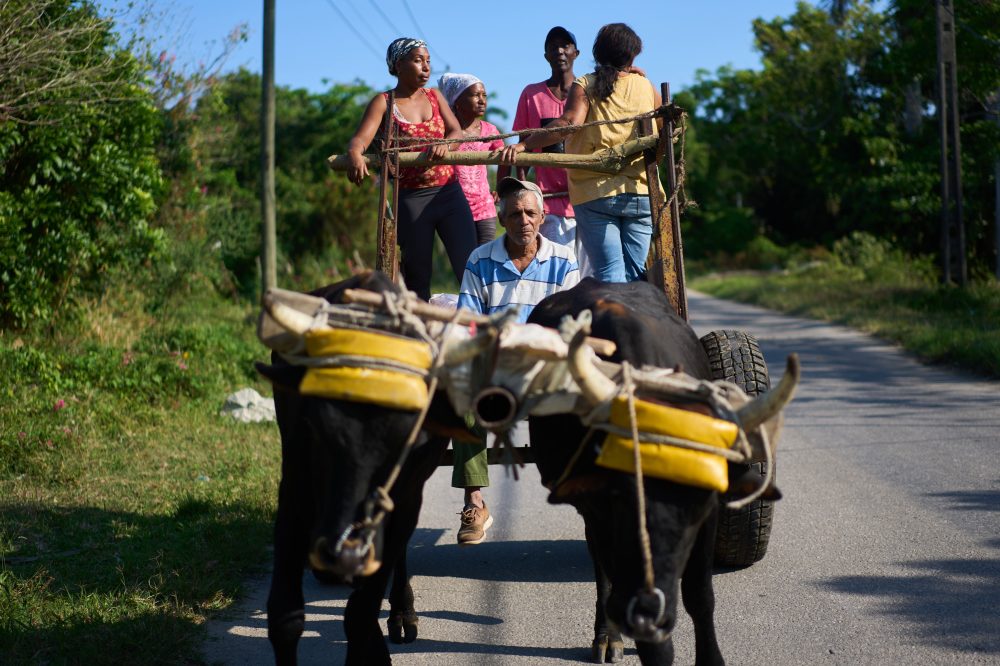
Agricultural machinery sits idle throughout Cuba as fuel supplies dwindle to nothing. Farmers such as Obiols Sobredo have resorted to using oxen and hand labor, though many cannot afford these alternatives and resources remain scarce.
The crisis has worsened poverty and expanded hunger throughout the Caribbean nation, home to almost 10 million residents. Fresh produce quality and availability continue declining while costs climb beyond what most citizens can afford.
Unlike other nations experiencing energy shortages due to global conflicts, Cuba directly attributes its struggles to targeted measures implemented by the Trump administration.
For three months, Cuba received no fuel deliveries after the US targeted Venezuela, a crucial oil partner, and issued threats of tariffs against any nation providing petroleum to the island.
The country was already struggling under intensified US sanctions that have existed for decades, blocking imports of essential items. The Trump administration has demanded Cuba’s socialist leadership free political detainees, enact significant economic changes, and alter its governing structure to eliminate perceived national security risks. Cuban officials consistently deny posing any danger to America.
With diplomatic tensions persisting, high-level government representatives are traveling to farms across Cuba, encouraging producers to increase output for greater national independence.
However, the impact of US energy restrictions is clearly visible in Las Minas, where 65 farmers share just 18 oxen.
Obiols Sobredo rents these animals and their operators when possible, but depends on manual work for smaller farming tasks. His crops include tomatoes, sorghum, cassava and other vegetables. He also maintains goats whose milk feeds local schoolchildren.
He joins other agricultural workers in a system that provides for Cuba’s most needy populations, including orphanages and elder care facilities.
Land preparation that once required 15 minutes using motorized equipment now demands three full days. His last government gasoline allocation arrived in January.
“It has forced us to take other kinds of actions in order to survive,” Obiols Sobredo explained.
Petroleum shortages also mean delivery vehicles don’t always arrive, compelling farmers to use their limited fuel reserves to transport milk to freezing facilities, hoping it won’t spoil before collection.
Electrical outages prevent Obiols Sobredo from processing feed for his goats, which produce less milk due to poor nutrition.
Crop irrigation has also suffered. Though a charitable organization funded solar irrigation equipment for his property last year, he lacks the gasoline needed for installation. He depends on rainfall that hasn’t occurred in almost two months.
Distribution companies increasingly use horse-drawn vehicles to move produce, causing bruising during extended journeys to marketplaces.
At a government market in Havana offering relatively affordable prices, 68-year-old customer Juan Lázaro expressed disappointment with produce quality.
“Look,” he stated, indicating a display of small, unripe tomatoes. “They’re lacking fertilizer, you can tell they’re lacking water. Look at their color.”
Lázaro retired from industrial mechanics but returned to work at a small shop to survive financially. During a recent visit, he purchased six potatoes as an unusual luxury.
“I’ve had to cut back. I either buy bread or I buy potatoes,” he noted.
He emphasized that Cuba’s present difficulties exceed the “Special Period” of the 1990s, when Soviet Union collapse eliminated aid and created widespread hardship. “We’ve been hitting rock bottom for a while.”
Fellow shopper Griselle Guillot, 64, now hesitates before buying rice.
“I need to see how much I can buy, because I also need onions,” she said.
Anthony Batista Guerra, a 47-year-old produce seller, noted customers understand the declining standards without explanation: “They know things are bad right now.”
As the market prepared to close, one vendor discarded a tomato into the street after shoppers rejected it as unsuitable.
On a steamy morning, 82-year-old Argelio González Juvier wielded a hoe against weeds surrounding cassava plants at his workplace.
A former interior ministry official who retired in 1995, he returned to work for additional income and selected agriculture.
“The earth provides everything. That’s what we should focus on,” he stated. “We have no other alternative.”
He condemned US energy restrictions, describing them as criminal.
“Cuba doesn’t deserve what they’re doing to us,” he declared. “The Americans think they’re the owners of the world.”
Working beside González Juvier was 36-year-old Jordanis Ríos, formerly a truck operator transporting construction materials until fuel shortages eliminated his position.
He now uses a machete to clear agricultural land, cutting dried vegetation each morning for $4 daily wages. He hopes to resume truck driving.
“My job is there. Just waiting for the country to improve,” he said.
Ríos avoided discussing recent US-Cuba negotiations, with American representatives visiting the island this month for the first time since 2016. Conversation details remain confidential, though Cuba has stated lifting the blockade remains its top priority.
Ríos indicated the outcome rests with leadership: “My goal is to survive here and see what happens.”
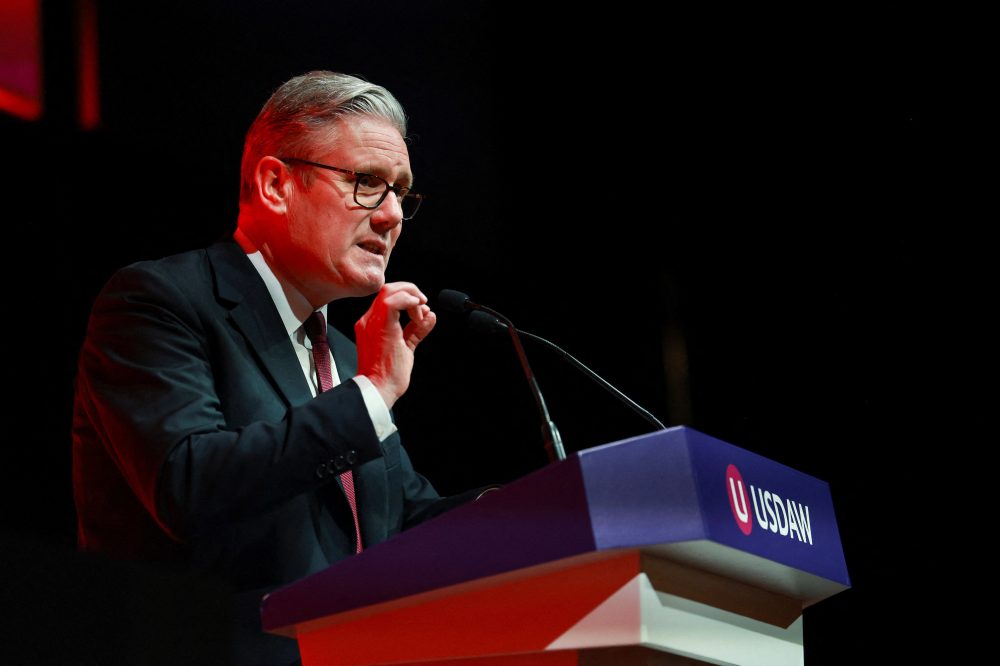
LONDON — British Prime Minister Keir Starmer confronts escalating political turmoil Tuesday as Parliament prepares to vote on launching a formal investigation into his controversial selection of Peter Mandelson for the U.S. ambassador position.
The House of Commons will debate whether to refer Starmer to Parliament’s standards watchdog following the botched diplomatic appointment that has dominated headlines for months. Mandelson, who had ties to convicted sex offender Jeffrey Epstein, was ultimately removed from consideration after security vetting failures came to light.
Adding to Starmer’s challenges, his former top aide Morgan McSweeney is scheduled to appear before the Foreign Affairs Committee to answer questions about the flawed appointment process. McSweeney stepped down in February, accepting blame for recommending Mandelson despite the security red flags.
The twin proceedings represent significant political risks for Starmer, who has weathered weeks of resignation calls stemming from the Mandelson controversy. The Prime Minister terminated Mandelson’s appointment in September when additional information surfaced regarding his relationship with Epstein, who died in federal custody in 2019.
Authorities launched a criminal probe into Mandelson in February following accusations that he shared classified government intelligence with Epstein during his government service in 2009.
During Tuesday’s hearing, McSweeney — a longtime Mandelson associate who previously served as Starmer’s chief of staff — will likely face tough questions about claims from former Foreign Office permanent secretary Olly Robbins. Robbins alleged that Starmer’s team inappropriately pressured civil servants to expedite Mandelson’s clearance to ensure he could begin work when President Donald Trump’s second term commenced.
Starmer has categorically rejected assertions that his administration applied undue influence on government bureaucrats.
The Prime Minister dismissed Robbins earlier this month following revelations that security officials had recommended against Mandelson’s appointment. Starmer described it as “staggering” that Foreign Office personnel failed to inform him about the vetting concerns.
Political opponents argue Starmer’s initial decision to nominate Mandelson demonstrates poor judgment from a leader who has stumbled repeatedly since guiding the Labour Party to an overwhelming electoral triumph in July 2024.
Starmer previously navigated a potential crisis in February when some Labour members of Parliament called for his resignation over the ambassador selection. He may encounter fresh difficulties if Labour performs poorly in upcoming May 7 local elections, which will serve as a referendum on his government’s performance.
Whether sufficient Labour lawmakers will join opposition members in referring Starmer to the Privileges Committee remains uncertain. The committee possesses authority to suspend parliamentarians, including prime ministers, for rule violations.
Conservative Party leader Kemi Badenoch accused Starmer of repeatedly “misled the House of Commons” when claiming “full due process” guided Mandelson’s selection.
Starmer’s office dismissed Tuesday’s proceedings as “a desperate political stunt by the Conservative Party the week before the May elections.”
Committee censure also creates substantial moral pressure to step down. The panel’s examination of lockdown violations in government facilities during the COVID-19 crisis contributed to former Prime Minister Boris Johnson’s political downfall.
Johnson resigned from Parliament in 2023 after the committee determined he had consistently misled lawmakers regarding the “Partygate” controversy.
Rescue operations have concluded following a devastating train accident outside Indonesia’s capital that claimed 14 lives and left 84 others wounded, according to railway officials.
The fatal accident occurred Monday evening in Bekasi, located just beyond Jakarta’s borders, when a commuter train and a long-distance passenger train collided.
PT KAI, Indonesia’s government-owned railway company, confirmed through CEO Bobby Rasyidin that fatalities had reached 14 people.
Mohammad Syafii, who leads Indonesia’s search and rescue operations, announced Tuesday that all evacuation work had been finished. He described the rescue mission as requiring extreme care due to passengers being stuck inside severely damaged train cars.
“We needed to involve personnel with certain skills to perform a measured extrication,” Syafii explained, noting that while no additional passengers remain missing, crews will continue searching the debris for any remains.
The crash primarily impacted a car designated exclusively for female passengers. According to Syafii, every victim was a woman, with most having been trapped beneath twisted metal debris.
Before separating the crashed trains, emergency responders used power tools to slice through metal compartment walls to reach those still alive inside.
Railway executive Bobby explained during a media briefing that the commuter train initially struck a taxi on the railway before being hit by the approaching long-distance train.
Green SM Indonesia, the taxi company involved, posted on Instagram acknowledging one of their vehicles was part of the incident. The company stated they provided information to investigators to help with their inquiry.
Green SM Indonesia operates as the local division of Vietnamese electric taxi company Green and Smart Mobility JSC, which is connected to Vingroup.
Following a hospital visit in Bekasi, President Prabowo Subianto announced plans to construct an overpass near the railway to address severe traffic problems in the area. He also ordered a full investigation into the crash and acknowledged that significant portions of the country’s rail system lack proper maintenance.
Indonesia’s National Transportation Safety Committee has launched its own investigation into the accident.
Family members and concerned residents gathered at the train station Tuesday, with some searching for missing relatives.
One passenger, Heriyati, shared that she had originally planned to board the women-only car but chose the one directly behind it instead. She was speaking with her husband by phone, arranging for him to collect her from the station, when the crash happened.
“I haven’t even finished with the call and the trains collided,” she recalled.
Jakarta’s commuter rail system serves one of the world’s most densely populated metropolitan areas. PT KAI announced Tuesday that several commuter routes were shortened due to the accident.
Transportation accidents involving ground vehicles occur frequently throughout Indonesia. A separate train crash in West Java province during 2024 resulted in four deaths and multiple injuries.
Mexican armed forces dealt a devastating blow to one of the world’s most dangerous criminal organizations Monday with the arrest of a high-ranking commander from the Jalisco New Generation Cartel in northwestern Mexico.
Military personnel apprehended Audias Flores Silva, nicknamed “El Jardinero” or The Gardener, as he attempted to hide in a roadside ditch near El Mirador in Nayarit state, according to Mexican government officials. The operation concluded without casualties or injuries.
The arrest carries significant weight as Flores Silva was considered a likely candidate to lead the criminal organization following the February death of longtime boss Nemesio Oseguera Cervantes, known as “El Mencho.” The United States government had placed a $5 million bounty on information leading to Flores Silva’s capture.
Oseguera Cervantes was eliminated during a dramatic military assault in February, triggering widespread retaliation from cartel members. The violent response included attacks on civilian businesses, vehicle arsons, and highway blockades that resulted in over 70 deaths, including 25 National Guard personnel.
Nevertheless, Mexican officials viewed the elimination of “El Mencho” as a major triumph for President Claudia Sheinbaum’s administration, which has adopted more aggressive anti-cartel tactics than previous governments. This tougher stance comes amid pressure from U.S. President Donald Trump, who has threatened intervention measures.
Trump previously classified the Jalisco New Generation Cartel along with five other Mexican criminal groups as foreign terrorist organizations last year.
The detention of Flores Silva represents another serious setback for the criminal empire, which has rapidly expanded to become one of the most influential in the Western Hemisphere. Mexican security sources identified him as Oseguera Cervantes’ former security chief, who also oversaw drug manufacturing and smuggling activities across Nayarit, Jalisco, Mexico State, and Zacatecas.
Following the arrest, local media outlets in Nayarit documented multiple incidents of vehicle and business fires, indicating cartel retaliation.
U.S. Ambassador to Mexico Ronald Johnson commended the operation through social media, describing Flores Silva’s detention as an “important step” in fighting fentanyl trafficking networks.
“Actions like this strengthen security and help dismantle criminal networks that threaten our communities. Together, we achieve results that make our nations safer,” he added.
Flores Silva’s criminal history includes an early arrest in the United States, where he completed a five-year prison term for drug trafficking before returning to Mexico. Mexican authorities detained him in 2016 for allegedly participating in a police ambush in Jalisco, but he was freed three years afterward.
American authorities have sought his extradition since 2021 to face drug conspiracy and weapons charges.
Security expert David Saucedo characterized Flores Silva’s capture as a “significant blow” to the CJNG leadership structure, which was still reorganizing following their founder’s death on February 22.
However, Saucedo cautioned The Associated Press that criminal organizations “can quickly reinvent themselves despite the arrest of their leaders,” noting that even after major disruptions, “they can continue” their illegal operations.
The U.S. Drug Enforcement Agency has documented CJNG operations in 21 of Mexico’s 32 states, exceeding the reach of the Sinaloa Cartel, which operates in 19 states.
Some experts estimate the CJNG’s influence spans 25 states, with their primary base in Jalisco. The organization has expanded internationally to approximately 100 countries, including significant operations in the United States.
BEKASI, Indonesia — Emergency teams continued their delicate rescue operation Tuesday to free three individuals still stuck inside a severely damaged commuter train car following a fatal collision near Jakarta that claimed at least seven lives.
The deadly accident occurred Monday when a long-distance train slammed into the back of a stationary commuter train at Bekasi Timur Station, located outside Indonesia’s capital city. The damaged car was part of a women-only section, which Indonesian railways commonly provide to prevent harassment of female passengers.
Hospital officials reported treating 81 people for injuries sustained in the crash. Bobby Rasyidin, who leads the state railway company PT Kereta Api Indonesia, explained the challenging nature of the rescue operation to news media. “The evacuations are taking a long time … and we’re doing it very carefully,” Rasyidin stated.
Railway officials confirmed that all 240 passengers aboard the Argo Bromo Anggrek long-distance train escaped without injury.
Jakarta Police Chief Asep Edi Suheri announced that investigators are examining what led to the collision.
According to Rasyidin, the incident may be connected to a separate crash involving a commuter train and a stalled taxi at a nearby crossing, which potentially caused disruptions to the rail system.
“As for the chronology of events, we are leaving it to the National Transportation Safety Committee to investigate the cause of tonight’s train accident in greater detail,” Rasyidin explained.
Train accidents occur frequently across Indonesia’s deteriorating railway infrastructure. Earlier this year in January, a collision between two trains in West Java province resulted in at least four fatalities.
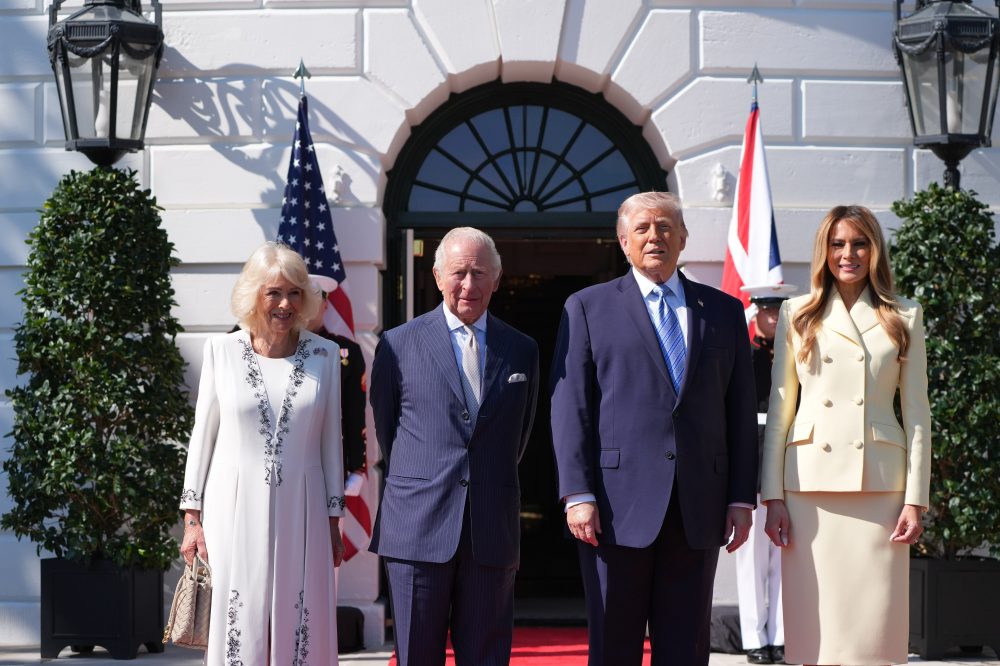
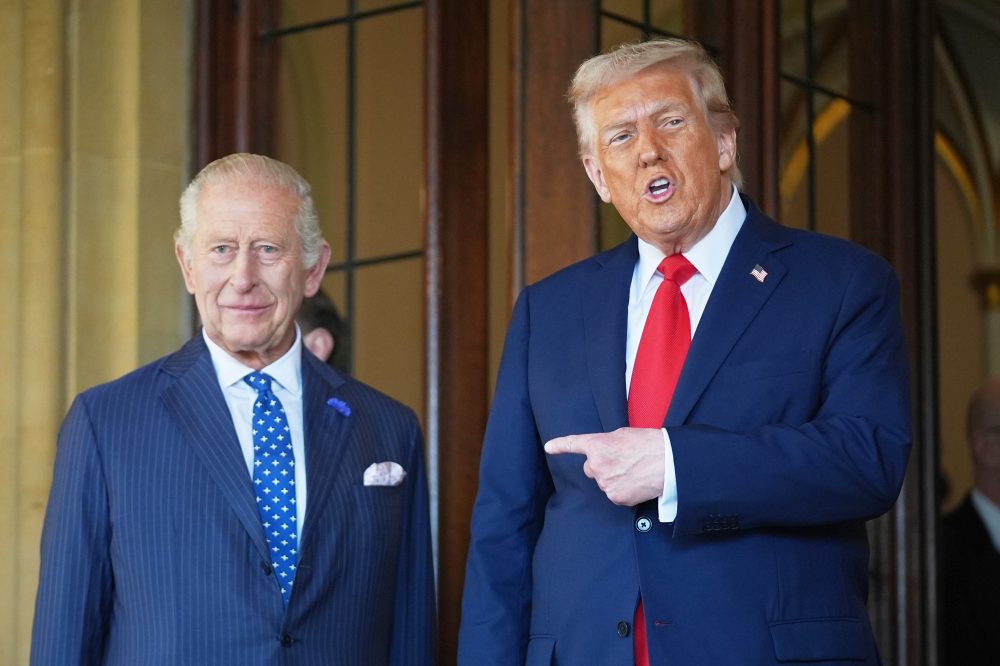
WASHINGTON — Britain’s King Charles III and Queen Camilla have launched a significant four-day diplomatic mission to America, marking the monarch’s inaugural state visit since ascending to the throne in 2022.
The royal delegation’s agenda centers on strengthening diplomatic bonds between Britain and America while commemorating the approaching 250th anniversary of American independence.
Monday’s itinerary included an official reception at the White House during the afternoon hours, with the day concluding at an elegant garden reception hosted at the British Embassy.
The visit represents a crucial diplomatic effort to reinforce the historic alliance between the two nations during Charles’s early reign as Britain’s sovereign.
President Donald Trump has rejected Iran’s most recent peace offer aimed at ending the two-month-long conflict, according to a U.S. official, reducing prospects for resolving a war that has caused thousands of deaths, disrupted global energy markets, and contributed to rising inflation.
Tehran’s current proposal seeks to postpone negotiations about Iran’s nuclear activities until after the conflict concludes and maritime shipping disagreements in the Gulf region are settled.
Such an approach is expected to be unacceptable to Washington, which insists that nuclear matters must be addressed immediately. A U.S. official who was briefed on Trump’s Monday discussion with his advisers confirmed the president’s dissatisfaction with Iran’s offer, speaking anonymously.
White House spokesperson Olivia Wales stated the U.S. “will not negotiate through the press” and has “been clear about our red lines” as the Trump administration seeks to conclude the war against Iran that began in February with Israeli participation.
In 2015, Iran and several other nations including the United States reached an agreement that significantly limited Iran’s nuclear activities, which Tehran has consistently claimed serve only peaceful, civilian objectives. However, that accord collapsed after Trump withdrew from it unilaterally during his previous presidency.
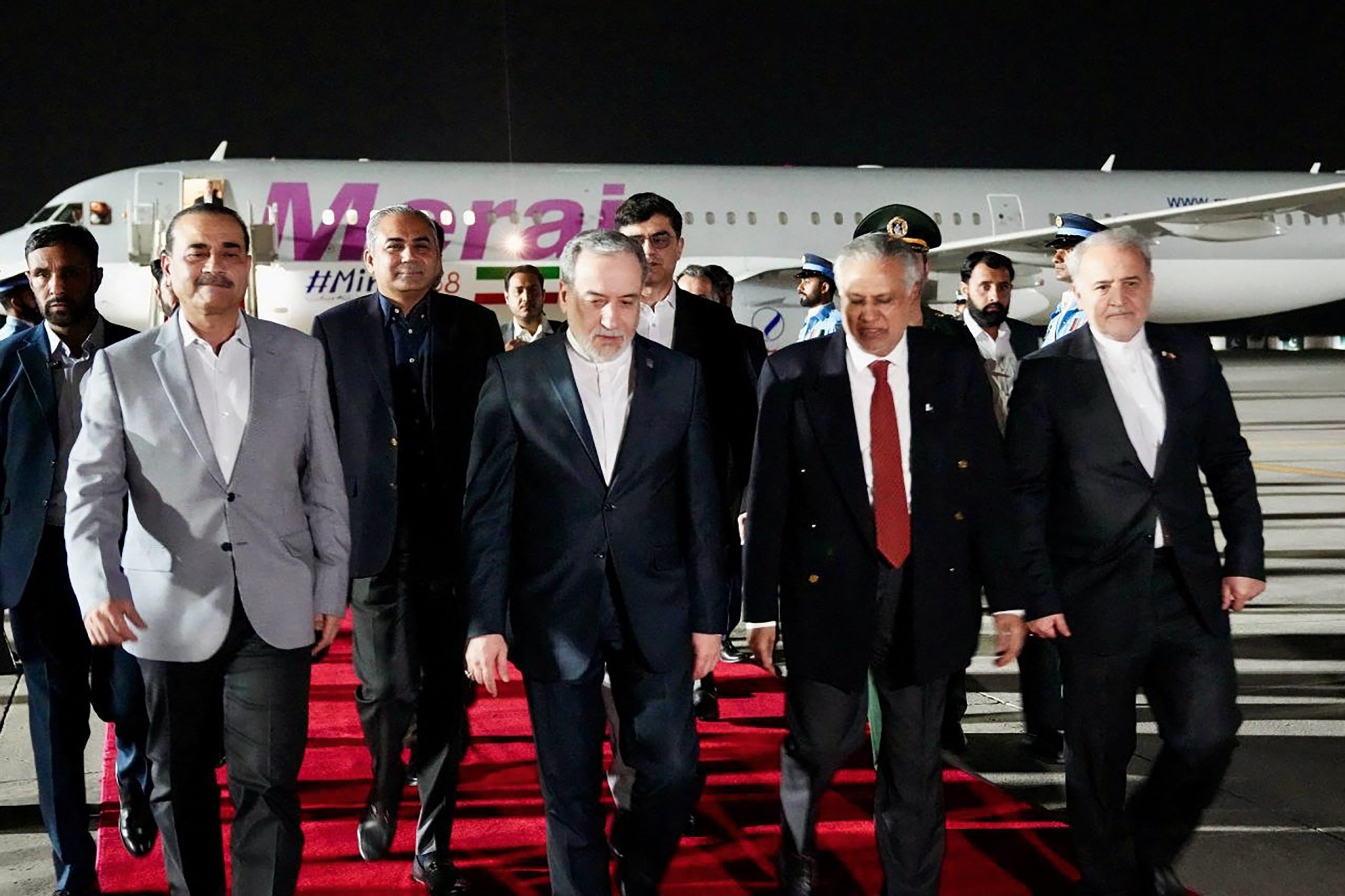
Expectations for renewed diplomatic efforts have diminished since the president canceled a planned weekend trip by special envoy Steve Witkoff and son-in-law Jared Kushner to Islamabad, Pakistan’s capital, where Iranian Foreign Minister Abbas Araqchi made multiple visits over the weekend.
Araqchi also traveled to Oman and on Monday visited Russia, where he met with President Vladimir Putin and received supportive statements from a long-time Iranian ally.
OIL MARKETS SURGE AGAIN
As the opposing sides remain significantly divided, petroleum prices continued climbing, building on earlier gains during Tuesday’s early Asian trading session.
“For oil traders, it’s not the rhetoric that matters any more, but the actual physical flow of crude oil through the Strait of Hormuz, and right now, that flow remains constrained,” said Fawad Razaqzada, market analyst at City Index and FOREX.com.
Ship-tracking information revealed that at least six vessels carrying Iranian oil have been turned back to Iran by the U.S. naval blockade in recent days, highlighting the war’s effect on maritime traffic.
Iran’s foreign ministry criticized U.S. seizures of Iran-connected tankers as “outright legalization of piracy and armed robbery on the high seas” in a social media statement.
Prior to the war, between 125 and 140 vessels typically passed through the strait daily, but only seven have done so in the past day according to Kpler ship-tracking information and satellite data from SynMax, with none transporting oil destined for international markets.
Facing declining approval ratings, Trump confronts domestic pressure to conclude a war for which he has provided the American public with varying justifications.
Speaking to reporters in Russia, Araqchi claimed that Trump had sought negotiations because the U.S. has failed to accomplish any of its goals.
Senior Iranian officials, speaking anonymously to Reuters, said the proposal Araqchi brought to Islamabad over the weekend outlined a phased negotiation process, with nuclear issues to be deferred initially.
The first phase would require ending the U.S.-Israeli military campaign against Iran and securing guarantees preventing the U.S. from restarting hostilities. Subsequently, negotiators would address the U.S. Navy’s blockade of Iranian maritime trade and the status of the Strait of Hormuz, which Iran seeks to reopen under its authority.
Only after these steps would discussions turn to other matters, including the ongoing disagreement over Iran’s nuclear program, with Iran continuing to seek some form of U.S. recognition of its uranium enrichment rights.
Emergency responders continue working around the clock to rescue survivors trapped in twisted metal following a devastating train collision near Jakarta, Indonesia that has now claimed seven lives and left 81 people injured.
The tragic accident occurred Monday evening in Bekasi, located on the outskirts of Indonesia’s capital, when a commuter train and long-distance passenger train collided. Mohammad Syafii, who leads Indonesia’s search and rescue operations, explained during a Tuesday morning news briefing that extracting survivors requires extreme precision due to the dangerous conditions.
“We needed to involve personnel with certain skills to perform a measured extrication,” Syafii stated. “There are some victims who are alive to this minute and we’re hoping to extricate them, but they’re still pinned by the train material.”
Emergency teams have been observed using specialized cutting tools, including angle grinders, to slice through the damaged train cars in their efforts to reach those still trapped inside.
Bobby Rasyidin, who serves as chief executive of the government-owned railway company PT KAI, confirmed the updated fatality count of seven during the press briefing. According to Rasyidin’s account, the sequence of events began when the commuter train struck a taxi that had somehow ended up on the railway tracks, followed by the long-distance train slamming into a women-only car of the commuter train.
The taxi company involved, Green SM Indonesia, acknowledged through social media that the vehicle belonged to their fleet. The company, which operates as the Indonesian division of Vietnamese electric vehicle service Green and Smart Mobility JSC under the Vingroup umbrella, announced they have provided information to investigators to help with the ongoing probe.
Indonesia’s National Transportation Safety Committee has launched a comprehensive investigation into the circumstances surrounding the crash.
Railway accidents occur with concerning frequency throughout Indonesia. Just last year, another train collision in West Java province resulted in four deaths and dozens of injuries.
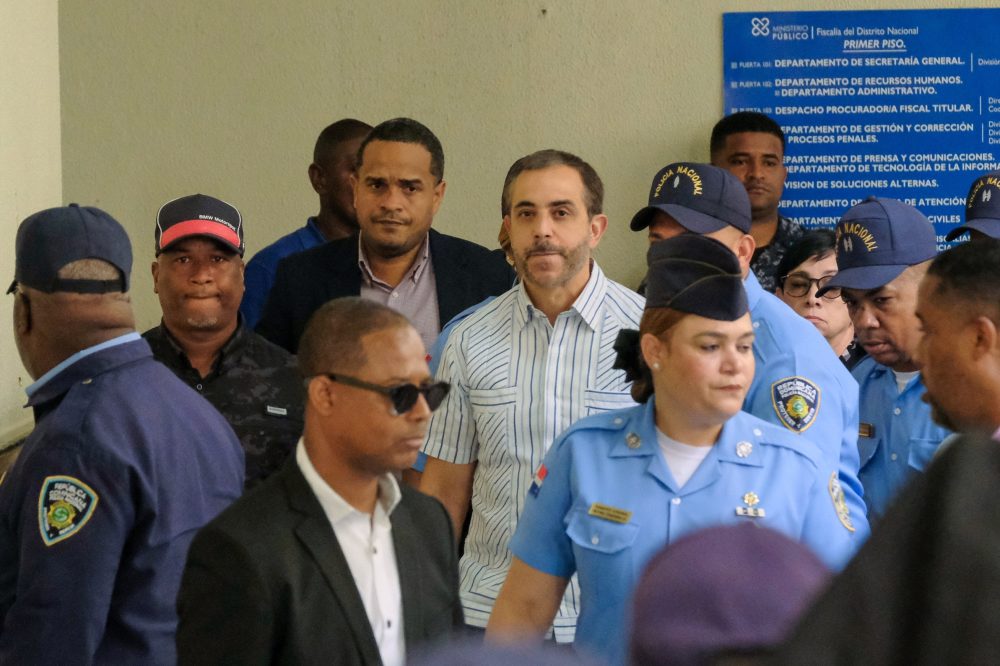
SANTO DOMINGO, Dominican Republic — A former worker at a nightclub where 236 people died in a roof collapse one year ago told a court Monday that the establishment’s owners had been warned about the building’s dangerous condition.
Gregory Adames gave testimony against brother and sister Antonio and Maribel Espaillat, who face charges of involuntary manslaughter and involuntary assault and battery in connection with the deadly incident at the well-known Jet Set club in Santo Domingo.
“They knew because I sent them photos, I sent them videos of all the problems that were there. That shouldn’t have happened; not a single person should have died there,” Adames said.
Legal representatives for the families of those killed requested that the court upgrade the charges against the siblings to voluntary manslaughter.
“We hope that happens,” Jean Carlos Martínez Segura, who represents nine families, told The Associated Press.
A conviction on voluntary manslaughter carries a maximum sentence of 20 years in prison, while involuntary manslaughter has a maximum penalty of two years.
The court proceedings that began Monday are scheduled to resume Friday, with a judge ultimately determining whether sufficient evidence exists to proceed to trial. Family members of the victims have expressed frustration with procedural delays and the pace of the legal process.
According to prosecutors, hundreds of pieces of evidence point to the siblings’ culpability. The pair were taken into custody last June.
Miguel Valerio, the Espaillats’ attorney, told reporters after their arrests: “Nobody wanted that to happen.”
Authorities have alleged that the Espaillats attempted to pressure or influence their workers. Antonio Espaillat is regarded as an influential business figure who operates high-end entertainment venues and owns numerous local radio stations.
The nightclub was packed with hundreds of patrons, including many prominent Dominican citizens, attending a concert on April 8, 2025, when the ceiling gave way. Among the fatalities were singer Rubby Pérez; Nelsy Cruz, the governor of Montecristi province and sister of Major League Baseball All-Star Nelson Cruz; and former MLB pitcher Octavio Dotel. The collapse left more than 100 people injured, and emergency responders worked continuously to rescue survivors from the debris.
Energy markets saw continued upward pressure Tuesday as diplomatic solutions to the U.S.-Iran conflict remain elusive, leaving the vital Strait of Hormuz shipping channel mostly blocked and preventing Middle Eastern oil supplies from reaching international markets.
According to a U.S. official speaking Monday, President Donald Trump has rejected Iran’s most recent peace proposal. Iranian sources revealed Monday that Tehran’s offer deliberately sidestepped nuclear program discussions until fighting ends and Persian Gulf maritime disputes get resolved.
Trump’s rejection of Iran’s terms has created a diplomatic impasse, with Iran maintaining its closure of Strait of Hormuz shipping traffic—normally responsible for transporting approximately 20% of worldwide oil and natural gas consumption—while the U.S. continues its naval blockade of Iranian harbors.
June Brent crude contracts increased 45 cents, or 0.4%, reaching $108.68 per barrel by 0051 GMT, following Monday’s 2.8% surge to the highest closing price since April 7. The commodity has now posted gains for seven consecutive trading days.
June U.S. West Texas Intermediate crude jumped 58 cents, or 0.6%, to $96.96, after Monday’s 2.1% increase.
Previous diplomatic discussions between Washington and Tehran broke down last week when direct negotiations failed to produce results.
“For oil traders, it’s not the rhetoric that matters any more, but the actual physical flow of crude oil through the Strait of Hormuz, and right now, that flow remains constrained,” said Fawad Razaqzada, a market analyst at City Index and FOREX.com.
Razaqzada noted that even with a potential agreement, production shutdowns and supply chain complications could require months for full recovery.
Maritime tracking information confirmed major regional disruptions, showing six Iranian oil vessels were compelled to reverse course because of the American blockade.
Despite the restrictions, one liquefied natural gas vessel operated by the United Arab Emirates’ Abu Dhabi National Oil Company successfully navigated through the Strait of Hormuz and appears to be approaching India, according to Monday’s ship-tracking data.
Before the U.S.-Israeli military action against Iran commenced on February 28, daily vessel traffic through the strait typically ranged between 125 and 140 ships.
President Donald Trump has rejected a recent peace proposal from Iran, with a U.S. official citing concerns that the plan fails to address the nation’s nuclear activities, according to reports from Washington on Monday.
“He doesn’t love the proposal,” the U.S. official stated when describing Trump’s reaction to the Iranian initiative.
The president met with his senior national security team on Monday to review the proposal. Meanwhile, tensions between Washington and Tehran continue with no clear resolution in sight, as energy shipments from the Middle East remain disrupted.
According to Iranian sources who spoke earlier Monday, their proposal would postpone any nuclear program discussions until after the current conflict concludes and maritime shipping disputes in the Gulf region are settled. However, the United States maintains that nuclear matters must be addressed immediately as part of any agreement.
Pakistani mediators indicate that diplomatic efforts to narrow the divide between the two nations are still ongoing, sources report.
However, prospects for renewed peace negotiations have dimmed following Trump’s weekend decision to cancel a planned trip by special envoy Steve Witkoff and son-in-law Jared Kushner to Pakistan’s capital, Islamabad.
Tensions flared at the United Nations Security Council on Monday as China’s deputy ambassador harshly criticized statements from Japan and the European Union regarding maritime security in disputed Asian waters.
During the council’s maritime security discussion, Japanese Vice Foreign Minister Ayano Kunimitsu expressed Tokyo’s deep worries about developments in both the East China Sea and South China Sea regions. She restated Japan’s stance against any forceful attempts to alter current territorial arrangements and interference with maritime and aviation freedoms.
European Union UN delegation chief Stavros Lambrinidis similarly addressed South China Sea disputes, noting how the conflicts disrupt vital commercial shipping routes and undermine international maritime law.
Both officials avoided directly naming China, despite Beijing’s extensive territorial claims throughout the South China Sea and ongoing disputes with Japan in the East China Sea.
China’s deputy UN representative Sun Lei dismissed the Japanese statements as “unwarranted” and said they “completely confound black and white.” He criticized the EU official for making “unsubstantiated and irresponsible remarks on the South China Sea issue.”
“In reality, the situation in the East and South China Seas remains stable overall and the South China Sea stands as one of the freest shipping lanes in the world,” Sun stated.
Sun accused Japan of recently deploying naval vessels “to flex their muscles and deliberately provoke tensions in the Taiwan Strait,” claiming this action sent a “gravely erroneous signal” to Taiwan independence supporters. China considers Taiwan, which governs itself democratically, to be Chinese territory.
The Chinese diplomat also referenced controversial Taiwan comments made by Japanese Prime Minister Sanae Takaichi in previous months, saying these statements “have dealt a severe blow to China-Japan relations.”
Relations between the two Asian powers deteriorated significantly after Takaichi suggested in November that Japan might respond militarily if China attacked Taiwan.
Sun alleged that “right-wing forces are steering Japan’s security policy towards an offensive and expansionist posture” and warned that eight decades after World War Two, “a new militarism is resurging in Japan.”
He pointed to Japan’s loosened restrictions on weapons exports, deployment of strike missiles, and higher defense spending as evidence that Japan seeks “to pave the way for military expansion.”
Earlier this month, the Japanese destroyer JS Ikazuchi sailed through the Taiwan Strait, which China condemned as “a deliberate provocation.”
Meanwhile, China has significantly expanded its military capabilities in recent years, built installations on contested South China Sea islands, and conducted large-scale training exercises near Taiwan, raising alarm among regional neighbors and international partners.
A geopolitical expert specializing in Middle Eastern affairs says Iran’s current military strategy extends well beyond traditional combat zones, with the regime now targeting Iranian communities living overseas.
Ashkan Rostami, an Italian Persian analyst who studies Iran, Israel, and Middle Eastern regional politics as part of the Institute for a New Middle East, spoke with The Media Line about how Tehran is adapting its approach during the ongoing conflict with the United States and Israel.
According to Rostami, while military operations continue, Iranian authorities are simultaneously reaching out to diaspora populations, particularly those residing in European nations, as part of their wartime strategy.
The analyst highlighted concerning developments including diplomatic efforts to raise funds and troubling indicators that the regime may once again be involving minors in its military operations.
Rostami emphasized that this expansion of Iran’s conflict strategy to include overseas communities represents a significant shift in how the regime operates when facing international pressure.
A newly published UNICEF study reveals that Afghanistan faces the potential loss of more than 25,000 women working in education and healthcare by 2030 unless current Taliban policies restricting female participation are reversed.
The report, made public on Monday, highlights how Taliban leadership has prohibited women from holding most government positions and restricted educational opportunities for girls to age 12 and younger.
According to the study, these policies have already impacted no fewer than 1 million girls, with projections showing this number could reach 2 million by 2030 without policy changes. UNICEF has urged Taliban authorities to reverse the prohibitions implemented following their return to control in 2021.
The research, titled “The Cost of Inaction on Girls’ Education and Women’s Labour Force Participation in Afghanistan,” documents a sharp drop in qualified women joining teaching and medical professions.
UNICEF projects that as many as 20,000 female educators and 5,400 healthcare professionals could be eliminated from the workforce by 2030, representing approximately 25% of Afghanistan’s 2021 professional workforce in these areas. An additional 9,600 medical workers could be lost by 2035, the study indicates.
“Afghanistan cannot afford to lose future teachers, nurses, doctors, midwives, and social workers, who sustain essential services,” stated UNICEF Executive Director Catherine Russell. “This will be the reality if girls continue to be excluded from education.”
The report emphasizes that women medical professionals are essential for treating female patients, while women educators are preferred for instructing girls in schools that separate students by gender.
UNICEF estimates this workforce reduction could cost Afghanistan’s economy at least AFN 5.3 billion ($84 million) annually, equivalent to approximately 0.5% of the nation’s total economic output.
The organization has called on Afghanistan’s current leadership to protect professional training opportunities and permit women’s participation in the workforce.
ABUJA, Nigeria — At least 29 people were killed when Islamic State fighters launched a deadly assault on a village in northeastern Nigeria during overnight hours, officials confirmed Monday. The violence represents the latest bloodshed in Africa’s most populated nation as it continues wrestling with widespread security threats.
The deadly raid occurred late Sunday evening in Guyaku village, located within Gombi local government territory in Adamawa state, state leadership reported.
ISIS operatives took credit for the deadly assault through a statement posted on the Telegram platform.
During a Monday visit to the attacked community, Adamawa State Governor Ahmadu Umaru Fintiri called the violence tragic and completely unacceptable.
Nigeria continues confronting numerous security threats, particularly across northern regions where militant activity has persisted for more than twenty years. The United States deployed military advisors to the West African country in February to assist local forces in combating the security crisis.
Two primary ISIS-affiliated militant organizations operate within Nigeria, though officials have not yet determined which group carried out the Guyaki assault.
The Islamic State West Africa Province, known as ISWAP, maintains operations throughout northeastern areas including Adamawa state, while another ISIS-connected organization called Lakurawa typically targets communities in north-central Sokoto and Kebbi states.
The village attack coincided with a separate incident where armed raiders struck an orphanage in north-central Nigeria, kidnapping 23 students. Authorities later freed 15 children and reported that “intensive operations” continue to “secure the safe return of the remaining eight victims and apprehend the perpetrators.”
Student abductions have become a defining characteristic of Nigeria’s security crisis, with security experts noting that criminal organizations view educational institutions and children as “strategic” targets for gaining public attention.
The orphanage raid occurred in an “isolated area” of Lokoja, the capital city of Kogi State, according to state commissioner Kingsley Femi Fanwo. He noted that the targeted facility, Dahallukitab Group of Schools, was functioning without proper authorization.
No organization has claimed responsibility for the kidnapping in a region experiencing rising numbers of ransom-motivated abductions. Officials did not specify the ages of the taken children, though the designation “pupil” in Nigeria typically refers to kindergarten through primary school students, generally ages 12 and under.
ABUJA, Nigeria — Armed men stormed a children’s facility in Nigeria’s north-central region and kidnapped 23 students, with officials confirming Monday that 15 have been successfully recovered.
The incident occurred in a remote section of Lokoja, the capital city of Kogi State, state commissioner Kingsley Femi Fanwo confirmed in an official statement. He noted that the targeted institution, Dahallukitab Group of Schools, was functioning without proper authorization.
While no organization has taken credit for the assault, the area has experienced a surge in ransom-driven abductions in recent months.
Officials did not specify the ages of the kidnapped children, though in Nigeria the designation “pupil” typically applies to elementary and kindergarten students, generally those 12 years old and younger.
“Intensive operations are ongoing to secure the safe return of the remaining eight victims and apprehend the perpetrators,” Fanwo said.
School-based abductions have become a defining characteristic of safety concerns across Africa’s largest country by population. Security experts note that criminal organizations view educational institutions and their students as “strategic” targets for maximum public impact.
The West African nation faces widespread security challenges, particularly across northern territories where militant activity has persisted for over ten years.
Key Islamic extremist organizations include Boko Haram along with its splinter group ISWAP. Additionally, the Islamic State-affiliated Lakurawa organization operates in northwestern border communities adjacent to Niger.
Iran’s Deputy Defense Minister Reza Talaei-Nik engaged in diplomatic discussions with top defense officials from Russia and Belarus on Monday, according to state media reports from the region.
The Iranian official first met with Russian Defense Minister Andrei Belousov in Kyrgyzstan, where the Russian minister emphasized Moscow’s established stance that Middle Eastern conflicts must be settled through diplomatic channels only. Belousov expressed confidence that Russia and Iran would maintain their mutual support, as reported by the state-run TASS news agency.
Talaei-Nik subsequently visited Belarus, a key Russian ally, for discussions with Belarusian Defense Minister Viktor Khrenin about the current Middle East crisis. According to Belarus’ Defense Ministry, as cited by the state BelTA news agency, both leaders reached consensus that the only path forward involves “a return to the sphere of a political-diplomatic settlement and the intensification of the process of negotiations.”
The Belarusian ministry’s statement indicated the talks “confirmed the mutual interest of Minsk and Tehran for a further deepening of their joint interaction.”
Meanwhile, in Moscow, Russian President Vladimir Putin conducted a separate meeting with Iranian Foreign Minister Abbas Araqchi. Putin commended the Iranian people for their efforts to maintain independence despite pressure from the United States and Israel, pledging that Moscow would provide all possible assistance to Tehran.
A heated diplomatic exchange erupted at the United Nations on Monday when Iran was chosen to serve as one of 34 vice presidents for a major nuclear non-proliferation conference, drawing sharp criticism from American officials.
The month-long gathering to examine the Nuclear Non-Proliferation Treaty began at UN headquarters in New York. Vietnam’s UN Ambassador Do Hung Viet, who chairs the conference, announced that Iran received its nomination from “the group of non-aligned and other states.”
Christopher Yeaw, who leads the US Bureau of Arms Control and Nonproliferation, strongly condemned Iran’s appointment during the proceedings.
“It is indisputable that Iran has long demonstrated its contempt for the non-proliferation commitments of the NPT,” Yeaw stated, adding that Tehran has refused to work with the UN nuclear watchdog to address concerns about its atomic activities.
Yeaw characterized Iran’s selection as “beyond shameful and an embarrassment to the credibility of this conference” and called it an “affront” to the treaty itself.
Iran’s representative to the International Atomic Energy Agency, Reza Najafi, fired back at the American criticism.
“It is indefensible that United States, as the only state ever to have used nuclear weapons, and the one that continues to expand and modernize its nuclear arsenal… seeks to position itself as an arbitrator of the compliance,” Najafi responded, dismissing the US statements as “baseless and politically motivated.”
The nuclear dispute remains central to the ongoing two-month conflict involving Iran, the United States, and Israel. President Donald Trump emphasized again on Sunday that Iran must never be allowed to obtain nuclear weapons.
Tehran has consistently maintained that it only wants to enrich uranium for peaceful energy purposes, while Western nations worry the material could be weaponized. Iran denies seeking nuclear weapons, though both the IAEA and US intelligence agencies have concluded that Tehran operated a nuclear weapons development program until shutting it down in 2003.
Iranian sources revealed on Monday that Tehran has proposed a new framework to resolve the current crisis, suggesting that nuclear program discussions be postponed until the war ends and Gulf shipping disputes are settled.
Following a Monday meeting with his national security team about the conflict, Trump’s administration made clear its position remains firm. White House spokesperson Karoline Leavitt told reporters that “the president’s red lines with respect to Iran have been made very, very clear, not just to the American public, but also to them as well.”
Mexican President Claudia Sheinbaum announced Monday that she does not anticipate diplomatic tensions with the United States following the deaths of two CIA operatives in an accident within Chihuahua state — operatives who Mexico claims lacked proper authorization to conduct activities on Mexican territory.
Speaking at her regular morning press conference, Sheinbaum indicated her desire to put the incident behind both nations, though she emphasized her expectation that the U.S. will honor Mexico’s constitutional framework and national security regulations in future operations.
“Let us hope this is an exceptional case … and that a situation like this never happens again,” she said.
According to Mexico’s Ministry of Security, which released information Saturday, one American operative had crossed into Mexico with visitor status, while the second had used diplomatic credentials for entry. Officials stressed they had no knowledge of foreign intelligence personnel conducting operations within Mexican borders.
The CIA has refused to provide any statement regarding the matter.
Sources familiar with the intelligence operation confirmed to The Associated Press last week that the deceased Americans were indeed CIA personnel, though they requested anonymity given the classified nature of the circumstances.
The Trump administration and Mexican officials previously established a framework last year designed to facilitate coordination and information sharing on security matters while maintaining respect for both nations’ sovereignty.
Sheinbaum emphasized Monday that complete transparency regarding the Chihuahua operation remains necessary, calling on the Attorney General’s Office and other relevant agencies to pursue the matter following upcoming Senate discussions.
Chihuahua Governor María Eugenia Campos, a leading opposition politician, has been summoned to appear in Mexico City Tuesday along with State Attorney César Jáuregui for testimony.
The presence of CIA and Drug Enforcement Administration personnel in Mexico has generated disputes for many years. These operations typically become public knowledge only when incidents occur — similar to a 2012 shooting involving a U.S. Embassy vehicle near Mexico City that left two CIA operatives injured.
BAGHDAD — A prominent Iraqi parliamentary coalition selected Ali al-Zaidi, a banking executive with no previous government experience, as their choice for the nation’s next prime minister on Monday.
The Coordination Framework, which represents a group of Shiite political parties with ties to Iran, made the announcement following discussions at the government palace. The decision concluded weeks of internal negotiations among coalition members as they sought to identify a consensus candidate to head Iraq’s upcoming administration.
Despite having support from the leading parliamentary group, the proposed government still faces uncertainty in securing the necessary legislative approval.
The coalition had initially indicated support for former Prime Minister Nouri al-Maliki, whom the U.S. government considers too closely aligned with Iran. President Donald Trump openly opposed al-Maliki’s potential appointment and warned of possible aid cuts to Iraq if he received the position.
Though al-Maliki maintained his stance following Trump’s public objection, the coalition ultimately chose to pursue a different candidate to break the impasse.
In their official statement naming al-Zaidi, the Coordination Framework expressed gratitude to both al-Maliki and current Prime Minister Mohammed Shia al-Sudani for their “historic and responsible positions” in stepping aside to help resolve the political stalemate. Al-Sudani released his own statement offering congratulations to al-Zaidi.
Al-Zaidi, who serves as chairman of Al-Janoob Islamic Bank, gained prominence during the final rounds of candidate discussions due to his financial expertise and relationships within Iraq’s business and investment communities. He has never served in an elected or appointed government role.
After receiving the nomination, al-Zaidi pledged to work toward making Iraq “a balanced country, regionally and internationally.”
“This appointment comes at a sensitive time that requires concerted efforts from all political and social forces,” he stated.
According to Iraq’s constitutional framework, the nominated prime minister must present a complete Cabinet proposal to parliament within 30 days, requiring approval from at least 167 lawmakers to gain official confirmation.
The incoming administration will need to address significant challenges stemming from the ongoing U.S.-Israeli conflict with Iran, which has affected Iraqi territory, while disruptions to the Strait of Hormuz have impacted the oil revenue that forms the backbone of Iraq’s economy.
Additional obstacles facing the new government include addressing widespread corruption, managing armed groups operating outside official state control, and determining the role of the Popular Mobilization Forces, a collection of Shiite militia groups that technically fall under Iraqi military command but largely operate independently.
DAKAR, Senegal — A devastating series of coordinated strikes by extremist militants and separatist forces has rocked Mali in what security experts are calling the most extensive terrorist operation the West African nation has witnessed in more than ten years.
The weekend offensive presents a significant test for Russia’s expanding influence in the region, as Mali’s military leadership has increasingly relied on Moscow for security assistance while severing ties with traditional Western partners including France.
Security analysts described Monday how the scope of the weekend violence was extraordinary, both in terms of the number of simultaneous targets and their strategic importance, though government officials have yet to provide official casualty figures.
The coordinated strikes hit multiple locations simultaneously throughout Mali — targeting Bamako’s main airport, the military stronghold of Kati nearby, and several key cities in the country’s northern and central regions including Kidal and Sevare. A car bombing near the capital claimed the life of Mali’s defense minister at his residence.
According to the separatist Azawad Liberation Front, fighters have successfully seized control of Kidal, the strategically important northern city whose previous capture by similar rebel alliances more than a decade ago triggered the current security crisis.
Mali sits within the Sahel region, an expansive territory below the Sahara Desert that has emerged as the global epicenter for extremist violence in recent years.
Data from the Institute for Economics and Peace’s Global Terrorism Index shows this region now represents 51% of all violent extremism fatalities worldwide, a dramatic increase from just 1% two decades earlier. Since 2019, deaths from extremist attacks have surged nearly ten times over.
For more than a decade, Mali has struggled with militants connected to al-Qaeda and the Islamic State, alongside a persistent separatist insurgency in its northern territories.
This marks the second time Tuareg separatists and jihadist organizations have joined forces. Their previous collaboration in 2012 resulted in the capture of much of northern Mali, leading to governmental collapse and ultimately requiring French military intervention.
The al-Qaeda affiliate JNIM, known formally as Jama’at Nusrat al-Islam wal-Muslimin, has significantly expanded its operations recently, capturing extensive territory and implementing a fuel blockade around Mali’s capital. The group maintains active operations in neighboring Burkina Faso and Niger, while extending its reach into coastal nations including Benin, Ivory Coast and Togo.
JNIM approached the weekend offensive with substantial financial resources. The organization generates revenue through local taxation, cattle theft, and control over natural resources like gold mining operations, while using siege tactics, kidnappings and explosives to dominate transportation corridors.
According to Ulf Laessing, who heads the Sahel program at the Konrad Adenauer Foundation, the group possessed a “full war chest” before launching the attacks, reportedly after collecting at least $50 million in ransom payments for releasing an Emirati member of Dubai’s royal family and two business associates who were kidnapped near Bamako last year.
In Mali’s northern region, Tuareg-led separatist movements have maintained a long-running campaign to establish an independent nation called Azawad. These groups consolidated in 2024 to form the Azawad Liberation Front, or FLA, which collaborated with JNIM during the weekend assault.
Despite fundamental ideological disagreements, JNIM and the FLA share common objectives in forcing Mali’s military from territories they control in the north and center, while also seeking to expel Russian fighters supporting Mali’s security operations, explained Rida Lyammouri, a senior fellow at Morocco’s Policy Center for the New South.
Military leaders who seized power through coups now govern Mali, Niger and Burkina Faso, having promised citizens improved security while condemning previous democratic governments as corrupt and overly dependent on France.
Even with years of French military deployment and U.N. peacekeeping efforts, terrorist incidents had increased since 2014, government territorial control had eroded, and civilian casualties had mounted, creating the public frustration that enabled military takeovers.
These nations have pivoted toward Russia for security partnerships while expelling traditional allies including U.S. forces and U.N. peacekeeping missions, establishing their own regional security arrangement called the Alliance of Sahel States.
Mali’s primary security partner is now the Africa Corps, a newly established Russian military formation answering directly to Moscow’s defense ministry. Security analysts estimate approximately 2,000 Russian troops are currently deployed in the country.
However, the Sahel’s security situation has deteriorated since military governments assumed power beginning with Mali in 2020, with analysts reporting record numbers of attacks and civilian deaths from both Islamic militants and government forces.
Laessing noted that French forces and U.N. peacekeepers had effectively compensated for the largely absent state presence, especially in central and northern Mali. Their departure reduced employment opportunities for locals, making them more vulnerable to jihadist recruitment efforts.
Russian assistance has proven insufficient to address this gap, with their forces now retreating. On Monday, Africa Corps announced via Telegram that its fighters had withdrawn from Kidal, just two days after an FLA spokesperson declared their forces had assumed control.
Kidal remains central to Mali’s ongoing security crisis. In 2012, Tuareg separatists and jihadist groups captured the city along with most of northern Mali. When Malian government forces and Russian Wagner group mercenaries retook the city in 2023, it represented a major victory.
The FLA announced Saturday it had negotiated an agreement permitting Africa Corps forces and the Malian army to withdraw from Kidal, with a convoy departing under rebel protection from the former U.N. peacekeeping facility.
In recent months, JNIM has systematically targeted fuel tankers traveling from Senegal and Ivory Coast, creating a crisis in Bamako even before Middle East conflicts tightened global fuel markets.
Fuel shortages resulted in extensive lines at gas stations, while the Malian military began escorting some fuel convoys to the capital for limited relief.
A temporary ceasefire was established in late March but subsequently failed. Attacks on supply routes resumed before the weekend offensive.
Analysts believe JNIM’s strategy involves using the blockade to pressure businesses and residents to withdraw support from Mali’s military leadership, weakening the government’s credibility and control. However, experts suggest the militants do not appear interested in assuming power themselves.
RIO DE JANEIRO — Stage construction for Shakira’s highly anticipated weekend performance on Rio de Janeiro’s iconic Copacabana Beach got back underway Monday, one day after work stopped following the tragic death of a construction worker at the site.
The Colombian superstar has remained silent regarding the workplace fatality that claimed the life of a crew member.
Police reports indicate that Gabriel de Jesus Firmino, age 28 and working as a locksmith, lost his life Sunday when two stage lift mechanisms crushed him after another employee accidentally triggered the machinery. Detective Ângelo Lages informed reporters that authorities are examining the Brazilian staging company for potential violations of worker safety protocols.
The Grammy-winning artist, who has been touring internationally for the first time since 2018 in what has become a record-breaking world tour, plans to perform without charge this Saturday evening at the renowned beach venue. The location previously hosted Lady Gaga’s free performance last year, which drew an estimated 2 million spectators in what became the pop star’s largest audience ever.
Beachgoers interviewed at the scene expressed sympathy for the deceased worker’s family while supporting the decision to continue with the planned show.
“It is a sad thing that this happened,” said Anita Costa, a 41-year-old singer, as she strolled near the stage on Monday morning. “But the concert should go on.”
Event promoters released a statement Monday offering their condolences and expressing solidarity with the construction company, its employees, and the family affected by what they called a tragic workplace incident.
The terrorist organization Islamic State announced Monday that it was behind a deadly assault in Nigeria’s Adamawa state that left a minimum of 29 people dead, according to a declaration the group made through the Telegram messaging platform.
The acknowledgment of responsibility came through an official statement released by ISIS on Monday, confirming their involvement in the violent incident that occurred in the northeastern Nigerian state.
BOGOTA, Colombia — Security fears are mounting in Colombia as rebel forces have unleashed a series of devastating attacks in the nation’s southwest, just weeks before voters head to the polls in a May presidential race where public safety tops the agenda.
Since Friday, insurgent organizations have carried out 26 strikes using explosives and unmanned aircraft, Colombia’s defense ministry reports. The deadliest incident occurred Saturday when a bomb detonated along a major highway connecting Cali and Popayan, claiming 21 lives by Monday’s count.
The southwestern territory has long been plagued by conflict, with criminal organizations battling for decades to dominate this strategic zone that serves their illegal enterprises — from unlawful mining operations to narcotics smuggling and coca plant cultivation used in cocaine production.
Officials have identified the FARC-EMC organization as responsible for the fatal highway bombing near a Pan-American Highway tunnel. This faction operates under Nestor Vera, better known as Iván Mordisco, a former Revolutionary Armed Forces of Colombia fighter who rejected the government’s 2016 peace agreement.
Political risk expert Sergio Guzmán, based in Bogota, believes Mordisco’s organization may be showcasing its destructive capabilities while working to “establish its credibility” with Colombia’s incoming administration for potential future negotiations.
“Part of what they are doing is establishing leverage towards the future,” Guzmán said.
Current President Gustavo Petro, himself a former guerrilla fighter, has pursued dialogue with remaining insurgent factions through his “total peace” initiative.
His administration has extended ceasefire offers to multiple organizations hoping to advance peace discussions, though experts argue this approach has backfired by allowing these groups to reorganize, reequip, and tighten their community control.
Organizations such as the FARC-EMC impose taxes on residents in territories they occupy while forcing young people into their military ranks.
“The government’s peace policy has been naïve,” said Javier Garay, a political science professor at Colombia’s Externado University. “They thought that if they had a condescending attitude towards these groups they would receive a positive response.”
The FARC-EMC began peace discussions with Colombian officials in late 2023, but Mordisco’s wing withdrew from negotiations in April 2024 and has maintained armed resistance since.
International Crisis Group Colombia expert Elizabeth Dickinson notes that Mordisco’s forces maintain particular strength in Cauca and Valle del Cauca provinces, where they compete for control over drug smuggling corridors and illegal gold extraction sites.
For two years, Mordisco’s fighters have employed drone strikes and vehicle bombs to counter Colombian military operations in the Micay Canyon, an isolated coca-growing region under FARC-EMC influence.
According to Dickinson, these recent southwestern attacks demonstrate the group’s ability to maintain its “asymmetrical war” against government forces.
Colombia’s defense minister announced Sunday that rebel-imposed kidnappings and community lockdowns in Cauca have declined over the past year due to government interventions.
However, opposition politicians have criticized the total peace approach and hope to capitalize on security concerns by promising stricter anti-crime measures.
Constitutional term limits prevent Petro from seeking reelection, but his party’s nominee, Iván Cepeda, has pledged to continue rebel negotiations.
Cepeda condemned the recent southwestern violence on social media, calling for investigations into whether the attacks aim to disrupt the electoral process.
“It is worrying that these terrorist actions are happening in a region where there is ample support for our political project,” Cepeda said.
Colombian citizens will select from 14 presidential candidates on May 31, including Cepeda and conservative contenders Abelardo de la Espriella and Paloma Valencia.
While Cepeda supports continuing Petro’s “total peace” strategy, his conservative opponents advocate confronting rebel groups with increased military force before resuming any peace negotiations.
Guzmán observed that this weekend’s violence “deepens the discomfort” with Colombia’s security climate — where a presidential candidate was murdered last year — but both political camps will attempt to benefit from the renewed conflict.
“Government supporters will use the attacks as an opportunity to say that that this is exactly why we need to reach urgent agreements with (rebel) groups,” Guzmán said. “Detractors will say this is why we need to more aggressively attack them.”
Prime Minister Benjamin Netanyahu directed Israeli forces on Saturday to intensify military operations against Hezbollah positions in Lebanon, sparking fears that the delicate ceasefire agreement may be on the verge of collapse just under two weeks since it began.
According to Netanyahu’s office, the Prime Minister commanded the Israel Defense Forces to target Hezbollah with increased force throughout Lebanon. Military officials reported eliminating over 15 Hezbollah militants during weekend operations while destroying military facilities throughout Lebanon’s southern region. Israeli commanders stated they would continue responding to security threats based on directives from the nation’s political leaders.
The current truce represents a diplomatic agreement between Israel and Lebanon, though it has failed to completely stop Israeli military actions against Hezbollah. Israeli officials maintain their nation reserves the authority to respond to direct security threats and Hezbollah military operations near the border, while Lebanese authorities and Hezbollah consider ongoing Israeli airstrikes, demolition activities, and military presence in southern Lebanese territory as breaches of the ceasefire terms.
Reports from Lebanese news outlets described extensive Israeli military operations throughout the southern region, with attacks targeting Hadatha, Zebqine, Bazourieh, Al Sultaniyah, and the Dabsha area near Khirbet Selm. Casualties included one fatality and one injury from an Israeli airstrike in Hadatha on Saturday evening, following two earlier strikes on the same community during the day.
Israeli military forces also conducted a planned demolition operation in Khiam, while Lebanese sources reported that troops removed solar panel installations and caused damage to municipal equipment in Debel.
Israeli security personnel expressed concerns about potential ceasefire failure, according to reporting by Kan TV News. The report indicated Israel seeks American assistance in encouraging Lebanese military forces to take stronger action against Hezbollah in areas north of the Israeli-maintained security zone in southern Lebanon.
The ceasefire agreement took effect during the night of April 16-17 following extended combat operations connected to the US-Israeli conflict with Iran. President Donald Trump announced Thursday that the current 10-day pause in hostilities would continue for an additional three-week period.
Hezbollah, which receives support from Iran, represents Lebanon’s most powerful armed organization. Israeli officials have declared they will prevent the group from reestablishing military installations near Israel’s northern frontier.
US military officials announced Saturday that naval forces have turned away 37 vessels and seized control of a merchant ship in the Arabian Sea as part of President Trump’s ongoing maritime blockade targeting Iranian ports, escalating tensions following unsuccessful diplomatic negotiations in Pakistan.
According to US Central Command, the merchant ship Sevan was “complying with US military direction to turn back to Iran under escort.” Military officials described the action as part of ongoing operations to implement US sanctions and maintain the blockade.
The naval restrictions were implemented by President Trump on April 12 following unsuccessful negotiations with Iranian officials in Islamabad. The Strait of Hormuz, which connects the Persian Gulf to the Gulf of Oman and Arabian Sea, serves as a critical pathway for global oil shipments, meaning any military conflict in the area could significantly impact worldwide energy supplies.
Iranian President Masoud Pezeshkian issued a stern warning, stating that “any threat against the security of the Strait of Hormuz will have large-scale consequences for global trade.”
Iran’s primary military command center, the Khatam al-Anbiya Central Headquarters, reiterated Saturday that Tehran would retaliate if Washington persisted with what officials characterized as “blockade, banditry and piracy” in the region.
The maritime confrontation intensified as diplomatic efforts appeared to collapse. President Trump announced Saturday that he had called off a scheduled visit by US officials to Islamabad for additional negotiations with Iran. This decision has undermined Pakistan’s mediation attempts and heightened pressure in an already volatile regional situation.
The American blockade represents the culmination of months of escalating tensions surrounding Iran’s nuclear activities, sanctions implementation, and maritime traffic through the Gulf region. Tehran has historically viewed the Strait of Hormuz as a strategic asset, while Washington has worked to block Iranian oil sales and weapons shipments from reaching global markets.
A 19-year-old Israeli soldier lost his life Sunday when Hezbollah militants targeted troops with an explosive drone in southern Lebanon, according to the Israel Defense Forces.
Sgt. Idan Fooks from Petah Tikva died during military operations within what Israel considers a security zone. The attack also left six fellow soldiers injured, military officials confirmed.
Fooks was a member of the 77th Battalion within the 7th Armored Brigade and received a posthumous promotion from corporal to sergeant. Among the wounded were one officer and three soldiers listed in serious condition, with another soldier in moderate condition and one with minor injuries.
Military investigators report that Fooks’ unit was attempting to repair a disabled tank near the village of Taybeh when the explosive-laden drone detonated nearby. During the medical evacuation by Israeli Air Force helicopter, Hezbollah deployed two more drones – one was shot down while the second crashed without causing additional harm.
The militant group took credit for the assault, stating it was retaliation for what they described as Israeli ceasefire violations. Prime Minister Benjamin Netanyahu responded by charging Hezbollah with “dismantling the ceasefire” and vowed that Israel would maintain its commitments to agreements made with the United States and Lebanon. Netanyahu declared that Israel would counter attacks, prevent immediate dangers, and address developing threats.
This violence occurred amid a tenuous Israel-Lebanon truce that began April 17 and received a three-week extension from President Donald Trump last week. Israel maintains it has authority under this agreement to respond to planned, imminent, or active threats.
Following the drone attack, Israeli forces conducted air raids and artillery bombardments targeting Hezbollah personnel and facilities throughout southern Lebanon, hitting rocket teams, an arms storage site, and structures operated by the organization. Fooks’ burial service is scheduled for Monday in Petah Tikva.
Palestinian voters made history Saturday as they participated in municipal elections that included Gaza for the first time in more than 22 years. The voting occurred exclusively in Deir al-Balah, a central Gaza city, while Hamas – the territory’s de facto ruler – chose not to participate directly.
Election officials set up 12 voting locations using fiberglass tents throughout Deir al-Balah on Saturday morning. The campaign period lasted 14 days, running from April 10 through April 24.
Officials selected Deir al-Balah for two key reasons. The city experienced less destruction during the ongoing conflict compared to Gaza City, Khan Yunis, or Rafah, making election logistics feasible. Additionally, the city remains under Hamas administration on the western side of the Yellow Line that divides Gaza, allowing the Palestinian Authority to establish presence in Hamas-controlled territory without challenging the approximately 53% of the Strip now under Israeli military control.
No voting occurred in areas under Israeli control.
The election carried significance beyond the city’s size. An entire generation of Gaza residents has reached adulthood without ever voting. Anyone younger than 39 has never experienced casting a ballot.
Hamas has directly appointed all mayors and council members across Gaza municipalities since 2007, treating local leadership as internal appointments rather than allowing residents to choose. Saturday marked the first time in 22 years that a Gaza community selected its own leaders through voting. Despite Hamas police continuing to patrol Deir al-Balah streets, the organization stepped aside during the election process. Hamas officers secured polling station perimeters, though election officials stated they had not coordinated directly with either Hamas or Israel beforehand.
Some observers criticized the election timing, arguing that stepping aside did not guarantee voter freedom. Ahmed Fouad Alkhatib, a Gaza-born senior resident fellow at the Atlantic Council who leads the council’s Realign for Palestine project, described the decision to conduct elections now as “extremely reckless and irresponsible.” In social media posts before the vote, Alkhatib stated that “Gazans are being arrested, jailed, tortured, shot, and killed daily for social media posts and anything they say that’s perceived as being critical of Hamas,” arguing elections should wait until after the Board of Peace enforces disarmament.
“I’m very happy to be voting in local elections for the first time in my life,” Ahmed al-Buhaisi, a Deir al-Balah resident, told The Media Line. “This is a moment we have been waiting for a long time, because every citizen has the right to have a voice in choosing who represents them. This right has been denied to us for more than two decades. Today, I feel I am exercising my natural role as a citizen. I hope this step marks a real beginning for change.”
The elections covered 183 West Bank councils plus Deir al-Balah. Approximately 522,000 of roughly 1.03 million eligible Palestinians voted, according to the Central Elections Commission. Another 197 councils had uncontested candidates, primarily from Fatah.
Commission Chair Rami Hamdallah announced final results Sunday. In Deir al-Balah, the “Deir al-Balah Renaissance” list, supported by Abbas’ Fatah movement, captured six of 15 council seats. The “Future of Deir al-Balah” list earned five seats. The “Peace and Building” list secured two seats. A fourth list, “Deir al-Balah Brings Us Together,” widely viewed by residents and analysts as Hamas-aligned, won two seats. The newly elected council will select the mayor from among its members.
For the Palestinian Authority, conducting simultaneous elections in the West Bank and Deir al-Balah demonstrated unified governance across both territories. The Fatah-led authority has lacked real influence in Gaza since Hamas expelled it in 2007. The PA used the occasion to assert its position as the sole Palestinian institution capable of organizing voting in both territories simultaneously.
Voter participation in Deir al-Balah reached 22.7%, with 15,962 of 70,449 eligible voters casting ballots – the lowest rate among Palestinian voting areas. Hamdallah attributed the low figure to an outdated civil registry that fails to account for thousands of residents killed in the war or entire families who fled the city. West Bank turnout hit 56%, slightly below the 58% recorded in the previous local elections in 2022, the most recent time West Bank Palestinians voted. Salfit Governorate recorded the highest turnout at 71%.
Polls closed at 5 p.m. in Deir al-Balah, two hours earlier than in the West Bank, allowing vote counting to complete before darkness in a city lacking reliable electricity. Gaza workers constructed approximately 100 wooden ballot boxes from locally available materials and printed ballots locally after Israeli authorities blocked standard election supplies at border crossings, the commission reported. Officials used blue ink remaining from last year’s polio vaccination campaign to mark voters’ fingers.
The election proceeded under new legislation that Abbas signed on November 19, 2025. Decree-Law No. 23 of 2025 reduced the candidacy age to 23 to increase youth participation, established four-year council terms, and required candidates to pledge commitment to the Palestine Liberation Organization program, which includes recognizing Israel and accepting previous PLO agreements.
Hamas, which did not field candidates, condemned the legislation in December as an attempt to exclude the movement and independents from local government. Twenty-eight Palestinian civil society organizations called the PLO-pledge requirement a restriction on political expression. Each of the four Deir al-Balah lists presented 15 candidates, with at least four women on each slate as required by the new law. Across the West Bank, 3,773 candidates competed for municipal seats and 1,358 for village councils. Women comprised about one-third of declared candidates and led eight lists. Women won 33% of contested council seats overall.
President Mahmoud Abbas, 90, voted at the al-Mustaqbal al-Saleh School in al-Bireh, the West Bank city adjacent to the Palestinian Authority’s Ramallah headquarters. “We are very pleased that we are able to practice democracy despite all the difficulties we face locally and internationally,” he told reporters at the polling station. He announced the local elections would be followed this year by Fatah movement elections and a Palestinian National Council vote, his first public commitment to a national-level electoral calendar in two decades. Abbas was last elected to a four-year term in 2005 and has not faced a presidential election since.
Yusuf al-Slaibi, who supervised the polling station at Anan Stadium in Deir al-Balah, told the Palestinian Authority’s official Wafa news agency that turnout was “satisfactory” considering the circumstances. Wafa reported heavier participation in the city’s western neighborhoods, including the refugee camp, central mosque area, and Nakhil Street, compared to eastern polling stations near Salah al-Din Street, which runs along the Strip’s main north-south corridor closer to the Yellow Line.
The election took place in a city that lost its previous mayor a year and a half ago. In December 2024, an Israeli airstrike destroyed the Deir al-Balah municipality building, killing Mayor Diab al-Jarou and staff members. The new council will govern a city of approximately 75,000 residents that now shelters hundreds of thousands of displaced Palestinians from throughout the Strip.
The Media Line interviewed Faten Harb, a winning candidate on the Renaissance list, who described holding simultaneous elections in the West Bank and Gaza as “an important development and reflects Palestinian unity.” She highlighted urgent needs in the city, including basic services and humanitarian conditions.
“We face major challenges in Deir al-Balah, with urgent priorities such as securing water and electricity, improving sewage services, tackling the spread of rodents, and dealing with solid waste,” Harb said.
“In addition, the displacement crisis remains one of the most pressing challenges,” she added. “The city hosts more than 40,000 displaced people, which requires special attention to ensure they are accommodated and that their basic needs are met.”
The elections also renewed longstanding questions about political control in Gaza and Hamas’ role, as the organization has governed the Strip since its armed takeover in 2007.
Gaza’s previous local elections occurred in late 2004 and early 2005, before Hamas won the January 2006 legislative election. International donors refused to recognize the Hamas-led government, and in June 2007, the movement seized complete control of the Strip following armed conflicts with Fatah forces. The territories have conducted no national elections since then. The division between Hamas and the Palestinian Authority has repeatedly delayed or prevented municipal voting in Gaza over the years.
Despite boycotting the current election and not presenting official candidates, Hamas remained central to how many residents interpreted the vote. Two candidates on “Deir al-Balah Brings Us Together” had previously been photographed with Hamas officials or Hamas-run police members, according to the Center for Peace Communications.
Hamas spokesman Hazem Qassem characterized the Deir al-Balah vote as “an important step” and advocated for broader elections at all levels to “rebuild Palestinian legitimacy” after more than two decades without national polls. He said the process should reflect “the will of the people” and emphasized coordination to ensure a “fair and transparent vote.”
Qassem’s democratic renewal call came from a movement that seized power in Gaza through force. After winning the January 2006 legislative election, Hamas refused to share governance with Fatah and, in June 2007, defeated Palestinian Authority security forces in six days of street fighting that killed more than 160 Palestinians. Fighters threw opponents from rooftops in Gaza City. In subsequent years, Hamas conducted no additional elections, imprisoned Fatah organizers, assaulted journalists covering internal dissent, and shot demonstrators during the 2019 “We Want To Live” protests against living costs. Alkhatib, of the Atlantic Council, stated this month that Gazans critical of the movement on social media continue to be “arrested, jailed, tortured, shot, and killed daily.” Qassem’s statement did not reference the movement’s December opposition to the underlying election law.
The statement came two days before Hamas negotiators were scheduled to resume Cairo talks on Monday with Nickolay Mladenov, the Board of Peace’s Gaza envoy, regarding the group’s weapons.
Hamas officials have indicated they will surrender thousands of automatic rifles and other small arms carried by the police and internal security services of the Hamas government. Those weapons would transfer to the National Committee for the Administration of Gaza and to a new Palestinian police force operating under the Board of Peace. The same officials say they have already prepared to integrate former Hamas government employees into the new security structure.
Hamas has not offered the arsenal of its armed wing, the Izzadin al-Qassam Brigades. Negotiators have made no commitment regarding the tunnel network, rockets, drones, and anti-tank missiles the wing still possesses, or the underground workshops producing heavy weapons. Israeli officials estimated this week that the Qassam Brigades have rebuilt their ranks to roughly 27,000 fighters during the ceasefire, while Hamas continues paying monthly salaries to about 49,000 administrators who manage the Strip’s daily governance across 13 municipalities, including ministries handling economy, education, health, and welfare.
The disarmament discussions follow two weeks of renewed tensions and mutual accusations of ceasefire violations. Israeli authorities reported multiple incidents involving Palestinian factions between April 8 and 16, while continuing targeted strikes in Gaza. Palestinian officials and residents say some strikes have hit populated areas, including an April 23 attack on a police vehicle in Khan Yunis that killed eight people, including three civilian bystanders.
According to Gaza’s Health Ministry, 984 Palestinians have died since the October ceasefire began. Israeli authorities say attacks by Palestinian fighters during the same period have killed four Israeli soldiers.
Hamas is also confronting other Palestinian armed groups, including the Popular Forces, which Israel began arming in 2024 and which has remained active despite the December killing of the network’s original founder, Yasser Abu Shabab of the Tarabin tribe. Smaller groups led by former PA security officers Hussam al-Astal and Shawqi Abu Nasira operate in eastern Khan Yunis.
On April 20, Astal’s fighters crossed from Israeli-controlled territory into a Hamas-held area east of Khan Yunis and exchanged fire with Hamas, which struck the retreating armed group’s vehicle with an anti-tank grenade.
“It is unfortunate to see individuals known for supporting Hamas included on one of the lists,” Hala Saeed, a Deir al-Balah resident who chose not to vote, told The Media Line. “This raises doubts about attempts by Hamas to return to power through indirect means and increases the sense of concern and mistrust among residents.”
“I don’t believe these elections will change anything on the ground or improve people’s current conditions,” Saeed said, “especially with the war ongoing and casualties falling every day.”
Two former Israeli Prime Ministers have made a dramatic political move by combining their parties into one unified coalition ahead of the country’s next election.
On Sunday, Naftali Bennett and Yair Lapid revealed their decision to merge their respective political organizations into a single party called ‘Beyachad,’ which translates to ‘Together’ in Hebrew. Bennett will serve as the leader of this newly formed alliance, which brings together Lapid’s Yesh Atid party with Bennett 2026.
According to a joint statement issued by Bennett’s office, both former leaders characterized this political alliance as representing the initial phase in their mission to restore Israel. They emphasized that this merger would consolidate what they termed the ‘repair bloc’ while eliminating divisive infighting before the election takes place.
‘The move brings about the unification of the repair bloc, puts an end to internal fights, and allows all efforts to be invested in a decisive victory in the upcoming elections and in leading Israel toward the repair it needs,’ the statement said.
In his own communication, Lapid echoed these sentiments, describing the partnership as taking ‘a first step in the process of repairing the State of Israel’ by combining Yesh Atid and Bennett 2026 under Bennett’s guidance. He emphasized that this alliance would enable ‘all those who believe in leading Israel toward the necessary repair’ to concentrate their energy on achieving that objective.
When addressing Yesh Atid party members directly, Lapid characterized his choice as both emotionally driven and tactically sound. He described joining with Bennett as ‘a decision I made wholeheartedly,’ founded primarily on ‘trust and friendship,’ while also citing ‘a shared vision for the future of the state.’ Lapid informed party supporters that the leadership they would witness at the planned press conference represented ‘the future leadership of Israel.’
Lapid also acknowledged that his decision constituted a significant compromise by Israel’s centrist political faction in service of a larger electoral strategy. ‘In order to win the most important elections in Israel’s history, the Israeli center must this time stand behind Bennett,’ he said, describing Bennett as ‘a right-wing leader, but a liberal, decent, law-abiding right-wing leader.’
According to Israeli media sources, the partnership deal was completed just hours before the public announcement, with Bennett and Lapid scheduled to unveil their combined ticket later on Sunday. Both politicians are also working to broaden their coalition, including reaching out to Gadi Eisenkot, who expressed support for the initiative during discussions with Bennett and confirmed their mutual objective of electoral victory.
The new party’s initial marketing materials clearly position Bennett as the primary figure. Campaign graphics identify the coalition as ‘Beyachad, led by Bennett,’ incorporating blue and green color schemes along with clear visual messaging emphasizing unity behind the former prime minister.
As Israel prepares for its upcoming election, this new alliance significantly alters the opposition political environment. Lapid, who has headed Yesh Atid for over ten years, is relinquishing his leadership role to allow Bennett to guide the combined ticket, while Bennett benefits from accessing an established voter base and comprehensive campaign infrastructure.
The question of whether additional political personalities will become part of this framework remains unanswered. Both leaders have suggested they anticipate additional developments in the coming period.
Israeli President Isaac Herzog announced Sunday that he will postpone any decision on Prime Minister Benjamin Netanyahu’s pardon request, stating that negotiations for a plea agreement must be fully explored first in the prime minister’s ongoing corruption case.
According to Herzog’s office, the president views a negotiated settlement between Netanyahu’s legal team and prosecutors as the “proper and correct solution” and believes discussions should take place “outside the walls of the court” before any pardon consideration moves forward. This stance indicates that no clemency decision will come in the near future.
The Israeli Prime Minister, who faces charges of bribery, fraud, and breach of trust, filed his pardon petition in November. Netanyahu maintains his innocence and claims the charges are politically motivated. His trial started in 2020, marking the first time in Israeli history that a sitting prime minister has faced trial while serving in office. Court proceedings are set to continue this week.
Herzog finds himself caught between intense political pressures from opposing sides. Netanyahu’s allies contend that concluding the trial would help heal national divisions and enable the prime minister to concentrate on Israel’s security challenges. Critics argue that any pardon should require Netanyahu to acknowledge guilt and step away from politics. The Justice Ministry’s Pardons Department has cautioned that stopping an active trial would represent an extraordinary and legally questionable action, particularly without a conviction, guilty plea, or expression of remorse.
US President Donald Trump has made multiple appeals to Herzog requesting Netanyahu’s pardon, including during the recent conflict with Iran when trial proceedings were temporarily suspended. Herzog has consistently stated that any decision must comply with Israeli law and remain free from external influence.
Herzog’s announcement now directs focus toward potential negotiations between Netanyahu’s attorney, Amit Hadad, and Attorney General Gali Baharav-Miara, whose relationship with the government has become severely strained. The political timeline creates additional pressure, as Israel’s next scheduled election must occur by late October 2026.
Israeli Prime Minister Benjamin Netanyahu has called off the traditional mass gathering for Lag B’Omer at Mount Meron, replacing it with a limited symbolic ceremony due to persistent security threats from Hezbollah forces in Lebanon.
Following discussions with his security cabinet on Sunday evening, Netanyahu made the determination that the May 5th religious celebration could not safely accommodate the thousands of participants who typically attend. Law enforcement will bar public access to the location and establish security perimeters around the site.
Security officials pointed to several factors behind the decision, including persistent rocket attacks, the location’s close proximity to the Lebanese border, and difficulties in conducting mass evacuations should an emergency arise. While Israel and Lebanon have announced a ceasefire agreement, Hezbollah continues launching drone strikes against northern Israeli communities as Israeli forces conduct counter-operations targeting Hezbollah positions in Lebanon.
Organizers are planning substitute celebrations in safer areas, with a significant gathering planned for the historic site of Shiloh.
In related developments, Israel’s Home Front Command has implemented new restrictions on public assemblies, capping attendance at 1,500 individuals in border communities such as Meron, Bar Yochai, Or HaGanuz and Safsufa. These emergency measures went into effect Sunday evening at 10:30 p.m. and remained active through Monday at 8 p.m.
Community leaders in border areas announced immediate suspension of educational services and public transportation in high-risk zones, going beyond official Home Front Command directives, according to Ynet reporting. These officials stated they would independently implement enhanced “orange” security protocols starting Tuesday.
Saturday marked a historic day for Palestinian voters as they cast ballots in municipal elections throughout the West Bank and in Gaza’s Deir al-Balah community – the first time Gazans have participated in any election in twenty years.
The Palestinian Authority organized these local races in an effort to demonstrate its political credibility amid ongoing conflict, Israeli limitations, Hamas staying off the ballot, and widespread public dissatisfaction.
According to the Palestinian Central Elections Commission, West Bank polling concluded at 7 p.m. Saturday with 512,510 qualified voters participating – representing a 53.44% voter participation rate. Commission officials reported smooth operations with no significant irregularities documented. The commission planned to release initial outcomes Sunday afternoon from its Al-Bireh headquarters, the city next to Ramallah that houses part of the Palestinian Authority’s government operations. Vote tallies are typically processed at local sites before being consolidated and released by the central election authority.
On Sunday, Fatah – the political organization headed by Palestinian Authority President Mahmoud Abbas – declared widespread success, announcing victories in most municipal councils, including Jenin, and establishing 197 city and village councils through agreements with other political groups.
In Gaza, the electoral process held greater symbolic meaning. Approximately 70,000 residents were qualified to participate in Deir al-Balah, with authorities characterizing the election as an experimental initiative to politically reunite Gaza with the West Bank. This location was selected because it represented one of the limited areas in Gaza where election logistics could be managed following the conflict. Election administrators reported being unable to transport regular voting supplies into Gaza, requiring makeshift solutions.
The voting occurred within a constrained political landscape. Hamas chose not to formally compete, while multiple Palestinian organizations opposed new candidate eligibility rules connected to the Palestine Liberation Organization’s platform. Opposition voices argued that numerous races lacked competition or were controlled by Fatah-supported candidates, reducing the electoral process’s competitive significance.
Despite these limitations, the elections maintained practical significance. Municipal councils manage essential community services including water systems, street maintenance, power infrastructure, garbage removal, and construction licensing – everyday administrative responsibilities that have faced increased pressure due to warfare, economic difficulties, and Israeli travel limitations.
Syria commenced a historic public trial Sunday in Damascus, prosecuting a top security official from the previous government in what many view as the start of a transitional justice process following years of civil conflict.
The courtroom proceedings carry symbolic significance as judges issued summonses for both Bashar Assad and his brother Maher Assad, even though they remain absent from the trial. This legal action targets individuals who were previously considered beyond the reach of justice.
The courtroom atmosphere demonstrated the dramatic transformation taking place across Syria. Citizens who had once been hunted by Assad’s security apparatus just years earlier now sat as observers, witnessing what many described as a long-awaited moment of legal reckoning.
This trial marks a significant milestone in Syria’s efforts to address past human rights violations and establish accountability for actions taken during the former regime’s rule.
An Israeli military vehicle accident on Monday left four soldiers wounded, with one in critical condition, according to Israel Defense Forces officials. The incident occurred when a military Humvee rolled over at a facility in southern Israel.
Military officials reported that among the four injured service members, one sustained critical injuries, another received moderate wounds, and two suffered minor injuries. The Israel Defense Forces characterized the event as an operational accident.
All wounded soldiers received immediate medical evacuation to hospital facilities, and military personnel contacted their family members, the IDF confirmed.
In a separate development on Sunday, Israeli forces announced they had located and begun destroying an underground tunnel network in Gaza spanning roughly 800 meters. Military officials said the subterranean passage contained sleeping areas, combat gear, and weaponry.
The IDF reported that soldiers were working to dismantle the tunnel complex, which housed equipment including tactical vests and rocket weaponry linked to the Islamic Jihad organization.
Israeli forces also reported eliminating Hamas operatives during Sunday’s mission in the region. Military officials stated that one of those killed had taken part in the October 7, 2023 attack on southern Israel. The IDF said other Hamas fighters eliminated in the operation were allegedly preparing strikes against Israeli troops.
JUBA, South Sudan — Fourteen people died Monday when a small Cessna aircraft went down near South Sudan’s capital city, according to the country’s civil aviation officials.
The flight was traveling from Yei town when it crashed approximately 20 kilometers (12 miles) from Juba, killing all passengers and crew members on board, aviation authorities reported.
Initial investigations suggest that adverse weather conditions creating limited visibility may have contributed to the fatal accident, officials stated.
Among the victims were two individuals from Kenya, while the remaining passengers were citizens of South Sudan, the aviation authority confirmed.
Emergency response teams were sent to the crash location to investigate the scene.
Social media footage from the accident site revealed the aircraft’s wreckage engulfed in flames in what appeared to be a mountainous area shrouded in mist.
JAKARTA, Indonesia — A deadly railway collision occurred Monday when a long-distance passenger train crashed into a stationary commuter train at a station near Indonesia’s capital, resulting in at least three fatalities.
“There are 29 victims who have been evacuated to three nearby hospitals,” Jakarta Police Chief Asep Edi Suheri told reporters at the scene in the suburb of Bekasi.
According to officials, the investigation into the crash has begun. The Argo Bromo Anggrek long-distance service rear-ended a commuter train that had stopped at Bekasi Timur Station, causing significant destruction to the impacted car.
The damaged railway car had been reserved exclusively for female passengers, a safety measure commonly used to prevent harassment on public transportation.
Social media videos and local news broadcasts captured chaotic scenes as passengers fled the station platform. Emergency workers and local residents worked together to help evacuate people from the damaged train cars, while crowds of worried family members gathered at the station seeking information about loved ones.
Anne Purba, vice president for corporate communications at PT Kereta Api Indonesia, the government-owned railway operator, released a public apology to passengers.
“At this time, all efforts are focused on evacuating passengers and crew, as well as assisting victims at the scene, with safety as the top priority,” Purba said in a statement.
According to Purba, the incident has caused significant disruptions to commuter railway operations throughout the region.
This latest incident underscores persistent safety challenges facing Indonesia’s deteriorating rail infrastructure. Just last January, another train collision in West Java province claimed four lives.
Previous major accidents include a 2013 crash in West Java where a passenger train struck a minibus at an unprotected crossing, killing 13 people. In 2010, a Jakarta train collided with the back of another train stopped at a Central Java station, resulting in 36 deaths.
KABUL, Afghanistan — Afghan authorities report that missile and mortar attacks launched from Pakistan on Monday targeted a university campus and residential neighborhoods in the country’s northeast, leaving seven dead and at least 85 injured. Pakistani officials have rejected claims they struck educational facilities.
Monday’s bombardment marks the initial major violence following Chinese-brokered peace negotiations between the neighboring nations in early April.
The two countries have been locked in deadly cross-border conflict for months, resulting in hundreds of casualties since late February when Afghanistan conducted retaliatory strikes against Pakistan following Pakistani air raids on Afghan territory. Pakistan had previously announced it was engaged in open warfare with Afghanistan, creating an escalation that concerned the global community.
Pakistan’s Ministry of Information and Broadcasting called Afghan media accounts and government claims about university attacks “a blatant lie.”
Pakistani leadership maintains that Afghanistan provides sanctuary to extremist groups conducting lethal operations within Pakistan, particularly the Pakistani Taliban, referred to as Tehrik-e-Taliban Pakistan or TTP. This organization operates independently from but maintains ties with the Afghan Taliban, which assumed control of Afghanistan in 2021 after the turbulent departure of U.S.-led forces. Afghan officials reject these allegations.
Representatives from both nations convened in Urumqi in western China during early April, reaching agreements to avoid further escalation and “explore a comprehensive solution,” according to Chinese government statements following the mediated discussions.
The Monday assault represents the first significant attack following those talks, demonstrating the fragile state of international peace mediation efforts. Beyond China, several other nations have participated in diplomatic efforts between the two countries at different times, including Turkey, Qatar, the United Arab Emirates and Saudi Arabia.
Combat activities had largely decreased in March after both sides announced a temporary ceasefire for the Muslim celebration of Eid al-Fitr, which concludes the holy month of Ramadan. This pause came after a devastating Pakistani air attack on March 17 targeting a drug rehabilitation center in Afghanistan’s capital, Kabul, which Afghan officials said resulted in more than 400 civilian deaths. Pakistan denied deliberately targeting civilian infrastructure and contested the casualty figures.
However, intermittent border skirmishes persisted even during the diplomatic meetings in Urumqi.
Afghan deputy government spokesman Hamdullah Fitrat reported that Monday’s mortar and missile bombardment hit Asadabad, the provincial capital of Kunar Province, along with multiple locations in another district within the province during afternoon hours.
Kunar Information and Culture Director Najibullah Hanafi confirmed seven fatalities with 85 people injured.
Fitrat indicated that casualties included women, children and students from Sayed Jamaluddin Afghani University, characterizing the attacks as “an unforgivable war crime, barbarity, and provocative act.”
Afghanistan’s Ministry of Higher Education reported approximately 30 students and faculty members suffered injuries during the university strike, which caused significant structural damage to campus buildings and grounds.
Pakistan’s information ministry issued a statement declaring that “Pakistan’s targeting is precise and intelligence based. No strike has been carried out on Sayed Jamaluddin Afghan University. The claims are frivolous and fake.”
On Saturday, Afghan Foreign Minister Amir Khan Mutaqi characterized the recent Chinese-mediated negotiations as “positive.”
“You are all aware of our recent problems with Pakistan. The latest negotiations were held in Urumqi under the mediation of China, and these negotiations were positive,” he stated during a graduation ceremony at the foreign ministry’s Diplomacy Institute.
He emphasized that issues between the nations “are very sensitive between neighbors and between two Islamic neighboring countries and should not be treated irresponsibly.”
The United Nations’ office for humanitarian affairs coordination in Afghanistan reported earlier this month that the ongoing conflict has forced 94,000 people from their homes.
TOKYO – Japanese Prime Minister Sanae Takaichi established a specialized committee on Monday to reassess the nation’s military and security strategies amid growing regional tensions from China, North Korea, and Russia’s expanded military activities.
The initiative represents part of Takaichi’s broader effort since taking office in October to fast-track Japan’s defense expansion as a counter-measure to regional security concerns. The prime minister contends that Japan must elevate its defense priorities to enhance military capabilities for better self-protection and endurance during extended, modern forms of conflict.
Just last week, Takaichi’s administration eliminated limitations on exporting Japanese deadly weaponry, a decision praised by the United States and allied defense partners as progress toward deeper military and industrial collaboration.
The policy shift faced opposition from domestic peace advocates and China, who view it as abandoning Japan’s post-war principle of defense-only military operations.
“The international situation has completely changed,” Takaichi stated during a meeting at her office. “The relatively stable post-Cold War international order has become a thing of the past.”
Japan must “learn the lesson” from Russia’s Ukraine invasion and the continuing Middle East conflict while adjusting to modern warfare methods, including drone technology, and preparing for extended conflicts, Takaichi explained.
“As the world enters an era of turbulence and Japan faces many challenges, the upcoming revision … is a crucial effort that affects Japan’s fate,” she declared.
The expert committee, comprising 15 specialists in foreign relations, defense, and economics, will examine security and defense strategies considering potential crisis situations. They will also evaluate defense budgets and financing before presenting their recommended modifications in the upcoming months.
Under current policies established in December 2022, Japan plans to increase defense expenditures to 2% of its gross domestic product – approximately 43 trillion yen ($270 billion) – by 2027.
Takaichi’s administration has already achieved this spending goal, and the panel is anticipated to consider potential additional military budget increases.
Lithuanian law enforcement officials announced Monday they have filed attempted murder charges against 13 suspects from various nations, alleging the individuals were operating on behalf of Russia’s military intelligence service, the GRU.
According to Saulius Briginas, Lithuania’s criminal police chief, the investigation launched in early 2023 revealed that those behind the murder plots were working to advance GRU interests. The probe focused on two planned killings in the Lithuanian capital of Vilnius.
Ukrainian authorities issued a separate statement Monday identifying the same individuals as part of what they called a “Russian intelligence network” that also targeted Ukrainian journalists and an intelligence officer for assassination.
Russia’s defense ministry, which oversees military intelligence operations, has not yet responded to requests for comment. Russian officials have consistently rejected accusations of involvement in such activities or broader sabotage operations, including arson incidents targeting nations that support Ukraine.
Police officials said the accused plotted to murder two individuals: a Lithuanian citizen who actively raises funds for Ukraine, and a Russian exile who advocates for Bashkir minority rights and has received asylum in Lithuania. Several suspects were taken into custody in Lithuania during March.
“We are witnessing hybrid-style crimes against European Union countries, their national security, and persons who act in support of Ukraine,” Briginas stated during a press conference in Vilnius.
Authorities believe the same network was responsible for an arson attack targeting military equipment bound for Ukraine in Bulgaria, as well as conducting espionage operations against Greek military forces, according to Briginas.
Defense attorneys for the accused have not been publicly identified, and it remains unclear how the defendants plan to respond to the charges.
As a NATO and European Union member sharing a border with Russia, Lithuania has positioned itself as one of Ukraine’s most outspoken supporters while frequently criticizing Russian actions within both international organizations.
Lithuanian officials have previously attributed other incidents to GRU operations, including explosive devices hidden in parcels across Europe and attempted arson at an IKEA location and a facility that manufactures radio equipment for Ukrainian forces.
JAKARTA – A railway accident occurred Monday evening when two trains crashed at a station in Bekasi, a city adjacent to Indonesia’s capital of Jakarta, according to transportation officials.
The incident involved a commuter train and a long-distance passenger train that collided within Bekasi station, according to Karina Amanda, a spokesperson for the commuter rail operator who spoke with Reuters.
No injuries have been documented from the crash, Amanda reported, stating that “we are focusing in evacuating passengers and train crew.”
Officials have not yet determined what caused the accident, she noted.
Video from Indonesian news outlet Kompas TV captured emergency vehicles stationed at Bekasi station. Personnel from Indonesia’s national rescue service arrived on scene to assist with passenger evacuation efforts.
The crash has disrupted regular train service in the area as authorities respond to the incident.
A high-profile money laundering case involving the daughter of Uzbekistan’s former president opened Monday in Switzerland’s Federal Criminal Court, marking the beginning of proceedings in a case that spans two decades.
Gulnara Karimova, whose father Islam Karimov ruled Uzbekistan for 25 years until his death, faces charges of accepting bribes and operating a criminal network called “The Office.” Prosecutors allege this organization funneled hundreds of millions of dollars into Swiss bank accounts from 2005 through 2013.
Also facing charges is Geneva’s Lombard Odier private bank, along with a former bank employee, who are accused of helping hide the profits from Karimova’s alleged illegal activities.
Currently imprisoned in Uzbekistan, Karimova and Lombard Odier both maintain their innocence in the matter.
In a public statement, Lombard Odier revealed that the investigation started after the bank itself contacted Swiss authorities in 2012 with suspicions about the transactions.
The bank explained that the allegations against them focus on supposed organizational failures in their anti-money laundering procedures.
Court officials have not provided a timeline for how long the proceedings will take or when a decision might be reached.
However, Lombard Odier expects the court sessions to run through the end of May, with a final ruling anticipated in the months that follow.
A Swiss federal court began proceedings Monday against the daughter of Uzbekistan’s late president in a major money laundering case involving hundreds of millions of dollars, though the defendant remains imprisoned in her home country.
Gulnara Karimova, whose father Islam Karimov ruled the Central Asian nation for more than 25 years until his death in 2016, is being prosecuted in the federal criminal court in Bellinzona for allegedly orchestrating an extensive bribery and money laundering operation.
According to Swiss authorities, the 53-year-old created and operated a criminal network called “The Office” that encompassed dozens of individuals and multiple business entities. Prosecutors allege she funneled massive amounts of illicitly obtained money into Swiss and international accounts while also securing safe deposit boxes to store cash, precious gems, and other valuable items gained through criminal means.
Defense attorney Grégoire Mangeat confirmed that his client cannot leave the “prison colony” where Uzbek authorities are holding her to participate in the trial. “We will seek the full and complete acquittal of Gulnara Karimova,” he said.
Local Uzbek media outlet Podrobno reported that Karimova’s appearance in the Swiss courthouse was “virtually impossible” given her current incarceration. The news source indicated she was recently transferred to a women’s correctional facility in the Zangiota area near Tashkent, the country’s capital, at the beginning of this year.
Swiss officials brought charges against Karimova three years ago alongside a former executive from the Uzbek branch of a Russian telecom corporation for alleged crimes spanning from 2005 to 2013. This timeframe coincides with her father’s presidency. Karimova had previously been stationed in Geneva for United Nations-related work and enjoyed diplomatic protection during that period.
The defendant has endured multiple legal proceedings following an initial conviction in Uzbekistan eight years ago and is currently completing a 13-year prison term for charges including criminal organization leadership, extortion, and embezzlement. The current Swiss trial is scheduled to continue through May 22.
In November 2024, Swiss prosecutors also filed charges against Swiss private banking institution Lombard Odier and one of its former staff members, alleging they played a “decisive role in concealing the proceeds of the criminal activities of ‘The Office.’”
Lombard Odier responded via email that prosecutors are not claiming the bank deliberately participated in money laundering, “but rather raises claims relating to alleged organizational shortcomings in prevention measures, which the bank firmly contests and will defend in court.”
A German court in Stuttgart began proceedings Monday against five activists accused of inflicting approximately $1.2 million in damages to an Israeli defense contractor’s facility, according to court officials.
The defendants, ranging in age from 25 to 40, allegedly broke into the company’s premises in Ulm and destroyed office equipment, measurement tools, and windows while chanting pro-Palestinian slogans, prosecutors stated.
Court documents indicate the accused individuals operated under the banner of “Palestine Action Germany,” an organization that subsequently released video footage taking credit for the destructive incident.
The group of defendants includes citizens from Ireland, Britain, Spain, and Germany, though their identities have not been disclosed by authorities.
Multiple German media sources, including Stuttgarter Zeitung newspaper and SWR broadcasting, reported that the targeted facility belongs to Elbit Systems, an Israeli defense electronics manufacturer.
Elbit Systems, which maintains operations in Ulm, has not yet provided a statement regarding the incident. While the court declined to specifically name Elbit as the victim in this case, officials noted that “Palestine Action” organizations had previously targeted the company during 2024.
Incidents targeting Jewish individuals and institutions have increased globally since the Gaza conflict began in October 2023, following Hamas-led attacks on Israel and the resulting Israeli military response.
Court officials confirmed that Monday’s proceedings were conducted under heightened security measures at the Stuttgart courthouse.
The court has previously announced that more than twelve additional hearings are planned for this case, extending through the end of July.
Tehran is examining President Donald Trump’s proposal for diplomatic talks, Iran’s Foreign Minister Abbas Araqchi announced Monday through his official Telegram channel.
Speaking to media representatives while visiting Russia, Araqchi suggested that Trump reached out for discussions because American policies have fallen short of their intended goals.
The development comes after Trump canceled a planned trip to Pakistan by his representatives Steve Witkoff and Jared Kushner, who were set to discuss ways to resolve ongoing conflicts. Trump indicated that Iran could initiate contact by phone if the country wishes to pursue negotiations.
BAMAKO – An Al Qaeda-affiliated terrorist organization announced Monday that Mali’s military forces are retreating from Tessit, a town in the country’s northern region, according to reports from West Africa.
The terrorist group, which goes by the name Jama’at Nusrat al-Islam wal-Muslimin or JNIM, issued a statement claiming they are permitting Mali’s soldiers in Tessit to surrender their arms and leave the area without harm.
Neither Mali’s government officials nor military representatives have responded to requests for comment about the claims.
The announcement comes as insurgents continue a coordinated campaign that launched over the weekend with simultaneous strikes near Mali’s capital city and multiple other regions.
On the same day, Africa Corps – a Russian Defense Ministry-controlled paramilitary organization – announced its troops had pulled out of Kidal, another northern Mali town, following intense combat over the weekend.
Since seizing control through military coups in 2020 and 2021, Mali’s current military leadership under Assimi Goita has strengthened ties with Russia while distancing itself from Western allies.
Goita has remained out of public view and has issued no public comments since Saturday’s coordinated attacks began.
ST. PETERSBURG, Russia – Russian President Vladimir Putin conducted a meeting with Iran’s Foreign Minister Abbas Araqchi in St. Petersburg on Monday, expressing optimism that the Iranian nation would overcome what he characterized as challenging times and that regional peace would be restored soon.
Moscow has positioned itself as a potential mediator in efforts to restore stability to the Middle East after recent strikes involving the United States and Israel against Iran, actions that Russia has criticized. Additionally, Russia has made multiple proposals to house Iran’s enriched uranium as a method to reduce regional tensions, though the United States has declined these offers.
“For our part, we will do everything that serves your interests and the interests of all the peoples of the region to ensure that peace is achieved as quickly as possible,” Putin told Araqchi, according to Russian state media.
“Last week I received a message from Iran’s Supreme Leader. I would like to ask you to convey my most sincere thanks for this and to confirm that Russia, like Iran, intends to continue our strategic relationship,” Putin added.
The two nations established a comprehensive 20-year strategic partnership agreement last year. Currently, Russia is constructing two additional nuclear reactors at Bushehr, where Iran operates its sole nuclear power facility. Iran has also provided Russia with Shahed drones for military operations in Ukraine.
According to the state RIA news agency, Araqchi expressed that ties between Moscow and Tehran would continue growing stronger and expressed gratitude to Putin for Russia’s ongoing support.
TORONTO (AP) — Canadian Prime Minister Mark Carney revealed Monday that his administration is establishing a state-controlled investment fund.
According to Carney, the fund will target significant Canadian industrial ventures across sectors including energy, infrastructure, mining, agriculture and technology. The initial funding will total 25 billion Canadian dollars, equivalent to approximately $18 billion USD.
The prime minister explained that federal resources will be combined with private sector investment. These combined funds will support major infrastructure initiatives that Carney’s administration prioritizes as Canada works to reduce economic reliance on the United States.
President Donald Trump has issued economic threats against Canada through proposed tariffs and has made provocative statements suggesting Canada could become “the 51st state.”
Carney previously served as central bank leader in both England and Canada and held the position of board chair at Bloomberg.
“We take a lesson other jurisdictions that had the foresight many decades ago to start sovereign wealth funds,” Carney stated. “In some cases they began with a domestic focus then outgrew the scale of the domestic focus.”
These government investment vehicles typically purchase assets including stocks, bonds and real estate properties. Such funds usually draw from national budget surpluses, though Canada currently operates with a deficit. The announcement precedes Tuesday’s scheduled release of the Carney government’s spring economic update.
More than 90 sovereign wealth funds operate globally, controlling over $8 trillion in combined assets, data from The International Forum of Sovereign Wealth Funds shows. This London-headquartered organization represents approximately 50 such entities.
Trump established a similar U.S. sovereign wealth fund last year. Within America, more than 20 state-level sovereign wealth funds currently operate, research from the Center for Global Development indicates. The Washington-based nonpartisan organization conducted this analysis.
BUENOS AIRES, Argentina — Argentina’s President Javier Milei has taken his hostility toward the press to new extremes, banning all credentialed journalists from the nation’s presidential palace while launching vicious social media tirades against reporters.
The libertarian leader recently prevented approximately 60 accredited journalists from accessing the Casa Rosada, Argentina’s equivalent to the White House. On social media, Milei unleashed a barrage of insults in capital letters, calling the nation’s press “filthy scum that claims to be journalists.” He even shared an artificial intelligence-created image depicting a local television reporter wearing an orange prison uniform.
This dramatic escalation represents the most severe restriction on press access since Argentina’s military dictatorship ended in 1983, according to media rights organizations and political leaders across party lines.
“It’s the culmination of the government’s contempt for journalism and its value in a democracy,” said Fernando Stanich, president of the Argentine Journalism Forum, a professional group.
The nation has historically celebrated its robust and independent news media, making Milei’s actions particularly shocking to democracy advocates.
“Argentina is still a democracy, but these are the actions of an autocrat,” said Cristina Zahar, Latin America coordinator for the Committee to Protect Journalists, a watchdog group. “An autocrat who tries to curtail press freedoms, who tries to prevent journalists from reporting and keeping society informed about public interest matters.”
Government spokesperson Javier Lanari defended the press ban Thursday, describing it as “a preventative measure” following a local television station’s broadcast of footage captured with smart glasses inside the presidential palace, allegedly without proper authorization.
Casa Rosada security officials are pursuing legal action against the Todo Noticias network, with Lanari accusing the outlet of “illegal espionage.” He declined to provide additional details when contacted for comment.
However, Luciana Geuna, a Todo Noticias journalist involved in the incident, stated during her Sunday program that they had informed press officials about their filming intentions beforehand. Geuna explained the footage captured publicly accessible areas of the Casa Rosada that had been televised previously.
Milei’s confrontational approach and inflammatory rhetoric helped establish his outsider credentials during his 2023 campaign, drawing comparisons to Donald Trump and former Brazilian President Jair Bolsonaro. The former television commentator rode this provocative style to victory on promises to dramatically reduce government spending.
Rather than tempering his hostile language after assuming office, Milei has intensified his media attacks over the past two years.
Analysis of Milei’s social media activity by the prominent Argentine newspaper La Nación revealed that between April 2 and 5, he published 86 posts mocking and attacking journalists while resharing 874 similar messages. Many of these posts included requests to classify the press as a terrorist organization and contained sexually suggestive content.
His typical posts about media outlets feature his trademark phrase, “We don’t hate journalists enough,” along with claims that 95% of journalists are criminals. He frequently targets specific reporters who criticize his administration, using derogatory terms ranging from “dirty operative” to “human garbage.”
While revoking press credentials from roughly 60 Casa Rosada reporters Thursday, Milei continued his online assault: “Disgusting scum, how about you try stopping the lies?” he wrote. “Oh I forgot, you lot are corrupt junkies hooked on advertising bucks and bribes.”
This approach mirrors Trump’s first-term strategy of labeling journalists as the “enemy of the people.”
Since becoming president, Milei has avoided holding any press conferences, preferring to communicate through slogans and AI-generated internet memes — another similarity with his American counterpart. While he rarely grants interviews to established news organizations, he frequently appears on programs hosted by right-wing influencers.
The president has elevated social media provocateurs to government roles and energized a new wave of digital supporters to attack traditional news outlets he claims have leftist bias.
“When he hires influencers to work at the presidency, it’s like saying, ‘You journalists don’t matter anymore,’” Zahar said. “Everyone suddenly feels empowered to use stigmatizing discourse against the press.”
Following Trump’s example of pursuing legal action against major news organizations including The Associated Press, The New York Times, Wall Street Journal, ABC and CBS News, Milei has filed defamation lawsuits against at least eight journalists within the past year while encouraging his supporters to do likewise.
“Milei’s followers are extremely fanatical. They’ve harassed me, doxxed me, dragged me into mediation,” said Alejandro Alfie, a media reporter for Clarin, Argentina’s largest newspaper, who has investigated networks of anonymous social media accounts promoting Milei. Alfie currently faces four defamation lawsuits from Milei’s close associates seeking millions in damages.
“People say, ‘Oh, it’s not real. It’s just social media.’ But when you have someone telling you on Instagram every day that they will kill your children, it is something else entirely.”
Milei has also amended transparency laws to restrict public access to government information and closed Argentina’s state news agency Telam in 2024, claiming it served as a propaganda tool for left-leaning opposition groups. The agency has since been converted into an advertising company. Similarly, Trump cut funding to PBS and NPR last year due to dissatisfaction with their coverage of conservatives.
Journalists emphasize that public ridicule and mockery of their profession creates genuine safety concerns — a dynamic also evident in the relationship between American media and Trump.
Reporters barred from the Casa Rosada Thursday said the action was predictable.
Last year, the government restricted media movement within the building, declaring certain sections off-limits and limiting attendance at news briefings.
Earlier this month, authorities prevented six accredited media organizations from accessing both the Casa Rosada and the lower congressional chamber, alleging the journalists participated in Russian-backed disinformation campaigns. The reporters denied any connections to the Russian government.
The lawsuit against the two journalists who recorded footage using Meta smart glasses followed shortly after.
“It was the perfect excuse to extend the punishment to the entire press corps,” said Jaime Rosemberg, a political correspondent for La Nación who was among 60 accredited journalists blocked from the Casa Rosada on Thursday.
Opposition response has been immediate, with one lawmaker filing suit against the government over the ban and a dozen legislators demanding urgent meetings with senior officials regarding what they termed an “institutional undermining of freedom of expression.”
The press ban arrives during a challenging period for Milei, whose approval ratings have dropped to their lowest point since taking office, according to AtlasIntel polling.
His campaign to eliminate Argentina’s persistent inflation has stagnated, unemployment has risen, and the economy has shrunk. Corruption investigations reminiscent of the scandals that affected the political establishment Milei promised to replace have compounded his difficulties, with his close ally and chief of staff, Manuel Adorni, now under investigation for misusing public funds.
Some journalists connect the government’s growing problems with its increasingly aggressive attacks on news media.
“It’s a very bad moment for the president,” Rosemberg said. “And often the easiest thing to do in that moment, what you have closest at hand, is to blame the press for everything.”
BEIRUT – Israeli military forces launched bombing operations in eastern Lebanon on Monday, widening their military campaign even as a ceasefire remains in effect that was supposed to reduce hostilities with the Lebanese militant organization Hezbollah.
Monday’s attacks on Lebanon’s eastern Bekaa Valley represent the first bombardment of that region since a United States-mediated truce took effect on April 16, which has decreased the frequency of military exchanges but has not completely ended the fighting.
Israeli forces have maintained their bombing operations throughout southern Lebanon while their ground troops occupy portions of the country’s southern territory, demolishing buildings they claim serve as Hezbollah operational facilities. The Iranian-supported organization has responded by continuing drone and missile strikes targeting Israeli forces within Lebanon and locations in northern Israel.
An Israeli military representative announced they were initiating attacks on Hezbollah facilities in the Bekaa region along with ongoing operations in southern areas. Intelligence sources informed Reuters that bombing occurred near Nabi Chit, a town close to Lebanon’s eastern Syrian border, with no immediate casualty reports.
Lebanon’s official media outlet documented multiple strikes throughout the southern region that injured at least three individuals.
On Monday, Hezbollah reported conducting a drone attack against an Israeli armored vehicle in southern Lebanon. Israeli military officials confirmed that a Hezbollah-launched drone detonated near their personnel in southern Lebanon but caused no injuries.
The conflict has claimed more than 2,500 lives in Israeli bombardments across Lebanon since March 2, when Hezbollah initiated attacks on Israel to support Iran and prompted Israel’s comprehensive ground and aerial military response that has devastated large areas of southern Lebanon.
The warfare has intensified divisions within Lebanese society, with citizens split over Hezbollah’s military capabilities and potential peace negotiations with Israel.
Lebanese and Israeli diplomatic representatives in the United States have conducted two meetings regarding the ceasefire, designed to establish groundwork for direct negotiations toward a comprehensive peace agreement between the long-standing adversaries.
Hezbollah strongly rejects direct diplomatic engagement, with leader Naim Qassem characterizing the discussions in a Monday written statement as a “humiliating and unnecessary concession.”
“Let it be clear, these direct negotiations and their outcomes are considered nonexistent to us and do not concern us at all. We will continue our defensive resistance for Lebanon and its people,” Qassem said.
Lebanese President Joseph Aoun has supported his government’s decision to participate in direct diplomatic talks and on Monday criticized Hezbollah indirectly without specifically identifying the organization.
“What we are doing is not treason; rather, treason is committed by whoever takes his country to war to achieve external interests,” he said in a statement released by his office, an apparent reference to Hezbollah’s decision to enter the regional war last month.
“Some hold us accountable for deciding to go to negotiations on the pretext of the lack of national consensus, and I ask: When you went to war, did you first obtain national consensus?” Aoun said.
British lawmakers are set to vote Tuesday on launching a formal investigation into Prime Minister Keir Starmer over questions surrounding his selection of Peter Mandelson as former U.S. ambassador, according to The Times newspaper.
The potential probe could spell serious trouble for Starmer’s political future. While he has refused calls to step down over the Mandelson hiring controversy, a finding that he deliberately deceived Parliament could make his position impossible to maintain.
According to The Times, House of Commons Speaker Lindsay Hoyle will greenlight a parliamentary debate and vote on whether the Committee of Privileges should examine the situation.
Starmer dismissed Mandelson in September after it emerged that the former ambassador had more extensive connections to deceased sex offender Jeffrey Epstein than initially revealed.
The controversy has called into question Starmer’s decision-making abilities, particularly after it came to light that security officials had concerns about Mandelson’s appointment and were inclined to deny his clearance. Foreign ministry staff ultimately overturned that recommendation without informing the prime minister.
Starmer’s Labour Party holds a parliamentary majority, potentially giving the government enough votes to block any investigation from moving forward.
Should lawmakers approve the inquiry, the cross-party committee would determine whether Starmer’s public comments about Mandelson constituted deliberate or accidental deception of the House of Commons.
Any investigation would likely center on Starmer’s claims that proper procedures were followed during Mandelson’s hiring process.
A massive luxury yacht tied to a sanctioned Russian billionaire successfully navigated through heavily restricted Middle Eastern waters over the weekend, according to maritime tracking information released Monday.
The vessel Nord, measuring 465 feet in length and valued at more than $500 million, is connected to steel industry magnate Alexey Mordashov. The superyacht departed from a Dubai harbor around 10 a.m. local time Friday, successfully crossed the contested Strait of Hormuz on Saturday morning, and docked in Muscat by early Sunday, maritime tracking platform MarineTraffic reported.
The circumstances surrounding how the luxury vessel obtained authorization to traverse the restricted passage remain unclear. Iran has dramatically limited shipping traffic through the strategic waterway since late February, affecting a route that normally carries approximately 20 percent of global oil shipments.
When contacted Monday, a spokesperson for Mordashov refused to provide any statement regarding the yacht’s journey.
Currently, only a handful of commercial ships manage to pass through the vital Gulf entrance daily, representing a tiny fraction of the typical 125 to 140 vessels that used the route before hostilities began on February 28. The United States has responded to Iranian actions by implementing its own blockade targeting Iranian harbors.
Russia and Iran maintain strong diplomatic ties that have strengthened in recent years, including through a 2025 agreement that enhanced intelligence sharing and security collaboration.
Iranian Foreign Minister Abbas Araqchi traveled to Russia for discussions with President Vladimir Putin on Monday, following weekend negotiations with intermediaries in Pakistan and Oman.
While Mordashov is not officially registered as Nord’s owner, maritime records and Russian business documents from 2025 indicate the yacht was registered to a Russian company controlled by his spouse in 2022. This company operates from Cherepovets, the same Russian city where Mordashov’s steel company Severstal maintains its headquarters.
Following Russia’s military action in Ukraine, the United States and European Union placed sanctions on Mordashov and other Russian business leaders due to their connections with Putin.
Nord ranks among the world’s largest private yachts, featuring 20 guest suites, a swimming pool, helicopter landing pad, and onboard submarine, according to industry publication Superyacht Times.
BRUSSELS – European Union leadership will sit down Wednesday with Hungary’s new administration to negotiate what changes are needed to unlock 17 billion euros in frozen EU funding that was withheld from the previous government over legal compliance issues.
Time is running short for some of these blocked funds – particularly 11 billion euros (approximately $13 billion) from the pandemic recovery program – which must be accessed by mid-August or will be permanently forfeited.
The discussions will include European Commission President Ursula von der Leyen and Hungary’s new prime minister Peter Magyar, according to Commission officials.
This marks the third meeting between representatives from both sides following Magyar’s Tisza party’s decisive April 12 election win, which secured him a commanding two-thirds parliamentary majority and the constitutional amendment power that comes with it.
EU representatives believe this supermajority position will enable Magyar to implement required legal reforms rapidly to access the urgent funding.
Commission spokesman Olof Gill explained the meeting’s purpose during Monday’s press briefing: “These meetings are fully focused on how to make progress on unblocking EU funds earmarked for Hungary.”
Gill further emphasized the urgency: “We want to engage in a structured and focused way with the incoming Hungarian government to make sure that at the earliest stage, every action that needs to be taken is taken so that the people of Hungary, for whose benefit those funds were intended, can benefit from them at the earliest stage.”
The European Commission suspended Hungary’s fund access after Viktor Orban’s former administration failed to meet EU rule-of-law requirements.
Beyond funding discussions, Wednesday’s talks may address Hungary’s potential return to the Erasmus student exchange program, which has been suspended since early 2023 due to academic freedom concerns within the country.
Additional topics could include ending the previous Hungarian government’s opposition to EU reimbursements for military aid that member nations have provided to Ukraine in its defense against Russia’s 2022 invasion, according to officials.
BENGALURU, April 27 – The Gulf Cooperation Council nations are confronting their most severe economic downturn since the COVID-19 pandemic, with multiple countries now projected to experience economic contractions this year due to fallout from the ongoing U.S.-Israel conflict with Iran occurring in their region.
The conflict’s ripple effects have devastated energy markets – which serve as the economic backbone for Gulf nations – pushing oil prices dramatically upward and creating a supply disruption not seen since the 1970s crisis.
Economic analysts have dramatically reduced their 2026 growth projections in a poll conducted April 8-24, with some nations shifting from anticipated expansion to economic decline. A partial recovery is anticipated for the following year.
Historically, rising oil prices have provided economic benefits to regional economies that depend heavily on energy exports.
However, the nearly complete shutdown of the Strait of Hormuz, a critical passage for one-fifth of the world’s energy supplies, combined with infrastructure damage to refineries and gas facilities across Saudi Arabia, the United Arab Emirates, Kuwait and Qatar, has severely hampered the region’s economic output.
Despite oil prices remaining approximately 40% above pre-conflict levels from nearly two months ago, Qatar, Kuwait and Bahrain’s economies are now projected to decline by 6.0%, 4.4% and 2.9% respectively this year. This represents a complete reversal from January projections showing growth of 4.9%, 3.4% and 2.9%.
The UAE’s growth is expected to remain flat, a stark contrast to the 5.0% expansion forecasted three months earlier.
“We do not expect a simple return to the pre-war growth path,” stated Ralf Wiegert, head of MENA economics at S&P Global Market Intelligence.
“The GDP-level that will emerge after the war is clearly lower for the next several years, despite a relatively swift recovery…It will take the entire second half of 2026 to rebuild damaged assets and re-establish supply chains.”
Saudi Arabia, the globe’s top crude oil exporter, along with Oman are anticipated to handle the economic shock somewhat better. Their economies are projected to expand by 2.6% and 2.2% this year, based on responses from 18 economists surveyed. However, both figures fall significantly short of January predictions of 4.3% and 2.8%.
“The second layer of shock is the non-oil economy, especially important for Saudi Arabia, the UAE, Qatar,” explained Lluis Dalmau Taules, an economist at Allianz.
“The Middle East was the fastest-growing region in terms of tourism in the last few years, so that’s clearly going to take another shape, and that has impacts on retail and other areas.”
RAPID RECOVERY EXPECTED IN 2027
Economic experts anticipate a swift recovery next year, though this projection assumes the conflict concludes soon. Qatar, the UAE, and Kuwait are predicted to achieve growth rates of 7.8%, 5.4% and 5.0% next year, respectively.
Saudi Arabia, Bahrain and Oman are forecasted to expand by 4.5%, 4.3% and 2.8%.
These projections generally match the International Monetary Fund’s expectations that regional energy production and transportation will recover and stabilize in upcoming months.
“The prolonged delay in returning to full production capacity due to damage and shut-ins will have a significant but uneven impact on GCC economies and public finances,” Goldman Sachs economists observed.
“Longer-term, however, we expect the rebound in economic activity to be robust across the board, aided by high levels of public investment, financed by a recovery in hydrocarbon revenues…and high levels of government savings.”
Rising oil costs are driving inflation worldwide, and Gulf economies are experiencing similar effects.
Bahrain’s inflation is projected to average 2.4% in 2026, up from January’s forecast of 1.4%, according to poll results.
The UAE, Qatar, Kuwait and Oman are expected to see inflation rates averaging 2.6%, 2.6%, 2.9% and 1.7%, respectively, compared to earlier predictions of 1.9%, 2.0%, 2.3% and 1.4% from three months ago. Saudi Arabia’s projection remained steady at 2.0%.
KINSHASA, Congo (AP) — The Democratic Republic of Congo announced Monday the establishment of a specialized paramilitary unit designed to protect its extensive mining sector, supported by financial backing from the United States and United Arab Emirates as Washington seeks to secure access to essential minerals during ongoing peace efforts in the unstable eastern regions.
According to a statement from the central African nation’s General Inspectorate of Mines, the new security force will be rolled out in phases, with between 2,500 and 3,000 officers expected to begin operations by December after completing six months of military training and cooperation.
Officials project the paramilitary unit will expand to exceed 20,000 personnel spread across Congo’s 22 mining provinces by 2028’s conclusion, designed to enhance investor trust and strengthen government supervision of mineral extraction activities.
The initiative carries a $100 million price tag supported through collaborative agreements with the United States and United Arab Emirates, according to the official statement.
The Democratic Republic of Congo serves as a significant source of coltan, a metallic mineral containing tantalum, an essential element used in manufacturing smartphones, computers and aircraft engines.
The expansive nation has historically faced challenges with illegal mineral smuggling and persistent security threats, especially in eastern territories where conflicts between government troops and Rwanda-supported insurgents have claimed thousands of lives and forced hundreds of thousands from their homes.
The Congolese president seeks to “clean up the entire mining sector, by eliminating practices that run counter to good governance, transparency and the traceability of minerals,” stated Rafael Kabengele, the inspector general of mines.
This paramilitary unit will assume security responsibilities currently handled by traditional military units. Their duties will encompass protecting mining locations, providing security escorts for mineral transportation to processing centers and border checkpoints, and safeguarding international investments.
The United States is working to diminish China’s control over essential mineral supply networks. Congo and America established a minerals partnership agreement last year that resulted in American company Virtus Minerals acquiring copper-cobalt mining operation Chemaf. Additional Western corporations have shown interest, including facilities situated in rebel-controlled areas.
The Democratic Republic of Congo generated approximately 40% of global coltan production in 2023, based on U.S. Geological Survey data. Over 15% of worldwide tantalum supplies originate from the rebel-controlled Rubaya mining operations in the eastern region.
Eastern Congo has experienced recurring crises for decades, with numerous armed factions remaining active throughout the area.
In the previous year, Congo and Rwanda’s governments agreed to a peace accord facilitated by the United States, which simultaneously provided American government and business access to critical mineral resources.
Discussions between M23 insurgents and Congo continue, though combat persists across multiple eastern battlefronts.
BERLIN — German officials are pointing the finger at Russia for orchestrating sophisticated cyberattacks that breached the Signal messaging accounts of senior government officials, military leaders, and members of the press, according to a government representative.
Federal prosecutors began a preliminary probe in mid-February 2026 following reports of cyber intrusions targeting Signal users, a spokesperson for the prosecutor’s office confirmed Saturday.
The investigation centers on potential espionage activities, the spokesperson noted, though she declined to identify which nation might be responsible.
Berlin has not yet formally blamed Russia for the digital assault.
Since Russia launched its comprehensive military operation against Ukraine in February 2022, Germany and neighboring European nations have faced a surge in cyberattacks and hostile activities that Western intelligence agencies have traced back to Moscow.
Approximately 300 Signal accounts belonging to people in political circles were breached during the operation, according to German publication Der Spiegel, citing government insiders.
Officials have not publicly released the identities of those affected.
Der Spiegel reported that victims received deceptive messages from what appeared to be Signal’s security system, alerting them to unusual account activity and urging immediate response. When users complied with the instructions — which included providing PIN codes or scanning QR codes — their accounts became accessible to attackers through external devices.
The breach enabled hackers to access previous message exchanges, monitor current communications, and view contact lists along with other personal information.
Germany’s domestic intelligence agency BfV and federal cybersecurity organization BSI issued public alerts in February about the phishing operation, describing it as “likely being carried out by a state-controlled cyber actor.” German news agency dpa reported that authorities also reached out directly to warn specific politicians about potential compromises.
Dutch intelligence and security agencies issued their own warning in March, stating that “Russian state hackers are engaged in a large-scale global cyber campaign to gain access to Signal and WhatsApp accounts belonging to dignitaries, military personnel and civil servants.”
The Dutch warning specified that government workers were among the targets, and noted that journalists may have also been compromised.
Russia’s diplomatic mission in Berlin declined to respond to requests for comment from the Associated Press. The Kremlin has consistently rejected accusations of conducting espionage operations against other nations.
On Monday morning, Russian officials summoned Alexander Graf Lambsdorff, Germany’s ambassador to Russia, regarding alleged connections between German political figures and terrorist groups, dpa reported. Authorities have not established any link between this diplomatic action and the recent Signal attack revelations.
“I will, of course, comply with the summons. I consider it unlikely that the Russian side will be able to substantiate its accusations,” Lambsdorff stated beforehand. Diplomatic relations between the two nations have remained strained for several years.
JERUSALEM – Two leading opponents of Israeli Prime Minister Benjamin Netanyahu have declared their intention to form a unified political alliance aimed at removing his coalition from power in the next election, focusing primarily on internal matters including military service requirements for ultra-Orthodox citizens.
However, regarding matters involving Iran, Gaza and Lebanon, the combined party headed by right-wing politician Naftali Bennett and centrist leader Yair Lapid is anticipated to maintain a security approach comparable to Netanyahu’s current stance – who leads what many consider Israel’s most right-wing administration in history – suggesting the nation’s international relations would see little change.
The newly formed alliance, named “BeYachad” which translates to “together” in Hebrew, has yet to publish an official policy document. However, their positions on regional disputes can be understood through their recent public statements.
IRAN
Both Bennett, age 54, and Lapid, age 62, have strongly supported Netanyahu’s choice to coordinate attacks on Iran with the United States, mirroring widespread Israeli public approval for the military action.
When Israel began its air strikes against Iran, Lapid described the conflict to Reuters as a “just war against evil.”
Since then, both politicians have criticized the 76-year-old Netanyahu for what they characterize as failing to accomplish Israel’s primary war goals, including overthrowing Iran’s religious leadership.
Yet neither leader has advocated for renewed combat since the cessation of Israeli and U.S. strikes and Iranian missile attacks following an April 8 truce agreement.
An insider familiar with their new political movement characterized Bennett and Lapid as “hawkish” and “tough on Iran.”
The source, speaking anonymously about the party’s priorities, also noted they are “pragmatic and understand the need for diplomatic agreements and the work that happens after the military use of force to achieve strategic goals.”
LEBANON
Both leaders have strongly endorsed Israeli military actions in Lebanon while questioning an April 17 ceasefire that has not succeeded in stopping clashes between Israeli forces and Iran-supported Hezbollah fighters.
Before Israel’s military entered southern Lebanon in March, Lapid stated that Israel must take all necessary actions to safeguard its citizens.
Following the announcement of the Hezbollah ceasefire in April, Lapid declared that the only viable solution was permanently eliminating threats to northern Israel.
Bennett harshly condemned the ceasefire agreement, writing on Facebook on April 17: “One can already count backwards towards the next round. Hezbollah began this morning to rebuild southern Lebanon and is becoming stronger with missiles ahead of the next round.”
GAZA
Concerning the Gaza conflict, where Israel has maintained lethal strikes despite an October ceasefire, both Bennett and Lapid have faulted Netanyahu for failing to completely eliminate the Hamas militant organization following its October 7, 2023 assault on Israel.
In January, Lapid accused Netanyahu’s administration of achieving the “worst possible outcome” in Gaza, noting that Hamas still maintains tens of thousands of armed combatants. Under the ceasefire terms, Hamas kept control of a narrow coastal strip in Gaza.
In a recent Facebook statement, Bennett claimed Netanyahu’s policies – including permitting some humanitarian assistance into the territory after blocking all aid deliveries for three months in 2025 – had enabled Hamas to regain authority.
“This is with the help of hundreds of aid trucks that Netanyahu’s government brings them every day,” Bennett wrote.
Netanyahu has portrayed Israel’s extensive military campaign that devastated much of Gaza and resulted in over 72,000 Palestinian deaths as successful. He has suggested the possibility of renewed full-scale warfare if Hamas refuses to surrender weapons through a U.S.-supported process, which the organization has so far declined.
PALESTINIAN STATEHOOD
Given polling data indicating most Israelis reject creating an independent Palestinian nation in the occupied West Bank, Gaza and East Jerusalem, a Bennett-Lapid administration would likely avoid major Palestinian policy changes.
Netanyahu rejects Palestinian statehood, and his administration has expedited settlement construction in the West Bank, which government officials describe as efforts to eliminate prospects for Palestinian independence.
In 2022, Lapid, who represents many in Israel’s political center and left who don’t completely oppose Palestinian self-governance, stated that a two-state resolution to the Israeli-Palestinian dispute was morally correct.
During a 2024 ABC interview when questioned about his opposition to a two-state solution, Bennett expressed concern it would result in violence against Israelis.
“What we’ve learned over the past 30 years is that every time we gave the Palestinians a piece of land, instead of building it into a beautiful Singapore they turned it into a terror state and began killing Israelis,” Bennett explained.
Regarding the West Bank, Netanyahu, Bennett and Lapid have all spoken strongly against settler violence targeting Palestinians. Such incidents have increased under Netanyahu’s leadership, with critics claiming he permits settlers to freely attack Palestinian communities and residents. Netanyahu’s office disputes these allegations.
German Chancellor Friedrich Merz delivered harsh criticism of Iran’s leadership on Monday, accusing Tehran of deliberately embarrassing the United States during failed diplomatic efforts to resolve the ongoing conflict.
Speaking to students in Marsberg, a town in North Rhine-Westphalia, Merz characterized Iran’s negotiation tactics as deliberately obstructive and designed to humiliate American officials.
“The Iranians are obviously very skilled at negotiating, or rather, very skilful at not negotiating, letting the Americans travel to Islamabad and then leave again without any result,” Merz stated during his address.
The German leader went further, saying “An entire nation is being humiliated by the Iranian leadership, especially by these so-called Revolutionary Guards. And so I hope that this ends as quickly as possible.”
Merz’s comments highlight growing tensions between Washington and its European NATO partners, which have been building over various international issues including Ukraine.
The German Chancellor expressed frustration that European allies were not consulted before the United States and Israel began military operations against Iran on February 28. He revealed he had personally shared his concerns with President Donald Trump following the attacks.
“If I had known that it would continue like this for five or six weeks and get progressively worse, I would have told him even more emphatically,” Merz remarked, drawing comparisons to previous American military campaigns in Iraq and Afghanistan.
President Trump has strongly criticized NATO members for failing to deploy naval forces to help reopen the Strait of Hormuz during the current crisis. The crucial waterway remains largely closed, creating significant market instability and severe disruptions to global energy supplies.
Diplomatic prospects appear increasingly dim after Trump canceled a planned visit by his envoys Steve Witkoff and Jared Kushner to Pakistan’s capital, Islamabad, on Saturday.
Meanwhile, Iranian Foreign Minister Abbas Araqchi traveled to Russia on Monday following unsuccessful negotiations in both Pakistan and Oman.
Addressing the strategic waterway crisis, Merz confirmed that the Strait of Hormuz appears to have been partially mined. He announced that Germany and other European nations have proposed sending German minesweeping vessels to help clear the passage.
The ongoing conflict is taking a significant economic toll on Germany, with Merz noting it is costing the country “a lot of money, a lot of taxpayers’ money and a lot of economic strength.”
Following an intensive weekend of international diplomatic activities, Iran’s top foreign affairs official made his way to Russia on Monday as the nation works to build political influence and secure international allies while peace negotiations with the United States continue to stall.
The diplomatic mission represents part of Iran’s broader strategy to strengthen relationships with key global partners during a period when direct dialogue with Washington has come to a standstill.
The foreign minister’s arrival in Russia caps off what sources describe as a particularly busy period of international outreach by Iranian officials, as the country navigates complex geopolitical challenges in the region.
A water access dispute between two families in eastern Chad turned deadly over the weekend, resulting in 42 fatalities and 10 injuries as violence spiraled out of control, according to the nation’s deputy prime minister.
Deputy Prime Minister Limane Mahamat visited the village of Igote in Wadi Fira province on Sunday, where the deadly confrontations took place on Saturday near Chad’s border with Sudan. The injured victims were transported to a regional medical facility for treatment.
According to Mahamat, the violence expanded across a considerable geographic area, forcing military units to step in. The deputy prime minister described the army’s “swift response” as effective in stopping the bloodshed, stating the situation is now “under control.”
Mahamat announced plans to begin a “customary mediation” initiative in the affected village while also launching legal proceedings to identify those criminally liable for the violence.
Resource-related conflicts between communities are frequently reported throughout the Central African nation. Similar violence erupted last year when disputes between agricultural workers and livestock herders in southwestern Chad resulted in 42 deaths and numerous destroyed residences.
The deputy prime minister pledged the government would implement “all necessary measures” to maintain stability in the border region where the deadly confrontations occurred.
Eastern Chad has been accommodating refugees escaping Sudan’s ongoing war for months, creating mounting strain on available resources and regional security. Since the Sudanese conflict started, hundreds of thousands of refugees have crossed into Chad seeking safety.
Chad sealed its border with Sudan in February “until further notice,” describing the closure as an effort to prevent conflict from spreading into Chadian territory following multiple incursions by fighters from opposing Sudanese military groups.
The Sudanese war has claimed over 40,000 lives based on United Nations data, though humanitarian organizations believe the actual death toll could be significantly higher.
The ongoing conflict has generated what experts call the world’s most severe humanitarian emergency, displacing more than 14 million people from their communities. The war has also triggered disease outbreaks and created famine conditions in portions of Sudan.
MILAN (AP) — The prestigious La Fenice opera house in Venice has severed its relationship with its controversial soon-to-be music director who has connections to Italian Prime Minister Giorgia Meloni, following sustained opposition from theater workers.
The theater’s foundation announced Sunday that General Manager Nicola Colabianchi terminated future work with Beatrice Venezi due to her “repeated and serious public statements that were offensive and harmful” to both the venue and its musicians.
Culture Minister Alessandro Giuli expressed hope that this decision would “clear misunderstandings, tensions and manipulations” that had emerged around Venezi’s selection.
Theater employees, including performers, musicians and backstage crew, had strongly resisted her hiring, pointing to insufficient transparency in the process and questioning whether she possessed adequate experience to helm such a prestigious institution.
The opposition intensified over time, culminating in work stoppages that led to canceled shows and a demonstration through Venice’s streets that drew support from employees of other opera venues, highlighting worries about political meddling in cultural institutions.
When news of Venezi’s blocked appointment reached Sunday evening’s performance, both audience members and orchestra musicians broke into spontaneous applause, as captured in footage shared by Italian news outlets.
Colabianchi had originally announced Venezi’s appointment on September 22nd and stood by his choice, arguing that her energy and youth would help draw younger patrons to the historic theater. The culture minister had similarly endorsed the selection.
The 36-year-old conductor joined the culture ministry as an advisor following Meloni’s rise to power in 2022. Her background includes serving as principal conductor for the Nuova Orchestra Scarlatti Young and guest conducting roles with Orchestra della Toscana, along with international engagements in countries including Armenia, Uruguay and Argentina.
BUCHAREST – Romania’s political landscape faces dramatic upheaval as the nation’s dominant parliamentary party, the Social Democrats, announced Monday they will join forces with the hard-right Alliance for Uniting Romanians to remove the current pro-European government from power.
This unexpected partnership threatens to jeopardize Romania’s access to crucial European Union funding after Social Democratic ministers withdrew from Liberal Prime Minister Ilie Bolojan’s coalition government last week, stripping it of its parliamentary majority.
Despite losing support, reform-focused Bolojan has declined to step down, insisting his administration must complete essential reforms to secure more than 10 billion euros in pandemic recovery funding before the EU’s August cutoff date.
The current coalition formed ten months ago following December 2024 elections, with the primary goal of preventing far-right parties from gaining significant influence in Romanian politics.
However, tensions have mounted between Bolojan and the Social Democrats over proposed budget reductions designed to cut Romania’s deficit from more than 9% of economic output in 2024 – the highest in the EU – down to 6.2% this year.
While Social Democrats have indicated willingness to rejoin a pro-European alliance, they demand Bolojan’s removal as a condition. His Liberal party continues to support him, accusing the Social Democrats of violating cooperation agreements established ten months earlier and refusing to consider future partnerships with them.
Creating a pro-European parliamentary majority appears impossible without Social Democratic participation. The party had previously rejected any collaboration with the Alliance for Uniting Romanians, parliament’s second-largest faction, which currently leads opinion polls with approximately 35% public support.
Together, these two parties hold about 220 seats in the 464-member parliament. To successfully remove the government, they need 233 votes, which they could potentially achieve with support from smaller far-right groups. Meanwhile, Bolojan is working to strengthen his own backing.
Romania has never conducted early elections and isn’t scheduled to hold general elections again until 2028.
When questioned Monday about the possibility of governing alongside the Alliance for Uniting Romanians, former deputy prime minister Marian Neacsu of the Social Democrats remained cautious, stating only: “Every journey begins with the first step.”
Alliance for Uniting Romanians leader George Simion announced that the motion to dismiss Bolojan’s cabinet would be submitted once 233 lawmakers provide their signatures, with a potential vote scheduled for May 5. Simion indicated his party remains open to discussions with all political groups following the government’s removal.
A marathon livestream in Poland has set new fundraising records after collecting more than $69 million for children fighting cancer during a continuous nine-day broadcast that ended Sunday evening.
Social media influencer Piotr Hancke, who goes by the name Latwogang, orchestrated the event from his small Warsaw apartment, drawing support from high-profile figures including tennis champion Iga Swiatek and soccer star Robert Lewandowski.
The extraordinary fundraising effort brought in over 250 million zlotys for the Cancer Fighters Foundation, surpassing the previous livestream record of $19.5 million set in France last year by more than three times.
“We’re reaching for the stars, reaching for space, to help those who need it most, the innocent children who fight the hardest battles every day,” said Marek Kopysc, president of the Cancer Fighters Foundation, speaking to broadcaster RMF FM.
The livestream launched on April 17 via YouTube and concluded at 9:37 p.m. local time on Sunday. At its most popular moment, 1.4 million viewers watched simultaneously, setting new viewership records according to Poland’s state news agency PAP.
During one memorable portion of the broadcast, several celebrities cut off their hair in solidarity with cancer patients undergoing treatment.
The initiative was inspired by a song collaboration between rapper Bedoes and a young cancer patient. Hancke told his social media followers he would host a continuous charity stream with one second added for every ‘like’ the idea received on TikTok, according to PAP reports.
Ukrainian officials reported that 14 people were injured, including two children, when Russian drones struck the southern port city of Odesa during early morning hours on Monday. The assault marks another chapter in Moscow’s ongoing targeting of civilian areas throughout its invasion, which has now entered its fifth year.
According to city administration chief Serhii Lysak, the unmanned aircraft targeted residential districts and civilian infrastructure. Odesa has faced repeated attacks due to its strategic importance as Ukraine’s primary Black Sea shipping hub.
Regional military administration head Oleh Kiper confirmed that five victims required hospital treatment, with most suffering injuries from shrapnel fragments.
In a separate incident, Moscow-appointed Governor Vladimir Saldo reported that a Ukrainian drone attack resulted in two fatalities in the Russian-controlled portion of Kherson region. The victims were identified as a man and woman, both in their seventies, who died in Dnipriany village.
Ukrainian President Volodymyr Zelenskyy revealed on Monday that Russian forces have launched roughly 1,900 attack drones, nearly 1,400 guided aerial bombs, and approximately 60 various missiles against Ukraine within the past seven days.
In a social media post, Zelenskyy stated that Ukraine’s advanced military technology development has enabled the country to intercept more than 90% of incoming Russian drones. Despite this success, he emphasized Ukraine’s continued need for additional American-manufactured Patriot air defense systems capable of destroying ballistic missiles.
The Defense Ministry announced Monday that Norway has become the newest European nation to establish a joint drone production partnership with Kyiv. Additionally, Ukraine has been sharing expertise with Middle Eastern and Gulf nations facing Iranian drone attacks.
Zelenskyy highlighted several positive developments for Ukraine, including NATO allies’ financial contributions for purchasing American weapons systems, the European Union’s approval of a 90-billion-euro loan package, and planned additional EU sanctions against Russia.
Ukraine has been conducting its own offensive operations, targeting Russian oil facilities and refineries deep within Russian territory using long-range drones and missiles to damage Moscow’s economic infrastructure.
The Washington-based Institute for the Study of War reported Sunday that verified evidence shows Ukrainian forces executed at least 10 attacks against Russian energy infrastructure over the previous two weeks.
NEW DELHI (AP) — Officials from India and New Zealand formalized a comprehensive free trade pact on Monday, designed to strengthen economic partnerships and broaden market opportunities as both nations confront increasing global commerce challenges.
The pact arrives as New Delhi seeks to expand its export destinations to counteract the effects of high tariffs from the United States and disruptions in shipping and energy corridors linked to conflicts involving Iran. Meanwhile, New Zealand views this agreement as part of its strategic effort to decrease dependence on China, which remains its primary trade partner.
India’s Commerce and Industry Minister Piyush Goyal and New Zealand’s visiting Trade and Investment Minister Todd McClay formalized the agreement in New Delhi during Monday’s ceremony.
Following nine months of discussions and finalization in December, the pact will reduce or remove tariffs on 95% of goods New Zealand ships to India, while ensuring all Indian products entering New Zealand face no duties. Additionally, Wellington has pledged to invest $20 billion in India during the coming 15 years.
McClay described the agreement as representing a “once-in-a-generation” chance to strengthen economic relationships during a period marked by escalating global trade conflicts and unpredictability. New Zealand ranks as India’s 12th-largest export destination, with trade between the nations totaling $2.15 billion during the year ending June 2025, based on government statistics.
Goyal characterized the agreement as a “defining milestone” and noted that India and New Zealand had “chosen each other” during a time “when the world economy is being recast.” He emphasized that the pact provides market opportunities across various industries while establishing frameworks for investment partnerships and regulatory collaboration.
Indian industries positioned to benefit from enhanced market opportunities include textiles and clothing, engineering products, leather goods and footwear, plus marine exports. New Zealand anticipates growth in shipments of horticultural products, timber, coal, wool and meat products.
India has kept dairy products and specific agricultural items outside the agreement to safeguard its domestic farming industry.
Indian exporters have faced challenges from elevated U.S. tariffs implemented since August of last year, especially affecting labor-heavy industries including textiles, automotive parts and metals, while New Delhi maintains separate discussions with Washington regarding a distinct bilateral trade arrangement.
Trade agreements from New Zealand typically receive support across party lines. The pact must now receive parliamentary approval and is anticipated to succeed following endorsement from the opposition New Zealand Labour Party, despite objections from coalition partner New Zealand First, a populist minor party.
A fatal drone strike at Ukraine’s largest nuclear facility has raised fresh concerns about the safety of atomic energy infrastructure amid the ongoing conflict. Russian-appointed administrators at the Zaporizhzhia nuclear plant reported Monday that a Ukrainian drone attack killed one of their workers.
According to the facility’s management, the victim was a driver working in the plant’s transportation division when the Ukrainian military drone hit the area. The plant has been under Russian military control since early in the conflict.
“A driver was killed today when a Ukrainian Armed Forces drone struck the transport department at the Zaporizhzhia Nuclear Power Plant,” the post said.
International nuclear safety officials are responding to the deadly incident. The International Atomic Energy Agency confirmed that inspectors stationed at the facility will investigate what happened and maintain their ongoing surveillance of conditions at the plant.
IAEA chief Rafael Mariano Grossi emphasized the serious risks posed by military actions near atomic facilities. The Vienna-headquartered organization quoted Grossi as stating that attacks on or near nuclear power plants “can endanger nuclear safety and must not take place.”
Mali’s military leadership is confronting serious doubts about its ability to maintain control following coordinated insurgent strikes that occurred two days ago, which targeted the primary military installation near the capital and resulted in the death of the defense minister.
The weekend offensive demonstrated what experts and diplomatic sources characterized as extraordinary cooperation between al-Qaeda’s West African branch and a rebel organization led primarily by Tuareg fighters, casting further doubt on the government’s claims of restoring stability.
Here’s an overview of the primary militant organizations operating within this landlocked Sahel region country:
JAMA’AT NUSRAT AL-ISLAM WAL-MUSLIMIN (JNIM)
Born from a Tuareg ethnic rebellion that captured large portions of northern Mali in 2012, the al-Qaeda-linked Jama’at Nusrat al-Islam wal-Muslimin (JNIM) was established in 2017 through the consolidation of multiple extremist organizations.
The organization is commanded by Iyad Ag Ghaly, a Tuareg leader who previously headed the Ansar Dine militant faction that captured Timbuktu in northern Mali during 2012 and established Islamic law there. His second-in-command is Amadou Koufa, a Fulani leader who directs the Macina Liberation Front.
JNIM militants have maintained operations within 50 kilometers (30 miles) of Bamako for almost a year, although experts believe the organization lacks sufficient military strength to actually capture the city and seems more focused on weakening government authority.
This destabilization strategy was evident in a fuel embargo that JNIM declared in September, made feasible after the group moved into southern Mali and expanded western operations. This represents part of JNIM’s broader strategy of surrounding urban areas.
JNIM had previously struck Bamako before Saturday’s joint offensive. In September 2024, the group attacked key locations including the airport and an elite police training facility, where numerous students lost their lives.
In 2022, the organization targeted the military installation in Kati, located 15 kilometers from the capital.
Intelligence estimates suggest the group commands approximately 6,000 fighters. It maintains operations in Burkina Faso and Niger, and took credit for an October attack that killed a soldier in central Nigeria, marking its first confirmed operation in Africa’s most populated nation.
According to analysts, JNIM seeks to establish Islamic rule throughout the Sahel region.
AZAWAD LIBERATION FRONT (FLA)
Mali has confronted ethnic Tuareg uprisings since shortly after achieving independence in 1960.
The nomadic Tuareg people, who inhabit areas across the Sahara including northern Mali, are pursuing an independent territory they call “Azawad.”
In 2012, the National Movement for the Liberation of Azawad (MNLA) conquered the northern territories of Kidal, Gao and Timbuktu, but their movement was subsequently overtaken by Islamic extremist organizations.
Mali subsequently requested French intervention to combat the Islamic militant groups.
Mali negotiated a peace agreement with Tuareg separatists in 2015, but in 2024 the military government, which seized power through coups in 2020 and 2021, abandoned the accord. Relations with Tuareg separatists deteriorated after the government removed French troops and U.N. peacekeepers while partnering with the Russian mercenary group Wagner.
In July 2024, Tuareg forces ambushed a convoy carrying Malian troops and Wagner operatives in the north, asserting they eliminated 84 Russians and 47 Malian soldiers.
Ukraine suggested it had assisted the Tuareg rebels in executing the attack through intelligence sharing, prompting Mali to sever diplomatic relations with Kyiv. Ukraine subsequently denied media claims it was supplying drones to the Tuaregs, and an FLA representative informed Reuters the group had not received outside support for the attack.
The present form of the Tuareg coalition, the Azawad Liberation Front (FLA), was formally established in November 2024.
ISLAMIC STATE IN THE SAHEL PROVINCE (ISSP)
Islamic State in the Sahel Province (ISSP) operates as an Islamic State affiliate and, similar to JNIM, conducts operations in Mali, Burkina Faso and Niger. It separated from Al-Mourabitoun, one of the organizations that currently comprises JNIM, in 2015.
The organization gained global attention through the deaths of four American soldiers, alongside four Nigerien troops, in the Niger community of Tongo Tongo in October 2017.
That event brought examination of the relatively unknown U.S. military deployment in Niger during a period when many Americans questioned U.S. engagement in overseas conflicts and Nigeriens opposed the increasing foreign military presence in their country.
ISSP serves as JNIM’s primary competitor. Fighting between these two organizations starting in 2019 has caused over 2,000 fatalities.
ISSP’s commander, Adnan Abu Walid al-Sahrawi, was eliminated in a French drone operation in August 2021 in northern Mali.
During the previous year, ISSP intensified attacks in western Niger, killing over 127 individuals in five separate operations and demonstrating authorities’ inability to safeguard civilians, according to Human Rights Watch’s September report.
The organization pursues the establishment of an Islamic caliphate across the Sahel and is viewed as less inclined to develop relationships with local populations compared to JNIM.
Maritime security companies report that armed pirates have seized a cargo ship in waters off Somalia and are directing the vessel toward the African nation’s shoreline.
The hijacking marks a continuation of renewed pirate activity in the region, where maritime criminals wreaked havoc along the Horn of Africa’s extensive coastline from 2008 to 2018 before a period of relative calm that ended in late 2023.
British security firm Vanguard reported Sunday evening that they had received information about armed pirates taking control of the cargo ship Sward near Godobjiran, Somalia. The United Kingdom Maritime Trade Operations confirmed the hijacking occurred approximately 6 nautical miles northeast of Garacad.
According to Vanguard, the captured vessel carries a crew of 15 people, including two individuals from India and 13 from Syria.
“The vessel is currently assessed to be under pirate control and proceeding toward the Somali coastline. The Puntland Maritime Police Force has been notified,” Vanguard stated in their report.
Security company Ambrey provided additional details, noting that the ship was traveling from Suez, Egypt to Mombasa, Kenya when pirates boarded. At the time of the attack, most crew members were on the bridge while two mechanics were elsewhere on the vessel, according to Ambrey’s account.
Officials from Puntland’s semi-autonomous regional government and security forces were not immediately available to provide comment on the incident.
The latest hijacking follows an attack in November 2025 when armed individuals targeted a commercial tanker near Mogadishu, representing the first such incident since 2024.
BEIJING – Chinese government regulators have intervened to stop an overseas company from buying out a domestic artificial intelligence firm called Manus, according to an announcement Monday from the National Development and Reform Commission.
The state planning agency has directed all parties involved in the proposed deal to immediately terminate the acquisition process.
The move represents China’s continued efforts to maintain control over strategic technology companies within its borders, particularly in the rapidly growing artificial intelligence sector.
JAKARTA – Law enforcement officials in Indonesia deployed tear gas and water cannons against demonstrators in Papua province on Monday after approximately 800 people gathered to demand the removal of military forces from their region, according to local police authorities.
The demonstrations were sparked by a military operation conducted earlier this month that reportedly killed 15 individuals, including women and children, according to police spokesperson Cahyo Sukarnito.
The military action targeted armed independence fighters who have been seeking to separate the resource-abundant Papua region from Indonesian control since 1969, when a United Nations-supervised referendum placed the territory under Indonesian authority after more than 60 years of Dutch colonial administration.
Indonesia’s human rights monitoring organization confirmed the fatalities last week and urged government officials to reassess military activities in the area. Military officials have not yet acknowledged the reported deaths.
Protesters assembled at three separate sites in Jayapura, the provincial capital, before converging in the downtown area, Sukarnito explained. The demonstrators demanded government withdrawal of military personnel from Papua’s six provinces and an end to decades of regional violence.
“The deaths during recent military operations had sparked local anger,” Sukarnito told Reuters, acknowledging the connection between the casualties and the protest movement.
Violence erupted when demonstrators hurled rocks at law enforcement officers, prompting authorities to use crowd control measures. Five police officers sustained injuries during the confrontation, though no protester injuries were reported, according to Sukarnito.
Video footage from Tribun Papua, a local news outlet, captured police officers wearing protective equipment and carrying batons as they advanced toward the crowd.
After the initial violence subsided, the demonstrations resumed without further incident. Several regional legislators arrived at the scene to engage with protesters and hear their concerns directly.
The Papua region houses Grasberg, the world’s second-largest gold and copper mining operation, which operates under joint ownership between the Indonesian government and American mining corporation Freeport.
Britain’s monarch King Charles III has arrived in the United States for a significant official state visit during a period of heightened diplomatic challenges between the two longtime allies.
The royal visit takes place as relationships across the Atlantic Ocean face strain due to escalating tensions surrounding the conflict with Iran and continuing repercussions from the Epstein affair that continue to impact diplomatic circles.
This marks a notable diplomatic moment as the British sovereign conducts formal state business in America while both nations navigate complex international issues that have tested their traditionally strong partnership.
Can a royal diplomatic mission help mend frayed ties between two of the world’s closest allies? That’s the question being explored as King Charles prepares for a high-profile meeting with the American president.
The potential for the monarch’s visit to ease diplomatic strains between the United States and Britain is being examined by foreign policy experts. NPR turned to veteran diplomat Philip Reeker for his analysis of whether this royal engagement could help smooth over recent tensions in the special relationship between the two nations.
The timing of the King’s diplomatic outreach comes as both countries navigate complex international challenges that have tested their traditional partnership.
NEW DELHI – Prime Minister Narendra Modi’s ruling party has bolstered its strength in India’s parliament after seven opposition legislators switched allegiances on Monday, according to official parliamentary records. The move could help the government advance its legislative agenda more smoothly.
The seven lawmakers who changed parties all belonged to the Aam Aadmi Party (AAP), which is headed by Arvind Kejriwal, one of Modi’s most vocal political opponents. AAP currently controls Punjab state and previously held power in Delhi, the nation’s capital territory.
Following these defections, AAP now holds only three seats in the Rajya Sabha, India’s upper legislative chamber. Meanwhile, Modi’s Bharatiya Janata Party has increased its membership to 113, putting it just 10 seats away from controlling a simple majority in the 245-seat body. The broader National Democratic Alliance, led by Modi, now commands approximately 140 seats in what is also called the Council of States.
Members of the Rajya Sabha serve six-year terms and are chosen by elected officials from state and territorial legislatures through a proportional representation voting system. Modi’s coalition currently governs 19 of India’s 28 states plus two of the three federal territories that have their own legislatures.
Among those who switched parties are former cricket star Harbhajan Singh and Raghav Chadha, who effectively led the group of defectors. Chadha had gained public recognition by advocating for middle-class issues, including challenging expensive food prices at airports.
Chadha criticized his former party, claiming it was controlled by “corrupt and compromised” individuals. In response, AAP officials accused the defectors of acting purely out of political opportunism.
Six of the seven former AAP legislators were originally elected from Punjab, where state elections are scheduled for next year and where Modi’s party has never secured an outright majority independently. Multiple AAP leaders, including Kejriwal himself, are currently facing legal proceedings related to corruption charges.
In February, a New Delhi court chose not to move forward with prosecution against Kejriwal and other party members in one corruption case, which AAP maintains is politically driven. The case has since been appealed to a higher court.
Britain’s King Charles and Queen Camilla touched down in America on Monday for a historic four-day royal visit that has been overshadowed by recent violence and growing tensions between the longtime allies.
This state visit represents the most significant and high-stakes trip of Charles’s time as monarch, commemorating 250 years since America declared independence from Britain. It’s the first time a British royal has visited the United States in two decades.
The carefully planned itinerary includes a private audience with President Donald Trump, who has openly expressed his admiration for the royal family, along with a congressional address and an elegant White House state dinner.
However, the visit has been complicated by recent events, including a shooting incident at Saturday’s White House Correspondents’ Association dinner in Washington. According to the acting U.S. attorney general, the president and his administration officials were believed to be the intended targets of the attack.
Additionally, diplomatic relations have been strained over disagreements regarding the U.S.-Israeli military action against Iran, with Trump expressing frustration over Britain’s reluctance to support the campaign.
Despite these challenges, Buckingham Palace confirmed the royal tour would proceed as scheduled after security consultations between British and American officials.
“The king and queen are most grateful to all those who have worked at pace to ensure this remains the case and are looking forward to the visit getting underway tomorrow,” a palace spokesperson said on Sunday.
Upon arrival in Washington, the royal couple will enjoy private tea with Trump, who frequently refers to Charles as a “great man,” and First Lady Melania Trump.
The 77-year-old monarch, who continues receiving cancer treatment, will make history the following day by addressing Congress – only the second British sovereign ever to do so.
The royal tour will then move to New York City, where they’ll pay respects to victims of the September 11, 2001 terrorist attacks ahead of the 25th anniversary. Queen Camilla will also participate in celebrations marking 100 years of Winnie the Pooh children’s literature.
The visit concludes in Virginia, where King Charles will meet with environmental conservation groups, reflecting his decades-long commitment to environmental causes.
British Prime Minister Keir Starmer’s administration hopes this royal visit will strengthen the “special relationship” between the nations, which has reached its lowest point since the 1956 Suez Crisis.
Britain’s U.S. Ambassador Christian Turner emphasized that the visit would highlight the shared heritage, sacrifices, and values connecting both countries, noting their approach would follow the traditional British motto: “Keep calm, carry on.”
While Trump has recently softened his criticism of Britain’s Iran policy stance, tensions persist after a leaked Pentagon document suggested America might reconsider its support for Britain’s Falkland Islands claims as retaliation for insufficient cooperation.
The Jeffrey Epstein controversy will not be addressed during this visit. Palace sources confirmed the royals cannot meet with Epstein victims who requested such meetings, citing concerns about interfering with ongoing criminal investigations.
King Charles’s brother, Andrew Mountbatten-Windsor, continues facing police scrutiny over his connections to the deceased American sex offender. The former Prince Andrew has consistently denied any misconduct.
NAIROBI, Kenya (AP) — Brenda Obare remembers when cooking dinner meant simply turning a knob to ignite the blue flame on her gas stove before evening arrived.
Today, that stove sits unused while she hunkers down beside a charcoal burner outside her metal-roofed dwelling in Kibera, one of Africa’s most expansive informal communities in Kenya’s capital. She works to kindle a smoky blaze for her family’s meals. Cooking gas has become prohibitively costly and frequently unavailable, while charcoal remains accessible.
“We don’t have many options,” she said. “You use what you can afford.”
Her experience reflects a growing trend resulting from energy supply disruptions linked to the Iran war. While governments had encouraged adoption of cleaner fuels like LPG for health and environmental benefits, escalating prices are eroding those achievements.
The consequences extend far beyond fuel stations, reaching into homes, woodlands, and animal habitats. Throughout Africa and South Asia, officials have invested years attempting to transition households from burning charcoal and wood to cleaner alternatives like liquefied petroleum gas.
This initiative stemmed from health concerns regarding air pollution, which claimed 2.9 million lives in 2021 according to World Health Organization data. Environmental protection also motivated the effort, as firewood and charcoal consumption intensifies pressure on forests and wildlife areas. Harvesting trees more rapidly than natural regeneration occurs accelerates forest loss.
As increasing numbers venture into forests seeking fuel, human-wildlife encounters multiply. Simultaneously, economic strain can increase poaching and bushmeat harvesting, raising disease transmission risks from animals to humans. Declining tourism reduces conservation funding, while elevated fuel expenses hamper field team operations and rapid response when wild animals enter populated areas.
“The longer this debacle runs, the harder it is going to hit conservation,” said Mayukh Chatterjee, the International Union Conservation for Nature’s co-chair for its conflict and co-existence specialist group.
Paula Kahumbu, a wildlife conservationist and CEO of Nairobi-based WildlifeDirect, explained that when LPG, kerosene or electricity become unaffordable or unreliable, many households switch to firewood and charcoal due to easier access in cash-strapped communities, despite environmental damage.
“The first conservation risk from an energy shock in Africa is not abstract. It is household fuel switching,” she said.
Growing biomass fuel demand also damages watersheds and wildlife habitats as people venture deeper into previously untouched regions, intensifying ecosystem pressure and threatening dependent species.
Specialists worry that climbing diesel costs and increased fertilizer expenses will also damage agricultural productivity, decreasing harvests and worsening food insecurity.
“The crisis is impacting more than forests,” Kahumbu said.
Charcoal, produced through slow wood burning in kilns, ranks among sub-Saharan Africa’s most common cooking fuels and represents a primary deforestation cause. Demand is increasing among customers in Nairobi’s low-income areas, reports charcoal vendor Munyao Kitheka.
India experiences a comparable transition as the world’s second-largest LNG importer, with approximately 60% of supplies originating from the Gulf region, according to S&P Global data.
Rama, a social worker using only one name, devoted years encouraging waste-collecting families in Bhalswa, an impoverished New Delhi suburb, to embrace LPG. However, with daily incomes under $3, many cannot afford expensive LPG cylinders and are returning to wood-burning stoves or relocating to villages where wood is more accessible.
“Things are very, very bad,” she said.
This transition burdens women and girls more heavily, as they spend hours daily searching for fuel, reducing time available for employment or education, explained Neha Saigal, a consultant with environmental and social justice startup Asar Social Impact Advisors.
“Years of work went into making LPG aspirational. But a global issue like this can reverse some of those gains,” she said.
Chester Zoo’s Chatterjee noted that decreasing habitat pressure through reduced fuelwood consumption has been fundamental to Asian conservation efforts. He referenced an elephant conservation program in India’s northeastern Assam state where restaurants had decreased wood usage, but cautioned these improvements could dissolve as households return from LPG, which derives from oil or natural gas refining.
“That all risks going back to square one,” he said.
Specialists caution that the Iran conflict and subsequent fuel disruptions could strain funding and interrupt field operations, impeding global conservation efforts.
Airlines are eliminating African routes, potentially affecting tourism as rising fuel prices increase travel expenses. Aviation route disruptions through Middle Eastern connections complicate access to certain destinations.
Even minor visitor decreases can significantly impact countries depending on wildlife tourism to finance protected areas.
Tourism generates approximately 14% of GDP in nations like Kenya and Tanzania, where it supports park management, anti-poaching operations, and community conservation programs.
“Less tourism means less income for conservation initiatives, fewer rangers and more opportunistic poaching,” Kahumbu said, noting that rising food and fuel costs could also drive more people toward bushmeat as affordable protein, increasing wildlife population pressure.
Additionally, conservation work in isolated areas requires extensive regular travel, often by motorcycle or other vehicles. Higher fuel prices can disrupt this mobility.
Chatterjee emphasized that during South Asian wildlife-human conflicts, rapid forest staff and conservation team deployment is essential for securing areas, managing crowds, and safely guiding or tranquilizing animals before situations worsen.
Delays heighten injury or death risks for both sides, and fuel shortages can extend response times.
African governments possess options to minimize impact, though action has frequently lagged. Kahumbu advocated protecting households from returning to polluting fuels through targeted subsidies, stronger local supply networks, and supporting local energy sources including biogas, solar, and geothermal power.
“Treat conservation as essential infrastructure during economic shocks,” she said.
OMDURMAN, Sudan — Dr. Jamal Eltaeb faced impossible decisions every day for three years. Which patients had the best chance of survival? Should he perform surgery without proper medication if it could save a life? How could he secure fuel to power the hospital generators?
While Sudan’s civil war erupted around his medical facility, the orthopedic surgeon made one unwavering choice: continue treating patients.
Eltaeb directed Al Nao hospital in Omdurman, located near Sudan’s capital Khartoum, as military forces and paramilitary groups battled for territorial control. When fighting intensified and wounded patients flooded the facility, many of his medical colleagues abandoned their posts out of fear.
The quiet-mannered surgeon remained at his post despite multiple bombing attacks on the hospital and dwindling medical resources.
“I weighed the options of staying here, and taking care of your patients and helping other people that need you as a skilled surgeon, rather than choose your own safety,” he explained during an Associated Press interview.
Eltaeb represents one of many Sudanese citizens who stepped up to assist their communities while international attention focused on conflicts in Ukraine and the Middle East. He witnessed firsthand the casualties behind estimates showing tens of thousands have perished, experiencing what it means when the United Nations declares the nation’s healthcare system approaching total failure.
Close to 40% of Sudan’s medical facilities have ceased operations. Armed groups have converted many hospitals into military bases or stripped them of equipment. Sudan’s military has regained control of the capital, leaving Al Nao among the few operational healthcare centers in the region.
During a tour of the medical complex, the 54-year-old physician pointed out to AP reporters evidence of the most challenging period of his career.
He indicated a damaged window where shrapnel killed a patient’s family member. In the courtyard stood the final remaining tent from dozens erected during intense fighting to handle mass casualties.
“We were working everywhere, in tents, outside, on the floor, doing everything to save patients’ lives,” Eltaeb recalled.
His dedication earned Eltaeb the $1 million Aurora Prize for Awakening Humanity, recognizing people who endanger themselves to rescue others. He donated portions of the award to medical and humanitarian organizations worldwide.
Hospital staff described Al Nao before the conflict as a peaceful facility where nearly 100 beds often remained vacant. When violence erupted in Khartoum and the paramilitary Rapid Support Forces seized large portions of the city, injured civilians rushed to the hospital.
Eltaeb’s original hospital closed soon after fighting began in April 2023, prompting his transfer to Al Nao. Most personnel had evacuated by July, leaving him as the facility’s leader.
He worked alongside a small group of employees and volunteers to maintain hospital operations. Power outages lasted weeks while the facility depended on military fuel deliveries for generators. Critical medications including antibiotics and pain relievers became unavailable.
The hospital suffered its first attack in August, one month after Eltaeb assumed leadership.
“From that moment, we knew that we are a target … And from that time, they didn’t stop targeting us,” he stated. The RSF subsequently bombed the hospital three additional times.
Normal life had collapsed. The father of three worked from his office, distributing candy to a continuous flow of patients and staff seeking his guidance.
Medical choices became agonizing. During one devastating day in late 2024, he and his team rushed to treat more than 100 wounded individuals after an explosion struck a local marketplace. Eight patients died.
“You choose … as if you can choose who is going to live and who is going to die,” he said.
The situation deteriorated further when Eltaeb had to determine whether to amputate children’s limbs without complete anesthesia because they were losing blood rapidly and couldn’t be moved to the operating room in time.
Using only local numbing medication, he amputated an arm and leg from a 9-year-old boy and removed his 11-year-old sister’s leg.
He keeps photographs of these procedures on his mobile phone, trying to help others understand horrors that few can comprehend.
The hospital depended on volunteers to maintain supply chains. They posted needs on social media platforms, and pharmacists provided keys to their shuttered stores, allowing volunteers to collect medicines and equipment without charge.
Volunteer Nazar Mohamed spent months traveling throughout Omdurman, frequently on bicycle, transporting supplies while explosions thundered nearby.
Additional donations arrived from international organizations and individuals. Sudanese physicians living overseas offered remote consultation on managing mass casualties and operating with limited antibiotics or anesthesia.
Remaining hospital workers improvised solutions, constructing beds and crutches from wood and using clothing instead of medical gauze for emergency splints.
Combat has moved away from the Khartoum region. Some financially strained organizations that previously supported Eltaeb’s hospital now direct aid to areas with greater needs.
He estimates current funding will cover salaries and generator operations until June, but the hospital requires approximately $40,000 monthly to maintain full functionality.
Although several nations have promised assistance for Sudan’s reconstruction efforts, concerns exist that conflict with Iran might redirect attention and resources, particularly from Gulf states that pledged recovery support.
Medical facilities that sustained heavier damage than Al Nao remain destroyed and require significantly more resources.
Across the city, Dr. Osman Ismail Osman, who directs Al Shaabi hospital, described the several hundred thousand dollars provided by the government as insufficient.
The RSF occupied his hospital during the war. Damaged medical equipment worth millions of dollars lies in dusty piles, surrounded by concrete debris and twisted metal bed frames.
Plans to reopen the severely damaged hospital for emergency referrals within weeks appear ambitious, but medical professionals like Eltaeb have developed skills for tackling seemingly impossible tasks.
“I believe I did my best as a doctor as a Sudanese,” the surgeon concluded.
Tehran has put forward a new diplomatic proposal to lift its restrictions on the strategically vital Strait of Hormuz shipping corridor while requesting Washington end its economic sanctions against the Islamic Republic, according to two regional officials familiar with the negotiations who spoke anonymously Monday.
The Iranian offer, delivered through Pakistani intermediaries, notably sidesteps any commitments regarding Tehran’s nuclear activities – a key sticking point that makes the proposal unlikely to gain traction with President Trump’s administration, which has made dismantling Iran’s atomic capabilities a cornerstone of any comprehensive settlement.
“We have all the cards. If they want to talk, they can come to us, or they can call us,” Trump told Fox News Channel on Sunday.
The Axios news organization was first to report on Iran’s diplomatic overture.
Iranian Foreign Minister Abbas Araghchi touched down in St. Petersburg Monday morning for scheduled discussions with Russian President Vladimir Putin, Iran’s state-run IRNA news agency reported. His recent diplomatic tour included stops in Pakistan and Oman, which controls the southern shore of the disputed waterway alongside Iran.
Araghchi’s Russian visit unfolds amid continued tensions between Tehran and Washington over the critical Strait of Hormuz, despite an existing ceasefire that has failed to resolve underlying disputes or stabilize global energy markets.
“It is a good opportunity for us to consult with our Russian friends about the developments that have occurred in relation to the war during this period and what is happening now,” Araghchi stated in a video interview released by IRNA.
Pakistani officials have been working to restart stalled diplomatic communications between Iran and the United States, with negotiations initially planned for Islamabad over the weekend. However, President Trump indicated the discussions might proceed via telephone rather than in-person meetings.
Araghchi attributed delays in the negotiation process to America’s stance, saying it was Washington’s approach that “caused the negotiations to be delayed.”
“The previous one, despite the progress that had been made, could not achieve its goals,” he stated, criticizing what he characterized as Washington’s “excessive demands.”
Trump has expressed uncertainty about Iran’s current leadership structure and suggested that internal confusion within the country’s theocratic government complicates reaching any meaningful agreement.
The White House announced last week it would send envoys Steve Witkoff and Jared Kushner to Islamabad to build on previous face-to-face discussions held earlier this month. However, after Araghchi departed the Pakistani capital Saturday, Trump canceled the diplomatic mission citing insufficient progress with Iranian officials.
“If they want, we can talk but we’re not sending people,” Trump stated to Fox News on Sunday. He had posted earlier on social media: “All they have to do is call!!!”
Araghchi subsequently returned to Islamabad and also traveled to Oman’s capital Muscat before departing for Russia. He conducted phone conversations with officials from Qatar and Saudi Arabia on Sunday.
The ongoing standoff centers on the Strait of Hormuz, the narrow Persian Gulf passage through which approximately one-fifth of global oil and natural gas typically flows, as Iran has limited vessel movement while the U.S. maintains its embargo of Iranian ports.
Brent crude futures, the international benchmark, traded around $107 per barrel Monday, a significant increase from $72 per barrel before the conflict erupted.
Energy prices have climbed consistently since hostilities began, with numerous oil tankers stranded in the Persian Gulf, unable to safely navigate through the strait to reach international markets.
The economic impact continues expanding two months into the conflict as worldwide shipments of oil, liquefied natural gas, fertilizers and other essential commodities face disruption from the near-total closure of this strategic waterway.
Iran is seeking Oman’s backing for a system to collect transit fees from ships using the strait, according to a regional official who requested anonymity due to lack of authorization to discuss the matter publicly.
Oman’s position on this proposal remains unclear.
The official, who participates in mediation efforts, also indicated Iran demands the lifting of U.S. sanctions before engaging in fresh negotiations, while Pakistani mediators work to narrow substantial differences between both nations.
Trump last week extended indefinitely the ceasefire agreement reached between the U.S. and Iran on April 7, which has largely stopped combat that commenced with combined U.S.-Israeli military strikes on Iran February 28. However, a lasting resolution remains out of reach in the conflict that has claimed thousands of lives and disrupted the global economy.
Prior to Saturday’s developments, Iran’s Foreign Ministry stated any discussions would be conducted indirectly through Pakistani representatives, demonstrating Tehran’s caution following previous rounds of indirect negotiations that concluded with military strikes by the U.S. and Israel.
Both nations continue issuing military warnings. Iran’s joint military command cautioned Saturday that “if the U.S. continues its aggressive military actions, including naval blockades, banditry, and piracy” it will encounter a “strong response.”
Trump ordered military forces last week to “shoot and kill” small vessels potentially deploying mines in the shipping channel.
Trump informed reporters Saturday that within ten minutes of canceling Witkoff and Kushner’s Islamabad trip, Iran submitted a “much better” proposal.
He declined to provide specifics but emphasized that among his conditions is that Iran “will not have a nuclear weapon.” Iran’s enriched uranium stockpile has remained central to ongoing tensions. Tehran currently possesses 440 kilograms (970 pounds) of uranium enriched to 60% purity, requiring only a brief technical process to reach weapons-grade concentration, according to U.N. nuclear monitoring officials.
Since fighting commenced, casualties include at least 3,375 people in Iran and at least 2,509 in Lebanon, where Israel-Hezbollah combat resumed two days after the Iran conflict started. Additional fatalities include 23 in Israel and over a dozen in Gulf Arab nations. Military losses encompass 15 Israeli soldiers in Lebanon, 13 U.S. service members in the region, and six U.N. peacekeepers in southern Lebanon.
A separate ceasefire between Israel and the Iranian-supported Lebanese militant organization Hezbollah has been extended for three weeks. Hezbollah has remained outside the Washington-facilitated diplomatic process.
LONDON – Authorities in Britain announced Monday that they have detained a 37-year-old individual as part of their ongoing investigation into multiple incidents targeting Jewish facilities across northwest London.
The arrest marks the latest development in a month-long investigation that has now resulted in 26 individuals being taken into custody. Counter-terrorism units have been leading the probe into various incidents including arson attacks and other criminal acts directed at Jewish-affiliated locations throughout the area.
“He was arrested on suspicion of preparing terrorist acts and has been taken to a London police station for questioning,” the police said in a statement.
Seasonal thunderstorms sweeping through Bangladesh have claimed the lives of at least 14 people due to lightning strikes, according to government officials who reported the casualties on Monday.
The fatalities occurred across multiple districts as sudden weather systems brought torrential rainfall and dangerous electrical activity to the region.
Agricultural workers laboring in open farmland and construction crews working in exposed locations made up the majority of those killed, according to local government representatives. Emergency responders transported several additional victims to area medical facilities, with some patients listed in serious condition.
The South Asian nation experiences hundreds of lightning-related deaths annually, prompting officials to officially classify these electrical storms as natural disasters in 2016. That designation came after May of that year saw over 200 lightning fatalities, including 82 deaths occurring within a 24-hour period.
Environmental specialists attribute the increasing number of deadly lightning incidents to widespread forest clearing, which has eliminated many towering trees that historically served as natural lightning rods, protecting people below.
These tragic electrical storm deaths typically spike during the pre-monsoon period from April through June, when climbing temperatures and moisture levels create volatile atmospheric conditions throughout the country.
HAVANA (AP) — Cuba’s senior citizens find themselves shouldering a disproportionate share of hardship as the nation’s economic troubles intensify, particularly following an oil embargo enacted by former U.S. President Donald Trump that has accelerated difficulties since early this year.
The island nation already possessed one of Latin America’s most aged demographics even before recent setbacks, the result of extended lifespans combined with declining birth rates.
Statistics from Cuba’s National Bureau reveal that by 2024’s conclusion, approximately 26% of the population had reached 60 years or beyond, nearly double the 14.2% regional average documented by the Economic Commission for Latin America and the Caribbean.
Numerous seniors are former government employees surviving on inadequate retirement benefits, confronting reductions in historically subsidized necessities while experiencing growing isolation as Cuba’s youth continue departing the country. Migration has reduced the nation’s population by close to 1.5 million people over the last five years.
These elderly Cubans were in their youth when Fidel Castro marched into Havana. Today, during their golden years, they face another era of deprivation that challenges the limits of pension payments, government rations, and individual endurance. The effects appear throughout everyday existence: Senior citizens navigate streets in solitude, queue extensively for bread and rice, and rely more heavily on religious organizations and certain government facilities for basic nutrition.
The Church of the Holy Spirit in Old Havana exemplifies such support, welcoming approximately 50 elderly community members three times weekly for simple hot meals featuring ground meat, rice, red beans, and crackers with mayonnaise. For many attendees, these gatherings provide far more than sustenance, offering structure, comfort, and companionship during extended periods marked by shortages, power failures, and isolation.
Mercedes Lopez Rey, a retired engineer, regularly attended the church meals three times each week until her passing, as deteriorating circumstances made everyday survival increasingly challenging. Lopez also collected food portions for her friend Julia Barcelo, who battled breast cancer and couldn’t leave home.
Carmen Casado represents another frequent participant—an 84-year-old former chemical engineer who relies on these meals because her monthly pension of 2,000 Cuban pesos equals roughly $4 using the unofficial exchange rate many Cubans utilize. Without children or financial support from overseas relatives, she lives by herself in the upper levels of a crumbling 19th-century structure, typical of many Havana buildings showing signs of age and insufficient maintenance. Even facing poverty and isolation, she maintains confidence in her government while attributing the nation’s struggles to the United States.
HAVANA — At the Church of the Holy Spirit in Old Havana’s historic district, approximately 50 senior citizens recently gathered for their regular communal meal, sharing ground beef, rice, red beans and crackers with mayonnaise, followed by traditional Cuban coffee.
Before eating, the group recited together: “May the Lord bless from his height, the meal our belly will take with delight,” a prayer they repeat three times weekly in the church’s dining area.
Carmen Casado, an 84-year-old former chemical engineer, never misses these gatherings. Her government retirement check totals 2,000 Cuban pesos monthly — worth approximately $4 when exchanged at the unofficial rates locals rely on daily. Living by herself without children or family support from overseas, she depends heavily on these church dinners.
The meals provide crucial nutrition beyond the limited government rations of bread, rice and beans available at state-operated stores known as bodegas, according to Casado.
“This is a lifeline for us retirees with small pensions,” Casado explained quickly. “What we get from the bodegas alone is not enough.”
Cuba’s aging population faces particularly harsh consequences from the nation’s devastating economic downturn, which has intensified significantly this year after oil restrictions implemented under former U.S. President Donald Trump’s administration.
The majority of these seniors worked in government positions — educators, medical professionals, nurses, technicians, maintenance workers, attorneys — and now receive monthly pensions typically under $10. They must cope with reduced subsidized goods that sustained them for decades, plus isolation as younger generations leave the country.
These individuals witnessed Fidel Castro’s arrival in Havana during their youth and experienced every major historical moment on the island, from the Bay of Pigs attack to the historic 2016 handshake between U.S. President Barack Obama and Raúl Castro.
Today, their dedication to the revolution faces its greatest challenge yet, compelling them to hawk tobacco products on sidewalks, wait in lengthy bread lines, and depend on free food from religious organizations and government facilities.
Following her meal, Casado made the four-block journey to her residence, where she continues managing daily tasks independently. She occupies the upper two levels of a deteriorating 19th-century structure typical of many crumbling buildings throughout the capital city.
Born in 1942, Casado came of age during Castro’s revolutionary victory. Her lifetime encompasses the island’s most pivotal events, including the 1962 Cuban Missile Crisis and the economic hardship known as the Special Period after Soviet support ended. She also experienced the prosperous 1970s and 1980s when Soviet assistance funded the economy and Cuba’s socialist system appeared promising.
“This is our life; we were born and raised here,” she reflected.
Before the current economic collapse intensified and recent emigration waves began five years ago, Cuba already ranked among Latin America’s nations with the most elderly residents, driven by extended lifespans and declining birth rates.
Data from Cuba’s National Bureau of Statistics shows nearly 26% of the population reached age 60 or above by late 2024. This figure represents almost double the regional average of 14.2% for the same period, based on information from the Economic Commission for Latin America and the Caribbean (CEPAL).
Over the past five years, Cuba’s population has decreased by nearly 1.5 million people, mainly through emigration. The island’s resident population has dropped from 11.1 million to just 9.7 million currently.
The crisis’s effects and youth exodus are immediately apparent throughout the streets. Elderly residents walk alone — some searching through garbage, others queuing extensively for bread and rice distributed through ration books, the basic subsidized food system the government provides to all Cubans.
The elderly population’s situation has become so dire that authorities recently permitted private business owners to establish elder care services and residential homes, representing a major shift from the island’s traditional complete state oversight model.
Casado maintains she remains fortunate compared to others. She stays mentally alert without physical limitations — not even requiring a walking stick — and handles all personal needs independently. Her sole medication consists of half a blood pressure pill, which remains accessible at government pharmacies “so far.”
Despite experiencing poverty and isolation, she maintains confidence in the government and attributes the nation’s problems to the United States.
“We’re doing everything we can here to move the country forward,” she stated. “But the thing is, we have a very powerful enemy, and he’s right there, right on our doorstep.”
NEW DELHI (AP) — Indian Captain Rahul Dhar and his maritime crew have spent roughly two months trapped aboard their oil tanker in the Persian Gulf waters, witnessing drone strikes and missile explosions as the critical Strait of Hormuz shipping passage remains blocked due to the continuing Iran conflict.
While the crew maintains their daily operations, Dhar reports that psychological stress is becoming evident among his team members.
Although a fragile truce between America and Iran has provided “a careful sense of hope” for those aboard, no definitive conclusion to the hostilities appears imminent. “Day to day, we try to keep things normal with open conversations and small team activities that help lift everyone’s spirits,” Dhar explained.
During their maritime watches, the crew witnessed multiple drone flights and missile defense actions both in their immediate vicinity and across the water’s horizon. “Those moments were difficult and created real tension for the crew,” Dhar shared with The Associated Press.
“None of us expected the warlike situation,” he explained, emphasizing how dependable internet access has enabled communication with their families back home. “Those calls and messages really keep us grounded and give us strength.”
Approximately 20,000 maritime workers across hundreds of commercial vessels, including petroleum tankers and freight ships, remain trapped in Gulf waters, prevented from navigating through the Strait of Hormuz. Under normal circumstances, roughly one-fifth of global oil and liquefied natural gas shipments pass through this critical waterway.
Maritime tracking data from Lloyd’s List Intelligence shows approximately 80 ships successfully crossed the strait during the April 13-19 period, a dramatic decrease from the typical 130 or more daily crossings before hostilities began. Multiple vessels have suffered attacks since the conflict started, with United Nations reports confirming at least 10 seafarer deaths.
Despite President Donald Trump’s recent decision to extend the ceasefire without time limits, American forces continue blocking Iranian ports. Iran responded by attacking ships in the strait and capturing two vessels.
“Seafarers are the backbone of global trade, yet we are often the most affected by regional geopolitical conflicts,” stated Captain ArunKumar Rajendran, who has also remained stranded with his tanker crew for approximately eight weeks.
Manoj Kumar Yadav from the Forward Seamen’s Union of India reported thousands of Indian sailors aboard the trapped vessels, experiencing prolonged periods of terror and isolation while anchored near Iranian harbors including Bandar Abbas and Khorramshahr. Explosive incidents sometimes occurred within mere hundreds of meters of their positions.
“They were watching blasts from their decks,” he reported, noting his organization receives constant emergency calls from crews and their relatives. “Many of them were on board a ship for the first time, and you can imagine what mental state they have gone through.”
As one of the world’s primary sources of maritime workers, India has over 20,000 citizens employed on international vessels throughout the region, with many beyond the scope of organized rescue operations. India’s shipping ministry announced last week that no fewer than 2,680 sailors had been evacuated since fighting commenced.
Yadav described how numerous sailors faced severe shortages of food and fresh water, with certain ships implementing strict rationing protocols. Family communication from India remained intermittent due to internet interruptions and signal interference. When connections were available, sailors frequently paid expensive roaming fees for brief conversations, he noted.
Families of the stranded sailors express mounting concern, demanding their relatives’ safe evacuation.
Mohamed Arrachedi, the International Transport Workers’ Federation’s Middle East network coordinator, reported receiving hundreds of assistance requests earlier this month, including food supply needs from maritime workers.
Reza Muhammad Saleh, an Indonesian chief officer on a Greek-owned cargo vessel stranded off Oman for over a month, described a drone explosion near the port shortly after their March 3 arrival. At least two additional incidents followed, requiring multiple crew evacuations to protective shelters, though no injuries occurred.
“The biggest problem is the uncertainty. We don’t know when Hormuz will be open again,” Saleh informed the AP.
The ship carrying 24 crew members from Indonesia, Arab nations, India and Ethiopia normally hauls iron ore between Gulf states, crossing Hormuz one or two times monthly. Current operations require written Iranian authorization. “No company wants to take the risk without it,” he explained.
Despite experience in conflict areas, the crew has been shaken by missile attacks and GPS interference that forced manual navigation methods, he said.
“Sometimes we think it’s safe, then suddenly it’s not. Today we’re safe. Tomorrow, nobody knows,” he stated.
Fleet Management Limited maintains regular communication multiple times daily with dozens of stranded ships carrying more than 400 maritime workers, according to CEO Captain Rajalingam Subramaniam.
Regular inventory monitoring ensures food supply management, with pickup arrangements organized to guarantee availability by relocating vessels to accessible points for obtaining fresh and preserved provisions, he explained.
Limited crew rotations continue, though in reduced numbers. “Who wants to go on the ship?” Subramaniam questioned. “The inbound crew has the right to refuse and we respect (that).”
Most trapped mariners have remained in Gulf waters since hostilities began. “(For) mariners who did not sign up to be in warlike area, they also (need) to be respected so that they do not become the unintended collateral,” he stated.
Among vessels attempting Strait of Hormuz crossings during the ceasefire, several faced gunfire while others retreated. Ships under Fleet Management supervision avoided crossing attempts, Subramaniam confirmed.
Hapag-Lloyd, Germany’s largest shipping corporation, has approximately 150 sailors stranded near the strait aboard six vessels. “These are difficult days and weeks,” company spokesman Nils Haupt told the AP earlier this month. He confirmed Hapag-Lloyd maintains daily contact with captains and crews.
“We’ve been able to rotate some of them (crew) in the meantime, but you can easily imagine that after such a long time, monotony naturally sets in on board,” he noted.
The International Maritime Organization, the United Nations’ shipping authority, along with other organizations have requested a protected passage for commercial vessels through the strait. Most ships remain unable to transit, despite Iran’s claims that the strait was accessible to vessels it considered non-threatening and its demands to collect transit fees.
Reports indicate Iran deployed mines throughout the waterway, prompting Trump to announce last week that American forces were removing Iranian mines and would “shoot and kill” boats placing mines in the region. Given increased mine and attack risks, “there is no safe transit anywhere in the Strait of Hormuz,” declared IMO Secretary-General Arsenio Dominguez.
Recent years have seen multiple crises leaving many seafarers stranded at sea, including the COVID-19 pandemic, Russia’s Ukraine invasion and Houthi rebel attacks on Red Sea shipping. Subramaniam expressed concern that even after the Iran conflict ends, fewer individuals will accept maritime positions during an existing shortage of experienced seafarers.
WASHINGTON — More than 250 years after American colonists broke away from British rule under King George III, his royal successor King Charles III arrives in the nation’s capital Monday facing diplomatic challenges and heightened security concerns.
A weekend shooting incident at a Washington event where President Donald Trump was present prompted last-minute security adjustments for the monarch’s four-day official visit, designed to commemorate America’s upcoming 250th birthday and strengthen the historic U.S.-UK alliance.
Royal officials at Buckingham Palace expressed that the king “is greatly relieved to hear that the president, first lady and all guests have been unharmed.” Following security assessments, palace representatives confirmed the diplomatic mission “will proceed as planned.”
Political tensions between the British government and the Trump administration over Middle East policy had already complicated the royal visit before the security concerns arose.
Trump has recently criticized Prime Minister Keir Starmer for refusing to support American military operations against Iran, telling reporters the British leader is “not Winston Churchill” — referencing the wartime prime minister who first described the U.S.-UK bond as a “special relationship.”
These disagreements reflect broader friction between Trump and NATO partners, whom he has labeled “cowards” and “useless” for declining to participate in Iranian military action. Leaked Pentagon communications have suggested America might reconsider backing Britain’s claim to the Falkland Islands in the South Atlantic, territories that sparked a 1982 conflict between Britain and Argentina.
Despite political differences, Trump maintains the diplomatic disputes won’t impact the royal visit. Charles “has nothing to do with that,” Trump stated in March, referring to NATO matters.
The president has consistently praised Charles in personal terms, calling the monarch his “friend” and describing him as a “great guy.”
Trump also frequently highlights his “amazing” September visit to Britain with first lady Melania Trump for an unprecedented second state visit. Starmer personally delivered the king’s invitation during an Oval Office meeting just five weeks after the Republican president resumed office, in a clear diplomatic outreach effort.
During the Trumps’ British visit, the royal family organized elaborate ceremonies featuring red-uniformed guards, military bands, and an elegant banquet at Windsor Castle.
“President Trump has always had great respect for King Charles, and their relationship was further strengthened by the president’s historic visit to the United Kingdom last year,” White House spokesperson Anna Kelly told The Associated Press. “The president looks forward to a special visit by Their Majesties, which will include a beautiful state dinner and multiple events throughout the week.”
When asked by the BBC whether the king’s visit could help restore trans-Atlantic relations, Trump responded positively.
“He’s fantastic. He’s a fantastic man. Absolutely the answer is yes,” the president declared.
Kristofer Allerfeldt, a University of Exeter professor who studies American history, believes both governments have distinct goals for this diplomatic encounter.
According to Allerfeldt, Charles aims at “reinforcing long-term ties, showcasing the monarchy’s soft power and reminding the world that Britain still carries diplomatic weight.”
Trump’s focus centers more on “a media event,” emphasizing the visual impact of what resembles a meeting between “two gilded monarchs.”
British politicians express concern about potential embarrassing moments during the visit. Trump’s recent public criticism of Pope Leo XIV has intensified these worries.
Ed Davey, who leads the centrist Liberal Democrats opposition party, described Trump as “a dangerous and corrupt gangster” earlier this month and urged the government to cancel the royal trip.
“I really fear for what Trump might say or do while our king is forced to stand by his side,” Davey told the House of Commons. “We cannot put His Majesty in that position.”
Starmer defended the diplomatic mission, arguing “the monarchy, through the bonds that it builds, is often able to reach through the decades” and strengthen vital relationships.
Adding complexity to the visit is ongoing controversy surrounding the king’s brother, Andrew Mountbatten-Windsor, who lost his Prince Andrew title and public duties while facing police investigation regarding his association with Jeffrey Epstein. He maintains his innocence of any wrongdoing.
Epstein survivors have requested meetings with the king and other sexual abuse victims, though such encounters appear unlikely.
While Charles has traveled to America 19 times previously, this marks his inaugural state visit as monarch since ascending the throne in 2022. His late mother, Queen Elizabeth II, completed four official state visits to America.
The 77-year-old king, who received an undisclosed cancer diagnosis in early 2024, will spend four days in America alongside Queen Camilla.
Washington activities include private tea with the Trumps, a garden reception, and a formal White House state dinner. The president and king will also hold private discussions.
The royal couple plans to visit New York’s September 11 memorial and participate in Virginia’s 250th anniversary “block party,” where Charles will meet with Indigenous leaders working on environmental conservation — a cause particularly important to the environmentally-focused monarch.
Three hundred years after British monarchs relinquished actual governing authority, royalty continues serving as diplomatic symbols, used by elected officials to enhance international relationships and communicate national priorities.
A significant moment will occur when the king addresses the U.S. Congress on Tuesday. This represents only the second occasion, following Queen Elizabeth II in 1991, that a British monarch has spoken to both legislative chambers.
Elizabeth promoted democratic values during her congressional address, spoke against the concept that “power grows from the barrel of a gun” and celebrated the “rich ethnic and cultural diversity of both our societies.”
The king’s preferred issues, including environmental protection and interfaith cooperation, contrast with Trump’s positions. While unlikely to emphasize disagreements, Allerfeldt suggested the monarch might subtly convey messages through his congressional remarks.
“He does have an unorthodox way of looking at the world, and I think maybe he can actually have something valid to say when he addresses Congress,” Allerfeldt observed.
Energy markets saw gains Monday as tensions persisted between the United States and Iran in the critical Strait of Hormuz waterway, even with a ceasefire in place. Pakistani officials are attempting to restart diplomatic discussions between the two nations.
Iran’s top diplomat Abbas Araghchi traveled to Russia Monday for discussions with President Vladimir Putin, continuing a diplomatic tour that has included two visits to Pakistan and a stop in Oman, which borders the strait alongside Iran.
According to a regional official familiar with the mediation process, Pakistani-led negotiators are attempting to resolve major disagreements between Washington and Tehran. The official requested anonymity as they lacked authorization to speak publicly about the diplomatic efforts.
President Donald Trump called off plans to send senior officials to Islamabad over the weekend for planned negotiations after Iran demanded the United States lift its naval blockade of Iranian ports as a precondition for renewed discussions.
The U.S. military’s Central Command reported Monday morning that 38 vessels have been redirected during the ongoing blockade operations.
The conflict has resulted in significant casualties, with at least 3,375 fatalities in Iran and a minimum of 2,509 deaths in Lebanon, where Israel-Hezbollah hostilities resumed shortly after the Iran conflict began.
Additional casualties include 23 deaths in Israel and more than a dozen in Gulf Arab nations. Military losses include 15 Israeli soldiers in Lebanon, 13 American service members in the region, and six United Nations peacekeepers in southern Lebanon.
During his Moscow visit, Foreign Minister Araghchi described the trip as a chance to align strategies with Russian leadership following the conflicts with Israel and the United States.
Speaking in a recorded interview released by Iran’s state-operated IRNA news agency, Araghchi commented: “It is a good opportunity for us to consult with our Russian friends about the developments that have occurred in relation to the war during this period and what is happening now.”
The Iranian foreign minister attributed the delay in Islamabad negotiations to America’s stance, stating it was America’s approach that “caused the negotiations to be delayed.”
“The previous one, despite the progress that had been made, could not achieve its goals,” Araghchi said, criticizing what he termed Washington’s “excessive demands.”
Trump has raised questions about Iran’s current leadership structure, suggesting that internal confusion within the country’s religious government system complicates reaching any agreement.
The Iranian diplomat touched down in St. Petersburg Monday for his scheduled meeting with Russian President Putin, as reported by the state-run IRNA news agency.
Araghchi’s current diplomatic mission has included two separate visits to Islamabad and a stop in Muscat, Oman, as negotiations with the United States remain at an impasse over the Iran conflict.