North Korea’s foreign ministry dismissed American allegations of cyber threats on Sunday, labeling the accusations as fabricated claims designed to justify Washington’s hostile policies, according to state media KCNA reports from Seoul.
A ministry representative stated that the United States was distributing misleading information regarding a “non-existent ‘cyber threat’” from North Korea for political motives, characterizing the allegations as “nothing but an absurd slander to tarnish the image of our country.”
The representative cautioned that Pyongyang would proactively implement all required actions to defend state interests and safeguard citizens’ rights in the digital realm, KCNA reported.
American officials have consistently blamed North Korea for government-backed cyber operations, including computer intrusions, digital currency theft, and networks of international IT personnel used to fund weapons programs.
This past March, the U.S. Treasury Department sanctioned six people and two organizations connected to North Korean IT worker schemes, stating they assisted in funneling illegal profits through cryptocurrency. American authorities indicated these operations continue today.
The Treasury and State Department had previously imposed sanctions in July targeting North Korean cyber operatives and international enablers, claiming Pyongyang sends thousands of IT workers overseas and employs cyber theft to finance missile and nuclear programs.
The U.S. Justice Department and FBI have also cautioned that North Korean hacking groups represent an ongoing danger to governments, corporations, and vital infrastructure globally.
Military officials from Russia and Ukraine are presenting opposing accounts regarding control of a border village in Ukraine’s Sumy region, with each side claiming different outcomes from recent combat operations.
On Saturday, Russia’s Defence Ministry announced that its forces had successfully seized the village of Myropillia, located in Ukraine’s northern Sumy region. According to a statement posted on the ministry’s Telegram channel, motorized military units supported by drone operations “drove Ukrainian nationalists out of the village. Enemy reserves were destroyed in advance by our artillery.”
Russian officials also released footage purporting to show aerial bombardments conducted in the northern Ukrainian area, which sits close to the Russian border.
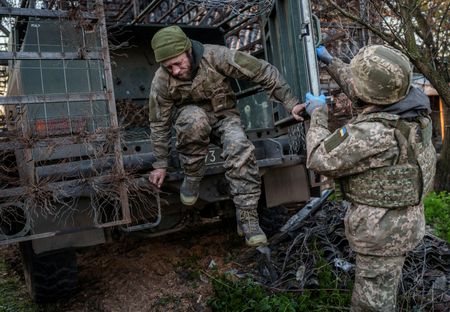
However, Ukraine’s Kursk military group quickly countered the Russian claims through a Facebook post, labeling the report as a “complete lie…Our units control the area, there is no enemy advance, nor has there been any assault actions in that area over the past few days.”
Independent confirmation of either military account could not be obtained by Reuters.
RIO DE JANEIRO — Colombian music icon Shakira is set to take the stage at Rio de Janeiro’s world-famous Copacabana Beach Saturday evening for a massive free concert that city officials predict will attract roughly 2 million spectators to the legendary shoreline.
The spectacular beach performance continues a tradition established by Madonna in 2024 and Lady Gaga the year before, both of whom drew enormous crowds that celebrated across the expansive sandy coastline. Saturday’s show represents part of Shakira’s global “Las Mujeres Ya No Lloran” (“Women No Longer Cry”) tour, which takes its name from her 2024 album release.
Speaking with Brazil’s TV Globo network, the Latin music sensation revealed her anticipation that the Copacabana performance will mark the largest concert of her entire career.
“For me it’s a dream. I always dreamed of singing on this beach, because I think it’s a magical place,” she shared during the interview conducted in Portuguese, noting that she mastered Portuguese even before learning English.
Shakira first found success in Brazil during the 1990s, building a strong fanbase through her magnetic stage presence and deep connection with Brazilian audiences, explains Felipe Maia, an ethnomusicologist currently working toward his doctorate in popular music and digital technologies at Paris Nanterre University.
According to Maia, her enduring popularity in Brazil stems largely from “the fact that she comes from Colombia, a country whose culture has many similarities with Brazil.” He describes Saturday’s performance as something that “crowns the relationship she has had with Brazil for a very long time.”
Early Saturday morning, eager fans began gathering on the beach to secure prime viewing positions for the evening show. Local vendors set up shop selling refreshments and meals, along with practical items like toilet paper, deodorant, and even bags of sand for concert-goers hoping to gain height for better stage visibility near the Copacabana Palace.
The entertainment schedule begins with DJ performances during the late afternoon hours. Shakira’s main performance is slated to begin at 9:45 p.m. local time and should run approximately two hours. Following her set, another DJ will continue the music — a strategic addition designed to keep audiences engaged while facilitating an organized departure, according to Rio city officials.
These complimentary beach concerts represent a strategic initiative by Rio’s municipal government aimed at stimulating economic activity during the period between Carnival and New Year’s celebrations and the upcoming month-long Saint John’s Day festivities scheduled for June.
“For us, parties are serious business. Because parties generate jobs, income, development, and identity for the city,” declared Rio Mayor Eduardo Cavaliere during Wednesday’s presentation of the city’s operational strategy for the event. “Our investment in this show will give us a financial return 40 times greater,” the mayor stated.
Economic projections suggest Shakira’s concert could generate approximately 777 million reais (roughly $155 million) in revenue, based on research conducted by Rio’s City Hall in partnership with Riotur, the city’s tourism agency. This financial boost comes from increased tourist spending at local restaurants, hotels, and retail establishments.
Tourism data shows increased visitor numbers to Rio during May in years featuring these major concerts — 2024 and 2025 — compared to 2023 figures. The 2024 data revealed a 34.2% increase on May 1, just before the concerts, versus the previous year. In 2025, the growth reached 90.5% compared to 2023 levels.
In preparation for Shakira’s appearance, Airbnb announced in an April 22 statement that booking data showed rising numbers of guests planning to travel from various Brazilian regions, other Latin American countries, and even European cities including Paris and London.
A high-ranking Iranian official revealed Saturday that Tehran has put forward a new diplomatic proposal that would restore shipping access through the Strait of Hormuz and halt U.S. blockade measures against Iran, while deferring nuclear program discussions to future negotiations.
President Donald Trump, who has consistently stated that Iran must never acquire nuclear weapons, expressed his displeasure with Iran’s most recent diplomatic overture on Friday. Meanwhile, Iran’s foreign minister indicated Tehran remains open to diplomatic engagement if Washington modifies its current strategy.
Speaking to reporters at the White House, Trump outlined his dilemma when asked about available options: “Do we want to go and just blast the hell out of them and finish them forever? Or do we want to try and make a deal?”
The President also revealed Friday that he does not favor military action against Iran “on a human basis” and informed Congressional leadership that he doesn’t require their authorization to continue military operations beyond legally mandated deadlines since the ceasefire had “terminated” active fighting.
During remarks in Florida later Friday, Trump emphasized that America would not conclude its standoff with Iran prematurely “and then have the problem arise in three more years.”
Despite Trump’s repeated claims that he feels no urgency to act, domestic political pressure continues mounting for him to break Iran’s control over the strategic waterway. This blockade has eliminated 20% of global oil and gas shipments, driving up fuel costs for American consumers. Trump’s Republican Party risks electoral consequences from angry voters facing higher prices during November’s midterm congressional races.
The President spent Saturday at his Florida properties, including Mar-a-Lago resort and Trump National Golf Club in Jupiter, with plans to visit Trump National Doral near Miami for the PGA Cadillac Championship.
Four weeks have passed since the United States and Israel halted their aerial assault campaign against Iran, yet the parties appear no nearer to reaching an agreement that would conclude a conflict causing unprecedented disruption to worldwide energy markets, destabilizing global financial systems, and sparking fears of broader economic recession.
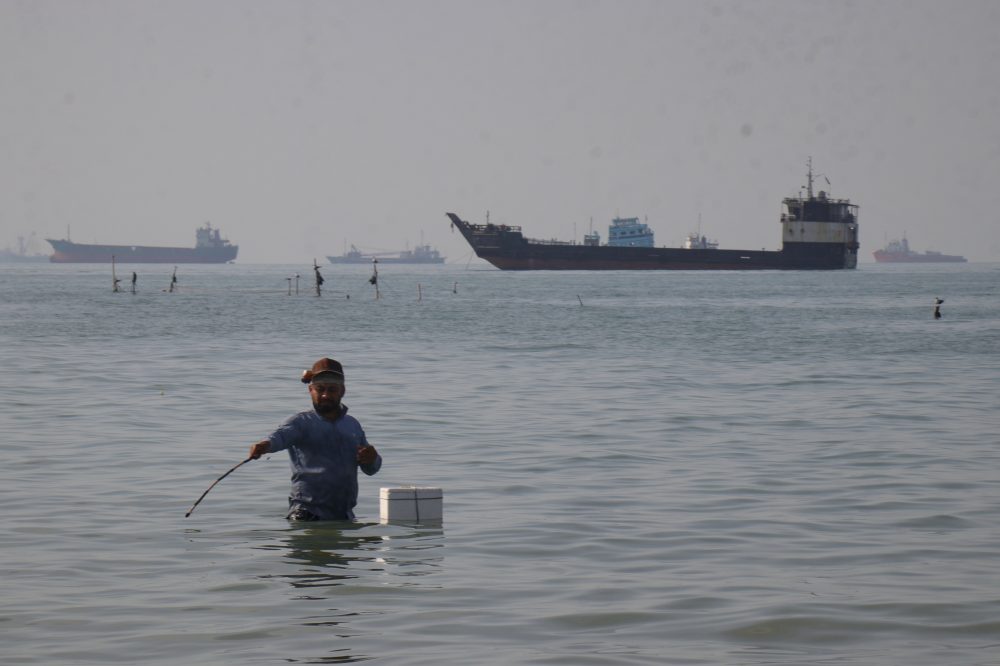
For over two months, Iran has prevented virtually all Gulf shipping except its own vessels from passing through the strait. The U.S. responded last month by implementing its own embargo on ships departing Iranian harbors.
Washington has consistently maintained it will not terminate the military campaign, which has resulted in thousands of casualties, without securing guarantees that Iran can never develop nuclear weapons capability. This objective was Trump’s stated justification for launching February airstrikes during ongoing nuclear negotiations. Iran maintains its nuclear activities serve only peaceful purposes.
The senior Iranian official, speaking anonymously about sensitive diplomatic communications, described Tehran’s decision to separate nuclear discussions from immediate concerns as a major concession designed to facilitate agreement.
Iran’s framework would end hostilities with assurances that Israel and America would not resume attacks. Tehran would restore strait access while Washington would terminate its shipping blockade.
Subsequent negotiations would address restrictions on Iran’s nuclear activities in exchange for sanctions relief, with Iran insisting Washington acknowledge its right to peaceful uranium enrichment, even if Tehran agrees to temporary suspension.
“Under this framework, negotiations over the more complicated nuclear issue have been moved to the final stage to create a more conducive atmosphere,” the official explained.
News outlets reported throughout the previous week that Tehran was considering reopening the strait before resolving nuclear matters. The official confirmed this revised timeline has now been formally presented to the United States through diplomatic intermediaries.
Spain’s foreign minister demanded Saturday the immediate freedom of an activist held by Israeli authorities following the interception of a Gaza-bound aid convoy in international waters by Israel’s navy.
Israeli forces detained Saif Abukeshek, who holds both Spanish and Swedish citizenship and is of Palestinian heritage, along with Brazilian national Thiago Ávila on Saturday for interrogation. According to a legal advocacy organization, both individuals have started refusing food.
Greek coast guard officials rescued dozens of additional activists following Israel’s maritime operation and transported them to Crete.
“This is a case of illegal detention in international waters, outside the jurisdiction of Israeli authorities. I have made this clear to my Israeli counterpart,” José Manuel Albares stated during a public radio interview.
The Legal Center for Arab Minority Rights in Israel, known as Adalah, confirmed representatives visited both detained men at a holding facility in Ashkelon, an Israeli coastal city. The organization reported both activists claimed to be refusing meals after allegedly suffering repeated physical abuse during their imprisonment.
“Adalah maintains that the treatment of the two activists, including the use of isolation, prolonged blindfolding and physical beatings, constitutes a grave violation of international law,” the organization stated.
Israel’s Foreign Ministry posted online that authorities were questioning Abukeshek and Ávila regarding potential connections to Hamas, the militant organization. Officials confirmed both men received visits from their respective consular representatives.
The detention of Abukeshek has intensified diplomatic friction between Israel and Spain, a nation that has vocally condemned the Gaza conflict and officially acknowledged Palestinian sovereignty in 2024.
During a Friday campaign rally for upcoming regional elections in southern Spain, Spanish Prime Minister Pedro Sánchez directly addressed Israeli Prime Minister Benjamin Netanyahu.
“Now that Netanyahu has taken foreign citizens, including a Spanish national, and brought them to Israel, I have a few things to say to Prime Minister Netanyahu,” Sánchez told cheering Socialist party supporters.
“First, Spain will always protect its citizens. Second, we will always uphold international law — and this is yet another violation of it,” he declared. “And third, we demand the release of the Spanish citizen who has been illegally detained by the Netanyahu government.”
VIENNA – Law enforcement officials in Austria announced Saturday the capture of a 39-year-old individual linked to a disturbing extortion scheme involving contaminated infant food products.
Authorities successfully recovered five tampered jars of HiPP-brand baby food last month across Austria, the Czech Republic, and Slovakia before any could reach consumers. The products had been laced with rat poison as part of what the German manufacturer described as an extortion attempt. One additional contaminated jar believed to be somewhere in Austria remains missing.
A police representative from Burgenland, the eastern Austrian state where one tainted jar was discovered, confirmed the arrest. The spokesperson stated: “Today we succeeded in arresting a suspect, 39-year-old man,” but refused to share additional information that might compromise the ongoing investigation.
According to the Austrian tabloid Kronen Zeitung, authorities apprehended the suspect in Salzburg, a state that shares a border with Germany.
Details about the extortion demands emerged through Austrian media reports. Die Presse newspaper revealed that HiPP received an electronic message in March demanding 2 million euros (approximately $2.3 million) within six days. However, the company failed to notice the threatening communication until two weeks beyond the specified deadline.
Company representatives later explained that the threatening message had been delivered to a group email address that receives infrequent monitoring.
Devastating storms across northeastern Brazil have claimed six lives and forced more than 3,000 residents to evacuate their homes over the past two days, federal officials announced Saturday.
The deadly weather struck hardest in Pernambuco state, where torrential downpours triggered flooding and dangerous landslides around the capital city of Recife. Four fatalities occurred in the metropolitan area – two deaths in Recife itself and two more in the adjacent city of Olinda. Approximately 1,500 residents were forced to abandon their homes or seek emergency shelter.
Neighboring Paraiba state also suffered significant damage, with two confirmed deaths and 1,800 people displaced from their residences. Brazil’s Integration and Regional Development Ministry reported that the hardest-hit areas included Conde, the state capital of Joao Pessoa, and Campina Grande.
“The National Center for Risk and Disaster Management issued 22 alerts during the critical period of rains. Due to the impacts in Pernambuco and Paraiba and the weather forecast for the region, the operational level was raised to maximum alert,” ministry officials stated.
While the intense rainfall has diminished and conditions are stabilizing, authorities emphasized that continued monitoring remains essential throughout Saturday.
Brazilian President Luiz Inacio Lula da Silva confirmed on social media that he had contacted regional leaders to coordinate federal assistance. “The government continues to monitor the situation to provide all necessary assistance,” the president wrote.
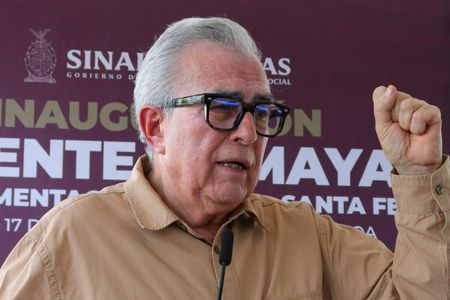
The leader of Mexico’s Sinaloa state announced he will temporarily step away from his position following explosive drug trafficking charges filed against him by United States authorities.
Governor Rubén Rocha Moya, a prominent figure in Mexico’s ruling Morena party, released a video statement just after midnight Friday rejecting claims that he shielded the notorious Sinaloa cartel and facilitated drug smuggling operations into America for substantial monetary payments.
“My conscience is clear,” he said. “To my people and to my family, I can look you in the eye because I have never betrayed you, and I never will.”
Despite his denial, Rocha announced he would step aside temporarily to fight what he described as baseless and vindictive accusations while working with President Claudia Sheinbaum’s administration during their investigation into potential arrest or extradition proceedings.
President Sheinbaum faces mounting pressure from President Donald Trump to intensify cartel enforcement while balancing her party’s interests. She has declined to transfer Rocha to American custody, stating she has not reviewed convincing evidence but promised Mexican officials would conduct their own probe.
The governor, a close supporter of Sheinbaum’s political mentor and former President Andrés Manuel López Obrador, claims the charges against him and fellow Morena party members represent an assault on their progressive political agenda.
“I will not allow myself to be used to harm the movement to which I belong — one that has improved the lives of millions of Mexican men and women,” he said in the video.
Under Mexican law, Rocha maintains legal protection from criminal charges due to his gubernatorial position. Congressional impeachment proceedings would be required before any prosecution could move forward.
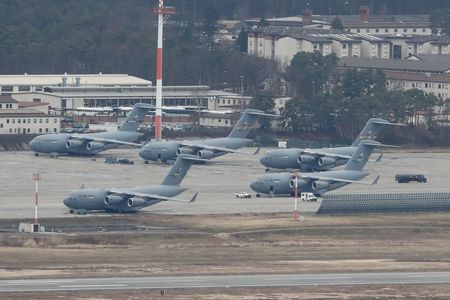
Germany’s defense chief responded calmly Saturday to Pentagon plans for withdrawing approximately 5,000 American military personnel from German soil, characterizing the reduction as anticipated while highlighting the reciprocal advantages of America’s long-established European military presence.
Defense Minister Boris Pistorius acknowledged that European nations recognize the need to shoulder greater responsibility for their own defense within NATO, where Germany serves as a crucial ally. He noted that America also benefits from maintaining forces on the continent.
“The presence of American soldiers in Europe, and especially in Germany, is in our interest and in the interest of the U.S.,” Pistorius told the German news agency dpa.
The defense minister characterized the withdrawal as “foreseeable,” seemingly referencing President Donald Trump’s earlier warnings about reducing Germany’s troop levels.
However, the planned reductions over the coming six to 12 months signal worsening tensions between the United States and Germany, along with other European partners. Trump has voiced frustration with NATO members’ reluctance to support his Israeli-backed campaign against Iran and has publicly criticized leaders including German Chancellor Friedrich Merz, Spanish Prime Minister Pedro Sánchez, and British Prime Minister Keir Starmer.
Merz recently condemned the Iranian conflict, stating the U.S. faces “humiliation” from Iranian leadership while criticizing Washington’s strategic approach.
Trump has also accused European Union nations of failing to honor trade agreements and announced intentions to raise tariffs on EU-manufactured cars and trucks to 25% next week, a policy that would significantly impact Germany’s automotive industry.
At least one European Union legislator denounced the tariff increase as “unacceptable” and accused Trump of violating another American trade commitment.
The proposed withdrawal would remove roughly one-seventh of the 36,000 American service members currently based in Germany, representing a substantial but not devastating reduction. Pentagon officials provided limited information about which units or missions would be impacted.
Across Europe, between 80,000 and 100,000 U.S. military personnel are typically deployed, with numbers fluctuating based on operations, training exercises, and rotation schedules. American forces in Europe expanded following Russia’s comprehensive invasion of Ukraine in February 2022. NATO allies including Germany have anticipated for more than a year that these additional troops would be among the first to depart.
In his statement to dpa, Pistorius said, “We Europeans must take on more responsibility for our security,” while highlighting Germany’s recent initiatives to strengthen its military capabilities, speed up equipment purchases, and improve infrastructure.
NATO representative Allison Hart posted on X Saturday that the alliance was “working with the U.S. to understand the details of their decision on force posture in Germany.”
“This adjustment underscores the need for Europe to continue to invest more in defense and take on a greater share of the responsibility for our shared security,” she stated, referencing advancement toward NATO’s goal of member nations spending 5% of their economic output on defense.
Pentagon representative Sean Parnell explained in a statement that the “decision follows a thorough review of the Department’s force posture in Europe and is in recognition of theater requirements and conditions on the ground.”
Germany houses multiple American military installations, including headquarters for U.S. European and Africa commands, Ramstein Air Base, and a medical facility in Landstuhl that treated wounded personnel from Afghanistan and Iraq conflicts. The country also hosts U.S. nuclear weapons.
The unpredictable American president has contemplated reducing military presence in Germany for years and has criticized NATO for declining to support Washington in the conflict that commenced February 28 with combined U.S.-Israeli attacks on Iran.
NATO allies have prepared for potential American troop reductions since Trump assumed office, as Washington indicated that Europe must increasingly manage its own security matters, including Ukraine’s defense.
A major international human rights conference was abruptly scrapped just days before its scheduled opening after organizers say China influenced the African host nation to ban participants from Taiwan.
The New York-based advocacy organization Access Now announced late Friday it was calling off the RightsCon summit that was set to begin next week in Zambia, following what the Zambian government initially described as a postponement.
According to Access Now, Zambian officials informed them that China had applied pressure regarding the conference “because Taiwanese civil society participants were planning to join us in person.” The organization said it refused any demands to bar Taiwan delegates from participating.
“We believe foreign interference is the reason RightsCon 2026 won’t proceed in Zambia,” Access Now stated.
“What the government wanted from us in order to lift the postponement was conveyed to us informally from multiple sources: … we would have to moderate specific topics and exclude communities at risk, including our Taiwanese participants, from in-person and online participation.”
Zambian authorities had earlier stated they were delaying the conference to review information about discussion themes and topics to verify they matched the nation’s “national values, policy priorities and broader public interest considerations.”
The southern African nation maintains substantial political and economic connections with China, primarily through Chinese mining operations in the resource-rich country.
The annual RightsCon gathering focuses on human rights and technology issues, addressing topics such as internet censorship, digital surveillance and cyber warfare. More than 2,600 people were expected to participate in person in Zambia, with an additional 1,100 joining virtually, representing over 150 nations, Access Now reported.
The previous year’s conference took place in Taiwan.
Taiwan’s Minister of Digital Affairs Lin Yi-jing posted on Facebook Saturday that the summit’s cancellation demonstrated China’s discomfort with “the ideas of freedom, democracy and rule of law that Taiwan and RightsCon represent.”
Human Rights Watch called on Zambian officials to provide explanations for their decisions.
This development occurred just one week after Taiwan accused Beijing of interfering to prevent Taiwanese President Lai Ching-te from visiting Eswatini, another southern African nation, on April 22.
Taiwan claimed that Lai’s trip to Eswatini, Africa’s sole country maintaining official diplomatic ties with Taiwan, was cancelled after China pressured Madagascar, Mauritius and Seychelles to deny overflight permissions for the president’s aircraft.
China’s Foreign Ministry commended the three nations’ actions, stating their “adherence to the one-China principle is in full compliance with international law.”
Beijing considers self-governing Taiwan as a rebellious territory that must be reunified with mainland China, using military force if needed, and prevents nations with which it has diplomatic relationships from maintaining official connections with Taipei. China wields considerable influence throughout Africa.
On Saturday, President Lai surprised observers by announcing his arrival in Eswatini after the original visit was cancelled. This time, Lai had not publicly disclosed his travel plans beforehand.
Taiwan “will never be deterred by external pressures,” Lai posted on X.
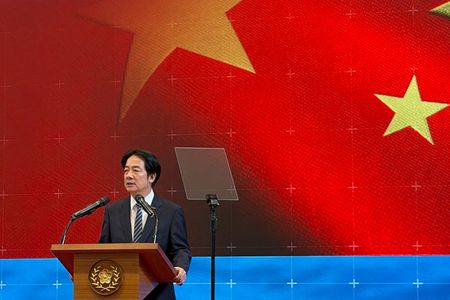
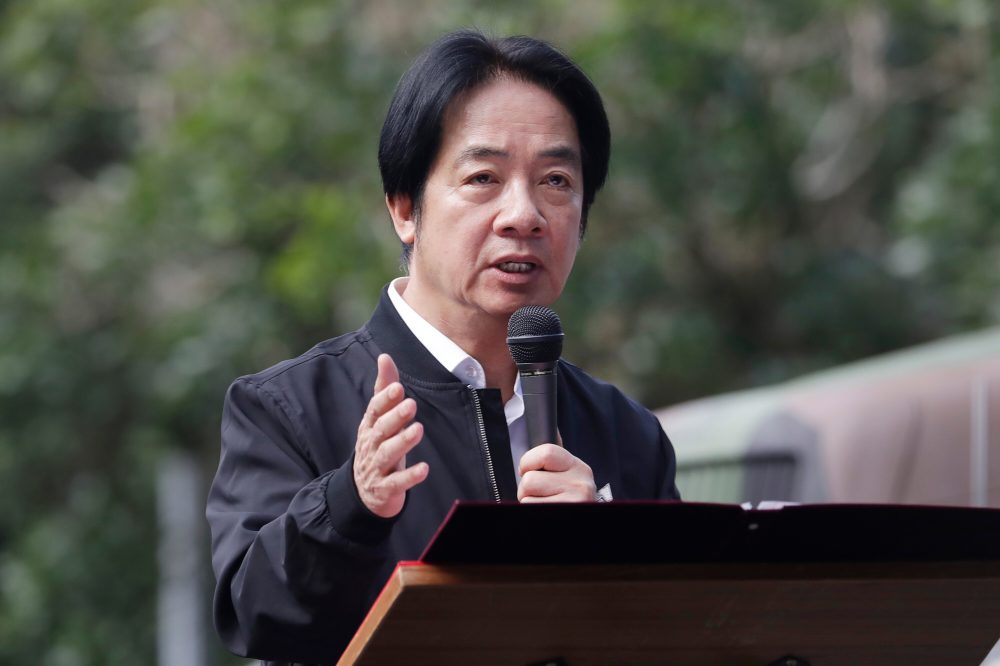
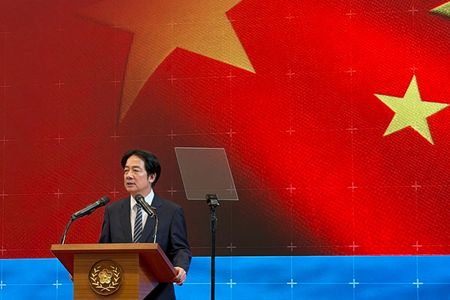
Taiwan’s President Lai Ching-te made an unannounced visit to Eswatini on Saturday, following his administration’s claims that Chinese influence forced the postponement of a diplomatic trip originally scheduled for last month.
Beijing considers the democratically-ruled island of Taiwan to be Chinese territory without the authority to establish nation-to-nation relationships, a stance that Taiwan’s leadership firmly rejects.
Through the years, China has gradually reduced the number of nations that recognize Taiwan diplomatically.
Here are the dozen countries that continue to maintain official diplomatic relationships with Taiwan:
Taiwan’s President Lai Ching-te successfully reached the African kingdom of Eswatini on Saturday, completing a diplomatic mission that faced significant obstacles when multiple nations blocked his aircraft from crossing their airspace under reported Chinese influence.
The Taiwanese leader announced his arrival on social media platform X, stating he had come to Eswatini — Taiwan’s sole remaining diplomatic partner on the African continent — to “affirm our longstanding friendship.” Lai emphasized that Taiwan, which operates as an independent democracy despite Beijing’s territorial claims, “will never be deterred by external pressures.”
The diplomatic journey faced major setbacks when the original April 22 departure date had to be scrapped. Taiwanese government officials revealed that Seychelles, Mauritius and Madagascar had revoked flight clearances following “strong pressure from the Chinese authorities, including economic coercion.”
Writing on Facebook Saturday, Lai credited his diplomatic and national security teams for making alternative arrangements that allowed the visit to proceed. He outlined plans to strengthen bilateral relationships through enhanced economic, agricultural, cultural and educational partnerships.
“Our resolve & commitment are underpinned by the understanding that Taiwan will continue to engage with the world — no matter the challenges faced,” Lai posted on X. Taiwanese authorities kept the rescheduled travel plans confidential until after his safe arrival.
Beijing responded swiftly to news of the visit, with a Chinese Foreign Ministry representative dismissing Lai’s diplomatic efforts as “performing a laughable stunt in front of the world” and claiming he had been “smuggled” out of Taiwan.
The ministry characterized Lai’s “undignified act” and the visit as “a losing cause” that cannot alter “the fact that Taiwan is part of China.” Chinese officials also urged Eswatini and other nations to “see where the arc of history bends and stop serving as the prop of ‘Taiwan independence’ separatists.”
Beijing maintains its position that military action remains an option for gaining control over Taiwan and actively works to prevent other nations from establishing formal diplomatic relationships with Taipei.
The small landlocked kingdom of approximately 1.2 million people last hosted a Taiwanese president in 2023 when Tsai Ing-wen made the journey. Eswatini’s loyalty to Taiwan has come at an economic cost, as it remains the only African nation denied tariff-free market access to China due to its diplomatic ties with Taipei.
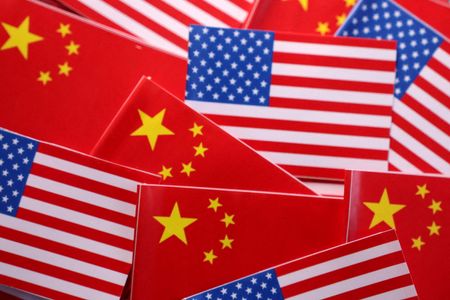
Meanwhile, tensions continue to escalate as Taiwan’s government expressed alarm Friday following Chinese Foreign Minister Wang Yi’s phone conversation with U.S. Secretary of State Marco Rubio, during which Wang characterized Taiwan as the “biggest risk” to Beijing-Washington relations.
China’s Commerce Ministry announced Saturday it has issued a counter-injunction to prevent enforcement of US sanctions targeting five Chinese oil refineries that allegedly purchased Iranian crude, according to state media reports from Xinhua.
The affected companies include Hengli Petrochemical (Dalian) Refinery and four smaller ‘teapot’ refineries: Shandong Jincheng Petrochemical Group, Hebei Xinhai Chemical Group, Shouguang Luqing Petrochemical, and Shandong Shengxing Chemical.
Last month, the US Treasury Department sanctioned Hengli Petrochemical for allegedly purchasing billions of dollars worth of Iranian oil, marking an intensification of Washington’s ongoing campaign to restrict Tehran’s petroleum revenues. The remaining four refineries faced similar penalties during the previous administration.
Beijing’s Commerce Ministry condemned the American sanctions as violations of “international law and the basic norms of international relations.”
“The injunction stipulates that the United States cannot recognize, implement, or comply with the sanctions imposed on the aforementioned five Chinese companies,” the ministry declared.
The US penalties have created operational challenges for these refineries, including complications in securing crude oil supplies and forcing them to market their refined products under alternative brand names. These smaller ‘teapot’ refineries represent approximately 25% of China’s total refining capacity but operate on thin profit margins and face additional pressure from weak domestic fuel demand.
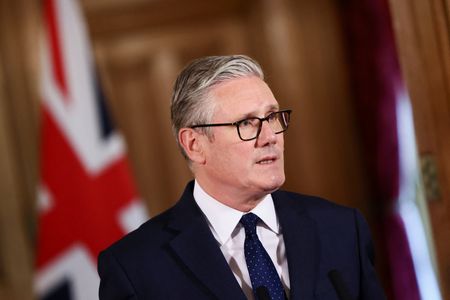
LONDON – British Prime Minister Keir Starmer announced his government may seek additional authority to prohibit pro-Palestinian demonstrations under certain conditions, citing what he described as the “cumulative effect” these rallies have had on Jewish residents following Wednesday’s stabbing of two Jewish men in London.
Speaking to the BBC, Starmer emphasized his commitment to protecting freedom of speech and peaceful assembly, but declared that certain protest chants such as “Globalise the Intifada” cross a clear line and warrant criminal charges for those who use them.
Since Hamas launched its October 2023 assault on Israel that sparked the current Gaza conflict, pro-Palestinian rallies have occurred regularly throughout London. Those opposing the demonstrations claim they foster animosity and serve as platforms for antisemitic sentiment.
Demonstration participants maintain they are utilizing their constitutional rights to draw attention to continuing human rights violations and political concerns regarding Gaza.
While acknowledging that “very strong legitimate views about the Middle East, about Gaza” exist, Starmer noted that numerous Jewish community members have expressed worry about the repeated nature of these gatherings.
When questioned whether stricter measures should target specific chants and signage or halt entire protests, Starmer responded: “I think certainly the first, and I think there are instances for the latter.”
“I think it’s time to look across the board at protests and the cumulative effect,” he explained, noting that his administration must examine what additional powers it might pursue.
On Thursday, Britain elevated its terrorism threat assessment to “severe” due to growing security worries that foreign nations are contributing to violence, particularly targeting Jewish communities.
Counter-terrorism police chief Laurence Taylor stated in a release: “We are seeing an elevated threat to Jewish and Israeli individuals and institutions in the UK,” while noting law enforcement efforts “against an unpredictable global situation that has consequences closer to home, including physical threats by state-linked actors.”
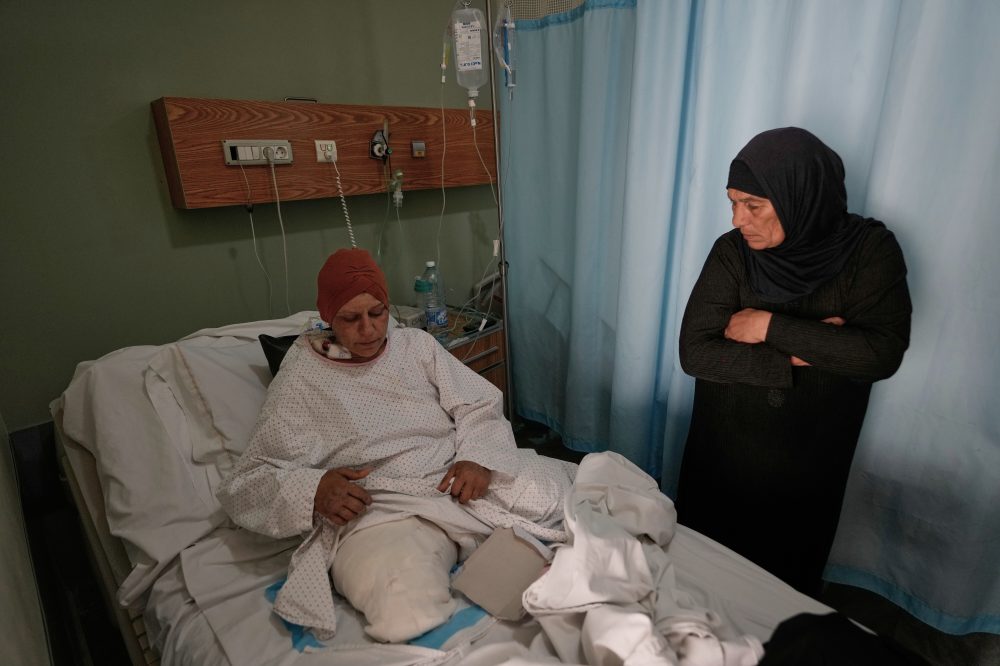
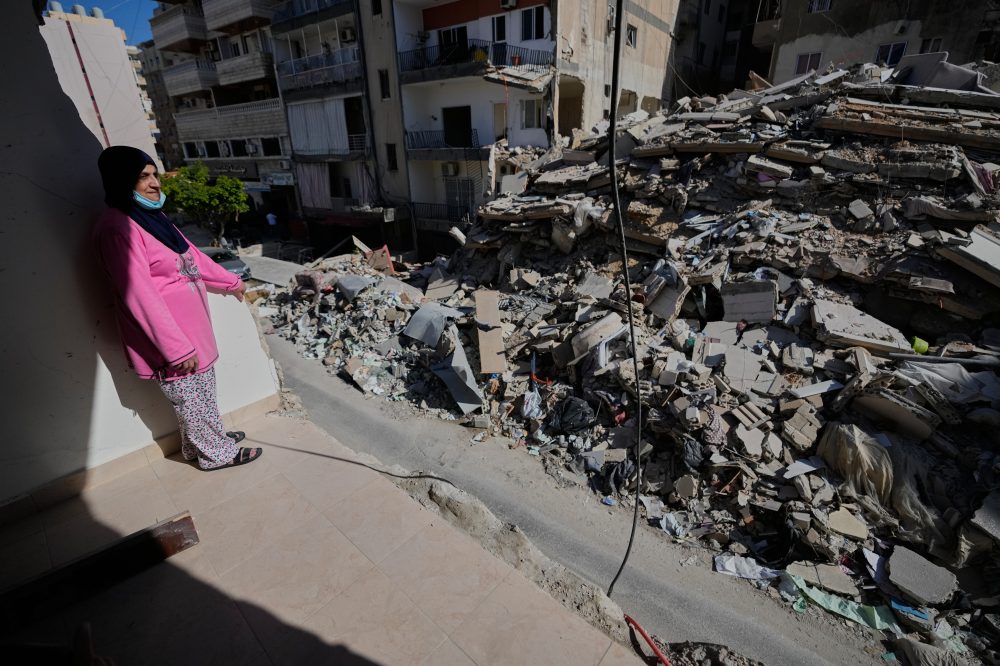
BEIRUT (AP) — At least seven people died and several others sustained injuries in Israeli military strikes across southern Lebanon on Saturday, marking continued violence despite an active ceasefire agreement between Israel and the militant group Hezbollah, according to officials.
The Israeli military issued fresh evacuation orders on Saturday for residents in nine villages throughout southern Lebanon. Both Israel and Hezbollah have continued launching attacks even with the ceasefire that took effect on April 17.
According to Lebanon’s state-operated National News Agency, a vehicle was targeted in Kfar Dajal village, resulting in two deaths, while a residential building strike in Lwaizeh village claimed three lives. An additional two people were killed when the village of Shoukin came under attack.
Israeli military’s Arabic-language spokesperson Lt. Col. Ella Waweya announced on X that Israeli air forces conducted approximately 50 strikes within a 24-hour period, focusing on Hezbollah facilities and personnel.
The militant group Hezbollah reported launching a drone attack on Saturday against Israeli forces who had assembled inside a residence in the coastal community of Bayed.
In recent weeks, Israeli forces have been systematically demolishing residential areas in communities along the Lebanese-Israeli border. Military officials justify these actions by stating they are eliminating structures that served as operational bases for the Iranian-supported organization.
Israeli military forces distributed new footage on Friday purportedly showing the destruction of Hezbollah positions throughout southern Lebanon. The video depicts soldiers displaying an Israeli flag while walking through the ruins of a soccer facility in the Lebanese community of Bint Jbeil. Military officials stated on their website that air forces “destroyed the town’s stadium after it was discovered to be booby-trapped.”
The current conflict between Israel and Hezbollah commenced on March 2, when Hezbollah launched rocket attacks toward northern Israel, occurring two days following the start of U.S. and Israeli military operations against Iran, Hezbollah’s primary supporter. Israel has subsequently conducted hundreds of aerial bombardments and initiated ground operations in southern Lebanon, taking control of numerous border communities.
Following these events, Lebanon and Israel engaged in their first direct negotiations in over thirty years. The two nations have remained officially at war since Israel’s establishment in 1948. A ten-day cessation of hostilities announced in Washington became effective on April 17, with the agreement subsequently extended for an additional three weeks.
LONDON — Following violent attacks targeting Jewish residents in London, British Prime Minister Keir Starmer announced Saturday that authorities need to take stronger measures against individuals using specific inflammatory language during pro-Palestinian demonstrations.
While emphasizing his support for peaceful protest rights, Starmer indicated that certain Gaza-related marches might warrant prohibition due to their collective impact on rising antisemitic violence throughout the United Kingdom.
“When you see, when you hear some of those chants — ‘globalize the intifada’ would be one I would pick out — then clearly there should be tougher action in relation to that,” Starmer told the BBC. The Arabic word intifada is generally translated as “uprising.”
The prime minister’s comments came after authorities charged a 45-year-old suspect with attempted murder in connection with Wednesday’s knife attack against two Jewish victims in London’s Golders Green area, a neighborhood known as a hub for Britain’s Jewish population. Law enforcement officials have classified the incident as terrorism.
This assault represents just one episode in an ongoing pattern of violence that has included recent arson incidents targeting synagogues and additional Jewish facilities throughout London.
Metropolitan Police Commissioner Mark Rowley issued a stark warning Friday, stating that Jewish communities in Britain now face unprecedented levels of danger, with social media platforms amplifying antisemitic sentiment beyond previous levels.
“The ghastly fact is that Jews are on everybody’s list, all of those hateful groups, whether you’re extreme right, whether you’re extreme left, whether you’re Islamist terrorist, whether you’re right-wing terrorist, and some hostile states as well now with some sort of Iranian-related threats,” he told The Times. “There’s a ghastly Venn diagram that they’re at the middle of.”
Following Wednesday’s stabbing incident, British officials elevated the nation’s terrorism alert status from substantial to severe, indicating intelligence services believe another attack is highly probable within six months.
Government officials clarified that this heightened threat assessment stems not only from the Golders Green violence but also reflects growing dangers “from Islamist and extreme right-wing terrorist threat from individuals and small groups based in the U.K.”
Data from the Community Security Trust charity reveals a dramatic surge in reported antisemitic incidents nationwide since Hamas-led militants launched their attack on southern Israel on October 7, 2023, triggering the subsequent Gaza war. The organization documented 3,700 incidents in 2025, representing a significant jump from 1,662 cases recorded in 2022.
Flight operations across the United Arab Emirates have resumed normal status following the removal of security restrictions that were put in place earlier this year, according to an announcement from aviation officials on Saturday.
The country’s General Civil Aviation Authority confirmed through state media that standard air traffic procedures have been restored after safety protocols were implemented on February 28th in response to escalating conflicts involving Iran in the region.
According to the aviation authority, the decision to return to regular operations came after officials conducted a thorough review of both operational capabilities and security circumstances, working alongside other government agencies to ensure safe conditions for air travel.
Ukrainian President Volodymyr Zelenskiy held discussions with Slovakia’s Prime Minister Robert Fico on Saturday regarding Ukraine’s bid to join the European Union.
During their conversation, Zelenskiy emphasized the importance of maintaining strong bilateral ties between the two nations. “We need strong relations between our countries, and both of us are interested in this. It was important to hear that Slovakia supports Ukraine’s membership in the European Union and is ready to share its experience of accession,” Zelenskiy posted on X.
According to the Ukrainian president, the two leaders also explored the possibility of arranging an in-person meeting in the coming weeks.
Taiwan’s President Lai Ching-te successfully touched down in the African nation of Eswatini on Saturday, following his administration’s accusations that China interfered with his original travel plans.
The Taiwanese leader shared news of his arrival through a Facebook post, without having previously disclosed his second attempt to make the journey. Last month, his government claimed that Chinese pressure led three African nations to deny overflight permissions for his presidential plane.
“Although we are a few days late, the people of Eswatini have still given us the warmest and most enthusiastic welcome,” Lai wrote in his social media update.
According to Taiwan’s government, the Seychelles, Mauritius and Madagascar withdrew flight clearances for the presidential aircraft to travel through their controlled airspace during the originally scheduled visit to Eswatini, which represents one of Taiwan’s dozen remaining diplomatic partners worldwide.
“Eswatini has stood firm against various diplomatic and economic pressures, speaking out for Taiwan’s international place through concrete actions,” Lai stated in his post.
KYIV, Ukraine — A deadly Russian drone assault on a civilian minibus in southern Ukraine’s Kherson region claimed two lives on Saturday, according to local authorities, marking another instance of Moscow targeting non-military areas throughout its ongoing invasion.
Regional administrator Oleksandr Prokudin reported that seven additional individuals sustained injuries in the initial strike. Later that day, Russian forces launched a second attack on another minibus in Kherson, injuring the vehicle’s operator, Prokudin stated.
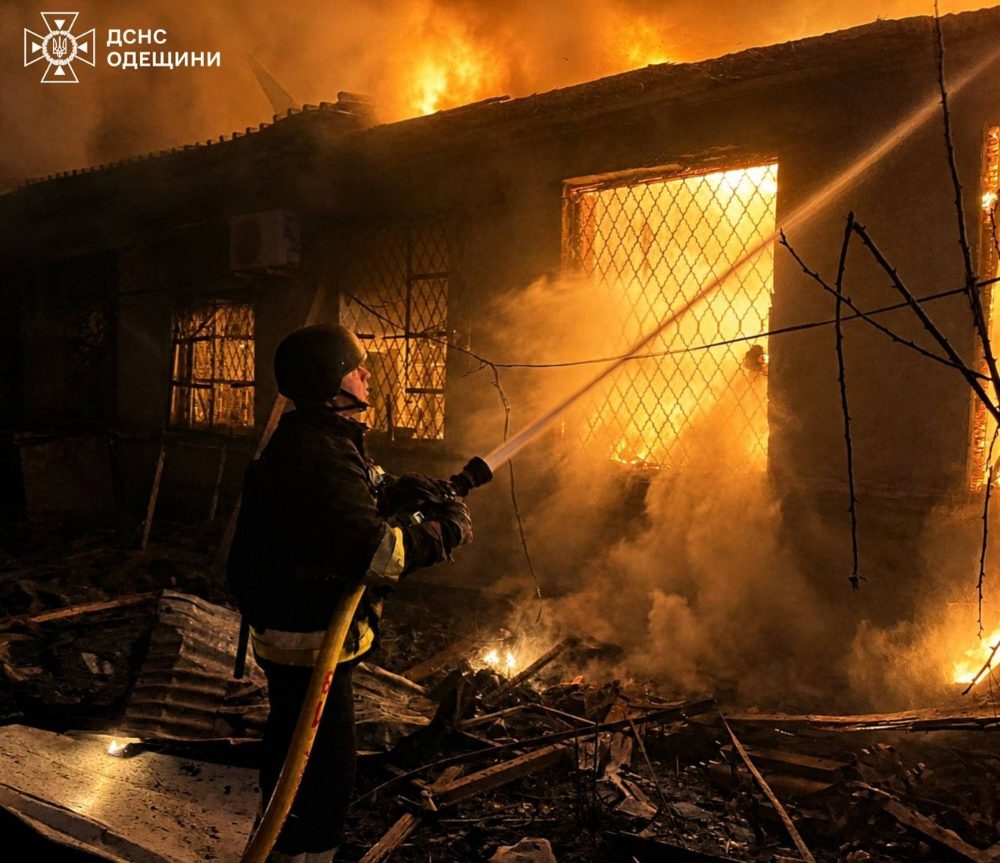
Along Ukraine’s Black Sea coastline, Russian forces struck port facilities in Odesa, causing infrastructure damage but no reported injuries.
Ukrainian citizens have faced continuous aerial bombardments since Moscow initiated its comprehensive invasion more than four years ago. Diplomatic efforts facilitated by the United States between Russian and Ukrainian representatives over the past year have failed to provide relief, with Russia turning down Ukraine’s ceasefire proposal. Recent developments in the Iran conflict have shifted global focus away from Ukraine’s ongoing crisis.
On the battlefield spanning approximately 1,250 kilometers (750 miles), Russian military officials announced Saturday they had seized the village of Myropillia in Ukraine’s northeastern Sumy region.
Independent confirmation of these military developments was not available, and Ukrainian officials had not yet responded to the claims.
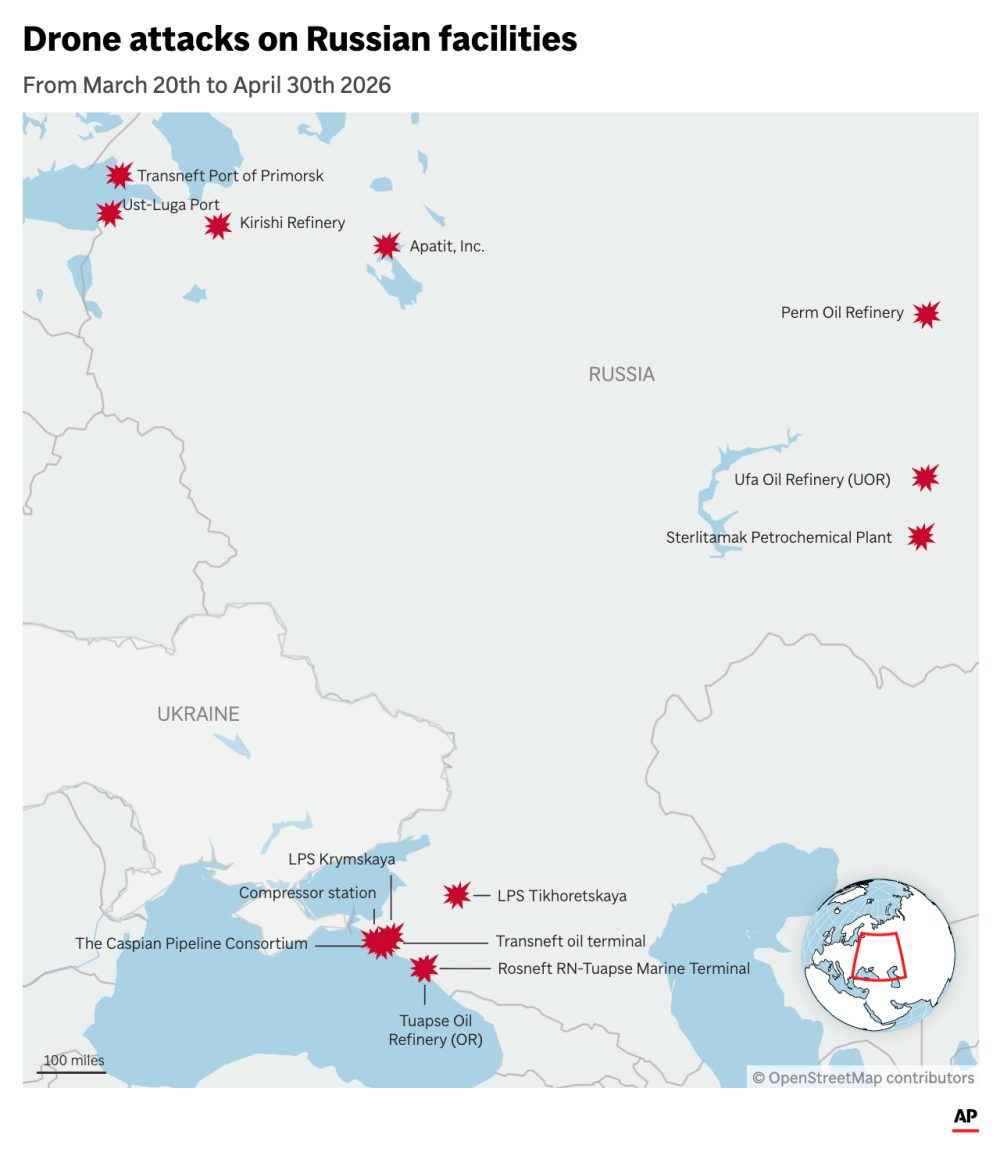
Within Russian territory, authorities in the Krasnodar region reported that firefighters successfully extinguished a blaze at an oil terminal in the Black Sea port of Tuapse on Saturday, following a Ukrainian attack the previous day.
Ukrainian unmanned aircraft have targeted the Tuapse oil processing and export facility four times within slightly more than two weeks, igniting fires that forced local residents to evacuate and created enormous smoke clouds.
Ukraine has intensified its long-range attacks on Russian petroleum installations as part of a strategy to reduce Moscow’s oil revenue, which provides crucial financing for its sustained military campaign. However, the economic consequences remain uncertain, as increased oil prices resulting from the Iran conflict and corresponding relaxation of U.S. sanctions have helped restore Russian government revenues.
SEOUL, South Korea (AP) — In an unusual public wellness initiative, Seoul’s municipal authorities recently hosted a unique competition along the Han River where residents gathered to participate in organized napping sessions.
The event was designed by city officials to highlight the critical role that adequate rest plays in maintaining health and well-being within South Korea’s rapidly moving capital city.
Competitors stretched out along the riverbank as part of the municipal program aimed at drawing attention to sleep health in one of the world’s most dynamic urban centers.
Russian military forces are advancing toward Kostiantynivka, a strategically vital city in Ukraine’s eastern Donetsk region, as they attempt to gain control near one of Ukraine’s most heavily fortified defensive positions, according to Ukraine’s top military commander on Saturday.
The city serves as part of what military officials describe as a fortress network across eastern Ukraine — a zone that has been extensively fortified by Ukrainian defense forces.
“We are repelling the Russian occupiers’ persistent attempts to gain a foothold in the outskirts of Kostiantynivka using infiltration tactics. Counter-sabotage measures are going on in the city,” stated Oleksandr Syrskyi, Ukraine’s army chief, in a message posted to the Telegram platform.
According to DeepState, a Ukrainian military tracking initiative, Russian forces have gained control of territory approximately one kilometer (0.6 mile) from Kostiantynivka’s southern perimeter.
Portions of southeastern Kostiantynivka are currently designated as contested territory, indicating that neither Ukrainian nor Russian forces maintain complete control over these areas.
Moscow’s defense ministry announced Wednesday that its forces had secured Novodmytrivka, located directly north of Kostiantynivka. Russia’s top military commander Valery Gerasimov stated in April that troops were making progress both north and south of the city.
According to Syrskyi, Russian offensive operations increased significantly throughout April. He reported that since Monday alone, Russian forces have launched 83 assault operations in this area using small infantry units.
Moscow is demanding that Ukraine withdraw from territories in Donetsk and the adjacent Luhansk region that Russia has been unable to capture during its four-year full-scale invasion. Peace negotiations facilitated by the United States have stalled over this issue, as Ukrainian leadership maintains that Kyiv will not surrender territory it currently holds.
Over recent years, Russian forces have been unable to seize any major urban centers in Ukraine, instead making gradual progress by capturing smaller communities, primarily in the country’s eastern regions.
The capture of Pokrovsk, a small city whose pre-war population of over 60,000 residents largely evacuated, represented Moscow’s most significant territorial gain in the past year. Russian troops required months to advance on the city, and Kyiv maintains it still holds certain positions within the area.
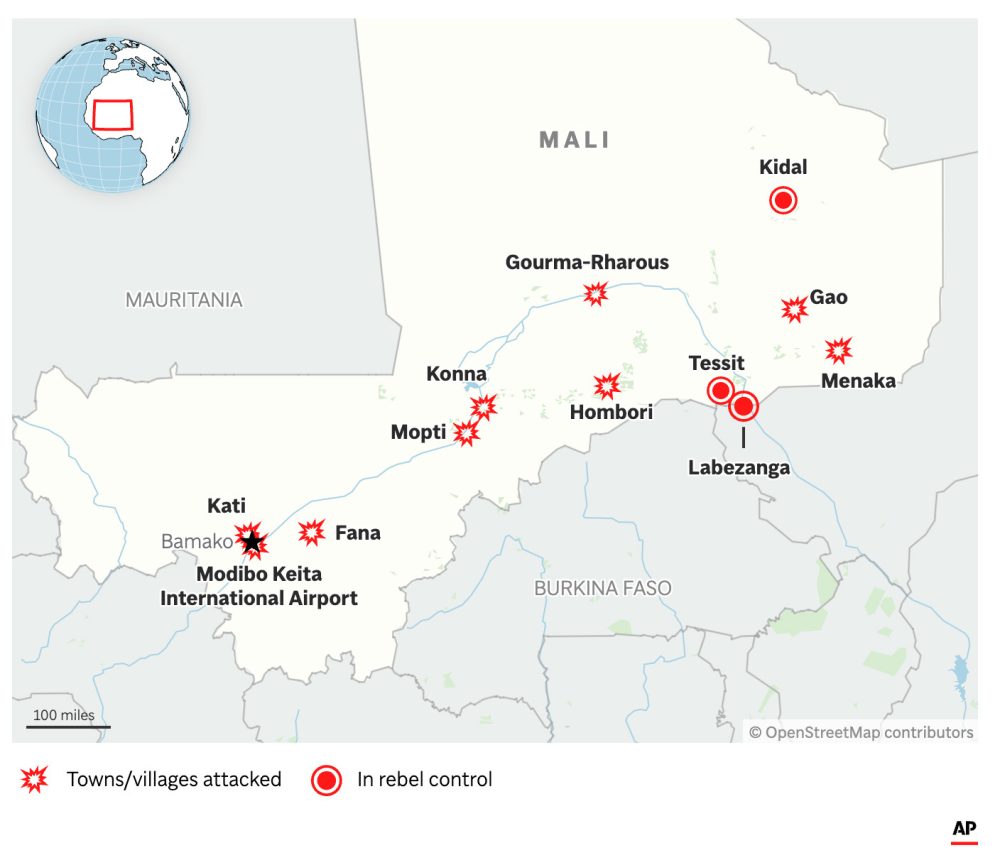
BAMAKO, May 2 (Reuters) — Mali’s government has launched an investigation into military personnel believed to have assisted insurgents in last week’s devastating coordinated strikes against army installations nationwide, according to a judicial official’s announcement.
A military tribunal prosecutor in Bamako revealed that five soldiers are under suspicion, including three currently serving members, one retiree, and a dismissed soldier who died during combat near Kati, the nation’s primary military base located 15 kilometers from the capital. The statement was broadcast on state television Friday evening.
“The first arrests have been successfully carried out, and all other perpetrators, co-perpetrators, and accomplices are actively being sought,” the prosecutor’s statement declared, though officials did not disclose the total number of suspects identified or specify who has been detained.
The synchronized assault that began April 25 demonstrated how militants from various factions with differing objectives managed to penetrate the core of this West African nation’s military leadership, which seized control through successive coups in 2020 and 2021.
The attacks resulted in the death of Mali’s defense minister and compelled Russian forces supporting the government to withdraw from Kidal, a strategic northern town.
The violence has triggered widespread combat throughout Mali’s expansive northern desert regions, creating opportunities for armed groups that have demonstrated growing boldness in targeting neighboring nations and potentially expanding their reach beyond the region, according to security analysts.
The insurgents affiliated with al-Qaeda, operating under the name Jama’at Nusrat al-Islam wal-Muslimin (JNIM), have urged Malians to rebel against their government and embrace Sharia law implementation.
The group has also threatened to surround Bamako, with security sources reporting Friday that militants had established roadblocks around the four-million-person city.
In a Tuesday television broadcast, military leader Assimi Goita declared the situation remained manageable and promised to “neutralise” the insurgent organizations responsible for the attacks.
A high-ranking Iranian official disclosed Saturday that Tehran has presented a plan to President Donald Trump that would restore shipping access through the Strait of Hormuz and halt the American blockade of Iran, while postponing nuclear program discussions until a future date.
The conflict has now entered its fourth week since bombing operations by the United States and Israel against Iran were paused, yet no agreement has emerged to conclude a war that has created unprecedented disruptions to worldwide energy markets.
For over two months, Iran has prevented virtually all Gulf shipping except its own vessels from passing through the waterway. The United States responded last month by implementing its own embargo on ships departing Iranian ports.
On Friday, Trump expressed his dissatisfaction with Iran’s most recent offer, though he declined to provide specific details about which aspects he found objectionable.
“They’re asking for things that I can’t agree to,” Trump stated to White House reporters.
The administration has consistently maintained that any war resolution must include provisions preventing Iran from acquiring nuclear weapons capabilities, which Trump identified as his main objective when initiating military strikes in February during ongoing nuclear negotiations. Tehran maintains its nuclear activities serve peaceful purposes.
The Iranian official, who requested anonymity due to the sensitive nature of diplomatic discussions, explained that Tehran views its newest proposal to postpone nuclear discussions as a major concession designed to make an agreement more achievable.
The plan would conclude hostilities with assurances that Israel and the United States would refrain from future attacks. Iran would reopen the strategic waterway, while America would end its shipping embargo.
Subsequent negotiations would address restrictions on Iran’s nuclear activities in exchange for sanctions relief, with Iran insisting that Washington acknowledge its right to uranium enrichment for peaceful applications, even if it agrees to temporarily halt such activities.
“Under this framework, negotiations over the more complicated nuclear issue have been moved to the final stage to create a more conducive atmosphere,” the official explained.
While news organizations have previously reported Tehran’s intention to reopen the strait before resolving nuclear matters, the official confirmed that this revised timeline has now been formally presented to the United States through intermediaries.
The North Atlantic Treaty Organization announced Saturday that it is coordinating with American officials to gather more information about the United States’ plan to reduce its military presence in Germany.
NATO spokesperson Allison Hart addressed the situation in a statement posted on social media platform X, explaining the alliance’s position on the troop adjustment.
“We are working with the U.S. to understand the details of their decision on force posture in Germany. This adjustment underscores the need for Europe to continue to invest more in defence and take on a greater share of the responsibility for our shared security — where we’re already seeing progress since Allies agreed to invest 5% of GDP at the NATO Summit in The Hague last year,” Hart stated.
The spokesperson expressed confidence in the alliance’s future capabilities despite the planned changes to American troop levels.
“We remain confident in our ability to provide for our deterrence and defence as this shift towards a stronger Europe in a stronger NATO continues,” she added in her statement.
NAIROBI – Severe weather conditions in Kenya have claimed the lives of at least 10 people as torrential rains caused devastating floods and deadly landslides throughout multiple regions, according to police reports. Officials are now expressing concern that rising water levels may pose serious threats to communities located below a significant hydropower dam network.
Eastern Kenya experienced the highest number of casualties, with seven fatalities recorded in that region. Law enforcement officials confirmed that bridge infrastructure sustained damage in both Kwale county along the coastline and Kitui county to the east. Meanwhile, dangerous landslides struck portions of Elgeyo Marakwet county within the Rift Valley area.
While these precipitation levels align with Kenya’s typical rainy season from March through May, government officials emphasize that the extraordinary intensity of the downpours combined with waterlogged soil conditions has significantly heightened the danger of both flooding and landslides occurring.
Major transportation routes faced significant disruption when a landslide completely blocked the Iten-Kabarnet roadway near Kolol, according to the Kenya National Highways Authority. Officials stated that restoration work is currently in progress and alternative routes have been established for vehicle traffic.
The Kenya Red Cross reported receiving unverified accounts of individuals who remain missing and families trapped in Mukuru Kwa Njenga, a heavily populated section of Nairobi. The organization confirmed it is actively delivering emergency aid to affected residents.
In a separate development, the interior ministry issued a high-alert status for the lower Tana River basin region. Officials cautioned that substantial rainfall in upstream areas has dramatically increased water flow into storage facilities within the Seven Forks dam network, creating elevated flood dangers for downstream communities. The ministry specifically noted that the Tana River Delta, which serves as home to over 100,000 residents, represents one of the areas that could face significant impact.
Military forces from the United States and Philippines conducted a demonstration of advanced anti-ship missile technology during their yearly joint training exercises on Saturday, positioning the weapons system in a strategically important location near Taiwan.
The demonstration took place in Batanes province, the Philippines’ northernmost region home to approximately 20,000 people. This area sits roughly 100 miles south of Taiwan along the Luzon Strait, a crucial waterway that has become a focal point in the ongoing strategic rivalry between Washington and Beijing for influence across the Asia-Pacific.
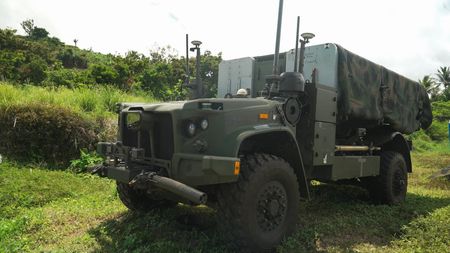
The military exercise featured the NMESIS anti-ship missile system, which was transported to the area aboard a US C-130 cargo plane and set up in Basco, the provincial capital.
“Training out here in Batanes allows us a different environment than what we’re normally allowed to operate in,” said U.S. Staff Sergeant Darren Gibbs. “So it gives us unique opportunities to actually utilize the system and train within our capabilities, and it offers experiences we don’t normally get offered in our day-to-day training.”
According to Gibbs, the NMESIS system operates with significant autonomy. “The purpose of this system is for it to be fully autonomous, for us not to require a driver or passenger inside the vehicle itself,” he explained. “We will tell it where to go and then we program what it needs to do.”
The mobile coastal defense system can engage surface ships from land positions at distances reaching approximately 115 miles, making it a formidable defensive tool for island nations.
Francisco Lorenzo, who serves as the Philippine exercise director, explained to reporters that bringing American weapons like the NMESIS to Batanes serves to evaluate how well such systems can operate in isolated areas. This marks the second consecutive year the missile system has been deployed to Batanes for the exercises.
“It is part of training so as to test the feasibility or rehearse their deployment there when need arises,” Lorenzo stated. He noted that one key goal of the Balikatan exercises – the Filipino term meaning “shoulder-to-shoulder” – involves practicing “defence of our territory with our allies.”
Lorenzo clarified that the missile system would not fire live rounds during the exercises and was brought solely for deployment practice and simulation purposes. The equipment will be removed from Batanes when the training concludes. The US previously brought its Typhon missile system to the Philippines in 2024 for similar joint exercises.
The exercises also included maritime attack training in Itbayat, a Batanes municipality located about 155 kilometers from Taiwan at the country’s northernmost point.
This year’s war games involve more than 17,000 military personnel, with roughly 10,000 coming from US forces, even as America maintains significant military commitments in the Middle East.
Beijing consistently condemns the presence of American military equipment in the Philippines, arguing such deployments increase regional instability.
Chester Cabalza, who leads the Manila-based International Development and Security Cooperation think tank, told reporters that “the NMESIS can spark a powder keg for Beijing and asymmetric deterrence for Manila and Taipei in the Bashi Channel along the Luzon Strait.”
Cabalza noted that the system’s ability to be airlifted and positioned along any Philippine coastline within hours makes it particularly concerning to Beijing, which likely views its Batanes placement as part of a “U.S.-led encirclement” strategy.
Recent months have seen China expand its military activities in both the South China Sea and Taiwan Strait, boosting its naval presence around Taiwan and moving an aircraft carrier through the strait. Satellite imagery analyzed by Reuters also shows China erected a barrier this month at the entrance to Scarborough Shoal.
Philippine President Ferdinand Marcos Jr has acknowledged that any military conflict over Taiwan would force his country to evacuate Filipino workers and residents from the island, potentially pulling the Philippines “kicking and screaming into the conflict.”
Defense Secretary Gilberto Teodoro confirmed in an April 28 interview that Manila has developed contingency plans for evacuating Filipinos from Taiwan should fighting break out, though he declined to provide specifics about those preparations.
China’s extensive rail network shattered its previous single-day passenger record on May 1st, carrying 24.8 million travelers according to figures released by the China State Railway Group.
The state-run Xinhua news agency reported Saturday that railway officials anticipated transporting an additional 19.7 million passengers on May 2nd as holiday travel continued.
To accommodate the massive influx of holiday travelers, several major rail corridors expanded their service by deploying additional trains, Xinhua reported.
Railway operators on the Zhengzhou route deployed 140 extra passenger trains to meet demand, while the Chengdu corridor added 184 additional trains, according to the news agency.
The surge in railway travel highlights the strength of China’s domestic tourism sector, which continues to provide economic stimulus to a national economy grappling with sluggish consumer spending and ongoing challenges in the real estate market.
Germany’s Defense Minister Boris Pistorius responded Saturday to the Pentagon’s announcement of a planned 5,000-troop withdrawal from his country by emphasizing that European nations need to shoulder more responsibility for their own defense.
Speaking about Germany’s progress in this area, Pistorius stated, “Germany is on the right track,” highlighting his nation’s efforts to expand the Bundeswehr military forces, accelerate equipment purchases, and build necessary infrastructure.
The U.S. Department of Defense revealed Friday its intention to pull 5,000 military personnel from the NATO partner nation. According to Pistorius, approximately 40,000 American service members are currently based in Germany.
Following sustained pressure from Washington regarding defense expenditures, Germany and other European NATO nations have committed to assuming greater responsibility for their regional security.
However, financial constraints and significant gaps in military capabilities mean it will require several years for the region to adequately address its security requirements independently.
“The presence of American soldiers in Europe, and especially in Germany, is in our interest and in the interest of the United States,” Pistorius remarked.
Despite this, he noted it was “foreseeable that the U.S. would withdraw troops from Europe, including Germany.”
KYIV, Ukraine — Two people died and seven others sustained injuries when a Russian drone struck a public bus in the southern Ukrainian city of Kherson during the early morning hours of Saturday, according to local authorities.
Regional Governor Oleksandr Prokudin reported via Telegram that the majority of victims were municipal utility employees. Prokudin shared photographs from the scene displaying the damaged vehicle with shattered windows and bloodstains visible on the bus floor.
Ukraine’s human rights ombudsman Dmytro Lubinets characterized the incident as evidence of deliberate targeting of non-combatants. “Such attacks are part of a systemic policy of terror against the civilian population,” Lubinets stated on the Telegram messaging platform.
The city of Kherson holds strategic significance as the sole regional capital that Russian military forces managed to capture during their comprehensive 2022 invasion. While Ukrainian forces successfully retook the city later that same year, it has faced increasing bombardment from Russian positions situated across the Dnipro River.
Both Ukrainian authorities and international human rights organizations have documented what they describe as intentional and coordinated small-drone strikes targeting civilian populations in frontline areas, with Kherson experiencing particularly frequent attacks.
The southern Odesa region also faced overnight strikes, continuing a pattern of near-daily Russian attacks that has persisted for several months, according to regional governor Oleh Kiper. He reported damage to a port warehouse and surrounding structures via Telegram.
Ukrainian air defense forces successfully intercepted 142 of the 163 long-range drones that Russia deployed during the overnight assault, military officials announced.
Iranian officials carried out death sentences Saturday against two men convicted of conducting espionage operations for Israel, according to reports from Iranian media outlets.
Judicial authorities confirmed that Yaghoub Karimpour and Nasser Bakarzadeh were executed by hanging following their convictions for working with Israeli intelligence services, specifically the Mossad agency.
According to the reports, Karimpour was found guilty of transmitting classified information to an Israeli intelligence operative. Bakarzadeh faced charges for gathering intelligence on government officials, religious leaders, and strategic locations, with particular focus on activities around the Natanz nuclear facility area in central Isfahan province.
The executions took place on May 2nd as part of Iran’s ongoing crackdown on suspected foreign intelligence operations within its borders.
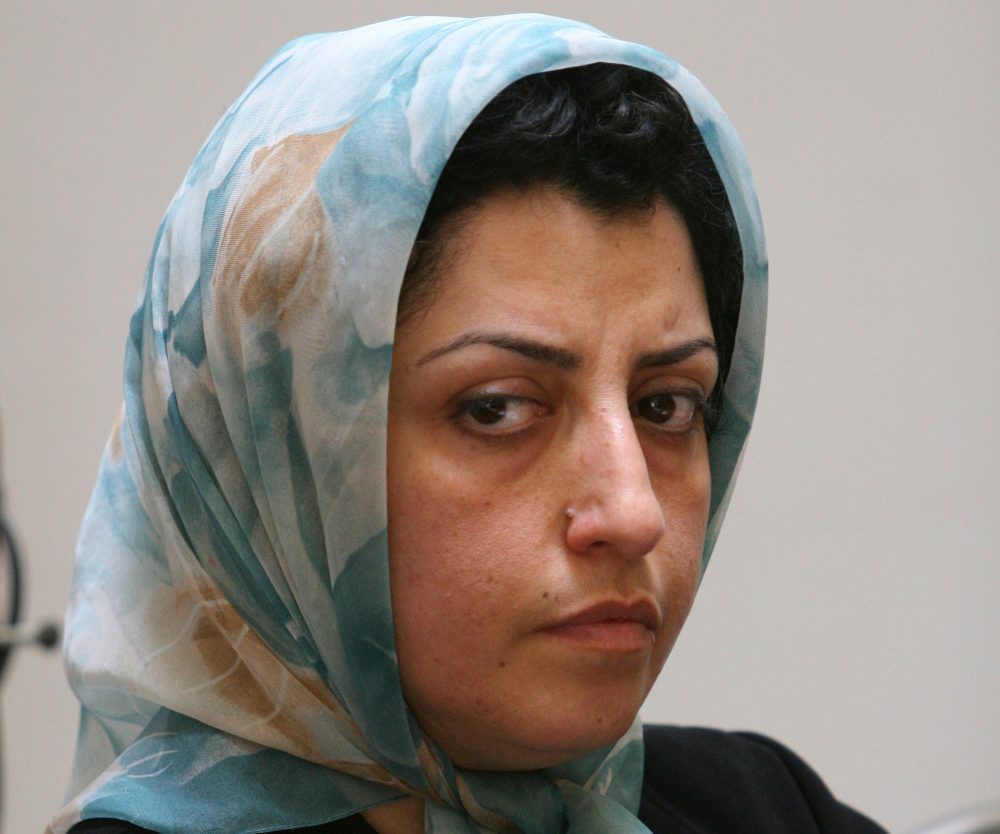
Iranian human rights champion Narges Mohammadi, recipient of the 2023 Nobel Peace Prize, has been rushed to a hospital following a severe heart emergency, according to a foundation established by her family.
The Norwegian Nobel Committee’s secretary voiced alarm Thursday regarding the deteriorating health of the imprisoned activist, who reportedly suffered a heart attack while incarcerated.
Mohammadi, now in her fifties, received the prestigious award while behind bars for her efforts promoting women’s rights and working to eliminate capital punishment in Iran.
According to a Friday statement from the Narges Mohammadi Foundation, the activist “was urgently transferred to a hospital in Zanjan today following a catastrophic deterioration of her health, including two episodes of complete loss of consciousness and a severe cardiac crisis.”
The foundation explained that “This transfer was done as an unavoidable necessity after prison doctors determined her condition could not be managed on-site, despite standing medical recommendations that she be treated by her specialized team in Tehran.”
Reuters was unable to independently verify the foundation’s statement, which characterized her hospital transfer as a “desperate, last-minute” action that may be insufficient to address her critical medical situation.
According to the foundation, Mohammadi received an additional 7-1/2 year prison sentence in February, with the Nobel committee demanding Tehran release her without delay.
Her December arrest followed her public criticism of attorney Khosrow Alikordi’s death. Prosecutor Hasan Hematifar stated at the time that she delivered inflammatory comments during Alikordi’s memorial service in Mashhad and urged attendees “to chant norm-breaking slogans” and “disturb the peace.”
Friday morning brought a medical crisis when Mohammadi collapsed after experiencing days of severely elevated blood pressure and intense nausea, the foundation reported. Following repeated vomiting episodes, she lost consciousness and required emergency transport to the prison’s medical facility for urgent intravenous treatment.
Having previously undergone three angioplasty procedures, the activist now faces what her family describes as a “direct and immediate” danger to her survival. “We call for all charges to be dropped immediately and for all sentences imposed for her peaceful human rights work to be unconditionally annulled,” they stated.
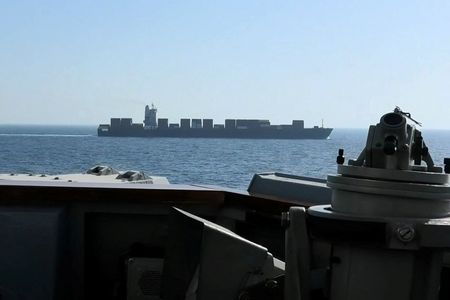
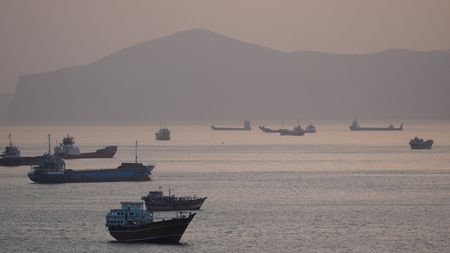
The Treasury Department’s Office of Foreign Assets Control issued a warning Friday that maritime companies may face penalties for compensating Iran to secure safe transit through the Strait of Hormuz.
This latest advisory intensifies the ongoing conflict between Washington and Tehran regarding authority over the strategically vital waterway.
During peaceful periods, roughly 20% of global oil and natural gas commerce flows through this narrow passage at the entrance to the Persian Gulf.
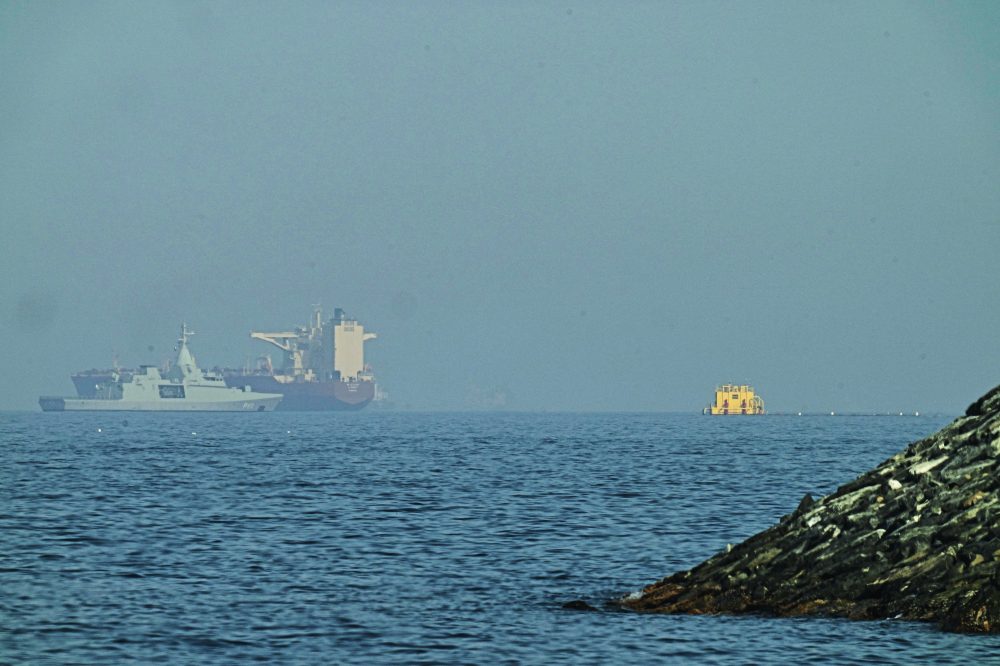
Following the commencement of hostilities between the U.S. and Israel on February 28, Iran essentially shut down the strait to regular maritime traffic by launching attacks and issuing threats against vessels. Subsequently, Iranian authorities began permitting certain ships to navigate through alternative pathways nearer to Iranian coastal waters, sometimes imposing charges for this service.
This fee collection system has become the target of Washington’s sanctions alert.
According to OFAC, the payment requirements may encompass not just monetary transfers but also “digital assets, offsets, informal swaps, or other in-kind payments,” including charitable contributions and payments made at Iranian diplomatic missions.
“OFAC is issuing this alert to warn U.S. and non-U.S. persons about the sanctions risks of making these payments to, or soliciting guarantees from, the Iranian regime for safe passage. These risks exist regardless of payment method,” the agency stated.
Washington responded to Iran’s blockade by implementing its own naval embargo on April 13, blocking Iranian oil tankers from departing and cutting off crucial petroleum revenues that Iran requires to support its struggling economy.
U.S. Central Command reported that 45 commercial vessels have been ordered to reverse course since the blockade’s implementation.
The sanctions warning emerged as President Donald Trump quickly dismissed Iran’s most recent proposal to resolve the conflict between the nations.
“They want to make a deal, I’m not satisfied with it, so we’ll see what happens,” Trump stated Friday from the White House. He declined to specify what aspects he found inadequate but voiced displeasure with Iranian leadership.
“It’s a very disjointed leadership,” Trump remarked. “They all want to make a deal, but they’re all messed up.”
Iran’s official IRNA news service reported that Iranian officials delivered their proposal to Pakistani mediators Thursday evening.
The fragile three-week truce between Washington and Tehran continues to hold, despite mutual allegations of violations from both sides. The crisis is placing mounting strain on the worldwide economy, pushing up costs and creating shortages of fuel and other petroleum-related goods.
Diplomatic discussions have continued via telephone after Trump canceled his representatives’ planned visit to Pakistan last week, the president confirmed. Trump recently proposed a new initiative to reopen the essential shipping channel that America’s Gulf allies depend on for oil and gas exports.
Iranian Foreign Minister Abbas Araghchi has updated numerous regional counterparts about his country’s efforts to end the conflict, according to his social media posts. He also conducted discussions Friday with European Union foreign policy chief Kaja Kallas, who maintains communication with the EU’s Gulf partners.
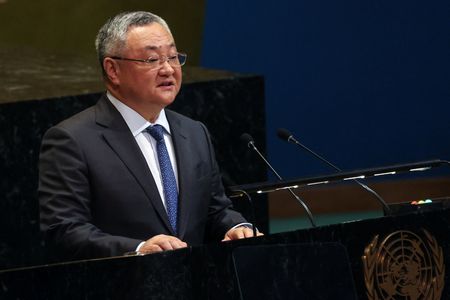
Fu Cong, China’s United Nations ambassador, said Friday that preserving the ceasefire represents “the most urgent issue” while bringing the parties together for sincere negotiations “to make sure that the ground is laid for reopening of Hormuz.”
Foreign Minister Wang Yi “has been on the phone almost constantly” with officials from all parties, Fu noted, emphasizing that China backs Pakistan’s mediation efforts between the conflicting sides.
Fu emphasized that the fundamental cause of the enormous hardship in Iran and surrounding nations, along with increasing global economic instability, particularly affecting developing countries, “is the illegitimate war by the U.S. and Israel.”
The governor of Mexico’s Sinaloa state announced Friday evening that he will temporarily leave his position, according to a New York Times report published Saturday.
Ruben Rocha’s decision comes after the U.S. Justice Department filed charges Wednesday against him and several other Mexican officials, accusing them of collaborating with the notorious Sinaloa Cartel. The federal charges represent a major expansion of American efforts to combat drug trafficking organizations and are expected to strain diplomatic relations between Washington and Mexico City.
The Sinaloa Cartel is one of Mexico’s most powerful drug trafficking organizations, known for smuggling massive quantities of narcotics into the United States.
In the capital city of Ashgabat, 38-year-old entrepreneur Azat Seyitmuhammedov operates his e-commerce business Wabrum from a well-lit, modern workspace – a scene that would seem ordinary in most parts of the world but represents something revolutionary in Turkmenistan, long considered among the planet’s most closed-off nations.
“This may sound normal in Europe or the United States, but for Turkmenistan this is new,” the father of six explained. “E-commerce here is still in its very early stages, and we consider ourselves pioneers.”
Seyitmuhammedov’s venture, launched nearly ten years ago, represents part of an emerging trend of sophisticated private enterprises taking root in this desert nation of Central Asia, which shares borders with Iran and Afghanistan. His delivery teams distribute primarily Turkish-manufactured clothing and footwear from their warehouse facility to customers throughout the former Soviet territory.
Reuters journalists were recently granted unusual permission to travel independently throughout Turkmenistan and report without restrictions on a nation where digital innovations like online retail are gaining acceptance, even as President Serdar Berdymukhamedov and his administration maintain strict political oversight.
Following its break from Soviet rule in 1991, the country’s first leader Saparmurat Niyazov – known as “Turkmenbashi” meaning leader of the Turkmen people – proclaimed the nation “permanently neutral” and implemented severely restrictive entry policies that remain largely effective more than twenty years following Niyazov’s passing.
Government representatives justify their nation’s isolation by pointing to regional security challenges, emphasizing the importance of defending against extremist threats and narcotics trafficking from nearby Afghanistan.
During Niyazov’s reign, an extensive personality cult developed around the leader, while Ashgabat underwent massive reconstruction as a marble monument funded by the country’s enormous natural gas deposits – ranked fourth globally in reserves. Succeeding administrations have maintained this basic framework with minimal alterations.
However, since President Serdar Berdymukhamedov assumed power from his father Gurbanguly Berdymukhamedov in 2022, observers have noted indicators of gradual warming in policies.
The nation, which official data indicates has approximately 7.7 million residents, has expressed intentions to streamline visa procedures, pursue World Trade Organization membership, and expand economic opportunities beyond state-controlled sectors.
The current president has expanded international relationships, undertaking foreign visits more frequently than his predecessors.
Several international diplomatic representatives in Ashgabat informed Reuters they perceive gradual transformation, though progress remains slow, influenced by generational shifts within the governing class.
A Western diplomatic source stationed in Turkmenistan noted that segments of the leadership show interest in implementing reforms, with individual liberties experiencing modest improvements in recent years.
Nevertheless, Turkmenistan continues presenting obstacles for international business investment, operating dual official and unofficial currency exchange systems while maintaining unclear political processes.
Turkish companies comprise the majority of foreign businesses operating locally. Cultural connections and substantial Turkmen communities in Turkey have resulted in widespread Turkish language use among younger generations.
Beyond political spheres, Turkmen society is experiencing transformation, particularly in digital spaces, despite relatively limited internet penetration rates.
Internet access remains slow and heavily restricted, which authorities claim is essential to prevent radical ideological content that has influenced other Central Asian countries through online platforms.
Despite restrictions, social media platforms including Instagram and TikTok, officially blocked but reachable through virtual private networks, have grown increasingly popular recently.
Within Ashgabat’s upscale retail centers, young people film dance performances on mobile devices for TikTok while friends in mandatory red traditional-style uniforms worn by female university students provide encouragement.
Social media entrepreneur Enejan Velmuradova began using Instagram in 2020 to market her travel business, organizing international vacations for affluent Turkmen clients to European and Southeast Asian destinations.
Speaking from her expansive downtown office, adorned with social media awards and international souvenirs, Velmuradova expressed satisfaction with her country’s gradual opening.
“As a resident of Turkmenistan, I am also very happy that stereotypes are finally being broken, (the idea) that Turkmenistan is closed,” she stated.
At a local athletic facility in Ashgabat, instructor Muhammet Bayramgulyyev conducts breakdancing lessons for teenagers during his free time.
Bayramgulyyev explained to Reuters that this street dance form, which originated in New York, existed primarily as an underground movement in Turkmenistan during his younger years.
“It was around the year 2000. Back then, we didn’t have breakdancers. We only watched it on cassette tapes, on television — we saw how it was done and wanted to do it ourselves.”
Currently, he reports that his classes in a newly constructed studio have waiting lists and breakdancing has achieved mainstream acceptance.
“We want our guys, our Turkmen athletes, to compete — for example, at Asian championships, world championships. And in the future, God willing, at the Olympics too,” he said.
The Pentagon announced Friday that approximately 5,000 American military personnel will be removed from Germany within the next six to twelve months, according to defense officials.
The troop reduction represents the implementation of President Donald Trump’s previous warnings as tensions continue between the U.S. and German leadership over America’s ongoing military conflict with Iran.
Defense Department officials confirmed the withdrawal plans during Friday’s announcement, marking a significant shift in the American military presence that has been stationed in Germany for decades.
Ukrainian forces are deploying unmanned aircraft to target petroleum infrastructure deep within Russian territory, creating massive smoke clouds visible from orbit and causing contaminated rainfall in Black Sea resort areas.
These operations seek to reduce Moscow’s petroleum exports, which serve as a critical revenue stream for its ongoing military campaign in Ukraine. However, the financial consequences remain uncertain, as increased oil prices stemming from Middle East conflicts and relaxed U.S. sanctions have helped refill Russia’s treasury.
Nevertheless, the extensive reach of these operations and their environmental consequences are making the conflict a reality for Russian civilians living far from combat zones.
Ukrainian aircraft have targeted the petroleum refinery and shipping terminal in the Black Sea community of Tuapse four times within just over two weeks, igniting blazes that forced local residents to evacuate and created enormous smoke plumes. This location sits approximately 450 kilometers (280 miles) from active fighting areas.
Following the third assault on April 18, local Gov. Veniamin Kondratyev shared a video where an emergency responder reported that heated petroleum products had spilled into streets, causing vehicle damage.
Ukrainian officials announced Thursday they struck a petroleum pumping facility in Russia’s Perm region, located more than 1,500 kilometers (900 miles) from Ukraine, on consecutive days. Russian news outlets confirmed the attacks, though Perm Gov. Dmitry Makhonin only acknowledged that drones had targeted industrial sites.
The Ust-Luga terminal on the Baltic Sea, among Russia’s most significant oil and gas shipping facilities, suffered three attacks within one week during late March. This location sits more than 800 kilometers (500 miles) from Ukraine.
Several weeks following these incidents, regional Gov. Alexander Drozdenko announced in a broadcast that the St. Petersburg area, Russia’s second-largest metropolitan region, had become a “front-line region” due to airborne threats.
Ukrainian President Volodymyr Zelenskyy has likened these operations to international economic sanctions against Russia. They appear increasingly important as Moscow collects substantial profits from the global energy emergency connected to Iran’s blockade of the Strait of Hormuz.
Zelenskyy stated Friday that Russia has suffered losses of at least $7 billion since January directly from attacks on its petroleum industry. Earlier this week, he reported that Ukrainian intelligence shows reduced exports from major oil ports including Ust-Luga and Primorsk.
Unmanned aircraft strikes have also interrupted Russia’s oil processing capabilities, while sanctions complicate acquiring replacement equipment, according to experts.
However, the complete economic consequences remain uncertain as Russia gains from the Middle Eastern crisis.
Russian petroleum and oil product exports increased by 320,000 barrels daily month-over-month to reach 7.1 million in March, according to the International Energy Agency. Higher prices meant oil export income nearly doubled, rising from $9.7 billion to $19 billion. Whether April’s attacks will change this pattern remains unclear.
“U.S. action against Iran has saved both the Russian oil sector and the federal budget from a crisis that was clearly developing in late February,” said Chris Weafer, CEO of Macro-Advisory Ltd. Consultancy.
The harm to Russia’s petroleum infrastructure has been much less severe than the enormous explosions might indicate, he explained.
“If you hit an oil tank, particularly an oil tank that’s not full, the vapors ignite and you get the flames. So it looks very spectacular.” However, this only postpones shipments by several days, he noted.
“It’s much less damaging than hitting the pump stations or the compressors or the loading infrastructure. And that appears to be well protected. The tanks are not.”
The capacity to attack critical infrastructure deep within Russia has demonstrated Ukraine’s expanding military abilities and stressed Moscow’s stretched air defense systems. It has also compelled more Russians to face the results of a conflict their leadership claims to be winning.
Ukraine’s Defense Ministry reports its forces have more than doubled their long-range strike capabilities since Russia’s comprehensive invasion in February 2022. The extended range also enables drones to approach targets from various angles, making defensive measures more difficult.
“Drone attacks have so far been a very successful case of leveraging simple technologies and domestically assembled technology to attack Russia in places that, at the start of the war, they just would have never expected to be attacked,” said Marcel Plichta, a Ph.D. candidate in the School of International Relations at the University of St Andrews.
“This capability just didn’t exist” four years ago, he explained.
Russian authorities typically avoid discussing long-range strikes.
However, the Tuapse attacks and resulting footage gained attention in Russian media. Russian President Vladimir Putin cautioned of “serious environmental consequences” while maintaining that situations remained manageable.
Authorities warned that dangerous levels of benzene, a cancer-causing substance present in petroleum products, had been detected in the atmosphere during fires and advised residents to minimize outdoor exposure.
Citizens also widely documented “black rain,” oily drops falling on their skin and clothing. Local media published photographs of stray dogs and cats with gray-stained fur. Petroleum spills along the shoreline have covered birds and fish, and Russian media recently shared images of beached dolphins.
These photographs are disturbing to Russians familiar with Black Sea coastal vacations.
Vladimir Slivyak, co-chairman of the Russian environmental organization Ecodefense, warned of potential long-term effects on human health and the regional ecosystem.
“There is a lot of oil in the sea,” he explained. “In the next few years, every storm will be bringing more oil pollution onto the coast.”
No public opposition to the strikes has emerged yet, as authorities maintain their suppression of dissent. However, this could shift as the damage expands.
“I think a lot of people understand that there is a very big difference between what Putin says and what regional authorities are saying, and what’s really going on,” Slivyak said.
DUBROVNIK, Croatia — Though summer remains months away, the historic streets of Dubrovnik are already bustling with international visitors. However, this early tourism boost comes with concerns about what lies ahead for the season.
Rising fuel costs and Middle East conflicts have created uncertainty for the travel industry, particularly affecting Dubrovnik, which welcomes millions of visitors each year to Croatia’s premier Adriatic coast destination.
The economic implications are significant for Croatia, as tourism represents a vital revenue source that relies heavily on international guests.
Despite increased visitor numbers in Dubrovnik, local authorities caution that nothing is certain. Escalating fuel costs and tensions in the Persian Gulf region may increase flight prices and reduce tourist arrivals during peak season.
Miro Draskovic, who heads the Dubrovnik Tourist Board, observed that while American visitors continue arriving in strong numbers, Australian tourists — traditionally ranking among the city’s top 10 visitor groups — are now “facing difficulties traveling toward Europe.”
“The situation for sure is very, very difficult, and we are following what’s happening every day,” he told The Associated Press.
Current indicators appear positive. During Easter, Dubrovnik’s airport saw visitor numbers climb 13% compared to the previous year. The city’s vibrant atmosphere and tourist boats circulating the harbor demonstrate its enduring popularity.
This UNESCO World Heritage site attracts visitors with its medieval architecture, coastal setting, and historic churches and palaces enclosed within ancient stone fortifications. The city gained additional fame after being featured as a filming location for the popular television series “Game of Thrones.”
Dubrovnik faces particular vulnerability to fuel price increases due to its position at Croatia’s southern Adriatic coastline. Approximately 80% of the city’s tourists arrive by aircraft.
Marina Ruso Mileusnic, representing the local airport that connects to roughly 70 international airports, stated “we are very cautious about the upcoming season.”
Forecasts for coming months have been mixed.
In early April, International Energy Agency chief Fatih Birol warned in an AP interview that Europe has only weeks of jet fuel reserves remaining and could experience its worst energy crisis in history.
However, this week European Union Transport Commissioner Apostolos Tzitzikostas stated there is “no actual evidence” of shortages across the 27-member bloc, encouraging people to make vacation plans without worry.
Singapore business owner Ramon Padiernos shares this optimism. Middle East tensions forced him to switch from his preferred Emirates and Qatar Airways to Turkish Airlines, but he still reached Dubrovnik successfully.
“We feel the impact maybe of oil prices but I think everybody just goes on with their lives and enjoy their holidays,” he said. “I think it is best for the world to see the lighter side of it, rather than focusing on the issues that we cannot control.”
Beyond tourism effects, the energy situation has pushed Croatia’s inflation rate to 5.8% in April, among the European Union’s highest levels.
Last year, Croatia welcomed nearly 22 million tourist arrivals. Of approximately 110 million overnight stays in 2025, Dubrovnik accounted for 4.28 million, according to national tourism statistics.
Draskovic expressed optimism that conditions will normalize soon. Meanwhile, he said, “we can only work on day to day basis to get the best possible season we can.”
NAIROBI, Kenya (AP) — Soaring fuel costs connected to the Iran conflict are speeding up an energy transformation already happening throughout Africa, where telecommunications companies are converting cell phone towers from diesel generators to solar power systems.
Fuel expenses for the approximately 500,000 telecommunications towers across Africa have climbed sharply in recent weeks, with some nations experiencing supply shortages as global energy markets tighten due to the Middle East war. Multiple African nations dependent on fuel imports have seen dramatic price increases and delivery problems, forcing both governments and private companies to reconsider their energy approaches.
The movement toward renewable energy for cellular infrastructure began before the current price surge, motivated by financial pressures and environmental commitments. However, the Middle Eastern conflict has intensified this transformation.
“Diesel has always been a major cost, but recent global events have made it even more volatile,” said Lande Abudu, senior energy specialist for Africa at GSMA, a global industry organization representing mobile operators. “That strengthens the case for solar and hybrid solutions.”
Throughout Africa, cellular network companies are increasingly implementing combined systems that integrate solar panels, energy storage batteries, and limited diesel backup power. Many companies plan to achieve completely solar-operated facilities eventually, especially in remote and off-grid locations where expanding electrical infrastructure proves expensive.
Traditional cellular towers across Africa have depended on diesel generators, typically large industrial machines requiring manual refueling by operators. Solar-powered alternatives use sunlight through photovoltaic panels to create electricity and battery systems to maintain continuous power supply.
In developed markets like the United States and India, most telecommunications towers connect to electrical grids, using diesel generators primarily for emergency backup during power failures. Throughout Southeast Asia, including Indonesia, companies have historically depended heavily on diesel but are now pursuing similar renewable energy conversions.
In recent months, American-owned Atlas Tower Kenya announced a $52.5 million investment to build 300 new solar-powered telecommunications towers serving major carriers including Safaricom, Airtel and Telkom Kenya. Currently, 82% of the company’s 500 towers operate on solar power.
“It’s a significant shift, but there’s still a long way to go,” said Abudu.
The financial advantages are becoming increasingly clear. Energy expenses represent up to 60% of operational costs for telecommunications towers in areas without grid access. Diesel fuel, previously the standard choice, has grown more costly and difficult to manage, with complications including transportation logistics, theft, and equipment maintenance.
Vodacom Africa reported energy expenses increased 5% to $300 million in 2025 compared to the previous year, attributing the rise to higher electricity rates and fuel costs. The corporation operates in Egypt, South Africa, Congo, Mozambique, Tanzania and Lesotho, and controls subsidiaries in Kenya and Ethiopia through Safaricom. Safaricom secured $153.6 million in green bonds last year to support its tower solar conversion project.
In nations like Nigeria, financial pressures have changed dramatically. Eliminating fuel subsidies in 2023 caused diesel prices to jump as much as 200% within twelve months, and operators now spend $400 million yearly maintaining tower operations. Recent global price increases related to the Iran situation have created additional strain.
Companies are responding by accelerating renewable energy installations. Organizations like iSAT Africa are deploying solar-powered towers supported by innovative financing arrangements, while major operators including Orange, Vodacom, MTN Group and Airtel Africa are expanding solar and hybrid systems throughout their networks.
“By replacing diesel-powered telecom towers with fully solar-powered infrastructure, we expect to reduce the carbon emissions associated with mobile network operations,” said iSAT Africa CEO Rakesh Kukreja in March, announcing new funding for clean energy tower projects.
Initial outcomes demonstrate substantial cost reductions. MTN operations in South Sudan have decreased fuel expenses by approximately 30% following solar power adoption, while Airtel Africa, partnering with ENGIE Energy Access, has reduced diesel consumption by more than half at locations in Zambia and Congo.
Vodacom Africa stated in its 2025 sustainability report that connecting towers to national electrical systems and implementing additional solar and battery technology were central elements of its plan to eliminate diesel generators.
The advantages extend beyond finances. Solar-powered towers face fewer risks from fuel shortages and generator breakdowns, enhancing reliability in underserved regions. In parts of northern Nigeria and Congo, cellular service interruptions caused by fuel shortages before the war have disrupted services from mobile banking to emergency communications.
Converting diesel generators to solar energy could help bridge Africa’s connectivity divide, where approximately 65% of people who could access mobile internet remain disconnected, according to GSMA data.
“Renewable energy systems enable faster and more cost-effective expansion into underserved areas,” Abudu said.
In rural Kenya, residents in some off-grid communities report that solar-powered towers have enhanced service reliability, providing more consistent access to mobile banking, education and health information.
“Before this telecommunication mast was installed, we struggled to process mobile money payment or even call for help during medical emergencies,” said Martin Imwatok, a teacher in northern Kenya. “When these towers go off, business and life stop.”
Africa’s dependence on diesel is more significant due to weaker electrical grid infrastructure, making the conversion both more difficult and potentially more transformative. Nevertheless, regulators indicate the transition could provide broader advantages. In Nigeria, the telecommunications regulator has encouraged operators to integrate towers into solar minigrids that can also power nearby communities.
“These telecom towers can act as anchor clients for solar minigrids, supplying electricity not only to the towers but also to nearby homes, businesses and public services,” said Aminu Maida, head of the Nigerian Communications Commission.
With fuel prices remaining unpredictable amid global tensions, industry analysts say the argument for cleaner energy will only strengthen.
“This is no longer just about climate,” Abudu said. “It’s about resilience, cost and keeping Africa connected.”
The U.S. State Department voiced concerns Friday following a Cambodian appeals court’s confirmation of a 27-year prison term for former opposition leader Kem Sokha on treason charges.
The Thursday court ruling represents another setback for Cambodia’s opposition movement, which has faced sustained pressure from the governing party over many years.
Kem Sokha, age 72, helped establish the Cambodia National Rescue Party, which no longer exists. He has remained under house arrest since receiving his guilty verdict in March 2023.
The charges against him centered on allegations that he worked with foreign entities to overthrow Hun Sen, who served as premier at the time.
American officials have previously characterized his conviction as rooted in “fabricated conspiracy theories.”
His legal battle stands as one of the highest-profile cases in an extensive campaign targeting critics of the CPP, Cambodia’s ruling party for multiple decades.
“The United States is troubled by the decision to uphold activist and opposition leader Kem Sokha’s conviction of treason,” the State Department declared in Friday’s statement.
“Claims of U.S. involvement are patently false and irresponsible,” the department added.
Human rights advocates and Western nations have criticized Cambodia’s widespread prosecutions affecting over 100 opposition members, with numerous individuals sentenced while absent from the country on treason and incitement allegations.
“Limiting the exercise of freedom of expression and association hinders Cambodia’s international standing,” the State Department noted.
Meanwhile, Washington has also drawn criticism from human rights specialists and advocacy groups regarding what they view as violations of due process and free speech rights during President Donald Trump’s actions against universities, immigration policies, and political rivals.
Critics have also characterized his international policy strategy as imperialistic and harmful.
Former President Donald Trump drew criticism Friday after comparing U.S. naval operations to piracy while discussing the ongoing blockade of Iranian ports during the current conflict between America, Israel, and Iran.
During Friday evening remarks, Trump referenced a recent vessel seizure by American forces when he made the controversial comparison.
“We took over the ship, we took over the cargo, we took over the oil. It’s a very profitable business,” Trump stated. “We’re like pirates. We’re sort of like pirates but we are not playing games.”
American forces have confiscated multiple Iranian vessels after they departed from ports, including sanctioned cargo ships and oil tankers operating in Asian maritime areas.
Iran has restricted nearly all maritime traffic through the Strait of Hormuz except for its own ships since hostilities began. Trump has established a separate blockade targeting Iranian ports.
The conflict began February 28 when American and Israeli forces launched attacks against Iran. Tehran retaliated with strikes against Israel and Gulf nations hosting U.S. military installations. The combined U.S.-Israeli operations in Iran and Israeli military action in Lebanon have resulted in thousands of casualties and millions of displaced civilians.
The ongoing warfare has driven up petroleum costs and created a blockade of the Strait of Hormuz, a critical passage for approximately 20% of worldwide oil and liquefied natural gas transportation.
Trump, who has provided varying timelines and objectives for the widely unpopular war, has received broad criticism for his statements regarding the conflict, including last month’s threat to eliminate Iran’s entire civilization.
Numerous American analysts stated last month that U.S. military strikes against Iran could constitute war crimes after Trump made threats targeting civilian infrastructure.
Vietnamese and Japanese officials are working to strengthen diplomatic and economic relationships as Japanese Prime Minister Sanae Takaichi conducts high-level meetings in Hanoi this Saturday with Vietnamese leader To Lam.
The diplomatic visit comes at a crucial time as Japanese business investment in Vietnam has experienced a dramatic decline. According to Vietnamese government statistics, new investment commitments from Japanese companies dropped approximately 75% during the first quarter compared to the same period last year, falling to just $233 million.
A Japanese foreign ministry representative indicated that discussions will center on expanding the Comprehensive Strategic Partnership that both nations established in 2023. Priority areas include collaboration on energy initiatives, technological advancement, critical mineral resources, and maintaining regional security.
While Japan continues to rank among Vietnam’s top foreign investors with numerous multinational corporations running major manufacturing operations throughout the country, Takaichi plans to address specific obstacles that Japanese businesses are encountering. These include delayed compensation for completed projects and restricted access to major infrastructure development opportunities, according to the foreign ministry official.
The business relationship has faced additional setbacks, including Japan’s decision last year to abandon a nuclear energy project in Vietnam due to what officials described as an unreasonably tight construction schedule.
In a potentially positive development for Japanese interests, Hanoi recently announced it is reconsidering its proposed prohibition on gasoline-powered motorcycles in the city center, a policy that Honda had consistently opposed.
Despite the investment challenges, commercial trade between the two countries has shown resilience. Vietnamese customs records indicate bilateral trade increased 12.3% year-over-year to reach $13.7 billion during the first quarter.
Takaichi’s agenda also includes a meeting with Vietnamese counterpart Le Minh Hung and a presentation at Vietnam National University discussing the development of Japan’s “Free and Open Indo-Pacific” diplomatic strategy. Following her Vietnam visit, the Prime Minister will continue to Australia.
MEXICO CITY, May 1 – President Claudia Sheinbaum of Mexico has chosen agronomist Columba Jasmin Lopez to serve as the nation’s upcoming agriculture and rural development minister, taking the place of existing minister Julio Berdegue, according to an announcement from her administration on Friday.
The agriculture ministry noted in an official statement that “Her appointment represents the arrival of the first woman to lead Mexican agricultural policy.”
Ghana has declined a proposed health partnership with the United States, raising concerns about insufficient protections for sensitive medical information, according to a Ghanaian official who spoke with The Associated Press on Friday. The decision makes Ghana another African nation to turn down such agreements due to similar data privacy issues.
According to Arnold Kavaarpuo, who leads Ghana’s Data Protection Commission, the extent of data access being sought “went far beyond what would typically be required for the purpose for which it’s stated.”
The State Department has not yet provided a response to AP’s request for comment regarding the Ghanaian official’s statements.
These health partnerships have been established with approximately two dozen African countries through the Trump administration’s “America First” strategy for international health funding. This new framework, which began implementation in late 2023, has replaced various previous health agreements that existed under the former United States Agency for International Development structure.
The partnerships provide hundreds of millions of dollars in American funding to nations severely affected by U.S. aid reductions, aimed at strengthening their public health infrastructure and combating disease outbreaks.
However, these agreements have sparked concerns about data privacy protections. Earlier this year in February, Zimbabwe officials announced their rejection of a similar proposal due to concerns about health data handling, fairness, and national sovereignty. Zambia has also reportedly expressed resistance to certain sections of their proposed agreement, though no final determination has been reached.
African advocacy groups argue that these agreements frequently lack sufficient protections for data usage and can be restrictive, pointing to Nigeria’s agreement where U.S. support was primarily directed toward Christian faith-based healthcare organizations.
Jean Kaseya, who serves as Director General of the Africa Centres for Disease Control and Prevention, has also expressed “huge concerns” about data and pathogen sharing requirements when discussing these agreements with media.
The proposed Ghana agreement, valued at approximately $300 million, would have provided the country with roughly $109 million in U.S. funding over a five-year period, with additional investments from Ghana’s government, according to Kavaarpuo.
Kavaarpuo, whose commission participated directly in the negotiations, highlighted a concerning provision that would allow individual identification when considered necessary for sensitive health information.
“That, in effect, was outsourcing the health data architecture of the country to a foreign body,” he said. “The proposed data sharing agreement looked at access not only to health data sets, but also to metadata, dashboards, reporting tools, data models and data dictionaries.”
The terms would have granted up to 10 U.S. organizations access to such information without requiring Ghana’s prior consent for data usage purposes, he explained.
“We did not get a sense that Ghana had any real governance oversight when it came to how the data was going to be utilized. It was more or less if they undertook an exercise, they will notify the country. So it was not a prior approval arrangement,” he said.
Kavaarpuo confirmed that Ghana has informed the United States of its decision to reject the current proposal and has requested better terms for a future agreement.
The Pentagon announced Friday that approximately 5,000 American military personnel will be removed from Germany within the next six to twelve months, making good on President Donald Trump’s recent warning following tensions with German leadership over the ongoing Iran conflict.
The troop reduction comes after Chancellor Friedrich Merz stated that Iranian leadership was “humiliating” the United States and criticized Washington’s approach to the war earlier this week.
Pentagon spokesman Sean Parnell released a statement explaining that the “decision follows a thorough review of the Department’s force posture in Europe and is in recognition of theater requirements and conditions on the ground.”
Germany currently houses multiple American military installations, including European and Africa command headquarters, Ramstein Air Base, and the Landstuhl medical facility that has treated wounded soldiers from Iraq and Afghanistan conflicts. The country also hosts U.S. nuclear weapons.
The planned departure represents 14% of the roughly 36,000 American service members currently based in Germany.
According to Nico Lange from the Center of European Policy Analysis, who spoke with The Associated Press this week, these forces mainly advance U.S. strategic goals, including “the projection of American power globally,” rather than providing German defense.
When reporters questioned Trump about the withdrawal Friday as he departed Ocala, Florida following an economic rally, the president declined to respond while boarding Air Force One.
This marks Trump’s second attempt at reducing German troop levels. During his previous presidency, he proposed removing about 9,500 of the approximately 34,500 troops stationed there at the time, though the plan never moved forward and President Joe Biden officially canceled it after taking office in 2021.
Trump has consistently questioned the American military footprint in Germany and criticized NATO members for not supporting Washington in the Iran war, which started February 28 with joint U.S.-Israeli attacks on Iran.
The president posted on social media Wednesday that his administration was examining potential German troop cuts, promising a “determination” would come soon. By Thursday, he continued targeting Merz online, suggesting the German leader should focus on “ending the war with Russia/Ukraine” and “fixing his broken Country” instead of commenting on Iran.
NATO allies have anticipated possible U.S. troop withdrawals since Trump returned to office, as Washington has indicated Europe must take greater responsibility for regional security, including Ukraine’s defense.
Between 80,000 and 100,000 American personnel are typically deployed across Europe, depending on ongoing operations, training exercises, and rotation schedules. For over a year, NATO partners have expected that troops sent after Russia’s February 2022 invasion of Ukraine would likely be withdrawn first.
Ed Arnold, a European security specialist at London’s Royal United Services Institute (RUSI), noted that Europe is more worried about potential U.S. transfers of Patriot missile systems and ammunition from Germany to Middle Eastern operations.
In October, the United States confirmed it would reduce forces along NATO’s Ukrainian borders. The sudden decision to cut 1,500-3,000 troops created concern among NATO ally Romania, where the alliance operates an air base.
The Pentagon has given the green light to defense equipment sales worth more than $8.6 billion to four Middle Eastern partner nations, the State Department announced Friday.
The major arms deals were revealed as the conflict between the U.S., Israel and Iran enters its ninth week, with a delicate ceasefire now in place for over three weeks.
Qatar received approval for the largest portion of the sales, including $4.01 billion for Patriot air and missile defense maintenance services and an additional $992.4 million for Advanced Precision Kill Weapon Systems.
Kuwait was authorized to purchase an integrated battle command system valued at $2.5 billion, while Israel received approval for $992.4 million worth of Advanced Precision Kill Weapon Systems.
The United Arab Emirates was cleared to buy Advanced Precision Kill Weapon Systems for $147.6 million.
According to the State Department, BAE Systems will serve as the primary contractor for the precision weapons sales to Qatar, Israel and the UAE.
For Kuwait’s battle command system and Qatar’s Patriot defense services, RTX and Lockheed Martin will handle the contracts as principal contractors. Northrop Grumman will also participate as a main contractor in the Kuwait deal.
Commercial activity between Colombia and Ecuador has ground to a virtual halt as both South American nations enacted steep tariffs this week, according to business organizations operating along their shared border.
Ecuador’s President Daniel Noboa implemented a sweeping 100% tariff that became effective Friday, though his administration has not disclosed which specific goods will be subject to the levy. Meanwhile, Colombia’s government under President Gustavo Petro officially established varying tariff rates of 35%, 50%, and 75% on approximately 190 Ecuadorian products Thursday.
President Noboa has defended these measures, which were initially introduced at reduced rates in February, citing Colombia’s trade surplus and alleging that the neighboring country has failed to address drug trafficking concerns along their 586-kilometer shared frontier. President Petro has consistently denied these claims.
Colombia’s trade minister stated Thursday that the nation’s response represents a measured approach designed to minimize the economic impact of Ecuador’s tariffs on Colombian businesses.
“It’s a whim, the very inflated egos of the two presidents have kept escalating this,” Carlos Bastidas, the head of the Heavy Transport Association of Carchi in Ecuador, told Reuters. “The movement of goods is minimal, but from next week this drops to zero.”
Bastidas noted that the Rumichaca International Bridge typically sees up to 150 trucks awaiting passage, but Friday’s count showed only about five vehicles present.
“This is generating unemployment and people have to look for alternatives. There are many crossings here, so what are people going to do? Turn to smuggling,” he warned.
Ecuador’s administration did not provide immediate comment when contacted.
Government officials in Ecuador have claimed that the original tariffs succeeded in creating the country’s first-ever positive trade balance with Colombia, generating a combined $62.9 million surplus during February and March compared to a $146 million deficit during the same period in 2024.
“The measure practically shuts down exports,” said Ivan Florez, head of the Ipiales Chamber of Commerce on the Colombian side of the border. “What you see along the border is very different from the view in Quito and Bogota.”
In response to the dispute, Colombia has halted electricity exports to Ecuador, which also relies heavily on its northern neighbor for medical supplies and agricultural chemicals.
Two former Israeli Prime Ministers have announced they will join forces for the country’s upcoming election, creating a unified opposition front against current Prime Minister Benjamin Netanyahu. Naftali Bennett and Yair Lapid revealed their partnership under the framework called Beyachad, with Bennett positioned to head the ticket and Lapid taking a supporting role.
The collaboration reunites the same duo who previously led Israel’s brief unity government from 2021 to 2022. This time around, the leadership structure is more clearly defined, with Bennett expected to spearhead the joint list while Lapid, who leads the Yesh Atid party, assumes a secondary position.
Political analysts suggest this alliance could significantly impact how Washington views Israel’s political landscape. Ofir Dayan, a researcher at the Institute for National Security Studies, believes Netanyahu’s perceived indispensability in American circles has diminished. “I think that ship has sailed,” Dayan explained to The Media Line. “When Bennett and Lapid replaced Netanyahu in 2021, I think it became clear that Netanyahu is not irreplaceable.”
Michael Koplow, chief policy officer at Israel Policy Forum and a senior research fellow at the Shalom Hartman Institute of North America, offered a nuanced perspective on U.S.-Israel relations. “At the institutional level, under this administration, it’s very stable, and I don’t think that will change no matter who’s leading the Israeli government,” Koplow told The Media Line. “But when you get past the level of the president and the administration, there are definitely warning signs in Congress … and that’s where it probably makes a difference who the prime minister is.”
While the partnership appears straightforward on the surface, it introduces complex questions about governance and international relations, particularly regarding how a Bennett-led government might interact with President Donald Trump. Israel’s parliamentary system requires coalition-building after elections to form a governing majority, making the path to power uncertain despite the clear opposition leadership.
Dr. Assaf Shapira from the Israel Democracy Institute views the merger as strategically beneficial for both politicians involved. “If we are talking about the particular interests of Lapid and Bennett and their parties, then it is a success,” Shapira told The Media Line. “It will bring them only gains.”
For Lapid specifically, Shapira noted the alliance provides crucial protection against electoral decline. “The party, according to the polls, was about to crash,” he explained, referencing surveys that showed Yesh Atid approaching the electoral threshold. “Now, Lapid secures his place in the next Knesset. He secures the fact that he will be the deputy of a list that will certainly be a large list.”
The partnership could also position Lapid for a return to international diplomacy. “If Bennett forms a government, I think there is a good chance that we will see Lapid as foreign minister,” Shapira predicted. “You cannot know, but that seems a little like his natural role in the next government, and that may also be relevant to the United States.”
Bennett’s advantages from the merger are equally significant. Before the alliance, he faced competition for opposition leadership, including from Gadi Eisenkot, the former military chief who entered politics with strong security credentials. “Now, with this union, Bennett is the leader of the bloc,” Shapira observed. “There are still six months until the election, but at the moment it looks like Bennett is completely the leader of the bloc, and he positions himself as the main, almost the only, competitor to Netanyahu.”
However, Shapira expressed skepticism about the alliance’s ability to expand beyond existing opposition voters. “I don’t see how this union can bring additional voters from Likud,” he stated. “There is probably no one who was debating whether to vote Bennett or Likud and now says, after Bennett united with Lapid, I will definitely vote Bennett.”
The merger’s impact may be more psychological than electoral, according to Shapira. Strong polling performance could generate momentum and enthusiasm among opposition supporters. “The very fact that people will suddenly see in the polls a list, the Beyachad list, that is like Likud, maybe even in some polls bigger than Likud, that is something that can create enthusiasm,” he explained. “And that enthusiasm is important. It has importance in itself.”
Several political questions remain unresolved, particularly regarding other opposition figures like Benny Gantz, the former defense minister who leads National Unity. “We don’t know what will happen, for example, with Gantz—whether he runs separately, whether he unites,” Shapira noted. Other potential moves involving Yoaz Hendel, Avigdor Liberman, or Eisenkot could further reshape the political landscape.
The alliance also highlights the evolving nature of Israeli political divisions. Shapira argues that traditional left-right distinctions have given way to divisions centered on Netanyahu, judicial authority, and democratic institutions. “You can call it the Bibi bloc and the anti-Bibi bloc,” he said. “You can call it a bloc that supports the Supreme Court and a bloc that opposes the Supreme Court.”
In this context, Lapid’s centrist positioning becomes complicated. “Lapid defines himself as a center party. That is nice. It is not a center party,” Shapira stated bluntly. “There is almost no center today in Israel.”
Regarding U.S.-Israel relations, the personal dynamics between leaders could prove crucial. Dayan emphasized the importance of the existing Netanyahu-Trump relationship. “You can’t underestimate the value of personal connection,” she said. “President Trump and Prime Minister Netanyahu are good friends. They have been working together for many years, so it has influence.”
While Bennett could potentially work effectively with Trump, the relationship would lack the established history. “Even if future Prime Minister Bennett will have great relations with President Trump, still he doesn’t have that advantage of working with President Trump and being friends with him for so many years,” Dayan explained. “So, obviously, that’s going to change.”
The current opposition faces challenges in building Washington connections due to the close Trump-Netanyahu relationship. “There is no light between Prime Minister Netanyahu and President Donald Trump,” Dayan observed. “So, the opposition is not really very much in touch with the American administration.”
Nevertheless, Bennett and Lapid are not unknown quantities in Republican circles, and Trump has previously praised Lapid publicly. “They are aware of them and have some sort of relations with them, even if not working directly together,” Dayan noted.
Koplow highlighted the unprecedented nature of the Trump-Netanyahu bond. “I don’t think there’s ever been a president and a prime minister who were so tightly linked … and who went out of their way to also give each other such high levels of political support,” he said. “They seem to have this bond that I don’t think you’ll see with Trump and a different Israeli prime minister.”
On security matters, institutional relationships may prove more durable than personal ones. Dayan argued that military and intelligence cooperation remains strong regardless of leadership changes. “In terms of security, the relationship is super close, super intimate,” she said. “And I think it will stay this way for the near future, again, unless something drastic changes in the administration.”
Political dynamics present different challenges. Netanyahu’s image has become polarizing in certain American circles, potentially limiting his effectiveness with future Democratic administrations. “Netanyahu’s image became toxic in certain American circles,” Dayan explained. “Not necessarily just the policies of the Netanyahu government, but Netanyahu himself. He is portrayed as the prototype of an illiberal leader.”
Interestingly, Dayan suggested Bennett might be better positioned to resist certain American pressures than Netanyahu. “Netanyahu has a soft spot with Trump,” she said. “Trump knows he can pressure Netanyahu, and there are many things that Bennett might be better positioned to refuse Trump than Netanyahu is, because Netanyahu feels like he owes Trump for things they did together in the past.”
The possibility of American intervention in Israeli elections remains open. “I think it is likely,” Dayan said when asked about potential Trump involvement. “I don’t know that it will happen.” At minimum, she expects Trump to publicly express support for Netanyahu’s continued leadership.
For now, the Bennett-Lapid partnership has clarified opposition leadership without guaranteeing electoral success. The alliance provides structural advantages for both leaders while raising new questions about governance and international relations. As Shapira concluded, “It’s good for both Bennett and Lapid. In terms of the blocs, I don’t think it changes very much.”
International relief organizations are requesting the establishment of a protected humanitarian pathway through the Strait of Hormuz following regional conflicts that have caused shipping disruptions, increased fuel expenses, and delayed critical food and medical deliveries to at-risk populations throughout Africa, the Middle East, and Asia.
Relief agencies report that the current crisis has interrupted supply chains from key distribution centers in Dubai and India, impacting shipments to Sudan, Somalia, Ethiopia, Nigeria, and Afghanistan. According to The Guardian’s reporting, these appeals have come from organizations such as the International Rescue Committee, Save the Children, and the World Food Programme.
The Strait of Hormuz serves as a crucial global maritime passage, handling approximately 20 percent of worldwide oil and gas transportation. Disruptions to this waterway have caused significant increases in energy costs, driving up expenses for shipping essential items including food, medical supplies, fuel, and emergency aid. Relief organizations report that these additional costs are putting pressure on already limited budgets, compelling some programs to cut services, postpone shipments, or shift resources away from direct assistance.
The World Food Programme has issued warnings that supply chain interruptions and escalating costs could exacerbate worldwide hunger during a period when hundreds of millions of individuals are already experiencing serious food shortages. Relief organizations identify malnourished children, displaced populations, and communities relying on imported grain, fertilizer, and fuel as being particularly vulnerable.
This situation develops as humanitarian efforts face additional challenges from ongoing conflicts in Sudan and Yemen, regional instability in the Horn of Africa, and reduced funding from major contributors. Elevated fuel prices also impact medical facilities, water infrastructure, refrigeration systems for medications, and transportation for aid personnel.
European Commission President Ursula von der Leyen cautioned this week that the broader consequences of the Iran conflict “may echo for months or even years to come.”
Relief officials indicate that establishing a humanitarian corridor through Hormuz would not end the broader regional conflict, but could help maintain the flow of life-saving supplies while diplomatic solutions are pursued.
A new Israeli public opinion survey has revealed that two prominent political figures currently outperform Prime Minister Benjamin Netanyahu when citizens evaluate leadership qualifications, according to research published on Friday.
The study, carried out by Lazar Research in partnership with Panel4All, discovered that 46% of those surveyed considered former Prime Minister Naftali Bennett qualified for the top government position, while 44% expressed similar confidence in former Israel Defense Forces Chief of Staff Gadi Eisenkot. In contrast, only 41% of respondents rated Netanyahu as suitable for the role.
When participants were asked to choose directly between Bennett and Eisenkot, the results showed a virtual tie: 33% favored Eisenkot, 32% supported Bennett, and 35% remained undecided.
The research also examined support for the newly created Together coalition, which combines Bennett’s political organization with that of Opposition Leader Yair Lapid. While this alliance would maintain its position as the dominant political group in hypothetical elections, its projected parliamentary representation decreased to 28 seats, down from the combined 31 seats the two parties held individually in previous polling.
Public opinion remains divided regarding whether Eisenkot should accept an invitation to join the Together movement. The survey found that 34% believe he should take Lapid’s offer to serve as the second-ranking candidate on their joint ticket, while 30% think he should maintain his independent political path. Another 36% expressed uncertainty about the best course of action.
Current parliamentary projections show the governing coalition gaining ground with 50 seats, while opposition parties, not including Arab political groups, would hold 60 seats. National Security Minister Itamar Ben-Gvir’s Otzma Yehudit party saw an increase to nine seats within the coalition. Among opposition forces, Yair Golan’s Democrats party climbed to 10 seats, while Eisenkot’s Yashar party experienced a decline to 14 seats.
The poll also tested support for a potential centrist right-wing political list that could include former Likud party members such as Yuli Edelstein, Moshe Kahlon, and Gilad Erdan. This hypothetical group garnered 3.5% backing, placing it near the minimum threshold required for parliamentary representation.
Researchers conducted the survey on April 29-30, interviewing 501 Israeli adults. The study carries a margin of error of 4.4 percentage points.
Sources within Iran report that President Masoud Pezeshkian and Parliamentary Speaker Mohammad Bagher Ghalibaf want to remove Foreign Minister Abbas Araghchi from his position. The officials allegedly believe Araghchi has been following orders from the Islamic Revolutionary Guard Corps instead of implementing official government policy, according to Thursday reports.
The Jerusalem Post referenced Iran International, an opposition news source, stating that both Pezeshkian and Ghalibaf have become frustrated with how Araghchi manages diplomatic affairs and international negotiations. According to these sources, the two leaders suspect Araghchi operates under guidance from Ahmad Vahidi, who commands the Islamic Revolutionary Guard Corps, rather than answering to presidential authority.
Sources indicate that Pezeshkian has privately told associates he might fire Araghchi if the foreign minister keeps acting without proper supervision. This conflict appears to be connected to a larger internal battle within Iran’s government regarding diplomatic relations with America and policies concerning Tehran’s allied groups throughout the region.
These tensions allegedly emerged during recent negotiations between the United States and Iran. Iran International reported that internal disagreements within Iran’s negotiating team led to their departure from talks on April 12. According to the report, Araghchi had appeared open to potentially reducing or ending Iran’s financial and military assistance to what they call the Axis of Resistance, which includes Hezbollah, but this drew criticism from Mohammad Bagher Zolghadr, who serves as secretary of Iran’s Supreme National Security Council and previously commanded Revolutionary Guard forces.
US Vice President JD Vance subsequently appeared on Fox News, explaining that American negotiators discovered the Iranian delegation lacked authority to complete any agreement without first returning to Tehran for approval “from the supreme leader or somebody else.”
This reported division illustrates the ongoing power struggle within Iran between democratically elected government bodies and security organizations that remain loyal to the late Supreme Leader Ali Khamenei. The Islamic Revolutionary Guard Corps maintains significant influence over Iran’s international relations, regional military activities, and assistance to armed allies across Lebanon, Iraq, Syria, Yemen, and Gaza.
A senior Israeli military official has cautioned government leaders that escalating attacks by radical settlers in the West Bank could spark a fresh Palestinian uprising, while the European Union unveiled Thursday a new assistance initiative for Palestinians impacted by settler aggression.
Major General Avi Bluth, commander of the Israel Defense Forces’ Central Command, recently addressed a private gathering where he described violence by Jewish extremists as creating security, moral, and political dangers, according to Haaretz. The commander reportedly cautioned Prime Minister Benjamin Netanyahu and his cabinet that while Palestinian attacks remain relatively subdued, the situation could rapidly worsen.
“The coffee brewing is a good coffee—the level of terrorism is at its lowest—but there’s a constant simmer, and we don’t know where it will spill over. And when it spills over, it spills quickly,” Bluth stated according to the report.
The general also connected settler aggression to subsequent Palestinian retaliation, noting: “We know today of people [Palestinians] who were harmed in ‘price tag’ attacks and immediately afterward went out to carry out an attack.”
Meanwhile, Alexandre Stutzmann, the European Union’s representative to the West Bank and Gaza Strip, unveiled an assistance program for those targeted in settler attacks, as reported by the Palestinian Authority’s official WAFA news agency. Stutzmann characterized the escalating violence as a “wake-up call” and indicated the EU was considering additional political responses.
The aid announcement followed Stutzmann’s visit with international diplomats to al-Mughayyir, located northeast of Ramallah, where Palestinians documented destruction from recent settler incidents.
Both Israeli and Palestinian advocacy organizations have extensively recorded physical assaults, property destruction, vandalism, and harassment by extremist settlers throughout the West Bank. Palestinian officials and human rights organizations claim Israeli authorities fail to prevent such incidents or hold perpetrators accountable. Israel maintains it investigates violent acts and denies allegations that its security forces shield attackers.
The West Bank has remained under Israeli administration since the 1967 conflict. Between 470,000 and 500,000 Israelis reside in the region, which Israel refers to as Judea and Samaria. The majority of the global community views Israeli communities in the West Bank as violations of international law, though Israel contests this interpretation.
Pakistani officials have initiated a federal investigation following a significant security breach involving a Cambridge International A-level mathematics examination that impacted roughly 25,000 students across the country.
On Thursday, the Inter Board Committee of Chairmen announced it would request a comprehensive report from Cambridge International Education after receiving numerous complaints from concerned parents and students regarding the lack of transparency in the examination process.
Cambridge Pakistan acknowledged that the Advanced Subsidiary Mathematics examination materials were distributed prematurely, breaking established protocols. The organization released a statement saying, “We confirm that the Cambridge International AS Level Mathematics exam 12 (9709), conducted across Africa, Europe, the Middle East, Pakistan, and South Asia, was shared ahead of time in violation of our regulations.”
The statement further explained, “we immediately and thoroughly investigate such incidents, and we are now working to understand the extent of the leak and determine the future course of action in this regard.”
Cambridge officials emphasized their commitment to student welfare, stating: “Our priority is to ensure that students do not suffer any loss due to this incident, and we continue to take all possible measures to protect the integrity of our examinations.”
The scandal unfolded when the AS-Level Mathematics Paper 1 (Pure Mathematics 1, syllabus code 9709/12) for the May/June 2026 examination session appeared on various social media channels, including WhatsApp, YouTube and Google Drive, hours before students were scheduled to take the test on Wednesday, April 29, 2026.
Both students and their families have voiced serious concerns about the financial and educational ramifications of this breach. Arbab Iqbal, an education expert from Rawalpindi, spoke with The Media Line about the scale of the problem, noting that approximately 25,000 students invested $180 each for the subject, creating a total financial impact of around $4.5 million and raising serious questions about examination security measures.
Reports suggest that some individuals sold access to the examination materials online before the leak became widespread. Student Amir Hamza from Rawalpindi shared his frustration with The Media Line, saying, “Hours of preparation and the hundreds of thousands of rupees spent on tuition fees over the course of a year were all wasted.”
Both Pakistani authorities and Cambridge International continue to investigate the full extent of the security violation.
Washington is pushing for a face-to-face summit between Lebanese President Joseph Aoun and Israeli Prime Minister Benjamin Netanyahu, with American officials arguing Thursday that such a meeting could lead to Israeli forces pulling out of southern Lebanon and returning control to the Lebanese government.
The proposal emerged from the US Embassy in Lebanon as the Biden administration works to transform the current fragile ceasefire with Hezbollah into a lasting peace agreement. Embassy officials stated: “A direct meeting between President Aoun and Prime Minister Netanyahu, facilitated by President Trump, would give Lebanon the chance to secure concrete guarantees on full sovereignty, territorial integrity, secure borders, humanitarian and reconstruction support, and the complete restoration of Lebanese state authority over every inch of its territory—guaranteed by the United States.”
American diplomats characterized Lebanon as standing “at a crossroads,” emphasizing that direct discussions with Israel “can mark the beginning of a national revival.”
The two neighboring countries have never established official diplomatic ties and continue to exist in a technical state of war. Their border has been managed under a 1949 armistice deal for decades, though Hezbollah’s armed presence in Lebanon’s south has repeatedly sparked conflicts with Israel. Israeli officials justify their current military operations as necessary to stop Hezbollah from reestablishing threatening positions along the frontier that could endanger Israeli border communities.
The American initiative comes amid sharp disagreements within Lebanon’s government about engaging with Israel. While Aoun and Prime Minister Nawaf Salam have expressed openness to discussions that might bring border stability and restore government authority, Parliament Speaker Nabih Berri, who maintains ties to Hezbollah, has rejected normalization efforts and instead advocates for a limited non-aggression pact.
President Donald Trump has expressed willingness to host both Netanyahu and Aoun for talks, with US officials identifying the dismantling of Hezbollah’s military capabilities as essential to any permanent agreement. Lebanon’s key priorities include Israeli troop withdrawal, release of prisoners, reconstruction assistance, and establishing Lebanese state control throughout the south instead of continued Hezbollah dominance.
BAMAKO, Mali — Separatist fighters in Mali announced Friday they have seized control of a crucial military installation in the northern community of Tessalit following the departure of government forces and their Russian partners, marking another significant blow during the most extensive militant offensive in more than a decade.
The announcement from the Azawad Liberation Front represents the newest challenge facing Mali’s military leadership, which earlier this week lost control of the major urban center of Kidal during coordinated strikes that resulted in the death of Defense Minister Sadio Camara.
Regional sources indicated that government troops and Russia’s Africa Corp personnel began evacuating Tessalit on Thursday. The Azawad Liberation Front, known as FLA, has been conducting operations alongside the al-Qaeda-affiliated Jama’at Nusrat al-Islam wal-Muslimin, referred to as JNIM.
Top FLA commander Achafghi Ag Bouhanda declared the takeover of the Tessalit installation through an online video statement. The facility holds significant importance due to its proximity to an airfield and the Algerian border.
The Associated Press was unable to verify independently the circumstances at the installation, situated in a region with limited internet connectivity. Government officials in Mali have not yet provided responses to inquiries seeking comment.
The broader Sahel area below the Sahara Desert, encompassing Mali and other conflict-affected states, has become a center for violent extremism. Jihadi organizations have intensified their campaigns against Mali’s military government and the military leadership of neighboring Burkina Faso and Niger in recent years.
These three nations, governed by military leaders who overthrew civilian administrations through recent takeovers, have ended security partnerships with Western allies and shifted toward Russia for defense assistance.
The current offensive in Mali commenced Saturday when jihadist and separatist groups coordinated to strike the primary international airport in Bamako, the capital, along with additional communities in synchronized assaults using motorcycles and vehicles.
Since that time, militants have targeted no fewer than 10 locations, compelling Malian and Russian troops to abandon the strategic northern city of Kidal, previously a separatist stronghold.
The United Arab Emirates implemented a complete travel prohibition Thursday, preventing its nationals from visiting Iran, Lebanon, and Iraq while instructing citizens currently in these nations to depart without delay due to escalating regional tensions and safety concerns.
According to the UAE’s Ministry of Foreign Affairs, this prohibition represents preventative action as Middle Eastern conflicts continue to intensify. Officials are requesting that all Emirati nationals currently in these three nations return home at the earliest opportunity while adhering to official travel advisories.
The government has directed UAE citizens currently in Iran, Lebanon, and Iraq to reach out to the ministry using the emergency contact number +971 800 44444 for support. Ministry officials stated they are actively tracking situations that could impact Emiratis traveling internationally.
This action occurs during a time of increased regional instability involving Iran, Lebanon’s Hezbollah organization, Iraqi militant organizations, and broader security issues throughout the Gulf region. The UAE has previously released safety warnings related to missile and drone attacks, while flight restrictions and security advisories have impacted multiple regional nations.
Iran, Lebanon, and Iraq are all positioned at the heart of interconnected regional conflicts. Iran continues to be a central point of tension with Israel and the United States; Lebanon has experienced fresh instability connected to Hezbollah and Israeli military operations; and Iraq remains home to armed groups linked to wider regional conflicts.
The UAE, which established diplomatic ties with Israel through the Abraham Accords in 2020 while continuing diplomatic relations with Iran, has frequently attempted to balance conflict reduction with security readiness. This travel prohibition demonstrates Abu Dhabi’s worry that regional situations could rapidly worsen and endanger Emirati nationals.
WASHINGTON – Following Britain’s decision to elevate its terrorism alert status to the second-highest level, the American embassy in London issued a security advisory Friday urging US citizens to exercise heightened caution while in the United Kingdom.
The embassy instructed Americans to remain vigilant in public areas, maintain a low profile, and reassess their personal safety measures after British authorities announced the threat level increase.
“The recent increase in terrorist threats is driven by a rise in Islamist and extreme right-wing terrorist threats in the UK,” the U.S. embassy said in a security alert on Friday.
British officials elevated the country’s terrorism alert status from “substantial” to “severe” on Thursday following an antisemitic knife attack that occurred earlier this week in northern London.
According to the threat classification system, the “severe” designation means authorities believe an extremist attack is highly likely to occur within the coming six months.
New economic analysis shows that everyday living expenses in Israel have reached levels that surpass Europe’s most affluent nations, creating significant financial pressure for residents across the country.
Data from recent economic studies and reporting by Globes indicates that costs for essential needs like housing, groceries, and basic services have escalated beyond what residents pay in many of Europe’s wealthiest economies. This dramatic increase results from a combination of limited resources, concentrated market control, and governmental decisions that have driven prices upward while wages have grown at a slower pace.
The housing market has experienced particularly intense pressure over the last ten years, with restricted land availability, bureaucratic delays in development approvals, and high consumer demand creating a perfect storm for rapidly rising property values. Grocery expenses have also come under examination, as a small number of major import companies and food producers control significant market segments, reducing competitive pricing and maintaining costs well above those seen in other developed nations.
Officials within the government have recognized the financial burden this places on citizens. Data from the Finance Ministry demonstrates that Israeli residents now allocate a greater portion of their earnings to essential items compared to people living in numerous Western European countries. Economic experts identify several contributing factors including substantial indirect taxation, import regulation obstacles, and geographical challenges that create supply chain complications.
This economic challenge has remained a contentious political topic for years. Major public demonstrations focused on living expenses took place in 2011, and the concern has consistently reappeared in national political discussions. While recent administrations have promised changes to boost market competition, reduce import barriers, and speed up home construction projects, implementation has shown mixed results.
The nation’s overall economic environment adds complexity to addressing these issues. Israel’s technology industry has generated substantial economic expansion and increased salaries in certain areas, though these benefits have not reached all population segments equally. Additionally, the country’s security requirements and defense budget obligations influence government spending priorities in ways that may restrict comprehensive cost-reduction initiatives.
When measured against European standards, the situation becomes more concerning. While nations like Switzerland and Norway have historically held positions among the world’s most expensive places to live, Israel now equals or surpasses their costs in multiple consumer areas, creating questions about future affordability and economic viability.
The Trump administration is moving forward with plans to shut down a U.S. military facility in Israel that was established to oversee the Gaza ceasefire and coordinate humanitarian aid delivery, according to multiple sources with knowledge of the decision.
The Civil-Military Coordination Centre, which has faced widespread criticism for its ineffectiveness in monitoring the Israel-Hamas truce and facilitating aid to Palestinians, will be dissolved as part of broader changes to U.S. Gaza policy, seven diplomatic sources told reporters.
This development represents another significant setback for President Trump’s Gaza reconstruction initiative, which has already been hampered by ongoing Israeli military operations despite the October ceasefire agreement and Hamas’s refusal to disarm.
Foreign policy experts indicate the decision highlights the substantial challenges confronting American efforts to supervise the fragile truce and manage aid distribution, particularly as Israeli forces continue expanding into Gaza territory while Hamas strengthens its control over remaining areas under its authority.
The closure could further strain relationships with Washington’s international partners, many of whom Trump had urged to contribute personnel and funding to the CMCC and his Gaza rebuilding program, which has been essentially suspended since the U.S. began its joint military campaign with Israel against Iran.
Sources reveal that the CMCC’s responsibilities for aid coordination and ceasefire monitoring will be transferred to an international security mission under U.S. command that is scheduled to deploy to Gaza, though that deployment has yet to materialize.
While U.S. officials have characterized this transition as a reorganization rather than a closure, diplomatic sources indicate the International Stabilization Force will effectively assume all CMCC functions, bringing the center’s mission to an end.
According to a diplomat briefed on the restructuring plan, American military personnel assigned to the reformed ISF would be reduced from approximately 190 to just 40 troops. The U.S. intends to fill the gap with civilian personnel from partner nations, sources said, speaking anonymously due to lack of authorization for public comment.
However, diplomatic observers question whether incorporating the CMCC into the ISF will produce meaningful improvements on the ground, given that the center lacked enforcement powers for the ceasefire or aid guarantees.
Following publication of the initial report, Trump’s Board of Peace issued a social media statement disputing that the CMCC was closing, though they did not address whether the ISF would absorb its duties.
A Board of Peace representative had earlier declined to discuss the center’s future but emphasized that it serves a “critical role in ensuring aid deliveries and coordinating efforts” while advancing Trump’s Gaza strategy.
Both the White House and U.S. Central Command directed comment requests to the Board of Peace.
Once the transition occurs, the restructured organization is expected to operate under the name International Gaza Support Centre, with U.S. Major General Jasper Jeffers, the White House-appointed ISF commander, likely assuming leadership, two sources indicated.
The ISF was originally intended for immediate Gaza deployment to establish territorial control and maintain security. However, only a limited number of countries have committed troops, and none have agreed to security responsibilities.
U.S. officials have maintained that American forces will not be stationed within Gaza itself.
The ISF has established a secured section within the CMCC, which operates from a warehouse facility in southern Israel, but U.S. military personnel strictly limit access to this area and frequently deny entry to allied nation representatives, three sources reported.
Establishing the CMCC was a cornerstone of Trump’s comprehensive 20-point Gaza plan, developed following the ceasefire designed to end Israel-Hamas hostilities and enable reconstruction of the territory after extensive destruction during two years of warfare.
Multiple nations, including Germany, France, Britain, Egypt, and the United Arab Emirates, deployed personnel such as military strategists and intelligence officers to the center as they sought influence over Gaza’s future governance discussions.
However, continued Israeli military strikes and the expansion of Israel’s armistice boundary deeper into Gaza territory have diminished the CMCC’s effectiveness, according to diplomatic sources. Hamas has simultaneously reestablished governmental control over a coastal section of Gaza within its territory.
Participation from member countries has declined significantly, with some nations sending representatives only monthly while others attend sporadically, diplomats reported.
Israeli officials justify their Gaza operations as necessary to counter Hamas threats and prevent unauthorized approaches to the armistice line. Palestinian authorities contend this reasoning serves as cover for territorial expansion aimed at forcing them from land intended for a future Palestinian state.
Since the ceasefire implementation, more than 800 Palestinians and four Israeli soldiers have died, despite the agreement’s purpose to halt warfare that began with Hamas’s October 7, 2023 attack on Israel.
The preceding conflict devastated much of Gaza’s infrastructure, displacing nearly all 2 million residents and destroying essential systems for water distribution, sanitation, and electrical power.
The CMCC’s mandate included ensuring humanitarian aid reached Palestinians in need. Diplomatic sources report that aid volumes have remained essentially unchanged despite increased commercial goods entering Gaza, as Israel prohibits many items it considers to have potential military applications alongside civilian uses.
Restricted items include tent poles required for displaced persons’ camps and heavy equipment necessary for debris removal operations.
COGAT, the Israeli military agency controlling Gaza access, stated that 80% of daily truck deliveries carry commercial goods purchased in Israel, though these are meant to supplement humanitarian supplies.
The Board of Peace official emphasized that Gaza ultimately requires “a sustainable civilian administration to truly transform from the years of aid dependency and cycles of violence that have clouded its past.”
China’s representative at the United Nations is pushing for the Security Council to reconsider its plan to withdraw peacekeepers from Lebanon, citing escalating violence in the region.
Ambassador Fu Cong made the statement Friday as China assumed the rotating presidency of the Security Council for May. The diplomat expressed alarm over the deteriorating security situation along Lebanon’s southern border with Israel.
The United Nations Interim Force in Lebanon, known as UNIFIL, has monitored the Israeli-Lebanese border since its creation in 1978. Security Council members voted unanimously last year to phase out the peacekeeping operation by the end of 2026.
However, Fu questioned that timeline given current conditions, describing the situation as having “lesser fire” rather than a genuine ceasefire. “It is incumbent on Israel to stop this bombardment of Lebanon,” the ambassador stated during a press briefing.
The violence has intensified dramatically since early March, when Hezbollah militants launched attacks on Israel in solidarity with Iran. Israel responded with extensive ground operations and airstrikes that have devastated large portions of southern Lebanon. The conflict has claimed more than 2,500 lives since March 2.
Israeli officials at the UN have not yet commented on China’s remarks, though Israel maintains its military actions target Hezbollah fighters to prevent further attacks.
When asked directly about the peacekeeping mandate, Fu stated: “We do believe we should revisit the decision actually to withdraw the UNIFIL.”
The Chinese ambassador revealed he had recently discussed the matter with UN Secretary-General Antonio Guterres. According to Fu, UN leadership is considering a comprehensive review and plans to present various options in June for implementing Resolution 1701, which ended the 2006 war between Hezbollah and Israel.
“I think at least the view of the overwhelming majority of the Security Council is that this is not the time to redraw UNIFIL,” Fu explained.
Jean-Pierre Lacroix, who heads UN peacekeeping operations, indicated last month that some form of international presence could remain in Lebanon even after the current mandate expires.
The World Health Organization announced Friday that member nations have extended negotiations on critical pathogen-sharing guidelines, delaying implementation of a pandemic treaty that was approved last year.
The ongoing discussions center on establishing a framework that would require nations to rapidly share disease samples that could trigger pandemics, while guaranteeing those countries receive equitable access to vaccines, testing, and medical treatments developed from their contributions.
This framework, called the Pathogen Access and Benefit-Sharing annex, establishes protocols for how nations exchange pathogen data and specimens that threaten public health, while ensuring fair distribution of resulting medical interventions.
The pandemic agreement cannot take effect until nations reach consensus on these pathogen-sharing rules. The accord was designed to improve global readiness and response capabilities for future health emergencies following lessons learned from the COVID-19 crisis.
The World Health Assembly approved the Pandemic Agreement in May 2025 as part of efforts to bolster worldwide prevention, preparedness, and response strategies for upcoming pandemic threats.
WHO Director-General Tedros Adhanom Ghebreyesus acknowledged advances in the talks but emphasized the need for continued urgent collaboration, stating the next pandemic was “a matter of when, not if.”
Negotiators will present their findings to the World Health Assembly later this month. The assembly will be requested to authorize continued talks, with any final agreement to be submitted at the next assembly in May 2027 or potentially at a special session in 2026.
Countries had previously agreed to postpone this particular section when they adopted the primary treaty last year following difficult negotiations.
Saudi Arabia’s Energy Minister Prince Abdulaziz bin Salman is confronting a significant challenge to his leadership of OPEC following the unexpected withdrawal of the United Arab Emirates from the oil cartel.
The departure comes at a particularly difficult time, as the ongoing Iran conflict has severely disrupted global oil supplies and prevented Saudi Arabia and other OPEC members from utilizing their emergency production reserves typically deployed during crises.
The UAE’s abrupt exit this week removes OPEC’s fourth-largest oil producer from last year, along with the second-largest spare production capacity after Saudi Arabia. This development presents a major test for the first Saudi royal to serve as energy minister, whose approach has evolved from careful diplomatic negotiations to more independent decision-making, according to two OPEC+ alliance delegates.
“The UAE has been chafing inside OPEC for years and never got a fair hearing over its…quota. So now the chickens have come home to roost,” said Jim Krane, a fellow at Rice University’s Baker Institute.
Prince Abdulaziz, commonly referred to as ABS, derives his influence within OPEC+ from Saudi Arabia’s enormous oil reserves and production capacity. Unlike previous energy ministers, he holds royal status and enjoys support from his half-brother, Crown Prince Mohammed bin Salman, the kingdom’s de facto leader.
In 2020, ABS successfully engaged in a pricing conflict with Russia when Moscow initially declined to reduce output amid falling demand. He later reflected in a Saudi documentary: “It was an issue of to be or not to be – who is the boss of this sector.”
The 66-year-old minister also consistently rejected former U.S. President Joe Biden’s requests to increase production. OPEC members granted ABS extraordinary authority in 2022, allowing him as chairman to convene meetings whenever necessary.
His emphasis on market control now faces a new challenge. If the Strait of Hormuz reopens and Gulf oil production returns to normal levels, an independent UAE—which represented 12% of OPEC’s output last year—becomes a factor beyond the Saudi prince’s influence.
Neither the Saudi government communications office, Saudi energy ministry, nor the UAE’s energy and foreign ministries responded to requests for comment.
During the 2020 oil market collapse caused by the pandemic, ABS demanded complete consensus for unprecedented OPEC+ production reductions, leading to lengthy negotiations until a diplomatic solution involving the United States helping cover Mexico’s output cuts was achieved.
However, that exhaustive commitment to unity has since become more rigid, according to the two OPEC+ delegates.
Saudi representatives now typically notify ministers from smaller OPEC+ nations about final agreements just one day before scheduled meetings, the sources indicated. During a recent gathering, calls were made first to Russia’s Alexander Novak, then to representatives from the other six countries committed to voluntary reductions, totaling less than thirty minutes, one delegate noted.
Multiple delegates have recognized that Saudi Arabia shoulders most of the production cuts. Nevertheless, one source mentioned that the absence of consultation on major decisions represented an irritating change from previous procedures, while observing that OPEC+ had also diminished the importance of its technical expert evaluations in late 2022, essentially moving decisions directly to ministers with minimal discussion opportunities.
“We appreciate what His Royal Highness is doing for the oil price,” the delegate commented, requesting anonymity.
While recent developments have raised questions about OPEC’s future and its partnership with Russia, one delegate and another source knowledgeable about the organization’s perspective told Reuters that the crisis would ultimately strengthen unity and improve decision-making processes.
The geopolitical tension between Saudi Arabia and the UAE escalated at the beginning of the year when conflict erupted in Yemen between opposing groups backed by Riyadh and Abu Dhabi respectively.
An ongoing oil disagreement within OPEC had already intensified in 2021, when Abu Dhabi requested a larger production quota. An agreement providing a 300,000 barrel-per-day increase was only reached after complaints were made public.
“It is unreasonable to accept further injustice and sacrifice – we have been patient,” UAE Energy Minister Suhail al-Mazrouei told Sky News Arabia at that time.
A frustrated ABS responded to Al Arabiya that “a bit of rationality and a bit of compromise saves OPEC+,” stating he had “never seen such a demand” during his 34 years of participating in OPEC meetings.
The UAE’s quota had increased by approximately 500,000 barrels per day, representing 0.5% of global demand since 2019, exceeding increases for other group members. This included raising the UAE’s target in June 2023, while Angola and Nigeria saw their quotas reduced. Angola departed months later in frustration.
Saudi Arabia had granted these concessions as the UAE pledged to invest $150 billion in expansion plans to develop additional capacity, but the nation left the organization anyway on Tuesday.
For oil markets, the UAE’s departure and production goals have limited immediate impact while the Strait of Hormuz remains essentially blocked.
Iraq and Kuwait have experienced the greatest export losses, while the UAE has maintained some supply through the Gulf of Oman. Saudi Arabia has successfully redirected 60-70% of its exports to the Red Sea using a pipeline constructed in 1981 during the Iran-Iraq conflict.
At an OPEC conference last year, which Reuters and other media were prohibited from covering, Mazrouei indicated the UAE was prepared to increase capacity an additional 20% to 6 million barrels per day after 2027—half of Saudi capacity—presenting a clear challenge to ABS’s efforts to control excessive production.
ISTANBUL — More than 500 demonstrators were arrested by Turkish police on Friday as they tried to gather in prohibited zones during International Workers’ Day activities.
Each year, events commemorating International Workers’ Day in Turkey — recognized as a public holiday — often result in confrontations between demonstrators and law enforcement. Officials have banned protests in Istanbul’s iconic Taksim Square, citing safety concerns related to the tragic events of May 1, 1977, when over 30 individuals lost their lives during violent incidents at the location.
Throughout Friday, small clusters of demonstrators repeatedly emerged around the restricted Taksim Square area, working to break through police barriers while displaying labor union signs and demanding access to the square.
The primary assembly location shifted to the Mecidiyekoy neighborhood, where law enforcement used water cannons and pepper spray against hundreds of participants before making arrests.
These arrests occurred just one day after Turkey’s highest Constitutional Court determined that three individuals who spent 58 days in custody during 2024’s May Day events had their constitutional right to peaceful demonstration violated, establishing a legal precedent for future May Day gatherings.
Istanbul’s governor’s office defended the actions, stating that citizens had received advance notice about security measures. “Certain marginal groups dismissed the precautions, and clashed with police officers as they do every year,” officials said, reporting that 575 individuals were in custody by 6 p.m. on Friday.
Nobel Peace Prize winner Narges Mohammadi was rushed to a hospital in northwestern Iran following a severe medical emergency while serving time in prison, according to her foundation’s announcement Friday.
The 53-year-old human rights attorney experienced two episodes where she completely lost consciousness along with a serious heart crisis, the Narges Mohammadi Foundation reported.
The medical emergency occurred Friday at Zanjan prison in northwestern Iran, where Mohammadi collapsed twice before being transported for emergency care. Her legal team revealed she likely experienced a heart attack in late March, with lawyers noting during a subsequent visit that she appeared frail, significantly underweight, and required nursing assistance to walk.
According to the foundation, the hospital transport happened following “140 days of systematic medical neglect” dating back to her December 12 arrest.
“This transfer was done as an unavoidable necessity after prison doctors determined her condition could not be managed on-site, despite standing medical recommendations that she be treated by her specialized team in Tehran,” the foundation stated.
For weeks, Mohammadi’s relatives had pushed for her relocation to proper medical facilities.
The foundation, citing family members, described Friday’s hospital transfer in Zanjan as “a desperate, ‘last-minute’ action that may be too late to address her critical needs.”
Her legal team disclosed that on March 24, fellow prisoners discovered Mohammadi unconscious in her cell. During a lawyer visit days afterward, she recounted how a prison clinic physician informed her she had likely suffered a heart attack. Since that incident, she has experienced ongoing chest discomfort and difficulty breathing.
Chirinne Ardakani, her French legal representative, previously stated that prison officials refused Mohammadi’s requests for hospital treatment or visits to her heart specialist. Prison staff monitored the entire brief meeting with her attorneys.
Mohammadi, who received the Nobel Peace Prize in 2023 while incarcerated, was taken into custody in December while visiting Mashhad in eastern Iran and received an additional seven-year prison term.
Her relatives reported in February that her physical condition was declining behind bars, partly due to violence she suffered during her December arrest. They described how several men struck and kicked her in the side, head, and neck areas. The Nobel committee issued a February statement condemning the “ongoing life-threatening mistreatment” of Mohammadi.
“In recent days, her blood pressure has experienced severe fluctuations, going very high and low, and today she suddenly fainted due to a sudden drop in blood pressure,” attorney Mostafa Nili wrote on X.
Initially, prison medical staff administered medication to Mohammadi, but she declined hospital transport, insisting on seeing her heart doctor. Hours later, she lost consciousness again. At that point, a neurologist demanded her immediate hospitalization, Nili explained.
Medical personnel rushed Mohammadi to the hospital where she was placed in cardiac intensive care, “but her blood pressure continues to fluctuate severely,” Nili documented. He noted that a Zanjan medical official suggested suspending her sentence for one month to allow treatment, but the local prosecutor forwarded the decision to Tehran authorities.
Before her December 12 detention, Mohammadi was already completing a 13-year, nine-month sentence on charges of conspiring against state security and spreading anti-government propaganda, though she had been granted medical furlough since late 2024 due to health issues.
Throughout her temporary release, Mohammadi continued her advocacy work through public demonstrations and international media interviews, including protests outside Tehran’s infamous Evin Prison where she had been detained.
In February, a Revolutionary Court in Mashhad imposed the additional seven-year sentence on Mohammadi. These courts routinely deliver judgments with minimal or no chance for defendants to challenge the accusations.
According to her supporters, Mohammadi experienced several heart attacks during previous imprisonments before requiring emergency surgical intervention in 2022.
In 2023, Mohammadi joined four other individuals who received the Nobel Peace Prize while imprisoned, further highlighting her advocacy for the widespread demonstrations that erupted across Iran following Mahsa Amini’s death. Amini died after being detained by Iran’s morality police for allegedly violating mandatory headscarf regulations.
Her Nobel selection infuriated Iran’s conservative Shiite leadership, which extended her prison sentence and later deployed guards to physically assault her and other inmates who were protesting within Evin Prison.
Despite these challenges, Mohammadi continued her resistance, including calling for boycotts of the 2024 election that brought President Masoud Pezeshkian to power. She has consistently maintained that Iran’s government will eventually fall due to public pressure.
Thousands of Cuban workers gathered along Havana’s iconic waterfront Friday to honor their colleagues, particularly those struggling to maintain power across the socialist nation.
Workers from Cuba’s Electric Union are operating in continuous shifts as the country’s electrical infrastructure deteriorates, causing widespread blackouts compounded by fuel shortages linked to U.S. energy sanctions.
“We are living through difficult times,” stated Yunier Meriño Reyes, an Electric Union accountant who participated in Friday’s demonstration supporting his coworkers. “We are carrying out a very tough, arduous and relentless effort — day and night — to provide electricity to the people who need it.”
Cuba’s energy emergency intensified following U.S. actions against Venezuela in early January, which stopped vital petroleum deliveries from the South American nation. Subsequently, President Donald Trump issued threats of tariffs against any nation selling or delivering oil to Cuba.
Consequently, the island endured more than three months without any oil deliveries until a Russian vessel carrying 730,000 barrels reached Cuban ports in late March.
Prior to that arrival, Cuba depended entirely on natural gas, minimal solar energy, and deteriorating thermal power facilities.
“It was brutal,” Vicente de la O Levy, Cuba’s energy and mines minister, recently informed journalists.
Following the Russian oil’s arrival, refining was necessary, requiring approximately two weeks to complete.
“We have been working eight hours a day without stopping,” explained Rafael Martínez, a worker at Cuba’s Petroleum Union refinery.
He described his excitement upon learning the Russian vessel had arrived.
“Our job is to push ahead, that’s all you can do,” he commented while colleagues celebrated around him Friday, making music with cowbells and drums during their observance.
Cuba’s Petroleum Union released a recent video featuring its employees, including driver José Antonio Báez.
“Our work generates the entire economy of the country. We drive the country’s economy,” he stated.
Pedro Luis López Manzano, an engineer and maintenance director at the Cienfuegos refinery, explained in the video that teams implemented multiple measures to ensure functionality after the facility remained closed for four months.
“It’s a challenge, but we always thought it was possible,” he commented.
Additionally, Gustavo Rodríguez Cordero, an engineer and general director at Cuba’s Petroleum Union in Villa Clara, condemned the U.S. energy sanctions in a company video.
“No one has the international right to oppress a people in this manner,” he declared.
Following the oil refining process, de la O Levy explained the government decided to focus on essential sectors including farming and food manufacturing.
“This enabled the irrigation of tobacco, corn and soybeans,” he noted. “There were more hours of power outages than anticipated because we diverted a portion of the energy supply toward production; we could not allow factories to remain idle.”
He reported that some petroleum was processed into roughly 6,000 tons of diesel and fuel oil used for hospitals, generators, and transportation.
De la O Levy indicated Cuba’s circumstances started improving April 17: “not the desired one, but significant.”
He noted the government allocated 800 tons of fuel daily from the required 1,600 tons.
“If we used 1,600 tons, there would be fewer blackouts, but the (fuel) would last half as long,” he explained.
De la O Levy cautioned that Russian oil supplies were projected to end by April’s conclusion, emphasizing the priority of maintaining the island’s thermal power plants using domestic crude oil.
“Without this fuel, we would face a total, systemwide blackout,” he warned.
Cuba generates 40% of its necessary fuel and relies significantly on foreign supplies.
As the island’s difficulties continue, Katiusca Carreño, 53, who operates at the Electric Union’s command center, expressed her dedication to serving Cuba’s citizens.
“Resources aren’t reaching us, but all of us workers are still here,” she said following Friday’s demonstration. “It’s hard, but not impossible. We work 24 hours a day.”
The World Trade Organization is implementing significant budget reductions of approximately 10% following the United States’ return to delinquent status and mounting payment delays from multiple member countries, according to internal WTO documents obtained by Reuters.
The Geneva-based organization, which has overseen global trade regulations since 1995, faces renewed financial strain after already weathering challenges from former President Donald Trump’s extensive tariff policies and more than six years of operational gridlock that began when Trump’s initial administration blocked key appointments to the organization’s appellate tribunal in 2019.
The United States, typically the organization’s largest financial contributor, has joined nine other nations in Category 1 delinquency status, indicating contributions have remained unpaid for at least twelve months but less than twenty-four months, according to internal Committee on Budget, Finance and Administration records from March 12 and February 18.
The timing and likelihood of U.S. payment remains uncertain.
During March discussions, U.S. Trade Representative Jamieson Greer indicated the WTO would assume a diminished position in future global trade policy, with Washington prioritizing regional, bilateral, and when required, unilateral trade approaches following unsuccessful ministerial negotiations in Cameroon.
Cost-reduction strategies outlined in classified documentation include eliminating 39 short-term full-time equivalent roles, implementing hiring freezes for fixed-term positions, expanding low-cost internship programs, and reducing energy expenditures.
The organization currently confronts its most severe payment crisis in ten years, with 20 member nations facing administrative penalties as of late 2025.
“In response to this situation, the Secretariat has planned a 10% reduction in spending in 2026,” according to a classified budget committee report from a March 2 meeting.
Updated documentation from the committee chairperson dated March 12 indicates 29 members are now subject to administrative measures, including the United States.
WTO officials declined to provide comment, while the U.S. Trade Representative’s office did not respond to requests for statement.
The organization has proposed reducing expenditures from the approved 2026 budget of 204.9 million Swiss francs ($263 million) to 183.4 million Swiss francs to address the funding shortfall until member contributions are received, based on restricted February 18 documentation.
Budget discussions are scheduled for Wednesday’s WTO General Council session in Geneva.
WTO regulations mandate that members failing to meet assessed contributions for over twelve months face “administrative measures” – escalating penalties that intensify with prolonged payment delays.
The United States, Russia, and several developing nations currently fall under the initial penalty category, restricting their representatives from leading WTO committees or accessing specific official materials.
As Reuters previously documented, the U.S. held Category 1 delinquent status last year but was removed from the list by December 2025’s conclusion following a payment. However, classified March documentation confirms its return to Category 1 status.
Separate WTO records based on December assessments show the United States owes 23.09 million francs, representing approximately 11% of the organization’s yearly budget.
Although advance payments from certain members provided the WTO with “much-needed cash flow” early this year, outstanding debts require resolution “as soon as possible,” according to the internal documents.
BRUSSELS, May 1 – A leading European Union trade official has sharply criticized President Donald Trump’s proposal to raise automotive tariffs on European vehicles, describing the United States as an unreliable partner in international commerce.
Bernd Lange, who chairs the EU parliament’s trade committee, delivered his rebuke on Friday following Trump’s tariff announcement. “This latest move demonstrates just how unreliable the U.S. side is,” Lange stated. “This is no way to treat close partners. Now we can only respond with the utmost clarity and firmness, drawing on the strength of our position.”
The trade committee chairman characterized Trump’s actions as “unacceptable” and pointed to what he described as ongoing violations of existing trade agreements between the two economic powers.
Lange emphasized that the European Union has been following through on a framework agreement negotiated with the United States in Scotland during the previous year. That deal established a 15% import duty on the majority of European goods and helped prevent a more extensive trade conflict.
According to Lange, American officials have consistently violated the terms of that agreement. He specifically cited “over 400 products containing steel and aluminium, which are now subject to an average tariff of 26 percent” as examples of U.S. breaches of the trade framework.
China’s representative to the United Nations stressed Friday that preserving the current ceasefire in the Iran conflict represents a critical priority, warning that the Strait of Hormuz situation could become a major topic when President Donald Trump visits China later this month if the waterway remains blocked.
Ambassador Fu Cong addressed reporters at the United Nations, emphasizing the importance of quickly reopening the strategic strait. The Chinese diplomat expressed alarm over recent statements suggesting the ceasefire might be temporary and that additional military action could follow.
“Iran needs to lift its restrictions on the Strait of Hormuz, and the U.S. needs to lift its naval blockade,” Fu stated.
“The most urgent issue is to keep the ceasefire. And the ceasefire needs to last, and there has to be a good-faith negotiation between the two sides,” he continued.
“I think the international community should be mobilized and raise our voices against the resumption of fighting,” the ambassador added.
When questioned about Trump’s planned China visit this month, Fu responded: “I’m sure if Hormuz is still closed by the time President Trump goes to China, this issue will be high on the agenda of the bilateral talks.”
The Chinese official also dismissed claims from certain American government representatives regarding military collaboration between Beijing and Tehran, calling such allegations “false.”
Fu delivered these remarks while briefing reporters as China begins its month-long leadership of the U.N. Security Council. He announced that Chinese Foreign Minister Wang Yi will oversee a Security Council meeting scheduled for May 26.
The State Department has not yet responded to inquiries about whether Secretary of State Marco Rubio plans to meet with Wang during his time in the United States.
TYRE, Lebanon — Military forces from Israel launched multiple aerial attacks across southern Lebanon on Friday, resulting in the deaths of at least four individuals, according to reports. Meanwhile, the Hezbollah militant organization confirmed it deployed rockets and unmanned aircraft, with one drone crashing in northern Israeli territory and injuring two military personnel.
The ongoing violence between Israeli forces and Hezbollah continues even with a ceasefire agreement that has been in effect since April 17. Lebanon’s state-operated National News Agency confirmed the four fatalities occurred during bombing raids targeting three villages in the southern region.
On Friday afternoon, Israeli military officials issued evacuation warnings to civilians in Habboush village, located near the southern city of Nabatiyeh. The warning stated that residents remaining close to Hezbollah installations would face serious risk to their safety.
The Friday confrontations followed the recovery of five bodies from debris in Kfar Rumman village, also situated near Nabatiyeh, one day after their deaths occurred.
Lebanon’s National News Agency confirmed the five victims died in a late Thursday airstrike on Kfar Rumman. The agency named the recovered victims as Malek Hamza along with his three sons Ali, Fadel and Hamza. Reports indicate the attack also claimed the life of a Lebanese military member. The Lebanese army verified that soldier Ali Jaber perished in the strike.
By Friday afternoon, Hezbollah had released six separate announcements detailing drone and rocket launches targeting Israeli military installations.
Israeli military officials acknowledged that Hezbollah deployed an explosive unmanned aircraft that landed in northern Israeli territory close to the Lebanese border.
Israeli news outlets described a drone attack near Margaliot in northern Israel, reporting it sparked a contained fire, while two soldiers sustained minor injuries from a different Hezbollah drone strike in the same region.
Even amid the ongoing conflict, residents have been returning to their southern Lebanon homes after weeks of displacement due to the fighting.
Among those returning was Umm Ali Khodor, whose Tyre apartment sustained damage during the 2024 Israel-Hezbollah conflict and again during current hostilities.
“We were displaced, we rented a house, but as you know the situation is very difficult,” the woman said. “We could not continue so we returned to our home.”
The current conflict between Israeli forces and Hezbollah started March 2, when Hezbollah launched rockets into northern Israel two days following a joint U.S.-Israeli military campaign against Iran, Hezbollah’s primary supporter. Israel has subsequently conducted hundreds of bombing missions and initiated a ground offensive in southern Lebanon, seizing numerous border towns and villages.
Since the conflict began, Lebanon and Israel conducted their first face-to-face negotiations in over thirty years. The two nations have remained officially at war since Israel’s establishment in 1948.
A ten-day ceasefire announced in Washington took effect April 17, with officials later extending the agreement by three additional weeks.
Lebanon’s Health Ministry reported Friday that combat fatalities have reached 2,618 with 8,094 people wounded.
Tehran has delivered a fresh diplomatic proposal to American negotiators through Pakistani intermediaries, according to Iran’s state-controlled IRNA news agency on Friday.
Neither Washington nor Islamabad has verified receipt of the new diplomatic offer. The specifics of the plan, reportedly delivered Thursday evening, have not been disclosed.
A fragile three-week truce between Washington and Tehran continues to hold, despite both nations accusing each other of ceasefire violations.
Although the truce has significantly reduced combat operations in Iran, the two countries remain deadlocked over control of the Strait of Hormuz, a vital shipping lane that handles 20% of global oil and gas trade during peaceful periods. An American naval blockade preventing Iranian oil tankers from reaching international waters has severely damaged Iran’s economy. Meanwhile, Iran’s control over the waterway continues to strain the global economy.
President Donald Trump recently outlined a new strategy to reopen the crucial shipping channel that Gulf allies depend on for energy exports.
Iranian Foreign Minister Abbas Araghchi conducted extensive phone consultations Friday with regional counterparts from Turkey, Egypt, Qatar, Saudi Arabia, Iraq and Azerbaijan to update them on Tehran’s newest peace initiatives, according to his social media posts.
European Union foreign policy leader Kaja Kallas also held a telephone conversation Friday with Araghchi. Their discussion covered current diplomatic efforts to reopen the Strait of Hormuz and establish lasting security frameworks, Kallas’ office confirmed. Kallas has maintained ongoing contact with EU Gulf partners as well.
The Trump administration refused to confirm whether it had received Iran’s new diplomatic offer.
“We do not detail private diplomatic conversations,” White House spokesperson Anna Kelly said in a statement. “President Trump has been clear that Iran can never possess a nuclear weapon, and negotiations continue to ensure the short- and long-term national security of the United States.”
Pakistani officials Friday declined to verify whether Tehran had transmitted proposals through Islamabad, stating that efforts to reduce U.S.-Iran tensions remain ongoing. Pakistani Prime Minister Shehbaz Sharif informed a Cabinet session Wednesday that officials were still waiting for Iran’s response.
Earlier this week, Trump told Axios he had rejected Iran’s offer to reopen the strait in return for ending the U.S. naval blockade of Iranian ports.
The Iranian offer would have delayed discussions about the country’s nuclear program to a future date, two regional officials revealed earlier this week. The officials familiar with the proposal requested anonymity to discuss confidential talks between Iranian and Pakistani representatives.
Trump has stated that preventing Iran from developing nuclear weapons was a primary motivation for the conflict.
Since hostilities began February 28, at least 3,375 people have died in Iran, and over 2,600 in Lebanon, where fresh fighting erupted between Israel and Iran-supported Hezbollah militants two days after the war commenced, according to official sources.
The conflict has also claimed 24 lives in Israel and more than 20 in Gulf Arab nations. Seventeen Israeli soldiers in Lebanon and 13 U.S. military personnel across the region have been killed.
The U.S. Treasury Department issued a stern warning Friday to shipping companies worldwide, stating that any payments made to Iran for safe passage through the Strait of Hormuz could result in severe sanctions.
The Treasury’s Office of Foreign Assets Control emphasized that even payments disguised as charitable contributions to organizations like the Iranian Red Crescent Society would not be permitted and could trigger punitive action.
This crucial waterway handles approximately 20% of global seaborne crude oil and liquefied natural gas shipments, making it one of the planet’s most important maritime corridors.
Iran has recently floated the idea of charging transit fees for vessels moving through the Strait as part of broader proposals aimed at resolving conflicts with Israel and the United States.
Treasury officials revealed they are aware of Iranian demands for payments in exchange for guaranteed safe passage through the strategic waterway. Earlier this week, OFAC had already cautioned companies about the risks of paying such fees, but Friday’s clarification specifically addressed attempts to circumvent sanctions through indirect payment methods.
While Treasury declined to provide Reuters with specific information about which countries or companies may have made such indirect payments, reports suggest at least one $2 million payment has been made for vessel passage.
The warning comes as Iran has submitted new negotiation proposals to Pakistani intermediaries, potentially opening doors for progress in resolving the ongoing standoff.
According to OFAC, Iranian payment demands may take various forms, including traditional currency, cryptocurrency, trade offsets, informal exchanges, or contributions presented as charitable donations to the Iranian Red Crescent Society, Bonyad Mostazafan, or Iranian embassy accounts.
“OFAC is issuing this alert to warn U.S. and non-U.S. persons about the sanctions risks of making these payments to, or soliciting guarantees from, the Iranian regime for safe passage,” the office stated. “These risks exist regardless of payment method.”
In addition to the shipping warning, OFAC announced new sanctions targeting three Iranian currency exchange operations, which officials say handle billions of dollars in annual transactions, along with their affiliated front companies.
The office also placed sanctions on the Panama-registered NEW FUSION oil tanker. Treasury Secretary Scott Bessent emphasized the administration’s commitment, stating: “We will relentlessly target the regime’s ability to generate, move, and repatriate funds, and pursue anyone enabling Tehran’s attempts to evade sanctions.”
Industry experts have long noted that China, Iran’s primary oil customer, will likely continue purchasing Iranian petroleum unless the U.S. directly sanctions Chinese financial institutions. However, such action could significantly strain relations between Washington and Beijing.
On Friday, hundreds of employees took to the streets of Zenica, a central Bosnian city, demanding the restart of operations at the nation’s final remaining steel production facility. The demonstrators say the plant’s closure signals the conclusion of Bosnia’s heavy manufacturing period.
The 130-year-old Zenica Steel Factory ceased operations last week, placing thousands of industry jobs in jeopardy, according to protesters. This shutdown came just months after the Lukavac coke production facility closed its doors in February.
“Zenica does not exist without the Zenica steel factory,” demonstrator Avdija Halilović stated to Reuters while protesters used whistles, waved union banners, and chanted demands for the facility’s reopening.
The Pavgord Group of Bosnia, which purchased the facility from ArcelorMittal in the previous year, attributed last month’s closure to transportation challenges, lower-cost foreign steel imports, and what the company described as government inaction in implementing industry protection policies.
Company representatives were unavailable for additional statements on Friday, which was the May Day holiday.
According to N1 news reports, Nermin Niksic, who serves as prime minister of Bosnia’s Bosniak-Croat federation, announced Thursday that regional authorities were considering acquiring the plant and supporting continued operations.
Additional complications arose this week when Nova Ljubija iron ore mining operations, a crucial steel mill supplier, declared bankruptcy, impacting approximately 600 employees.
CAPE TOWN, South Africa — China launched a sweeping trade initiative Friday that eliminates import duties for nearly every African nation, creating a stark contrast with the United States’ move toward increased protectionism under President Donald Trump.
The new Chinese policy extends duty-free market access to Africa’s 20 most significant economies for the next two years, encompassing nations like South Africa, Egypt, Nigeria, Algeria and Kenya. Combined with existing agreements covering 33 smaller African nations, this expansion means 53 of Africa’s 54 countries now qualify for tariff-free trade privileges with China.
Only Eswatini remains excluded from the arrangement due to its unique status as Africa’s sole nation maintaining official diplomatic relations with Taiwan.
China’s Customs Tariff Commission of the State Council announced the policy would foster mutual economic growth between China and African nations. State media reported that a 24-metric-ton apple shipment from South Africa, processed through Shenzhen customs early Friday morning, marked the first cargo to benefit from the zero-tariff framework.
The Commerce Ministry highlighted that the policy would particularly advantage African exports such as cocoa from Ivory Coast and Ghana, coffee and avocados from Kenya, and citrus fruits plus wine from South Africa — products that previously faced import duties ranging from 8% to 30%, according to official Chinese media.
Ivory Coast dominates global cocoa production, and together with Ghana, the two nations supply over half the world’s cocoa. South Africa ranks among the world’s leading citrus exporters.
Multiple major African economies indicated they would seek alternative markets for goods previously destined for the United States after the Trump administration implemented reciprocal tariffs last year — reaching 30% for South Africa and exceeding 40% for other African countries.
“South Africa looks forward to working with China in a friendly, pragmatic and flexible manner,” South African Trade Minister Parks Tau stated in February during bilateral discussions in China.
Although the U.S. Supreme Court ruled Trump’s comprehensive global tariffs unconstitutional in February, the Republican president announced his administration possessed “very powerful alternatives” and quickly implemented temporary import taxes as replacements.
China already serves as Africa’s primary trading partner. The continent houses 1.5 billion people and is projected to nearly double to 2.5 billion by 2050, according to United Nations estimates, representing more than 25% of the global population at that time.
While China promoted its tariff-free agreement as encouraging mutual development, a significant trade imbalance exists between China and Africa, with African nations owing Beijing substantial debt obligations.
Trade between China and Africa hit a record $348 billion in 2025, with China’s exports to Africa rising approximately 25% to $225 billion, while Chinese imports from Africa increased only about 5% to $123 billion, expanding Africa’s trade deficit.
China has historically purchased raw materials from Africa while exporting manufactured products in return. Thierry Pairault, a China-Africa specialist at France’s National Center for Scientific Research, noted that while the new framework might benefit agricultural exports, most African raw material exports including oil and minerals already enjoyed tariff-free access to Chinese markets.
“(Chinese leader) Xi Jinping is positioning China as the antithesis of Western protectionism. This gesture is intended to appeal to both African public opinion and global markets,” Pairault wrote in an analysis published by the China Global South Project, which examines China’s relationships with developing nations.
However, Pairault observed that the policy “only applies where it costs (China) almost nothing.”
LONDON — Authorities have filed criminal charges against a 49-year-old woman whose vehicle crashed into an end-of-school celebration at a London elementary school, resulting in the deaths of two young girls and injuries to multiple others.
Claire Freemantle now faces two counts of causing death by dangerous driving and seven counts of causing serious injury by dangerous driving, prosecutors announced Friday. The charges stem from a July 6, 2023 incident when her Land Rover crashed through a fence and struck a tea party celebration at the Study Preparatory School in Wimbledon, south London.
The crash claimed the lives of 8-year-old students Nuria Sajjad and Selena Lau, while more than a dozen other people sustained injuries. Ten individuals, including several children, required hospital treatment following the collision that also damaged the school building.
Initially, prosecutors declined to file charges after determining Freemantle had suffered an epileptic seizure. At that time, she released a statement expressing her “deepest sorrow” while stating she had no memory of the events.
However, the Metropolitan Police reopened their investigation following persistent complaints from the victims’ families. Authorities discovered new evidence during this second investigation, though they have not disclosed the specific nature of these findings.
London police have acknowledged mishandling the initial investigation and issued an apology. The department has also submitted its officers’ conduct to an oversight agency for review regarding potential misconduct.
Freemantle’s defense team has questioned the decision to reverse the original determination and indicated she will enter a not guilty plea. Her first court appearance is scheduled for June 16 at Westminster Magistrates’ Court.
BERLIN — Georg Baselitz, the influential German Neo-Expressionist painter celebrated for his controversial inverted artworks, passed away Thursday at the age of 88.
The Thaddaeus Ropac Gallery, which served as Baselitz’s representative, confirmed the artist’s death through a family statement on Thursday. While the gallery noted he died “peacefully,” no specific cause of death was provided.
Originally named Hans-Georg Kern, the artist adopted his professional name from Deutschbaselitz, the eastern Saxony village where he was born on January 23, 1938, during Nazi Germany’s rule before World War II began. Following his childhood amid wartime devastation, he fled East Germany in 1957 during a period of mounting political tensions and relocated to West Germany.
“I was born into a destroyed order, into a destroyed landscape, into a destroyed people, into a destroyed society,” he reflected to the German news agency dpa prior to reaching his 85th birthday.
The gallery described him as “a titan of contemporary painting, sculpture, drawing and printmaking” and “one of the most important artists of our time,” crediting him with influencing both fellow artists and the global art community.
His debut exhibition in 1963 sparked significant controversy when authorities identified pornographic content in two of his works, leading to their confiscation by a vice squad.
Critics frequently labeled him an “artist of rage,” and he embraced a philosophy of “contradiction,” according to dpa reporting.
Museums worldwide display his creations, and his pieces have sold for millions at international auctions. German authorities announced in 2017 that they had retrieved 15 stolen Baselitz paintings and drawings valued at approximately 2.5 million euros ($2.9 million).
Baselitz remembered gaining early recognition during the 1960s through his golden-hued “Hero” painting series, inspired by fictional characters from Russian civil war literature. These works showed damaged figures stumbling toward viewers in tattered military clothing, featuring distorted proportions with oversized hands and undersized heads. His war-torn hero piece, “Der Hirte (The Shepherd)” from 1966, earned worldwide recognition.
In 1969, Baselitz produced “Der Wald auf dem Kopf” (The Forest on its Head), marking his first “inverted” artwork that displayed trees in an upside-down orientation, establishing what would become his signature style.
“Georg Baselitz did not just turn his paintings upside down; he also turned our thinking routines upside down,” stated German President Frank-Walter Steinmeier. “Having experienced the destruction and suffering of the Second World War as a child, the collapse of all order forced him to question everything around him.”
In a recent video interview, Baselitz reflected on his lengthy artistic journey, noting that “typical painting has never appealed to me.”
“I actually wanted to be more of a black-and-white painter, and above all, I didn’t want to work spatially, perspectively, with shadows and light and such things that arise with the imitation of nature,” he explained while sitting in a wheelchair wearing a paint-stained jacket.
“I must say that throughout my life, I was not aware that I was a painter of color, even though I am constantly told that I have such wonderful colors,” Baselitz remarked.
The artist explained his goal to “construct my connection to the world, to myself and to my wife,” utilizing the most “simple and ordinary” methods available. His comments came from a video recorded at the Giorgio Cini Foundation in Venice, which currently features an exhibition of Baselitz’s “Golden Heroes” collection running from May 6 through September 27.
A “Naked Masters” exhibition at Vienna’s Kunsthistorisches Museum in 2023 showcased five decades of his work, exploring provocative nudity themes featuring the artist and his wife, Elke, displayed alongside classical oil paintings by old masters that similarly depicted nude subjects.
He leaves behind his wife and two sons, Daniel Blau and Anton Kern, according to the gallery.
ST. JOHN’S, Antigua — Prime Minister Gaston Browne made political history as his Antigua and Barbuda Labor Party captured a record-breaking fourth straight term in office during an early election that devastated opposition representation in the Caribbean nation’s parliament.
Election results announced early Friday morning revealed a sweeping victory that sent jubilant party supporters into the streets to celebrate the overwhelming win.
Browne’s ABLP dominated the contest by claiming 15 out of 17 available parliamentary positions in the twin-island Caribbean country. The main opposition United Progressive Party suffered a crushing defeat, dropping from five seats to just one, with only Jamale Pringle surviving the electoral rout. Independent candidate Trevor Walker of the Barbuda People’s Movement also secured a seat, continuing his winning streak in every election since 2004 except for 2014.
The early election was called two years before required by the constitution, with campaign discussions centered around increasing living expenses and plans for improving the nation’s infrastructure.
“We will build one nation united and inclusive where all who are willing to come together under the banner of one Antigua and Barbuda will share in the reward of their efforts,” Browne told ABLP supporters.
Voting officials praised how smoothly the election process went, reporting that ballot locations throughout both islands functioned without major problems.
Browne and Attorney General Steadroy Benjamin are scheduled for swearing-in ceremonies Friday morning, with additional cabinet appointments to be announced over the next several days.
LONDON (AP) — King Charles III earned widespread acclaim for his diplomatic skills during a recent state visit to the United States, where President Donald Trump expressed admiration for the British monarch and even removed certain tariffs on Scotch whisky in the royal couple’s honor.
The monarch demonstrated exceptional diplomatic finesse throughout the trip, balancing compliments for his American hosts with carefully worded critiques. However, experts question whether this royal charm offensive will significantly improve the strained relationship between the two nations, particularly given ongoing disagreements about the Iran conflict.
“In the short term probably yes, in the long term probably no,” said Kristofer Allerfeldt, a University of Exeter professor specializing in American history. But he said Charles had “definitely clawed back some of the prestige of the monarchy” in his homeland with his assured performance.
“He’s done us proud,” Allerfeldt said.
The carefully orchestrated four-day journey to Washington, New York and Virginia by Charles and Queen Camilla represented a strategic diplomatic mission requested by the British government. Scheduled to coincide with America’s 250th anniversary celebrations, the visit aimed to repair tensions between the UK government and Trump’s administration.
Trump has repeatedly criticized Prime Minister Keir Starmer — previously someone he commended — for refusing to participate in American military operations against Iran, calling Britain’s leader “not Winston Churchill,” referencing the wartime leader who first described the “special relationship” between the two nations.
This disagreement reflects broader friction between Trump and NATO partners, whom he has labeled “cowards” and “useless” for declining to join Iranian military action.
Despite these political tensions, Trump’s appreciation for British royalty appears unchanged and may have grown stronger following his historic second state visit to the UK last September.
Several UK opposition figures had urged cancellation of the king’s reciprocal visit, fearing the president might create embarrassing situations for the monarch.
Ultimately, the visit proceeded smoothly with considerable warmth and minimal uncomfortable incidents — although Trump occasionally broke protocol by discussing private royal conversations publicly.
During Tuesday’s formal state dinner, Trump declared that “Charles agrees with me, even more than I do” regarding preventing Iran from acquiring nuclear weapons.
Trump also claimed that “if that were up to him,” the king “would have followed the suggestions we made with respect to Ukraine.”
Buckingham Palace seemed untroubled by Trump’s Iran remarks, stating that “the king is naturally mindful of his government’s longstanding and well-known position on the prevention of nuclear proliferation.”
However, clear differences emerged on Ukraine policy. Britain has strongly supported Kyiv against Russian aggression, and during his Congressional address, the king emphasized the necessity of “unyielding resolve” in backing Ukraine.
This represented one of multiple indirect challenges to the “America first” administration’s policies during his speech, which served as the visit’s highlight.
Speaking with royal restraint and refined pronunciation, Charles emphasized NATO’s vital importance, the necessity of limiting executive authority, climate change dangers, and the value of “vibrant, diverse and free societies.” He also mentioned his pride in Royal Navy service, despite Trump’s previous disparagement of that force.
“It’s difficult to imagine he could have gone much further in what he said and what he didn’t say,” historian Anthony Seldon told The Guardian. “He judged it incredibly well: very brave, very smart, very clever.”
Allerfeldt highlighted the “extraordinary” bipartisan response to the Congressional speech, which generated numerous standing ovations.
“Apart from the section on the natural world and the environment, both Republicans and Democrats stood up and applauded,” he said.
At the state banquet’s more relaxed atmosphere, the king even generated laughter by referencing British forces burning the White House in 1814.
The visit succeeded despite controversy surrounding the king’s brother Andrew Mountbatten-Windsor, formerly Prince Andrew, who lost his royal title and public role amid police investigation of his Jeffrey Epstein connections. He maintains his innocence of any wrongdoing.
Epstein survivors had requested meetings with the king, which didn’t occur, though he addressed the matter indirectly during his Congressional remarks, noting the importance of supporting “victims of some of the ills that, so tragically, exist in both our societies today.”
Andrew Lownie, who wrote “Entitled,” a biography of the former Prince Andrew, called the speech “the best defense of the monarchy in years.”
Following the royal departure, Trump announced tariff reductions on certain Scotch products “in honor of the King and Queen of the United Kingdom.”
Buckingham Palace welcomed this decision, stating the king “sends his sincere gratitude for a decision that will make an important difference to the British whisky industry and the livelihoods it supports.”
Trump praised the king as “a phenomenal representative” for Britain before returning to familiar criticism of Starmer.
Speaking to Sky News, the president said Charles is “a much different person than your prime minister.
“Your prime minister has to learn to deal the way he deals, and he’ll do a lot better,” he said.
KÜHBACH, Germany — While a traditional brass ensemble filled the air with regional melodies and residents enjoyed cold beverages, the young men of this southern German community used lengthy wooden poles to hoist their fresh maypole skyward until it stood perfectly upright.
Beyond the local residents, visitors traveled from throughout Bavaria and neighboring regions to the community of approximately 4,500 people on Friday to witness the maypole installation — a tradition practiced for hundreds of years and deeply embedded in Bavarian cultural heritage.
“The Maypole is a symbol of togetherness,” Mayor Karl-Heinz Kerscher explained while observing the young people raising the pole. “All these young guys, when they give it their all, when they show their strength, that’s just proof that we’re powerful, that Bavaria means something, and that here in Kühbach it’s twice as beautiful.”
While May 1 serves as a national holiday throughout Germany, installing maypoles at village centers represents a cherished tradition practiced mainly in Bavaria, Austria, and additional southern German regions as an emblem of community unity, spring’s arrival, and fertility.
In Kühbach, significant effort and time goes into this ritual every three years when a fresh pole gets erected.
During the previous winter, the Kühbacher Burschen, a local organization boasting 240 members, selected an impressive spruce from a neighboring forest, felled it, removed all branches and bark, allowed it to dry, then applied three coats of white and blue paint — Bavaria’s official colors.
Along the tree’s sides, they mounted metal plaques displaying the village’s guild symbols, and most crucially, they maintained constant surveillance over their valuable maypole, which had been stored in a former lumber mill for weeks to prevent theft.
Taking each other’s fresh maypoles represents another cherished Bavarian tradition. When such theft succeeds, the robbed community must purchase back its maypole, creating significant expense: as much as 200 liters (422 pints) of beer plus an entire roasted pig with potato dumplings and brown sauce — costs that can easily reach 3,000 euros ($3,325).
By Friday morning, however, Kühbach’s maypole remained secure, and early that day the predominantly young participants, wearing their finest lederhosen and light-blue dirndl dresses, gathered at the sawmill to proudly transport it to their village center.
“Our motto is, ‘preserve traditions, shape the future’ — that really sums it up pretty well,” said Florian Oberhauser, 26, who leads the Kühbacher Burschen, or Kühbach Boys.
The 28-meter (92-foot) maypole was positioned horizontally on wooden wagons and transported into the village by two strong horses from the neighborhood brewery.
When the parade — featuring children seated in a long line atop the pole — reached the market square, the Catholic priest, who had recently concluded his May Day service, sprinkled the tree and young men with blessed water. Everyone gathered closely for prayer before the actual labor commenced.
Armed with extended wooden rods, the youth formed pairs on either side of the pole and encouraged one another with calls of “Hau-Ruck” while gradually raising the Maybaum, its German name.
Once the maypole stood upright against the clear sky, the marching band performed an additional fanfare, crowds filled the large festival tent, settled onto benches, enjoyed pork roast and sausages for lunch — along with additional beer.
Simone Nodlbichler, 41, who performed clarinet throughout the morning while her band accompanied the maypole parade through the village, past the church and into Kühbach’s market square, smiled brightly as she stored her instrument.
“This tradition is being passed down from generation to generation,” she explained while her two teenage daughters watched. “As you can see, both young and old are involved.”
“I think there’s a wonderful sense of community here, and it’s still very much alive,” she added.
THE HAGUE, Netherlands — A 33-year-old individual is scheduled for a court appearance next week following his detention for allegedly planning an assault on two members of the Dutch royal family, according to prosecutors who announced the case on Friday.
Court documents released by The Hague Public Prosecutor’s Office reveal that the individual is accused of planning an assault targeting Princess Amalia, the 22-year-old future queen of the Netherlands, along with her younger sister, 20-year-old Princess Alexia, during February in The Hague.
The court filing detailed disturbing evidence allegedly found in the suspect’s possession. “The suspect was allegedly in possession of two axes in early February with the words ‘Alexia’, ‘Mossad’, and ‘Sieg Heil’ carved into them, and he allegedly had a handwritten sheet with the words ‘Amalia’, ‘Alexia’, and ‘Bloodbath,’” the scheduling order said.
A representative from The Hague prosecutor’s office refused to provide additional information about the investigation before Monday’s procedural hearing. Authorities have not disclosed the location or timing of the man’s arrest. Following Dutch privacy laws, the suspect’s identity remains confidential.
The Royal House has not yet responded to requests for comment regarding the incident.
This is not the first time Princess Amalia has been targeted with threats. In 2022, the crown princess was compelled to abandon her university studies in Amsterdam and return to her family’s royal residence due to security concerns linked to criminal organizations. During that period, Queen Maxima revealed that Amalia “can’t leave home” and that the situation has “enormous consequences for her life.”
Following those threats, Amalia relocated to Madrid for several months. She later expressed gratitude to the Spanish capital by inaugurating a tulip garden there to thank residents for their warm welcome.
This case follows a previous incident in 2020 when another individual was found guilty of making threats against the princess, including sending menacing messages through Instagram to the then-16-year-old royal and one of her companions.
KYIV, May 1 – Ukrainian President Volodymyr Zelenskyy announced Friday that his country will implement comprehensive military reforms, including enhanced compensation for armed forces personnel, improvements to the military contract system, and potential gradual release programs for long-term service members.
Speaking through his official Telegram channel, Zelenskyy outlined the timeline for these changes. “In June, the reform will begin – and the first results must already be delivered in June, particularly in the area of financial support for soldiers, sergeants, and commanders of the Defence Forces of Ukraine,” the president stated.
The military overhaul represents a significant shift in how Ukraine manages its armed forces as the country continues to face ongoing challenges.
LUSAKA – Washington has publicly rebuked Zambia for refusing to participate in negotiations over a massive health assistance package worth more than $1 billion, with American officials saying their repeated attempts at communication have been disregarded as a key April 30 deadline came and went without an agreement.
Departing U.S. Ambassador Michael Gonzales stated that the inability to complete the memorandum of understanding has resulted in funding operating without structure, lacking a unified strategy for programs addressing HIV, malaria, maternal and child health, and disease readiness.
“Instead of continuing to languish without engagement, the actual funding under our Health MOU should have started this month,” Gonzales stated during Thursday evening comments as he prepared to conclude his diplomatic assignment.
Healthcare advocacy groups have raised concerns that the agreement connects financial assistance to mining privileges and creates potential data security vulnerabilities. Gonzales dismissed what he termed “disgusting and patently false” claims that Washington was threatening to block essential medical support “unless we get critical minerals.”
Zambian Presidential Spokesperson Clayson Hamasaka indicated his government would communicate with Washington using proper diplomatic procedures.
“We appreciate the support we have received from the U.S. and other countries…If there are any concerns, we are open to dialogue but that should be done through laid down diplomatic channels,” Hamasaka responded to Gonzales’ statements.
The blocked agreement has created tensions after Washington previously reduced assistance due to stolen donated medications, highlighting administrative problems within Zambia’s healthcare infrastructure.
The deal also mandates approximately $340 million in matching funds from Zambia’s government during the same timeframe, based on a draft document examined by Reuters.
Gonzales reported that Washington had encountered “effectively zero substantive engagement” from Zambian leadership since January, with phone calls remaining unanswered and scheduled meetings being canceled, blocking productive discussions about future collaboration.
The deal was originally scheduled for signing in November but encountered delays after updated versions were distributed.
Gonzales emphasized that America would maintain its established commitment to Zambian citizens, including supplying antiretroviral medications and stopping mother-to-child HIV transmission, but cautioned that extensive aid would require substantial improvements.
A British jury delivered a guilty verdict Friday against James Holder, the 54-year-old businessman who helped establish the popular Superdry clothing brand, on charges of rape stemming from a May 2022 incident.
At Gloucester Crown Court, jurors found Holder guilty on the rape charge while clearing him of a second accusation involving assault by penetration related to the same evening.
According to court testimony, the victim stated that Holder climbed into her taxi and followed her into her residence without permission after both had spent time drinking at a Cheltenham establishment. The woman told the court that the attack occurred after Holder had briefly fallen asleep, and that she wept while pleading with him to stop as he continued the assault.
The businessman, who is married with two children, maintained his innocence throughout the proceedings, claiming that any intimate contact had been mutually agreed upon.
Holder has been remanded into custody while he awaits his formal sentencing hearing, which is scheduled for May 7 at Bristol Crown Court.
Israeli military forces have transported two organizers of a humanitarian aid convoy to Israel for interrogation after intercepting their Gaza-bound flotilla in international Mediterranean waters.
The detained leaders are Saif Abukeshek, who holds Palestinian-Spanish citizenship, and Thiago Ávila, a Brazilian national. Both served on the steering committee of the Global Sumud Flotilla, which aimed to challenge Israel’s naval blockade while delivering humanitarian supplies to Palestinian territories.
Israeli naval units intercepted approximately 20 vessels carrying 175 activists near Crete’s coastline. According to activist reports, Israeli forces boarded their ships, destroyed engines, and arrested several participants. The confrontation took place hundreds of miles from Gaza and Israeli territory during overnight hours from Wednesday into Thursday.
Israeli officials justified their preemptive action by citing the large number of vessels involved, stating they needed to act before the flotilla entered Israeli territorial waters.
On Friday, Israel’s Foreign Ministry announced via X that both activists would face questioning in Israel. The ministry alleged Abukeshek has “suspected ties to a terrorist organization” while Ávila faces “suspected illegal activity” charges, though no supporting evidence was provided.
The Global Sumud Flotilla organization has called for international intervention. “We demand that all governments do all they can to pressure the Israeli regime to release all the illegal abductees,” the group stated Friday.
Most flotilla participants were freed in Crete late Thursday. Organizers reported that 31 of the original 53 vessels reached safety and planned to continue their mission to “break the illegal siege of Gaza.”
The convoy departed Barcelona, Spain earlier this month. Organizers had anticipated more than 70 boats and 1,000 international participants would join the effort, with additional vessels planned to meet the original fleet as it crossed the Mediterranean eastward.
Greece’s foreign ministry said Thursday it had requested Israel remove its ships from the area and offered assistance to help activists disembark in Greece for repatriation.
Solidarity demonstrations supporting the flotilla took place in multiple cities including Rome, Athens and Istanbul.
Neither Spain nor Brazil has issued statements regarding their citizens’ detention and transfer to Israel. However, both countries joined other nations in a Thursday statement condemning Israel’s interception and detention of activists in international waters as “flagrant violations of international law and international humanitarian law.”
This marks the second attempt by the Global Sumud Flotilla to reach Gaza within a year. Israeli authorities previously stopped a similar effort involving approximately 50 boats and 500 activists, including climate activist Greta Thunberg, Nelson Mandela’s grandson Mandla Mandela, and several elected officials.
Israel arrested and later deported all participants from that previous attempt, including Ávila, who alleged mistreatment during detention. Israeli authorities rejected those accusations.
Former Brazilian President Jair Bolsonaro departed his Brasília residence early Friday morning for medical treatment, according to a social media announcement from his wife Michelle Bolsonaro.
The ex-president is scheduled to undergo surgery on his right shoulder to treat an ongoing condition that has caused continuous discomfort and restricted his range of motion.
Currently, Bolsonaro is serving a humanitarian house arrest sentence under a 90-day medical authorization while managing additional health concerns.
Last year, the former leader was found guilty of attempting to orchestrate a coup following his close electoral loss to Luiz Inácio Lula da Silva in Brazil’s 2022 presidential race.
The Eurovision Song Contest reaches a milestone 70th anniversary this year, though political tensions are casting shadows over the celebrated musical competition.
Vienna, Austria will host the spectacular event from May 12-16, featuring performers from 35 nations vying for Europe’s most prestigious musical title. However, notable countries have chosen to boycott the competition in protest of Israel’s continued participation.
The international singing competition began in 1956 as a way to test emerging live broadcast technology while promoting unity following World War II’s devastation. What started with seven participating countries has expanded to include dozens of European nations, plus Israel and Australia from beyond the continent’s borders.
The competition blends theatrical spectacle with genuine celebration of cultural diversity and national identity, attracting a massive global following. Last year’s event drew 166 million viewers worldwide, while fans from 75 countries purchased tickets to attend this year’s live performances in Vienna.
Eurovision has produced both wonderfully absurd moments—with winning songs like “La, La, La” and “Boom Bang-a-Bang”—alongside genuine pop masterpieces such as ABBA’s 1974 triumph “Waterloo.”
Notable past champions include Canadian singer Celine Dion representing Switzerland in 1988, Austrian drag performer Conchita Wurst in 2014, Italian rock group Måneskin in 2021, and Ukrainian folk-rap ensemble Kalush Orchestra in 2022.
Despite its “United by Music” slogan, Eurovision frequently becomes entangled in global politics. Russia faced expulsion in 2022 following its invasion of Ukraine.
The 2024 competition in Malmo, Sweden, and last year’s event in Basel, Switzerland, witnessed pro-Palestinian demonstrations demanding Israel’s removal over its Gaza military operations and alleged vote manipulation attempts.
Political tensions peaked in December when Iceland, Ireland, the Netherlands, Slovenia and Spain withdrew after organizers permitted Israel to continue competing.
Bulgaria, Moldova and Romania have rejoined after missing recent years due to artistic or financial constraints, bringing this year’s total to 35 countries, down from 37 in 2025. Multiple pro-Palestinian demonstrations are scheduled during Eurovision week.
Eurovision expert Dean Vuletic described the contest as “Europe’s biggest election,” with winners determined through combined national jury panels and public voting.
Finland leads betting odds with “Liekinheitin” (“Flamethrower”), an energetic collaboration between violinist Linda Lampenius and pop artist Pete Parkkonen.
Other strong contenders include 17-year-old French performer Monroe with the pop-opera love song “Regarde!” and Denmark’s Søren Torpegaard Lund performing the seductive “Før Vi Går Hjem” (“Before We Go Home”).
Australia, an enthusiastic Eurovision participant despite geographic distance from Europe, has selected established artist Delta Goodrem with “Eclipse,” a polished mid-tempo ballad. Greece’s Akylas is gaining fan support with the party-rap number “Ferto” (“Bring It”).
Vuletic also highlighted Cyprus’ entry, the folk-influenced dance-pop track “Jalla” by Antigoni. The song has already gained YouTube popularity and “could be the up-tempo feelgood song that people vote for,” he noted.
Israel, a four-time Eurovision champion and 2025 runner-up, has selected vocalist Noam Bettan with the ballad “Michelle.” Singer Senhit, representing San Marino, has recruited 1980s star Boy George for a guest appearance on party anthem “Superstar.”
Paul Jordan, known as Dr. Eurovision, explained that the competition has evolved beyond its “sugary pop” reputation. This year’s entries span from classical “popera” to electronic pop, power ballads and folk-inspired compositions.
“There’s not a lot of cheesy pop numbers,” Jordan observed. “There’s such diversity that I don’t think there is such a thing as a ‘Eurovision sound’ anymore.”
Typically, the previous year’s winning country hosts the following competition. Last year’s champion was Austrian performer JJ with the pop-opera piece “Wasted Love.” The 2026 contest takes place at Vienna’s Wiener Stadthalle, marking the third time Austria’s capital has welcomed Eurovision.
National broadcasters in participating countries will air the competition, along with streaming service Peacock in the United States and the Eurovision YouTube channel in select regions.
Each participating nation presents a singer or group performing an original composition lasting no more than three minutes, often featuring elaborate stage productions.
Two semifinal rounds on May 12 and 14 will narrow the field to 25 finalists for the grand finale on May 16, hosted by Austrian singer and crystal heiress Victoria Swarovski alongside actor Michael Ostrowski.
Viewers in participating countries can vote during the live final via phone or text, though they cannot support their own nation’s entry. Audiences in the United States and other non-participating countries can vote online at www.esc.vote.
Each country’s public votes convert to points on a one-to-twelve scale for top-performing acts.
The European Broadcasting Union, Eurovision’s organizing body, has strengthened voting procedures following vote-manipulation allegations, reducing votes per payment to 10 and implementing stronger protections against “suspicious or coordinated voting activity.”
Following a voting intermission, each country announces its jury and public vote results in sequence, with points displayed on-screen until a winner emerges. The rapidly shifting rankings and suspense over which country might receive the dreaded zero points add to the excitement.
The departure of countries including seven-time winner Ireland and Spain—one of the “big five” nations providing major funding—represents a significant setback as public broadcasters face financial pressures and social media competes for audience attention.
Eurovision is expanding globally, with the inaugural Eurovision Song Contest Asia scheduled for Bangkok in November.
Jordan believes that at 70 years old, Eurovision remains “part of our European culture” and can survive current challenges.
“It still gets people talking. It still brings us all together. It still gets huge viewing figures, it’s still creating hits,” he stated. “At a time when broadcasting is changing, people still make a date with their television set on that Saturday night.”
MELBOURNE, Australia — Violent protests erupted at a hospital in Australia’s Outback region where medical staff were treating a man charged with murdering a young Indigenous child.
Jefferson Lewis stands accused of kidnapping the 5-year-old girl from an Indigenous settlement near Alice Springs in central Australia over the weekend. Authorities discovered the child’s remains on Thursday. Following Indigenous customs that prohibit speaking the names of the deceased, she is being referred to as Kumanjayi Little Baby.
Before his arrest Thursday, Lewis was severely beaten and left unconscious by community members, according to police reports.
Medical personnel at Alice Springs Hospital treated Lewis while hundreds of demonstrators gathered outside late Thursday, calling for him to face traditional Indigenous punishment known as payback, which typically includes spearing or physical beatings.
Law enforcement officers deployed tear gas and rubber bullets to break up the demonstration. Multiple police cruisers sustained damage during the unrest.
Once doctors cleared Lewis for release, authorities immediately transported him by aircraft to Darwin, the Northern Territory’s capital city located 900 miles north, where he remains in protective custody.
Formal charges against Lewis are anticipated to be filed Friday.
A documentary filmmaker’s Academy Award has disappeared during air travel after security officials forced him to place the trophy in checked baggage, calling it a potential security threat.
Pavel Talankin, the Russian director whose film “Mr. Nobody Against Putin” earned this year’s Oscar for best documentary, lost his statuette while traveling from John F. Kennedy International Airport to Frankfurt on a Lufthansa flight.
Transportation Security Administration officers at JFK prevented Talankin from carrying the 8.5-pound award onto the aircraft, according to his co-director David Borenstein, who shared details of the incident on social media Thursday.
“At the airport, a TSA agent stopped him and said the Oscar could be used as a weapon,” Borenstein wrote on Instagram.
Since Talankin lacked checked luggage, security personnel placed the trophy in a container and sent it to the aircraft’s cargo hold, Borenstein explained. He posted photographs showing the box containing the award.
“It never arrived in Frankfurt,” Borenstein stated.
Lufthansa has acknowledged the serious nature of the situation and launched an investigation.
“We deeply regret this situation,” a company representative told Reuters when asked for comment.
“Our team is handling this matter with the utmost care and urgency and we are conducting a comprehensive internal search to ensure that the Oscar is found and returned as soon as possible.”
Speaking with Deadline.com after reaching Germany Thursday, Talankin expressed bewilderment over the security classification.
The filmmaker said it was “completely baffling how they consider an Oscar a weapon.”
Talankin noted that he had previously traveled with the statuette “in the cabin, and there never was any kind of problem” on other airlines.
The award-winning documentary features two years of recordings Talankin made while working at a school in Russia’s Chelyabinsk region, documenting how students received pro-war propaganda.
The 35-year-old filmmaker, who left Russia in 2024, has described the film as historical documentation showing how “an entire generation became angry and aggressive.”
More than 100 pro-Palestinian volunteers were brought to the Greek island of Crete on Friday following the seizure of their humanitarian ships by Israeli naval forces in international waters, according to flotilla organizers.
The volunteers were participating in the second Global Sumud flotilla, organized in recent months to challenge Israel’s Gaza blockade through humanitarian supply deliveries. The convoy departed from Barcelona, Spain on April 12.
Israeli military vessels transferred 168 flotilla crew members to Greek boats on Friday, which transported them to shore where buses and an ambulance awaited their arrival, organizers reported and Reuters video confirmed. Two volunteers remained in Israeli custody, organizers stated.
An unnamed source revealed that while Israel intercepted 22 vessels, 47 additional boats continued sailing near southern Crete with plans to dock temporarily before proceeding toward Gaza. Each vessel carries approximately one ton of food, medical supplies, and other equipment, the source indicated.
Israeli forces captured the 22 ships late Wednesday in international waters near Greece’s Peloponnese peninsula, located hundreds of miles from Gaza, flotilla organizers announced.
Israel’s foreign ministry labeled the flotilla organizers as “professional provocateurs,” while German and Italian foreign ministries released a joint statement expressing they were monitoring developments with “deep concern.”
The U.S. State Department issued a Thursday statement warning of potential “consequences” for flotilla supporters, characterizing the effort as pro-Hamas.
Pro-Palestinian advocates argue that Israel and the United States incorrectly equate Palestinian rights advocacy with Hamas extremist support.
Israeli military forces stopped a previous flotilla from the same organization last October, detaining Swedish climate activist Greta Thunberg along with over 450 participants. This incident followed other maritime attempts to reach blockaded Gaza.
Palestinian officials and international humanitarian organizations maintain that Gaza supply deliveries remain inadequate, despite an October ceasefire agreement that included provisions for increased aid.
The majority of Gaza’s population exceeding two million has been forced from their homes, with many now residing in damaged buildings and temporary shelters erected on vacant land, streets, or destroyed building sites.
Israel, which maintains complete control over Gaza Strip access, disputes claims of withholding resident supplies.
A high-ranking United Arab Emirates official declared Friday that Iran cannot be relied upon for any independent agreements concerning the Strait of Hormuz, highlighting the deep distrust among all parties as diplomatic efforts to resolve the ongoing conflict continue to stall.
The crucial shipping lane remains mostly shut down two months after hostilities began, due to Iran’s blockade and U.S. Navy restrictions on Iranian oil exports. This closure has disrupted one-fifth of global oil and gas distribution, driving up worldwide energy costs and sparking fears of economic recession.
While a ceasefire has held since April 8, reports that President Donald Trump would receive briefings on potential new military operations to force Iran into negotiations sent oil prices soaring to four-year peaks Thursday.
According to two senior Iranian officials speaking anonymously to Reuters, Iran has prepared its air defense systems and is planning a comprehensive response if attacked, anticipating a brief but intense U.S. assault possibly followed by Israeli strikes.
The White House has remained silent about its future actions. Trump expressed dissatisfaction Tuesday with Iran’s most recent proposal, while mediator Pakistan has yet to schedule additional negotiations to end the conflict that has claimed thousands of lives, primarily in Iran and Lebanon.
Following U.S. and Israeli air attacks on February 28, Iran retaliated against American bases, infrastructure, and U.S.-affiliated companies throughout Gulf nations. Meanwhile, Iran-supported Hezbollah fired missiles at Israel, prompting Israeli counterstrikes on Lebanon.
Highlighting Gulf state anxieties, UAE presidential adviser Anwar Gargash emphasized that “collective international will and provisions of international law” serve as the main guarantees for navigation freedom through the strait.
“And, of course, no unilateral Iranian arrangements can be trusted or relied upon following its treacherous aggression against all its neighbors,” Gargash stated.
Trump confronts a Friday deadline under the 1973 War Powers Resolution to either conclude the conflict or justify its continuation to Congress. However, this deadline appears unlikely to change the war’s trajectory, as a senior administration official indicated that hostilities technically ended with the April ceasefire between Tehran and Washington.
Financial and energy markets remain volatile due to concerns about the negotiation deadlock and potential extended closure of the Strait of Hormuz.
Brent crude futures climbed again Friday, rising slightly above $111 per barrel and heading toward a 5.7% weekly increase after reaching $126 Thursday, the highest point since March 2022.
Iranian Foreign Ministry spokesman Esmaeil Baghaei warned Thursday against anticipating rapid progress from diplomatic talks.
A senior Revolutionary Guards official threatened that any fresh U.S. attack on Iran, regardless of scope, would trigger “long and painful strikes” against American regional installations. Aerospace Force Commander Majid Mousavi was quoted in Iranian media saying: “We’ve seen what happened to your regional bases, we will see the same thing happen to your warships.”
Trump reiterated Thursday that Iran will not be permitted to obtain nuclear weapons and predicted that gasoline prices—a key Republican concern before November’s midterm elections—would “drop like a rock” once the war concludes.
Iran maintains its nuclear program serves exclusively civilian purposes.
While Trump described Iran’s economy as “a disaster” Thursday, analysts suggest that if he expects Iran to surrender first in this economic standoff, he may face a lengthy wait.
The conflict has worsened Iran’s severe economic difficulties, threatening post-war catastrophe, but the nation appears capable of enduring a Gulf standoff for now, despite the U.S. blockade eliminating its energy exports.
Axios reported that military leaders were scheduled to brief Trump Thursday on a plan involving ground forces to seize part of the strait and reopen commercial shipping. Officials indicate Trump is also weighing options to expand the U.S. blockade or declare unilateral victory.
Washington has not disclosed specific details about its intentions.
Signaling potential U.S. preparation for hostilities to end, a State Department message scheduled for oral delivery to partner nations by May 1 invites them to join a new coalition called the Maritime Freedom Construct to facilitate ship navigation through the strait.
France, Britain, and other nations have discussed contributing to such a coalition but stated they would assist in reopening the Strait only after the conflict ends.
Prime Minister Gaston Browne of Antigua and Barbuda has secured his fourth consecutive term in office following Thursday evening’s emergency parliamentary election, which was heavily influenced by ongoing tensions with the United States regarding visa policies.
According to initial official results, Browne’s Labour Party captured a commanding 15 out of 17 available seats in the nation’s parliament, demonstrating strong voter support despite the diplomatic challenges facing the Caribbean nation.
The snap election was called amid mounting concerns over restrictions placed on visas between the two countries, an issue that became a central focus of the campaign leading up to the vote.
BAKU – Azerbaijan’s government called in the European Union’s top diplomat Friday to formally object to a recent EU resolution that criticized how the country handles Armenian detainees and supports the rights of people from Nagorno-Karabakh.
The EU measure criticized what it termed Azerbaijan’s “unjust detention” of Armenian prisoners of war, detainees and hostages and demanded their immediate release. The resolution also restated EU support for the rights of Nagorno-Karabakh Armenians and called for accountability for the destruction of Armenian cultural and religious heritage.
Azerbaijan’s foreign ministry Friday rejected the resolution as “unfounded and biased,” stating that Karabakh Armenians had departed the area of their own accord. The ministry added that individuals the EU describes as prisoners of war had committed serious crimes, including war crimes.
Armenian ethnic groups in Karabakh, which is internationally recognized as part of Azerbaijan, separated from Baku’s authority as the Soviet Union collapsed in 1991.
Two conflicts erupted between Azerbaijan and Armenia over the mountainous region before Baku regained control in 2023, prompting the entire Armenian population of approximately 100,000 residents to escape to Armenia.
Karabakh leaders detained during that period faced trial in Baku starting in January 2025, facing multiple accusations including war crimes. International human rights organizations have expressed concerns about whether the proceedings are fair.
In February, Ruben Vardanyan, an Armenian-born billionaire banker who held a high-ranking position in Nagorno-Karabakh, received a 20-year prison sentence.
Violence erupted in Alice Springs, Australia, on Thursday evening when roughly 400 Indigenous protesters confronted emergency responders following the detention of a suspect in the murder of a 5-year-old Aboriginal girl.
The confrontation occurred at the medical facility where 47-year-old Jefferson Lewis was receiving treatment after community members beat him unconscious when he turned himself in at a local town camp. Lewis is the primary suspect in the death of the young girl, who has been named Kumanjayi Little Baby according to traditional Indigenous practices.
Northern Territory Police Commissioner Martin Dole explained during a press briefing that Lewis voluntarily appeared at one of the community camps. “As a result of presenting himself, members of that town camp decided to inflict vigilante justice upon Jefferson,” Dole stated.
The demonstration turned destructive as participants hurled objects and set fires, resulting in injuries to several law enforcement officers and medical personnel. Emergency vehicles, including police cars, ambulances, and fire trucks, sustained damage during the unrest. Authorities deployed tear gas to break up the crowd.
Video coverage from Australia’s public television network ABC captured protesters demanding traditional Aboriginal justice, which typically involves physical retribution.
The child disappeared from her residence on the outskirts of Alice Springs late Saturday night. Search teams consisting of hundreds of volunteers discovered her remains Thursday in the thick wilderness surrounding the tourist town in Australia’s Northern Territory.
Lewis, who had been identified as a person of interest earlier in the week, has a criminal history including assault convictions and was recently discharged from prison.
For security reasons, authorities transferred Lewis to Darwin, the territorial capital, in the early morning hours of Friday. Formal charges are expected to be filed within days.
Australian Prime Minister Anthony Albanese acknowledged the community’s “anger and frustration” while encouraging unity and peaceful resolution.
Robin Granites, a respected Aboriginal community leader speaking for the victim’s family, called for moderation in response to the arrest.
“This man has been caught, thanks to community action, and we must now let justice take its course while we take the time to mourn Kumanjayi Little Baby and support our family,” Granites said in his statement. “Now is not the time to be heroes on social media or make trouble.”
Northern Territory Chief Minister Lia Finocchiaro announced emergency measures including a temporary prohibition on off-premise alcohol sales and the deployment of additional officers from Darwin to maintain order. The community already operates under partial alcohol restrictions on specific weekdays as a crime prevention strategy.
The tragedy highlights ongoing tensions in Australia’s relationship with its Indigenous communities, who have occupied the continent for approximately 50,000 years but faced marginalization under British colonial rule.
While Indigenous Australians represent roughly 3.8% of the nation’s 27 million residents, they consistently rank lowest in most economic and social measures and experience significantly higher rates of suicide and imprisonment.
Many Indigenous families, including the victim’s relatives, reside in settlement areas called camps around Alice Springs, where adequate housing and essential services are frequently lacking.
Senior military officials at an American Army training base in Germany defended the strategic importance of U.S. forces stationed in Europe, just one day after President Donald Trump indicated he was considering reducing American troop strength in the region.
Speaking to reporters at the Hohenfels training facility in southern Germany on Thursday, several high-ranking officers outlined key advantages of maintaining the current military presence, including strengthening partnerships with NATO allies, discouraging hostile nations, and incorporating tactical knowledge gained from the ongoing conflict in Ukraine.
The military leaders either avoided discussing Trump’s statements directly or refused to address them when asked. Representatives from U.S. Army Europe and Africa Command, as well as European Command, did not provide immediate responses regarding how potential troop cuts might affect operations.
Germany currently hosts America’s most significant military presence in Europe, with approximately 35,000 active-duty service members stationed throughout the country. The nation functions as a crucial training center, particularly the Hohenfels installation, which covers 163 square kilometers of forested terrain and conducts large-scale combat exercises for American forces alongside NATO partners.
During Thursday’s visit, an armored brigade was midway through an intensive 10-day training exercise that included avoiding enemy surveillance and drone attacks. The unit was completing a nine-month assignment in Poland and other Eastern European locations as part of an Army program designed to strengthen NATO partnerships and military readiness.
Colonel Michael Ziegelhofer, the brigade commander, emphasized that the European presence demonstrates to potential enemies that any conflict would involve “the most ready, trained, lethal fighting force, and not just the United States, but the United States and its NATO allies.” He added, “The fact that we’re out here represents, you know, really our country’s support for NATO and our allies.”
Standing near a simulated village used for training scenarios, Ziegelhofer stressed the importance of joint exercises with international partners. “If a crisis were to take place over here, we’d be in the fight together, so training like this helps us to build the interoperability, not just with the equipment that we have, but between the people and the systems and the processes in our unit,” he explained.
The colonel noted that his brigade has gained valuable experience with unmanned aircraft during their European deployment. “We worked all the way from learning how to fly them to getting pretty sophisticated in understanding the systems and processes, both in using them ourselves and how to counter the enemy’s use of those since we’ve been over here,” Ziegelhofer said.
Lieutenant Colonel Michael Cryer, who leads the permanent opposition force at Hohenfels known as the “warrior” battalion, explained how lessons from the Russia-Ukraine war are being integrated into current training programs, particularly regarding drone technology and electronic warfare capabilities.
“It’s been a cat-and-mouse game, as you’ve seen in Ukraine,” Cryer observed. “Where one side develops this capability, another side develops a countermeasure.”
According to Cryer, one of the most significant tactical challenges involves conducting offensive operations while under constant drone surveillance. “It is nearly impossible to hide,” he stated. “Across the army, we haven’t totally come to grips with that.”
Restaurant operators in Dubai are facing significant challenges obtaining specialty ingredients as the ongoing conflict in Iran enters its second month, forcing many establishments to reduce their offerings and adapt their business models.
Shaw Lash, who operates the Mexican eatery Lila Molino, typically imports avocados and tomatillos – small green fruits essential to Central American cooking – to create her vibrant, spicy menu items. However, the Iranian conflict has disrupted supply chains and increased transportation costs throughout the Gulf region.
The restaurant owner has implemented several cost-cutting measures including reducing staff hours, purchasing smaller ingredient quantities, and scaling back overall production. She’s currently emphasizing her popular take-home fajita packages and retail product line while waiting for conditions to improve.
“The reality is cargo has gotten more expensive, gas prices have gone up, the Strait of Hormuz is still blocked,” Lash explained during an interview at her establishment located in Dubai’s popular Alserkal Avenue cultural district. “This is really creating a problem for us as far as our supply.”
Restaurants throughout the cosmopolitan city are modifying their menus in response, with many switching to regional ingredients or reducing the number of dishes they offer. Local government officials have implemented economic assistance programs, reduced various fees, and launched promotional campaigns to encourage dining out.
The situation poses significant challenges for the United Arab Emirates’ restaurant industry, which market research firm Mordor Intelligence valued at $9.5 billion in the previous year. Prior to the conflict, analysts had projected 20% growth reaching $11.3 billion for this year.
However, the war may alter these projections. Following strikes by the United States and Israel against Iran in late February, the Gulf region experienced weeks of Iranian missile and drone attacks. While a ceasefire took effect on April 8, the Strait of Hormuz – the UAE’s only maritime access point – remains essentially blocked. The country relies on imports for over 80% of its food supply.
The conflict has reduced tourist arrivals, decreased shopping activity in upscale retail centers, affected luxury vehicle sales, and disrupted restaurants – a cornerstone of Dubai’s thriving hospitality sector built on its reputation for luxury and security.
Research conducted by Juniper Strategy and the Global Restaurant Investment Forum revealed that UAE food service businesses are experiencing an average 27% decline in customer demand compared to last year. Supply costs have increased by an average of 13%, according to their report based on surveys of 30 industry executives between April 1-8, representing approximately 400 restaurants.
The study found that establishments in tourist areas and business districts face the most pressure, while neighborhood restaurants have shown better resilience and some have even grown.
The Dubai Department of Economy and Tourism acknowledged in a statement that some businesses are navigating a “period of disrupted footfall” while finding innovative solutions.
“Across the city, restaurants, chefs and platforms are adapting through new formats, targeted offers and community-led initiatives,” the department stated in materials provided to Reuters.
Kelvin Cheung, head chef at the fusion establishment Jun’s Dubai, described the difficulty and expense of finding alternative transportation methods for delicate specialty items like Norwegian scallops or specific Japanese seafood products.
“Your only option was then to fly air freight, which would increase our costs by about thirty, thirty-five percent,” Cheung noted, explaining that he has shifted to featuring local fish varieties on his menu.
Air transportation costs have surged up to 70% on certain routes as the conflict has disrupted Gulf oil shipments and driven up aviation fuel prices. Flight operations to and from the UAE are gradually returning to normal levels.
“Tourism has taken a huge hit,” Cheung observed. “That massive influx of tourists who provide that extra boost of economy, of spend, across all industries is what we’re missing now.”
Cheung has launched a six-course dining experience priced at 225 dirhams ($61) featuring locally sourced ingredients. His restaurant has maintained its full workforce. Additional establishments plan to offer discounted fixed-price meals during May’s Restaurant Week promotion.
Food industry expert Courtney Brandt, who has worked in the region since 2007, noted that the conflict has intensified existing problems including high operational costs, dependence on tourism, and supply chain vulnerabilities. She pointed out that the market was already oversaturated before the war began.
“We were due for a correction,” Brandt explained, suggesting that international restaurant chains with celebrity chef partnerships and stronger financial backing might weather the crisis better, though rising costs remain challenging despite local government support. “Difficult decisions have to be made if businesses are going to survive.”
Several upscale dining establishments, including venues in the luxury Atlantis resort complexes on Dubai’s famous artificial palm-shaped island, have temporarily closed for renovations without specifically citing the war as a factor. Meanwhile, new restaurants continue opening, including the Italian restaurant Siena in Dubai in early April and Isabel Mayfair in the UAE capital of Abu Dhabi.
Both Lash and Cheung remain optimistic about market recovery.
“Over the last few weeks, especially with the ceasefire and schools resuming, we’ve started to see a positive uplift in business and overall movement across the city. There is a sense of normalcy slowly returning,” Cheung said.
LONDON (AP) — Authorities have filed attempted murder charges against a 45-year-old man following knife attacks that targeted Jewish men in London this week.
Essa Suleiman is facing three separate counts of attempted murder in connection with the Wednesday incidents, according to police. Two of the charges stem from an assault in the Golders Green neighborhood, while the third charge relates to another attack that occurred elsewhere in the city on the same day.
Suleiman is scheduled to appear before a judge for his initial court hearing on Friday.
Following Wednesday’s stabbings, British officials have committed to addressing the growing problem of antisemitism in the country.
Commercial aviation between the United States and Venezuela has returned after a seven-year hiatus, with direct flights now operating between the two countries once again during the week of April 24-30, 2026.
The restoration of air service marks a significant development in US-Venezuela relations after years of suspended commercial flights.
Meanwhile, other major events unfolded across Latin America and the Caribbean during the same period. In Colombia, funeral services were held for victims killed in an assault on the Pan-American Highway, with government officials attributing the attack to former FARC rebel groups that rejected peace agreements.
In Haiti, displaced children living in emergency shelters received a special visit from Princess Sarah Zeid of Jordan, who serves as an adviser to the World Food Program. The youngsters are among families forced from their homes due to ongoing gang violence plaguing Port-au-Prince.
The week’s events were documented through photography curated by Leslie Mazoch, a photo editor working from Mexico City.
Overnight drone strikes launched by Russian forces targeted shipping facilities in Ukraine’s Odesa region, leaving two civilians injured and causing significant damage to port operations, according to regional governor Oleh Kiper’s Friday announcement.
The attacks struck residential areas in Odesa city, completely destroying one apartment unit and igniting a rooftop fire in a 16-story residential building. A separate high-rise structure suffered extensive damage when flames consumed its 12th floor, emergency responders reported.
Emergency services released images showing the burning high-rise structure and rescue teams actively working to combat the fires at multiple locations.
Ukraine’s maritime port authority confirmed that facilities within the Greater Odesa shipping hub as well as Danube River ports were targeted during the assault.
The authority reported that the bombardment resulted in damage to docking areas and warehouse facilities while sparking several fires that emergency crews successfully extinguished.
Despite the attacks, port operations remain functional, officials confirmed.
TEHRAN, Iran (AP) — Inside her Tehran studio, fashion designer Amen Khademi set up a photo session for a jacket featuring Persian-inspired designs. While touching up her model’s makeup, her mind wandered to a pressing concern: whether her business could survive four months without its primary customer connection — internet access.
For the majority of 2026, Iran’s 90 million citizens have been disconnected from the web in what ranks among the globe’s most extensive and severe national blackouts. The shutdown is decimating a digital marketplace that had previously withstood government controls and international penalties. Businesses spanning fashion, fitness, marketing, and retail have watched their revenue disappear.
Khademi’s sales have completely stopped. “The internet outage in the past four months has completely destroyed not only my business, but many online businesses,” she said.
Even with a fragile ceasefire involving the United States and Israel, Iranian leadership refuses to end the blackout they’ve characterized as essential during wartime. However, they’re confronting growing criticism as the shutdown compounds widespread unemployment from industrial strikes and continued U.S. economic barriers.
Prior to January, Iranian citizens had web access despite authorities blocking substantial content. Currently, all connections to the worldwide internet have been severed. While some bypass methods exist, their costs have skyrocketed beyond most Iranians’ financial reach.
The digital blackout drains approximately $30-40 million from the economy each day, with secondary losses potentially doubling that figure, according to Iran’s Chamber of Commerce member Afshin Kolahi, who spoke to local media. Communications Minister Sattar Hashemi estimates roughly 10 million workers depend on internet connectivity for their livelihoods.
During years of financial instability caused by sanctions and poor governance, social platforms including Instagram and WhatsApp enabled small enterprises to locate clients while helping citizens generate supplemental income amid soaring costs for essential items.
Iranian officials initially blocked internet access in January amid widespread anti-government demonstrations. As that restriction began lifting, authorities implemented total internet elimination on February 28 when the U.S. and Israel initiated military action.
Internet censorship specialist Mahsa Alimardani noted that Kashmir and Myanmar have experienced longer regional or platform-specific restrictions. Nations such as China, through its “Great Firewall,” and North Korea have consistently maintained tight global internet controls.
“What makes Iran’s shutdown unprecedented is the combination of scale and severity: an entire country of 90 million people with a developed digital economy deliberately reverted to a controlled national intranet,” said Alimardani, an associate director for technology threats and opportunities at the rights group Witness.
DigiKala, a prominent Iranian online retailer, recently announced workforce reductions affecting 200 employees, representing roughly 3% of its staff. The damage spreads to “production, foreign trade and even traditional business,” stated Reza Olfatnasab, who leads a national organization representing digital enterprises, in remarks published by Iranian outlets.
Instagram serves as Khademi’s storefront. Her studio’s account, which attracted over 30,000 followers, now sits dormant. She conducted the photo session to preserve images for future use while searching for alternatives.
Her model, Farnaz Ojaghloo, also works as a fitness instructor. The blackout has eliminated both her modeling opportunities and the online training programs she offered to domestic and international clients.
“Psychologically, it really hits hard,” Ojaghloo said. “All the plans you had for six months or a year ahead get pushed aside, and your only concern becomes surviving in the moment.”
For years, Iranian authorities maintained content filters and monitored platforms including YouTube and Instagram. Before the conflict, citizens could circumvent limitations using affordable virtual private networks (VPNs) and other accessible methods.
The current shutdown has driven up costs for underground VPN services. Iranian government media frequently report detentions of individuals using prohibited VPNs or the American Starlink satellite network, which was outlawed last year.
High-ranking government officials receive “white” SIM cards providing global internet access. Responding to pressure over economic damage, authorities now permit limited internet access to select professions, businesses, and media organizations.
A Tehran e-commerce association criticized this hierarchical approach in Iranian media Wednesday, describing it as “an abuse of an obvious need of every citizen.” The group warned the outage threatens “the destruction of the country’s infrastructure at the hands of our own decision-makers.”
Most citizens must rely solely on Iran’s domestic network.
A Tehran advertising professional explained that clients show little interest in paying for content that cannot appear on major platforms like Instagram, where he maintains tens of thousands of followers. His earnings have dropped to nearly nothing since the war commenced.
An Isfahan-based gamer with substantial YouTube and Instagram followings described Iran’s domestic network as “terrible” — sluggish, vulnerable, and error-prone. He has also lost virtually all sponsor and donation income.
Iran operates its own social media platforms designed to mirror services like WhatsApp and YouTube, though content faces strict monitoring and frequent censorship.
“Nobody really wants to use these platforms, but there is no other option,” the gamer explained. Both he and the advertising professional requested anonymity due to safety concerns.
The shutdown has intensified hardships for Iran’s previously substantial and well-educated middle class, already struggling following a prewar currency collapse.
Iran’s economic deterioration has triggered repeated anti-government protests, most recently in December. Now, increasing numbers of Iranians consider emigration, according to a software developer.
The developer — also speaking anonymously for security reasons — explained that the internet shutdown has eliminated remote employment opportunities. He lost his position when his previous employer terminated nearly all staff in recent weeks.
The impact appears in Tehran’s growing street vendor population. Reza Amiri, a 32-year-old former internet provider employee, now sells hats and umbrellas near a subway station. He became unemployed after the war began and hasn’t received his final paycheck.
Monireh Pishgahi sells decorative items and accessories on the capital’s renowned Vali Asr Street. Her tailoring operation previously supplied three online retailers. As business declined, she closed the shop and dismissed her five workers.
Downtown merchant Mohammad Rihai said he stopped trying to convince street vendors to clear the sidewalk in front of his establishment. “After the war, you see them all along the sidewalk. I cannot fight them anymore.”
BEIRUT (AP) — For more than ten years, Ahed Badawi made her home in Bahrain, a tiny Gulf nation that offered peace and stability unlike her war-torn homeland of Syria.
The small country served as sanctuary for Badawi, her sister, and their aging mother throughout Syria’s devastating 14-year civil conflict.
“Nothing at all ever happened there,” she explained. “I mean, the Bahrainis don’t even know what war is.”
However, when the United States and Israel launched attacks against Iran, triggering a broader regional conflict, Bahrain and other Gulf nations suddenly became targets in Iran’s retaliation. The family made the surprising decision to return to their home in Aleppo, once a battleground of Syria’s bloodiest fighting but now offering unexpected safety.
The conflict-scarred nation has emerged as an unusual pocket of stability during the region’s current crisis. Syrian leadership has been working to repair diplomatic ties with Arab and Western nations that had isolated Syria during Bashar Assad’s rule, before rebels removed him from power in December 2024 and established new leadership.
Following the start of the U.S.-Israeli conflict with Iran and Iran’s blockade of the Strait of Hormuz, Damascus has capitalized on this chance to strengthen international relationships by maintaining neutrality.
Syria has “presented itself as the solution to strategic crises in the region,” explained Obayda Ghadban, a Syrian Foreign Ministry representative.
Following the U.S.-Israeli strikes, Iran launched missiles not just at Israel but also targeted Gulf nations that house American military installations. In Lebanon, fighting resumed between Israel and Hezbollah, the Iran-supported militant organization. Iraq, hosting both Iranian-backed militias and U.S. military bases, became caught between opposing forces.
Even with missiles crossing Syrian airspace and occasionally landing within its borders, Syria successfully remained uninvolved while establishing itself as an alternate shipping route for oil that can no longer pass through the blocked strait.
“Syria, which was once an arena for others’ conflicts, has today chosen, through the will of its people and institutions, to be a bridge to security and a fundamental pillar of the solution,” interim Syrian President Ahmad al-Sharaa declared during a recent gathering of European officials in Cyprus.
He promoted his nation as “the alternative and secure artery connecting Central Asia and the Gulf to the heart of the European continent.”
With Iran controlling access to the strait, oil shipments now travel by truck from Iraq into Syria before being transported to European customers through Syria’s Baniyas port, avoiding the Hormuz passage. A crucial border crossing linking northern Iraq and Syria resumed operations last month after more than a decade of closure, with authorities promoting it as another pathway for energy shipments.
This land-based route costs more and operates less efficiently than maritime transport through the strait, but it offers a viable alternative while Iran maintains control over the waterway.
Ghadban emphasized that his nation had no desire to align with either warring faction.
“The parties participating in it are strategic enemies of Syria, whether we talk about Iran and its affiliates, or if we talk about Israel and its aggressive expansionist policy in Syria,” he stated. “Both parties have an interest in weakening Syria.”
Iran served as Assad’s crucial supporter during the civil war, alongside Hezbollah and allied Iraqi militias. This alliance put them at odds with the groups currently governing Damascus.
Israel has maintained suspicion and sometimes open hostility toward Syria’s new Islamist leadership. Following Assad’s removal, Israeli forces took control of a UN-monitored buffer zone in southern Syria and continue their occupation.
During the initial phase of the U.S.-Israeli war with Iran, some observers predicted Syria might enter the conflict to retaliate against Hezbollah.
Instead, Syrian military forces remained inactive, while al-Sharaa and other officials emphasized their lack of interest in Lebanese involvement.
Noah Bonsey, who serves as senior adviser on Syria with the International Crisis Group, noted that while “Damascus was really clear from the beginning that it wanted no part of this war and signaled to everyone accordingly,” its successful neutrality resulted partly from favorable circumstances.
American troops had maintained bases in eastern Syria for years, but the U.S. had reduced its military presence before the Iranian conflict began.
When clashes erupted between Syria’s central government forces and the Kurdish-led Syrian Democratic Forces in the northeast during January, U.S. military personnel relocated thousands of detained Islamic State suspects from Syrian facilities to Iraq. The military also reduced its Syrian presence, where preventing IS resurgence had been the primary objective.
“Because the withdrawal had gone so far by the time the war (with Iran) started, there were very few U.S. assets and personnel still in the country” that might have attracted Iranian attacks, Bonsey observed.
While Syria may have gained diplomatic advantages through its neutral stance, the nation will still face economic consequences from the regional conflict, according to Bonsey.
Damascus had anticipated that Syria’s post-conflict reconstruction would attract investment from prosperous Gulf Arab nations previously recognized for their commercial centers and modern architecture.
However, these countries will now have reduced resources and “less bandwidth to spare for lower-priority issues” as they concentrate on “shoring up their own defense and getting their own economies back up to speed” following the war, Bonsey explained.
Although Syria might eventually benefit from infrastructure developments like proposed railway connections and gas pipelines linking the Gulf to Turkey and European markets, such projects would require years to complete, if they materialize at all.
Currently, Syria’s new administration confronts growing public dissatisfaction over the nation’s struggling economy.
Despite these challenges, Badawi remains content with her decision to return home.
“There’s nothing like being in your own country,” she reflected. “When you’re in your own country, you feel a different kind of security.”
A groundbreaking trade agreement between the European Union and South American nations began provisional implementation on Friday, establishing what officials describe as a massive trans-Atlantic marketplace worth an estimated $22 trillion and serving 720 million consumers.
The historic pact between the EU and the Mercosur bloc – comprising Brazil, Argentina, Uruguay, and Paraguay – was formally signed on January 17th during a South American group meeting. However, European Commission President Ursula von der Leyen’s decision to bypass EU Parliament approval and implement the deal provisionally has sparked a legal challenge that could halt the agreement.
“This is good news for EU businesses of all sizes, good news for our consumers and good news for our farmers, who will gain valuable new export opportunities, with full protection for sensitive sectors,” von der Leyen stated Thursday.
The European Commission President is scheduled to participate in a virtual meeting Friday with leaders from all four Mercosur member countries to mark the agreement’s launch.
Brazilian President Luiz Inácio Lula da Silva, a strong advocate for the deal, officially endorsed it through a presidential decree earlier this week. He characterized the agreement as Brazil’s answer to unilateral trade policies implemented by U.S. President Donald Trump last year and a commitment to international cooperation.
“Nothing better than believing in the exercise of democracy, in multilateralism, and in cordial relations between nations,” Lula declared during a celebration ceremony in Brazil’s capital city of Brasilia, marking the culmination of more than 25 years of negotiations.
Brazil’s Vice President Geraldo Alckmin, who participated in the deal’s negotiations, told The Associated Press and other media outlets last week that failing to secure this EU partnership would have left South American nations at a disadvantage while competitors formed alternative trade relationships.
As Mercosur’s dominant economic force, Brazil maintains a gross domestic product projected to exceed $2.3 trillion in 2025.
Lia Valls, a research associate at the Rio de Janeiro-based think tank Fundacao Getulio Vargas, believes the agreement represents a strong counter to growing global unilateralism.
“The EU and Mercosur are showing that it is possible for big blocs to reach a deal in this world where that multilateral system is being very weakened and where the U.S. clearly operates to do that,” Valls explained to the AP. “It is a very positive sign.”
The pact encountered significant resistance from European agricultural interests and environmental advocates, causing delays in December before being submitted to the EU’s highest court for review.
South American agricultural sectors, particularly beef, fruit, and mineral exporters, anticipate substantial growth in European market access. Meanwhile, European automotive manufacturers, pharmaceutical companies, and technology firms see new opportunities in Mercosur territories.
However, the deal has generated concerns on both sides. Mercosur-based companies worry about intensified competition from European technology firms, while European farmers express anxiety about pricing pressures and imports that may not meet comparable environmental standards.
French President Emmanuel Macron, a vocal opponent of the agreement, has consistently pushed for protective measures to prevent major economic disruption within the EU, stricter regulations in Mercosur countries including pesticide limitations, and enhanced inspection procedures for imports at European ports.
The comprehensive agreement systematically eliminates trade barriers and tariffs between both regions while maintaining economic protection clauses that allow European countries to shield certain industries from overwhelming competition, including poultry, beef, sugar, and fruit sectors.