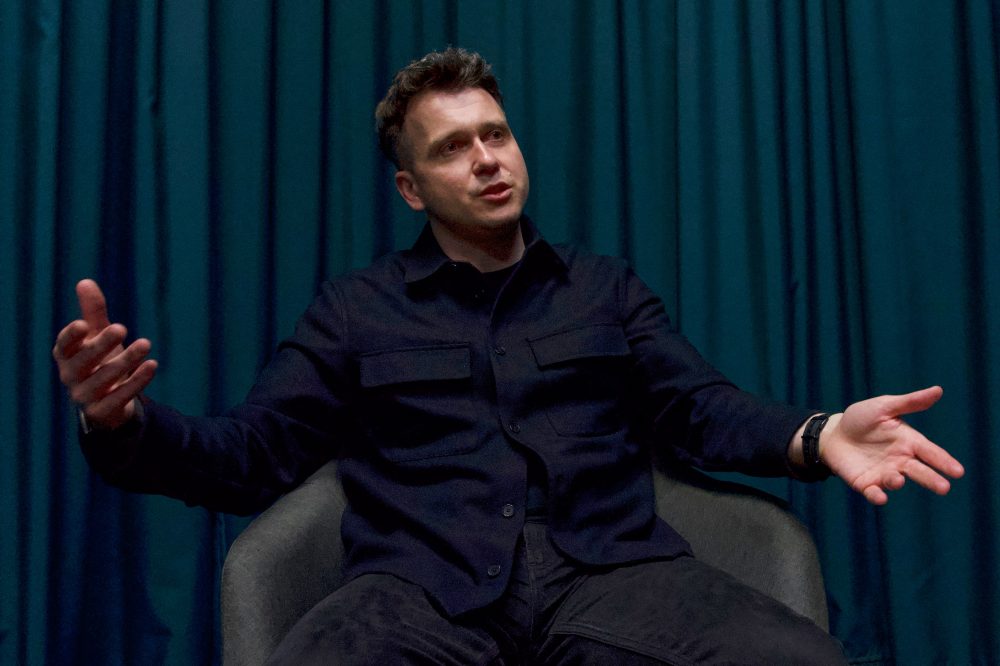

KYIV, Ukraine — Ukraine’s top artificial intelligence defense official says rapid military adoption of AI technology has become vital to the nation’s survival in its ongoing conflict with Russia, though complete battlefield integration remains years away.
Danylo Tsvok, who heads Ukraine’s newly created Defense Artificial Intelligence Center, explained that AI technology is currently assisting Ukrainian forces in defending territory while minimizing soldier casualties against a larger and better-equipped opponent.
“We need to be faster than the enemy in decision-making,” Tsvok explained to The Associated Press, emphasizing that AI represents “not only a competitive advantage. It’s about our survival.”
The 35-year-old official now directs the Defense Artificial Intelligence Center, which the Defense Ministry created just last month. Before this role, Tsvok held the government’s highest civilian position focused on artificial intelligence.
Both Ukraine and Russia are engaged in an escalating competition to field increasingly automated military systems, ranging from flying drones to land-based and naval platforms. Central to this competition is maintaining operational capability despite intense electronic warfare interference.
Modern systems are being engineered to operate autonomously, keeping targets in focus even when facing hostile signal jamming.
Ukraine’s rapidly growing domestic weapons industry now encompasses over 2,000 manufacturing companies and defense technology businesses. Engineers are currently evaluating technologies that allow coordinated drone groups to work together, seeking to improve effectiveness while reducing demands on human controllers.
“We need to understand that the future belongs to autonomous systems,” Tsvok explained. “AI makes it possible to automate parts of the kill chain.”
In its advanced development, he explained, AI could support a connected battlefield where intelligent weapons function together through a single assessment system.
“That could happen within three to five years,” he predicted. “Within that time frame, front lines could be secured by tightly integrated hardware and software systems.”
For more immediate applications, he highlighted broader deployment of autonomous defense interceptors, increased utilization of ground-based robotic platforms, and enhanced electronic warfare technologies.
Certain components are already operational. Unmanned ground vehicles are increasingly deployed for supply transport, medical evacuation, and combat missions.
President Volodymyr Zelenskyy recently announced that land-based drones completed more than 20,000 battlefield operations during a three-month span this year, including medical evacuations, supply deliveries, and direct combat missions. He noted that one successful attack was conducted entirely without human soldiers present.
Tsvok emphasized the goal is not creating fully autonomous ‘killer robots,’ but rather developing a more coordinated system that speeds up decision-making and works more effectively with Western allies.
“It’s not about reaching 100% autonomy, it’s about being efficient on the battlefield,” he stated.
Ukraine is strengthening collaborations with Western nations and Gulf region countries to obtain funding, increase production capacity, and integrate into security partnerships, while also providing access to its extensive battlefield intelligence.
Tsvok’s organization receives financial backing from the U.K. Ministry of Defence, representing what he called both a military and political partnership.
“Democracies must develop strong defensive capabilities,” he stated. “Without AI, they cannot effectively protect peace. This is not only about Ukraine. It’s about global security.”