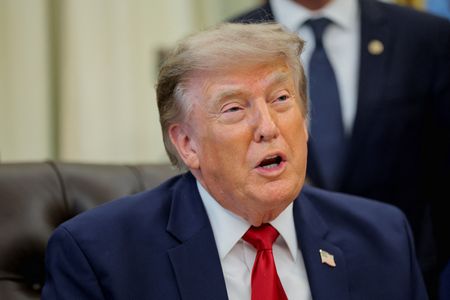

President Trump held discussions with American oil industry executives about sustaining a potential extended naval blockade against Iranian ports, according to a White House official who spoke Wednesday. The president simultaneously called on Iran to “get smart soon” and enter into negotiations.
The meeting with energy sector leaders occurred Tuesday amid stalled diplomatic efforts to end the standoff that has prompted Washington to implement a naval blockade targeting Iran’s oil shipments in an attempt to force Tehran to reopen the Strait of Hormuz for commercial vessels.
The president has indicated Iran is welcome to initiate contact for discussions. In a Wednesday post on Truth Social before news of the executive meeting became public, Trump stated Tehran “couldn’t get its act together.”
According to the White House official, Trump and energy executives “discussed the steps President Trump has taken to alleviate global oil markets and steps we could take to continue the current blockade for months if needed and minimize impact on American consumers.”
Global oil markets responded with Brent crude prices jumping over 6% Wednesday to reach a month-long peak amid concerns about an extended blockade.
A senior Pentagon official revealed Wednesday that military operations have already cost the United States $25 billion, marking the first official financial estimate for the ongoing conflict.
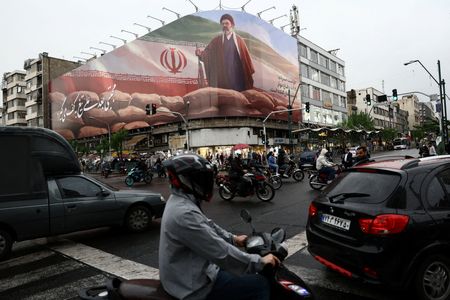
Iranian leadership has vowed to maintain disruption of strait traffic while facing continued threats, potentially extending Middle Eastern oil supply interruptions from a conflict that has resulted in thousands of casualties and worldwide economic instability.
On Wednesday, Tehran issued warnings of “unprecedented military action” in response to continued American blockade operations against Iran-connected ships. While Trump has declared Iran cannot possess nuclear weapons, Iranian officials maintain their atomic program serves peaceful purposes.
“They don’t know how to sign a nonnuclear deal. They’d better get smart soon!” Trump wrote in his social media message, though he provided no specifics about such an agreement’s terms.
The post included a digitally altered photograph showing him wearing sunglasses and holding a machine gun with text reading “No more Mr. Nice Guy.”
Iran’s economic situation has deteriorated significantly as its currency dropped to an unprecedented low of 1,810,000 rials per U.S. dollar Wednesday, according to the Iranian Students’ News Agency. This decline reflects pent-up foreign currency demand from six weeks of fighting now entering open markets.
The rial has lost nearly 15% of its value in just the past two days, ISNA reported.
Central bank data shows inflation reached 65.8% for the period between March 20 and April 20, a situation likely to worsen due to the currency collapse.
Iran seeks American recognition of its uranium enrichment rights for what it describes as peaceful civilian applications. The country maintains approximately 440 kilograms (970 pounds) of uranium enriched to 60% purity, material that could potentially produce several nuclear weapons with additional processing.
Mohammad Baqer Qalibaf, Iran’s parliament speaker and chief negotiator, accused Trump of attempting to divide Iranians and force surrender through the blockade.
“The solution for confronting the enemy’s new conspiracy is only one thing: maintaining unity, which has been the bane of all the enemy’s conspiracies,” Qalibaf stated in a Telegram audio message.
Iran’s most recent proposal for ending the conflict, which has been paused since April 8 under a ceasefire arrangement, would postpone nuclear program discussions until formal conflict resolution and shipping problem solutions. This approach conflicts with Trump’s insistence on addressing nuclear issues immediately.
At senior administration officials’ request, U.S. intelligence services are analyzing potential Iranian responses if Trump declares unilateral victory, according to two U.S. officials and a knowledgeable source who spoke to Reuters.
Since February 28, when U.S. and Israeli airstrikes against Iran began, Tehran has effectively prevented all non-Iranian shipping through the Strait of Hormuz, a critical passage for global energy transportation. American blockade operations against Iranian vessels commenced this month.
Iran no longer maintains unified clerical leadership following the deaths of several top political and military officials, including Supreme Leader Ayatollah Ali Khamenei, during U.S.-Israeli attacks.
The appointment of Khamenei’s injured son, Mojtaba, as his replacement has shifted additional authority to hardline Islamic Revolutionary Guard Corps commanders, according to Iranian officials and regional analysts.
Domestically, Trump faces mounting pressure to conclude a conflict for which he has offered varying justifications to Americans dealing with rising fuel costs. His approval rating has dropped to 34%, the lowest point of his current presidency, according to Reuters/Ipsos polling data, down from 36% in previous surveys.
Defense Secretary Pete Hegseth defended the Iran conflict during heated congressional testimony, rejecting characterizations of it as a quagmire while calling Democratic critics “feckless” for opposing the unpopular military engagement.