Category: World News

  • Russia, Ukraine Resume Peace Negotiations in Geneva This Week

    Russia, Ukraine Resume Peace Negotiations in Geneva This Week

    GENEVA – Ukrainian and Russian diplomatic teams are scheduled to convene in Geneva this Tuesday and Wednesday for another attempt at U.S.-facilitated peace negotiations, with territorial disputes expected to dominate discussions according to Moscow officials.

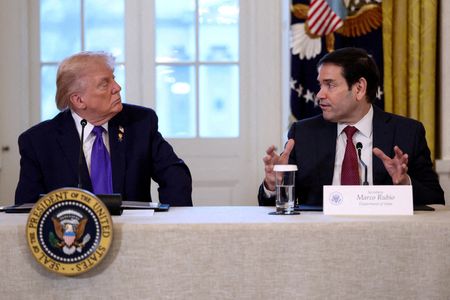
    President Donald Trump continues to urge both Moscow and Kyiv toward a settlement that would end what has become Europe’s largest military conflict since World War II ended in 1945. Ukrainian President Volodymyr Zelenskyy has expressed frustration that his nation faces mounting pressure to make compromises.

    Moscow’s primary demand centers on Ukraine surrendering the final 20% of Donetsk’s eastern territory that Russian forces have been unable to secure through military action – a concession that Kyiv categorically rejects.

    “This time, the idea is to discuss a broader range of issues, including, in fact, the main ones. The main issues concern both the territories and everything else related to the demands we have put forward,” Kremlin spokesman Dmitry Peskov told reporters on Monday.

    The Swiss lakeside location represents a change from Abu Dhabi, which previously hosted two negotiation sessions that both parties characterized as productive despite yielding no major agreements.

    These Geneva discussions arrive just before February 24th marks four years since Russia launched its comprehensive assault on its smaller neighbor. The prolonged conflict has claimed tens of thousands of lives, displaced millions of civilians, and left numerous Ukrainian communities in ruins.

    Russian forces currently control approximately 20% of Ukraine’s sovereign territory, including Crimea and sections of the eastern Donbas area captured prior to the 2022 escalation. Recent Russian bombardments targeting power infrastructure have left hundreds of thousands of Ukrainians without electricity and heating throughout a brutal winter season.

    EXPECTATIONS REMAIN MODEST FOR MEANINGFUL PROGRESS

    Moscow announced that Vladimir Medinsky, a senior aide to President Vladimir Putin, will head Russia’s negotiating team.

    Ukrainian representatives have previously criticized Medinsky for delivering historical lectures they view as justification for Russia’s invasion, which has further dampened hopes for substantial progress during the Geneva meetings.

    Military intelligence director Igor Kostyukov will participate in the discussions, while Putin’s special representative Kirill Dmitriev will join a separate committee addressing economic matters.

    During Saturday’s Munich Security Conference, Zelenskyy expressed cautious optimism that the Geneva negotiations would prove “serious, substantive… but honestly sometimes it feels like the sides are talking about completely different things.”

    Ukraine’s delegation will include Rustem Umerov, who serves as secretary of the national security and defense council, along with Zelenskyy’s chief of staff Kyrylo Budanov. Senior presidential advisor Serhiy Kyslytsya will also attend.

    Prior to departing for Geneva, Umerov stated that Ukraine’s objective of “a sustainable and lasting peace” remains firm.

    Beyond territorial questions, Russia and Ukraine maintain significant disagreements over control of the Zaporizhzhia nuclear facility and potential Western military presence in post-conflict Ukraine.

    According to sources, U.S. representatives Steve Witkoff and Jared Kushner will attend on behalf of the Trump administration. The American envoys are simultaneously participating in separate Geneva discussions involving Iran this week.

  • American Military Personnel Deploy to Nigeria for Training Mission

    American Military Personnel Deploy to Nigeria for Training Mission

    ABUJA, Nigeria — Nigerian military officials confirmed Monday that roughly 100 American service members and their equipment have been deployed to the West African nation to assist with military training operations as Nigeria continues its fight against various militant organizations.

    According to a military statement, the American presence comes in response to Nigeria’s formal request to Washington for assistance with military training programs, technical assistance, and intelligence coordination.

    This military cooperation represents a thaw in relations between Washington and Abuja, which became strained after former President Donald Trump accused Nigeria of failing to prevent what he characterized as genocide against Christians. Nigerian officials have disputed this characterization, with experts noting that the security crisis affects people of all faiths rather than targeting specific religious groups.

    Major General Samaila Uba, who speaks for Nigeria’s Defense Headquarters, has previously clarified that American personnel will not participate in combat operations or take direct operational control, emphasizing that Nigerian commanders will maintain full authority over their forces.

    U.S. military involvement in the region has been escalating, with American forces conducting airstrikes against Islamic State-affiliated fighters in Nigeria’s northwest in December. Last month, the commander of U.S. Africa Command acknowledged that a small contingent of American military advisors was already operating in Nigeria, primarily providing intelligence assistance following coordination meetings in Abuja.

    The West African country faces an ongoing security challenge from numerous armed factions competing for territory and influence. These include homegrown Islamic extremist organizations such as Boko Haram and its splinter group, Islamic State West Africa Province. The threat landscape also includes the IS-affiliated Lakurawa organization and various criminal networks specializing in kidnapping operations and illegal resource extraction.

    The security situation has deteriorated further with the involvement of militant groups from neighboring Sahel countries, including Jama’at Nusrat al-Islam wal-Muslimin, which conducted its inaugural attack on Nigerian territory last year. United Nations statistics indicate that thousands of Nigerians have lost their lives in this violence, with security analysts criticizing the government’s efforts to safeguard civilians.

    Despite claims that Christians are specifically targeted, analysts and local residents report that the majority of casualties from these armed groups are actually Muslims living in Nigeria’s predominantly Muslim northern regions, where most of the violence occurs.

  • President Trump to Play Indirect Role in Upcoming Iran Nuclear Negotiations

    President Trump to Play Indirect Role in Upcoming Iran Nuclear Negotiations

    President Donald Trump announced Monday that he plans to participate in an indirect capacity in nuclear negotiations between the United States and Iran, scheduled to commence Tuesday in Geneva.

    Speaking to reporters while traveling on Air Force One, Trump stated his intention to engage in the diplomatic process. “I’ll be involved in those talks, indirectly. And they’ll be very important,” the President declared.

    The upcoming negotiations occur against a backdrop of escalating tensions, with the United States having positioned a second aircraft carrier in the Middle East region. According to U.S. officials who spoke with Reuters, military planners are making preparations for the potential of an extended military operation should diplomatic efforts fail to produce results.

    When questioned about the likelihood of reaching an agreement, Trump indicated that Iran appears inclined toward aggressive bargaining tactics but referenced lessons learned from previous confrontations. He noted that Tehran experienced the ramifications of taking an uncompromising position last summer when American forces conducted strikes against Iranian nuclear facilities.

    The President expressed confidence that Iranian officials have incentives to engage constructively in the current round of discussions. “I don’t think they want the consequences of not making a deal,” Trump remarked.

    The nuclear dialogue between Washington and Tehran had previously reached an impasse before the U.S. collaborated with Israel in attacking Iranian nuclear installations in June. The deadlock centered on America’s insistence that Iran abandon uranium enrichment activities within its borders, which U.S. officials consider a potential route to developing nuclear weapons capability.

    Meanwhile, Iran’s civil defense organization conducted chemical defense exercises Monday at the Pars Special Economic Energy Zone, aimed at improving emergency response capabilities for possible chemical incidents at the strategic energy facility in southern Iran.

  • Cuba Forces Drivers to Use App for Gas, Creating Months-Long Wait Times

    Cuba Forces Drivers to Use App for Gas, Creating Months-Long Wait Times

    HAVANA, Cuba – Motorists across Cuba are discovering they may need to wait months before they can fill up their vehicles, as the island nation grapples with severe fuel shortages attributed to U.S. economic sanctions targeting oil imports.

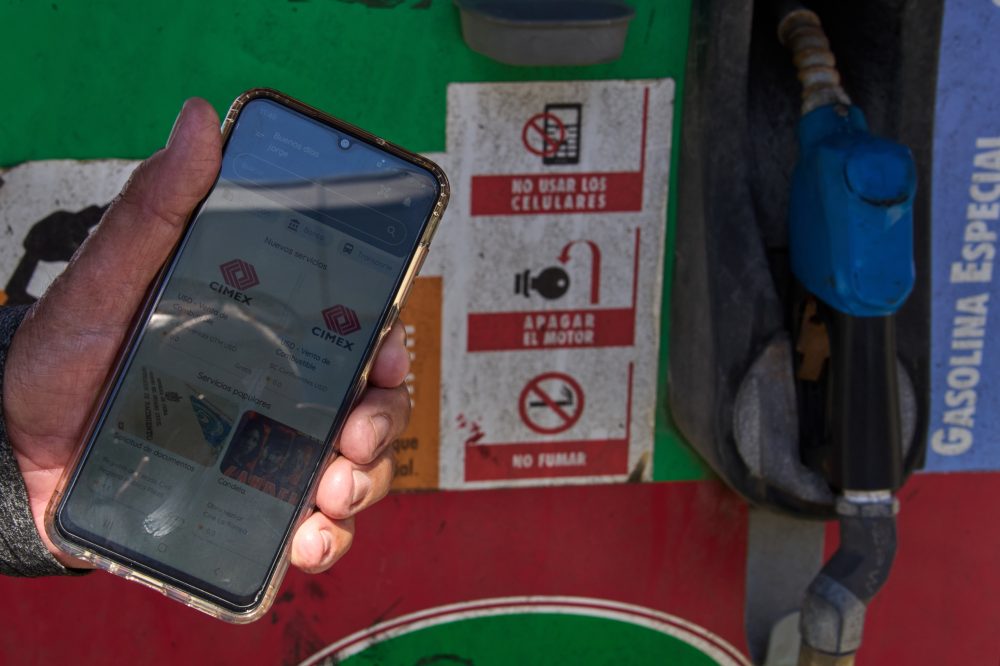
    Cuban authorities implemented a mandatory smartphone application called Ticket last week, requiring all drivers to schedule refueling appointments through the digital platform to prevent disorder at service stations.

    However, Havana residents who spoke with reporters on Monday revealed the app is scheduling appointments weeks or even months in advance due to overwhelming demand.

    Jorge Reyes, a 65-year-old resident who registered for the app Monday, expressed frustration with his assigned queue position. “I have (appointment) number seven thousand and something,” Reyes explained.

    The gas station where Reyes registered only processes 50 appointments daily, leaving him wondering, “When will I be able to buy gas again?”

    The application restricts users to booking appointments at a single station at once, prompting drivers to share intelligence through WhatsApp messaging groups about which locations might have shorter waits or higher daily capacity, with some stations handling up to 90 appointments per day.

    These efforts provide minimal relief for drivers discovering thousands of appointments ahead of theirs in the digital queue.

    Cuba’s government has simultaneously eliminated subsidized gasoline sales in local currency at approximately 25 cents per liter, now exclusively offering higher-priced fuel denominated in U.S. dollars.

    Current gasoline prices reach $1.30 per liter at official stations, while black market rates can climb to $6 per liter. Cuban government employees typically earn under $20 monthly when their peso salaries are converted to dollars at current exchange rates.

    When drivers finally secure refueling opportunities, they face a 20-liter purchase limit, equivalent to roughly 5.2 gallons.

    Businessman Ariel Alonso, who managed to refuel Monday at El Riviera station, highlighted the inadequacy of this restriction. “This will not last me long,” Alonso stated.

    “I have to leave a reserve of five liters in case anyone gets sick at home,” he added, referring to potential emergency hospital trips.

    The Ticket platform operates under XETID, a government-controlled software company. Commercial director Saumel Tejada informed Cuba Debate news outlet last week that over 90,000 drivers had requested refueling appointments through the application.

    While Ticket has existed for three years, previously helping Cubans schedule notary visits and access subsidized fuel, it has now become virtually the sole legitimate method for vehicle refueling outside black market channels.

    Tourism industry vehicles represent the primary exception to these restrictions. Cars bearing special tourism license plates can access 44 designated service stations island-wide, though lengthy queues have formed at these locations. Tourism vehicles face the same 20-liter purchase limits as regular cars.

    Energy shortages and electrical blackouts have escalated across Cuba this month as the nation struggles to secure oil imports for power generation facilities and refineries.

    President Donald Trump issued threats in late January targeting any countries selling oil to Cuba with potential tariffs, as Washington intensifies pressure on the island’s communist leadership to implement economic and political changes.

    Cuban President Miguel Díaz-Canel has indicated willingness to engage in negotiations with the United States “as equals” while maintaining national sovereignty. Díaz-Canel has characterized U.S. actions as an “energy blockade.”

    Venezuela, historically a major Cuban oil supplier, ceased crude shipments to the island in January following U.S. forces’ capture of former president Nicolás Maduro during a pre-dawn operation and his subsequent transport to New York to face drug trafficking charges.

    Mexico similarly terminated oil deliveries to Cuba in January after Trump announced the tariff threats.

    Financial institutions throughout Cuba have shortened operating hours to conserve electricity, while the government announced earlier this month it would discontinue aircraft refueling services for planes landing on the island. This decision prompted three Canadian airlines to suspend Cuban routes, though other carriers continue service by making fuel stops in the Dominican Republic.

    Officials have postponed both an annual book fair and the traditional cigar industry trade show as part of broader efforts to reduce fuel and electricity consumption.

    A coalition of United Nations human rights specialists criticized the U.S. oil embargo last week, declaring it “has no basis on collective security and constitutes a unilateral act that is incompatible with international law.”

    Source: https://srnnews.com/cuban-drivers-face-monthslong-wait-for-gasoline-in-a-government-app-designed-to-reduce-lines/

  • Kim Jong Un Celebrates Housing Milestone Ahead of Major North Korean Political Meeting

    Kim Jong Un Celebrates Housing Milestone Ahead of Major North Korean Political Meeting

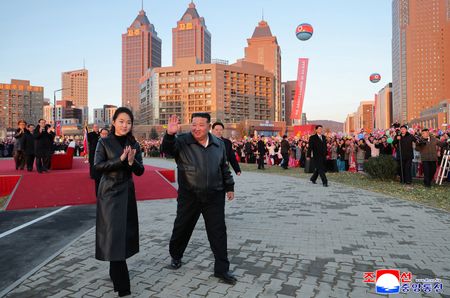
    North Korean leader Kim Jong Un celebrated a major housing achievement in the capital city as his country prepares for an important political event, according to state media reports released Tuesday.

    The completion of 10,000 new residential units in Pyongyang’s Hwasong District represents the fulfillment of an ambitious construction target established half a decade ago. State news agency KCNA reported that this milestone completes the goal of constructing 50,000 new homes throughout the metropolitan region, a target that was established during the Eighth Congress five years prior.

    Kim attended Monday’s completion ceremony as North Korea prepares to convene the Ninth Congress of the ruling Workers’ Party this February. This major political event serves as the nation’s most significant governmental gathering, where officials evaluate past performance, establish future policy objectives, and potentially implement leadership changes.

    The North Korean leader has spent recent months visiting various construction locations and highlighting developmental achievements as the country approaches this crucial party meeting.

    “Based on the transformational achievements… during the Eighth period, the Ninth Congress of the party will set a grander goal of restoration and creation,” Kim stated, as reported by KCNA.

    State media also confirmed that delegates and attendees scheduled to take part in the forthcoming party congress reached Pyongyang on Monday.

    According to Hong Min, a researcher with the Korea Institute for National Unification in Seoul, historical patterns suggest the Congress typically commences three to four days following the arrival of representatives in Pyongyang, based on the previous two gatherings held in 2016 and 2021.

    Source: https://srnnews.com/north-koreas-kim-marks-completion-of-pyongyang-housing-project-as-key-party-congress-nears/

  • Australia Refuses to Bring Home Citizens From Syrian Detention Camp

    Australia Refuses to Bring Home Citizens From Syrian Detention Camp

    Australian Prime Minister Anthony Albanese declared Tuesday that his administration will not assist in bringing home Australian nationals currently held at a Syrian detention facility housing relatives of alleged Islamic State fighters.

    Speaking to ABC News, Albanese stated his position clearly: “We have a very firm view that we won’t be providing assistance or repatriation.”

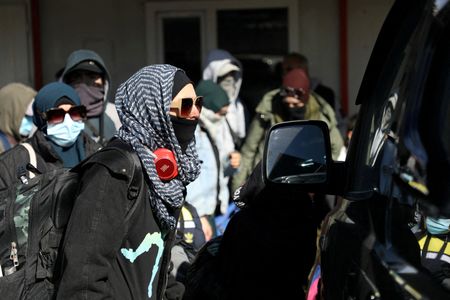
    The announcement follows an incident Monday where 34 Australian citizens were temporarily freed from a detention camp in northern Syria, only to be sent back to the facility due to what sources described as “technical reasons,” according to two individuals who spoke with Reuters.

    Source: https://srnnews.com/australia-rules-out-repatriating-citizens-from-syrian-camp/

  • Iraqi PM Meets Finnish Official to Discuss Security Partnership

    Iraqi PM Meets Finnish Official to Discuss Security Partnership

    Baghdad hosted high-level diplomatic discussions Sunday as Iraq’s Prime Minister Mohammed Shia’ al-Sudani welcomed Finnish Interior Minister Mari Rantanen for talks aimed at strengthening bilateral ties in security and development sectors, with counterterrorism coordination taking center stage amid Iraq’s ongoing efforts to relocate Islamic State prisoners from Syrian facilities.

    According to a statement from al-Sudani’s media office, the leaders explored expanding collaborative efforts across multiple sectors including development, economics, and technology, with particular emphasis on sharing expertise related to sustainable development initiatives. Iraqi representatives highlighted their desire for enhanced security partnerships, specifically focusing on practical cooperation in law enforcement training, intelligence coordination, and implementation of advanced security systems.

    The diplomatic engagement occurs as Iraq seeks to establish itself as a key player in regional anti-terrorism initiatives following the military defeat of the Islamic State organization across Iraq and Syria. Despite the group’s territorial losses, it continues to present security threats through guerrilla operations, while tens of thousands of suspected members and their relatives remain housed in detention facilities and camps throughout northeastern Syria.

    Addressing the prisoner relocation issue, al-Sudani declared that “transferring Islamic State (IS) prisoners from Syria to Iraq is a sovereign decision aimed at protecting regional and global security,” while calling on other nations to accept responsibility for their citizens. He encouraged the global community “to receive foreign IS detainees and bring them to justice.”

    The Finnish minister, as reported in the Iraqi statement, confirmed Finland’s commitment to strengthening bilateral relationships and expressed Helsinki’s willingness to investigate new collaborative opportunities based on mutual interests.

    Iraq’s National Center for International Judicial Cooperation announced Friday that 5,704 Islamic State prisoners have been relocated from Syrian detention centers to Iraqi control, a move expected to spark increased debate regarding legal prosecution procedures, prison infrastructure capacity, and responsibility-sharing among nations whose citizens are among the detained individuals.

    Source: https://srnnews.com/the-media-line-iraq-finland-talk-security-cooperation-as-baghdad-presses-detainee-transfers/