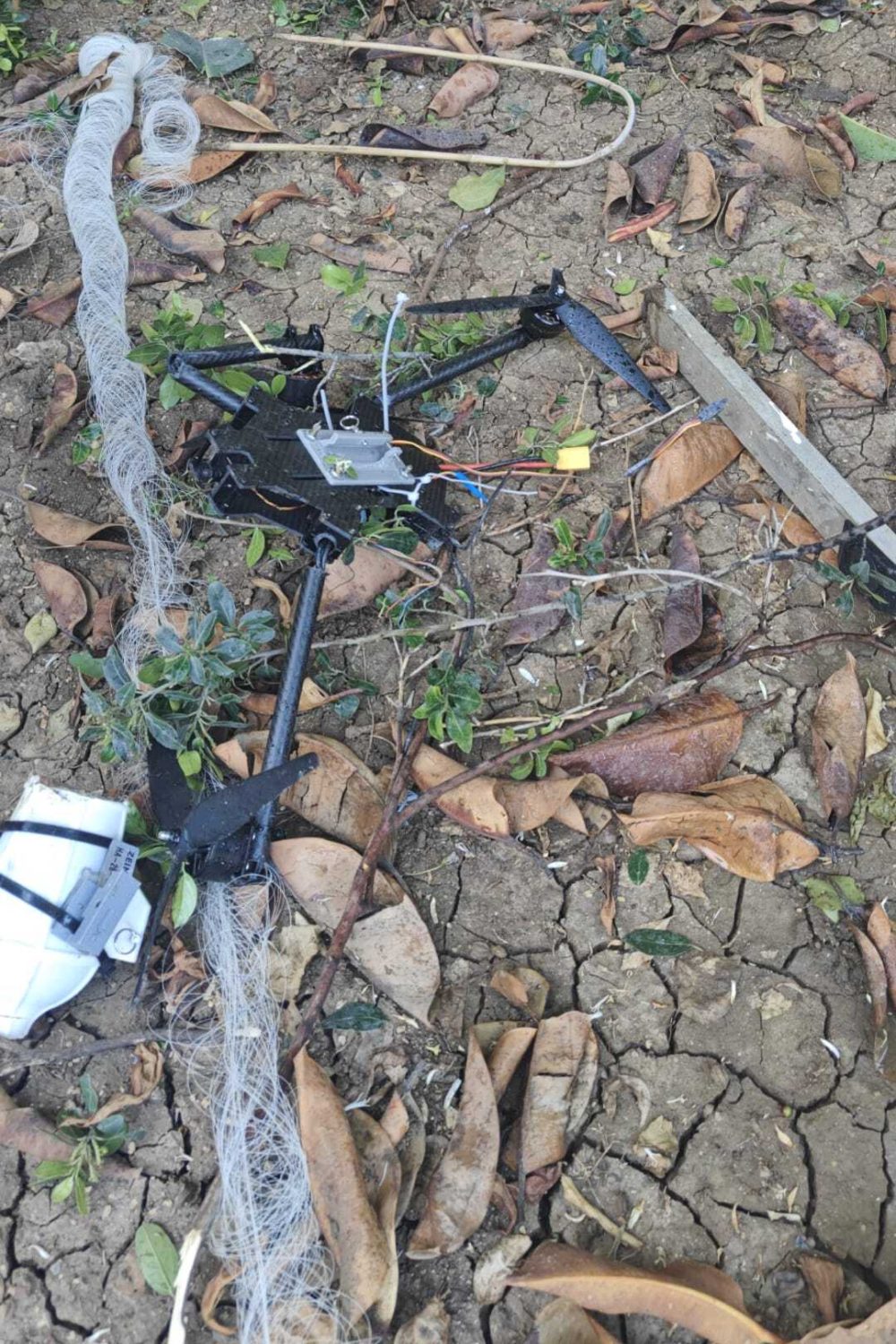

TEL AVIV, Israel — In the ongoing conflict between Israel and Hezbollah, the Iranian-backed Lebanese militant organization has introduced a new type of unmanned aircraft that poses unique challenges to Israeli defense systems: drones guided by fiber-optic cables as thin as dental floss that cannot be detected electronically.
These aircraft, which have seen extensive deployment in Ukraine’s war, are compact, difficult to monitor, and capable of causing significant damage.
Traditional unmanned aircraft can be disrupted by electronic interference from defense systems. Such interference typically causes the aircraft to malfunction or return to where it originated.
However, these fiber-optic guided aircraft operate differently. A thin wire provides direct connection between the operator and the aircraft, making electronic interference impossible.
The technology isn’t perfect, as wind conditions or other aircraft can cause the connecting wires to become entangled.
Yet, “if you know what you’re doing, it’s absolutely deadly,” stated Robert Tollast, who specializes in drone technology and conducts research at London’s Royal United Services Institute, describing how these aircraft can maintain low altitude and approach targets undetected.
Military analysts say armed forces must either destroy these aircraft in flight, which proves challenging given their compact size and brief flight duration, or develop methods to cut the nearly invisible connecting wire.
The Lebanese militant organization has primarily deployed these fiber-optic guided aircraft against Israeli military personnel operating in southern Lebanon and border communities.
An Israeli military spokesperson informed the Associated Press that these cable-guided aircraft represent a relatively recent threat in the current round of hostilities with Hezbollah. The organization appears to have adopted this technology because Israeli air defenses have proven effective against larger, more powerful rockets, missiles, and conventional drones, according to the official, who requested anonymity following military protocol.
Israeli intelligence suggests these aircraft are manufactured domestically and require minimal resources to produce — essentially combining a commercially available drone, small explosive devices, and transparent wire easily purchased in consumer markets, the official explained.
The spokesperson described these aircraft as the primary threat to forces operating inside Lebanon, noting that the Israeli military is developing technological countermeasures. Currently, Israel is implementing ground-based protective measures for troops, including installing nets and protective barriers on military vehicles.
These fiber-optic guided aircraft represent the newest development in an ongoing technological competition as Israel’s advanced defense systems work to counter emerging threats, particularly less sophisticated ones.
Ran Kochav, who previously commanded Israel’s military air defense operations, stated that Israel is struggling to defend against these cable-guided aircraft.
“They fly very low and very fast, and they are very small, it’s very difficult to detect them, and even after they’re detected, they are really hard to track,” he explained.
Kochav noted that Israel invested years strengthening its air defense capabilities to better protect against rockets and missiles. However, drone threats weren’t considered a primary concern.
He suggested Israel should have monitored the development of fiber-optic drone technology in Ukraine and anticipated that other Iranian allies would eventually adopt similar tactics, just as Russia has.
During Ukraine’s ongoing conflict, Moscow and Kyiv have continuously competed to advance new military technology.
Russia regularly attacks Ukraine with Shahed long-range assault drones — originally manufactured in Iran. While Moscow has enhanced these aircraft significantly, some remain vulnerable to electronic interference.
Cable-guided drones were created to overcome this vulnerability — though they lack the operational range of aircraft using radio communication or artificial intelligence for navigation.
Some fiber-optic drones have operated with cables extending up to 31 miles (50 kilometers), according to Tollast, the London-based expert.
Russia and Ukraine deploy numerous drone varieties “at a phenomenal scale,” he noted.
These cable-guided aircraft are so commonly used that video footage shows Ukrainian front-line communities covered with shiny, fishing line-like strands, creating the appearance of enormous spider webs gleaming in daylight.
Israel possesses adequate firepower to intercept drones, but early detection remains crucial, Kochav emphasized.
He noted that Israel already has appropriate technology that monitors light variations, identifies signals and communications, and can detect drone propeller sounds.
However, he said these surveillance systems haven’t been extensively positioned along the northern border.
In recent weeks, Hezbollah has broadcast videos through social media and its Al-Manar television network showing attacks using these new aircraft, particularly against Israeli forces in southern Lebanon.
These strikes have gained public attention. One attack resulted in one Israeli soldier’s death and wounded six others, some critically, last weekend. Another strike on Tuesday killed an Israeli civilian contractor in southern Lebanon.
In the fatal soldier attack, Hezbollah released video footage captured by the drone until it detonated among troops gathered near a vehicle. A second drone targeted the same location as a military helicopter arrived to evacuate casualties but missed narrowly.
Hezbollah announced it first deployed fiber-optic guided drones during the current fighting phase that started March 2, after using other drone types for years.
Israel also operates a drone fleet for surveillance and attack missions, though not necessarily using fiber-optic cables, to target Hezbollah fighters.
Zevik Glidai, a 78-year-old mathematics instructor and volunteer ambulance operator, found coils of transparent fiber-optic cables around a drone that crashed in his backyard in northern Israeli city Kiryat Shmona on April 13.
His residence sits 2 kilometers (1.5 miles) from the Lebanese border. He was at home when he heard a sharp whistle and small impact. His neighbor shouted that the yard was burning.
They extinguished the flames with a garden hose but noticed something unusual: The destroyed aircraft was encircled by loops and coils of white thread.
“We are very worried about these drones because there’s no way to shoot it down, because we can’t detect it,” Glidai said.
He reported no warning alarm sounded before the drone struck his house, and bomb disposal experts who responded called it miraculous that nearly 2 kilograms (4.4 pounds) of explosives failed to explode.
“They told me, ‘You have a lot of luck,’” said Glidai, who mentioned experiencing several generations of Hezbollah weapons during his 48 years in Kiryat Shmona. “They picked up all of the pieces that they could pick up, and they left me a few optical fibers as a keepsake.”