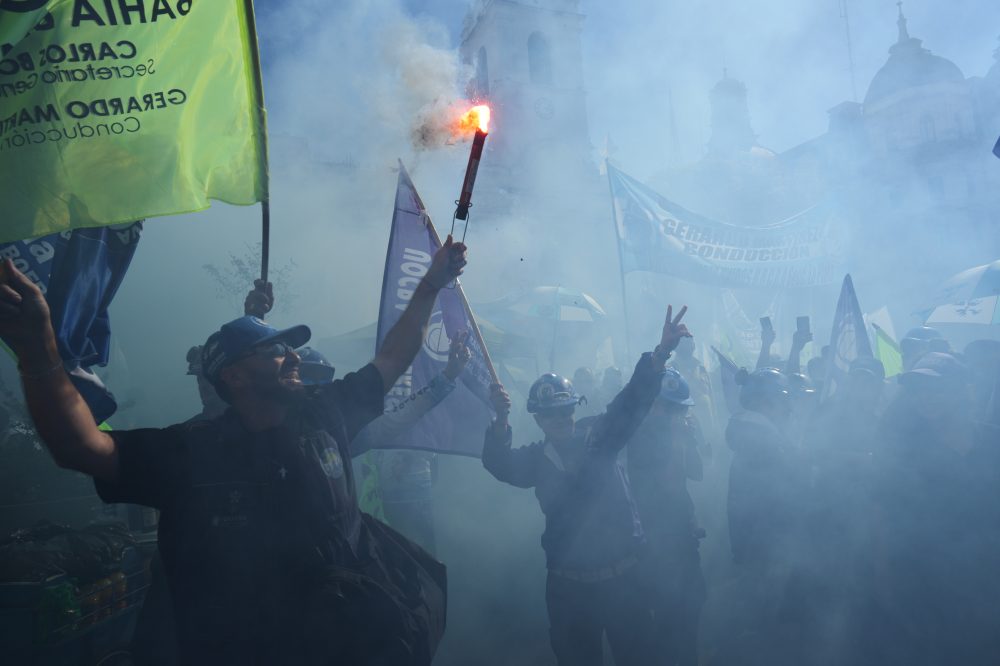

Thousands of workers flooded the streets of Buenos Aires on Thursday during May Day celebrations, voicing their opposition to President Javier Milei’s sweeping changes to Argentina’s worker protection laws.
Argentina’s biggest labor organization, the General Confederation of Labor (CGT), organized the demonstration to “defend decent employment” in response to Milei’s modifications to employment regulations that had provided extensive worker safeguards since 1974. While these protections benefited employees, they also created expensive operational costs for businesses that deterred international investment.
For years, previous Argentine leaders attempted to make the job market more business-friendly but were unsuccessful due to strong opposition from the country’s influential labor organizations. However, Milei successfully enacted his employment law changes in February despite ongoing demonstrations and a countrywide work stoppage, marking a significant win for his market-oriented policies.
Opposition groups continue pursuing legal challenges questioning whether the new law violates Argentina’s constitution. Labor representatives plan to submit additional legal documents after a judge recently reversed a temporary order that had halted the law’s enforcement following union requests. The matter is anticipated to reach the nation’s highest court.
These employment reforms have particularly upset citizens in a country where labor unions helped establish the left-wing Peronist political movement that has influenced Argentine politics since the 1940s. The changes also come as Milei’s primary goal of stopping inflation has stagnated while joblessness rates have risen.
“Social discontent is being felt everywhere, and not only due to the drop in consumption,” said Jorge Sola, a CGT leader, speaking to local media before Thursday’s demonstration. “It is due to family debt, job losses and worse working conditions than what we had before.”
The updated legislation permits businesses to extend daily work schedules from eight hours to twelve hours, lengthen trial employment periods, and terminate employees with greater ease.
The new rules also restrict workers’ ability to go on strike and reduce judges’ flexibility in determining compensation payments. Supporters argue the previous system trapped employers in expensive legal battles and discouraged official hiring practices. Currently, nearly half of Argentina’s workforce operates without formal employment contracts.