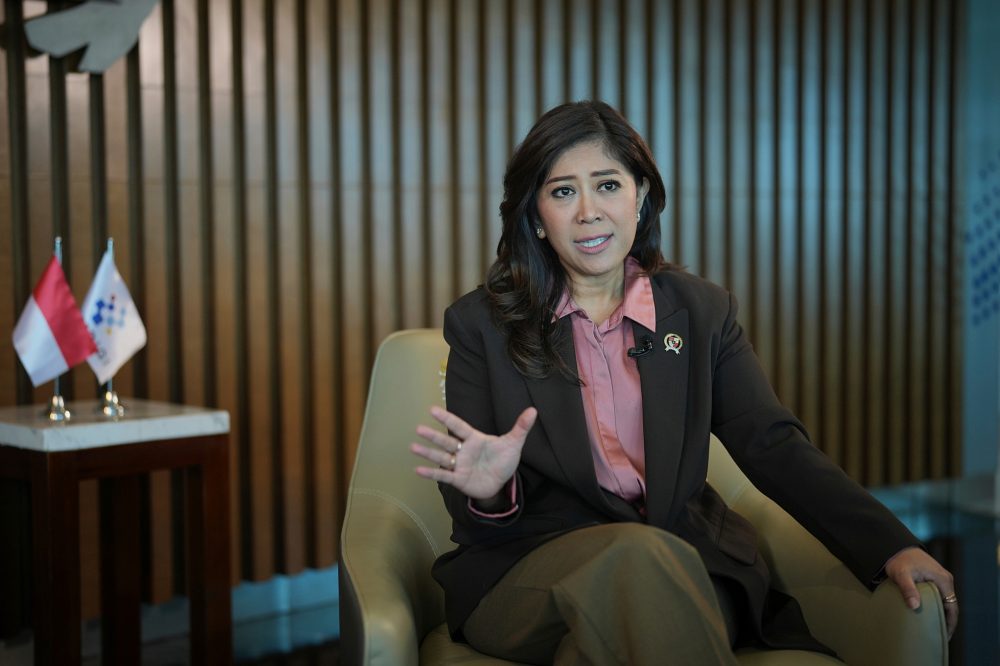

JAKARTA, Indonesia (AP) — Indonesian officials are demanding that social media companies publicly reveal how many underage accounts they have suspended under new government restrictions protecting children under 16, authorities announced Wednesday.
“We will continue to insist that compliance alone is not enough; we must also report the figures to the public in the interest of transparency,” said Communication and Digital Affairs Minister Meutya Hafid.
The Southeast Asian nation launched new government restrictions in late March that prohibit children younger than 16 from using digital platforms where they might encounter pornography, cyberbullying, online scams and addiction.
According to Hafid, Indonesian youth spend as much as eight hours daily on the internet.
Several social media and digital platforms did not immediately follow the new restriction, which impacts approximately 70 million children and teenagers across Indonesia.
TikTok emerged as the first platform to demonstrate concrete compliance results, announcing it had shut down 1.7 million accounts owned by users under 16.
The nation’s massive population likely “explains the platforms’ reluctance to accelerate compliance with this regulation,” Hafid noted.
Among the eight platforms designated as high-risk, seven have pledged to limit children’s access to their services, including YouTube, TikTok, Facebook, Instagram, Threads, X, and Bigo Live.
Gaming platform Roblox remains the sole holdout, refusing to agree to block access for children under 16. The company has not responded to requests for comment from The Associated Press.
YouTube declared its commitment to blocking younger users three weeks following the implementation of restrictions, though it has not disclosed how many children’s accounts were located and deactivated.
“We remain focused on protecting the community and will continue working closely with the Indonesian government to support a secure digital future for the next generation,” a YouTube spokesperson said in a statement on Wednesday.
Age-based social media restrictions for children under 16 initially launched in Australia last December, where social media companies removed access to roughly 4.7 million accounts identified as belonging to minors.
Indonesia has become the first Southeast Asian nation to adopt similar measures.
Several other nations — including Spain, France and the United Kingdom — are implementing or exploring steps to limit children’s social media access due to mounting concerns about harm from uncontrolled social media content.
Hafid acknowledges ongoing challenges in enforcing the regulation, with the Indonesian government permitting platforms to choose their own account verification approaches.
“We understand the technology will continue to evolve rapidly. However, the platform is responsible for determining the best and most appropriate technology for its needs,” Hafid stated.
Critics have pointed to practical enforcement difficulties. Effective age verification typically requires gathering sensitive personal information, raising privacy and data security concerns. Some children will circumvent restrictions using false identification or their parents’ accounts, according to Nenden Sekar Arum, executive director of the Southeast Asia Freedom of Expression Network, or SAFEnet, a digital rights organization.
Arum emphasized the government must monitor each platform’s user identity verification processes to ensure uniform compliance.
“The core problem is not the presence of children in the digital space, but how that digital space is shaped into a safe ecosystem. And how to ensure that those who are actually making this ecosystem harmful are held accountable. That is what needs to be addressed,” Arum said.