
Video testimonies made public by Syria’s Interior Ministry show former air force pilots from the previous regime admitting they carried out bombing campaigns under direct orders from the highest levels of government, including the former president and defense ministry.
The recorded statements demonstrate that air attacks were not random acts but part of a systematic approach where target coordinates and strike zones were transmitted directly from air force headquarters, working closely with the defense minister and former president’s office.
These accounts show how air operations intensified over time during the war. Initially, helicopter attacks were the primary method, but by 2013, fighter aircraft entered the conflict, dramatically expanding both the number of strikes and their geographic reach.
A former senior pilot revealed that leadership placed special confidence in certain officers, assigning them to carry out heavy bombing campaigns, especially targeting the Eastern and Western Ghouta areas, which experienced some of the war’s most devastating military actions.
The statements expose a structured approach to managing air attacks. Flight crews received precise target coordinates before missions, with exact identification of strike locations. Some pilots also disclosed receiving monetary compensation for completing bombing runs, showing financial incentives were tied to these military operations.
Most attacks originated from key military airfields, particularly Al-Dumayr Military Airport near Damascus, along with al-Sin and Khalkhala bases. All operations followed centralized coordination between air force leadership and top military command.
The confessions include acknowledgments of striking civilian locations, including Douma’s marketplace, which faced intense bombardment using powerful vacuum missiles that caused massive casualties. Pilots also confirmed attacking the town of Deir al-Asafir in Eastern Ghouta during what they described as some of the most lethal operations.
Regarding targeted operations, one aviator admitted participating in the 2015 airstrike that killed Jaysh al-Islam leader Zahran Alloush, demonstrating the sophisticated intelligence and military planning behind certain attacks.
These revelations emerge as Syria pursues legal and security measures against individuals connected to the former government. Officials have announced arrests of multiple pilots and officers involved in bombing campaigns, including those facing international sanctions.
Legal experts suggest these testimonies could serve as crucial evidence in future accountability proceedings, both domestically and internationally, especially given ongoing accusations about using air power against civilian populations during the war.
If confirmed authentic, these confessions offer clearer insight into how air military operations functioned throughout the Syrian war. They underscore the centralized nature of military decision-making and political leadership’s role in directing strikes, potentially reigniting discussions about individual and institutional accountability in the conflict.
From the Syrian conflict’s start in 2011, air power became one of the most deadly weapons of war, especially in regions beyond government authority, where forces depended heavily on aerial bombardment, including barrel bombs and high-explosive missiles. United Nations Office of the High Commissioner for Human Rights data shows the Syrian war resulted in at least 306,887 civilian deaths by 2022, averaging roughly 84 civilian fatalities daily during the conflict’s early period.
While pinpointing exact responsibility for individual airstrikes remains challenging, numerous human rights investigations conclude that Syrian government forces and their allies caused the largest portion of civilian deaths. The Syrian Network for Human Rights reports more than 200,000 civilians killed by regime forces since the conflict began, the highest number among all warring parties.
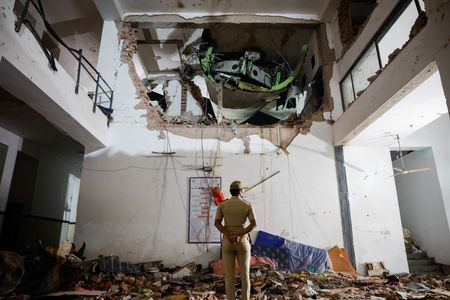
These statistics show aerial bombardment was a leading factor in this devastating toll, particularly from 2012 to 2018, which marked peak usage of both warplanes and helicopters against populated areas. Cities including Aleppo, Eastern Ghouta and Idlib became sites of intensive bombing targeting residential districts, markets, and essential infrastructure, causing massive casualties and widespread displacement.
Field documentation by humanitarian groups, including the Syrian Civil Defense, verifies that tens of thousands of civilians died or suffered injuries from air attacks. Rescue workers extracted more than 125,000 people from debris during the war years, showing the scope and severity of the bombardment.
Annual documentation also records that bombing was not an isolated occurrence but a consistent practice. In 2022 alone, hundreds of civilians were documented as killed by regime forces, despite reduced operational pace compared to peak years, demonstrating continued dependence on air power even in the conflict’s later phases.
Human rights analysis shows that deploying warplanes in populated areas, particularly with weapons having extensive destructive capability, directly contributed to rising civilian casualties and led to repeated accusations of grave violations of international humanitarian law, including disproportionate or indiscriminate attacks.
While various sources provide different casualty estimates, the shared conclusion remains that aerial bombardment was among the primary causes of civilian deaths in Syria and that its impact went beyond human losses to include infrastructure destruction and creation of one of the contemporary world’s largest humanitarian crises.