Category: World News

  • UN Reports 143 Dead in Pakistan Strike on Afghan Drug Treatment Center

    UN Reports 143 Dead in Pakistan Strike on Afghan Drug Treatment Center

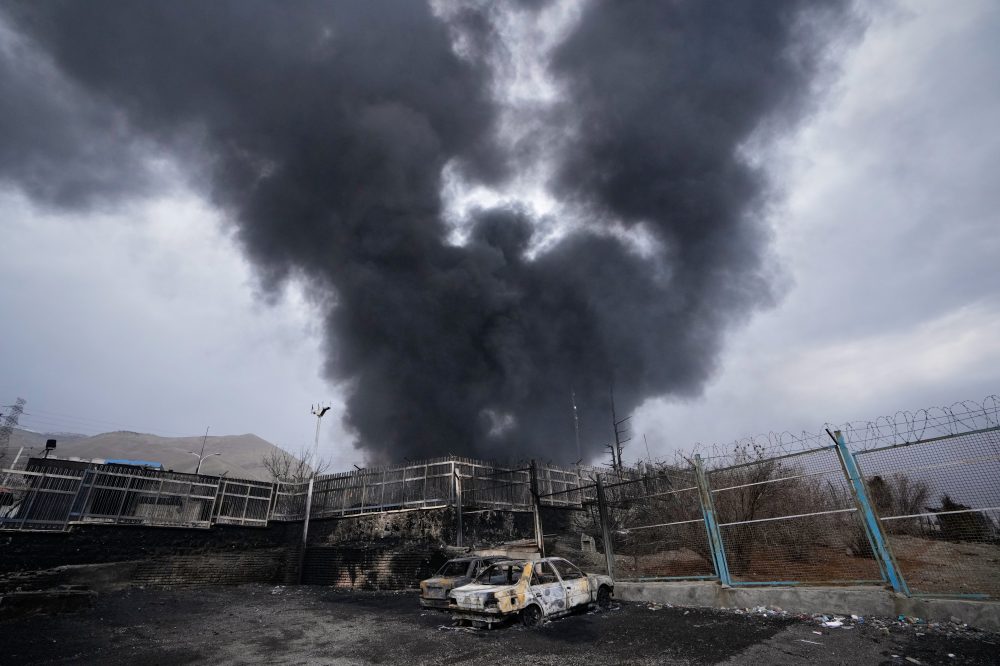
    The United Nations Assistance Mission in Afghanistan confirmed Wednesday that 143 people were killed in Pakistan’s bombing of a drug treatment facility in Kabul, according to a UN official who spoke with Reuters.

    Afghanistan’s Taliban government had previously reported much higher casualties from Monday evening’s airstrike, claiming more than 400 people died and another 265 were wounded in the attack.

    Pakistani officials have disputed the Taliban’s assertion that they struck a drug rehabilitation center, stating instead that their forces “precisely targeted military installations and terrorist support infrastructure.”

  • Swedish Intelligence Names Russia, China, Iran as Top National Security Threats

    Swedish Intelligence Names Russia, China, Iran as Top National Security Threats

    STOCKHOLM, March 18 – Sweden’s intelligence agency has identified Russia, China and Iran as the most significant security threats confronting the Scandinavian nation, according to Wednesday’s release of the annual threat assessment from the Swedish Security Service, known as SAPO.

    In recent years, the security agency has documented escalating dangers, particularly from Moscow’s government as it becomes more willing to engage in dangerous operations connected to its conflict in Ukraine, including destabilizing hybrid warfare tactics across European nations.

    Iranian activities have similarly been designated as a major concern for an extended period, with Swedish officials observing how organized crime groups within the country – which has struggled with gang violence for the past ten years – have been exploited by foreign governments to execute violent operations.

    Security Service Chief Charlotte von Essen stated in the assessment that recent military actions involving the United States and Israel against Iran, along with Tehran’s retaliatory responses, “have increased the threat against American, Israeli and Jewish targets in Sweden.”

  • Japan Welcomes Record 3.5 Million Tourists in February Despite China Drop

    Japan Welcomes Record 3.5 Million Tourists in February Despite China Drop

    TOKYO – Japan experienced its busiest February on record for international tourism, welcoming 3.46 million foreign visitors last month according to government statistics released Wednesday. The figure represents a 6.4% jump compared to the same period last year.

    The Japan National Tourism Organization reported these milestone numbers occurred even as Chinese visitor arrivals plummeted by 45% to 396,400 people, reflecting continued diplomatic strain between the neighboring countries.

    Tourism officials noted the timing of Lunar New Year celebrations contributed to the strong showing, as the holiday occurred in February this year compared to late January in 2023.

    The impact of fewer Chinese visitors was evident at popular destinations like the Kawazu Sakura Festival in eastern Japan, which celebrates early-blooming cherry blossoms beginning in February. Hoshi Mori, who directs the town’s tourism association, observed the noticeable absence of Chinese tourists at the event.

    “Still, the festival drew about 630,000 visitors, its highest attendance since 2022, thanks to an increase in domestic tourists and those from Taiwan,” Mori explained.

    South Korean travelers dominated February’s visitor statistics, maintaining their position as Japan’s largest tourist market with 1.08 million arrivals – a 28% increase. Taiwan followed as the second-largest source, contributing 693,600 visitors, representing a 37% surge from the previous February.

  • Nigerian Terror Attacks Signal Militant Strength Despite Military Crackdown

    Nigerian Terror Attacks Signal Militant Strength Despite Military Crackdown

    Security analysts are challenging Nigeria’s president’s characterization of recent terror attacks as desperate acts, arguing instead that coordinated suicide bombings in the country’s most fortified northeastern city demonstrate the continued strength of militant organizations.

    The synchronized assault on Maiduguri reveals significant intelligence breakdowns and shows that extremist groups maintain the ability to target urban centers despite continuous government military campaigns against them, experts warn.

    The identity of the specific militant organization responsible for the attack remains unclear, highlighting the complicated nature of a widespread 17-year conflict that has claimed tens of thousands of lives and displaced millions of residents.

    Recent weeks have witnessed multiple attacks by both Boko Haram fighters and ISWAP, a faction aligned with Islamic State, leading some security experts to suggest possible coordination between these typically competing groups.

    “We have to see this as the groups oozing confidence in their ability to wreak terror in that part of the country,” said Ikemesit Effiong, partner at SBM Intelligence, a Nigeria-based risk advisory company.

    “We think this is the start of a spate of bombings, not just in Maiduguri but also less protected urban areas in the northeast,” Effiong added.

    President Bola Tinubu announced Tuesday his authorization of additional military equipment and support, promising forces would “completely defeat” the militants – echoing similar commitments made by former leaders.

    With violence expanding throughout Nigeria, including northwestern regions, U.S. forces have recently conducted airstrikes and deployed military advisers. Officials have not clarified whether American troops would participate in any response to the bombings.

    Nigeria’s battle against Islamic extremists in the northeast began in 2009 when Boko Haram first appeared in Maiduguri, the capital of Borno State, attempting to establish an Islamic state. A harsh government response resulted in the group leader’s death while in police custody and forced militants from urban areas.

    The organization has since fractured into multiple factions, with one declaring loyalty to Islamic State and becoming the most powerful, controlling large portions of northeastern Nigeria.

    ACLED, a crisis-monitoring organization, reported Monday’s attack as Nigeria’s deadliest suicide bombing in seven years.

    Nigerian military operations have failed to prevent Islamic groups from establishing permanent footholds over the years, according to Vincent Foucher, senior research fellow with the National Centre for Scientific Research in Bordeaux.

    “The jihadists control substantial rural areas, the military hold towns which are entrenched,” he explained.

    Even when forces target ISWAP strongholds, such as recent operations in the Alagarno forest, Foucher noted that victories are typically short-lived.

    “They killed a few people, seized and destroyed some infrastructure, including an ISWAP prison. But the jihadists just move away and wait the military out,” he said.

    Nigerian military officials reported preventing four attacks in separate locations outside Maiduguri before Monday’s bombings occurred.

    Malik Samuel, senior researcher at Good Governance Africa, explained that while militant groups possess the capability to attack anywhere in Borno state, executing three simultaneous strikes in a city housing military headquarters raises serious concerns about whether explosives were transported into the city or constructed locally.

    “It speaks to the intelligence failure and it shows that both factions are still very, very capable,” he said.

    Samuel and two additional experts believe Boko Haram militants conducted the actual attack, given their history with suicide bombings, while ISWAP typically avoids such tactics.

    However, Effiong and two security sources have not dismissed the possibility of some collaboration between the groups.

    “Clearly, it means Maiduguri is not as safe as the authorities would want people to believe,” Samuel stated. “Attacking Maiduguri is symbolic for these groups.”

    Extremist fighters have intensified attacks against Nigerian military forces during the Muslim holy month of Ramadan, killing numerous troops, including high-ranking officers, and capturing equipment.

    Additionally, the Maiduguri attack demonstrated that militants are “not going anywhere, anytime soon,” Samuel observed.

    The United States, maintaining a long-standing partnership with Nigeria’s military through training and weapons sales, conducted airstrikes in the northwest on Christmas Day to prevent targeting of Christians in the region.

    Approximately 100 American troops have since been deployed to support the military, with U.S. forces providing intelligence through aerial surveillance.

    One security source reported that this intelligence contributed to destroying four ISWAP gun trucks on March 11. However, Effiong warned it also exposes the government to accusations of being a Western puppet, potentially encouraging jihadi recruitment.

    Neither the State Department nor U.S. Africa Command provided responses to requests for comment.

    Foucher noted that the faction targeted by U.S. Tomahawk missiles in December remains active, demonstrating the constraints of American military intervention.

    “They can regenerate easily,” Foucher said. “There are so many different fires that are burning throughout Nigeria now. It is whack-a-mole.”

  • Beijing Offers Taiwan Energy Security in Exchange for Political Control

    Beijing Offers Taiwan Energy Security in Exchange for Political Control

    BEIJING, March 18 – Beijing made a strategic proposal Wednesday, promising Taiwan guaranteed energy stability if the island nation accepts Chinese governance, as part of an ongoing effort to persuade Taiwan that unification would benefit its citizens.

    The proposal comes as nations worldwide seek backup energy sources due to ongoing Middle East conflicts that have disrupted crucial shipping routes through the Strait of Hormuz.

    Taiwan currently obtains one-third of its liquefied natural gas from Qatar and receives no energy resources from China. Island officials have announced they’ve arranged backup supply sources for upcoming months, with increased deliveries from the United States, Taiwan’s primary international ally.

    Chen Binhua, speaking for China’s Taiwan Affairs Office, addressed reporters in Beijing, stating that “peaceful reunification” would provide enhanced protection for Taiwan’s energy and resource needs through support from a “strong motherland.”

    “We are willing to provide Taiwan compatriots with stable and reliable energy and resource security, so that they may live better lives,” Chen stated when asked about Taiwan’s energy situation during Middle East hostilities.

    Taiwan’s government has not yet responded to these remarks. The island consistently rejects Beijing’s claims of authority and maintains that only Taiwan’s citizens can determine their political future.

    During a Wednesday gathering of his Democratic Progressive Party in Taipei, Taiwan President Lai Ching-te confirmed that energy supplies remain secure through this month and next, with expanded U.S. gas shipments beginning in June.

    “Taiwan has adopted a diversified and multi-source strategic approach to energy imports,” Lai stated, according to party documentation.

    Beijing has repeatedly presented Taiwan with “one country, two systems” autonomy arrangements in exchange for accepting Chinese authority, a proposal that lacks support from any significant Taiwanese political organization.

    Last October, China’s state-run Xinhua news service outlined supposed benefits Taiwan would receive following “reunification,” including financial assistance, though requiring the island be governed by “patriots.”

    Beijing has consistently maintained that military action remains an option for bringing Taiwan under Chinese control.

    China, which leads global oil imports, implemented a fuel export prohibition last week extending through March’s end to prevent domestic supply shortages, according to sources. This restriction affects exports valued at $22 billion in the previous year.

  • Families Desperately Search for Missing Relatives After Deadly Kabul Strike

    Families Desperately Search for Missing Relatives After Deadly Kabul Strike

    KABUL, Afghanistan – Desperate families gathered at the ruins of a drug rehabilitation facility in Afghanistan’s capital Wednesday, frantically searching for relatives who may be among the hundreds of victims from a devastating Pakistani airstrike two days earlier.

    According to Afghanistan’s Taliban government, the Monday night bombing killed more than 400 people and injured 265 others at the treatment center. The attack occurred while patients and staff members were engaged in prayer, just days before the conclusion of Ramadan.

    Pakistani officials have disputed these casualty figures, stating they conducted “precisely targeted military installations and terrorist support infrastructure.” This dramatic escalation has deepened tensions between the two Islamic nations during a period of regional instability involving U.S.-Israeli military actions against Iran.

    At the bombing site Wednesday, relatives of rehabilitation center patients searched desperately for information about their missing family members who had been receiving treatment at the facility.

    Uncertainty plagued many families who remained unsure whether their loved ones survived, perished, or had been relocated to other locations.

    “We came here looking for our patient, he is missing,” explained Mazar, a 50-year-old man who provided only his first name. “We came to find out whether he is well, alive, or what has happened to him.”

    Mazar explained that his relative had been receiving treatment at the center for the second time, but no information was available about his whereabouts. “We checked the lists, but his name was not in the list of the living. Maybe he is injured or has been killed,” he stated.

    RECOVERY EFFORTS CONTINUE

    Another family member, who requested anonymity, described attempting to access the facility Tuesday but being denied entry.

    “We did not find his body, nor was he among the wounded, and his name is not on the list of survivors,” the man said. “We have come again today for more information.”

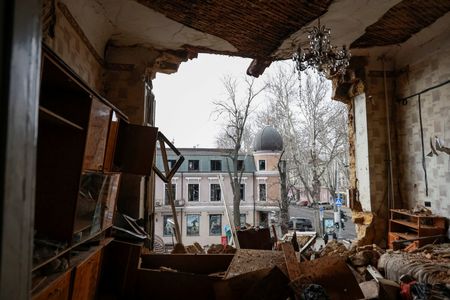
    A Reuters correspondent observed smoke continuing to rise from sections of the complex as firefighting crews worked to extinguish remaining blazes, approximately 36 hours following the bombing. Destroyed furniture, bedding, and personal belongings were scattered throughout the wreckage.

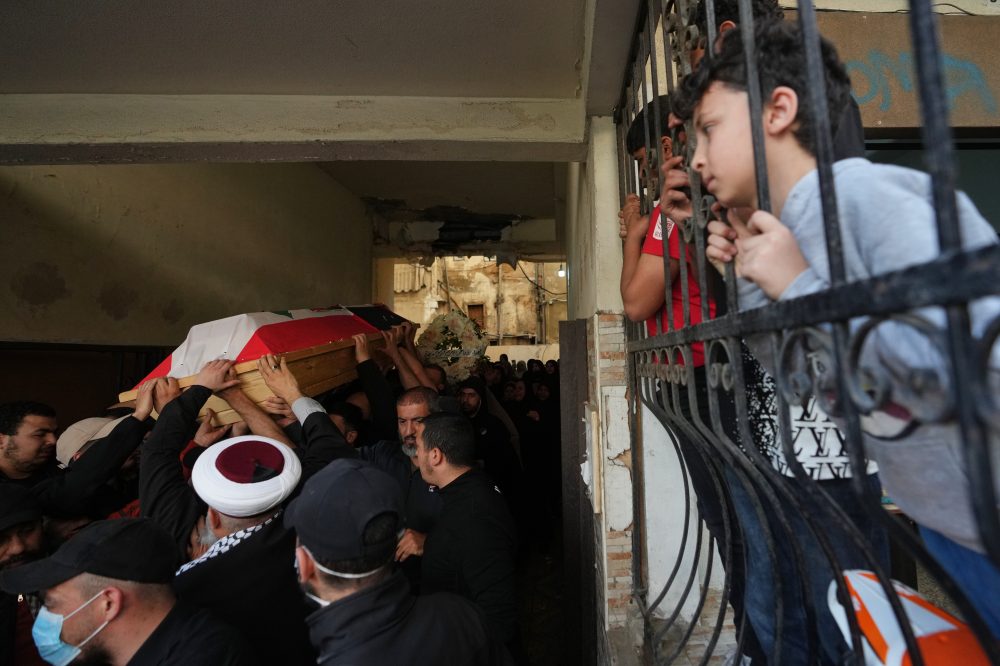
    Afghanistan’s interior ministry announced that funeral services for some victims would be conducted later Wednesday.

    “Some of the bodies were not identifiable and are currently at the forensic department. Some bodies were intact and were handed over to their families,” stated interior ministry spokesperson Abdul Mateen Qanie. “Others were completely destroyed, collected almost like pieces of flesh.”

    Najibullah Farooqi, who leads Afghanistan’s legal medicine directorate, reported that recovery teams continued extracting bodies from the rubble as late as Tuesday evening, with remains being released to families after identification.

    “Some bodies have been handed over after their identities were confirmed. However, a large number of bodies still remain with us,” Farooqi said.

    CONFLICTING ACCOUNTS OF TARGET

    The two nations have presented sharply different versions regarding what the airstrike was intended to hit.

    Afghan officials maintain the attack deliberately struck a well-recognized rehabilitation facility, which had been converted from a former NATO military installation called Camp Phoenix approximately ten years ago.

    Pakistani authorities acknowledge targeting Camp Phoenix but characterize it as a “military terrorist ammunition and equipment storage site,” pointing to secondary explosions visible after the strikes as evidence of substantial weapons stockpiles at the location.

    The European Union, United Nations agencies, and international humanitarian organizations have condemned targeting civilian and medical facilities during conflicts and urged immediate de-escalation.

    The dispute between these former allies began last year when Pakistan accused Afghanistan of providing sanctuary and support to militants conducting attacks on Pakistani soil, allegations the Afghan Taliban government has rejected.

    While the conflict had diminished due to mediation efforts by friendly nations including China, tensions resurged last month when Pakistan began directly targeting Afghan Taliban positions rather than limiting strikes to Pakistani Taliban militant locations that Islamabad claims operate across the border.

  • Nairobi Becomes First Kenyan City to Offer Menstrual Leave for Female Workers

    Nairobi Becomes First Kenyan City to Offer Menstrual Leave for Female Workers

    NAIROBI, Kenya — A casual lunch discussion about a colleague’s menstrual discomfort has led to a groundbreaking workplace policy in Kenya’s capital city. Female government workers in Nairobi can now take two paid days off each month to manage menstrual pain and discomfort.

    The pioneering initiative launched in December 2025, making Nairobi the first location in Kenya to implement such a policy. It covers county government staff members, with the goal of enhancing both productivity and employee welfare.

    Governor Johnson Sakaja, who championed the program, told The Associated Press that Kenya’s federal leadership and fellow county officials are closely watching the results. His administration employs approximately 18,000 people, with women making up more than half the workforce.

    “Your biggest asset is your staff,” Sakaja explained. “It starts with dignifying your own staff, for them to feel that they’re respected and dignified.”

    The policy has faced minimal public resistance, though some critics worry it might make employers less likely to hire women. Sakaja rejected this concern, arguing that properly supported women outperform men in the workplace.

    Female leaders currently head Nairobi county’s business and health departments.

    “A lot of labor policies were written many years ago by men,” the governor noted. “Women’s rights are not anti-productivity. They are an input that creates productivity. It’s actually an investment in your workforce.”

    According to Sakaja, the program won’t strain finances since multiple employees handle each function.

    “It will not be a train smash if three or four people in a department are not there for a day or two,” he stated.

    While Japan introduced menstrual leave in 1947, Spain became the most recent adopter in 2023. Indonesia and South Korea also have similar policies.

    Across Africa, only Zambia maintains a nationwide menstrual leave program, granting female workers one monthly day off without requiring medical documentation.

    Supporters argue these policies acknowledge menstruation as a valid workplace health concern.

    “The feedback we have gotten, especially from the staff that work in public service management, is that it’s very refreshing. And when they come back, they are able to work even better,” explained Nairobi County Human Resource Manager Janet Opiata.

    Opiata reported that at least 12 women from her department, including a senior director, used the leave during February.

    The program operates as a “no-questions-asked, no-forms-filled” system, providing paid time off in addition to standard sick and vacation leave guaranteed by labor laws. Nairobi established the policy through a cabinet order and human resources department memo.

    Marion Kapuya, a 25-year-old county revenue officer, said the policy has already improved her work experience.

    “Working with pain or discomfort can lead to mistakes or low productivity,” she shared. “When you take the break and you are relieved from the pain, your performance will be top-notch.”

    Kapuya noted that workplace stigma continues to present challenges.

    “Before I get to a point of saying, ‘Excuse me, sir, I am on my period and I don’t feel okay,’ it is so hard,” she admitted.

    Governor Sakaja acknowledged receiving reports that some employees still find it awkward to request menstrual leave from supervisors.

    Christine Akinyi, who works in Nairobi’s private sector, praised the two-day allowance as an excellent beginning but suggested expanding it to four days. She also voiced concerns about potential hiring discrimination.

    “People will prefer to employ more men because they don’t have these sick leaves,” she warned.

    Dr. Eunice Cheserem, a Nairobi gynecologist, reported that severe menstrual pain affects 50% of her patients. Kenya lacks comprehensive national statistics on menstrual pain prevalence.

    “If a woman gets severe menstrual pain, she actually ceases to be functional. Some will get vomiting, severe headaches, they vomit everything, they have diarrhea, they have very terrible cramps,” she described. “Some respond to conventional analgesics, but very many need very, very strong analgesics for them even to be able to function.”

    Dr. Cheserem believes Nairobi county’s menstrual leave policy provides essential recovery time and allows women to properly care for themselves.

  • Chinese College Encourages Students to Find Romance During Spring Break

    Chinese College Encourages Students to Find Romance During Spring Break

    A college in China has issued an unconventional message to its students: put away the textbooks and focus on finding romance during spring break.

    The Sichuan Southwest Vocational College of Aviation announced on its official WeChat platform that the theme for their upcoming spring holiday will be “See the flowers and enjoy romance.” The break runs from April 1 through April 6.

    This directive, posted on Tuesday, represents a departure from China’s traditionally academic-focused culture and comes roughly two weeks after the country announced plans to add spring and fall breaks to the school calendar alongside existing summer and winter holidays.

    The romance-focused break is part of broader government efforts to increase domestic tourism and consumer spending among China’s 1.4 billion residents. Officials are also implementing staggered paid leave policies to spread out travel throughout the year rather than concentrating it during peak seasons.

    Multiple regions are rolling out similar spring break programs, with provinces like Sichuan and Jiangsu, plus cities including Suzhou and Nanjing, scheduling their breaks for April or early May.

    Behind these initiatives lies a more serious concern: China’s declining birth rates. The country’s population decreased for the fourth straight year in 2025, with birth rates hitting historic lows that experts predict will continue falling.

    Chinese officials released additional guidelines on Tuesday aimed at creating more “child-friendly cities” through improved public services covering education, healthcare, transportation, sports, and entertainment facilities.

    James Liang, who co-founded the Chinese travel platform Trip and works as a demographics researcher, supports these new policies but says more action is needed.

    “Society needs to have enough time and money to raise children,” Liang stated. He emphasized that “Greater efforts are needed to educate young people on the social and personal benefits of raising larger families.”

    Liang suggested the government should create more comprehensive support systems by redistributing resources and increasing financial aid for families.

  • Iranian Foreign Minister Says Nuclear Weapons Policy Unlikely to Shift

    Iranian Foreign Minister Says Nuclear Weapons Policy Unlikely to Shift

    Iran’s Foreign Minister Abbas Araqchi indicated Wednesday that the country’s position against developing nuclear weapons will likely remain unchanged, though he noted the new supreme leader has yet to publicly state his views on nuclear policy.

    In comments made to Al Jazeera and reported by Iranian media, Araqchi referenced the previous Supreme Leader Ayatollah Ali Khamenei’s religious ruling from the early 2000s that prohibited the development of weapons of mass destruction. Khamenei was killed during the recent U.S.-Israeli conflict with Iran.

    For years, Western nations including the United States and Israel have alleged that Tehran is pursuing nuclear weapons capabilities, while Iranian officials have consistently maintained their nuclear program serves only peaceful civilian purposes.

    Araqchi explained that religious edicts are tied to the specific Islamic scholar who issues them, noting he cannot yet assess the religious or political positions of Mojtaba Khamenei, who now serves as Iran’s supreme leader.

  • Thai Man Arrested for Sneaking Into Viral Hippo Moo Deng’s Zoo Habitat

    Thai Man Arrested for Sneaking Into Viral Hippo Moo Deng’s Zoo Habitat

    BANGKOK — Authorities in Thailand have detained a man who illegally broke into the habitat of Moo Deng, the baby pygmy hippo whose adorable antics made her a worldwide internet celebrity, according to zoo officials.

    The Thai individual allegedly breached the enclosure Tuesday evening during a time when the animal caretaker was absent and no other guests were present, Khao Kheow Open Zoo Director Narongwit Chodchoy explained to The Associated Press.

    Surveillance video that has circulated extensively online captures a person dressed in a black beanie, sunglasses, green tank top, and brown shorts getting close to Moo Deng and her mother Jona while holding a tablet device, seemingly filming or photographing them.

    The individual stayed within the habitat for approximately one to two minutes before zoo personnel spotted him, Narongwit explained, noting that the suspect made no effort to escape when the facility contacted law enforcement.

    Moo Deng became a global celebrity following her birth in 2024, primarily due to a zookeeper who posted charming images and clips of the infant hippo across social media platforms. Her fame has since attracted massive crowds from both Thailand and international destinations, with visitors eager to experience her appeal firsthand and capture their own photos and videos of her endearing behaviors.

    Law enforcement has initially filed trespassing charges against the individual, though the investigation continues and Narongwit indicated the zoo plans to seek all possible legal remedies. Authorities have not revealed the suspect’s identity.

    The individual has since been freed on bail, Narongwit reported. He confirmed that both Moo Deng and Jona remained unharmed since the intruder made no attempt at physical contact.

    According to a statement published Tuesday on the zoo’s official Facebook account, both animals seemed somewhat disturbed by the incident and will receive close veterinary supervision.

    The facility also called on guests to “strictly follow all rules and instructions from staff for the safety of both themselves and the wildlife.”

    The Khao Kheow Open Zoo, located approximately 100 kilometers (60 miles) southeast of Bangkok, spans 800 hectares (nearly 2,000 acres) and houses over 2,000 animals.

  • Iran Strikes Back at Israel, Gulf Nations After Top Leader Killed

    Iran Strikes Back at Israel, Gulf Nations After Top Leader Killed

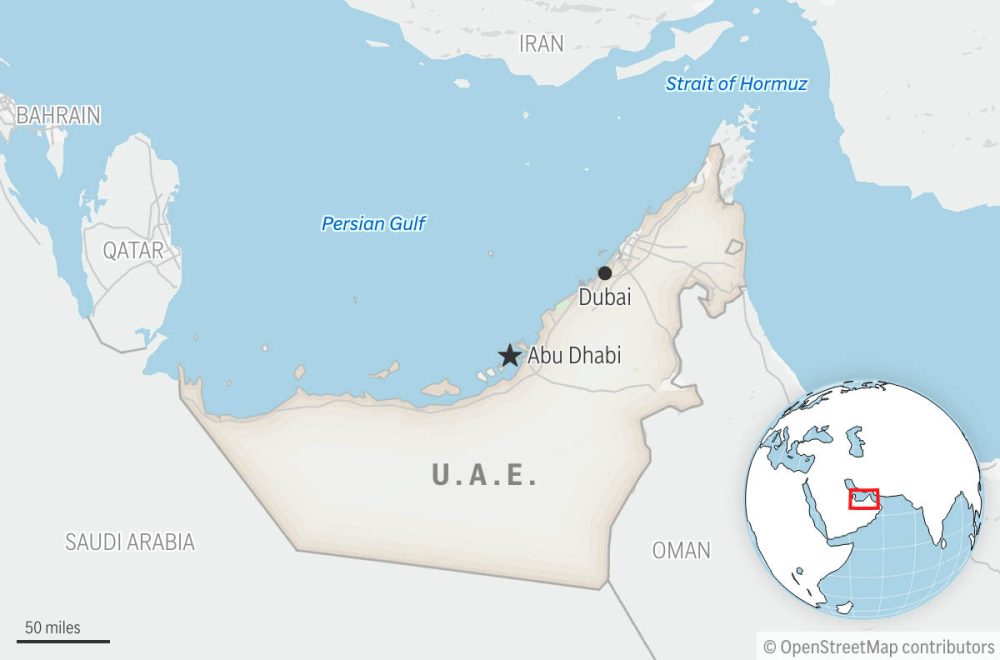
    DUBAI, United Arab Emirates (AP) — Following the death of a senior Iranian official in an Israeli airstrike, Iran retaliated Wednesday with missile strikes targeting Israel and Gulf nations, deploying advanced weaponry designed to penetrate defense systems and resulting in two deaths near Tel Aviv as Middle East hostilities continue to escalate.

    Israeli forces maintained their aggressive campaign against Lebanon, conducting strikes aimed at Iran-supported Hezbollah fighters and destroying several residential buildings in Beirut, resulting in at least six fatalities.

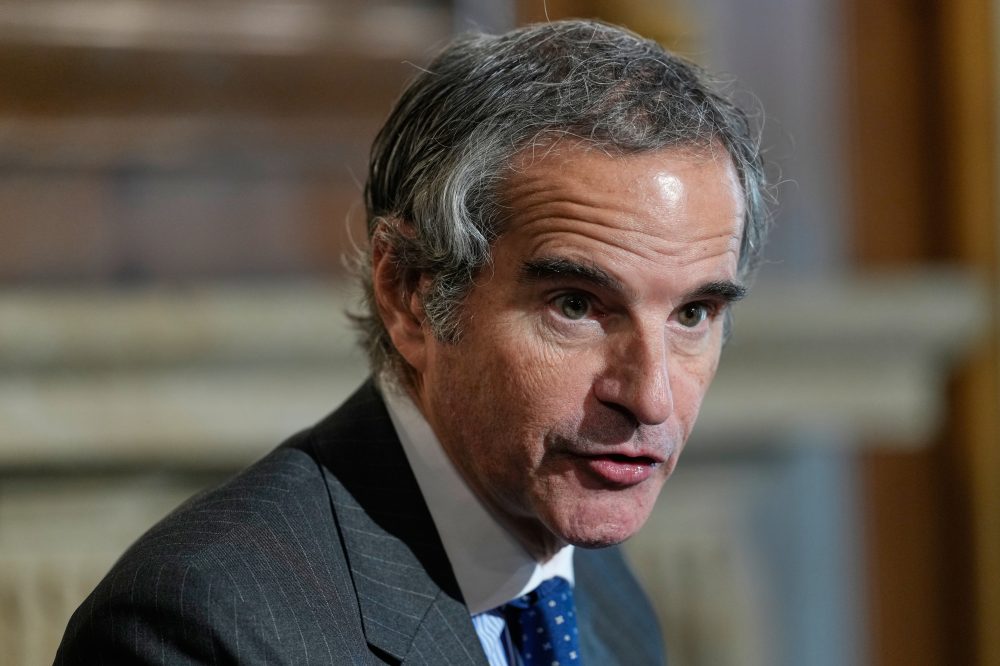
    A projectile struck Iran’s Bushehr nuclear facility complex, though officials reported no casualties or structural damage, according to the International Atomic Energy Agency following Tehran’s briefing. IAEA Director Rafael Grossi renewed his appeal “for maximum restraint during the conflict to prevent risk of a nuclear accident.”

    Brent crude oil prices continued trading above $100 per barrel Wednesday morning, representing a more than 40% increase since hostilities began.

    Following the February 28 U.S. and Israeli assault on Iran that initiated the conflict, Tehran has systematically targeted Gulf Arab nations’ energy facilities and military installations as part of an effort to inflate oil costs and pressure Washington into withdrawal.

    Iranian judicial authorities announced the execution of a man accused of espionage for Israel’s Mossad intelligence service. The judiciary’s Mizan news outlet named the individual as Kourosh Keyvani, claiming he “provided images and information on sensitive locations” to Israeli operatives.

    Human rights organizations have cautioned since Iran’s January nationwide demonstrations that the Islamic Republic might initiate widespread executions. Iranian authorities brutally crushed the protests through force that resulted in thousands of deaths and tens of thousands of arrests.

    Wednesday morning brought reports of fresh strikes across multiple Gulf states, including Saudi Arabia’s Eastern Province oil region, along with Kuwait, Bahrain, Qatar and the United Arab Emirates.

    Australian Prime Minister Anthony Albanese reported that a projectile sparked a minor blaze at Australia’s UAE base near Dubai without causing injuries. His statement appeared linked to explosions heard near Al Minhad Air Base, utilized by Western forces as a regional transit point.

    Saudi forces intercepted a ballistic missile aimed at Prince Sultan Air Base, which houses U.S. personnel and aircraft.

    Iran continues its tight control over the Strait of Hormuz, the critical waterway carrying one-fifth of global oil shipments, raising fears of an international energy emergency.

    U.S. Central Command reported American forces deployed several 5,000-pound bunker-buster bombs Tuesday against Iranian missile installations along the strait’s coastline.

    In response to Israel’s assassination of Ali Larijani, Iran’s Supreme National Security Council secretary and a key government figure, the Revolutionary Guard announced Wednesday it had struck central Israel using multi-warhead missiles designed to bypass defense systems and overwhelm tracking technology.

    Israeli authorities confirmed at least two waves of incoming projectiles, with the nation’s medical services reporting two deaths in Ramat Gan, located east of Tel Aviv.

    Iran’s Revolutionary Guard stated it fired Khorramshahr-4 and Qadr multi-warhead missiles to avenge Larijani’s death. Associated Press footage captured at least one missile deploying cluster munitions over Israeli territory.

    Larijani, a former parliament speaker, served as a key strategic advisor to the late Supreme Leader Ali Khamenei during nuclear negotiations with the Trump administration. The U.S. Treasury sanctioned him in January for his involvement in “coordinating” Iran’s brutal suppression of national protests.

    Gen. Gholam Reza Soleimani, commander of the Revolutionary Guard’s Basij militia, also died in Tuesday’s Israeli attack. The U.S., European Union and other nations had sanctioned Soleimani for his years-long role in crushing dissent through the Basij.

    The U.S. Embassy in Baghdad faced attack for the second consecutive day early Wednesday, according to two Iraqi security sources who requested anonymity due to lack of authorization to speak publicly.

    Additional information remained unavailable, though pro-Iranian militia groups have consistently struck American positions in Iraq since the war’s onset. Tuesday saw a drone crash within the Baghdad embassy grounds.

    Israeli forces demolished a Beirut apartment complex approximately one hour after issuing evacuation warnings. This marked the fourth targeting of the structure, though three previous attempts last week failed to destroy it.

    Israel’s military alleged the building served as Hezbollah storage for “millions of dollars intended to finance its activities,” offering no supporting evidence.

    While no immediate casualty reports emerged, other strikes on Beirut residential buildings killed at least six people and injured 24 others, Lebanon’s Health Ministry confirmed.

    Israeli forces also announced a new wave of strikes against Hezbollah positions in southern Lebanon “in response to firing into Israeli territory.”

    Israeli bombardment has forced over 1 million Lebanese residents – approximately 20% of the population – from their homes, according to Lebanese officials who report more than 900 deaths. In Israel, Iranian missiles have killed 14 people, while at least 13 U.S. military personnel have died.

    More than 1,300 people have perished in Iran since the February 28 conflict began, the Iranian Red Crescent reported.

  • Projectile Strikes Iran Nuclear Plant, No Radiation Leak Reported

    Projectile Strikes Iran Nuclear Plant, No Radiation Leak Reported

    DUBAI, United Arab Emirates — Officials from Iran and Russia have confirmed that a projectile struck the Bushehr nuclear facility complex on Tuesday, sparking fears about potential radiation exposure amid ongoing Middle Eastern conflicts involving Iran, Israel, and the United States.

    Both nations maintain that no nuclear materials were released during the Tuesday incident, though the event highlights longstanding concerns among regional neighbors about the vulnerability of the Persian Gulf coastal facility to potential attacks or natural disasters like earthquakes.

    Understanding this incident requires examining the facility itself and Iran’s broader nuclear activities, which President Donald Trump has cited as justification for the February 28 military action alongside Israel against Iran.

    According to Russia’s state-controlled Tass news agency, Rosatom chief executive Alexey Likhachev stated late Tuesday that “a strike hit the area adjacent to the metrology service building located at the Bushehr Nuclear Power Plant site, in close proximity to the operating power unit.” The facility operates under Russian technical supervision, utilizing Russian-supplied low-enriched uranium.

    “There were no casualties among Rosatom State Corporation personnel,” Likhachev said. “The radiation situation at the site is normal.”

    Iran’s Atomic Energy Organization subsequently released its own statement declaring that “no financial, technical, or human damage occurred and no part of the plant was harmed.”

    The International Atomic Energy Agency, whose Iranian inspections have faced restrictions following years of diplomatic tensions after Trump withdrew from the 2015 nuclear agreement, released a cautiously worded statement Wednesday morning.

    “The IAEA has been informed by Iran that a projectile hit the premises of the Bushehr NPP on Tuesday evening,” the UN agency stated, using nuclear power plant abbreviation. “No damage to the plant or injuries to staff reported.”

    No independent verification of the reported damage exists. Neither Iranian nor Russian authorities have released photographs of the impact site. Russia has previously made unsubstantiated claims regarding nuclear facilities during its Ukrainian conflict, while Iran continues employing military pressure and diplomatic coercion to influence neighboring countries and ultimately pressure America to cease hostilities.

    The nature of the “projectile” that struck the complex remains unknown. The U.S. military’s Central Command, responsible for coordinating airstrikes throughout southern Iran, has not responded to requests for comment.

    Debris from intercepted missiles and air defense activities has caused regional damage since hostilities began. Bushehr sits approximately 750 kilometers (465 miles) south of Tehran, housing an Iranian naval facility and a dual-purpose civilian-military airport protected by air defense installations.

    During the 1970s, Shah Mohammad Reza Pahlavi unveiled ambitious plans for 23 nuclear reactors while maintaining complete nuclear fuel cycle control — potentially enabling atomic weapon development. This concerned American officials, who restricted U.S. company sales to Iran. Germany’s Kraftwerk Union started Bushehr construction in 1975 as part of a $4.8 billion four-reactor agreement.

    The 1979 Islamic Revolution suspended the project. Throughout the 1980s eight-year conflict, Iraq repeatedly targeted the site to disrupt Tehran’s nuclear ambitions.

    Russia eventually joined the project, connecting the power plant to Iran’s electrical grid in 2011. The pressurized-water reactor produces up to 1,000 megawatts of electricity, sufficient for hundreds of thousands of residential and commercial users, though contributing only 1% to 2% of Iran’s total power generation.

    Iranian officials seek to expand Bushehr into a multi-reactor complex. A 2019 initiative aims to add two additional 1,000-megawatt reactors to the site. December satellite imagery from Planet Labs PBC revealed ongoing construction with cranes visible at both expansion locations.

    Bushehr’s operational reactor utilizes Russian uranium enriched to 4.5%, the low concentration required for civilian power generation.

    During June’s 12-day Israel-Iran conflict, Bushehr remained untargeted as an operational civilian nuclear facility. U.S. forces struck three Iranian uranium enrichment sites during that period, destroying centrifuges and likely burying Tehran’s highly enriched 60% uranium stockpile underground. Since then, Iran has prevented IAEA inspector access to those locations.

    A nuclear power plant attack could release environmental radiation. This concern has intensified since Russia’s 2022 full-scale Ukrainian invasion. Ukrainian nuclear facilities, constructed during the Soviet era, have faced attacks and found themselves in combat zones.

    Any Persian Gulf radiation leak would create an existential threat for Gulf Arab nations, whose water supplies depend on gulf-based desalination facilities.

  • U.S. and Indonesia Strike Major Trade Agreement for Energy and Critical Minerals

    U.S. and Indonesia Strike Major Trade Agreement for Energy and Critical Minerals

    HANOI, Vietnam — The United States and Indonesia have finalized a comprehensive trade agreement that significantly strengthens economic relationships between the two nations, connecting Indonesia’s abundant natural resources with America’s strategic objectives.

    Under the new arrangement, Indonesia has committed to expanding opportunities for American investors in the critical minerals sector, increasing purchases of U.S. crude oil and liquefied petroleum gas, supporting the creation of an American coal export pathway, and collaborating on small modular nuclear reactor technology.

    The United States responded by reducing a proposed 32% tariff on Indonesian exports to 19% and providing enhanced access to American markets, including elimination of tariffs on key Indonesian products like palm oil, coffee, cocoa, spices and rubber.

    While the U.S. Supreme Court’s recent decision challenging President Trump’s tariff policies could affect implementation, the agreement aligns with America’s long-term strategy to strengthen critical mineral supply chains, expand oil and gas exports, and decrease reliance on China.

    Other export-dependent Southeast Asian nations currently in trade discussions with the United States, including Vietnam, are monitoring the Indonesian agreement closely for insights into potential tariff rates and concessions Washington might seek throughout the region.

    As the world’s leading nickel producer, Indonesia possesses extensive mineral deposits essential for electric vehicle manufacturing and clean energy infrastructure. The country finds itself positioned between competing interests from the U.S. and China, which serves as a major source of foreign investment and a primary market for Indonesian coal and nickel, according to analysts.

    China focuses on electrification, renewable energy, and controlling battery supply chains, while the United States combines its push for mineral access with increased fossil fuel exports.

    Haryo Limanseto from Indonesia’s Coordinating Ministry for Economic Affairs stated the agreement’s energy components “balance foreign trade and meet domestic energy needs.”

    “The leadership of Indonesia is trying to tread a fine line between the West and China,” explained Putra Adhiguna from the Jakarta-based Energy Shift Institute, noting that Chinese influence remains “inescapable” given China’s position as Indonesia’s largest trading partner.

    Indonesia has committed to encouraging U.S. investment throughout its mineral sector, covering exploration, mining, refining, transportation and export operations. American investors will sometimes receive treatment “no less favorable” than local companies.

    Export limitations on critical minerals to the United States will be eased to accelerate development of Indonesia’s rare earth and critical minerals industry with American partners, offering “greater certainty” for extraction companies to help increase production, according to the agreement.

    Significant policy changes have transformed Indonesia’s mining industry over the last six months, and the trade deal’s new limitations on existing foreign-owned operations in Indonesia will reduce excessive output from processing facilities. International businesses must comply with identical tax, environmental, labor and quota regulations as other enterprises.

    China currently dominates Indonesia’s critical mineral processing industry, with Chinese companies operating or funding numerous nickel smelters and industrial complexes.

    “Indonesia is absolutely central to this competition because it combines resource endowment with political ambition,” said Kevin Zongzhe Li from the Center for China Analysis within the Asia Society Policy Institute, a New York-based research organization.

    As competition for critical minerals intensifies, the agreement “opens the door for U.S. firms to have a real shot” at “modestly leveling a sector where Chinese industries established first mover advantage,” he explained.

    Indonesia has agreed to reduce bureaucratic obstacles to help its companies purchase U.S. energy products more easily.

    The country plans to acquire $15 billion in American energy commodities over an undetermined timeframe, primarily fossil fuels including liquefied petroleum gas, crude oil and gasoline.

    Trump’s campaign to convince Asian nations to increase American LNG purchases has gained traction during trade negotiations, with energy acquisitions becoming a method to reduce trade imbalances. The impact of oil market disruption from the conflict with Iran on this initiative remains uncertain.

    Indonesia, among the world’s largest coal exporters, will also invest in creating an export corridor from the U.S. West Coast to enhance American coal competitiveness in international markets, the agreement states.

    Indonesia has also promised to collaborate with the United States and Japan on deploying small modular nuclear reactors, beginning with a possible project in West Kalimantan.

    The agreement reflects altered U.S. energy priorities under the Trump administration, moving away from cooperation on reducing Indonesia’s climate change-contributing emissions.

    In 2022, Indonesia participated in the Just Energy Transition Partnership, a multi-billion dollar initiative where the United States and other developed countries promised support for decreasing coal consumption and expanding renewable energy. The program struggled even before Trump withdrew from it last year.

    Despite American withdrawal, Indonesian officials confirmed the $21.4 billion partnership will proceed. As of January, approximately $3.4 billion, roughly 15% of the funds, had been distributed, according to Airlangga Hartarto, Indonesia’s minister for economic affairs.

    Adhiguna suggested the deal’s most significant impact could be political, with Jakarta adopting the U.S. focus on fossil fuel utilization.

    “There is the risk that the political leadership of Indonesia is going to fall back into that hole,” Adhiguna warned.

    This would result in even slower advancement in areas like solar energy development.

    During the past five years, tropical Indonesia has installed less than 1 gigawatt of solar capacity — compared to approximately 2 GW in Vietnam and nearly 60 GW in India. The International Energy Agency determined that fossil fuels, including coal, oil and natural gas, comprised nearly 78% of Indonesia’s energy portfolio in 2023.

    Indonesia should focus on constructing 100 GW of solar and storage infrastructure and expanding interconnection networks to facilitate renewable energy distribution, recommended Dinita Setyawati from the United Kingdom-based energy research organization Ember.

    The agreement’s future faces uncertainty following the U.S. Supreme Court’s recent decision against Trump’s comprehensive global tariffs, announced shortly after the deal was reached — raising questions about the sustainability of his trade approach. The agreement requires approval from Indonesia’s parliament before implementation.

    This creates another “layer of uncertainty,” noted Meha Sitepu from the Washington-based strategic consulting firm The Asia Group.

    Certain agreement provisions face criticism, including those perceived as weakening Indonesia’s halal certification standards in the predominantly Muslim nation of nearly 288 million people, Southeast Asia’s most populous country.

    “Parliamentary approval could be an uphill battle and added uncertainty from the U.S. side may complicate things further,” Sitepu concluded.

  • Nearly 90 Vessels Navigate Hormuz Strait Despite Iran War, Oil Exports Continue

    Nearly 90 Vessels Navigate Hormuz Strait Despite Iran War, Oil Exports Continue

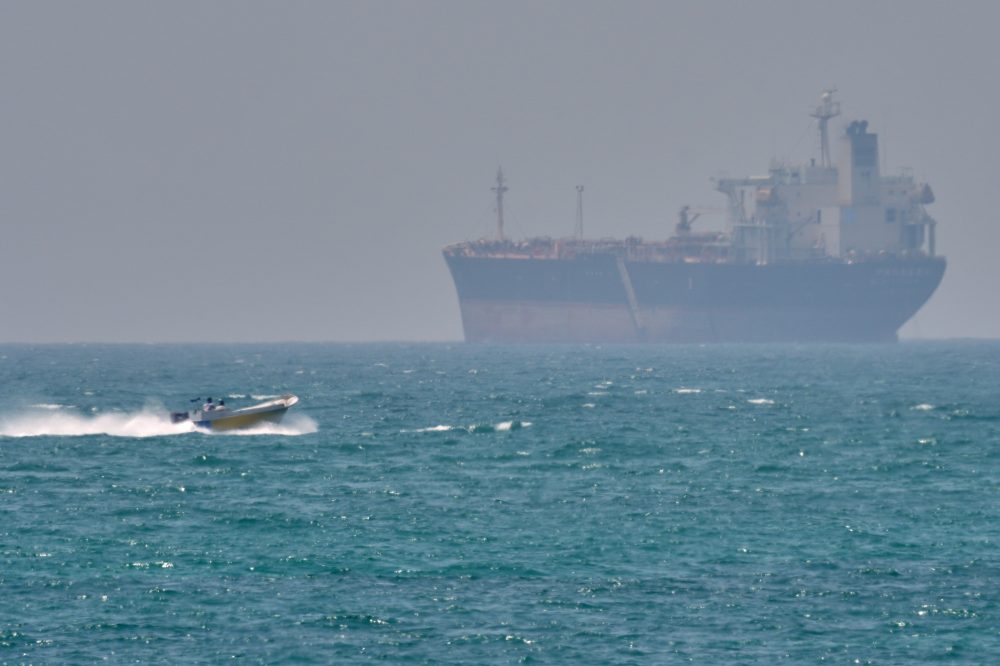
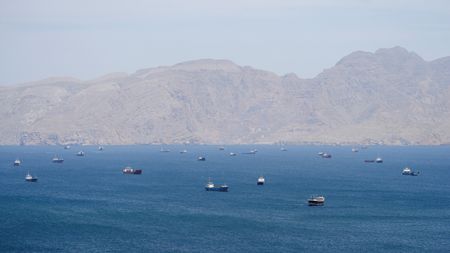
    Maritime tracking data reveals that nearly 90 vessels, including numerous oil tankers, have successfully navigated through the Strait of Hormuz since the current Iran conflict began, even as the critical waterway remains largely disrupted.

    According to Lloyd’s List Intelligence, a maritime data company, many of these vessels conducted what experts call “dark” passages – operations designed to avoid Western sanctions and monitoring systems, with suspected connections to Iran. Recent crossings have also included ships linked to India and Pakistan following diplomatic negotiations between those nations and Iran.

    The conflict has driven crude oil prices beyond $100 per barrel, prompting President Donald Trump to urge allies and trading partners to deploy naval vessels and help reopen the strait in an effort to reduce energy costs.

    The Strait of Hormuz serves as a vital corridor for global petroleum and natural gas shipments, handling approximately one-fifth of worldwide crude oil supplies. Since the war’s start in early March, most commercial shipping through the waterway has ceased, with roughly 20 vessels suffering attacks in the region.

    Despite these challenges, trade analytics company Kpler estimates that Iran has successfully exported more than 16 million barrels of oil since March began. China has emerged as the primary purchaser of Iranian crude due to Western sanctions and associated shipping risks.

    “There has been continued resilience” in Iran’s oil export volumes, noted Ana Subasic, a trade risk analyst with Kpler.

    Kun Cao, client director at consulting firm Reddal, explained that Iran has managed to generate revenue from petroleum sales while also “preserve its own export artery” through its strategic control of this maritime chokepoint.

    Maritime traffic information supports the oil export estimates from Iran.

    Between March 1 and 15, at least 89 ships traversed the Strait of Hormuz, including 16 oil tankers, according to Lloyd’s List Intelligence. This represents a significant decline from the pre-war daily average of 100 to 135 vessel passages. More than 20% of these 89 ships were believed to have Iranian connections, while vessels from China and Greece comprised much of the remaining traffic.

    Additional vessels have also managed successful crossings.

    The Pakistan-flagged oil tanker Karachi, operated by Pakistan National Shipping Corp., completed its passage through the strait on Sunday, Lloyd’s List Intelligence reported.

    Shariq Amin, a spokesperson for Pakistan Port Trust, declined to confirm or deny the MT Karachi’s specific route but stated the vessel would arrive safely in Pakistan soon.

    Two Indian-flagged liquefied petroleum gas carriers, the Shivalik and Nanda Devi, both operated by state-owned Shipping Corp. of India, also crossed the strait around March 13 or 14, maritime data shows. LPG serves as the primary cooking fuel for millions of Indian families.

    India’s foreign minister, Subrahmanyam Jaishankar, confirmed to the Financial Times that the two ships were permitted passage following discussions with Iran. Iraq has also initiated talks with Iran seeking permission for Iraqi oil tankers to transit the Strait of Hormuz, according to state media reports.

    “Vessels may be transiting with at least some level of diplomatic intervention,” explained Richard Meade, editor-in-chief of Lloyd’s List. This suggests Iran may have “effectively created a safe corridor” allowing certain ships to pass near the Iranian coastline.

    Earlier analysis from ship tracking platform MarineTraffic found that some vessels near the strait had identified themselves as China-linked or claimed all-Chinese crews to minimize attack risks. Experts believe these ships were leveraging China’s stronger diplomatic relationship with Iran.

    Oil prices have surged more than 40% to exceed $100 per barrel since the Iran war commenced, with Iran threatening it will not permit “even a single liter of oil” bound for the United States, Israel, or their allies to pass through the waterway.

    In an effort to stabilize energy prices, the United States announced it would permit Iranian oil tankers to cross the strait. “The Iranian ships have been getting out already, and we’ve let that happen to supply the rest of the world,” Treasury Secretary Scott Bessent told CNBC on Monday.

    While the U.S. conducted bombing operations against military installations on Kharg Island off Iran’s coast – a crucial hub for the country’s oil network and exports – President Trump indicated he has avoided targeting Iran’s oil infrastructure for now.

    Recent vessel movements through the Strait of Hormuz demonstrate the waterway is not completely “closed,” Cao observed. “It is better understood as closed selectively against some traffic, while still functioning for Iranian exports and a narrow set of tolerated non-Iranian movements,” he explained.

    However, Dutch bank ING strategists Warren Patterson and Ewa Manthey warned in a research note that if Iran’s strategy is to “inflict pain through higher energy prices, the number of tankers it allows through the Strait of Hormuz may be very limited.”

  • Iran Strikes Israel, Gulf Nations After Key Officials Killed

    Iran Strikes Israel, Gulf Nations After Key Officials Killed

    Early Wednesday morning, Iran conducted military strikes targeting Israel and several Gulf nations, with blasts reported in the United Arab Emirates and Qatar while Saudi Arabia intercepted incoming attacks.

    These retaliatory strikes followed confirmation from Iranian state media that Israeli forces had eliminated senior Iranian security leader Ali Larijani during a nighttime operation, along with Gen. Gholam Reza Soleimani, who commanded the Revolutionary Guard’s Basij unit responsible for crushing domestic demonstrations.

    Simultaneously, Israeli forces bombed a residential building in central Beirut’s Bachoura district at dawn, completely destroying the structure. Earlier Wednesday, two separate Israeli attacks on apartment complexes in other central Beirut areas resulted in six deaths and 24 injuries, Lebanese Health Ministry officials reported.

    Recent days have seen Israeli military operations increasingly target central Beirut areas, moving beyond the southern suburbs where evacuation warnings were initially issued when the conflict with Hezbollah began. These newer strikes often occur with little to no advance notice to civilians.

    The ongoing U.S.-Israeli conflict with Iran has resulted in significant casualties: at least 1,300 deaths in Iran, over 900 in Lebanon, and 14 in Israel, based on official counts from each nation. American military officials report 13 U.S. service members killed and approximately 200 injured.

    In related developments, Australian Treasurer Jim Chalmers stated Wednesday that his government has not received any official U.S. request for military assistance to maintain access through the Strait of Hormuz. His comments addressed President Trump’s criticism that Australia, Japan, South Korea and NATO allies had declined American calls for help protecting the strategic waterway from Iranian threats.

    “Not that I’m aware of,” Chalmers responded when asked about formal U.S. military support requests during an Australian Broadcasting Corp interview.

    “It’s not something that we’ve been considering, in terms of sending battleships to the Strait of Hormuz,” he told Sky News television separately.

  • Japan Weighs Military Options as Trump Seeks Strait of Hormuz Support

    Japan Weighs Military Options as Trump Seeks Strait of Hormuz Support

    TOKYO – President Donald Trump’s request for allied nations to deploy naval vessels for protecting oil tankers in the Strait of Hormuz has sparked renewed debate over Japan’s constitutional restrictions on military involvement and how much support Tokyo can provide to Washington in potential conflicts.

    Prime Minister Sanae Takaichi faces limited legal pathways and must consider historical precedents as she weighs Japan’s response to the American request.

    LAW ENFORCEMENT OPERATIONS

    Following Japan’s World War II surrender, the nation embraced a constitution written by American officials that prohibited using military force to resolve international conflicts.

    Despite these constraints, Takaichi has the authority to send Maritime Self-Defense Force ships abroad for law enforcement purposes. Japan demonstrated this approach in 2009 when it joined anti-piracy efforts near Somalia and in the Gulf of Aden, after updating laws to permit Japanese naval forces to safeguard ships from any nation.

    In response to Trump’s appeal, Defense Minister Shinjiro Koizumi informed lawmakers Monday that similar police-style operations might be explored “if further measures by the SDF are deemed necessary.”

    However, this legal framework was created for law enforcement rather than military engagement. Using it in situations where Japanese personnel might face a nation-state like Iran would create significant legal complications.

    ELEVATED LEGAL STANDARDS

    Japan took a notable departure from its postwar pacifist stance in 2015 by enacting security legislation that permits overseas military action under specific conditions. Such action is only authorized when an attack – including one targeting a close security ally – poses a threat to Japan’s existence and no alternative solutions exist.

    While these laws allow more extensive use of force than anti-piracy missions permit, the legal requirements for activating them are much more demanding. Takaichi would need to demonstrate that energy supply disruptions from Strait of Hormuz closure represent an existential danger – an argument that would likely encounter strong political and public resistance.

    These security laws remain unused, and Takaichi stated this week that Japan would emphasize diplomatic initiatives to reduce Middle Eastern tensions.

    HISTORICAL MILITARY DEPLOYMENTS

    Japan’s previous Middle Eastern operations provide Takaichi with guidance while highlighting how Tokyo has stayed within constitutional boundaries.

    During the 1991 Gulf conflict, Japan provided financial support instead of troops, drawing criticism from America and other countries as ‘checkbook diplomacy.’ Once fighting concluded, Japan sent mine-clearing vessels to the Persian Gulf in the Self-Defense Forces’ inaugural overseas mission.
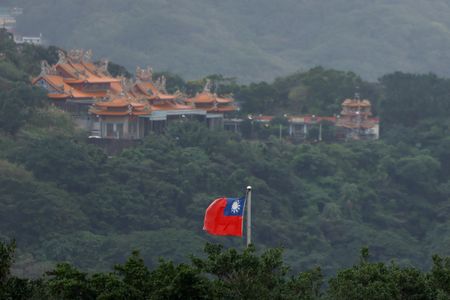
    “Japan’s poor response during the Gulf War remains a scar in the national consciousness. So I suspect her (Takaichi’s) government is looking hard for some way to show the flag,” said Michael Green, a professor and chief executive of The United States Studies Centre at the University of Sydney.

    Following the September 11, 2001 terrorist attacks, Japan deployed naval vessels to the Indian Ocean for refueling and supporting American-led Afghan operations. This eight-year mission excluded combat or escort duties.

    In 2004, Japan deployed approximately 600 ground forces to Iraq for reconstruction activities, plus aircraft for supply and personnel transport. These soldiers could only use force as a final option and received protection from Dutch and Australian forces throughout their two-year deployment.

    After 2019 tanker attacks that Washington attributed to Iran, Japan redirected a destroyer and patrol aircraft from Somali anti-piracy operations to collect intelligence in the Gulf of Oman, Arabian Sea and Gulf of Aden. These vessels remained outside the Strait of Hormuz and Persian Gulf.

    INTERNATIONAL LAW CONCERNS

    Japan confronts an additional legal challenge: determining whether American military actions comply with international law.

    The United Nations Charter typically prohibits force unless the U.N. Security Council provides authorization or it serves as self-defense against armed aggression.

    For a nation that has consistently championed international law, this uncertainty could further restrict Tokyo’s willingness to participate.

    Legal scholars remain split on whether U.S. strikes against Iran satisfy these requirements, and Takaichi has avoided stating Japan’s official stance on the matter.

  • Iranian Authorities Execute Man for Alleged Israeli Espionage

    Iranian Authorities Execute Man for Alleged Israeli Espionage

    Iranian authorities have carried out the death sentence against a man convicted of espionage charges, according to reports from the country’s judicial news outlet Mizan on Wednesday.

    The executed individual was identified as Kurosh Keyvani, who officials said was convicted of espionage activities targeting his home country.

    According to Mizan’s reporting, Keyvani was determined to be “guilty of providing Israel’s spy agency, Mossad, with pictures and information about sensitive locations in Iran.”

    This execution represents the latest development in the ongoing covert conflict between Iran and Israel that has persisted for decades. Iranian authorities have previously put to death multiple individuals they claim were connected to Mossad operations or assisted Israeli intelligence activities within Iranian territory.

  • Iraq and Kurdish Region Strike Agreement to Restart Oil Exports Through Turkey

    Iraq and Kurdish Region Strike Agreement to Restart Oil Exports Through Turkey

    Baghdad and Kurdistan Regional Government officials announced Tuesday they have struck a deal to restart crude oil shipments to Turkey’s Ceyhan energy terminal, with flows set to begin Wednesday morning.

    Iraqi Oil Minister Hayan Abdel-Ghani told state media that petroleum exports would commence at 10 a.m. local time Wednesday through the regional pipeline system.

    Kurdistan authorities confirmed the arrangement in an official statement, explaining that both governments will establish a joint oversight committee to coordinate the export restart. All revenues generated will flow back to Iraq’s federal treasury, according to the agreement.

    The deal also includes provisions for enhanced security measures to safeguard oil production facilities and maintain uninterrupted export operations, Kurdish officials said.

    Kurdistan Regional Government Prime Minister Masrour Barzani announced on social media that the region would permit crude shipments through its pipeline infrastructure as soon as possible “in light of the exceptional circumstances the country is confronting.”

    “Discussions with Baghdad will continue to urgently lift restrictions on imports and trade to the region, and to provide the necessary guarantees to oil and gas companies to ensure they can resume production in a safe environment,” Barzani stated.

    In a subsequent social media post, Barzani revealed that during a telephone conversation with U.S. envoy Tom Barrack, he had directed his team to provide full support for restarting oil exports to benefit citizens during these challenging times.

    The breakthrough follows recent tensions between the two governments. Kurdish leadership claimed Sunday that Baghdad had not adequately addressed security and economic issues affecting the petroleum sector, pushing back against allegations that they were blocking pipeline access.

    Those comments came after Iraq’s oil ministry accused Kurdish authorities of implementing unreasonable conditions and refusing pipeline access for alternative crude transport routes disrupted by the Iran conflict.

    Earlier Tuesday, Iraq’s presidency called on both the federal government and Kurdish region to work together on resuming petroleum exports.

    Parliament also weighed in Wednesday with a seven-point resolution during a special session focused on Ceyhan pipeline exports, urging the federal government to secure alternative outlets for Iraqi crude to prevent economic harm amid current security challenges.

    The parliamentary measures appeared designed to strengthen Baghdad’s oversight of the nation’s oil industry and followed a late Tuesday meeting with the oil minister to evaluate the impact of halted exports after Strait of Hormuz closure.

    Lawmakers said they stood ready to approve any necessary steps to support export efforts and called on the federal government to assert authority over all petroleum production, transportation and distribution activities.

    Parliament also recommended supplying fuel oil to government and private industrial facilities to prevent refinery inventory buildup, and rehabilitating the Iraqi pipeline route from Kirkuk through western Mosul, Zummar and Fishkhabour to Ceyhan.

    Oil production from Iraq’s primary southern fields, which generate most of the country’s crude output and exports, has dropped 70% to just 1.3 million barrels daily, sources reported March 8. The decline stems from the Iran conflict effectively closing the critical Strait of Hormuz, through which approximately 20% of global oil supplies pass.

    In early March, Iraq’s oil ministry requested Kurdish authorities allow at least 100,000 barrels per day of Kirkuk crude to flow through the Kurdistan pipeline network to Turkey’s Ceyhan terminal, according to two oil officials.

    Kurdish officials say relations with Baghdad have deteriorated after the federal government implemented a new electronic customs monitoring system, allowing oversight of imports and revenue streams. The Kurdistan Regional Government views this as an attack on its autonomous authority and trade control.

  • Missile Strikes Near Iran Nuclear Facility, No Damage Reported

    Missile Strikes Near Iran Nuclear Facility, No Damage Reported

    International nuclear authorities confirmed that a missile struck the grounds of Iran’s Bushehr nuclear facility on Tuesday night, though Iranian officials say no damage occurred to the plant or its workers.

    The International Atomic Energy Agency announced on social media that Iranian authorities had notified them of the projectile impact at the Bushehr nuclear power plant Tuesday evening, stating no facility damage or staff injuries resulted from the strike.

    The attack occurred during the ongoing three-week conflict between U.S.-Israeli forces and Iran.

    Rafael Grossi, who leads the IAEA, renewed his appeal for all parties to exercise extreme caution during military operations to prevent potential nuclear incidents.

    Iran’s nuclear authority verified the strike earlier Tuesday, with the nation’s Tasnim news outlet reporting the projectile struck the nuclear facility’s perimeter in the coastal city of Bushehr around 7 p.m. local time.

    Russia’s state nuclear company Rosatom criticized the attack on Tuesday, noting that radiation measurements around the facility remained at normal levels. The plant’s construction began under a German company during the 1970s before Russia took over and finished the project.

  • Paraguay Completes Historic Trade Deal Between South America and Europe

    Paraguay Completes Historic Trade Deal Between South America and Europe

    SANTIAGO, Chile — Paraguay’s legislature has given final approval to a historic trade agreement between South American nations and the European Union, completing a 25-year negotiation process that will create one of the planet’s most expansive free trade zones.

    On Tuesday, all 58 Paraguayan representatives present during the voting session unanimously endorsed the Mercosur-European Union trade pact. The approval came nearly two weeks following the Senate’s endorsement and now awaits President Santiago Peña’s signature to become official.

    This milestone makes Paraguay the fourth and last founding member of Mercosur to ratify the comprehensive agreement, joining Uruguay, Argentina, and Brazil in approving the deal. The European Commission has indicated it will provisionally implement the agreement while European lawmakers pursue a legal challenge through the European Court of Justice.

    The trade pact encompasses regions housing more than 700 million residents and represents 25% of the world’s total economic output. Bolivia, which recently joined Mercosur, did not take part in the original negotiations but will have the opportunity to participate in future years.

    Deputy Rodrigo Gamarra, a member of the governing Colorado Party and current leader of the Mercosur Parliament, called the development groundbreaking. “This is a historic agreement for Paraguay, for the region, and for the world. We are creating what is possibly the largest market in the world,” Gamarra stated.

    The legislative session extended beyond nine hours, with lawmakers highlighting the potential benefits the agreement will bring to both trading blocs. Colorado Party Deputy Juanma Añazco described the arrangement as crucial for future cooperation, saying “This provisional agreement is the bridge to full integration.”

    Another ruling coalition member, Deputy Alejandro Aguilera, emphasized the significance of reaching this point after decades of discussions. “It was years and years of negotiations and reluctance … achieving this is truly historic,” Aguilera commented.

    Opposition lawmakers also voiced support for the trade deal, with independent Deputy Raúl Benítez stating that “where there is isolation, we respond with multilateralism.”

    Paraguay’s approval concludes the ratification process for all South American participants in the agreement. Uruguay initiated the approval wave in late February, with Argentina completing its ratification the same day through substantial majorities in both legislative chambers. Brazil, representing Mercosur’s largest economy, followed suit in early March with unanimous Senate approval after lower house endorsement.

    Unlike the South American process, the European Union’s 27 member nations do not require individual legislative approval for the major trade agreement. However, the European Parliament will conduct another ratification vote once the ongoing court case determines whether the deal violates EU treaties.

    The agreement faces resistance from France, left-wing organizations, and agricultural unions, who contend it will harm European farming interests.

    This trade pact emerges during a period of global political division and economic uncertainty, as several European countries confront security threats and navigate strained relationships with the United States.

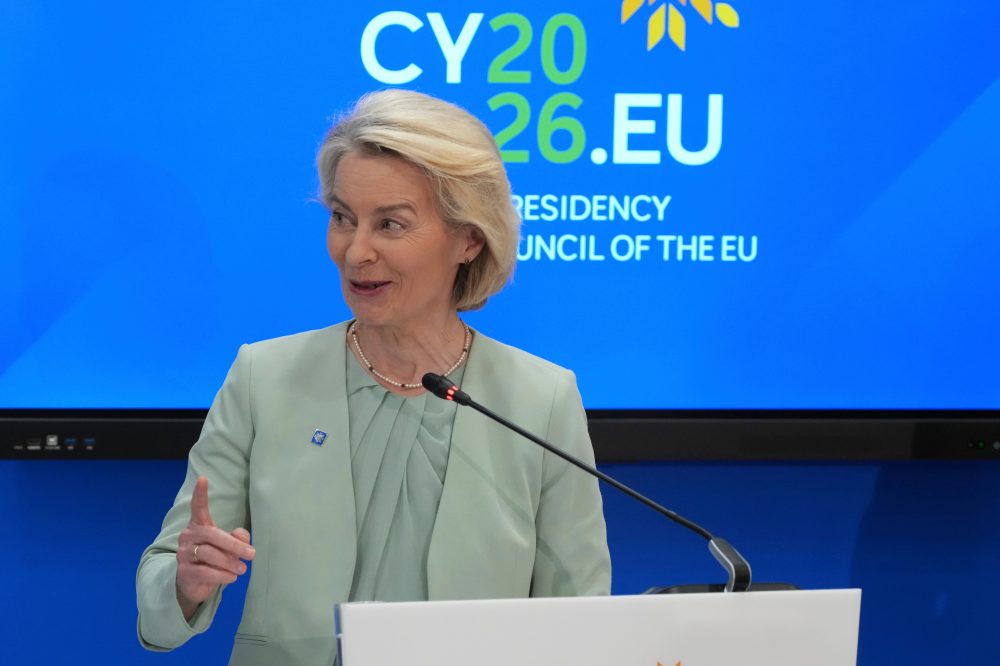
    European Commission President Ursula von der Leyen, working alongside Brazilian President Luiz Inácio Lula da Silva, served as a key advocate for the agreement. Von der Leyen has characterized it as “one of the most significant trade agreements of the first half of this century.”

    “Mercosur embodies the spirit with which Europe operates on the global stage. Europe is strengthening itself and gaining independence,” von der Leyen declared in her statement.

  • Iranian Missile Strikes Near Australian Base in UAE, No Injuries Reported

    Iranian Missile Strikes Near Australian Base in UAE, No Injuries Reported

    Australian Prime Minister Anthony Albanese confirmed Wednesday that an Iranian missile struck near Australia’s Al Minhad Air Base located in the United Arab Emirates, though he reported no injuries among Australian military personnel stationed there.

    Speaking to media in Tasmania, Albanese described the damage as limited. “There was minor damage to an accommodation block and a medical facility due to a small fire that was created as a result of that projectile hitting on a road leading up to that base,” the Prime Minister explained.

    The incident marks a concerning escalation in regional tensions, with the missile landing close enough to the Australian military installation to cause property damage through the resulting blaze.

  • Russia Claims Capture of Two Ukrainian Villages Amid Ongoing Conflict

    Russia Claims Capture of Two Ukrainian Villages Amid Ongoing Conflict

    MOSCOW – Russia’s defense ministry announced Tuesday that its military forces have seized two Ukrainian settlements, marking the latest territorial claims in the ongoing conflict that has stretched into its fourth year.

    According to Moscow officials, Russian troops now control Sopych village in Ukraine’s northern Sumy region and Kalenyky in the eastern Donetsk area. The announcement came one day after both nations made competing assertions about which side was gaining ground along the extensive 1,250-kilometer (775-mile) battle zone.

    “The armed forces of the Russian Federation liberated the settlement of Kalenyky in (Donetsk) as well as establishing control over the settlement of Sopych in Sumy region,” the ministry stated in a Telegram message.

    Top Russian military commander Valery Gerasimov provided an update Monday regarding his forces’ progress, indicating that troops were working to create protective buffer areas within the Sumy and Kharkiv regions.
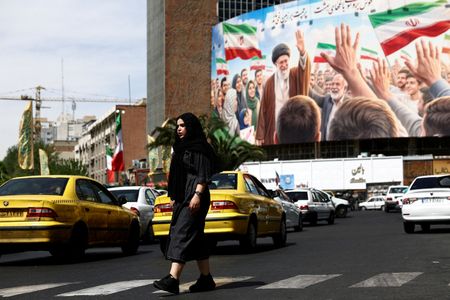
    The village of Sopych sits directly on Russia’s border within Sumy region, an area where Moscow’s military has spent months attempting to gain a foothold.

    Ukrainian media outlet Suspilne reported last week, citing the former director of the nation’s foreign intelligence service, that Russian soldiers had entered Kalenyky and forcibly relocated 19 local residents across the border into Russian territory.

    Kalenyky’s location places it to the east of Sloviansk, a heavily fortified city that has become a key defensive position. Gerasimov stated in his military briefing that Russian forces were “actively moving towards Sloviansk.”

    Ukrainian President Volodymyr Zelenskyy countered Moscow’s claims Monday, asserting that his nation’s military had successfully thwarted a planned Russian assault. He stated the attack’s intensity fell short of “what Russia had planned and what its command promised to Russia’s political leadership.”

    Russia’s defense ministry also reported intercepting 35 Ukrainian unmanned aircraft between 1:00 p.m. and 8:00 p.m. (1000-1700 GMT) in their most recent operational summary, with the majority shot down over the Krasnodar region along Ukraine’s eastern frontier.

  • World Hunger Crisis Could Worsen as Iran Conflict Disrupts Global Food Aid

    World Hunger Crisis Could Worsen as Iran Conflict Disrupts Global Food Aid

    The ongoing conflict involving Iran could drive an additional 45 million people into severe hunger by June, according to new projections released Tuesday by the World Food Programme.

    The military operations between U.S.-Israeli forces and Iran, which commenced on February 28, have significantly disrupted critical humanitarian supply chains and delayed essential aid deliveries to regions already facing severe food crises.

    World Food Programme Deputy Executive Director Carl Skau warned reporters in Geneva that the additional 45 million people facing acute hunger would push global totals beyond the current record of 319 million people experiencing food insecurity. The increase stems from escalating costs for food, fuel, and shipping services.

    “This would take global hunger levels to an all-time record and it’s a terrible, terrible prospect,” Skau stated. “Already, before this war, we were in a perfect storm where hunger has never been as severe as now, in terms of numbers and how deep that hunger is,” he continued.

    The humanitarian organization reports that transportation costs have jumped 18 percent since the conflict began in late February, forcing aid shipments to take longer, more expensive alternative routes. These mounting expenses come at a time when the World Food Programme has already implemented significant budget reductions as donor nations shift resources toward defense spending, Skau noted.

  • Iranian Missile Attack Kills 2 in Central Israel, Damages Tel Aviv Train Station

    Iranian Missile Attack Kills 2 in Central Israel, Damages Tel Aviv Train Station

    An Iranian missile bombardment targeting central Israel resulted in two fatalities late Tuesday evening, with an elderly couple in their 70s killed in Ramat Gan during the assault that triggered warning sirens throughout multiple regions.

    According to United Hatzalah emergency services, the victims were making their way down a stairwell toward a protective shelter when the strike occurred.

    Medical personnel from MDA provided care to a 25-year-old man from Bnei Brak who suffered shrapnel injuries to his hand during the bombardment.

    Authorities believe the weapon used was a cluster-type munition, creating more than eight separate debris impact zones throughout central Israel’s urban areas.

    Video evidence documented destruction at numerous locations following the assault, with a Tel Aviv railway station among the damaged facilities.

    Early assessments indicated that debris from defensive interceptor missiles fell across various locations, including educational grounds in Jerusalem and residential sections of Ramat Gan.

    Warning systems activated across Jerusalem, the Dead Sea region, and West Bank territories, along with the Sharon district and Lakhish vicinity, encompassing communities such as Bat Yam, Tel Aviv-Jaffa, Brenner, Hevel Yavneh, and Lev HaSharon. Iranian missile launches prompted two separate overnight alert cycles.

    First responders rushed to numerous locations throughout the affected areas to evaluate structural damage and provide medical assistance to injured civilians.

    This bombardment represents another escalation in Iran’s ongoing missile campaign against Israel’s heavily populated metropolitan regions, with overnight strikes documented across urban population centers.

  • UN Reports Nearly 5 Million Children Under 5 Died Globally in 2024

    UN Reports Nearly 5 Million Children Under 5 Died Globally in 2024

    New data from the United Nations reveals that approximately 4.9 million children worldwide failed to reach their fifth birthday during 2024, highlighting concerns that global efforts to reduce childhood mortality have plateaued.

    The statistics, released by UNICEF, the World Bank, the World Health Organization, and the UN population division, indicate that the majority of these deaths could have been avoided through improved healthcare access and affordable medical treatments for issues such as premature birth complications and diseases like malaria.

    While childhood deaths that could be prevented have dropped by more than half since 2000, the international agencies note that advancement has decelerated since 2015.

    The 2022 figure also stood at 4.9 million, marking a record low at that time, while 2023 saw 4.8 million deaths. Although the 2024 numbers suggest an increase, officials explain that different calculation methods were used between years, making direct comparisons impossible.

    A World Health Organization representative acknowledged a worldwide deceleration in mortality reduction efforts. “However… we do see a global slowdown in mortality reduction,” the spokesperson stated, citing armed conflicts, economic uncertainty, climate-related challenges, and inadequate health infrastructure as contributing factors to the stagnant progress. The representative added that reduced aid funding would compound these difficulties.

    “Together, these pressures risk undermining past achievements and could lead to stagnation – or even reversal – in hard-won child survival gains if not addressed,” the spokesperson warned.

    The Wednesday data release covers 2024, preceding significant international aid budget reductions initiated by the United States and subsequently adopted by major donor nations including the United Kingdom and Germany.

    According to a Gates Foundation analysis from late 2025, worldwide development assistance for health decreased by nearly 27% in 2025 compared to 2024. The foundation cautioned that these funding cuts were causing child mortality progress to reverse course.

    UNICEF Executive Director Catherine Russell expressed concern about the trend. “No child should die from diseases that we know how to prevent. But we see worrying signs that progress in child survival is slowing – and at a time where we’re seeing further global budget cuts,” Russell stated. The organizations noted that funding reductions could also hamper progress monitoring due to weakened data gathering capabilities.

    The analysis draws from UN statistics and projections provided by the Johns Hopkins Bloomberg School of Public Health.

  • Kurdish Family Celebrates Ramadan While Worrying About Relatives Across Border

    Kurdish Family Celebrates Ramadan While Worrying About Relatives Across Border

    GULP, Iraq — In a small village nestled at the base of mountains that separate Iraq from Iran, a Kurdish family comes together for their evening Ramadan observance in Gulp, located close to Halabja.

    The family prepares their iftar meal — the traditional dinner that ends each day’s fasting period during the sacred month of Ramadan — while children laugh and play around them as extended family members join the gathering.

    However, the joyful atmosphere of these closing days of the holy month carries an undercurrent of anxiety about events happening just beyond their border.

    Family member Nyan Fayaq expresses deep concern about her relatives living in Saqqez, a Kurdish community in Iran, explaining she has been unable to contact them for an entire month.

    The gathering represents both the continuation of cherished religious traditions and the reality of cross-border family connections that can be disrupted by regional tensions.

  • Peruvian Prime Minister Steps Down Before Congressional Vote

    Peruvian Prime Minister Steps Down Before Congressional Vote

    LIMA, Peru — Peru’s Prime Minister Denisse Miralles stepped down Tuesday before facing a mandatory confirmation vote in the nation’s legislature, where she needed majority support to retain her position.

    Miralles received her appointment as prime minister in late February following the removal of Interim President José Jerí due to corruption charges. Congressman Jose María Balcázar took over the presidency after Jerí’s departure.

    Under Peru’s governmental structure, prime ministers oversee the execution of government policies but are appointed rather than elected and do not serve as the head of the executive branch, a role reserved for the president.

    The former economy minister under Jerí offered no explanation for her departure. Speaking to reporters, Miralles expressed doubt about obtaining the legislative majority necessary for Wednesday’s confirmation vote.

    An independent oversight body, the Fiscal Council, recently criticized Miralles’ ministry for failing to oppose 26 congressional laws, leading to substantial increases in government expenditures.

    The South American nation will conduct presidential elections on April 12, featuring more than two dozen contenders vying for the position.

    Should no candidate achieve a majority exceeding 50% of votes, the two leading vote-getters will compete in a runoff election scheduled for June.

    Political instability has plagued Peru with eight different presidents serving over the last ten years, many ousted by Congress following corruption scandals. However, the country’s economic situation has remained relatively steady throughout this period, as successive administrations have maintained conservative financial policies featuring controlled government spending while welcoming foreign investment in sectors such as mining and infrastructure development.

  • Artificial Intelligence Transforms Modern Warfare in Middle East Conflict

    Artificial Intelligence Transforms Modern Warfare in Middle East Conflict

    Artificial intelligence technology is fundamentally changing how modern warfare operates, transforming both actual combat and the battle for public opinion in the current Middle East conflict involving Israel, Iran, and the United States.

    Military forces are now deploying AI-powered systems to analyze intelligence data, accelerate targeting procedures, and enhance missile defense capabilities. Meanwhile, social media networks have become flooded with computer-generated images, repurposed video content, automated accounts, and algorithm-boosted propaganda designed to create false narratives as rapidly as weapons can change battlefield realities.

    The outcome is a war where speed is crucial not only in aerial and naval operations, but also in digital spaces. The competition now centers on who can establish their version of events first, not just who can launch the initial attack.

    Technology strategist John Keith King, who previously served as a US government communications engineer working on critical command systems for senior national leadership, explained that artificial intelligence has already become integrated throughout multiple levels of contemporary military operations.

    King spoke with The Media Line about AI’s primary military applications. “One of the most important uses is intelligence fusion,” he stated. According to King, AI technology can quickly analyze massive amounts of satellite photographs, drone recordings, radar information, and intercepted communications, enabling military commanders to locate missile facilities, track troop deployments, and discover hidden infrastructure “with much greater speed and accuracy.”

    This explanation matches what officials and news reports have disclosed, though the specific systems currently being used remain classified. During Operation Epic Fury, which commenced on February 28, US and allied forces targeted Iranian command centers, air defense systems, missile and drone launching sites, and military airfields. Admiral Brad Cooper, who leads US Central Command, subsequently revealed that sophisticated AI technologies were assisting American forces in processing vast amounts of information more quickly, while emphasizing that human operators retain final authority over shooting decisions. A DefenseScoop report from March 11 noted that the command did not reveal which specific AI systems were being utilized.

    King emphasized that AI’s most significant battlefield role involves enhancing rather than replacing military commanders by speeding up their ability to observe and comprehend situations.

    “AI is also heavily used for target identification and tracking,” King described, explaining that computer vision technology can recognize vehicles, weapon systems, aircraft, and other equipment from drone or satellite footage and then continuously monitor them in real-time.

    This capability proves especially valuable in the type of combat environment currently characterizing the region, according to King.

    “The region is characterized by missile arsenals, drone warfare, and dispersed military infrastructure,” King observed. AI technology, he noted, assists analysts in tracking mobile missile platforms, locating drone launch areas, and detecting patterns that might signal an approaching attack, significantly speeding up detection and response capabilities.

    Regarding Israel’s AI usage, public information remains limited and disputed. International media reported in April 2024 that the United States was investigating claims that Israel had employed AI to select bombing targets in Gaza. The Israel Defense Forces rejected allegations of using AI systems to identify suspected Hamas members, stating that information systems only served as tools helping human analysts with target identification. Additional reporting in 2025 alleged that US technology companies had supplied AI and cloud computing services to the Israeli military during conflicts in Gaza and Lebanon, contributing to a significant expansion in AI and computing support used for faster target tracking. While this doesn’t definitively prove how these tools were applied in the current Iran conflict, it suggests Israel entered this regional escalation with already expanded AI-enabled military capabilities.

    King noted that AI is also becoming increasingly incorporated into both offensive and defensive systems that characterize this conflict.

    “Another major application is in autonomous and semi-autonomous platforms,” he explained, pointing out that numerous drones and loitering weapons employ AI-assisted navigation, object identification, and threat avoidance to search extensive areas, identify targets of interest, and transmit targeting information while reducing operator workload.

    “AI also plays a growing role in defensive systems,” King added. Missile defense networks, he explained, depend on machine learning to detect approaching threats, eliminate radar interference, and prioritize interceptions, often within seconds.

    This evaluation corresponds with the broader characteristics of the conflict. CENTCOM has described the campaign against Iran as heavily concentrated on drone and missile infrastructure, and officials have stated that the United States has needed to defend against large-scale retaliatory attacks while rapidly striking launch sites and command centers. Cooper said AI tools were helping leaders “cut through the noise and make smarter decisions faster than the enemy can react,” while stressing that final engagement authority remained with humans.

    While AI is accelerating military decision-making processes, it’s producing similar effects in information warfare.

    Yael Moshe, who leads an OSINT team and serves as an intelligence product specialist for the Israeli Defense Ministry’s Coordinator of Government Activities in the Territories, said the digital aspect of warfare is no longer secondary. It has evolved into its own battlefield, powered by AI-created content and social media virality.

    “I call it digital psychological terrorism,” Moshe told The Media Line. She said actors like Iran are utilizing AI and recycled footage to overwhelm platforms such as TikTok and Instagram, targeting younger audiences with manufactured realities, including false images of Tel Aviv in ruins and exaggerated portrayals of Iran’s military capabilities.

    Moshe explained that these campaigns operate simultaneously on two levels.

    “This serves two distinct arenas: manufacturing a fake ‘victory picture’ for Iran’s domestic audience, while simultaneously sowing fear globally,” she observed.

    Multiple reports have documented this pattern. A pro-Iran propaganda network has employed AI-generated misinformation and Epstein-related conspiracy theories to promote anti-US and anti-Israel messages to large online audiences. Fabricated AI content about the Iran conflict has also circulated widely on X, including manufactured visuals of attacks, false battlefield scenes, and manipulated imagery amplified by prominent accounts.

    Moshe argued that much of this material is technically basic but operationally successful because it spreads faster than fact-checking can occur.

    “When we talk about fake news, we mostly see two simple tricks,” she described: old videos from Syria or even video games are relabeled as current attacks, while AI generates false images of Israeli cities on fire. “It takes them 10 seconds to make, but by the time we prove it’s fake, millions of people have already seen it and believed it.”

    The danger increases when such content escapes fringe channels and reaches broader audiences, Moshe warned.

    Moshe said she personally remains unaffected by such content because she understands ground reality and recognizes psychological warfare tactics. However, “the true danger arises” when fabricated material spreads across social media and “bleed[s] into mainstream media.” That, she cautioned, is when “a localized lie becomes a dangerous global narrative.”

    This dynamic has become more apparent as the conflict has expanded. AI-generated images have falsely claimed to show captured US soldiers in Iran, while old footage has been recirculated as new strikes on Tel Aviv. These examples demonstrate that information warfare involves not only persuasion, but also saturation: flooding feeds so rapidly and extensively that verification becomes reactive rather than preventive.

    Moshe also highlighted the role of platform architecture itself.

    “Seeing people cheer when missiles are fired at us is frustrating,” she said, but added that platforms like TikTok and X reward extreme and hateful content because it generates views. She also noted that much apparent support for such content is artificially amplified: “A lot of this cheering isn’t just real people—it’s fake accounts and bots pushing this hate on purpose to make it look like the whole world supports it.”

    She noted that false reports about Israeli leaders, including Prime Minister Benjamin Netanyahu, being killed are part of the same psychological strategy.

    “Spreading fake news about Israeli leaders dying is a classic psychological trick,” she said. The goal, she added, is both to create panic within Israel and to provide audiences in Iran or Gaza with a false “victory” to celebrate.

    She also described how unrelated global trends are deliberately exploited to expand reach. “And as for the Epstein files, since everyone in the world was searching for it, they started putting Epstein hashtags on their anti-Israel videos. They did this just to ‘hijack’ or jump on the trend and expose it to millions of completely unrelated people so they could see their propaganda. Plus, it’s a way to connect Israel to crazy global conspiracy theories.”

    Many international outlets similarly discovered that pro-Iran networks had used Epstein-related content as part of a broader disinformation system connected to the war.

    What emerges from both military and digital fronts is the same fundamental reality: algorithmic acceleration. On battlefields, AI is helping militaries detect threats, identify targets, filter radar interference, and compress the time between detection and action. Online, it’s helping propagandists generate synthetic evidence, capture attention, and create illusions of consensus or victory before facts can be verified.

    King cautioned that even on the military side, this speed introduces serious dangers.

    “While artificial intelligence can improve precision and situational awareness on the battlefield, it also introduces new strategic risks,” he observed. As AI reduces detection and response times, he said, human deliberation decreases, raising the risk of rapid escalation if systems operate faster than political leaders can intervene.

    He described the broader transformation in dramatic terms.

    “Artificial intelligence is becoming the central nervous system of modern warfare,” he stated. By combining data from satellites, drones, electronic intelligence, and battlefield sensors into a real-time operational picture, AI compresses “the time between detection, decision, and action,” making wars increasingly influenced by algorithm-assisted decision cycles rather than traditional command timelines.

    The same acceleration is now occurring online. On social media, false information can now be created, amplified, and accepted before journalists, officials, or analysts have time to debunk them. On battlefields, AI may help identify launchers, prioritize intercepts, or accelerate strike planning. In both areas, the defining characteristic is velocity.

    As King concluded: “AI will not replace military leadership, but it will increasingly shape how quickly leaders must make decisions.”

    And as Moshe cautioned, the challenge is no longer only what occurs on the ground, but how rapidly false information about it can become accepted reality.

  • El Salvador Leader Seeks Life Sentences After Jailing 1% of Citizens

    El Salvador Leader Seeks Life Sentences After Jailing 1% of Citizens

    El Salvador’s President Nayib Bukele is advancing constitutional changes that would authorize lifetime imprisonment sentences in a nation where more than one percent of citizens are currently behind bars due to anti-gang operations.

    Bukele’s political party introduced the constitutional amendment to lawmakers on Tuesday, and the measure appears headed for approval given his party’s dominant control of the legislature.

    The proposal represents the latest in a series of constitutional modifications that critics argue are eroding democratic safeguards and weakening institutional oversight in the Central American country.

    “We will see who supports this reform and who dares to defend the idea that the Constitution should continue prohibiting murderers and rapists from remaining in prison,” Bukele wrote in a post on X on Tuesday.

    This past August, lawmakers approved another constitutional change eliminating presidential term restrictions, creating a pathway for Bukele to remain in office without time limits. Constitutional scholars widely view Bukele’s current second term, which started in 2024, as violating the nation’s charter that bars consecutive presidential reelections.

    The latest reform proposal expands upon Bukele’s existing anti-gang initiatives, including an emergency decree implemented in March 2022 after a surge in gang-related violence swept the country.

    This emergency declaration, designed as a short-term response but renewed for almost four years, has suspended fundamental constitutional protections and resulted in approximately 91,300 arrests.

    Human rights organizations have documented numerous cases of wrongful imprisonment over several years, with one advocacy group presenting evidence to the Inter-American Commission on Human Rights claiming most emergency detainees were unlawfully arrested. While Bukele strongly disputed these accusations, he has acknowledged releasing 8,000 individuals found to be innocent.

    Bukele’s administration has also targeted political opponents, arresting critics and activists while increasingly pressuring journalists and opposition figures to choose between leaving the country or facing imprisonment.

    Individuals arrested during the emergency period remain in custody with minimal evidence, facing unclear charges from government officials and receiving extremely limited access to legal protections. Many defendants face group trials while their attorneys frequently cannot locate their clients within the prison system.

    Government representatives under Bukele have previously declared that detained gang members “will never return” to freedom.

  • High-Ranking Iranian Leader Ali Larijani Dies in Israeli Military Strike

    High-Ranking Iranian Leader Ali Larijani Dies in Israeli Military Strike

    Israeli military forces announced Tuesday they had killed Ali Larijani, a high-ranking Iranian government leader, in strikes that could significantly impact Iran’s governing structure.

    The attack also claimed the lives of Basij commander Gholamreza Soleimani and his deputy, Karishi, according to Israeli Defense Forces confirmation.

    Uncertainty surrounded Larijani’s fate for several hours before officials verified his death Tuesday afternoon.

    Larijani had emerged as a crucial figure in Iran’s government, especially after the killing of Ayatollah Ali Khamenei. Following that event, Khamenei’s son Mojtaba Khamenei was named as the new leader but has been notably absent from public view amid reports he suffered severe injuries in an Israeli attack.

    On March 1, Larijani declared he would lead a temporary governing body to run Iran, though the scope of his power remained unclear. In recent weeks, he became Tehran’s most visible spokesperson, regularly addressing remarks made by US President Donald Trump amid the ongoing conflict.

    Throughout his career, Larijani occupied numerous high-level roles, serving as an Islamic Revolutionary Guards Corps commander, parliamentary speaker, and head of the National Security Council. Though he was blocked from the 2021 presidential race to clear the path for Ebrahim Raisi’s victory and temporarily lost political standing, he had recently returned to prominence.

    His influence expanded after Khamenei’s assassination and the deaths of other top Iranian leaders during both the current fighting and earlier clashes in summer 2025. Many considered him Khamenei’s second-in-command during the former leader’s lifetime, and he held major responsibilities for Iran’s security operations and nuclear talks with the United States.

    Should Larijani have been Iran’s de facto leader in recent weeks, his death could have major consequences for the Iranian government’s future stability.

  • US Embassy in Baghdad Hit by Drone and Rocket Assault in Major Regional Attack

    US Embassy in Baghdad Hit by Drone and Rocket Assault in Major Regional Attack

    Iraqi security officials report that the American Embassy in Baghdad faced a significant assault early Tuesday morning, with multiple rockets and at least five unmanned aircraft targeting the diplomatic facility in what they describe as the heaviest bombardment in the region since current hostilities between the United States, Israel, and Iran began.

    According to a Reuters eyewitness, no fewer than three drones were observed flying toward the embassy complex. Defense systems successfully stopped two of the aircraft, but a third managed to impact the embassy grounds, resulting in visible flames and smoke billowing from the compound.

    The Iranian-supported Popular Mobilization Front distributed footage capturing one of the drones approaching the embassy facility.

    In a separate incident within Iraq, an attack on a residence in the al-Jadriyah district resulted in four fatalities. An AFP security source reported that preliminary information suggested two of the deceased were “Iranian advisers” working with Tehran-affiliated organizations.

    The violence extended beyond Iraq’s borders, with additional attacks reported against energy installations and civilian locations throughout the Middle East.

    In the United Arab Emirates, an assault ignited a blaze within the Fujairah Oil Industry Zone. Production at the Shah field continued to be disrupted Tuesday following Monday’s missile strike on the facility, which ranks among the globe’s largest sour gas operations.

    Maritime authorities in Oman reported through the British Maritime Trade Center that a projectile hit an oil vessel, resulting in damage though no personnel were harmed.

    Kuwait’s Health Ministry announced that two healthcare workers sustained injuries at an ambulance facility due to falling debris, though additional details were not released.

    These incidents occur as military actions connected to the current conflict involving the United States, Israel, and Iran spread throughout several nations in the region, with attacks impacting diplomatic facilities, energy infrastructure, and civilian locations.

  • Israeli Forces Strike High-Ranking Iranian Leaders, Basij Commander Killed

    Israeli Forces Strike High-Ranking Iranian Leaders, Basij Commander Killed

    Israeli Defense Forces announced Tuesday they executed military strikes against high-ranking Iranian leadership, including senior official Ali Larijani and Basij commander Gholamreza Soleimani, alongside other top Islamic Jihad leaders in an operation that could significantly impact Iran’s command structure.

    According to reports from The Jerusalem Post later that morning, Soleimani died along with his deputy, Karishi, when both men were discovered hiding in a temporary shelter designed to evade detection. Larijani’s fate following the attempted strike remains unknown, though the assassination attempt has sparked widespread rumors that he may have been either killed or severely injured.

    Larijani has emerged as a key figure in Iran’s government hierarchy, especially after the killing of Ayatollah Ali Khamenei. Since Khamenei’s son, Mojtaba Khamenei, assumed leadership but has been notably absent amid reports he suffered serious injuries in an Israeli attack.

    On March 1, Larijani declared his intention to lead a temporary governing committee for Iran, although the scope of his power remains questionable. In recent weeks, he has become Tehran’s most visible spokesperson, regularly issuing responses to statements made by US President Donald Trump throughout the ongoing conflict.

    Throughout his career, Larijani has occupied numerous high-level roles, including commander of the Islamic Revolutionary Guards, parliamentary speaker, and head of the national security council. While he was prevented from seeking the presidency in 2021 to clear the path for Ebrahim Raisi’s victory and experienced a period of diminished influence, he has recently restored his political standing.

    His prominence increased after Khamenei’s assassination and the deaths of other top Iranian leaders during both the current hostilities and an earlier round of combat in summer 2025. Many considered him Khamenei’s second-in-command during the former leader’s lifetime, and he maintained significant oversight of Iran’s security operations and nuclear discussions with the United States.

    Should Larijani have been functioning as Iran’s de facto leader in recent weeks, his elimination or serious injury could create major disruptions within the country’s power structure.

  • Iranian Security Chief Ali Larijani Dies, State Media Confirms

    Iranian Security Chief Ali Larijani Dies, State Media Confirms

    Iranian state media outlets confirmed Tuesday that Ali Larijani, the nation’s security chief, has died.

    Multiple Iranian news organizations reported Larijani’s death on March 17th, though details surrounding the circumstances were not immediately provided.

  • Cuba Faces Major Crisis as Trump Suggests Possible U.S. Takeover

    Cuba Faces Major Crisis as Trump Suggests Possible U.S. Takeover

    The Caribbean island nation of Cuba finds itself in the grip of severe economic hardship and mounting political pressure as President Donald Trump makes increasingly bold statements about potential U.S. intervention.

    This week marked the third major power grid collapse since December, leaving the island in widespread darkness and prompting Trump to declare he might have the “honor of taking Cuba.”

    “I mean, whether I free it, take it. I think I could do anything I want with it,” Trump stated on Monday.

    The island nation faces a crippling energy crisis as U.S. sanctions have effectively blocked oil deliveries for the past three months, creating devastating consequences for Cuba’s 11 million citizens.

    Residents battle to prevent food from rotting without refrigeration, medical facilities have postponed surgical procedures, and the country’s premier university has scaled back academic programs due to power failures and transportation breakdowns.

    On Tuesday, the State Department characterized the ongoing electrical failures as evidence that Cuba’s leadership cannot meet citizens’ fundamental requirements.

    During a White House gathering Tuesday, Trump consulted Secretary of State Marco Rubio, whose parents emigrated from Cuba, about the situation.

    Rubio declared that Cuba’s existing governmental structure cannot address the nation’s challenges. “So they have to change dramatically,” Rubio stated.

    The current administration is insisting that Cuba free imprisoned dissidents and embrace political and economic reforms before sanctions will be removed.

    For several months, Trump has indicated Cuba’s leadership is nearing collapse and has referenced a potential “friendly takeover” following the U.S. removal of former Venezuelan leader Nicolás Maduro, though he hasn’t explained what such action would entail.

    Cuban leader Miguel Díaz-Canel acknowledged last week that conversations with Washington have occurred.

    Though he declined to share specifics about these discussions, he indicated they focused on resolving “bilateral differences between our two nations.”

    Trump has implied that Cuban officials should learn from Maduro’s experience, who was detained during a U.S. military action in January.

    According to anonymous U.S. officials and sources familiar with Washington-Havana communications, the Trump administration seeks Díaz-Canel’s departure from office, though no preferred successor has been identified.

    Cuba’s energy shortage intensified after the U.S. removed Venezuela’s government, cutting off vital petroleum imports. Trump subsequently warned of tariffs against any nation providing Cuba with oil.

    The country now depends on domestic natural gas, solar energy, and local oil reserves for its power plants, but these sources cannot satisfy national energy needs.

    The consequences have been devastating. Public transportation has reduced service, fuel distribution is severely limited, and Cuban officials report the healthcare system is on the brink of failure.

    These problems compound existing shortages of essential items like food and medical supplies.

    Cuba’s deteriorating electrical infrastructure has become increasingly unreliable over recent years. Daily power interruptions and frequent major blackouts have become routine.

    The nation’s aging power generation facilities receive minimal upkeep. Government representatives say U.S. economic restrictions have blocked purchases of replacement equipment and technical components.

    Limited availability of fuel oil and diesel has further restricted electricity generation capacity.

  • WSJ: Russia Provides Iran With Satellite Data, Drone Tech to Target US Forces

    WSJ: Russia Provides Iran With Satellite Data, Drone Tech to Target US Forces

    A new Wall Street Journal report indicates that Russia has been deepening its military alliance with Iran through the provision of satellite intelligence and enhanced drone capabilities, according to sources familiar with the intelligence sharing arrangement.

    The March 17 report suggests this collaboration is designed to help Iran more effectively target American military personnel deployed throughout the Middle East region.

    The expanded partnership between Moscow and Tehran represents a significant escalation in their defense cooperation, with Russia reportedly offering both surveillance imagery from space-based assets and technological improvements to Iran’s unmanned aircraft systems.

    Reuters has not been able to independently confirm the details outlined in the Wall Street Journal’s reporting at this time.

  • UN Investigation: Israeli Tank Fire Injured Peacekeepers in Lebanon

    UN Investigation: Israeli Tank Fire Injured Peacekeepers in Lebanon

    A United Nations internal investigation has concluded that Israeli military tank rounds struck a UN peacekeeping facility in southern Lebanon earlier this month, injuring three Ghanaian soldiers, according to a Western military source familiar with the findings.

    The preliminary investigation results from the March 6 incident at the al-Qawzah base indicate that three direct strikes came from an Israeli battle tank’s main weapon system, the source revealed. The tank fired 120-mm M339 HE-MP-T ammunition during the attack.

    “Israeli involvement in the attack against UNIFIL is undeniable, given that these munitions are manufactured by Israel Military Industries (IMI),” the source stated.

    The UN peacekeeping force, known as UNIFIL, operates in southern Lebanon to oversee tensions along the border with Israel, an area that has become a flashpoint for confrontations between Israeli forces and Hezbollah militants backed by Iran.

    When the incident occurred on March 6, UNIFIL officials described the wounding of Ghanaian peacekeepers during intense fighting as “unacceptable” but did not initially identify who was responsible for the attack.

    UNIFIL spokesperson Kandice Ardiel confirmed the investigation remains ongoing. “That investigation is not yet complete. Once it is finalized, it will be shared with the parties, per usual practice,” Ardiel said.

    “Nonetheless, we reiterate the obligation of all actors to ensure the safety and security of peacekeepers and avoid harm to civilians. Any deliberate attack on peacekeepers is a grave violation of international humanitarian law and a violation of resolution 1701,” she added.

    Israeli military officials have not yet provided a response to requests for comment regarding the incident. Israel Military Industries and Elbit Systems, the defense contractor that owns IMI, also have not responded to inquiries. Lebanese government officials similarly have not commented.

    The military source explained that the specialized ammunition used can target personnel, helicopters, equipment, armored vehicles, and structures. The three rounds were fired within a five-minute timeframe, suggesting deliberate targeting rather than an accidental stray shot.

    The source emphasized that all military forces in the region know the exact location and coordinates of the UN base, which raises significant safety concerns for international personnel stationed there.

    “This escalation, far from being isolated, is part of a worrying dynamic, severely testing UNIFIL’s ability to carry out its peacekeeping mission,” the source explained.

    The incident highlights growing dangers facing UN peacekeepers as Israeli military operations continue to expand in the region. Lebanon became involved in the broader Middle East conflict when Hezbollah launched rocket attacks against Israel, prompting Israeli military responses against the group.

    UNIFIL reported another concerning incident on Sunday, stating that peacekeepers likely came under fire three separate times from “non-state armed groups,” though no injuries occurred in those attacks.

    The peacekeeping mission, scheduled to conclude at the end of 2026, has repeatedly found itself caught between Israeli forces and Hezbollah fighters. Israeli officials maintain control of five positions within Lebanese territory and continue conducting airstrikes in southern Lebanon, claiming they target Hezbollah militants.

    UN Security Council Resolution 1701 specifies that only UN peacekeepers and Lebanese military forces should operate in southern Lebanon. Israeli officials have consistently accused Hezbollah of attempting to rearm while criticizing Lebanese forces for failing to disarm the militant organization.

  • Taiwan Arms Shipments Continue Despite Iran Conflict, State Department Says

    Taiwan Arms Shipments Continue Despite Iran Conflict, State Department Says

    WASHINGTON – Trump administration officials assured lawmakers Tuesday that military operations in Iran have not interrupted weapons deliveries to Taiwan or altered American policy toward the island democracy.

    “Have we delayed moving things to Taiwan? We haven’t,” Stanley Brown, principal deputy assistant Secretary of State for Political-Military Affairs, told members of the House Foreign Affairs Committee during testimony.

    The reassurance addresses growing concerns that America’s defense manufacturing sector might struggle to meet increased demand following the U.S.-Israeli air campaign against Iran that began February 28. Some officials worried this could force slower deliveries to nations like Taiwan, which continues facing mounting military threats from China.

    Even before the Iran conflict began, Taiwan faced a multi-billion-dollar backlog in American arms shipments. Brown indicated the administration is exploring methods to speed up these deliveries, though he did not elaborate on specific plans.

    The congressional hearing occurred on the same day President Trump announced he would postpone his planned summit with Chinese President Xi Jinping in Beijing. Taiwan was expected to be among the key topics during those discussions.

    Beijing considers Taiwan part of Chinese territory and has not ruled out military force to bring the island under its control. Taiwan’s government disputes China’s territorial claims, maintaining that only Taiwan’s citizens should determine their future.

    Chinese military exercises around Taiwan last occurred in December, while Beijing’s naval vessels and aircraft routinely patrol near the island.

    According to recent reports, a significant American weapons package for Taiwan worth approximately $14 billion awaits Trump’s signature. This deal, featuring advanced interceptor missiles, would represent the largest arms sale ever to the democratic island. The postponed China trip may affect the timing of this agreement.

    Congressional Republicans and Democrats continue clashing over Trump’s use of national emergency declarations to bypass legislative oversight of international weapons sales. This includes the recent expedited $650 million bomb sale to Israel.

    During the hearing, Committee Chairman Brian Mast of Florida and fellow Republicans criticized Democrats for allegedly delaying vital support to key allies facing international threats.

    New York Representative Gregory Meeks, the committee’s ranking Democrat, argued that circumventing congressional review of major deals undermines human rights oversight.

  • Iran Leader’s Death Sparks Debate Over US Role in Foreign Assassinations

    The death of Iran’s Supreme Leader Ayatollah Ali Khamenei has sparked renewed debate about America’s role in assassinating foreign officials, raising fundamental questions about democratic principles and international law.

    Advanced technological capabilities made it possible for the United States and Israel to carry out the operation that killed Iran’s top leader, but the action has revived long-standing ethical concerns about whether democratic nations should engage in targeted killings of foreign leaders.

    The assassination has prompted discussions among policymakers, legal experts, and ethicists about the appropriate limits of covert operations and whether such actions undermine the moral authority that democracies claim to uphold on the global stage.

    In Baghdad’s Sadr City district, Iraqi Shiite Muslims held a symbolic funeral ceremony the day following the killing, with mourners carrying images of the deceased Iranian leader as they processed through the streets.

    The incident highlights the ongoing tension between national security objectives and democratic values, as officials grapple with questions about accountability, international law, and the long-term consequences of state-sponsored assassinations.

  • 93-Year-Old Former Belgian Diplomat to Face Trial in Congo Leader’s 1961 Murder

    93-Year-Old Former Belgian Diplomat to Face Trial in Congo Leader’s 1961 Murder

    A Belgian court made an unprecedented decision Tuesday, ruling that a 93-year-old former diplomat must face trial for his alleged involvement in the 1961 murder of Patrice Lumumba, Congo’s first prime minister and celebrated independence leader, media outlets reported.

    Lumumba became the driving force behind Congo’s liberation from Belgian colonial rule in June 1960. The mineral-rich nation’s inaugural prime minister was just 35 when he was murdered, serving only three months in office before being ousted and killed the following year.

    The defendant, Etienne Davignon, worked as a young diplomatic intern in Kinshasa during that period and represents the final living person among 10 Belgians suspected of participating in Lumumba’s death.

    Davignon, who later became a vice president of the European Commission, has 14 days to challenge the charges and has consistently maintained his innocence.

    Belgian federal prosecutors are pursuing charges against Davignon for “participation in war crimes” related to his alleged role in Lumumba’s “unlawful detention and transfer.”

    The legal action stems from a 2011 lawsuit brought by Lumumba’s children in Belgium, seeking accountability for their father’s January 1961 killing by separatist forces. While Congolese individuals carried out the actual murder, suspicions have long surrounded potential Belgian and American involvement due to Lumumba’s suspected communist connections.

    Lumumba’s remains were never recovered and are believed to have been destroyed with acid.

  • Iranian Military Leader Gholamreza Soleimani Killed in Joint U.S.-Israel Strike

    Iranian Military Leader Gholamreza Soleimani Killed in Joint U.S.-Israel Strike

    Iranian state television reported Tuesday that Gholamreza Soleimani, who served as the leader of Iran’s paramilitary Basij organization, died in joint military operations conducted by American and Israeli forces.

    Earlier on Tuesday, Israeli officials had announced they had successfully targeted and eliminated Soleimani in the coordinated strike.

    The Basij force operates as a volunteer paramilitary organization within Iran’s military structure, reporting to the Islamic Revolutionary Guard Corps.

  • Peru’s Top Minister Steps Down Just Weeks Before National Elections

    Peru’s Top Minister Steps Down Just Weeks Before National Elections

    LIMA – Peru’s government underwent a major shakeup Tuesday when Prime Minister Denisse Miralles stepped down from her post, according to an announcement from the presidential office, creating uncertainty just weeks before the nation heads to the polls on April 12.

    The departure automatically triggers the resignation of Peru’s entire cabinet under the country’s legal framework, which mandates that all 18 ministers must vacate their positions when the prime minister, who leads the cabinet, resigns.

    President Jose Balcazar now faces the decision of whether to reappoint the existing ministers or replace them with new appointees as the country approaches its general election.

    The presidential office provided no explanation for why Miralles chose to leave her position at this critical time.

    In a statement posted on social media platform X, Balcazar’s administration expressed gratitude for her service: “The presidency of the Republic of Peru thanks Ms. Denisse Miralles for the services rendered to the nation as president of the council of ministers during an important period for the country, and wishes her success in her professional career and in her future endeavors.”

  • French, German Leaders Set to Address Struggling Fighter Jet Program Crisis

    French, German Leaders Set to Address Struggling Fighter Jet Program Crisis

    French President Emmanuel Macron and German Chancellor Friedrich Merz are scheduled to address the struggling FCAS fighter aircraft program during their meeting ahead of this week’s European Union summit, according to two sources with knowledge of the situation.

    The ambitious $100 billion initiative to create an advanced air combat system alongside Spain faces potential collapse as French aerospace giant Dassault Aviation and Airbus clash over project leadership and control.

    While Macron’s office has verified the planned meeting between the two leaders before the March 19-20 summit, officials would not confirm whether the fighter program will be part of their discussions.

    The initiative was originally launched by Macron and former German Chancellor Angela Merkel in 2017, with Spain becoming a partner at a later date.

    The ambitious program envisions a digitally integrated network of piloted fighter aircraft and unmanned combat drones designed to succeed the Dassault Rafale and Airbus-supported Eurofighter beginning in 2040. However, the participating companies have reached an impasse regarding the upcoming phase that includes building a test aircraft.

    Dassault is demanding greater authority over the primary fighter aircraft component, including supplier selection rights, while proposing to grant Airbus similar autonomy in areas where it currently leads. Airbus maintains that current agreements establishing equal partnership should remain unchanged.

    The relationship between these aerospace companies has deteriorated significantly, with most project participants doubting its continuation. However, the ultimate decision rests with national leadership, and Macron appears to oppose German industry calls to terminate the program.

    During a trip to New Delhi last month, Macron rejected the notion that corporate disagreements should influence government decisions regarding strategic defense development.

    “There have been frictions between companies; that’s the life of business and of human organisations. But should that decide the strategy of states? The answer is no,” he told a news conference.

    Should the French-German-Spanish initiative, known by its French acronym SCAF, fail, it would likely prompt a reorganization of partnerships within Europe’s divided defense manufacturing sector.

    Germany has historically collaborated with Britain on advanced fighter development, though Britain is now participating in the rival GCAP fighter program with Japan and Italy.

    Sweden, manufacturer of the independent Saab Gripen aircraft, is evaluating its future position in the fighter market and could potentially partner with Airbus if the FCAS program fails.

  • Ancient Colosseum Gets Major Makeover Using Original Roman Marble

    Ancient Colosseum Gets Major Makeover Using Original Roman Marble

    ROME — Italy’s most famous ancient landmark has received a stunning makeover that brings visitors closer to experiencing what Romans saw two millennia ago.

    The Colosseum’s exterior plaza has been transformed through a restoration project that uses authentic travertine marble to mark the exact locations where massive columns once towered 164 feet into the sky. These same quarries supplied building materials to ancient Roman architects.

    The arena continues to mesmerize people from around the globe, drawing 9 million tourists in 2025 and maintaining its status as Italy’s top visitor destination. Centuries ago, crowds of Romans gathered in this same space to witness gladiator combat and battles with wild beasts.

    The renovation concentrated on the curved plaza area where ancient spectators once congregated beneath two grand arcade structures supported by towering marble pillars. These waiting areas allowed people to queue before entering the arena to find their designated seats.

    Natural disasters and ground instability caused these magnificent archways to crumble over many centuries. However, visitors today can rest on substantial travertine blocks positioned precisely where the original supports once stood, while examining replicas of Roman numerals that once guided spectators to their seating areas.

    Italian architect Stefano Boeri, who created the plaza design, explained the project’s vision: “These blocks of travertine marble are placed, located exactly where the pillars, the original pillars were based. The idea we had was to give back to the public the perception of the proportion of the arcades and the proportion of the vaults of the arches that were used to enter in the center of the Colosseum.”

    The surrounding area had deteriorated significantly, becoming cluttered with rubble fragments and overgrown vegetation.

    Workers excavated approximately three feet down to reach the original travertine pavement that once covered the entrance zone. Archaeological discoveries during the dig included ancient coins, sculptural pieces, animal remains, and a golden ring. Further excavation revealed Emperor Commodus’s private underground tunnel, which allowed him to access the Colosseum without encountering ordinary citizens. This hidden passageway opened for public tours last year.

    The restoration team obtained fresh travertine slabs from identical quarries that supplied ancient Roman builders. These same stone sources continue providing materials for contemporary religious structures, financial institutions, cultural venues, government facilities, and residential properties.

    Fabrizio Mariotti, whose family business Mariotti Carlo has specialized in travertine craftsmanship for four generations in Tivoli, expressed his enthusiasm while seated on one of the new stone pieces: “From the beginning we understood only one thing and that was that we wanted to be involved. For a family like ours that has been working with travertine for four generations, working at the Colosseum, which is the symbol not only of Rome but also of this material, is so important.”

    Rome recently inaugurated two additional subway stations this year, including one located deep beneath the Colosseum, completing a multi-billion euro transit expansion. Officials confirmed that funding for the Colosseum’s perimeter restoration came from compensatory money allocated for the metro construction project.

  • Space Images Reveal Widespread Destruction from Ongoing Iran Conflict

    Space Images Reveal Widespread Destruction from Ongoing Iran Conflict

    DUBAI, United Arab Emirates (AP) — New space-based photography is providing an initial look at the extensive destruction caused by the ongoing conflict with Iran, revealing burning vessels at Iranian harbors and demolished structures at American military installations.

    Details about the extent of destruction throughout the Middle East have remained limited, especially regarding damage within secure military compounds, since hostilities commenced on February 28.

    The photographs originate from Planet Labs PBC, a San Francisco-based company that supplies imagery to news organizations, including The Associated Press. Planet Labs implements a two-week waiting period before making its images publicly available due to worries that “adversarial actors” might misuse the footage.

    Additional high-quality images have been released by rival companies. Other sources, such as the U.S. Geological Survey, have also made available lower-quality imagery that has proven valuable.

    American and Israeli forces have been attacking numerous targets, including key leaders, military installations, missile and air defense locations, and positions belonging to the paramilitary Revolutionary Guard along with its volunteer unit, the Basij. Iran has retaliated using drone and missile attacks aimed at Israel and neighboring Gulf Arab countries.

    The following examines what can be observed in selected Planet Labs photographs, along with images from other sources.

    Among the most striking photographs from Planet Labs have emerged from Bandar Abbas, which houses a significant Iranian naval facility adjacent to the vital Strait of Hormuz linking the Persian Gulf with the Arabian Sea.

    Pictures captured on March 2 reveal vessels on fire at the harbor. The U.S. military’s Central Command has been focusing on Iran’s naval resources and reports it has destroyed or damaged over 100 Iranian ships during the conflict.

    The island nation of Bahrain, which hosts the U.S. Navy’s 5th Fleet, has experienced intense Iranian attacks targeting military bases and petroleum facilities. A March 1 photograph taken by Planet Labs reveals a major structure at the base has been destroyed, along with two radomes — dome-shaped structures protecting radar equipment — presumably from Iranian missile and drone attacks.

    The Navy has not provided detailed information about the total damage sustained at the base, though Iran has consistently claimed responsibility for attacking it. Internet videos have also captured incoming fire directed at the facility. During the 12-day conflict in June, Iran struck and demolished a comparable radome at Al Udeid Air Base in Qatar that was used for protected communications.

    In Abu Dhabi, the UAE’s capital city, damage is visible at France’s Camp de la Paix naval installation. Space imagery from March 3 displays destruction to two large warehouse-style structures at the site. The facility is located near Zayed Port in Abu Dhabi, and in proximity to its Cultural District housing the Louvre Abu Dhabi and other significant museums, both operational and under development.

    The U.S. Geological Survey’s Landsat satellites have also proven essential for identifying large fires. Landsat imagery captured on Monday revealed a blaze at Dubai International Airport following an Iranian drone attack that ignited a fuel truck at the world’s most active airport for international flights, creating a cloud of toxic black smoke.

    Another fire was observed on Monday at Oman’s southern harbor in Salalah, which was attacked by suspected Iranian drones on March 11, although Tehran has disputed launching them as part of its campaign against Gulf Arab nations. The fire appears to have continued burning since that time.

  • Construction Accident in Vienna Kills Four Workers

    Construction Accident in Vienna Kills Four Workers

    A tragic construction accident in Vienna, Austria has claimed four lives after scaffolding gave way at a building site, according to reports from the Austrian news agency APA on Tuesday.

    The fatal incident occurred in Vienna’s affluent ninth district at a construction location. Emergency responders treated one man with severe injuries from the accident, according to a representative from the city’s ambulance service.

    Vienna police officials were not immediately available to provide additional details about the circumstances surrounding the scaffolding failure.

  • UAE May Partner with US on Strait of Hormuz Security Mission

    UAE May Partner with US on Strait of Hormuz Security Mission

    The United Arab Emirates is considering participation in an American-led international coalition focused on protecting the Strait of Hormuz, according to a senior diplomatic official.

    Anwar Gargash, who serves as a diplomatic adviser to the UAE president, made the announcement Tuesday during a virtual event hosted by the Council on Foreign Relations, an American policy research organization.

    Gargash also revealed that the UAE is not currently engaged in active diplomatic discussions with Iran.

    The statements arrive as maritime security threats in the Strait of Hormuz continue to raise international alarm about safe passage for commercial vessels through the strategic waterway.

  • Two Men Face Wildlife Trafficking Charges After Ant Smuggling Bust in Kenya

    Two Men Face Wildlife Trafficking Charges After Ant Smuggling Bust in Kenya

    NAIROBI, Kenya — Two individuals appeared in a Nairobi courtroom Tuesday facing wildlife trafficking charges after being caught with nearly 2,300 live ants packaged in specialized containers.

    Zhang Kequn, a Chinese citizen, and Charles Mwangi, a Kenyan resident, were formally charged with illegally trafficking wildlife species and conspiracy to commit a felony following their March 10 arrest.

    According to court documents, authorities discovered the men possessing 1,948 garden ants housed in specialized tubes, plus another 300 ants concealed within tissue rolls. Neither suspect held the necessary permits required by Kenya’s wildlife protection statutes for handling or trading such species.

    Prosecutors allege Kequn purchased the insects from Mwangi in two separate transactions — paying 60,000 Kenyan shillings ($463) for 600 ants initially, then 70,000 shillings ($540) for a second batch of 700 ants. Mwangi faces an additional charge after allegedly being discovered with more live ants.

    Both defendants remain in jail pending further proceedings.

    David Lusweti, representing Kequn, told The Associated Press the men were unaware they were violating any laws. “They have seen potential that they are able to sell outside the country, they believe that they can make a living out of it,” he explained.

    This arrest represents the latest incident in what Kenyan officials describe as an expanding illegal trade involving ant smuggling to European and Asian markets. Authorities have not disclosed whether the insects are desired as exotic pets or serve other commercial purposes.

    In 2023, two Belgian teenagers faced similar wildlife trafficking charges after being caught with 5,000 ants in test tubes. Kenyan authorities estimated those insects’ value at 1 million shillings ($7,700).

    The Kenya Wildlife Service previously stated that such illegal exports “not only undermines Kenya’s sovereign rights over its biodiversity but also deprives local communities and research institutions of potential ecological and economic benefits.”

    Another case from last year involved a Kenyan citizen and Vietnamese national who were similarly charged with illegal trafficking after being found with 400 ants.

  • Hungary, Slovakia Sign Deal for New Oil Pipeline Amid Russian Supply Dispute

    Hungary, Slovakia Sign Deal for New Oil Pipeline Amid Russian Supply Dispute

    BUDAPEST, Hungary — Two Eastern European nations have reached a new agreement to construct an oil products pipeline in an effort to strengthen regional fuel security, Slovakia’s Energy Ministry announced Tuesday.

    The proposed 79-mile pipeline will connect Hungary’s Százhalombatta refinery with Slovakia’s Bratislava refinery, creating capacity to move 1.5 million tons of gasoline and diesel annually, according to ministry officials.

    Construction linking the two facilities, both operated by Hungary’s Mol Group, is scheduled for completion during the first half of 2027, Hungarian Foreign Minister Péter Szijjártó announced Monday from Brussels, where officials signed the deal.

    The fuel connection would “add further value from the perspective of Hungary’s energy supply and diesel supply, while helping to counter the effects of wars around the world,” Szijjártó stated.

    The partnership emerges amid ongoing tensions between the two EU nations and Ukraine regarding oil pipeline access. Hungary and Slovakia remain the only European Union members still receiving Russian crude oil imports.

    Deliveries through the Druzhba pipeline system have been halted since late January following what Ukraine describes as Russian drone damage to critical infrastructure. Ukrainian officials report that repair work poses safety risks to maintenance crews.

    Ukrainian authorities warn that even if repairs are completed, the pipeline infrastructure remains at risk for additional Russian military strikes.

    Both Hungarian and Slovak leadership have criticized Ukraine for allegedly blocking Russian crude shipments intentionally, promising strong responses until deliveries restart. Hungary has already prevented a 90-billion euro ($104 billion) EU loan package to Ukraine over the supply interruptions.

    Slovakia’s Energy Ministry stated that the supply disruptions have “highlighted the vulnerability of energy infrastructure and the need to diversify supply routes and sources.”

    “The new pipeline should therefore improve supply flexibility and enable more efficient fuel transfers between refineries in both countries,” the ministry explained.

  • Ecuador Denies Cross-Border Bombing Claims Amid Rising Colombia Tensions

    Ecuador Denies Cross-Border Bombing Claims Amid Rising Colombia Tensions

    BOGOTA, Colombia — Ecuador’s leader has firmly denied accusations that his nation’s military is conducting bombing strikes across the border into Colombia, as diplomatic tensions between the neighboring South American countries continue to worsen.

    President Daniel Noboa took to social media platform X on Tuesday to clarify his administration’s position, stating that his government “is fighting narco terrorism in all its forms” and “bombing places that serve as hideouts for those groups, of which many are Colombian,” but emphasized these operations occur exclusively on Ecuadorian soil.

    The Ecuadorian president’s statement came in direct response to Colombian President Gustavo Petro, who had made explosive claims the previous day suggesting Ecuador was launching attacks on Colombian territory near their mutual border. During a televised government meeting, Petro declared, “We are being bombed from Ecuador, and it’s not rebel groups who are doing it.” He mentioned that Colombian authorities had discovered explosive devices but offered no supporting evidence for his accusations.

    Petro also revealed he had contacted U.S. President Donald Trump, requesting American intervention to convince Noboa to halt what Colombia believes are unauthorized military operations on its territory.

    This diplomatic crisis unfolds as Colombia approaches its May presidential elections, with relations between these once-allied nations continuing their downward spiral. The countries previously maintained strong commercial ties and coordinated security efforts.

    Earlier this year, Noboa implemented harsh economic measures against Colombia, first establishing a 30% import tariff in January before escalating it to 50%. The Ecuadorian leader justified these duties as a “security tax,” arguing that Colombia has failed to prevent drug trafficking organizations and rebel forces from infiltrating Ecuador. He has indicated these tariffs will remain until Colombia demonstrates more aggressive action against criminal networks.

    Colombian officials have pushed back against suggestions they are not adequately addressing drug trafficking, particularly the flow of Colombian cocaine through Ecuadorian ports. In retaliation, Colombia has implemented its own tariffs on Ecuadorian products.

    The conservative Noboa has faced significant challenges in addressing Ecuador’s escalating drug-related violence, where murder rates have increased fivefold over the past half-decade. His administration has resorted to implementing nighttime curfews across four provinces as part of broader crime-fighting efforts.

    Recently, Noboa’s forces collaborated with American military units in a major operation targeting a drug trafficking facility near the Colombia-Ecuador border, utilizing unmanned aircraft, helicopters, and watercraft in the mission.

    Meanwhile, Petro, a former leftist rebel turned politician, has pursued negotiations with Colombia’s remaining insurgent organizations through his “total peace” initiative.

    However, critics argue that these ceasefire agreements have actually strengthened these groups’ control over rural areas, as they compete for territories previously held by the FARC guerrilla organization, which signed a peace agreement with Colombia’s government in 2016.

  • Cuba Hit by Third Major Blackout as U.S.-Cuba Tensions Escalate

    Cuba Hit by Third Major Blackout as U.S.-Cuba Tensions Escalate

    HAVANA — Cuba’s electrical grid failed again Tuesday, marking the third major power outage to strike the Caribbean nation in just four months and highlighting the island’s worsening energy shortage and economic troubles amid escalating diplomatic friction with President Donald Trump.

    Power restoration efforts were underway at medical facilities and for portions of Cuba’s 11 million citizens, though government officials cautioned that the deteriorating electrical infrastructure remains vulnerable to additional failures.

    The island’s outdated power system has significantly deteriorated over recent years, resulting in routine daily outages and increasingly frequent major blackouts affecting large areas.

    Cuban authorities attribute their energy difficulties to what they call a U.S. energy embargo, following Trump’s January announcement threatening tariffs against nations that sell or supply oil to Cuba.

    Following Cuba’s latest plunge into darkness, Trump declared Monday that he expects to have the “honor of taking Cuba.”

    “I mean, whether I free it, take it. I think I could do anything I want with it,” he said. Trump has characterized Cuba as a “very weakened nation.”

    The Trump administration is insisting that Cuba free political detainees and pursue political and economic reforms as conditions for removing sanctions. Trump has also mentioned the potential for a “friendly takeover of Cuba.”

    Essential oil deliveries from Venezuela ceased after the United States launched an attack on the South American nation in early January and detained its former president, Nicolás Maduro.

    Although Cuba generates 40% of its own petroleum and produces its own electricity, this output falls short of meeting national demand as the electrical infrastructure continues deteriorating.

    Cuba’s Ministry of Energy and Mines announced on X that electrical service had been restored in the western municipality of Pinar del Rio and the southeastern Holguin province, with several “microsystems” beginning operations across different regions.

    Government-controlled media outlets reported that by Monday evening, power had returned to 5% of Havana residents, affecting approximately 42,000 customers.

    Residents of the capital city worry about food spoilage and struggle to navigate their homes without illumination.

    “The power outages are driving me crazy,” said 48-year-old Dalba Obiedo. “Last night I fell down a 27-step staircase. Now I have to have surgery on my jaw. I fell because the lights went out.”

    The Ministry of Energy and Mines reported earlier that the nation’s electrical system experienced a “complete disconnection,” stating that no equipment malfunctions occurred in the operating units when the grid collapsed.

    Lázaro Guerra, the ministry’s electricity director, informed state media Monday that repair teams were working to restart multiple thermoelectric facilities, which are essential for power restoration.

    Havana resident Tomás David Velázquez Felipe, 61, said the continuous outages make him believe that Cubans who are able should simply leave the island. “What little we have to eat spoils,” he said. “Our people are too old to keep suffering.”

  • Border Bombings Leave 27 Dead as Colombia, Ecuador Leaders Clash Over Territory

    Border Bombings Leave 27 Dead as Colombia, Ecuador Leaders Clash Over Territory

    A deadly dispute has erupted between the leaders of Colombia and Ecuador after bombing attacks along their shared border resulted in 27 charred remains being discovered, according to Colombian President Gustavo Petro’s announcement Tuesday.

    The Colombian leader took to social media platform X to clarify his country’s role in the attacks, stating “I didn’t give that order,” and emphasizing that Colombian security forces were not responsible for conducting the bombings.

    Ecuador’s President Daniel Noboa fired back at his Colombian counterpart earlier Tuesday, writing on X: “President Petro, your declarations are false, we are acting in our territory, not yours.” This response came after Petro had suggested Monday evening that Ecuador had conducted bombing operations within Colombian borders.

    According to Noboa, the targeted sites were being used as safe houses by organizations connected to narco-terrorism, with the majority of those involved being Colombian nationals. “We will continue to clean up and rebuild Ecuador,” the Ecuadorean president declared.

    Ecuador’s government initiated nationwide operations against criminal organizations beginning Sunday evening, though officials have not provided updates on military activities specifically at the border region.

    The South American nation has indicated that its counter-narcotics efforts are receiving assistance from partner nations, including the United States.

    Ecuadorean government officials have not yet responded to requests for information about the discovered remains.

  • US Pushes Syria to Send Troops Against Hezbollah, Damascus Reluctant

    US Pushes Syria to Send Troops Against Hezbollah, Damascus Reluctant

    DAMASCUS – Washington has urged Syria’s new leadership to deploy military forces into eastern Lebanon to assist in dismantling Hezbollah, though Syrian officials remain wary of such an operation due to concerns about being drawn into regional warfare and sparking religious conflicts, according to five individuals with knowledge of the discussions.

    The suggestion to Syria’s pro-American administration demonstrates escalating efforts to neutralize the Iran-supported militant organization, which began attacking Israel in solidarity with Tehran on March 2, triggering Israeli military operations in Lebanon.

    According to two Syrian government officials and two other knowledgeable sources, American and Syrian representatives initially explored this concept last year. All sources requested anonymity given the delicate nature of these discussions.

    American officials brought up the proposal again around the period when the U.S. and Israel launched their military campaign against Iran. The Syrian officials indicated the American request arrived shortly before hostilities commenced, while a Western intelligence contact said it came just after fighting began.

    Reuters consulted ten sources for this report – six Syrian government officials and advisors, two Western diplomatic representatives, one European official, and one Western intelligence contact. All confirmed that Syria’s Sunni Islamic-led administration had been carefully weighing a cross-border military action while maintaining reservations.

    Neither American support for Syrian intervention in eastern Lebanon nor Syria’s reluctance to proceed have been previously disclosed.

    A State Department representative refused to discuss “private diplomatic communications” and directed inquiries to Syrian and Lebanese authorities regarding their military activities.

    DAMASCUS PROVIDES GUARANTEES TO LEBANON

    Despite longstanding hostility toward Hezbollah and Iran – both supported Bashar al-Assad throughout Syria’s 2011-24 civil conflict – Syrian President Ahmed al-Sharaa has proceeded carefully since U.S.-Israeli air operations against Iran commenced February 28.

    A senior Syrian government source revealed that Damascus and its Arab partners agreed Syria should avoid the conflict and implement only protective actions.

    Since early February, Damascus has positioned rocket batteries and thousands of soldiers along the Lebanese border, describing these deployments as defensive measures.

    Syria’s foreign affairs and information ministries did not respond to comment requests.

    When questioned by Reuters, Lebanon’s presidential office stated it had received no “indication or notification from the U.S., Western nations, Arab countries or Syria” regarding American-Syrian talks about potential cross-border operations.

    Lebanese President Joseph Aoun conducted a bilateral conversation with Sharaa and participated in a three-way call including France’s president, during which Sharaa affirmed Syria’s respect for Lebanese sovereignty and denied intervention intentions, the presidency reported.

    Lebanon coordinates with Syria on border arrangements but has never discussed Hezbollah matters with Damascus, according to the statement.

    Lebanon’s armed forces said coordination channels with Syria remain active “within the scope of managing border matters and shared security concerns,” aiming to prevent tensions or incidents while ensuring border region stability.

    Prime Minister Nawaf Salam said Sharaa informed him that “the strengthening of military presence along the Syrian-Lebanese border serves only to enhance border security and preserve internal Syrian safety,” emphasizing the importance of ongoing coordination.

    Aoun has pursued policies designed to achieve Hezbollah’s disarmament, but Beirut has proceeded carefully given Hezbollah’s powerful weapons arsenal and substantial backing among Lebanese Shiite Muslims.

    Sharaa has expressed support for Aoun’s disarmament initiatives.

    DAMASCUS PERCEIVES RISK OF IRANIAN STRIKES, MINORITY UNREST

    The senior Syrian official revealed Washington had authorized an operation into eastern Lebanon to assist Lebanese disarmament efforts – when conditions are appropriate.

    However, Damascus identified risks including potential Iranian missile strikes and possible unrest among minority Shiites, threatening efforts to stabilize Syria following sectarian violence last year.

    Two Western diplomatic sources also confirmed Washington had endorsed the concept of Syrian cross-border action against Hezbollah. The Western intelligence source and European official said America had requested Syria’s military take a more aggressive role countering Hezbollah in Lebanon, including through possible eastern incursions.

    The Western intelligence source and European official noted Syria’s leadership was cautious about entering Lebanon as this could worsen bilateral relations.

    A Syrian military official said no final determination had been made regarding any potential Lebanese operation, but the possibility of intervention during a conflict between the Lebanese state and Hezbollah remained under consideration.

    SYRIAN CONTROL UNDER THE ASSADS

    Syria extensively controlled Lebanon under Assad family rule, deploying forces in 1976 during the 1975-90 civil war following President Suleiman Frangieh’s invitation and managing Lebanon’s post-war political landscape until withdrawing in 2005.

    Any Syrian military action could intensify sectarian conflicts in both Syria and Lebanon, nations containing diverse religious communities including Sunnis, Christians, Druze and Shiites.

    During a March 13 interview with Lebanese network MTV, Syrian Defense Ministry spokesman Brigadier General Hassan Abdel Ghani characterized the border buildup as a protective measure. He noted extensive coordination with Lebanon’s military and said Sharaa supported establishing Lebanese governmental control throughout Lebanon.

    Recently, Syria’s army reported Hezbollah artillery rounds struck a border village. Hezbollah claimed it had defeated an Israeli infiltration attempt from the same location. Israeli authorities said they were unaware of any such mission. Syria’s military stated it was “evaluating suitable options to implement necessary responses.”

  • Cuba Restores Power Grid Across Most of Island After Nationwide Blackout

    Cuba Restores Power Grid Across Most of Island After Nationwide Blackout

    Cuban authorities announced early Tuesday that they have successfully restored electrical connections across most of the island nation, following a complete power grid failure that plunged approximately 10 million residents into darkness on Monday.

    The Energy and Mines Ministry reported that power lines have been reestablished from the western province of Pinar del Rio extending eastward to Holguin. However, Santiago de Cuba, the nation’s second-most populous city, continues to experience outages.

    The nationwide blackout occurred amid severe fuel shortages stemming from U.S. sanctions that have blocked oil shipments from Venezuela and threatened penalties against nations supplying fuel to the Caribbean island.

    Even with grid restoration efforts underway, electricity production remains severely limited due to aging infrastructure and insufficient fuel supplies, offering little respite to Cuban citizens who have endured months of extended power outages.

    Prior to Monday’s complete system failure, residents throughout Cuba, including those in Havana, were experiencing daily blackouts lasting 16 hours or longer, straining the endurance of a population long familiar with economic challenges.

    “It affects every aspect of our lives,” Havana resident Carlos Montes de Oca explained, describing how the outages have disrupted basic necessities like food storage and water access. “All we can do is sit, wait, read a book… otherwise the stress gets to you.”

    Cuban officials have not disclosed what triggered Monday’s system-wide power failure, marking the first total grid collapse since Washington severed Cuba’s Venezuelan oil supply and imposed sanctions on fuel shipments to the island.

    Weather conditions may have contributed to the crisis, as overcast skies from an approaching cold front reduced output from solar facilities that provide roughly one-third of the nation’s daytime electricity generation.

    Shipping data indicates Cuba has received only two small oil tankers this year, highlighting the severity of the fuel shortage.

    The power crisis has coincided with diplomatic discussions between Cuban and American officials aimed at addressing what many consider the most serious tensions between the nations since 1959. While neither government has revealed specifics about the ongoing negotiations, President Trump has suggested Cuba is eager to reach an agreement.

    In what appears to be a diplomatic overture during the talks, Cuba extended an invitation to Cuban Americans and other expatriates to invest in and establish businesses on the island, though this announcement was overshadowed by the electrical emergency.

    Despite the mounting hardships, Cuban residents are displaying their characteristic resilience in the face of adversity.

    “We still don’t have power at my house,” Havana resident Juana Perez noted. “But we’ll take it in stride, as we Cubans always do.”

  • Slovenia PM Claims Foreign Interference Before Key Election

    Slovenia PM Claims Foreign Interference Before Key Election

    Slovenia’s leader is pointing fingers at outside interference as the country prepares for a crucial election this Sunday, following explosive allegations about a secretive Israeli intelligence company’s activities in the European nation.

    Prime Minister Robert Golob made strong accusations Tuesday about “foreign services” meddling in the upcoming vote after investigators claimed that operatives from Black Cube, a private Israeli spy organization, traveled to Slovenia in December for meetings with his main political rival.

    The 8 March Institute, a group comprising journalists and activists, published findings suggesting that Black Cube executives, including company head Dan Zorella and consultant Giora Eiland, who previously led Israel’s National Security Council, held discussions with opposition figure Janez Jansa on December 22 in Ljubljana. Their conclusions stem from airline travel documentation and additional intelligence gathering.

    Slovenia’s domestic intelligence service verified Monday that Black Cube personnel did enter the country during December, though they stopped short of confirming any meeting occurred with Jansa, whose conservative SDS party currently leads in polling data.

    Neither Black Cube nor Jansa have provided responses to the allegations, with the opposition leader flatly rejecting claims of any such encounter.

    The potential political implications extend far beyond Slovenia’s borders, particularly regarding Middle Eastern policy. If Jansa’s pro-Israel SDS party captures victory Sunday, it could dramatically shift the nation’s stance on Palestinian issues, contrasting sharply with Golob’s liberal Freedom Movement party, which has championed Palestinian causes.

    During Golob’s tenure, Slovenia formally recognized Palestinian statehood and implemented restrictions last year preventing imports of products manufactured in Israeli-controlled Palestinian areas.

    Speaking to reporters Tuesday, Golob expressed outrage over the situation: “The fact that … foreign services are interfering in the elections of a democratic member state of the European Union is something unheard of.”

    During a televised confrontation between the two candidates Monday night, Golob characterized the matter as the “biggest scandal we have witnessed in Slovenia since independence.”

    Jansa countered by suggesting that Golob was attempting to deflect attention from corruption within his own political circle.

    Slovenia’s President Natasa Pirc Musar, who maintains political neutrality, has voiced serious concerns about the revelations.

    “The extent of the activities of external actors has not yet been fully disclosed or explained, but the activities presented to date seriously undermine the democratic foundations of the Republic of Slovenia, regardless of who leads the government or who is in the opposition,” she stated.

    Black Cube gained international notoriety in 2017 when it issued public apologies for conducting covert surveillance operations for Hollywood mogul Harvey Weinstein, who faced sexual misconduct allegations from more than 50 women. Weinstein has consistently denied all accusations of assault or non-consensual encounters.

    LinkedIn reported in 2023 that Black Cube orchestrated a hidden camera operation targeting Hungarian journalists and activists before that nation’s 2022 elections.

    The intelligence firm, which describes itself on its website as established in 2011 by former members of Israel’s elite spy agencies, previously stated it exclusively handles litigation matters and white-collar criminal cases while following all legal guidelines.

    Borut Mekina, a reporter for Mladina weekly magazine who helped compile the investigation, emphasized the timing’s significance: “It’s important for the politics and the people that this was revealed before the election.”

  • Canadian Foreign Minister: Ottawa Wasn’t Consulted on Iran Strikes, Won’t Join Offensive

    Canadian Foreign Minister: Ottawa Wasn’t Consulted on Iran Strikes, Won’t Join Offensive

    ANKARA, Turkey — Canadian Foreign Minister Anita Anand declared Tuesday that Ottawa had no advance warning about the U.S.-Israeli military strikes against Iran that ignited the current Middle East war and will not take part in any offensive combat operations.

    Speaking by phone with The Associated Press before meeting with Turkish Foreign Minister Hakan Fidan in Ankara, Anand emphasized that Canada’s main focus remains reducing tensions in the region and safeguarding civilian populations.

    The Canadian foreign minister traveled to Turkey for regional discussions as fighting continues across the Middle East.

    Last week, U.S. President Donald Trump urged NATO members and other major nations to assist in reopening the Strait of Hormuz, cautioning that the alliance could face dire consequences if they decline to help. Iran has shut down the crucial shipping route since hostilities began, causing fuel costs to surge and creating disruptions in global commerce and transportation.

    “Canada was not consulted, did not participate in the military action, and has no intention of participating in the offensive military operation,” Anand stated. “Our foreign policy is focused on de-escalation and the protection of civilians and humanitarianism generally.”

    The minister noted that during her discussion with Turkish Vice President Cevdet Yilmaz, both officials concurred that “de-escalation is of the utmost priority and that the war in the Middle East needs to end in the interests of civilian lives.”

    Throughout the conflict, NATO defensive systems have successfully stopped three ballistic missiles launched by Iran toward Turkish airspace. These incidents prompted the alliance to station an additional Patriot missile defense battery on Turkish soil.

    In a separate AP interview earlier this week, Fidan stated that Turkey’s primary goal is staying out of the conflict and dismissed the possibility of a military response for now, noting that NATO’s protective measures have proven successful.

    When questioned about whether Canada would respond if a NATO member came under attack, Anand replied: “We will take all decisions concerning the alliance in conjunction with the alliance.”

    Canadian Prime Minister Mark Carney originally supported the Iranian strikes but subsequently said he endorsed them “with some regret” because they exemplified an extreme breakdown of global order.

    Anand maintained that Canada’s international policy remains unchanged.

    “It has been our long-standing position that Iran is a destabilizing force in the Middle East and in particular, Iran’s proliferation of its nuclear capacity,” she explained. Anand clarified that Carney’s shift wasn’t about changing that position, but rather about promoting regional peace, supporting Gulf nations under attack, and putting civilians and infrastructure first.

    The Canadian minister also voiced alarm about the fighting between Israel and Hezbollah in Lebanon, noting that Lebanese citizens “are bearing the brunt of the ongoing war.”

    On Monday, Canada joined France, Germany, Italy, and the United Kingdom in releasing a joint statement cautioning about the serious ramifications of increasing violence in Lebanon. The declaration warned that a major Israeli ground campaign could result in catastrophic humanitarian impacts and that extended fighting “must be averted.”

    “And we very much are concerned with Hezbollah’s attacks on Israel and the targeting of civilians,” Anand said. “We want to ensure that there is meaningful engagement by Israeli and Lebanese representatives to negotiate a sustainable political solution.”

  • Hiroshima Survivor Who Hugged Obama Dies at 88

    Hiroshima Survivor Who Hugged Obama Dies at 88

    TOKYO – Shigeaki Mori, the Japanese historian who survived the atomic bombing of Hiroshima and gained worldwide recognition when President Barack Obama embraced him during a landmark 2016 visit, has passed away at age 88.

    Mori was just 8 years old in 1937 when he lived through the devastating August 6, 1945 atomic blast while located just 1½ miles from ground zero. Three decades later, he discovered a tragic irony – American prisoners of war detained in Japan had also perished in the bombing carried out by their own nation.

    While maintaining his regular job at a company, Mori dedicated himself to investigating both American and Japanese government records. Through his painstaking research, he identified 12 American POWs who died in the attack and reached out to their grieving families in the United States, many of whom had never learned the circumstances of their relatives’ deaths.

    The atomic strike on Hiroshima immediately leveled the city and claimed tens of thousands of lives. By year’s end, the death count reached 140,000. The subsequent bombing of Nagasaki resulted in another 70,000 fatalities.

    In 2008, Mori published his findings in a Japanese book titled “The Secret of the American POWs Killed by the Atomic Bomb.” The work earned him the distinguished Kikuchi Kan Prize and was subsequently published in English translation.

    According to the English edition’s publishers, Mori passed away on Sunday. Japanese news outlets confirmed he died at a hospital in Hiroshima.

    His decades of investigation ultimately resulted in official U.S. acknowledgment of the 12 American servicemen’s deaths in the bombing.

    “The research I spent more than 40 years was not about people from the enemy country. It was about human beings,” Mori reflected in later years.

    When Obama made history in 2016 as the first sitting U.S. president to visit Hiroshima’s Peace Memorial Park, he referenced “a dozen Americans held prisoner” among the bombing victims in his address. Obama praised Mori for reaching out to the American families, recognizing that their grief matched his own experience, and concluded their meeting with an emotional embrace.

  • Macron: France Won’t Join Military Operations to Reopen Strait of Hormuz

    Macron: France Won’t Join Military Operations to Reopen Strait of Hormuz

    French President Emmanuel Macron announced Monday that his nation will refuse to participate in any military actions aimed at reopening the Strait of Hormuz during ongoing Middle East conflicts.

    Speaking at the opening of a cabinet session focused on Middle Eastern tensions, Macron emphasized France’s neutral stance in the regional disputes.

    “We are not party to the conflict and therefore France will never take part in operations to open or liberate the Strait of Hormuz in the current context,” Macron stated.

    The French leader indicated his government is instead focusing efforts on building an international coalition designed to ensure safe passage through the vital shipping lane once the current hostilities conclude.

    Macron’s comments came during discussions with his cabinet about the escalating situation across the Middle East region.

  • Somali Regional State Cuts All Ties with National Government

    Somali Regional State Cuts All Ties with National Government

    Somalia’s South West regional government declared Tuesday it would halt all collaboration and diplomatic relations with the national administration based in Mogadishu, marking another fracture in the East African nation’s unstable federal structure.

    During a news briefing, regional officials from South West state leveled serious allegations against the central government, claiming federal authorities have been providing weapons to armed groups while orchestrating efforts to remove their president, Abdiaziz Hassan Mohamed Laftagareen, from office.

    Attempts to reach Somalia’s defense and information ministers for their response to these accusations were unsuccessful, as neither official replied to requests for comment from Reuters.

    Political tensions frequently emerge in Somalia due to disagreements about constitutional reforms, electoral processes, and how much authority should rest with the central government versus regional administrations.

    According to the South West leadership, their relationship with Mogadishu deteriorated significantly after federal officials forced through constitutional changes that several state leaders had opposed.

    The political rift has already created practical consequences, with travel companies reporting Tuesday that passenger flights connecting Mogadishu to Baidoa, South West state’s administrative center, have been suspended. However, humanitarian aircraft, including those supporting United Nations missions, continue operating.

    Baidoa holds strategic importance both politically and militarily, situated approximately 245 kilometers northwest of Mogadishu. The city serves as headquarters for federal military units, regional security personnel, and international aid organizations working in an area severely impacted by drought conditions, ongoing conflicts, and population displacement.

    This latest dispute reflects broader tensions between Mogadishu and various regional authorities throughout Somalia. The breakaway territory of Somaliland proclaimed its independence in 1991 and has operated outside federal control ever since.

    Earlier this year in March 2024, the semi-autonomous region of Puntland announced it would cease recognizing federal authority until controversial constitutional modifications receive approval through a national public vote.

    Most recently, the semi-autonomous region of Jubbaland terminated its relationship with the central government in November 2024 following disagreements over how regional elections should be conducted.

  • European Union Proposes Funding Ukrainian Pipeline Repairs Amid Hungary Dispute

    European Union Proposes Funding Ukrainian Pipeline Repairs Amid Hungary Dispute

    BRUSSELS — European Union leadership announced Tuesday their willingness to finance repairs on a crucial oil pipeline crossing Ukraine, hoping this gesture will convince Hungary to drop its opposition to a substantial aid package for the war-torn nation.

    The conflict between Ukraine and Hungary has intensified since January, when Russian crude oil shipments to Hungary and Slovakia stopped flowing due to damage on the Druzhba pipeline running through Ukrainian land. Ukrainian authorities have pointed to Russian drone strikes as the cause of the pipeline damage.

    Viktor Orbán, Hungary’s nationalist leader, has made accusations against Ukrainian President Volodymyr Zelenskyy, claiming he is intentionally disrupting oil deliveries — allegations Zelenskyy firmly rejects. As payback, Orbán has blocked a crucial 90-billion-euro ($106 billion) EU loan designed to support Ukraine’s defense and economic requirements over the next two years. Hungary has also prevented new EU penalties against Russia from moving forward.

    In their Tuesday announcement, EU officials confirmed the bloc “has offered Ukraine technical support and funding” for pipeline restoration work.

    “The Ukrainians have welcomed and accepted this offer. European experts are available immediately,” stated European Council President António Costa and European Commission President Ursula von der Leyen.

    Zelenskyy strongly opposes permitting Russian energy to flow through Ukrainian territory, as energy profits have helped finance President Vladimir Putin’s four-year military campaign against his nation.

    However, he indicated Tuesday that Ukraine is “undertaking all possible efforts to repair the damage and restore operations.”

    Costa and von der Leyen contacted Zelenskyy on Monday, expressing their hope that the EU’s financial and technical assistance offer “can pave the way for overcoming the current blockage and ensure for the rapid repair of the pipeline.”

    European leaders have criticized Orbán sharply for initially supporting the Ukrainian loan during December’s summit, only to withdraw his backing later.

    They claim his actions violate the core EU principle of “sincere cooperation” among the 27 nations in the union.

    Ukraine faces severe financial pressures, with Zelenskyy emphasizing the importance of securing at least an initial funding installment by next month.

    Orbán, currently behind in polling before next month’s elections, has built his campaign around depicting Zelenskyy as a major threat to Hungary’s existence.

    The Hungarian leader has claimed that Zelenskyy, working alongside von der Leyen, wants to pull Hungary into the conflict, arguing that only his reelection can guarantee Hungary’s continued peace and safety.

  • Internet Blackout in Iran Leaves Diaspora Voices to Fill Information Gap

    Internet Blackout in Iran Leaves Diaspora Voices to Fill Information Gap

    NEW YORK (AP) — Social media creator Ariana Afshar, an Iranian American, has been attempting to create content about the opening weeks of Middle Eastern warfare by drawing on viewpoints from people living in Iran.

    However, the New York resident faces a significant challenge: Tehran’s government has implemented widespread internet restrictions that have cut off nearly all communication channels from the nation. This digital silence makes it extremely difficult to gather reliable opinions about the growing conflict from within Iran, where Afshar spent her teenage years and maintains family connections.

    This communication void has elevated Iranian American content creators who are now using short, shareable videos to explain their homeland’s complex past and the mixed sentiments of its people.

    Their material addresses growing American interest, as demonstrated by Google Search Trends data showing online queries such as “why are we at war with iran” jumped by 3,000% during March’s first week.

    Several creators and analysts believe this outsized influence of external Iranian voices has deepened existing divisions within the diaspora community, which numbers approximately 750,000 people across the United States, per Pew Research Center data.

    “I think it’s a huge problem among the Iranian diaspora, where they speak for Iranians a lot. I don’t want to fall into that,” Afshar explained. She maintains around 350,000 followers across Instagram and TikTok platforms.

    Her online presence primarily challenges pro-war viewpoints through her bicultural upbringing experience. When she occasionally connects with family members, they typically remain too frightened to express genuine opinions about the conflict and their government.

    “Content creators cannot thoroughly access the people’s opinions in Iran,” Afshar noted.

    Creator perspectives vary widely on the conflict. Some endorse military action, arguing that war concerns are minor compared to a regime that eliminated thousands during January’s protest suppression. Others highlight destroyed infrastructure and rising death tolls — including over 165 fatalities from an elementary school attack — as warnings of future devastation, referencing previous American military campaigns in Iraq and Afghanistan.

    “The outside media, especially Iranian diaspora, are playing a major role,” explained Babak Rahimi, a University of California San Diego professor specializing in Iranian culture, religion and technology. “It’s the kind of role that is not about really information, but it’s mostly about the circulation of emotions.”

    Rahimi noted that most conflicts allow citizens to supplement official news coverage with personal social media accounts that spread widely. However, digital blackouts and government retaliation fears have drastically restricted this in Iran’s case.

    Major news organizations including The Associated Press maintain journalists inside Iran, though communication limitations sometimes complicate reporting efforts. AP also relies on satellite images, telephone interviews, witness statements and verified user content for coverage.

    Despite these efforts, false information flourishes on social platforms and messaging services like Telegram, where millions follow groups that easily distribute unverified and inaccurate material.

    Iranian government sources produce some misinformation, including fabricated firsthand reports aimed at inflaming anti-war American sentiment, according to Houman Hemmati, who supports the conflict and departed Iran with his Persian Jewish family following the 1979 revolution.

    Pro-American disinformation has also spread, including footage falsely claiming Iran conducted the school attack. Preliminary U.S. military findings suggest outdated intelligence probably caused the U.S. to execute that strike, based on reports from a U.S. official and another briefed individual.

    When Iranians briefly manage to share information, Hemmati observed, it immediately attracts widespread attention, demonstrating the appetite for direct accounts.

    “All it takes is for just a little bit to leak out, and those images and stories go viral,” said the 49-year-old Southern California resident, who appears regularly on Fox News and has accumulated over 83,000 X platform followers.

    A 35-year-old Iranian New York resident, who requested anonymity to protect relatives in Iran, described how her family’s WhatsApp group between American and Iranian relatives demonstrates the blackout’s impact.

    During brief connection windows, the chat serves as a vital news source for information her Iranian relatives struggle to obtain elsewhere.

    Her Tehran cousin sent messages when bombing commenced: “Where did they hit?” one asked. “Everything I watch is just smoke and explosions.”

    The family conversation has become a debate space about their homeland’s future, with relatives exchanging news articles and social media content presenting different perspectives on American involvement. She emphasized the stark contrast between her U.S.-based family members, who discuss war politics abstractly and passionately, versus those in Iran experiencing daily reality.

    A longstanding “narrative war” exists among diaspora members, said 26-year-old content creator Ciara Moezidis, who was born in America and has Iranian extended family.

    Her Instagram audience has grown by 2,000 followers since January, when she began posting support for Iranian demonstrators while opposing warfare.

    “It’s been incredibly exhausting to navigate this while seeing bombs drop across Iran and not being able to reach our families,” Moezidis stated.

    Content creator Zoya Biglary, an Iranian American with more than 600,000 Instagram followers, expressed hope that Iranians will someday witness the external support for their struggle.

    “Maybe they’re looking for proof that someone on the outside kind of sees their humanity,” Biglary said.

  • Moscow Backs Cuba as Trump Vows to ‘Take’ Communist Island Nation

    Moscow Backs Cuba as Trump Vows to ‘Take’ Communist Island Nation

    MOSCOW – The Russian government declared its firm backing of Cuba on Tuesday following President Donald Trump’s remarks that he anticipates having the privilege of “taking Cuba” and stating “I can do anything I want” regarding the Communist island nation.

    Russia’s foreign ministry voiced grave concerns about rising tensions surrounding what they referred to as the “Island of Liberty,” though they did not directly name Trump in their statement.

    “Russia reaffirms its unwavering solidarity with the government and fraternal people of Cuba,” the ministry declared.

    “We strongly condemn attempts of gross interference in the internal affairs of a sovereign state, intimidation and the use of illegal unilateral restrictive measures.”

    The Trump administration has intensified economic sanctions against Cuba, implementing an oil embargo that has severely damaged the island’s already outdated electrical grid infrastructure.

    According to a New York Times report, ousting Cuban President Miguel Diaz-Canel represents a primary U.S. goal. The newspaper cited four sources with knowledge of discussions, reporting that American officials have indicated to Cuban representatives that Diaz-Canel must be removed while allowing Cuba to determine how to proceed.

    The Kremlin confirmed ongoing communication with Cuban officials and stated Moscow stands prepared to offer comprehensive aid.

    “Today, Liberty Island is facing unprecedented challenges, which have become a direct result of the long-term trade, economic, financial, and more recently, the U.S. energy embargo against Cuba,” Russia’s foreign ministry stated.

    Russian officials confirmed they have provided and will maintain “to provide Cuba with the necessary support, including financial support.”

    Russia lost a regional partner when the United States removed Venezuelan leader Nicolas Maduro from power, though Moscow has gained from elevated oil prices following U.S. and Israeli military action against Iran, a key Russian strategic ally.

    Cuba maintained strong ties with Moscow for many years following the 1959 Communist revolution that brought Fidel Castro to power, lasting until the Soviet Union’s dissolution. In recent years, Russia has resumed supporting the island through both monetary aid and material resources.

  • Lebanon Breaks Decades-Long Taboo, Offers Direct Talks With Israel Amid War

    Lebanon Breaks Decades-Long Taboo, Offers Direct Talks With Israel Amid War

    BEIRUT (AP) — As Israeli bombardments shake Beirut and ground forces push forward against Hezbollah fighters, Lebanon’s leadership has shattered a longstanding diplomatic barrier by offering unprecedented direct negotiations with Israel — the first such proposal in more than four decades. However, Lebanese authorities insist the violence must cease before any dialogue begins, and that opportunity may already be slipping away.

    Hezbollah’s choice to join the broader Iran conflict by launching rocket attacks against Israel has triggered devastating Israeli bombing campaigns across southern Lebanon and Beirut’s southern districts, resulting in approximately 850 Lebanese deaths and forcing more than one million residents to flee their homes.

    The Iranian-supported Hezbollah considers this latest conflict a fight for survival, while Israel threatens expanded ground operations, territorial occupation, and the demolition of Lebanon’s essential civilian infrastructure.

    The United States, which previously served as a mediator during earlier conflicts, has demonstrated little appetite for playing that role in the current crisis.

    Lebanese President Joseph Aoun announced his willingness to engage in face-to-face negotiations with Israel last week — marking the first such overture since Israel’s 1982 invasion during Lebanon’s civil conflict. Aoun simultaneously requested increased financial support for Lebanese military forces and renewed his pledge to dismantle Hezbollah’s arsenal, a long-sought goal of both Israeli and American officials.

    However, Lebanon demands an end to hostilities before entering any discussions with Israel, according to three Lebanese diplomatic and government sources with knowledge of the situation. These officials requested anonymity because they lacked authorization to speak publicly.

    Israeli representatives did not reply to requests for comment regarding the negotiation proposal. Israeli Foreign Minister Gideon Saar, while visiting an Israeli community struck by Iranian missiles, rejected claims that any discussions were being planned.

    The peace accord that concluded Lebanon’s 1975-1990 civil war mandated the dissolution of all militia groups, yet Hezbollah uniquely retained its weaponry, claiming these arms were essential for defending Lebanon against Israel, which maintained control over southern Lebanon until 2000.

    Consecutive Lebanese administrations, including those led by Hezbollah’s political opponents, avoided direct confrontation with the organization, which was commonly perceived as more formidable than Lebanon’s official military. Concerns persisted that any forcible attempt to disarm Hezbollah might reignite civil conflict.

    This calculation began shifting in 2024, as Israel eliminated most of Hezbollah’s senior leadership and devastated its military capabilities, potentially creating space for Lebanese officials to assert greater authority.

    Aoun, a former military commander, and Prime Minister Nawaf Salam, both assuming office in early 2025, committed to dismantling Hezbollah’s weapons — a stance enjoying broad backing among Lebanon’s conflict-weary citizens.

    During the months preceding the war, government forces deployed throughout extensive areas of southern Lebanon and reported dismantling more than 500 Hezbollah storage facilities and military installations. However, it avoided direct confrontation with the group.

    Following Hezbollah’s missile barrage against Israel in the days after the unexpected U.S.-Israeli strike on Iran, Lebanon’s government criticized the militant organization, banned its operations, and detained several fighters accused of illegal weapons possession.

    Yet by that point, the nation had already descended into another war.

    Hezbollah, which has continued launching missile and drone attacks against northern Israel since its initial strike, maintains its position as Lebanon’s sole credible defender.

    The group claims Israel violated a 2024 U.S.-mediated ceasefire by continuing regular air attacks that frequently killed civilians and refusing to withdraw from five strategic border locations. Hezbollah likely also feels compelled to assist Iran, its primary backer, during this critical period.

    Israel contends that Hezbollah has broken previous agreements requiring disarmament and that the airstrikes targeted potential attack preparations. It has consistently accused Lebanese officials of failing to neutralize the group and warned it would take action itself, potentially at enormous cost to Lebanon.

    Israeli Defense Minister Israel Katz stated last week that Lebanon’s government “will pay an increasing price in infrastructure damage and territorial loss until the commitment to disarm Hezbollah is fulfilled.”

    Hezbollah leaders have condemned the direct negotiation offer with Israel and criticized the government for failing to halt Israeli strikes or end border occupation.

    Mahmoud Qamati, a senior member of Hezbollah’s political bureau, called the negotiation offer “a concession and a big mistake” given “the ongoing occupation and aggression.”

    “This move would be stabbing the resistance in the back. The state cannot make any promises without the resistance’s approval,” he told the Al Jazeera network.

    During previous escalations, Lebanon typically sought assistance from the United States, which maintains influence over Israel and provides substantial aid to Lebanese military forces. However, Washington appears focused on the broader conflict and its global economic implications.

    “There is no senior official in the White House focusing on Lebanon,” said Randa Slim, director of the Middle East Program at the Washington-based Stimson Center. Thomas Barrack, serving as White House envoy to Turkey, Syria and Lebanon, characterized Lebanon as a “failed state” last year.

    Slim suggested the negotiation proposal was unlikely to succeed or prevent an Israeli invasion.

    Israel and the United States had anticipated more decisive action from Lebanon’s military following the previous war, despite its limited resources and financial constraints, and the dangers of directly challenging Hezbollah. They may be reluctant to provide another opportunity.

    “They had been very clear with the Lebanese on how important it was to control Hezbollah from doing anything offensively,” said Ed Gabriel, president of the American Task Force on Lebanon, a nonprofit organization promoting stronger U.S.-Lebanon relations.

    “Hezbollah’s actions have now set back for the time being any resolution of this war and created a lack of confidence by U.S. officials that the (Lebanese armed forces) can control and disarm Hezbollah,” he said.

    Israeli forces continue advancing deeper into southern Lebanon in preparation for an anticipated larger ground operation. The Israeli military has targeted and destroyed bridges and critical roadways, and issued evacuation orders for territory extending dozens of miles north of the border.

    Lebanon’s government, struggling with a severe, prolonged financial crisis, is working frantically to provide housing and assistance for nearly one million displaced individuals. It is also appealing to the international community to pressure Israel to protect essential infrastructure, including Beirut’s airport and seaport, according to one Lebanese official.

    Aoun, previously optimistic about disarming Hezbollah with minimal conflict, continues his intensive diplomatic efforts from the mountaintop presidential palace. Drones patrol overhead, explosions resound in the distance, and smoke clouds rise from the south.

  • Israel Claims Killing of Top Iranian Security Leaders in Overnight Strike

    Israel Claims Killing of Top Iranian Security Leaders in Overnight Strike

    DUBAI, United Arab Emirates — Israeli military forces announced Tuesday they eliminated Ali Larijani, a prominent Iranian security leader who many believed was effectively governing the nation amid ongoing turmoil following the death of Iran’s supreme leader and escalating regional conflict.

    The Israeli military also reported killing Iranian General Gholam Reza Soleimani, who commanded a formidable internal security force responsible for suppressing numerous mass demonstrations against Iran’s Shiite religious government.

    Iranian officials have yet to verify or dispute these reported deaths. Supreme Leader Ayatollah Ali Khamenei and additional high-ranking security personnel were eliminated in unexpected joint U.S. and Israeli operations that initiated the current conflict. Khamenei’s successor, his son Mojtaba, has remained absent from public view, with Israeli intelligence suggesting he may have sustained injuries.

    Despite the elimination of key leadership figures, the warfare continues unabated as Iran’s Revolutionary Guard maintains its missile attacks against Israel and neighboring Arab Gulf nations. Iran has successfully blocked the Strait of Hormuz, a critical waterway handling twenty percent of global oil trade, causing petroleum prices to surge and destabilizing international markets.

    Larijani belonged to one of Iran’s most prominent political dynasties, which news organizations have likened to America’s Kennedy family. His brother Sadeq held the position of Iran’s chief judge, while another sibling, Mohammad Javad, worked as a high-ranking diplomat who provided foreign policy counsel to the deceased Khamenei.

    Throughout his career, Larijani maintained conservative positions within Iran’s religious government structure, delivering progressively aggressive statements over the years. During the 1990s, he held Iran’s culture ministry position, implementing stricter censorship policies. From 2008 to 2020, he led the parliamentary body, and recently directed the Supreme National Security Council.

    Beyond politics, Larijani authored no fewer than six philosophical works, including three volumes examining German philosopher Immanuel Kant’s theories.

    He received appointments to counsel Khamenei regarding nuclear negotiation strategies with the Trump administration and journeyed to Oman for diplomatic meetings just fourteen days before the U.S. and Israeli assault began. Similar to other senior Iranian officials, he faced extensive American sanctions related to violent suppression of January mass demonstrations.

    While ineligible for supreme leader status due to his non-clerical background, he was anticipated to serve in a senior advisory capacity, with widespread belief that he was effectively governing as U.S. and Israeli attacks forced Iran’s leadership into hiding.

    Seven days ago, following President Donald Trump’s warning to strike Iran “TWENTY TIMES HARDER” if Tehran blocked oil transport through the Strait of Hormuz, Larijani issued a response via social media platform X.

    “The sacrificial nation of Iran doesn’t fear your empty threats. Even those bigger than you couldn’t eliminate Iran,” he posted. “Be careful not to get eliminated yourself.”

  • Scotland Parliament Weighs Historic Assisted Dying Vote

    Scotland Parliament Weighs Historic Assisted Dying Vote

    Scottish Parliament members will cast ballots Tuesday on historic legislation that could make Scotland the first region within the United Kingdom to permit terminally ill adults to receive medical assistance in ending their lives.

    The Edinburgh-based legislature has designated this as a conscience vote, allowing representatives to decide based on personal beliefs rather than following party directives. This approach makes predicting the results challenging, with the decision anticipated after 10 p.m. GMT.

    As one of four nations comprising the United Kingdom along with England, Wales and Northern Ireland, Scotland operates under a semi-autonomous government with jurisdiction over numerous policy areas, including healthcare matters.

    Should the legislation pass, Scottish residents with six months or fewer to live could request medical assistance to end their lives. The proposal requires confirmation from two physicians that the individual has a terminal diagnosis and possesses the mental competency to make such a decision.

    Liberal Democrat representative Liam McArthur, the bill’s author, made an impassioned plea for support from his fellow lawmakers.

    “If you believe that dying people should not have to suffer against their will and you have heard, like I have, of the many instances where they have been simply failed by the lack of compassion and safety in our current law, you now have to back this bill,” he said. “It is time to look terminally ill Scots in the eye and make this change.”

    Critics of assisted dying legislation contend that vulnerable populations including disabled individuals, seniors, sick patients and those battling depression might face coercion to end their lives to avoid burdening family members.

    Scottish National Party Deputy First Minister Kate Forbes announced her intention to oppose the measure. Several medical associations, including the Royal College of Psychiatrists and the Royal Pharmaceutical Society, have also expressed opposition.

    “Doctors, psychiatrists, pharmacists and palliative care specialists — the people who would be tasked with implementing this — are asking us not to do it,” Forbes said. “They think this bill is unsafe.”

    Parallel legislation seeking to authorize assisted dying in England and Wales faces obstacles in the British Parliament located in London.

    While the House of Commons gave approval to The Terminally Ill Adults (End of Life) Bill in June, more than 1,000 proposed amendments have stalled progress in the House of Lords. Bill supporters characterize this as deliberate obstruction by opponents, though some chamber members maintain they are conducting essential review to improve the legislation.

    The measure appears unlikely to gain passage from both parliamentary chambers before the current session concludes in May. Should this occur, the bill would expire and future assisted dying legalization efforts would need to begin anew.

    The British Crown dependencies of Jersey and the Isle of Man have enacted comparable laws awaiting formal approval from King Charles III. While these small territories govern themselves, they depend on the United Kingdom for defense and certain international relations.

    Medical assistance in dying operates legally in numerous countries including Australia, Belgium, Canada, Luxembourg, the Netherlands, New Zealand, Portugal, Spain, Switzerland and several U.S. states, with eligibility requirements differing across jurisdictions.

  • UK Parliament Strengthens Internet Pornography Restrictions

    UK Parliament Strengthens Internet Pornography Restrictions

    Britain’s upper legislative chamber has approved new restrictions targeting online pornography, extending prohibitions that already exist for physical materials to digital platforms. The House of Lords voted to ban images showing children and violent content from internet pornography sites.

    These latest amendments bring online regulations in line with existing laws that already govern traditional pornographic materials, closing what lawmakers saw as a regulatory gap. The United Kingdom has been steadily tightening controls on internet adult content over the past several years.

    The legislative efforts have drawn attention from religious leaders and family advocacy groups in the United States, who have expressed hope that American lawmakers might adopt similar measures to restrict online adult content.

  • EU Foreign Policy Chief Dismisses Belgium’s Push for Russian Energy Ties

    EU Foreign Policy Chief Dismisses Belgium’s Push for Russian Energy Ties

    The European Union’s foreign policy leader firmly rejected suggestions Tuesday to rebuild diplomatic ties with Russia and resume purchasing inexpensive Russian energy supplies.

    Kaja Kallas, the EU’s chief diplomat, dismissed remarks made by Belgian Prime Minister Bart De Wever in a weekend interview with L’Echo newspaper, where he advocated for restoring normal relations with Moscow.

    De Wever’s position contradicts established EU policy, which maintains strict sanctions against Russia following its military invasion of Ukraine and seeks to eliminate dependence on Russian fossil fuels.

    The Belgian leader claimed that European officials privately support his view but “no one dares to say it out loud.”

    Speaking with Reuters in Brussels, Kallas disputed this characterization, stating she has witnessed no such sentiment during high-level discussions.

    “I’ve been … behind those closed doors, when we talk about leaders’ meetings, and I don’t see this appetite,” Kallas explained, referencing her participation in European Council gatherings with EU heads of state and government.

    The former Estonian prime minister emphasized the importance of establishing clear objectives before engaging with Russia.

    “When we talk to Russia, of course, the most important thing is to first agree what we want to talk to them about,” Kallas noted.

    She cautioned against premature diplomatic outreach, warning: “If we just go back to business as usual, we will have more of this – more wars. We have seen this before, so we have to be very vigilant and not to actually give Russia what they want because their appetite will only grow.”

    Oil prices worldwide have jumped approximately 40% since conflicts involving the United States and Israel with Iran began, reaching levels not seen since 2022.

    Following criticism from coalition partners over his weekend statements, De Wever has attempted to clarify his position, indicating he would only support normalized relations after a peace agreement ends the Ukrainian conflict.

  • Far-Right Parties Gain Ground in French Municipal Elections

    Far-Right Parties Gain Ground in French Municipal Elections

    French far-right political movements secured notable victories across southeastern regions during Sunday’s initial round of municipal voting, while leadership battles in major metropolitan areas including Paris remain unresolved before next week’s decisive runoff elections.

    The electoral contest is being closely watched as an indicator of political sentiment ahead of France’s 2027 presidential campaign.

    Approximately 35,000 communities participated in the voting process, with roughly 93% choosing their local leaders outright in the first round, primarily featuring independent candidates without party affiliations.

    Participation levels hit just above 57%, surpassing the 2020 election held amid pandemic restrictions but falling short of 2014 numbers, Interior Ministry data shows.

    Key developments before the March 22 second round:

    Marine Le Pen’s National Rally demonstrated continued regional expansion, especially throughout France’s southeastern territories.

    Party deputy leader Louis Aliot secured a decisive victory in Perpignan, his established political base.

    Marseille’s current left-leaning mayor Benoît Payan finds himself in a virtual tie with National Rally challenger Franck Allisio heading into the runoff.

    Along the French Riviera in Nice, Éric Ciotti, who departed conservative ranks to establish his own far-right movement in 2024 while partnering with the National Rally, positioned himself as the leading contender for the final round.

    Right-wing candidates also gained strong footing in Nîmes and the Mediterranean naval hub of Toulon.

    Thousands of municipal positions across France await determination, including leadership roles in Paris and other significant urban centers.

    Where three or more contenders advanced to runoffs, candidate negotiations to combine voter lists concluded by Tuesday’s 6 p.m. deadline, potentially improving their chances for victory.

    Political partnerships have sparked intense discussions between moderate leftist parties and the radical France Unbowed movement, headed by longtime activist Jean-Luc Mélenchon, which performed well in several metropolitan areas.

    France Unbowed previously collaborated with Socialist, Green, and Communist parties, but the coalition fractured amid accusations that the hard-left group tolerated anti-Jewish rhetoric. Critics also blamed the far-left for escalating tensions following last month’s fatal beating of a far-right activist in Lyon.

    Despite tensions, some electoral agreements emerged on individual race bases.

    In Lyon, France’s third-largest municipality, current Green mayor Grégory Doucet partnered with France Unbowed in a competitive battle against right-wing candidate Jean-Michel Aulas, a business leader and former soccer club executive.

    Anti-racism organization SOS Racisme urged mainstream political groups to collaborate against far-right advancement. Group president Dominique Sopo stated: “No alliance should be ruled out if it helps prevent this party from taking control of new municipalities.”

    Le Pen’s organization maintains limited influence in several major urban areas, showing weak support in cities like Paris and Lyon.

    Paris mayoral competition features left-wing candidate Emmanuel Grégoire leading after the initial vote, though the runoff against conservative opponent Rachida Dati promises to be competitive.

    Dati, a high-profile politician who recently served as France’s culture minister, aims to break 25 years of leftist control at City Hall. However, her career faces scrutiny as she prepares for a September corruption and influence-peddling trial.

    Grégoire, who previously served as deputy to departing mayor Anne Hidalgo, leads a coalition combining Socialists, Greens, and Communists. He declined to partner with France Unbowed, whose candidate also qualified for round two, creating uncertainty about the outcome.

    Departing Paris mayor Anne Hidalgo, who won office in 2014 and secured reelection in 2020, decided against pursuing a third term after guiding the city through the 2015 terrorist attacks and hosting the 2024 Olympics.

    Political attention increasingly focuses on the 2027 presidential contest, as municipal elections represent the final nationwide voting before the campaign for France’s highest office begins, offering all parties opportunities to strengthen local foundations. Current President Emmanuel Macron cannot pursue a third consecutive term under constitutional restrictions.

    In the northern coastal city of Le Havre, sitting mayor Édouard Philippe, who finished first Sunday, seeks a runoff win that could boost his standing as a potential presidential candidate. The center-right politician served as Macron’s prime minister for three years.

    The National Rally views key mayoral victories as demonstrations of the party’s governing capabilities.

    Marine Le Pen had been viewed as a top presidential prospect until her embezzlement conviction last year, which included a five-year ban from public office. She is challenging the verdict, with a crucial court ruling expected July 7. Should the ban stand, her protégé Jordan Bardella would become the party’s presidential nominee.

    Multiple prominent politicians across the political spectrum have expressed presidential interest, but no clear frontrunner has emerged.

  • Ukraine’s Zelenskyy Meets UK Leader, NATO Chief in London for War Talks

    Ukraine’s Zelenskyy Meets UK Leader, NATO Chief in London for War Talks

    Ukrainian President Volodymyr Zelenskyy touched down in London Tuesday for high-level discussions with UK Prime Minister Keir Starmer, according to British government officials. The visit comes as European nations work to maintain global focus on Russia’s ongoing invasion of Ukraine while world attention shifts to escalating Middle East conflicts.

    NATO Secretary-General Mark Rutte joined the meeting at 10 Downing Street, where leaders focused on peace initiatives for Ukraine and “the need to maintain sanctions pressure on Russia,” Starmer’s office announced.

    The London summit follows recent U.S. decisions to temporarily lift certain Russian oil sanctions aimed at stabilizing global energy markets disrupted by Middle East warfare, which began with joint American-Israeli operations against Iran on February 28.

    Zelenskyy condemned Washington’s sanctions relief, arguing it would give Moscow additional resources to continue its assault on Ukraine.

    President Donald Trump has expressed intentions to broker a peace agreement ending what he calls Europe’s largest conflict since World War II, causing concern among European leaders who believe Russia may present a serious security threat to the EU within the decade.

    However, U.S.-mediated negotiations between Russian and Ukrainian representatives have stalled, showing little advancement on critical matters as Middle East crises dominate international attention.

    Trump has also rejected Zelenskyy’s proposal to assist the United States and Gulf allies in countering Iranian drone attacks, despite Ukraine’s emergence as a global leader in producing advanced, combat-proven drone defense systems.

    UK officials report that Russia and Iran are working together on drone technology and strategies in the Middle East region. British and Ukrainian drone warfare specialists have been deployed to help Iran’s neighboring countries defend against drone strikes.

    The UK and Ukraine will formalize an agreement combining “Ukraine’s expertise and the U.K.’s industrial base to manufacture and supply drones and innovative capabilities,” according to Starmer’s office. Britain is also financing an “AI Center of Excellence” in partnership with Ukraine’s Defense Ministry.

    “More security and opportunities for Ukraine” are his main goals, Zelenskyy posted on X when announcing his London arrival.

    “Drones, electronic warfare and rapid battlefield innovation are now central to national and economic security, and that has only been further magnified by the conflict in the Middle East,” Starmer stated.

    “By deepening our defense partnerships, we are strengthening Ukraine’s ability to defend itself from Russia’s brutal, ongoing attacks, while ensuring the U.K. and our allies are better prepared to meet the threats of the future.”

    Russian Defense Ministry officials reported Tuesday that their air defense systems shot down 206 Ukrainian drones during overnight operations across Russian territories, the occupied Crimean Peninsula, and Azov Sea areas. Forty of those intercepted drones were heading toward Moscow, ministry statements indicated.

    When questioned about increased Ukrainian drone operations targeting Moscow in recent days, Kremlin spokesperson Dmitry Peskov characterized Kyiv authorities as “continuing absolutely futile resistance” against Russia’s invasion.

    Ukrainian forces’ counteroffensives at eastern and southern front positions have disrupted Moscow’s planned March offensive, Zelenskyy claimed Monday evening.

    While his statements could not be independently confirmed, the Washington-based Institute for the Study of War noted Monday that Ukrainian counterattacks “are likely constraining” certain Russian offensive activities.

    Ukraine’s air force reported that Russia deployed 178 long-range drones of different types nationwide overnight beginning late Monday, with 154 either intercepted or disrupted electronically while 22 additional drones reached their intended targets.

    A Russian attack damaged a Nova Poshta terminal in southern Ukraine’s Zaporizhzhia, injuring eight people, according to regional military administration head Ivan Fedorov. Nova Poshta is Ukraine’s largest private delivery service.

  • Sudan Medical Crisis Worsens as Middle East Conflict Disrupts Aid Shipments

    Sudan Medical Crisis Worsens as Middle East Conflict Disrupts Aid Shipments

    Healthcare facilities across Sudan are facing a dire shortage of medical supplies that could reach critical levels within the next two weeks, according to warnings from the international charity Save the Children.

    The organization reports that ongoing conflict in the Middle East has severely disrupted shipping routes and supply chains, leaving approximately $600,000 worth of crucial medications stranded at Dubai ports.

    Willem Zuidema, Save the Children’s global director of supply chain safety, explained to Reuters that nearly 90 government-operated medical facilities throughout Sudan depend entirely on their organization’s medication deliveries to serve around 400,000 patients.

    “We have a couple of weeks to do this rerouting before the country’s stocks run out. The clock is ticking,” Zuidema stated, warning that patients will lose access to fundamental healthcare services once emergency reserves are depleted.

    The stranded medical supplies include critical treatments such as antibiotics, antimalarial drugs, deworming medications, pain relievers, fever reducers, and pediatric injectable medicines. These shipments typically arrive through Port Sudan before being transported overland to regions including Darfur.

    The escalating conflict between the U.S., Israel, and Iran has created widespread disruption to international supply networks, forcing airspace restrictions and halting maritime traffic through the Strait of Hormuz.

    UN humanitarian chief Tom Fletcher recently highlighted how the Middle East crisis is placing enormous strain on aid distribution systems, with sub-Saharan Africa and Gaza experiencing particularly severe impacts.

    The World Health Organization has also issued warnings about increasing medical supply shortfalls affecting various regions of Sudan. WHO regional director Hanan Balkhy noted, “Right now there’s a huge crunch in Sudan, of course, and there’s also a bigger crunch in medical commodities going into certain provinces.”

    Financial pressures are intensifying the crisis as transportation expenses surge while aid organizations face significant budget reductions from major donors. Container shipping rates have climbed 25-30% as maritime companies redirect vessels around the Cape of Good Hope, extending delivery schedules by several weeks.

    Zuidema warned that the current disruption may prove more damaging than challenges faced during the early phases of the Ukraine conflict and COVID-19 pandemic, primarily because aid organizations have fewer resources available following recent funding cuts.

    “Demand will go up, but the means for us to respond — especially with the increasing fuel prices driving up cost — will go down. That’s extremely worrying,” he explained.

    Save the Children has experienced a $4 million reduction in their annual budget, bringing their total funding down to $98 million for this year.

    Sudan continues to grapple with a three-year internal conflict that has forced millions from their homes and created one of the planet’s most severe humanitarian emergencies.

  • Two Men Charged in Kenya for Illegal Ant Smuggling Operation

    Two Men Charged in Kenya for Illegal Ant Smuggling Operation

    NAIROBI – Two individuals faced formal charges in a Kenyan courtroom Tuesday for allegedly operating an illegal wildlife trafficking scheme involving thousands of live ants.

    Zhang Kequn, a 27-year-old Chinese national, was apprehended at Nairobi’s Jomo Kenyatta International Airport last Tuesday as he tried to board an outbound flight carrying more than 2,000 living ants, according to court records. Immigration authorities had previously placed a stop order on his passport following his successful evasion of arrest in Kenya the previous year.

    A second defendant, Charles Mwangi, was brought before the court Monday on accusations of providing live ants to international smuggling networks. Officials connected Mwangi to an ant shipment that authorities intercepted in Bangkok on March 10, which had been sent from Kenya’s coastal city of Mombasa.

    Both Zhang and Mwangi entered not guilty pleas before Senior Principal Magistrate Irene Gichobi on charges that include handling protected wildlife species without proper authorization. The magistrate ordered both defendants to remain in jail custody while the case proceeds, with the next court appearance scheduled for March 27.

    Collectors who keep ant colonies as a hobby often pay substantial amounts to house them in large glass containers called formicariums, which allow observation of the insects’ intricate social behaviors and organizational systems.

    This case follows a similar prosecution last year where four individuals each received $7,700 fines for attempting to smuggle thousands of ants that play important roles in Kenya’s natural environment. Wildlife protection experts noted that such cases represent a shift in illegal animal trade from high-profile targets like elephant tusks to less conspicuous species.

  • Deadly Violence Continues in Nigeria’s Borno State: Recent Attack Timeline

    Deadly Violence Continues in Nigeria’s Borno State: Recent Attack Timeline

    Nigerian police confirmed Tuesday that suspected suicide bombers killed no fewer than 23 individuals and left more than 100 others injured during Monday evening attacks in Maiduguri, located in the country’s northeastern region.

    The violence marks one of the most devastating incidents to strike the capital city of Borno state, a region long plagued by conflict, in recent memory.

    The following chronology outlines significant fatal attacks that have occurred throughout Borno over the past five years:

    Militants believed to be affiliated with Boko Haram launched rocket-propelled grenades into crowded sections of Maiduguri, striking locations including a university campus and a children’s play area, resulting in no fewer than 10 deaths.

    Women carrying explosive devices struck a marriage ceremony, burial service, and medical facility in synchronized assaults throughout Gwoza town, claiming at least 32 lives and wounding more than 100 others. While no organization took credit for these attacks, authorities typically link suicide bombing tactics to Boko Haram operations.

    An individual detonated an explosive-laden vehicle after ramming into a Nigerian military convoy that was conducting operations against Islamic State fighters in the isolated community of Malam-Fatori, killing the attacker along with numerous soldiers.

    A bomber targeting a dining establishment in Konduga town killed at least 10 individuals and wounded multiple others in the blast.

    Boko Haram fighters conducted a nighttime assault on Darul Jamal village, killing more than 60 residents who had recently relocated from a displacement camp back to their community.

    An explosive device detonated during religious services at a Maiduguri mosque, claiming five lives in what authorities characterized as a probable suicide bombing.

    Militants suspected of Boko Haram ties killed seven Nigerian military personnel and took 13 others captive during an ambush targeting troops conducting patrols near Damasak in Borno.

    Several suicide bombers struck Maiduguri simultaneously, hitting a medical facility and two commercial markets, killing at least 23 people and injuring more than 100 others.

  • UN Report Warns of Possible ‘Ethnic Cleansing’ in West Bank Palestinian Displacement

    UN Report Warns of Possible ‘Ethnic Cleansing’ in West Bank Palestinian Displacement

    GENEVA — United Nations human rights officials issued a stark warning Tuesday about what they describe as potential “ethnic cleansing” taking place in the occupied West Bank, where more than 36,000 Palestinians have been forcibly displaced amid accelerated Israeli settlement expansion.

    The comprehensive report from UN High Commissioner for Human Rights Volker Türk examines a 12-month period ending in October, documenting escalating violence from Israeli settlers and security forces targeting Palestinian communities.

    According to Türk, Israeli officials are “playing the central role in directing, participating in or enabling this conduct,” with the report condemning systematic harassment, intimidation and the destruction of Palestinian agricultural land and residences.

    Israeli Foreign Ministry officials and the Geneva embassy have not yet responded to requests for comment on the allegations.

    The majority of displaced Palestinians come from northern West Bank regions, where Israeli forces launched extensive military operations in early 2025. Israeli government officials justify these actions as necessary to eliminate militant organizations operating in those areas.

    The UN document states that the displacement “appears to indicate a concerted Israeli policy of mass forcible transfer throughout the occupied territory, aimed at permanent displacement, raising concerns of ethnic cleansing.”

    Simultaneously, Israel’s conservative government has accelerated new settlement development throughout the West Bank. While international law widely prohibits such settlements, the Trump administration has shown greater acceptance of the construction projects. Israel’s current leadership includes prominent settler advocates and their political supporters.

    UN officials report that Israeli authorities have approved or advanced nearly 37,000 new housing units in occupied east Jerusalem, plus over 27,000 additional units in other West Bank locations.

    Türk demanded immediate cessation of settlement activities and reversal of their effects, including complete settler evacuation and “an end to the occupation of the Palestinian territory.”

    This construction surge coincides with increased settler attacks on Palestinian civilians. Israeli officials characterize such violence as actions by a small extremist faction, but Palestinian representatives and human rights organizations argue that Israeli military forces rarely intervene to stop these incidents, and perpetrators face minimal consequences.

    Three Palestinians died earlier this month during violent confrontations with settlers near Khirbet Abu Falah, located east of Ramallah. In an unusual response, Israeli military leadership issued strong condemnation of the settler violence.

    Though occurring after the UN report’s timeframe, Palestinian Authority officials accused Israel of “exploiting the atmosphere of war” and reduced international focus on West Bank issues to increase intimidation tactics, violence and forced population displacement.

  • Spanish Energy Watchdog Says Blackout Investigation Won’t Place Fault

    Spanish Energy Watchdog Says Blackout Investigation Won’t Place Fault

    MADRID, March 17 – Spain’s energy and competition regulatory authority CNMC announced Tuesday that its forthcoming investigation into last year’s extensive power failure across the Iberian Peninsula will not determine fault or responsibility for the incident.

    The widespread electrical outage on April 28 plunged extensive areas of Spain and Portugal into darkness for as long as 10 hours, affecting millions of residents.

    During testimony before senators on Tuesday, CNMC Director Cani Fernandez explained that while the investigation will provide recommendations and findings, it will stop short of assigning culpability. Fernandez stated that the current regulatory and technical tools available to CNMC are adequate for proper system oversight.

  • UN Reports Massive Civilian Casualties as Lebanon War Escalates

    UN Reports Massive Civilian Casualties as Lebanon War Escalates

    The ongoing conflict in Lebanon is taking a devastating toll on innocent people, with massive casualties and widespread forced evacuations, United Nations officials reported Tuesday from Geneva.

    “Displacement is increasing incredibly quickly. Right now, hundreds of thousands of people left their homes. Many leaving with very little, just the clothes they were wearing,” U.N. Humanitarian Coordinator Imran Riza stated.

    The violence erupted on March 2 when Hezbollah launched attacks against Israel, claiming the strikes were retaliation for the death of Iran’s supreme leader. Israeli forces have since launched a major military campaign that has resulted in over 800 deaths across Lebanon while displacing more than 800,000 residents from their communities.

    Lebanese government data shows nearly 20 percent of the country’s population is now officially registered as displaced persons, with the U.N. warning that these numbers are expected to climb even higher.

  • Deadly Border Clashes Between Pakistan and Afghanistan Escalate

    Deadly Border Clashes Between Pakistan and Afghanistan Escalate

    Border violence between Pakistan and Afghanistan has reached devastating new levels, with Tuesday’s Pakistani airstrike reportedly claiming more than 400 lives and injuring 265 others at a drug rehabilitation facility in Kabul, according to Afghanistan’s Taliban government. Pakistani officials dispute this account, stating they targeted a military installation and “terrorist infrastructure.”

    The escalating conflict between these South Asian nations, who were once close partners, has unfolded over several months with multiple failed peace attempts.

    Key Events in the Conflict:

    October 2025: The crisis began on October 12 when dozens of combatants died during nighttime border battles, marking the most severe confrontation since the Taliban assumed control in Kabul. A week later, both countries agreed to halt hostilities following negotiations facilitated by Qatar and Turkey, with plans for additional discussions. However, by October 28, these diplomatic efforts collapsed when neither side could reach an agreement during the second round of mediated talks.

    November-December 2025: Violence resumed on November 25 when Pakistani airstrikes killed nine children and one woman across three eastern Afghan provinces, prompting Taliban officials to promise retaliation. Peace negotiations in Saudi Arabia on December 3 also ended without progress, despite involvement from Qatar, Turkey, and Saudi Arabia, along with Pakistani military, intelligence, and diplomatic representatives.

    Early 2026: The conflict intensified dramatically on February 27 when Pakistani forces struck 22 Afghan military positions. Pakistan’s military reported losing at least 12 soldiers while claiming to have killed 274 Taliban officials and fighters within a 24-hour period. By March 3, fighting had spread to multiple border locations, with the United Nations mission in Afghanistan reporting 42 civilian deaths over six days.

    Recent Developments: Chinese diplomatic intervention showed promise on March 12, with President Xi Jinping’s mediation efforts helping to reduce tensions. This included a February meeting between China’s ambassador to Pakistan, Jiang Zaidong, and Pakistani Prime Minister Shehbaz Sharif, where Xi’s message to end hostilities was delivered. However, violence continued on March 13 when Pakistan bombed a Kam Air fuel depot near Kandahar airport and struck residential areas in Kabul, resulting in four deaths and more than a dozen injuries, according to Taliban authorities.

    The March 17 incident represents the deadliest single attack in this ongoing conflict, with both sides providing conflicting accounts of the target and casualties involved.

  • Iran’s New Supreme Leader Turns Down Peace Talks with US

    Iran’s New Supreme Leader Turns Down Peace Talks with US

    A high-ranking Iranian official revealed Tuesday that Supreme Leader Ayatollah Mojtaba Khamenei has turned down diplomatic overtures designed to ease hostilities with the United States.

    According to the official, two countries acting as intermediaries had delivered proposals to Tehran calling for reduced tensions and a potential ceasefire with America, but these efforts were rebuffed by Iran’s top leader.

    During what was described as Khamenei’s initial foreign policy meeting, the official characterized his position toward seeking retribution against both the United States and Israel as “very tough and serious.” The source did not specify whether the Supreme Leader participated in the session directly or remotely.

  • European Union Learns to Expect the Unexpected from America, Top Diplomat Says

    European Union Learns to Expect the Unexpected from America, Top Diplomat Says

    BRUSSELS – Europe’s top diplomat says the European Union has learned to anticipate erratic behavior from the United States following a year of surprising policy decisions from Washington.

    EU foreign policy chief Kaja Kallas spoke with reporters Tuesday about how European leaders have adjusted their expectations when working with American officials.

    “Of course, we are allies with America, but we don’t really understand their moves recently,” Kallas explained during the interview.

    The Estonian diplomat described how European officials have changed their mindset over the past twelve months since working with the current U.S. administration.

    “I think it is pretty clear after this one year that the word that we have to take into account is unpredictability. So we are now more calm because we are expecting the unpredictable things to happen all the time, and take it as it is, put some ice in our hats and be calm and stay focused,” she stated.

    Kallas suggested that European leaders have developed a more patient approach to transatlantic relations, preparing themselves for sudden shifts in American foreign policy positions.

  • EU Leader Pushes Diplomacy Over Military Force in Critical Shipping Lane

    EU Leader Pushes Diplomacy Over Military Force in Critical Shipping Lane

    BRUSSELS – The European Union’s top foreign policy official emphasized Tuesday that peaceful negotiations must be pursued to maintain open access through the critical Strait of Hormuz waterway, responding to President Donald Trump’s requests for allied nations to deploy naval forces in the region during Iran’s ongoing conflict.

    Kaja Kallas, who leads EU foreign policy, told Reuters in an exclusive interview that military deployment isn’t the preferred approach for European nations.

    “Nobody is ready to put their people in harm’s way in the Strait of Hormuz. We have to find diplomatic ways to keep this open so that we don’t have a food crisis, fertilizers crisis, energy crisis as well,” Kallas stated during the Tuesday interview.

    The strait serves as a crucial shipping corridor for global commerce, making its security a significant concern for international trade and supply chains.

  • Three European Nations Plan Joint Military Equipment Purchases by 2027

    Three European Nations Plan Joint Military Equipment Purchases by 2027

    Three European allies are working together on a plan to pool their resources for buying military equipment and weapons as global tensions continue to rise due to conflicts in Ukraine and the Middle East.

    The United Kingdom, Finland, and the Netherlands announced Tuesday they are developing a collaborative approach to defense procurement that could be operational by 2027. According to a British government statement, additional unnamed partner countries are also participating in discussions about this new framework.

    The announcement comes as British Prime Minister Keir Starmer prepares to host Ukrainian President Volodymyr Zelenskiy in London on Tuesday, with NATO Secretary General Mark Rutte also expected to participate in the meetings.

    This proposed partnership would work alongside current NATO and European Union defense programs rather than replacing them.

    “By joining forces, we get more security with the same resources and we strengthen our alliances as well,” Dutch Finance Minister Eelco Heinen stated in the announcement.

    British Finance Minister Rachel Reeves emphasized the importance of expanding partnerships with allied nations while building up domestic defense manufacturing capabilities.

    Reeves plans to outline her vision for stronger European Union relationships later Tuesday, building on comments she made last month about how European defense collaboration could deliver better value through improved equipment compatibility and shared purchasing power.

  • Israel Targets Iran’s Top Security Official in Military Strike

    Israel Targets Iran’s Top Security Official in Military Strike

    Four Israeli officials have confirmed that Iran’s security chief Ali Larijani was among the targets of overnight military strikes conducted by Israeli forces across Iran, though his current status remains unknown.

    The officials speaking to Reuters said it remains unclear whether Larijani was killed or wounded in the attacks that took place last night.

    Iranian authorities have yet to issue any statement regarding these reports.

    Should Larijani’s death be verified, he would represent the highest-ranking Iranian official eliminated since Supreme Leader Ayatollah Ali Khamenei, who perished on the conflict’s opening day.

    A former nuclear negotiator who maintained close ties with Khamenei, Larijani was publicly observed in Tehran on Friday participating in Quds Day demonstrations.

    That same Friday, the United States announced a bounty of up to $10 million for intelligence on top Iranian military and security leaders, with Larijani among ten individuals connected to the Islamic Revolutionary Guard Corps on the list.

    Israeli news sources have also reported that the strikes aimed at Gholamreza Soleimani, who leads the Basij Resistance Force, along with other high-ranking Basij commanders, though the results of these operations are still under evaluation.

  • Emergency Teams Search Wreckage Following Fatal Kabul Hospital Attack

    Emergency Teams Search Wreckage Following Fatal Kabul Hospital Attack

    Emergency response teams continue searching through debris at a drug treatment center in Afghanistan’s capital city on Tuesday, following what local authorities describe as a nighttime Pakistani military attack that claimed hundreds of lives at the medical facility.

    The overnight strike targeted the rehabilitation hospital, leaving rescue workers to navigate through collapsed structures as they work to recover victims from the destruction.

    This report includes a collection of photographs selected by Associated Press photo staff documenting the aftermath and ongoing recovery efforts.

  • Overnight Russian Strike Hits Ukraine’s Southern Ports and Power Grid

    Overnight Russian Strike Hits Ukraine’s Southern Ports and Power Grid

    Ukrainian officials reported Tuesday that overnight Russian strikes targeted key infrastructure across the Odesa region along the Black Sea, knocking out electricity to multiple communities in the area’s southern districts.

    Oleh Kiper, the regional governor, announced via Telegram that the bombardment hit industrial complexes, port facilities, and power infrastructure throughout the coastal region. According to Kiper, emergency crews rapidly contained resulting blazes, and the assault produced no casualties.

    “Critical infrastructure has been switched to backup power,” Kiper stated.

    The strategic port city of Izmail, Ukraine’s largest Danube River shipping hub located directly across from NATO ally Romania, bore the brunt of what local officials characterized as an intense overnight drone bombardment.

    Izmail’s mayor reported through social media channels that the strikes caused significant damage to both infrastructure systems and civilian housing throughout the municipality.

    Romanian defense officials announced Tuesday they were conducting searches for reported drone debris near the border village of Plauru, situated on the opposite bank of the Danube from the targeted Ukrainian areas.

  • UK Extends Broadband Rules for Final Push to Connect All Homes

    UK Extends Broadband Rules for Final Push to Connect All Homes

    LONDON, March 17 – British telecommunications regulators announced Tuesday they will continue oversight of BT Openreach’s nationwide broadband infrastructure for an additional five-year period, implementing expanded price controls to boost competition and bring fiber internet to the remaining one-fifth of properties across the country.

    The regulatory approach established by watchdog agency Ofcom in 2021 has delivered remarkable results, with nearly 80% of households now able to access full-fiber broadband service – a dramatic increase from fewer than 25% just five years earlier.

    While approximately three-quarters of consumers can now choose between two providers – typically Openreach paired with either Virgin Media or a smaller alternative network – Ofcom determined that Openreach maintains substantial market dominance, making complete deregulation premature.

    Under the new framework, regulators will impose price limits on what Openreach can charge retail companies such as Vodafone or Sky – which rent access to its network infrastructure – for download speeds reaching 80Mbit/s, expanding from the current 40Mbit/s threshold.

    However, pricing for premium high-speed services will continue without regulatory constraints, creating financial motivation for companies to invest in infrastructure capable of delivering faster connection speeds, officials explained Tuesday.

  • Trump Postpones Beijing Summit with Xi Jinping Over Iran Conflict

    Trump Postpones Beijing Summit with Xi Jinping Over Iran Conflict

    President Donald Trump’s decision to postpone his scheduled meeting with Chinese President Xi Jinping in Beijing has created uncertainty in U.S.-China relations, though experts believe the delay won’t significantly damage diplomatic progress made since their October meeting.

    The postponement demonstrates how the Iranian conflict has disrupted Trump’s international diplomatic priorities, adding military concerns to the existing challenges of trade disputes and Taiwan tensions between the world’s largest economies.

    This delay interrupts efforts to reshape bilateral relationships just after both nations finished important trade discussions in Paris on Monday, which were meant to prepare for Trump’s Beijing visit originally planned for late March.

    These talks occurred following Washington’s launch of new probes into “unfair trade practices” designed to increase trade pressure on nations worldwide, including China, after the Supreme Court overturned Trump’s global tariff policies last month.

    “The situation is not in jeopardy, and Beijing still wants to organise the summit, but the U.S.-Iran conflict and the Supreme Court ruling on tariff policies have complicated these efforts,” stated Zhao Minghao, an international relations specialist from Shanghai’s prestigious Fudan University. “It makes U.S.-China interactions this year more difficult because of Trump’s ‘war of choice’ in Iran.”

    Zhao noted that the delay could also provide opportunity for additional trade measures.

    “The White House says it will continue its tariff policy, but without a doubt, we could see new uncertainties in this regard that impact Beijing’s calculations on dealing with the U.S.,” he explained.

    A person with knowledge of the Paris discussions told Reuters before the second day of negotiations that China demonstrated willingness to potentially increase purchases of American agricultural products, including poultry, beef, and crops other than soybeans.

    Both countries also addressed the supply of rare earth minerals primarily controlled by China and explored new methods for managing trade and investment relations.

    Government-controlled China Daily characterized the discussions in a Tuesday editorial as “constructive,” while cautioning Trump that Beijing’s “openness should not be mistaken for acquiescence.”

    “The U.S. side should refrain from taking any further actions that could disrupt or undermine a stable China-U.S. economic relationship. Actions that inject uncertainty — whether tariffs, restrictive measures or unilateral investigations — do just that,” the editorial stated.

    American officials have provided conflicting explanations for the postponement. On Sunday, Trump informed Britain’s Financial Times he might delay the meeting unless China assisted in reopening the Strait of Hormuz.

    However, on Monday, Treasury Secretary Scott Bessent indicated Trump may need to postpone due to war coordination responsibilities, not because of requests for China’s help with the strait or trade disagreements.

    Nevertheless, analysts say both nations prioritize maintaining stable relations and continuing preparations for an eventual successful visit. They emphasized that for China’s export-dependent economy, managing increasing global economic uncertainty remains the top concern.

    “Trump is preoccupied with a war in Iran that has not been resolved as quickly as predicted, so he is keen to ensure that the military and economic fallout from that is contained within the next couple of weeks or so … which means planning a successful visit to Beijing is next to impossible,” explained Neil Thomas, a Chinese politics fellow at the Asia Society.

    “From China’s perspective, there’s been a lot of concern in Beijing about the lack of preparations from the American side for the summit so Chinese policymakers wouldn’t mind an extra few weeks to prepare for a more substantive visit.”

    Chinese foreign ministry spokesperson Lin Jian reflected this position on Monday when questioned about Trump’s weekend comments. “Diplomacy between heads of state plays an irreplaceable role in providing strategic guidance to China-U.S. relations,” Lin stated, noting that both sides were discussing the trip arrangements.

  • Nigeria Bombing Attack Kills 23, Injures Over 100 in Maiduguri

    Nigeria Bombing Attack Kills 23, Injures Over 100 in Maiduguri

    Nigerian authorities are investigating a series of deadly explosions that claimed the lives of at least 23 people and left more than 100 others injured Monday evening in Maiduguri, located in the country’s northeastern region. Officials believe suicide bombers were responsible for what has become one of the most devastating attacks the conflict-torn city has witnessed in recent years.

    The blasts occurred in heavily populated areas throughout Maiduguri, which serves as the capital of Borno state. Emergency responders and local residents reported that three separate explosions rocked the city, with detonations occurring at a busy marketplace and near the main entrance to the University of Maiduguri Teaching Hospital.

    “Regrettably, a total of 23 persons lost their lives, while 108 others sustained varying degrees of injuries,” Borno police spokesperson Nahum Kenneth Daso said in a statement that blamed the attacks on suspected suicide bombers.

    While no organization has stepped forward to take credit for the coordinated assault, authorities and residents immediately pointed to the Boko Haram extremist organization as the likely perpetrator. The militant group began its violent campaign in northeastern Nigeria back in 2009, seeking to impose their extreme version of Islamic law across the region.

    Over the years, Boko Haram has expanded its operations and now includes thousands of militants operating under various factions, including the Islamic State West Africa Province, which receives support from the broader Islamic State organization.

    Despite being the epicenter of years of violent conflict, Maiduguri had recently enjoyed a period of relative calm, even as surrounding rural areas continued to face regular attacks from extremist forces.

    Local residents described the panic and confusion that erupted following the explosions. Mohammed Hassan, who volunteers with a civilian group that supports security forces in their fight against extremists, characterized the scale of the violence. “This attack’s been one of the deadliest in Maiduguri in years,” Hassan explained. “We’re in dire need of blood,” he added while describing the urgent medical situation hours after the bombings occurred.

    Security officials note that extremist groups have recently escalated their offensive operations against Nigerian military installations, resulting in the deaths of multiple high-ranking officers and soldiers while also allowing militants to seize significant quantities of weapons and ammunition from overrun bases.

  • Afghan Hospital Strike Leaves 400 Dead as Pakistan Conflict Escalates

    Afghan Hospital Strike Leaves 400 Dead as Pakistan Conflict Escalates

    KABUL, Afghanistan (AP) — Emergency workers continued pulling victims from the wreckage of a drug treatment center in Afghanistan’s capital Tuesday, following what Afghan authorities described as a devastating Pakistani airstrike that claimed at least 400 lives at the medical facility.

    Pakistani officials have rejected Afghanistan’s claims that they deliberately struck a hospital, asserting that their military operations conducted Monday in eastern Afghanistan avoided all civilian locations.

    Monday evening’s attacks represent a significant intensification of hostilities that erupted between the neighboring countries in late February, featuring repeated border skirmishes and aerial bombardments within Afghan territory. Efforts by the international community to broker a ceasefire have been unsuccessful.

    Afghanistan’s deputy government spokesperson Hamdullah Fitrat announced on X late Monday that the bombing struck the Omid Addiction Treatment Hospital, which houses 2,000 beds in Kabul, around 9 p.m. local time. He reported that substantial portions of the complex were leveled, with casualties reaching 400 deaths “so far” and approximately 250 wounded. No updated casualty figures were available early Tuesday.

    Video footage shared by local news outlets on X depicted security personnel using flashlights to evacuate victims while firefighters battled blazes throughout the destroyed structure’s remains.

    The hospital bombing occurred following earlier border exchanges that Afghan officials said killed four people in Afghanistan, as the most severe fighting between these nations in years continued into its third week.

    Afghan government spokesperson Zabihullah Mujahid denounced the attack on X, charging Pakistan with “targeting hospitals and civilian sites to perpetrate horrors.” He described the victims as “innocent civilians and addicts.”

    “We strongly condemn this crime and consider such an act to be against all accepted principles and a crime against humanity,” he stated in another X post.

    Pakistani Prime Minister Shehbaz Sharif’s spokesperson, Mosharraf Zaidi, rejected these accusations as unfounded, maintaining that no medical facility was attacked in Kabul.

    Pakistan’s Information Minister Attaullah Tarar wrote on X early Tuesday that Pakistani forces had “carried out precision airstrikes” against military targets in Kabul and Nangarhar province in the east. He claimed that “technical support infrastructure and ammunition storage facilities” at two Kabul locations were eliminated.

    “All targeting has been done with precision only at those infrastructures which are being used by Afghan Taliban regime to support its multiple terror proxies,” he posted.

    Pakistan’s Information Ministry earlier labeled Mujahid’s accusations as “false and misleading,” designed to inflame public opinion and conceal what it called “illegitimate support for cross-border terrorism.” The ministry insisted Pakistan’s operations were “precise and carefully undertaken to ensure no collateral damage is inflicted.”

    The bombing followed a unanimous U.N. Security Council resolution calling on Afghanistan’s Taliban government to intensify counterterrorism efforts immediately. Pakistan maintains that Kabul provides sanctuary to militant organizations, especially the Pakistani Taliban, which allegedly conducts attacks within Pakistani borders.

    While the Security Council resolution didn’t specifically mention attacks in Pakistan, it condemned “in the strongest terms all terrorist activity including terrorist attacks.”

    Pakistan’s administration alleges that Afghanistan shelters the Pakistani Taliban, designated as a terrorist group by the United States, along with banned Baloch separatist organizations and other militants who regularly attack Pakistani military and civilian targets nationwide. Afghanistan disputes these allegations.

    The current violence — the most intense between these neighbors — started in late February when Afghanistan launched cross-border operations responding to Pakistani airstrikes within Afghanistan that Kabul claimed killed civilians. The fighting shattered a Qatar-mediated ceasefire from October that followed earlier battles killing dozens of soldiers, civilians and suspected militants.

    Pakistan has announced it is engaged in “open war” with Afghanistan. The escalation has concerned the international community, especially given the region’s continued presence of other militant groups, including al-Qaida and the Islamic State, which have been attempting to reestablish themselves.

    Pakistani President Asif Ali Zardari declared Saturday that Afghanistan’s Taliban leadership crossed a “red line” by deploying drones that wounded several Pakistani civilians last week.

  • Hiroshima Atomic Bomb Survivor Who Met Obama Passes Away at 88

    Hiroshima Atomic Bomb Survivor Who Met Obama Passes Away at 88

    A Hiroshima atomic bomb survivor who gained worldwide recognition when former President Barack Obama embraced him during a groundbreaking 2016 visit has passed away at age 88, according to Japanese media reports.

    Shigeaki Mori died March 14 at a Hiroshima hospital, Jiji Press announced Tuesday. The emotional moment when Obama held the tearful survivor at Hiroshima Peace Memorial Park became an iconic image from the first-ever presidential visit to the site by a sitting U.S. leader.

    Mori was just eight years old on August 6, 1945, when American forces detonated the atomic bomb over Hiroshima, devastating the entire city and rendering him unconscious from the explosion’s tremendous force.

    Three decades after surviving the attack, Mori dedicated himself to a lengthy mission to locate victims who had been cremated at his school’s playground. Through his tireless research efforts, he also discovered the identities of 12 Americans who lost their lives in the bombing.

    Survivors of the nuclear attacks, called “hibakusha” in Japanese, continue working to preserve the memories of Hiroshima and Nagasaki despite their aging population and decreasing numbers. These remain the only two cities in history to experience nuclear warfare. Officials estimate approximately 550,000 people have died from the attacks, including those who succumbed to radiation-related illnesses in subsequent years.

  • Ukrainian President Zelenskyy Meets UK Leader to Expand Military Tech Partnership

    Ukrainian President Zelenskyy Meets UK Leader to Expand Military Tech Partnership

    Ukrainian President Volodymyr Zelenskyy traveled to London Tuesday for high-level discussions with British Prime Minister Keir Starmer, focusing on strengthening defense cooperation between their nations, according to the British government.

    The meeting centers on finalizing an enhanced partnership agreement for collaborative development and manufacturing of unmanned aircraft and additional military equipment, Downing Street announced.

    Officials indicated that both Ukraine and Britain will explore possibilities for expanding defense technology partnerships with additional allied nations.

    NATO’s top official, Secretary General Mark Rutte, is scheduled to join the London discussions with Starmer and Zelenskyy, addressing European security concerns and strategies for achieving sustainable peace in Ukraine, British officials confirmed.

    “Drones, electronic warfare and rapid battlefield innovation are now central to national and economic security, and that has only been further magnified by the conflict in the Middle East,” Starmer said in the statement.

  • Kabul Hospital Survivor Describes ‘Doomsday’ Scene After Pakistani Airstrike

    Kabul Hospital Survivor Describes ‘Doomsday’ Scene After Pakistani Airstrike

    A survivor of Monday night’s devastating airstrike in Kabul has described watching helplessly as flames consumed his fellow patients at a drug rehabilitation facility, calling the horrific scene “doomsday.”

    Ahmad, a 50-year-old patient who also worked as a volunteer security guard at the hospital, was the lone survivor among 26 men sharing his dormitory when Pakistani forces launched their attack. The men had just finished evening prayers and gathered in their shared living space when the strikes began.

    “The whole place caught fire. It was like doomsday,” Ahmad said, identifying himself by only his first name.

    According to Afghanistan’s Taliban government, the Monday evening assault claimed at least 400 lives and wounded 250 others. However, Pakistani officials dispute targeting the medical complex, stating their military operations focused on armed installations and “terrorist support infrastructure.”

    The deadly attack represents the most recent escalation in mounting tensions between the neighboring Islamic countries during the sacred period of Ramadan.

    Mohammad Mian, an employee in the hospital’s radiology unit, explained that numerous young patients receiving treatment resided in large shipping containers throughout the facility grounds. He said very few of these residents survived the bombardment.

    “It was extremely terrifying,” Mian recalled. “Those who survived were the ones whose rooms were not destroyed and were fortunate. But the places where the bombs were dropped, everyone there was killed.”

    Reuters journalists who visited the devastated site Tuesday morning found charred walls on single-story buildings that still showed signs of the intense fires from hours earlier.

    Other areas of the complex had been completely flattened into heaps of brick, twisted metal, and splintered wood. Personal items belonging to patients – including pillows, shoes, and clothing – were strewn throughout the wreckage.

    In Ahmad’s former dormitory, some bunk beds remained standing against walls, their bedding still neatly arranged, while the destroyed ceiling left the room exposed to open sky above.

    Dr. Ahmad Wali Yousafzai, a medical officer at the facility that housed approximately 2,000 patients when the attack occurred, remembered hearing three separate explosions. The force of the blasts threw several of his coworkers from wall to wall, he said.

    When fires broke out immediately afterward, screams and pleas for assistance came “from all directions,” according to Yousafzai.

    “We were too few in number to save all of them,” the doctor added.

    Haji Fahim, who drives ambulances, spent five hours transporting at least eight bodies to the nearby Afghan-Japan hospital following the attack.

    “Now we have come again … there are still bodies under the rubble,” Fahim said Tuesday as recovery efforts continued.

  • Century-Old Freight Trams Still Rolling Strong in Budapest

    Century-Old Freight Trams Still Rolling Strong in Budapest

    BUDAPEST, Hungary (AP) — Accompanied by horn blasts, bell chimes, and the whoosh of pneumatic brakes, a distinctive rail car emerges from a Budapest maintenance facility to continue its century-long service to Hungary’s capital transit network.

    These specialized freight vehicles, called mukis, draw power from overhead electrical lines while navigating Budapest’s extensive tram system — among the world’s most active. However, unlike the hundreds of recognizable yellow passenger cars throughout the fleet, these workhorses don’t transport riders.

    The city purchased these wooden-bodied vehicles in 1926 out of urgent need: They hauled cargo and materials to Budapest’s industrial sites after World War I had devastated much of the region’s freight transportation infrastructure.

    “Transportation engineers of that era created an electric propulsion system primarily using components salvaged from war-damaged vehicles, along with parts taken from cars already marked for disposal,” explained Ádám Zadravecz, who oversees tram vehicle development and technology at BKV, Budapest’s public transportation authority.

    “While freight hauling was their original mission, following World War II, these same vehicles helped clear away wartime debris,” Zadravecz noted.

    As Hungary rebuilt, the mukis adapted to new roles. During the 1960s, several of the initial 40-vehicle fleet received snowplow attachments, allowing them to keep tram routes clear during winter months — a duty they continue performing today.

    The vehicles also conduct overnight maintenance operations and tow disabled passenger trams back to repair facilities.

    Through the decades, various components were swapped out, creating vehicles with mixed parts from different eras. By 2018, the mukis needed major renovation work.

    “When originally constructed in the 1920s, these were remarkably basic, no-frills machines,” said Nándor Meixner, who heads vehicle maintenance at Budapest’s Ferencváros facility. “During our restoration project, we focused on improving working conditions for our staff. For instance, we installed an operator’s seat so drivers could finally sit while working.”

    The renovation also included adding cabin heating systems.

    Even after a full century of modifications, Zadravecz emphasized that the trams’ fundamental character hasn’t changed.

    “Operating expenses are practically nothing because these vehicles are incredibly easy to service. Unlike today’s sophisticated electronic systems, there’s very little that can malfunction,” he explained. “Folks joke that you can fix them using just a hammer and file, and they’re absolutely right.”

    Operating these vintage vehicles does require specialized instruction, plus what Meixner described as developing an intuitive connection with the machinery.

    “Simply knowing how to drive and understanding signals isn’t sufficient — you must truly understand the vehicle’s personality. We always told operators they needed to feel the tram through their entire body,” he said.

    From the original 40-vehicle mukis fleet, just six have survived Budapest’s century of changes, with three still actively working.

    “These vehicles’ worth comes exactly from their straightforward design and the remarkable fact that they continue existing and serving our needs,” Zadravecz concluded.

  • Middle East Conflict Escalates as Israel Strikes Iran, Tehran Targets Gulf Nations

    Middle East Conflict Escalates as Israel Strikes Iran, Tehran Targets Gulf Nations

    DUBAI, United Arab Emirates (AP) — People living in Dubai and Doha, Qatar, were awakened by the sound of explosions on Tuesday morning as military defense systems worked to shoot down fresh waves of Iranian missiles and drones, while Israeli forces conducted new bombing operations against Iran and Lebanon in an escalating Middle Eastern conflict.

    Dubai’s international airport temporarily closed its airspace after military officials announced they were “responding to incoming missile and drone threats” targeting the major travel hub.

    Israeli defense forces announced early Tuesday they had initiated a “wide-scale wave of strikes” throughout Iran’s capital city while simultaneously intensifying attacks against Iran-supported Hezbollah fighters in Lebanon. Israeli officials also confirmed two separate Iranian missile barrages launched before sunrise toward Tel Aviv and other locations, plus additional Hezbollah rockets aimed at northern Israel.

    Tehran continued targeting energy facilities belonging to Gulf Arab nations, striking an oil installation in Fujairah, a UAE emirate located on the nation’s eastern coastline along the Gulf of Oman that has faced repeated attacks. Government-controlled WAM news agency confirmed no casualties resulted from the drone assault.

    In Abu Dhabi, one person died from falling debris after the capital’s air defense systems destroyed an incoming missile, marking the eighth fatality in the UAE since hostilities began, according to official sources.

    Tehran’s assault on Gulf states and its control over the Strait of Hormuz, a waterway carrying one-fifth of global oil shipments, has sparked growing fears of a worldwide energy shortage. Early Tuesday morning, Iranian forces struck a tanker positioned near Fujairah’s coast, adding to approximately 20 vessels attacked since Israel and the United States initiated military action against Iran on February 28.

    As Washington faces mounting pressure regarding climbing oil costs, Brent crude prices stayed above $100 per barrel, representing a more than 40% increase since fighting commenced.

    President Donald Trump announced he had requested roughly half a dozen nations to deploy naval vessels to maintain Strait of Hormuz navigation. However, his requests received no immediate commitments, with many countries expressing reluctance to join a conflict lacking a clear conclusion strategy and doubting their ability to exceed U.S. Navy capabilities.

    The UAE temporarily closed its airspace early Tuesday after military leaders reported they were “responding to missile and drone threats from Iran.” Officials quickly reopened the airspace, followed shortly by explosion sounds as forces intercepted incoming attacks.

    The sudden airspace closure highlighted the difficult situation facing Emirati officials attempting to maintain operations for their major airlines, Emirates and Etihad, while Iranian strikes continue threatening the country.

    Saudi Arabia’s Defense Ministry confirmed intercepting twelve drones Tuesday morning above the kingdom’s expansive Eastern Province, which houses critical oil infrastructure.

    In Qatar, explosion sounds echoed across the capital during early morning hours as defensive systems worked to stop incoming fire. Qatar’s Defense Ministry later announced successfully preventing a missile attack on the city, though a fire erupted in an industrial zone from debris of a destroyed projectile.

    Attacks from Iranian-affiliated groups persisted in Iraq, with the U.S. Embassy in Baghdad receiving shrapnel damage from intercepted drones.

    Embassy air defense systems successfully destroyed all four drones targeting the compound, according to two Iraqi security officials who requested anonymity when discussing intelligence information.

    A separate attack hit a residence within Baghdad’s heavily secured Presidential Compound in the al-Jadriya neighborhood, the officials reported. The perpetrators of both attacks remained unclear, though Iranian-allied militias have consistently targeted American installations throughout Iraq since the conflict started.

    Israeli military forces announced early Tuesday they had launched fresh attacks across Tehran alongside strikes in Lebanon’s capital targeting Hezbollah militants.

    Over 1,300 people have died in Iran since fighting began, according to the Iranian Red Crescent.

    Israeli operations have also forced more than 1 million Lebanese residents to flee their homes — approximately 20% of the nation’s population — according to Lebanese government figures, which report roughly 850 deaths.

    Some Israeli ground forces have advanced into southern Lebanon, raising concerns about preparations for a large-scale invasion.

    Military chief of staff Lt. Gen. Eyal Zamir stated Monday during a northern border visit that Israel’s army is “determined to deepen the operation until all of our objectives are achieved” and confirmed additional soldiers are reinforcing the military’s Northern Command.

    Israel confirmed two Iranian missile volleys fired early Tuesday toward Tel Aviv and an area south of the Sea of Galilee. Additional launches from Lebanon were also documented.

    In Israel, 12 people have been killed by Iranian missile strikes. At least 13 U.S. military personnel have died.

    The effective closure of the Strait of Hormuz is disturbing global economic stability, pushing up energy costs, threatening food supplies in developing nations, destabilizing vulnerable countries and complicating central bank efforts to reduce consumer prices.

    A small number of vessels have managed passage, mainly Iranian but also from countries including India and Turkey, with Iranian Foreign Minister Abbas Araghchi stating: “from our perspective it is open” — excluding the United States, Israel and their allies.

    Highlighting the risks of approaching the strait, a tanker anchored off the United Arab Emirates’ eastern shore was struck by a projectile early Tuesday morning.

    The United Kingdom Maritime Trade Operations center, operated by British military forces, confirmed the attack, noting the vessel was positioned in the Gulf of Oman near Fujairah. Officials reported the tanker suffered “minor structural damage” with no injuries.

    On Monday, Trump claimed “numerous countries” had told him “they’re on the way” to assist with Strait of Hormuz security, but no evidence of such deployment emerged.

    European nations have criticized the U.S. and Israel for not clearly defining their war objectives and have indicated preference for diplomatic solutions rather than military involvement in the conflict.

    Japan and Australia confirmed Monday they had not received requests to help protect the strait and currently have no plans to do so, while Italy’s Foreign Minister Antonio Tajani said his nation supports strengthening anti-piracy and defensive operations in the Red Sea but opposes expanding activities in the Strait of Hormuz.

    British Prime Minister Keir Starmer indicated his country might deploy mine-hunting drones already stationed in the region but “will not be drawn into the wider war.”

  • Cuba Experiences Third Major Power Outage in Four Months

    Cuba Experiences Third Major Power Outage in Four Months

    HAVANA, Cuba — The entire nation of Cuba lost electrical service on Monday, marking another chapter in the country’s ongoing energy emergency that has left its electrical infrastructure in shambles. This widespread power failure represents the third significant outage to hit the island in just four months.

    The latest electrical disruption comes barely a week after another major power failure knocked out service across western portions of the island, leaving millions of residents in darkness.

    Cuban President Miguel Díaz-Canel disclosed on Friday that the nation has been without petroleum deliveries for more than three months, forcing the country to depend on alternative energy sources including solar panels, natural gas, and deteriorating thermal power facilities. Cuban leadership has attributed the ongoing electrical emergency to what they describe as a U.S. energy embargo, while U.S. President Donald Trump issued warnings in January about potential tariffs against any nation that provides petroleum products to Cuba.

  • Ukraine Faces Potential Loss of $8.1B in Aid Due to Legislative Delays

    Ukraine Faces Potential Loss of $8.1B in Aid Due to Legislative Delays

    The International Monetary Fund is expressing worry that Ukraine could lose access to a critical $8.1 billion aid package due to legislative delays in the country’s parliament, according to a Bloomberg News report released Tuesday citing an IMF official with knowledge of the situation.

    Ukraine’s lawmakers face a deadline at the end of March to approve legislative changes that would increase taxes on both businesses and households, a requirement under the four-year loan agreement that received approval in February, the report indicated.

    The IMF previously provided $1.5 billion to Ukraine in February to support government operations as the nation continues its defense against Russia’s invasion, now entering its fifth year.

    Reuters was unable to independently confirm the Bloomberg report, and the IMF has not yet responded to requests for comment on the matter.

    According to the anonymous source cited by Bloomberg, IMF staff members under the leadership of mission chief Gavin Gray are scheduled to begin meetings with Ukrainian legislators starting March 18. The source requested anonymity due to the confidential nature of the discussions.

  • British Populist Leader Farage Outlines Radical Agenda to Challenge Establishment

    British Populist Leader Farage Outlines Radical Agenda to Challenge Establishment

    NEWPORT, Wales – Britain’s political landscape could be heading for dramatic transformation as Reform UK leader Nigel Farage positions his populist movement to challenge the country’s established order.

    Speaking to Reuters during his party’s policy rollout in Newport, Wales on March 5, the 61-year-old political maverick outlined an ambitious agenda that includes implementing large-scale deportations, abandoning international human rights agreements, and dramatically reducing foreign aid spending.

    “The world is changing,” Farage stated, describing his vision for dismantling what he characterizes as a liberal establishment promoting “a progressive, woke ideology” that has caused British citizens to feel embarrassed about their nation.

    Reform UK has surged ahead in British opinion surveys, establishing a commanding lead over Prime Minister Keir Starmer’s Labour government. This momentum has strengthened Farage’s argument that his five-year-old party could capture control in the next general election scheduled by 2029.

    The former Brexit champion drew parallels between himself and other global figures he considers agents of change, including his ally Donald Trump, Hungary’s Viktor Orban, and Argentina’s Javier Milei, describing them as leaders bringing “very, very big changes” worldwide.

    Farage noted a shifting reception during his recent appearance at the World Economic Forum in Davos, contrasting current interest with previous hostility. “I would say a third of the delegates I met there were genuinely interested in who I was, what I was, what I was trying to do,” he explained. “And next year it will be 50%.”

    The Reform leader criticized conventional politicians as outdated, specifically targeting the current prime minister. “Keir Starmer is stuck in a mindset that is 15 years out of date,” Farage declared.

    However, the party faces significant obstacles in convincing voters of their governing readiness, holding just eight seats in Britain’s 650-member parliament and lacking substantial government experience. Controversial statements about migrant “invasions” and racism allegations that resulted in member expulsions have alienated some potential supporters concerned about increased social tensions.

    Adding to these challenges, a former Reform Wales leader received a prison sentence in November for accepting bribes to deliver pro-Russian speeches, actions the party condemned as “reprehensible, treasonous and unforgivable.”

    Tim Bale, a politics professor at Queen Mary University London, highlighted this paradox: “Reform’s biggest strength is also its biggest weakness – namely, Nigel Farage. He’s adored by those who are absolutely determined to vote Reform but hated by those determined to vote against it – and disliked and distrusted by far too many who might otherwise be tempted to move in its direction.”

    Reform’s expanding policy framework, gathered through Reuters interviews with Farage and ten current and former advisors, encompasses eliminating diversity programs and climate targets, maximizing domestic oil and gas extraction, drastically reducing Britain’s civil service, and establishing the country as a cryptocurrency center.

    Critics have characterized this agenda as merely copying Trump administration policies, a comparison Farage disputes. He describes Reform’s approach as grounded in “simple values” centered on “family, community, country.”

    Labour officials have questioned the party’s policy coherence, with one stating: “Reform don’t have a proper policy platform. Their ideas don’t make sense.”

    Farage’s advisors frequently discuss sweeping away liberal elites who maintain the “rules-based international order.” Alan Mendoza, Reform’s global affairs chief advisor, emphasized this transformation: “You need to be asking: What is your new destination? Because the old, the old world, has gone. It’s over.”

    James Orr, the party’s new policy director and Cambridge University philosophy professor who maintains friendship with U.S. Vice-President J.D. Vance, offered insight into Farage’s appeal. “I’m hesitant to use the word philosophy about Nigel,” the 47-year-old explained during an interview at a London private club. “He has instincts, not ideology.”

    Orr’s skepticism toward elites developed during the 2016 Brexit referendum period, when he described being the “only out-of-the-closet Brexiteer” among Oxford University academics while finding support from “the porters, the butlers, the maintenance department and the gardeners and the groundsmen.”

    Farage’s political influences include figures he encountered in Brussels: Italian comedian Beppe Grillo, who co-founded the anti-establishment 5-Star Movement, and social media strategist Roberto Casaleggio. A longtime advisor noted Farage’s understanding of digital communication: “Grillo weaponised social media and Nigel gets it. For a man who has never really turned on a computer in his life, he really gets it.”

    Both major opposition parties dismiss Reform’s policy development capabilities. Conservative leader Kemi Badenoch told a party gathering on March 7: “Reform are not serious people and they are not going to solve any of your problems. Reform have absolutely no idea what they want Britain to look like in the 2030s.”

    Reform officials emphasize their American connections as potential governing assets. “With this administration, I happen to know most of the members of cabinet on a personal basis and have for many, many years,” Farage told Reuters.

    He expressed alignment with Trump on major issues including global security, recognizing “Iran is the bad actor in the Middle East” and understanding “China wants to take over and dominate our lives,” along with shared positions on border control and domestic energy production.

    However, Farage rejected suggestions that he copies Trump’s MAGA movement. “To some extent they copy what we were doing back in the run-up to the referendum,” he countered. “I have always gone for bells and whistles and fireworks and fun, and whilst we believe in what we’re doing, we have a good time as well.”

    According to sources familiar with Reform operations, party officials regularly travel to Washington seeking financial support and business backing, particularly targeting British businesses and entrepreneurs who have relocated abroad due to UK tax policies. These efforts helped Reform raise 5.5 million pounds in the fourth quarter of last year, contributing to total 2025 donations of 18 million pounds, with Electoral Commission data showing at least two-thirds coming from overseas donors.

    Mendoza argued that Britain must demonstrate value to Washington through substantial defense investment and expanded global engagement to maintain meaningful security partnerships, countering Trump administration perceptions of Britain as “a weak and feeble country.”

  • Reform UK Surges in Polls with Hardline Immigration, Economic Platform

    Reform UK Surges in Polls with Hardline Immigration, Economic Platform

    Nigel Farage’s Reform UK political movement continues to dominate British polling data ahead of upcoming local elections in May and the next national election scheduled by 2029, surpassing both the ruling Labour government and Conservative opposition with a controversial policy agenda.

    The populist party has unveiled a comprehensive platform centered around strict border enforcement, economic restructuring, and cultural nationalism.

    BORDER ENFORCEMENT AND MASS REMOVALS

    Under the leadership of former Goldman Sachs executive Zia Yusuf, who oversees domestic policy, Reform UK proposes launching a comprehensive five-year initiative called “Operation Restoring Justice” designed to locate, detain and remove undocumented immigrants while discouraging future arrivals through rapid enforcement.

    The party intends to establish Secure Immigration Removal Centres within 18 months, creating capacity to remove up to 24,000 undocumented individuals monthly. Reform UK estimates it could remove as many as 600,000 asylum seekers, including families with children, during its first term in office.

    Reform UK also plans to withdraw from the European Convention on Human Rights, claiming the Strasbourg-based tribunal prevents Britain from conducting removals. The party would eliminate the Human Rights Act 1998, which incorporates ECHR protections into British law, replacing it with domestic legislation.

    The party, which frequently characterizes unauthorized immigration as an “invasion,” proposes establishing a new Deportation Command modeled after U.S. Immigration and Customs Enforcement.

    Simultaneously, Reform UK would attract wealthy foreign investors through a “Britannia investor visa” program, offering 10-year residency permits for £250,000 ($334,000) with exemptions from UK taxation on international earnings.

    FISCAL RESTRUCTURING AND JOB CUTS

    Former Conservative minister Robert Jenrick leads Reform UK’s economic policy development, proposing a restructured financial framework governed by “strict fiscal rules” to control mounting national debt through targeted spending reductions.

    The party would terminate benefit payments to foreign nationals, increase immigration health charges, and limit foreign aid expenditures.

    Additional savings would come from eliminating 68,500 government positions, reducing welfare distributions, and shifting new public employees from guaranteed pension benefits to contribution-based retirement plans.

    While respecting Bank of England autonomy, Reform UK would seek greater business representation on monetary policy committees. The party would delay tax reductions until achieving “fiscal headroom necessary” but promises cuts when financially feasible.

    ENERGY EXPANSION AND CLIMATE POLICY REVERSAL

    Richard Tice, a former property developer directing business, trade and energy policy, advocates maximizing domestic oil and gas production while rapidly expanding nuclear power generation.

    Reform UK would eliminate net-zero carbon targets and zero-emission vehicle requirements. The party supports “buying British” policies for government procurement and would impose “tight quotas and significant tariffs” to prevent Chinese electric vehicle market dominance.

    Reform UK opposes Labour’s 2025 Employment Rights Bill, arguing the legislation destroys youth employment by increasing business costs through expanded sick pay, parental leave, and restrictions on dismissal practices.

    HOSPITALITY SECTOR SUPPORT

    Under the slogan “save our pubs,” Reform UK proposes reducing hospitality VAT to 10% and eliminating employer National Insurance increases. The party would cut beer duty by 10% and gradually eliminate business rates for all public houses.

    EDUCATIONAL NATIONALISM AND VOCATIONAL TRAINING

    Former Conservative Home Secretary Suella Braverman oversees education policy, advocating for a “patriotic, balanced curriculum” to foster British pride while opposing “woke ideology.” The party supports stricter school discipline and prohibiting social and gender transitioning for students.

    At the university level, Braverman wants to redirect young people away from “Mickey Mouse courses” by establishing a target for 50% of youth to enter trades, addressing shortages in nursing, construction and caregiving. She has not identified which academic programs Reform UK considers inadequate.

    As equalities policy director, Braverman would eliminate diversity, equity and inclusion requirements, claiming they promote left-wing ideology, and would repeal the Equality Act of 2010, which strengthened anti-discrimination protections. The party would also abolish the government equalities minister position.

    CRYPTOCURRENCY ADVANCEMENT

    Reform UK proposes introducing a Cryptoassets and Digital Finance Bill to encourage cryptocurrency adoption, including reduced capital gains taxation on digital assets and establishing a bitcoin reserve fund at the Bank of England.

  • Mediterranean Migrant Deaths Surge as Governments Block Information Access

    Mediterranean Migrant Deaths Surge as Governments Block Information Access

    ROME (AP) — Decomposing bodies continue appearing on shorelines. Family members cannot reach loved ones by phone. Migration camps sit empty after overnight departures.

    People attempting to reach Europe are disappearing in massive numbers through what experts call “invisible shipwrecks,” while nations responsible for maritime rescue operations are restricting access to crucial information.

    The early months of 2026 represent the most lethal period on record for Mediterranean crossings — with 682 confirmed deaths through March 16 — according to data from the United Nations’ International Organization for Migration. However, the actual number of fatalities is likely far greater.

    Advocacy organizations face growing challenges in documenting casualties as Italy, Tunisia and Malta have quietly limited access to information regarding migrant rescue operations and maritime disasters along the world’s most dangerous migration corridor. These stories rarely reach major news outlets, partly because the lack of openness makes it difficult for reporters to substantiate claims.

    “It’s a strategy of silence,” stated Matteo Villa, a migration and data specialist at the Italian Institute for International Political Studies think tank.

    The group Refugees in Libya along with other advocacy organizations have raised urgent concerns since late January, documenting over 1,000 missing persons following Cyclone Harry’s impact on the area. Government officials have neither confirmed nor disputed these figures.

    Following the storm, more than 20 decomposed remains appeared on beaches in Italy and Libya, while additional human remains were observed floating at sea.

    For relatives of missing migrants, the uncertainty creates unbearable anguish.

    “Europe should know that these people who got drowned in the sea have family members, have dreams, have passions,” Josephus Thomas, a Sierra Leone migrant and community organizer in Tunisia’s coastal community of El Amra, explained to AP.

    Even the U.N.’s migration division struggles increasingly to confirm reports of deaths in these “invisible shipwrecks” due to diminishing information availability.

    During the previous year, at least 1,500 individuals were documented as missing whose circumstances IOM could not substantiate, according to Julia Black, who oversees the organization’s Missing Migrants Project. This problem continues into 2026.

    “We started a new secondary data set of what we are calling unverifiable cases because it’s just become so many,” Black explained. This year alone, they have documented over 400 missing cases they cannot confirm.

    Numerous humanitarian groups that previously helped bridge information gaps can no longer perform this function due to widespread funding reductions and government-imposed limitations throughout the region.

    “We’ve seen the restriction of access for humanitarian actors, which is not right. And now we’re seeing even the restriction of information,” Black noted.

    The Associated Press made repeated inquiries to officials in Tunisia, Italy and Malta regarding their policies on sharing migrant rescue information at sea. None provided responses.

    Mediterranean authorities have progressively limited migrant-related information over time. However, their silence became particularly notable in late January following Cyclone Harry, which brought intense rainfall, 100 kph (62 mph) winds, and 9-meter-tall (30 feet) waves.

    Hundreds of individuals had left Tunisia’s Sfax coastal area and vanished, based on data collected by Refugees in Libya from migrants in Tunisia and their overseas relatives.

    The organization admitted difficulty in providing exact numbers “because there is no central system recording departures, losses, or recoveries,” while warning the death count was probably even higher.

    “We are looking at boats that never counted how many kids are inside,” David Yambio, founder of Refugees in Libya, told AP.

    AP submitted five email requests to Italian coast guard officials seeking details about missing vessels and search operations but received no replies. A phone representative stated the coast guard lacked “any further verified and confirmed information regarding the circumstances.” AP also submitted a Freedom of Information request, which remains pending.

    Coast guard officials also refused to discuss a January 24 alert asking ships traveling between Italy’s Lampedusa island and Tunisia to watch for eight distressed small boats carrying approximately 380 people. Italian journalist Sergio Scandura made this alert public.

    Only one confirmed survivor exists from boats reported missing during Cyclone Harry. A merchant ship rescued him from the water on January 22. The man informed crew members he had traveled with 50 others, some of whose bodies were visible in rescue footage. His account allowed their deaths to be counted in IOM’s official records.

    The ship’s captain reported the survivor was taken to Malta. Maltese Armed Forces did not respond to numerous inquiries about their role or reports they recovered the man and bodies.

    Tunisia’s Foreign Ministry and National Guard have not answered multiple information requests via email and telephone.

    Frontex, a European Union border surveillance agency, informed AP it identified eight boats with roughly 160 migrants between January 14 and 24 during the cyclone. Six boats were rescued by Italian forces, but the remaining two boats’ fate stays unknown.

    On February 8, migrants held prayers and wept during a memorial service in olive groves near Sfax, assuming their relatives could not survive after weeks without contact.

    “All of us here are in deep trauma, are in deep agony,” Dr. Ibrahim Fofana, a migrant in Tunisia whose family members disappeared in late January, said in footage shared by Refugees in Libya. He urged authorities to identify bodies that appeared on Italian shores.

    Through mid-2024, Tunisian officials routinely published migrant interception numbers at sea, demonstrating to European partners their compliance with a 2023 agreement to reduce migration in return for financial assistance. However, this deal also preceded harsh enforcement actions against migrants on land, resulting in thousands being detained or abandoned in desert areas.

    Organizations like the Tunisian Forum for Economic and Social Rights, known by its French initials FTDES, which previously compiled and distributed migrant interception data, were also affected by the crackdown.

    In June 2024, Tunisia’s Interior Ministry ceased releasing migrant information, claiming security concerns, said Romdhane Ben Amor, FTDES spokesperson. However, he believes the reasons were political. The statistics contradicted Tunisia’s position that it was not serving as Europe’s border patrol, he explained.

    Italy’s information restrictions on migrant rescues predate Tunisia’s policies. Italian coast guard previously published comprehensive monthly migrant rescue data. Monthly reports became quarterly before ending entirely in 2020, Villa noted. In 2022, earlier reports were also deleted from the coast guard’s website.

    This year, Italian coast guard has not issued any migration-related press statements despite nearly 5,000 migrants arriving on Italian coasts, according to Italy’s Interior Ministry data.

    “It is very clearly a political strategy to repress as much information as possible from the public,” Villa concluded.

  • Middle East Tensions Escalate as UAE Closes Airspace, Qatar Intercepts Missiles

    Middle East Tensions Escalate as UAE Closes Airspace, Qatar Intercepts Missiles

    The United Arab Emirates temporarily shut down its airspace Tuesday following what military officials described as missile and drone threats originating from Iran, according to the state-run WAM news agency.

    The airspace closure coincided with a drone strike that ignited a blaze at an oil storage facility in Fujairah, an eastern emirate along the Gulf of Oman that has faced repeated attacks. Officials reported no casualties from the incident.

    Meanwhile, Israeli forces conducted fresh military operations targeting both Tehran and Beirut on Tuesday, with strikes in the Lebanese capital aimed at Hezbollah fighters, according to Israeli military statements.

    The escalating conflict has also reached Qatar, where a fire erupted in an industrial zone Tuesday morning after defense systems intercepted an incoming missile, the interior ministry announced. An Associated Press reporter in the area documented explosions as air defense systems near Doha engaged Iranian projectiles.

    Dubai residents in the UAE received missile warning alerts around the same timeframe as the Qatar incident.

    On Monday, President Donald Trump indicated that multiple nations have committed to assisting with security operations in the Strait of Hormuz, though he criticized some countries for what he characterized as insufficient cooperation in mutual defense arrangements with the United States.

    The ongoing warfare has resulted in significant casualties across the region, with at least 1,300 fatalities reported in Iran, 850 in Lebanon, and 12 in Israel, based on official counts from each nation. U.S. military officials report 13 American service members killed and approximately 200 injured.

  • Global Energy Crisis Forces Tough Choices as Iran Conflict Disrupts Supply

    Global Energy Crisis Forces Tough Choices as Iran Conflict Disrupts Supply

    BANGKOK (AP) — The ongoing conflict with Iran is creating worldwide energy shortages, compelling nations to make difficult decisions about where to reduce consumption or absorb rising costs while managing limited fuel supplies.

    Asian countries face the greatest impact due to their heavy dependence on imported energy, with much of it transported through the currently blocked Strait of Hormuz. This critical waterway near Iran serves as the primary shipping route for one-fifth of the world’s crude oil and liquified natural gas trade.

    Regional leaders are rapidly implementing adjustments — calculating petroleum stockpiles, reducing energy consumption, vying for available supplies, and attempting to moderate pricing. These measures involve challenging compromises: reducing electricity usage may harm business operations, while prioritizing household cooking gas can damage restaurants and other commercial enterprises.

    “Even relatively modest constraints on energy use can create a drag on industrial activity,” said Linh Nguyen, with the consultancy Control Risks. She pointed to Vietnam’s energy-intensive export industries and warned that higher fuel costs or conservation measures could quickly raise production costs or slow factory output.

    Experts caution that these same difficult decisions may soon extend beyond Asia to fuel-dependent economies in Africa and other regions as nations compete for limited resources.

    “The situation is common across the board,” said Putra Adhiguna of the Jakarta-based Energy Shift Institute. “There is no easy decision for the short term.”

    Despite strategic reserve releases, petroleum prices continue climbing, prompting Southeast Asian nations to extend their diminishing energy stockpiles by encouraging homes, companies, and government departments to dramatically reduce electricity consumption.

    Philippine authorities have implemented a four-day work schedule to decrease fuel usage and lower government energy consumption by 20 percent. Offices have received instructions to power down computers during lunch periods and maintain air conditioning temperatures at no less than 24°C (75°F). Vietnam has encouraged remote work arrangements, while Thailand’s prime minister has requested officials use stairways rather than elevators.

    However, these measures carry significant consequences.

    Dieu Linh, a vegetable seller in Hanoi, said even a 10% rise in fuel costs will eat into her thin margins. “If my costs go up by even a little, the profit is almost gone,” she said.

    Simultaneously, regional nations are competing for scarce supplies at elevated prices.

    Vietnam has requested that refineries and fuel distributors maintain high inventory levels, while Thailand is extending its approximately two-month petroleum reserve and exploring alternative domestic energy options. Both countries are implementing price supports to protect households from increasing costs.

    Thailand suspended exports to preserve its limited stockpiles, contributing to shortages that have forced nearly one-third of Cambodia’s approximately 6,000 gas stations to close.

    According to the U.S. Energy Information Administration, over 80 percent of the liquefied natural gas that traveled through the Strait of Hormuz in 2024 was destined for Asia, with significant portions going to Japan, South Korea, and Taiwan.

    Japan’s primary defense mechanism is its extensive strategic petroleum stockpile, containing approximately 254 days’ worth of supplies. This reserve system was established following the disruptions from the 1970s Arab oil crisis.

    Japan initiated the release of roughly 45 days’ worth of petroleum reserves this week to prevent fuel price spikes as crude oil imports decrease. The country previously released reserves following Russia’s Ukraine invasion in 2022.

    This action will help maintain operations for Japan’s energy-dependent industries, including automotive, steel production, and heavy machinery sectors. Corporations such as Toyota, Mitsubishi, and Nippon Steel require consistent fuel availability.

    South Korea intends to release 22.46 million barrels from its stockpiles as part of the International Energy Agency’s largest-ever coordinated reserve withdrawal.

    However, experts indicate that accessing reserves represents only a temporary solution.

    This will provide refineries “some buffer” against disruptions. But this does not increase a country’s overall supply unless it can buy oil released by other nations, said Muyu Xu of the energy consultancy Kpler.

    Should the crisis persist, crude oil shortages may return. The releases might sustain refinery operations for several additional weeks, but companies may need to reduce production if disruptions continue, she explained.

    “The fundamental difficulties will not be solved by this action,” said Mika Ohbayashi of the Renewable Energy Institute in Japan, adding that renewable energy was a long-term solution but the Japanese government was uninterested.

    Japanese Prime Minister Sanae Takaichi is scheduled to meet with U.S. President Donald Trump later this month, and Japan’s plans to purchase additional American LNG and restart nuclear facilities are expected to be discussed, according to analysts.

    India is giving priority to household requirements for its restricted supply of liquefied petroleum gas or LPG, which powers cooking appliances and vehicles.

    The country has absorbed more than half of the increase driven by global market disruptions under a federal scheme to keep prices low for poor households, said Indian Petroleum Minister Hardeep Singh Puri.

    However, shortages are already affecting restaurants and hotels in the world’s second-largest LPG importing nation, as dining establishments reduce operating hours, temporarily close, or remove slow-cooked curries and deep-fried items from their offerings.

    The magnitude of demand in India, the world’s most populous country, restricts how long it can maintain price controls to protect consumers. The situation may deteriorate within a week if government subsidies expire, said Duttatreya Das of the think tank Ember, noting gas supplies were the most immediate concern.

    “You can’t store a lot of gas,” Das said, adding that fertilizer factories and small industries will feel the pinch first.

    Indonesia, home to 287 million residents and Southeast Asia’s largest population, also confronts difficult decisions.

    While government officials have pledged to maintain fuel pricing throughout Eid al-Fitr, the Muslim celebration concluding the Ramadan fasting period, Adhiguna of the Energy Shift Institute said there is “no clarity about what will happen after that,” adding that this implies fuel prices could increase.

    Thailand also faces a challenging situation. Ending subsidies that maintain low prices would cause living expenses to surge and potentially trigger panic if reserves decline further, said Areeporn Asawinpongphan of the Thailand Development Research Institute.

    Should the conflict persist, Indonesia must choose between maintaining subsidies that protect consumers or reducing expenditures to meet budget constraints. However, this approach could increase inflation. Given Indonesia’s limited 20-day reserve, Adhiguna warned that price changes in Indonesia’s fuel market will occur rapidly.

    “It will eventually reach a breaking point,” Adhiguna said.

    The European Union is intensifying its long-term renewable energy approach to reduce consumption and control prices across the 27-member alliance, which have increased significantly since the conflict began. Officials convened in Brussels this week to explore methods for enhancing the region’s energy security.

    “We are looking at how we can reduce people’s energy bills,” said European Commissioner for Energy Dan Jørgensen. “We are working on immediate measures to help businesses and our most vulnerable citizens.”

  • Trump Blasts Allies Who Won’t Help Reopen Key Oil Route Amid Iran-Israel War

    Trump Blasts Allies Who Won’t Help Reopen Key Oil Route Amid Iran-Israel War

    President Donald Trump voiced his displeasure with several Western nations after they declined his request to deploy naval vessels for escorting oil tankers through the Strait of Hormuz, while the ongoing conflict between Iran and Israel enters its third week.

    The vital shipping corridor, which handles approximately 20% of global oil and liquefied natural gas transport, remains effectively blocked due to Iranian drone operations and naval mines. This closure has contributed to rising energy costs and growing concerns about inflation worldwide.

    Several key U.S. allies, including Germany, Spain, and Italy, have stated they have no immediate intentions to deploy ships to help restore access to the crucial waterway.

    German Chancellor Friedrich Merz explained his country’s position during remarks in Berlin, stating: “We lack the mandate from the United Nations, the European Union or NATO required under the Basic Law.” He also noted that Germany was not consulted before Washington and Israel initiated military action.

    During a White House gathering in Washington, Trump acknowledged that while many nations expressed willingness to assist, he remained disappointed with certain longtime allies.

    “Some are very enthusiastic about it, and some aren’t,” Trump remarked, declining to name specific countries. “Some are countries that we’ve helped for many, many years. We’ve protected them from horrible outside sources, and they weren’t that enthusiastic. And the level of enthusiasm matters to me.”

    CONTINUED MILITARY OPERATIONS ACROSS THE REGION

    Military strikes from both nations showed no signs of decreasing early Tuesday, with Israeli forces announcing they were hitting “Iranian regime infrastructure” throughout Tehran, along with Hezbollah positions in Beirut. This came one day after Israel announced detailed military plans extending at least three additional weeks.

    Iran conducted overnight strikes against Israel, demonstrating that more than two weeks into the conflict, Tehran maintains its ability to execute long-distance attacks. Iranian forces also struck the United Arab Emirates, forcing temporary airspace closures and hitting an oil facility in Fujairah, a crucial Emirati oil export hub, for the second straight day.

    Monday saw Dubai International Airport, normally among the world’s busiest, shut down for several hours. Oil loading activities in Fujairah were suspended, and operations at Abu Dhabi’s Shah gas field were halted following drone attacks.

    Iran has claimed that weekend U.S. strikes on military installations at Kharg Island, a critical oil export hub, originated from UAE territory. Tehran has warned it will attack oil and gas infrastructure in any nation used as a launching point for U.S. operations against the island.

    Iranian officials have also threatened to target American industrial facilities throughout the Middle East and advised residents near U.S.-owned facilities to evacuate.

    Early Tuesday, rockets and at least five drones struck the U.S. embassy in Baghdad, according to Iraqi security officials, who described it as the most severe attack since hostilities began. Two American officials reported no casualties thus far.

    ‘WE WERE SHOCKED’

    Trump revealed Monday that Iran’s retaliatory attacks against neighboring countries including Qatar, Saudi Arabia, the United Arab Emirates, Bahrain, and Kuwait caught his administration off guard.

    “They (Iran) weren’t supposed to go after all these other countries in the Middle East,” he explained. “Nobody expected that. We were shocked.”

    Despite this claim, intelligence sources indicate Trump received warnings that striking Iran could provoke retaliation against U.S. Gulf partners, according to one U.S. official and two sources with knowledge of intelligence briefings.

    Oil markets climbed more than 2% during early Tuesday trading, recovering some of Monday’s losses due to supply concerns, while Asian stock markets also rebounded following Monday’s decline.

    The conflict has resulted in at least 2,000 deaths across the Middle East since U.S. and Israeli forces attacked Iran on February 28, including at least 200 Iranian children, according to Iranian Foreign Minister Abbas Araqchi.

    At an Iranian burial ground Monday, Marzia Rezaei mourned her son Erfan Shamei, who perished in an explosion at a military training facility just days before his scheduled leave.

    “Just an hour before he was martyred, he spoke with me and then I never saw him again. He was supposed to come today,” she said.

  • Former Allies Turn Enemies: Pakistan Launches Airstrikes Against Afghan Taliban

    Former Allies Turn Enemies: Pakistan Launches Airstrikes Against Afghan Taliban

    A dramatic transformation has occurred in South Asian geopolitics as Pakistan now wages military campaigns against the very group it helped create and support for over thirty years – the Afghan Taliban.

    The latest escalation occurred Monday evening when Pakistani forces conducted an airstrike targeting Afghanistan’s capital city of Kabul, representing the most recent episode in growing hostilities between these neighboring nations.

    Taliban officials claim the strike against a drug treatment facility resulted in at least 400 deaths and 250 wounded individuals. However, Pakistani authorities dispute these casualty figures, stating their forces “targeted military installations and terrorist support infrastructure.”

    The deteriorating relationship has reached such severity that Pakistan’s defense minister described the mounting tensions as an “open war” between the two Islamic nations last month. Additional Pakistani airstrikes occurred on February 22, targeting militant positions throughout Afghanistan.

    These aerial and ground operations struck Taliban military facilities, command centers, and weapons storage sites across multiple border regions, following what officials described as Afghan attacks on Pakistani frontier forces.

    Previous border confrontations in October resulted in dozens of military casualties before diplomatic intervention by Turkey, Qatar, and Saudi Arabia established a temporary ceasefire agreement.

    This current animosity represents a complete reversal from Pakistan’s historical backing of the Taliban movement. During the 1990s, Islamabad actively supported the Taliban’s emergence as part of a strategy to gain “strategic depth” in its regional competition with India.

    When the Taliban regained control of Afghanistan in 2021, Pakistan initially celebrated the development. Former Prime Minister Imran Khan proclaimed that Afghans had “broken the shackles of slavery.”

    However, Pakistan’s expectations of Taliban cooperation quickly proved unrealistic.

    Pakistani officials now assert that leaders and fighters from the militant organization Tehreek-e-Taliban Pakistan (TTP) operate from Afghan territory. They also claim that separatist insurgents seeking independence for Pakistan’s southwestern Balochistan province use Afghanistan as a sanctuary.

    Data from Armed Conflict Location & Event Data, an international monitoring organization, shows militant activity has increased annually since 2022, with both TTP and Baloch insurgent attacks growing more frequent.

    Afghan Taliban leadership consistently denies permitting militants to use their territory for cross-border attacks against Pakistan. They counter-accuse Pakistan of harboring Islamic State fighters, which Pakistani officials reject.

    The recent February military strikes followed Pakistani security officials’ claims of possessing “irrefutable evidence” linking Afghan-based militants to a series of attacks and suicide bombings targeting Pakistani military and police forces.

    These sources identified seven planned or executed militant operations since late 2024 with alleged Afghan connections. One particularly deadly assault in Bajaur district killed 11 security personnel and two civilians, reportedly carried out by an Afghan national and claimed by the TTP.

    The TTP, established in 2007 through a coalition of militant groups operating in northwest Pakistan, has become commonly known as the Pakistani Taliban. This organization has conducted attacks on civilian markets, religious sites, airports, military installations, and police facilities while seizing territory along the Afghan border and within Pakistan proper, including the Swat Valley.

    The group gained international notoriety for its 2012 attack on schoolgirl Malala Yousafzai, who later received the Nobel Peace Prize. The TTP previously fought alongside Afghan Taliban forces against U.S.-led coalition troops and provided sanctuary for Afghan fighters within Pakistan.

    Despite multiple Pakistani military operations against the TTP achieving limited success, a major offensive concluding in 2016 significantly reduced attacks until recent years.

    Military analysts predict Pakistan will likely escalate its campaign, while Afghan retaliation may involve border post raids and increased guerrilla-style cross-border operations targeting security forces.

    Although Chinese diplomatic intervention previously helped reduce tensions due to Beijing’s positive relationships with both nations, fighting has resumed amid broader regional conflicts involving the United States and Israel against Iran.

    The military balance heavily favors Pakistan on paper. Taliban forces number approximately 172,000 personnel, less than one-third of Pakistan’s military strength. While the Taliban possess at least six aircraft and 23 helicopters, their operational status remains unclear, and they lack fighter jets or an effective air force.

    Pakistan’s armed forces include over 600,000 active personnel, more than 6,000 armored combat vehicles, and over 400 military aircraft, according to 2025 International Institute for Strategic Studies data. Pakistan also maintains nuclear weapons capability.