
LONDON — Britain’s central bank is anticipated to maintain current interest rates Thursday as officials evaluate economic consequences from the Iran conflict and Tehran’s blockade of the Strait of Hormuz, a critical waterway that handles 20% of global oil shipments during normal times.
Financial experts believe the nine-person policy board may signal potential rate increases in coming months if Middle East tensions — currently under a fragile ceasefire — continue driving up British inflation.
The Monetary Policy Committee is projected to maintain the central bank’s primary rate at 3.75%, though one or two officials may advocate for a 0.25% increase as protection against rising inflation.
Prior to the conflict, financial markets anticipated rate cuts as inflation was forecast to decline toward the bank’s 2% goal this spring. The war has disrupted both the bank’s projections and broader global economic predictions.
Investec economist Sandra Horsfield noted that “repercussions of the conflict are still keenly felt and uncertainty about how the situation could evolve also remains high.”
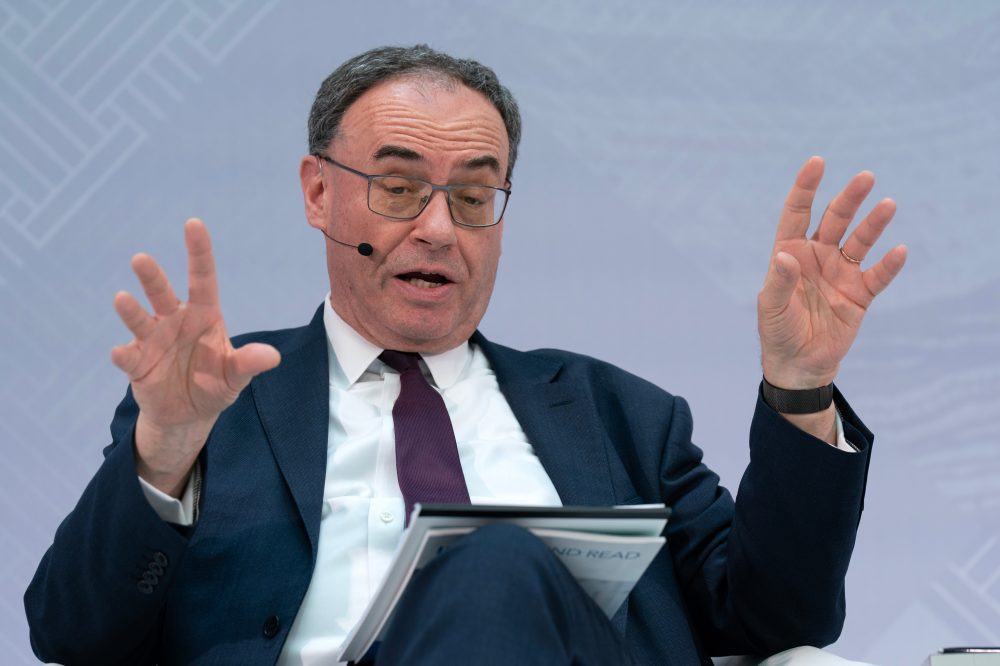
The bank’s quarterly economic forecasts and Governor Andrew Bailey’s following press conference may prove more significant than the rate decision itself.
These projections will mark the first since U.S. and Israeli strikes against Iran initiated the war on February 28 — analysts expect higher inflation estimates and reduced growth forecasts.
Recent government data revealed British inflation rose in March following sharp fuel price increases due to war-related energy supply disruptions. Annual consumer price inflation reached a three-month peak of 3.3%, up from February’s 3%.
Inflation may climb further in upcoming months, potentially reaching 4%, as elevated energy costs affect household expenses.
Economic analysts don’t anticipate inflation approaching the four-decade peaks above 11% following Russia’s Ukraine invasion in February 2022, partly because energy price spikes have been more moderate and interest rates remain elevated.
However, Bank of England officials will monitor whether the apparent inflation surge spreads throughout the economy through mechanisms like wage increases. They’ll also watch for potential government measures to reduce inflation’s impact on families and businesses.
Treasury Secretary Rachel Reeves, whose cost-of-living objectives have been derailed by the Middle East crisis, stated this is “not our war, but it is pushing up bills for families and businesses” as a consequence.