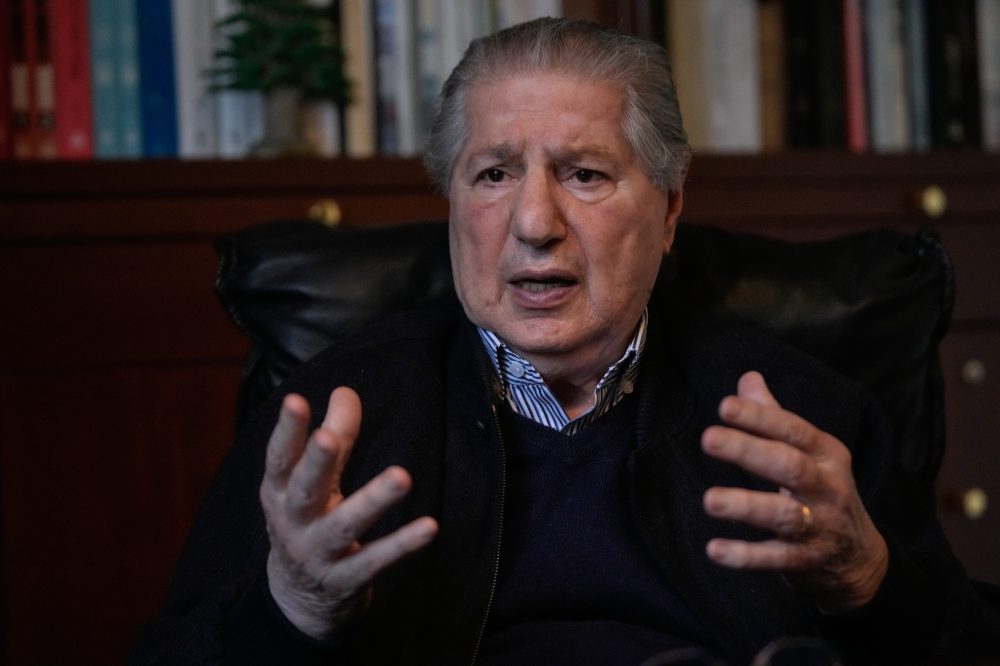

BIKFAYA, Lebanon — A former Lebanese leader who previously negotiated a failed peace agreement with Israel believes current circumstances present a new opportunity for diplomatic success.
Amin Gemayel, 84, discussed his views with The Associated Press Wednesday following the first direct negotiations between Lebanon and Israel since the 1980s, as both nations explore potential security arrangements or eventual diplomatic normalization. Gemayel represents one of Lebanon’s most influential political families and helped establish the Christian Phalange party, which maintained significant influence for many years.
The former president, who seldom grants interviews to international journalists, recognized that conditions have shifted dramatically since Lebanese officials renewed diplomatic efforts with Israel while maintaining a delicate ceasefire. The Washington-based discussions have sparked angry demonstrations as Israeli forces continue operations in southern Lebanon and areas of Beirut work to rebuild following devastating Israeli airstrikes earlier this month.
Notably, the Iranian-supported Hezbollah organization had just formed during Gemayel’s presidential term and lacked the substantial military and political influence it later developed. Hezbollah rejects direct negotiations with Israel and advocates for Lebanon to back Iran’s discussions with the United States, claiming Tehran possesses greater bargaining power.
However, Hezbollah has suffered significant setbacks, Gemayel observed, and he advocates for the group’s disarmament. Israeli operations in Lebanon over recent years substantially damaged the organization’s military strength. Additionally, the removal of long-term supporter Bashar Assad in Syria by Islamist-led opposition forces eliminated much of the porous border previously used for arms smuggling.
Regional dynamics have also shifted, Gemayel explained.
“During my time, discussing a peace agreement with Israel was an unforgivable fatal crime,” he said.
He now perceives greater regional receptiveness, citing Syria’s direct negotiations with Israel and the Abraham Accords, through which several Arab nations, particularly the United Arab Emirates, established diplomatic relationships with Israel.
Gemayel became Lebanon’s youngest president in 1982 when sworn in at age 40. The nation was experiencing a brutal 15-year civil conflict, with both Syrian and Israeli forces occupying territory.
He chose to participate in U.S.-mediated direct negotiations with Israel through a foreign ministry representative, achieving an accord in May 1983 that included terminating the war status existing between the nations since Israel’s establishment in 1948. Israeli forces would retreat from southern Lebanon while Lebanese troops would deploy to the area.
Despite support from U.S. President Ronald Reagan and overwhelming Lebanese parliamentary approval, the agreement never took effect. Gemayel attributed the failure to Syria and its Lebanese allies, who opposed Israeli negotiations from the beginning, as well as Israel itself.
“Israel, though we had finished the negotiations and reached the stage of signing, tried to impose an article outside of the framework of the agreement, which was the simultaneous withdrawal alongside the Syrian army in Lebanon. So the Israeli military wouldn’t withdraw unless the Syrians would,” Gemayel said.
“It gave the Syrian military a veto to the agreement … and a public atmosphere of doubt that (then-Syrian President Hafez) Assad and his crew created.”
Currently, Gemayel believes Lebanon’s leadership should pursue comprehensive peace arrangements. Even an armistice similar to the 1949 agreement that maintained border stability for 18 years could represent positive progress, provided it preserves national unity.
President Joseph Aoun has indicated he seeks an arrangement similar to the 1949 accord, rather than complete diplomatic normalization with Israel.
Aoun and Prime Minister Nawaf Salam’s decision to engage in direct Israeli negotiations has received both widespread support and criticism in the deeply polarized nation. Officials maintain these talks represent the only path to securing Israeli troop withdrawal and achieving lasting stability.
“There is an opportunity for the Lebanese government to go into negotiations to reach a solution that achieves peace, security, and stability in Lebanon,” Gemayel said.
“That would also satisfy the feelings of Lebanese who yearn for the bare minimum of calm, peace, stability, and an end to the war.”
During the most recent conflict between Israel and Hezbollah, which started two days after U.S. and Israeli operations against Iran on February 28, more than 2,500 Lebanese have died and over one million have been displaced.
Israeli troops maintain control over extensive areas of southern Lebanon and continue fighting Hezbollah militants despite an official truce. Both parties accuse the other of ceasefire violations.
Lebanese citizens have generally criticized Hezbollah’s decision to fire rockets into Israel on March 2, while also expressing horror at Israel’s bombing campaign and ground offensive.
Gemayel acknowledged the situation remains complex, particularly in a “boiling region” experiencing severe security and economic consequences from the Iran conflict.
“We have to see how far we can go,” he said. “We trust General Aoun to enter negotiations as far as they go while maintaining the interests of the country and the unity of Lebanon. And he knows exactly how far he can go in negotiations.”