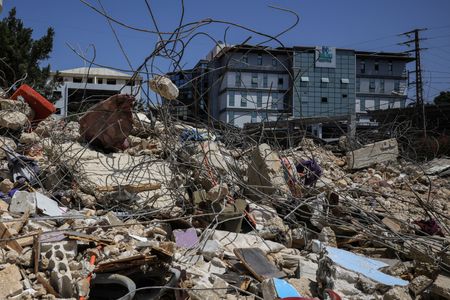

The World Health Organization announced Wednesday that violence targeting medical facilities and healthcare personnel has escalated worldwide, with a marked increase following the outbreak of recent Middle East hostilities.
Global incidents involving healthcare facilities and medical staff have climbed from an average of 3.7 daily occurrences to 4.3 since U.S. and Israeli forces conducted airstrikes against Iran in late February, according to WHO data.
“This is clearly showing that healthcare is the target,” stated Altaf Musani, Director of Emergency Health Interventions at the WHO, during a press briefing in Geneva.
The violent incidents encompass aerial bombardments and artillery strikes against medical centers and hospitals, along with detention and harassment of medical personnel.
“When healthcare is needed most, it is being attacked… These attacks are having a deep impact on functionality,” Musani explained.
Following the escalation of Middle Eastern hostilities, 50 medical facilities and private healthcare centers have ceased operations while 16 hospitals sustained damage throughout the region, WHO officials reported.
WHO Director-General Tedros Adhanom Ghebreyesus, who has consistently condemned these incidents and demanded accountability, pointed to Lebanon where 149 healthcare-related attacks have been documented.
Israeli airstrikes have resulted in more than 2,500 fatalities across Lebanon since March 2, following Iran-backed Hezbollah’s assault on Israeli positions that prompted Israel’s air and ground response. The UN Human Rights office stated last month that Israeli strikes targeting civilians, including medical workers, in Lebanon could constitute war crimes.
Israeli officials have consistently rejected claims of deliberately targeting healthcare personnel, maintaining they are focusing on Hezbollah installations.
Iran has experienced 26 documented attacks on medical sites since late February, Ghebreyesus noted.
Healthcare delivery in Gaza has been severely compromised by these incidents, with only one hospital remaining fully operational, while Sudan faces similar challenges with just 54% of hospitals functioning at full capacity, the WHO stated.