
NAIROBI, Kenya (AP) — Residents in Kenya’s Owino Uhuru community continue battling lead poisoning effects years after a battery recycling facility closed, highlighting a dangerous trend as Africa’s renewable energy expansion creates widespread battery recycling hazards.
Faith Muthama, a 40-year-old mother of four, describes ongoing health struggles from the contamination.
“Life has never been the same,” she said, wiping away sweat. “I still struggle to do heavy chores as I suffer from breathing difficulties. When I was tested in 2012, I was found with high lead levels in my blood.”
Health specialists caution that comparable dangers are spreading throughout Africa as nations embrace renewable energy sources. Research published in February by the Centre for Global Development, a Washington and London-based independent research organization, highlighted concerns that Africa’s rapid adoption of off-grid solar installations and energy storage systems is creating unprecedented demand for battery processing.
Most recycling operations occur in unregulated or poorly supervised environments.
The Owino Uhuru contamination began in 2007 when Kenya Metal Refineries EPZ, a local branch of a Mumbai, India-based corporation, ran a lead-acid battery processing facility in the community.
Community members report that hazardous materials from the operation, which shipped processed lead to India, contaminated local soil and water sources, creating widespread health problems. The pollution has been connected to over 20 fatalities. Though the facility ceased operations in 2014, environmental damage persists.
Lead contamination causes brain damage, impaired mental development and lasting health consequences, especially affecting children with developing nervous systems.
In 2025, Kenya’s highest court granted approximately $12 million in compensation to roughly 3,000 community members following their successful class-action case against the smelting operation, representing an unusual legal win for industrial pollution victims. However, advocates report government delays in delivering promised compensation.
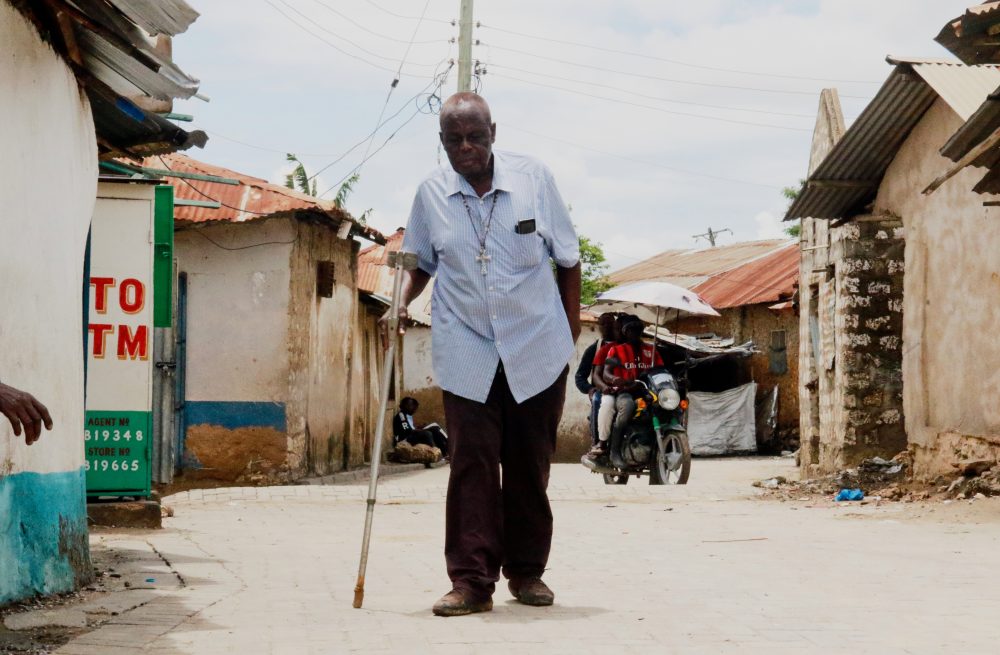
“I am just waiting for help as I have exhausted all my resources treating myself,” said Alfred Ogulo, 70, a village elder, his speech slightly slurred.
Ogulo explained that medical tests once revealed dangerously elevated lead concentrations in his bloodstream, resulting in nerve damage and mobility limitations.
“I cannot walk without a stick,” he said. “I also suffer from serious chest pain and coughs from the toxic fumes that we breathed in here when the factory was still in operation.”
Lead-acid batteries remain popular in developing markets due to lower costs compared to lithium-ion alternatives. However, proper recycling demands expensive equipment frequently unavailable in these regions. Consequently, informal processors often employ basic techniques that release lead contamination into air, ground, and water supplies.
“Off-grid solar could account for a substantial share of batteries entering the recycling stream in Africa,” said Lee Crawford, a senior research fellow at the Centre for Global Development, who reviewed the report. “That’s on top of existing demand from vehicles like cars and motorbikes.”
“Safe recycling is expensive and that creates a strong incentive to do it unsafely,” Crawford said, adding that since banning lead-acid batteries is unfeasible, the solution is to make recycling safer.
Throughout Africa and South Asia, research indicates that one-third to half of all children show elevated blood lead concentrations, establishing this as among the most pervasive environmental health threats globally. Inadequate enforcement of environmental protections worsens the situation in numerous nations. Although regulations typically exist, specialists note implementation remains spotty.
“This is a silent threat,” Crawford said. “It’s often invisible, but it affects health, cognitive development and economic productivity.”
The challenge extends beyond small unauthorized operations. Even larger processing centers may lack adequate safety measures, while international supply networks for recycled lead can hide responsibility.
“There needs to be accountability across the entire supply chain,” Crawford said.
Several nations are showing improvement. South Africa has implemented producer responsibility programs requiring manufacturers to oversee battery recycling, establishing more organized oversight. However, across much of the continent, especially where batteries are imported rather than manufactured domestically, determining responsibility remains challenging.
International funding organizations increasingly support lithium-ion technology, which avoids lead-related dangers. Nevertheless, lead-acid batteries will likely continue widespread use for years, particularly in off-grid solar applications.
This reality affects Owino Uhuru residents daily.
“It is sad that the state has ignored prioritizing the compensation payment as ordered by the court,” said Phyllis Omido, who leads the Centre for Justice Governance and Environmental Action (CJGEA) based in Mombasa and helped residents take their case to court. “These monies would have alleviated the current suffering these vulnerable residents are going through.”
“Is it fair that we are the ones still chasing justice while the company walks away?” said Mejumaa Hassan Nyanje, 60, as she fought back tears. “Will we all die before justice is served? It feels like we’ve been abandoned, like our lives and our health don’t matter.”