
DUBAI, United Arab Emirates — While Iran continues to disrupt global energy markets through its control of the Strait of Hormuz, the nation’s critical petroleum sector faces mounting pressure from American economic warfare.
Industry analysts warn that Iran could be compelled to halt production at numerous oil facilities within the next two weeks, as the country runs out of storage space and cannot ship its crude to international markets.
Although the crisis may not be as catastrophic as President Trump recently suggested when he claimed pipelines might begin bursting in the coming days, the long-term consequences could be severe. Energy experts note that Iran’s deteriorating oil infrastructure may not recover easily from extended shutdowns, potentially crippling the nation’s future petroleum capacity. Industry watchers believe Iran has already started reducing output to prevent complete facility closures.
The crisis intensifies as the Treasury Department increases enforcement against Iranian oil vessels already sailing international waters. American naval forces have captured at least two tankers in Asian waters suspected of transporting Iranian crude.
Iran’s constrained petroleum trade means less foreign currency entering an economy already devastated by ongoing conflict, civil unrest, and years of international penalties. Meanwhile, reduced Iranian oil shipments amplify the impact of the Hormuz blockade, creating jet fuel shortages and driving up gasoline costs globally.
Iranian officials are strongly opposed to closing production facilities because of the devastating long-term impact, according to Miad Maleki, who previously worked on sanctions at Treasury and now serves as a senior fellow at the Foundation for Defense of Democracies.
“They’ve been under sanctions, they’ve been isolated for 47 years now. Those oil wells are not maintained well. Their machinery is not maintained well,” Maleki explained. He added that once production stops, the facilities won’t easily “snap back after a few months.”
Before the current conflict, Iran produced more than 3 million barrels daily, with slightly over half consumed domestically. However, since the American blockade started April 13, loaded vessels have been trapped without export routes.
“It looks like there’s been a significant slowdown in production,” observed Antoine Halff, co-founder and chief analyst at environmental intelligence firm Kayrros, which monitors energy supply chains. He cited evidence that storage facilities at Kharg Island, Iran’s primary Persian Gulf export terminal, are filling more slowly than normal.
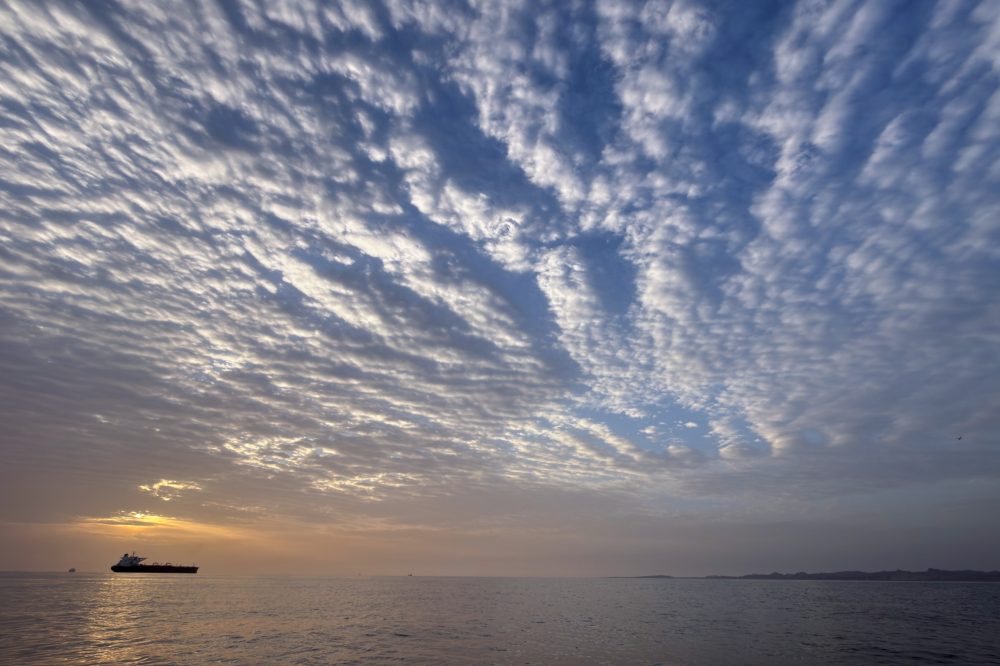
Halff noted that Iran likely stores some petroleum in tankers anchored near Kharg Island.
Commodities tracking firm Kpler estimates Iran has approximately two weeks of remaining storage capacity, even after cutting production.
“While the immediate revenue impact is limited, operational constraints are now forcing production cuts and setting up a delayed but significant financial squeeze,” wrote Kpler analyst Homayoun Falakshahi.
Oil analysis company Wood Mackenzie projects Iran will exhaust storage space in roughly three weeks.
“If the blockade persists, cuts become inevitable,” Wood Mackenzie’s Alexandre Araman wrote. Extended shutdowns lasting over a month “risk long-term damage” to Iranian oil reserves, with recovery of older fields remaining “uncertain.”
Since Iran discovered oil in 1908, the industry has been deeply connected to regional politics. Efforts to nationalize oil fields and remove British control triggered the CIA-supported 1953 coup that strengthened Shah Mohammad Reza Pahlavi’s power. This action also set the stage for Iran’s 1979 Islamic Revolution that overthrew the shah. During the revolution, petroleum workers struck and reduced daily production from 6 million barrels to approximately 1.5 million.
Iran’s oil sector never fully recovered and endured decades of international sanctions that allowed infrastructure to deteriorate.
During his first presidency, Trump implemented a “maximum pressure” strategy, imposing harsh sanctions that severely limited Iran’s oil exports. Required to store petroleum in offshore tankers, the Iranian government lost tens of billions in revenue. Despite this pressure, Tehran refused to negotiate a nuclear agreement with Washington.
Iran now confronts both increased sanctions and the naval blockade. Trump declared Tuesday that Iran was in a “State of Collapse.”
Treasury Secretary Scott Bessent reinforced this message on X, writing, “Iran’s creaking oil industry is starting to shut in production thanks to the U.S. BLOCKADE. Pumping will soon collapse. GASOLINE SHORTAGES IN IRAN NEXT!”
No immediate gasoline shortages have appeared in Iran. However, the country seems to be indirectly acknowledging the economic strain.
A state television program, controlled by hardline factions, featured journalists discussing potential oil storage problems. One commentator noted that if empty tankers cannot return to Iran, “we won’t be able to export.” Oil Minister Mohsen Paknejad praised terminal workers Monday for their “continuous perseverance.”
Maleki warned that continued blockade pressure leading to further production cuts or shutdowns could result in oil worker layoffs, potentially triggering new domestic unrest.
“In 1979 when the oil industry was disrupted, in the 1980s war with Iraq … you can go and look at to see how effective they were in really pressuring the regime,” he said. “It’s really going to affect some of the most strategic provinces in Iran and the most strategic industry.”