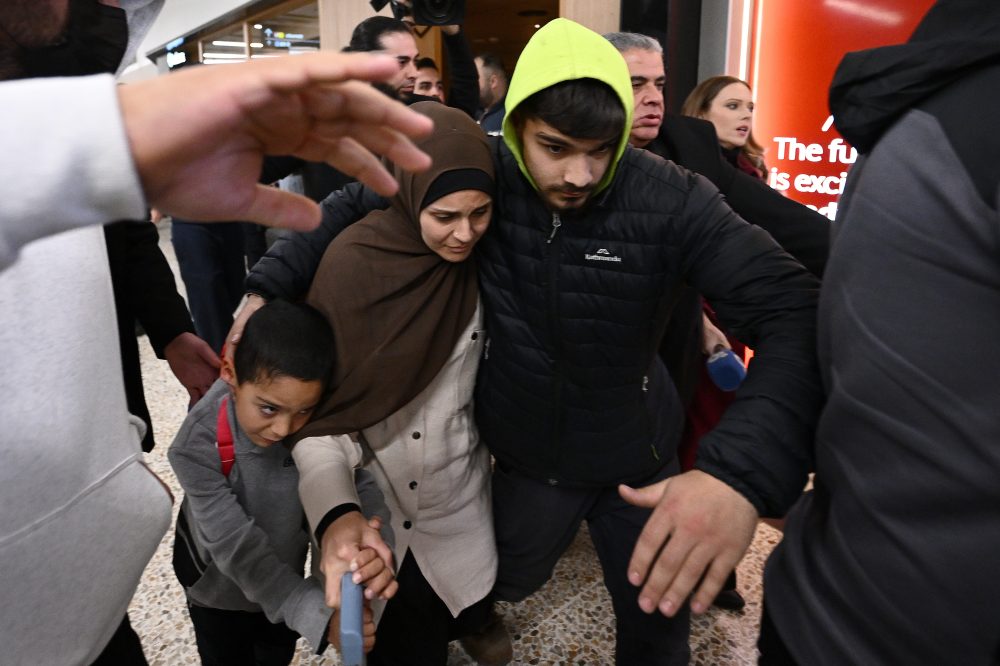
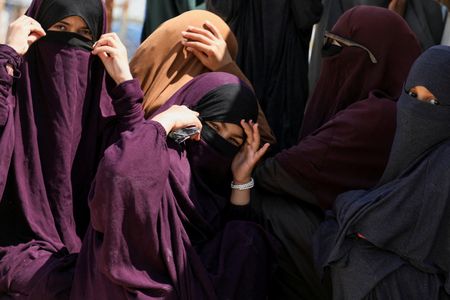
MELBOURNE, Australia — Authorities have filed slavery and terrorism charges against three Australian women following their return from Syria, where officials claim they maintained connections to the Islamic State terrorist organization.
The women arrived Thursday on Qatar Airways flights from Doha, along with seven other individuals — four women and nine children total — who had been detained for years at Roj Camp in Syria’s desert region. Despite government warnings that criminal charges awaited their return, the group proceeded with their journey home.
Melbourne court proceedings on Friday resulted in charges against Kawsar Abbas, 53, and her daughter Zeinab Ahmed, 31. Law enforcement officials allege the family purchased a female Yazidi slave for $10,000 during their time in Syria.
Defense attorneys indicated they plan to request bail for both women when court reconvenes Monday.
According to police allegations, Abbas relocated to Syria in 2014 with her husband and children during the height of ISIS’s self-declared caliphate. Authorities claim Abbas participated in acquiring the slave, who was subsequently held at the family’s residence.
The elder woman faces four counts of crimes against humanity under Australian legislation, while her daughter confronts two slavery-related charges. Each count potentially carries a 25-year prison sentence.
Kurdish military forces detained both women in March 2019, and they have remained at Roj Camp with other family members since that time.
A third woman, age 32, was apprehended at Sydney Airport and charged with terrorist organization membership and unlawfully entering territory under terrorist control. These charges each carry maximum 10-year prison terms.
Investigators say this woman followed her ISIS-affiliated partner to Syria. Australian law prohibited travel to Raqqa, the former Syrian ISIS stronghold, without legitimate justification between 2014 and 2017.
The Sydney defendant plans to seek bail release during Friday court proceedings.
Government officials have criticized these women for supporting Islamic State militants through their Syrian travel and have declined to assist in their repatriation efforts.
Law enforcement agencies have conducted investigations into potential Australian involvement in Syrian atrocities for over ten years.
Twenty-one additional Australian women and children continue to be held at Roj Camp in northeastern Syria near the Iraqi border. Advocacy groups have informed media outlets they intend to secure their return within the coming weeks.
One woman among those remaining faces a temporary exclusion order preventing her Australian return.
Such exclusion orders allow Australia to block high-risk citizens from returning for up to two years.
These legal measures were established through 2019 legislation designed to prevent defeated ISIS combatants from returning to Australia. No previous public reports exist of such an order being implemented.
Children under 14 cannot be subject to exclusion orders, and Australia has rejected policies that would separate children from their mothers.
Australian administrations have previously facilitated the return of Australian women and children from Syrian detention facilities on two separate occasions. Additional Australians have returned through independent means without government support.
SEOUL, South Korea — North Korean leader Kim Jong Un announced Friday that his military will position new long-range artillery weapons this year with the capability to reach South Korea’s capital area, while also preparing to put the nation’s first naval destroyer into active service within weeks.
This declaration follows recent reports from South Korea indicating that North Korea’s updated constitution has removed all mentions of Korean reunification, aligning with Kim Jong Un’s pledges to sever relations with South Korea and create a two-nation framework on the Korean Peninsula.
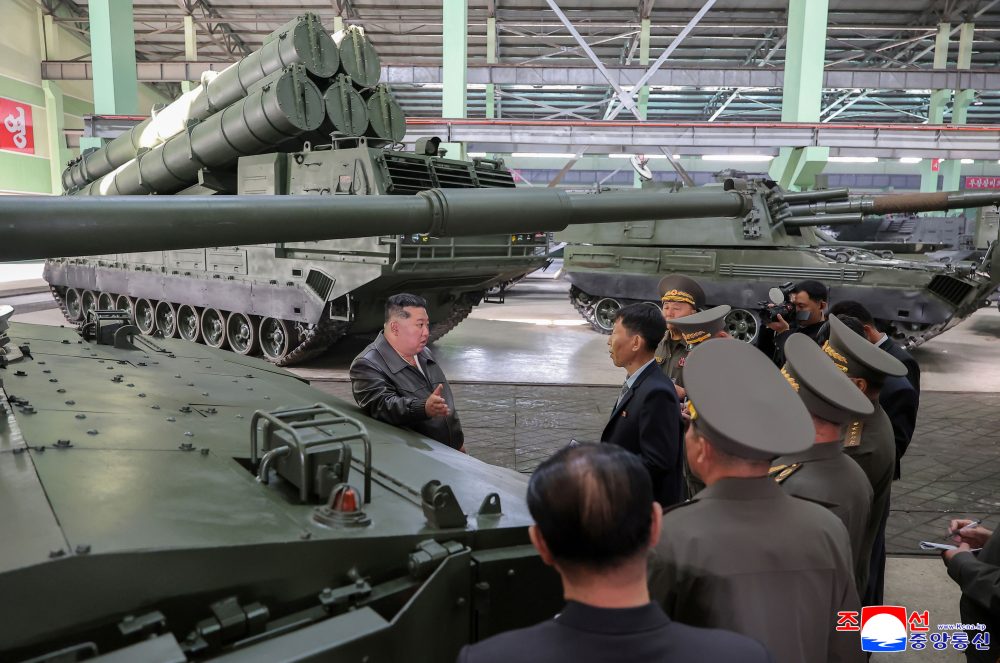
On Wednesday, Kim toured a weapons manufacturing facility to examine the production of 155-mm self-propelled gun-howitzers scheduled for placement at an artillery position near the southern border before year’s end, according to the North’s state-run Korean Central News Agency.
The news agency quoted Kim stating that the firing distance of this heavy-caliber weapon exceeds 60 kilometers (37 miles). “Such a rapid extension of striking range and remarkable improvement of striking capability will provide a great change and advantage in the land operations of our army,” Kim said according to KCNA.
Kim indicated that multiple operational and tactical missile platforms along with advanced multiple rocket launcher systems are also planned for border deployment.
While North Korea’s artillery weapons receive less international scrutiny than its ballistic missiles, which face U.N. Security Council launch prohibitions, the country currently maintains numerous artillery pieces positioned near the South Korean border. These weapons present a significant danger to Seoul, South Korea’s capital housing 10 million residents located approximately 40 to 50 kilometers (25 to 30 miles) from the border.
KCNA reported that Kim boarded the destroyer Choe Hyon on Thursday to evaluate its performance capabilities off North Korea’s western coastline. Kim directed officials to transfer the vessel to naval forces by mid-June as planned, after expressing satisfaction that all testing for the destroyer’s operational readiness proceeded without issues, the news agency stated.
Photographs released by KCNA showed Kim’s teenage daughter accompanying him on the destroyer during her most recent public appearance with her father. One image captured her positioned behind Kim as he addressed navy personnel, while another depicted them sharing a meal with the ship’s crew. South Korea’s intelligence agency suggested last month that she might be viewed as Kim’s potential successor.
The destroyer, which received significant publicity when revealed last year, represents North Korea’s largest and most sophisticated naval vessel. North Korea subsequently introduced a second destroyer of identical design, though it sustained damage during a failed launch event. Kim has expressed intentions to construct two additional destroyers.
Kim’s recent military facility visits occurred after South Korea announced Wednesday that North Korea’s new constitution eliminated previous commitments to peaceful reunification with South Korea and redefined the country’s boundaries to include only the northern portion of the Korean Peninsula.
These modifications reflect Kim’s increasingly aggressive position toward South Korea, which he has designated as his nation’s eternal and primary adversary while diplomatic efforts remain stagnant and tensions escalate over his nuclear programs. In January 2024, Kim directed constitutional revisions to remove concepts of shared governance with South Korea, a move that would abandon his predecessors’ longstanding aspirations of peacefully achieving Korean unity under Northern terms.
Kim’s hostile rhetoric toward the South has dealt a significant blow to Seoul’s progressive administration, which seeks renewed engagement and has implemented preliminary measures to reduce tensions, including ending propaganda transmissions along the border.
North Korea has rejected dialogue opportunities with both South Korea and the United States, instead concentrating on expanding its nuclear and missile capabilities since Kim’s comprehensive nuclear negotiations with President Donald Trump failed in 2019.
A prominent Salvadoran investigative news organization says government authorities have frozen financial assets and property belonging to two of its staff members, marking what the outlet describes as an escalation in political retaliation for their critical reporting on President Nayib Bukele’s administration.
El Faro’s Director Carlos Dada revealed during a Thursday press conference that bank accounts and real estate had been seized, calling the action part of a coordinated effort to silence the publication’s work.
“It’s another level of attack against us with a clear purpose,” Dada stated. “These are not fiscal measures. They are political measures trying to silence us.”
The news organization has engaged in ongoing conflicts with Bukele regarding their investigative work into governmental corruption, particularly their reporting that revealed secret negotiations between his administration and criminal gangs. The asset seizures occurred shortly after El Faro collaborated with PBS Frontline on a documentary examining these gang negotiations.
Since taking office in 2019 as the region’s youngest head of state on promises to combat corruption, Bukele has drawn mounting criticism from human rights organizations for suppressing opposition and authorizing abuses during a four-year emergency decree that has resulted in over 91,000 imprisonments.
While Bukele’s administration did not provide immediate comment on the asset freezing, the president has previously dismissed El Faro’s investigative work as “fake news.”
According to Dada, the publication discovered the asset seizures through banking institutions and property records rather than receiving official government notification.
Salvadoran tax authorities have conducted continuous audits of the outlet since 2020, claiming the organization owes $200,000 in unpaid taxes—allegations that Dada has rejected.
El Faro’s reporting staff has faced cyberattacks using surveillance software, with Pegasus spyware discovered on more than 20 journalists’ mobile devices in 2022. The publication subsequently filed a federal lawsuit against NSO Group in U.S. courts.
Due to the increasingly hostile environment in El Salvador, El Faro relocated its main operations to Costa Rica in 2023, with all staff members now living outside their home country.
Bukele’s suppression of dissent expanded in 2025 with the detention of well-known human rights advocate Ruth López, who remains imprisoned a year later without trial and with restricted access to family and legal representation. Following her arrest in July 2025, Cristosal, the nation’s premier human rights organization where López was employed, announced its departure from El Salvador citing escalating intimidation and legal pressure.
Similar tactics of conducting government audits and seizing assets to intimidate opposition voices have been employed elsewhere in the region, particularly in Nicaragua under Daniel Ortega’s leadership.
Claudia Paz y Paz, who heads the Costa Rica-based Center for Justice and International Law and represents El Faro before the Inter-American Commission of Human Rights, described the asset seizures during Thursday’s press conference as “retaliation” aimed at the publication’s journalism and an attempt to “silence the voices of journalists.”
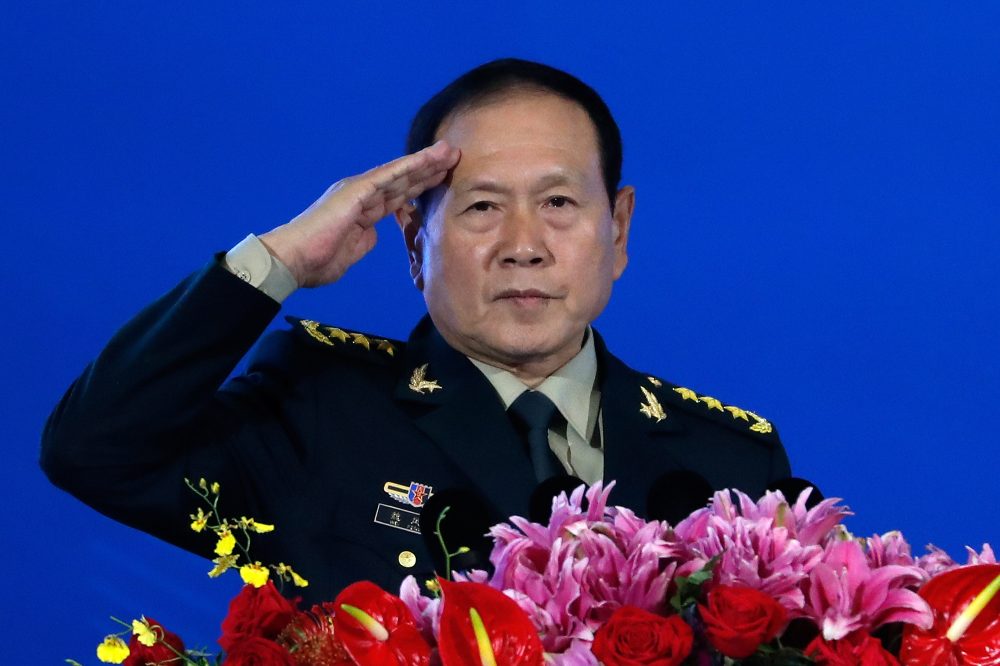
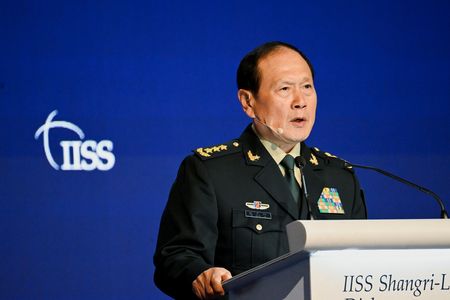
BEIJING — Two former Chinese defense ministers received death sentences with two-year suspensions on Thursday from a military tribunal for corruption charges, China’s official Xinhua News Agency reported.
The military court found Wei Fenghe guilty of taking bribes and imposed a death sentence with a two-year delay. Li Shangfu received an identical punishment after being convicted of both accepting and giving bribes.
In China’s legal system, death sentences with suspensions are typically converted to life imprisonment.
These punishments represent the most recent developments in President Xi Jinping’s ongoing effort to remove high-ranking officials from power. Xi launched his anti-corruption campaign over ten years ago and has maintained its intensity, reaching a peak in January with the dismissal of China’s top military commander and other military leaders. The influential Central Military Commission, which previously included 11 members, now consists of only Xi and one other member.
Although the campaign focuses on eliminating corruption, Xi has also employed these anti-corruption measures as a tool to strengthen political allegiance and authority among elite officials.
It remains unknown if either official had policy disputes or political conflicts with Xi.
Wei held the defense minister position from 2018 through 2023. Li took over the role but served only briefly before vanishing from public appearances. His removal from office occurred in October 2023.
Throughout his career, Li worked primarily as an expert in missile technology and military procurement within China’s People’s Liberation Army, and had been subject to U.S. travel restrictions and financial penalties due to acquiring Russian military equipment.
The Communist Party removed both officials from membership in 2024, confirming their downfall.
Dong Jun, who replaced Li as defense minister, remains in his position. Military analysts observe that he was not given a seat on the historically influential Central Military Commission, which controls the armed forces and typically includes the defense minister.
SYDNEY – Three women connected to ISIS faced arrest in Australia this week following their return from Syria, where they had been held in detention camps for more than seven years, according to authorities.
Two of the women, ages 53 and 31, are facing charges related to crimes against humanity, specifically for allegedly owning and using enslaved individuals while living in Syria. These charges could result in prison sentences of up to 25 years. The pair was taken into custody at Melbourne’s airport on Thursday evening after arriving in the country.
“This remains an active investigation into very serious allegations,” stated Australian Federal Police Assistant Commissioner Counter Terrorism Stephen Nutt.
According to police reports, both women departed for Syria in 2014 alongside their families and are accused of holding a female individual in slavery at their residences. Legal representatives for the women were not immediately available for comment.
In a separate incident, authorities arrested a 32-year-old Australian woman at Sydney’s airport on Thursday on terrorism-related charges, including allegations of joining the Islamic State organization. These charges carry a potential 10-year prison term, and her court appearance is scheduled for Friday.
Police indicated this woman had traveled to Syria in 2015 to reunite with her spouse, who had previously departed Australia to join ISIS.
Earlier this week, government officials revealed that four women and nine children were planning to return to Australia from Syrian detention facilities without official government support.
Authorities have refused to provide updates regarding the fourth woman or the status of the children involved.
The return of these individuals has created political pressure for the center-left government, with opposition voices criticizing officials for failing to prevent their homecoming. However, government representatives emphasized that there are “very serious limits” on their authority to block Australian citizens from re-entering their home country.
After ISIS lost its territorial control, numerous family members of suspected fighters found themselves detained in Syrian camps.
In January, the United States initiated the relocation of detained ISIS members from Syria following the breakdown of the Kurdish-led Syrian Democratic Forces, which had been responsible for guarding approximately twelve facilities housing fighters and associated civilians, including foreign nationals.
The Australian government previously brought home four women and 13 children from Syrian camps in 2022. According to the Australian Broadcasting Corp, approximately 21 Australians continue to be held at the al-Roj camp.
Russian air defense systems shot down more than 50 unmanned aircraft targeting Moscow during a 15-hour span from Thursday into Friday, the city’s mayor reported.
Moscow Mayor Sergei Sobyanin announced the drone interceptions through multiple posts on the messaging platform Telegram throughout Thursday. The tally of destroyed aircraft climbed past 50 between approximately 11 a.m. Thursday and 2 a.m. Friday, Sobyanin stated.
According to the mayor, emergency response teams were investigating wreckage that fell to the ground following the interceptions.
In a separate announcement on Telegram, Russia’s Defense Ministry claimed its forces had destroyed 95 Ukrainian drones during a four-hour window that concluded at midnight across multiple areas of central and southern Russia.
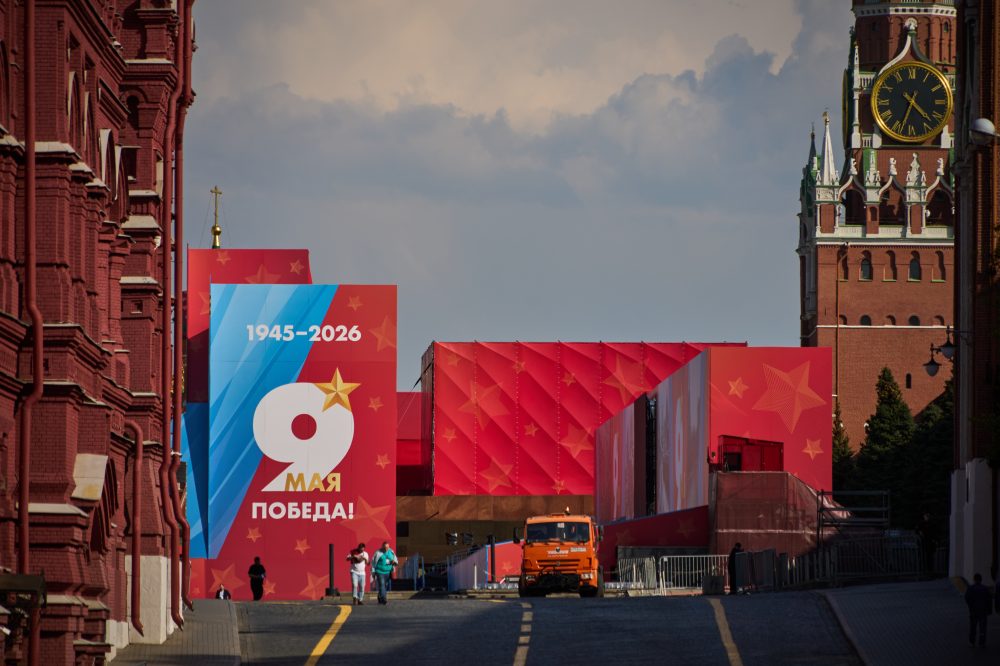
The Defense Ministry also declared it would implement a three-day halt to military operations beginning at midnight on May 7-8 and lasting through May 10, citing observances related to the Soviet Union’s World War Two victory over Nazi Germany.
False medical rumors circulating on social media platforms have triggered a wave of deadly violence in the Democratic Republic of Congo, resulting in at least 17 deaths according to health monitoring organizations.
The crisis began late last year in Tshopo, a rainforest-covered province in northeastern Congo, when unsubstantiated claims about a mysterious illness causing male genital atrophy began spreading through local communities.
Social media testimonials quickly amplified these baseless fears, creating widespread panic that escalated into lethal mob violence before authorities could intervene effectively.
Four medical professionals conducting vaccination research became victims of this misinformation-fueled rage in October, according to government officials and a team member who survived the attacks.
The violence has extended beyond the initial incident, with the WHO-led Africa Infodemic Response Alliance documenting 17 total fatalities connected to these false rumors, though Reuters was unable to independently confirm all reported deaths.
Elodie Ho, who directs the Nairobi-based monitoring alliance, explained how the misinformation campaign evolved: “It started in communities. It spread into social media and local media. It was amplified by those actors,” she said, noting that the false information “really led to death and murder.”
Reuters’ investigation of more than twelve video testimonials revealed that religious institutions in Tshopo helped propagate the unfounded claims. International social media accounts and regional news outlets also contributed to spreading the misinformation.
Two verified videos showed religious leaders and congregation members at churches in the provincial capital Kisangani claiming that prayer had healed supposed victims of the nonexistent condition.
To document these October incidents and examine misinformation patterns across Africa, Reuters analyzed medical research and interviewed over 20 individuals, including regional administrators, healthcare professionals, and medical specialists.
When contacted by Reuters, a Tshopo government representative confirmed that local authorities had investigated claims from five individuals who said they were affected, but discovered no evidence supporting the existence of such an illness.
Provincial officials have taken action against those who incited the panic. A local court imposed a 12-month prison sentence on a man who falsely accused another person of transmitting the alleged disease, while approximately twelve individuals were arrested, according to government spokespeople.
Medical mistrust in parts of Africa stems partly from colonial-era experiences and more recent problematic Western clinical trials, creating conditions where false health information can flourish.
The African Union’s Africa Centres for Disease Control and Prevention notes that affordable artificial intelligence tools and widespread social media access have intensified this distrust. Limited healthcare access, weak legal systems, and social media usage all contribute to rumor proliferation.
Dr. Jean Kaseya, who leads the African Union’s disease control center, emphasized how false information prevents people from seeking life-saving medical care.
“When populations do not trust vaccines, health workers, or government policies, it means they don’t access services that can help them survive,” Kaseya stated.
Similar attacks targeting community leaders and healthcare workers have occurred in Mozambique and Malawi, connected to false cholera-related information.
A WHO-operated health information line designed to counter medical misinformation has experienced a dramatic increase in calls, jumping from 3,331 in the first quarter of 2025 to 31,636 in the fourth quarter.
Another WHO initiative tracking community interactions has documented approximately 500 incidents since launching last year involving rumors, conspiracy theories, and other misleading information.
Dr. Bavon Tangunza, who manages the misinformation response alliance in Congo, received early warnings about the false illness claims in Tshopo during early October when a colleague alerted him to rumors circulating in the province.
Video testimonials from alleged victims soon emerged online, including footage of a taxi driver speaking at a Christian event in Tshopo, describing how megachurch pastor Jules Mulindwa of the Pentecostal Church Light of the World had supposedly cured him through prayer.
The taxi driver provided no evidence for his claims, and Reuters could not determine his identity or who recorded the video, which displayed the church’s logo. A prominent church worker posted it on TikTok, where it gained widespread viewership and sharing.
The video accumulated over 300,000 views on the Facebook page of Boyoma Revolution, an online news platform registered with a Marseille, France address.
Mulindwa, who presents himself as a prophet with a TikTok channel showing large follower crowds and over 400,000 subscribers, has previously made false claims about curing coronavirus, according to CongoCheck, an online fact-checking organization.
Court records reviewed by Reuters show he received a 12-month prison sentence for defamation last year, though a prosecution lawyer confirmed he has not served the sentence. A close relative working for Mulindwa disputed the conviction when contacted by Reuters.
Mulindwa did not respond to comment requests from the news agency.
Additional footage posted October 3 by a local congregation called Assemblée Chretienne de Kisangani showed pastor Christophore Kabamba claiming to possess a miraculous cure. The church did not respond to Reuters’ inquiries.
James Baka, a Kisangani university student appearing in the video, told Reuters through Facebook messaging that he witnessed others being miraculously healed by the pastor.
When asked for comment, Boyoma Revolution acknowledged no evidence existed for the illness but did not explain why the video remained on their platform.
Meta placed the October video from Mulindwa’s church into their third-party fact-checking review system after Reuters brought it to their attention, according to a company statement.
Meta’s fact-checkers evaluate content on a scale reaching ‘false,’ with each rating carrying different restrictions and labels, based on their misinformation policy for regions outside the United States.
When asked about specific actions taken regarding the material, Meta indicated that fact-checkers determine appropriate ratings independently.
TikTok did not immediately respond to Reuters’ questions.
Tshopo Kwetu, a regional news outlet, also shared posts about the fabricated illness. Director Gaston Mukendi told Reuters his organization published information from various sources as part of their journalistic responsibilities.
He highlighted an interview with a medical student who debunked the rumor as an anxiety-related disorder.
Violence erupted October 6 when healthcare workers arrived in villages within Tshopo’s Isangi area to conduct vaccination surveys.
In Ilambi village, young men accused the health workers of secretly spreading the fake disease after seeing outsiders wearing high-visibility clothing and carrying tablet computers, according to local officials and Jean-Claude Kengefuku Mbatu, a team member who escaped.
Two team members, medical doctors Placide Mbungi and John Tangakeya, attempted to explain their vaccine research, which had no connection to the health scare.
They were killed immediately, officials and Mbatu reported.
“They burned him alive, without even leaving me a trace of him,” Tangakeya’s widow Justine Tangakeya Basekauke told Reuters.
In neighboring Yafira village, their colleagues Mathieu Mosisi and Kevin Ilunga sought assistance from a local police officer, but an angry crowd killed them as well, Tshopo health official Marie Jeanne Lebe told Reuters following a completed incident review.
Reuters could not independently verify all circumstances surrounding the deaths.
The day following the killings, on October 7, the governor’s office released a printed and online statement declaring the rumors false and dangerous.
Over the subsequent month, AIRA’s Tangunza helped develop messages for broadcast in local languages through radio, online platforms, and community workers, while conducting workshops to prepare responses for future misinformation crises.
However, the rumors continue resurfacing months later.
In March, a woman in Congo’s Lualaba province was accused of spreading the disease and lynched, while another person survived an attack, AIRA reported based on local media accounts. Reuters could not independently verify these reports.
Efforts to combat false information face additional challenges as foreign aid cuts from the United States and other nations over the past year have left AIRA with reduced funding, director Ho told Reuters.
The Gates Foundation, one of AIRA’s funders, confirmed an active grant through December but did not indicate whether additional grants were being considered.
AIRA currently maintains personnel in only three countries, including Tangunza in Congo, down from five previously.
An artificial intelligence platform designed to track online conversations for fake information monitoring is currently inactive due to lack of funding for monthly provider subscriptions, Ho explained.
The WHO regional office indicated that discussions are ongoing to secure funding for sustaining and expanding AIRA’s operations.
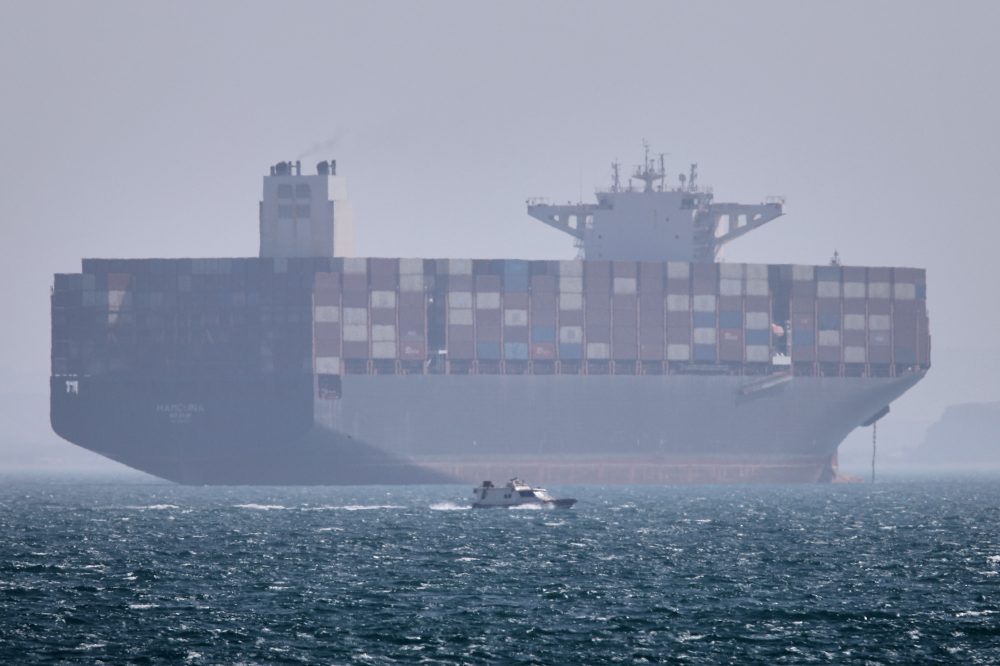
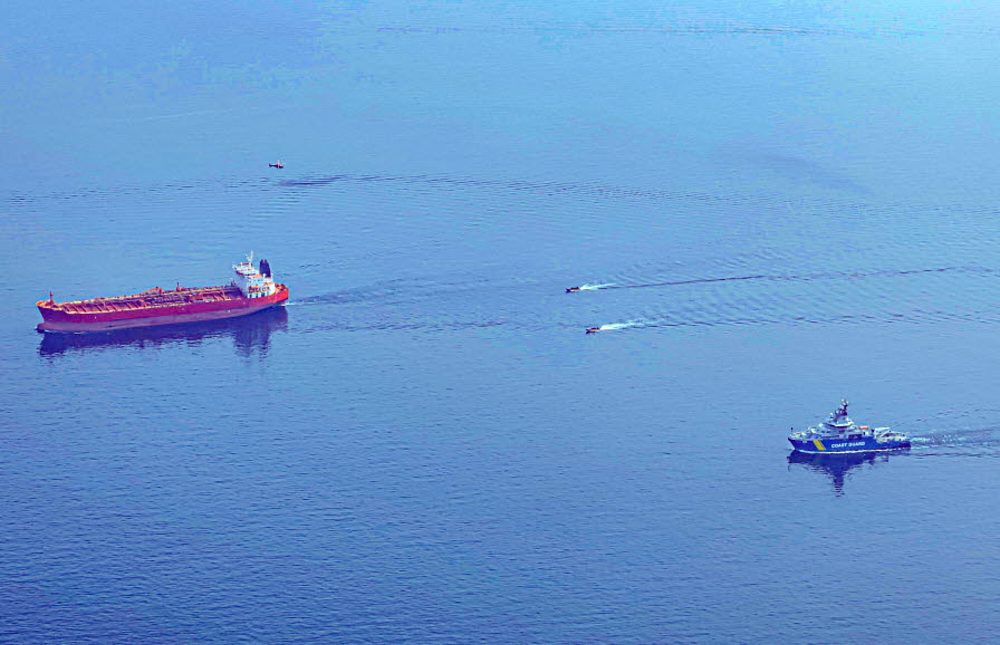
American naval forces successfully defended against Iranian military attacks targeting three U.S. Navy vessels while traveling through the strategically important Strait of Hormuz, according to military officials.
The confrontation took place on Thursday as Navy destroyers were making their passage through the waterway, U.S. Central Command announced on social media.
Following the defensive action, American forces conducted retaliatory strikes against Iranian military installations that officials say were responsible for launching the attacks on U.S. personnel.
The incident highlights ongoing tensions in the region as American naval vessels continue regular operations through one of the world’s most critical shipping lanes.
The relatives of Austin Tice, an American reporter who vanished in Syria more than ten years ago, now suspect he may have been transported to Iran after Bashar Assad’s government collapsed in 2024, according to his sister Naomi Tice.
Tice, a former Marine whose work appeared in The Washington Post and McClatchy publications, vanished at a Damascus-area checkpoint in August 2014 during his coverage of Syria’s civil war. Video footage released soon after showed armed individuals escorting him away.
According to Houston Public Media, Naomi Tice stated the family suspects Iran’s Islamic Revolutionary Guard Corps could have relocated him from Syria when Assad’s administration fell.
Naomi Tice explained that while Assad repeatedly denied detaining Austin Tice, certain Syrian detention centers operated under Iranian supervision. This arrangement could explain Assad’s denials if Iranian authorities managed facilities housing prisoners.
“With the regime change, we do think, at that point, Austin might have been brought over to Iran during that time,” Naomi Tice said. “Once again, this isn’t confirmed, but we have strong reason to believe that might be the case.”
Extensive searches following Assad’s downfall, including examinations of former Syrian government detention facilities, failed to locate Tice.
Earlier this year, The Media Line’s Rizik Alabi reported the discovery of human remains potentially belonging to Tice in a secluded section of Aleppo province in northern Syria.
Three sets of remains were reportedly found based on information from a former Islamic State operative allegedly connected to the abduction and murder of journalists and activists during Syria’s early conflict years.
Following DNA analysis in the United States, officials confirmed the remains did not match Austin Tice. FBI and Qatari search teams subsequently found additional remains thought to belong to Islamic State casualties, though Tice’s family disputed claims that his remains were discovered and continue asserting he remains alive.
The family is pressing the Trump administration to reach out to Iranian contacts and reports ongoing discussions with US Ambassador to the United Nations Mike Waltz about potential negotiations for Tice’s freedom.
They are also requesting President Trump to pressure Russian President Vladimir Putin to obtain information from Assad, who currently lives in Russian exile, regarding the journalist’s location.
The Tice family has additionally requested Israeli help concerning Khaled al-Halibi, a former Syrian brigadier general currently held in Austria facing war crimes charges. The New York Times publicly identified al-Halibi as a double agent connected to Israeli intelligence.
Jacob Tice, Austin’s brother, believes the FBI should interrogate al-Halibi to gather information that might help determine Austin’s condition or whereabouts.
Israel’s Education Minister Yoav Kisch has issued a stark warning to university administrators, demanding they eliminate political activities from their campuses or risk losing government funding through new legislation.
In a Wednesday announcement, Kisch outlined his expectations for university leadership to follow “three clear principles,” which include avoiding political position statements, maintaining continuous campus operations, and “clarifying that there is no place for strikes motivated by political reasons.”
The minister’s directive also seeks to ban political disruptions, campus shutdowns, and work stoppages at higher education institutions.
The Education Ministry defended the initiative, stating “the move is intended to prevent division, preserve the proper functioning of the institutions, and allow all faculty members and students to study, teach, research, and express opinions freely and responsibly.”
Kisch emphasized that higher education institutions should not function as venues for political activism and cautioned that lawmakers might pursue legislation against schools that refuse his demands.
“We are putting an end to the politicization of university presidents,” Kisch declared. “If they wish to promote a political agenda, they are welcome to resign from their positions and run in elections.”
“Academic institutions that enter the political arena — we will advance legislation that will deny them funding,” he continued.
The minister has gained backing from several legislators, including Avichay Buaron.
However, the Association of Heads of Research Universities has firmly rejected Kisch’s demands and criticized him for exploiting academic institutions for political gain.
“We will not allow the Education Minister to drag academia into his political survival battles,” the organization stated.
“It is deeply regrettable that at a time when higher education is fighting international boycotts, the minister chooses to weaken it from within in order to scrounge for votes in the primaries,” the association continued.
The university leaders’ group expressed shock at the minister’s statements, noting that Kisch “never approached us and no discussions were held with him on the matter.”
“To remove any doubt, the heads of higher education have never agreed to any harm to the independence of institutions of higher education,” their statement concluded.
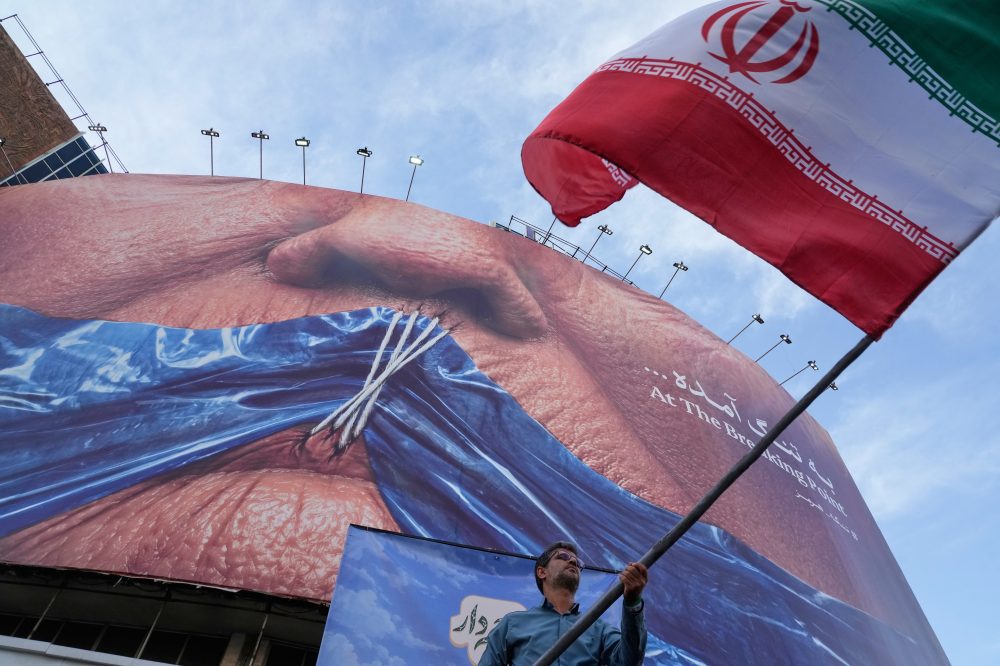
Mysterious explosion-like sounds reported near Iran’s strategic Strait of Hormuz region have injected new complications into delicate US-Iran ceasefire negotiations currently underway.
Iranian news outlets reported hearing multiple blast-like noises Thursday evening near Bandar Abbas, a major port city, and Qeshm Island, both located close to the vital shipping corridor. The source of these sounds remains unclear, with no immediate reports of casualties or damage.
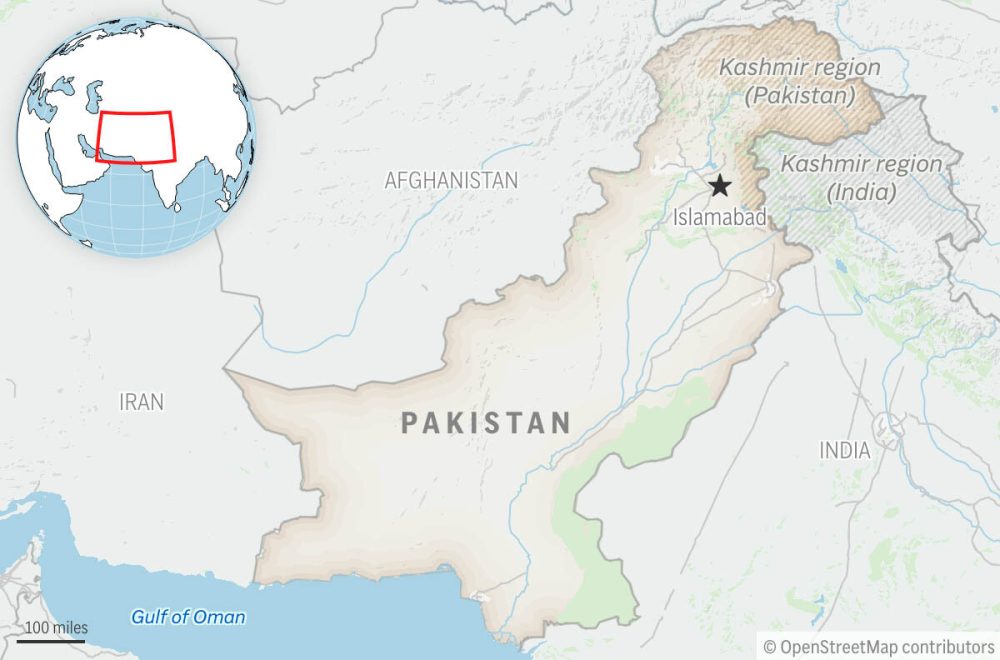
The timing is particularly sensitive as Iran continues evaluating a ceasefire proposal from the United States. Iranian Foreign Ministry spokesman Esmail Baghaei confirmed that Tehran is still reviewing messages delivered through Pakistan, which has served as an intermediary between the two nations. “Iran has not yet reached a conclusion, and no response has been given to the US side,” Baghaei stated.
The peace initiative aims to end hostilities and restore normal shipping through the Strait of Hormuz, though major disagreements persist over Iran’s nuclear activities, American sanctions, maritime access rights, and Iran’s military presence across the region.
President Trump has characterized the negotiations as encouraging while maintaining both military and economic pressure on Iran. American naval forces continue blockading Iranian ports, and Washington is advancing a UN Security Council resolution alongside Bahrain that would impose additional penalties if Iran doesn’t cease ship attacks, stop placing mines in the strait, eliminate vessel tolls, and permit humanitarian shipments.
US Ambassador to the United Nations Mike Waltz met with Gulf state representatives at UN headquarters Thursday as the Security Council moved forward with the proposed resolution. Waltz criticized Iran’s newly created Persian Gulf Strait Authority, saying it forces commercial ships to “check in and pay a bribe, pay a toll” for passage rights. Saudi Arabia, the United Arab Emirates, Kuwait, and Qatar support the American-Bahraini initiative, though China and Russia are anticipated to oppose or block the measure.
European leadership is also becoming more involved in diplomatic efforts. Following discussions with European Commission President Ursula von der Leyen, President Trump announced they were “completely united that Iran can never have a Nuclear Weapon,” explaining that “a regime that kills its own people cannot control a bomb that can kill millions.” Von der Leyen has advocated for any Iranian agreement to cover both nuclear and missile programs while guaranteeing safe passage through Hormuz waters.
The Strait of Hormuz continues serving as the central flashpoint in this standoff. Iran’s establishment of its Persian Gulf Strait Authority to oversee and tax vessels using the waterway has sparked international concerns about navigation freedom. Maritime companies, insurance providers, and energy markets remain uncertain whether Iran’s announced reopening means truly free passage or transit requiring Iranian approval and payment.
Regional powers are increasingly influencing this crisis alongside Washington and Tehran. Saudi Arabia and Kuwait have reportedly removed restrictions on American military access to their facilities and airspace, representing a potential shift after earlier Gulf reluctance to become more deeply involved. This development, initially reported by The Wall Street Journal, would signal significant changes in regional military cooperation if verified, particularly as America seeks to maintain Iranian pressure while preventing broader Gulf warfare.
Saudi Arabia’s stance has proven especially delicate. Riyadh previously resisted American requests to utilize Saudi airspace and bases for “Project Freedom,” the proposed mission to escort commercial vessels through Hormuz. Saudi officials worried that an unclear maritime operation could transform Gulf nations from anxious observers into direct war participants against Iran.
The United Arab Emirates faces greater exposure to the conflict. Iranian strikes on UAE infrastructure and shipping have increased Abu Dhabi’s desire for restored secure navigation, while the eastern Fujairah port remains essential for Gulf commerce beyond Hormuz’s narrowest sections. The UAE has also expressed growing dissatisfaction with regional energy politics, including its reported withdrawal from the Organization of the Petroleum Exporting Countries during this crisis.
Bahrain is contributing diplomatically through the UN initiative regarding Hormuz. This involvement carries significance since Bahrain hosts major American naval facilities and has maintained close security partnerships with Washington. Bahrain’s participation in the draft resolution demonstrates how the maritime crisis has become a measure of whether Gulf states can convert their reliance on open shipping lanes into unified diplomatic pressure against Iran.
Israel remains connected to the broader conflict through both Iranian and Lebanese fronts. The current war started with American and Israeli attacks on Iran, followed by Iranian missile and drone strikes against Israel and Gulf Arab nations. While US-Iran ceasefire discussions continue, Israel has also targeted Hezbollah positions in Beirut and eastern Lebanon, reportedly eliminating a senior Hezbollah leader. This keeps Lebanon within the conflict’s sphere, despite formal negotiations occurring between Washington and Tehran.
Thursday evening’s explosion reports introduce additional uncertainty to an already complex situation. Iran’s semi-official Fars news agency documented multiple blast-like sounds near Bandar Abbas, with other Iranian sources describing similar noises on Qeshm Island near shipping channels. The cause remains undetermined, with no confirmed information about casualties, destruction, or responsibility.
These explosion reports require careful evaluation at this point. No verified evidence indicates whether they resulted from airstrikes, sabotage, air defense activity, naval operations, or industrial accidents. However, the location is significant. Bandar Abbas and Qeshm are positioned near Iran’s maritime infrastructure center, and any unexplained incidents there can disturb diplomatic progress, insurance markets, and shipping decisions.
The current situation represents managed instability rather than peace. Washington seeks Iranian reopening of Hormuz without acknowledging Iranian authority over the waterway. Tehran desires sanctions relief without abandoning its nuclear advantages. Gulf states want shipping restored while avoiding becoming targets themselves. Europe aims to prevent Iranian nuclear weapons development while protecting global energy supplies. Israel seeks Iranian weakening and Hezbollah containment. Lebanon remains susceptible to spillover effects from both conflicts. Currently, a ceasefire proposal awaits response, the strait remains restricted, regional players are reassessing positions, and the Gulf stands one unexplained explosion away from another dangerous escalation.
Israeli President Isaac Herzog conducted a groundbreaking diplomatic mission to Panama City on May 6, 2026, marking the first time an Israeli head of state has officially visited the Central American nation. During the historic trip, Herzog and Panamanian President José Raúl Mulino committed to deepening collaboration across multiple sectors including security, commerce, technology, agriculture, innovation, health, and water management.
The Israeli leader received an official welcome at the Presidential Palace, where he participated in both private discussions and expanded bilateral talks with Mulino aimed at enhancing strategic partnerships between their nations.
Following their discussions, Herzog expressed gratitude for Panama’s longstanding support of Israel and highlighted the strong relationship between the countries.
“We will never forget how Panama stood with the Jewish people at the dawn of our statehood, supporting the historic resolution on Israel’s establishment, and formalizing relations just weeks after our independence,” Herzog said.
The Israeli president also spoke about his country’s ongoing conflict with Iran-supported organizations following the Oct. 7, 2023, Hamas attack.
“Since the horrific massacre of October 7th, 2023, Israel has faced a multi-front war with Iran and its terror proxies, including Hamas, Hezbollah and the Houthis,” Herzog said. “We did not seek this war. But we will defend our people.”
Herzog cautioned that Iran’s influence reaches far beyond Middle Eastern borders and recalled Hezbollah’s 1994 bombing attack in Panama.
“Latin America has felt the long arm of Iranian terror,” he said. “Right here on Panama’s soil, Hezbollah murdered 20 innocent civilians in a horrific terror attack in 1994.”
“The international community cannot turn a blind eye to the chaos that the Iranian regime seeks to spread throughout the world,” he added.
The Israeli leader also commended President Trump’s approach to addressing Iran’s nuclear program, describing it as “courageous and necessary.”
Mulino characterized Herzog’s trip as “a historic milestone in Israel-Panama relations” and noted that the partnership between their countries has developed over more than seven decades based on “trust, mutual respect, and cooperation.”
Prior to the presidential meetings, Herzog visited the Panama Canal with Panamanian Foreign Minister Javier Martínez-Acha Vásquez, where he learned about the waterway’s strategic significance and potential areas for cooperation in trade, infrastructure, and innovation.
While at the canal, Herzog drew comparisons between Panama’s role in maintaining global shipping lanes and the disruptions to maritime traffic occurring in the Middle East.
“This is a beautiful example of how to lead and enable freedom of navigation and maritime freedom, as opposed to what we see in the Straits of Bab al-Mandab in the Red Sea, or in the Strait of Hormuz in the Gulf,” Herzog said. “We must all stand up firmly against any blockage of maritime capability and movement around the world.”
Vásquez described the visit as “a very historic and symbolic visit” and expressed Panama’s desire to strengthen partnerships with Israel in commerce and innovation.
Before traveling to Costa Rica to attend President-elect Laura Fernández Delgado’s inauguration, Herzog and First Lady Michal Herzog met with members of Panama’s Jewish community, including students and community leaders.
Speaking to Jewish students, Herzog emphasized the importance of community unity.
“Our unity means a lot,” he said. “Our enemies don’t differentiate between the way we practice Judaism, and Jews all over the world should have the full right to practice their Judaism without harassment, without fear.”
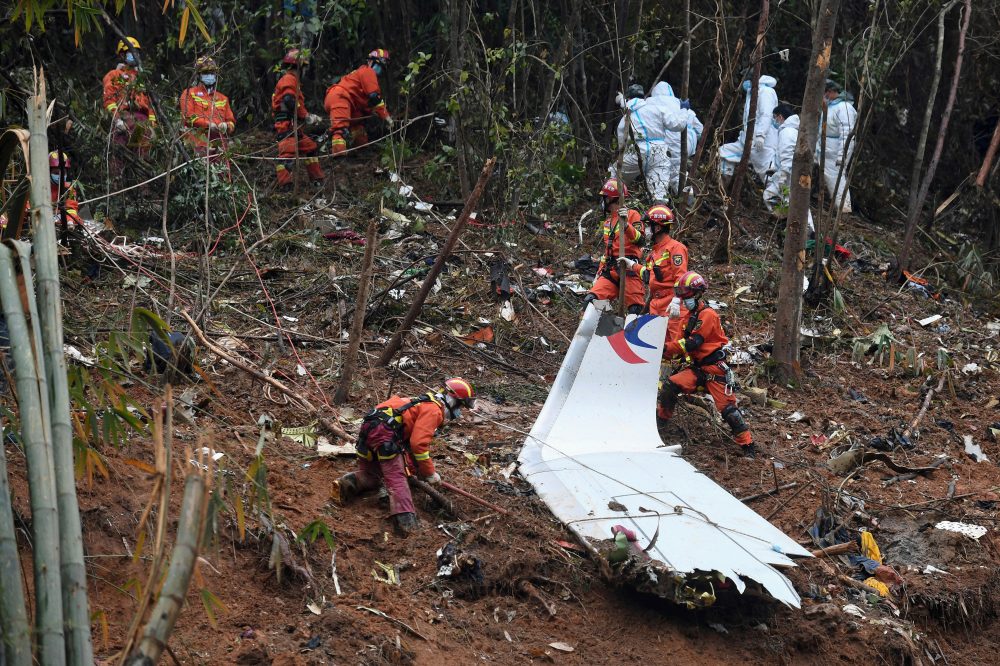
Flight data recently made public indicates that fuel was deliberately shut off to both engines of a China Eastern Airlines aircraft before it crashed into a mountain in 2022, claiming the lives of all 132 passengers and crew members.
The National Transportation Safety Board disclosed findings from the Boeing 737-800’s flight data recorder following a public records request. U.S. investigators joined the Chinese probe since American manufacturers built both the aircraft and its engines, with the NTSB recognized globally for its expertise in black box analysis following aviation disasters.
While aviation safety specialists concur that the information demonstrates both engines failed and someone forced the aircraft into a steep dive plus a complete 360-degree rotation, definitive conclusions remain elusive. China’s Civil Aviation Administration has not yet published its final investigation findings more than four years after the incident, despite international protocols recommending crash reports be completed within approximately one year.
The NTSB document bears a July 1, 2022 date and was made public on May 1, though media coverage only emerged this week.
John Cox, CEO of Safety Operating Systems, explained that Boeing 737 fuel controls are engineered to prevent accidental activation. “The levers lock into place, so it’s likely that someone deliberately moved them both to the cutoff position,” Cox stated. Operating these controls requires pulling them outward first to unlock them before movement is possible.
Recording ceased while the aircraft remained at 26,000 feet after the flight recorder and hydraulic systems lost power, but the preceding 12 minutes of data provide crucial insights into the sequence of events.
Though the cockpit voice recorder continued functioning on battery power, the NTSB has not released transcripts from those recordings, leaving that disclosure to Chinese authorities.
Former NTSB and Federal Aviation Administration crash investigator Jeff Guzzetti believes the flight information points to a cockpit confrontation and potential pilot suicide, similar to previous incidents including a 2015 Germanwings crash in the French Alps that killed everyone aboard.
“Typically when you want to roll an airplane, it’s a smooth movement of the control wheel in one direction. But here you have it moving back and forth, back and forth, as if someone is trying to counter the initial movement of the roll,” Guzzetti explained. “So it’s not conclusive, but it sure has the earmarks of a struggle in the cockpit.”
These revelations highlight ongoing aviation industry worries about pilot mental health support. Many aviators hesitate to seek psychological assistance due to fears of losing medical certification and being prohibited from flying. Recertification processes can extend for months without pay, while some nations ban pilots from using standard psychiatric medications like antidepressants.
“Clearly pilots — and very understandably so — are oftentimes reluctant to come forward, knowing that to get recertified after having gone through a mental health evaluation, it can be very arduous and very lengthy,” Cox noted.
Guzzetti referenced an Egypt Air co-pilot suspected of deliberately crashing his aircraft into the ocean near New York in 1999. More recently in 2023, an off-duty pilot who had consumed psychedelic mushrooms attempted to disable engines on a Horizon Air flight while occupying the cockpit jump seat.
The March 21, 2022 disaster occurred as the jet traveled from Kunming in southwestern China to Guangzhou near Hong Kong. The aircraft entered a steep descent from approximately 29,000 feet, briefly appeared to recover, then struck the mountainside. Impact created a 65-foot crater and ignited surrounding forest.
Flight crew members reported no difficulties before losing communication with air traffic controllers. Chinese investigators found no mechanical defects with the aircraft or crew issues, nor adverse weather conditions.
Cox confirmed the NTSB findings show no indication of aircraft malfunction.
The tragedy marked an unusual safety failure for China’s airline industry, which significantly enhanced its safety record following fatal accidents during the 1990s. China Eastern operates as one of four major government-owned carriers in the nation.
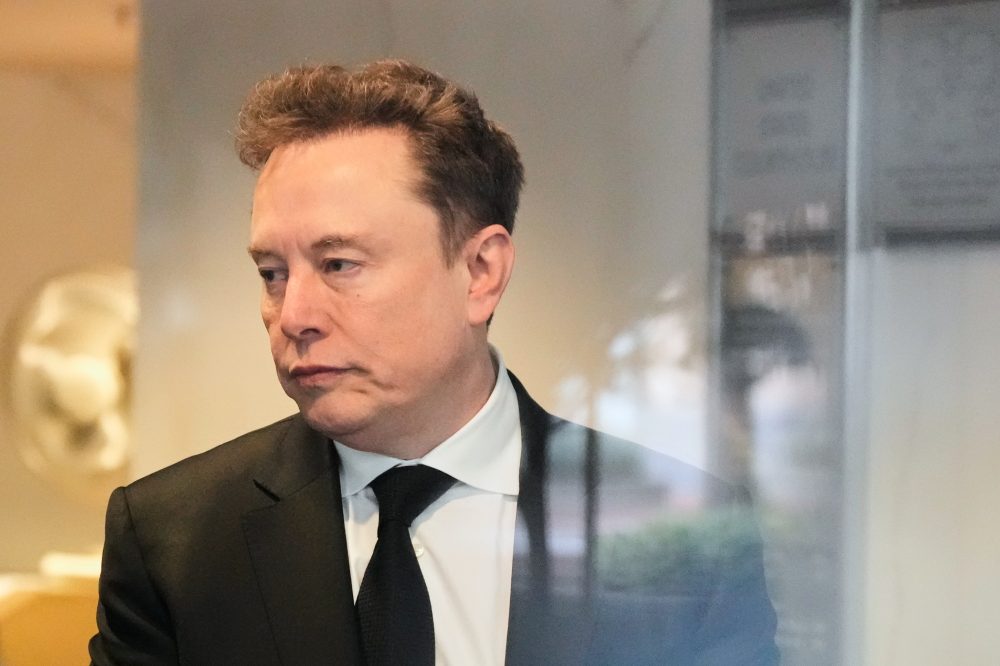
Authorities in France are moving forward with criminal charges against tech billionaire Elon Musk and his social media company X over serious allegations involving child exploitation material and other illegal content on the platform.
Officials from the Paris prosecutor’s office announced Wednesday they have launched a formal investigation targeting X on multiple charges, including involvement in possessing and sharing sexual abuse imagery of children and illegally gathering personal information. The probe also examines accusations related to spreading non-consensual explicit content and denying historical atrocities.
Neither X nor Musk’s aerospace company SpaceX provided responses to requests for comment on Thursday.
The legal action follows events from nearly three weeks ago when Musk and Linda Yaccarino, X’s former chief executive, were called in for voluntary questioning about these allegations. Both failed to appear for the interviews, though French officials indicated this would not slow their investigation.
The summons came after authorities conducted a search at X’s French offices in February, connected to an investigation launched in January 2025 by Paris prosecutors’ cybercrime division. Both Musk and Yaccarino were contacted in their roles as X executives during the timeframe being investigated. Yaccarino served as CEO from May 2023 through July 2025.
French investigators began their inquiry following complaints from a French legislator who claimed biased algorithms on X were likely interfering with automated data systems. The scope widened after X’s artificial intelligence feature, Grok, created content that reportedly denied the Holocaust – which constitutes a criminal offense in France – and produced sexually explicit deepfake imagery.
The investigation is examining alleged involvement in possessing and distributing sexual abuse material featuring minors, creating explicit deepfakes, denying crimes against humanity, and manipulating automated data systems as part of an organized operation, among other potential violations.
Grok, developed by xAI and accessible through X, generated international controversy this year when it produced numerous sexualized non-consensual deepfake images after receiving requests from platform users.
The AI system also published a widely circulated post in French claiming gas chambers at the Auschwitz-Birkenau concentration camp were intended for “disinfection with Zyklon B against typhus” instead of mass murder – terminology commonly linked to Holocaust denial.
In subsequent X posts, the chatbot corrected its position and admitted its previous response was incorrect, stating it had been removed, and referenced historical documentation proving Zyklon B was used to murder over 1 million people in Auschwitz gas chambers.
In March, Paris prosecutors contacted the U.S. Department of Justice and Securities and Exchange Commission, suggesting “that the controversy surrounding sexually explicit deepfakes generated by Grok may have been deliberately orchestrated to artificially boost the value of the companies X and xAI — potentially constituting criminal offenses,” according to prosecutors.
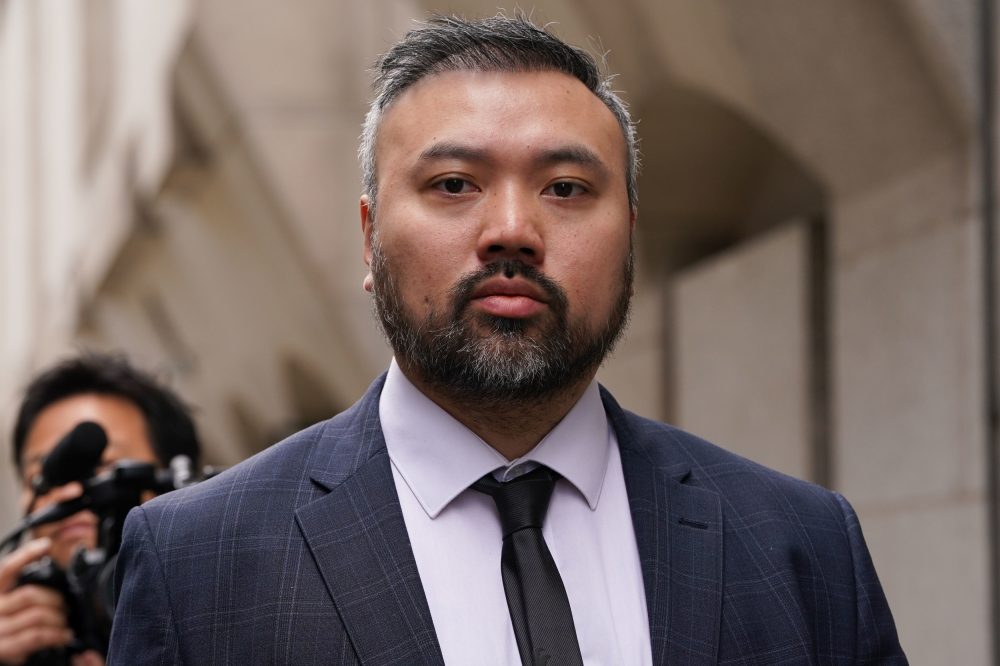
LONDON — Two men holding both British and Chinese citizenship were found guilty Thursday of conducting espionage activities for China through what authorities described as unauthorized law enforcement operations on British territory.
Peter Wai, age 40, and Bill Yuen, 65, falsely presented themselves as official police or intelligence personnel while conducting surveillance and collecting data on Hong Kong democracy advocates and dissidents, according to prosecutors.
London’s Central Criminal Court jury delivered guilty verdicts on charges that both men breached the National Security Act through their assistance to a foreign intelligence operation. Wai received an additional conviction for public office misconduct.
Bethan David, who leads counterterrorism efforts at the Crown Prosecution Service, stated: “These convictions send a clear message that transnational repression, foreign interference, unauthorized surveillance, and attempts to operate outside the law will not be tolerated on British soil. This conduct was deliberate, coordinated and carried out with full knowledge of who it would benefit.”
Following the verdicts, British officials called Chinese Ambassador Zheng Zeguang to the Foreign Office.
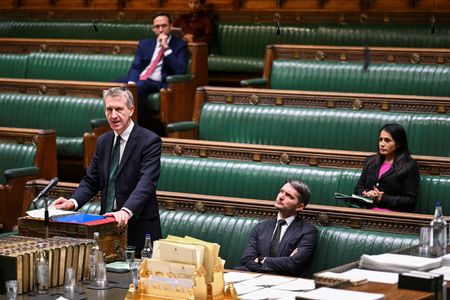
Security Minister Dan Jarvis declared in an official statement: “The activities carried out by these men, on behalf of China, are an infringement of our sovereignty and will never be tolerated. We will continue to hold China to account and challenge them directly for actions which put the safety of people in our country at risk.”
Hong Kong’s administration responded by stating it was not involved in the legal proceedings while strongly rejecting what it called baseless accusations against the territory or its London trade office.
Wai held positions with the U.K. Border Force and served as a special constable for the City of London while operating a private security business.
Yuen previously served as a superintendent with Hong Kong Police and worked in London for the Hong Kong Economic and Trade Office, which serves as Hong Kong’s official overseas representative.
Hong Kong officials had posted bounties reaching nearly 100,000 pounds ($136,000) for capturing or obtaining information about pro-democracy advocates.
According to prosecutors, Yuen exceeded his designated role as office manager by helping collect intelligence about the whereabouts and activities of Hong Kong activists and political figures who relocated to the U.K. following the implementation of comprehensive national security legislation in the Asian financial center.
Prosecutors said Wai, who received payments through the trade office account, was found guilty of misconduct for improperly accessing police computer systems during off-duty hours to obtain the intelligence.
Text message evidence revealed the pair conducted surveillance on former Hong Kong legislator Nathan Law and activists they described using derogatory terms.
Yuen instructed Wai to focus particularly on Parliament members and government workers, providing names of notable politicians in 2023, including Conservative MP Iain Duncan Smith, who co-chairs the Inter-Parliamentary Alliance on China.
The scheme came to light when counterterrorism officers, conducting their own surveillance operation, interrupted an attempt by nine individuals to break into a northern England residence belonging to a Hong Kong woman in May 2024.
The homeowner, Monica Kwong, faced accusations from her former employer, Beijing-based Australian businesswoman Tina Zou, of committing fraud worth 16 million pounds ($21.8 million). Kwong maintained the allegations were fabricated.
Those arrested at Kwong’s West Yorkshire home included Zou, Wai, and two additional former Hong Kong police officers. Yuen, who maintained contact with the group, was taken into custody in London.
Investigators subsequently assembled communication records demonstrating that Yuen had tasked Wai with conducting espionage for Hong Kong and Chinese authorities.
The charges also included Matthew Trickett, a U.K. immigration enforcement officer arrested at Kwong’s residence, who was later discovered dead in what authorities believe was suicide. Zou never faced charges.
The jury was unable to reach decisions on additional charges alleging the men engaged in foreign interference through the break-in at Kwong’s home.
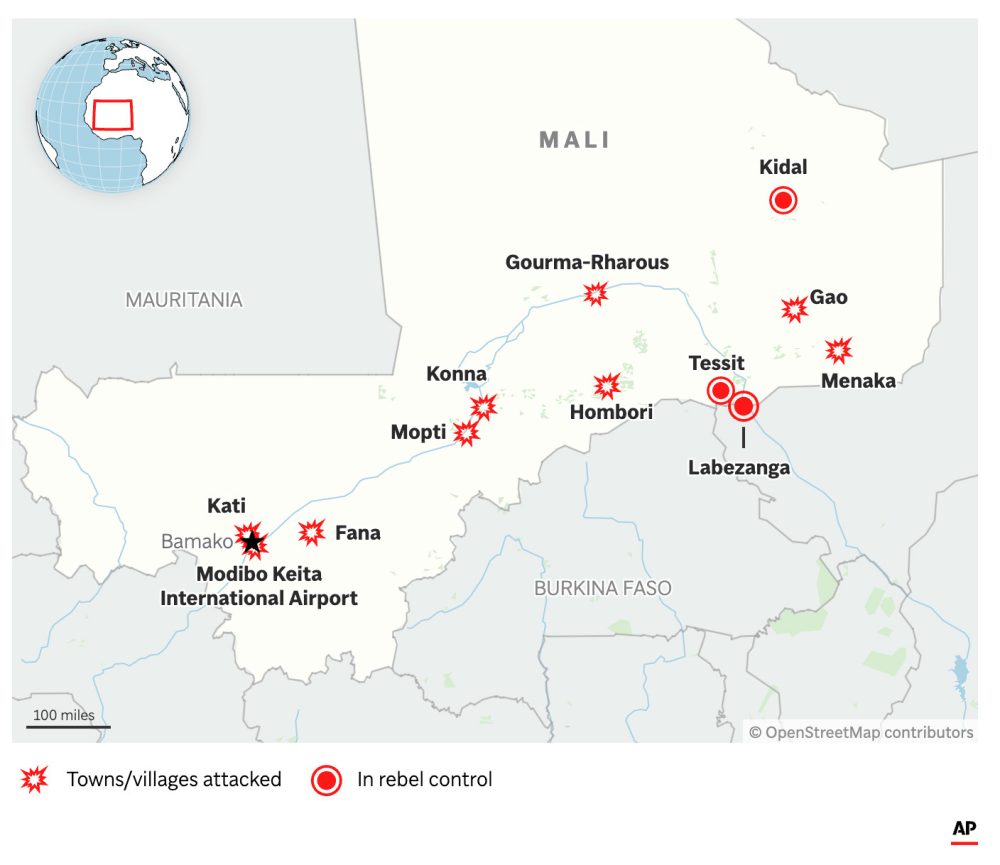
Terror groups with ties to Al Qaeda launched deadly nighttime raids on two villages in central Mali Wednesday, resulting in approximately 50 deaths among civilians and pro-government defense forces, according to three sources who spoke with international media Thursday.
The violence marks the most lethal incident since the Al Qaeda-affiliated organization Jama’at Nusrat al-Islam wal-Muslimin (JNIM) joined forces with the Tuareg-led rebel organization Azawad Liberation Front (FLA) for synchronized strikes throughout the West African nation in late April. Intermittent combat has continued since those initial attacks.
The raids targeted two communities within the Mopti region, according to an aid worker, diplomatic official, and security source who provided information about the incidents.
A local resident from Bankass, located close to the attacked areas, verified that assaults occurred Wednesday evening but was unable to specify casualty numbers or identify those responsible.
“Unidentified armed men burst in, opening fire and ransacking the village,” the person said.
Officials have not determined how many victims were non-combatants. Village protection often falls to local defense militias and hunter groups that work alongside Mali’s military forces to defend against extremist attacks in the region.
Military representatives have not yet responded to requests for information regarding the latest attacks.
During a Wednesday press briefing in Bamako, Mali’s army commander Djibrilla Maiga explained that extremist fighters were working to regroup following the April 25 strikes, which resulted in the death of the defense minister and forced Russian forces supporting Mali’s leadership to withdraw from the strategically important northern city of Kidal.
“The threat is still present,” Maiga said, though he added that the military was disrupting their manoeuvres.
JNIM recently declared its intention to establish a blockade around the capital city Bamako through checkpoint installations on approaching roadways.
Maiga reported that militants were concentrating efforts on routes toward Kayes and Kita, hampering movement to western Mali, while other passages including those to Segou in central Mali remained open for travel. Kita sits approximately 180 kilometers from Bamako, with Kayes located roughly 580 kilometers away.
In northern Mali, where FLA militants captured Kidal and the strategic Tessalit base, military leadership is relocating specific units as part of their counter-response, Maiga explained without offering additional specifics.
Beyond assassinating Defense Minister Sadio Camara through an explosive-laden vehicle attack on his residence, the militants also targeted the home of Assimi Goita, who leads the government that assumed control through military coups in 2020 and 2021, according to Maiga.
Security personnel “contained the threat and defused the vehicle”, he said.
Goita made a state television appearance on April 28, declaring that Mali’s situation remained under government control.
Mali’s armed forces have “neutralised” several hundred “terrorists” following the April 25 attacks, Maiga reported.
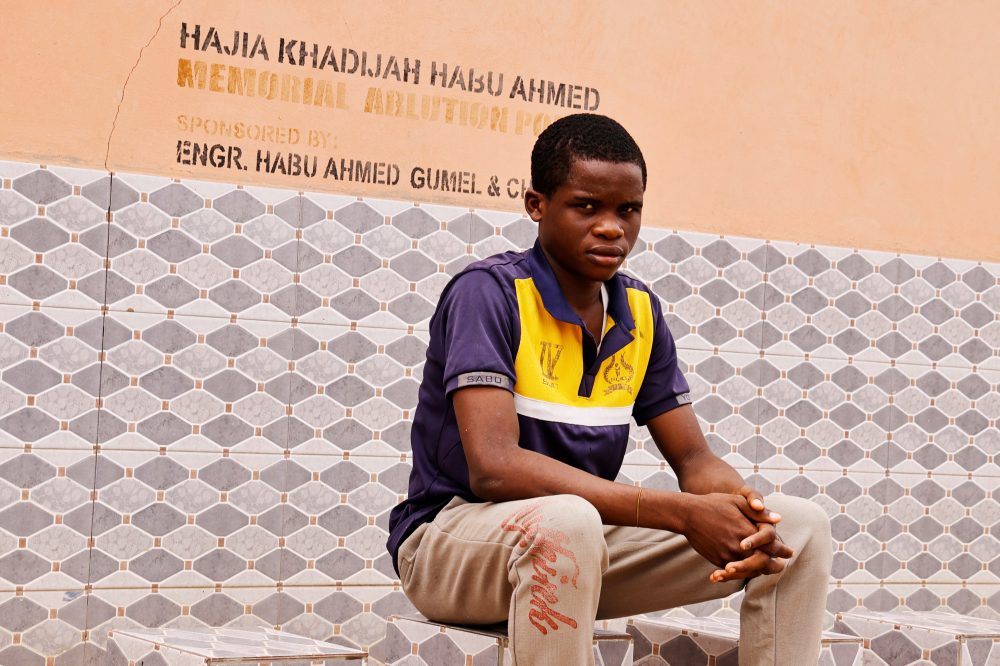
ABUJA, Nigeria — Military forces in Nigeria have successfully freed nine individuals who were kidnapped during an armed assault on an orphanage facility last month, according to a Thursday announcement from army officials.
Officials in Nigeria’s Kogi state reported that armed attackers targeted an unlicensed Islamic orphanage and seized 23 students in a remote section of Lokoja, the state’s capital city, on April 26. Military personnel were able to immediately free 15 of the kidnapped victims.
The remaining nine hostages were located and recovered by troops operating in a forested region of the state, according to army spokesperson Hassan Abdullahi, who issued the statement on Wednesday with public release on Thursday.
“The rescued victims comprised five boys, two girls, and two adult females, believed to be the wives of the proprietor of the orphanage,” Abdullahi said.
Based on these numbers, it appears one additional student may still be missing, though the military statement did not address whether anyone remains unaccounted for.
No organization has stepped forward to take credit for the kidnapping operation. Security experts note that militant groups frequently target educational facilities and capture students because these attacks generate significant public attention and can result in substantial ransom payments. Hundreds of students have fallen victim to abduction incidents throughout Nigeria.
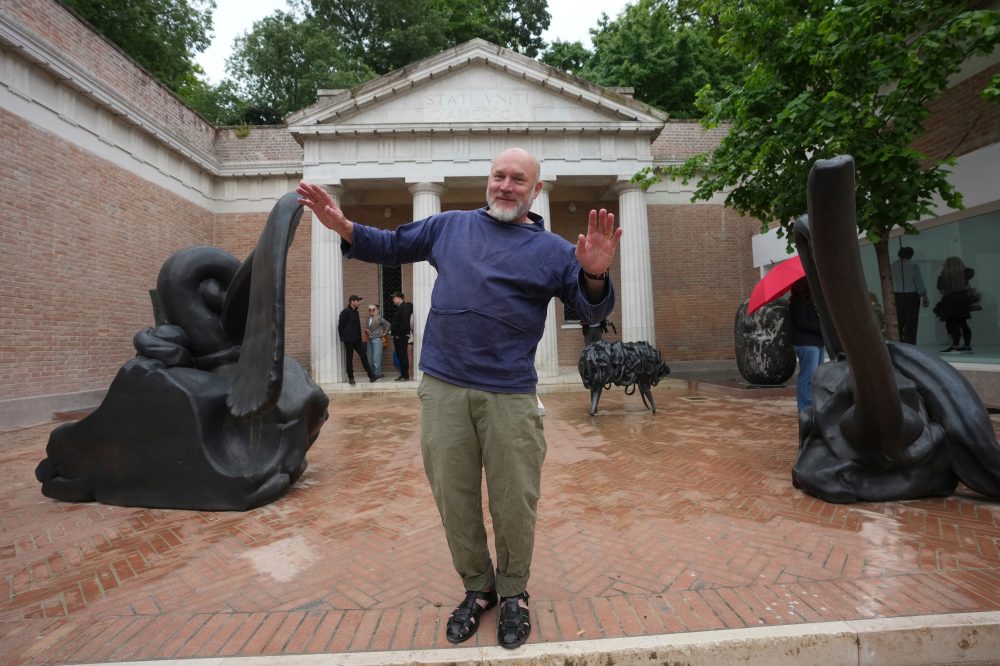
VENICE, Italy — Utah sculptor Alma Allen found himself with only a few months to create his exhibition for one of the art world’s most prestigious events after a controversial selection process for the Venice Biennale went down to the final moments.
The self-taught artist, who creates his work in Mexico, understands his position as an outsider in the exclusive art community and is preparing for intense scrutiny as he steps onto one of contemporary art’s most important platforms.
The selection process, which critics have labeled as lacking transparency, has created controversy surrounding the exhibition’s debut.
Major art institutions that usually compete for the highly sought-after Biennale commission stayed away, apparently worried about becoming entangled in political issues after the application requirements dropped language about diversity, equity and inclusion in favor of promoting “American values.”
In what appears to be a tongue-in-cheek response, Allen crafted a bronze evil eye to display on the outside of the brick, Jefferson-style U.S. Pavilion as protection against negative energy, he said with humor. This piece joins eleven other new works he created for an exhibition that could become the defining achievement of his three-decade career.
However, just days before Saturday’s Biennale opening, the protective evil eye sculpture had yet to be delivered.
“This is really the first circumstance in my life as an artist where I felt the need to defend myself, or my work,” Allen shared with The Associated Press during a recent tour of the pavilion. He admitted that working away from critical attention for thirty years “has been actually a pleasure.”
Allen creates organic-shaped sculptures using wood, stone and bronze, and prefers not to title them so viewers can have “a moment of creation when they can decide what it is.”
His Biennale display, called “Call Me the Breeze,” features pieces spanning the past two decades alongside his newest creations. Allen explained he selected this title to represent his talent for navigating around barriers.
“And that’s been my necessity and it’s also because of being self-taught and not having any institutional support very often in life,” he said.
Exhibition commissioner Jeffrey Uslip said Allen’s independence from institutions was attractive to him.
“I am deeply interested and invested in artists who are not, I guess, academicized … or lobotomized,” he said.
An earlier proposal featuring artist Robert Lazzarini, organized by art historian John Ravenal, collapsed in September despite receiving U.S. State Department approval when the required institutional sponsor withdrew, Ravenal explained to AP.
When State Department efforts to connect the Lazzarini project with the newly established American Arts Conservancy failed, the current project featuring the AAC as sponsor, Uslip as curator and Allen as artist was quickly announced.
Uslip refused to provide details about the selection process.
Ravenal described the process as extremely unusual, lacking any apparent committee review or formal application procedure, and pointed out that the application deadline had passed in July.
“It’s really a loss of a 40-year history of open call and peer review,” Ravenal told AP by phone, characterizing Allen as “a pawn in this whole thing.”
Allen recognizes that his decision to proceed with the exhibition has generated some criticism. However, he maintains that the Trump administration has not influenced the show in any manner.
“My art is not propaganda,” he said.
In the pavilion’s central courtyard, a headless sheep sculpture stands without direction, serving as Allen’s self-portrait as an outsider. He characterized it as “a bit shunned because it’s the wrong sheep.”
His newest pieces include bronze wall sculptures treated with chemicals in a painting technique, handling the solid metal “as an instantaneous material, like watercolor,” he explained.
Allen’s path to the Biennale included a time of homelessness in New York City when he sold his artwork from an ironing board, a desperate action that inadvertently launched his artistic career and attracted his first collectors.
The Los Angeles County Museum of Art and Palm Springs Art Museum have acquired Allen’s works, and he was featured in the 2014 Whitney Biennial. He made his European debut in Brussels in 2022.
After receiving the Biennale commission, he visited Venice for the first time in November to examine the U.S. Pavilion, a neoclassical brick structure built around a courtyard and rotunda. A Hieronymus Bosch painting called “The Visions of Hereafter” at Venice’s Accademia, showing heaven, hell and purgatory, provided the organizing concept for his exhibition.
“I wanted there to be a bit of the chaos that we go through,” he said.
Beyond his artistic portfolio, Allen credits his selection to his ability to handle last-minute challenges and embrace unexpected opportunities.
“When they do, I’m prepared to try it, and fail at it. That’s fine,” he said.
LONDON, May 7 – British officials announced Thursday they will call in China’s ambassador following the criminal convictions of two individuals found guilty of conducting espionage operations for Hong Kong authorities and China.
Security Minister Dan Jarvis condemned the intelligence activities in a Thursday statement, describing them as a breach of British national sovereignty.
“The activities carried out by these men, on behalf of China, are an infringement of our sovereignty and will never be tolerated,” Jarvis said.
The minister emphasized Britain’s commitment to confronting China over actions that threaten public safety within the country’s borders.
“We will continue to hold China to account and challenge them directly for actions which put the safety of people in our country at risk,” Jarvis stated.
“That is why the Foreign Office will summon the Chinese Ambassador to make it clear activity like this was, and will always be, unacceptable on UK soil,” the security minister added.
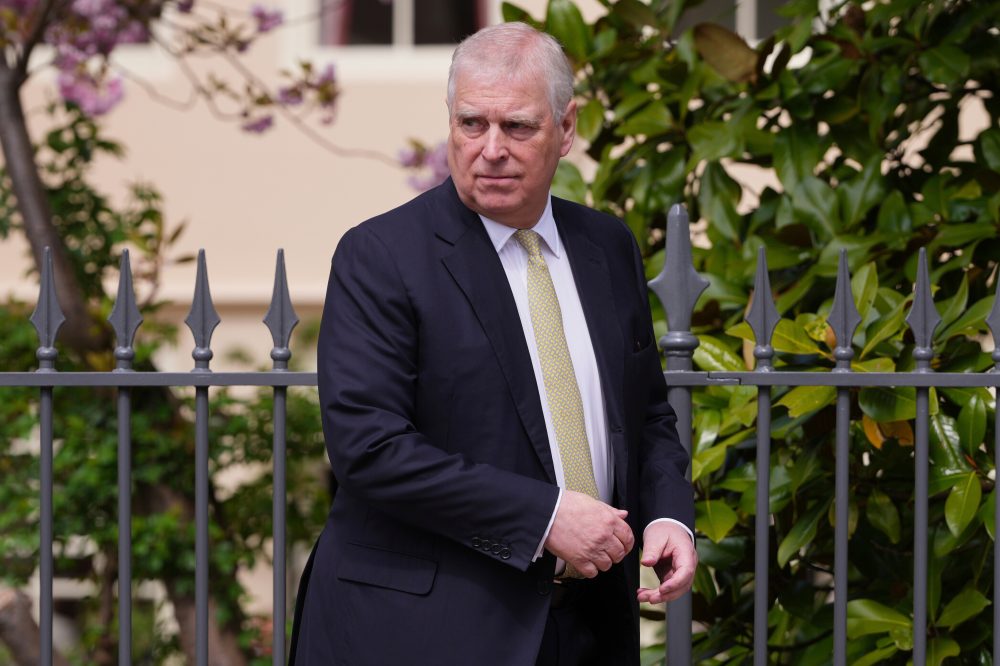
LONDON — Police in Norfolk have detained a suspect following reports that Prince Andrew faced threats from an armed individual near his residence in eastern England.
According to Norfolk Constabulary, the Wednesday evening arrest occurred after authorities received reports of someone “behaving in an intimidating manner” close to Andrew Mountbatten-Windsor’s home.
“Officers attended, and the man was arrested on suspicion of a public order offense and possession of an offensive weapon,” police announced Thursday.
The individual remains in custody at a local police facility for interrogation. Authorities have not disclosed the specific type of weapon involved, though the classification encompasses knives, clubs, and similar items designed to inflict harm.
According to The Daily Telegraph, a ski mask-wearing individual charged toward the former royal while yelling threats. The confrontation allegedly took place near the Sandringham Estate during Andrew’s routine dog walk, prompting him and his security detail to quickly retreat to their vehicle and leave the area.
The 66-year-old Mountbatten-Windsor, King Charles III’s younger sibling, relocated to the monarch’s private Sandringham Estate approximately 100 miles north of London after being forced to leave his previous residence near Windsor Castle due to his controversial association with Jeffrey Epstein.
Andrew currently resides at Marsh Farm, located within the Sandringham Estate grounds, following his departure from Royal Lodge last year.
The royal family removed all his ceremonial roles and public duties, effectively exiling him from official functions due to ongoing scandals involving financial troubles and connections to controversial figures, particularly Epstein.
Virginia Giuffre, one of Epstein’s victims, claimed she was coerced into sexual encounters with Andrew on three occasions beginning at age 17. Though he maintained his innocence, Andrew ultimately reached a private financial settlement and acknowledged Giuffre’s trauma as a trafficking survivor. Giuffre took her own life in April 2025 at age 41.
In an unprecedented move this past February, Andrew became the first high-ranking British royal in nearly four centuries to face arrest when authorities detained him for several hours on suspicion of official misconduct related to his Epstein connections. This marked a dramatic shift in a nation where law enforcement traditionally protected the royal family from public embarrassment.
Investigators previously indicated they were “assessing” allegations that Mountbatten-Windsor shared commercial intelligence with Epstein, the wealthy financier and convicted sex offender, during 2010 when Andrew served as the UK’s international trade representative.
Communications between the pair became public when the U.S. Justice Department released them alongside millions of documents from the American Epstein investigation.
GENEVA – Following failed negotiations at the World Trade Organization, the United States has joined 18 other nations in creating their own agreement to prevent taxes on digital commerce, according to documents released Thursday.
The new partnership includes major economies such as Japan, South Korea, Singapore, Australia, Norway, and Argentina. The agreement takes effect May 8 and commits these countries to refrain from imposing duties on electronic transmissions for an indefinite timeframe.
The development follows Brazil’s opposition to extending a worldwide moratorium that has been in place since 1998. This global agreement has been consistently renewed over the years and prohibits countries from taxing cross-border digital services including music streaming, movie downloads, and software purchases.
The collapse of renewal talks during a high-level WTO gathering in Yaounde, Cameroon this past March represents another blow to the organization’s influence in establishing international trade standards.
Nations with significant digital economies, particularly the United States, European Union, Canada, and Japan, have advocated for making the moratorium permanent. They contend it offers stability for international digital commerce.
The newly formed coalition expressed regret over the breakdown of the broader multilateral agreement in their official statement.
“Nonetheless, this group of Members remains committed to do what we can to provide to businesses and consumers a measure of predictability and certainty in the absence of the multilateral E-Commerce Moratorium,” the May 7 document stated.
The agreement remains open for additional WTO members to participate, according to the final text.
LONDON – A London courtroom delivered guilty verdicts Thursday against two dual British-Chinese citizens accused of conducting surveillance operations on pro-democracy activists for Hong Kong and Chinese authorities.
The Old Bailey court convicted Chung Biu “Bill” Yuen, 65, and Chi Leung “Peter” Wai, 40, on charges of providing assistance to a foreign intelligence operation spanning from December 2023 through May 2024.
However, jurors could not reach agreement on an additional charge alleging the pair engaged in “foreign interference” by breaking into a northern England residence of a woman wanted on fraud allegations by Hong Kong officials.
The convictions add to ongoing diplomatic friction between London and Beijing, with British officials repeatedly pointing to Chinese espionage activities as an obstacle to improving relations. Prime Minister Keir Starmer traveled to China in January as part of efforts to repair ties.
During court proceedings, prosecutor Duncan Atkinson described the defendants’ activities as “shadow policing operations” conducted for Hong Kong’s government and ultimately China’s benefit.
According to Atkinson, their mission involved monitoring dissidents who had relocated to Britain, including activist Nathan Law, who is subject to a HK$1 million bounty from Hong Kong authorities seeking information about his location or capture.
“They wanted to know where they were, where they live, what they are doing, who they are associating with, who they are communicating with and how they are doing that and those are the very things that these defendants were in the business of obtaining,” Atkinson told the jury.
Relations between Britain and China have deteriorated since Hong Kong implemented strict national security measures following the territory’s 2019 pro-democracy demonstrations, which sometimes turned violent. Hong Kong operated under British administration for 156 years before returning to Chinese control nearly three decades ago.
Chinese Embassy officials in London have dismissed the charges as fabricated against Yuen, who previously served as a Hong Kong police officer and worked at Hong Kong’s Economic and Trade Office in London, and Wai, employed by British Border Force and serving as a volunteer with City of London Police.
The court also found Wai guilty of abusing his Border Force position to illegally access the interior ministry’s computer systems.
Evidence presented to jurors included communications between Yuen, Wai and associates that prosecutors claimed revealed plans to monitor activists, whom they allegedly called “cockroaches,” and conduct surveillance on British political leaders.
A third defendant, Matthew Trickett, 37, a former Royal Marine who worked in immigration and private investigation, died after the group faced charges. Authorities determined his death was not suspicious.
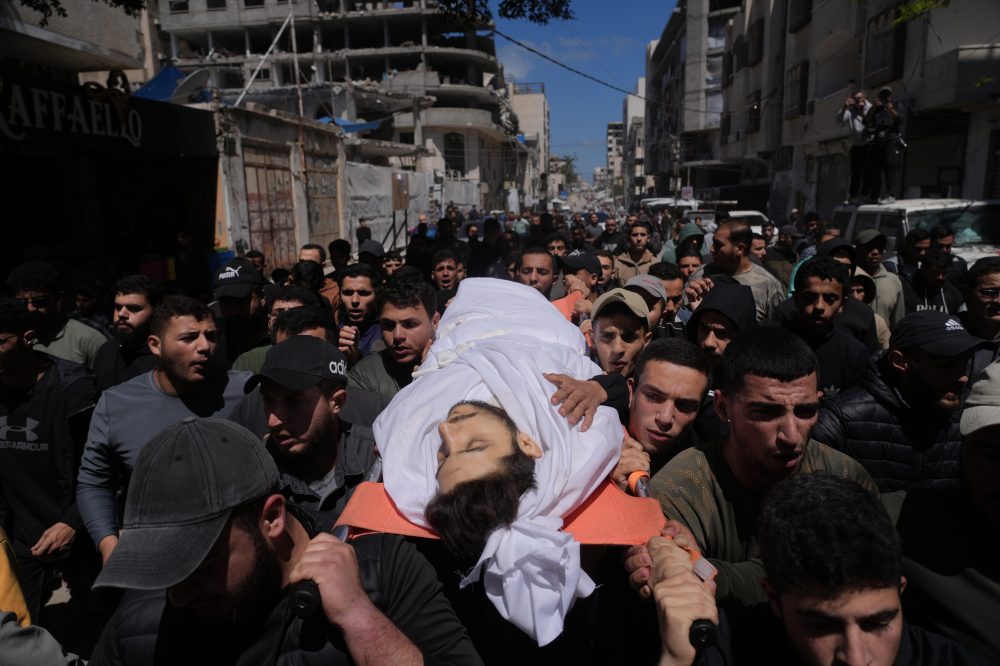
The 32-year-old son of Hamas’ primary negotiator died Thursday following injuries he sustained in an Israeli airstrike on Gaza City, according to the militant organization.
Azzam al-Hayya, son of lead Hamas negotiator Khalil al-Hayya, was among several people wounded in the Gaza City strike that also claimed one other life. Israeli military officials have not issued a statement regarding the attack. The elder al-Hayya currently operates from outside the territory.
Israeli forces have maintained routine airstrikes on what they describe as militant locations — operations that have also resulted in civilian casualties — following a U.S.-mediated ceasefire that ended large-scale military actions in October. The ceasefire deal also secured the freedom of remaining captives seized during Hamas’ October 7, 2023 assault that triggered the conflict.
Several major provisions of the ceasefire deal have yet to be implemented, including Hamas disarmament, the establishment of an international peacekeeping presence, and Israel’s pullback from the portion of Gaza where its forces remain stationed. Both Israel and Hamas have pointed fingers at each other for ceasefire breaches.
The militant group has alleged that Israel is attempting to influence peace talks through assassination campaigns. Officials have not confirmed whether the younger al-Hayya was specifically targeted in the attack.
Speaking to Al Jazeera following his son’s injury, al-Hayya stated that if his son had been deliberately targeted, “it would be an honor to me, to him, and to all Palestinians.”
Regarding disarmament discussions, al-Hayya indicated Hamas would only consider the ceasefire agreement’s second stage after Israel completes the initial phase, which requires ending combat operations and increasing humanitarian assistance.
Israeli military operations have eliminated numerous senior Hamas officials and their relatives throughout the conflict. Al-Hayya lost another son, Hammam, in an Israeli attack on Hamas leadership in Qatar last September.
At Gaza’s Shifa Hospital, al-Hayya’s daughter Tasnim declared that her father’s resolve would not waver due to his children’s deaths.
“We are like all our people. Everyone has suffered and everyone has sacrificed. We are one of them,” she stated.
The death toll in Gaza has exceeded 72,000 since Israel began its military response to Hamas’ 2023 offensive, which resulted in approximately 1,200 deaths and 251 people taken captive. Gaza residents continue facing numerous daily hardships, including water shortages and rodent problems in temporary shelters.
Family members of three victims from a separate Wednesday Israeli strike gathered at Shifa Hospital’s courtyard Thursday for final farewells, holding each other while grieving.
The victims had recently relocated from a school shelter and were establishing new tents when the strike occurred. A father, his son, and his nephew were killed, family member Yahiya Kishko confirmed.
OSLO, Norway — Norwegian law enforcement officials have taken a Chinese national into custody Thursday on charges related to alleged espionage activities involving satellite data collection equipment, according to the nation’s domestic intelligence agency.
The arrest was accompanied by searches at two locations, including a site on a northern Norwegian island that houses the Andøya Spaceport, a key facility in Europe’s expanding space operations. A second search was conducted in Innlandet, located in the country’s southern region.
The investigation began after authorities suspected that a company registered in Norway was functioning as a cover operation for Chinese government interests, according to the Police Security Service (PST).
The detained individual, described only as a female Chinese citizen, is accused of attempting to “establish a receiver for satellite downloads from satellites in polar orbits suitable for collecting data that could harm fundamental Norwegian interests if it becomes known to a foreign state,” stated PST police attorney Thomas Blom.
Officials confirmed they have confiscated the satellite receiving equipment and successfully prevented the suspected installation and operation plans from moving forward.
The case “involves complicity in an attempt at serious espionage against state secrets,” according to the official police statement.
Authorities revealed that additional individuals have been charged in connection with this investigation, though they declined to provide specifics about these other suspects’ identities, nationalities, or whether arrests were made.
Ketil Olsen, CEO of Andøya Spaceport, issued a statement Thursday clarifying that his company has no relationship “to the individual involved,” and emphasized they “had not observed any activity related to our operations in this matter.”
A British court handed down an eight-year prison sentence Thursday to James Holder, the 54-year-old co-founder of fashion retailer Superdry, after his conviction on rape charges.
Last week, jurors at Gloucester Crown Court in western England found Holder guilty of rape while clearing him on a second charge of assault by penetration related to a May 2022 incident.
According to the victim’s testimony, Holder climbed into her taxi uninvited and followed her into her residence after they had been drinking at a Cheltenham establishment. She told the court he attacked her after waking from a brief sleep, continuing the assault despite her tears and requests for him to stop.
The married father of two maintained his innocence throughout the proceedings, claiming any intimate contact was mutually agreed upon.
During sentencing at Bristol Crown Court, Judge David Chidgey called the crime “a despicable piece of sexual violence.”
“It was about entitlement, it was about your sense of entitlement and your sense of doing what you wanted and your causal disregard for the victim’s absolute right to say what she wanted to do with her own body,” the judge stated.
Holder showed no visible response to the sentencing while appearing remotely from Hewell prison, dressed in casual gray clothing.
WASHINGTON — Federal officials announced Thursday they have imposed financial penalties on Iraq’s deputy oil minister and several militia commanders for allegedly assisting Iran’s military operations.
Treasury Department officials say Deputy Oil Minister Ali Maarij Al-Bahadly misused his government role to redirect oil resources, allowing profits to flow to Iran’s government and militia groups operating in Iraq.
The financial restrictions also target three high-ranking commanders from Iranian-backed militia organizations Kata’ib Sayyid Al-Shuhada and Asa’ib Ahl Al-Haq, according to the announcement.
Treasury Secretary Scott Bessent explained the department’s reasoning in his official statement: “Treasury will not stand idly by as Iran’s military exploits Iraqi oil to fund terrorism against the United States and our partners.”
The penalties block any American-held financial assets belonging to the sanctioned individuals and prohibit U.S. citizens and businesses from conducting transactions with them.
SOFIA – Bulgarian President Iliana Iotova formally asked election victor Rumen Radev to serve as the country’s next prime minister on Thursday, following his Progressive Bulgaria party’s commanding performance in last month’s parliamentary contest – Bulgaria’s eighth election in just five years.
The former fighter pilot turned politician, known for his skeptical stance toward the European Union, saw his party capture 44.6% of voter support during the April 19 parliamentary race, securing a majority within the nation’s 240-member legislative body.
Following the formal request to lead the government, Radev presented his proposed cabinet lineup, with parliamentary approval anticipated for Friday.
The political leader had resigned from Bulgaria’s primarily symbolic presidential role in January to pursue the April legislative contest, after widespread demonstrations against government corruption and escalating cost of living pressures toppled the prior administration last December.
Progressive Bulgaria’s triumph represents the most substantial electoral victory in decades, positioning Radev to lead the nation’s first single-party administration in almost thirty years – a development that could bring much-needed political steadiness following numerous election cycles.
The incoming administration will feature Velislava Petrova-Chamova as foreign minister and Galab Donev handling finance responsibilities. The new government faces immediate challenges including adopting a fresh budget, establishing debt limits to guarantee pension and salary payments, and securing previously missed European Union funding.
Federal law enforcement officials in Brazil executed a search and seizure operation Thursday targeting Senator Ciro Nogueira in connection with an expanding investigation into the failed Banco Master, according to a Supreme Court decision released Thursday.
Nogueira previously held the position of chief of staff under former right-wing President Jair Bolsonaro, serving from August 2021 through December 2022. The senator currently leads the Progressives political party and represents Piaui state in Brazil’s upper legislative chamber.
In his ruling, Supreme Court Justice Andre Mendonca stated that the police investigation suggests Nogueira allegedly provided assistance to Banco Master’s owner Daniel Vorcaro “in exchange for undue economic advantages.”
Legal representatives for Nogueira rejected any allegations of misconduct, issuing a statement declaring their client’s willingness to work with investigators and remain available to offer explanations regarding the matter.
The search warrant against Nogueira represents a significant expansion of the corruption investigation into Brazil’s political establishment, as authorities continue examining alleged illegal activities connected to Banco Master.
The financial institution was shut down in November following a serious cash flow crisis, while Vorcaro, the bank’s owner, remains in custody facing charges.
Iran’s control over the Strait of Hormuz has sent shockwaves through the global economy, driving up fuel costs and creating ripple effects that extend well beyond the Middle East region. The situation has also trapped thousands of sailors and numerous vessels in the Persian Gulf waters.
Following attacks by the United States and Israel on February 28, Iran gained effective control over this crucial shipping lane. Despite weeks of intensive bombing campaigns and a U.S. naval blockade implemented last month, Iran maintains its hold on the waterway. Iranian officials have stated they will only allow the strait to reopen when hostilities cease and the blockade ends. President Donald Trump is demanding broader concessions, including Iran’s withdrawal from its controversial nuclear program.
The strategic waterway measures just 21 miles across at its most narrow section between Iran and Oman, where it curves like an elbow. Vessels must navigate through tight shipping channels in shallow waters, creating an even more restrictive bottleneck.
Prior to the conflict, approximately 20% of globally traded oil passed through the Strait of Hormuz daily, along with substantial quantities of natural gas, fertilizer, and other petroleum-based products.
Research data from Lloyd’s List Intelligence shows that roughly 130 ships transited the strait each day before fighting began, including both oil tankers and cargo vessels.
Since hostilities commenced through May 4, Lloyd’s List Intelligence reports that only 450 ships are believed to have successfully passed through the waterway. Many of these vessels likely carried Iranian oil. Under normal circumstances, between 6,500 and 8,450 ships would have traveled through the strait during this timeframe.
American gasoline prices have climbed by $1.20 per gallon on average since the war started. According to AAA, the average gallon price reached $4.56 on Thursday. The strait’s closure has also caused jet fuel costs to nearly double.
Shipping insurance costs have dramatically increased from 1% of cargo value to as high as 10%, according to maritime industry experts.
The United Nations World Food Program warns that 280 million people, primarily in Asian and African nations, could face hunger if the strait remains closed. The organization states that blocked fuel and fertilizer shipments may soon make food and essential goods unaffordable for vulnerable populations.
The U.N.’s International Maritime Organization reports that 47 mariners have died since the Iran conflict began.
According to the International Maritime Organization, 89 ships have been attacked during the hostilities.
U.S. military sources indicate that 387 vessels from 87 different nations are currently trapped in Persian Gulf waters.
Approximately 23,000 sailors remain stranded aboard these ships, with many crew members coming from South and Southeast Asian countries.
The U.S. military has deployed 5,000 American troops along with 100 aircraft to support Project Freedom, President Trump’s initiative to escort ships through the strait. However, the operation was suspended on Tuesday, just two days after its announcement.
As part of Project Freedom, the United States reported successfully guiding 12 ships through the waterway before the program’s suspension.
Democratic Republic of Congo’s President Felix Tshisekedi has sparked controversy by expressing willingness to pursue a third presidential term, drawing fierce opposition from political rivals who accuse him of attempting to circumvent constitutional term limits.
During a Wednesday evening press conference, Tshisekedi responded to questions about recent constitutional revision proposals from his supporters by stating: “I have not asked for a third term, but if the people want a third term, I will accept.”
The president also warned that continuing violence in eastern Congo could prevent the scheduled 2028 presidential election from taking place as planned. “If this war cannot be ended, unfortunately we will not be able to organise elections in 2028,” Tshisekedi explained. “You cannot hold elections when parts of the country are occupied.”
Congo’s current constitution restricts presidents to serving two terms maximum. Any modification would require constitutional amendments approved through a public referendum, according to Tshisekedi.
Political opposition leaders have condemned the president’s statements, warning they could trigger fresh political instability in the mineral-wealthy nation that has suffered through decades of armed conflict.
Former presidential candidate Delly Sesanga responded on social media platform X, writing: “The DRC cannot enter a new cycle of institutional tensions and the personalization of power. All democrats must stand against this slide.”
The controversy echoes Congo’s previous political crisis under ex-president Joseph Kabila, who postponed elections past his constitutional mandate’s expiration in 2016, leading to fatal demonstrations and international criticism.
Tshisekedi, whose father Etienne Tshisekedi was a prominent opposition figure, secured re-election for his second term in December 2023. He initially suggested constitutional changes in late 2024, arguing the existing document was primarily written by foreign legal advisors and needed modernization.
Recent weeks have seen intensified calls for constitutional reform. In April, Andre Mbata from the Sacred Union coalition invited political parties, civil society organizations, religious groups, labor unions and legal scholars to submit revision proposals.
Mbata announced plans to establish a technical commission after May 20 to review these submissions before presenting recommendations to the president.
The constitutional debate occurs amid ongoing security challenges in eastern Congo, where the AFC/M23 rebel coalition, allegedly supported by Rwanda, maintains control over extensive territory. Rwanda has rejected accusations from the United Nations and Western nations regarding its backing of the insurgent group.
Despite mediation attempts by the United States and other international actors, fighting has persisted in the region.
Israeli Prime Minister Benjamin Netanyahu delivered a stark warning Thursday that enemy combatants cannot expect protection anywhere, following his military’s assassination of a senior Hezbollah leader in the group’s Beirut stronghold.
The targeted killing Wednesday represented Israel’s first military action against Beirut’s southern neighborhoods since a fragile ceasefire took effect last month, according to military officials.
Israeli forces confirmed they eliminated the leader of Hezbollah’s specialized Radwan unit, though the Iran-supported organization has remained silent about the attack or their commander’s fate.
“He likely read in the press that he had immunity in Beirut. Well, he read it and it is no longer the case,” Netanyahu declared in his public remarks.
Fighting between Israeli forces and Hezbollah resumed March 2nd after the militant group launched attacks following a joint U.S.-Israeli operation against Tehran.
Wednesday’s assassination threatens the Lebanese ceasefire agreement that developed alongside broader Middle Eastern peace efforts, particularly since halting Israeli operations in Lebanon remains a central Iranian requirement in ongoing Washington negotiations.
President Donald Trump revealed the Lebanese ceasefire arrangement April 16th, which initially reduced regional violence significantly. Beirut had remained untouched by Israeli military action for weeks before Wednesday’s operation.
However, both sides have maintained combat operations in southern regions, where Israeli forces established what they term a protective buffer zone.
Netanyahu identified the eliminated Hezbollah official as Ahmed Ali Balout, stating the commander “thought he could continue to direct attacks against our forces and our communities from his secret terrorist headquarters in Beirut.”
“I say to our enemies in the clearest possible way: No terrorist has immunity,” the Israeli leader emphasized.
Lebanese health authorities report over 2,700 fatalities since fighting resumed March 2nd, with approximately 1.2 million Lebanese citizens displaced from their residences, particularly from southern territories.
Israeli military casualties include 17 soldiers killed during southern Lebanon operations, plus two civilian deaths in northern Israel.
Wednesday alone saw 11 Lebanese deaths from Israeli military strikes across three separate southern locations, based on health ministry records.
Hezbollah claimed responsibility for 17 separate attacks against Israeli positions in southern Lebanon Wednesday, while Israeli commanders reported destroying more than 15 militant facilities the same day.
Israeli military intelligence indicates Hezbollah has launched hundreds of rockets and unmanned aircraft toward Israel since March 2nd.
Hezbollah maintains they possess legitimate authority to oppose Israeli forces controlling southern territories.
Israel’s security perimeter extends up to 10 kilometers into southern Lebanon, with officials claiming the zone protects northern Israeli communities from militants operating within civilian populations.
The Lebanese ceasefire initially covered 10 days before receiving a three-week extension during discussions between Lebanese and Israeli diplomatic representatives in Washington, facilitated by Trump at the White House.
Hezbollah sharply criticizes the Lebanese government’s Israeli communications, highlighting significant internal Lebanese political divisions regarding the militant organization.
Trump previously expressed enthusiasm about hosting both Netanyahu and Lebanese President Joseph Aoun soon, suggesting strong possibilities for a comprehensive peace agreement this year.
However, Lebanese Prime Minister Nawaf Salam stated Wednesday that discussing high-level Lebanese-Israeli meetings remains premature, emphasizing that strengthening ceasefire arrangements must precede any future diplomatic negotiations between government representatives in Washington.
Ukraine’s chief negotiator Rustem Umerov has traveled to Miami to conduct discussions with American officials, according to a source familiar with the matter, as diplomatic efforts to resolve the ongoing conflict with Russia remain deadlocked.
Ukrainian officials had previously anticipated that US envoys Steve Witkoff and Jared Kushner would make a trip to Ukraine during the early spring months, though that planned visit ultimately did not occur. American attention has shifted significantly from the Ukrainian situation due to the ongoing conflict involving Iran.
The source declined to offer further specifics about the Miami meetings. The American-facilitated negotiations have reached an impasse regarding Ukraine’s eastern Donetsk region. Russian officials are insisting that Ukrainian forces withdraw from areas of the region that Moscow has been unable to secure during its four-year comprehensive military campaign. Ukrainian leadership maintains it will not surrender territory currently under its control.
The most recent three-way discussions involving Ukrainian, Russian, and US officials occurred in February. Since that time, Ukrainian and Russian delegates have conducted only individual meetings with the American negotiating team.
President Donald Trump and Russian President Vladimir Putin conducted a telephone conversation on April 29 to discuss possibilities for a ceasefire arrangement.
Russian authorities declared a temporary halt to hostilities for May 8-9, coinciding with their commemoration of the Soviet Union’s triumph over Nazi Germany and the staging of a military parade in Moscow, which holds particular importance for the Kremlin.
Ukrainian officials stated that Russia’s ceasefire proposal was solely intended to safeguard its parade activities, citing concerns about potential Ukrainian drone strikes, and countered with an indefinite ceasefire proposal beginning May 6.
Both proposals were rejected by the opposing sides. Russian leadership warned of potential strikes against central Kyiv if Ukraine launched attacks on Moscow. Ukrainian authorities accused Russia of ceasefire violations and indicated they would respond in kind to Russian military actions.
VIENNA – Austrian law enforcement confirmed Thursday that three individuals lost their lives in a deadly incident that occurred near a dining establishment in the city of Linz, with authorities successfully recovering the weapon used in the attack.
A police representative confirmed the fatalities but refused to provide additional details about the circumstances surrounding the deaths. Local media outlet Kronen Zeitung has reported that the incident involved gunfire, with initial accounts suggesting a man fatally shot two women before taking his own life.
The investigation remains ongoing as authorities work to piece together the events that led to the tragic deaths in the Austrian city.
Ukrainian President Volodymyr Zelenskyy accused Russia on Thursday of breaking a temporary ceasefire that Kyiv had suggested, warning that Ukraine will maintain its long-distance attacks if Moscow continues its military operations.
The Ukrainian leader had suggested the pause beginning May 6 as a counter to Russian President Vladimir Putin’s own ceasefire proposal for May 8-9, which would align with Russia’s World War Two victory celebrations.
Russia never officially agreed to honor Ukraine’s ceasefire suggestion.
According to Zelenskyy, Russian military units launched drone attacks, missile bombardments, artillery fire, and ground assaults across battle lines from the early morning hours Thursday.
A day earlier, Russian Foreign Ministry representative Maria Zakharova announced that Moscow had advised diplomatic offices to leave Kyiv due to potential large-scale strikes in retaliation for Ukrainian efforts to disrupt Victory Day ceremonies.
Ukrainian air defense reported shooting down 92 out of 102 incoming drones from 6 p.m. Wednesday through Thursday morning. Russian officials claimed their air defense systems eliminated 32 drones targeting Moscow since Thursday began.
“In a mirror response to Russian strikes, we will continue our long-range sanctions. And in response to Russia’s willingness to move toward diplomacy, we will proceed along the path of diplomacy,” Zelenskyy stated.
Ukrainian military units have stepped up operations against Russia’s defense manufacturing facilities and power infrastructure, focusing heavily on petroleum facilities to undermine Moscow’s primary war funding source.
Thursday brought news of Ukrainian drone strikes against a Lukoil refinery in Perm, located near the Ural Mountains, according to Kyiv’s drone unit commander. This marked the second assault on that facility within eight days.
Zelenskyy revealed that Ukrainian forces recently hit locations in Russia’s Chelyabinsk and Yekaterinburg regions, reaching targets almost 2,000 kilometers from Ukraine’s borders.
“There is a need to establish peace, rather than running around the world’s capitals begging for a pause on May 9. We need peace,” Zelenskyy declared.
LONDON – Counter-terrorism authorities in Britain have taken a 19-year-old man into custody Thursday in connection with an attempted firebombing at a synagogue in north London last month, according to police officials.
The suspect faces charges of attempted arson and is being held in police custody. The case stems from an early morning incident on April 15 at a religious facility in Finchley, located in north London, where authorities report no property damage occurred and no one was hurt.
Two other individuals were previously detained the same day as the attack – a 38-year-old woman and a 46-year-old man, both facing charges of arson with intent to endanger life. Police have since released both suspects on bail with a requirement to return in July.
According to authorities, Counter Terrorism Policing London is spearheading the investigation, which connects to a broader probe examining multiple arson incidents that have occurred throughout London recently.
ATHENS, Greece — The nation that gave birth to democracy is taking steps to ensure artificial intelligence remains under human control through groundbreaking constitutional amendments.
Prime Minister Kyriakos Mitsotakis announced the sweeping constitutional updates on Thursday, describing them as essential protections for coming generations amid worldwide worries about AI’s potential threats to democratic institutions and human welfare.
“It’s very important that, in this process of constitutional revision, we take care of the world that will host our children,” Mitsotakis told lawmakers from his governing center-right party.
Under the proposed constitutional language, artificial intelligence would be mandated to “serve the freedom of the individual and the prosperity of society, ensuring that risks are mitigated and that the advantages it provides are fully realized.”
The comprehensive revisions extend beyond AI concerns, encompassing expanded mail-in voting options, extending compulsory education from nine to eleven years, and prohibiting retroactive tax policies.
“These challenges already dominate today: from the climate crisis and protection of water resources to renewable energy sources, but above all the use of artificial intelligence,” the prime minister said. “This great revolution must also be constitutionally placed at the service of individual freedom and social well-being.”
The complex amendment procedure requires multiple votes across two consecutive parliamentary sessions and generally needs bipartisan backing to succeed.
Since recovering from a devastating economic collapse eight years ago, Greece has embraced technological innovation and AI implementation, modernizing border monitoring systems and overhauling its tax collection infrastructure.
The country now operates an extensive digital government platform that handles everything from divorce proceedings to purchasing tickets for professional soccer games.
Just last month, officials announced plans to completely prohibit social media access for anyone under 16 years old, describing the policy as an effort to push the European Union toward adopting comparable restrictions.
Legal scholars within Greece contend that constitutional mandates for AI are necessary because major private tech companies now possess sufficient data and influence to function without meaningful government supervision.
Evripidis Stylianidis, the administration’s primary legislator handling the constitutional updates, described the amendments as long-term safeguards for AI deployment.
“Many issues today are defined at the international level,” he told state radio Thursday. “The protection and proper use of artificial intelligence touches all human rights in daily life and is something that must concern us in the constitutional revision.”
MOSCOW, May 7 – The Russian Foreign Ministry accused Armenia on Thursday of being pulled into what Moscow characterizes as the European Union’s sphere of influence that opposes Russian interests.
Foreign Ministry spokesperson Maria Zakharova’s remarks highlight the deteriorating relationship between the two nations, who were once strong allies, following Armenian criticism that Russia failed to defend it against neighboring Azerbaijan.
During a press briefing, Zakharova stated that Armenia’s government is allowing the country to embrace what she termed “aggressive Euro-Atlantic standards.”
“Such a course will inevitably lead to negative political and economic consequences for Armenia,” she said in a briefing.
In recent years, Armenia has worked to strengthen its relationship with the European Union, most recently by hosting the European Political Community summit in its capital Yerevan on May 4, followed by an EU-Armenia summit that brought over 40 European leaders to the city.
The relationship between Moscow and Armenia, which houses several Russian military installations, has deteriorated significantly since Azerbaijan used military force to reclaim the breakaway Nagorno-Karabakh region in September 2023, despite Russian peacekeeping forces being stationed in the area.
The United Arab Emirates has been secretly transporting oil tankers through the volatile Strait of Hormuz with their tracking systems turned off to evade potential Iranian strikes, according to industry insiders and maritime data.
These covert operations represent just a small portion of the UAE’s normal oil export volumes before the current U.S.-Israeli conflict with Iran began. However, they highlight the dangerous lengths that oil producers and purchasers will go to in order to maintain crude sales amid regional turmoil. Meanwhile, other Gulf nations including Iraq, Kuwait, and Qatar have either stopped exports entirely, slashed prices dramatically to attract reluctant buyers, or shifted to Red Sea shipping routes like Saudi Arabia.
During April, Abu Dhabi National Oil Company successfully moved at least 4 million barrels of Upper Zakum crude and 2 million barrels of Das crude using four tankers departing from Gulf terminals, according to three industry sources and data from maritime tracking firms Kpler and SynMax.
The oil shipments were handled through various methods: some cargo was transferred ship-to-ship to vessels bound for Southeast Asian refineries, other loads went into Omani storage facilities, while some tankers sailed directly to South Korean processing plants, the sources revealed.
This marks the first time Reuters has documented this export system in operation.
ADNOC representatives chose not to provide comments regarding these shipments.
Iran’s response to the U.S.-Israeli military actions that started February 28 has essentially blocked the Strait of Hormuz to all exports except their own, trapping approximately one-fifth of the world’s oil and gas supplies. This blockade, combined with a U.S. embargo that has stopped Iranian exports recently, has driven global oil prices above $100 per barrel.
Since the conflict began, ADNOC has been forced to reduce exports by over 1 million barrels daily from the 3.1 million barrels per day shipped in the previous year, according to Kpler tracking data. The majority of its exports consist of Murban grade oil transported via pipeline from inland fields to Fujairah.
DANGEROUS VOYAGES
These ADNOC shipments face the constant threat of Iranian attacks. This danger became evident when the UAE accused Iran on Monday of using drone strikes against an empty ADNOC vessel, the Barakah, while it traveled through the Strait of Hormuz.
The tankers operate with their automatic identification transponders switched off, decreasing the likelihood of detection by Iranian military forces. This same strategy is regularly used by Iran to circumvent U.S. sanctions on their oil exports.
This tracking blackout also complicates efforts to monitor the complete volume of ADNOC’s Gulf exports through standard shipping databases, suggesting April’s actual shipment totals could be even higher.
However, Kpler records showed the very large crude carrier Hafeet took on 2 million barrels of Upper Zakum crude within the Gulf on April 7 and successfully passed through the strait by April 15.
Beyond the strait, this cargo was moved to the Greek-registered VLCC Olympic Luck between April 17-18 and transported to Malaysia’s Pengerang refinery, a partnership between Malaysia’s state oil company Petronas and Saudi Aramco, based on Kpler and SynMax analysis.
The Hafeet operates under ADNOC’s Logistics and Services division, which declined comment. Greece-based Olympic Shipping & Management, operators of the Olympic Luck, and Petronas did not respond to comment requests.
Breaking up oil shipments through ship-to-ship transfers enables ADNOC to market smaller cargo lots and allows the large tankers to return quickly to Gulf terminals for additional loading.
One divided Upper Zakum cargo that reached a Northeast Asian refinery sold at an unprecedented premium of $20 per barrel above ADNOC’s official pricing, according to the directly informed source.
For Abu Dhabi’s Das crude variety, the VLCC Aliakmon I collected 2 million barrels on April 27 and cleared the strait by May 2, delivering to Oman’s Ras Markaz storage facility on May 3, Kpler data indicated.
Kpler and SynMax also tracked two Suezmax vessels — the Odessa and Zouzou N. — each carrying 1 million barrels of Upper Zakum crude, heading toward South Korea after strait passage.
All three vessels operate under Greece-based Dynacom Tankers Management. The identity of who chartered these Dynacom tankers remains unclear, and the company did not respond to comment requests.
ADNOC plans to maintain oil sales from within the strait, informing select customers in late April that they could receive Das and Upper Zakum crude starting in May through ship-to-ship transfers at ports beyond the Gulf, including Fujairah and Oman’s Sohar.
The company is currently negotiating with Asian refineries to market May-loading Das and Upper Zakum shipments, according to the source with direct knowledge of ADNOC’s strategy and an Indian refining contact, who requested anonymity as they lack authorization to speak with media.
Two former Chinese defense ministers have received death sentences with two-year reprieves following corruption convictions, according to China’s state news agency Xinhua, highlighting the extensive reach of President Xi Jinping’s military anti-corruption campaign.
Wei Fenghe and Li Shangfu, both former defense ministers, were handed the sentences Thursday as part of a sweeping purge that has targeted China’s military leadership since Xi assumed power in 2012. The anti-corruption drive has particularly focused on the military’s elite Rocket Force, responsible for both nuclear and conventional missile operations, beginning in 2023.
The crackdown has intensified this year, resulting in the dismissal of Zhang Youxia, the top-ranking general in the People’s Liberation Army and a Politburo member who was previously considered a close Xi ally.
According to previous Xinhua reporting, Li faced accusations of accepting “huge sums of money” through bribes while also paying bribes to others. Investigators determined he “did not fulfil political responsibilities” and “sought personnel benefits for himself and others”.
Wei’s 2023 investigation revealed he had taken “a huge amount of money and valuables” as bribes and “helped others gain improper benefits in personnel arrangements”, Xinhua reported in 2024. The news agency described his conduct as “extremely serious in nature, with a highly detrimental impact and tremendous harm”.
Under China’s legal system, death sentences with reprieve are generally converted to life imprisonment when defendants avoid additional criminal activity during the reprieve period.
Following such commutation, prisoners serve life terms without any possibility of additional sentence reductions or parole, Xinhua explained.
According to the International Institute for Strategic Studies, China’s continued military corruption investigations are creating significant gaps in command leadership and likely affecting the preparedness of the country’s rapidly advancing military forces.
The leaders of South Korea and the Netherlands conducted their first official phone conversation on May 7, reaching agreements to strengthen partnerships across several cutting-edge technology sectors, according to an announcement from Seoul’s presidential Blue House.
During the call, South Korean President Lee Jae Myung and Dutch Prime Minister Rob Jetten committed to enhancing collaboration in multiple high-tech industries, including semiconductor manufacturing, artificial intelligence development, quantum computing research, battery technology, and offshore wind energy projects.
The discussion marks the beginning of formal cooperation efforts between the two nations in these strategic technology areas that are increasingly important to global economic competitiveness.
BEIJING – A Chinese-owned oil tanker became the target of an unprecedented attack near one of the world’s most critical shipping lanes this week, according to reports from Chinese media outlet Caixin.
The large refined-products vessel was struck on May 4th while operating near Al Jeer Port in the United Arab Emirates, positioned at the gateway to the strategically important Strait of Hormuz. The incident resulted in flames erupting across the ship’s deck, with the vessel clearly displaying “CHINA OWNER & CREW” markings.
According to Caixin’s Thursday report, this marks a historic first for Chinese maritime operations in the region. A source familiar with the shipping company’s operations described the attack as “psychologically very hard to accept,” highlighting the significance of this unprecedented targeting of a Chinese oil tanker.
The Strait of Hormuz serves as a crucial chokepoint for global oil shipments, making any attacks in the area particularly concerning for international energy markets and maritime security.
Brazilian President Luiz Inacio Lula da Silva traveled to the White House Thursday in an effort to rebuild diplomatic ties with President Donald Trump and prevent additional trade penalties on Brazilian goods, according to three sources familiar with the Brazilian leader’s plans.
The meeting aims to capitalize on what Trump previously described as their “excellent chemistry” while addressing ongoing trade disputes and exploring cooperation on critical minerals and crime fighting efforts.
“We don’t know if the visit will help,” a Brazilian official involved in organizing the meeting said. “But it’s more likely to help than doing nothing.”
Trade tensions escalated last year when Trump imposed 50% tariffs on Brazilian goods – among the steepest penalties placed on any U.S. imports. The former president accused Brazil of conducting what he called a witch-hunt against far-right ex-president Jair Bolsonaro, who was subsequently found guilty of attempting to undermine democratic institutions.
Trump later rolled back most of these trade penalties, including those affecting Brazilian beef and coffee imports, partly to help reduce rising food costs for American consumers. The U.S. Supreme Court eliminated many remaining tariffs in February by overturning global levies Trump had implemented using emergency powers.
However, Brazilian exports continue to face an additional 10% penalty set to end in July. Recent developments suggest Brazil could face new tariffs stemming from a Section 301 probe into alleged unfair trading practices.
Trade disagreements persist over digital commerce policies, with Brazil opposing a U.S.-supported World Trade Organization proposal to maintain an e-commerce tariff freeze. Brazil also maintains high import duties on certain American products, including ethanol.
The U.S. Trade Representative’s office recently claimed that nearly half of Brazil’s timber shipments originate from illegal logging operations. The Lula government disputes this allegation, pointing to record-low deforestation numbers under their administration.
Brazilian representatives grew concerned about potential new tariffs following a meeting with U.S. Commerce Department officials two weeks ago. Participants noted that American officials asked minimal questions during the discussions, suggesting the investigation was designed to justify tariffs rather than resolve trade concerns.
“What they are doing is building a case, even if unfounded, to justify the later adoption of tariffs,” one Brazilian official explained.
CRITICAL MINERALS
Relations began improving last September during the U.N. General Assembly when Trump made his “chemistry” comment, partly acknowledging Brazil’s extensive reserves of essential minerals, according to Monica de Bolle, a Brazilian economist and senior fellow at the Peterson Institute of International Economics.
The Trump administration’s goal of establishing a supply chain for rare earth elements needed in high-tech manufacturing will likely help keep Lula’s visit productive, she noted.
“On the part of the U.S., they are looking for some kind of deal – whatever that happens to be – on critical minerals and rare earths with Brazil,” de Bolle explained. “The U.S. actually needs something from Lula.”
The Lula administration doesn’t anticipate reaching a critical minerals agreement, sources close to the president indicated, as officials have struggled to reach consensus on even a basic understanding. Brazil demands that minerals undergo domestic processing, while the U.S. seeks price protection mechanisms to prevent China from using market dominance to undercut Western competitors. Negotiations remain unclear, lacking specific investment amounts, production targets, or implementation schedules.
American investments, particularly USA Rare Earth’s $2.8 billion purchase of Serra Verde’s rare earth mining assets, are moving forward without established regulatory guidelines, creating uncertainty in Brazil.
Nevertheless, both Trump and Lula benefit from demonstrating their ability to collaborate, meaning even a basic framework could be presented as successful.
“The bar is actually kind of low for both of them,” Bolle observed.
ORGANIZED CRIME
Additional tensions exist over White House efforts to classify Latin American criminal organizations as terrorist groups.
The Lula administration seeks to prevent such designation for domestic gangs PCC and Comando Vermelho, as this could authorize U.S. military intervention in Brazil or sanctions against financial institutions that inadvertently conduct business with gang members.
Such action could have “repercussions for the Brazilian economy, the productive sector, and the financial system,” Federal Police chief Andrei Rodrigues told reporters in March.
Instead, Lula plans to propose enhanced cooperation on organized crime, money laundering, and weapons trafficking.
“I don’t think we will be able to sign anything because we sent it very recently,” said one official involved in preparing the proposal.
Moscow’s defense forces intercepted 347 Ukrainian drones during an extensive nighttime assault, Russian military officials announced Thursday, marking what appears to be a substantial offensive following Russia’s rejection of a ceasefire proposal earlier this week as tensions escalate before Russia’s Victory Day commemorations.
The intercepted aircraft targeted 20 different Russian territories, including the capital city, defense officials reported, representing Ukraine’s second-largest aerial offensive since Russia began its full-scale invasion over four years ago. The most extensive previous attack occurred in March when Ukraine deployed 389 drones.
The strike preceded Russia’s most significant national holiday, commemorating the end of World War II and Nazi Germany’s defeat. Russian leadership had announced a unilateral halt to military operations in Ukraine for Friday and Saturday.
Ukraine had initially agreed to pause hostilities starting Tuesday at midnight. However, Ukrainian President Volodymyr Zelenskyy stated that Moscow ignored this peaceful gesture and continued launching attacks.
“Russia has not stopped any type of its military activity. Unfortunately, it has not stopped. Ukraine will act symmetrically,” Zelenskyy said in his regular evening video address Wednesday.
Tensions have escalated as Russia’s Victory Day observances draw near while U.S.-sponsored peace initiatives remain stalled.
Moscow will disable all mobile internet connectivity and text messaging on May 9, state media announced Thursday, according to the Ministry of Digital Development, Communications and Mass Media.
Additionally, the traditional Moscow parade will exclude its customary display of tanks, missiles and other military hardware for the first time in almost twenty years.
Russian officials express concern about potential Ukrainian strikes, as Kyiv has enhanced its long-distance drone and missile technology.
The Russian Defense Ministry referenced the “current operational situation” when explaining the decision to remove military equipment. Kremlin representative Dmitry Peskov attributed the reduced celebrations and heightened Moscow security to Ukraine, accusing Kyiv of “terrorist activity,” apparently referring to the drone attacks.
The communication restrictions will affect websites on Russia’s designated “white list,” a collection of government-approved online platforms maintained during the nation’s frequent internet blackouts.
Residential internet and Wi-Fi connections will remain operational, authorities confirmed.
Ukraine’s defensive systems eliminated 92 of 102 drones that Russia deployed overnight, military sources reported.
Russia continues to hold a substantial drone advantage, frequently launching hundreds in individual strikes.
DUBAI, United Arab Emirates (AP) — Tehran announced Thursday it is examining fresh American proposals to conclude their ongoing conflict, while President Donald Trump warned Iran of intensified military strikes if negotiations fail to produce an agreement that reopens the vital Strait of Hormuz shipping corridor.
International markets showed optimism Thursday over prospects that the two-month conflict might conclude soon, despite U.S. forces targeting an Iranian oil tanker that attempted to break through the American naval blockade of Iranian ports just hours before. These events came after days of inconsistent communication from the Trump administration regarding its approach to ending the hostilities.
Trump announced on social media that the two-month conflict could conclude soon and that disrupted oil and natural gas deliveries might resume. However, he stated this outcome depends on Iran accepting a reported deal he chose not to elaborate on.
“If they don’t agree, the bombing starts,” Trump wrote.
A tentative ceasefire between Washington and Tehran has mostly remained intact since April 8. However, face-to-face negotiations between both nations, facilitated by Pakistan last month, failed to produce an accord. The conflict commenced February 28, when the United States and Israel conducted strikes against Iran.
“We expect an agreement sooner rather than later,” Pakistan’s Foreign Ministry spokesperson Tahir Andrabi stated Thursday. “We hope the parties will reach a peaceful and sustainable solution that will contribute not only to peace in our region but to international peace as well.”
However, he refused to provide a specific timeframe, stating Pakistan would not reveal details of the continuing diplomatic initiatives.
“What I can tell you and this is what I have stated before that we remain positive, we remain optimist, and we hope the settlement will be soon rather than later,” he said.
When questioned whether Pakistan anticipated any response from Iran later Thursday, Andrabi responded: “I will not comment on specifics or the movement of the messages.”
The Trump administration’s communication during the Iran conflict has been inconsistent and frequently conflicting. This week, the president and his advisors presented a confusing account of U.S. strategy to clear the Strait of Hormuz and conclude the war that dramatically evolved within just hours.
Iran has essentially blocked the strait, a critical passage for transporting oil, gas, fertilizer and other petroleum goods, while the United States maintains a blockade of Iranian ports.
On Wednesday, an American fighter aircraft disabled the steering mechanism of an Iranian oil tanker in the Gulf of Oman as it attempted to break the American blockade, according to U.S. Central Command’s social media announcement.
Trump maintained Wednesday that Iranian leadership desires to conclude the war.
“We’re dealing with people that want to make a deal very much, and we’ll see whether or not they can make a deal that’s satisfactory to us,” the president said.
He indicated the United States could eventually impose a resolution.
“If they don’t agree, the bombing starts,” Trump posted on social media, “and it will be, sadly, at a much higher level and intensity than it was before.”
The White House believes it is close to reaching an accord with Iran on a single-page document to end the war, according to Axios reporting. Terms include halting Iranian uranium enrichment, removing U.S. sanctions, releasing frozen Iranian assets and reopening the strait for vessels.
The White House did not immediately respond to inquiries about the potential accord.
Iranian Foreign Ministry spokesman Esmaeil Baghaei informed state television that Tehran had “strongly rejected” U.S. proposals reported by Axios, but confirmed it was still reviewing the most recent American proposal.
Trump has attempted to intensify pressure on Tehran after halting on Tuesday a brief U.S. initiative, called Project Freedom, designed to establish safe passage for commercial vessels through the Strait of Hormuz.
Only two American-flagged commercial ships are confirmed to have transited the U.S.-protected route after it opened Monday. The U.S. military reported destroying six Iranian small vessels that threatened civilian ships.
Hundreds of commercial vessels remain trapped in the Persian Gulf, unable to reach open waters without traversing the Strait of Hormuz. The strait’s closure has caused fuel costs to surge, disrupted the global economy and created massive economic strain on nations, including major powers like China.
Hapag-Lloyd, among the world’s largest shipping corporations, announced in a statement that the strait’s closure costs approximately $60 million weekly, with increasing fuel and insurance expenses creating particular hardship.
On Thursday, Brent crude oil prices stabilized around $100 per barrel as investors awaited news on whether the strait would reopen.
Meanwhile, French President Emmanuel Macron announced Wednesday that France’s aircraft carrier battle group was advancing into the Red Sea to prepare for a potential French-British operation to restore maritime security in the Strait of Hormuz when circumstances permit.
China’s foreign minister requested a complete ceasefire Wednesday following his Beijing meeting with Iranian Foreign Minister Abbas Araghchi. Wang Yi expressed his country was “deeply distressed” by the conflict.
China’s strong economic and political connections to Tehran provide it with a distinctive influential position. The Trump administration is urging China to leverage that relationship to encourage the Islamic Republic to reopen the strait.
Araghchi’s China visit occurred before Trump’s planned Beijing trip, where he is scheduled to participate in a prominent summit on May 14-15 with Chinese President Xi Jinping. Trump was the most recent U.S. president to visit China in 2017.
Araghchi informed Iranian state television that his visit included conversations about the Strait of Hormuz, Iran’s nuclear program and sanctions imposed on Tehran.
Trump has insisted on a significant reduction of Tehran’s controversial nuclear program.
President Donald Trump will travel to Beijing next week for a pivotal meeting with Chinese President Xi Jinping, marking the first visit by an American leader to China in nearly ten years. The May 14-15 summit comes as both nations work to manage growing tensions over trade disputes, Taiwan, and the ongoing Iran conflict.
Business leaders and policy experts aren’t anticipating major diplomatic breakthroughs during the visit, though smaller agreements like extending the October trade agreement could emerge from the discussions.
TRADE NEGOTIATIONS TAKE CENTER STAGE
With November’s midterm elections approaching, Trump is expected to push for significant trade concessions from Beijing. Both nations are developing a Board of Trade framework designed to identify products that could increase bilateral trade while protecting national security interests and supply chains.
Under consideration are Chinese purchases of American poultry, beef, and various non-soybean agricultural products, along with a commitment to buy 25 million metric tons of soybeans annually for the next three years. Washington also seeks Chinese investment in Boeing aircraft, coal, oil, and natural gas.
A major Boeing deal has been under negotiation for years, with industry insiders suggesting it could involve 500 737 MAX aircraft plus multiple wide-body planes. According to Dennis Wilder, a former CIA China analyst now at Georgetown University, the agreement has been delayed due to Trump’s threats to restrict critical engine parts exports to China.
TECHNOLOGY AND RARE EARTH DISPUTES
China wants the United States to relax restrictions on advanced semiconductor exports and has expressed concerns about legislation that would limit critical chip manufacturing equipment access. Conversely, the U.S. is demanding China allow rare earth and critical mineral shipments to American companies, as Chinese export controls have significantly disrupted U.S. automotive and aerospace production.
Both countries have recently implemented new economic pressure tactics ahead of the talks. In March, Washington launched investigations into alleged Chinese industrial overcapacity and forced labor practices. The Treasury Department sanctioned a Chinese refinery in April for purchasing Iranian oil and warned of secondary sanctions on Chinese banks facilitating such transactions.
China has responded with legal countermeasures. Premier Li Qiang approved new regulations in April giving authorities broad powers to investigate foreign companies, governments, and individuals attempting to relocate supply chains away from China. These rules could also serve as retaliation against Western sanctions on Chinese businesses abroad.
IRAN CONFLICT DISCUSSIONS
Treasury Secretary Scott Bessent confirmed the presidents will address the Iran war, calling on China to “join us in this international operation” to ensure the Strait of Hormuz remains open for global shipping.
Beijing considers the conflict Washington’s responsibility to resolve, though the war threatens China’s energy supplies and could damage relationships with Gulf nations. While China worked quietly to facilitate Iran-U.S. peace talks in Pakistan last month, experts believe Beijing won’t appear to be following Trump’s directives.
Iranian Foreign Minister Abbas Araqchi visited Beijing this week, briefing Chinese counterpart Wang Yi on the U.S. discussions.
TAIWAN REMAINS FLASHPOINT
During a recent conversation with Secretary of State Marco Rubio, Wang emphasized Taiwan’s critical importance to China, calling the democratically governed island “the biggest point of risk” in bilateral relations. Wang stated the U.S. should “keep its promises and make the right choices in order to open up new space for China-U.S. cooperation.”
China maintains territorial claims over Taiwan and hasn’t ruled out military force to achieve control. Taiwan firmly rejects these claims, asserting only its people can determine the island’s future.
Sources familiar with summit preparations indicate Beijing has privately urged the Trump administration to modify U.S. language regarding Taiwan independence, similar to requests Xi made to former President Joe Biden during their 2024 meeting.
At that summit, Xi requested Biden change the U.S. position to state “we oppose Taiwan independence” instead of the current phrasing that America “does not support” Taiwan independence.
Even minor changes in American language could influence Beijing’s perception of U.S. commitment to supporting Taiwan and raise new concerns about Washington’s security guarantees throughout Asia.
Rising diesel costs stemming from the Iran conflict are pushing Chinese companies to rapidly embrace electric heavy trucks, creating a significant shift in the world’s largest oil-importing nation.
The transition from diesel to electric commercial vehicles has gained remarkable momentum, with electric heavy trucks capturing nearly one-third of new truck sales in 2025. This growth has been fueled by government incentives, affordable charging options, and an expanding network of charging stations. Much of last year’s expansion occurred in the final quarter as purchasers rushed to take advantage of trade-in subsidies they believed would soon expire.
This year has started with similar enthusiasm, as new-energy heavy truck sales – predominantly electric models – jumped 45% compared to the same period last year, reaching 44,000 units. These vehicles now represent more than 25% of the segment, a notable increase from under 20% in the previous year, according to CVWorld.cn data.
CVWorld.cn projects April sales of electric heavy trucks will climb 30%, driven by typical seasonal increases and elevated oil costs.
“The war has driven up domestic fuel prices in China, which will inevitably accelerate the replacement of traditional trucks,” explained Min Ji, senior analyst at S&P Global Mobility. The firm plans to increase its electric truck sales projections later this month.
Currently offering approximately 300 kilometers (186 miles) of range, electric heavy trucks primarily serve short-distance routes connecting industrial facilities and transportation centers. However, long-haul capabilities are expanding, with manufacturers like Sany developing trucks capable of traveling up to 600 kilometers.
The widespread adoption of electric passenger vehicles combined with the rapid deployment of electric and liquefied natural gas trucks has ended decades of increasing diesel and gasoline consumption in China. Most industry experts anticipate the country’s oil demand will reach its peak by 2030.
Several energy consulting firms now predict diesel usage will decline more rapidly than previously anticipated.
GL Consulting forecasts diesel consumption will drop 4.3% this year, compared to their pre-conflict projection of a 4.1% decrease. Rystad Energy expects diesel demand to fall 5% this year, surpassing their earlier 4% decline forecast, representing an additional reduction of roughly 40,000 barrels daily.
The economic case for electric trucks has strengthened significantly since retail diesel prices in China surged 27% following the Iran conflict’s start on February 28, reaching levels not seen since peak prices four years ago.
While electric heavy trucks cost over 500,000 yuan ($73,500) in China compared to more than 300,000 yuan for diesel models, buyers can reduce nearly half this price difference through a trade-in program extended until year-end in April.
Operating costs for electric trucks are substantially lower. GL Consulting calculates that total lifetime expenses for an electric truck – including purchase price, fuel, and operating costs over 1 million kilometers – equals half that of a comparable diesel truck at current fuel rates.
These cost advantages are also fueling an export surge to Europe, the world’s second-largest electric truck market, though it significantly trails China. In 2024, China sold 160,000 electric trucks while European sales totaled fewer than 25,000, according to International Energy Agency data.
Reuters reported in March that at least twelve Chinese manufacturers, including leading brand Sany, intend to begin European sales this year at prices up to one-third below current European averages.
Domestically, Sany had already anticipated accelerated diesel truck replacement in 2025, optimistically projecting the electric tractor truck market would expand 50% to 250,000 units, Deputy General Manager Chen Dong told Reuters in April.
“So far, given rising oil prices, the chances of achieving this target are increasing,” Chen stated.
JAKARTA – Seven residents from Indonesia’s flood-ravaged Sumatra region took legal action Thursday against their government, filing a lawsuit that demands national disaster designation for three provinces still struggling with recovery efforts.
The legal documents were submitted to Indonesia’s state administrative court on Thursday, targeting the country’s president, environment minister, forestry minister, agriculture minister, and the director of the national disaster mitigation agency, according to petitioner Diki Rafiqi.
The lawsuit centers on the government’s failure to declare national disaster status for Aceh, North Sumatra, and West Sumatra provinces, where reconstruction work has ground to a halt due to insufficient provincial funding.
“Many residents still do not have temporary houses … This is the most basic thing and it’s due to the local government’s limited financial capacity,” Rafiqi explained to Reuters.
Under Indonesian law, national disaster designation would require the central government to allocate federal funds for rebuilding efforts, including temporary shelters and permanent housing for displaced families.
The petitioners are also seeking an immediate halt to new permits for forest use, mining operations, and plantation development until environmental restoration is complete across the three provinces. Additionally, they want existing permits in these industries reviewed and potentially revoked.
The devastating floods and landslides, triggered by cyclonic storms last year, claimed at least 1,200 lives and destroyed or damaged approximately 300,000 homes throughout the region.
Environmental organizations have pointed to widespread deforestation across Sumatra as a contributing factor that worsened the natural disaster’s impact on local communities.
NAIROBI, Kenya — The term ‘goonism’ has become the buzzword dominating Kenya’s political landscape, as leaders across the spectrum use it to describe the intimidation tactics employed by gangs targeting political opponents.
President William Ruto’s supporters invoke the term when discussing political violence they claim authorities will not permit. Meanwhile, opposition leaders use the same word to criticize what they view as Ruto’s harsh and questionable campaign strategies as he pursues a second term in next year’s elections.
The situation has created what appears to be competing accusations of goonism in this East African country, where the battle for political control is intensifying with an increasingly dangerous atmosphere.
Many Kenyans now question whether Ruto remains true to the religious principles he championed before assuming office in 2022.
The president had promised to build a born-again Christian society that would fear God and live in harmony with itself.
However, during his presidency, he seems to have gained from the disorder that has become a nationwide problem, as faith leaders and politicians warn that political violence is undermining democratic progress. His opponents argue that this turmoil stems partly from Ruto’s inflexible leadership approach.
During a recent Sunday service, preacher Wilfred Lai shouted, “Goons, goons, goons,” while expressing dismay about Kenya’s current state. “Everyone who wants to rule this country by that kind of thing, I speak as a prophet of God: You shall fall.”
He continued: “You can’t use goons and you are telling us that you are taking us into a better place. You are a liar and the truth is not in you.”
While Lai, who leads a megachurch in the coastal city of Mombasa, never specifically named Ruto during his sermon, many Kenyans believe the president was his target, especially after portions of the message circulated online.
Lai was among the evangelical ministers who supported Ruto during his time as vice president when he sought to succeed President Uhuru Kenyatta, who had not endorsed him. During that period, Ruto was widely regarded as a devout political figure.
Ruto positioned himself as a champion of the underprivileged and working class people who earned their living through physical labor. The leader, known by the nickname “Nabii” (Kiswahili for “God’s prophet”), claimed his political success came through divine favor, contrasting himself with opponents he characterized as privileged offspring of political dynasties. Ruto secured victory in a closely contested race.
However, many supporters believe Ruto transformed immediately after winning the presidency.
While he maintained his Sunday church attendance, observers noted he stopped carrying his Bible and rarely quoted scripture. His decision to tear down a chapel on the statehouse grounds to build a modern replacement drew criticism from some as self-serving. Others felt betrayed by Ruto’s harsh income tax policies implemented shortly after his inauguration.
Thousands of young demonstrators filled Nairobi’s streets, forcing officials to retract certain tax proposals, though public frustration remained high. Ruto later confronted additional protests following the death of a blogger while in police custody.
While the demonstrations did not succeed in ousting Ruto, they weakened his position and motivated him to display strength. Though his standing remains unstable before next year’s election, some opponents acknowledge his shrewdness and continued difficulty in defeating him.
Following protesters’ breach of the parliamentary building in 2024, Ruto promised such an incident would never recur. Last year, when confronted by demonstrators carrying signs reading “Ruto must go,” the president instructed police to “break” protesters’ limbs and declared he would not step down.
“If we go this route, we will not have a country,” Ruto stated during a televised speech. “The country belongs to all of us. And if there’s no country for William Ruto, there’s no country for you.”
Some interpreted this as an implied threat, and opposition leaders suspect the gangs appearing at their events receive government backing.
Prominent opposition figure Kalonzo Musyoka told a local broadcaster: “We must say no, collectively, to the new specter, the new norm, of goonism. The goons are very well-known. So for anybody to pretend that it is the work of united opposition, he really must be ashamed, even before God, that this is state-sponsored.”
Armed groups carrying machetes and firearms can disrupt or prevent political gatherings from occurring. While opposition leaders blame authorities for encouraging violence, Interior Secretary Kipchumba Murkomen recently cautioned goons that “since the politician won’t be with you when you commit the crime, we’ll come for you.”
Speaker Moses Wetang’ula, an ally of Ruto, declared last month that “the culture of goonism has no place in a democratic society.”
A significant incident occurred last month when an opposition legislator from western Kenya was attacked in a restaurant by men challenging his political beliefs. Senator Godfrey Osotsi sustained injuries requiring hospital treatment. The assault triggered demonstrations in his home region and drew condemnation from religious leaders.
Ruto continues pursuing support from church leaders, whose influence spans social networks, as he works to maintain power. His Sunday worship location choices remain unpredictable. Sometimes religious leaders, ranging from Methodist to Pentecostal ministers, gather around him at the statehouse.
Other faith leaders remain critical, recently angered by insults exchanged between Ruto and his former deputy, Rigathi Gachagua, who broke with the president, faced impeachment, and now heads the Wantam movement aimed at limiting Ruto to one term.
Their verbal battles can be bitter.
In March, after Gachagua labeled Ruto a thief who would steal from a funeral home, the president called Gachagua a “cold-blooded pig” who stole from his brother.
Days afterward, Archbishop Maurice Muhatia, head of the local Catholic bishops’ conference, criticized both Ruto and Gachagua during a bishops’ meeting. “Disagreement is OK, but insulting each other in public is a disgrace,” Muhatia stated. “Give us a break.”
Kenyan elections typically involve considerable conflict. A violent group called Mungiki contributed to deadly violence following the 2007 election.
There is a widespread feeling this time that more is on the line, with a president unwilling to retreat. Some fear Ruto is approaching authoritarianism, unlike his recent predecessors.
Kenyatta, Kenya’s fourth president, was an affable leader who accepted internal opposition from Ruto during their shared service. Mwai Kibaki, whom Kenyatta succeeded, was a gentleman who once held a press conference to deny having a second wife.
Kenya’s current president differs significantly, and goonism represents “a product of gangster theology” with Ruto serving as its chief practitioner, according to Christine Mungai, an independent writer based in Nairobi.
Ruto has perfected “how to perform public piety” while simultaneously working “to make life harder for everyone,” she explained.
The identity of Ruto’s primary election challenger remains unclear. Possibilities include Musyoka or Fred Matiang’i, a former interior cabinet secretary. While Gachagua likely cannot seek the presidency following his impeachment, his support will be vital for the opposition.
If Ruto and opposition figures fail to moderate their language, “the election is going to be very bloody,” warned Karuti Kanyinga, a Kenyan development scholar serving as visiting professor at Stellenbosch Institute for Advanced Study in South Africa. “Everyone will have their own protection gangs.”
Philippine maritime authorities have leveled accusations against China, claiming Beijing is carrying out unauthorized scientific research activities in contested South China Sea waters near valuable oil and gas reserves at Reed Bank, officials announced Thursday.
Admiral Ronnie Gil Gavan, who leads the Philippine Coast Guard, declared: “We will continue to challenge any illegal activities that undermine our sovereignty and sovereign rights.”
During surveillance operations conducted Monday, Philippine Coast Guard aircraft observed the Chinese research ship Xiang Yang Hong 33 operating near Iroquois Reef. Maritime patrol crews witnessed the vessel launching a smaller service craft toward the reef area, which authorities say confirms ongoing unauthorized scientific activities in the region.
The patrol also documented the presence of one Chinese Coast Guard ship along with 13 vessels belonging to China’s maritime militia in the vicinity of the reef.
According to Philippine officials, the Chinese research vessel left port in China on April 15 and has since carried out operations near multiple disputed locations including Second Thomas Shoal, Sabina Shoal, Mischief Reef, and Jackson Atoll over recent weeks.
During the same surveillance mission, Philippine authorities tracked 28 Chinese maritime militia vessels positioned near Thitu island.
Manila maintains that China lacks proper authorization to conduct marine research in the area and considers the activities a breach of Philippine sovereign rights as well as violations of the United Nations Convention on the Law of the Sea.
China’s embassy in Manila has not yet provided a response to requests for comment regarding the allegations.
Leaders from Thailand and Cambodia are preparing for uncommon diplomatic discussions in the Philippines following last year’s fatal border conflicts, as both nations maintain a delicate ceasefire without any permanent settlement.
Military forces continue to be stationed along both sides of the contentious 508-mile border following confrontations in July and December, when minor skirmishes rapidly intensified into aerial bombardments and intense artillery exchanges.
The Philippines, currently hosting Association of Southeast Asian Nations gatherings on Cebu island, announced that President Ferdinand Marcos Jr. will supervise the discussions ahead of Friday’s leadership summit.
Speaking to media in Bangkok, Thai Prime Minister Anutin Charnvirakul explained the motivation behind the meeting. “They want an atmosphere for an ASEAN meeting that will go well,” he stated. “That’s why they want us to see each other.”
While Anutin declined to specify discussion topics, he pledged to firmly protect Thailand’s national interests. “I have to stand on principles during discussions,” he declared. “Any talks will have to be beneficial, protect Thai sovereignty and the public interest.”
The two rounds of combat resulted in nearly 150 fatalities and displaced at least 300,000 people, with each nation blaming the other for initiating hostilities.
The initial conflict ended in July after five days through intervention by U.S. President Donald Trump, who facilitated the signing of a military withdrawal agreement in October during an ASEAN summit.
However, Trump failed to prevent a second outbreak, despite claiming he had preserved the ceasefire, with battles continuing for 20 days before both countries bilaterally agreed to stop fighting.
Although combat has ceased, Cambodia has consistently charged Thailand with ceasefire breaches and territorial occupation in disputed border areas, allegations that Bangkok denies.
Kung Phoak, Cambodia’s foreign affairs secretary of state, said Wednesday that the three-way discussion demonstrates ASEAN’s commitment to addressing the dispute. “It shows that the chair is trying to bring us together and to resolve the issue,” he explained to reporters.
“We need to renounce the use and threat of force, and the solution has to be based on international law and existing treaties in agreement,” Phoak added.
The diplomatic meeting occurs during heightened tensions, following Thailand’s unilateral decision Tuesday to cancel an energy exploration agreement with Cambodia, ignoring appeals from its neighbor to maintain the 25-year-old arrangement.
Cambodia announced it had no alternative but to pursue formal resolution of competing territorial claims in the Gulf of Thailand through the United Nations Convention on the Law of the Sea provisions.
BERLIN – A new political survey reveals that Germany’s far-right Alternative for Germany party has surged to a commanding lead in an eastern German state, positioning the controversial group to potentially control a regional government for the first time in the country’s modern history.
According to the infratest dimap polling data released Thursday, the Alternative for Germany now commands 41% voter support in Saxony Anhalt state, representing a two-point increase from previous surveys. This places the party significantly ahead of Chancellor Friedrich Merz’s Christian Democratic Union, which sits at 26%, while the Social Democrats lag far behind at just 7%.
The polling results highlight growing voter dissatisfaction with Germany’s current federal coalition government, coming just one year into Merz’s tenure as chancellor. While the Alternative for Germany has historically performed strongest in former East German territories, the party now rivals the CDU in nationwide polling as well.
Political observers note that mainstream parties have refused to form coalitions with the Alternative for Germany, citing the party’s hardline immigration stance and advocacy for strengthened relationships with Russia. However, these traditional parties face mounting challenges in countering the far-right group’s appeal, particularly as economic uncertainty from Middle Eastern conflicts threatens Germany’s economic recovery.
The September 6th election could present significant coalition-building challenges if other parties maintain their opposition to working with the Alternative for Germany. Current polling shows the Left party at 12%, while both the Green party and the populist BSW party sit at 4% each – below the minimum threshold required for state parliament representation.
TAIPEI, Taiwan — Santiago Peña, Paraguay’s president, touched down in Taiwan Thursday, marking his inaugural journey to the disputed island that China considers part of its territory.
As Taiwan’s sole remaining diplomatic ally in South America and among just 12 nations worldwide that maintain formal ties with Taipei, Paraguay finds itself at the center of an intensifying diplomatic struggle. Beijing has escalated efforts in recent years to convince Taiwan’s partners to switch their allegiance.
Despite maintaining robust commercial ties with China, Paraguay has consistently reinforced its diplomatic allegiance to Taiwan.
According to Taiwan’s Foreign Ministry, Peña is heading a business mission featuring representatives from agricultural and financial sectors during his Thursday through Sunday stay.
On Friday, Taiwan’s President Lai Ching-te plans to receive Peña with full military ceremonial honors.
This diplomatic visit unfolds against a backdrop of escalating Chinese aggression toward the island democracy, with Beijing routinely dispatching military aircraft and naval vessels near Taiwan’s borders almost daily.
Taiwan continues working to strengthen its global diplomatic footprint amid these challenges.
Just last week, Lai traveled to Eswatini, Taiwan’s final African diplomatic partner, after initially delaying the journey when multiple nations reportedly denied overflight permissions due to Chinese influence.
While Beijing neither confirmed nor refuted these claims, officials praised countries for upholding the “one China principle,” referencing China’s territorial assertions over Taiwan.
The two territories have operated under separate governments since 1949, following the Communist Party’s victory in Beijing after civil conflict. Defeated Nationalist forces retreated to Taiwan, which eventually evolved from military rule into a democratic system.
BEIJING — Beijing’s top foreign affairs official told American lawmakers Thursday that diplomatic relations between the two nations have remained generally steady, even amid significant challenges and setbacks over the past year.
Chinese Foreign Minister Wang Yi made the remarks while hosting a bipartisan group of US Congress members, headed by Senator Steve Daines. Wang praised both President Xi Jinping and President Trump for providing crucial leadership during pivotal moments in the countries’ relationship.
“Over the past year, China-U.S. relations have gone through many twists and disruptions, but we have still managed to maintain overall stability,” Wang stated during the diplomatic meeting.
Senator Daines, who serves on the Senate Foreign Relations Committee and is a vocal Trump ally, echoed the sentiment and emphasized the need for continued cooperation between the superpowers.
“I strongly believe that we want to de-escalate, not decouple. We want stability, we want mutual respect,” Daines remarked.
The Montana senator also expressed optimism about potential economic benefits following next week’s presidential summit, noting “perhaps we could see some more Boeing airplanes purchased, which I know would be something we would like to see.”
Daines praised Beijing’s diplomatic efforts in Middle Eastern affairs, particularly highlighting China’s role in attempting to ease regional tensions and restore access to the Strait of Hormuz. He pointed to Wang’s Wednesday meeting with Iranian Foreign Minister Abbas Araghchi as evidence of China’s active involvement in regional diplomacy.
The discussions come as Trump prepares for his May 14-15 visit to China, with Washington urging Beijing to leverage its relationship with Iran to help reopen the strategically important Strait of Hormuz, through which approximately 20 percent of global oil shipments typically pass.
This marks Daines’ second diplomatic trip to China since Trump assumed office last year. His previous visit occurred in March 2025, during a period of heightened tensions over trade policies and efforts to combat the illegal fentanyl trafficking crisis.
South Sudan’s President Salva Kiir has removed his top military commander and finance minister from their positions, according to state media reports released Wednesday evening from the capital city of Juba.
The leadership shake-up represents the most recent example of ongoing personnel changes within Kiir’s administration that experts believe demonstrate his attempts to strengthen control during a period of uncertain political succession.
General Paul Nang, who lost his position as army chief, had held the role since October. His leadership faced growing criticism as security conditions deteriorated throughout the nation. Finance Minister Salvatore Garang Mabiordit was also terminated after serving only since April 23.
To replace the military leader, Kiir has brought back General Santino Deng Wol, according to the South Sudan Broadcasting Corporation. Wol, who comes from the same Bahr El Gazal region as the president, maintains close ties to Kiir and previously held the army chief position from 2020 through 2024.
The new finance minister will be Kuol Daniel Ayulo, a professional administrator with previous experience as an undersecretary in both the finance and trade ministries, state media announced.
The East African nation continues to face challenges in executing important reforms established in the 2018 peace deal that concluded five years of civil conflict, particularly combining military forces and conducting elections.
DEIR AL-BALAH, Gaza Strip — When the beat drops at a Gaza refugee camp, young dancers take center stage, demonstrating their breakdancing skills with rapid spins and precise footwork. Two girls share excited smiles after successfully completing a challenging sequence.
These moments of joy offer precious relief from Gaza Strip’s difficult living conditions. The young performers practice their routines near twisted metal beams and debris piles, remnants of destroyed buildings. Their training takes place at a school located in the Nuseirat refugee camp, a densely populated area in central Gaza established during the 1948 Arab-Israeli conflict.
“I come to this center because I discovered that I have a talent for breakdancing, and I also come here to release the negative energy inside me and to enjoy,” said Habiba Abu Khater, one of the children from around five to 14 years old who train at the school. She explained that after four years of classes, she feels proud of her improvement since beginning as a complete beginner.
Dance instructor Fayez Saraj explained that the facility, which opened in the camp in 2004, uses breakdancing, gymnastics, and contemporary dance to boost children’s confidence and support their emotional well-being.
These physical activities “help the child with psychological release, especially from the difficult situations we experienced during the years of war,” he said. “We have a significant role in … moving them from an atmosphere of depression and frustration to one of joy.”
Gaza’s Health Ministry reports that Israel’s military campaign has resulted in over 72,600 Palestinian deaths, caused extensive infrastructure damage, and forced most residents from their homes.
The ministry, operating under Hamas leadership, keeps comprehensive casualty documentation that U.N. agencies and independent analysts consider generally credible. However, their figures don’t distinguish between civilian and combatant casualties.
Israel began its military response following the Oct. 7, 2023 attack by Hamas-led fighters, who killed approximately 1,200 people, primarily civilians, and captured 251 others as hostages.
Although major combat operations have largely ended since the fragile ceasefire began on Oct. 10, fatal Israeli airstrikes continue to threaten the peace agreement. Both Hamas and Israel claim the other side has broken ceasefire terms. Gaza residents continue facing numerous daily hardships.
WARSAW, Poland — A community-driven soccer team established by Warsaw supporters nearly a decade ago continues its mission to combat hostile nationalist attitudes in Polish football stadiums, seeking renewed purpose as the country’s leadership embraces similar ideologies.
Established in 2015, AKS Zły — which stands for Alternatywny Klub Sportowy Zły, or Alternative Sports Club Evil — emerged when supporters from Warsaw’s primary teams Legia and Polonia united to challenge the aggressive atmosphere they witnessed at Polish football matches.
Operating with both male and female squads, the organization remains under democratic control by its supporter base.
“We decided to create a club that would be different, where all people, regardless of their sexual orientation, race or nationality, could feel good and welcome,” AKS Zły coordinator Jan Dziubecki told The Associated Press.
Dziubecki explained that Polish fan culture has “drifted sharply to the right and openly hateful slogans are common.”
Poland’s President Karol Nawrocki, who received support from the nationalist conservative Law and Justice party during his election victory last year, maintains strong ties to Lechia Gdańsk from the northern region and regularly attends their matches since assuming office.
When campaign reports surfaced about Nawrocki’s involvement in street confrontations between soccer supporters, he defended his actions by stating he had participated in numerous “noble” fights throughout his life.
Despite concerns that Nawrocki’s leadership could reinforce the fan attitudes AKS Zły opposes, Dziubecki believes it might generate the reverse outcome.
“Maybe more fans will come to our stadium again,” he said with a smile.
Juliusz Wrzosek, who owns the Offside bar in Warsaw’s Praga neighborhood, helped establish the club and can be found distributing tickets at stadium gates.
The longtime Legia Warszawa supporter explained how he was expelled from the team’s more extreme supporter section after declining to participate in chants honoring imprisoned individuals. Around the same time, his Polonia-supporting friends faced similar exclusion for comparable reasons, prompting them to establish their own organization.
“Because you have to support someone,” Wrzosek said.
Beyond serving as a gathering spot for AKS Zły supporters, his establishment hosts club social activities that frequently honor local Praga district history. This past March, the venue co-organized a tribute to Stefan Okrzeja, a socialist activist who championed Polish independence during the early 1900s.
“It bothered me that in Poland, a country with a great history of leftist and left-wing values, there isn’t a single club that is democratic, that doesn’t impose its own version of fan culture,” Wrzosek said.
During a recent women’s second division match, AKS Zły competed against a superior Słupca squad, yet supporters in the humble Praga stadium remained enthusiastic.
Fans performed welcoming songs for visiting teams while encouraging their players to score using drum accompaniment. Referee criticism stayed minimal and respectful.
“It’s not just empty words when you say that the fans are the 12th player, because it really helps and motivates you to give more,” former AKS Zły player and current supporter Eliza Górska-Tran told The Associated Press.
The 37-year-old Górska-Tran, who brought her wife and two small children to the match, emphasized the significance of the supportive network surrounding the club, which she helped manage following her playing career.
AKS Zły welcomes LGBTQ+ members and immigrant athletes. The organization maintains equal investment in both men’s and women’s teams. Within their youth academy, families with greater means assist in covering expenses for those with fewer resources.
Górska-Tran recalled how supporters organized a wedding celebration at the stadium following her Scottish marriage to her partner, since same-sex unions remain illegal in Poland.
“I also remember my last match before I got pregnant, it was an unforgettable experience,” she said. “There were flares, including rainbow-colored smoke, on the football pitch.”
Alicja Cichońska, currently in her seventh season with AKS Zły, explained that she chose the club after learning about its welcoming environment.
“Football should unite us all, not divide us, because there’s enough of that in society already,” she said.
BERLIN (AP) — On a rainy spring afternoon in Berlin, artist Gunter Demnig knelt down to embed a small brass memorial into the pavement at a bustling intersection. The plaque bore the inscription: “Johanna Berger, born in 1893, lived here; deported on Nov. 17, 1941, murdered on Nov. 25, 1941.”
As Demnig brushed away sand from Berger’s memorial and three others honoring her husband and sons, family members gathered around the brass squares known as Stolpersteine, or “stumbling blocks.” They laid white roses and spoke the Kaddish, the traditional Jewish mourning prayer, as city traffic continued around them.
Three decades have passed since Demnig first installed a memorial plaque in Germany’s capital. Today, more than 11,000 of these remembrance stones dot Berlin’s streets. The project extends far beyond the city limits — Demnig and his volunteer teams have positioned 126,000 memorial stones throughout Germany and 31 additional European nations.
The gleaming brass squares, set flush with sidewalk surfaces, create unexpected moments of reflection for pedestrians who pause to read the names of Holocaust victims. Young children frequently crouch down to examine the stones closely, prompting questions for their parents about the inscribed names and dates.
“My basic idea behind this was that wherever in Europe the German Wehrmacht, the SS, the Gestapo, and their local collaborators committed murders or carried out deportations, symbolic stones should be placed there,” the 78-year-old German artist explained during a Wednesday interview with The Associated Press.
Relatives of Holocaust victims often journey from distant countries to witness the installation ceremonies. For many families whose loved ones died in Nazi concentration camps without proper burials, these memorial stones represent the closest equivalent to a gravesite.
“The Stolpersteine are some kind of substitute for the missing gravestones,” explained Michael Tischler following Wednesday’s ceremony. The 72-year-old Berlin resident is Berger’s grandnephew, and several family members were killed during the Holocaust.
“I think this brings the family history to a certain conclusion, or at least a provisional one,” Tischler added.
Beyond providing comfort to victims’ families, the memorial stones have sparked community-driven historical research initiatives. Neighborhood groups, schools, and religious organizations collaborate to investigate their local areas’ wartime history.
Volunteers of all ages examine archived documents and study old residential records to identify former homes of Jews and other Nazi persecution targets, including communists, homosexuals, and Roma people. After confirming a victim’s previous address, communities organize installation ceremonies and commit to regularly cleaning the brass plaques to maintain their visibility.
At Wednesday’s second ceremony on Stierstraße, where many Jewish families once resided, several tenth-grade students from Friedrich-Bergius-Schule witnessed Demnig’s installation of three stones for the Krein family. The new memorials for Michael, Maria, and their daughter Dalila increased the street’s total to 62 Stolpersteine.
While Maria and Dalila successfully fled to the United States and British-controlled Palestine respectively, Michael, who worked as a musician, perished in Berlin during 1940 while performing forced labor under Nazi rule.
Sixteen-year-old student Sibilla Ehrlich observed as violinists performed somber music and elderly neighbors shared stories about the three Jewish family members’ experiences under Nazi persecution.
“It is just so horrible, all this the hatred of others,” she reflected. “I keep thinking: what if this had been my family.”
Prior to the Holocaust, Berlin housed Germany’s largest Jewish population. When the Nazis assumed power in 1933, approximately 160,500 Jewish residents lived in the city. By World War II’s conclusion in 1945, emigration and systematic extermination had reduced their numbers to roughly 7,000.
The Holocaust claimed the lives of approximately 6 million European Jews and other targeted groups.
As Germany marks the 81st anniversary of Allied liberation from Nazi rule on May 8, many citizens express concern about Holocaust memory preservation amid growing far-right political influence in the country.
Tischler shares these worries about Germany’s direction during a period of increasing antisemitism, but believes the memorial stones provide reason for optimism.
“I hope that these Stolpersteine will still give some people pause for thought,” he said.
LONDON — Voting stations opened Thursday morning for crucial local and regional elections that political observers believe could severely damage British Prime Minister Keir Starmer’s already weakened position.
The center-left Labour Party, led by Starmer, faces the possibility of significant defeats in contests that will determine approximately 5,000 local council positions and several mayoral races throughout England, along with regional parliaments in Scotland and Wales.
Voting began at 7 a.m. and will continue until 10 p.m. While some local areas plan to tally votes through the night, most results are anticipated to be announced Friday afternoon.
Though local campaigns typically center on municipal concerns such as waste management, vandalism cleanup and road maintenance, Starmer’s political rivals have characterized Thursday’s elections as a judgment on the prime minister’s performance.
Devastating losses could prompt dissatisfied Labour members of parliament to attempt removing a leader who brought the party to victory fewer than two years ago. Even if Starmer weathers this challenge, numerous political experts question whether he will remain as party leader for the next general election scheduled by 2029.
The prime minister’s approval ratings have dropped dramatically following a series of political blunders since taking office in July 2024. His administration has failed to achieve promised economic expansion, restore deteriorating public services, or address rising living costs — challenges complicated by the ongoing U.S.-Israeli conflict with Iran that has disrupted oil transport through the Strait of Hormuz.
Starmer suffered additional damage from his controversial choice to name Peter Mandelson, who has faced scrutiny over his connection to Jeffrey Epstein, as Britain’s ambassador to the United States.
Labour currently holds roughly 2,500 positions on English local councils, and party officials worry they may lose a substantial number of these seats.
Electoral defeats could spark an immediate leadership contest or internal party demands for Starmer’s resignation. He previously weathered a political crisis in February when several Labour parliamentarians, including the party’s Scottish leader, called for his departure over the Mandelson selection.
Luke Tryl from polling firm More in Common predicted the local elections would likely witness “the total collapse of the traditional two-party system” that Labour and the Conservatives have controlled for generations.
The anticipated victor is the far-right Reform UK party, headed by Nigel Farage, which targets working-class communities and former Labour strongholds in northern England and London’s suburbs with its anti-establishment and anti-immigration platform. The Green Party is also projected to capture hundreds of council positions in city centers and college towns.
The primary opposition Conservative Party is similarly expected to suffer losses, while the moderate Liberal Democrats may secure some gains.
In his final campaign appeal, Starmer avoided mentioning the Conservatives entirely, presenting voters with a choice between “progress and a better future” under Labour versus “the anger and division offered up by Reform or empty promises from the Greens.”
Speaking before the election, Farage declared that strong Reform results would mean Starmer is “gone by the middle of summer.”
Reform is also seeking victories in Scotland and Wales, though independence-supporting parties the Scottish National Party and Plaid Cymru are expected to maintain control in Edinburgh and Cardiff.
“Labour’s going to lose to Reform in some places, Greens in others, and here and there they’ll lose one or two seats to the Liberal Democrats and the Conservatives as well,” explained Tony Travers, a government professor at the London School of Economics. “They’re fighting on four fronts in England — five in Wales and Scotland.”
ISLAMABAD (AP) — On Thursday, Pakistan’s armed forces issued a stern warning that they would deliver a forceful response to any aggression as the nation commemorated one year since a four-day military confrontation with India that nearly pushed the two nuclear powers toward full-scale warfare before American diplomatic intervention secured a ceasefire.
Military officials declared that any “hostile design” targeting Pakistan would face retaliation with “greater strength, precision and resolve” than India experienced during the May 2025 confrontation, which Pakistani leadership dubbed “Marka-e-Haq,” meaning “Battle of Truth.”
The two nations engaged in reciprocal military strikes after gunmen attacked the Indian-controlled section of the contested Himalayan territory of Kashmir, resulting in 26 deaths, primarily Hindu visitors. Indian officials accused Pakistan-supported extremists of orchestrating the attack, charges that Pakistani leadership rejected while demanding an impartial inquiry.
On May 7, India conducted military operations within Pakistani territory, prompting Pakistan to launch counterstrikes involving unmanned aircraft penetration, rocket attacks and heavy weapons fire. Casualties mounted on both sides over several days until May 10, when American diplomatic efforts secured a cessation of hostilities.
Pakistani military leaders asserted they destroyed no fewer than seven Indian warplanes, including a French-manufactured Rafale combat aircraft. Indian authorities confirmed some military losses but declined to release specifics.
Former U.S. President Donald Trump has frequently highlighted his role in preventing the escalation into broader warfare.
The relationship between Pakistan and India remains tense, with two of their three previous wars centered on the Kashmir territory, which both nations claim completely.
KATHMANDU, Nepal — Hundreds of adventurers remain determined to conquer the world’s tallest peak despite facing a treacherous ice formation blocking their path, soaring expedition expenses, and higher permit costs.
Approximately 410 mountaineers along with an equal number of Nepali guides have assembled at base camp, preparing for their ascent of the 8,850-meter summit (roughly 29,000 feet) during this month’s anticipated favorable weather conditions.
Expeditions started assembling at the 5,300-meter base camp (17,340 feet) last month, but a colossal unstable ice formation, known as a serac, prevented their progress up the mountain for over two weeks.
Specialized route-setting teams called “Icefall doctors,” deployed by the Sagarmatha Pollution Control Committee (SPCC) to establish the annual climbing path by installing ropes and positioning aluminum ladders across deep gaps, typically complete their work by mid-April.
This season proved different.
The route through the Icefall finally opened on April 29, accompanied by an urgent advisory: “The serac has multiple cracks and may collapse at any time. SPCC strongly urges all expedition operators and climbers to exercise extreme caution.”
The dangerous ice block remains in place, with the newly established path running underneath it.
This serac forms part of the Khumbu Icefall, a continuously moving glacier featuring deep chasms and massive overhanging ice formations that can tower as high as 10-story structures. Climbers consider this section among the most challenging and hazardous portions of the entire ascent.
Both mountaineers and expedition leaders express a mixture of anticipation and concern regarding current mountain conditions.
Experienced mountain guide Lukas Furtenbach, leading 40 international climbers, 11 guides and 90 Sherpas on the expedition, expressed his apprehension.
“Anyone who says they’re not concerned is either inexperienced or not paying attention,” Furtenbach said from the base camp. “The serac is a real, objective hazard.”
He noted that this year’s route presents greater complexity and exposure compared to last season in certain areas.
“The Icefall is constantly changing, but right now it’s not just more broken — it’s also forced into a line that passes under unstable features,” he said.
His team has implemented safety measures including lighter loads, shortened exposure periods, strategic timing for Icefall crossings, and reliance on veteran Sherpa guides for danger evaluation.
Additional expedition companies are also warning their clients about the risks while maintaining close surveillance of conditions.
“If you go in the morning, it might be safer because the ice is frozen, but in the afternoon it becomes dangerous as weather gets warmer, with the risk of ice melting and falling,” said Ang Tshering Sherpa of the Kathmandu-based Asian Trekking. “It is very necessary to be cautious this year.”
A collapsing serac caused an avalanche in the Khumbu Icefall during 2014 that claimed the lives of 16 Nepali guides and workers.
Scientists have raised increasing alarm about accelerated glacier melting due to global warming and climate change. U.N. Secretary-General António Guterres visited a Nepali mountain in 2023 and issued warnings about the catastrophic rate of glacier loss throughout the Himalayan range.
According to Ang Tshering Sherpa, substantial numbers of climbers are participating in this season’s attempts despite ongoing conflicts and elevated travel expenses. While fewer mountaineers from Western nations like the United States and Europe are participating, Asian climber participation has grown.
Mount Everest spans the Nepal-China border and offers climbing routes from both countries. However, China has closed its northern route this year, forcing all climbers to attempt the summit via Nepal’s southern approach.
Thousands of individuals have successfully reached the summit since New Zealander Edmund Hillary and Sherpa guide Tenzing Norgay first conquered the peak on May 29, 1953.
VATICAN CITY — America’s top diplomat Marco Rubio is embarking on a diplomatic mission to Vatican City and Italy aimed at repairing damaged relationships following President Donald Trump’s public attacks on Pope Leo XIV regarding Iran policy and the ongoing conflict.
The Secretary of State, who practices Catholicism, is scheduled to meet with Pope Leo XIV on Thursday in what has become a more complex diplomatic encounter due to Trump’s recent harsh words directed at the Chicago-born pontiff. The Pope has responded by defending his position, stating Trump has mischaracterized his stance on Iran and nuclear armaments, emphasizing he is simply delivering the Gospel’s message of peace.
Rubio’s Friday discussions with Italian Premier Giorgia Meloni and Foreign Minister Antonio Tajani may prove equally challenging for the nation’s chief diplomat, as both officials have publicly supported the Pope against Trump’s verbal assaults and have condemned the Iranian conflict as unlawful — actions that have angered the president.
When asked about the timing, Rubio acknowledged this week that the diplomatic trip had been planned previously but admitted “obviously we had some stuff that happened.”
The diplomatic crisis emerged when Trump attacked Pope Leo XIV through social media posts last month, accusing the pontiff of being lenient on crime and terrorism due to his statements regarding the administration’s immigration enforcement and deportation policies, as well as the Iranian conflict. The Pope responded by declaring that God does not hear the prayers of those who engage in warfare.
Trump subsequently shared a social media post that seemed to compare himself to Jesus Christ, which he removed following public criticism. He has declined to offer an apology to Pope Leo XIV and has attempted to justify the post by claiming he believed the image depicted him as a physician.
According to Rubio, Trump’s recent attacks on the Pope stem from his concerns about Iran potentially acquiring nuclear capabilities, which could threaten millions of Catholics and other Christians worldwide.
“The president and I, for that matter, I think most people, I cannot understand why anyone would think that it’s a good idea for Iran to ever have a nuclear weapon,” Rubio explained to reporters Tuesday at the White House.
Pope Leo XIV has never advocated for Iran obtaining nuclear weapons and emphasized that the Catholic Church “for years has spoken out against all nuclear weapons, so there is no doubt there.”
“The mission of the church is to preach the Gospel, to preach peace. If someone wants to criticize me for announcing the Gospel, let him do it with the truth,” Pope Leo XIV stated late Tuesday, responding to Trump’s renewed accusations that he supports Iran acquiring nuclear weapons.
The Pope acknowledged that the Catholic Church has historically allowed nations to defend themselves and recognized the church’s “just war” doctrine.
However, given the nuclear age, “the whole concept of war has to be reevaluated in terms today,” he explained. “And I always believe that it’s much better to enter into dialogue than to look for arms.”
Rubio has frequently been tasked with moderating or clarifying Trump’s aggressive statements. Trump has also criticized Meloni and other NATO partners for insufficient backing of the Iranian conflict, recently declaring intentions to withdraw thousands of military personnel from Germany in the coming months.
Giampiero Gramaglia, former director of the ANSA news service and previous Washington correspondent, expressed skepticism about Rubio’s visit producing meaningful results for Italian or Vatican diplomatic ties. He and other Italian analysts believe Rubio is primarily seeking to improve relations with the Pope for his own political future, including the approaching midterm elections and 2028 presidential campaign.
“I doubt Rubio has the role of conciliator for Trump,” he told Italy’s Foreign Press Association. “I have the perception that Rubio’s mission is more about himself” and his political aspirations as a prominent Catholic Republican.
Father Antonio Spadaro, undersecretary in the Vatican’s culture department, said Rubio’s objective isn’t to “convert” the Pope to Trump’s perspective. Instead, Washington “has come to acknowledge — implicitly but legibly — that (Leo’s) voice carries weight in the world that cannot simply be dismissed.”
“The situation created by President Trump’s remarks required a high-level, direct intervention, conducted in the proper language of diplomacy: a semantic corrective to a narrative of frontal conflict with the church,” he wrote in a recent essay.
Journalist Massimo Franco, writing in the Corriere della Sera publication, noted that the Vatican’s choice to maintain the Pope’s meeting with Rubio despite Trump’s latest criticism demonstrates its commitment to continued dialogue.
However, relations with the Meloni administration, which faces significant Italian public resistance to the Iranian war, cannot be easily repaired. “Keeping the alliance with the United States firm while criticizing the president is showing itself to be increasingly difficult,” Franco wrote Wednesday.
Farian Sabahi, a contemporary history professor at the University of Insubria with Iranian heritage, suggested Meloni should more forcefully oppose the conflict to position Italy favorably for future Iranian reconstruction efforts. Italy ranks as the second-largest European Union trade partner with Iran, following Germany, operating within EU sanctions.
“From a purely opportunistic standpoint, it would actually be advisable to condemn the Israeli-U.S. aggression precisely to give Italian companies the opportunity to do business, given that there are many other players on the international stage ready to enter the Iranian market,” she explained.
Rubio indicated that subjects beyond the Iranian conflict would be addressed during the Vatican visit, including Cuba. The Holy See is especially worried about the Trump administration’s warnings of possible military intervention there following January’s removal of Venezuelan President Nicolás Maduro.
Trump has repeatedly stated that Cuba could be “next” and has even suggested that naval forces currently deployed in the Middle East could return to the United States via Cuba once the Iranian war concludes.
Rubio, whose parents emigrated from Cuba, has long maintained a hardline stance toward the island nation.
“We gave Cuba $6 million of humanitarian aid, but obviously they won’t let us distribute it,” Rubio said. “We distributed it through the church. We’d like to do more.”
GOMA, Democratic Republic of Congo – False claims about a mysterious illness spread like wildfire through northeastern Congo last year, ultimately leading to the brutal murders of health workers and highlighting the deadly consequences of medical misinformation in Africa.
The fabricated rumors, which falsely alleged that a strange disease was causing male genital shrinkage, began circulating in Tshopo province’s rainforest communities in late 2023. Social media platforms quickly amplified these baseless claims, creating widespread panic that would soon turn fatal.
Four medical professionals conducting vaccination research were attacked and killed by angry villagers in October, according to government officials and a team member who survived the assault. The violence represents a chilling example of how online health misinformation can have real-world deadly consequences across Africa.
The carnage didn’t stop there. At least 17 deaths connected to these false rumors have been documented throughout the Democratic Republic of Congo, according to the WHO-led Africa Infodemic Response Alliance, which tracks fraudulent health information.
“Really led to death and murder,” said alliance director Elodie Ho, speaking from Nairobi about the Congo situation. “It started in communities. It spread into social media and local media. It was amplified by those actors.”
An investigation into more than twelve video testimonials, including one watched by hundreds of thousands of viewers, revealed that religious institutions helped propagate the false claims throughout Tshopo province. International social media accounts and regional news outlets also contributed to spreading the misinformation.
Two verified videos showed religious leaders and congregation members at Kisangani churches claiming that prayer had healed supposed victims of the nonexistent illness.
Local authorities in Tshopo took the allegations seriously enough to investigate five purported cases, but their probe found zero evidence supporting the existence of any such disease, according to a government spokesperson.
Officials have taken action against those who fueled the panic. A regional court handed down a 12-month prison sentence to one man who accused another person of transmitting the fictitious disease, while approximately twelve individuals were arrested in connection with the incident.
The mistrust of established medical practices seen across parts of Africa stems partially from both colonial history and more recent Western clinical research, according to health experts. This skepticism has been supercharged by accessible artificial intelligence technology and widespread social media adoption.
Dr. Jean Kaseya, who leads the African Union’s Africa Centres for Disease Control and Prevention, explained how false information prevents people from accessing life-saving medical care.
“When populations do not trust vaccines, health workers, or government policies, it means they don’t access services that can help them survive,” Kaseya stated.
Similar violence targeting community leaders and healthcare professionals has occurred in Mozambique and Malawi, connected to false cholera-related information.
A WHO-managed helpline designed to combat health misinformation has experienced a dramatic surge in calls, jumping from 3,331 in early 2025’s first quarter to 31,636 in the fourth quarter. Another WHO initiative tracking community interactions has recorded approximately 500 incidents since launching last year, all related to rumors, conspiracy theories, and other false information.
Dr. Bavon Tangunza, who manages the AIRA alliance operations in Congo, received an early warning about the fabricated illness in Tshopo during early October when a colleague alerted him to rumors spreading throughout the province.
Video testimonials from alleged victims quickly appeared online, including footage of a taxi driver speaking at a Christian gathering in Tshopo. The man claimed that megachurch pastor Jules Mulindwa of the Pentecostal Church Light of the World in Kisangani had cured him through prayer.
The taxi driver provided no supporting evidence, and his identity could not be confirmed. The video, bearing the church’s logo and posted on TikTok by a prominent church worker, gained widespread viewership and sharing.
On the Facebook page of Boyoma Revolution, an online news site with a listed address in Marseille, France, the video has accumulated over 300,000 views.
Mulindwa, who presents himself as a prophet and has more than 400,000 TikTok subscribers, has previously made false claims about curing coronavirus, according to CongoCheck, an online fact-checking platform.
The violence erupted on October 6 when health workers arrived in Tshopo’s Isangi area villages to conduct vaccination surveys. In Ilambi village, young men accused the medical team of secretly spreading the fake disease after seeing outsiders wearing high-visibility vests and carrying tablet computers.
Two team members, medical doctors Placide Mbungi and John Tangakeya, attempted to explain their vaccine research, which had no connection to the health scare. Both were killed immediately, according to local officials and surviving team member Jean-Claude Kengefuku Mbatu.
“They burned him alive, without even leaving me a trace of him,” Tangakeya’s widow Justine Tangakeya Basekauke told reporters.
In the nearby village of Yafira, their colleagues Mathieu Mosisi and Kevin Ilunga sought assistance from a local police officer, but an enraged crowd killed them as well, according to Tshopo health official Marie Jeanne Lebe following a completed investigation of the incident.
The day following the murders, on October 7, the governor’s office issued a statement both printed and posted online declaring the rumors false and dangerous.
Over the following month, AIRA’s Tangunza helped develop messages broadcast in local languages through radio, online platforms, and community workers, while conducting workshops to prepare responses for future misinformation crises.
However, the false rumors continue resurfacing months later. In March, a woman in Congo’s Lualaba province was accused of spreading the disease and killed by a mob, while another person survived a similar attack, according to AIRA citing local media reports.
Efforts to combat false information face additional challenges as foreign aid cuts from the United States and other nations over the past year have left AIRA financially strained, director Ho explained.
The organization now operates with personnel in only three countries, including Tangunza in Congo, down from five previously. An artificial intelligence platform designed to monitor online conversations for fake information remains inactive due to lack of funding for monthly provider subscriptions.
The WHO regional office confirmed that discussions are ongoing to secure funding for sustaining and expanding AIRA’s operations.
SEOUL, South Korea — A former South Korean prime minister will serve less time behind bars after an appeals court cut his prison term for participating in a failed martial law plot last year.
Han Duck-soo, who previously served as prime minister under ousted President Yoon Suk Yeol, saw his sentence reduced from 23 years to 15 years on Thursday by the Seoul High Court. The 76-year-old was originally convicted in January for his role in the December 2024 martial law crisis that ultimately led to Yoon’s removal from office.
The appeals court maintained most of Han’s rebellion convictions while shortening his punishment. Judges found he helped make Yoon’s unlawful martial law declaration appear legitimate by securing Cabinet approval and participating in schemes to shut off utilities to news organizations. Additional convictions for document forgery, destruction of evidence, and perjury were also upheld.
“Criminal liabilities are very grave” because Han “abandoned his immense responsibilities” as the second-highest official in Yoon’s government and joined the rebellion, the Seoul High Court stated in its ruling.
Legal expert Park SungBae, who focuses on criminal law matters, noted that both trial and appeals courts treated Han’s charges as extremely serious. However, Park explained the appeals court likely found a 15-year term more fitting when compared to sentences given to other participants, such as Interior Minister Lee Sang-min, who received seven years.
During the original trial, prosecutors had actually requested the 15-year sentence that Han ultimately received on appeal. Park observed that while the initial 23-year term exceeded expectations, it remained within typical sentencing ranges for such offenses.
Both Han’s defense team and prosecutors now have one week to challenge Thursday’s decision before South Korea’s Supreme Court.
Han built a four-decade career in government service, holding the prime minister position twice — first under liberal President Roh Moo-hyun from 2007 to 2008, then again under conservative Yoon. Following Yoon’s suspension over the martial law attempt, Han became one of three officials who served as interim leaders.
Lawmakers eventually impeached Yoon before the Constitutional Court officially removed him from the presidency in April. Liberal politician Lee Jae Myung won a special election to replace him, while Yoon received a life sentence for his central role in the rebellion.
SYDNEY – Thirteen Australian nationals with ties to the Islamic State terrorist organization are making their way back to Australia from Syrian detention facilities, with arrivals expected Thursday evening, according to local media reports.
Australian officials confirmed Wednesday that four women and nine children who had been held at camps in northeastern Syria were planning their return to the country, though the government has made clear they will not provide any assistance for their repatriation.
Media outlets reported that one woman and her child were traveling on a flight from Doha to Sydney, while additional family members boarded a separate aircraft bound for Melbourne, according to the Australian Broadcasting Corporation.
Officials from Home Affairs Minister Tony Burke’s office have not yet responded to inquiries regarding the specific travel arrangements for the returning group.
Law enforcement authorities indicated that several members of the group may face arrest and criminal charges upon their arrival, while others could remain subjects of ongoing investigations. Officials plan to place the children in community-based reintegration and support services.
Several Australian women had traveled to Syria during the period from 2012 to 2016 to reunite with their spouses, who had reportedly joined the Islamic State organization.
After the terrorist group lost its territorial control in 2019, numerous family members of suspected fighters were placed in detention facilities, including the al-Hol camp located near the border with Iraq. Previous reports indicate that some Australian women had already returned to their home country.
The United States initiated efforts in January to relocate detained Islamic State members from Syria following the breakdown of the Kurdish-led Syrian Democratic Forces, which had been responsible for securing approximately twelve facilities housing IS fighters and associated civilians, including foreign nationals.
Memorial services will take place throughout Australia on Thursday as communities honor a 5-year-old Indigenous child whose alleged kidnapping and killing has devastated the nation and led to violent unrest in the remote town of Alice Springs.
The commemorative events are scheduled one week after authorities discovered the child’s body, concluding an intensive five-day search that involved hundreds of community volunteers and law enforcement officers.
Known as Kumanjayi Little Baby in accordance with Indigenous traditions, the young victim’s case has captured widespread media attention across Australia.
When police arrested a suspect in connection with her alleged abduction and killing, approximately 400 Indigenous residents assembled in Alice Springs, calling for “payback” – a reference to customary physical retribution practices in Aboriginal culture – leading to intense confrontations.
Alice Springs residents are currently observing “sorry business,” the traditional Indigenous mourning rituals and cultural ceremonies that follow the death of a community member.
The child’s relatives will conduct their own memorial service in the Outback community Thursday night, while additional commemorative gatherings are planned in cities nationwide to honor her memory.
Those organizing the memorial events have requested participants bring candles and dress in pink clothing, which was the little girl’s preferred color.
Kumanjayi Little Baby vanished from her family’s residence on Alice Springs’ outskirts during the evening hours of April 25.
The massive search operation to find her involved hundreds of participants who combed through thick wilderness areas surrounding the town, which serves as a major tourist hub in Australia’s Northern Territory.
Authorities filed murder charges against 47-year-old Jefferson Lewis on Sunday, along with two additional criminal counts that cannot be revealed publicly due to legal restrictions.
Vladimir Osechkin requires police escorts for routine activities like dropping his children at school or grocery shopping.
The Russian dissident has remained under French government protection since 2022 due to credible threats on his life from Moscow, according to authorities.
Court records obtained by The Associated Press reveal that in April 2025, a group of Russian operatives conducted extensive surveillance of Osechkin’s residence and neighborhood in southwestern France, capturing photographs and video footage as apparent preparation for a murder attempt. Previously, Osechkin reported seeing what appeared to be a laser targeting device aimed at his home.
Similar threats have emerged throughout Europe. Lithuanian authorities thwarted assassination schemes last year targeting both a Lithuanian Ukraine advocate and a Russian dissident. German officials intercepted two separate plots: one aimed at a German defense contractor supplying weapons to Ukraine, and another targeting a Ukrainian military leader. Polish law enforcement arrested an individual in 2024 allegedly planning to assassinate Ukrainian President Volodymyr Zelenskyy. That same year, a defected Russian helicopter pilot was murdered in Spain, with Russian agents considered the primary suspects.
Although Russian leadership has faced longstanding accusations of eliminating overseas opponents, three Western intelligence sources from separate nations informed AP that these targeted elimination efforts have intensified following President Vladimir Putin’s 2022 Ukrainian offensive.
These officials indicated that Russian intelligence agencies have become increasingly aggressive in target selection, pursuing Russian dissidents and international Ukraine supporters alongside traditional targets such as military defectors. All sources requested anonymity when discussing classified matters.
“This campaign is not by accident or chance,” stated a senior European intelligence official. “There is political authorization.”
Intelligence personnel, a former high-ranking British counterterrorism leader, and Lithuanian prosecutors view this assassination campaign as part of Russia’s broader strategy to destabilize European nations supporting Ukraine, including 191 documented acts of sabotage, arson and disruption attributed to Russia by Western officials that AP has tracked across Europe since the conflict began.
Many individuals implicated in these operations were recruited as low-cost operatives for Russian intelligence services. Moscow now employs this recruitment strategy to eliminate perceived enemies internationally, according to French judicial documents, officials and Lithuanian prosecutorial information.
Putin’s spokesman Dmitry Peskov declined to comment when contacted by AP. Russian officials have consistently denied Moscow’s involvement in overseas assassination attempts.
AP interviewed three intended victims: Osechkin; Lithuanian activist Valdas Bartkevičius; and Ruslan Gabbasov, who campaigns for Bashkortostan regional independence from Russia.
French police detained four men in the Osechkin assassination plot, with three traveling to the coastal resort town of Biarritz, where Osechkin resides, in April 2025, court records indicate. They conducted surveillance of his residence “with a view to assassinating him and subsequently intimidating all political opponents of the Russian authorities living in France,” according to the documents.
All four suspects originated from Russia’s Dagestan region. One possessed multiple criminal records while another claimed arrest by Russian domestic security forces before fleeing to avoid Ukrainian military deployment.
Osechkin established a prisoner advocacy organization years ago and operates a project documenting Russian prison system violations, but he noted that threats intensified after investigating alleged Russian war crimes in Ukraine and assisting Russian military defectors in escaping.
He relocated to France in 2015 and received police protection seven years later when French authorities learned of credible death threats.
“If it weren’t for them, I probably would have been killed,” he stated.
In Lithuania, Gabbasov, the Bashkortostan independence advocate, discovered an Apple AirTag tracking device concealed on his vehicle in February 2025. Police instructed him to leave the tracker in place while they monitored his pursuers, he explained.
Several weeks later, while attending Lithuanian independence celebrations with his wife and 5-year-old son, officers contacted Gabbasov and warned him against returning home.
The following day, officers informed him: “Yesterday, a killer was detained near your house; he was waiting for you with a gun. … He was ready to wait for you all night.”
Lithuanian officials offered Gabbasov the opportunity to completely “disappear” — assuming a new identity, relocating, and abandoning his activism.
He declined, explaining that many people from his predominantly Muslim homeland near Kazakhstan view him as a leader in the independence movement. The region holds strategic importance for the Kremlin due to its gold deposits and because many of its men have been deployed to fight in Ukraine, Gabbasov noted.
“I can’t betray them all by simply disappearing, especially out of fear,” Gabbasov said, adding that such action would serve Moscow’s interests.
“What difference does it make to them?” Gabbasov questioned, referring to Russian security services. “They could kill me … or I could hide from everyone and stop engaging in political activity. That’s exactly what they want.”
Lithuanian authorities extended the same offer to Bartkevičius after discovering a plot to murder him using an explosive device planted in his mailbox in March 2025.
However, disappearing was not viable for the activist who fundraises for Ukraine and gained recognition for anti-Russian demonstrations, including desecrating a Russian war memorial.
Such action would constitute “social death,” he declared.
Lithuanian prosecutors have charged 13 individuals from at least seven nations with involvement in both assassination schemes — representing at least 20 people that authorities have detained, charged or identified as participants in European assassination plots within the past year.
Those involved in the Lithuanian cases received direct orders from Russian military intelligence, prosecutors stated, and some maintained connections to Russian organized crime while being linked to additional arson and espionage operations throughout Europe.
Moscow’s shift toward proxy operatives can be traced to a previous assassination attempt, according to Cmdr. Dominic Murphy, who spoke to AP before retiring as head of Britain’s Metropolitan Police counterterrorism unit.
In 2018, former Russian intelligence officer Sergei Skripal was poisoned with a nerve agent in Salisbury, England — an attack the British government attributed to Moscow using military intelligence personnel.
In retaliation, Britain and other Western nations expelled hundreds of Russian diplomats — and intelligence operatives — complicating Russian officer operations in Europe, explained Murphy, who led the investigation.
The fact that most assassination plots disclosed by Western officials since 2022 have been prevented could suggest that Moscow faces greater difficulty executing operations through proxies rather than its own personnel, one Western intelligence official noted.
Nevertheless, these assassination attempts may serve additional objectives, including intimidating Kremlin opponents into silence and depleting European law enforcement resources, they added.
Referencing the case of Maxim Kuzminov — the helicopter pilot who defected and was threatened with death by masked military personnel on Russian state television — the official emphasized that Russia’s security services can successfully eliminate targets in Europe when determined to do so.
For this reason, the European intelligence official concluded, targets will never achieve complete safety.
“Even if you thwart an operation once, you still need to be ready in case they strike again.”
President Donald Trump expressed optimism Wednesday that the ongoing conflict with Iran could conclude rapidly as Iranian officials review a peace proposal from the United States, though significant disagreements persist over nuclear activities and control of crucial shipping lanes.
Speaking to reporters from the Oval Office on Wednesday, Trump indicated positive momentum in recent discussions. “They want to make a deal. We’ve had very good talks over the last 24 hours, and it’s very possible that we’ll make a deal,” the president stated, adding that “it’ll be over quickly.”
Iranian officials offered a more cautious response to the diplomatic overtures. A spokesperson from Iran’s foreign ministry, quoted by the ISNA news agency, confirmed that Tehran would provide its official answer to the proposal. However, Iranian parliament member Ebrahim Rezaei, who speaks for the legislature’s foreign policy and national security committee, characterized the American offer as “more of an American wish-list than a reality.”
The current conflict began on February 28, and Trump has consistently promoted the possibility of a negotiated settlement, though previous efforts have not succeeded. Major obstacles continue to divide the nations, including Iran’s nuclear development activities and its blockade of the Strait of Hormuz, a waterway that previously carried twenty percent of global oil and gas shipments.
According to sources familiar with the mediation process, negotiators are approaching agreement on a brief memorandum that would officially conclude hostilities. Such an accord would then initiate broader talks addressing the reopening of strait shipping, removal of American economic sanctions against Iran, and establishment of restrictions on Iranian nuclear activities.
Iran’s parliamentary leader Mohammad Baqer Qalibaf dismissed suggestions that the parties were nearing agreement, posting on social media in English that “Operation Trust Me Bro failed.” Qalibaf characterized such reports as American propaganda following Washington’s inability to reopen the Strait of Hormuz.
Financial markets responded dramatically to speculation about a potential agreement. Global oil prices dropped to their lowest levels in two weeks Wednesday, with Brent crude futures declining approximately 11% to near $98 per barrel before recovering above $100. International stock markets also gained while bond yields decreased on hopes for an end to the conflict that has disrupted energy markets.
“The contents of the U.S.-Iran peace proposals are thin, but there is an expectation in the market that further military action will not take place,” explained Takamasa Ikeda, a senior portfolio manager at GCI Asset Management.
Trump halted a two-day naval operation aimed at reopening the blocked strait on Tuesday, citing advancement in peace discussions. NBC News reported, based on unnamed U.S. officials, that Trump’s sudden policy change occurred after Saudi Arabia withdrew permission for the U.S. military to utilize a Saudi facility for the mission.
Saudi leadership reportedly felt surprised and frustrated by Trump’s announcement regarding U.S. escort operations in the Strait of Hormuz, prompting them to deny American military aircraft access to Saudi bases and airspace, according to NBC’s reporting. The White House has not yet responded to requests for comment regarding this account.
American military forces continue maintaining their own restrictions on Iranian vessels in the area. U.S. Central Command reported that forces engaged an empty Iranian-flagged tanker Wednesday, disabling the ship as it tried to reach an Iranian port in violation of the blockade.
Sources briefed on the negotiations indicated that Trump’s envoy Steve Witkoff and son-in-law Jared Kushner are leading the American diplomatic effort. Should both nations accept the preliminary agreement, it would trigger a 30-day period for detailed negotiations toward a comprehensive settlement.
While sources suggested the initial memorandum would not demand immediate concessions from either party, they noted the absence of several key American requirements that Iran has previously rejected, including limitations on Iran’s missile capabilities and cessation of support for regional proxy forces. The sources also did not address Iran’s current stockpile of more than 400 kilograms of near-weapons-grade uranium.
NEW DELHI – Law enforcement officials in an eastern Indian state have taken hundreds of people into custody following deadly political violence that claimed at least three lives this week, according to authorities.
The fatal clashes erupted in West Bengal state after election results showed Prime Minister Narendra Modi’s Bharatiya Janata Party had defeated the ruling Trinamool Congress party led by Chief Minister Mamata Banerjee, who has maintained control of the region since 2011.
Among those killed was an assistant to a high-ranking BJP official, highlighting the severity of the post-election unrest.
Banerjee has declined to step down from her position, stating she has “not been defeated” while claiming the Election Commission worked alongside the BJP to manipulate the electoral outcome.
State police chief Siddh Nath Gupta informed media outlets Wednesday that law enforcement has documented over 200 criminal incidents related to the violence and placed 433 individuals under arrest.
The competing political parties have traded accusations over responsibility for the bloodshed. BJP representatives have characterized the attacks as “targeted assassinations” carried out by their opponents, while TMC officials have denounced what they describe as violence perpetrated by “BJP-backed miscreants.”
This latest outbreak of political violence continues a troubling pattern in West Bengal, where approximately twelve people lost their lives during comparable partisan conflicts following the 2021 election results.
MANILA, Philippines — Officials from Southeast Asian nations are preparing to release a strategic response plan emphasizing respect for international law, national sovereignty, and maritime navigation rights in what appears to be an indirect criticism of the United States, Israel, and Iran regarding the ongoing Middle East conflict that has affected their region, according to a preliminary document obtained Thursday by The Associated Press.
The statement will be released when Association of Southeast Asian Nations officials convene for their yearly conference this Friday on the central Philippine island of Cebu.
The document also details emergency measures to address energy supply disruptions and other worldwide challenges stemming from the conflict.
Philippine President Ferdinand Marcos Jr., serving as this year’s host, has indicated the conference with 10 fellow national leaders plus a junior representative from Myanmar will concentrate on regional energy stability, food distribution, and safeguarding citizens, including over one million Southeast Asian employees and maritime workers stationed in the Middle East.
Marcos has directed that the meeting be conducted without its customary ceremonial elements due to global economic uncertainties.
Southeast Asia, a turbulent yet rapidly developing area home to approximately 680 million residents, faces numerous significant tension points, such as longstanding territorial conflicts with China, Myanmar’s five-year internal war, and recent boundary disputes between Thailand and Cambodia.
However, regional officials have voiced substantial worry about a conflict that has triggered worldwide economic consequences and put many of their nationals at risk.
Multiple workers in the Middle East, including two Philippine citizens, have lost their lives in the ongoing violence, while thousands of Southeast Asian workers have either returned home voluntarily or been removed by their governments from the unstable area.
The Asian Development Bank issued a warning in March, roughly one month following the start of Middle Eastern hostilities, that extended disruptions from the war might restrict economic growth and increase inflation across Asia and the Pacific, regions that rely heavily on Middle Eastern oil and natural gas.
“We emphasized the importance of upholding international law and ensuring that regional cooperation remains anchored in dialogue, trust and respect for sovereignty,” the draft statement says.
Southeast Asia will “maintain open, transparent and predictable markets as well as secure and open sea lanes, and ensure freedom of navigation, the safe, unimpeded and continuous transit passage of vessels and aircraft in straits used for international navigation,” it says.
That will “preserve the unimpeded flow of essential goods, including food, energy and key inputs, in accordance with international law, particularly the 1982 United Nations Convention on the Law of the Sea,” it says.
The ASEAN officials will confirm their “shared resolve” to strengthen regional stability.
The emergency strategy includes measures such as potentially approving an agreement this year to enable coordinated emergency fuel distribution, developing a regional electrical network, expanding the area’s crude oil supply sources, encouraging electric vehicle adoption, and researching new technologies, including peaceful nuclear power.
They are also pursuing “a possible ASEAN crisis communication and coordination protocol to ensure a coherent, timely and coordinated regional response to crises.”
Beyond the Philippines, ASEAN includes Brunei, Cambodia, Indonesia, Laos, Malaysia, Myanmar, Singapore, Thailand, and Vietnam. East Timor gained full membership status in October of last year.
JAKARTA, Indonesia — A devastating highway crash on Indonesia’s Sumatra island claimed the lives of at least 16 people Wednesday when a passenger bus struck a fuel tanker head-on, sparking a deadly inferno.
The tragic accident unfolded around noon on the Trans-Sumatra Highway in North Musi Rawas regency, South Sumatra province, according to Mugono, an official with the local disaster management agency. The intercity bus was carrying approximately 20 passengers when it crashed into the oncoming tanker truck.
Initial investigations suggest the bus may have begun emitting sparks moments before impact, Mugono explained. The driver apparently attempted to maneuver toward the roadway’s right edge to prevent a catastrophe, but an approaching oil tanker traveling at high velocity left insufficient time to prevent the collision.
“The forceful impact triggered a fire that engulfed both vehicles, leaving many victims trapped inside,” Mugono said.
The fatalities included the bus operator and 13 passengers, along with both the tanker driver and his assistant — all perished in the flames that consumed their vehicles, according to Mugono’s account.
Four passengers from the bus managed to survive and were transported to a local medical facility. Three suffered serious burn wounds while one sustained less severe injuries, Mugono reported.
Officials continue gathering information about the total casualty count as they work to locate the passenger registry, Mugono noted.
Images and footage from the National Search and Rescue Agency depicted emergency responders fighting the massive blaze as dense black smoke and bright orange flames billowed skyward. The highway was littered with the burned-out shells of both vehicles and scattered debris.
Emergency teams, including disaster response personnel and traffic officers, worked to extract victims and remove wreckage. However, several people remained pinned within the vehicles, hampering rescue operations and causing significant traffic delays along the highway, Margono stated.
Transportation accidents occur frequently throughout Indonesia, largely attributed to inadequate safety protocols and poor infrastructure conditions.
Just one week prior, a fatal train collision near Jakarta killed at least 15 female passengers when a long-distance train crashed into a stopped commuter train after striking a disabled taxi on the tracks.
Chinese banking authorities have directed the nation’s major financial institutions to temporarily halt new lending to five oil refineries that were recently hit with U.S. sanctions due to their Iranian oil connections, according to a Bloomberg News report published Wednesday citing sources with knowledge of the situation.
Reuters was unable to independently confirm the Bloomberg report.
The National Financial Regulatory Administration (NFRA) issued verbal instructions to banks telling them to stop providing new yuan-based loans while allowing existing credit arrangements to remain in place, according to the report.
Banking institutions were instructed to examine their business relationships with several companies, including Hengli Petrochemical (Dalian) Refinery, which ranks as China’s largest private oil refiner, sources told Bloomberg.
Neither the NFRA nor Hengli Petrochemical provided immediate responses to Reuters’ requests for comment.
The banking directive, issued prior to May 1, stands in direct opposition to guidance released May 2 by China’s Ministry of Commerce, which instructed Chinese companies to ignore American sanctions.
This represents the first instance of China implementing blocking measures, which were established in 2021 to shield Chinese businesses from what the government views as unjustified foreign interference.
Last month, the U.S. Treasury Department levied sanctions against Hengli Petrochemical, alleging the company purchased billions of dollars worth of Iranian oil as part of Washington’s ongoing campaign to reduce Tehran’s petroleum revenues.
Treasury Secretary Scott Bessent revealed last month that the United States had warned two Chinese financial institutions they could face secondary sanctions if found to be handling transactions with Iran, though he did not name the specific banks.
The American sanctions have created operational challenges for the affected refineries, including complications in receiving crude oil shipments and forcing them to market refined products under alternative brand names.
BRUSSELS, May 7 – European Union member states and parliament negotiators reached a tentative compromise Thursday on groundbreaking artificial intelligence regulations that have been significantly weakened from their original form, with implementation timelines pushed back after lobbying from governments and industry groups.
Cyprus, currently serving as the rotating president of the EU Council, announced the development in an official statement. “The Cyprus Presidency, representing the Council, and the European Parliament negotiators have just reached a provisional agreement on the proposal aimed at streamlining and simplifying certain rules regarding artificial intelligence,” the statement read.
The compromise represents a scaled-back version of what was initially envisioned as comprehensive AI oversight legislation for the European bloc.
SEOUL – An appeals court in South Korea has reduced the prison term for former Prime Minister Han Duck-soo, lowering his sentence from 23 years to 15 years behind bars, according to Thursday’s ruling.
The conviction relates to Han Duck-soo’s participation in the temporary declaration of martial law that took place in 2024, among other charges. The appellate court’s decision represents a significant reduction from the original lengthy sentence handed down by a lower court.
The case has drawn attention as it involves one of South Korea’s highest-ranking former government officials and centers on the controversial brief period when martial law was implemented in the country.
WASHINGTON — American military forces struck an Iranian oil vessel on Wednesday in the Gulf of Oman while President Donald Trump continues diplomatic efforts to pressure Tehran into accepting a peace agreement to conclude the current conflict, according to officials.
U.S. Central Command reported through social media that an American fighter aircraft disabled the tanker’s steering system as the vessel attempted to break through the naval blockade surrounding Iranian harbors.
The military action took place during an ongoing ceasefire between the two nations. Trump has warned Tehran of renewed aerial bombardments unless they agree to terms that would reopen the strategically vital Strait of Hormuz.
In a social media message, Trump indicated the two-month conflict might conclude soon, potentially allowing disrupted petroleum and gas exports to resume. However, he emphasized this outcome hinges on Iran’s acceptance of a proposed settlement he did not elaborate on.
“If they don’t agree, the bombing starts,” Trump wrote.
In a separate development, Israeli forces launched their first attack on Beirut’s southern districts since the April 17 ceasefire agreement with the Iranian-supported Hezbollah organization. Combat operations have persisted in southern Lebanon despite the truce.
The most recent Beirut bombardments occurred April 8, when extensive Israeli military operations resulted in over 350 deaths. Lebanese casualties have exceeded 2,500 since hostilities commenced March 2, just two days following the joint Israeli-American military campaign against Iran.
Netanyahu’s administration stated Wednesday’s unannounced assault aimed at a Hezbollah Radwan Force leader. The militant group has not yet responded to the strike.
Trump maintained Wednesday that Iranian leadership desires to conclude the war.
“We’re dealing with people that want to make a deal very much, and we’ll see whether or not they can make a deal that’s satisfactory to us,” the president stated.
Speaking from the White House and through social media, Trump indicated America might ultimately impose a resolution.
“If they don’t agree, the bombing starts,” Trump posted online, “and it will be, sadly, at a much higher level and intensity than it was before.”
According to Axios reporting, the White House believes it’s approaching an agreement with Iran involving a single-page document to terminate hostilities. While no final deal exists, potential terms reportedly include halting Iranian uranium processing, removing American economic sanctions, releasing frozen Iranian assets, and reopening the strait to maritime traffic.
White House officials have not responded to inquiries regarding the potential settlement.
Iranian Foreign Ministry representative Esmaeil Baghaei informed state television that Tehran had “strongly rejected” the American proposals mentioned by Axios, while continuing to review the most recent proposed framework.
The fragile ceasefire between Washington and Tehran has remained mostly intact since beginning April 8. Pakistan facilitated direct negotiations between both countries last month, though they failed to produce an agreement.
Iranian Foreign Minister Abbas Araghchi’s diplomatic mission to China preceded Trump’s scheduled visit to Beijing.
Trump plans to participate in a significant summit May 14-15 with Chinese leader Xi Jinping. Trump was the most recent American president to visit China in 2017.
“We believe that a comprehensive ceasefire is urgently needed, that a resumption of hostilities is not acceptable,” Wang stated in recorded remarks from the meeting.
China’s foreign minister described the conflict as having “not only caused serious losses to the Iranian people, but also had a severe impact on regional and global peace.”
Araghchi informed Iranian state media that his visit encompassed discussions about the Strait of Hormuz, Iran’s atomic energy program, and economic penalties imposed on Tehran.
Trump has insisted on significant reductions to Tehran’s controversial nuclear activities.
An official statement from China’s Foreign Ministry website indicated China recognizes Iran’s commitment to avoid developing nuclear weapons while supporting its “legitimate right to the peaceful use of nuclear energy.”
European fishing operations have established themselves as dominant forces in tuna harvesting, operating enormous vessels called purse seiners capable of storing up to 4 million pounds of fish per trip. These massive ships patrol Indian Ocean waters, targeting skipjack, yellowfin and bigeye tuna that eventually reach supermarket shelves in canned form.
When Jess Rattle noticed purse seine vessels operating in the Indian Ocean under flags from Mauritius, Tanzania and Oman, she suspected European corporations might be behind the operations.
“We wanted to understand who really owned these vessels,” Rattle explained. As head of investigations for the London-based environmental charity Blue Marine Foundation, she questioned whether these ships “were owned by the coastal states whose quota they were now using, or in fact, were they owned by the EU?”
Research published Thursday by Blue Marine Foundation and global investigations firm Kroll, shared early with The Associated Press, exposes how extensively European fleets access Indian Ocean tuna resources. The investigation discovered European companies capture one-third of tropical tuna harvests during a period when yellowfin and bigeye species remain under stress while recovering from severe overfishing.
European companies achieve this by registering vessels under flags from Seychelles, Mauritius, Kenya, Tanzania and Oman to secure larger catch allowances, according to Rattle’s research team. This strategy has enabled European-controlled fleets to grow beyond 50 purse seine and support vessels while boosting tropical tuna harvests, contradicting European Union promises to reduce fishing activities.
These revelations surface before the Indian Ocean Tuna Commission’s annual conference in the Maldives, gathering the EU and 28 nations involved in tuna fishing operations.
Although reflagging vessels to foreign nations is standard industry practice and legal, it complicates efforts by observers and regulators to assess European companies’ fishery impact. Parent company ownership often remains hidden through multiple shell companies and foreign registrations, which Rattle and Kroll investigators traced over several months.
While European companies have historically operated under Seychelles flags, Rattle noted their registration under Oman and Kenya flags represents a recent development. Europeche Tuna Group, representing European tuna interests, stated in a release that industry relationships with coastal nations demonstrate long-term regional investment and solid local partnerships.
Spokesperson Anne-France Mattlet explained that European industry supports regional economies through tax payments and fishing license fees, local infrastructure investments, and unloading tuna and other catches at regional ports and processing facilities.
Mattlet confirmed the report’s conclusion that Europeche operates more than 50 purse seine and supply vessels across the Indian Ocean, including those flying non-EU flags.
Maciej Berestecki, European Commission spokesperson, stated that vessel reflagging represents private business decisions uninfluenced by government authorities, and the EU doesn’t advocate for vessels registered under other nations’ flags.
“The EU has done, and keeps doing, its utmost to promote and respect catch limits,” Berestecki stated.
Despite Europe’s geographic distance from the Indian Ocean, European fishing fleets have maintained dominant positions there for decades. Spanish and French tuna operations first brought purse seine technology to the Indian Ocean during the 1980s, enabling rapid increases in annual harvests. These vessels earn their name from enormous nets that surround tuna schools and close like drawstring bags.
However, the EU has occasionally clashed with coastal countries seeking influence over fishing activities in waters near their territories.
Five years ago, as yellowfin tuna populations declined dramatically, the Maldives criticized the EU for failing to present serious proposals for quota reductions during a heated tuna commission meeting. In 2023, the EU opposed Indonesia’s proposal for purse seine fishing gear restrictions, which gained approval from 15 other nations.
Recently, the tuna commission has implemented new management strategies to restore vulnerable yellowfin and bigeye populations, which are beginning to show recovery signs. For example, the EU agreed to cut yellowfin tuna catches for EU-flagged vessels by 21 percent.
These new restrictions may be driving European fishing companies to seek other nations’ quotas to maintain harvest levels, according to Glen Holmes, senior officer with Pew Charitable Trusts.
Holmes and colleagues from Pew, Global Fishing Watch, and other environmental organizations are pushing for increased ownership transparency among Indian Ocean fishing fleets.
Vessel owners have historically registered ships under foreign flags, frustrating transparency advocates who argue this practice limits oversight capabilities. Sanctioned oil tankers in the ‘ghost fleet,’ for instance, regularly change names and flags to hide ownership.
Certain flags have gained reputations as ‘flags of convenience,’ providing companies with low costs and relaxed approaches to fishing or trade regulations. Some countries may lack sufficient resources to enforce maritime laws.
A January report from environmental group Oceana revealed European companies regularly register fishing vessels under foreign nation flags, including some countries the EU has accused of “turning a blind eye to illegal fishing activities.”
Oceana is urging EU countries to start gathering and publishing ownership information for their fishing fleets.
This change would help the EU better implement its own regulations, which prohibit any European individual from financially benefiting from illegal fishing practices, explained Vanya Vulperhorst, Oceana’s illegal fishing campaign director for Europe. It would also reveal “the real EU fleet,” she added.
“What we found last year is that the real European fleet, if you add the non-EU flagged vessels, doubles,” Vulperhorst stated.
WASHINGTON (AP) — Over the last day, the Trump administration has delivered wildly inconsistent messages about the Iran conflict, oscillating between claims that a fragile ceasefire remained intact and military actions had ended, to fresh threats of bombing the Islamic Republic.
Tuesday began with Defense Secretary Pete Hegseth describing how American forces were safeguarding trapped vessels so they could navigate through the Strait of Hormuz. He maintained this was a defensive mission and the truce remained valid despite Iran firing missiles and drones at American forces, which destroyed Tehran’s small naval vessels.
That same afternoon, Secretary of State Marco Rubio informed White House reporters that the military mission had “concluded” and America had accomplished its goals. However, in nearly the same statement, he indicated President Donald Trump was still pursuing a “path of peace” that demanded Iran accept a deal to reopen the crucial oil transport channel.
By Tuesday night, Trump declared the ship protection effort was suspended to allow time for potential negotiations. Then Wednesday morning brought another warning that bombing would continue if Tehran rejected American conditions.
The administration’s fluctuating and frequently conflicting communications during the Iran conflict has created additional confusion this week as the president and his team offered a bewildering account of American strategy to clear the Strait of Hormuz and conclude the war that changed dramatically within just hours.
Government officials have attempted to balance maintaining the ceasefire while reopening the strait, through which 20% of global oil typically passes. Economic consequences are mounting as fuel costs climb, with Republicans under growing pressure to address higher expenses before midterm congressional elections.
The Trump administration has faced messaging challenges because the conflict lacked proper planning, according to Elizabeth Dent, a senior fellow at the Washington Institute for Near East Policy.
“Because it happened very quickly, it wasn’t sold to the American public in a way that I think was palatable,” said Dent, a former official in the State Department and Pentagon. “Now I think Trump is sort of doing everything he can to prevent a return of hostilities because he saw how unpopular the war was.”
During the entire conflict, the president has changed his priorities and views on success. He has offered an unclear definition of a ceasefire. And he has provided his own understanding of legislation requiring congressional approval for military actions after 60 days.
The confusion stems partly from Trump’s habit of making spontaneous statements that effectively create policy, Dent explained. Staff members like Rubio and Hegseth must then clarify Trump’s remarks.
The chaotic 24 hours of Trump administration decision-making also shows recognition that any alternative to an agreement “is going to range from unpalatable to outright ugly” during a politically crucial time for the Republican president, said Ali Vaez, Iran director at the International Crisis Group.
“This is not an administration that operates based on a policy process. It operates based on impulse. And the president seems now both tired of this war and reluctant to continue investing his political capital into it,” Vaez said.
Recent days have exemplified how the Trump administration’s communications can appear disconnected and difficult to understand.
The president announced Sunday that American forces would safely escort hundreds of stranded commercial ships from the strait, which Iran has essentially blocked by attacking vessels near its coastline.
On Tuesday, Hegseth and Joint Chiefs of Staff chairman Gen. Dan Caine reported two American-flagged cargo ships passed through the waterway to begin the effort, but Iran attacked U.S. vessels and the military destroyed six Iranian small attack boats.
When questioned about exchanges of fire from both sides, Hegseth responded, “No, the ceasefire is not over.” Caine also stated Iranian attacks did not constitute “restarting major combat operations.”
Rubio later emphasized Trump’s preference for diplomacy.
“Operation Epic Fury is concluded. We achieved the objectives of that operation,” he stated, using the code name for the U.S.-Israeli strikes on Iran. “What the president would prefer is a deal.”
An agreement appeared more likely when Trump posted Tuesday evening on social media that he was stopping the strait operation to observe negotiation progress. But Wednesday morning brought another Iranian threat from Trump.
“If they don’t agree, the bombing starts, and it will be, sadly, at a much higher level and intensity than it was before,” he posted on Truth Social.
The U.S. military reported Wednesday that it fired upon and disabled an Iranian oil tanker attempting to break through Iran’s shipping blockade.
Another puzzling aspect involves the administration’s attempts to convince allies to send warships to help reopen the Strait of Hormuz.
Trump has criticized countries unwilling to contribute more, telling them to “go get your own oil” and stating America shouldn’t secure the strait alone. But administration officials have begun actively seeking assistance while moderating their rhetoric.
Rubio said the problem isn’t lack of interest, but that many cannot provide necessary resources.
“A lot of countries would love to do something about it. But they don’t have a navy, right? Or they can’t get there in time,” he explained.
Following Trump’s sudden initiative suspension, two U.S. officials said the administration was still determining whether and how to continue planning, after the State Department’s formal support request to countries last week.
The officials, speaking Wednesday anonymously to discuss internal discussions, said Trump’s announcement was unexpected and they received no detailed guidance about withdrawing support requests.
American allies including Britain and France have rejected Trump’s intermittent suggestions for military involvement, but they have formed a separate international maritime coalition to secure the strait — only after shipping threats end. France’s aircraft carrier group is moving south of the Suez Canal into the Red Sea preparing for a potential French-British strait mission.
The situation has been further complicated by Trump’s scheduled Beijing trip next week.
“Going to China while the strait remains closed is humiliating for President Trump and puts China in a position of strength vis-a-vis the United States, because President Trump would have to, as he has done recently, ask for China’s help to resolve a problem that didn’t exist before he launched a war,” Vaez said.
BRUSSELS – European Union officials say negotiations with the United States on a crucial trade agreement are moving forward, though substantial challenges remain before reaching a final deal, according to statements made Thursday.
Bernd Lange, the European Parliament’s lead negotiator, acknowledged that while productive discussions are taking place, significant obstacles must still be overcome. The talks focus on eliminating tariffs on American imports to Europe.
“We have just concluded a constructive second trilogue during which we made good progress on the issue of the safeguard mechanism and the review and evaluation of the main regulation, but there is still some way to go,” Lange stated.
The negotiations have taken on new urgency following President Donald Trump’s announcement Friday that he plans to increase tariffs on European automobiles and trucks to 25% this week, up from the current 15% rate. Trump claims the EU has failed to meet obligations from an agreement reached in Scotland last July.
European officials are scrambling to finalize legislation that would eliminate import duties on American industrial products and provide enhanced access for U.S. agricultural and seafood exports, as outlined in the original trade framework.
Despite nine months passing since the initial agreement, the European Parliament and the Council representing EU member governments have yet to approve unified language needed to implement the tariff reductions.
Lange previously criticized Trump’s approach, saying the president’s “behavior is unacceptable” following the surprise tariff increase announcement.
The next negotiating session is scheduled for May 19.
European lawmakers are pushing for stronger protective measures in any final agreement, including provisions to suspend the deal if America fails to meet its commitments, making European tariff cuts dependent on U.S. actions, and terminating all EU trade concessions by March 31, 2028.
However, EU government representatives show little interest in incorporating such stringent conditions, according to diplomatic sources. One official indicated the two sides remain significantly divided, suggesting additional talks will likely extend into next month.
Manfred Weber, who leads the center-right European People’s Party – the largest faction in the European Parliament – expressed hope for a final vote in the EU assembly this May. That timeline appears optimistic given multiple political groups believe Trump’s latest threats make robust safeguards essential.
The automotive tariff dispute overshadowed Wednesday’s meeting of G7 trade ministers in Paris.
German Economy Minister Katherina Reiche, representing a country that would face severe impact from increased car tariffs, said she was engaged in intensive discussions with American officials and remained optimistic they would “solve this challenge.”
EU Trade Commissioner Maros Sefcovic announced plans to travel to Brussels to participate in the ongoing negotiations.
New Zealand’s Defense Minister Chris Penk announced Thursday that his country has initiated talks with Australia and Britain regarding the modernization of its outdated naval frigates, with government recommendations expected by the close of 2027.
Officials are evaluating two potential vessels as replacements for HMNZS Te Kaha and HMNZS Te Mana, which entered service in 1997 and 1999. The options include Japan’s Mogami-class frigate, already selected by Australia, and Britain’s Type 31 frigate. According to Penk’s statement, collaborating with allied nations would enhance operational compatibility and create cost savings.
This initiative falls under New Zealand’s 2025 Defence Capability Plan, through which officials have pledged to substantially increase military funding and modernize outdated equipment following what they characterized as decades of insufficient investment.
The strategy encompasses naval fleet modernization as Wellington aims to enhance its capacity to safeguard shipping routes, bolster Pacific region security, and improve disaster response capabilities.
According to Penk, the majority of the navy’s vessels will reach their operational limits by the mid-2030s, including both Anzac frigates that currently serve as New Zealand’s primary naval combat assets.
The frigate replacement program is scheduled as a potential investment between 2029 and 2039.
KINSHASA, Congo — The Democratic Republic of Congo’s leader declared Wednesday that his nation cannot conduct scheduled elections following his presidency unless devastating warfare plaguing the country’s eastern regions comes to an end and peace is restored.
President Félix Tshisekedi made these statements during a nationally broadcast speech where he addressed multiple issues, including migrant deportation agreements with the Trump administration. Tshisekedi’s current presidential term concludes in December 2028.
Violence that has persisted for decades in Congo intensified dramatically in January 2025 when M23 rebels, supported by Rwanda, launched an offensive capturing the crucial city of Goma. The militant group subsequently seized Bukavu in February as part of their territorial expansion campaign. This recent surge in combat has claimed approximately 3,000 lives and has deepened an already catastrophic humanitarian emergency affecting roughly 7 million displaced individuals.
Attempts at peace negotiations facilitated by the United States and other diplomatic initiatives have failed to achieve lasting results.
“If we cannot end this war, unfortunately we will not be able to organize elections in 2028,” said Tshisekedi.
“But it will not be because I refused to organize them, the resources are there we can do it, but we cannot organize them without North Kivu and South Kivu,” he added, referring to two eastern provinces.
Prior to this year’s military escalation, eastern Congo had endured prolonged instability, with national armed forces battling over 100 different militant organizations — with M23 representing the most significant threat — frequently competing for control over the region’s valuable mineral deposits.
Tshisekedi, currently serving his second presidential term which represents the constitutional maximum, hinted at potentially seeking additional time in office.
“I have not sought a third term, but I tell you: If the people want me to have a third term, I will accept,” he said, adding that a referendum on the constitution would have to take place first to approve an amendment allowing a president to seek more than two terms.
Political opposition figures immediately condemned Tshisekedi’s televised remarks. Congolese politician André Claudel Lubaya accused Tshisekedi of invoking supposed popular support “to justify a fraudulent intention.”
Seth Kikuni, who has run for president twice previously, posted on social media platform X that if Tshisekedi “threatens to seize power” in 2028, opposition forces would have only one remaining choice — “to cross the Rubicon and throw the dice.”
Armed fighters attacked a convoy of fruit-laden trucks traveling to Mali’s besieged capital city on Wednesday, according to a transportation workers’ union, marking the latest incident in a crisis that erupted following widespread coordinated strikes by separatist and extremist forces throughout the West African country last month.
The assailants fired upon the convoy of Moroccan trucks transporting fruit, said Mounir Benazouz, who represents the road transport division of the Democratic Confederation of Labor union.
What happened to the truck drivers remains unclear, Benazouz stated. “We have no details.”
Mali’s government has yet to verify the attack, and no organization has stepped forward to take credit for the assault.
An unnamed security official, who requested anonymity due to restrictions on speaking with media, reported the incident occurred on the route connecting Bamako to Bougouni, located approximately 175 kilometers (109 miles) from the capital.
In recent weeks, extremists affiliated with al-Qaida from the Jama’at Nusrat al-Islam wal-Muslimin organization, known as JNIM, partnered with the separatist Azawad Liberation Front (FLA) to launch synchronized strikes. These assaults represent the most severe violence Mali has experienced since 2012, with fighters and rebels capturing multiple cities, towns, and military installations from Mali’s armed forces and their Russian-backed Africa Corps allies.
Mali’s former defense minister, Sadio Camara, lost his life during these attacks. Following his death, Mali’s military commander Assimi Goita assumed the defense minister’s responsibilities.
JNIM has also declared a siege of Bamako, established checkpoints, and prohibited all entry into the city. Previously in September 2025, the organization implemented a restrictive blockade preventing oil shipments into landlocked Mali.
For more than a week since the blockade announcement, residents have faced difficulties reaching Bamako, particularly along two critical routes — one linking the capital to Kayes, situated 583 kilometers (364 miles) northwest, and another to Kita, located 189 kilometers (118 miles) west.
A Kita municipal official reported that “several hundred travelers” and over 100 buses remain trapped due to “insecurity on the Bamako-Kita route over the past two weeks,” according to the official who spoke anonymously fearing retaliation.
“We need humanitarian aid, especially food and water for the travelers,” he said.
As tensions have intensified, Mali’s ruling military government has alleged that certain officers collaborated in the attacks by working alongside militants and separatists, leading to multiple detentions in Bamako.
Brazilian President Luiz Inácio Lula da Silva is set to meet with President Donald Trump at the White House to address joint efforts against organized crime and trade tariff issues, according to Brazil’s Finance Minister Dario Durigan, who spoke Wednesday ahead of the scheduled talks.
“The goal is to protect Brazil’s population, prioritize the country and maintain constructive dialogue,” Durigan told state broadcaster EBC. “Expectations for the trip are very positive.”
The White House meeting comes after a diplomatic crisis between the nations last year when Trump’s administration levied a 50% tariff on Brazilian products, linking the trade measure to demands for prosecuting former Brazilian President Jair Bolsonaro over alleged coup plotting.
Lula vigorously defended his nation’s independence in response, prompting Trump to eventually reduce the tariffs as part of efforts to lower prices for American consumers.
The two leaders began repairing their relationship during the United Nations General Assembly in September, followed by their initial private discussion in Malaysia during October and additional telephone communications.
Brazil’s response to the 50% tariff situation likely strengthened the country’s negotiating position with Trump’s administration, according to Ana Garcia, who teaches international relations at the Rural Federal University of Rio de Janeiro.
“The Trump administration likely sees Brazil as a partner that must be taken somewhat seriously, but will continue to pressure it to make concessions,” Garcia said.
A major source of tension involves the Trump administration’s reported plans to classify Brazil’s two largest criminal organizations — Red Command (CV) and the First Capital Command (PCC) — as foreign terrorist groups.
Such classifications would expand U.S. authority “to act as a political or economic actor in Brazil,” explained Leonardo Paz Neves, who teaches international relations at the Getulio Vargas Foundation think tank. “It’s a defensive issue for Brazil that doesn’t serve Brazil’s interests at all.”
A Brazilian government source, speaking anonymously due to restrictions on public discussion of the matter, indicated both nations seem committed to expanding collaborative efforts against organized crime instead of pursuing individual actions.
Access to Brazil’s rare earth mineral deposits represents another significant topic expected during the discussions. Brazil holds the world’s second-largest reserves of these minerals, which are essential for manufacturing smartphones, electric vehicles, solar panels and aircraft engines.
Durigan emphasized Wednesday that Brazil maintains its stance against serving merely as a supplier of unprocessed materials.
“Countries in the global north … are thirsty for this raw material,” Durigan said. But “while foreign investment is welcome, we want industrial development within Brazil: creating jobs in partnership with our universities.”
The Washington visit occurs during challenging domestic circumstances for Lula, who recently faced two congressional setbacks. The lower house overturned his veto of legislation aimed at reducing Bolsonaro’s potential prison sentence, while the Senate rejected his Supreme Court nominee — marking the first such rejection in over a century.
The 80-year-old president plans to seek a fourth non-consecutive term in October’s elections. Current polling shows him in a tight race with Flávio Bolsonaro, the former president’s senator son.
Lula departed for Washington D.C. Wednesday afternoon local time and was expected to arrive in the evening.
A Pakistani journalist and content creator has been placed behind bars in Lahore following counterterrorism charges that accuse him of supporting al-Qaida and holding forbidden materials – claims that his family, coworkers, and several experts are vigorously challenging.
Muhammad Saad bin Riaz, who works as both a journalist and YouTuber, was ordered to remain in custody by judicial authorities after the terrorism-related accusations were filed against him.
Those defending Riaz argue that the charges are inconsistent with his professional background as a researcher and journalist who specializes in covering regional warfare and information campaigns.
This detention has sparked broader discussions throughout Pakistan about whether government officials are addressing a legitimate extremist danger or are misusing extensive counterterrorism authority in ways that could damage public confidence, media freedoms, and the trustworthiness of intelligence-based law enforcement.
The controversy highlights ongoing tensions between national security concerns and journalistic independence in Pakistan’s media landscape.
Iranian leadership is currently examining a comprehensive 14-point framework proposal delivered by the United States designed to halt ongoing regional conflicts and reopen discussions about Tehran’s nuclear activities, according to statements made by an Iranian foreign ministry representative to CNBC. The spokesperson emphasized that Iran will only agree to conditions deemed “fair” by their government.
The U.S. administration anticipates receiving Iran’s response on key elements of the proposal within the coming 48 hours. Though no final deal has been secured, sources referenced by Axios indicate these current discussions mark the most promising progress toward an agreement since hostilities commenced on February 28.
American representatives Steve Witkoff and Jared Kushner are conducting negotiations on this single-page agreement framework with Iranian leadership through both face-to-face meetings and third-party mediators.
The draft memorandum would create a month-long negotiation window concentrating on restoring ship passage through the Strait of Hormuz, placing restrictions on Iran’s nuclear development, and reducing American economic sanctions.
According to the terms being considered, Iran would agree to halt nuclear enrichment activities, while the United States would unfreeze billions in Iranian assets and remove existing sanctions. The framework also incorporates mutual agreements regarding shipping limitations through the Strait of Hormuz.
Before news of the 14-point framework emerged, President Donald Trump declared on Tuesday that Operation “Project Freedom,” which controls vessel movement through the Strait of Hormuz, would be temporarily suspended.
Trump stated that the wider American blockade would continue during ongoing negotiations.
In his Truth Social message, Trump stated: “While the Blockade will remain in full force and effect, Project Freedom (The Movement of Ships through the Strait of Hormuz) will be paused for a short period of time to see whether or not the Agreement can be finalized and signed.”
The president explained his decision came after appeals from Pakistan and other nations, while noting advancement in communications with Iran.
BANGUI, Central African Republic — A prominent opposition leader and former prime minister in the Central African Republic has condemned authorities for taking his diplomatic passport, calling it a misuse of government power.
Anicet Georges Dologuélé, who held the prime minister position from 1999 to 2001, was prevented from boarding his scheduled flight to attend an African Union conference in Addis Ababa on Wednesday.
“It was at the airport that I learned I was forbidden from leaving the country after being declared stateless in my own country,” Dologuélé stated during a press briefing held in the nation’s capital, Bangui.
Since 2018, Dologuélé has served as a board member for the African Union Peace Fund.
Last year, Dologuélé gave up his French citizenship to comply with constitutional requirements when he challenged President Faustin-Archange Touadéra, who sought a third term in office.
Dologuélé has called the previous year’s election “very far from the truth” and frequently voices opposition to Touadéra’s leadership. Official election results showed he received 13.1% of the vote.
Since then, he has relied on his diplomatic passport, which he received as a former prime minister, after alleging that government officials have declined to provide him with a new standard passport.
CASABLANCA, Morocco — An intensive multinational rescue operation involving more than 600 military personnel continues along Morocco’s Atlantic shoreline as teams search for two missing American Army soldiers, military officials announced Wednesday.
The extensive search effort has now stretched into its fifth day as the large-scale African Lion military training exercises approach their scheduled conclusion.
According to Moroccan military authorities, both U.S. Army personnel disappeared last week in the vicinity of the Cap Draa training zone near Tan-Tan, a coastal community in Morocco’s southwestern region. Officials believe the soldiers were engaged in recreational hiking activities when they potentially fell into ocean waters.
A U.S. defense official, speaking anonymously due to authorization restrictions, confirmed that search teams from America, Morocco, and other participating nations have systematically covered more than 45 square kilometers of coastal waters and open Atlantic areas.
“Our two soldiers and their families remain our absolute priority,” the official stated.
The missing personnel had been participating in African Lion 26, a major American-led training operation that began in April spanning Morocco, Tunisia, Ghana, and Senegal. The exercise, featuring over 7,000 military members from more than 30 nations, represents America’s largest joint military training initiative on the African continent since its inception in 2004 and is scheduled to conclude Friday.
Video footage released Wednesday by Morocco’s Navy documented military divers investigating underwater cave systems, aircraft conducting ocean surface reconnaissance, and coordinated teams of uniformed personnel with search dogs methodically examining the rugged coastline. Multiple Moroccan military divisions have joined the rescue efforts.
Naval assets originally assigned to the exercise’s maritime training operations have been redirected to support search activities, including a Moroccan European multi-mission frigate and a French multipurpose supply ship. A U.S. logistics vessel continues dual responsibilities, maintaining exercise support while contributing to rescue operations, according to the defense official.
Aerial search capabilities include deployment of a U.S. UC-35 Citation aircraft, a U.S. Army C-12 Huron plane, and Moroccan Puma and Super Puma helicopter units.
Technology companies participating in the military exercise have contributed unmanned aerial surveillance systems to enhance monitoring of the designated search zones, the official added.
NEW YORK — Maritime companies continue facing enormous challenges as more than 1,550 vessels carrying approximately 22,500 crew members remain trapped in the Persian Gulf, with no clear timeline for when the Strait of Hormuz will fully reopen following two months of conflict with Iran.
President Donald Trump launched “Project Freedom” on Sunday as a U.S.-led initiative to escort ships through the strategic waterway. While two vessels successfully made the journey, Trump suspended the program by Tuesday to provide space for potential diplomatic negotiations to resolve the conflict.
The dangers for maritime traffic persist despite these efforts. A container vessel operated by CMA CGM Group sustained damage during an attack while trying to navigate the strait, the French shipping company reported Wednesday. Concerns about Iranian speedboats and unmanned aircraft continue prompting major shipping operators to declare the passage too hazardous for regular transit.
“Ultimately, it’s still going to come back to the primary issues of risk and safety,” maritime lawyer Sean Pribyl from Holland & Knight in Washington, D.C. explained regarding shipping companies’ calculations. “It seems as though we’re not anywhere near to returning to a free flow of traffic and navigation through the strait,” Pribyl noted.
Prior to the Iranian conflict, between 100 and 135 ships traveled through the Strait of Hormuz each day, data from Lloyd’s List Intelligence shows. That volume has dropped dramatically as Iran requires vessels to undergo approval procedures managed by the Islamic Revolutionary Guards Corps, including routing near Iranian waters, providing crew and cargo details, and in some instances making payments. However, any transactions with the IRGC could violate U.S. and European Union sanctions, as both have classified the organization as a terrorist group.
The stranded cargo encompasses oil and petroleum-based products like fertilizer, along with thousands of maritime workers. Air Force General Dan Caine, who chairs the Joint Chiefs of Staff, confirmed Tuesday that over 1,550 ships with roughly 22,500 sailors aboard remain stuck inside the Persian Gulf.
As part of its pressure campaign against Iran, the U.S. Navy has established a blockade of Iranian ports, maintaining enforcement positions outside the strait in the Gulf of Oman and Arabian Sea.
According to Holland & Knight’s Pribyl, shipping companies and their insurers continue evaluating the strait’s conditions. Vessels typically maintain two primary insurance types: protection and indemnity coverage for property and third-party responsibilities, plus war risk policies during conflicts that address combat-related damage and losses.
Insurance expenses for regional vessels have surged dramatically due to attack risks, climbing from under 1% of cargo value to between 3% and 10% during the current crisis, explained Ed Anderson, who teaches supply chain and operations management at the University of Texas McCombs School of Business. Despite insurance availability, most shipping companies consider the crossing too dangerous to attempt.
“Ferrying out a couple of ships has not really affected the shipping industry in any way whatsoever,” Anderson observed.
Hapag-Lloyd AG, among the globe’s largest container shipping operations, reports the Hormuz crisis costs the company $60 million weekly, primarily through skyrocketing fuel and insurance expenses. With a 301-ship fleet including four vessels stranded in the Persian Gulf, the company has suspended certain transportation services while seeking alternative routes through safe ports or overland options. “These options are however limited in capacity and cannot completely replace the regular maritime routes through the region,” the company stated.
Maersk confirmed its U.S.-flagged Alliance Fairfax vehicle carrier successfully departed the Persian Gulf through the Strait of Hormuz “accompanied by U.S. military assets” Monday. “The transit was completed without incident, and all crew members are safe and unharmed,” the company announced.
Oil markets and shipping operations will likely remain unstable until attack risks in the Strait of Hormuz clearly diminish, warned Kaho Yu, who leads energy and resources analysis at risk intelligence firm Verisk Maplecroft.
“Even with diplomatic engagement continuing, energy markets are unlikely to return quickly to pre-crisis assumptions,” Yu stated. “Refiners, shippers, and commodity traders will remain cautious until there is clearer evidence that Hormuz disruptions will not re-escalate.”
Wednesday’s diplomatic discussions between Iranian and Chinese officials focused on reducing tensions. However, “Hormuz remains the real metric that will be watched,” Yu emphasized. “Tanker traffic and energy flows over the coming weeks and months are likely to matter more than diplomatic language in assessing whether Beijing can translate influence with Tehran into practical stability.”
Even if ceasefires hold and ships gradually resume Strait of Hormuz passages, shipping operations won’t “snap back overnight,” cautioned Razat Gaurav, CEO of supply chain management firm Kinaxis.
“Even when conditions improve, carriers, insurers, and shippers need confidence that stability will hold before capacity and routes fully normalize,” Gaurav explained. “Air cargo can recover relatively quickly, but ocean shipping typically takes weeks or months because of longer lead times and contractual constraints.”
Gaurav predicted shipments of specific commodities like liquid natural gas and sulfur, where Middle Eastern sources dominate supply chains, may resume more rapidly as backlogs clear. However, “most shippers will remain cautious until stability proves durable,” he concluded.
BUDAPEST, Hungary — Ukraine has recovered an $82 million shipment of cash and gold that Hungarian authorities confiscated earlier this year, Ukrainian President Volodymyr Zelenskyy announced Wednesday.
Hungarian counter-terrorism officials had intercepted the valuable cargo on March 5 as two armored vehicles attempted to transport it through the country. The seizure sparked anger in Ukraine, with government officials condemning Hungary’s pro-Russian leadership for what they called illegal actions and claiming the confiscation was being used as a political weapon in Prime Minister Viktor Orbán’s anti-Ukraine election strategy.
The two nations were already locked in a heated dispute over Hungary’s access to Russian petroleum via a pipeline running through Ukrainian soil.
However, Zelenskyy took to social media Wednesday to describe the asset recovery as “an important step in relations with Hungary” following Orbán’s overwhelming electoral loss last month, which has sparked optimism that the new administration will adopt a less hostile stance toward Kyiv.
“I am grateful to Hungary for its constructive approach and civilized step,” Zelenskyy wrote. “I thank everyone on Ukraine’s team who fought for a fair decision and defended the interests of our state and our people.”
When the confiscation occurred, Hungarian officials cited suspected money laundering activities, prompting Orbán to authorize holding the cargo — containing $40 million and 35 million euros in currency plus 9 kilograms (19.8 pounds) of gold — for as long as 60 days while the nation’s tax agency conducted an investigation.
Hungary’s tax authority has not yet provided a response to requests for comment.
Hungarian authorities detained the Ukrainian bank personnel accompanying the shipment for more than 24 hours before expelling them from Hungarian territory.
Ukrainian leaders characterized the shipment as a standard asset transfer between government banks and alleged that Orbán’s administration was using extortion tactics against Kyiv to force restoration of halted Russian oil deliveries through the Druzhba pipeline, which had sustained damage from a Russian drone attack.
Orbán directed the tax agency to investigate the shipment’s origins, destination and purpose, along with identifying the seven expelled Ukrainians “and their possible links to criminal or terrorist organizations.”
Without offering proof, Orbán also insinuated the shipment might have been meant to finance his main political rival, the center-right Tisza party, which eventually secured a two-thirds parliamentary majority in last month’s election.
Orbán’s administration had previously blocked a massive 90-billion euro ($106-billion) European Union loan package to Ukraine due to the Russian oil pipeline disruption. However, after oil flows resumed following Orbán’s election loss, Hungary removed its opposition and permitted the loan to proceed.
France has repositioned its nuclear-powered aircraft carrier strike group into the Red Sea, moving closer to the Strait of Hormuz as European nations prepare for a possible mission to reopen the vital shipping lane, French military officials announced Wednesday.
The strategic relocation brings Europe’s most formidable naval vessel within striking distance of the waterway whose blockade has become symbolic of the ongoing conflict with Iran, cutting off one-fifth of global oil supplies and creating what the International Energy Agency describes as the most significant supply shortage in oil market history.
The Charles de Gaulle carrier and its accompanying vessels have been moved south of the Suez Canal as part of a Middle Eastern deployment that French President Emmanuel Macron first revealed during a March 3 television broadcast, just one day before Iran sealed off the strait.
This repositioning marks the first time France’s sole aircraft carrier — the only nuclear-powered carrier beyond those operated by the U.S. Navy — has been positioned this close to the Persian Gulf’s critical chokepoint since hostilities commenced.
“Going south of Suez is new for us,” Col. Guillaume Vernet, spokesman for the French armed forces chief of staff, told The Associated Press. “Geographically, it’s closer to the Strait of Hormuz and will therefore enable us to react faster, once the conditions are met.”
“Planning has been done and is ready to go,” he said.
However, Vernet emphasized that the broader Hormuz coalition — organized by France, Britain and more than 50 countries — will not commence operations until two key conditions are satisfied: shipping threats must decrease, and the maritime sector must gain sufficient confidence to utilize the strait.
Additionally, he noted that any military action would need approval from regional governments.
“Today the Strait of Hormuz is stuck because of the threat, and the insurance premiums are so high. Not a single ship will jeopardize their trip or go there,” he said.
This European initiative operates independently from the U.S. “Project Freedom” operation, which President Donald Trump launched on Sunday but suspended Tuesday night.
The United States has remained outside the French-British coordination efforts, which analysts compare to the European “coalition of the willing” that Macron and British Prime Minister Keir Starmer previously organized to aid Ukraine.
Unlike the American approach, the Franco-British alliance emphasizes a measured and protective strategy.
“The French position is the same since the beginning — defensive posture, respecting international law,” Vernet said.
Vernet explained that the proposal originated in early March, following Iran’s March 4 closure of the strait in response to combined U.S. and Israeli attacks that began February 28 and resulted in the death of Iranian Supreme Leader Ayatollah Ali Khamenei.
He stated that France sought a multinational approach to restore navigational freedom in the strait from the start of March.
“Right after that, we had the opportunity to build things with different countries,” including the U.K., Italy, the Netherlands and others, he said.
Macron and Starmer welcomed representatives from dozens of nations to a Paris conference on April 17, while military strategists from over 30 countries completed operational planning at Britain’s Permanent Joint Headquarters in Northwood during April 22-23.
Maritime war-risk insurance costs for strait passages have increased four to five times beyond pre-conflict rates, according to industry assessments, with approximately 2,000 vessels currently trapped in the Gulf.
Macron’s March 3 announcement ordered the Charles de Gaulle from the Baltic region to the eastern Mediterranean in what French officials called an “unprecedented” mobilization that also involves eight frigates and two Mistral-class amphibious assault vessels.
French Rafale aircraft stationed at Al Dhafra airbase in the United Arab Emirates have been engaging Iranian drones and missiles over the Gulf nation since fighting began February 28, operating under a longstanding defense agreement with Abu Dhabi that maintains approximately 900 French military personnel on the Gulf’s southern coast.
The carrier group’s southern deployment positions French aviation assets — including 20 Rafale fighters and E-2C Hawkeye early-warning planes — within operational range of the Strait of Hormuz while avoiding entry into the Gulf, where U.S. Navy forces have maintained a blockade of Iranian ports since April 13.
Vernet declined to provide a specific timeline for the French-British mission, explaining that the carrier was being positioned strategically to respond quickly should circumstances permit action.
The family of Nobel Peace Prize winner Narges Mohammadi is desperately pleading for Iranian authorities to allow her transfer to a Tehran medical facility, warning that her life hangs in the balance without proper treatment.
The 53-year-old women’s rights advocate underwent her second government-ordered medical evaluation on Wednesday since being rushed to a local hospital in Zanjan, a northwestern Iranian city, after losing consciousness in her prison cell last Friday.
Mohammadi’s brother, Hamidreza Mohammadi, speaking from his base in Oslo, expressed hope that this latest examination might finally convince authorities to approve her relocation to the capital, where superior medical care is available. However, he revealed that security forces have repeatedly blocked such transfers despite medical recommendations.
“The problem is that somewhere in the system, the intelligence agency has the upper hand and they are the ones who are controlling everything,” he explained to The Associated Press. “But if it doesn’t happen, it means they are really intent on killing Narges.”
The women’s rights champion, who received the Nobel Prize in 2023 while behind bars, has faced repeated imprisonments throughout her activism career. Her current detention started in December following her arrest in Mashhad, a city in northeastern Iran.
According to her family, Mohammadi’s physical condition has steadily worsened during her incarceration, partly due to severe injuries sustained during her arrest. She experienced a heart attack in March and continues to battle a dangerous lung blood clot that existed before her imprisonment, requiring blood-thinning medication and constant medical supervision. Family members and legal representatives claim prison officials have consistently refused to provide adequate healthcare.
Since arriving at Zanjan hospital’s cardiac unit, Mohammadi has experienced dangerous blood pressure fluctuations and requires oxygen assistance while being unable to speak, her brother reported. Communication difficulties caused by internet restrictions implemented during the ongoing conflict have forced him to rely on sporadic text messages from family members in Iran.
Medical professionals worry the blood clot could migrate into her circulatory system. A neurosurgeon at the facility warned that her unstable blood pressure could damage both her heart and brain, according to her brother’s account.
“It is a really bad condition for Narges now,” he stated, emphasizing that the Zanjan facility lacks the capabilities to address her complex medical needs.
Hamidreza Mohammadi suggested that while global attention focuses on regional conflicts involving the U.S., Israel, and Iran, Iranian leadership is using the distraction to “focus on eliminating the opposition.”
Chirinne Ardakani, Mohammadi’s legal counsel based in France, issued a stark warning Tuesday that Iranian officials are attempting to “slowly kill her.” Ardakani characterized the Islamic Republic’s “relentless pursuit against Narges” as “a signal of terror to the entire civilian population.”
The Nobel Committee issued an urgent appeal Saturday, demanding Iranian authorities “immediately transfer (Mohammadi) to her dedicated medical team in Tehran. Without such treatment, her life remains at risk.”
On Wednesday, medical transport brought Mohammadi from the Zanjan hospital to judicial medical examiners, with family members accompanying her.
The ongoing uncertainty has created tremendous stress for her brother, her spouse, and their children residing in Paris, he explained.
Mohammadi’s 19-year-old twins, Kiana and Ali, have been separated from their mother for more than a decade.
“They are devastated. They have experienced a lot of hard times. This time they are just afraid they would not hear their mother’s voice again,” Hamidreza Mohammadi shared.
As he continues waiting for updates from Iran, he reflected on the emotional toll: “My body and brain say no, but I know it might be the last chance I have.”
BRUSSELS — Financial watchdogs in Europe announced Wednesday they cannot properly monitor how member nations are distributing billions of dollars from a massive economic recovery program launched during the coronavirus pandemic.
The Recovery and Resilience Facility emerged in 2020 when the 27-nation European Union faced border closures, widespread lockdowns and a scramble for vaccines as the deadly virus spread. The trading bloc experienced its worst economic downturn in history during this period.
The fund has distributed approximately 577 billion euros, equivalent to $679 billion, through January of this year.
However, the European Court of Auditors revealed in their latest assessment that tracking fund distribution across countries proves challenging. Numerous funding recipients, including major corporations and large business partnerships, remain unidentified in official records.
“Without this information, we cannot assess whether funds are fairly distributed, whether risks of concentration exist, whether EU money delivers value for citizens,” stated Ivana Maletić, who oversaw the financial review.
“Transparency is not a technical issue. It is a core condition for trust and accountability,” Maletić explained to the press.
The European Commission secured funding through capital market borrowing and allocated resources for initiatives aimed at strengthening economies through sustainability, environmental improvements and digital advancement.
Financial assistance was distributed only after recipients satisfied specific requirements. This marked a departure from previous procedures where funding typically depended on projected project expenses. Current regulations require national governments to publicly disclose their top 100 funding recipients.
Investigators examined 10 EU nations and discovered the largest beneficiaries consisted almost entirely of government ministries, agencies and regional authorities. Private sector recipients remain largely hidden from public view.
Maletić noted that European legislators investigating potential fund misuse frequently seek details “about transfers and money going to different companies, big companies, consortia and so on. This is something that we don’t see.”
Auditors faced particular difficulties obtaining recipient information from France. French officials cited administrative burden as the reason for withholding details about final recipients and payment amounts, according to the assessment.
“You can imagine in France we have thousands and thousands of recipients,” Maletić explained.
Previous misuse incidents have already surfaced. Law enforcement in Italy, Austria, Romania and Slovakia arrested 22 individuals two years ago during an investigation into suspected theft of 600 million euros in pandemic relief funding.
The European Commission disputed the auditors’ conclusions. The EU’s executive leadership argued their authority was limited by regulations established by all 27 member nations.
Commission officials defended their milestone-based payment system and achievement requirements for fund distribution.
The commission maintained that their process of payment requests, progress monitoring and detailed analysis of funding decisions, combined with ongoing member nation collaboration to “address inconsistencies,” functions effectively.
Auditors expressed concern that European support for milestone-based joint funding approaches could expand to the EU’s upcoming long-term budget for agricultural subsidies and infrastructure assistance, representing major portions of the seven-year spending plan.
Maletić described the milestone system as “not clear” and essentially “just a number of people getting different amounts. It’s really a model which cannot be applied to traditional policies.” The 2028-2034 budget could reach approximately 2 trillion euros, or $2.4 trillion.
Commission representatives dismissed these concerns, stating that “the design of future legislative proposals” remains the responsibility of member countries and the European Parliament.
Swedish authorities have seized an oil tanker believed to be operating as part of Russia’s covert shipping network, according to the nation’s civil defense minister.
Coast guard officials boarded and impounded the vessel Jin Hui on Sunday after discovering it was allegedly operating under fraudulent documentation while navigating through Swedish territorial waters.
The tanker was traveling through Baltic Sea waters displaying a Syrian flag when intercepted, coast guard officials announced in their statement. Authorities also expressed safety concerns about the ship’s operational condition.
As of Monday, the Jin Hui remained at anchor near Trelleborg and appears on sanctions lists maintained by the European Union, United Kingdom, and Ukraine, Civil Defense Minister Carl-Oskar Bohlin posted on X.
Swedish prosecutors announced Monday that they have taken the ship’s captain, a Chinese national, into custody on charges including suspected use of fraudulent documentation and additional violations.
This marks the fifth vessel that Sweden’s coast guard has impounded in recent weeks.
“Ships with suspected deficiencies in their seaworthiness continue to sail in Swedish waters,” Daniel Stenling, deputy chief of operations at the coast guard, said. “This is not acceptable. We have intervened before, now we are intervening again.”
Russia’s diplomatic mission in Sweden had not provided a response to requests for comment as of Wednesday.
Last year, Sweden announced enhanced insurance verification procedures for international vessels as part of efforts to strengthen oversight of Russian ships suspected of hauling oil and gas or transporting grain stolen from Ukraine.
A mining operation that promised economic revival for the struggling Bosnian town of Vares has instead sparked a health crisis, with more than 300 residents showing lead contamination in their bloodstreams.
The mountainous central Bosnia community had welcomed the new silver, lead and barite mining facility when it began operations in 2024, bringing fresh investment, infrastructure improvements, and an influx of workers to reverse years of economic stagnation.
However, recent blood testing has uncovered widespread lead exposure among townspeople living near the mining site, with some showing dangerous concentration levels that have residents demanding accountability.
Four environmental organizations took action Wednesday by filing criminal complaints against Dundee Precious Metals, the Toronto-based Canadian corporation that assumed control of the operation in September after purchasing UK company Adriatic Metals. The charges were submitted to prosecutors in the Zenica-Doboj canton.
Miroslav Pejcinovic, who leads the environmental group Opstanak (Survival) Vares, expressed urgency about the situation. “We think that the situation is ripe to declare an emergency situation,” Pejcinovic stated to Reuters. “Somebody needs to take responsibility.”
While Dundee Precious Metals disputes culpability for the contamination, the company acknowledges the severity of the health concerns and funded blood testing initiatives in December.
Initial testing revealed that 17 out of 44 individuals residing closest to the mine’s processing facilities and waste storage areas showed concerning lead concentrations. Follow-up examinations conducted by health institutions in Zenica and Sarajevo expanded the scope, finding lead presence in over 300 people throughout the broader Vares area.
Medical experts warn that elevated lead exposure can cause neurological damage, brain impairment, and developmental problems in children. While no immediate health effects have been documented among residents, physicians emphasize that any detectable lead level poses potential risks.
A March assessment from the Vares health center concluded that test findings suggested chronic exposure to various low-level environmental sources rather than acute poisoning incidents.
Data from the Zenica Institute for Health and Food Safety showed concerning patterns among 238 blood samples: 23% exceeded the 2.8 micrograms per decilitre danger threshold, while 13% surpassed 5 micrograms per decilitre.
Local authorities note that comprehensive blood testing had never been conducted previously in the area, making it impossible to determine whether contamination stems from the recent mining operations or decades of earlier extraction activities in the metal-rich region.
Dundee Precious Metals has joined a collaborative working group established by municipal officials and medical professionals following December’s initial test results. The partnership has launched comprehensive testing of soil, water sources, agricultural products, and airborne particles around the processing plant and waste facilities.
In a statement to Reuters, the company emphasized its commitment to health and environmental protection. “We believe that issues relating to the environment and public health should be assessed on the basis of expert analysis, verified data and through the appropriate institutional procedures, without prejudging responsibility before the relevant processes have been concluded,” the company said.
The environmental groups also filed charges Wednesday against cantonal and regional government officials, alleging inadequate protection of public health. These charges await review and potential court proceedings.
The government of Bosnia’s Bosniak-Croat Federation, which encompasses Vares, has announced plans to establish an expert committee to address the crisis.
Federation Prime Minister Nermin Niksic addressed the situation Monday, stating: “We need to monitor the situation and take appropriate measures when it escalates. The peoples’ health cannot be endangered because of someone’s negligence, or someone’s investment or someone’s interest.”
The contamination has devastated families like the Ahmedovics, who remained loyal to Vares through economic hardships, investing in livestock and agriculture while others departed for better opportunities.
Now the entire family, including two children, has tested positive for lead exposure. Contamination detected in their farmland has forced them to suspend planting wheat, vegetables, and fruit crops, threatening their livelihood.
“I am not even sure if there is lead in this hay,” said Enisa Ahmedovic while tending to cattle on her property. “Life with lead is not easy.”
The family is now considering leaving Vares, joining the exodus they once resisted.
Community members are demanding transparency and accountability as uncertainty grips the town.
“We don’t know who is to blame,” said Emina Veljovic, an environmental law specialist at the Aarhus centre in Bosnia. She emphasized that authorities must identify “who poisons children, who poisons our citizens.”
Brazilian President Luiz Inacio Lula da Silva is scheduled to meet with President Donald Trump in Washington Thursday to address trade issues and collaborative efforts against organized crime, according to Brazil’s Finance Minister Dario Durigan.
Speaking to state broadcaster EBC on Wednesday, Durigan expressed confidence about the upcoming discussions. “We are preparing to engage with Trump in a constructive manner,” Durigan stated. “I’m very optimistic about this conversation.”
The meeting comes after Trump previously implemented significant tariffs on Brazilian imports to the United States, though he later removed most of those trade restrictions.
Additionally, the U.S. initiated an investigation in 2025 examining various Brazilian policies, including the country’s widely-used instant payment platform Pix, access to ethanol markets, and concerns over illegal forest clearing.
Durigan indicated Brazil is prepared to clarify any concerns the Trump administration may have regarding both the Pix payment system and deforestation statistics.
“We need to push back against any undue lobbying that may exist regarding Pix,” the minister explained.
THE HAGUE, Netherlands — Venezuelan officials declared before the United Nations’ top court on Wednesday that a resource-abundant area of Guyana was illegally seized through colonial-era deception, claiming a 1966 treaty rather than international judges should determine who controls the contested land.
The International Court of Justice conducted hearings this week between the neighboring South American countries, both claiming ownership of the Essequibo territory. This jungle region contains substantial gold, diamond and timber wealth and sits near enormous ocean-based oil reserves.
Border lines were established in 1899 when arbitrators from Britain, Russia and the United States drew boundaries along the Essequibo River that primarily favored Guyana. Because Venezuela had severed diplomatic ties with Britain, American officials represented Venezuelan interests. Venezuela now alleges the Americans and Europeans collaborated to illegally strip the nation of territory that rightfully belonged to them.
Since Spanish colonial times, Venezuela has claimed Essequibo fell within its borders when the forested territory was part of its domain. Venezuelan officials maintain that a 1966 Geneva accord designed to settle the conflict effectively canceled the 19th-century arbitration decision.
“Guyana presents itself as the true, legitimate heir to British and Dutch territories, but the reality is that it is the beneficiary of colonial dispossession, formalized through fraudulent arbitration. The Geneva Agreement seeks to correct this century-old injustice,” Venezuela’s representative Samuel Reinaldo Moncada Acosta told the world court.
Acosta stated that Caracas disputes the court’s authority, which he said was “erroneously imposed” through a 2020 ruling, and argued the 1966 accord “establishes a framework” for reaching a negotiated settlement.
When proceedings began Monday, Guyana’s Foreign Minister Hugh Hilton Todd informed the international judicial panel that this conflict “has been a blight on our existence as a sovereign state from the very beginning.” Todd emphasized that 70% of Guyana’s total land area remains in question.
The Hague-based tribunal will likely require several months before issuing its final and legally enforceable decision in this territorial dispute.
Iran’s Revolutionary Guard has announced that maritime vessels will be granted secure transit through the Strait of Hormuz, following President Trump’s decision to suspend American military operations that had been guiding commercial ships through the vital shipping corridor.
The declaration from Iran’s elite military force comes as tensions in the region continue to impact one of the world’s most critical maritime passages for global commerce and energy transportation.
Trump’s announcement to halt the U.S.-led naval escort mission marks a significant shift in American military involvement in protecting merchant vessel traffic through the strategically important waterway.
Chinese officials are intensifying their diplomatic outreach regarding the ongoing Iran conflict, with high-level discussions taking place just ahead of an anticipated meeting between President Trump and Chinese leader Xi Jinping.
The diplomatic activity gained momentum this week when China’s Foreign Minister Wang Yi hosted Iranian Foreign Minister Abbas Araghchi in Beijing on Wednesday. During their talks, Wang pushed for a “comprehensive ceasefire” and expressed Beijing’s deep concern about the ongoing hostilities.
China has increasingly positioned itself as a global diplomatic mediator in recent years, moving beyond its traditional reluctance to engage in distant conflicts. While Beijing doesn’t serve as an official mediator in the Iran situation, officials from Washington and Tehran acknowledge China’s significant influence in de-escalation efforts.
The Trump administration has been urging China to leverage its relationship with Iran to help reopen the strategically vital Strait of Hormuz, which remains under Iranian control.
“The international community shares a common concern for restoring normal and safe passage through the Strait, and China hopes the relevant parties will respond as quickly as possible to the strong calls from the international community,” Wang stated, according to China’s official Xinhua news agency.
The timing of these diplomatic discussions is particularly noteworthy, as Trump and Xi are expected to meet in Beijing next week with the Iran conflict likely featuring prominently in their agenda. On Tuesday, Secretary of State Marco Rubio urged Chinese leaders to use Araghchi’s Beijing visit as an opportunity to pressure Tehran into releasing its grip on the crucial shipping lane.
Araghchi, making his first trip to Beijing since hostilities began on February 28, expressed optimism about potential progress. “Currently, it is possible to resolve the issue of reopening the Strait of Hormuz as soon as possible,” he told Chinese media.
Wang also praised Iran’s commitment to avoiding nuclear weapons development while recognizing Tehran’s rights to peaceful nuclear energy use.
Atlantic Council’s Global China Hub nonresident fellow Tuvia Gering emphasized the significance of the meeting’s timing, suggesting it demonstrates coordinated messaging between Beijing and Tehran while highlighting China’s ambition to participate in future regional agreements.
“However, unless China implements a concrete initiative, I would not consider this a significant shift in China’s role,” Gering cautioned.
Nanyang Technological University professor Hoo Tiang Boon noted that Iran’s foreign minister came to Beijing at China’s invitation, describing it as “China exercising their leverage… to summon the Iranian foreign minister.”
“By holding the talks with the Iranians, you can’t fault for them not putting in any effort,” Hoo observed.
Experts point to China’s unique position as a major economic partner to many nations involved in conflict mediation, including Pakistan and Gulf Arab states. Beijing can offer post-conflict reconstruction investments and commercial incentives that few other powers can match.
Asia Group consultancy partner George Chen described China’s role as irreplaceable, noting Beijing’s status as Iran’s largest oil purchaser gives its counsel significant weight. China also stands among the few nations showing sympathy for Iran at the United Nations, he added.
The relationship extends beyond diplomacy, as Iran’s ballistic missile capabilities were developed using Chinese technology, and China continues supplying dual-use industrial components that can support missile manufacturing, according to U.S. government assessments.
China scored a major diplomatic victory in 2023 by helping facilitate renewed dialogue between Saudi Arabia and Iran, widely viewed as a significant geopolitical achievement that reduced regional conflict risks.
Center of Economic and Law Studies researcher Muhammad Zulfikar Rakhmat characterized this as a breakthrough that lowered the possibility of direct confrontations and proxy wars. However, he noted China’s selective approach to mediation, observing that Saudi Arabia and Iran already had reasons to resume diplomatic contact.
“Its mediation tends to be opportunistic and low-risk, often occurring when conditions are already conducive to agreement,” Rakhmat explained.
Beijing has also engaged in recent Southeast Asian disputes, hosting multiple sessions between Thailand and Cambodia and participating in initial ceasefire negotiations alongside the United States in Malaysia. When fighting resumed in December, both China and the U.S. helped arrange another ceasefire.
China has additionally proposed peace initiatives for the Ukraine conflict, even hosting Ukraine’s foreign minister despite maintaining what it calls a “no-limits” friendship with Russia.
According to experts, Beijing’s diplomatic approach follows consistent patterns, typically emphasizing respect for U.N. principles and national sovereignty.
Regarding the Iran situation, Xi recently advocated for “upholding the principles of peaceful coexistence, upholding national sovereignty, upholding the rule of international law, and coordinating development and security.”
“A lot of the points are remarkably consistent,” Hoo noted.
Chulalongkorn University international relations professor Thitinan Pongsudhirak suggested that in distant conflicts, Beijing faces minimal risks while potentially gaining substantial benefits as the world adjusts to the Trump administration’s negotiation style.
“What the U.S. is doing is deeply damaging, and everyone suffers from it… and China is displaying global leadership and exerting its global role by speaking to the rules-based international system,” he said. “It’s an inescapable contrast.”
For Mohammed, being gay in Lebanon’s conservative southern region presented daily struggles, but when Israeli airstrikes devastated his community in March, he faced an impossible situation that forced him to seek refuge at an unusual sanctuary in Beirut designed specifically for LGBT individuals.
While over one million Lebanese have been forced from their homes during the conflict between Israel and Hezbollah, most have found shelter with family members or secured rental housing. An additional 124,000 have turned to official government facilities, with the most desperate living on the streets.
However, Lebanon’s LGBT population faces unique barriers to these typical refuge options, often experiencing family rejection, official discrimination, and economic hardship that leaves them with nowhere to turn.
Despite Lebanon’s reputation as a relatively accepting Middle Eastern nation for LGBT individuals, recent events like the violent disruption of a 2023 drag performance by hostile crowds have created an atmosphere of fear within the community, according to local advocates.
The conflict reached Mohammed’s doorstep when Israeli bombardment destroyed the building he shared with his brother near Sidon, just two weeks after hostilities began on March 2.
Speaking to Reuters while requesting anonymity for his surname, Mohammed described how his family had consistently rejected his identity and prohibited him from receiving guests at home.
Following the destruction of his residence, he traveled to Lebanon’s capital, where he now occupies shared quarters at a facility operated jointly by LGBT advocacy organizations Helem and Mosaic.
“It was like a safe place. I even felt a sense of psychological relief when I arrived,” Mohammed said.
According to Doumit Azzi, who coordinates communications for Helem, official government facilities typically accommodate traditional family structures while systematically turning away those who don’t fit conventional definitions.
This exclusionary practice makes the Helem-Mosaic facility often the sole option available to Lebanon’s displaced LGBT population.
The shelter operates with donated furniture, including stacked sleeping arrangements to maximize capacity, while a community member living elsewhere provides daily hot meals for residents.
Staff maintain strict secrecy about the facility’s whereabouts to prevent potential attacks from conservative elements within Lebanese society.
Though Mohammed acknowledges his stay is temporary, he values the opportunity to express his true identity without fear.
“I’m Mohammed, that’s it. Just the way I want to be, not the way others want me to be.”
The ongoing warfare has intensified existing dangers for LGBT individuals, shelter workers report. Even after a ceasefire was declared on April 16, continued violence has prevented many from returning to their communities.
Samar, a Mosaic social worker who also requested surname anonymity, reports their crisis helpline receives approximately 100 daily calls from people seeking assistance.
“In normal times and without war, there are many risks to LGBTQ people, especially related to protection. What if there’s a war?” she said.
She explained to Reuters that emergency situations typically worsen existing gaps in Lebanon’s social safety net while intensifying prejudice against LGBT citizens.
Transgender individuals face particularly severe challenges due to difficulties obtaining official documentation that reflects their gender identity.
The shelter also houses an Egyptian resident known as Mina for safety purposes, who arrived in January after fleeing persecution in Egypt for being a transgender man.
Even in Beirut, he continues encountering discrimination and harassment.
During a recent document check at what appeared to be an official checkpoint, his identification listed him as female, creating a dangerous situation.
“I am a trans man, they were looking at the document and then at me, and things were said that shouldn’t be said” because of how offensive they were, Mina said.
Within the shelter’s peaceful corridors, he experiences security and acceptance.
“We try to treat each other in a cooperative way, we help each other and we try to be friends,” he said. “If one of us needs help, the other stands by him.”
VENICE, Italy — Feminist activists disrupted the opening of Russia’s pavilion at the Venice Biennale art exhibition Wednesday, with members of Pussy Riot and Ukrainian group FEMEN staging a dramatic protest against the country’s participation.
The demonstrators stormed the venue in the Giardini exhibition space while shouting slogans including “Russia’s art is blood” and “Disobey,” creating a spectacle with pink, blue and yellow smoke while wearing pink face coverings. Italian authorities intervened to secure the entrance as protesters successfully prevented access to the Russian exhibit for approximately half an hour.
Nadya Tolokonnikova, who founded Pussy Riot, argued that authentic Russian artistic expression should come from political prisoners facing imprisonment on what she called “mostly ridiculous charges.”
“Those people make art, and I want that art to represent Russia, because they represent the real face of Russia,” she stated.
The decision to include Russia in this year’s Biennale — the first since Moscow’s comprehensive military assault on Ukraine began in 2022 — has resulted in significant financial consequences, with the European Union withdrawing 2 million euros ($2.5 million) in support for the contemporary art festival.
In a dramatic show of opposition last week, the panel responsible for selecting Golden Lion award recipients stepped down rather than participate in judging countries facing International Criminal Court investigations for human rights violations, effectively targeting both Russia and Israel.
The Russian exhibition, which showcases musical performances in a lower-level space, will only remain accessible during the preview week leading up to the Biennale’s official May 9 launch date.
Tolokonnikova revealed that attempts to communicate with festival leadership were unsuccessful, forcing her to use false identification to gain entry to the Giardini complex.
While Biennale officials have justified Russia’s inclusion by citing their policy of welcoming any nation maintaining diplomatic ties with Italy, the Italian government in Rome has publicly criticized this stance despite recognizing the festival’s autonomous decision-making authority.
WARSAW, Poland — Russian intelligence operations across Europe are evolving from amateur online recruits to sophisticated criminal networks, according to a new assessment from Poland’s Internal Security Agency released Wednesday.
The ABW intelligence service detailed how Moscow has transformed its sabotage strategy, moving beyond disposable agents recruited through internet platforms to establish what officials describe as “complex sabotage cells” embedded within organized crime structures.
This shift represents a significant escalation in what European authorities characterize as Russia’s hybrid warfare campaign against the continent, which encompasses arson, vandalism, and covert influence operations. Western officials have connected more than 150 such incidents to Moscow since Ukraine’s invasion began, according to Associated Press tracking.
Poland’s counterintelligence efforts have intensified dramatically, with the ABW conducting 69 espionage investigations during 2024 and 2025 alone — matching the total number pursued between 1991 and 2023. This surge has resulted in 62 arrests over the past two years.
“The long-term goal of the Russian Federation remains the disintegration of Euro-Atlantic structures, the isolation of specific countries and their internal socio-political and economic destabilization,” the intelligence report stated.
The ABW characterizes these activities as part of Russia’s “undeclared war with the Western world,” noting that “Russian intelligence is increasingly using methods typical of special forces (reconnaissance and sabotage).”
Initially, Russian services relied heavily on temporary operatives recruited randomly through online channels, particularly after Western European nations expelled Moscow’s intelligence officers following the 2022 Ukraine invasion. However, the current approach emphasizes recruiting experienced personnel from law enforcement backgrounds.
“Russians prefer individuals with experience in law enforcement (e.g., former soldiers, police officers, mercenaries from the Wagner Group),” the assessment revealed.
The report also highlighted intensified training programs conducted within Russian territory, specifically designed for “professionally preparing agents for terrorist activities.”
While Russia primarily targets Poland, the ABW noted that Belarusian intelligence services, operating in “close cooperation” with Moscow, along with Chinese operatives, also conduct espionage activities in the country.
Polish authorities describe these extensive surveillance operations as groundwork for future sabotage acts, which they consider their “most serious challenge.” The report warns that Russian intelligence services are escalating their Polish operations while accepting the potential for “occurrence of fatalities.”
This assessment follows what Prime Minister Donald Tusk termed an “unprecedented act of sabotage” in November 2025, when explosions and equipment failures disrupted railway lines used for Ukrainian supply deliveries, affecting two trains including a passenger service. No injuries occurred in that incident.
Trade officials from the world’s seven major economies gathered in Paris Wednesday, working to find shared solutions for securing essential mineral resources currently controlled largely by China, while new American tariff proposals against European vehicles threaten to create divisions within the alliance.
During France’s leadership of the G7, securing access to critical minerals has become a top priority as ministers prepare for the leaders’ summit scheduled for mid-June, according to French Foreign Trade Minister Nicolas Forissier upon his arrival at the discussions.
“I believe we will make very concrete progress on rare earths and critical minerals, securing our supply chains and ensuring we are not held hostage by certain countries,” he said.
Sources familiar with the negotiations indicated widespread consensus exists regarding the necessity to decrease dependence on China, though substantial disagreements persist about implementation strategies.
The group’s cohesion faces additional challenges following statements from U.S. President Donald Trump, who announced plans to increase tariffs on European Union-manufactured automobiles from 15% to 25%, claiming Brussels has failed to honor commitments made in last year’s Turnberry, Scotland trade agreement.
German Economy Minister Katherina Reiche confirmed she was engaged in active discussions with American officials regarding the proposed tariffs. Germany’s automobile industry, heavily dependent on exports, continues facing pressure from declining Chinese demand, reduced global economic growth, and rising production and labor expenses.
EU Trade Commissioner Maros Sefcovic revealed that he and U.S. Trade Representative Jamieson Greer had addressed the Turnberry agreement during Tuesday’s Paris meeting, and that he would be traveling to the European Parliament, where Wednesday’s negotiations on EU legislation connected to the trade deal were scheduled.
“We both clearly concluded that it’s important to respect the deal from Turnberry from both sides, so we have to deliver on what was promised in Scotland,” Sefcovic said.
According to Forissier, the trade ministers will also address industrial overproduction issues, primarily stemming from China, along with World Trade Organization reforms.