
THE HAGUE, Netherlands — Venezuelan officials declared before the United Nations’ top court on Wednesday that a resource-abundant area of Guyana was illegally seized through colonial-era deception, claiming a 1966 treaty rather than international judges should determine who controls the contested land.
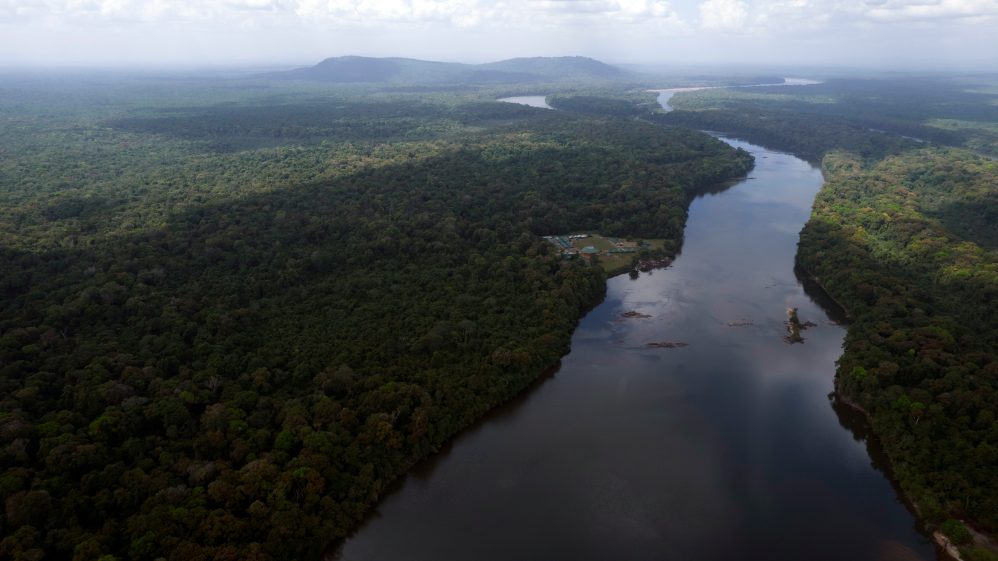
The International Court of Justice conducted hearings this week between the neighboring South American countries, both claiming ownership of the Essequibo territory. This jungle region contains substantial gold, diamond and timber wealth and sits near enormous ocean-based oil reserves.
Border lines were established in 1899 when arbitrators from Britain, Russia and the United States drew boundaries along the Essequibo River that primarily favored Guyana. Because Venezuela had severed diplomatic ties with Britain, American officials represented Venezuelan interests. Venezuela now alleges the Americans and Europeans collaborated to illegally strip the nation of territory that rightfully belonged to them.
Since Spanish colonial times, Venezuela has claimed Essequibo fell within its borders when the forested territory was part of its domain. Venezuelan officials maintain that a 1966 Geneva accord designed to settle the conflict effectively canceled the 19th-century arbitration decision.
“Guyana presents itself as the true, legitimate heir to British and Dutch territories, but the reality is that it is the beneficiary of colonial dispossession, formalized through fraudulent arbitration. The Geneva Agreement seeks to correct this century-old injustice,” Venezuela’s representative Samuel Reinaldo Moncada Acosta told the world court.
Acosta stated that Caracas disputes the court’s authority, which he said was “erroneously imposed” through a 2020 ruling, and argued the 1966 accord “establishes a framework” for reaching a negotiated settlement.
When proceedings began Monday, Guyana’s Foreign Minister Hugh Hilton Todd informed the international judicial panel that this conflict “has been a blight on our existence as a sovereign state from the very beginning.” Todd emphasized that 70% of Guyana’s total land area remains in question.
The Hague-based tribunal will likely require several months before issuing its final and legally enforceable decision in this territorial dispute.