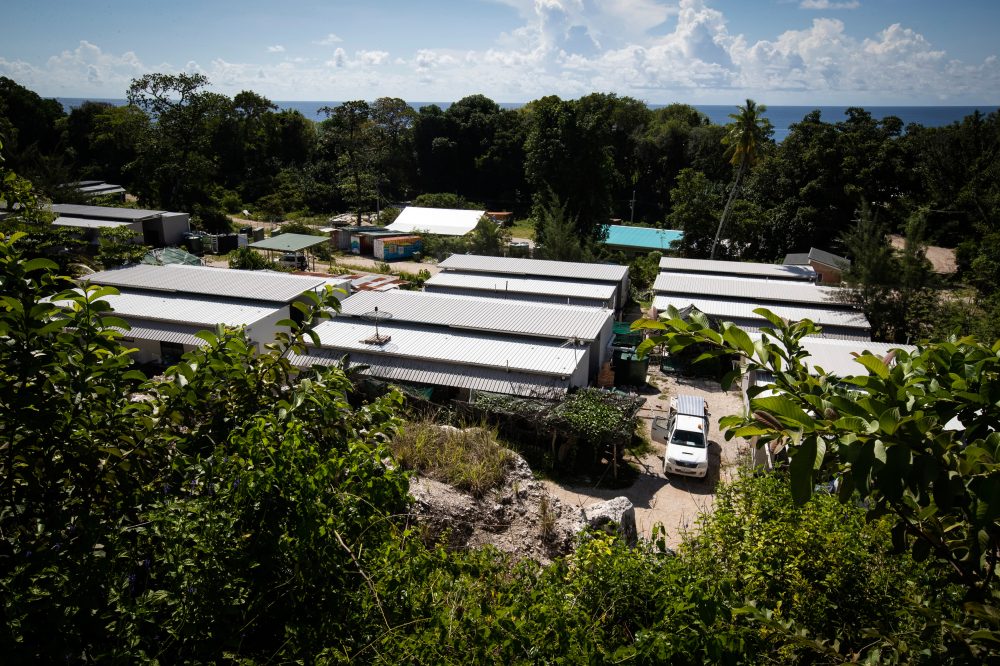
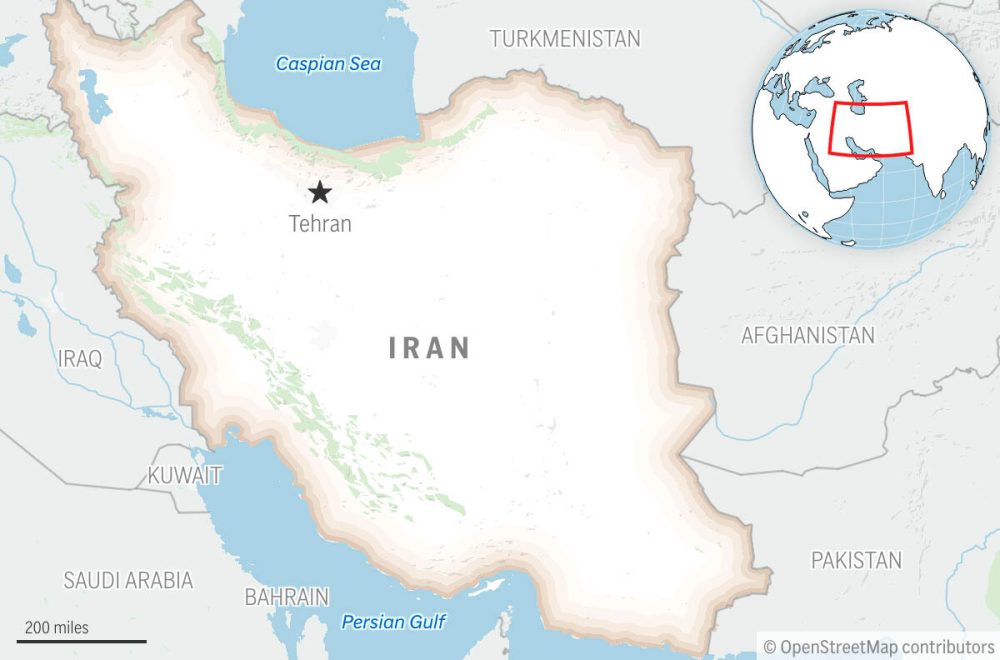
MELBOURNE, Australia — A man from Iran who killed his wife has failed in his final legal attempt to block Australia from sending him to Nauru, a remote Pacific island nation.
Australia’s High Court delivered a unanimous decision Wednesday, with all seven justices rejecting the man’s challenge to a deportation order issued last year. The order would send him to the independent island nation of approximately 12,000 residents on a 30-year visa. Court documents refer to him only as TCXM to protect refugee identities under Australian law.
Immigration Minister Tony Burke celebrated the court’s decision as validation of Australia’s immigration enforcement policies.
“I welcome the decision of the court. A canceled visa must have consequences in our migration system,” said Burke, who had contested the man’s appeal of the deportation order.
Last year, Australia struck a deal with Nauru worth 408 million Australian dollars ($296 million) to resettle unwanted non-citizens who cannot be sent back to their origin countries for up to three decades. The agreement also includes yearly payments of AU$70 million ($51 million) to Nauru.
So far, eight men have been relocated to Nauru through this arrangement, which has drawn criticism within Australia for its steep cost.
The Nauru agreement emerged as Australia’s response to a challenging political situation created by a 2023 High Court ruling. That earlier decision determined that stateless individuals or those who couldn’t return home could no longer be detained indefinitely in Australia with minimal prospects of finding refuge in a third nation.
Following that 2023 ruling, more than 350 individuals were freed in Australia on temporary visas, including many convicted criminals like TCXM. The original case was initiated by a convicted child molester known in court as NZYQ, who was a refugee from Myanmar’s persecuted Rohingya Muslim community.
TCXM, currently in his early sixties, arrived in Australia from Iran in 1990. He received a protection visa in 1995 but was sentenced to 22 years behind bars in 1999 for his wife’s murder.
Authorities revoked his visa and moved him from prison to immigration detention in 2015, where he spent eight years. Iran refuses to accept forced deportations of its citizens from other nations. Australia maintains a policy against returning refugees to countries where they face persecution risks.
TCXM was among the first three non-citizens selected for transfer to Nauru under the new agreement. A federal court judge initially dismissed his challenge, and Wednesday’s High Court decision confirmed that ruling, exhausting his legal remedies. TCXM remained in Australia during his legal fight, though his deportation timeline remains unclear.
His legal arguments included claims that Nauru’s medical facilities were insufficient to manage his serious asthma condition.
He also contended that Australia’s Nauru agreement violated the law and that his deportation constituted punishment, making it unconstitutional. Australia’s constitution requires that punishment be administered by courts rather than government agencies.
Australian governments have previously compensated Nauru and Papua New Guinea to operate detention facilities for asylum seekers who attempted to reach Australia by boat, housing them in substandard conditions.
Australia’s policy of denying settlement to boat arrivals has significantly reduced people smuggling operations that once used unsafe fishing vessels from Southeast Asian ports.
A Pakistani official participating in diplomatic negotiations revealed Wednesday that the United States and Iran are approaching finalization of a concise written agreement aimed at concluding their conflict.
The source, who spoke to Reuters about the ongoing peace discussions, backed up a similar report published by Axios regarding the diplomatic progress.
“We will close this very soon. We are getting close,” the source said.
The potential agreement would reportedly consist of just one page, according to the Pakistani official familiar with the peace process.
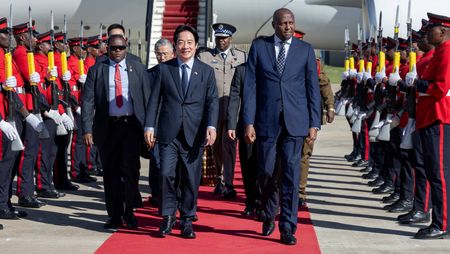
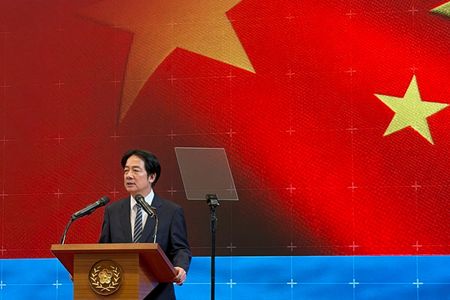
BEIJING/TAIPEI, May 6 – Chinese officials delivered sharp criticism Wednesday toward Eswatini’s leadership, accusing them of being financially dependent on Taiwan after the African nation welcomed President Lai Ching-te for an official visit.
The harsh diplomatic exchange represents the latest chapter in the ongoing battle between China and Taiwan for international recognition, with both sides frequently accused of using financial incentives to secure support from developing nations.
Beijing’s angry response followed Lai’s successful return Tuesday from an unexpected journey to the former Swaziland, which remains among only 12 nations maintaining official diplomatic relationships with the democratically-run island that China claims as its territory.
Chinese leadership considers Lai a “separatist” and has pressured other nations to avoid any official dealings with his administration or providing him diplomatic hospitality.
According to Lai’s administration, China successfully pressured three Indian Ocean countries – Seychelles, Mauritius, and Madagascar – to refuse flight permissions for his aircraft during his original planned visit last month to attend King Mswati III’s 40th coronation anniversary celebrations.
Chinese Foreign Ministry spokesperson Lin Jian told reporters that Lai had “stowed away” to reach Eswatini.
This demonstrated that “separatist” movements face international rejection and represent “a scandal and a farce,” Lin stated during the Beijing briefing.
“Some politicians in Eswatini, kept and fed by Taiwan, have provided space for Taiwan independence forces — this runs counter to the tide of history, and China strongly condemns it,” Lin continued, employing language typically used to describe someone serving as another’s subordinate.
Taiwan’s leadership celebrated after Lai successfully reached Eswatini and returned through an indirect route that avoided airspace controlled by Mauritius and Madagascar.
Rather than using a Taiwan-chartered China Airlines flight as initially planned following standard protocol, Lai traveled aboard the king’s personal A340 aircraft.
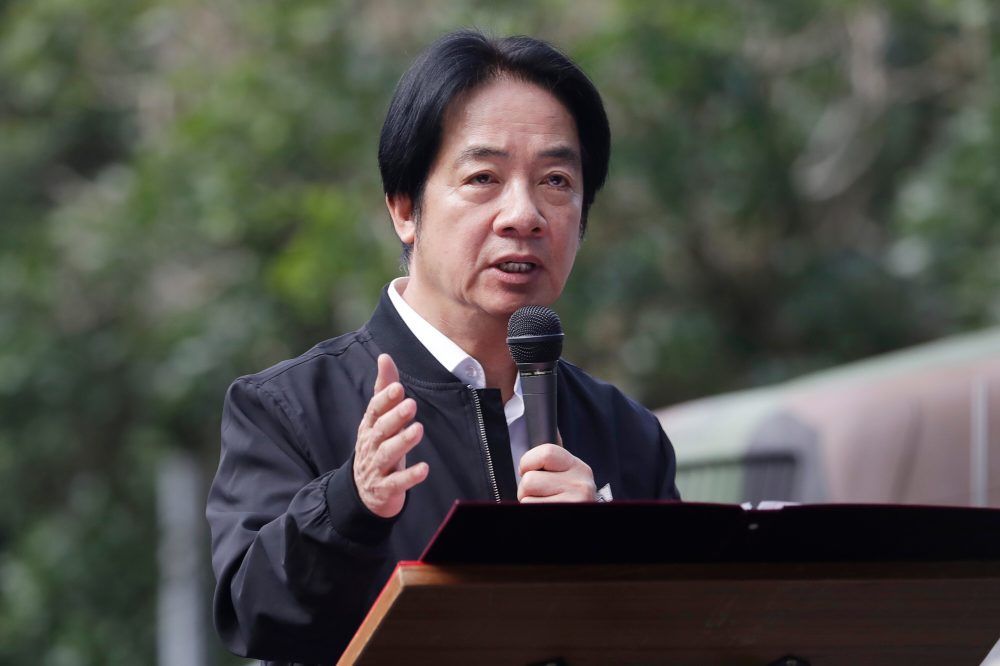
Speaking at his Democratic Progressive Party’s regular Wednesday gathering, Lai – who disputes Beijing’s territorial claims – said the journey strengthened Taiwan-Eswatini relations.
Despite China’s “blockade and suppression,” Taiwan “will surely advance steadily onto the international stage” through determination, unity, and cooperation with supportive allies, Lai declared.
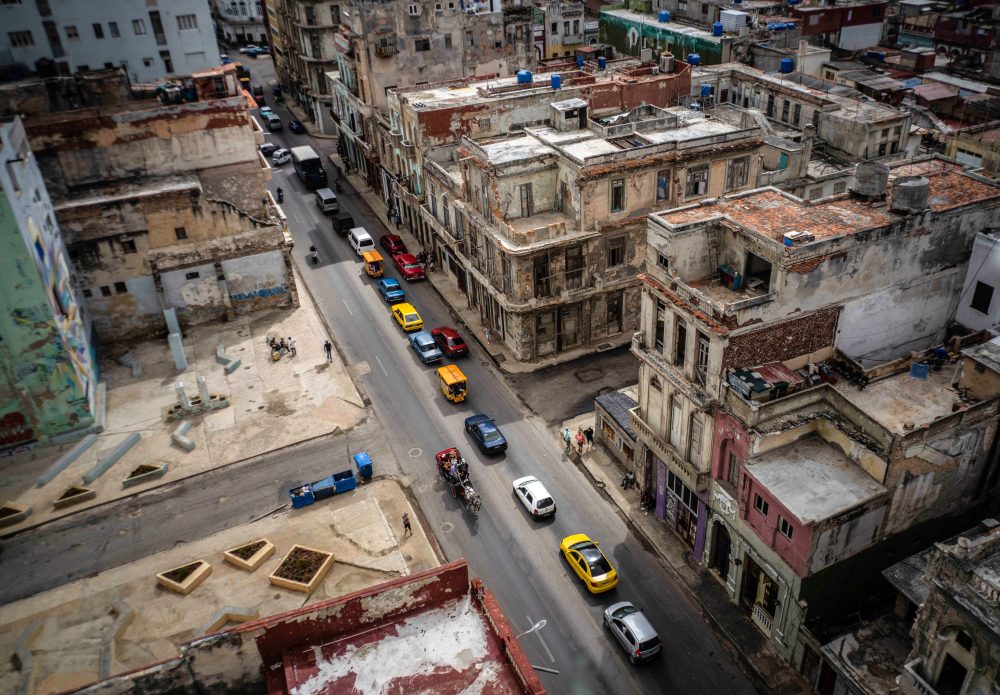
SANTA CLARA, Cuba — For years, Yudelaimys Barrero Muñoz endured grueling three-hour waits alongside busy highways, desperately waving cash at passing motorists while trying to hitchhike the 43-mile journey from Cienfuegos to Santa Clara. The mother of two made these arduous trips to purchase goods for resale to support her family.
The distance proved too far for her husband’s bicycle, which was once their sole means of getting around. Even after acquiring an electric three-wheeled vehicle, the battery couldn’t handle the complete round-trip journey.
Everything changed this past April when a local entrepreneur launched what’s considered Cuba’s inaugural solar-powered charging facility, offering completely free access to electricity. Cuban residents quickly began visiting the “solinera,” as locals call it, bringing electric cars, household devices, and even UV nail equipment for charging.
Cuba’s leadership has accelerated solar panel installations across medical facilities and government buildings while creating solar energy farms to combat persistent electrical outages and a critical fuel crisis caused by U.S. energy sanctions.
Solar and other renewable sources now generate approximately 10% of Cuba’s electrical power, a significant jump from just 3.6% in 2024. However, access remains restricted, and most Cubans cannot afford private solar systems. Worldwide, renewable energy sources like solar, wind, and hydroelectric power produce slightly more than 30% of electricity, according to research organization Ember.
With gasoline extremely scarce, Cuban citizens travel considerable distances to reach the Santa Clara solar facility using electric motorcycles and three-wheeled vehicles. Some arrive on foot, carrying depleted cell phones, rice cookers, pressure cookers, and countless other electronic devices and appliances requiring power.
“They have solved many problems for many people,” Barrero Muñoz said.
She and her spouse, accompanied by their 3 and 4-year-old children, now make regular trips to Santa Clara since gaining the ability to charge their three-wheeled transport at the solar facility.
“If it hadn’t been for this, I wouldn’t have been able to keep selling,” she said.
Barrero Muñoz can now purchase rice, sugar, hot dogs, mortadella, soap, shampoo, deodorant, and other products without worrying about weight restrictions, since everything fits in her vehicle rather than the two bags and backpack she previously carried when hitchhiking.
“I have more clients because I have more merchandise,” she said with a smile.
Automobiles are rarely seen on the highway connecting Havana to Santa Clara, while horse-drawn carriages frequently appear in countryside areas where Cuba’s economic difficulties create the greatest hardship.
Home to nearly 250,000 residents, Santa Clara ranks among Cuba’s largest urban centers, famous as the city associated with “Marta and El Che.”
El Che — Ernesto Guevara de la Serna — commanded a crucial battle in Santa Clara during Cuba’s 1959 Revolution, and his remains rest in a memorial there.
The city also honors Marta de los Ángeles González Abreu y Arencibia, a renowned humanitarian who championed Santa Clara and Cuba’s independence movement.
Santa Clara residents include Danailys Arboláez Pérez, a 32-year-old mother of two who operates a home-based business selling sandwiches, coffee, beer, and cigarettes. Her house sits within walking distance of the solar charging facility.
“Almost everyone in this neighborhood goes there,” she said.
Arboláez Pérez has prepared rice and beans and even fried fish at the solar station, sometimes choosing it over her home kitchen even when electricity is available to reduce natural gas expenses.
She also powers two fans that keep her 2-year-old son’s and 7-year-old daughter’s rooms cool as Cuban temperatures climb, remembering last year’s power failures as “apocalyptic.”
She appreciates no longer having to leap from bed when electricity suddenly returns, forcing her to cook or do laundry at inconvenient times, including 2 a.m.
“We’re not running around so much,” she said. “I cook slowly, calmly. … If the power goes out, I’ll just take the pot there.”
Alexander Gutiérrez Altuve works at the adjacent business that helped fund and establish Santa Clara’s solar charging station.
While the project’s exact cost remains undisclosed, he explained that the business owner, who wasn’t available for comment, collaborated with government officials to install solar panels generating 30 kilowatts of power and a 60-kilowatt battery system. This capacity could power a typical American household for one full day.
The facility features 20 electrical outlets for equipment charging, 16 spaces for vehicles, and 12 cooking stations.
“This is something that hadn’t really been done before,” Gutiérrez Altuve said.
Some visitors remain hesitant to try the service.
“They are truly surprised when you tell them that it’s free,” said Lisandra Couto Pérez, who works alongside Gutiérrez Altuve monitoring facility usage.
During a recent afternoon visit, Lorenzo Ravelo, Barrero Muñoz’s husband, drove his three-wheeled vehicle into the station and connected it to a charger while his wife and two small children climbed out.
Before purchasing their small three-wheeler, Ravelo would borrow money from neighbors to rent vehicles when their children required medical attention, “and later make payments however you can and whenever you can.”
With only a bicycle available then, he couldn’t take his family on enjoyable excursions to escape Cuba’s daily struggles. Now they can even drive their own vehicle to the beach, he said, becoming emotional.
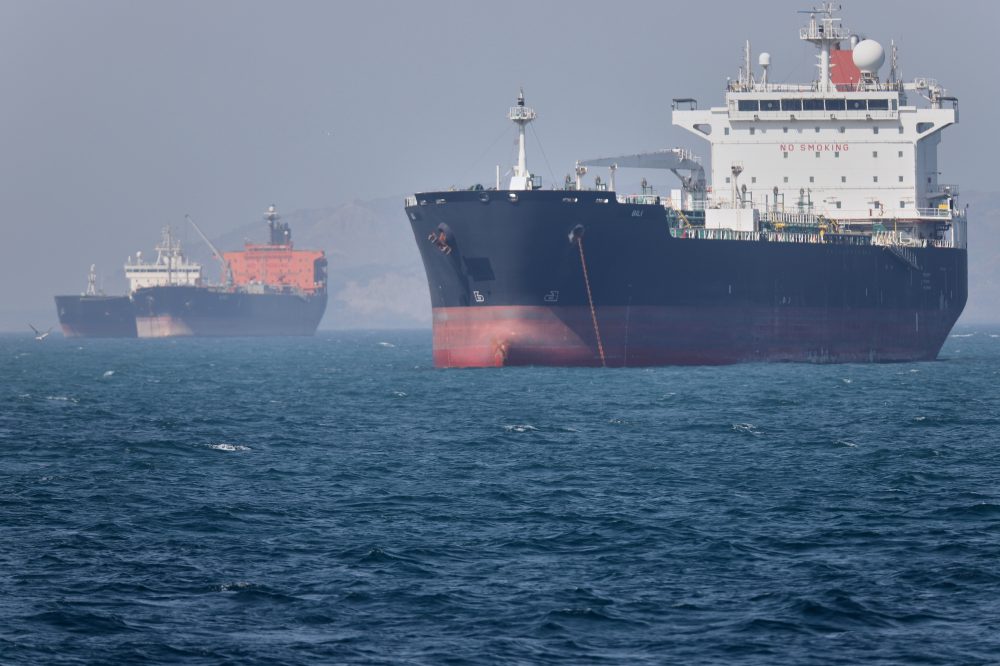
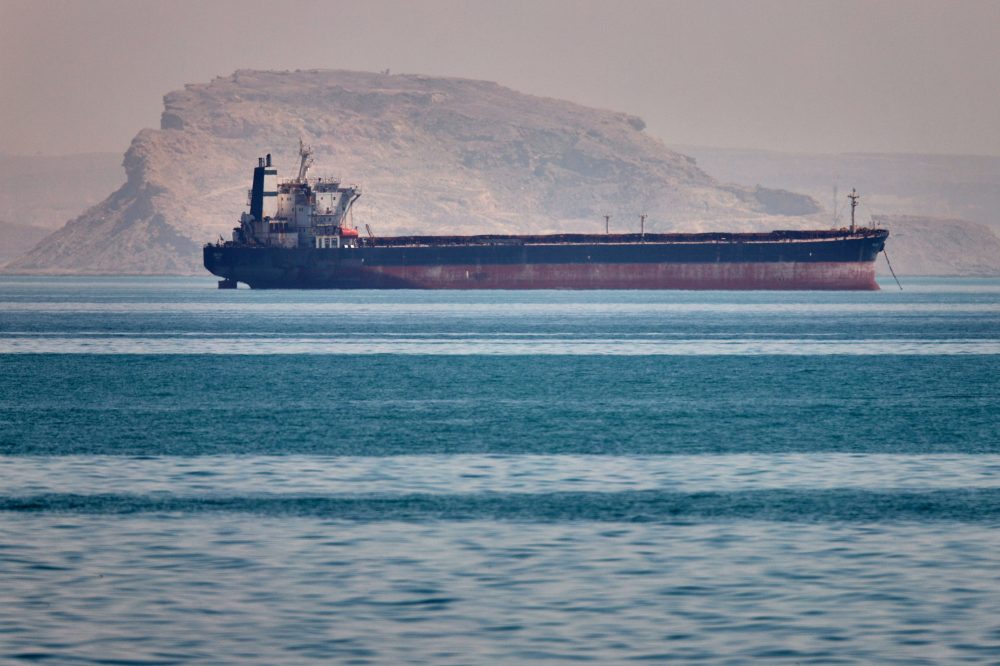
South Korean officials announced Wednesday they have halted their evaluation of joining a U.S. naval mission in the Strait of Hormuz after President Donald Trump suspended the operation.
The decision follows uncertainty about whether a South Korean vessel that exploded and caught fire on Monday was the target of an attack in the crucial shipping lane, according to Seoul’s presidential office.
Trump had previously called on South Korea to participate in his “Project Freedom” operation designed to protect shipping routes, alleging that Iran had fired upon the Korean-operated vessel and other ships as the U.S. began its mission to secure the strait.
“After checking additional information, it seems to be unclear whether the vessel was attacked,” stated Wi Sung-lac, South Korea’s presidential national security adviser, during a press briefing.
Wi reported that the ship appeared stable after the blaze, which began in the engine compartment and was put out several hours later. All 24 crew members escaped without injury.
HMM, the South Korean shipping company operating the vessel, announced Wednesday it had arranged for another ship to pull the Panama-registered bulk carrier to Dubai’s port for examination.
The damaged vessel is scheduled to reach Dubai either Thursday evening or Friday morning, according to Korean time, the company stated.
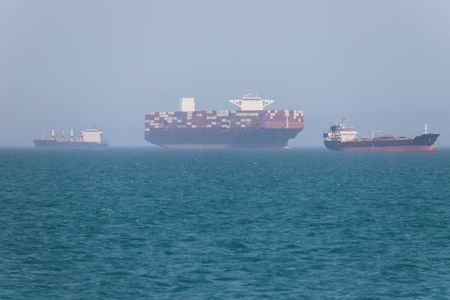
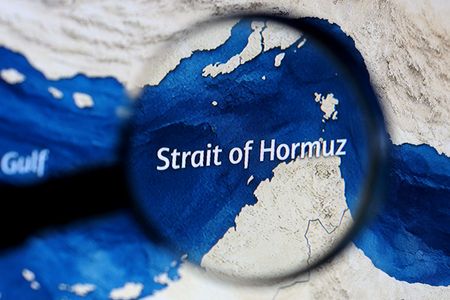
The Strait of Hormuz serves as a critical passage for approximately one-fifth of global oil and liquefied natural gas shipments during typical operations.
While South Korea has maintained a careful stance regarding direct involvement in Middle Eastern tensions, the presidential Blue House indicated Tuesday it was considering Trump’s request to join the navigation security effort.
Trump subsequently announced he would temporarily halt the mission, referencing “great progress” in negotiations toward a broader deal with Iran.
“We don’t believe a review of Trump’s call to participate in Project Freedom is needed at this point,” Wi explained.
The advisor noted that Seoul was already evaluating a separate U.S. proposal to participate in an international maritime security framework known as the Maritime Freedom Construct.
“Freedom of navigation and international safety is important to us,” Wi emphasized, adding that Seoul would continue monitoring global developments in this area while determining future participation.
South Korean authorities have reported that 26 vessels flying the country’s flag remain stranded in waters near the Strait of Hormuz.
Syrian authorities have taken into custody several Uzbek fighters during security operations in the country’s northwest region, following armed demonstrations that erupted outside a government security building, according to two Syrian security officials.
The unrest started when officials attempted to arrest an Uzbek fighter who allegedly fired weapons in Idlib city. This sparked protests by armed Uzbek militants who gathered to demand the fighter’s release, officials and local residents reported.
The Syrian Ministry of the Interior has not yet responded to requests for comment regarding the incident.
This situation highlights the complex challenges Syria’s new Islamist-led administration faces as it works to establish government control over international jihadists who traveled to Syria during the civil conflict that began in 2011. Many of these foreign fighters served alongside or within the jihadist organization now headed by President Ahmed al Sharaa, who severed connections with al Qaeda in 2016.
Law enforcement conducted detention operations across multiple locations in Idlib’s rural areas, including Kafriya and al-Foua, focusing on Uzbek militants who took part in the demonstrations, according to local sources and officials. Military backup units and vehicle convoys were positioned around these towns in Idlib province, where residents reported hearing intermittent gunshots.
Officials have not disclosed the exact number of Uzbek fighters who were detained during the operations.
A Syrian security source previously told Reuters that approximately 1,500 Uzbek fighters remain in Syria, with some accompanied by their families.
This represents the second major clash in recent months between Syrian government troops and international militants in Idlib, following previous tensions related to a facility operated by French jihadist Omar Diaby, also called Omar Omsen, near the Turkish border in October.
Syrian leadership has been working to officially integrate many international fighters into legitimate roles, incorporating thousands into the reformed Syrian military structure. Several have taken on important government positions, including a Jordanian commander who leads the Republican Guard responsible for presidential security, and an Australian who oversees the newly created sovereign fund.
Reuters previously reported that the United States had approved Syria’s strategy to incorporate roughly 3,500 foreign militants, primarily Uyghurs from China and surrounding nations, into a new army division. U.S. officials argued that placing these fighters under official government oversight was better than allowing them to operate independently.
President Sharaa has developed strong relationships with the United States during the past year, and Damascus became part of a U.S.-led alliance against Islamic State in November.
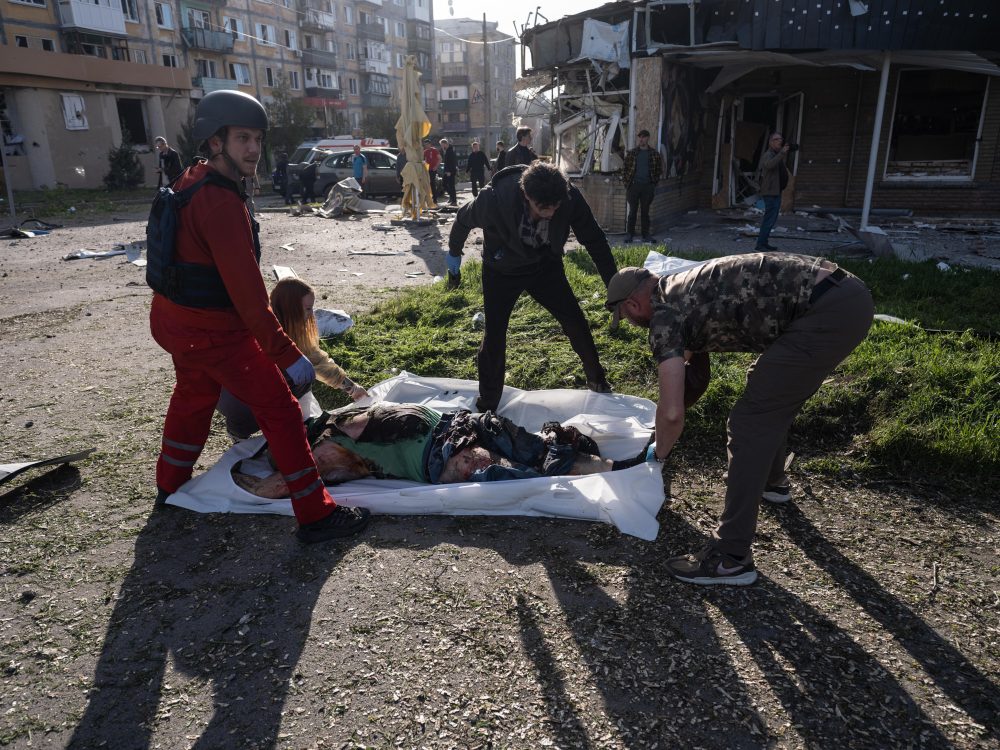
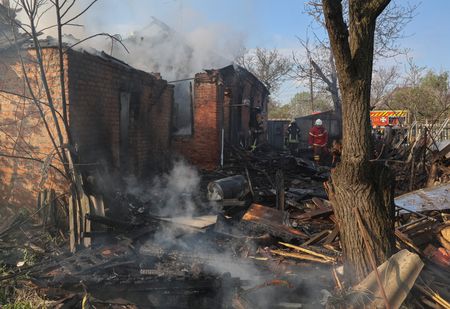
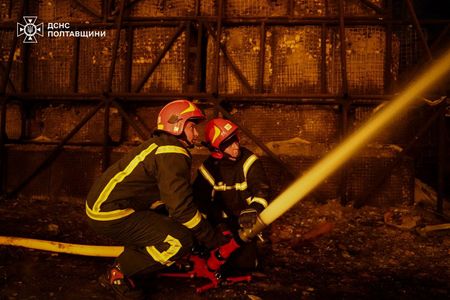
KYIV, Ukraine — Moscow disregarded Ukraine’s unilateral ceasefire that took effect at midnight, launching more than 100 drones in overnight assaults across Ukrainian territory, officials in Kyiv reported Wednesday.
Ukrainian authorities documented 108 drone strikes and three missile attacks throughout the night and into Wednesday morning, according to Foreign Minister Andrii Sybiha. Meanwhile, Russia’s Defense Ministry countered that Ukraine violated its own ceasefire declaration, stating its air defense systems intercepted 53 Ukrainian drones over Russian territory, the occupied Crimean peninsula, and Black Sea waters from Tuesday evening through Wednesday dawn.
The Kremlin had provided no indication it would respect Kyiv’s ceasefire proposal, leaving little expectation for any reduction in fighting as the conflict enters its fifth year since Russia’s full-scale invasion began. Diplomatic initiatives led by the United States to halt the war have failed to achieve progress over the past year.
President Volodymyr Zelenskyy had declared Ukraine’s ceasefire following Russia’s announcement of its own two-day pause in combat later this week to commemorate the 81st anniversary of Nazi Germany’s defeat in World War II. The Ukrainian president warned that ceasefire violations would prompt military retaliation.
“Moscow once again ignored a realistic and fair call to end hostilities, supported by other states and international organizations,” Sybiha wrote on X.
Tuesday’s Russian aerial bombardments across Ukraine resulted in at least 22 fatalities and injured more than 80 people, according to local authorities.
Russia’s planned Friday and Saturday combat suspension continues a established practice of Moscow announcing brief unilateral truces during the war to coincide with significant holidays, including Orthodox Easter most recently.
These temporary combat halts have failed to produce meaningful outcomes due to profound distrust between the opposing forces.
Sybiha characterized Russia’s behavior as evidence that Moscow’s separate May 9 ceasefire proposal lacks sincerity. “Putin only cares about military parades, not human lives,” he stated.
The foreign minister urged enhanced international pressure against Moscow, including additional sanctions, diplomatic isolation, war crimes accountability measures, and expanded military and civilian assistance for Ukraine.
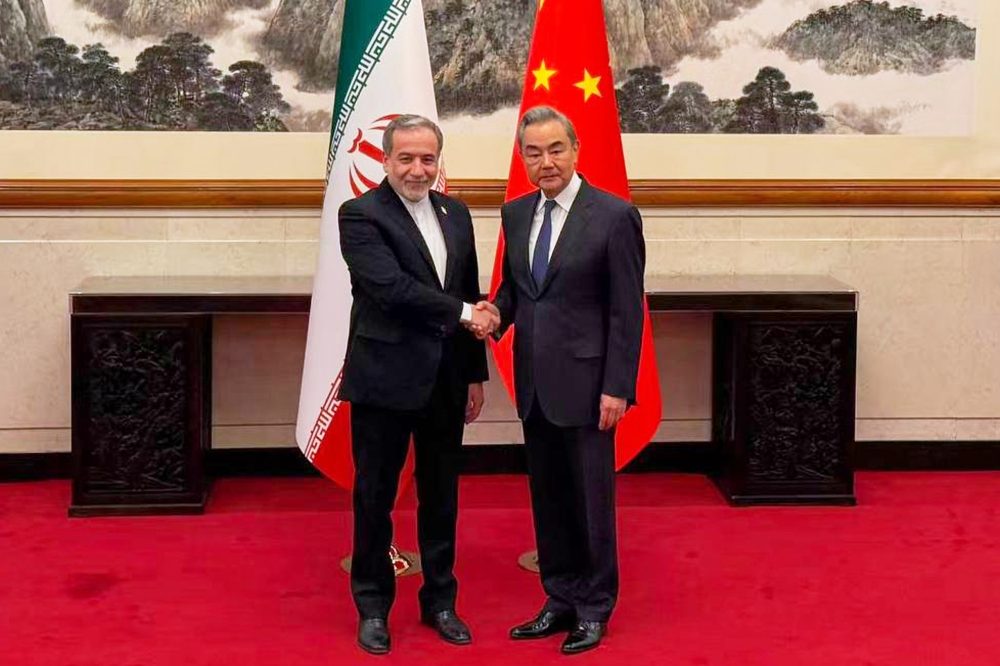
BEIJING — During a diplomatic meeting in Beijing on Wednesday, Chinese Foreign Minister Wang Yi expressed to Iranian Foreign Minister Abbas Araghchi that China feels “deeply distressed” about the ongoing conflict that has stretched beyond two months, calling for a “comprehensive ceasefire.”
The high-level diplomatic discussion marked the first visit by Iran’s foreign minister to China since hostilities began on February 28 between Iran and the United States and Israel.
Speaking during the meeting, Wang emphasized the urgency of ending the violence. “We believe that a comprehensive ceasefire is urgently needed, that a resumption of hostilities is not acceptable, and that it is particularly important to remain committed to dialogue and negotiations,” Wang stated, as captured in video footage of their discussion.
A major French shipping company announced Wednesday that one of its cargo vessels suffered an attack in Middle Eastern waters, leaving multiple crew members wounded and causing damage to the ship.
The container ship San Antonio, operated by CMA CGM, came under attack Tuesday while navigating through the Strait of Hormuz, according to company officials. This marks another disruption to one of the world’s most vital shipping corridors during ongoing regional conflicts.
The continuing Middle East warfare has created significant obstacles for international maritime commerce, with hundreds of ships unable to proceed and approximately 20% of worldwide oil transportation effectively halted.
President Donald Trump announced Tuesday his decision to temporarily suspend operations designed to provide naval escort protection for commercial vessels in the strait, stating there has been “great progress” toward reaching a broader deal with Iran.
Company representatives confirmed that wounded crew members have been removed from the San Antonio and are receiving medical treatment. CMA CGM officials refused to provide additional details about the attack.
This represents the second incident involving the French shipping giant in recent weeks. Last month, another CMA CGM vessel faced warning gunfire in the same waterway, though no personnel were hurt in that encounter.
The maritime company, which ranks as the globe’s third-largest container shipping operation, previously reported that 14 of its ships remained stuck in Gulf waters when the U.S.-Israeli conflict with Iran began. Only one vessel, the CMA CGM Kribi, managed to clear the Strait of Hormuz in early April.
Maritime tracking information shows the attacked vessel San Antonio, which flies under Malta’s flag, was headed toward the Indian port of Mundra.
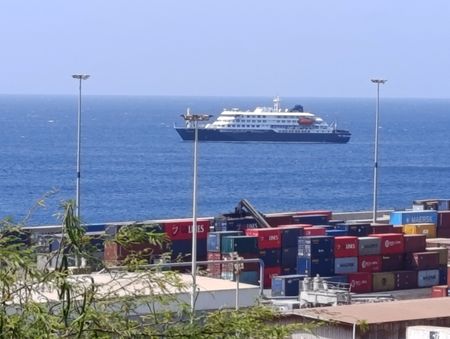
MADRID – The top official of Spain’s Canary Islands announced Wednesday his opposition to permitting a luxury cruise vessel experiencing a fatal hantavirus outbreak from arriving at the popular Atlantic archipelago.
Fernando Clavijo, the regional leader, explained his stance during an interview with radio station COPE, stating: “This decision is not based on any technical criteria, nor is there sufficient information to reassure the public or guarantee their safety.”
The Canary Islands chief has called for an immediate conference with Prime Minister Pedro Sanchez regarding the matter. Clavijo represents the conservative People’s Party, which serves as the primary political opposition to Sanchez’s Socialist government.
Spanish national television network TVE had reported earlier Wednesday that the affected cruise liner was scheduled to arrive at Tenerife, one of the Canary Islands, according to health ministry sources. Officials from the ministry have not yet responded to media inquiries seeking additional details about the situation.
A tragic accident has claimed the life of a firefighting pilot whose aircraft went down while responding to a massive forest fire that has burned through more than 200 hectares in eastern Poland’s protected Solska Forest, according to the nation’s interior minister on Wednesday.
The wildfire ignited Tuesday afternoon close to Kozaki village in Biłgoraj County.
Interior Minister Marcin Kierwiński told Radio Zet that authorities have no indication the blaze was intentionally started.
“We’re dealing with a very dry period. Forests and conifers catch fire very easily, and fire spreads very easily,” he said, noting that police Black Hawk helicopters have been brought in to help fight the flames.
The minister described the situation as continuing to be grave, with several fires burning in remote locations that are difficult to access, and emphasized that the coming hours will be crucial for determining how crews can gain control over the blaze.
A regional governor’s spokesperson confirmed Tuesday that one of the aerial firefighting aircraft crashed in the affected area, resulting in the pilot’s death.
Kierwiński stated that officials are not planning to evacuate local residents at this time, explaining that the closest structures are located four to five kilometers away from the fire zone.
Iranian leadership declared Wednesday they will only consider “a fair and comprehensive agreement” during ongoing discussions with the United States aimed at resolving the Middle East conflict, even as President Donald Trump announced “great progress” in diplomatic efforts.
During meetings in Beijing with China’s senior diplomat Wang Yi, Iranian Foreign Minister Abbas Araqchi emphasized his country’s position on the negotiations. “We will do our best to protect our legitimate rights and interests in the negotiations,” Araqchi told Iranian media outlets. “We only accept a fair and comprehensive agreement.”
The Iranian foreign minister avoided commenting on Trump’s recent proposal to temporarily halt U.S. naval escort missions through the Strait of Hormuz as a potential incentive for reaching a diplomatic solution.
The strategic waterway has remained essentially closed since hostilities erupted on February 28, when the U.S. and Israel launched aerial strikes against Iran. This blockade has cut off approximately 20% of global oil shipments, triggering an international energy emergency.
Trump announced the temporary suspension of escort operations through his social media channels. “We have mutually agreed that, while the Blockade will remain in full force and effect, Project Freedom … will be paused for a short period of time to see whether or not the Agreement can be finalized and signed,” the president posted.
Oil markets responded immediately to Trump’s announcement, with Brent crude futures declining 1.2% to $108.60 per barrel following a 4% drop the previous day. U.S. West Texas Intermediate futures also fell 1.2% to $101.06 per barrel after a 3.9% decrease in the prior session.
White House officials have not responded to requests for details about the diplomatic progress or the duration of the operational pause.
On Tuesday, Secretary of State Marco Rubio and other top administration officials maintained that Iran cannot be permitted to control passage through the crucial strait.
Iranian forces have effectively closed the waterway by threatening to use mines, unmanned aircraft, missiles, and high-speed attack vessels. The United States has responded with port blockades and protected convoys for commercial shipping.
U.S. military commanders reported Monday they had eliminated multiple Iranian small boats along with cruise missiles and drone aircraft.
Despite ongoing tensions, a fragile truce established four weeks ago continues to hold.
The conflict has claimed thousands of lives as fighting has expanded beyond Iran into Lebanon and Gulf regions, severely disrupting the world economy. International Monetary Fund leadership warned Tuesday that even immediate conflict resolution would require three to four months to address the economic aftermath.
Speaking to reporters from the Oval Office, Trump described Iran’s military capabilities as reduced to “peashooters” and suggested Tehran seeks peace despite public hostile rhetoric.
“Great Progress has been made toward a Complete and Final Agreement with Representatives of Iran,” Trump wrote on his Truth Social platform.
Rising fuel costs from the conflict are creating political pressure for Trump’s administration as November midterm elections approach, directly affecting American consumers.
Trump has justified the U.S.-Israeli military action as necessary to counter immediate threats from Iran, specifically citing Tehran’s nuclear weapons development, ballistic missile capabilities, and backing of Hamas and Hezbollah armed groups.
Iranian officials have condemned the strikes as violations of national sovereignty, asserting their legal right under the Nuclear Non-Proliferation Treaty to pursue peaceful nuclear technology development, including uranium enrichment.
International diplomatic initiatives to resolve the crisis have produced limited results so far. While U.S. and Iranian representatives completed one direct negotiating session, efforts to schedule additional meetings have been unsuccessful.
BERLIN – Federal authorities in Germany executed coordinated searches Wednesday at 50 sites spanning 12 states as part of an investigation into 36 people believed connected to two extremist far-right criminal organizations suspected of establishing networks across the country.
According to federal prosecutors, the organizations under investigation are known as “Jung & Stark” and “Deutsche Jugend Voran,” with the latter group also using the name “Neue Deutsche Welle.” Authorities believe these groups have been coordinating violent activities using social media platforms and through regular in-person meetings.
The large-scale operation deployed more than 600 federal and state law enforcement officers, though prosecutors reported that no individuals were taken into custody during Wednesday’s searches.
BUDAPEST – Hungarian authorities have opened criminal investigations into a prominent media executive whose companies received nearly $1 billion in government contracts while working for former Prime Minister Viktor Orban’s administration.
Law enforcement officials announced Tuesday they are examining the business operations of Gyula Balasy, whose media companies created political advertising campaigns for Orban’s government over more than ten years. Investigators suspect financial misconduct and money laundering activities.
The announcement follows Balasy’s decision to offer his media companies and investments to the Hungarian government as new Prime Minister Peter Magyar prepares to take office. Magyar’s center-right Tisza party defeated Orban in last month’s election, ending the former leader’s 16-year tenure.
Balasy defended his decision to transfer his assets, stating he offered his companies to the state “not because I have something to hide or because we have done something unlawful or wrong.” He confirmed that authorities froze multiple company accounts on Monday of last week.
The media executive’s Lounge Group did not respond to requests for comment from news organizations.
Magyar, who will be sworn in as prime minister on May 9, has promised to combat corruption and “re-acquire stolen state assets” as part of his administration’s agenda.
Hungarian tax officials blocked international money transfers by individuals connected to a senior Orban advisor on April 28, according to Magyar’s earlier statements.
Police revealed Tuesday that their investigation began after receiving information from NAV, the country’s tax authority special unit. Officials are pursuing charges of misappropriation and money laundering “against an unknown perpetrator.”
“These proceedings include a probe into issues related to the events organising group of companies, which was revealed by the managing director himself in the press,” authorities stated, referencing Balasy’s Monday interview with news website Kontroll.
“During the investigation, funds have been seized and accounts have been frozen,” law enforcement added.
A second investigation has been launched into the same business group “with relation to overpriced contracts on suspicion of misappropriation of funds against an unknown perpetrator,” according to police statements.
Balasy’s companies created Orban’s recent anti-Ukraine political campaign, which portrayed the April election as a decision between war and peace. His firms also developed previous anti-immigration campaigns, securing hundreds of contracts through Orban’s National Communications Office.
According to Transparency International, Balasy’s three companies – Lounge Design, New Land Media and Media Dynamics – received state contracts totaling 295 billion forints ($960.38 million) between 2019 and 2021. Most contracts came from the National Communications Office, which managed Orban’s campaigns and played a crucial role in his electoral victories.
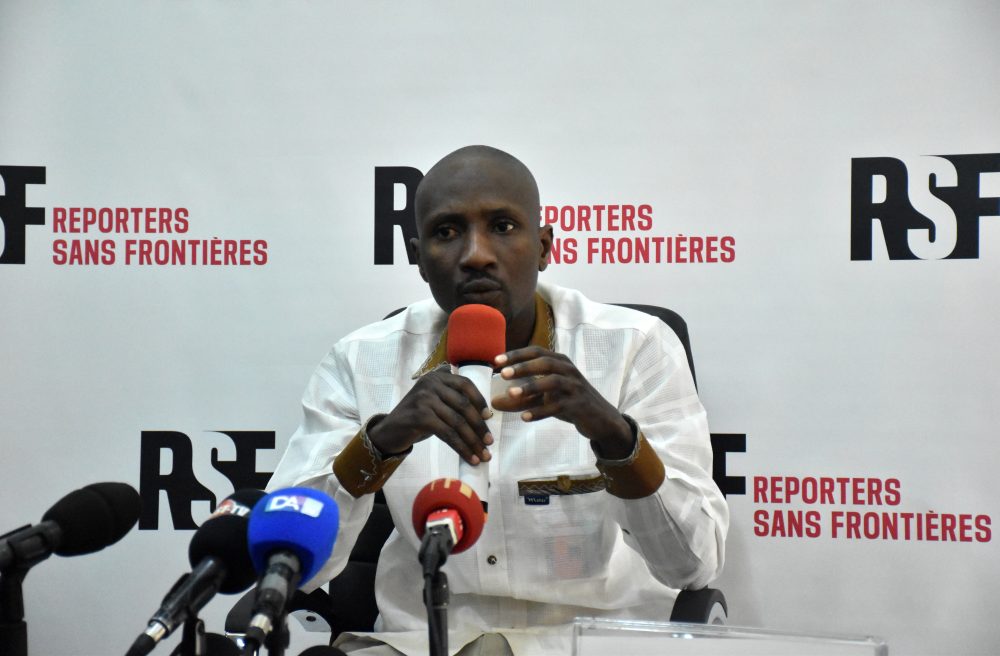
DAKAR, Senegal (AP) — A West African military government operated a clandestine detention center where they imprisoned a well-known newspaper editor along with dozens of other individuals, according to an international press freedom organization that released findings Wednesday.
The group Reporters Without Borders reported that armed personnel in plain clothes seized Atiana Serge Oulon from his residence in June 2024. Oulon serves as editor for the publication L’Evenement. Burkina Faso’s ruling military council subsequently claimed he had been drafted for mandatory military duty.
However, former prisoners told the advocacy organization a different story, stating that Oulon and as many as 40 additional detainees were confined in a heavily secured residence in Ouagadougou, the nation’s capital, through late 2025. These sources described deplorable conditions including sleeping without bedding on concrete floors, being forced to consume water from toilets, and enduring physical abuse from guards using ropes and wooden sticks.
The whereabouts of Oulon remain unclear at this time. The press freedom group indicated they presented their investigation results to Burkina Faso’s leadership, but received no response.
According to the organization, Oulon became a target of the military leadership beginning in 2022 following his publication of a report alleging financial misconduct by an army captain. The group is demanding the journalist’s immediate freedom.
The advocacy organization stated that high-ranking members of the military government appear to be directly overseeing these detentions, with a personal security aide to military leader Capt. Ibrahim Traoré conducting briefings with prisoners before their release and instructing them to remain silent about their experiences.
Following their takeover of the government through a 2022 military coup, Burkina Faso’s ruling council has intensified its suppression of opposition voices and news media, closing independent news organizations and forcing critics into military service to combat extremist groups.
In a report published in April, Human Rights Watch stated that under Traoré’s leadership, the military government has implemented widespread repression that has created “an atmosphere of terror and severely restricting the flow of information.”
Ukrainian officials are reporting that Russian forces broke a ceasefire that began at midnight Wednesday, just hours after President Volodymyr Zelenskyy initiated the temporary halt in fighting. The violations resulted in one fatality and three people injured in northern and eastern regions of the country.
Foreign Minister Andrii Sybiha took to social media platform X to announce the breach, stating that “Russia violated the ceasefire initiated by Ukraine at midnight between May 5th and 6th.”
According to Sybiha, Russian military operations persisted overnight, including morning bombardments targeting Kharkiv and Zaporizhzhia. He characterized these actions as proof that “Russia rejects peace and its fake calls for a ceasefire on May 9th have nothing to do with diplomacy.”
The foreign minister also criticized Russian President Vladimir Putin, saying he “only cares about military parades, not human lives.”
Russia had previously declared its own temporary ceasefire for May 8-9, timed to align with celebrations marking the Soviet Union’s World War Two triumph over Nazi Germany and Moscow’s Red Square military parade.
Ukraine’s ceasefire proposal was open-ended, beginning at midnight Wednesday (2100 GMT), with Kyiv calling on Russia to match their actions. Zelenskyy indicated Ukraine would respond “symmetrically” moving forward.
Ukrainian air defense systems detected multiple threats after the ceasefire began, with officials reporting that Russia fired two ballistic missiles, one cruise missile, and 108 drones at Ukrainian territory starting at 6 p.m. local time (1500 GMT) on Wednesday.
The casualties came from a Russian drone strike on a civilian vehicle in the northern Sumy region, where a passenger died and the driver was injured, according to regional leadership.
In Kharkiv, Ukraine’s second-largest city, Russian drone attacks caused damage to seven residential properties. Local officials reported that one woman experienced severe stress reactions and another person required medical care.
The southeastern city of Zaporizhzhia, which suffered 12 deaths in Tuesday’s attack, saw Russian forces target industrial infrastructure early Wednesday, regional authorities confirmed.
Kryvyi Rih also came under morning drone assault, causing infrastructure damage but no reported casualties, according to local military administrators.
Prior to the ceasefire deadline, Russia conducted multiple strikes across Ukraine on Tuesday, killing at least 27 people, Ukrainian officials reported.
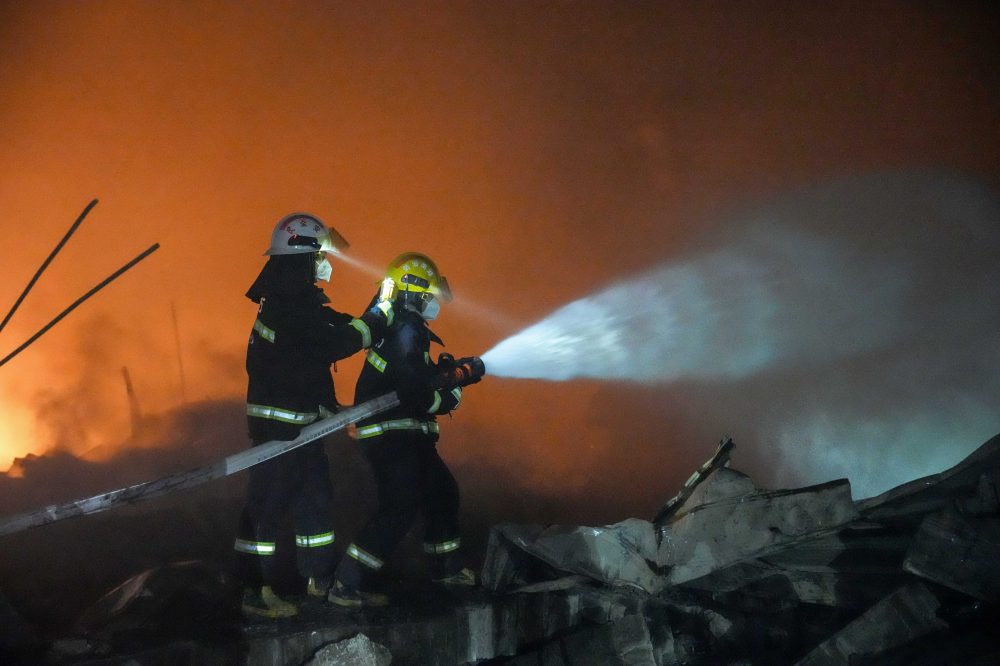
A catastrophic explosion at a fireworks manufacturing facility in China has claimed 26 lives and left 61 people wounded, prompting high-level government officials to oversee rescue operations and launch a comprehensive investigation.
The devastating blast occurred Monday afternoon at Huasheng Fireworks Manufacturing and Display Co in Liuyang, a city of approximately 1.5 million residents located in Hunan province. The area is renowned as China’s fireworks manufacturing hub, producing 60% of the country’s domestic fireworks and roughly 70% of its exports.
Two days following the explosion, smoke continued rising from the facility as rescue teams worked through debris that had flattened buildings and trapped victims. The powerful blast’s impact extended beyond the factory grounds, shattering windows and doors in nearby villages and forcing residents in surrounding areas to begin repairing damage to their homes.
More than 1,500 emergency personnel, including firefighters, rescue workers, medical teams, and police officers, deployed to search for survivors. Teams utilized 18 unmanned drones and robotic equipment to identify and neutralize dangerous materials scattered throughout the blast zone.
Vice Premier Zhang Guoqing personally directed emergency response operations on Tuesday, according to the Communist Party’s China Daily publication. Government officials announced that the state council will establish a special investigation team to examine the incident’s causes.
Safety concerns prompted authorities to evacuate areas surrounding the factory due to highly flammable black powder stored in two warehouses within the complex. Officials have temporarily shut down all fireworks production facilities throughout the city pending mandatory safety evaluations.
The tragic incident represents the latest in a series of industrial accidents plaguing China’s manufacturing sector. President Xi Jinping has ordered an immediate investigation and demanded accountability for those found responsible.
Just weeks before this explosion, a chemical plant blast in northeastern China killed five people, underscoring ongoing safety challenges with hazardous materials storage in industrial facilities. Last June, another fireworks factory explosion in the same province resulted in nine deaths and 26 injuries.
Greek coast guard officials confirmed Wednesday that they successfully rescued all nine sailors from a commercial vessel that struck rocks and went down near the island of Andros in the early morning hours.
The commercial vessel had departed from Albania carrying hundreds of metric tons of soda and was headed to Ukraine when it collided with rocks near Andros and subsequently sank, according to a Greek coast guard representative who spoke to Reuters anonymously due to lack of authorization to discuss the matter publicly.
Rescue teams pulled two sailors from the water while seven others were recovered from a rocky section of Andros island, the representative explained. All crew members were transported to a medical facility on the island for treatment.
Authorities have not yet determined what led to the maritime accident.
The vessel’s captain confirmed that no additional crew members were unaccounted for, according to the coast guard representative.
While no immediate environmental contamination has been observed from the sunken ship, coast guard officials plan to install protective sea barriers as a precautionary measure, the representative noted.
VIENNA (AP) — Art enthusiasts are getting an unprecedented opportunity to view Gustav Klimt’s early masterpieces up close through special guided tours that take visitors high above Vienna’s historic Burgtheater on scaffolding platforms.
For over 100 years, only restoration specialists and art historians had access to these 10 oil paintings that decorate the theater’s soaring 60-foot-high ceilings. The artworks are currently undergoing careful restoration due to water damage.
“The special thing about Klimt for me at least is that we only know about his later works,” said Hannes Höllinger, 60, who participated in one of the recent tours. He described the experience as “very interesting to see that already at age 24 he made these very beautiful paintings which I myself had not seen before.”
The renowned Austrian artist, celebrated for his striking art nouveau style, became a pivotal figure in early 20th-century artistic modernism. Klimt’s paintings now command some of the art world’s highest auction prices, with his iconic 1907-1908 work “The Kiss” — featuring an embracing couple surrounded by intricate patterns and gold leaf — housed at Vienna’s Belvedere Museum.
“We were allowed to invest several hundred thousand euros to let Gustav Klimt shine in his original splendor again,” Burgtheater commercial director Robert Beutler told The Associated Press. “Everything gets cleaned by hand with very fine cotton swabs and condensed water.”
The restoration work is painstakingly detailed, with the largest Klimt piece covering approximately 375 square feet. “So you can imagine how long that takes when you remove dust and grime piece by piece and layer by layer,” Beutler explained.
These ceiling works represent Klimt’s inaugural major commission, completed between 1886 and 1888 alongside his brother Ernst and fellow Austrian artist Franz Matsch when Gustav was just 24 years old.
Thomas Mahr, the conservator overseeing the restoration of decorative elements surrounding Klimt’s early paintings, explained that the young artists’ original proposal was “‘we are young, we are fast, and provide great work at low cost’ — and that’s how they got into business.”
The ceiling paintings showcase various moments from theatrical history, with one of the most significant pieces portraying Queen Elizabeth I observing a performance of “Romeo and Juliet” at London’s Globe Theatre during the 16th century. Notably, Klimt and his two collaborators appear as observers behind the monarch in what stands as Klimt’s sole known self-portrait.
Hundreds of art admirers ascend the scaffolding daily during these exclusive tours to examine Klimt’s creations at close range. Susanne Höllinger, who joined the tour alongside her husband Hannes, noted that these early works already hint at the distinctive style that would define Klimt’s later celebrated pieces.
She particularly appreciated discovering intricate details invisible from the theater floor, including meticulously painted small figures and even a cigarette held by Klimt’s chain-smoking brother Ernst.
“To be so close to these freshly renovated paintings — just a unique experience,” Höllinger exclaimed.
These exclusive scaffolding tours of Klimt’s ceiling artwork will remain available through August, when the restoration equipment will be dismantled. Visitors can purchase general admission tickets through the theater’s website for 25 euros, approximately $29.
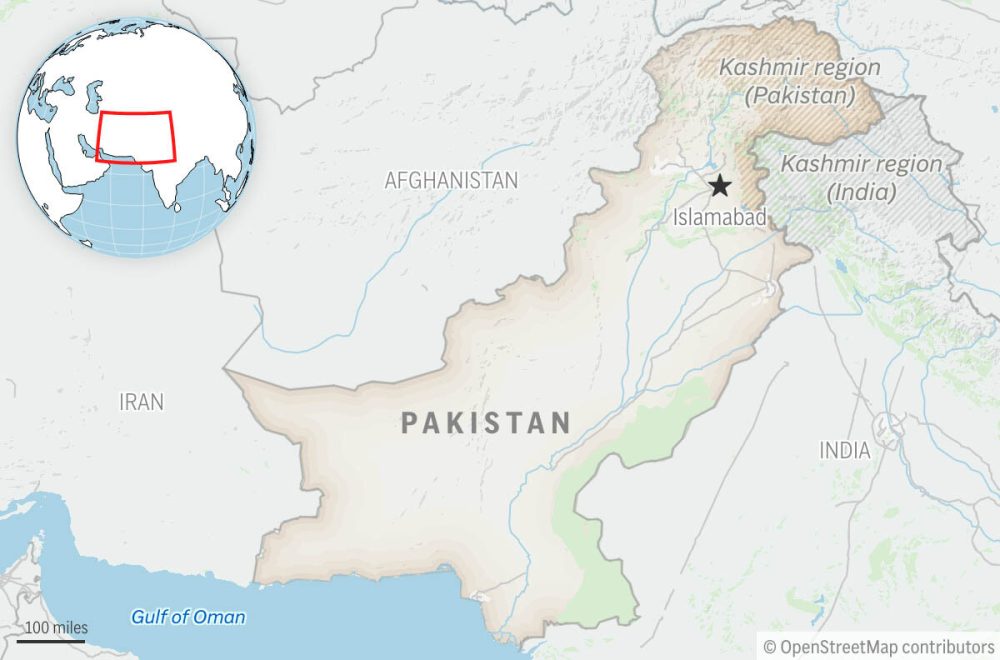
American diplomatic operations in Peshawar, Pakistan will cease following a State Department announcement Tuesday regarding security risks to U.S. personnel stationed there.
Moving forward, all diplomatic activities for Khyber Pakhtunkhwa province, which has Peshawar as its capital, will be managed through the American embassy located in Islamabad, according to State Department officials.
“This decision reflects our commitment to the safety of our diplomatic personnel and efficient resource management,” the State Department explained in their announcement.
The province of Khyber Pakhtunkhwa shares a border with Afghanistan and has experienced numerous attacks and intense combat between Pakistani military forces and militants that Pakistani officials claim are supported by Afghanistan.
Violence erupted in March when demonstrators broke through security barriers at the American consulate in Karachi, Pakistan’s largest metropolitan area, following strikes in Iran that killed Iranian Supreme Leader Ayatollah Ali Khamenei. The incident resulted in ten fatalities.
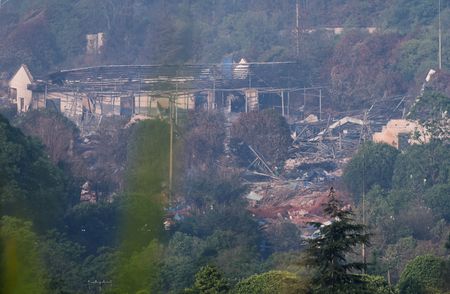
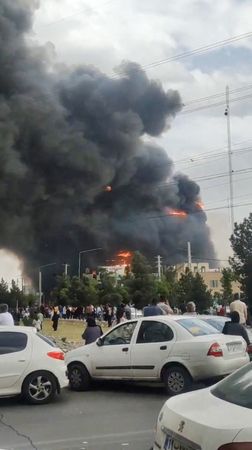
TEHRAN, Iran — A devastating blaze at a shopping mall near Iran’s capital has claimed eight lives and left 40 people injured, according to Tehran’s emergency services officials who reported the incident on Wednesday.
The deadly fire erupted on Tuesday at the Arghavan shopping center located in Andisheh town within Tehran province. Officials have not yet determined what sparked the deadly blaze, and Iran’s state broadcaster IRIB reported that an investigation is currently underway.
Video from the scene captured emergency crews working to extinguish the flames while massive clouds of dark smoke poured from the multi-level structure.
Officials indicated there was no evidence connecting this incident to ongoing regional conflicts, noting that a fragile ceasefire with the United States has remained in place for approximately three weeks.
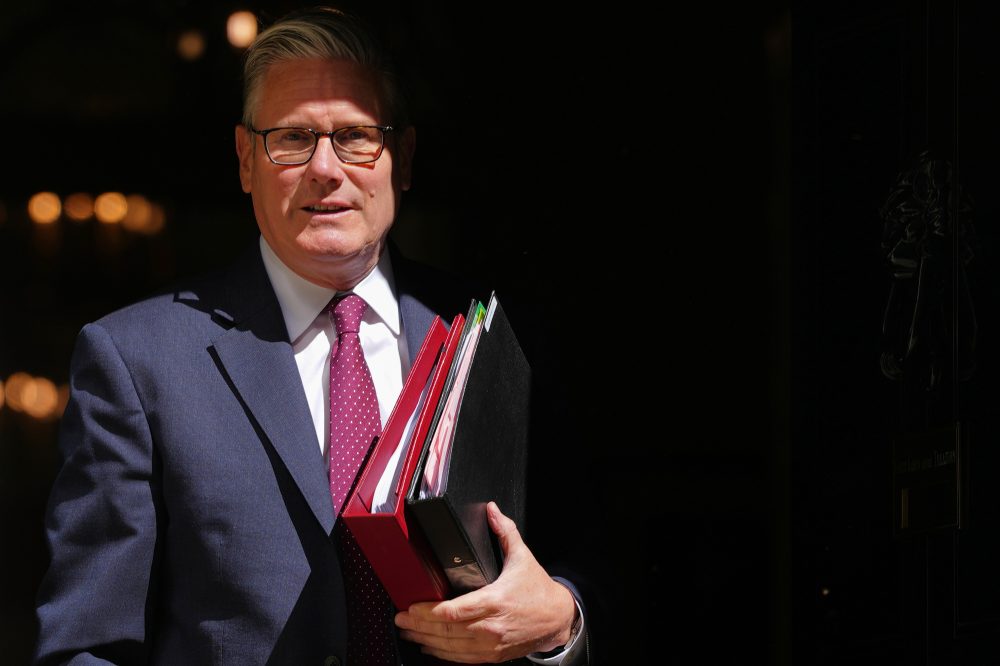
LONDON (AP) — Thursday’s elections across Britain could spell the beginning of the end for Prime Minister Keir Starmer’s struggling leadership, as voters head to polls that may confirm the United Kingdom’s shift toward complicated multi-party governance.
Political analysts predict Starmer’s center-left Labour Party will suffer significant defeats in local government races throughout England, as well as in elections for regional assemblies in Scotland and Wales.
The prime minister’s approval ratings have plummeted due to economic struggles and ongoing questions about his decision-making abilities, leading opposition groups to position Thursday’s mid-term elections as a judgment on Starmer and his administration that began two years ago. Reform UK, a far-right political movement, has adopted “Vote Reform, Get Starmer Out” as their campaign message.
While the next nationwide election isn’t required until 2029, a devastating showing Thursday could spark rebellion within Labour ranks against their unpopular leader.
Following his overwhelming electoral success less than two years ago, “Keir Starmer has become a vessel for people’s disappointment (and) disillusionment,” according to Luke Tryl from polling firm More in Common.
Starmer’s standing has collapsed following numerous blunders since taking office in July 2024. His administration has failed to deliver on promises of economic expansion, fixing damaged public services, and addressing living costs — challenges complicated by the ongoing U.S.-Israeli conflict with Iran that has disrupted oil transport through the Strait of Hormuz.
The prime minister suffered additional damage from his catastrophic choice to name Peter Mandelson, who has scandal-related ties to Jeffrey Epstein, as Britain’s envoy to Washington.
Political observers predict Labour could lose more than half of the 2,500 local council positions they’re defending across England. The party appears vulnerable to losses on multiple fronts — particularly to Green Party candidates in London and Reform UK in working-class areas of northern England that traditionally supported Labour.
“These elections are a perilous, perilous moment for Keir Starmer,” stated Tony Travers, a government professor at the London School of Economics. Following multiple policy reversals and in an economy where “there isn’t much money to spend on anything … his opponents are lining up.”
Starmer previously weathered a February crisis when several Labour members of parliament, including the party’s Scottish leader, called for his resignation over the Mandelson appointment.
A crushing electoral defeat could prompt an immediate leadership challenge from prominent figures like Health Secretary Wes Streeting, former Deputy Prime Minister Angela Rayner, or Greater Manchester Mayor Andy Burnham. Any potential challenger would require backing from 80 parliamentarians — one-fifth of the party’s House of Commons representation — to initiate a leadership race. Burnham would need to secure a parliamentary seat before assuming leadership.
Alternatively, Starmer might face party pressure to announce a departure timeline following an organized leadership transition.
“His parliamentary party are unsure as to whether now is the right time to unseat him,” explained Tim Bale, a politics professor at Queen Mary University of London. “So there might be a stay of execution.”
However, Bale noted, “it’s a case of when rather than if he goes.”
Traditionally, Labour setbacks would benefit their primary opposition, the center-right Conservative Party. However, the Conservatives remain damaged by their chaotic 14-year tenure that concluded in 2024. Instead, Nigel Farage’s Reform UK, the progressive Greens, and regional nationalist movements in Wales and Scotland are positioned to gain the most.
Travers described Britain’s evolution from a “two-and-a-half party system” — with Liberal Democrats typically serving as the third option — “to something more like a five-party one.”
This transformation benefits Rhun ap Iorwerth, leader of Plaid Cymru (the Party of Wales), who has strong prospects of heading that nation’s regional government.
“The old politics is gone,” he declared. “Labour is not going to win this election.”
Labour has controlled Welsh politics for a century and maintained power in Cardiff since Wales established its government in 1999. Current polling indicates Labour may finish third behind Plaid Cymru and Reform UK, who are competing closely for first place.
A Plaid Cymru victory would place pro-independence leaders in three of the UK’s four regions. Northern Ireland operates under Irish nationalist party Sinn Fein in a power-sharing agreement with the pro-British Democratic Unionist Party.
The Scottish National Party, governing from Edinburgh since 2007, promises to pursue another independence referendum if they secure a Thursday majority. Scottish voters previously rejected leaving the UK in 2014.
While Plaid Cymru states that a secession vote isn’t planned for the immediate future, independence remains their long-term objective. Their current priorities include expanded taxation authority and greater control over spending decisions.
“We need a fundamental redesign of Britain,” ap Iorwerth stated. “This is an unequal union.”
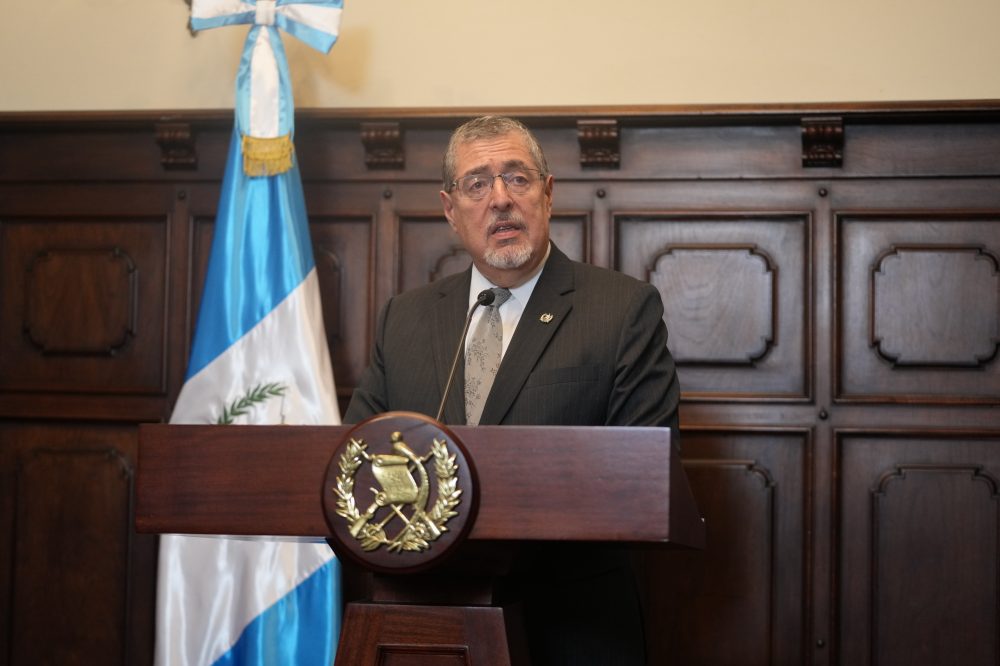
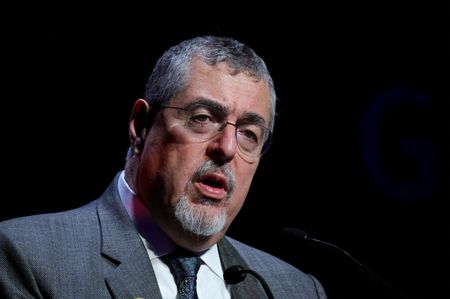
Guatemala’s President Bernardo Arévalo has named a new chief prosecutor, bringing closure to an extended political battle with the outgoing attorney general who faced international sanctions for undermining corruption investigations.
The president selected Gabriel Estuardo García Luna, a lawyer, to lead the prosecutor’s office beginning May 17th when Consuelo Porras’ term concludes. This appointment represents a significant victory for Arévalo, who has frequently criticized prosecutors for what he calls politically-driven arrests and damage to Guatemala’s legal system.
Porras had made multiple unsuccessful attempts to prevent Arévalo from assuming the presidency, drawing condemnation from the international community and creating ongoing tension with the administration.
Guatemala’s attorney general operates independently from the executive branch, which can leave presidents working alongside adversarial chief law enforcement officials. This office has been surrounded by corruption scandals for many years.
During a televised speech to the nation, Arévalo announced García Luna would begin his duties when Porras steps down. “The Public Ministry is getting a new authority who does not come to serve a president, the government of the day, or particular or spurious political interests,” Arévalo said.
García Luna inherits an agency that has drawn widespread domestic and global condemnation during Porras’ divisive leadership. Critics have alleged she weaponized the prosecutor’s office to target former justice department officials, members of the press, political adversaries and even Arévalo directly.
The incoming attorney general is 49 years old with more than two decades of legal practice and advanced education in law.
Arévalo made his choice from six nominees presented by a selection panel including the chief justice, law school administrators from across Guatemala, and representatives from the country’s bar association. This committee evaluated no fewer than 48 applications for the role.
Porras drew criticism and penalties from nations worldwide for allegedly blocking corruption probes and wielding her authority against political enemies.
Following Arévalo’s electoral victory, Porras targeted his Seed Movement party, claiming irregularities in the signature collection process for party registration. Her staff conducted searches of party headquarters, confiscated and examined voting materials, and made repeated efforts to strip away his legal protections.
Arévalo has maintained that Porras serves the interests of Guatemala’s powerful corrupt networks who oppose his anti-corruption agenda.
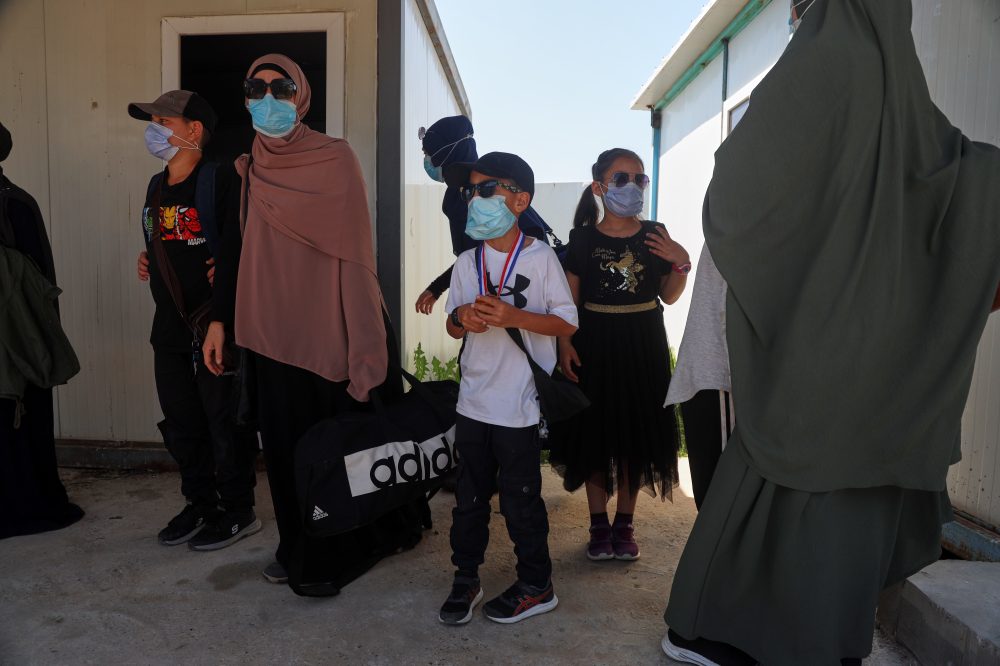
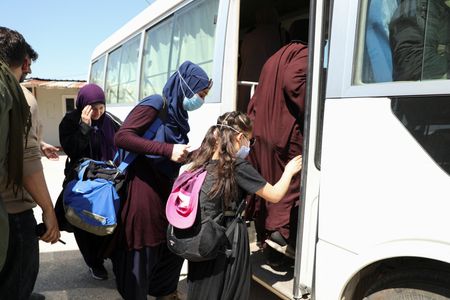
MELBOURNE, Australia — Australian authorities announced Wednesday that several women suspected of having connections to Islamic State militants will face immediate arrest and criminal charges when they arrive back in the country from Syria.
Home Affairs Minister Tony Burke confirmed that his government received notification Wednesday that four women and nine children had secured flight reservations from Damascus to Australia, though he declined to specify their expected arrival date.
Police Commissioner Krissy Barrett revealed that the Australian Federal Police have been conducting investigations since 2015 into the activities of Australian citizens who journeyed to what the Islamic State called its caliphate in Syria.
These investigations have examined possible terrorism-related offenses as well as crimes against humanity, including human trafficking, Barrett explained.
“Some individuals will be arrested and charged. Some will face continued investigations when they arrive in Australia,” Barrett stated during a press conference.
Barrett added that the children accompanying these women would be enrolled in programs designed to counter violent extremism.
While the Australian government is legally obligated to issue travel documents for these individuals, officials have consistently emphasized they are providing no assistance with their return journey.
“The individuals concerned traveled … in support of one of the most horrific terrorist organizations we’ve seen in recent history or in our lifetimes,” Burke explained to reporters.
“There is a reason why the government has drawn a very hard line saying we will do nothing to assist. The government’s complete lack of support for these individuals is a direct reflection of the decisions that they made,” Burke continued.
The women had been confined at Roj Camp, located near the Syrian-Iraqi border. While they departed the facility last week, Syrian officials informed The Associated Press at that time that Australia had “refused to receive them.”
Burke acknowledged his government’s limited authority to block their return, noting “There are very serious limits on what can be done with respect to preventing a citizen of a country returning to their country.”
This follows a failed February attempt when 34 women and children from the same facility were prevented from reaching Australia after Syrian authorities turned them back.
During that incident, Australian officials issued a temporary exclusion order against one woman, effectively barring her return.
The government has not disclosed the identity of this woman, who remains subject to the exclusion order that can prevent high-risk citizens from returning for up to two years.
These exclusion powers were established through 2019 legislation aimed at preventing defeated Islamic State fighters from re-entering Australia. No previous public use of such an order has been reported.
While these orders cannot be applied to children under 14, Australia has maintained its policy against separating children from their mothers.
Burke confirmed that the February exclusion order against the unidentified woman remains active.
Australian law made unauthorized travel to Raqqa, the former Islamic State stronghold in Syria, punishable by up to 10 years imprisonment for trips made between 2014 and 2017 without legitimate justification.
Following the Islamic State’s territorial defeat in Syria in 2019, former fighters from various nations, along with their families, were detained across multiple camps and facilities in northeastern Syria. Despite its territorial losses, the group continues conducting attacks in Syria and Iraq through remaining fighters.
The larger al-Hol detention facility has since closed, with thousands of suspected militants previously held in Syria transferred by U.S. military forces to Iraq for prosecution.
These transfers occurred following January clashes between government forces and the Syrian Democratic Forces, during which government troops captured significant SDF-controlled territory. The resulting disorder allowed many detainees to escape from al-Hol and other detention facilities.
Australian governments have previously facilitated the return of Australian women and children from Syrian detention camps twice, while other Australians have managed to return independently.
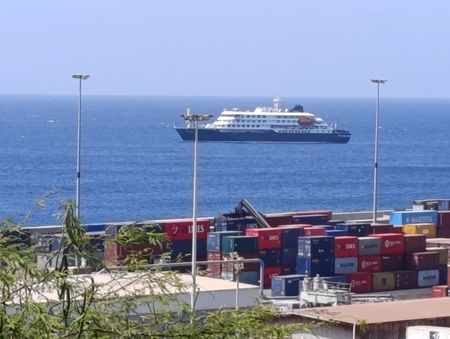
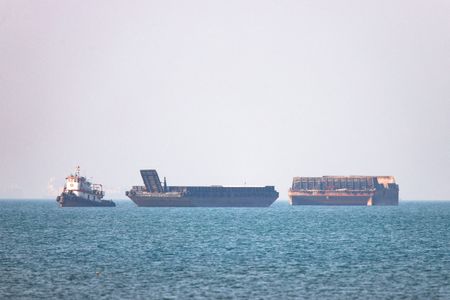
A South Korean shipping company announced Wednesday that it has arranged for a rescue vessel to pull one of its damaged cargo ships to a Dubai port following an explosion and fire that left the vessel stranded in Middle Eastern waters.
The incident has drawn international attention after President Donald Trump accused Iran of attacking the ship, though South Korean officials say they won’t determine what caused the blaze until the vessel reaches port and undergoes a thorough examination.
According to HMM, the shipping company, the damaged vessel should reach Dubai either Thursday evening or Friday morning, Seoul time.
The cargo ship, flying under Panama’s flag and called HMM Namu, experienced an explosion and burst into flames Monday evening. Company officials report that crews successfully put out the fire, and all 24 sailors aboard the vessel are safe with no injuries reported.
Trump took to social media to claim that Iran had “fired shots at a Korean-operated ship and other targets” during a U.S. military operation aimed at keeping the strait open for shipping traffic. He called on South Korea to support the American effort. The waterway typically handles roughly 20 percent of global oil and liquefied natural gas shipments.
South Korean leadership has shown reluctance to get deeply involved in Middle Eastern tensions, though the presidential administration said Tuesday it was considering Trump’s request for Seoul to join the navigation security mission.
Trump later announced he would temporarily halt the escort operation through the critical shipping lane, saying there had been “great progress” toward reaching a broader deal with Iran.
In a Tuesday evening address to his nation, Guatemalan President Bernardo Arevalo announced his selection of Gabriel Estuardo Garcia Luna as the country’s next attorney general. Garcia Luna, who previously served as a judge and worked as a university professor, will assume the role on May 17.
The appointment follows weeks of legal complications after Guatemala’s Constitutional Court halted the selection process and demanded a review of the candidate pool. The court’s intervention came after the initial shortlist notably excluded current Attorney General Consuelo Porras.
A judicial committee subsequently voted on a revised list of candidates before presenting their recommendations to Arevalo, enabling the president to move forward with his choice.
Porras, who has been a prominent opponent of Arevalo’s administration, faces sanctions from the United States, Canada, the European Union, and other international bodies. These penalties stem from allegations of corruption, targeting human rights activists, and attempting to interfere with Arevalo’s 2023 electoral victory. Porras has consistently rejected these charges.
During his announcement, Arevalo emphasized the need for judicial reform, stating: “This is a time to learn from our history. Justice has all too often been a tool of revenge. It is time to leave that past behind.” The president described the appointment as marking a “new chapter” and expressed hope that Garcia would bring both clarity and determination to the position.
Garcia currently works as a criminal legal advisor within the prosecutor’s office.
Arevalo stressed that the attorney general’s duty extends beyond political loyalty, explaining that the position is mandated not to serve “the incumbent president or any particular or spurious political interests, but to serve an independent and impartial justice system dedicated to the people who make up the Guatemalan nation.”
WELLINGTON, New Zealand (AP) — Prosecutors have filed 19 additional weapons charges against an Australian man accused of carrying out a deadly attack that claimed 15 lives during a Hanukkah celebration at Sydney’s Bondi Beach, authorities announced Wednesday.
Naveed Akram, 24, was previously facing 59 criminal counts including murder, attempted murder and terrorism-related offenses following the December 2025 attack when he and another gunman fired on attendees at the Jewish holiday gathering. Akram has not yet been asked to enter a plea in the case.
The suspect sustained gunshot wounds during the incident, while his father, 50-year-old Sajid Akram, died in the shootout with police that brought the attack to an end. Australian authorities determined the assault was motivated by the Islamic State terrorist organization.
Akram was scheduled to appear Wednesday at Sydney’s Downing Center Local Court through video conference from his jail cell. The procedural session was set to address a publication ban protecting the identities of attack victims and survivors who have not publicly identified themselves.
Court personnel confirmed Wednesday that the 19 new charges were filed on April 15, following Akram’s previous court appearance. The fresh counts include 10 charges of shooting with intent to murder and six charges of firing a weapon while resisting arrest.
According to earlier court filings, the attackers initially attempted to throw homemade explosive devices into the crowd of Hanukkah celebrants at the popular Australian beach, but the devices failed to detonate. Police discovered a larger improvised explosive device in the trunk of the younger Akram’s vehicle, which had been decorated with Islamic State banners.
The ongoing police investigation represents one of three official examinations into what authorities describe as Australia’s most serious alleged terrorist incident and the country’s deadliest mass shooting in nearly three decades. One inquiry focuses on coordination between law enforcement and intelligence services prior to the attack.
A royal commission, representing Australia’s most comprehensive form of public investigation, is examining both the extent of antisemitism in Australian society and the specific circumstances surrounding the Bondi Beach shooting. The commission published a preliminary report in April recommending enhanced firearm restrictions and commenced public testimony sessions on Monday.
WASHINGTON — Trump administration officials are intensifying diplomatic efforts to convince China to leverage its relationship with Iran to reopen the Strait of Hormuz, just days before a planned summit between President Donald Trump and Chinese President Xi Jinping in Beijing.
Secretary of State Marco Rubio urged Chinese leadership to take advantage of Iranian Foreign Minister Abbas Araghchi’s current visit to China to pressure Tehran into ending its blockade of the vital shipping corridor. Chinese Foreign Minister Wang Yi conducted meetings with Araghchi on Wednesday, according to reports from the official Xinhua news agency.
“I hope the Chinese tell him what he needs to be told,” Rubio stated during a White House briefing on Tuesday. “And that is that what you are doing in the strait is causing you to be globally isolated. You’re the bad guy in this.”
Rubio emphasized that China’s economy has suffered more severe consequences than America’s from Iran’s blockade of the waterway during the current two-month conflict. Beijing’s export-dependent economy relies heavily on shipping routes through the strait, while China imports approximately half of its crude oil and nearly one-third of its liquefied natural gas from Middle Eastern nations, based on data from China’s General Administration of Customs.
“It is in China’s interest that Iran stop closing the strait,” Rubio declared.
A diplomatic source revealed to The Associated Press on Tuesday that American officials have been working intensively to convince China not to veto the latest U.S.-sponsored resolution at the U.N. Security Council designed to reopen the strait and denounce Iran’s actions. The diplomat requested anonymity when discussing these sensitive negotiations.
China and Russia — both allies of Tehran on the Security Council — blocked a previous Hormuz-related resolution last month, arguing it was too extreme and failed to criticize U.S. and Israeli military actions that initiated the conflict.
Rubio’s diplomatic push toward China followed Treasury Secretary Scott Bessent’s announcement Monday that Iran would be a priority topic when Trump meets with Xi for the first presidential visit to China since Trump’s 2017 trip.
The strait’s closure has created massive disruptions across Asia, a situation that appears to have influenced China’s efforts to work with Pakistan in mediating a two-week ceasefire agreement.
Trump has acknowledged China’s role in encouraging Iran to accept a fragile ceasefire negotiated last month. Three diplomatic sources familiar with China’s behind-the-scenes involvement confirmed that Beijing, as Iran’s largest oil customer, utilized its economic leverage to bring Iranian negotiators back to the table when discussions stalled.
However, the Republican administration maintains that China could increase its involvement in reopening the crucial waterway.
“The threat of attacks from Iran has closed the strait — we are reopening it,” Bessent said during a Fox News interview. “So I would urge the Chinese to join us in supporting this international operation.”
Trump adopted a more cautious tone regarding China’s relationship with Iran, telling reporters in the Oval Office on Tuesday that China hasn’t “challenged” him while he continues pressuring Iran to abandon its nuclear weapons development and reopen the strait. China, meanwhile, has criticized U.S. military operations against its economically isolated Middle Eastern partner.
“You know, in all fairness, he gets, like, 60% of his oil from Hormuz,” Trump said, somewhat overstating Xi and China’s reliance on Middle Eastern petroleum.
China has historically supported Iran’s ballistic missile capabilities and provided dual-use industrial equipment that can be utilized for missile manufacturing, according to U.S. government assessments.
Trump revealed last month that Xi had committed to halting weapons shipments to Iran amid reports that Beijing was considering arms transfers.
Shortly after Trump announced receiving written assurances from Xi, he told CNBC that American forces had seized a vessel carrying a “gift” from China destined for Iran. Trump provided no additional specifics about the incident.
The administration has also increased economic pressure on China, Iran’s primary trading partner, due to its connections with the Islamic Republic.
On April 24, the Treasury Department imposed sanctions on a major Chinese oil refinery and approximately 40 shipping companies and tankers involved in Iranian oil transportation. These sanctions block the companies from accessing the U.S. financial system and penalize anyone conducting business with them.
Chinese officials have indicated they plan to pressure the United States to reduce weapons sales to Taiwan, the self-governing island that China considers a breakaway province.
Rubio acknowledged that Taiwan would likely feature in discussions between the two leaders. “I think both countries understand that it is neither one of our interests to see anything destabilizing happen in that part of the world,” Rubio explained. “We don’t need any destabilizing events to occur with regards to Taiwan or anywhere in the Indo-Pacific. And I think that’s to the mutual benefit of both the United States and the Chinese.”
Trump announced a record-breaking $11.1 billion arms sale to Taiwan in December. Trump subsequently indicated he would address the arms sales with Xi — a suggestion that has concerned officials in Taipei.
During a recent phone conversation with Rubio, Chinese Foreign Minister Wang Yi encouraged the United States to “make the right choices” regarding Taiwan to preserve “stability” between the two nations, according to a Chinese Foreign Ministry statement.
Starting in 2027, individuals applying for New Zealand citizenship will face a new requirement: passing an examination that covers fundamental topics including government structure and civil liberties, according to an announcement made Wednesday by the nation’s internal affairs minister.
The examination will be administered face-to-face and will consist of 20 multiple-choice questions presented in English. Applicants must correctly answer a minimum of 15 questions to successfully pass the test.
Subject areas covered in the examination will encompass the Bill of Rights Act, civil liberties, specific criminal violations, electoral rights, democratic foundations, governmental organization, and regulations regarding travel into and out of New Zealand.
Internal Affairs Minister Brooke van Velden explained the reasoning behind the new requirement in an official statement: “People seeking citizenship should understand New Zealanders believe in certain rights, like freedom of speech, or that no one person or group is above the law.”
Van Velden further emphasized the test’s purpose, stating: “This test ensures people have sufficient knowledge of their responsibilities and privileges before receiving citizenship by grant.”
Under the current system, those seeking citizenship are only required to sign a statement acknowledging they comprehend the duties and benefits that come with citizenship status.
According to van Velden, the Department of Internal Affairs is still developing additional specifics regarding the examination. The minister confirmed that the testing requirement will take effect during the latter half of 2027.
Thirteen Australian citizens with connections to the Islamic State terrorist organization are making plans to return home from Syrian detention facilities, according to government officials who announced Wednesday they will receive no help from authorities.
Home Affairs Minister Tony Burke explained that officials face “very serious limits” when it comes to blocking Australian citizens from returning to their homeland.
“The government is not assisting and will not assist these individuals. They made an appalling, disgraceful decision,” Burke stated during a press conference, noting the group consists of four women and nine children.
“The government’s complete lack of support for these individuals is a direct reflection of the decisions that they made.”
Burke warned that any person returning who is suspected of criminal behavior would “face the full force of the law without exception,” though he did not detail what specific charges might be filed.
Government officials have been making preparations for such situations for over ten years. Burke noted that law enforcement and intelligence services have kept emergency response plans in place since 2014 for handling people connected to extremist organizations.
Australian Federal Police Commissioner Krissy Barrett indicated that some returning citizens might face arrest and charges immediately upon their arrival, while others could remain under ongoing investigation. Children will be enrolled in community support and reintegration services.
Several Australian women made the journey to Syria during the period from 2012 to 2016 to reunite with their spouses, who had reportedly joined the Islamic State organization. After the terrorist group’s territorial control ended in 2019, many were held in detention facilities while some managed to return to Australia, based on local media coverage.
Al-Hol camp, located close to the Iraqi border, served as one of the primary detention centers housing family members of suspected Islamic State fighters who were captured during the American-supported military campaign against the extremist movement.
The United States started relocating detained ISIS members from Syria in January following the breakdown of the Kurdish-controlled Syrian Democratic Forces, which had been responsible for securing approximately twelve facilities containing ISIS fighters and related civilians, including foreign nationals.
By February, less than 1,000 families were still being held at detention centers in northeastern Syria that had been housing relatives of suspected Islamic State members.
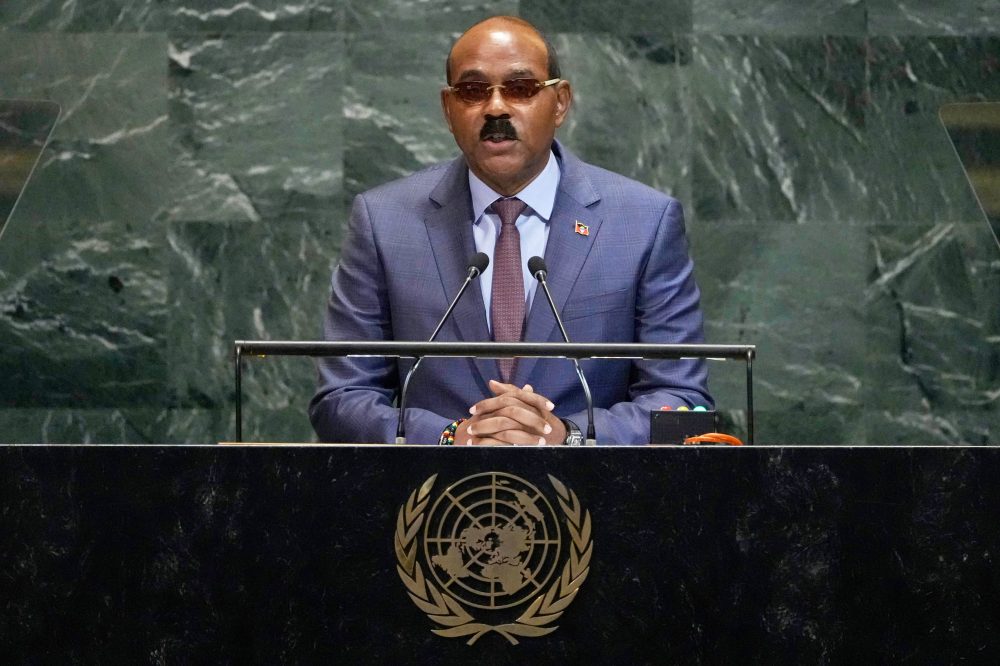
ST. JOHN’S, Antigua and Barbuda — Officials in the Caribbean nation of Antigua and Barbuda took their oaths of office this Tuesday following Prime Minister Gaston Browne’s historic election triumph that secured his Antigua and Barbuda Labor Party an unprecedented fourth straight term in power.
The ceremony marked a historic shift as government ministers pledged loyalty to their own nation for the first time, abandoning a four-decade practice of swearing allegiance to Britain’s royal family in the former British territory.
Last December, lawmakers passed constitutional changes that officially eliminated references to King Charles III and future British monarchs from the loyalty pledge. Cabinet members now promise faithfulness to Antigua and Barbuda itself, along with its founding document and legal system.
“Whereas your success at the polls has earned you the confidence and trust of the people; that confidence and trust collectively, is not a gift to be enjoyed, or trust to be betrayed. It is a burden to be carried, a duty to be performed, a trust to be honored every single day,” Browne told the assembled officials.
Browne’s ABLP dominated the election by capturing 15 out of 17 available legislative positions. The opposition United Progressive Party suffered devastating losses, dropping from five seats to just one, with only Jamale Pringle surviving the electoral defeat. Trevor Walker from the Barbuda People’s Movement also secured a seat, continuing his winning streak in every election since 2004 except for 2014.
The early election was called two years before required by law, with campaign discussions centered on increasing living expenses and public works projects throughout the islands.
SAN JOSE, Costa Rica — In an unprecedented political maneuver, Costa Rica’s departing President Rodrigo Chaves will maintain his legal protections by accepting dual ministerial positions in the incoming administration, President-elect Laura Fernández revealed Tuesday.
Fernández announced that Chaves will simultaneously serve as Minister of the Presidency and Finance Minister when she assumes office Friday. This arrangement ensures the outgoing leader continues enjoying immunity while facing serious corruption allegations.
The decision represents an extraordinary departure from Costa Rican political tradition and provides Chaves with substantial influence over the new government. His political movement has repeatedly challenged the Central American democracy’s established practices.
During her campaign for February’s elections, Fernández promoted herself as representing “continuity” with Chaves’ policies. Many current cabinet members and administration officials will either retain their positions or transition to different roles. Notably, Fernández previously served as Chaves’ Minister to the President, the same position her former boss will now occupy.
“Just as we have done since the first day of your administration, we will continue working very well as a team,” Fernández told Chaves during Tuesday’s public announcement in the capital city of San José.
Chaves, known for his populist rhetoric and alliance with U.S. President Donald Trump, frequently attacks media outlets and political opponents. He has modeled his approach after El Salvador’s President Nayib Bukele, implementing harsh measures to combat rising crime rates in the traditionally peaceful nation.
The outgoing president recently committed to accepting 25 deportees weekly from the United States. His administration allegedly pressured the Trump government to revoke visas for board members of an influential newspaper.
Fernández’s appointment strategy not only extends Chaves’ political control but also shields him from escalating legal troubles by preserving his governmental immunity.
Costa Rican prosecutors rocked Chaves’ presidency last year with accusations of improper campaign financing and corruption, which he has consistently rejected.
According to prosecutors, Chaves allegedly coerced a close ally and government contractor into redirecting contract funds to a former campaign advisor.
The national legislature has attempted twice to remove Chaves’ immunity protections without success. His new ministerial appointment makes future efforts unlikely, particularly since the ruling party now controls a legislative majority.
Chaves maintains that the charges represent political retaliation orchestrated by the attorney general and Supreme Court justices.
Opposition lawmakers condemned Chaves’ ministerial appointment. Legislator José María Villalta stated Tuesday that the decision represents a transparent effort to “grant or preserve immunity for controversial politicians from the outgoing government rather than to improve the functioning of institutions.”
International credit rating agency Fitch announced Tuesday it has raised Argentina’s long-term foreign and local currency debt ratings from “CCC+” to “B-” while maintaining a stable outlook for the South American nation.
The ratings improvement comes as Fitch recognized better fiscal and external financial positions, advancement in economic policy changes, enhanced possibilities for foreign exchange reserve growth, and expectations that Argentina’s government will obtain necessary funding to meet debt payments.
However, the agency acknowledged ongoing challenges including limited international reserves, elevated inflation rates, and Argentina’s track record of economic instability.
Fitch forecasts Argentina’s economic expansion will slow to 3.2% by 2026.
The ratings firm highlighted increased political support for President Javier Milei following October 2025 midterm election results.
The electoral victory allowed Milei’s administration to push forward with significant policy changes, including workplace reforms that lengthened the standard work day and new laws reducing mining limitations in glacier-containing areas.
Argentina’s Political Economy Secretary Jose Luis Daza celebrated the development on social media platform X, stating: “With this move, Argentina has crossed a key threshold in international markets.”
“Thousands of institutional funds are currently unable to invest in CCC-rated instruments. Now they will be able to invest in Argentine bonds,” Daza explained.
President Milei has prioritized maintaining fiscal responsibility as a central pillar of his presidency, rejecting legislation he views as threatening to budgetary stability. This approach has drawn criticism from social organizations that have experienced budget reductions under his leadership.
While inflation has decreased from its highest points, it has remained persistent in recent months due to currency devaluation and increased utility costs. Economic expansion continues to be unbalanced, with growth primarily occurring in energy, mining, and agricultural sectors.
MADRID – Spanish health authorities announced Tuesday night they will allow the cruise vessel MV Hondius to dock in the Canary Islands following a hantavirus outbreak on board, citing both legal obligations and humanitarian concerns.
Medical personnel will conduct health evaluations and provide treatment to all individuals aboard the ship before coordinating their transportation back to their respective home nations, according to an official statement.
Health ministry officials explained that Cape Verde lacks the necessary resources to handle the medical emergency. “The Canary Islands are the closest location with the necessary capabilities,” the ministry stated. “Spain has a moral and legal obligation to assist these people, among whom are also several Spanish citizens.”
The World Health Organization had previously indicated that Cape Verde was not equipped to manage the complex medical operation required for the affected cruise ship.
Most Israelis oppose concluding their nation’s conflict with Iran, citing concerns that peace under present circumstances would undermine national security objectives, according to new polling data from the Israel Democracy Institute released May 5, 2026.
The research revealed that 59% of survey participants considered terminating the war as having minimal or no alignment with Israel’s security requirements. The demographic breakdown showed approximately two-thirds of Jewish participants shared this perspective, while nearly half of Arab participants held the contrasting viewpoint.
Additionally, 62% of those surveyed anticipated a high probability of renewed large-scale hostilities with Iran, while only 30% viewed such prospects as unlikely.
The data indicates a significant erosion in public morale. Confidence regarding Israel’s national defense dropped from 47% in March to 39% in April, marking some of the poorest ratings documented in recent polling. Faith in social unity similarly decreased from 30% to 22.5%. However, perspectives on democratic institutions and economic prospects showed no significant change.
The study also evaluated public sentiment about Israel’s general direction. Among all participants, 44.5% believed the nation had achieved more victories than setbacks, representing a decrease from 48% the previous year and an 18.5 percentage point drop since 2020.
Regarding regional relations, participants showed pessimism about Lebanon. Approximately three-quarters considered the possibility of establishing a lasting diplomatic-security framework with Lebanon’s government, including Hezbollah’s disarmament, as unlikely or impossible.
Views on foreign influence over Israeli policy also evolved. A majority of 51% believed the US administration wielded more control over Israel’s defense choices than Israel’s own government, increasing from 44% in October 2025, while those crediting greater influence to Israel’s leadership fell to 18%.
International relations concerns were prominent, with 72% of participants describing diminishing American public support as moderately or highly troubling.
Regarding long-range security approaches, most participants emphasized equal importance of military capability and diplomatic solutions. For immediate priorities, support for emphasizing military force decreased to 28.5%, while backing for diplomatic initiatives increased to 30.5%.
The poll also covered domestic matters. A plurality believed security agencies handled settler violence against Palestinians with excessive leniency, a sentiment that grew among Jewish participants to 46%.
The research was carried out April 26-30, 2026 by the Viterbi Family Center for Public Opinion and Policy Research, surveying 601 Jewish and 150 Arab participants representing Israel’s adult population aged 18 and older.
A commercial shipping vessel was hit by an unidentified projectile while traveling through the Strait of Hormuz on Tuesday, according to British maritime authorities.
The United Kingdom Maritime Trade Operations agency reported the incident involving the cargo ship but said officials are still determining what environmental damage may have resulted from the strike.
The agency did not provide details about what type of projectile hit the vessel or who may have been responsible for the attack in the strategic waterway.
President Donald Trump avoided giving a direct response Tuesday when questioned about whether Iran had breached a ceasefire agreement following consecutive attacks on the United Arab Emirates using missiles and unmanned aircraft.
Officials with the UAE’s Defense Ministry confirmed their air defense systems confronted incoming ballistic missiles, cruise missiles, and drone aircraft. While many of the weapons were successfully intercepted, military leaders characterized the consecutive assaults as a direct threat to the nation’s security.
When reporters in the Oval Office pressed Trump on whether these actions violated the ceasefire terms, he remained evasive. “You’ll find out because I’ll let you know when they do,” Trump told a reporter in the Oval Office. “They know what not to do.” He continued, “They should do the smart thing because we don’t want to go in and kill people.”
N12 news reported that Trump nearly authorized additional military strikes on Friday but changed his decision after Iran presented a revised proposal to end hostilities. The same report indicated he subsequently rejected Iran’s proposal.
American government sources indicate Trump faces mounting pressure from external advisers to restart military operations, while emphasizing his current preference for diplomatic solutions. However, these same officials cautioned that if negotiations continue to stall in the near future, Trump stands ready to greenlight a brief but intensive military campaign to break the current deadlock.
In a separate development, PressTV announced Iran has established what it calls “a new mechanism to assert sovereignty over the Strait of Hormuz.” Under this system, ships intending to pass through the waterway must receive regulatory notifications via email and secure permits before proceeding.
“We warn all vessels planning to transit the Strait of Hormuz that the only safe passage is the corridor previously announced by Iran. Any diversion of ships to other routes is dangerous and will result in a firm response from the Iranian Revolutionary Guards navy,” according to a statement broadcast on state television.
During a military ceremony for air force leadership changes, Israel Defense Forces Chief of Staff Eyal Zamir stated Tuesday: “We are closely monitoring the events in the Persian Gulf; we are prepared to respond with force against any attempt to harm Israel.”
CNN reported, citing an Israeli official, that Israel is coordinating with the United States to prepare for potential new strikes against Iran. The official explained that most plans were developed prior to the early April ceasefire and would target energy facilities and high-ranking Iranian officials through targeted killings. The official added: “The intention will be to carry out a short campaign aimed at pressuring Iran into further concessions in negotiations.”
Italian Prime Minister Giorgia Meloni publicly condemned the spread of an artificially generated photograph depicting her in an intimate bedroom setting wearing undergarments, calling it a political assault against her on Tuesday.
The prime minister posted the questionable image on her Facebook page, along with what appeared to be a social media user named Roberto’s post that included the fake photo and suggested Meloni should feel “ashamed” of herself.
Meloni cautioned against distributing such manipulated content on social platforms without first confirming their authenticity.
“Deepfakes are a dangerous tool because they can deceive, manipulate and target anyone. I can defend myself. Many others cannot,” she cautioned in her Facebook statement.
Officials have not confirmed whether Meloni plans to file a complaint with authorities, despite encouragement from followers responding to her post. She did note with some humor that the digitally altered image “actually made me look a lot better.”
“But the fact remains that, in order to attack and fabricate lies, people will now use absolutely anything,” she stated.
This marks another instance where Italy’s first female prime minister’s image has sparked controversy. Earlier this year in February, a church-state dispute emerged when a cherub sculpture resembling Meloni was discovered in a Roman cathedral.
At that time, Meloni responded with humor to the comparison.
“No, I definitely don’t look like an angel,” she posted on social media, including a laughing emoji next to a picture of the artwork.
VENICE, Italy (AP) — The world’s most prestigious contemporary art exhibition opened Tuesday in unprecedented turmoil, with the Venice Biennale’s 61st edition marked by the extraordinary resignation of its judging panel over disputes involving Israeli and Russian participation.
The controversy has shaken the foundation of this centuries-old cultural institution, creating a powder keg atmosphere as artists and visitors navigate competing political tensions within the exhibition’s historic gardens.
The stark divisions were on full display as Ukrainian artists positioned themselves beside a truck carrying an origami deer sculpture transported from Ukraine’s war-torn eastern regions to the Biennale’s famous Giardini venue. Nearby, Russian pavilion participants danced to electronic music spun by an Argentine DJ.
Meanwhile, Palestinian demonstrators marched through the gardens wearing tags bearing the names of artists killed in Gaza, with additional protests anticipated throughout the preview period.
These events have challenged the Biennale’s traditional format — featuring 100 country pavilions alongside a curated showcase of 110 artists and artistic collectives — and reignited debates about whether national representation remains relevant in today’s interconnected art world, or if it simply provides governments with propaganda opportunities.
Marie Helene Pereira, serving as one of five curators for the main exhibition titled “In Minor Keys,” believes the current upheaval demonstrates that “the existence of the nation state within the space of the exhibition” faces serious challenges.
“We can see how much that can bring tension, especially in the midst of the political chaos we find our selves,” Pereira stated.
Pereira, who joined four other curators in continuing the work of Koyo Kouoh following her death during exhibition preparations last year, emphasized that it was “important to be able to rethink structure, rethink institutions, in a way that allows for them to cater more to artists and artmaking.”
However, she clarified that removing politics from art entirely wasn’t the solution.
Before stepping down, the jury had announced it would withhold awards from nations whose leaders face International Court of Justice investigations, specifically targeting Russia and Israel.
The resignation received mixed reactions from participants. Israeli artist Belu-Simion Fainaru called the decision “a fair one.”
“I should be treated as an equal artist, and I should not be discriminated because of my race, that I am a Jew, and not because of my nationality or passport. I have to be seen as I am. I am an artist that wants to show my art, and I have the right to be evaluated,” he explained while standing before his Kabbalah-inspired installation.
According to Fainaru, the Biennale should serve as “a place where you can feel safe to create and do whatever you believe in.”
Ukrainian artist Zhanna Kadryova developed “The Origami Deer” as a replacement for a Soviet nuclear-capable fighter aircraft that previously occupied a park in Pokrovsk, located in Ukraine’s Donbas area.
Ukrainian Pavilion organizers — presenting their third exhibition since Russia’s 2022 full-scale invasion — removed the sculpture from the park in 2024 while fighting raged just 5 kilometers away.
Co-curator Ksenia Malykh strongly criticized the Biennale’s choice to permit Russia’s pavilion opening, describing it as “a false attempt to stay neutral.”
“You can’t stay neutral in these times. You can’t be neutral when people are dying every day because of Russians,” Malykh declared.
“Nobody is talking about their art,” she continued. “They are only talking about the statement that they are here, and I am absolutely sure this was their goal.”
Russian representatives will limit their pavilion access to preview attendees through Friday, closing to general audiences when the Biennale begins its 6½-month public run Saturday. The pavilion has scheduled various performances this week and maintained an open bar upstairs near a blooming tree.
Russian organizers declined interview requests.
Russia’s participation has cost the Venice Biennale 2 million euros ($2.3 million) in European Union funding over three years. Exhibition officials have justified their decision by stating that any nation maintaining diplomatic relations with Italy may operate a pavilion, creating tension with the Italian government in Rome.
The official catalog featured a placeholder entry where Russian content should appear, noting that Russia’s involvement remained “under review” during publication.
Without a professional jury, the prestigious Golden Lion awards for best national pavilion and best main exhibition participant — prizes that have earned the Biennale comparisons to art’s Olympics — will not be distributed.
Instead, visitors to the Giardini and Arsenale locations will select two winners for best national and main show participants, with results announced November 22 at the Biennale’s conclusion.
Ukrainian curator Malykh argued that eliminating professionally judged awards undermines the Biennale’s credibility.
“It’s an important moment. If the prize is given by the public… It’s not a professional institution after that,” Malykh concluded.
OTTAWA, Ontario (AP) — Canadian Prime Minister Mark Carney revealed Tuesday his selection of former Supreme Court Justice Louise Arbour to fill the role of the nation’s upcoming governor general.
The position serves as the official representative of King Charles III of Britain. As Canada remains part of the Commonwealth, the British monarch continues to hold the ceremonial position of head of state.
According to Carney, King Charles has given his approval to the appointment based on the Prime Minister’s recommendation.
“I will have an opportunity to have very in-depth conversations with Arbour in private on issues that affect Canada and the rest of the world,” Carney said.
While the governor general holds significant constitutional responsibilities, the position primarily functions in a ceremonial and symbolic capacity. Carney’s choice represents a Francophone selection for the role.
When questioned about whether she views herself as a monarchist, Arbour responded in French that she “doesn’t really know what that term is supposed to mean” while expressing her backing of the existing governmental structure.
“I will be the representative of the Crown in a constitutional arrangement that has served Canada extremely well throughout our history, even more in recent decades. I think a system that will continue to provide continuity in our institutions and form of governance,” she said.
Arbour is set to succeed Mary Simon, who made history as Canada’s first Indigenous governor general and will complete her five-year appointment in July.
Carney described the 79-year-old Arbour as an internationally recognized legal expert, judicial figure, and champion of human rights and justice. Her judicial career included appointments to the Supreme Court of Ontario, Ontario’s Court of Appeal, and Canada’s Supreme Court.
The United Nations selected her in 1996 to serve as Chief Prosecutor for the International Criminal Tribunals addressing the former Yugoslavia and Rwanda. Under her leadership, the tribunals achieved the first genocide conviction since the 1948 Genocide Convention and issued the first war crimes indictment against a serving head of state.
From 2017 to 2018, she held the position of U.N. Special Representative for International Migration.
Following American independence from Britain, Canada continued under colonial rule until 1867, then maintained its constitutional monarchy featuring a British-style parliamentary government system.
UNITED NATIONS (AP) — The United Nations is weighing a new resolution that would impose sanctions and other punitive actions against Iran unless it stops attacking vessels in the Strait of Hormuz, ceases charging unauthorized fees, and reveals where it has placed mines to restore safe passage through the waterway.
The draft measure, backed by the United States and Gulf region countries and acquired by The Associated Press on Tuesday, also calls on Iran to “immediately participate in and enable” UN initiatives to create a humanitarian passage through the strait for delivering essential aid, fertilizer and other supplies.
This represents the most recent diplomatic push by America and its Gulf partners following a weakened resolution designed to reopen the strait that was blocked by China and Russia just hours before Washington and Tehran declared a temporary ceasefire in early April.
U.S. Ambassador Mike Waltz informed reporters that he expects this new, focused proposal will secure enough backing to pass the 15-member council without sparking resistance or a veto from Iran’s supporters.
The United States and Gulf countries introduced this new draft while the Trump administration works to reestablish safe navigation through the strait, which transported roughly 20% of global crude oil supplies before the U.S. and Israel launched their military campaign on February 28. An unstable ceasefire continues to hold.
The proposed measure, written under Chapter 7 of the UN Charter which allows for military enforcement, warns of “effective measures that are commensurate with the gravity of the situation, including sanctions” should Iran fail to comply.
The resolution confirms all nations’ rights to protect their ships from attacks and hostile actions, while directing other countries not to help Iran in blocking the strait or imposing fees.
The draft text also “welcomes ongoing efforts to deconflict and coordinate safe and secure transit passage through the Strait of Hormuz, expresses support for ongoing efforts to seek a durable peace in the region, and encourages member states in the region to strengthen dialogue and consultations in this regard.”
BERLIN – Leaders within German Chancellor Friedrich Merz’s coalition government committed Tuesday to working through their disagreements on major policy reforms following weeks of internal conflict that has raised questions about the administration’s stability.
With Wednesday marking one year since Merz took office as chancellor, both his personal approval numbers and support for his conservative Christian Democrats (CDU) along with their coalition partners, the center-left Social Democrats (SPD), have dropped to historic lows.
Finance Minister and SPD leader Lars Klingbeil acknowledged the political damage during a press briefing. “There’s no point in trying to get around it: trust in politics has declined,” Klingbeil stated. “The dispute, and particularly the heated debate of recent weeks, has also done us harm as a coalition and as a government.”
Germany’s economy showed signs of recovery late last year after enduring two years of recession, but that fragile growth now faces threats from energy disruptions caused by conflict with Iran and new American tariffs affecting the country’s automotive sector, which already faces intense pressure from Chinese competitors.
Recent polling data reveals the far-right Alternative for Germany (AfD) party leading the CDU by as much as five percentage points, while the SPD finds itself competing with the opposition Green party for third place following poor showings in two state elections this year.
A forthcoming survey in the business publication Handelsblatt indicates that 73% of German citizens question Merz’s ability to handle economic matters – an area previously considered among his strongest qualifications.
When Merz assumed power twelve months ago, he promised to strengthen Germany’s military capabilities after years of underfunding and to reform the country’s pension, tax, welfare and healthcare systems to address mounting fiscal pressures.
However, these anticipated reforms have stalled due to disagreements between the SPD and CDU regarding tax policy, spending priorities and social welfare programs, with both parties blaming each other for refusing to find middle ground.
Resistance from members of Merz’s own party forced him to retreat on pension reform proposals late last year, leading him to establish a special commission to develop new recommendations in order to avoid a parliamentary defeat.
Critical decisions about retirement age requirements, contribution rates and benefit amounts remain unresolved.
The country’s statutory health insurance program, which faces funding shortfalls projected to reach tens of billions of euros in the coming years, also requires attention, along with long-awaited tax changes designed to boost employment and stimulate investment.
Government officials have highlighted increased defense expenditures and significant reductions in unauthorized immigration and asylum approvals over the past year as notable accomplishments. However, economic weakness and reform disputes have overshadowed these positive developments.
CDU parliamentary leader Jens Spahn expressed frustration with the coalition’s public image. “Many of our achievements have been overshadowed by too much public controversy and squabbling, particularly in the weeks since Easter,” Spahn commented.
“We must and want to break free from it and return to working together within this coalition,” he added.
A blaze at a shopping complex in the western outskirts of Tehran left at least 10 people injured on Tuesday, according to reports from Iranian news outlets.
Fire department officials told Iran’s state television network IRIB that crews had “largely contained” the flames.
Authorities have not yet determined what sparked the fire, according to the semi-official Fars news agency.
Video footage broadcast by Iranian news organizations, including Fars, captured thick smoke billowing from the shopping center.
Reuters confirmed the incident’s location by matching structural features, power lines, vegetation and street patterns visible in the footage with archived photographs and satellite images of the area.
The shopping center fire occurred amid rising tensions between Iran and the United States, as a delicate ceasefire faces new strain following Monday’s military exchanges between the two nations.
The United Arab Emirates announced Monday that Iran has renewed its military strikes against UAE territory, including cruise missile attacks and a drone assault targeting oil facilities near Fujairah, while the United States works to restore commercial shipping through the vital Strait of Hormuz amid an unstable ceasefire.
According to the UAE Defense Ministry, Iran fired four cruise missiles at the country, with three successfully intercepted by defense systems and one falling harmlessly into ocean waters. Officials in Fujairah reported that a blaze erupted at the Fujairah Oil Industry Zone following what they characterized as a drone assault launched from Iran. Emergency response crews were dispatched to battle the flames. Tehran has not yet responded to the Fujairah incident allegations.
The UK Maritime Trade Operations center, operated by British military officials, documented two commercial cargo ships catching fire off the UAE coastline. In a separate incident, South Korean authorities confirmed that an explosion and fire occurred on a South Korean-operated vessel anchored in the strait, though no crew members were harmed. The UAE also claimed Iran used drones to attack an unloaded tanker connected to the Abu Dhabi National Oil Company while it traveled through the waterway.
These attacks occurred while US Central Command announced that two American-flagged commercial ships had successfully passed through the Strait of Hormuz as part of a new American initiative to restore normal shipping operations. President Donald Trump warned Sunday that Iranian disruption of this effort “will, unfortunately, have to be dealt with forcefully.”
Iranian military officials condemned the US initiative and issued threats against international forces attempting to enter the strait. “We warn that any foreign military force — especially the aggressive U.S. military — that intends to approach or enter the Strait of Hormuz will be targeted,” Maj. Gen. Ali Abdollahi told Iranian state broadcaster IRIB.
The Strait of Hormuz, connecting the Persian Gulf with the Gulf of Oman, serves as one of the globe’s most crucial pathways for oil and natural gas transportation. UAE officials have previously stated that Iranian strikes against infrastructure and civilian locations breach the nation’s sovereignty and endanger regional stability.
A commemorative wall painting honoring young victims of Middle Eastern violence will be revealed in Israel, featuring the children through the symbolic imagery of a soccer game, according to organizers and creator Hooman Khalili.
The artwork depicts Druze youth wearing green jerseys, representing the dozen children who lost their lives when a Hezbollah rocket struck Majdal Shams on July 27, 2024, as they played soccer. They face children dressed in red, symbolizing minors who died in Iran following September 2022. The young people are shown as teammates rather than opponents.
Positioned above the soccer scene is Zahra Azadpour, a young female soccer player who died during Iranian civil unrest in January 2026, depicted serving as the game’s referee.
The memorial artwork features landmarks from both regions, including Nabi Shu’ayb (Jethro’s Tomb) located in the Galilee region and Tehran’s Azadi Tower, combined with the Lion and Sun emblem, which project organizers say symbolizes strength and cultural identity.
The Druze victims remembered in the memorial are Fajr Laith, Ameer Rabeea, Hazem Akram, Wadeea Ibrahim, Iseel Nashaat, Yazan Nayeif, Finis Adham, Alma Ayman, Naji Taher, Milad Muadad, and Nathem Fakher.
Iranian youth honored in the piece include Kian Pirfalak, Sarina Esmailzadeh, Nika Shakarami, Asra Panahi, Mohammad Eghbal, Hasti Narouei, Mona Naghib, Helen Ahmadi, Ali Rezaei, and Mirshekar Abolfazl, among others.
The project information references Amnesty International findings that Iranian security personnel killed children during demonstrations through gunfire, metal projectiles, and physical violence, with officials later trying to hide these incidents and intimidate grieving families.
Creator Hooman Khalili shared with The Media Line: “I see these murals and banners as the roots of something much bigger. The roots are here in Israel—but my hope is that the tree will grow and fully blossom in the United States.”
Khalili continued, “My prayer is to have this mural installed in the US before or during the FIFA World Cup, when the eyes of the world are watching. When that moment comes, I want people everywhere to see the truth—to understand the brutality of the Islamic regime and the reality that children are being targeted.”
“This is about making sure their stories are seen, remembered, and impossible to ignore,” Khalili concluded.
Khalili, born in Tehran in 1974, is an Iranian-American artist, filmmaker, and human rights advocate recognized for creating large-scale murals supporting Iranian demonstrators and drawing attention to human rights violations. Raised in California, he has contributed to film, radio, and public art initiatives throughout Israel and the United States.
President Donald Trump issued a severe threat to Iran on Monday, declaring the nation would face total annihilation if it launches attacks against American naval forces, as regional tensions continue to escalate in the Persian Gulf waters.
During an interview with Fox News correspondent Trey Yingst, Trump described Iran as having become “much more malleable” during peace talks while emphasizing America’s military preparedness.
“We have more weapons and ammunition at a much higher grade than we had before,” President Trump said. “We have the best equipment. We have stuff all over the world. We have these bases all over the world. They’re all stocked up with equipment. We can use all of that stuff, and we will, if we need it.”
Military officials from US Central Command clarified Monday that reports suggesting Iran had attacked an American warship in the Strait of Hormuz area were false. “The truth is, no US military vessel has been attacked,” the command stated in a social media post.
However, Iranian forces did target oil infrastructure in Fujairah within the United Arab Emirates on Monday, resulting in injuries to three Indian nationals, according to Fujairah’s media office. UAE defense systems successfully intercepted three incoming missiles that day, while a fourth projectile fell into ocean waters.
These attacks followed what officials characterized as Iranian aggression against both the United Arab Emirates and Oman during Monday evening. Trump had previously declined Iran’s ceasefire overture just one day before these incidents.
A high-ranking Israel Defense Forces official confirmed that Israel has maintained its current civilian protection guidelines. “The IDF is following the situation and is at a high level of readiness,” the official said. “We emphasize that there are no changes to the home front rules.”
The military leader added that Israel’s defensive stance remains consistent. “Our air defense systems and attack capabilities are prepared at a high level, which is something that has not changed since the ceasefire decision.”
Israeli security experts indicated that Persian Gulf tensions have reached critical levels, cautioning that even a minor incident or miscommunication could shatter the current ceasefire arrangement with Iran’s government and reignite hostilities, according to reports from Walla.
Israeli Finance Minister Bezalel Smotrich ignited a political firestorm Tuesday when he declared during a 103FM radio interview that creating a coalition government with United Arab List leader Mansour Abbas would be more damaging than the October 7 terrorist attack.
During the broadcast, Smotrich characterized the October 7 assault as a catastrophic security breakdown while describing potential political cooperation with Abbas as a deliberate betrayal. “The October 7 massacre is a horrific and terrible failure, but it is a tactical failure,” Smotrich stated. He went on to claim that bringing Abbas into government would be “a thousand times worse than the most terrible failure,” calling such a move an intentional choice.
When pressed by the interviewer about his controversial comparison—referencing the attack that claimed 1,200 lives and resulted in 251 hostages—Smotrich defended his position. “Do you want to make a competition in disasters?” he responded. “You asked me as a politician what is more severe in my view. A politician who lied, betrayed his values, and carried out a targeted strike against democracy–that is far more severe.”
The finance minister also directed criticism toward Prime Minister Benjamin Netanyahu, maintaining his longstanding opposition to the premier’s leadership. “I have had criticism of Netanyahu for years, and I do not remove responsibility from him,” Smotrich declared.
Regarding the current conflict, Smotrich outlined his vision for ending the war with Hamas completely eliminated from Gaza. He also voiced backing for territorial expansion into Gaza, Lebanon, Syria, and Judea and Samaria.
Political opponents quickly condemned Smotrich’s statements. Yashar party chief Gadi Eisenkot accused the finance minister of exploiting the October 7 tragedy as a “tool in the shameless campaign” to minimize accountability for security failures. “The biggest failure in our history is an indelible stain,” Eisenkot responded.
Yair Golan interpreted Smotrich’s remarks as suggesting that “a massacre of Israelis is better than a government that doesn’t include him.”
Following the backlash, Smotrich issued a clarification claiming his words had been “distorted,” insisting he was merely comparing different political decisions. He acknowledged the October 7 attack as “one of the most terrible we have known since the Holocaust.”
Officials in Oman report that two foreign workers sustained injuries when a residential structure came under attack in the coastal community of Bukha, situated along the strategically important Strait of Hormuz waterway.
According to the Oman News Agency, the attack struck employee housing facilities in the Tibat district, harming two expatriate workers and causing damage to four motor vehicles. The blast also broke windows in a neighboring residence. Government officials stated they are implementing measures to protect local residents’ safety and security as they investigate the circumstances surrounding the attack.
This incident unfolds against a backdrop of rising regional conflict throughout the Persian Gulf area. On Monday, Iranian forces launched an assault on petroleum industry facilities in Fujairah, located in the United Arab Emirates, resulting in injuries to three Indian nationals, as confirmed by Fujairah’s media representatives.
UAE officials reported successfully stopping three incoming missiles that same day, while a fourth projectile landed in surrounding waters.
These attacks coincide with stalled diplomatic efforts between Iran and the United States regarding ceasefire negotiations, following President Donald Trump’s rejection of Iran’s proposed ceasefire terms the previous day.
Israeli sources speaking to Walla news outlet revealed that both Saudi Arabia and the United Arab Emirates have intensified their lobbying efforts toward the Trump administration in recent days. Regional leaders reportedly express anxiety about various potential scenarios, including the prospect of American military withdrawal from the area or an agreement they consider inadequate, fearing such outcomes could leave them vulnerable to Iranian attacks and broader economic instability.
After decades of refusing access, Swiss government officials have reversed their position and will now permit researchers to examine classified documents related to Nazi war criminal Josef Mengele, according to Swiss media reports.
The documents, which detail Mengele’s activities while in Switzerland, have been stored under strict security measures at the Swiss Federal Archives. Switzerland’s Federal Intelligence Service had consistently denied all requests to view the materials, including a rejection as recently as February 2026.
A legal challenge to that denial is still working its way through the Federal Administrative Court. Officials now say the person who filed the appeal will be permitted to review the documents under terms that are still being developed, and these same guidelines will govern future access requests.
Known as the “Angel of Death,” Mengele performed horrific medical experiments on prisoners at the Auschwitz death camp during World War II. Following Germany’s defeat, he escaped to South America but eventually made at least one return trip to Europe as a tourist, which included time spent in Switzerland.
The Swiss government’s Bergier Commission, created in 1996 to investigate how Swiss financial institutions managed Holocaust victims’ assets, had previously studied Mengele’s Swiss connections.
Even after that investigation concluded, Swiss authorities chose to place additional security restrictions on the Mengele documents in December 2001. From that point forward, the files have been essentially off-limits to both academic researchers and the general public.
Recent parliamentary motions filed by Swiss lawmakers requesting more details about Mengele’s Swiss activities have brought fresh focus to the controversy.
Government officials explained that their policy change resulted from a recent review they characterized as creating a “new situation,” though they did not elaborate on what specific circumstances led to the decision.
The upcoming document release is anticipated to shed light on previously unknown details of Mengele’s time in Switzerland, although officials have not yet determined exactly what information will be made available or under what conditions.
Israeli opposition leader Benny Gantz’s Blue and White party confronts an escalating organizational emergency as additional high-ranking officials signal their departure, while efforts to maintain party unity have generated fresh political complications.
The current turmoil erupted when Chili Tropper and Orit Farkash-Hacohen declared their intention to abandon Gantz’s political organization. Gantz insisted both politicians should vacate their Knesset positions without delay, contending this action was necessary following their exit. However, this requirement revealed an unexpected problem: when departing members surrender their parliamentary seats, their successors might emerge from the original candidate roster, potentially including individuals linked to Gideon Sa’ar, who subsequently aligned with Prime Minister Benjamin Netanyahu’s administration.
This scenario could transform an opposition party’s internal struggle into a legislative advantage for the governing coalition.
Blue and White subsequently announced that Gantz and Tropper reached an understanding for Tropper to maintain his current Knesset position rather than step down, specifically to avoid providing “another vote to the coalition.” The party expressed worry that an additional coalition supporter could facilitate passage of draft legislation that might damage Israel Defense Forces personnel and Israeli society.
This resolution underscores the difficult position now confronting Gantz. Compelling legislators to step down might preserve party authority and safeguard Blue and White’s organizational standing, yet it could simultaneously shift the Knesset’s power balance toward the government. Permitting them to stay prevents that immediate danger but leaves Gantz overseeing a group whose participants are progressively distancing themselves from his leadership.
The situation deteriorated when Eitan Ginzburg, a long-standing Gantz supporter and Blue and White’s secretary-general, met with Gantz and chose to exit the organization. Blue and White stated that Gantz had called him in after learning he was conducting discussions with alternative parties due to concerns about his political and financial prospects.
Ginzburg presented the choice through a different lens. In an extensive public statement, he characterized the move as concluding a political period he had begun seven years earlier, when Tropper recruited him to participate in a fresh initiative headed by Gantz. He commended Gantz individually, describing him as brave and honorable, yet stated the existing political structure had lost significant capacity to generate transformation.
“Blue and White was a warm political home for me,” Ginzburg stated, noting that he had maintained faith in its potential to make an impact even during challenging times. However, he added, “its ability, in its current form, to continue generating the change required in the country has diminished.”
This assessment strikes at the heart of the emergency. Ginzburg is not framing his exit as a personal rupture with Gantz, but rather as an evaluation of the party’s effectiveness. For an organization that has consistently performed poorly in recent surveys and frequently failed to meet the minimum vote threshold, this interpretation may prove even more harmful.
Blue and White’s deterioration has transformed each departure into an existential concern. Previously the primary centrist alternative to Netanyahu, the party now battles to maintain significance while other anti-Netanyahu figures, including Naftali Bennett and Gadi Eisenkot, vie for political territory before the upcoming election.
Eisenkot’s departure proved especially damaging. As Gantz’s former deputy and a previous IDF chief of staff, Eisenkot provided Blue and White with defense expertise and political gravitas. His choice to separate and establish Yashar demonstrated that the difficulties extended beyond polling data into the party’s leadership circle.
Gantz faces an additional burden from political history. During the pandemic, he dissolved his partnership with Yair Lapid and joined a Netanyahu-headed government. Following the October 7 attacks, he once again participated in a Netanyahu-led administration, this time through an emergency wartime agreement. While presented as an act of national duty, this arrangement concluded without Gantz achieving substantial modifications in the government’s policies or personnel.
Lapid, in contrast, had made his participation conditional on removing Bezalel Smotrich and Itamar Ben Gvir. Netanyahu dismissed this proposal by ignoring it. Gantz joined without making similar demands, prompting detractors to contend he provided Netanyahu with credibility without extracting a significant political concession.
Currently, as Blue and White continues losing its remaining senior leadership, Gantz’s challenge extends beyond determining whether Tropper, Farkash-Hacohen, or Ginzburg should retain their positions. The fundamental question is whether Gantz maintains a viable political organization to present to them, or if Blue and White has transformed into a platform that its own participants are attempting to abandon before the next electoral contest.
YEREVAN, Armenia — French President Emmanuel Macron surprised attendees at an elegant state dinner this week by taking the stage to perform beloved French ballads, including the classic tune “La Bohème.”
The musical performance took place Monday evening at Armenia’s presidential residence, where Macron was accompanied by an unlikely backing band featuring Armenian Prime Minister Nikol Pashinyan on drums and renowned jazz artist Vahagn Hayrapetyan on piano. Beyond “La Bohème,” originally made famous by Armenian-French artist Charles Aznavour in 1965, the French president also performed “Les Feuilles Mortes,” a song popularized by Yves Montand.
The dinner celebration was organized to honor Macron during his official state visit to Armenia, which aligned with a European Political Community meeting and a significant European Union summit taking place in the region.
Prime Minister Pashinyan, who assumed leadership in 2018, frequently showcases his musical abilities through his band Varchaband, which performed their inaugural concert in Yerevan in late January.
The Armenian Prime Minister has gained attention for sharing videos of himself enjoying music on Instagram, displaying diverse musical preferences that range from pop star Taylor Swift to hip-hop artists Travis Scott and A$AP Rocky.
French President Emmanuel Macron criticized escalating trade disputes between America and Europe on Tuesday, calling tariff battles a distraction as President Donald Trump prepared to impose new duties on European automobiles.
Speaking to reporters while visiting Armenia, Macron argued that both sides should focus on more pressing global challenges rather than economic threats.
“Especially in the geopolitical period we are experiencing, allies like the United States of America and the European Union have much better things to do than to stir up threats of destabilization,” Macron stated during his remarks.
The French leader’s comments followed Trump’s Friday announcement that automotive tariffs on EU imports would jump to 25% within days, potentially dealing another blow to an already strained global economy facing Middle East conflict impacts.
Macron emphasized the need for economic reassurance, telling reporters: “For our businesses, our households, our populations, we should rather send a message of stability and confidence.” He expressed optimism that “reason will prevail soon.”
The tariff escalation stems partly from Trump’s anger over comments made by German Chancellor Friedrich Merz, who suggested Iran had embarrassed the United States during war-ending negotiations. Germany’s significant automotive sector would face substantial damage from the increased duties.
Trump has responded to the German leader’s remarks by threatening to withdraw thousands of American military personnel from Germany.
Without providing specifics, Trump claimed the European Union was “not complying with our fully agreed to Trade Deal.”
Trade representatives from both sides were scheduled to discuss the dispute during Tuesday meetings in Paris.
European Commission President Ursula von der Leyen, speaking at the EU-Armenia summit in Yerevan, defended existing agreements when asked about the tariff threats.
“A deal is a deal, and we have a deal. And the essence of this deal is prosperity, common rules and reliability,” von der Leyen declared.
The commission president noted that her organization, which handles trade negotiations for all 27 EU member nations, remains “prepared for every scenario” should diplomatic efforts fail.
Trump and von der Leyen had reached a trade agreement in July 2025 establishing a 15% tariff cap on most products, though the U.S. Supreme Court later challenged the legal framework Trump used to implement such taxes.
Macron stressed the importance of honoring international commitments, warning that reopening agreements “would reopen everything.” He cautioned that “the European Union has instruments that would then need to be activated” if deals are violated.
BERLIN — Authorities in Germany are still searching for answers after a deadly vehicle attack in Leipzig left two people dead and six others wounded, with investigators revealing the suspect had recently undergone psychiatric treatment.
A 33-year-old German citizen was taken into custody Monday afternoon after officials say he deliberately drove his vehicle hundreds of meters through a crowded shopping district in the city center. The attack claimed the lives of a 63-year-old woman and a 77-year-old man, both German nationals, while six additional victims sustained injuries, with two in serious condition.
The man now faces charges of murder and attempted murder as authorities work to determine what drove him to carry out what they believe was an intentional attack. However, investigators have found no indication of political or religious extremism behind the violence.
Law enforcement and prosecutors released a statement indicating the suspect had previously drawn official attention this year due to threatening behavior and “defamatory offenses.” Officials revealed that police responded to a call from the man on April 17, after which he voluntarily entered a specialized medical facility for treatment of his “psychological condition.” His hospital stay lasted until the previous Wednesday.
According to the statement, the suspect had no prior criminal record and faced no other pending legal matters. Saxony state’s social affairs ministry confirmed that during his treatment period, medical staff determined he presented no risk to himself or others, and there were no medical grounds to prevent his discharge, according to German news agency dpa.
The United States is preparing to bypass stalled global trade negotiations by forming its own coalition to prevent tariffs on digital services, according to documents obtained by news outlets.
The move comes as Brazil and Turkey continue blocking efforts to extend a worldwide agreement that has prevented duties on digital downloads, streaming services, and software since 1998 at the World Trade Organization.
A draft proposal dated May 1 reveals America’s backup strategy, which would create a separate pact among willing nations. “Beginning on May 8, 2026, we, the co-sponsors of this communication, will continue to not impose customs duties on electronic transmissions among ourselves,” the document states.
The original global moratorium has been renewed multiple times over the past 25 years, protecting everything from Netflix streams to software downloads from cross-border tariffs. However, efforts to extend the deal collapsed during a high-level WTO gathering in Cameroon this past March.
Five diplomatic sources indicate little hope for resolving the standoff before Wednesday’s WTO General Council session in Geneva. If no breakthrough occurs, Washington intends to proceed with its alternative approach, already gaining backing from South Korea, Japan, Australia, and New Zealand.
Countries with major digital economies, including the United States, European Union, Canada, and Japan, view the moratorium as essential for providing stability in global digital commerce and have pushed to make it permanent.
Joseph Barloon, America’s WTO ambassador in Geneva, criticized the impasse caused by opposition from what he called “two members” – apparently referring to Brazil and Turkey. He emphasized that the inability to secure long-term protection highlights the WTO’s difficulties in tackling contemporary trade issues.
“The U.S. has secured commitments from dozens of countries – and nearly all its major trading partners – not to impose tariffs on electronic transmissions and it will continue to support efforts to obtain a plurilateral moratorium on e-commerce duties,” Barloon stated.
The proposed alternative builds upon an April declaration by 23 nations promising not to introduce such duties. While expressing disappointment over the lapse, the draft maintains that achieving a comprehensive multilateral agreement remains the ultimate goal.
Andrew Wilson from the International Chamber of Commerce warned that failing to restore the global moratorium would undermine the WTO’s authority. “It sends a clear signal that WTO rules are slowly eroding away,” Wilson explained, calling a partial agreement “sub-optimal” because it wouldn’t apply universally and could create business uncertainty.
Despite the diplomatic tensions, sources suggest immediate implementation of digital duties remains unlikely. However, the breakdown represents another blow to the WTO’s influence in establishing international trade standards.
Diplomatic efforts between Washington and Brazil since the March failure have produced minimal results, according to two sources familiar with the discussions. Representatives from Brazil and Turkey have not yet responded to requests for comment on the situation.
American military officials confirmed Tuesday that the fragile ceasefire with Iran continues despite escalating tensions in the crucial Strait of Hormuz shipping corridor. Defense Secretary Pete Hegseth and Joint Chiefs Chairman Dan Caine both stated that recent Iranian actions have not crossed the threshold to end the truce.
On Tuesday, US forces began escorting commercial vessels through the strategic waterway, successfully guiding two American-flagged cargo ships without incident. Chairman Caine revealed the operation involves guided-missile destroyers, over 100 aircraft, and 15,000 military personnel working to establish a safety corridor through the vital oil and gas transport route.
Defense Secretary Hegseth emphasized that American forces hope to peacefully assist more than 22,500 sailors stranded aboard over 1,550 ships in the Persian Gulf. “This is a temporary mission for us,” Hegseth stated. “We expect the world to step up.” Tehran has condemned the American escort mission as a violation of the ceasefire agreement.
The situation remains volatile with uncertain outcomes ahead. US Central Command reported that Iranian forces previously fired multiple cruise missiles, deployed drones, and sent small boats against civilian vessels under American military protection. American helicopters destroyed six small Iranian boats during these attacks, though officials rejected Iranian claims that US ships sustained damage.
Meanwhile, Secretary of State Marco Rubio plans to visit Rome and Vatican City this week, attempting to reduce growing friction between President Donald Trump and Pope Leo XIV. Trump has again criticized the pontiff, distorting the pope’s statements about the Iranian conflict and claiming he is “endangering a lot of Catholics.”
Recent developments include new strikes this year where Hegseth says American forces joined Israeli operations against Iranian nuclear facilities. Following last summer’s bombing campaign, the defense secretary explained that US participation continued because Iran’s “will was still there to seek a nuclear bomb.”
When questioned about intelligence assessments showing Iran’s nuclear weapon development timeline remains at 9 to 12 months despite Operation Midnight Hammer, Hegseth responded: “The obliteration of those facilities set back their program. Hopefully Iran chooses a deal that they give up those ambitions, give up those capabilities.”
Chairman Caine described Tuesday as a “quieter” day in the Strait while confirming that over 100 American military aircraft maintain round-the-clock patrols. He praised troops from the 82nd Airborne Division for utilizing “next generation tactical networks” to coordinate military operations seamlessly.
During a Pentagon briefing Tuesday, Caine explained that Iran’s recent aggressive actions fall short of “major combat operations,” meaning Tehran has not breached the delicate ceasefire in the Trump administration’s assessment.
“Since the ceasefire was announced, Iran has fired at commercial vessels nine times and seized two container ships, and they’ve attacked U.S. forces more than 10 times – all below the threshold of restarting major combat operations at this point,” Caine reported.
The administration has used the ceasefire to argue that the president does not need to provide formal congressional updates about the conflict under the War Powers Resolution, which typically mandates presidential reports on military activities 60 days after combat begins.
Trump continues criticizing Pope Leo XIV even as Rubio prepares for Vatican discussions intended to reduce tensions between Washington and the Holy See. In an interview with conservative host Hugh Hewitt, the president mischaracterized the pontiff’s concerns about the Iranian war, claiming Leo supports Tehran and threatens global security.
“The pope would rather talk about the fact that it’s OK for Iran to have a nuclear weapon,” Trump declared. “And I don’t think that’s very good. I think he’s endangering a lot of Catholics and a lot of people.”
Pope Leo has never endorsed Iranian nuclear weapons acquisition. Instead, he has advocated for increased peace negotiations, criticized warfare generally, and condemned Trump’s specific threats targeting civilian populations. The pope has stressed that his positions reflect biblical and church doctrine rather than political opposition to Trump.
The State Department announced Monday that Rubio, a Catholic who will have visited Italy or the Vatican at least three times as the Republican president’s chief diplomat, will be in Italy Thursday and Friday. Vatican officials confirmed Rubio will meet with Leo, the first American pope, on Thursday.
“Secretary Rubio will meet with Holy See leadership to discuss the situation in the Middle East and mutual interests in the Western Hemisphere,” the department explained. “Meetings with Italian counterparts will be focused on shared security interests and strategic alignment.”
Iran’s newest peace proposal demands the US lift sanctions, end the naval blockade, withdraw regional forces, and halt all hostilities including Israeli operations in Lebanon, according to semiofficial Nour News and Tasnim agencies connected to Iran’s security establishment.
Iranian officials said over the weekend they were examining the American response. Tehran claims its proposal excludes its nuclear program and enriched uranium stockpiles, which have been central to tensions with the US and Israel.
Iran seeks resolution of other issues within 30 days and aims to conclude the war rather than extend the ceasefire. Trump expressed skepticism over the weekend that the proposal would produce an agreement.
The waterway disruption has pressured European and Asian nations dependent on Persian Gulf oil and gas, driving prices higher far beyond the region. Since April 13, the US has maintained a naval blockade of Iranian ports, directing at least 49 commercial ships to reverse course according to Central Command. Washington has also warned shipping companies they could face sanctions for paying Iran transit fees through the strait.
The blockade has denied Tehran crucial oil revenue needed to support its struggling economy. American officials hope the blockade will compel Iran to make concessions in negotiations over its disputed nuclear program and other persistent issues.
The United Arab Emirates Defense Ministry reported its air defenses engaged 15 missiles and four drones launched by Iran. Fujairah emirate authorities said one drone ignited a fire at a major oil facility, injuring three Indian citizens. British military sources reported two cargo ships burning off the UAE coast.
Indian Prime Minister Narendra Modi condemned the attacks Tuesday, calling civilian and infrastructure targeting “unacceptable.” Modi posted on X that India maintains “firm solidarity” with the UAE and stressed the importance of safe, uninterrupted shipping through the Strait of Hormuz.
Tehran neither confirmed nor denied the attacks, but Iranian Foreign Minister Abbas Araghchi warned early Tuesday on X that both the US and UAE “should be wary of being dragged back into quagmire.”
Pakistan and Saudi Arabia denounced the strikes against the UAE, with Saudi condemnation coming despite increasingly tense relations between Riyadh and the UAE.
President Trump warned Sunday that Iranian efforts to block strait passage “will, unfortunately, have to be dealt with forcefully.” He described the American effort as “Project Freedom,” designed to help tens of thousands of stranded seafarers on hundreds of ships stuck in the Persian Gulf since fighting began.
The US-led Joint Maritime Information Center advised ships Monday to cross the strait through Omani waters, announcing establishment of an “enhanced security area.” Iran has declared the new American effort violates the fragile ceasefire that has lasted more than three weeks.
In a Tuesday X post, Iranian parliamentary speaker and chief negotiator Mohammad Bagher Qalibaf accused Washington of undermining Strait of Hormuz shipping security and warned of a developing “new equation.” He suggested Iran has not fully responded to American attempts to reopen the waterway, stating: “We know full well that the continuation of the status quo is intolerable for America; while we have not even begun yet.”
His statement made no reference to ongoing negotiations with the US conducted through Pakistani intermediaries. The Iranian conflict risked reigniting after America attempted to force open the Strait of Hormuz for commercial shipping, though the ceasefire appeared stable Tuesday despite UAE reports of Iranian missile and drone attacks.
American military officials reported two US-flagged merchant vessels successfully passed through the strait Monday during the operation’s first day, while US forces engaged Iranian units and sank six small boats targeting ships. Contradicting Washington’s account of destroying six boats, an Iranian military commander said two small civilian cargo vessels were hit Monday, killing five civilians, according to Iranian state television.
Tensions between Zambia and the United States have erupted into public view as the African nation’s top diplomat condemned what he described as America’s attempt to tie health aid to mineral access and criticized the departing U.S. ambassador’s corruption claims.
Foreign Affairs Minister Mulambo Haimbe spoke out Monday against the Trump administration’s approach to a $2 billion health assistance package, exposing underlying friction over the president’s “America First” foreign policy that transforms traditional aid into business-like transactions.
African leaders and health policy experts have voiced opposition to Washington’s new strategy, which demands sensitive health information in return for desperately needed support for healthcare systems weakened by the administration’s foreign aid cuts. Critics worry they won’t gain access to medical breakthroughs like vaccines despite providing data.
The United States is also working to compete with China, which has established itself as a major force in Zambia and across Africa, controlling minerals essential for renewable energy technology, including components for solar equipment, electric car batteries and power storage devices.
Haimbe characterized departing Ambassador Michael Gonzales’ corruption accusations and claims of slow negotiations as “mischievous” and “deeply regrettable, undiplomatic and inconsistent with the spirit of mutual respect.”
The minister further alleged that America was connecting mineral access to completing the health agreement, which Gonzales previously rejected as “alarmist allegations” that he termed “disgusting” and “absolutely and patently false.”
Talks have stretched on for months to finalize this agreement, which represents one of many similar deals the Trump administration is pursuing across some of the globe’s most aid-reliant nations.
In late April, Gonzales stated that Zambian officials had “abdicated their responsibilities, letting the United States pay for healthcare while officials diverted government funds to their own pockets.” He claimed Zambian leadership had “ignored” American attempts to complete a new agreement.
However, Haimbe explained that discussions had broken down over “unacceptable” information-sharing requirements “in violation of our citizens’ right to privacy” and “the insistence on preferential treatment of U.S companies over Zambia’s critical minerals.”
Zambia “takes the view, first and foremost, that Zambians must have a say on how her critical minerals are used, and second that no one strategic partner is to be treated preferentially to others,” he stated.
The U.S. Embassy did not immediately respond to a request for comment.
This American strategy replaces decades of involvement built around the now-eliminated United States Agency for International Development and the President’s Emergency Plan for AIDS Relief, known as PEPFAR.
Instead, American officials are creating individual nation agreements that transform aid into business deals, connecting funding to requirements including trade provisions, domestic spending commitments, disease monitoring, pathogen sharing and even religious considerations.
Since the end of last year, the United States has completed agreements with approximately 30 nations, predominantly in Africa. Washington claims this method aims to decrease aid dependence, encourage local control and protect American interests, particularly against an assertive China that controls African trade while providing less assistance.
Resistance has emerged.
Ghana announced last week it had turned down a proposed agreement due to provisions allowing extensive access to confidential health information without protections. Zimbabwe abandoned a $367 million package over similar issues. In Kenya, a $2.5 billion deal signed in December has been suspended following a legal challenge claiming it breaks data protection regulations.
In Lesotho, initial American proposals requested 25 years of health data and biological sample access before local officials negotiated a reduced five-year agreement.
Opponents argue the data-sharing requirements favor American interests and caution that information exchange would primarily flow in one direction: toward Washington.
These new agreements seek to guarantee disease monitoring data and biological samples flow through direct channels, following America’s January withdrawal from the World Health Organization, explained Asia Russell, executive director of advocacy organization Health GAP.
Nations currently report disease outbreaks mainly through the WHO, which manages responses and is developing new frameworks for pathogen-sharing and fair vaccine access.
The United States, now excluded from those discussions, is seeking direct access instead.
“They (the U.S.) want to understand what’s actually happening,” noted Jen Kates, a senior vice president at the Washington-based nonprofit KFF. “But they are trying to do it in a very different way.”
Health advocates warn this could create a separate global health system. In Zimbabwe, a government representative said in February that officials ended negotiations because the United States was not providing a “corresponding guarantee of access to any medical innovations — such as vaccines, diagnostics, or treatments — that might result from that shared data.”
“That raises serious concerns about who benefits,” said Atilla Kisla of the Southern Africa Litigation Center.
Advocates reference the difficult COVID-19 pandemic experience, when African nations provided data and samples but received vaccines among the last globally.
The American agreements face criticism for private negotiations and minimal public oversight.
“Secrecy is at the center of this. That puts accountability for results at risk,” said Health GAP’s Russell. “It’s impossible to evaluate these deals properly without seeing the full terms. Part of what made PEPFAR successful was transparency. Now that’s been taken away.”
These deals also include stricter financial requirements. Many feature decreased funding compared to previous American assistance levels, while demanding countries boost domestic health investment, with aid threatened if goals aren’t achieved.
“These are going to be very heavy lifts,” said KFF’s Kates. “Countries are already under strain.”
Critics argue some agreements also promote American commercial and political interests, making the distinction between aid and transactional diplomacy unclear.
“When health becomes a bargaining chip, everyone becomes less safe,” Russell cautioned.
The United Nations Security Council will begin discussions Tuesday on a resolution backed by the United States and Bahrain that could result in sanctions against Iran, and possibly authorize military force, should Tehran continue its attacks and threats against commercial vessels in the Strait of Hormuz, according to three Western diplomats.
Monday’s renewed military clashes highlighted the high stakes as America and Iran compete for dominance over the critical waterway that serves as a crucial passage for global energy supplies and international trade, disrupting a delicate month-long ceasefire and strengthening opposing naval blockades.
Washington’s diplomatic effort at the United Nations marks a significant shift from recent months when it operated largely outside UN channels, conducting military strikes against Iran without Security Council approval and urging allies to participate in informal naval patrols to maintain shipping freedom.
This previous strategy met resistance from partners concerned about unlimited conflict and legal risks, leading to harsh criticism from President Donald Trump against nations he claimed were not supporting American-led initiatives.
Monday’s violence, during which the US reported destroying six Iranian small vessels while Iranian missiles struck a UAE oil facility, came after Washington launched “Project Freedom,” an American-led initiative to guide stranded tankers and other ships through Hormuz.
Within this context, the proposed resolution represents part of what diplomats characterize as a plan to apply diplomatic pressure on Iran and prepare for post-conflict scenarios.
Washington has additionally distributed a proposal, reviewed by Reuters, to partner nations for establishing a new international maritime alliance called the Maritime Freedom Construct (MFC), designed to create a post-conflict security framework for the Middle East and reopen the Strait when stability returns.
The proposed resolution could authorize both sanctions and military intervention. A previous Bahraini resolution supported by the United States that seemed to legitimize military action against Iran was unsuccessful after Russia and China opposed it.
This new proposal adopts a more measured stance, avoiding direct language that would authorize force while still operating under Chapter VII of the UN Charter, which permits the Security Council to implement measures from sanctions to military intervention.
The resolution condemns Iran’s alleged ceasefire violations and its “continuing actions and threats aimed at closing, obstructing, tolling, or otherwise interfering with the lawful exercise of navigational rights and freedoms through the Strait of Hormuz,” including sea mine deployment.
It characterizes these activities as threatening international peace and security, demanding Iran immediately stop attacks, reveal mine locations, and avoid hindering clearance efforts.
The document also urges Tehran to work with UN initiatives to create a humanitarian passage through the Strait, referencing disrupted aid deliveries, fertilizer shipments, and other vital goods.
The UN secretary general would provide a compliance report within 30 days. The Security Council would reconvene to consider further measures, including potential sanctions, if Iran fails to follow the resolution.
Diplomats indicated Washington wants to conclude negotiations rapidly, aiming to distribute a final version by May 8 and conduct a vote early next week, though Russia and China maintain a competing proposal under review.
The Security Council initiative runs parallel to diplomatic outreach regarding the MFC, an American-led coordination entity that would collaborate with a separate Franco-British maritime mission involving approximately 30 nations.
The Franco-British effort aims to establish groundwork for secure passage through the Strait once conditions stabilize or the conflict ends, with Iranian cooperation.
Several countries have indicated any mission would need UN authorization before committing military resources.
“The MFC is complementary to other maritime security task forces, including the maritime planning effort the UK and France are leading,” states an informal diplomatic document distributed to governments and obtained by Reuters.
“The MFC will remain structurally independent, though close coordination is essential to achieve the strongest maritime security architecture possible.”
Two activists who participated in a humanitarian flotilla bound for Gaza will remain in Israeli custody until May 10 following a court ruling that extended their detention by six additional days.
Spanish citizen Saif Abu Keshek and Brazilian national Thiago Avila were taken into custody by Israeli forces last Wednesday after their flotilla was stopped in international waters near Greece. While over 100 other pro-Palestinian participants were transported to the Greek island of Crete, these two men were brought to Israel.
The Ashkelon Magistrate’s Court had originally scheduled their release for Tuesday, but Judge Yaniv Ben-Haroush granted the extension after hearing arguments from both sides. “I am convinced that there is reasonable suspicion,” the judge stated when announcing his decision.
Both men were participants in the second Global Sumud Flotilla, which departed from Barcelona on April 12 with the goal of delivering humanitarian aid to Gaza and challenging Israel’s naval blockade of the territory.
Israeli authorities have filed serious charges against the pair, including allegations of assisting enemy forces, communicating with foreign agents and terrorist groups, engaging in prohibited terrorist-related activities, and supplying resources to terrorist organizations.
Defense attorneys from the human rights organization Adalah challenged the detention during the hearing, arguing that the accusations lack merit and that no legal basis exists for keeping the men in custody. The lawyers emphasized that formal charges have not yet been filed and that the detention serves only to continue interrogations.
Adalah has announced plans to appeal the court’s decision and will push for the immediate and unconditional freedom of both activists. The organization has also alleged that the men have suffered torture while in custody, which Israeli officials have denied.
Abu Keshek’s spouse, Sally Issa, spoke to reporters Tuesday about her inability to communicate directly with her husband since his arrest. “They’ve told us that he’s in good condition. He’s hunger striking,” Issa explained. “But he’s okay. He suffered from torture on the boat when he was attacked by the Israelis.”
Israel’s foreign ministry has maintained that both Abu Keshek and Avila have connections to the Palestinian militant organization Hamas, characterizing the flotilla as “another provocation designed to divert attention from Hamas’ refusal to disarm.”
A ministry representative rejected what they called “false and baseless claims” regarding torture allegations. “Following violent physical obstruction by Saif Abu Keshek and Thiago Avila against Israeli staff members, staff were compelled to act in order to stop these actions. All measures taken were in accordance with the law,” the spokesperson stated.
Spanish Foreign Minister Jose Manuel Albares has called for Abu Keshek’s immediate freedom, stating that no evidence exists connecting him to Hamas. Albares revealed that he personally informed his Israeli counterpart, Gideon Saar, that the activists’ detention violates international law since Israel lacks authority in international waters.
Avila’s partner, Lara Souza, reported that her husband has been refusing food for six days and is under medical supervision. “He’s better from the injuries, but he is very weak, and the embassy is very worried about this,” she said.
In response to the hunger strikes, the court has directed Israel’s Prison Service to closely monitor both detainees’ health conditions.
A family-owned automotive parts manufacturing facility on the outskirts of Buenos Aires has fallen silent, with production lines operating well below normal capacity.
Suspenmec, the company behind the facility, finds itself battling an overwhelming wave of low-cost imported components, particularly those arriving from China, following Argentina’s dramatic reduction of trade barriers.
The manufacturer, which produces 600 different suspension component varieties, has witnessed approximately 30% decline in sales during the current year.
The aggressive economic overhaul implemented by President Javier Milei – which included eliminating import restrictions and strengthening the peso – has brought stability to Argentina’s economy. However, smaller and medium-scale manufacturers who previously enjoyed protection from international competition now face abrupt and difficult transitions.
According to industry association AFAC, automotive parts imports increased 11.6% in 2025 compared to the previous year, reaching approximately $10.32 billion. Meanwhile, exports – primarily destined for Brazil – grew only 1.2% to roughly $1.28 billion. Chinese imports experienced a dramatic surge of 80.9% year-over-year, totaling $1.46 billion, though Brazil continues as the primary supplier.
“It is worrying. We feel the impact of (duty-) free imports from so many brands,” Lucas Panarotti, a Suspenmec partner, stated while standing near unused equipment in the facility.
International companies including Sweden’s SKF and America’s Dana have closed several Argentine manufacturing operations.
The challenges facing domestic producers are evident in declining automotive parts manufacturing, which dropped 22.5% during the first two months of this year compared to the corresponding 2025 period, based on INDEC government statistics that did not provide specific volume figures.
Automobile manufacturing, which totaled 490,000 units in 2025, decreased 19% in the first quarter of 2026 versus the same period last year.
“It is a turning point. We very quickly entered a new ecosystem, where the opening of the economy and international trade has put pressure on Argentine industrial companies,” Nicolas Ballestrero, CEO of Grupo Corven, explained. His company has experienced reduced production and export levels this year.
Industry specialists suggest Argentina’s automotive sector must focus on specialization and export expansion for adaptation. Andres Civetta, an industrial sector economist at Abeceb consulting firm, projects the nation could potentially export approximately 400,000 light commercial vehicles annually, compared to roughly 280,000 shipped last year, primarily to Brazil and other regional markets.
Argentine government officials did not provide responses to requests for commentary.
The automotive parts sector situation mirrors a wider pattern favoring large commodity exporters while Argentina’s domestically-oriented industries face difficulties.
Despite the South American nation’s trade surplus reaching $2.5 billion in March, approximately 24,180 companies – about 5% of operating businesses – ceased operations between November 2023 (shortly before Milei assumed office with his right-wing libertarian platform) and January of this year, according to Fundar consultancy.
INDEC statistics indicate economic activity fell 2.1% in February year-over-year, though sectors including mining, agriculture, and fishing saw increases ranging from 8% to 15%. Manufacturing experienced an 8.7% decline while retail commerce dropped 7%.
“With a peso that has appreciated 10% versus last December, implying 10% dollar inflation, there will be many difficulties for companies that produce and compete with imports to do so successfully,” Ricardo Delgado, an economist leading Analytica consulting firm, observed.
Delgado, who anticipates roughly 2% economic growth in Argentina during 2026, noted the primary concern involves sectors damaged by Milei’s economic approach generating more employment and tax income than others, potentially threatening the government’s valued fiscal surplus.
This represents a challenging balancing act for Milei approaching next year’s re-election campaign. Giacobbe & Associates polling shows his approval rating at 36%, declining nearly six percentage points since March.
The Torcuato Di Tella University government confidence measurement fell to 2.02 points in April, down 12% from the previous month’s figure. The measurement uses a zero to 5 scale.
Manufacturing facilities also face pressure from weakening consumer demand following Milei’s cost-cutting measures designed to control high inflation, which reduced Argentine citizens’ buying power.
The economic downturn has affected employment markets. Unemployment increased to 7.5% in the fourth quarter of 2025, up from 6.4% the previous year. The automotive parts industry alone eliminated approximately 5,000 positions in 2025, representing 10% of its workforce, according to AFAC information.
Economic analysts noted unemployment figures would be higher without displaced workers transitioning to informal employment opportunities, such as ride-sharing services.
Thailand’s Cabinet voted Tuesday to cancel a maritime territorial agreement with Cambodia that had been in place since 2001, bringing an end to more than two decades of unsuccessful negotiations between the neighboring nations.
The memorandum of understanding was originally created to establish a peaceful process for settling competing claims over ocean boundaries and to create a joint framework for managing marine resources according to international standards. Despite five rounds of discussions spanning 23 years, the countries made no meaningful headway on the disputes.
Cambodia’s government expressed disappointment with Thailand’s Cabinet decision but indicated it would persist in seeking a resolution to the territorial disagreements.
The termination eliminates prospects that both nations had held for accessing potential offshore oil and natural gas deposits located in the contested waters. The decision becomes official only after Thailand delivers formal written notice to Cambodia.
Thailand’s move to abandon the pact follows a significant breakdown in diplomatic relations and military confrontations with Cambodia in the previous year. The nations engaged in armed conflicts over disputed land border areas during July and December, resulting in several dozen military and civilian deaths while forcing hundreds of thousands of residents to flee their homes.
Although a tentative ceasefire was established in late December, tensions persist with occasional incidents and substantial military deployments along the border.
The border violence sparked renewed focus on territorial protection and Thai sovereignty, elevating nationalist sentiment as a significant factor in domestic political discourse. Prime Minister Anutin Charnvirakul and his Bhumjaithai Party made canceling the maritime agreement a central campaign promise during this year’s elections.
Following Tuesday’s Cabinet session, Anutin clarified that ending the memorandum bears no connection to current border tensions and stated that maritime territory discussions would likely continue through alternative channels, including the United Nations Convention on the Law of the Sea.
Thai government spokesperson Rachada Dhnadirek emphasized that the cancellation represents a modification of cooperative methods rather than an end to diplomatic relations or negotiations altogether.
She explained that Thailand plans to maintain dialogue with Cambodia while proposing a transition to U.N. Convention mechanisms, which offer more clarity and comprehensive systematic approaches for effectively resolving maritime disagreements.
Cambodia’s Foreign Minister Prak Sokhonn, speaking from the capital Phnom Penh, voiced disappointment and characterized Thailand’s action as “a departure from the spirit and political will that enabled our two countries to establish a framework for peacefully resolving these issues in accordance with international law.”
Prak Sokhonn announced that Cambodia would pursue mandatory conciliation through the U.N. framework, which “reaffirms its commitment to resolving maritime disputes peacefully and in accordance with international law.”
In a social media statement, Prime Minister Hun Manet wrote, “Cambodia’s decision reflects our sincere hope that both countries can reach a just and lasting solution in line with international law, allowing our peoples to live together in peace, stability, and harmony.”
Ukrainian forces have dramatically escalated their medium-range drone operations against Russian military positions, according to President Volodymyr Zelenskyy’s announcement on Tuesday from Kyiv.
The Ukrainian leader revealed that attacks conducted at distances exceeding 20 kilometers have increased twofold compared to March operations and grown four times larger than February’s numbers. This tactical evolution represents a significant development for Ukraine’s outnumbered military as it continues battling Russian forces in what has become the fifth year of conflict.
“And there will be even more,” Zelenskyy posted on social media platform X. “This is a priority area.”
The intensified campaign focuses on what military officials call “middle strikes” – operations targeting Russian logistics centers, troop gatherings, and air defense installations positioned tens of kilometers beyond the front lines. This approach allows Ukrainian forces to strike assets that remain out of range for shorter-distance, first-person-view drones.
Ukraine’s Defense Ministry reported that military units executed over 160 of these medium-range operations during April alone, reaching targets located 120-150 kilometers away. The strikes successfully hit more than 65 supply and ammunition storage facilities, 33 drone operation centers and repair shops, plus 17 military command headquarters in both Russian-occupied Ukrainian territory and Russian border areas.
“We are hitting resources, disrupting supplies (and) reducing the intensity of shelling and the mobility of troops,” the Defense Ministry stated in its May 1 announcement. “The April strikes are a systemic campaign to exhaust Russia.”
This enhanced offensive strategy emerges as Russian forces intensify their assault on heavily defended eastern cities, attempting to seize complete control of Ukraine’s devastated Donetsk region.
Facing numerical and equipment disadvantages on the battlefield, Ukrainian forces have simultaneously expanded their attacks on energy infrastructure and military production facilities located deep within Russian territory, aiming to weaken Moscow’s war capabilities.
Recent weeks have seen Ukrainian troops conduct repeated strikes against a seaport and oil refinery in Russia’s southwestern Tuapse region, creating massive black smoke plumes and causing petroleum to leak into the Black Sea.
On Tuesday, Zelenskyy confirmed that Ukrainian forces successfully targeted Russian military manufacturing sites, including defense production facilities in Cheboksary city, located approximately 1,500 kilometers away. These long-distance attacks utilized Ukraine’s domestically produced Flamingo cruise missiles.
Robert Brovdi, who leads Ukraine’s drone operations, reported that his forces destroyed 25 air defense systems and 13 radar and electronic warfare installations throughout April. These tactical victories help clear pathways for Ukraine’s extended-range strike campaigns.
“The consistent and regular destruction of air-defence systems at the operational level opens corridors for ramping up deep strikes on military-industrial and energy-sector facilities,” Brovdi explained on Sunday.
This strategic shift toward medium-range capabilities reflects Ukraine’s broader effort to strengthen its domestic defense manufacturing sector while reducing dependence on Western military assistance.
Ireland’s Data Protection Commission announced Tuesday it has begun a formal investigation into Shein Ireland over the company’s handling of customer information from European Union residents being sent to China.
The regulatory agency will review whether Shein Ireland has properly followed requirements under European Union privacy laws, specifically the General Data Protection Regulation, when moving personal data across international borders, according to an official statement.
The investigation will focus on determining how well the online retail company has met its legal responsibilities regarding these international data transfers under EU privacy standards.
British counterterrorism investigators are examining an arson incident at a former synagogue in London as Prime Minister Keir Starmer convened emergency discussions with Jewish community leaders about escalating antisemitic violence across the nation.
The attack occurred Tuesday at the former house of worship in east London’s Whitechapel district, where flames damaged entrance gates and a front lock, though no injuries were reported, according to Metropolitan Police officials.
This incident marks the most recent in a series of attacks targeting Jewish sites since March, when four ambulances belonging to a Jewish charity were set ablaze. Additional incidents have included a synagogue bombing and multiple attempted arsons at Jewish facilities. The violence escalated last week when two Jewish men were stabbed in what authorities classified as terrorism.
“It is part of a pattern of rising antisemitism that has left our Jewish communities feeling frightened, angry, and asking whether this country, their home, is safe for them,” Starmer told community leaders. “These disgusting attacks are being made against British Jews. But, make no mistake, this crisis — it is a crisis for all of us.”
Antisemitic incidents across Britain have dramatically increased since Hamas-led militants attacked southern Israel on October 7, 2023, and the ensuing Gaza conflict began, data from the Community Security Trust charity shows. The organization documented 3,700 incidents in 2025, a sharp rise from 1,662 recorded in 2022.
The recent surge in attacks has coincided with the Iran war that began February 28, prompting investigators to examine possible connections to Iranian operatives.
A pro-Iranian organization identifying itself as Harakat Ashab al-Yamin al-Islamia — the Islamic Movement of the Companions of the Right — has taken credit for multiple attacks. The group has also acknowledged responsibility for recent incidents targeting religious sites, businesses and financial institutions throughout Europe that appear connected to Jewish or Israeli interests.
“One of the lines of inquiry is whether a foreign state has been behind some of these incidents,” Starmer said. “Our message to Iran, or to any other country that might seek to foment violence, hatred or division in society, is that it will not be tolerated.”
Starmer outlined new measures to combat antisemitism, including mandating universities disclose the extent of antisemitic incidents on their campuses and implement prevention strategies. Arts organizations promoting antisemitism will lose government funding.
Following the stabbing attack, Britain elevated its terrorism threat level from substantial to severe — the second-highest designation on its five-tier system. This rating indicates intelligence services believe an attack is highly probable within six months.
Officials said the threat level increase reflects concerns beyond the knife attack, citing “Islamist and extreme right-wing terrorist threat from individuals and small groups based in the U.K.”
BUCHAREST, Romania (AP) — Romanian Prime Minister Ilie Bolojan is defending his government Tuesday as lawmakers debate a no-confidence motion that could topple his administration, bringing together unlikely allies in an attempt to oust the pro-European leader.
The challenge emerged last week when the Social Democratic Party (PSD), which abandoned the governing coalition in April, teamed up with the far-right Alliance for the Unity of Romanians (AUR) to file the parliamentary motion. This alliance has pushed the EU member nation back into political turmoil.
Parliamentary members are discussing the measure Tuesday ahead of a crucial vote that needs a minimum of 233 lawmakers to succeed. Both the PSD and AUR claimed last week they have secured sufficient backing for the motion.
Bolojan, who leads the center-right National Liberal Party (PNL), dismissed the challenge as “cynical and artificial,” telling Parliament Tuesday that it “seems to be written by people who were not in government every day and did not participate in all the decisions.”
“It is cynical, because it does not take into account the context in which we find ourselves,” he stated. “I assumed the position of prime minister, being aware that it comes with enormous pressure and that I would not receive applause from the citizens. But I chose to do what was urgent and necessary for our country.”
The Eastern European nation has endured extended political turmoil following the cancellation of presidential elections in December 2024, while also confronting among the EU’s largest budget shortfalls, soaring prices, and economic contraction.
Following its installation last June, the ruling coalition promised to prioritize deficit reduction. The PSD frequently clashed with Bolojan regarding strict economic policies, including higher taxes, frozen government salaries and pensions, and reductions in public expenditures and civil service positions.
The PSD accused Bolojan of failing to “implement any genuine reform” during his 10-month tenure, arguing Romania requires leadership “capable of collaboration.”
Bolojan defended his record, stating he implemented difficult but essential economic policies that successfully “regained the trust of the markets in the Romanian government.”
Should Bolojan fall, the PSD would become essential for establishing a pro-European parliamentary coalition. However, the party has previously rejected forming any administration alongside AUR.
AUR leader George Simion declared Tuesday that citizens had “supported and wanted water, food, energy,” but instead “received taxes, war and poverty.”
“We assume the future of this country, a future government and restore the hope of the Romanians,” he stated. “Romania must go back to the vote of the Romanians.”
Bucharest political analyst Cristian Andrei predicts the crisis will result in deadlock, explaining that “no one has a majority, or a coalition, and it will take the president … weeks to find such a majority and name a new prime minister, prolonging the indecision.”
“At this moment, there are two tentative options for a new Cabinet, both difficult to achieve; either a reshuffled coalition, without Bolojan, in the same formation … or a minority Cabinet, rather led by PSD and satellites from populist parties, like AUR, or other small groups,” he explained. “A PSD-AUR official Cabinet is not a possibility today because the president will not endorse it.”
Under the original power-sharing arrangement, the prime minister role was scheduled to transfer from Bolojan to a PSD leader in 2027. National elections are planned for 2028.
Middle East tensions reached a critical point as the United States made moves to forcibly reopen the Strait of Hormuz, putting strain on a delicate ceasefire agreement with Iran.
The situation became more volatile when the United Arab Emirates reported that Iranian forces launched both missiles and drones in their direction. Despite these concerning developments, the ceasefire arrangement appeared to remain in effect as of Tuesday.
The strategic waterway has become a flashpoint in the ongoing conflict, with American efforts to ensure passage threatening to reignite broader hostilities in the region. The incident highlights the precarious nature of the current peace agreement and the potential for rapid escalation in one of the world’s most important shipping lanes.
KYIV, Ukraine — Overnight attacks by Russian forces using drones and missiles against Ukraine’s electrical infrastructure resulted in the deaths of at least five people and left 39 others injured, according to Ukrainian officials who reported the casualties Tuesday.
Ukraine’s President Volodymyr Zelenskyy condemned Moscow for what he characterized as “utter cynicism” in conducting these assaults following Russia’s declaration of a temporary unilateral ceasefire scheduled for later this week during Russia’s commemoration of the 81st anniversary of Nazi Germany’s defeat in World War II.
“Russia could cease fire at any moment, and this would stop the war and our responses,” Zelenskyy wrote on X. “Peace is needed, and real steps are needed to achieve it. Ukraine will act in kind.”
This ceasefire announcement represents a recurring theme throughout the conflict, with Russia repeatedly declaring brief unilateral pauses during various holidays — including the recent Orthodox Easter — that have failed to produce meaningful results given the profound distrust between Moscow and Kyiv following Russia’s full-scale invasion that began more than four years ago.
Moscow’s Defense Ministry announced the temporary halt in hostilities would cover Friday and Saturday, while warning it would retaliate against Ukraine if the country attempted to interfere with Victory Day commemorations on May 9.
In response, Zelenskyy stated Ukraine would begin observing its own ceasefire starting at midnight Wednesday and would mirror Russia’s behavior moving forward. He did not specify when Ukraine’s truce would conclude.
According to Ukraine’s Air Force, Russian military units launched 11 Iskander-M ballistic missiles and 164 attack drones at Ukrainian targets during Monday night into Tuesday, including a jet-powered version of the Shahed drone.
Ukrainian air defense systems successfully intercepted 149 drones and one missile, though some weapons penetrated the defenses, officials reported. Two ballistic missiles did not reach their intended targets, the air force noted without providing additional details.
Throughout the conflict that started on February 24, 2022, Russia has consistently targeted Ukraine’s energy infrastructure. The latest strikes damaged natural gas production sites in Ukraine’s central Poltava and northeastern Kharkiv regions, according to state energy company Naftogaz Group.
Naftogaz reported that since January, its facilities have been attacked 107 times.
Zelenskyy described the Poltava attack as “especially vile,” noting that Russia fired a second missile at the same location while emergency responders were conducting rescue operations.
Ukrainian Prime Minister Yulia Svyrydenko indicated that Russia primarily focused on energy facilities, oil and gas infrastructure, railways and industrial locations, though the bombardment also caused damage to residential areas, commercial buildings and transportation systems.
“Russia’s ceasefire proposals remain only statements,” Svyrydenko commented.
Ukraine continued its campaign of long-distance strikes against Russian positions in rear areas, apparently targeting additional oil facilities.
Russia’s Defense Ministry reported destroying 289 Ukrainian drones overnight across 18 Russian regions. Additional drones were shot down over the occupied Crimean Peninsula, which Russia seized from Ukraine in 2014, and over the Azov Sea, according to Russian officials.
A Ukrainian drone strike injured three people in Cheboksary, a city located east of Moscow and more than 900 kilometers from Ukraine’s border, the regional health ministry confirmed.
Ukrainian drones also struck the Kirishi oil refinery in the Leningrad region near St. Petersburg, igniting a fire in the town’s industrial area, local Governor Alexander Drozdenko reported.
Drozdenko posted on social media that 29 Ukrainian drones were destroyed during the assault. No casualties were reported from that incident.
DUBAI, United Arab Emirates — A fragile three-week ceasefire between the United States and Iran faced new strain Tuesday after American forces successfully pushed two commercial vessels through the blocked Strait of Hormuz, prompting Iranian retaliation against United Arab Emirates targets.
The American military operation, which officials dubbed “Project Freedom,” marked the first successful challenge to Iran’s blockade of the critical waterway since fighting began in late February. However, the breakthrough came at a cost, with Iran launching missiles and drones that struck UAE facilities and wounded three Indian workers.
Questions remain about whether additional ships will attempt the dangerous passage after Monday’s operation. Tracking systems showed a Panamanian oil tanker moving toward the strait Tuesday morning, bound for Singapore, though officials couldn’t confirm if it would try to cross.
Iran’s control over the strait has created a stranglehold on global energy markets, as roughly 20% of the world’s oil and natural gas normally flows through the narrow waterway. The blockade has driven fuel costs higher worldwide and given Tehran significant bargaining power in ceasefire negotiations.
The American breakthrough effort involved clearing Iranian mines and establishing what military officials called an “enhanced security area” in Omani waters. Admiral Brad Cooper, who leads U.S. Central Command, reported that Iranian forces responded with cruise missiles, drones and small attack boats targeting civilian ships under American protection. U.S. helicopters destroyed six Iranian boats during the confrontation.
Iranian parliamentary speaker Mohammad Bagher Qalibaf responded angrily on social media Tuesday, accusing Washington of threatening shipping safety in the strait. “We know full well that the continuation of the status quo is intolerable for America; while we have not even begun yet,” Qalibaf warned, suggesting Tehran plans further retaliation.
President Donald Trump had previewed the operation Sunday, stating that Iranian efforts to block the waterway “will, unfortunately, have to be dealt with forcefully.” Trump said the mission aimed to help hundreds of ships stranded in the Persian Gulf since hostilities began.
The UAE confirmed its air defenses engaged 15 Iranian missiles and four drones during Monday’s attacks. Officials in Fujairah reported that one drone sparked a fire at an oil facility, while British forces reported two cargo ships caught fire off the UAE coast.
International leaders quickly condemned the Iranian strikes. Indian Prime Minister Narendra Modi called attacks on civilians and infrastructure “unacceptable,” while expressing “firm solidarity” with the UAE. Modi emphasized that safe passage through the strait “is vital for enduring regional peace, stability and global energy security.”
Both Pakistan, which has been mediating between Washington and Tehran, and Saudi Arabia denounced the attacks. The Saudi foreign ministry demanded Iran “cease these attacks, comply with the principles of international law and relevant United Nations Security Council resolutions.”
Iranian Foreign Minister Abbas Araghchi warned both the U.S. and UAE Tuesday to avoid “being dragged back into quagmire,” though Tehran neither confirmed nor denied launching the attacks.
The strait closure has particularly hurt European and Asian nations dependent on Persian Gulf energy supplies. Meanwhile, the U.S. has maintained its own naval blockade of Iranian ports since mid-April, forcing at least 49 commercial ships to turn away and threatening sanctions against companies that pay Iran transit fees.
This economic pressure has cost Tehran crucial oil revenue needed for its struggling economy. American officials hope the blockade will force Iranian concessions on nuclear issues and other longstanding disputes.
Iran’s latest peace proposal demands the U.S. lift sanctions, end its blockade, withdraw regional forces, and halt all military actions including Israeli operations in Lebanon. Iranian officials say they’re reviewing the American response, though a Foreign Ministry spokesman complained Monday that changing demands complicate diplomatic efforts.
Tehran claims its proposal excludes nuclear program discussions, despite uranium enrichment being a key source of tensions with the U.S. and Israel. Iran wants other issues resolved within 30 days and seeks to end the conflict rather than simply extend the current ceasefire. Trump expressed skepticism over the weekend that the proposal would produce an agreement.
Turkish and Saudi Arabian officials are preparing to eliminate visa requirements for citizens traveling between the two nations, according to a Turkish diplomatic source who spoke Tuesday.
The visa elimination agreement is expected to be finalized Wednesday when foreign ministers from both countries meet in Ankara for high-level diplomatic discussions.
The diplomatic breakthrough comes as the two Middle Eastern powers work to rebuild a relationship that was severely fractured following the 2018 murder of Saudi journalist Jamal Khashoggi at Saudi Arabia’s consulate in Istanbul. Turkish officials at the time pointed fingers at high-ranking Saudi leaders for planning the killing.
Turkish Foreign Minister Hakan Fidan will meet with Saudi counterpart Prince Faisal bin Farhan to lead a session of the Turkey-Saudi Coordination Council. During these talks, officials plan to sign the visa waiver for both regular and diplomatic passport holders, the diplomatic source confirmed.
The source indicated that Fidan will emphasize Turkey’s commitment to “regional ownership” when addressing Middle Eastern conflicts and highlight Ankara’s ongoing constructive role in efforts to end the war in Iran.
Fidan will also stress that events surrounding the Strait of Hormuz must not create “new tensions and provocations,” the source noted.
The relationship between Ankara and Riyadh has shown remarkable improvement since 2021, when Turkey withdrew its allegations of Saudi government involvement in Khashoggi’s death. This shift was part of a broader Turkish diplomatic initiative to rebuild connections with regional adversaries, including Saudi Arabia.
Since 2020, both nations have been taking deliberate measures to restore their previously strong ties.
MOSCOW, May 5 – Russian authorities disabled mobile internet access for numerous customers throughout Moscow on Tuesday as security precautions before their annual May 9th celebration marking victory over Nazi Germany, which officials have reduced in scale due to concerns about potential Ukrainian drone strikes, according to Reuters correspondents on the ground.
Throughout this year, Russia has intensified restrictions on internet access, cutting off mobile connectivity and compelling millions of citizens to rely on VPN services, actions that critics of President Vladimir Putin describe as efforts to strengthen government control following four years of ongoing conflict.
According to Kremlin officials, these connectivity restrictions were implemented as security measures in response to increased risks of Ukrainian drone operations.
Multiple Reuters correspondents stationed in Moscow confirmed that mobile internet connectivity failed on their devices Tuesday across various districts of the capital city. However, voice calls remained functional in most areas of Moscow, the reporters noted.
Major Russian telecommunications providers acknowledged potential mobile internet disruptions, stating these measures were necessary to maintain security during the upcoming period. Russia’s largest financial institution, Sberbank, also warned customers about possible mobile internet and messaging service interruptions.
Yandex, the country’s dominant internet corporation, announced through its ride-sharing division that customers might experience difficulties booking taxi services online due to internet limitations.
Following Russia’s 2022 invasion of Ukraine four years ago, both nations have become involved in an unprecedented large-scale drone conflict. These long-distance unmanned aircraft are striking targets ranging from military command centers to power grid facilities, extending far beyond the concentrated combat zones where short-range drones operate along active battle lines.
A Russian court has sentenced two physicists to 12 and a half years in prison after finding them guilty of treason related to their work on hypersonic weapons technology, according to state media reports released Tuesday.
The convicted scientists are Valery Zvegintsev, 82, and Vladislav Galkin, 71, both of whom conducted research that helped develop Russia’s advanced missile systems. Their case represents the most recent prosecution in an ongoing series of treason charges targeting researchers who study ultra-high-speed flight technology.
Russian President Vladimir Putin has frequently highlighted his country’s leadership in hypersonic missile production, weapons that Russia has used in its conflict with Ukraine. These advanced missiles can reach speeds up to 10 times faster than sound, allowing them to penetrate defensive systems.
Zvegintsev held a senior position at the Khristianovich Institute of Theoretical and Applied Mechanics in Novosibirsk, a Siberian research center. Two of his former colleagues from the same institute, Anatoly Maslov and Alexander Shiplyuk, received prison sentences of 14 and 15 years respectively in 2024.
Galkin was employed at a different Siberian university and had collaborated on research papers with both Zvegintsev and Shiplyuk.
Russian authorities have pursued treason charges against at least 10 scientists working in hypersonics research over the past ten years. This field focuses on flight speeds that exceed Mach 5, which translates to more than 3,800 miles per hour.
Both men maintained their innocence throughout the proceedings. Their supporters argue that the scientists’ published research and participation in international conferences had received prior approval from Russian security agencies.
Colleagues at the Novosibirsk institute took the unusual step of publishing an open letter in 2023, defending the arrested researchers’ innocence. They warned that these prosecutions were harming Russian scientific progress and discouraging young scholars from pursuing careers in the field.
VATICAN CITY – America’s top diplomat Marco Rubio is scheduled to sit down with Pope Leo this Thursday for what the U.S. envoy to the Vatican describes as an open and honest discussion regarding the Trump administration’s policies.
Brian Burch, who serves as the United States ambassador to the Holy See, explained to reporters on Tuesday that countries naturally have differences of opinion, and working through these issues requires brotherhood and genuine conversation.
“I think the Secretary is coming here in that spirit,” Burch explained during his remarks to the media. “To have a frank conversation about U.S. policy, to engage in dialogue.”
The ambassador emphasized that addressing disagreements between nations is best accomplished through what he called fraternal relationships and sincere communication.
LONDON – The United Kingdom imposed financial penalties Tuesday on 35 individuals and organizations accused of helping Russia recruit vulnerable migrants as soldiers and manufacture military drones for the ongoing conflict in Ukraine.
British officials announced 17 sanctions under the country’s global migration violations program, targeting what they described as human trafficking operations that transport people to serve as expendable troops on the battlefield.
An additional 18 sanctions were imposed under Britain’s existing Russia penalties program, with several targeting a recruitment scheme that officials say employed misleading tactics to enlist people, primarily from Cameroon, for drone manufacturing operations.
“The practice of exploiting vulnerable people to prop up Russia’s failing and illegal war in Ukraine is barbaric,” stated Sanctions Minister Stephen Doughty.
Doughty explained that the penalties are designed to “disrupt the operations of those trafficking migrants as cannon fodder and feeding (Russian President Vladimir) Putin’s drone factories with illicit components.”
A prominent Hungarian media executive whose companies earned massive government contracts during Viktor Orban’s administration has made a surprising decision to voluntarily transfer his business empire to the state following the recent change in government.
Gyula Balasy, who controls multiple major media firms that have created government advertising campaigns for more than ten years, announced his unexpected decision during a video interview Monday evening on the Kontroll news website.
This marks the first significant strategic shift by a major business figure with close ties to Orban’s administration, which lost power last month after governing for 16 years.
The incoming Prime Minister Peter Magyar, who leads the center-right Tisza party and will be sworn in May 9, has promised to examine state contracts, fight corruption and “reclaim stolen government assets” as part of his platform that delivered a decisive electoral victory.
“I am offering the group of companies that I have been building for 22 years, which currently perform the events, communications and media purchasing tasks for the state and government, … to the Hungarian state,” Balasy stated to Kontroll.
“I am not doing this because I have something to hide or because we have done something unlawful or wrong, but because I think the activities that we have performed for the state go beyond market communication activities and therefore … their place is inside the public sector budget.”
Balasy’s companies were responsible for creating Orban’s anti-Ukraine electoral messaging, which portrayed the April election as a decision between conflict and peace, along with numerous anti-immigration advertising efforts.
The media executive maintained that his companies secured government procurement deals that were “entirely transparent.” Balasy also revealed that several of his companies had their bank accounts frozen on Monday, though he did not identify which agency took this action.
Magyar responded briefly to Balasy’s interview on Facebook Monday, stating in reference to Orban’s supporters, “this system could collapse much faster than anyone would think.”
Mark Radnai, Tisza party’s vice chairman, commented: “This is the man who we have known as Fidesz’s billboard maker, and who in the past eight years has practically dominated the entire market of state communication.”
“Let’s not forget that the money earned was not generated by the market, it was paid by us, Hungarians… nothing will be forgotten.”
Financial records from the Opten business database show Balasy’s New Land Media company generated net revenue of 85 billion forints ($273 million) in 2024, climbing from 70 billion in 2020, while after-tax profits jumped to approximately 9 billion forints from 3 billion. His other primary company, Lounge Design, experienced net revenue growth to 26.3 billion forints from 10 billion during the same timeframe, with net profits increasing fourfold to 4.25 billion from 1.4 billion in 2020.
According to Transparency International, during just the 2019-2021 timeframe, Balasy’s enterprises Lounge Design, New Land Media and Media Dynamics secured a combined 295 billion forints in government contracts, primarily from the National Communications Office, which managed Orban’s campaigns and played a crucial role in previous electoral victories.
“The number of contracts won by Balasy’s companies has risen significantly, from zero to 150 per year in the Orban regime, between 2012 and 2025,” stated the Corruption Research Centre CRCB, a Hungarian research organization, in an April 10, 2026 report.
BANGKOK – Thailand’s government has unilaterally ended a 25-year-old pact with Cambodia designed to facilitate joint offshore energy exploration, ignoring pleas from Cambodia to maintain the long-standing agreement announced Tuesday.
The Thai cabinet’s decision to cancel the accord, which aimed to establish a framework for jointly developing hydrocarbon resources in contested Gulf of Thailand waters, had been anticipated following two periods of armed hostilities between the nations in the previous year.
Thai Prime Minister Anutin Charnvirakul had promised during his election campaign to withdraw from the agreement. Earlier this year, he capitalized on nationalist sentiment fueled by intense military clashes with Cambodia to become Thailand’s first prime minister to win reelection in 20 years.
“Cancelling the deal is not related to the border conflict with Cambodia, but part of my policy. It has been 25 years and there has been no progress,” Anutin told reporters, adding that Cambodia would be informed of the decision.
Cambodia’s Foreign Minister Prak Sokhonn expressed regret over the termination and said Phnom Penh “has no option” but to settle the boundary issue under processes outlined in the United Nations Convention on the Law of the Sea, or UNCLOS.
“Cambodia’s decision to pursue compulsory conciliation under UNCLOS reaffirms its commitment to resolving maritime disputes peacefully and in accordance with international law,” he said in a statement.
The pact, commonly referred to as “MOU 44,” has achieved minimal advancement since its signing despite numerous negotiation sessions. Progress stalled due to Thailand’s political turmoil, periodic tensions between the neighboring countries, and strong resistance from Thai nationalist groups.
The dual-purpose agreement proposed establishing a system for collaborative offshore oil and gas exploration in disputed zones while simultaneously conducting separate discussions on official boundary demarcation.
Thai government spokesperson Rachada Dhanadirek announced Tuesday that UNCLOS would serve as a reference point for direct negotiations with Cambodia regarding maritime boundary determination.
Thailand has consistently declined to participate in Cambodia’s attempts to resolve border disagreements through international mechanisms, including the International Court of Justice, maintaining that such matters should be handled through bilateral negotiations.
A truce between Thailand and Cambodia has remained in effect since late December following two outbreaks of combat along extensive portions of their 817-kilometer border. The initial conflict concluded after intervention by U.S. President Donald Trump.
Both nations hold each other responsible for initiating the two rounds of violence, which resulted in nearly 150 deaths and forced hundreds of thousands of residents to flee their homes.
STOCKHOLM – Sweden’s government announced Tuesday it will establish a new civilian foreign intelligence agency following criticism that the country’s security services failed to anticipate Russia’s full-scale invasion of Ukraine in 2022.
The decision represents the implementation of recommendations from a public investigation that received preliminary approval last year. The new civilian intelligence organization will report directly to Sweden’s government.
“As is well known, we have a serious security situation and we face a broad and complex threat picture every day, and this places new and increased demands on our capabilities,” Foreign Minister Maria Malmer Stenergard said during a press conference.
“We also have new expectations of ourselves as a NATO ally, and as we now develop our intelligence structure, we will also better match the structures that exist within NATO and among our allies,” Stenergard added.
Sweden’s Military Intelligence and Security Service (MUST), similar to intelligence organizations in other countries, failed to predict Russia’s comprehensive military assault on Ukraine. This oversight prompted criticism in an official government review and from political leaders.
The newly formed agency will operate in conjunction with Sweden’s current security apparatus, which includes MUST, the Swedish Security Service (SAPO) that operates under police authority, and the National Defence Radio Establishment (FRA), which handles signals intelligence operations.
According to Stenergard, establishing the new intelligence agency will cost approximately 2.8 billion Swedish crowns, equivalent to about $302 million. The funding will come primarily through budget transfers from the country’s armed forces.
Operations for the new intelligence service are scheduled to commence at the beginning of next year.
MANILA, Philippines — Japanese Defense Minister Shinjiro Koizumi arrived in the Philippines Tuesday for high-level discussions with President Ferdinand Marcos Jr. and to observe multinational military exercises aimed at strengthening defense partnerships between the two countries.
During his visit to Manila, Koizumi will meet with Marcos and Philippine Defense Secretary Gilberto Teodoro Jr. to discuss expanding military cooperation, including potential discussions about Japan providing used naval destroyers to the Philippines.
Both nations, which maintain defense treaties with the United States, established a mutual access agreement in 2024 that enables large-scale joint military training operations. This Reciprocal Access Agreement cleared the path for Japan to send 1,400 military personnel to participate regularly in exercises known as Balikatan.
The annual Balikatan exercises — meaning “shoulder-to-shoulder” in Tagalog — bring together American, Filipino and other allied forces to prepare for security challenges and counter China’s growing regional aggression.
Representatives from 16 nations, including India and Australia, are scheduled to travel Wednesday to Paoay in northwestern Philippines to observe a major Balikatan demonstration featuring coordinated firepower from Philippine, U.S., Japanese and Canadian forces targeting a vessel positioned approximately 25 miles offshore.
Japanese military units will launch two rounds of Type 88 missiles as part of efforts to destroy a decommissioned Philippine navy vessel from the World War II period, according to Philippine Marine Corps Col. Dennis Hernandez, who told The Associated Press that President Marcos will monitor the live-fire demonstration remotely from Manila.
Prior to arriving in the Philippines, Koizumi stopped in Jakarta, Indonesia, where he signed a defense cooperation pact Monday with Indonesian Defense Secretary Sjafrie Sjamsoeddin.
“As Japan faces the most severe and complex security environment in the postwar era, it is important to establish a multilayered network of allies and like-minded countries, while expanding it and strengthening the deterrence,” Koizumi stated during a recent Tokyo press briefing.
Japan has enhanced its military strike capabilities by acquiring long-range missile systems capable of hitting distant enemy positions, marking a significant departure from its post-World War II doctrine that restricted military action to defensive purposes only.
On April 21, Japan eliminated restrictions on exporting lethal military equipment, representing another substantial shift from its postwar pacifist stance as the country works to develop its defense manufacturing sector in response to increased Chinese military activity in the region. The Philippines shares similar concerns following escalating territorial disputes with Beijing in the South China Sea.
The policy change enables Japan to potentially provide the Philippines with up to six retired Abukuma-class destroyers, which could be deployed for patrol missions and monitoring air, surface and underwater threats, Hernandez explained, noting this topic may arise during Koizumi’s meetings with Philippine leadership. Specific terms of any potential transfer remain undisclosed.
While U.S. and Australian officials have praised Japan’s policy updates, China has expressed strong opposition to these changes.
Chinese Foreign Ministry spokesperson Guo Jiakun stated last month that the international community, including China, will “resolutely resist Japan’s reckless moves toward a new type of militarism.”
A delicate four-week ceasefire in the Middle East appeared on the verge of collapse Tuesday following renewed hostilities between American and Iranian forces battling for dominance over the strategically vital Strait of Hormuz.
According to U.S. military officials, American forces eliminated six Iranian patrol boats along with cruise missiles and unmanned aircraft on Monday. This action came as part of President Donald Trump’s naval escort mission dubbed “Project Freedom,” designed to guide stranded commercial vessels through the contested waterway.
Mohammad Baqer Qalibaf, Iran’s parliamentary speaker, declared via social media Tuesday that shipping security and energy transportation routes faced danger due to ceasefire violations by America and its partners.
This narrow passage serves as a critical conduit for worldwide shipments of petroleum, fertilizer, and various commodities. The waterway has remained essentially blocked since American and Israeli forces initiated strikes against Iran on February 28, triggering global price increases.
Multiple commercial vessels in the Persian Gulf experienced explosions or fires Monday, while Iranian missiles ignited an oil facility in the United Arab Emirates, a nation housing a significant American military installation.
Iran’s Islamic Revolutionary Guard Corps has successfully sealed the narrow channel using threats of naval mines, unmanned aircraft, missiles, and patrol boats. The United States has countered by implementing a blockade of Iranian harbors.
Iranian Foreign Minister Abbas Araqchi stated that Monday’s incidents demonstrated the impossibility of a military resolution to the conflict. He noted that peace negotiations continue with Pakistani mediation and cautioned the U.S. and UAE against becoming entangled in a “quagmire.”
American military representatives confirmed that two U.S. commercial vessels successfully navigated the strait with assistance from Navy guided-missile destroyers, though they did not specify timing.
Iran disputed any successful crossings occurred, but shipping company Maersk confirmed the Alliance Fairfax, flying an American flag, departed the Gulf through the Strait of Hormuz with U.S. military escort Monday.
The regional U.S. forces commander reported destroying six small Iranian vessels, which Iran also contested. Iranian media cited a military official claiming American forces targeted civilian boats, resulting in five civilian deaths.
Iran also announced Monday that it had fired upon a U.S. warship approaching the strait, compelling it to retreat. Iranian officials later characterized the gunfire as warning shots.
Reuters was unable to independently confirm the complete situation in the strait Monday due to conflicting accounts from both sides.
South Korea reported that one of its merchant vessels, HMM Namu, experienced an explosion and fire in its engine compartment while in the strait, though no crew members were injured. A South Korean government representative said it remained unclear whether the fire resulted from an attack.
Additionally Monday, the British maritime security organization UKMTO reported two vessels were struck off the UAE coast, and Emirati oil corporation ADNOC said one of its empty tankers was hit by Iranian drones.
Iranian officials published a map showing what they claimed was an expanded maritime zone under their authority, stretching well beyond the strait to encompass extensive portions of the UAE’s shoreline.
Following reported drone and missile strikes throughout the UAE during the day, including one causing a fire at Fujairah, a major oil port, the UAE characterized Iranian attacks as a significant escalation and stated it maintained the right to retaliate.
Fujairah sits outside the strait, positioning it as one of the few Middle Eastern oil export channels that bypasses the waterway.
Iran’s state television reported that military commanders confirmed attacking the UAE in response to “U.S. military’s adventurism.”
Oil markets declined 1% Tuesday after rising as much as 6% in the prior session amid indications the U.S. Navy was weakening Iran’s control over the Strait of Hormuz.
The Middle Eastern conflict has claimed thousands of lives and disrupted the global economy. American and Iranian representatives have conducted one direct peace negotiation session, but efforts to arrange additional meetings have been unsuccessful.
Trump has stated that the U.S.-Israeli operations aimed to eliminate what he termed immediate threats from Iran, referencing its nuclear and ballistic missile programs, its backing of Hamas and Hezbollah, and its “menacing activities.”
Iranian state media reported Sunday that the U.S. had transmitted its response to a 14-point Iranian proposal through Pakistan, and Iran was examining it. Neither party provided specifics.
The Iranian proposal would delay discussions of Iran’s nuclear energy and research programs until after reaching an agreement to end the conflict and resolve the shipping dispute. Trump said over the weekend he was still reviewing it but would likely decline it.
Recent U.S. intelligence indicates minimal damage to Iran’s nuclear program since hostilities began, officials informed Reuters.
Trump seeks to eliminate Iran’s enriched uranium stockpiles to prevent further processing that could enable nuclear weapon production. Iran denies any plans to develop nuclear weapons.
Five people lost their lives Tuesday when Russian forces launched an aerial assault on Ukrainian gas infrastructure facilities, according to the head of Ukraine’s national energy company.
The strike targeted production sites belonging to state-owned Naftogaz in the Poltava and Kharkiv regions, resulting in the deaths of three company workers and two emergency responders, CEO Serhiy Koretskyi reported.
The attack caused substantial damage to the facilities and halted gas production operations, Koretskyi stated. An additional 37 individuals sustained injuries in the bombardment.
Ukrainian officials reported Tuesday that a deadly Russian assault using missiles and drones targeted natural gas production sites overnight, resulting in five fatalities and widespread service disruptions.
The strike hit energy infrastructure operated by Ukraine’s state-owned Naftogaz company in both the Poltava and Kharkiv regions. Among those killed were three Naftogaz workers and two emergency response personnel, according to company CEO Serhiy Koretskyi.
“Gas production facilities in the Poltava and Kharkiv regions came under fire,” Koretskyi stated, adding that 37 additional people suffered injuries in the assault.
The Naftogaz chief described the operation as a coordinated strike using both unmanned aircraft and ballistic missiles, resulting in substantial infrastructure damage and production interruptions.
Ukrainian air defense forces tracked a massive wave of incoming threats beginning Monday evening at 6 p.m. local time, including 11 ballistic missiles and 164 drones launched by Russian forces. Military officials said they successfully intercepted one missile and 149 drones, though eight missiles and 14 drones managed to hit 14 separate locations across the country.
Regional governor Vitalii Diakivnych confirmed that direct strikes and falling debris impacted two facilities in the central Poltava area, leaving nearly 3,500 residents without gas service.
Interior Minister Ihor Klymenko revealed that the two emergency workers died during a follow-up missile strike after rescue teams had arrived to battle a large fire ignited by the initial attack on the gas facility. The secondary assault also injured 23 rescue personnel.
“These are deliberate attacks on those who save lives,” Klymenko wrote on the Telegram messaging platform.
Russian regional authorities reported Tuesday that Ukrainian forces launched an assault on a major oil processing facility in the Leningrad region, causing a blaze in an industrial section of Kirishi.
Regional Governor Alexander Drozdenko confirmed that Ukrainian forces targeted the Kirishinefteorgsintez refinery facility. “The enemy’s main target was the (Kirishinefteorgsintez) oil refinery,” Drozdenko stated, noting that the incident resulted in no injuries.
Emergency crews successfully controlled the blaze, with firefighting efforts nearly finished, according to the governor’s statement.
The targeted facility ranks among Russia’s most significant oil processing plants. Industry data shows the Kirishinefteorgsintez refinery handled 17.5 million metric tons of crude oil in 2024, equivalent to 350,000 barrels daily, representing 6.6% of the nation’s total refining capacity.
The facility’s annual output includes 2 million tons of gasoline, 7.1 million tons of diesel fuel, 6.1 million tons of fuel oil, and 600,000 tons of bitumen.
Russian military officials reported that defense systems eliminated 289 Ukrainian unmanned aircraft across various Russian territories during overnight operations.
Armenia marked a significant diplomatic milestone Tuesday by hosting its inaugural bilateral summit with the European Union in Yerevan, signaling the Caucasus nation’s determined shift toward Western alliances while gradually distancing itself from Russia, its traditional partner.
The EU-Armenia summit took place following the eighth European Political Community gathering, which drew numerous European leaders to Armenia’s capital. During Monday’s discussions, officials tackled European security concerns and addressed the ongoing conflict between the U.S., Israel, and Iran.
These diplomatic gatherings highlight Armenia’s strategic pivot toward Western partnerships while reducing Russian influence. Relations between Armenia and Moscow, historically strong allies, have deteriorated significantly since 2023 when Azerbaijan successfully recaptured the Karabakh territory, ending decades of control by ethnic Armenian separatists.
Armenian officials blamed Russian peacekeeping forces stationed in the area for their inability to prevent Azerbaijan’s military campaign. Moscow, preoccupied with its Ukrainian conflict, dismissed these claims, maintaining that their forces lacked authority to intervene.
Richard Giragosian, director of the Regional Studies Center in Yerevan, told The Associated Press that the conflict served as “a belated demonstration that Russia is dangerously unreliable as a partner.”
Following these events, Prime Minister Nikol Pashinyan’s administration has actively pursued stronger Western relationships, an initiative the EU has embraced.
During Monday’s EPC conference, EU Council President Antonio Costa expressed gratitude to Pashinyan for “the courageous political decisions he has taken to bring Armenia closer to the European Union.”
“The direction of travel is unmistakable,” Costa declared, emphasizing the importance of “strengthen[ing] Armenian democracy and fight[ing] external interference and misinformation.”
EU Commission President Ursula von der Leyen highlighted Armenia’s strategic importance for European supply networks during her EPC address, noting the country’s role “specifically on the connectivity to the South Caucasus and Central Asia.”
In 2023, Armenia became a member of the International Criminal Court, prompting Moscow to denounce the decision as an “unfriendly step.” The court has issued an arrest warrant for Russian President Vladimir Putin, charging him with personal accountability for Ukrainian children’s abductions.
Armenia subsequently suspended its involvement in the Moscow-led Collective Security Treaty Organization in 2024.
The Armenian parliament later enacted legislation formally announcing the nation’s goal to pursue EU membership.
According to Giragosian, the EU has filled the role previously occupied by Russia, rather than the United States taking that position.
“EU engagement is much more prudent and much more productive than the U.S. becoming involved, simply because European engagement is less provocative to Russia over the longer term,” he explained.
Nevertheless, Armenia maintains membership in the Russia-led Eurasian Economic Union, which facilitates free movement of goods, capital, and workers among member states including Belarus, Kazakhstan, and Kyrgyzstan. Putin has clearly outlined the consequences of dual allegiances.
During earlier discussions with Pashinyan in Moscow this year, Putin cautioned that Armenia cannot maintain simultaneous membership in both the EEU and EU, highlighting that Yerevan currently receives Russian natural gas at significantly reduced rates compared to European market prices. While Pashinyan recognized this incompatibility, he stated Armenia could temporarily balance EEU membership with expanded EU cooperation.
Giragosian characterized Tuesday’s summit as “a focus on deepening the preexisting relationship” rather than advancing toward candidacy status, referencing the Comprehensive and Enhanced Partnership Agreement that has governed EU-Armenia relations since its full implementation in 2021.
“The symbolic significance is much greater as a message to Russia,” he noted.
However, Giragosian anticipates concrete outcomes from the summit. Expected announcements include funding for domestic reforms and military support through the European Peace Facility, a fund established primarily to assist Ukraine. An EU monitoring presence has operated along Armenia’s border with Azerbaijan for several years, and authorities recently approved a new mission addressing hybrid threats.
Pashinyan, who has served since 2018 and faces parliamentary elections in June, is positioned to gain politically from the international attention these European meetings generate. Giragosian observed that Pashinyan’s government will likely retain power largely due to the opposition’s failure to present a viable alternative platform.
However, Giragosian cautioned against viewing Armenia’s foreign policy solely as a transition from Russian to Western alignment.
“Armenia is also pivoting beyond the black and white zero-sum game paradigm,” he stated, referencing substantial diplomatic efforts in Asia, including partnerships with Japan, South Korea, and China. “This is not about replacing Russia with the West. This is much more innovative, much more sophisticated.”
The summit occurs during increased tensions between Azerbaijan and the EU. Last week, Azerbaijan’s Foreign Ministry called in the EU ambassador to object to a European Parliament resolution calling for Armenian prisoner releases and criticizing Armenian treatment in Karabakh. Azerbaijani lawmakers subsequently voted to halt all European Parliament cooperation.
Azerbaijan President Ilham Aliyev, who participated in the EPC conference through video connection, criticized the European Parliament and Parliamentary Assembly for the Council of Europe for “double standards” regarding sanctions on Azerbaijan’s PACE delegation.
Protests also occurred outside the heavily secured EPC summit location. Demonstrators displayed photographs of Armenian prisoners detained in Azerbaijan.
Opposition leader Aram Sargsyan, who heads the Democratic Party of Armenia, told the Armenian Press Agency that European officials were expressing pre-election support for Pashinyan while having “forgotten about the Armenians in prison in Azerbaijan.”
Taiwan’s President Lai Ching-te defended his nation’s right to conduct international diplomacy Tuesday following his return from a three-day official visit to Eswatini, which Taiwanese officials claim Beijing attempted to prevent.
The president’s original travel plans for last month were scrapped due to Chinese interference, according to Taiwan’s government. Officials stated that Beijing influenced three nations to withdraw flight authorization, blocking Lai’s passage through their territories.
While China has not verified these pressure tactics, Beijing expressed gratitude to the countries for supporting its one-China policy. Despite the obstacles, Lai proceeded with rescheduled plans and arrived in the African kingdom on May 2.
During his visit to one of Taiwan’s dozen remaining diplomatic allies, discussions centered on strengthening ties in economics, farming, culture, and education.
“Just like going out to visit friends, this is every country’s basic right,” Lai stated upon returning to Taiwan Tuesday. “This trip, which was subject to obstruction, actually let the world see the Taiwanese public’s determination and will to be a part of the world.”
Beijing considers Taiwan part of its sovereign territory and threatens military action if necessary to reclaim the island. China forbids nations with which it maintains diplomatic relationships from establishing official connections with Taiwan.
While Taiwan operates independently, it confronts mounting Chinese pressure across multiple areas. Beijing regularly dispatches military aircraft and naval ships toward the island while using economic incentives and coercion to persuade other countries to sever diplomatic ties with Taiwan.
This past weekend demonstrated China’s broader influence when organizers of a human rights gathering in Zambia called off the event after Beijing pressured the host nation to bar Taiwanese participants.
Lai expressed appreciation to Eswatini Deputy Prime Minister Thulisile Dladla, who joined the delegation and helped ensure “a smooth round trip” for all participants. Dladla had visited Taiwan in late April.
“Taiwan’s actions shows that the real display of power of a country isn’t in having others submit to you, but to bring prosperity to everyone,” he added.
FENGLIN, Taiwan — In the small Taiwanese community of Fenglin, residents have discovered an unusual solution to boost tourism following a devastating earthquake: racing snails.
This town of approximately 10,000 people has built its reputation around unhurried living, and rather than fighting this characteristic, locals have decided to celebrate it. The community has organized snail racing competitions to showcase its commitment to a leisurely, sustainable way of life that emphasizes wellness, long life spans, and strong community bonds.
The unique events also serve a practical purpose — drawing visitors back to the region after a powerful earthquake in April 2024 significantly reduced tourism. The disaster claimed 19 lives and left over 1,100 people injured, creating lasting concerns among potential travelers.
“The earthquake two years ago had a relatively big impact on tourism because people are worried an earthquake may happen again,” explained Hsu Lu, a 32-year-old local resident. “Many people have left Hualien because of earthquakes,” Hsu noted, referencing the broader county known for frequent seismic activity.
The connection between Fenglin and snails began in 2014 when the town became part of Cittaslow, a global movement of smaller communities dedicated to improving quality of life and promoting locally grown food. The organization’s emblem features a snail with various structures on its shell.
This slow-living philosophy fits naturally with Fenglin’s character. The community’s population has decreased by two-thirds over recent decades, and today it represents Taiwan’s aging demographic challenge, with over 20% of residents being 65 or older.
Following the April 2024 disaster, community members launched their first snail competition the next month as a way to help restore local tourism, according to event coordinator Cheng Jen-shou.
“We thought that our event could attract people, and that would be a small help,” he explained.
The town recently completed its third annual competition during the May Day holiday weekend. Dozens of excited locals and visitors gathered for the festivities, which included six separate races spread across two days. Race winners advanced to a championship round, but not before being ceremoniously transported on wooden boards across green carpeting while supporters applauded.
Among the participants was Li Cheng-wen, a 70-year-old retired resident who brought several competitors he had discovered eating vegetables in his garden. Rather than eliminating them as many farmers might, he chose to care for them as companions, providing daily water and feeding them fruit slices and plant leaves.
“As to the criteria for choosing snails for the race, I usually select those that are very active and pleasing to the eye,” Li shared.
Kelvin Hong and Tiara Lin made an especially long journey for the event, driving approximately five hours from the southern metropolis of Kaohsiung with their 2-year-old daughter Murphy and their giant African snail named Aquaman. The family had originally planned to participate in 2024, but Lin’s unexpected labor prevented their attendance. This year, they finally got their chance to support their unusual athlete.
Despite Aquaman’s size advantage over locally gathered competitors, the imported snail proved disappointingly sluggish during competition.
The racing format involves placing ten snails at the center of a circular table covered with vinyl sheeting. Victory goes to whichever mollusk reaches the table’s edge first.
This year’s overall champion was Guage, nicknamed Brother Snail, owned by 39-year-old Tanya Lin from Hualien. She has cared for the winning snail since 2024, when it also claimed victory in one race.
Brother Snail completed the 33-centimeter course in exactly 3 minutes and 3 seconds, earning placement on a miniature podium and a prize of organic sweet potato greens.
Beyond snail racing, local officials have developed additional tourism attractions including guided electric bicycle tours that visit historical tobacco storage buildings, structures from the Japanese colonial period, and a museum dedicated to Hakka minority culture.
The appeal of unhurried living drew university students Annette Lin and Tanya Liu, who traveled roughly 30 minutes by train from Hualien on Saturday to experience both the snail competition and Fenglin’s relaxed atmosphere.
While the friends appreciated the unusual contest and enjoyed the town’s peaceful environment, they viewed it primarily as a temporary escape from urban pressures.
“I think for travel or a trip, it’s a great choice,” Liu observed. “But maybe living here would not really be my dream choice.”
A devastating blast at a fireworks manufacturing facility in China has claimed the lives of at least 21 people and left 61 others wounded, according to Chinese state media reports released Tuesday.
The deadly explosion took place Monday afternoon at a facility operated by Huasheng Fireworks Manufacturing and Display Co., located in Liuyang, a county-level city under Changsha’s administration in Hunan province. The area is widely recognized as a major center for fireworks production.
Video footage broadcast by state television CCTV on Tuesday revealed white smoke continuing to rise from portions of the facility, with buildings either destroyed or severely damaged in the blast.
Emergency response teams totaling nearly 500 personnel rushed to the location, while officials evacuated nearby residents due to safety concerns related to two black powder storage facilities located close to where the explosion occurred, according to the Xinhua news agency.
Law enforcement has taken the company’s leadership into custody as officials work to determine what caused the deadly incident, Xinhua reported.
Chinese leader Xi Jinping has called for maximum effort in locating any missing individuals and providing care for the wounded. He demanded that officials quickly determine the explosion’s cause and hold responsible parties accountable, while also ordering improved safety measures and hazard identification across critical industries to strengthen public safety oversight.
Rescue teams implemented safety protocols including water spraying and moisture control to reduce additional risks during their operations.
Three robotic units were brought in to assist with search and rescue activities at the damaged site.
The city of Liuyang has deep roots in fireworks manufacturing. According to Guinness World Records, the earliest recorded firework – the Chinese firecracker – was created by Li Tian, a monk living near Liuyang during the Tang dynasty period from approximately 618 to 907 C.E. Li’s innovation of placing gunpowder inside hollow bamboo created explosive sounds, and he connected multiple crackers to form traditional New Year celebrations meant to ward off evil spirits.
Earlier this year in February, China experienced two separate fatal explosions at fireworks retail locations during the Lunar New Year celebration period.
South Korean authorities announced Tuesday they will launch a full investigation into an explosion and fire that damaged a cargo vessel in the strategically important Strait of Hormuz, following accusations from President Donald Trump that Iran was responsible for attacking the ship.
Officials from Seoul’s Foreign Ministry stated that determining the precise cause of the incident will require towing the vessel to port for a comprehensive damage evaluation. “The exact cause of the accident would be figured out after the vessel is towed and its damage is assessed,” the ministry declared in an official statement.
The cargo ship HMM Namu, which flies under a Panamanian flag but operates under South Korean company HMM, was unloaded and stationary when Monday’s explosion occurred. Ministry officials confirmed no crew members were injured and firefighting efforts successfully contained the blaze.
All 24 sailors remained aboard the 35,000-ton commercial vessel following the incident, according to an HMM company representative. The fire originated within the ship’s engine compartment, and security camera recordings documented the successful extinguishing of the flames, the spokesperson explained.
Maritime security firm Vanguard indicated that investigators will examine multiple potential causes, including the possibility of a deliberate assault, contact with a floating naval mine, or collision with other external debris.
Following the maritime emergency, South Korea’s Ministry of Oceans and Fisheries issued advisories Tuesday directing Korean ships operating in the region to relocate to more secure waters. Officials maintained ongoing communication with shipping companies and vessels currently stuck in the area.
Government records show 26 South Korean-registered ships remain stranded throughout the Strait of Hormuz region.
President Trump used his Truth Social platform to claim Iran had opened fire on the vessel and additional targets during a U.S. military operation aimed at reopening the strait for commercial shipping. He indicated this might be an appropriate moment for South Korea to participate in his proposed initiative to escort stranded vessels through the waterway, which typically handles approximately one-fifth of global oil and liquefied natural gas transportation.
South Korean government agencies, including the Foreign Ministry, Defense Ministry, and presidential administration, have not yet provided responses to inquiries about Trump’s social media statements.
Previously, South Korea indicated it would thoughtfully evaluate Trump’s request for nations to contribute naval vessels to a protective coalition ensuring secure transit through the strait, while emphasizing that such participation would need parliamentary authorization.
Catholic church leaders voiced strong objections Monday regarding reports that Israeli military forces have been tearing down civilian homes and religious structures in southern Lebanese territories they currently occupy, amid accusations that a convent was destroyed by bulldozers.
Lebanon’s Council of Melkite Greek Catholic Bishops called upon both the Lebanese government and United Nations to safeguard civilian and religious properties, specifically highlighting the village of Yaroun where authorities claim Israeli forces demolished a Melkite convent this month alongside other structures. Church leaders described the destruction of these buildings, which occurred after area residents had fled, as creating “a deep wound in the national and human conscience.”
Israeli forces gained control of border regions in southern Lebanon during their current conflict with the Iranian-supported militant organization Hezbollah, leading up to a ceasefire agreement that took effect on April 17. Israeli officials state their objective is eliminating militants and their operational infrastructure throughout the region, requesting that local residents leave their villages for safety purposes.
According to Israeli military officials, they do not deliberately target houses of worship, but acknowledged in a Saturday statement that while eliminating Hezbollah infrastructure in Yaroun, they damaged a structure lacking religious markings and subsequently halted further destruction upon discovering its connection to a church.
Military representatives stated the Yaroun building was located within a compound previously utilized by Hezbollah fighters to launch rocket attacks against Israel, and they provided photographs showing an undamaged structure at the location.
Christian community leader Adib Ajaka from Yaroun informed The Associated Press that the images in Israel’s statement depicted a different building adjacent to the convent that contained a medical clinic and archbishopric, while Israeli forces had actually bulldozed the convent itself. He provided a photograph displaying debris beside the clinic building, which he identified as the convent’s remains.
Israeli military officials did not immediately respond Monday to inquiries regarding the convent demolition.
Ajaka, along with an unnamed Yaroun municipal official and Gladys Sabbagh, the superior general of the Basilian Salvatorian Sisters who operated the convent, all confirmed to The Associated Press that they received reports the convent was bulldozed during the civilian evacuation. The municipal official requested anonymity due to lack of authorization to speak with media.
French Catholic charity L’Oeuvre d’Orient criticized what they termed the “deliberate act of destruction of a place of worship and the systematic destruction of homes in southern Lebanon aimed at preventing the return of civilian populations.”
Additionally Monday, U.S. Ambassador to Lebanon Michel Issa informed reporters that a possible meeting between President Joseph Aoun and Israeli Prime Minister Benjamin Netanyahu in Washington should not be interpreted as a concession or defeat for Lebanon.
Former President Trump announced last month his intention to facilitate a meeting between Aoun and Netanyahu, though no date has been established. Lebanon has not officially confirmed Aoun’s participation in such discussions with Netanyahu.
Aoun faces significant domestic criticism from Hezbollah and allied groups who oppose direct negotiations with Israel.
The current conflict between Israel and Hezbollah commenced March 2, when Hezbollah launched rockets into northern Israel, occurring two days after the United States and Israel initiated military action against the group’s primary supporter, Iran.
Since then, Israel has conducted numerous airstrikes and begun a ground offensive in southern Lebanon, seizing multiple border towns and villages, while Hezbollah continued targeting Israeli territory — particularly northern communities — using missiles and drones.
Israeli military reported that two soldiers sustained injuries during a “close-quarters encounter with Hezbollah” in southern Lebanon Monday, marking the most recent incident threatening the tenuous 10-day ceasefire announced in Washington that began April 17 and was subsequently extended for three additional weeks.
Lebanon’s Health Ministry reported Monday that the ongoing Israel-Hezbollah conflict has resulted in 2,696 deaths and 8,264 injuries.
Taiwan’s President Lai Ching-te is expected to deliver remarks at the airport Tuesday evening as he returns from an unexpected diplomatic visit to Eswatini, according to his administration.
The unscheduled journey followed accusations from Taiwan’s government that Chinese interference derailed the president’s initial travel arrangements.
Beijing considers the democratically-run island nation of Taiwan to be Chinese territory without any authority to conduct independent diplomatic relations. Taiwan’s leadership firmly rejects this claim, while China continues pressuring other nations to cut ties with the island.
The Taiwanese leader touched down in the African kingdom formerly known as Swaziland this past Saturday. Eswatini represents one of only twelve nations maintaining official diplomatic relationships with Taiwan.
According to Taiwan’s government, Chinese influence compelled three Indian Ocean nations – Seychelles, Mauritius, and Madagascar – to refuse airspace access for the president’s plane during his originally planned April visit to commemorate the 40th anniversary of King Mswati III’s coronation.
The president ultimately traveled aboard the monarch’s personal A340 aircraft.
Flight tracking data shows an A340 departed Eswatini Monday, currently en route to Taiwan via a lengthy path across the southern Indian Ocean and through Indonesian, Malaysian, and Philippine airspace. However, tracking services could not confirm whether this was the royal aircraft.
Chinese officials have intensified their campaign to limit Taiwan’s global presence, labeling Lai a “separatist” and dismissing the island as simply a Chinese province lacking any legitimate governmental authority. Lai continues to reject Beijing’s territorial claims, maintaining Taiwan’s right to participate in international affairs.
A devastating explosion rocked a fireworks manufacturing facility in China’s Hunan province Monday afternoon, leaving 21 people dead and injuring 61 others, according to Chinese state media reports.
The deadly incident took place in Changsha city at approximately 4:40 p.m. local time on Monday, as reported by state broadcasters CCTV and Xinhua news agency.
Chinese President Xi Jinping has demanded a comprehensive investigation into the tragic explosion, state media outlets confirmed Tuesday. The president also directed government officials to implement stronger risk assessment procedures and improve hazard management protocols across critical industries.
According to Xinhua, Xi emphasized the need for enhanced public safety oversight and stressed the importance of protecting citizens’ lives and property through improved safety measures.
Nuclear safety inspectors confirmed Monday that weather tracking equipment at Ukraine’s Zaporizhzhia nuclear facility was knocked out of service following a drone attack.
The facility, which houses six reactors and stands as Europe’s biggest nuclear power station, fell into Russian hands during the initial phase of Moscow’s invasion that began in February 2022. Since then, both Ukrainian and Russian forces have repeatedly blamed each other for military actions that threaten the safety of the facility, which sits close to active combat zones.
In a post on X, the International Atomic Energy Agency reported that its inspection team had examined the station’s External Radiation Control Laboratory one day after Russian plant operators reported the drone strike.
“Team observed damage to some of the lab’s meteorological monitoring equipment which is no longer operational,” stated the IAEA, which serves as the United Nations’ nuclear oversight body.
The agency noted that IAEA Director General Rafael Grossi had made another urgent request “for maximum military restraint near all nuclear facilities to avoid safety risks.”
The facility, which currently generates no power, has endured multiple drone attacks since the war began. Plant administrators reported Sunday that while damage occurred, it remained limited and did not disrupt other operations.
A critical external power connection needed to maintain cooling systems for nuclear fuel has remained offline since late March, and the IAEA announced last week it was working to negotiate a temporary halt in fighting to enable repair crews to restore the line.
Grossi has conducted multiple inspections of the Zaporizhzhia facility since Russian forces took control, and the IAEA maintains permanent monitoring teams at Zaporizhzhia as well as Ukraine’s three other operational nuclear plants.
Venezuela’s central banking authority reported Monday that the nation experienced a decline in monthly inflation during April, with rates dropping to 10.6% compared to the 13.1% recorded in March.
However, the broader economic picture remains challenging, as the central bank’s website shows inflation has accumulated to 90% through the first four months of 2026. Reuters analysis of the banking data indicates the annual inflation rate has reached 611.86%.
During a state television appearance, acting central bank president Luis Perez expressed optimism about the country’s economic trajectory. “Our economy is healthy; it’s doing well,” Perez stated, while forecasting that inflation could drop into single digits for May.
Addressing concerns about data manipulation, Perez emphasized the bank’s commitment to accurate reporting. “We don’t cook the books,” he declared during the interview.
Perez also revealed that following Venezuela’s renewed relationship with the International Monetary Fund last month, the country has designated current Vice President for Economic Affairs Calixto Ortega to serve as its representative and governor to the international organization.
NOUAKCHOTT, Mauritania — A criminal court in Mauritania’s capital has handed down four-year prison sentences to two female opposition legislators who criticized President Mohamed Ould Ghazouani on social media and made allegations of racial discrimination, according to their legal representatives who spoke with The Associated Press on Monday.
The charges against lawmakers Marieme Cheikh Dieng and Ghamou Achour included “attacking the symbols of the state” and “calling for gatherings with a view to undermine public security” following their social media activity last month that targeted the president.
Through multiple social media messages, the two legislators demanded Ghazouani’s ouster and claimed the country’s Arab-controlled judicial system discriminates against Black residents and people descended from enslaved populations, treating them as inferior citizens.
Three defense attorneys — Mohamed Ould Ahmed Miske, Yaghoub Ould Sèïf and Moctar Ould Ely — verified the court’s decision to the AP. Officials from the government have remained silent regarding the convictions.
This West African country has faced ongoing criticism from human rights organizations for violations and the enduring presence of slavery practices. Throughout history, Arab and Amazigh ruling classes held Black populations from the northwestern Sahara region in bondage.
While Mauritania became the final nation globally to ban slavery in 1981, advocacy organizations report the practice persists today. The 2023 Global Slavery Index estimates approximately 149,000 individuals remain in contemporary slavery within this country of fewer than 5 million residents.
Following the court’s ruling, Biram Dah Abeid, who leads the Initiative for the Resurgence of the Abolitionist Movement coalition, denounced the proceedings during a press briefing. He described the trial as unfair and driven by political motives, praising the convicted women as “heroes” and “sincere fighters against injustice.”
Both legislators belong to this coalition organization, which lacks official party registration but formed an alliance with the legally recognized Sawab party to secure their electoral victories.
A deadly vehicle attack in Leipzig, Germany has claimed two lives and left three people with severe injuries after a driver intentionally struck pedestrians in a crowded shopping district on Monday, according to German officials.
The 33-year-old German suspect was apprehended at the scene and now faces murder and attempted murder charges, prosecutors announced. Additional victims suffered minor injuries in the attack, authorities confirmed.
This incident adds to a troubling pattern of vehicle-ramming attacks that have occurred globally in recent years. Last summer, 37 people were hurt when a driver steered onto a sidewalk and struck a crowd near a Los Angeles nightclub. In 2024, a similar attack at a sports facility in southern China resulted in 35 deaths.
Major vehicle-ramming incidents include:
LOS ANGELES, July 19, 2025 — A minimum of 37 individuals suffer injuries when a vehicle strikes a crowd gathered outside a Los Angeles nightclub. Law enforcement reports that witnesses then turned on the driver, who was shot and wounded. A 29-year-old suspect later faces numerous attempted murder charges for what prosecutors describe as an intentional assault on the crowd. Legal proceedings remain ongoing.
LONDON, May 26, 2025 — A 53-year-old British citizen drives his minivan through a group of Liverpool soccer supporters celebrating their team’s Premier League victory, transforming celebratory cheers into screams of panic and injuring over 45 individuals.
VANCOUVER, British Columbia, April 26, 2025 — Multiple murder charges are filed against a suspect after an Audi SUV races down a blocked street lined with food trucks, striking festival attendees and causing 11 fatalities. Thirty-two additional people sustain injuries in the incident. The 30-year-old suspect reportedly had a documented history of mental health struggles, officials state.
NEW ORLEANS, Jan. 1, 2025 — A minimum of 15 people lose their lives and dozens sustain injuries when a Texas resident drives into pedestrians in New Orleans’ busy French Quarter at 3:15 a.m. on New Year’s Day. Federal investigators name 42-year-old Shamsud-Din Jabbar as the perpetrator, who dies during an exchange of gunfire with law enforcement.
MAGDEBURG, Germany, Dec. 20, 2024 — No fewer than five people die and over 200 suffer injuries when a vehicle crashes into a Christmas market in eastern Germany. A 50-year-old Saudi Arabian doctor who supports Germany’s far-right AfD party is taken into custody.
ZHUHAI, China, Nov. 11, 2024 — A 62-year-old man drives into people working out at a sports facility in southern China, resulting in 35 deaths. Officials report the perpetrator was distressed over his divorce proceedings. He admits guilt to endangering public safety through dangerous methods and receives a death sentence.
WAUKESHA, Wisconsin, Nov. 21, 2021 — Six individuals die and dozens suffer injuries when a man drives his SUV through a Christmas parade in suburban Milwaukee. Darrell Brooks Jr., who entered the crowd following an altercation with his former girlfriend, received a life sentence without possibility of parole.
LONDON, Ontario, June 6, 2021 — Four Muslim family members are killed when an attacker strikes them with a pickup truck. Canadian Prime Minister Justin Trudeau describes it as “a terrorist attack, motivated by hatred.” White nationalist Nathaniel Veltman receives a life prison sentence.
TORONTO, April 23, 2018 — Alek Minassian, 25, operates a rental van into predominantly female pedestrians on Yonge Street, Toronto’s primary thoroughfare, killing 10 and injuring 16. Minassian informs police of his membership in an online “incel” community of sexually frustrated men. He receives a life sentence.
NEW YORK, Oct. 31, 2017 — Sayfullo Saipov, an Islamic extremist from Uzbekistan, operates a pickup truck onto a busy New York City bike path, causing eight deaths. He receives terrorism convictions and 10 life sentences plus 260 years imprisonment.
BARCELONA, Spain, Aug. 17, 2017 — A perpetrator drives a van into people on the Spanish city’s busy Las Ramblas boulevard, killing 14 and wounding others. The Islamic State group takes responsibility. Multiple members of the same extremist organization conduct a similar assault in the nearby resort town of Cambrils, resulting in one death.
CHARLOTTESVILLE, Virginia, Aug. 12, 2017 — During a “Unite the Right” demonstration, white supremacist James Alex Fields Jr. operates his car into a group of counterprotesters, killing one woman and injuring dozens. Fields serves a life sentence for murder and hate crimes.
LONDON, June 19, 2017 — Darren Osborne, radicalized by far-right ideology, operates a van into worshippers outside a mosque in Finsbury Park, killing one man and injuring 15. Osborne receives a life prison sentence.
LONDON, June 3, 2017 — Three perpetrators drive a van into pedestrians on London Bridge before attacking people with knives in nearby Borough Market. Eight people die, and police shoot the attackers dead.
LONDON, March 22, 2017 — Khalid Masood drives an SUV into people on Westminster Bridge, killing four, then fatally attacks a police officer guarding the Houses of Parliament with a knife. Masood is shot dead.
MELBOURNE, Australia, Jan. 20, 2017 – Six people die and over 30 sustain injuries when a car strikes lunchtime crowds at a pedestrian mall. James Gargasoulas is determined to have been experiencing drug-induced psychosis and receives a life sentence.
BERLIN, Dec. 19, 2016 — Anis Amri, a rejected asylum-seeker from Tunisia, drives a stolen truck into a Christmas market in the German capital, killing 13 and injuring dozens. The perpetrator dies days later in a shootout in Italy.
NICE, France, July 14, 2016 — Tunisian-born French resident Mohamed Lahouaiej-Bouhlel operates a rented truck along a packed seaside promenade in the French Riviera resort on Bastille Day, killing 86 people in the most devastating attack of its type. Police kill him, but eight others receive prison sentences for assisting in orchestrating the attack.
STILLWATER, Oklahoma, Oct. 24, 2015 — A woman drives a car into a crowd at an Oklahoma State University homecoming parade, killing four people, including a toddler, and injuring many others. Adacia Chambers, who entered a no contest plea to over 40 felony charges, serves four concurrent life sentences for the deaths.
APELDOORN, Netherlands, April 28, 2009 – Former security guard Karst Tates operates a car into parade spectators attempting to strike an open-topped bus carrying Dutch royal family members. Six people die, and Tates succumbs to injuries the following day, leaving his complete motivation unknown.
CHAPEL HILL, North Carolina, March 3, 2006 — University of North Carolina graduate Mohammed Taheri-Azar operates an SUV into a crowd at the university, slightly injuring nine people, in what he describes as retaliation for Muslim deaths overseas. He receives up to 33 years imprisonment.
SANTA MONICA, California, July 16, 2003 — An 86-year-old man crashes into a farmers’ market, killing 10 people and injuring dozens of others. He received probation after conviction on 10 counts of vehicular manslaughter with gross negligence.
EDMONTON, Alberta — A separatist movement in Canada’s Alberta province announced Monday that it has delivered nearly 302,000 petition signatures calling for a referendum on independence from Canada, significantly surpassing the threshold needed to force provincial consideration of such a vote.
Stay Free Alberta, the organization behind the effort, required 178,000 verified signatures to compel the province to move forward with referendum proceedings.
Provincial Premier Danielle Smith has previously stated that a verified petition would result in a referendum being held, though she has expressed personal opposition to the oil-rich province’s departure from Canada.
Mitch Sylvestre, who leads Stay Free Alberta, delivered the petition signatures to the Elections Alberta headquarters in Edmonton Monday, arriving with a convoy of seven trucks carrying the documentation.
“We’re happy with the number,” Sylvestre stated. He noted that signature verification procedures involved multiple reviews of most petition documents.
The delivery drew more than 300 supporters who gathered outside the elections office, displaying Alberta’s provincial flag and shouting “Alberta strong.”
The independence effort may encounter legal obstacles this week, as an Edmonton judge is anticipated to decide on a lawsuit filed by several Alberta First Nations groups. These Indigenous communities argue that provincial separation would breach existing treaty agreements.
Smith has criticized past federal Liberal administrations for enacting policies that she claims have restricted Alberta’s oil production and export capabilities, resulting in billions in lost revenue for the province. She has also expressed opposition to federal interference in provincial matters.
Prime Minister Mark Carney’s federal administration has not yet issued a response to Monday’s petition submission.
SHENDI, Sudan — Sudan’s military forces successfully intercepted an unmanned aircraft targeting Khartoum’s primary airport on Monday, preventing any damage or injuries, according to airport authorities. The incident represents another escalation in Sudan’s devastating civil conflict, which has now entered its fourth year and brought the nation to a breaking point.
The attempted strike occurred just three days after the Rapid Support Forces paramilitary group conducted a fatal drone assault that killed at least five civilians when it struck a passenger vehicle near Khartoum on Saturday.
According to airport authorities, Sudan’s air defense systems brought down the incoming drone as it approached from the southern direction on Monday, resulting in no harm or infrastructure damage. Military leadership verified that their forces had successfully neutralized the threat.
A military source informed The Associated Press that the unmanned aircraft originated from a bordering nation, though no additional specifics were provided. All sources requested anonymity as they lacked authorization to speak with journalists.
Operations at Khartoum International Airport experienced a temporary halt following the incident, though officials announced flights would recommence after standard security inspections. The airport’s progressive return to service last year represented a significant milestone in attempts to restore normalcy to Khartoum, which served as the primary battleground when hostilities erupted between government forces and the RSF in April 2023.
This past February marked only the second occasion a commercial aircraft had touched down at the facility since the conflict began.
While Khartoum has experienced relatively few RSF assaults since military forces regained control last year, the capital has witnessed intermittent attacks in recent weeks.
The ongoing warfare has claimed a minimum of 59,000 lives, according to data from Armed Conflict Location & Event Data, an independent monitoring organization. However, humanitarian organizations warn the actual death count may be significantly higher due to restricted access across Sudan’s expansive territory.
The United Nations reports that 12 million people have been forced from their homes due to the conflict, while portions of Sudan now face famine conditions.
HAVANA (AP) — Cuban authorities have introduced the capital city’s initial pair of modular housing units constructed from converted shipping containers, marking a significant development in a metropolis where formerly grand buildings are falling apart.
This weekend, government leaders including President Miguel Díaz-Canel assembled to present the residences to two single mothers: one woman had resided in a shelter for over a decade, while the other was living in just one room with her two teenage children, state media reported.
According to media accounts, construction teams completed the dwellings within a month using leftover materials from tourism development projects, technology created by Cuba’s Revolutionary Armed Forces, and containers that had previously transported solar panel components from China.
On Saturday, authorities announced that Cuba faces a shortage of more than 800,000 housing units, with Havana experiencing the most urgent crisis.
Twenty-nine-year-old beautician Yurieska Artunet Martí, who resides in Havana’s historic district, was compelled to relocate from her previous apartment when it deteriorated completely. She continues to occupy the same building and floor, but now lives in the rear section that remains upright — at least temporarily.
“Everybody here in Havana lives in fear,” she said as she looked up at her rotting ceiling and disintegrating walls. They shelter Artunet Martí, who is four-months pregnant, and her three children, ages 7 months, 1 and 5.
Wall plaster drops onto their sleeping area during the night, she explained.
Artunet Martí lacks the financial means to relocate. Two months prior, she was compelled to shut down the beauty salon she operated from her residence, where customers had to navigate deteriorating stairs, avoid broken wood, and step around a large opening where an elevator previously functioned.
“People stopped coming because of the building’s condition,” she said.
The celebrated residences in Old Havana, featuring architectural styles from Spanish Colonial to Cuban Baroque, are notorious for collapsing, particularly following heavy rainfall, occasionally resulting in fatalities among residents.
Statistics from the government in 2020 revealed that the island nation of approximately 10 million inhabitants possessed 3.9 million residences, with almost 40% rated as fair or poor quality. Insufficient upkeep, severe economic difficulties, and harsh weather conditions are responsible.
The upper levels of Artunet Martí’s building remain vacant; all residents were relocated to shelters for their protection.
“What are we going to do?” she said. “We know we’re in danger, but we have to accept reality.”
In a different section of historic Havana, 60-year-old Carlos Sablón described how part of his building’s third level caved in during nighttime hours. Sablón was viewing television when it occurred but recognized what had transpired.
“It’s quite damaged by time,” he said of the building’s infrastructure as he looked out his second-story window and onto a tiny, crumbling courtyard.
The third floor was unoccupied during the collapse, but emergency responders evacuated all other tenants. Without means to afford alternative housing, Sablón, an engineer, returned to his unit. Since it remained undamaged, he restored electricity and water service for himself and several other residents who remained.
“You’re always going to be afraid,” he said as he lamented that no one ensures the safety of homes in Havana.
“This is the one I fear the most,” Sablón said of his apartment building, which he believes will keep collapsing. “I hope it’s not when someone is walking by.”
A few blocks from Sablón’s location lives 63-year-old Magalys Caro. She remains restricted to one room, an improvised kitchen area, and a bathroom in her building’s front portion. She previously inhabited a company building that allowed her to move in after her adjacent home was destroyed during a hurricane.
However, her current residence also presents dangers.
“The back there has collapsed,” Caro said as she pointed to a spacious, open-air area behind her.
“I’ve been living here in these poor conditions for about 10 years,” Caro said. “Nothing gets resolved. The Housing Department does nothing.”
During Saturday’s ceremony revealing Havana’s initial two modular residences, Cuban Prime Minister Manuel Marrero Cruz recognized that the shipping container conversion program could be accelerated.
“It is not moving at the desired pace,” he said, adding that the work is underway.
Delilah Díaz Fernández, housing director general at Cuba’s Ministry of Construction, announced that over 2,000 containers designated for residential conversion have received approval, with approximately 700 currently undergoing transformation.
“The program … holds immense potential and is here to stay,” she said, adding that as new containers arrive, they will be considered for eventual housing.
According to Díaz Fernández, the program will primarily benefit individuals who lost their residences due to severe weather or structural failures.
KABUL, Afghanistan — Afghan officials are blaming Pakistan for deadly cross-border strikes that reportedly claimed three civilian lives and injured 14 others on Monday, highlighting ongoing tensions between the neighboring countries despite recent diplomatic efforts.
According to Afghan deputy government spokesman Hamdullah Fitrat, who posted on X, the strikes also leveled two educational facilities, two places of worship, and a medical clinic in Kunar province in eastern Afghanistan.
Pakistani Information Ministry officials quickly disputed these claims in their own social media response, pointing to previous cross-border gunfire originating from Afghan soil that targeted Pakistan. These earlier incidents in March and April resulted in nine civilian deaths, including women and children, in Bajaur district within Pakistan’s northwestern Khyber Pakhtunkhwa province.
The Pakistani ministry characterized the Bajaur incidents as evidence of the “Afghan regime’s reckless and shameful actions.” Officials also questioned the authenticity of damage photos accompanying Afghanistan’s latest accusations, noting that undamaged rooftops and limited destruction patterns were “inconsistent with artillery impact” and suggested possible fabrication.
The two nations have been locked in deadly border conflicts for months, resulting in hundreds of casualties since late February when Afghanistan initiated cross-border operations in response to Pakistani aerial bombardments on Afghan soil.
Pakistan maintains that Afghanistan provides safe haven for militant groups responsible for terrorist activities within Pakistani borders, particularly the Pakistani Taliban organization known as Tehrik-e-Taliban Pakistan or TTP. This group operates independently from but maintains ties with Afghanistan’s ruling Taliban, which assumed control of the country in 2021 following the withdrawal of American-led forces. Afghan authorities reject these accusations.
Chinese mediators facilitated discussions between Afghan and Pakistani representatives in western China during early April. Both nations committed to avoiding further escalation and working toward a “comprehensive solution,” according to Beijing’s statements. However, border skirmishes have persisted, though with reduced severity compared to pre-negotiation levels.
ABUJA, Nigeria — Following recent anti-immigration demonstrations in South Africa, Nigerian officials announced Monday they will bring home 130 citizens who have requested to leave the country voluntarily.
Foreign Minister Bianca Odumegwu-Ojukwu called the evacuation a voluntary initiative and indicated additional citizens are expected to request assistance in returning to Nigeria. She characterized the repatriation as a response to escalating tensions.
During a Monday diplomatic meeting, Odumegwu-Ojukwu conveyed Nigeria’s “profound concern” to South Africa’s acting high commissioner regarding the treatment of Nigerian nationals.
While the recent demonstrations targeting immigrants did not result in any Nigerian fatalities, migrants have faced ongoing hostility in South Africa, where they are frequently blamed for contributing to the nation’s unemployment crisis.
South African leadership has denounced the violent incidents and pledged to take strong action against “xenophobic acts.”
In a separate development, South African Foreign Minister Ronald Lamola engaged in telephone discussions with his Nigerian counterpart to address “challenges posed by irregular migration” and explore potential solutions to underlying issues.
The diplomatic tensions intensified following the deaths of two Nigerian citizens in encounters with South African law enforcement last month. Following Monday’s diplomatic session, Nigeria’s foreign ministry spokesman confirmed the country has demanded a thorough investigation into these fatalities and is seeking collaboration “in providing autopsy reports” to the victims’ families.
Moscow’s Defense Ministry announced Monday a temporary halt to combat operations in Ukraine scheduled for Friday and Saturday in observance of the 81st anniversary commemorating Nazi Germany’s defeat in World War II, while simultaneously issuing warnings of severe consequences should Kyiv interfere with the Victory Day observances.
Military officials released a statement expressing hopes that Ukraine “will follow suit” during Russia’s most significant national holiday. Ukrainian leadership has not yet responded to the announcement.
Russian officials made the decision last week to significantly reduce the scale of their traditional military display in Moscow’s Red Square due to security concerns about potential Ukrainian strikes. Ukraine has been conducting aerial drone operations targeting locations deep within Russian territory as a response to the invasion that has continued for more than four years.
The Defense Ministry issued stark warnings that any Ukrainian attempts to interfere with Saturday’s commemorative events would result in a “massive missile strike on the center of Kyiv.” Officials cautioned civilians and foreign embassy personnel about “the need to leave the city promptly.”
Russian leader Vladimir Putin previously discussed the possibility of a temporary ceasefire for Victory Day during a telephone call with U.S. President Donald Trump last week.
The Kremlin has historically utilized the elaborate Victory Day military display to demonstrate its armed forces capabilities and international influence, serving as a significant source of national pride for many years.
However, this year’s parade in the Russian capital will proceed without the typical display of tanks, missiles and other military hardware for the first time in almost twenty years. Several smaller commemorative events scheduled throughout the country have also been reduced in scope or completely cancelled due to security considerations.
The Second World War continues to represent one of the few unifying elements in Russia’s complicated history during the Communist era. The Soviet Union suffered 27 million casualties during what they termed the Great Patriotic War from 1941-45, representing an enormous loss of life that continues to influence the national consciousness.
Putin, who has maintained control over Russia for more than 25 years, has transformed Victory Day into a cornerstone of his leadership and has attempted to use the commemoration to provide justification for the conflict in Ukraine.
The previous year’s parade marking the 80th anniversary brought the largest gathering of international leaders to Moscow in ten years, featuring prominent attendees including Chinese President Xi Jinping, Brazilian President Luiz Inácio Lula da Silva and Slovakia’s Prime Minister Robert Fico.
Putin had previously announced a 72-hour suspension of hostilities beginning May 7, 2025, and government officials restricted mobile internet access in Moscow for several days to prevent Ukrainian drone strikes.
Ukrainian President Volodymyr Zelenskiy declared Monday that his nation will implement a halt in fighting starting at midnight on Tuesday, May 5th.
In a message posted to Telegram, Zelenskiy indicated that Moscow has failed to respond to Ukraine’s previous requests for a cessation of hostilities. He explained that Ukraine is moving forward with the decision because it considers “human life is incomparably more valuable than the ‘celebration’ of any anniversary.”
“In this regard, we announce a regime of silence starting from 00.00 on the night of May 5 to May 6,” the Ukrainian leader stated.
Zelenskiy did not specify how long the ceasefire would last, but indicated that Ukraine would “act symmetrically from the specified moment.”
Former Brazilian President Jair Bolsonaro was released from a Brasilia hospital on Monday following a surgical procedure on his right shoulder that took place last Friday, according to his physician Brasil Caiado who spoke with members of the media.
The operation was designed to address a long-standing medical issue that had been generating ongoing discomfort and restricting his range of movement.
Through a social media posting, Bolsonaro’s spouse verified that he had returned to his residence. Since the end of March, the former leader has been permitted to remain under humanitarian house arrest, following a Supreme Court justice’s approval of an initial three-month period based on health considerations.
The 71-year-old Bolsonaro has been carrying out a 27-year prison term since November after being convicted of conspiring to stage a coup following his electoral defeat in 2022 to the nation’s current leader, Luiz Inacio Lula da Silva.