BRUSSELS, May 11 – European Union regulators are holding separate conversations with two major American artificial intelligence companies, OpenAI and Anthropic, according to a Commission representative who spoke Monday.
Commission spokesperson Thomas Regnier told reporters that officials appreciate OpenAI’s willingness to cooperate, particularly the company’s offer to provide access to its newest artificial intelligence technology. Meanwhile, the Commission has conducted four to five separate meetings with Anthropic, though conversations about potential access to that company’s AI systems have not yet begun.
During his daily news conference, Regnier explained the different stages of engagement with each company. “With one (OpenAI), you have a company proactively offering to give access to the company. With the other one (Anthropic), we have good exchanges though we’re not at a stage where we can speculate on potential access or not,” Regnier stated.
The conflict involving Iran has now stretched into its 11th week, lasting more than double the timeframe initially anticipated when President Donald Trump first authorized military action against the nation.
Hopes for a peaceful resolution that emerged last week were dashed over the weekend after Trump characterized Iran’s latest diplomatic response as “totally unacceptable.”
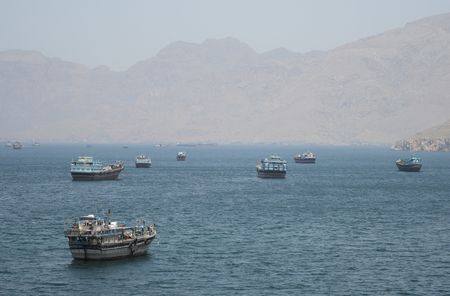
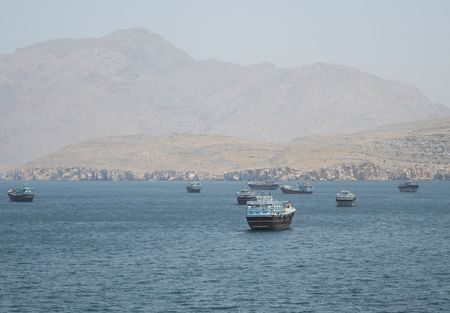
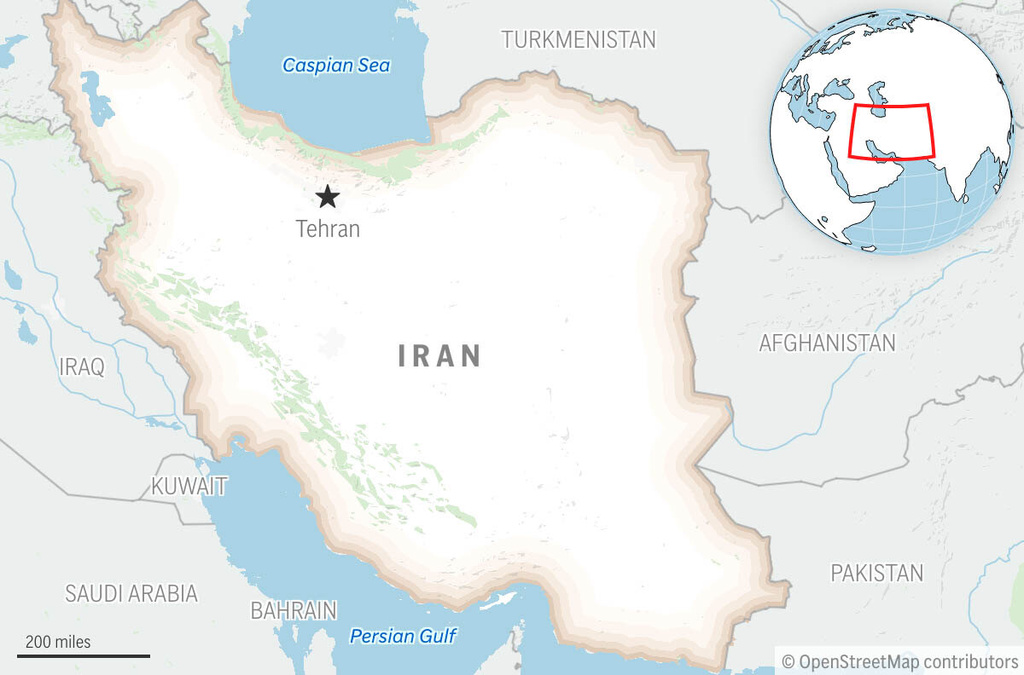
The ongoing standoff centers around Tehran’s nuclear program and its grip on the Strait of Hormuz, a critical waterway that remains largely closed to oil tankers and commercial vessels.
Global oil markets reacted sharply to Trump’s overnight statement, with prices spiking almost 5% before moderating slightly. Brent crude was trading around $104 per barrel, putting pressure on stock markets that had been performing strongly.
Despite energy sector concerns, the artificial intelligence boom and semiconductor rally continue to capture investor attention. South Korea’s technology-focused KOSPI index demonstrated this trend with a more than 4% surge on Monday.
U.S. stock futures showed little movement in early Monday trading, following another week of record highs for the S&P 500. Friday’s April employment data reinforced market optimism, joining other labor indicators that suggest the conflict hasn’t significantly impacted job growth yet.
However, employment effects may emerge with a delay, and elevated gasoline prices could eventually affect consumer spending.
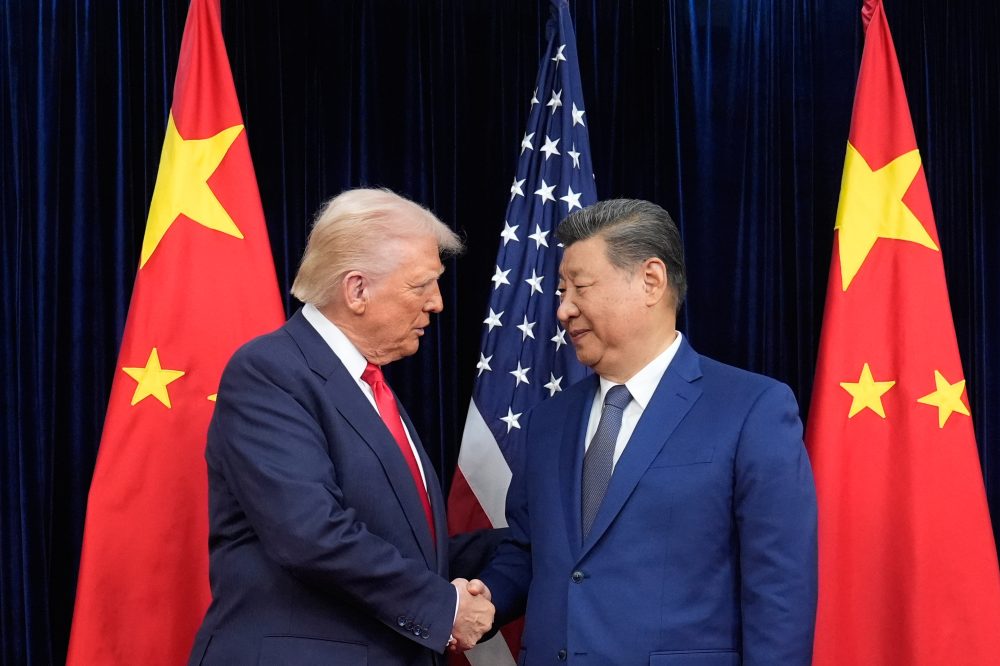
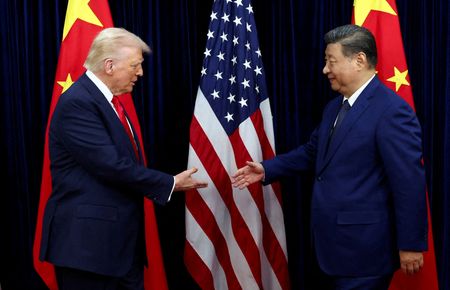
Chinese stock markets gained ground ahead of this week’s scheduled meeting between Trump and Chinese President Xi Jinping, set to begin Thursday. The energy crisis has pushed Chinese producer and consumer prices higher than expected, potentially complicating the diplomatic discussions.
Treasury Secretary Scott Bessent is traveling to Tokyo today for discussions with Japanese government officials.
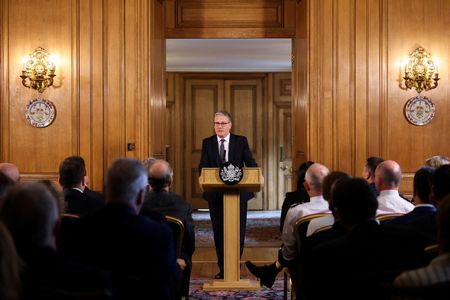
In the United Kingdom, Prime Minister Keir Starmer faces mounting pressure from his Labour Party colleagues following disappointing local election results. Despite weekend speculation about a potential leadership challenge, Starmer stated he would not resign and delivered remarks Monday intended to rally party support.
This week’s domestic economic calendar includes existing home sales figures for Monday, with April inflation data taking center stage Tuesday. The Senate may also vote Monday on Kevin Warsh’s nomination as the next Federal Reserve Chair, as current Chair Jerome Powell’s tenure ends Friday.
Major corporate earnings reports this week include technology companies Cisco and Applied Materials.
Chinese export activity accelerated in April as manufacturers worked to fulfill orders from artificial intelligence companies and other businesses stockpiling materials amid concerns that the Iran situation could drive global supply costs higher.
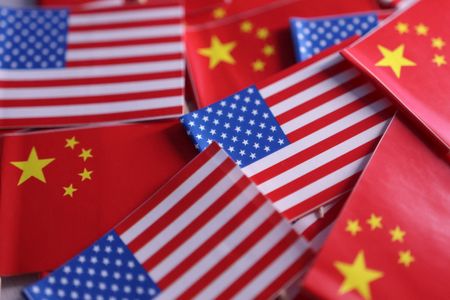
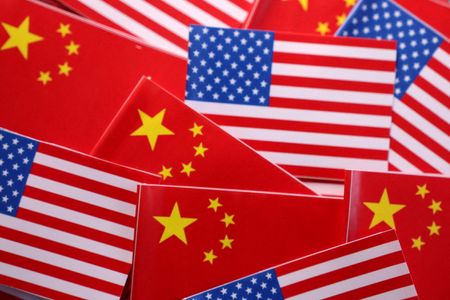
China’s trade surplus with the United States has expanded to $87.7 billion this year, a figure that will likely feature prominently in next week’s Trump-Xi summit discussions aimed at extending last year’s trade agreement.
Today’s key economic releases include U.S. existing home sales data and the Conference Board Employment Trends Index, both scheduled for 10 a.m. Eastern. A three-year Treasury note auction is set for 1 p.m. Eastern.
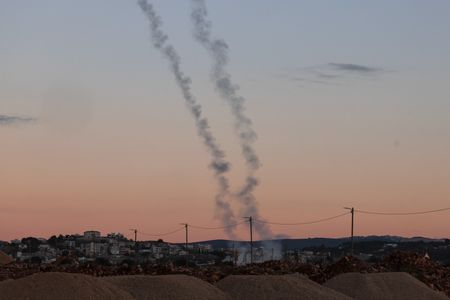
TEL AVIV – The executive leading Israel’s primary missile defense contractor announced Monday that the Iron Dome system has achieved remarkable success rates approaching 99% in stopping incoming projectiles from militant organizations.
Speaking at a Jerusalem Center for Security and Foreign Affairs gathering, Yuval Steinitz, who heads the government-owned Rafael Advanced Defense Systems Ltd, revealed that militant groups have launched approximately 40,000 rockets toward Israel following the Hamas attack in October 2023.
“Iron Dome intercepted most of them with success rates that (are) not 100% but close to 100%. It’s around 98%, even 99%, so it’s not perfect, but almost,” Steinitz stated during his presentation.
Regarding Iranian ballistic missile strikes, Steinitz reported that roughly 1,500 missiles were launched at Israel across two separate attack waves in 2024, with “only several dozens” managing to evade the defense system.
The Rafael chairman emphasized that Israel maintains adequate supplies of interceptor missiles to continue operations.
A 72-hour truce between Russia and Ukraine, negotiated by the United States, came to an end Monday amid mutual accusations of violations from both warring nations, leaving American and European leaders weighing their next diplomatic moves.
Officials in Ukraine reported Monday that Russian aerial attacks, explosive devices, and artillery bombardment targeted civilian locations in the northeastern Kharkiv and southern Kherson areas, resulting in at least two deaths and seven injuries.
Moscow’s military leadership claimed Sunday that Ukraine had violated the temporary truce more than 1,000 times, according to state-controlled media outlets.
Previous temporary ceasefires declared throughout the conflict, which began when Russia invaded its neighboring country over four years ago, have likewise collapsed, and diplomatic initiatives led by the United States over the past year have produced no results.
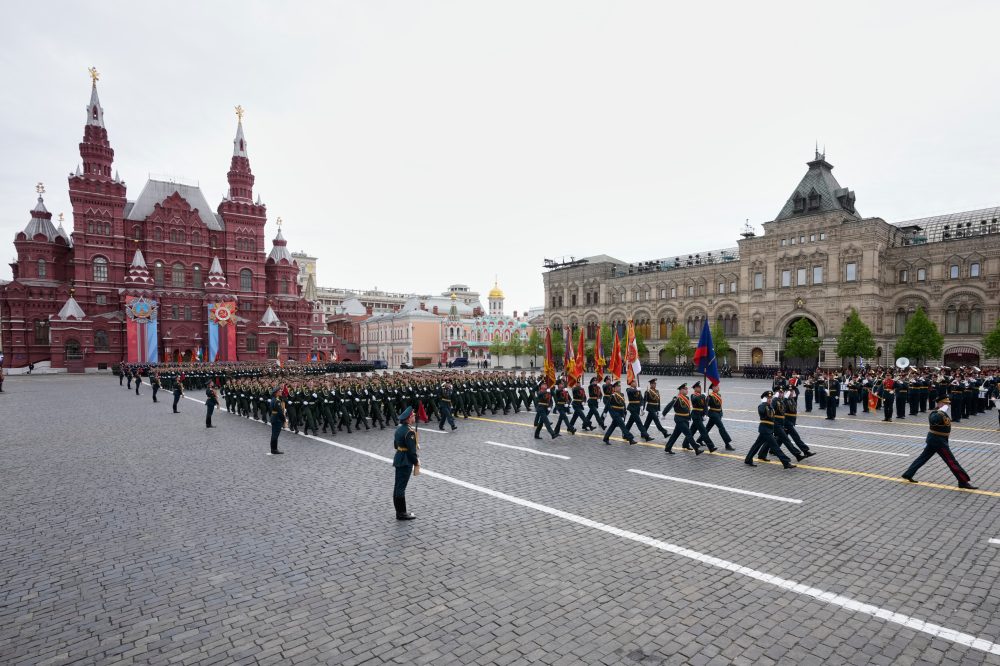
The Washington-based Institute for the Study of War reported that NASA satellite data showed reduced but ongoing military operations following Trump’s Friday announcement that Russian President Vladimir Putin and Ukrainian leader Volodymyr Zelenskyy had agreed to his ceasefire proposal spanning Saturday through Monday. The timing coincided with Victory Day, Russia’s annual commemoration of Nazi Germany’s defeat.
The ISW observed Sunday evening that “ceasefires without explicit enforcement mechanisms, credible monitoring, and defined dispute resolution processes are unlikely to hold.”
Trump had indicated the agreement would include a prisoner swap, stating the pause in hostilities might represent the “beginning of the end” of the conflict. Zelenskyy confirmed preparations were underway for exchanging 1,000 detainees from each nation.
However, neither side appears willing to compromise on their fundamental negotiating demands.
Putin seeks control over the entire Donbas region, Ukraine’s manufacturing center, despite his forces failing to fully secure it, while Zelenskyy refuses to cede the territory. The Ukrainian president has proposed a ceasefire and direct talks with Putin, but the Russian leader has rejected face-to-face meetings until a negotiated agreement is nearly complete.
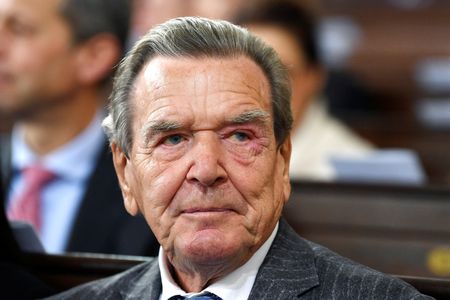
Putin proposed over the weekend that former German Chancellor Gerhard Schröder, who maintains close Russian business connections, could serve as an intermediary. However, German and European officials rejected this suggestion while acknowledging the European Union might assume a larger role in peace negotiations after being marginalized by Washington’s efforts over the past year.
Nevertheless, EU foreign policy chief Kaja Kallas emphasized the bloc must clarify its goals before engaging with the Kremlin.
“Before we discuss with Russia, we should discuss amongst ourselves what we want to talk to them about,” she told reporters in Brussels.
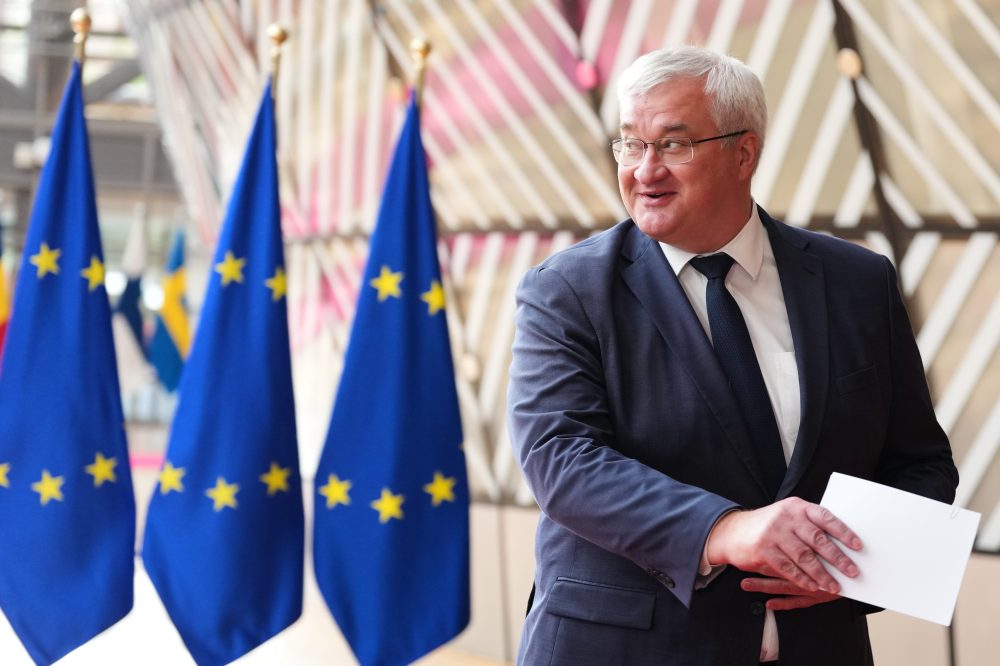
Ukraine’s Foreign Minister Andrii Sybiha participated in the Brussels gathering with EU foreign ministers. “We have mainstream peace talks under the leadership of the U.S., and we need this track and we need U.S. leadership. But Europe could play also its role,” Sybiha said.
He emphasized that Ukraine has recently strengthened its battlefield position, forcing the larger Russian military into slow and expensive advances along the 1,250-kilometer (780-mile) battle line, while deploying domestically produced long-range drones and missiles against targets within Russian territory.
“We have a new reality on the battlefield … Ukraine became stronger after the most difficult winter,” Sybiha said.
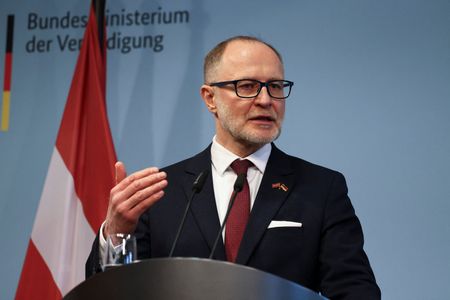
German Defense Minister Boris Pistorius became the newest high-ranking European official to visit Kyiv, arriving Monday for an unscheduled trip focused on expanding defense collaboration between the nations.
Prime Minister Evika Silina ordered the dismissal of Defense Minister Andris Sprūds on Sunday following recent drone incidents in the Baltic nation.
In a social media post, Silina stated Sprūds had “lost my trust” after a drone incident that “clearly demonstrated that the political leadership of the defense sector has failed to fulfill its promise of safe skies over our country.”
Sprūds resigned, characterizing it as a domestic political disagreement.
Ukraine’s Sybiha reported Sunday he had another conversation with Latvian Foreign Minister Baiba Braže regarding recent drone incidents in Latvia, after investigations revealed Russian electronic warfare had intentionally redirected Ukrainian drones from their planned targets inside Russia.
Sybiha confirmed Ukraine’s dedication to collaborating with the Baltic nations and Finland to avoid similar incidents, proposing direct participation from Ukrainian technical experts.
Estonia, Poland and Romania have also documented stray drones landing within their borders.
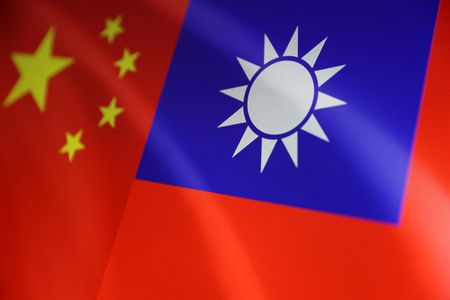
As President Donald Trump prepares for a crucial meeting with Chinese President Xi Jinping this week, concerns are mounting about the future of U.S. support for Taiwan, the self-governing island that Beijing considers its territory.
Trump’s recent actions have sent mixed signals regarding America’s relationship with Taiwan. While he greenlit a record-breaking $11 billion weapons package for the island in December, the delivery remains on hold, and Trump has acknowledged discussing the sale directly with Xi. The president has also criticized Taiwan for taking away America’s chip manufacturing dominance and suggested the island should compensate the United States for military protection.
Meanwhile, Trump has used tariff threats to pressure Taiwan into making substantial investments in American semiconductor facilities and agreeing to purchase billions in U.S. natural gas and oil.
These mixed messages have sparked debate in Washington, Beijing, and Taipei about whether America’s long-standing commitment to Taiwan’s defense might be wavering under Trump’s leadership.
Retired Navy Rear Admiral Mark Montgomery, now with the Foundation for Defense of Democracies, expressed worry about Taiwan becoming a bargaining chip in the upcoming talks.
“I do worry that we have a transactional president and a transactional opportunity could arise, and then we would have a challenge,” Montgomery stated.
Chinese officials have made clear they plan to prioritize Taiwan discussions during the summit. Foreign Minister Wang Yi brought up Taiwan during preparations with Secretary of State Marco Rubio, encouraging the United States to “make the right choices” regarding the island to maintain bilateral stability.
However, Rubio maintained that American policy remains unchanged. Speaking to reporters in Rome on Friday, he said, “We don’t want to see any forced or compelled change in the situation,” calling such action “destabilizing to the world.” He confirmed Taiwan would be discussed but wouldn’t be “a feature of our trip.”
The White House has emphasized that Trump has already authorized more military aid to Taiwan in his second term’s first year than the approximately $8.4 billion approved by former President Joe Biden throughout his entire presidency, including $330 million in aircraft components last November.
Under pressure from the Trump administration to boost defense spending, Taiwan’s legislature ended months of political deadlock Friday by approving $25 billion for military purchases. This amount fell short of the $40 billion requested by Taiwan President Lai Ching-te last year. A senior Trump administration official, speaking anonymously, called the reduced funding disappointing.
Taiwan’s National Security Bureau Director-General Tsai Ming-yen attempted to calm concerns, telling reporters that while “(China) may attempt some maneuvering during the talks,” the United States has consistently reaffirmed through public and private communications that its Taiwan policy hasn’t changed.
The central question among China specialists is how aggressively Xi will push Trump toward Beijing’s perspective on Taiwan.
Beijing views Taiwan as a rebellious province that must be reunited with mainland China, using military force if necessary. China prevents nations with which it maintains diplomatic ties from establishing formal relationships with Taiwan. Since recognizing modern China diplomatically in 1979, America has balanced Beijing’s demands while providing unofficial support and weapons to Taiwan.
This delicate balance involves Washington acknowledging Beijing’s claim that Taiwan belongs to China without explicitly agreeing with that position. The U.S. has traditionally stated it “does not support” Taiwan’s independence while opposing any unilateral changes to the current situation.
Experts suggest Xi might try to convince Trump to reduce Taiwan ties by limiting arms sales or restricting high-level American visits to the island. In February, Trump indicated he had broken with established policy by consulting Xi about Taiwan weapons sales.
Patricia Kim from the Brookings Institution’s Assessing China Project warned about potential policy shifts.
“Even if we don’t see something as dramatic as a formal shift in declaratory policy, this time around, there is always a risk that President Trump may make an off-the-cuff remark given he’s not necessarily somebody who appreciates the nuances of longstanding policy language,” Kim explained.
Tensions between U.S. ally Japan and China have also raised questions about Trump’s Taiwan commitment. In November, Japanese Prime Minister Sanae Takaichi called a potential Chinese attack on Taiwan a regional concern that could create “a survival-threatening situation” for Japan, possibly requiring military response.
Trump spoke with both Takaichi and Xi that same month but has remained mostly quiet about the dispute. When hosting Takaichi for discussions in March, Trump said, “I know they have a little bit of an edgy relationship,” adding, “I’ll be speaking Japan’s praises when I’m in China with President Xi.”
Questions about Trump’s Taiwan support also arose when the 2026 U.S. National Defense Strategy failed to specifically mention the island.
Taiwan’s advantage lies in its dominant global semiconductor industry, which America needs to maintain its technological edge over China.
“Trump at the very least realizes the role that Taiwan plays in the U.S.’s economic growth,” said Lev Nachman, a political science professor at National Taiwan University. “So I think that is sort of the main silver lining in thinking that nothing drastic will change in terms of policy toward Taiwan.”
Despite Trump’s deal-making reputation, his administration hasn’t treated challenging U.S.-China issues as tradeable commodities, according to Edgard Kagan, a former State Department official who worked under both Trump and Biden on East Asian affairs.
“The president understands leverage. My experience of being in meetings with him, he has a very, very acute sense of how to use it,” said Kagan, now the China Studies chair at the Center for Strategic and International Studies. “And so I think that the idea that there’s going to be a trade where the president sort of sacrifices U.S. interests in Taiwan in order to get other things — I think it’s unlikely based on my own experience of how he operates.”
The summit’s impact on Taiwan will likely be measured by the leaders’ public statements afterward.
Following his previous face-to-face meeting with Xi in October, Trump claimed Xi hadn’t mentioned Taiwan and that Chinese officials “know the consequences” of military action against the island.
“I think the best-case scenario Taiwan can hope for is that Taiwan is not talked about publicly or, at the very least, in a minimal way,” Nachman concluded.
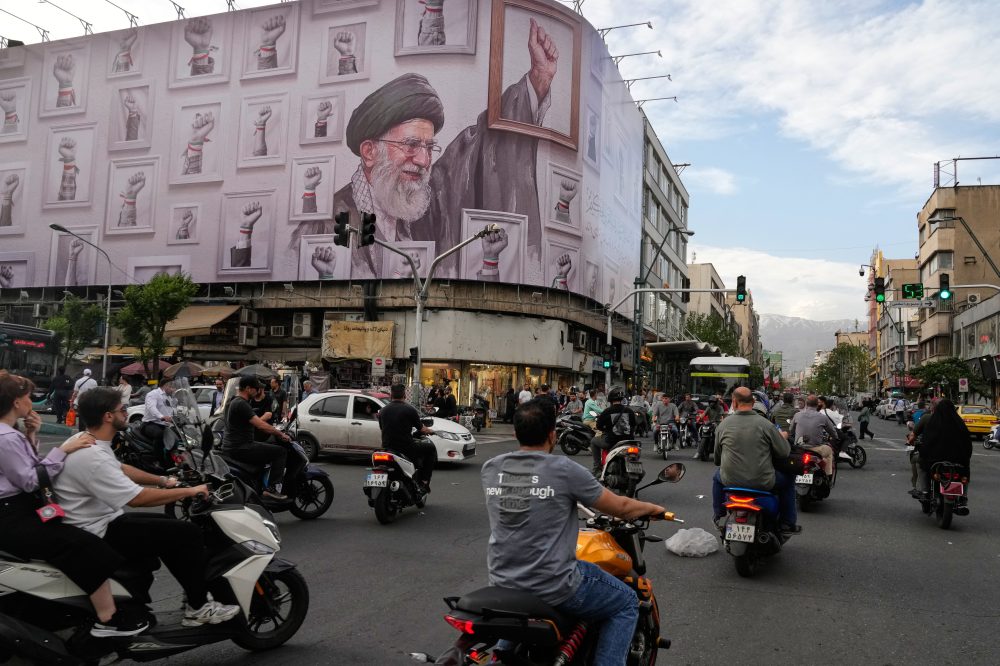
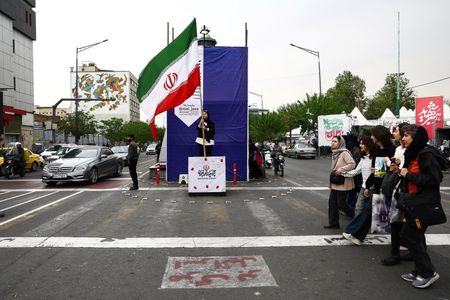
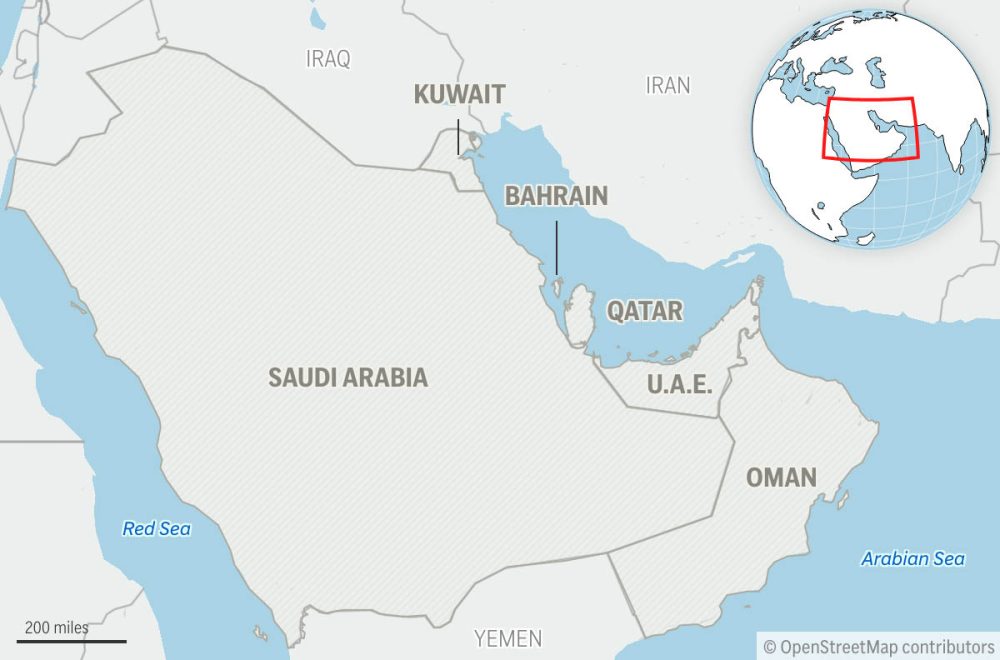
DUBAI, United Arab Emirates (AP) — Diplomatic negotiations between Iran and the United States have stalled once more on Monday, as both nations struggle to find common ground for ending their conflict while a fragile ceasefire continues to deteriorate through recent military exchanges, attacks on vessels and Gulf nations, and escalating clashes between Israel and Hezbollah militants in Lebanon.
This unstable situation threatens to plunge the Middle East back into full-scale conflict and extend the global energy emergency triggered by the ongoing hostilities, as Iran continues controlling the Strait of Hormuz while America maintains its naval blockade of Iranian harbors. President Donald Trump plans to leverage his upcoming diplomatic visit to China this week, seeking to convince Chinese leader Xi Jinping to apply pressure on Iran for meaningful compromises to break the current deadlock. China’s position as Iran’s largest purchaser of sanctioned petroleum provides Beijing with significant influence over the Islamic Republic.
However, reaching any meaningful agreement appears challenging. Iranian leadership demands the lifting of American naval blockades and economic sanctions before entering discussions about their stockpiled enriched uranium. Washington and Israeli officials insist on removing this nuclear material first, citing concerns it could eventually support weapons development if Iran chooses that path. While Tehran maintains its nuclear activities serve peaceful purposes, the country has enriched uranium far beyond levels required for civilian energy production.
On Sunday, Trump declared Iran’s latest diplomatic offer “TOTALLY UNACCEPTABLE!” Lifting the blockade prior to nuclear discussions would strip Trump of crucial negotiating power in future talks.
During this standoff, the disputed strait remains a critical passage for global oil and natural gas shipments, causing fuel costs to surge dramatically and creating widespread market instability.
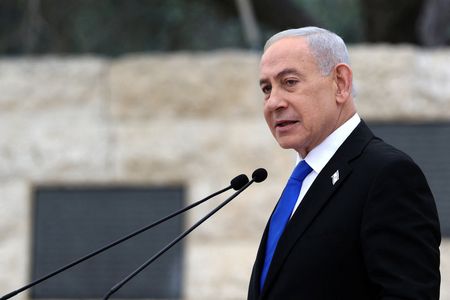
Israeli leader Benjamin Netanyahu, who initiated the February 28th military campaign alongside Trump, emphasized the conflict remains ongoing. Speaking to CBS’ “60 Minutes” in Sunday’s broadcast, he stressed that removing nuclear materials from Iran represents a vital objective. Should diplomatic efforts fail, Netanyahu indicated Israel and America are prepared to “reengage them militarily.”
Netanyahu further stated the current Iranian leadership’s “days are numbered — but it could take a lot of days.”
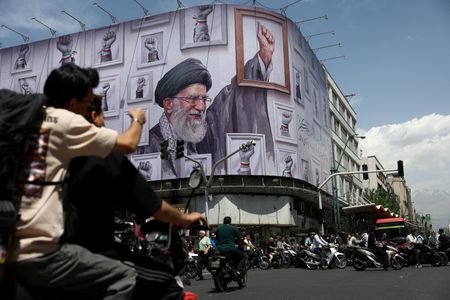
American and Israeli forces have eliminated numerous senior Iranian officials, including the nation’s supreme leader during the war’s initial phase, while the conflict has severely damaged Iran’s economic infrastructure, though the theocratic government retains control.
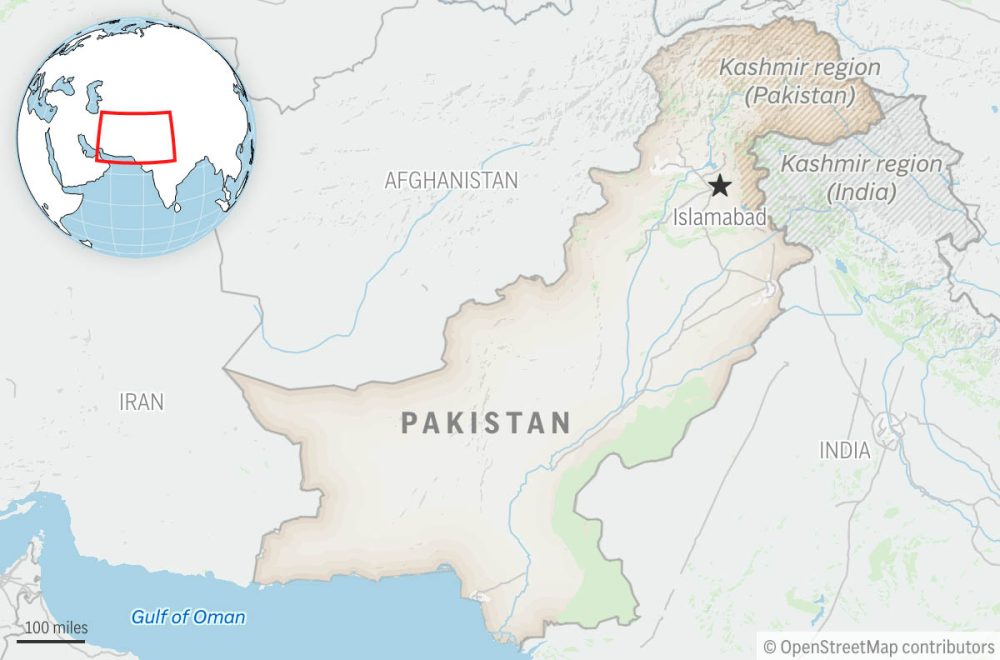
Trump swiftly dismissed Iran’s newest proposal delivered Sunday through Pakistani intermediaries. The Iranian demands included war compensation from America, complete Iranian control over the Strait of Hormuz, sanctions removal, and return of frozen assets overseas, according to Iranian state media reports.
Iran additionally requested immediate cessation of all hostilities, including the Israel-Hezbollah fighting — groups that continue exchanging attacks despite their technical ceasefire status. This secondary conflict has involved Israeli airstrikes in Lebanon, Israeli occupation of Lebanese areas, and fatal Hezbollah counterattacks, including one that claimed another Israeli soldier’s life, military officials confirmed Monday.
“We did not demand any concessions — the only thing we demanded was Iran’s legitimate rights,” stated Iranian Foreign Ministry spokesman Esmail Baghaei on Monday. “The American side still insists on its one-sided views and unreasonable demands.”
Iran did propose diluting portions of their highly enriched uranium while transferring remaining materials to neutral territory, requesting 30-day negotiations for finalizing arrangements, according to two regional diplomatic sources familiar with the talks who spoke anonymously due to the sensitive nature of ongoing diplomacy.
Russian leader Vladimir Putin has volunteered to accept Iran’s uranium materials.
Russia operates Iran’s only nuclear facility at Bushehr and previously received Iranian uranium under the 2015 international nuclear agreement. When questioned Monday regarding Putin’s statements, Baghaei responded: “At the current stage, our focus is on ending the war.”
Separately, Iran executed another individual accused of espionage for both the CIA and Israel’s Mossad intelligence agency. Iran’s official IRNA news service named the executed prisoner as Erfan Shakourzadeh, claiming he handled satellite communications and transmitted classified intelligence to those agencies.
Iran has conducted multiple executions since nationwide demonstrations erupted in January. Human rights organizations have consistently criticized Iran for conducting secretive trials where defendants cannot adequately defend themselves. Iran’s chief judicial officer has repeatedly announced Tehran’s intention to accelerate execution schedules as retaliation against domestic and international adversaries.
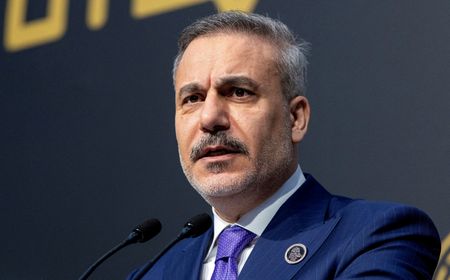
ANKARA – Turkey’s top diplomat Hakan Fidan will travel to Qatar on Tuesday to discuss the ongoing conflict involving Iran and its broader implications for Middle East stability, according to a Turkish diplomatic source who spoke Monday.
The NATO-allied nation of Turkey, which shares a border with Iran, has maintained ongoing communications with the United States, Iran, and mediating nation Pakistan throughout the U.S.-Israeli conflict with Iran. Turkish officials have advocated for ending the hostilities while denouncing both attacks against Iran and Tehran’s military actions targeting Gulf nations.
Fidan, whose most recent trip to Doha occurred in March and who conducted two phone conversations with Iran’s foreign minister over the weekend, plans to reaffirm Turkey’s backing of ally Qatar amid Iranian aggression, the diplomatic source indicated.
The foreign minister will communicate Ankara’s demands for maintaining secure passage through the Strait of Hormuz shipping lane and emphasize how crucial such protection is for both regional security and economic stability, according to the source.
The diplomatic source noted that Fidan is anticipated to “state that permanently resolving the conflict in the Gulf is the most urgent priority and exchange views on diplomatic initiatives to achieve this.”
Turkey and Qatar maintain robust diplomatic relationships and collaborate across multiple sectors including energy and military defense. Turkey operates a military installation in Qatar and has been discussing with Doha the potential purchase of Eurofighter Typhoon aircraft through a British-brokered deal.
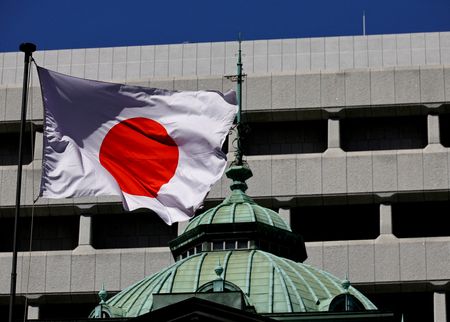
Business representatives on Japan’s primary economic advisory committee issued a warning Monday to the nation’s central bank about potential financial pressures on smaller businesses as Middle East conflicts continue.
The recommendations were presented to the Council on Economic and Fiscal Policy, which guides Japan’s budget planning and long-term economic strategy. The advisory effectively asks for careful consideration before implementing policy changes, even as the Bank of Japan has indicated possible interest rate increases to address inflation concerns related to ongoing conflicts.
Four private sector representatives released a joint statement saying: “We expect the BOJ to conduct appropriate monetary policy while closely monitoring price developments, including inflation expectations, and taking into account trends in supply and demand for funds across financial markets.”
Although current data shows no immediate financing difficulties for small and medium enterprises, the panel expressed worry that elevated energy prices and supply chain disruptions might create greater capital requirements for these businesses.
Companies are already taking defensive measures against potential supply disruptions. Bank of Japan statistics reveal that commitment line agreements, which provide companies with predetermined borrowing capacity from banks, jumped by 2.5 trillion yen (approximately $16 billion) in March. This represents the steepest monthly climb since May 2020 during the coronavirus outbreak.
Japan’s central bank maintained current interest rates during its recent meeting but sent strong indications about a possible rate adjustment as early as June. This consideration stems from growing worries that rising energy expenses could accelerate inflation beyond manageable levels.
Financial experts suggest the gradual approach to rate increases contributes to the yen’s ongoing decline, creating policy challenges for government officials as it drives up import costs for everything from petroleum to food products.
However, increased interest rates would also mean higher debt payments, particularly affecting smaller businesses that depend more heavily on bank financing and typically maintain smaller cash reserves.
The four business representatives, including two individuals considered supportive allies of Prime Minister Sanae Takaichi’s economic policies, emphasized the need for strong cooperation between the central bank and government officials.
Additionally, the panel suggested the government should evaluate fiscal health using multiple measurements instead of depending solely on one indicator, shifting away from Japan’s traditional emphasis on primary balance as the primary fiscal responsibility metric.
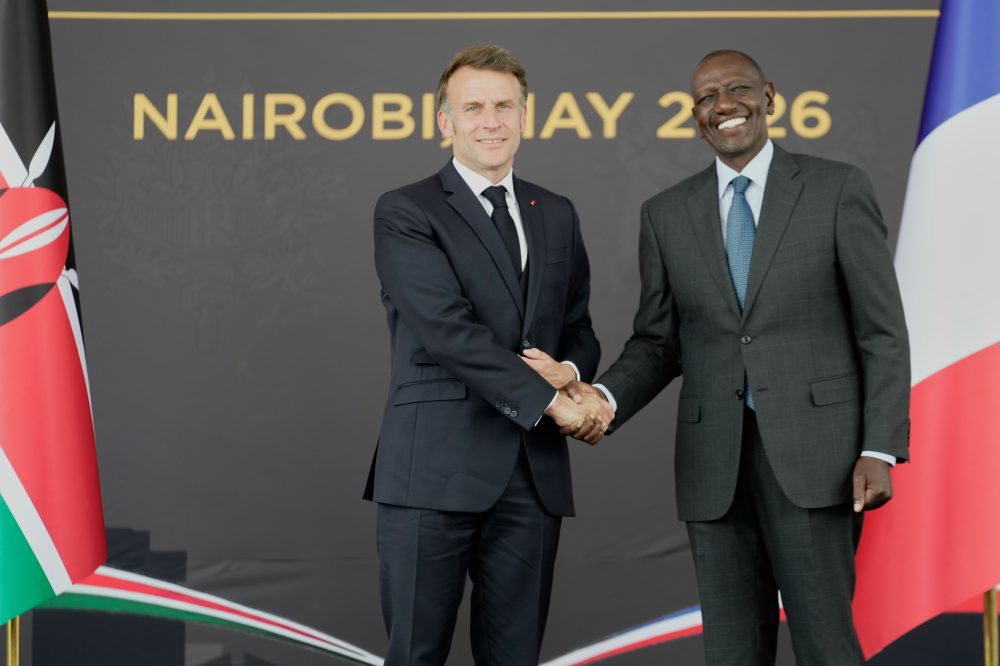
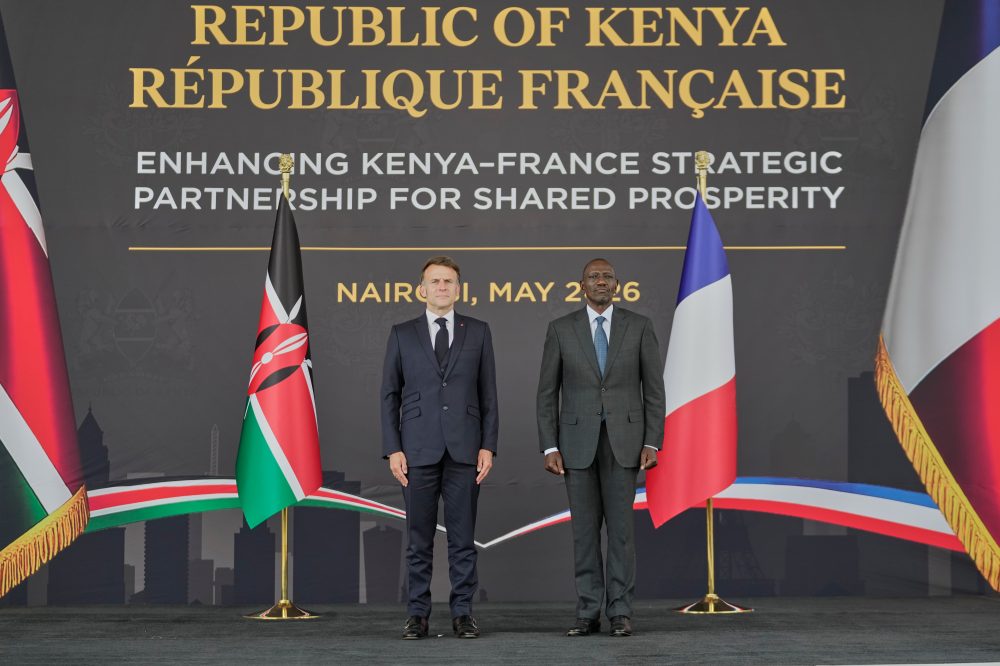
NAIROBI, Kenya — French President Emmanuel Macron is leading a diplomatic push to reshape his country’s relationships across Africa during a groundbreaking summit that kicked off Monday in Kenya, coinciding with France’s complete military pullout from West African nations that many view as a sign of waning French influence across the continent.
The French government is using the two-day Africa Forward Summit, which it is jointly hosting, to promote what officials describe as a fresh approach to African relations that emphasizes English-speaking nations and establishes what Paris terms a “partnership of equals.” France’s recent defense pact with Kenya exemplifies this new strategic direction.
For decades, France has exercised substantial economic, political and military control over its former colonies through a system known as Françafrique, which involved deploying thousands of soldiers throughout the region. However, following sustained criticism from African leaders and opposition movements who characterized France’s approach as patronizing and authoritarian, the French government has been compelled to remove the majority of these forces.
This gathering marks France’s inaugural summit held in an English-speaking African nation and will welcome over 30 heads of state and government representatives, including leaders from French-speaking countries. Upon his Sunday arrival, President Macron stated that while France might have disagreements with West African governments, it “never disagrees with the people.”
Kenya’s recently approved defense pact with France has drawn criticism from advocacy organizations who argue it provides excessive legal immunity to French military personnel under local law — a contentious matter in a nation where a comparable arrangement with the United Kingdom has resulted in numerous difficult-to-prosecute offenses against local residents.
During a period when numerous African countries, especially those in the Sahel region, are limiting or removing foreign military operations as part of what they describe as efforts to restore their independence, Kenya is welcoming an expanding international military presence.
The Kenya-France Defense Cooperation Agreement received signatures on October 29, 2025, from Kenya’s Defense Minister Soipan Tuya and French Ambassador to Kenya Arnaud Suquet, with parliamentary approval following on April 8. During that same month, lawmakers also approved defense partnerships with several nations including the Czech Republic, China and Italy.
While supporting the defense agreements, parliament defense committee chair Nelson Koech explained that Kenya’s partnerships with militarily advanced nations provide training opportunities and intelligence-sharing capabilities that will strengthen the country’s defense capabilities.
“These agreements were not a ‘surrender of sovereignty,’” Koech stated, noting that more recent pacts ensure foreign military personnel will face trial in Kenya if accused of serious offenses such as murder.
One month before the summit’s start, approximately 800 French soldiers arrived in Kenya via naval vessel.
The agreement provides visiting French forces with primary legal authority over their personnel for duty-related violations, mirroring extensive legal protections in previous UK agreements that protected British soldiers from Kenyan judicial proceedings during controversies including the 2012 killing of a young woman named Agnes Wanjiru and the fatal 2021 Lolldaiga ranch fire.
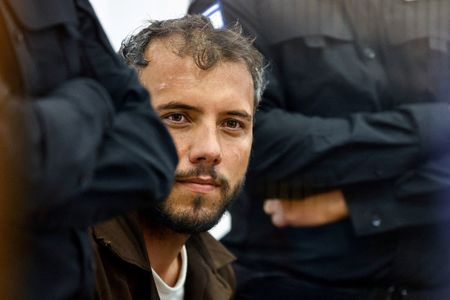
A British soldier faces extradition after Kenyan courts determined he must answer for the 2012 death of Wanjiru, who was last observed alive with him near British military training facilities in Nanyuki, central Kenya.
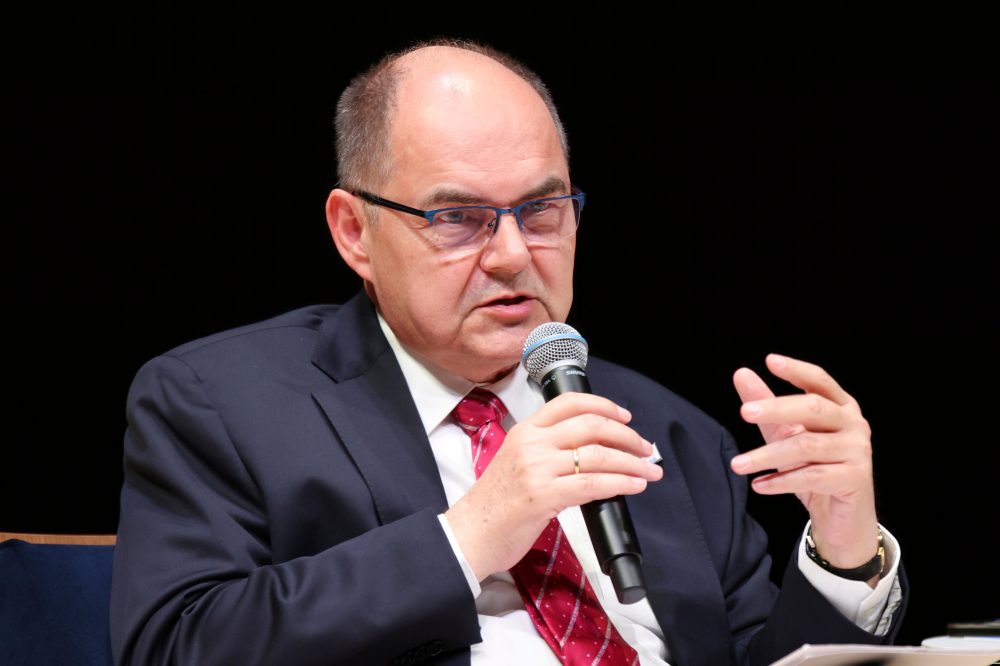
SARAJEVO, Bosnia-Herzegovina — The German diplomat responsible for monitoring peace efforts in Bosnia-Herzegovina since the 1990s conflict has announced his resignation, according to his office on Monday.
Christian Schmidt has made a “personal decision to conclude his service” as High Representative for Bosnia and Herzegovina following almost five years in the position, according to an official statement. The German official will remain in his role until authorities select his replacement.
Throughout his tenure, Schmidt engaged in frequent disputes with Milorad Dodik, the leading Bosnian Serb politician who heads the Serbian portion of Bosnia known as Republika Srpska. In August, officials stripped Dodik of his presidential position and imposed a temporary political ban for refusing to comply with Schmidt’s directives.
Dodik, who maintains pro-Russian positions, has advocated for the Serbian region of Bosnia to break away and unite with Serbia. His political stance has raised concerns about potential renewed conflict in Bosnia, where ethnic divisions persist among Serbs, Croats, and Bosniaks, who are predominantly Muslim.
The United States previously imposed sanctions on Dodik for his separatist activities, though these penalties were recently removed. He maintains regular contact with Russia and attended Saturday’s annual military ceremony in Moscow marking the end of World War II in Europe.
The High Representative’s office was created through a peace accord brokered by the United States that concluded the 1992-95 ethnic conflict, which claimed over 100,000 lives. This position holds power to modify legislation and remove officials who obstruct post-conflict reconciliation efforts.
As a potential European Union member nation, Bosnia has struggled to complete required reforms because of ongoing political disputes and ethnic divisions among nationalist leaders. The nation is structured with a Serbian entity and a Bosnian-Croat entity, unified under a multi-ethnic federal government.
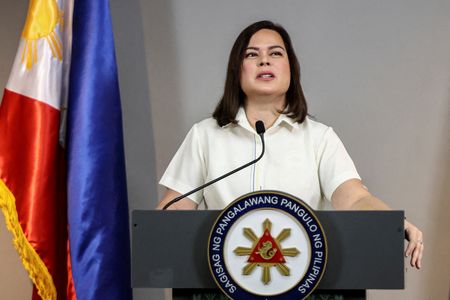
MANILA, Philippines — Philippine lawmakers delivered a decisive blow to Vice President Sara Duterte on Monday, voting overwhelmingly to remove her from office amid accusations of financial misconduct and threatening President Ferdinand Marcos Jr.’s life.
The chamber, controlled by allies of President Marcos, cast ballots 255-26 with nine members choosing not to vote. Two separate impeachment cases against Duterte will now advance to the Senate, where lawmakers will form a trial tribunal to hear the charges.
Duterte faces accusations of accumulating unexplained wealth, improperly using government money, and making assassination threats against the current president. The vice president, whose father previously served as the country’s leader, has broadly rejected the allegations while avoiding detailed responses to the specific criminal charges.
This marks the second time in consecutive years that House members have moved to impeach Duterte. Her previous impeachment effort was halted when the nation’s highest court intervened, citing constitutional procedural issues that prevented a Senate trial.
Nigeria’s Defense Headquarters has pushed back against media reports claiming civilian casualties occurred during recent drone operations targeting armed criminal groups in the country’s northern Niger state.
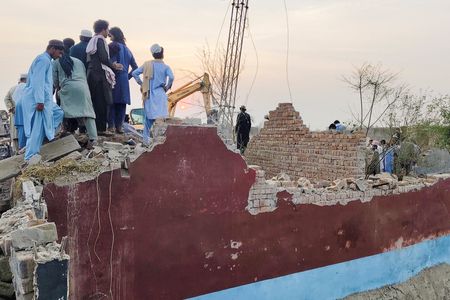
Defense spokesperson Major-General Michael Onoja stated Monday that the overnight drone operations conducted between May 9 and 10 were guided by intelligence and struck only militant locations. The operations focused on four villages in the Shiroro district: Katerma, Bokko, Kusasu and Kuduru, where intelligence suggested armed criminal groups known locally as bandits were assembling to plan future attacks.
The military’s response addresses Nigerian media reports that alleged civilian deaths, highlighting ongoing concerns about how airstrikes in conflict areas affect local populations.
Nigeria’s armed forces are currently fighting criminal gangs in the country’s northwest region while also combating a 17-year Islamic extremist uprising in the northeast.
Just last month, approximately 200 people died when military aircraft hit a village marketplace during operations against Islamic militants in the northeast, according to local residents who spoke with Reuters.
Regarding the recent operations, Onoja reported that no fewer than 70 suspected criminals were eliminated in Kusasu village alone. Intelligence gathered after the strikes revealed surviving fighters were regrouping, with over 200 motorcycles observed moving toward the nearby village of Zango.
“The strikes were precisely targeted at identified terrorist enclaves and achieved their intended military objectives,” Onoja stated. He added that local residents had moved to another village prior to the operation, reducing the possibility of civilian casualties.
Onoja did not specify whether civilians received advance warning about the planned strikes.
The military has directed field commanders to look into any allegations of civilian harm, according to Onoja.
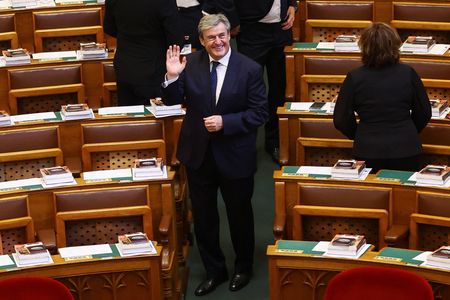
Hungary’s new government plans to examine a massive nuclear power plant expansion agreement with Russia, according to the country’s nominee for economy and energy affairs minister during a parliamentary hearing Monday.
The ministerial candidate, Istvan Kapitany, announced the review of the controversial $14.7 billion project to add two Russian-built VVER reactors to Hungary’s existing Paks nuclear facility. The original deal was granted to Russia’s state nuclear company Rosatom in 2014 without any competitive bidding process and has faced multiple delays over the years.
“We need a transparent nuclear strategy,” Kapitany stated during his hearing. “We have to review the financing and costs of Paks 2 (expansion project) and its implementation conditions. These are classified contracts, which we have not yet seen, we need to examine them.”
The nuclear expansion has long been viewed by political analysts as evidence of the strong relationship between Budapest and Moscow under previous prime minister Viktor Orban. Hungary’s new leadership has promised to alter this dynamic as part of broader efforts to improve ties with the European Union.
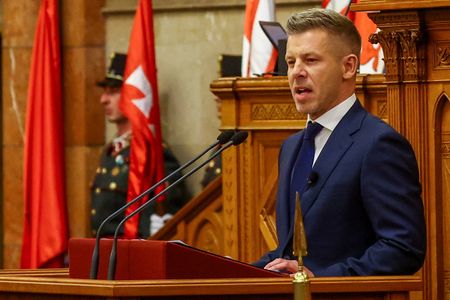
Centre-right leader Peter Magyar, who took the oath as prime minister Saturday, previously stated that the project’s costs were artificially inflated. Rosatom has indicated its willingness to defend the pricing structure.
Despite the review, Kapitany emphasized that nuclear energy would remain a significant component of Hungary’s power strategy. He also committed to combating corruption, addressing criticism that graft flourished under Orban’s administration – allegations the former leader has rejected.
In a separate committee hearing, foreign minister nominee Anita Orban outlined her priority to restore international confidence in Hungary following deterioration under the previous administration.
The former government maintained frequent disputes with EU leadership on matters including judicial independence and minority protections. Hungary’s sustained connections with Moscow amid Russia’s invasion of Ukraine, combined with blocking financial assistance to Kyiv, further damaged these relationships.
“Laws need to be passed that will ensure that Hungary’s judiciary is independent, that public tenders are transparent, that corruption can be fought, wealth declarations can be checked and the use of European Union funds can be tracked,” Orban explained.
She clarified that Hungary would not deploy military personnel or armaments to Ukraine.
Nearly 500 mountaineers are pushing forward with their quest to reach the summit of the world’s tallest mountain, even as a treacherous ice formation threatens the primary climbing path, along with rising expedition costs and higher permit prices.
Approximately 492 climbers accompanied by an equal number of Nepali guides are preparing for their journey to the summit of the towering peak that reaches nearly 8,850 meters (roughly 29,000 feet) this month, taking advantage of the eagerly awaited period of favorable weather conditions.
Mountaineers started assembling in April at base camp, positioned at 5,300 meters (17,340 feet) above sea level. However, a colossal and precarious ice formation, known as a serac, has prevented their advance up the mountain for more than two weeks.
This serac forms part of the Khumbu Icefall, a continuously moving glacier filled with deep cracks and enormous overhanging ice chunks that can reach the size of a ten-story structure. This area ranks among the most challenging and dangerous sections to navigate.
Mountaineering specialist Ang Tshering Sherpa from Nepal noted that despite ongoing conflicts in Iran and rising travel expenses, a substantial number of climbers are tackling Mount Everest this climbing season. While fewer mountaineers from America and Europe are participating, there has been an increase in Asian climbers making the attempt.
The mountain sits along the border between Nepal and China, though China has shut down its climbing route this year, forcing all climbers to attempt their ascent from Nepal’s southern approach.
Ukrainian military commanders and local officials documented continued Russian drone attacks and combat engagements on Monday, breaking terms of a ceasefire arrangement facilitated by the United States.
Both nations had committed to halting hostilities from May 9 through May 11 under an American-led diplomatic initiative spearheaded by President Donald Trump, aimed at concluding the conflict that has persisted for over four years following Russia’s comprehensive military offensive launched in 2022.
The temporary truce, which Trump expressed hope on Friday could be prolonged, began showing cracks on Sunday as both countries pointed fingers at each other for ceasefire breaches.
Ukrainian President Volodymyr Zelenskiy stated on Sunday that while Moscow had avoided major air and missile bombardments, Russian forces maintained offensive operations across sections of the extensive battle line where they continue advancing.
Moscow’s Defense Ministry countered on Sunday by claiming Ukraine violated the truce terms, reporting the destruction of 57 Ukrainian drones within a 24-hour period and stating they had “responded in kind” during ground fighting. Russian officials had not released updated battlefield assessments by Monday.
Casualties mounted across Ukrainian territories, with Zaporizhzhia’s southeastern region recording one fatality and two injuries, according to the area’s governor. The southern Kherson region saw two deaths and two wounded, as reported by local leadership.
Additional injuries were documented in neighboring areas: three wounded in the Mykolaiv region, five injured in northern Kharkiv, and four casualties in eastern Donetsk, based on statements from regional governors.
Ukraine’s military General Staff documented 180 separate combat incidents across front-line positions during the previous 24-hour period, noting that Russian forces had launched 8,037 “kamikaze” drones targeting both civilian areas and military installations on Sunday.
BEIJING, May 11 – Beijing has sharply criticized recent United States penalties imposed on three Chinese businesses that American officials accused of supporting Iran’s military capabilities, denouncing the measures as unlawful and one-sided.
During a routine media briefing on Monday, Chinese government spokesperson Guo Jiakun stated: “We have always required Chinese enterprises to conduct business in accordance with laws and regulations, and will firmly safeguard the legitimate rights and interests of Chinese enterprises.”
Guo also emphasized that current efforts should focus elsewhere, saying: “The pressing priority is to prevent by all means a relapse in fighting, rather than using the war to maliciously associate and smear other countries.”
The Chinese official’s remarks represent Beijing’s formal response to Washington’s latest round of economic restrictions targeting companies it claims have facilitated Iranian military activities.
South Korean officials issued their harshest condemnation Monday regarding an assault on a Korean-operated commercial vessel in Middle Eastern waters earlier this month, promising retaliation once they determine the perpetrator.
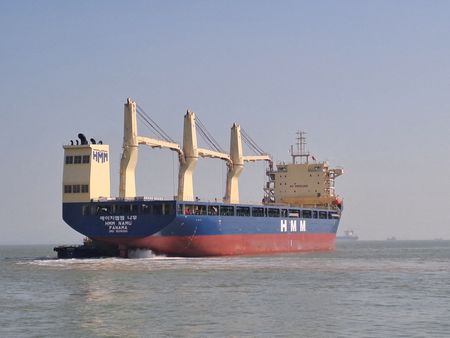
The incident occurred in the Strait of Hormuz when the cargo ship Namu, run by shipping company HMM Co., came under attack while operating legally in waters near the United Arab Emirates, according to government representatives.
Initial forensic examination revealed damage to the vessel’s lower left rear section, which sparked a blaze in the engine compartment, a Blue House spokesperson reported.
“We condemn this in the strongest terms,” declared Wi Sung-lac, South Korea’s presidential national security adviser, during a press conference. Wi explained that Korean officials and specialists confirmed the vessel damage during their forensic review at a Dubai port facility.
The assault’s impact wasn’t immediately apparent because of where it struck the ship’s lower rear port area, Blue House representatives noted.
Officials stated they remain uncertain about Iran’s potential involvement in the incident. Tehran has previously rejected any culpability for the assault, which involved a powerful blow to the vessel’s side.
The Iranian embassy in Seoul released a statement Monday indicating they had no current stance on the situation but would provide updates if an official position develops.
Following the incident, U.S. President Donald Trump accused Iran of attacking the Korean ship and called on Seoul to participate in American-led maritime security operations in the strategic waterway.
BEIJING – Law enforcement officials from the United States and China have successfully apprehended five individuals as part of a collaborative investigation targeting international drug trafficking operations, according to China’s official Xinhua news agency on Monday.
The coordinated enforcement action took place across both nations, resulting in the arrest of two individuals from China and three from the United States, Xinhua reported. During the operation, authorities also confiscated quantities of illegal drugs.
The joint investigation demonstrates ongoing cooperation between American and Chinese law enforcement agencies in combating cross-border narcotics smuggling networks.
LONDON — British Prime Minister Keir Starmer is battling to save his political career by promising stronger European relationships following crushing electoral defeats that have sparked widespread calls for his resignation.
The embattled Labour leader will deliver a major address Monday where he intends to declare he will “face up to the big challenges” and restore “hope” across Britain.
Central to his message will be “putting Britain at the heart of Europe,” marking a significant shift ten years after the United Kingdom decided to exit the European Union, according to his office.
However, Starmer’s grip on power appears increasingly tenuous, with numerous members of parliament demanding he announce when he will step down.
Angela Rayner, the former Deputy Prime Minister and influential figure viewed as a possible successor, declared “what we are doing isn’t working, and it needs to change.”
While Rayner stopped short of directly demanding Starmer’s resignation, she criticized him for overseeing “a toxic culture of cronyism” and insisted the administration must “stay true to labor and social democratic values” while addressing living costs for working families.
“This may be our last chance,” Rayner stated Sunday.
The Labour Party has fallen into despair following significant defeats in recent local elections throughout England and parliamentary contests in Scotland and Wales. Political observers view these results as an unofficial judgment on Starmer, whose approval ratings have collapsed since his overwhelming victory less than two years ago.
His administration has failed to achieve promised economic expansion, rebuild struggling public services, and address cost-of-living concerns, while being undermined by continuous blunders and policy reversals on matters including welfare changes. His troubles deepened with his controversial choice to name Peter Mandelson, who has connections to Jeffrey Epstein, as Britain’s ambassador to the United States.
The recent elections demonstrated Labour losing support from multiple directions, with voters defecting to both the anti-immigration Reform UK party and the “eco-populist” Green Party. This highlights the growing division in British politics, traditionally controlled by Labour and Conservative parties.
Starmer hopes Monday’s address and an extensive legislative agenda to be presented Wednesday by King Charles III during Parliament’s ceremonial opening will help him recover politically.
A central element involves strengthening European connections, as the UK departed the EU in 2020, four years following the narrow “leave” victory in the membership vote. Starmer’s administration has already begun reducing trade barriers that have impacted British companies since Brexit, and he promises to negotiate a youth mobility agreement allowing young people to work temporarily across Europe.
Labour supported remaining in the EU during the 2016 campaign but has avoided reopening the divisive national debate. Starmer has rejected pursuing EU membership or rejoining the organization’s customs union or single market.
Prominent Labour figures considered potential replacements for Starmer — including Rayner, Health Secretary Wes Streeting, and Greater Manchester Mayor Andy Burnham — have not yet demanded his resignation.
However, increasing numbers of Labour parliamentarians are urging the prime minister to establish a departure timeline. British political systems permit parties to replace leaders during their terms without requiring new elections.
Josh Simons, a previously supportive Labour member of parliament, wrote in the Times of London that Starmer “has lost the country” and “should take control of the situation by overseeing an orderly transition to a new prime minister.”
Catherine West, a former junior minister, threatens to initiate a leadership challenge unless Starmer delivers an exceptional speech Monday. West admitted lacking support from the required 81 colleagues to force a contest, with her action appearing designed to pressure more prominent candidates to act.
“Working people sent us a message,” West explained. “We have to listen to that, and we have to change and we have to do it quickly.”
MANILA – Philippine legislators will cast ballots Monday determining whether to impeach Vice President Sara Duterte, a decision that could significantly impact her anticipated 2028 presidential campaign.
Last month, a house justice committee determined there was sufficient evidence to support impeachment proceedings based on an activist petition. The charges include allegations of public fund mismanagement, acquiring wealth without explanation, and making threats against President Ferdinand Marcos Jr., his spouse, and the previous house speaker.
Duterte stands as the leading candidate to replace Marcos in 2028, as constitutional restrictions prevent him from seeking a second term. She has expressed regret for supporting Marcos’ rise to power in 2022, when they campaigned together and secured overwhelming electoral victories before their relationship soured.
Duterte maintains her innocence, while her attorneys have characterized the petition as flawed and described it as a “fishing expedition.”
House Secretary General Cheloy Garafil and Representative Leila de Lima, who serves on the justice committee, confirmed Monday’s voting schedule.
Should more than one-third of the lower chamber support impeachment, the Senate must conduct a trial with senators serving as jurors. A conviction would result in Duterte’s removal from office and prohibition from future political participation.
POLITICAL DYNASTY FACES CHALLENGES
This impeachment attempt represents another blow to the powerful Duterte political dynasty. The vice president continues facing pressure from her bitter conflict with Marcos, while her father, former President Rodrigo Duterte, awaits International Criminal Court proceedings related to his anti-drug campaign that resulted in thousands of deaths during his 2016-2022 administration.
The house previously voted to impeach Sara Duterte last year, but the Supreme Court later overturned that decision due to procedural errors.
Should she be impeached, Duterte would become the highest-ranking Philippine official to face such proceedings since former President Joseph Estrada in 2000, whose trial ended abruptly when prosecutors withdrew.
Three other senior officials have faced impeachment: an ombudsman and election commission leader who both stepped down before trial, and former Supreme Court Chief Justice Renato Corona, who remains the only official convicted through this process.
Marcos successfully avoided a separate impeachment attempt in February when his congressional supporters voted to dismiss it. He has maintained distance from the proceedings targeting his former running mate.
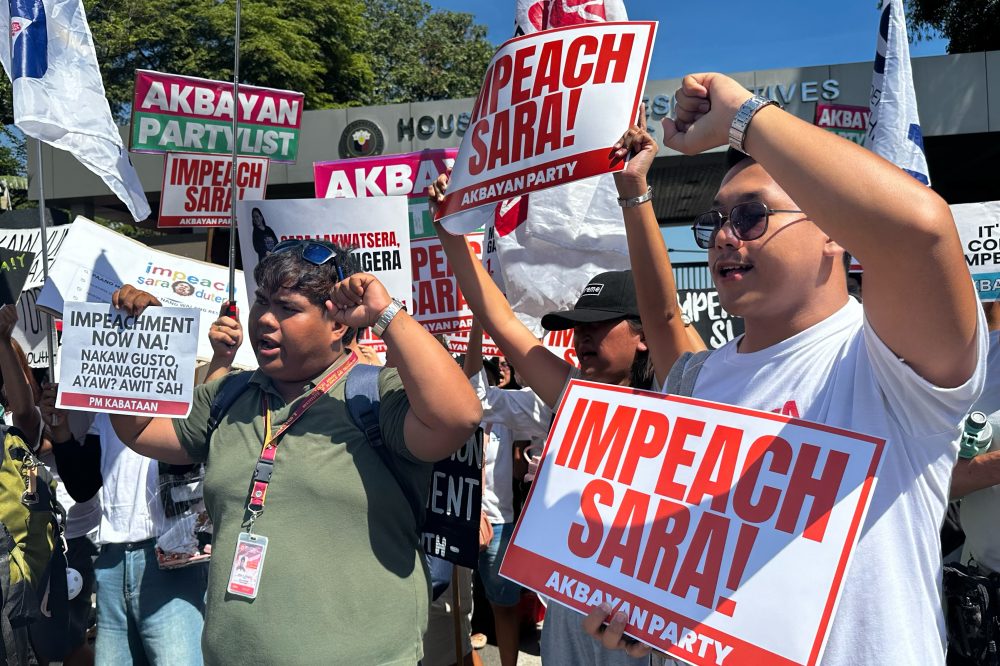
Dozens of impeachment supporters assembled outside Congress Monday, shouting slogans and displaying signs reading “Impeach Sara Now.”
Left-wing Congressman Perci Cendana joined the demonstration, expressing confidence in securing sufficient votes for impeachment and calling it a “historic day for democracy.”
BANGKOK (AP) — Asian nations are confronting a deepening energy crisis as their initial emergency responses to the Iran conflict prove inadequate, with more severe economic consequences now emerging.
When hostilities began, regional governments rushed to address the blockade of the Strait of Hormuz, a vital shipping lane for Asian energy supplies. Officials implemented emergency strategies including conservation measures that slowed business operations, redirected natural gas from industrial uses to residential needs, and depleted strategic energy reserves for short-term stability.
However, these emergency responses were designed for a brief conflict that would allow energy shipments to resume quickly. That scenario has failed to materialize.
As the war continues indefinitely, the energy shortage is spreading throughout regional economies. Transportation costs, freight charges, and energy bills are surging, threatening economic stability. The United Nations Development Program warns that approximately 8.8 million people face the risk of falling into poverty, while the conflict could generate $299 billion in economic damage across the Asia-Pacific area.
“The countries with the least resources to respond, or the consumers who can least afford to pay, are the ones who feel everything first,” said Samantha Gross of the U.S.-based think tank Brookings Institution.
Regional governments structured their fiscal plans expecting oil to cost approximately $70 per barrel on average. Energy subsidies helped maintain stable fuel pricing. However, the conflict drove Brent crude prices to peaks of roughly $120 per barrel.
Officials now confront a difficult decision between continuing expensive subsidies that burden government budgets, or eliminating them to transfer increased costs to citizens, potentially triggering public unrest, explained Ahmad Rafdi Endut, a Kuala Lumpur-based independent energy analyst.
In India, initial efforts to redirect fuel supplies toward cooking gas for approximately 330 million households reduced availability for fertilizer manufacturing. Rising fertilizer costs combined with meteorologists’ predictions of poor rainfall during an El Niño year create concerns for the world’s top rice exporting nation.
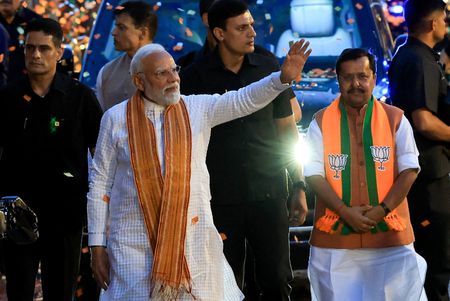
India has used subsidies to protect its 1.4 billion citizens so far, but on Sunday, Prime Minister Narendra Modi called on residents to purchase domestic products and reduce international travel to conserve foreign currency. He also promoted working from home and using public transportation to decrease fuel usage, while asking farmers to reduce fertilizer consumption by half.
The Philippines rapidly implemented a four-day work schedule to conserve fuel. The country also introduced targeted financial assistance for lower-income families. Nevertheless, Fitch Ratings observed that most consumers continue facing elevated energy expenses, leading to reduced business operations in major urban areas like Manila.
Thailand eliminated its diesel price controls less than one month into the conflict as fuel subsidies were depleted. The country is now reducing other expenditures to handle increased oil costs while attempting to maintain fiscal discipline.
Vietnam extended its suspension of fuel taxes to reduce domestic price pressures. Jet fuel shortages have resulted in flight cancellations. Since tourism represents nearly 8% of Vietnam’s gross domestic product, these disruptions impact the broader economy.
“Business is not good right now,” said Hanoi-based tour guide Nguyen Manh Thang. “There are already fewer tourists.”
Fuel shortages have forced financially strained nations like Pakistan and Bangladesh to purchase oil and gas at spot market rates, which typically exceed long-term contract prices and show greater volatility. This increases import expenses and strains their already limited foreign currency reserves.
Governments can maintain expensive fuel subsidies by reducing spending on other priorities such as social programs, or increase borrowing and risk higher inflation, Endut explained from Kuala Lumpur. Alternatively, they can decrease subsidies and transfer higher costs to consumers, potentially angering constituents.
After subsidies are depleted and inflation begins climbing, nations could encounter what he described as a “fiscal time bomb.”
The conflict’s conclusion will not provide immediate relief to Asia.
Global oil and gas commerce will not recover immediately, and restarting production will require time, Gross from the Brookings Institution noted. Rebuilding damaged infrastructure, reactivating facilities, and accounting for shipping time from the Middle East to destination markets will require weeks or potentially months.
Europe will experience similar effects to Asia, but with approximately a four-week delay, according to experts.
Americans are also experiencing pressure as gasoline prices increase nationwide. However, Southeast Asia remains the “biggest pain point,” according to Henning Gloystein of the Eurasia Group consultancy firm.
“This fuel shortage situation is going to get worse,” he stated.
In Africa, elevated energy and import expenses are similarly pressuring budgets, expanding deficits, and increasing inflation. The conflict is also affecting Latin America and the Caribbean, where economic growth is expected to decelerate slightly.
The complicated disruptions throughout global supply networks will continue creating broader consequences, cautioned Ted Krantz, CEO of supply chain risk company Interos.ai.
The crisis also demonstrates the vulnerability of Asia’s expanding middle class, according to Maria Monica Wihardja of the Singapore-based ISEAS-Yusof Ishak Institute, with numerous individuals at risk of returning to poverty.
The energy disruption will transform Southeast Asia’s economies gradually, she explained, including changes in employment markets and how nations prepare for future energy emergencies.
Nations are already discussing and implementing long-range solutions, such as diversifying fossil fuel sources, advancing nuclear energy, and developing renewable options like solar power.
The conflict is placing geopolitical risk at the center of Southeast Asia’s economic projections and directly hampering regional growth, stated Albert Park of the Asian Development Bank.
“The longer it lasts, the larger those negative effects would be,” he concluded.
Iranian officials have carried out the death sentence of a man found guilty of conducting espionage activities for American and Israeli intelligence agencies, according to reports from the country’s judicial system on Monday.
The executed individual was identified as Erfan Shakourzadeh by Mizan, the judiciary’s official news source. Officials stated that Shakourzadeh had been employed at a scientific facility that handled satellite operations and had allegedly transmitted sensitive scientific data to foreign intelligence organizations.
The Iran Human Rights Society, an advocacy organization, reported that Shakourzadeh was a 29-year-old who held a degree in aerospace engineering. The group claims he was taken into custody in 2025 and that authorities coerced him into making his confession.
Financial markets continue hoping that neither the United States nor Iran seeks to intensify their ongoing dispute, though a clear resolution pathway remains elusive following weekend developments that initially raised optimism but ultimately led nowhere.
President Donald Trump’s dismissal of Iran’s latest peace offer as “totally unacceptable” highlighted the substantial gap that still exists between both nations regarding reopening the Strait of Hormuz. Asian trading sessions saw oil prices jump over 4% while the dollar strengthened.
Iran unveiled its proposal Sunday for ending hostilities across all areas, which included demands for war damage payments and stressed Iranian control over the Strait of Hormuz.
The United States had suggested halting combat operations before beginning discussions on more complex matters, such as Iran’s nuclear development program.
S&P 500 futures dipped following this news while European futures remained steady, though artificial intelligence companies were the primary force behind equity movements.
South Korean stock markets jumped nearly 5% to achieve new record levels, driven by semiconductor manufacturers Samsung Electronics and SK Hynix, with SK Hynix shares nearly tripling in value since January began.
British Prime Minister Keir Starmer plans to launch a political comeback Monday with remarks positioning European relationship rebuilding as his administration’s central goal, as he works to address mounting resignation demands.
Additional developments showed China’s producer prices exceeded April forecasts, reaching a 45-month peak and adding strain to manufacturers already facing domestic demand challenges. U.S. Treasury Secretary Scott Bessent is visiting Japan while the yen remains under scrutiny following recent Japanese market interventions.
Trump and Chinese President Xi Jinping are scheduled to address Iran, Taiwan, artificial intelligence, and nuclear weapons during discussions about potentially extending a critical minerals agreement, according to U.S. officials previewing Trump’s upcoming two-day China visit.
This week’s corporate earnings reports include technology networking company Cisco and semiconductor equipment manufacturer Applied Materials. Major companies Nvidia and Walmart will report results later this month.
Monday’s economic data includes U.S. housing sales figures, along with after-hours Tokyo results from SoftBank and shipping company Nippon Yusen.
Monday’s key market influences include:
Corporate earnings: SoftBank, Nippon Yusen, Fox Corp
Taiwan’s maritime authorities announced Monday they successfully intercepted and expelled a Chinese research vessel conducting what they described as unauthorized activities in waters near the island.
Officials reported spotting the Chinese ship “Tongji” last Thursday approximately 29 nautical miles southeast of Taiwan’s southern coastline, positioned just beyond restricted territorial boundaries. The vessel, which entered service only last year, was observed deploying ropes and equipment into the water in what appeared to be unauthorized scientific surveying operations.
Taiwan’s coast guard responded by dispatching their own vessel to the area. The Taiwanese ship approached the Chinese vessel and created disruptive wake patterns while broadcasting warnings to “forcefully expel the vessel, prohibiting it from conducting related activities.”
Following the intervention, the “Tongji” pulled up its research equipment and changed direction, leaving Taiwan’s maritime zone. Coast guard officials continued monitoring the Chinese ship until Monday when it moved away from the island’s vicinity.
“Chinese research vessels, in disregard of international law, have attempted to conduct illegal survey activities in our waters,” Taiwan’s coast guard stated, urging China to cease such operations.
According to Chinese state media reports, the “Tongji” is equipped with advanced capabilities including all-weather operational systems, remotely operated vehicles, onboard laboratories, and unmanned technology. The vessel can conduct various marine research including geology, oceanography, chemistry, and biology studies, as well as offshore engineering projects like pipeline installation.
This incident represents part of what Taiwan considers escalating provocative behavior from China, which claims the island as its territory. Beyond regular military operations in the region, Taiwan has accused China of deploying civilian vessels in a “grey zone” strategy designed to pressure Taiwanese forces and exhaust their resources through constant monitoring requirements.
China’s Taiwan Affairs Office has not yet provided a response regarding the incident.
KYIV, Ukraine — In Ukraine’s capital city, an art exhibition is offering residents something precious during wartime: a chance to escape the harsh realities of conflict through creative expression.
The Art Kyiv fair, operating under the theme ‘This is Normal,’ represents an unconventional approach to dealing with the psychological toll of war. Rather than waiting for peace, organizers decided to move forward with cultural events despite ongoing hostilities.
“Holding the event during wartime means not waiting for a better moment, but working with reality as it is,” explained Anna Avetova, who directs the Art Kyiv fair. “In this context, art does not stand apart from life — it helps make sense of the present, preserve cultural continuity, and lay the groundwork for the future.”
The exhibition has transformed into a sanctuary where Ukrainians process their new reality through artistic works and dialogue, even as missile attacks, casualties, and grief have become part of daily existence.
At the Lavra Gallery, visitors can view hundreds of pieces ranging from uniquely-shaped sculptures to various painting styles including abstract expressionism, surreal portraits, and scenic landscapes. Organizers made a conscious decision not to feature any displays explicitly focused on the ongoing conflict.
“The war is always in the air, we just really didn’t want to make a point of mentioning it,” Avetova noted. “Art is one of the things that keeps us human. It sustains us and warms our soul when things are very hard.”
Beyond providing emotional support, the fair aims to revitalize Ukraine’s domestic art scene, which had already suffered under pandemic restrictions before Russian aggression further damaged the market. Officials say the industry is slowly recovering, with this exhibition demonstrating that Ukrainian artists are prepared both to discuss the war and continue selling their work.
Art Kyiv positions itself as a meeting place where artistic creativity, public conversation, and modern Ukrainian life intersect. Despite occasional interruptions from air raid warnings signaling potential Russian attacks, the event has brought together the country’s leading galleries, artists, collectors, and cultural organizations.
This marks only the second time the fair has operated since hostilities began, following its initial wartime launch in October.
Ceramic artist Tala Vovk is participating for the first time and regularly attends cultural events in Kyiv because they help her mentally distance herself from the conflict and “detach from the tragedy.”
“Art is a place where the everyday doesn’t exist,” she observed. She believes such events remain important during wartime because supporting cultural foundations helps them grow stronger. “And that would give strength in any situation,” she added.
Artist Yuriy Vatkin experienced this firsthand when he became trapped under occupation near Kharkiv during the early weeks of Russia’s invasion. According to his fair representative Denys Dmytriev, painting became crucial for Vatkin’s survival and mental well-being, even after his studio suffered damage in an attack.
The artwork on display, most of which is available for purchase, avoids war-related themes in favor of more neutral subjects. Vatkin’s pieces showcase his distinctive approach, using thick, layered brushwork, broken forms, and bold colors to convey movement and uncertainty.
Visitor Anna Domashchenko said she felt attracted to the rich, intense colors because they trigger powerful emotions. She frequently attends art events and considers their continuation during wartime deeply meaningful.
“Sometimes you wonder whether it’s appropriate… but these are exactly the things that inspire you and remind you that life is full of color, and all of those colors should be present at any time,” she reflected. “Even in times as hard as these.”
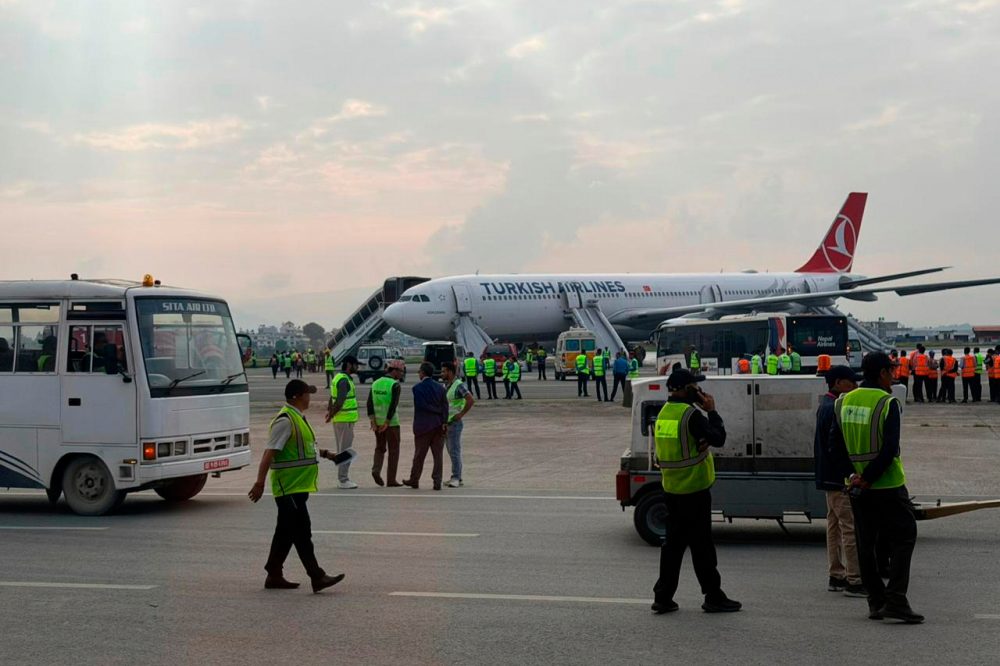
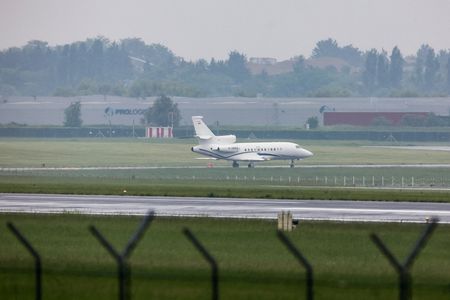
KATHMANDU, Nepal — An aircraft operated by Turkish Airlines experienced a fire incident during its arrival at Nepal’s primary aviation hub on Monday morning, prompting airport authorities to temporarily suspend operations while emergency crews responded.
The aircraft, traveling from Istanbul, touched down at Tribhuvan International Airport in Kathmandu when flames and smoke erupted from the right-side landing gear assembly. Airport personnel confirmed that emergency responders quickly brought the blaze under control and successfully evacuated all travelers without any reported injuries.
Operations at the airport were suspended Monday morning as authorities addressed the situation.
The Airbus 330 aircraft was carrying 277 passengers at the time of the incident.
Multiple aircraft scheduled to arrive in Kathmandu were placed in holding patterns while officials conducted their investigation and worked to clear the airport’s single operational runway.
Aviation incidents occur with notable frequency in Nepal due to challenging flying conditions created by the country’s mountainous geography and unpredictable weather patterns.
A similar incident involving Turkish Airlines occurred in 2015 when another aircraft landing in heavy fog conditions at Kathmandu slid off the wet runway surface, resulting in airport closure for multiple days.
That earlier incident also resulted in no passenger injuries, and the aircraft was eventually removed from the airport grounds and repurposed as a museum exhibit.
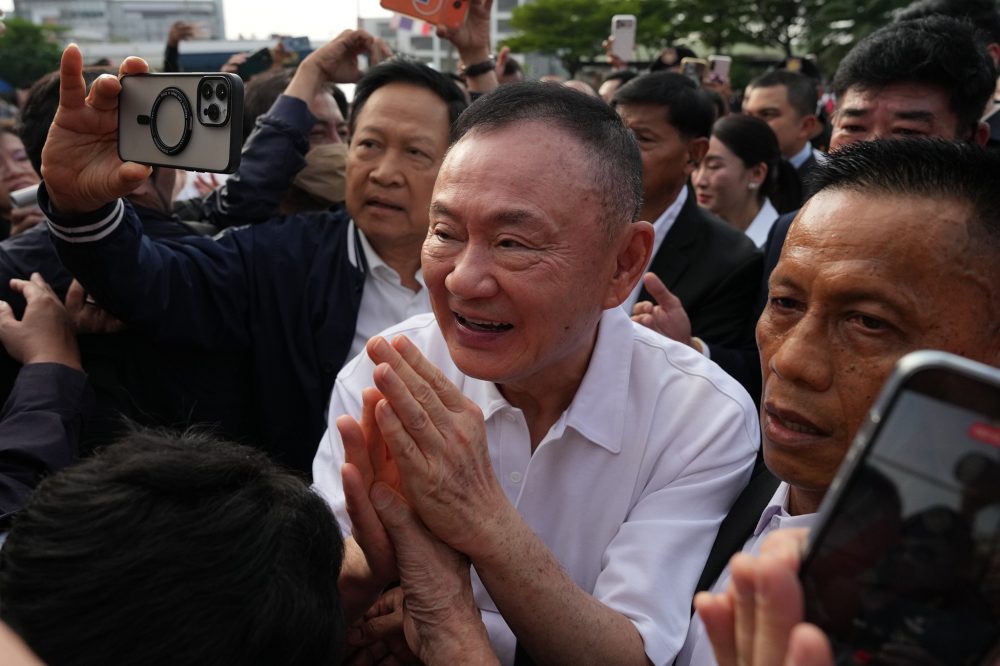
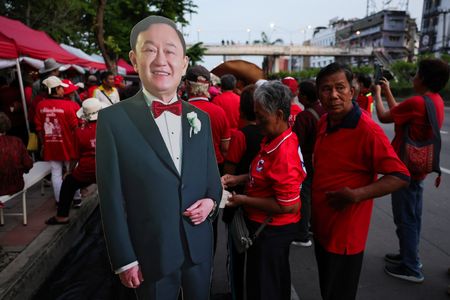
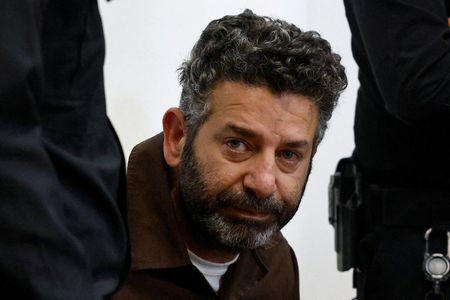
BANGKOK — Billionaire former Prime Minister Thaksin Shinawatra walked out of a Bangkok detention facility Monday morning, completing eight months of a one-year sentence for corruption-related offenses that have marked the latest chapter in his controversial political career spanning more than two decades.
Approximately 300 political supporters and allies assembled outside Klong Prem Central Prison to welcome the 76-year-old populist leader back to freedom.
The telecommunications tycoon established his political party in 1998 and led Thailand as prime minister from 2001 until military forces removed him from power in 2006 during his overseas travel. His removal sparked almost 20 years of intense and occasionally violent political division, while his political organization mounted multiple returns to power despite Thaksin remaining in voluntary exile to avoid what he characterized as judicial persecution.
Family members, including his daughter and former prime minister Paetongtarn Shinawatra, arrived early at the prison to greet him upon release.
Wearing a white polo shirt and blue trousers, Thaksin stepped through the prison entrance and received embraces from relatives. He displayed a wide smile while moving among his supporters, who called out “we love Thaksin” and presented him with red roses. He departed the scene without addressing media representatives.
About one hour later, he reached his home in western Bangkok. Video footage from Thairath News showed Thaksin lowering his car window to acknowledge a small gathering of supporters at his residence, telling shouting reporters “I was in hibernation, I can’t remember anything now.”
Thaksin holds the distinction of being Thailand’s first elected leader to complete a full four-year term in office. His initiatives including universal healthcare coverage and infrastructure development in underdeveloped regions earned strong backing from lower-income citizens, especially in northern and northeastern rural areas, though his appeal and occasionally authoritarian approach created significant divisions with urban elites, monarchy supporters, and military officials.
Authorities charged him with power abuse related to accusations of leveraging his office for personal business advantage and illegally authorizing a government lottery program that resulted in state financial losses.
A court convicted Thaksin while he remained outside the country, but he returned to Thailand for sentencing in 2023 when the Pheu Thai Party, his latest political organization, established a new government. Many believed he had negotiated a private agreement with traditional royalist power structures. Initially facing an eight-year prison term, King Maha Vajiralongkorn reduced his sentence to one year, which he was permitted to serve in a Bangkok Police Hospital suite due to health considerations.
Following complaints about preferential treatment, the Supreme Court ordered in September 2025 that Thaksin must serve his remaining time in standard prison facilities.
A Justice Ministry committee approved his parole last month during a review affecting more than 900 eligible inmates, pointing to his positive conduct while incarcerated, his advanced age, and minimal likelihood of reoffending.
Following his release, Thaksin faces four months of supervised probation requiring him to live at his registered Bangkok address, wear electronic monitoring equipment, and maintain regular contact with probation authorities.
His daughter Paetongtarn achieved the position of Thailand’s youngest prime minister in 2024 but lost her position when the Constitutional Court removed her in August 2025 after audio emerged of a problematic telephone conversation with former Cambodian leader Hun Sen.
The Pheu Thai party secured only third place in this year’s national elections.
A Turkish Airlines aircraft experienced a tire fire Monday after touching down at Nepal’s main airport in Kathmandu, prompting officials to evacuate all passengers and crew members safely.
The incident occurred when the Airbus A330, which had flown from Istanbul, developed a fire in one of its tires following landing. Airport operations were suspended for one hour while emergency crews responded to the situation.
Emergency evacuation procedures were immediately activated, with all 277 passengers and 11 crew members exiting the aircraft through emergency slides. No injuries were sustained during the evacuation, according to Gyanendra Bhul, who serves as spokesperson for Nepal’s Civil Aviation Authority.
“The fire broke out in the right rear tyre of the aircraft…the fire was doused and the plane was towed to the taxiway…it is grounded,” Bhul explained to reporters.
Fire crews successfully extinguished the blaze, and the aircraft was subsequently moved to a taxiway area where it remains out of service. Airport operations resumed after the emergency response concluded.
Turkish Airlines has not yet issued a statement regarding the incident.
Taiwan’s top diplomat expressed optimism about the island nation’s relationship with the United States on Monday, just days before President Donald Trump’s scheduled meeting with Chinese leadership in Beijing.
Foreign Minister Lin Chia-lung told reporters that Taiwan remains confident about its diplomatic ties with Washington, despite the upcoming three-day summit between Trump and Chinese President Xi Jinping set to begin Wednesday. The status of Taiwan, which China considers part of its territory but operates as a democracy, is expected to be a major topic of discussion.
Speaking from Taiwan’s parliament building in Taipei, Lin emphasized his government’s ongoing dialogue with American officials regarding the high-stakes meeting.
“We have also maintained continuous communication with the United States — whether through public statements from the U.S. government or through non-public channels. We are confident in the stable development of Taiwan-U.S. relations,” he said.
Lin also noted American consistency on the issue, stating: “The U.S. government has repeatedly expressed that its Taiwan policy will not change.”
The diplomatic assurances come as regional tensions remain high, with Beijing having never ruled out military action to bring Taiwan under its control. Meanwhile, American law requires the U.S. to help Taiwan maintain its defensive capabilities, and Secretary of State Marco Rubio recently emphasized the need for regional stability.
However, Taiwan faces pressure to increase its military spending. Last week, the island’s opposition-controlled legislature approved a defense budget smaller than what the government had requested, prompting disappointment from U.S. officials who want Taiwan and other allies to boost their military investments.
Lin urged lawmakers to take corrective measures to ensure adequate funding for Taiwan’s security needs, arguing that regional peace requires demonstrating strong defensive capabilities.
“However, peace depends on strength — it requires demonstrating the defence capability for self-defence in order to deter aggression,” he said.
“In particular, the Chinese communists are currently pursuing military buildup and authoritarian expansion.”
Former President Donald Trump quickly shot down Iran’s counter-proposal to a U.S. peace initiative on Monday, causing oil markets to spike as the ongoing 10-week conflict shows no signs of resolution.
The United States had recently put forward a peace offer hoping to restart diplomatic talks. Iran responded on Sunday with its own set of conditions, including demands to halt fighting across all theaters of war, particularly in Lebanon where Israel continues battling Iranian-backed Hezbollah forces. According to Iranian state television, Tehran’s response also sought war reparations and asserted Iranian control over the strategically important Strait of Hormuz.
Iran’s demands extended to requiring the U.S. to halt its naval blockade, promise no additional attacks, remove sanctions, and lift restrictions on Iranian oil exports, according to the Tasnim news agency.
Trump’s response came swiftly through his Truth Social platform.
“I don’t like it — TOTALLY UNACCEPTABLE,” Trump posted, offering no additional explanation.
The original American proposal had suggested stopping hostilities first, then addressing more complex matters like Iran’s nuclear activities through negotiations.
Monday’s oil markets saw a $3 per barrel increase following news that the diplomatic impasse continues, leaving the critical Strait of Hormuz mostly inaccessible. This narrow waterway previously handled about 20% of global oil transport and has become a key flashpoint in the current crisis.
Polling data indicates American voters are growing frustrated with the conflict as gas prices surge just months before crucial elections that will decide Republican congressional control.
International backing for U.S. actions remains limited, with NATO partners declining requests to deploy naval forces to reopen the strait without a comprehensive peace agreement and proper international authorization.
The path forward for either diplomatic or military action remains uncertain.
Trump is scheduled to travel to Beijing on Wednesday, where discussions with Chinese President Xi Jinping are expected to include the Iran situation as pressure mounts to resolve the conflict and its global energy implications.
The former president has been urging China to leverage its relationship with Tehran to encourage a deal with Washington.
When asked about the status of military operations against Iran, Trump stated in Sunday remarks: “They are defeated, but that doesn’t mean they’re done.”
Israeli Prime Minister Benjamin Netanyahu emphasized that the conflict remains active because “more work to be done” exists regarding Iran’s enriched uranium removal, dismantling enrichment facilities, and addressing Iranian proxy forces and missile programs.
During a CBS “60 Minutes” interview aired Sunday, Netanyahu said diplomatic solutions would be preferable for uranium removal but didn’t eliminate the possibility of using force.
Iranian President Masoud Pezeshkian responded through social media that Iran would “never bow down to the enemy” and would “defend national interests with strength.”
Regional shipping and economic threats persist despite ongoing diplomatic efforts.
Fighting around the strait has intensified in recent days, marking the most serious escalation since ceasefire efforts began.
Sunday saw the United Arab Emirates intercept two Iranian drones, while Qatar criticized a drone strike on a cargo vessel from Abu Dhabi in Qatari waters. Kuwait reported successfully defending against hostile drones in its airspace.
Combat between Israel and Hezbollah continues in southern Lebanon despite a U.S.-mediated ceasefire announced April 16.
Netanyahu noted in his “60 Minutes” appearance that resolving tensions with Iran wouldn’t automatically end Lebanese hostilities. He also acknowledged that Israeli strategists had miscalculated Iran’s capacity to disrupt Hormuz Strait traffic.
“It took a while for them to understand how big that risk is, which they understand now,” he explained.
Relatives of two Americans who have been held in Chinese prisons for more than a decade are making an urgent plea to President Donald Trump to raise their cases during his scheduled summit with Chinese President Xi Jinping.
The imprisoned Americans are Dawn Michelle Hunt, a 54-year-old artist and former flight attendant from the Chicago area, and Nelson Wells Jr., a 52-year-old Louisiana man and father of three children. Both were found guilty on narcotics charges following what their relatives describe as separate schemes where they were deceived into transporting drugs without their knowledge.
This summit presents an opportunity for Trump, who has positioned himself as a negotiator capable of bringing Americans home, to achieve a concrete victory by securing the freedom of two sick U.S. citizens. The meeting is anticipated to yield few major breakthroughs given ongoing disputes over trade policies, Iran, and Taiwan.
From China’s perspective, releasing the two Americans on humanitarian grounds would represent a relatively inexpensive way to generate positive relations with an unpredictable U.S. leader during a delicate period in bilateral ties.
“With President Trump meeting President Xi, our two families are writing letters – we’re asking, ‘Can you please ask for the release of our loved ones?’,” said Tim Hunt, Dawn Michelle’s older brother.
“Hopefully, we can get those letters delivered and read.”
Tim Hunt described his sister as an artistic “brainiac,” a highly intelligent person, and former flight attendant with a degree in fashion design who loved entering sweepstakes with her mother.
According to Hunt, Dawn Michelle was deceived into taking an international “prize” trip by fraudsters who, after she arrived in China, gave her handbags and a new suitcase that contained concealed drugs, which she unknowingly agreed to transport on her departure flight.
Nelson Wells Jr. was a world traveler who climbed mountains and explored Japan’s peaks, sharing the views with his father. Wells was taken into custody after agreeing to carry someone else’s luggage while returning from a China trip, his family explained. The person disappeared after airport security found narcotics concealed in the bag.
“I enjoyed serving my country,” said Wells’ father, Nelson Wells Sr., a U.S. Army veteran whose wife also worked for the Department of Defense for 28 years. “Now I just want my country to serve me.”
A U.S. State Department representative confirmed they are providing consular assistance to both individuals and that officials are working to protect the health and welfare of the two citizens, but refused to elaborate due to privacy concerns.
A representative from China’s Ministry of Foreign Affairs noted that both individuals are completing sentences for significant drug-related offenses and that the government is managing their cases in accordance with legal procedures while ensuring their health and legitimate rights remain protected.
HEALTH CONCERNS MOUNTING
Sources indicate the State Department has formally requested Chinese officials to release both prisoners on compassionate grounds, and Chinese authorities have privately suggested they would consider such a request if it comes from high-level U.S. officials.
“The Chinese side has shown a willingness to grant the humanitarian release, but they are also keen to hear from the U.S. side just how important it is for the American people,” said Beijing-based lawyer James Zimmerman, who is advising the Hunt and Wells families.
Family members report that both prisoners are experiencing worsening health conditions. Hunt has developed significant medical issues and requires blood transfusions but lacks confidence in prison medical staff to agree to surgical procedures. Wells experiences severe seizures, diabetes, high blood pressure and other medical complications, according to his family.
In 2024, China and the U.S. each released three citizens both governments said were wrongfully detained in the other country, concluding years of diplomacy.
Supporters say U.S. government focus has increased in recent months. Peter Humphrey, a fraud investigator and former Chinese prisoner who now counsels families of foreign detainees in the country, reported that the U.S. embassy has been discussing these cases more regularly with Chinese officials.
Medical concerns have become the focal point of both families’ campaigns.
“Both Dawn Michelle Hunt and Nelson Wells are gravely ill and in desperate need of medical care in the U.S. – they should both be granted humanitarian parole,” said John Kamm, whose San Francisco-based Dui Hua Foundation researches political prisoners in China. Dui Hua estimates that there are around 200 Americans in carceral facilities in China.
Both families report their cases gained traction after they provided testimony at a September 2024 Congressional-Executive Commission on China hearing, which brought broader attention to Americans held in Chinese prisons.
They are also supporting legislation introduced by Representative Chris Smith, named for Hunt and Wells, that they believe would enhance assistance for families facing similar situations.
For both families, the emotional burden at home has grown heavier over time. Tim Hunt revealed his father passed away in January without witnessing his daughter’s release. Wells’ youngest daughter, now 12 and residing in Japan, has little connection with her father since she was only six months old when he was arrested, his family explained.
“We are common people,” Wells Sr. said. “We cry every night. Our loved ones never leave our minds.”
BANGKOK – Former Thai Prime Minister Thaksin Shinawatra walked free from a Bangkok prison Monday morning, completing roughly eight months of incarceration after a court determined he had improperly extended his hospital stay to dodge jail time.
The 76-year-old billionaire politician, who shaped and controlled Thai politics for 25 years, emerged from Klong Prem Central Prison at approximately 7:40 a.m. local time wearing a simple white shirt with closely trimmed hair. His political influence has diminished recently due to his imprisonment and his Pheu Thai Party’s historically poor showing in this year’s elections.
Family members immediately embraced Thaksin upon his release, including his daughter and political successor Paetongtarn Shinawatra, who was removed from the prime minister position by court order last August, just weeks before his father’s imprisonment.
Crowds of supporters who had gathered outside the Bangkok prison since early morning hours shouted “we love Thaksin” as he acknowledged them following his release. He completed approximately two-thirds of his sentence before receiving parole.
Following 15 years of voluntary exile, Thaksin came back to Thailand in 2023 to face an eight-year prison term for conflicts of interest and power abuse during his 2001-2006 tenure as prime minister. The king had reduced his sentence to one year.
However, his actual prison time lasted only hours after his return, as he reported cardiac issues and chest discomfort. He subsequently spent six months in a hospital’s VIP section before gaining parole status.
The Supreme Court ruled in September that Thaksin must complete his sentence behind bars, determining that he and his medical team had deliberately extended his hospital treatment through unnecessary minor procedures.
Prison officials confirmed he must wear an electronic monitoring device on his ankle for his remaining sentence period.
A 76-year-old supporter from northern Chiang Rai province, Rommanee Nakano, expressed that Thaksin never deserved punishment.
“He is a very good person,” she stated before his release. “Whatever he did, he did it for the people. He just wanted the people to be well-fed and have enough to live on.”
Israeli Prime Minister Benjamin Netanyahu announced his goal to eliminate U.S. military assistance to his nation within the next ten years during a television interview broadcast Sunday.
Speaking on CBS News’ “60 Minutes,” Netanyahu expressed his desire to completely phase out American financial assistance for military cooperation between the two countries. “I want to draw down to zero the American financial support, the financial component of the military cooperation that we have,” the Israeli leader stated.
Currently, Israel receives approximately $3.8 billion annually in U.S. military assistance. Under an existing agreement, America has committed to providing $38 billion total in military aid to Israel spanning from 2018 through 2028.
Netanyahu emphasized that now represents the ideal moment to potentially restructure the financial relationship between the United States and Israel, calling it “absolutely” the appropriate time for such a change.
“I don’t want to wait for the next Congress,” Netanyahu explained to CBS reporters. “I want to start now.”
Although Israel has historically enjoyed broad bipartisan support in the U.S. Congress regarding military assistance, that backing has weakened among both legislators and American citizens following the start of the Gaza conflict in October 2023.
Venezuela’s acting President Delcy Rodríguez touched down in the Netherlands on Sunday, preparing to present her nation’s case before the world’s highest court regarding a long-standing territorial conflict with neighboring Guyana over a resource-abundant region.
The International Court of Justice located in The Hague is conducting a series of proceedings between these South American nations, both of whom assert ownership over Essequibo — a nearly 62,000-square-mile area abundant in gold, diamonds, timber and additional natural resources, positioned close to substantial offshore petroleum reserves.
Since the era of Spanish colonization, Venezuela has regarded Essequibo as part of its territory, as the forested region was within its colonial borders. However, an 1899 arbitration decision made by representatives from Britain, Russia and the United States established the boundary along the Essequibo River, primarily favoring Guyana’s position.
Venezuelan officials contend that a 1966 Geneva agreement designed to settle the territorial disagreement essentially invalidated the 19th-century arbitration decision.
Monday will mark the concluding court session, featuring Rodríguez’s testimony. The tribunal will likely require several months before delivering a final and legally enforceable decision.
Upon her arrival at Amsterdam’s Schiphol Airport, Rodríguez — who took office in January after a U.S. military action that removed Nicolás Maduro from power — stated that her nation has “demonstrated at every historical stage what our territory has meant since we were born as a Republic.”
Guyana initiated the Essequibo case at the ICJ in 2018, seeking international confirmation that the 1899 decision — rather than the 1966 agreement — should determine the boundary. Venezuelan officials have cautioned that their participation in these proceedings doesn’t constitute acceptance or acknowledgment of the ICJ’s authority.
During the hearings’ opening session, Guyanese Foreign Minister Hugh Hilton Todd informed the international panel of judges that this territorial disagreement “has been a blight on our existence as a sovereign state from the beginning” and noted that 70% of Guyana’s land area is in question.
LONDON – British Prime Minister Keir Starmer is mounting a desperate effort to save his political career, planning to announce Monday that strengthening ties with Europe will become the cornerstone of his administration’s new direction amid escalating demands for his resignation.
The Labour Party leader finds himself in serious jeopardy following devastating defeats in last week’s local elections, which marked the worst performance by a ruling party in over thirty years. More than 30 members of parliament from his own party have demanded either his immediate resignation or a clear timeline for his departure.
According to advance excerpts from his upcoming address, Starmer plans to acknowledge that “incremental change won’t cut it” and will admit the scope of necessary reforms for economic recovery, military reconstruction, and energy independence exceeds his initial expectations.
While the speech preview contains no specific new policy announcements, Starmer intends to declare his administration “will be defined by rebuilding our relationship and by putting Britain at the heart of Europe” – a significant shift nearly ten years after the Brexit vote.
This European focus could resonate well with Labour parliamentarians and younger demographics, as recent polling indicates approximately 60% of British citizens now view the EU departure as an error.
Nevertheless, such efforts to restore European connections would create complex challenges, including potential agreements to increase European immigration in exchange for enhanced EU market access. This approach would likely draw fierce resistance from conservative Eurosceptic movements and certain media organizations.
Starmer secured one of the most commanding parliamentary victories in recent British political history during 2024, campaigning on promises to stimulate economic growth, reduce unauthorized immigration, and eliminate healthcare waiting periods in the national health system.
His administration’s progress has stalled due to policy reversals, internal party criticism regarding his reluctance to make tough choices, and multiple political controversies, resulting in approval numbers among the lowest recorded for any British leader.
In his forthcoming remarks, Starmer will concede his government has sometimes fallen short of delivering the transformation voters expected, stating that “people need hope” while expressing readiness to “face up to the big challenges” confronting the nation.
The crisis intensified when former deputy prime minister Angela Rayner issued a rare public warning Sunday that the Labour Party might be approaching its “last chance” for course correction.
Additionally, Catherine West, a relatively unknown former junior minister, demanded over the weekend that cabinet members remove the prime minister. She threatened that if they refuse by Monday and she finds his speech unsatisfactory, she will personally attempt to initiate leadership proceedings.
However, the Labour Party has never successfully ousted one of its prime ministers throughout its 125-year existence.
Party regulations require 20% of parliamentary members – totaling 81 lawmakers – to unite behind a single alternative candidate to launch a leadership challenge.
Thus far, none of Starmer’s primary potential successors have acted against him. Andy Burnham, Greater Manchester Mayor and considered a leading replacement candidate, lacks parliamentary membership and cannot mount a challenge.
This threat to Starmer’s leadership, occurring less than two years following his electoral triumph, exemplifies Britain’s growing governance difficulties.
Should Starmer face removal in coming weeks, Britain would experience its seventh prime minister within the past decade, representing unprecedented political instability in nearly 200 years.
Political experts attribute this pattern to multiple factors: sluggish economic expansion since the 2007-2009 financial crisis, stressed government budgets particularly after extensive pandemic borrowing, and deep political divisions following Brexit.
President Donald Trump announced Sunday through his Truth Social platform that five individuals from Poland and Moldova have been freed from detention facilities in Belarus and Russia.
The announcement detailed the release of three Polish nationals and two Moldovan citizens. Trump gave recognition to special envoy John Coale for facilitating the prisoner releases and expressed gratitude to Belarus President Aleksandr Lukashenko for his “cooperation and friendship.”
Among those freed was Andrzej Poczobut, a journalist and activist holding both Polish and Belarusian citizenship, who had been imprisoned in Belarus. Polish Prime Minister Donald Tusk had previously confirmed Poczobut’s release on April 28, explaining it occurred through a prisoner exchange agreement.
Lukashenko, who maintains close ties with Russian President Vladimir Putin, has freed hundreds of detainees over the past two years. This prisoner release pattern has gained momentum since Trump began his second presidential term. In exchange for these releases, the United States has started lifting economic sanctions imposed on Belarus.
NAIROBI, Kenya — French President Emmanuel Macron arrived in Kenya Sunday to launch the Africa Forward Summit, a diplomatic gathering designed to demonstrate France’s evolving relationship with African nations as Paris moves away from its colonial-era influence.
The summit represents the first time this event has taken place in an English-speaking African nation, coming after France completed its military withdrawal from West Africa last year following declining regional influence across the continent.
For decades following independence, France maintained what critics called “Françafrique” — a system of economic, political and military control that included deploying thousands of soldiers throughout the region. African leaders and opposition groups frequently condemned this approach as patronizing and heavy-handed.
Kenyan President William Ruto, who is hosting Macron, expressed hopes that the summit will serve as a “turning point” for improved partnerships between the nations.
Addressing the evolving political dynamics, Macron acknowledged that France may “disagree” with West African governments but “never disagrees with the people.”
The two-day conference beginning Monday expects to host 30 heads of state, with ten having already arrived in Nairobi.
However, Kenyan opposition leader Kalonzo Musyoka criticized selecting Kenya as the host location, arguing the country faces democratic challenges, opposition suppression and human rights violations as it approaches the 2027 elections.
“There will be an air of pretense that we are a cohesive nation,” Musyoka said. “We know that is far from the truth.”
Ruto responded Sunday by stating that Nairobi aims to develop diverse international relationships and was “neither looking East nor West” but “looking forward.”
During Sunday’s proceedings, Kenya and France finalized 11 partnership agreements covering multiple sectors, including plans for a major nuclear energy facility, transportation improvements, and sustainable farming initiatives.
Macron described these investments as efforts to build “human capital,” aligning with the summit’s emphasis on innovation and Africa’s expanding youth population.
WASHINGTON/BEIJING – A high-ranking American official voiced frustration on Sunday following Taiwan’s legislative decision to authorize military funding below what the United States considers necessary for the island nation’s security needs.
Speaking anonymously, the official stated that Washington found the outcome “disappointing in that there was some stuff left on the cutting room floor that we believe still needs to be funded.”
The official added, “We’d like to see the rest of the original proposed package funded.”
Taiwan’s legislature gave final approval on Friday to additional military expenditures totaling $25 billion, representing approximately two-thirds of the full amount Taiwan’s government had requested. The funding is intended to strengthen the island’s defensive capabilities as it faces an increasingly advanced Chinese military threat.
The reduced spending approval came through Taiwan’s parliament, which is currently under opposition party control.
The 2023 Nobel Peace Prize recipient Narges Mohammadi has been transferred to a Tehran medical facility and granted temporary release from prison on bail following a recent heart attack, according to her family’s foundation.
The 54-year-old activist received the prestigious award last year while incarcerated for her efforts promoting women’s rights and opposing capital punishment. She experienced cardiac complications two weeks ago while serving her sentence.
Family members had advocated for her relocation from Zanjan, located northwest of the Iranian capital, where she was initially hospitalized, seeking access to superior medical treatment for her condition.
According to a statement from the Narges Mohammadi Foundation, she has been transported by ambulance to Tehran Pars Hospital, where her personal medical specialists are providing treatment.
Earlier this year in February, Mohammadi received an additional prison sentence totaling seven and a half years, the foundation reported. This occurred weeks prior to escalating tensions between the United States, Israel, and Iran. The Nobel Prize committee urged Iranian authorities to release her without delay.
Her December arrest followed her public criticism regarding the death of attorney Khosrow Alikordi. Officials stated that she made inflammatory statements during Alikordi’s memorial service.
The foundation did not provide specific information about the bail conditions or details surrounding her sentence suspension.
“However, a suspension is not enough,” the organization stated. “Narges Mohammadi requires permanent, specialized care. We must ensure she never returns to prison.”
Iranian authorities severely restricted internet access throughout the country in January while suppressing widespread demonstrations sparked by economic concerns. Human rights organizations have documented continued executions of individuals connected to the civil unrest.
Thousands of demonstrators filled the streets of Mexico City on Sunday, led by mothers whose children vanished during years of cartel-related violence. The Mother’s Day march drew attention to the country’s crisis of missing persons as Mexico gears up to co-host the upcoming FIFA World Cup.
Groups representing families of the disappeared organize this annual demonstration each Mother’s Day. This year, they urged soccer supporters to stand with them, declaring in a public statement that “there is nothing to celebrate, because the mothers of Mexico are playing the most difficult match: the one for justice.”
Marchers filled Paseo de la Reforma, Mexico City’s main thoroughfare, carrying photographs of missing loved ones on banners and posters. “Mexico, champion in disappearances,” the crowd chanted as they walked past a traffic circle permanently decorated with images of those who have vanished, now surrounded by metal barricades.
“We had to start fighting, because no one wanted to take charge of the disappearance (case),” explained Graciela Perez Rodriguez. Her daughter and four other family members went missing in 2012 while driving through the northern state of Tamaulipas after visiting the United States.
The nation faces a staggering crisis with over 130,000 people reported missing. These disappearances dramatically increased following 2006, when Mexico declared war against drug trafficking organizations.
Law enforcement officers and government workers are frequently connected to these crimes. Mothers who conduct their own searches when official investigations stall often become targets themselves, facing threats and violence from criminal organizations.
Mexican officials announced in March that they had possibly identified more than 40,000 individuals from the missing persons database who might still be alive, following an examination of the national registry that revealed activity in other government databases.
However, research from Mexico Evalua, a public policy organization, shows disappearances have tripled during the past ten years as organized crime groups have expanded their influence.
Rodriguez expressed concern that authorities no longer prioritize her family’s case after nearly 14 years have elapsed.
A high-ranking United States official confirmed on Sunday that the current rare earth materials agreement between America and China remains valid, with discussions underway regarding a possible extension.
The confirmation comes ahead of a scheduled meeting between U.S. President Donald Trump and Chinese President Xi Jinping, set to take place in Beijing on May 14 and 15.
“It’s still in effect. It doesn’t expire yet,” the official stated during a briefing with reporters. The official added that while discussions continue, it remains unclear whether the agreement will receive an extension. “I’m confident we’ll announce any potential extension at the appropriate time.”
The upcoming two-day summit, beginning Thursday, is expected to cover several contentious topics including the U.S.-Israeli conflict with Iran, trade relations, Taiwan, and other areas of tension between the two nations.
The leaders previously met in October in South Korea, where they reached an agreement to halt an escalating trade dispute. That conflict had resulted in the United States implementing substantial tariffs on Chinese products while Beijing had threatened to limit global access to rare earth materials.
Iranian human rights activist and Nobel Peace Prize recipient Narges Mohammadi has been moved to a medical facility in Tehran after collapsing in prison over a week ago, according to her foundation.
The organization reports that Mohammadi’s hospital transfer occurred following persistent appeals from family members and supporters. Officials have granted her a temporary suspension of her prison term with bail conditions.
Since December, Mohammadi had been held at Zanjan prison facility. On May 1st, she was taken to a nearby medical center after losing consciousness on two separate occasions.
In a statement provided to The Associated Press, her foundation expressed that the temporary release falls short of what’s needed, emphasizing that Mohammadi requires “permanent, specialized care.”
The organization’s statement further declared: “we must ensure she never returns to prison to face the 18 years remaining on her sentence. Now is the time to demand her unconditional freedom and the dismissal of all charges.”
A controversial activist organization already prohibited in the United Kingdom is facing new scrutiny in Canada over digital materials that critics say blur the lines between legitimate protest and potential targeting operations.
Palestine Action has created an online mapping system that identifies businesses with connections to Israel’s military sector, including detailed information about companies, their suppliers, operational facilities, and in certain instances, personal addresses of individuals associated with these enterprises. The organization also provides an accompanying instructional guide for supporters looking to organize activities.
Although British authorities imposed a ban on Palestine Action this past February, the group continues its operations without restriction in other nations. The organization’s Canadian affiliate actively distributes the controversial materials, which remain accessible to the general public online.
B’nai Brith Canada has formally requested that Ottawa conduct an investigation into whether Palestine Action warrants inclusion on Canada’s list of designated terrorist entities. The Canadian advocacy group expressed concerns about the nature of the shared materials and their potential implications for public safety.
The debate centers on whether the detailed mapping and organizational guidance crosses the boundary from protected protest activity into more concerning territory that could facilitate vandalism or operational targeting of specific locations and individuals.
President Ahmed al-Sharaa of Syria has announced sweeping changes to his administration through multiple presidential orders, marking the latest phase in ongoing governmental reforms that began following the establishment of a transitional government in March 2025.
Reports from Damascus indicate that Presidential Order No. 98 of 2026 has designated Abdul Rahman Badr al-Din Al-A’ma as the new secretary-general of the presidency. This appointment removes Dr. Maher al-Sharaa, the president’s brother, from his position after a brief period in office, bringing to a close a disputed selection that had generated significant public discussion.
Additional ministerial changes include Presidential Order No. 100 of 2026, which places Khaled Zaarour in charge of the information ministry, taking over from Hamza Al-Mustafa. Order No. 101 simultaneously designates Basel Hafez Al-Suwaidan as the new agriculture minister, succeeding Amjad Badr.
The administrative changes reach into regional leadership as well, with four new provincial governors receiving appointments. The president has selected Ghassan Al-Sayyed Ahmed to lead Quneitra province, while Marhef Khaled Al-Nassan will oversee Homs. Ahmed Ali Mustafa takes charge of Latakia, and Ziad al-Ayesh assumes leadership of Deir ez-Zor province.
These personnel moves follow the March 29, 2025 establishment of Syria’s transitional administration. The 23-member cabinet was characterized as a “government of reconstruction and stability” during the nation’s political transformation period.
The current administration has consistently implemented step-by-step institutional modifications, encompassing regular ministerial adjustments and high-level personnel changes, all aimed at updating government operations and enhancing effectiveness throughout critical departments.
Political observers interpret the recent personnel changes as the president’s strategy to restructure influential positions within the government structure. This comes particularly as various ministries face performance critiques, with the Ministry of Information receiving notable criticism, alongside continued discussions regarding the placement of presidential allies in crucial roles.
The removal of Information Minister Hamza Al-Mustafa has generated divided responses on Syrian social media platforms. Some citizens have commended his efforts to promote more transparent media communication compared to earlier periods, while critics contend that his ministry struggled to adapt to Syria’s quickly changing political and governmental landscape.
These recent modifications demonstrate Syria’s quickening institutional reorganization process, as presidential authority extends its influence across governmental departments, ministerial positions, and regional administrations, indicating comprehensive changes to the nation’s political and administrative framework.
Iran has established a new regulatory body to oversee vessel traffic through the Strait of Hormuz, implementing a mandatory registration system that requires ships to gain approval from the Islamic Revolutionary Guard Corps before entering the vital shipping corridor.
The newly formed Persian Gulf Strait Authority (PGSA) mandates that maritime companies complete comprehensive documentation before their vessels can traverse the waterway. CNN obtained copies of the registration documents, which contain over 40 required data points including vessel identification numbers, current and former ship names, departure and arrival ports, cargo specifications, and nationality information for crew members, vessel owners, and operators.
Communications from the PGSA emphasize that “complete and accurate information is essential” for passage authorization, with additional guidance to be provided through email correspondence.
The authority’s messaging warns that “any incorrect or incomplete information provided will be the sole responsibility of the applicant, and any resulting consequences will be borne accordingly.”
Industry experts have not confirmed whether shipping companies have begun using this new approval process. Security analysts caution that participation in Iran’s system could potentially subject companies to United States sanctions. Iran previously suggested in April that transit fees might be implemented to offset infrastructure damage and conflict-related expenses, though current fee requirements remain uncertain.
This development coincides with the United States advancing Project Freedom, a maritime protection program for vessels departing through Omani territorial waters on the strait’s southern boundary. The American initiative operates as a cost-free, US-supervised transit arrangement. Iran has expressed opposition to this program and has conducted attacks against commercial ships and US Navy vessels in attempts to interfere with the operation.
The Strait of Hormuz serves as a conduit for approximately 20% of global oil and natural gas shipments. The creation of the PGSA represents Iran’s effort to strengthen its influence over this passage amid ongoing tensions with the United States and Israel, signaling Tehran’s intention to treat such control as a strategic advantage gained through conflict.
A social media account attributed to Supreme Leader Mojtaba Khamenei recently advocated for a “new regional and global order under the strategy of a strong Iran,” declaring no tolerance for foreign presence “and their mischief.” The posts also referenced “using the leverage of closing the strait” as part of this strategic vision.
LONDON — British Prime Minister Keir Starmer faces mounting pressure to step down as dozens of lawmakers demand his resignation following crushing defeats for his Labour Party in recent local elections.
The embattled leader plans to deliver a critical speech Monday in an attempt to demonstrate he can shift course and restore his government’s standing. However, his position remains precarious as political rivals consider their next moves. Lawmaker Catherine West has threatened to initiate a leadership challenge if Starmer’s Monday address fails to meet her expectations.
Angela Rayner, the former Deputy Prime Minister who many view as a possible successor, stopped short of directly demanding Starmer’s departure but emphasized that the party “needs to change.”
“The prime minister must now meet the moment and set out the change our country needs,” Rayner stated.
The prime minister is attempting to rebuild support following significant defeats for his center-left party in English local elections and legislative races in Scotland and Wales. Political observers widely interpreted last week’s voting as an unofficial judgment on Starmer’s leadership, whose approval ratings have nosedived since his landslide victory less than two years ago.
His administration has failed to deliver on promises of economic expansion, improvements to struggling public services, and relief from rising living costs. The government has also been weakened by a series of blunders and policy reversals on matters including welfare changes. Starmer’s standing took another hit with his controversial choice to name Peter Mandelson, who has connections to Jeffrey Epstein, as Britain’s ambassador to the United States.
The recent elections showed Labour losing support from multiple directions, with voters abandoning the party for both the anti-immigration Reform UK party and the environmentally-focused Green Party. This demonstrates the growing political fragmentation in Britain, historically controlled by Labour and Conservative parties.
Despite the turmoil, Starmer expressed to The Observer newspaper Sunday his intention to remain in power for ten years. He’s counting on Monday’s address and an extensive legislative agenda that King Charles III will outline Wednesday during the State Opening of Parliament.
A central element of his strategy involves strengthening relationships with the European Union, which Britain departed in 2020 following a narrow “leave” victory in a 2016 referendum. Starmer’s administration has already begun reducing some trade barriers that have challenged British companies since Brexit, and he promises to negotiate a youth mobility agreement allowing young people to work throughout Europe for several years.
“Brexit has held back our young people,” Starmer told The Observer, stating that “we have to be closer to Europe.”
While Labour supported remaining in the EU during the 2016 campaign, the party has hesitated to restart a debate that deeply divided Britain. Starmer has rejected pursuing EU membership again or rejoining the EU’s customs union or single market, moves that would significantly benefit UK businesses.
High-profile Labour figures viewed as potential rivals to Starmer — including Rayner, Health Secretary Wes Streeting, and Greater Manchester Mayor Andy Burnham — have not demanded his resignation.
However, increasing numbers of Labour legislators are urging the prime minister to establish a departure timeline. British political system permits parties to replace leaders during their term without requiring new elections.
Josh Simons, a previously loyal Labour representative, wrote in the Times of London that Starmer “has lost the country” and “should take control of the situation by overseeing an orderly transition to a new prime minister.”
West, a former junior minister, is attempting to accelerate the process by threatening to initiate a leadership contest unless Starmer delivers an exceptional speech Monday. West admitted she lacks support from the 81 colleagues required to force such a contest, and her action appears designed to pressure more prominent contenders to act.
“Working people sent us a message,” West declared. “We have to listen to that, and we have to change and we have to do it quickly.”
PARIS – A French national evacuated from a cruise ship affected by a hantavirus outbreak developed concerning symptoms while aboard an emergency repatriation flight, according to French Prime Minister Sebastien Lecornu.
The individual was among five French citizens being transported back to France on Sunday following the disease outbreak aboard the cruise vessel. Lecornu announced the development through a post on the social media platform X.
The Prime Minister did not provide additional details about the passenger’s condition or specify which symptoms had emerged during the flight home.
India’s Prime Minister Narendra Modi made a public appeal on Sunday, May 10th, calling on the nation’s residents and companies to reduce their fuel consumption as rising worldwide energy costs put pressure on the country’s foreign currency reserves.
The Prime Minister specifically recommended that both individuals and organizations should embrace remote work arrangements and virtual meetings once again – practices that became widespread during the coronavirus pandemic – stating these measures would provide benefits to the nation as a whole.
According to Modi, the elevated cost of fuel on the international market means India needs to preserve its foreign currency by decreasing the use of gasoline and diesel products throughout the country.
Latvia’s Defense Minister Andris Spruds stepped down from his position on Sunday, following a controversial incident where Ukrainian drones crossed into the country and struck oil storage tanks.
The resignation came after Prime Minister Evika Silina called for Spruds to leave his post, criticizing the government’s slow response in setting up anti-drone defense systems. Silina has named army colonel Raivis Melnis as Spruds’ replacement.
The incident occurred Thursday when two unmanned aircraft crossed over from Russian territory and exploded at a Latvian oil storage facility. The strike prompted both Latvia and neighboring Lithuania to request enhanced NATO air defense capabilities for their region.
Ukraine’s Defense Minister Andrii Sybiha confirmed Sunday on social media platform X that the drones belonged to Ukraine. He explained that the aircraft ended up in Latvia due to “Russian electronic warfare deliberately diverting Ukrainian drones from their targets in Russia.”
Following the cross-border incident, Sybiha announced Friday that Ukraine is exploring the possibility of sending technical specialists to help improve air defense systems across the Baltic region.
Venezuelan officials are raising alarm about what they claim is a significant oil spill originating from neighboring Trinidad and Tobago that has damaged coastal areas across multiple Venezuelan states.
In a statement released Saturday evening to the global community, Venezuela’s Foreign Ministry reported that preliminary evaluations revealed “severe risks” to natural habitats in Sucre and Delta Amacuro states, as well as the Gulf of Paria region. Officials warn the contamination threatens mangrove forests, wetland areas, and the overall ecological stability of the Caribbean region.
Venezuelan authorities have not disclosed when they initially discovered the spill or provided estimates of the volume of oil involved. Trinidad and Tobago’s government has yet to respond to or acknowledge the spill allegations.
The Venezuelan administration has called for detailed information regarding the incident and plans for cleanup and containment efforts, while also seeking compensation measures under international environmental regulations, according to the official declaration.
Both nations share the Gulf of Paria, an enclosed body of water situated at Venezuela’s western boundary and south of Trinidad island, following a border agreement signed in the 1990s that outlined terms for developing oil and gas resources along their shared maritime boundary.
According to Trinidad’s Ministry of Energy, Trinidad and Tobago operates extensive petroleum and natural gas extraction projects both onshore and in coastal waters, ranking among the Caribbean region’s top energy producers.
Chinese Vice Premier He Lifeng is set to travel to South Korea next week to participate in trade discussions with American officials, according to an announcement from China’s Ministry of Commerce on Sunday.
The scheduled meetings on May 12-13 will build upon agreements made during previous conversations and gatherings between leadership from both countries, including a meeting that took place in Busan last October, the ministry stated on its official website. The talks are expected to address economic and trade matters of shared interest.
According to Reuters sources, President Donald Trump is anticipated to travel to China later this week, with the White House extending invitations to a select group of corporate executives to join the presidential delegation to Beijing.
Venezuela’s interim leader Delcy Rodriguez has traveled to the Netherlands to represent her nation at the International Court of Justice in a territorial dispute hearing, the presidential office announced.
Rodriguez will head Venezuela’s delegation at Monday’s proceedings before the United Nations’ highest judicial body regarding a longstanding disagreement with neighboring Guyana over the Esequibo region, an area abundant in oil resources that has been contested for more than a century.
The legal challenge was initiated by Guyana in 2018 when they brought the matter before the international court.
While a final decision remains several months away, any ruling issued by the court carries binding authority with no option for appeal. However, the judicial body lacks enforcement mechanisms and must depend on the U.N. Security Council for implementation.
This marks Rodriguez’s inaugural European visit since assuming leadership following the U.S. military capture of Venezuelan President Nicolás Maduro during a January operation.
The European Union had previously imposed travel restrictions on Rodriguez, along with other Venezuelan officials, citing allegations that they had worked to undermine democratic institutions in Venezuela.
Tehran delivered its official response to a United States peace initiative through Pakistani mediators on Sunday, according to Iran’s state-run IRNA news agency.
The Iranian counter-proposal prioritizes ending current military conflicts in the region as the main objective of ongoing diplomatic talks, an informed source told IRNA.
Multiple sources from both nations have informed Reuters that current diplomatic efforts seek to establish a temporary agreement that would stop the fighting and restore normal shipping through the critical Strait of Hormuz waterway. Such an interim deal would provide time for negotiators to work toward a comprehensive agreement addressing more complex issues, including Iran’s controversial nuclear development program.
The conflict, which has now lasted more than two months, continues to threaten one of the world’s most important shipping lanes for oil and commercial goods.
JAKARTA, Indonesia (AP) — Indonesian law enforcement officials conducted a major raid Saturday against an illegal online gambling network in Jakarta, detaining 321 foreign nationals in what authorities describe as one of the nation’s most significant operations targeting digital betting crimes.
The foreign workers, predominantly from Vietnam, were taken into custody at a commercial facility located near Jakarta’s Chinatown district. Investigators say the location served as headquarters for more than 70 gambling websites that marketed services to customers outside Indonesia, according to promotional materials and electronic evidence gathered during the operation.
The detained individuals consist of 228 Vietnamese citizens, 57 Chinese nationals, and others from Laos, Myanmar, Thailand, Malaysia and Cambodia, according to Wira Satya Triputra, who heads general crimes investigations for Indonesia’s National Police. Authorities continue working to identify the organizers and financial supporters of the network.
“We arrested the suspects in the act while they were carrying out activities related to online gambling,” Triputra stated during Saturday’s press briefing. He explained the enterprise functioned with clear organizational structure, assigning workers to specific duties including customer support, sales calls and money management. Law enforcement estimates the operation had been active for approximately two months.
Officials noted that gambling organizations frequently relocate their activities to avoid law enforcement detection, commonly hiring foreign employees to manage websites and customer support services.
According to Triputra, many suspects had entered Indonesia with temporary tourist visas but remained beyond their authorized stay while employed at the gambling facility. He added that “immigration violations were uncovered in addition to suspected gambling and money-laundering offenses.”
During the raid, police confiscated currency from various countries, computing equipment, cellular devices, travel documents and other materials believed connected to the gambling platform management. Officials estimate the organization controlled at least 75 betting websites.
By Saturday, 275 detainees had been officially designated as suspects, while remaining individuals continued under interrogation, Triputra reported. Those facing charges could receive up to nine years imprisonment under Indonesia’s criminal and immigration statutes, plus fines reaching 2 billion rupiah ($116,000).
Comparable international criminal enterprises have emerged recently in Surabaya, Bali and Batam, demonstrating the necessity for enhanced cooperation between law enforcement and government departments to address online gambling and associated fraud schemes, stated Untung Widyatmoko, secretary of Indonesia’s Interpol division.
Widyatmoko indicated authorities have observed evidence that online gambling operators formerly operating in Myanmar and Cambodia are moving their activities to different nations, including Indonesia, following crackdowns in those locations.
“After enforcement measures in Cambodia, we started to see a shift toward Indonesia, and that was something we anticipated,” Widyatmoko explained.
Approximately 210 foreign citizens – including 47 women – from Vietnam, China and Myanmar, suspected of involvement in online investment fraud schemes, were detained Wednesday during an immigration enforcement action at an apartment complex on Indonesia’s Batam island, adjacent to Singapore.
Officials in Surabaya, Indonesia’s second-largest city, announced Friday they had arrested 44 foreign nationals from Japan and China for impersonating law enforcement officers in an international telephone and online fraud operation, following the March arrest of 13 Japanese men in West Java’s Bogor city connected to the same case.
During the previous month, approximately 16 suspects from an international scamming network from China, Malaysia and Taiwan were arrested in West Java’s Sukabumi region, while 26 alleged online fraudsters, including individuals from Philippines and Kenya, were expelled from Bali.
Online gambling remains prohibited in Indonesia, the world’s largest Muslim-majority nation, which has intensified enforcement efforts due to concerns about organized crime and international cyber operations. Police indicated the investigation may result in additional arrests connected to international networks.
Military forces from the United Kingdom executed an unprecedented humanitarian mission over the weekend, parachuting medical personnel and emergency supplies onto one of the world’s most isolated islands to treat a suspected hantavirus patient.
Six paratroopers and two military medical specialists from the 16 Air Assault Brigade made the historic jump onto Tristan da Cunha, delivering crucial oxygen tanks and other medical equipment. The team flew more than 6,700 kilometers from RAF Brize Norton in Oxfordshire to Ascension Island, then traveled an additional 3,000 kilometers south to reach their destination.
The emergency airdrop took place Saturday and marks the first instance of UK military forces deploying medical staff through parachute operations for humanitarian purposes, according to Ministry of Defence officials.
The mission was launched to assist a British citizen who health officials believe contracted hantavirus while aboard a cruise vessel that experienced an outbreak. The ship made port at Tristan da Cunha from April 13 through April 15, and the passenger began showing symptoms consistent with the virus on April 28. World Health Organization representatives report the individual remains in stable condition under isolation protocols.
“With oxygen supplies on the island at a critical level, an airdrop with medical personnel was the only method of getting vital care to the patient in time,” Ministry of Defence officials stated.
The remote British territory houses approximately 200 residents and sits roughly halfway between the African and South American continents. Located more than 2,400 kilometers from its closest inhabited neighbor, St. Helena, Tristan da Cunha typically requires a six-day sea voyage to reach. The island operates with just two medical professionals under normal circumstances and lacks any airport facilities.
Military aircraft had previously delivered PCR testing materials to Ascension Island on May 7 for another British passenger from the same cruise who was later evacuated to South Africa for treatment.
“The arrival of paratroopers, medical personnel and medical supplies from the sky has hopefully reassured the people of Tristan da Cunha,” stated Brigadier Ed Cartwright, who leads the 16 Air Assault Brigade.
Military forces in the United Arab Emirates successfully intercepted two unmanned aircraft originating from Iran on Sunday, according to an announcement from the country’s Defense Ministry. This incident represents the most recent escalation in a series of renewed hostilities targeting the wealthy Gulf nation.
The Emirates has faced multiple attacks from Iran in recent days, breaking a month-long period of relative peace that followed the announcement of a ceasefire in the Iran conflict by the United States.
While Iran has rejected claims that it conducted operations against the UAE recently, Tehran issued a warning of a “crushing response” should any hostile actions be launched from Emirati territory against Iran.
The ongoing security concerns forced the UAE to transition schools to remote instruction last week. However, officials announced Sunday that classroom learning will return starting Monday.
Iranian petroleum officials have firmly rejected claims that an oil spill occurred near the country’s largest crude export facility, following reports this week of satellite images showing what appeared to be contamination in Gulf waters.
The head of Iran’s Oil Terminals Company announced Sunday that thorough examinations revealed no evidence of petroleum leakage from any infrastructure at Kharg Island, including storage facilities, transport pipelines, loading equipment, or vessels operating in the vicinity.
The executive noted that the Marine Emergency Mutual Aid Centre (MEMAC), which monitors regional maritime pollution incidents, had similarly found no indication of any spill in the area surrounding the critical export hub.
Iranian authorities conducted comprehensive on-site evaluations and scientific analysis following the initial reports, with officials stating they discovered no trace of contamination whatsoever in their investigation.
JAKARTA, Indonesia — Search and rescue teams in Indonesia successfully recovered the remains of two Singaporean hikers on Sunday, following a deadly volcanic eruption that occurred Friday on the remote island of Halmahera.
The two men, ages 30 and 27, were discovered just a short distance from where recovery teams had found the body of an Indonesian woman hiker the previous day, according to Abdul Muhari, a spokesman for the National Disaster Management Agency. The three fatalities had been positioned approximately 165 feet from the main crater’s edge when Mount Dukono erupted.
Dense volcanic debris had completely buried the men’s remains, creating significant challenges for rescue operations and hampering recovery efforts, Muhari explained.
“The bodies were buried under deep, densely packed volcanic material that is difficult to dig through,” Muhari said, “Rescue teams must proceed cautiously to ensure safety.”
The three deceased hikers were part of a 20-person group that had attempted to climb the 4,445-foot mountain in North Maluku province, despite existing safety prohibitions. The group became trapped when the volcano erupted in the early morning hours Friday, launching a massive ash plume approximately 6 miles skyward.
Emergency teams successfully rescued 17 individuals within hours of the initial eruption, including seven people from Singapore. Ten of those rescued sustained minor burn injuries, while two were able to assist in the search efforts by providing crucial information about the missing hikers’ locations.
Nearly 100 rescue personnel participated in the search operation, confronting challenging terrain while the volcano remained active, Muhari reported.
Iwan Ramdani, who leads the regional search and rescue department, explained that Sunday’s recovery mission required constant monitoring by volcanic experts as Mount Dukono continued ejecting ash, heated materials, and glowing debris.
“The search operation was repeatedly disrupted by Mount Dukono’s continued volcanic activity,” Ramdani said, “Teams must be extremely careful during the evacuation process.”
All three victims’ remains were initially brought to an emergency staging area before being transferred to Tobelo Regional Hospital for identification procedures and additional processing, Ramdani confirmed.
Officials from the National Disaster Management Agency announced the formal conclusion of all search and rescue activities.
The agency issued a strong appeal for residents, visitors, and tourism companies to follow established safety protocols and stay away from designated danger zones.
Government officials have implemented a complete prohibition on all activities within a 2.5-mile radius surrounding the crater, following guidance from Indonesia’s volcanic monitoring agency.
Mount Dukono represents one of over 120 active volcanic peaks throughout Indonesia, a nation particularly susceptible to geological instability due to its position along the Pacific “Ring of Fire,” a curved chain of volcanoes and seismic fault lines surrounding the Pacific Ocean.
MOSCOW, May 10 – Moscow has condemned Armenia for allowing Ukrainian President Volodymyr Zelenskyy to deliver what Russia calls anti-Russian statements during his recent visit, signaling deepening tensions between the traditionally allied nations.
During his trip to Yerevan last week, Zelenskyy suggested that Russia was concerned about potential drone strikes over Red Square in Moscow during the May 9 Victory Day celebration marking the Soviet defeat of Nazi Germany in World War Two.
The military parade proceeded on Saturday as scheduled but in a reduced format, omitting the typical display of military equipment due to concerns about possible Ukrainian drone strikes.
Russian officials had already called in Armenia’s ambassador on Thursday to object to what they characterized as terrorist threats against Russia delivered by Zelenskyy while in Yerevan.
Kremlin spokesperson Dmitry Peskov expressed displeasure with the situation, stating: “This is not normal, it is not in keeping with the spirit of our relations with Yerevan.”
“The main thing for us is that Armenia does not adopt an anti-Russian stance,” Peskov added, noting that Russia expects clarification from Yerevan regarding the matter.
On Thursday, Russian officials also voiced concerns about Armenia being pulled into what they termed the European Union’s anti-Russian sphere of influence following Armenia’s hosting of a European Political Community gathering on May 4.
Over 40 European leaders, including Zelenskyy, participated in that meeting, which was followed by an EU-Armenia summit.
Relations between Russia and Armenia, which houses several Russian military installations, have become increasingly strained since Azerbaijan forcibly reclaimed its separatist Nagorno-Karabakh region in September 2023, despite Russian peacekeepers being stationed there.
Kuwaiti military forces successfully neutralized multiple hostile unmanned aircraft that entered the nation’s airspace during early morning hours on Sunday, marking another episode in a pattern of cross-border drone incidents connected to regional Middle East tensions.
This latest incident follows a previous attack on April 25, when Kuwaiti defense forces reported that two unmanned aircraft launched from Iraqi territory struck a pair of northern border installations, resulting in property damage.
The country’s air defense systems also successfully countered a wave of Iranian unmanned aircraft on April 8 that were directed at critical infrastructure facilities.
Despite a reduction in active hostilities following an April ceasefire agreement, unmanned aircraft continue to be deployed from Iraqi territory toward Gulf nations, with both Saudi Arabia and Kuwait experiencing such attacks.
BERLIN, May 10 – German leadership on Sunday rejected Russian President Vladimir Putin’s proposal to have former Chancellor Gerhard Schroeder serve as a mediator for potential European Union peace negotiations regarding Ukraine.
The suggestion came after European Council President Antonio Costa recently indicated he saw “potential” for EU discussions with Russia about negotiating peace and addressing Europe’s future security framework. Putin responded by naming Schroeder as his preferred intermediary for such discussions.
However, a German official told Reuters the proposal lacked credibility since Russia hasn’t modified any of its existing demands. The official, speaking anonymously, noted that Moscow’s willingness to extend a three-day ceasefire would serve as an initial measure of their genuine interest in negotiations.
The same official characterized Putin’s suggestion as part of a pattern of false proposals designed to create divisions within the Western alliance.
Schroeder’s relationship with Russia has drawn significant controversy in Germany. Following his departure from the chancellorship in 2005, he immediately accepted a position leading a German-Russian gas pipeline consortium, leading to widespread criticism over his ties to Putin.
A German government representative stated Friday that Berlin has observed no indication that Moscow is genuinely interested in meaningful negotiations. The spokesperson emphasized that any potential EU discussions would require careful coordination with member nations and Ukraine.
Moscow and Kyiv exchanged accusations Sunday over violations of a weekend ceasefire that President Trump helped negotiate, with both sides reporting continued military action despite the temporary truce.
Russian defense officials claimed Ukraine broke the ceasefire more than 1,000 times, according to state media reports from a Sunday briefing. The ministry alleged Ukrainian forces targeted civilian areas in Russian territory and struck military positions along the front lines.
Russia’s military “responded in kind” to the ceasefire violations,” the ministry said.
Meanwhile, Ukrainian regional leaders reported casualties from ongoing Russian attacks. Ivan Fedorov, who heads the southeastern Zaporizhzhia region, confirmed one death and three injuries from artillery and drone strikes over a 24-hour period.
In the Kherson region, Oleksandr Prokudin reported seven wounded civilians during the same timeframe. Additionally, Vladimir Saldo, the Moscow-appointed leader of Russian-controlled Kherson territory, said two people were hurt by Ukrainian bombardment.
A Russian drone strike also damaged a nine-story apartment building in Kharkiv, Ukraine’s second-largest city, injuring five residents, according to regional administrator Oleh Syniehubov.
The temporary halt in fighting was announced Friday by President Trump, who said both nations agreed to his request for a Saturday-through-Monday ceasefire to coincide with Victory Day, Russia’s commemoration of defeating Nazi Germany.
Trump said there would also be an exchange of prisoners, declaring that the break in fighting could be the “beginning of the end” of the war.
Ukrainian President Volodymyr Zelenskyy had previously suggested Russian authorities “fear drones may buzz over Red Square” during the May 9 parade in Moscow. Following Trump’s announcement, Zelenskyy sarcastically declared Red Square temporarily off-limits for Ukrainian strikes to allow the Russian parade to proceed. The Kremlin dismissed his remarks as a “silly joke.”
Ukraine’s air force reported Sunday that it successfully intercepted or destroyed all 27 attack and decoy drones launched by Russia during overnight operations.
South Korean officials confirmed Sunday that an unknown object struck a cargo ship operated by shipping company HMM while the vessel remained stranded in the Strait of Hormuz on May 4, following an inspection conducted Friday.
The rear section of the bulk carrier HMM Namu was damaged in the incident. The same ship had suffered an explosion and fire seven days earlier while anchored near United Arab Emirates waters in the strait. No crew members were injured in either incident.
President Donald Trump previously attributed the initial blast to an Iranian attack on the vessel.
Following the fire on Monday, investigators towed the damaged ship to a Dubai port facility. South Korean authorities had been conducting their own investigation into the original incident.
Ministry officials stated they could not determine the nature of the object that struck the vessel. Authorities plan to gather debris from the area for further examination and analysis.
In response to the incidents, Trump called on South Korea to participate in “Project Freedom,” a currently halted American-led initiative aimed at protecting maritime traffic through the vital shipping corridor.
Iran’s diplomatic mission in South Korea has rejected any involvement in the attack. Embassy officials did not provide immediate responses to inquiries about the unidentified object incident when contacted after business hours.
An HMM company representative refused to provide comments regarding the ministry’s announcement about the investigation findings.
British Prime Minister Keir Starmer is standing firm against mounting pressure to resign, declaring his administration a decade-long initiative following devastating local election results this week.
The Labour Party leader’s political future hangs in the balance after suffering the most significant local election defeats by any ruling party in over thirty years. The poor showing has sparked increasing demands from party members for Starmer’s ouster.
One former government minister has threatened to gather support from fellow lawmakers to initiate a leadership challenge unless Starmer’s cabinet removes him by Monday.
When questioned by the Observer newspaper about his political future and whether he would lead Labour into the next national election while serving a complete second term, Starmer firmly declared: “Yes, I will.”
“I’m not going to walk away from the job I was elected to do in July 2024. I’m not going to plunge the country into chaos,” he stated.
Should Starmer be forced out in the coming weeks, Britain would face its seventh prime minister within a single decade.
Despite Thursday’s electoral setback, Starmer’s cabinet members have remained supportive of his leadership.
Education Minister Bridget Phillipson expressed confidence in the prime minister’s ability to reverse the party’s fortunes, announcing on Sky News Sunday that Starmer would outline a “fresh direction” for the nation during Monday’s address.
“We got a real kicking from the voters, there’s no escaping that,” Phillipson acknowledged regarding Labour’s electoral performance. “We have to reflect seriously on that.”
Catherine West, who previously held a junior foreign ministry position before Starmer dismissed her last year, indicated she would evaluate Monday’s speech before deciding whether to pursue the 81 parliamentary supporters required to launch a leadership challenge.
When asked Sunday about her chances of securing sufficient backing, West responded to the BBC: “We will find out.”
Britain’s next general election must occur no later than 2029. If Starmer completes a second five-year term, he would rank as the third-longest serving consecutive British leader over the past two centuries, following Margaret Thatcher and Tony Blair.
Iran’s highest-ranking military official has received fresh strategic directives from the country’s Supreme Leader, according to reports from the Fars news agency on Sunday.
Ali Abdollahi, who leads the Khatam al-Anbiya Central Headquarters overseeing Iran’s unified military command, met with Supreme Leader Mojtaba Khamenei to receive what Fars described as “new guiding measures to pursue military operations and firmly confront adversaries.” The timing of their meeting was not disclosed by the news outlet.
During the session, Abdollahi provided Khamenei with an assessment of Iran’s military preparedness across all branches of the armed forces.
“The armed forces are ready to confront any action by the American-Zionist (Israeli) enemies. In case of any error by the enemy, Iran’s response will be swift, severe, and decisive,” Abdollahi stated, according to the Fars report.
MOSCOW, May 10 — Moscow’s Defense Ministry accused Ukrainian forces on Sunday of breaking ceasefire agreements through drone operations and artillery bombardments targeting Russian military positions, according to reports from the Interfax news agency.
The ministry stated that Russian forces intercepted and destroyed 57 Ukrainian unmanned aircraft during the previous 24-hour period, while asserting that Moscow has been adhering to ceasefire conditions.
According to the ministry, Russian forces had “responded in kind” to Ukraine’s military actions, conducting counterattacks using multiple launch rocket systems and mortar fire.
Previously, Ukrainian officials had blamed Russia for carrying out drone operations and approximately 150 combat encounters during the same timeframe, despite an existing U.S.-mediated ceasefire agreement.
Independent verification of these military claims from the battlefield was not immediately available through Reuters.
Israeli authorities expelled two humanitarian activists on Sunday following their detention for more than a week after leading an aid convoy that attempted to breach Israel’s naval blockade around Gaza.
The expelled activists were identified as Saif Abukeshek, a Spanish-Swedish national of Palestinian heritage, and Thiago Ávila, a Brazilian citizen. Both individuals served on the leadership board of the Global Sumud Flotilla, an organization working to challenge Israel’s maritime blockade while delivering humanitarian supplies to Palestinian territories.
In a Sunday statement posted to X, Israel’s Foreign Ministry labeled the pair as “professional provocateurs,” declaring that “Israel will not allow any breach of the lawful naval blockade on Gaza.”
When initially apprehended, Israeli officials stated the duo was being held for interrogation, with Abukeshek “suspected of affiliation with a terrorist organization” and Ávila “suspected of illegal activity,” though no supporting evidence was presented. No official charges have been made public.
The governments of Spain and Brazil jointly denounced what they termed “the kidnapping of two of their citizens in international waters by the Government of Israel” when the detention occurred. The incident prompted solidarity demonstrations across multiple nations.
Israeli naval forces intercepted a total of 22 vessels carrying 175 activists. According to the activists, Israeli military personnel boarded their ships, destroyed engines, and arrested several participants. The confrontation took place several hundred miles from both Gaza and Israel during the overnight hours between Wednesday and Thursday.
Israeli representatives justified their preemptive action against the flotilla, citing the substantial number of vessels involved as requiring intervention before they could enter Israeli territorial waters.
This flotilla mission represents the group’s second attempt to reach Gaza in under a year, following Israeli authorities’ successful prevention of an earlier effort. The previous operation included approximately 50 ships and 500 activists, featuring notable participants such as Swedish environmental activist Greta Thunberg, Mandla Mandela (Nelson Mandela’s grandson), and various elected officials.
Israel had previously arrested, detained, and deported those participants, including Ávila, who alleged mistreatment during custody. Israeli authorities rejected these allegations.
Meanwhile in Gaza, an Israeli airstrike targeted a vehicle, resulting in at least two fatalities including a Hamas police official, according to Nasser hospital records.
The attack occurred late Sunday morning in the Al-Amal district of Khan Younis in southern Gaza, according to civil defense officials operating under the Hamas-controlled Interior Ministry.
Among those killed was Col. Wessam Abdel-Hadi, who directed the police investigation unit in Khan Younis, hospital officials confirmed.
Israeli military officials stated they were examining the incident.
These deaths add to the Palestinian casualties in the coastal territory since a fragile ceasefire agreement in October aimed to end more than two years of conflict between Israel and Hamas in Gaza.
Although major combat operations have decreased, the unstable truce has witnessed nearly daily Israeli military action.
Israeli forces have conducted numerous airstrikes and routinely opened fire on Palestinians approaching military-controlled areas, resulting in at least 850 Palestinian deaths, according to Gaza’s health ministry.
The ministry, operating under Hamas governance, keeps comprehensive casualty documentation that UN agencies and independent analysts generally consider credible. However, it does not distinguish between civilian and combatant deaths.
Armed groups have conducted attacks against Israeli troops, with Israel claiming its strikes respond to these incidents and other ceasefire violations. Four Israeli soldiers have died since the ceasefire began.
Three Palestinians lost their lives in Israeli airstrikes across Gaza on Sunday, medical officials reported, with two victims being members of the Hamas-controlled police force. The deadly incidents raise fresh questions about the durability of the U.S.-mediated truce agreement.
According to medical personnel, one fatality occurred when an airstrike hit the Maghazi refugee camp within the Gaza Strip. In a separate attack, the commander of Khan Younis criminal police, Wessam Abdel-Hadi, was killed alongside his assistant, as confirmed by Gaza’s Hamas-controlled interior ministry.
Previous Reuters reporting has documented Israel’s increased targeting of Gaza’s Hamas-operated police units, which the militant organization has deployed to reestablish administrative control in territories under their authority.
Israeli military officials have not yet provided statements regarding either attack.
Despite the October 2025 ceasefire agreement, hostilities in Gaza have continued, with Israel launching strikes on an almost daily basis.
Local medical sources report that no fewer than 850 Palestinians have died since the truce began, while Israeli officials state that militants have killed four Israeli soldiers during the same timeframe.
Both Israel and Hamas have accused one another of breaking the ceasefire terms.
Gaza health officials report that more than 72,500 Palestinians have died since the conflict began in October 2023, with the majority being civilians.
LA PAZ, Bolivia — Fed up with fuel shortages and rising gas prices, Simón Huanca decided to take action.
The 53-year-old Indigenous craftsman purchased a Chinese electric vehicle to get around El Alto, Bolivia’s highest-elevation city, using it to transport his family and alpaca wool for his textile business.
Huanca even put in his own charging station at home for convenience, since only three public charging points exist for the entire metropolitan region of El Alto and nearby La Paz — an area with over 1.6 million residents.
“Since last year, I’ve been trying to get an electric car to save on costs,” Huanca said while driving his electric SUV through a working-class district.
Huanca represents a small but increasing group of Bolivians switching from gas-powered vehicles to electric ones as the South American nation faces fuel shortages and a presidential order that eliminated longtime fuel subsidies, essentially doubling gasoline costs.
Bolivia’s energy problems intensified in 2023 during former President Luis Arce’s administration, which maintained government subsidies where the nation bought fuel at world prices but sold it domestically at half the cost.
However, Bolivia — which brings in 80% of its diesel and 55% of its gasoline from other countries — slowly exhausted its foreign currency reserves to buy fuel, with the subsidy costing the government over $2 billion annually.
Extended lines of cars at gas stations became routine.
In December — just one month after assuming office — President Rodrigo Paz eliminated the subsidy, causing energy costs to nearly double and severely impacting Bolivians.
Several weeks afterward, transportation workers complained that inferior gasoline was harming their vehicles. The administration blamed sabotage, with Paz stating that fuel distributed by state oil company Yacimientos Petrolíferos Fiscales Bolivianos contained gum and manganese residue left in storage tanks from the previous Arce government.
The contaminated fuel controversy sparked widespread strikes and demonstrations among transport workers and led to two senior officials at the state oil company stepping down.
The final breaking point for many Bolivians was the Iran conflict. Confronted with potential additional fuel price increases, some exchanged their gasoline vehicles for electric alternatives.
“The investment exceeds $36,000, but I no longer waste valuable working hours searching for fuel or managing vehicle repairs,” said Ever Vera, a 54-year-old attorney.
Electric vehicle registrations in Bolivia increased from 500 to 3,352 over the past five years, based on Single Registry for Tax Administration data tracking tax-registered vehicles. The biggest jump occurred in the last two years during the fuel crisis. These still represent only a small portion of approximately 2.6 million vehicles in the nation of nearly 12 million people.
Most of these vehicles came from China, with the United States as the second-largest source.
“The growth is exponential,” said Freddy Koch, an electric mobility specialist with nonprofit organization Swisscontact. While noting these vehicles are currently purchased by wealthier buyers, he anticipates broader market appeal and projects the electric vehicle total could triple within two to three years.
Paz also removed import duties on all automobile types, increasing the number of importers competing to bring these vehicles into Bolivia at reduced prices.
The growing electric vehicle market has opened new business prospects for 38-year-old electrician Marcelo Laura. A month ago, he discovered a profitable specialty installing home and business charging stations.
“There aren’t many public charging stations,” he said. “A year ago, I thought it was practically impossible to think that people would actually be bringing in electric cars.”
Ukrainian authorities say Russian forces launched drone attacks and engaged in close to 150 combat encounters during the last day, even though a US-mediated ceasefire was supposed to be active, officials reported Sunday.
President Donald Trump announced Friday that both Russia and Ukraine had committed to a three-day truce running from May 9 through May 11, part of broader diplomatic efforts to resolve the conflict that has now stretched beyond four years.
Regional governor Ivan Fedorov reported Sunday morning that one person died and three others sustained injuries from Russian attacks in Ukraine’s southeastern Zaporizhzhia area.
In Ukraine’s northeastern Kharkiv area, regional governor Oleh Syniehubov confirmed that eight individuals, including two minors, were injured during drone assaults targeting the main city and surrounding communities.
Regional governor Oleksandr Prokudin announced Sunday that seven people, including one child, suffered wounds from Russian drone and artillery bombardments in the southern Kherson area since early Saturday.
Regional administrator Oleksandr Hanzha reported that a minor was also injured and critical infrastructure sustained damage during Russian attacks in the southeastern Dnipropetrovsk area.
Ukraine’s air force reported separately that Russia deployed 27 long-distance drones against Ukrainian targets during overnight hours — fewer than typical numbers — though Ukrainian air defenses successfully intercepted all incoming threats.
Ukraine’s General Staff documented 147 separate confrontations occurring across the front lines in their morning briefing.
While these incidents occurred, Ukrainian leadership has refrained from making public statements regarding any breaches of the US-facilitated truce, which was also designed to facilitate an exchange of 1,000 prisoners of war from both nations.
Both Russia and Ukraine had previously declared independent ceasefires earlier in the week — beginning Friday and Wednesday respectively — but rapidly blamed each other for violations.
PESHAWAR, Pakistan — Officials confirmed Sunday that fourteen police officers lost their lives in a coordinated assault on a security station in Pakistan’s northwest region. A militant organization identifying itself as a breakaway Taliban faction has taken credit for the deadly incident.
The attack occurred late Saturday evening in Bannu district, located in Khyber Pakhtunkhwa province along the Afghan border, according to senior police official Sajjad Khan. Armed attackers detonated a vehicle packed with explosives at the security facility, sparking a prolonged gun battle. Some officers perished during the firefight, while others were killed when the station building subsequently collapsed.
Emergency teams worked through the night using heavy equipment to recover victims trapped beneath the debris, Khan reported. Three additional officers sustained injuries in the assault.
Law enforcement agencies have initiated a manhunt to capture those responsible for the attack.
The militant organization Ittehad-ul-Mujahideen Pakistan issued a statement to media outlets claiming responsibility. Though this group asserts it consists of former members of the Pakistani Taliban, also known as Tehrik-e-Taliban Pakistan, government officials believe it operates as a cover organization for the TTP.
The country has experienced an uptick in extremist violence recently, with much of the activity attributed to the TTP. This organization maintains ties with Afghanistan’s Taliban movement, which regained control of Afghanistan in 2021.
Pakistani leadership frequently alleges that Afghanistan’s current government harbors TTP militants, accusations that Kabul consistently rejects.
Relations between the neighboring countries remain strained, with both nations engaging in border conflicts that have resulted in hundreds of casualties since late February.
Chinese mediators facilitated discussions between Afghan and Pakistani representatives in early April. Despite these diplomatic efforts, intermittent border skirmishes persist, though with reduced frequency compared to previous months.
DUBAI, United Arab Emirates (AP) — A cargo vessel experienced a fire on Sunday following an attack by an unidentified projectile while traveling in waters near Qatar, according to British maritime officials.
The United Kingdom Maritime Trade Operations Centre reported that the incident resulted in a minor blaze aboard the bulk carrier, which crew members successfully extinguished.
The vessel was struck approximately 23 nautical miles (43 kilometers) to the northeast of Doha, Qatar’s capital city, according to the UKMTO.
No injuries were reported from the incident, officials confirmed.
This marks another in a series of attacks targeting ships in Persian Gulf waters following an unstable ceasefire that ended hostilities between the United States and Iran.
A commercial cargo ship sailing in international waters near Qatar was struck by an unidentified projectile on Sunday, according to the United Kingdom Maritime Trade Operations.
The vessel was traveling approximately 23 nautical miles northeast of Doha when the incident occurred. The projectile impact caused a minor fire aboard the ship, but crew members were able to extinguish the flames quickly.
The ship’s captain confirmed that no crew members were injured in the incident and that there was no damage to the marine environment, UKMTO officials reported.
Maritime authorities have launched an investigation to determine what type of projectile struck the vessel and where it originated from.
In response to the incident, officials have issued safety advisories for ships operating in the region. Vessel operators have been told to exercise extra caution while passing through the area and to immediately report any suspicious activities to UKMTO.
DHAKA, Bangladesh (AP) — After losing his life savings when his clothing venture failed 18 months ago, Tariqul Islam began driving a motorcycle taxi to support his family. Recently, he has spent countless hours waiting in fuel lines as energy shortages connected to the Iranian conflict have reached Bangladesh.
The 53-year-old father of four worries the economic pressure will intensify if the conflict continues, explaining that extensive waits for fuel have dramatically reduced his earnings and made it increasingly challenging to provide for his family in Dhaka, Bangladesh’s capital, including supporting a daughter and son in higher education.
“My family was managing fairly well through ride-sharing,” he said. “But after the fuel shortage began, I would buy fuel one day and run the bike for two days. As a result, I had to sit idle for one day, which reduced my income.”
Islam’s financial struggles mirror a wider economic crisis in Bangladesh, which depends heavily on fuel imports. Energy shortages have disrupted everyday activities, reduced manufacturing production, and raised alarm about economic expansion as international conflicts drive up prices and limit availability.
The situation has improved modestly recently, with shorter lines at gas stations following government efforts to boost supplies, though worries remain throughout various industries.
Throughout Asia, nations are experiencing comparable difficulties as conflict-related energy price increases affect economies that depend on imported petroleum and natural gas.
The region faces vulnerability because it depends on fuel imports, with much of the supply traveling through the Strait of Hormuz — a critical passage for approximately one-fifth of worldwide oil and natural gas commerce.
Increased fuel expenses are causing inflation and pressuring family budgets, while sectors ranging from manufacturing to transportation confront higher operational costs and supply chain interruptions.
The Asian Development Bank reduced growth projections for developing Asia and the Pacific in late April, cautioning that conflict-related energy disruptions would decelerate economies and increase inflation. The bank now anticipates 4.7% growth in 2026, with inflation climbing to 5.2% as petroleum prices rise and financial conditions become more restrictive.
Many hope for a swift resolution to the conflict and a return to stability.
“If this situation continues, we will have to move back to our village and find some other way to earn a living,” Islam, the struggling father said. “It is not possible to survive in Dhaka by doing ride-sharing under these conditions.”
Escalating energy prices are anticipated to burden Bangladesh’s budget, with officials likely spending an extra $1.07 billion on LNG subsidies during the April-June period alone if worldwide prices stay elevated.
Bangladesh has requested supplies from neighboring India, which has responded favorably as it has diversified fuel sources, including purchases from Russia.
Officials have already implemented cost-cutting measures to address the crisis as international lenders predict slower growth in the nation of over 170 million residents. Natural gas and diesel shortages have caused more frequent electricity outages in manufacturing areas.
The administration has also closed fertilizer plants to redirect gas to power facilities, limited evening operating hours for shopping centers, and established fuel rationing programs.
The World Bank stated in April that it anticipates Bangladesh’s growth to decrease to 3.9% in the fiscal year concluding in June 2026, cautioning that an extended Middle Eastern conflict could increase inflation, expand the current account deficit, and strain government finances through higher energy subsidies.
Jean Pesme, the World Bank’s division director for Bangladesh and Bhutan, noted the economy already confronted “pre-existing vulnerabilities and challenges, in particular on the economic and employment front.”
The increasing expenses are “obviously making the fiscal situation more difficult.”
He also cautioned that officials should be careful about raising fuel prices, noting that higher costs could damage farmers and agricultural production.
The energy shortage is also increasing expenses and endangering Bangladesh’s clothing exports, which form the foundation of its economy, according to business executives.
Anwar-Ul Alam Chowdhury, president of the Bangladesh Chamber of Industries, indicated exports to Europe and the United States could experience a major decline. Shipments have decreased between 5% and 13% in recent months, he reported. He expressed concern that buyers could lose trust in Bangladesh’s delivery capabilities and that competing countries such as India, Vietnam, and Cambodia could capture market share if the crisis continues.
Chowdhury reported that factory production has declined by 30% to 40% for multiple reasons and that conditions have deteriorated since the United States and Israel launched their war against Iran, while business expenses have increased by approximately 35% to 40%.
Bangladesh, the globe’s second-largest clothing exporter following China, generates roughly $39 billion yearly from the industry, which employs around 4 million workers, primarily women from rural regions.
Alvi Islam, director of Arrival Fashion Limited, explained that manufacturers face higher expenses for petroleum-derived materials such as sewing threads, poly bags — plastic packaging materials — and shipping boxes, while spending more on diesel generators to manage frequent power outages.
His company, which exports products valued at approximately $40 million annually, now operates generators for at least four hours daily during production.
“For that reason, the cost of doing business for exporting garments has increased quite significantly in past one month,” he said.
Garment worker Mosammet Runa, 35, expressed concern about her family’s prospects if the conflict persists.
“Millions of people like us depend on this industry. It is how we survive,” said Runa, who, together with her husband, makes about $400 monthly to support their six-member family.
She indicated that an extended conflict could eliminate employment opportunities and urged for an end to the violence.
“We are innocent people. The world should not make us victims,” she said.
Germany is making a renewed push to acquire Tomahawk cruise missiles from the United States, according to a Financial Times report published Sunday that cited sources familiar with Berlin’s defense strategy.
German officials are hoping to convince the Trump administration to approve the sale of Tomahawk missiles along with their accompanying Typhon ground-based launching systems, the newspaper reported.
Neither the White House, U.S. Department of Defense, nor Germany’s Ministry of Defence provided immediate responses when contacted by Reuters for comment on the report.
According to the Financial Times, German Defense Minister Boris Pistorius is planning to travel to Washington in an attempt to restart Berlin’s request for the long-range weapon systems. The original proposal was submitted in July of last year but has not yet received a response from U.S. officials.
Sources speaking anonymously to the Financial Times indicated that Pistorius’s planned visit depends on whether he can arrange a meeting with Pete Hegseth, the U.S. Defense Secretary.
Tomahawk Land Attack Missiles are sophisticated, long-range cruise missiles designed for deep-strike operations and are traditionally fired from naval vessels to hit distant targets.
The Pentagon announced in February that it had entered into a seven-year contract with Raytheon to boost Tomahawk missile production, as military stockpiles have been reduced due to the ongoing conflict with Iran.
A deadly car bomb attack targeted a police station in northwestern Pakistan on Sunday, resulting in the deaths of twelve law enforcement officers, according to a senior police official.
The explosive attack occurred at a police facility in Bannu, where militants detonated a vehicle bomb before engaging officers in armed combat. Following the initial blast, a gun battle ensued between the attackers and police personnel.
Emergency responders managed to rescue three officers who survived the assault, and they have been transported to a local medical facility for treatment, the police official confirmed.
Two international activists were sent back to their home countries by Israeli authorities on Sunday following questioning about their involvement in a flotilla attempting to reach Gaza, according to Israel’s foreign ministry.
The men identified as Saif Abu Keshek from Spain and Thiago Ávila from Brazil were released after officials completed their investigation into the May 10 incident.
According to the foreign ministry, Abu Keshek faced suspicions of connections to a terrorist organization, while Ávila was suspected of engaging in illegal activities. Both men rejected these accusations against them.
The deportations concluded the investigation into their roles in the Gaza-bound maritime convoy.
A right-wing populist political party in Australia that seeks to mirror former President Donald Trump’s deportation policies has secured its first seat in the nation’s lower house of parliament, promising to prioritize ending large-scale immigration.
Farmer David Farley claimed victory for the One Nation party in Saturday’s special election in the rural Farrer district, located approximately 340 miles south of Sydney. While this win doesn’t impact the parliamentary majority held by center-left Prime Minister Anthony Albanese, since the seat was previously occupied by a Liberal party member representing the main conservative bloc, it marks a notable milestone for One Nation.
The victory represents major progress for One Nation, which currently holds four Senate positions. Recent polling shows the party ranking second behind Albanese’s Labor Party, surpassing the traditional conservative coalition. Party leader Senator Pauline Hanson enjoys higher public approval than both Albanese and the Liberal party leader.
Following the electoral success, Hanson took to social media platform X on Saturday evening, declaring: “The people of Australia will not be forgotten. One Nation will fight for you on the floor of Parliament. We will fight to lower cost of living, end net-zero and stop mass migration.”
Immigration has emerged as an increasingly contentious topic across Australia, where approximately half of the nation’s 27 million residents were either born in other countries or have at least one foreign-born parent. Anti-immigration demonstrations drew thousands of participants in Australia’s major metropolitan areas during the previous year.
Liberal shadow treasurer Tim Wilson acknowledged that One Nation’s electoral success “showed there’s a lot of work we’ve got to do.” During Sunday television interviews, Wilson stated: “We need to outline very clearly a bold and confident vision for the country about where we want to take it.”
Albanese’s Labor Party, which has never controlled the Farrer seat and chose not to field a candidate in this special election, has characterized One Nation as harmful to Australia’s social cohesion.
JAKARTA – Rescue operations for two missing hikers from Singapore remain severely challenged by ongoing volcanic activity and harsh weather conditions at Mount Dukono in Indonesia, according to local officials who expressed little hope for finding the pair alive.
Local rescue agency chief Iwan Ramdani reported that approximately 150 rescue workers equipped with two thermal drones have been conducting search operations since Sunday morning, concentrating their efforts within 100-150 meters of the volcanic crater’s edge.
“However, Mount Dukono continues to erupt and rain is also falling in the area. We carry out rescue efforts during intervals when there are no eruptions,” Iwan told Reuters.
The volcano, situated in North Maluku province along the Pacific Ocean, initially erupted Friday and launched ash columns reaching 10 kilometers into the sky. Smaller-scale eruptions have persisted since the initial blast.
According to Iwan, volcanic ash still covers the crater area, while search teams are combing approximately 1.25 kilometers around where the missing hikers were last seen.
Search teams have discovered backpacks believed to belong to the two Singapore nationals. Police chief Erlichson Pasaribu previously stated that survivors reported the pair had died.
Indonesian authorities confirmed Saturday that one missing Indonesian hiker was found dead.
The volcanic incident left 17 people alive, including seven from Singapore and 10 Indonesians.
Singapore’s Foreign Ministry announced in a statement that the surviving Singapore citizens would return home Sunday.
Indonesia’s volcano monitoring agency documented at least three eruptions by Sunday morning, with the largest sending ash 1.3 kilometers skyward.
The agency continues enforcing its third-highest danger warning for Mount Dukono and prohibits all human activity within 4 kilometers of the crater.
DAMASCUS, Syria (AP) — Syria’s transitional president conducted a major government reorganization on Saturday, dismissing his brother from a senior administrative role amid growing criticism over family favoritism while working to rebuild the war-torn nation following years of devastating conflict.
Maher al-Sharaa, brother of President Ahmad al-Sharaa, had been serving in the role of secretary-general to the presidency based in Damascus. The family appointment had sparked criticism and comparisons to the governing style of Syria’s ousted President Bashar Assad and his predecessor father, Hafez Assad.
President Ahmad al-Sharaa spearheaded the rebel campaign that successfully removed Bashar Assad from power in December 2024, ending nearly 14 years of civil warfare. Throughout Assad’s tenure, he similarly installed relatives, including his spouse and brother, into positions of power and influence.
Maher Assad, the former president’s brother, held command of the Syrian military’s 4th Armored Division — a force that opposition groups accused of murder, torture, extortion and narcotics smuggling. Assad’s spouse, Asma Assad, led the powerful Syrian Trust for Development organization.
Through an official order issued Saturday, al-Sharaa named Abdul Rahman Badreddine al-Aama — who had been serving as Homs province’s governor — to take over his brother’s responsibilities, according to state media outlet SANA.
Officials have not announced what role, if any, Maher al-Sharaa will assume moving forward. The physician had previously held the position of Syria’s temporary health minister.
The interim administration also named new provincial leaders for Homs, Latakia, Deir el-Zour and Quneitra regions, along with selecting a new information minister, Khaled Zaarour, a university professor who recently served as media faculty dean at Damascus University. Zaarour is taking over from Hamza Mustafa, a former broadcasting industry leader who had directed the private Syria TV channel before joining the government as information minister.
DUBAI, United Arab Emirates — Iran’s Revolutionary Guard naval forces issued stark warnings on Saturday, threatening massive retaliation against U.S. military installations in the region and enemy vessels if Iranian commercial ships or oil tankers face any strikes, despite an ongoing fragile truce that appears to be maintaining stability.
UK Sends Naval Vessel to Middle Eastern Waters
The British defense ministry announced plans to dispatch a warship to Middle Eastern waters as part of preparations for a possible mission safeguarding commercial vessels traveling through the Strait of Hormuz after current hostilities conclude.
Officials stated that the HMS Dragon would establish a strategic position in the area, prepared to participate in a security initiative spearheaded by the United Kingdom and France. This week, France declared it was repositioning its aircraft carrier battle group to the Red Sea as part of these preparations.
The UK and France have organized discussions with dozens of nations regarding an alliance aimed at restoring safe passage through the waterway. However, officials emphasize that operations will not commence until a lasting truce is established and shipping companies feel confident about vessel safety in the strait.
Round-the-Clock Diplomatic Efforts Continue
President Donald Trump has restated warnings about resuming comprehensive bombing campaigns unless Iran agrees to reopen the strait and scale back its nuclear activities. On Friday, Iranian foreign ministry representative Esmail Baghaei stated through state media IRNA that the nation was disregarding imposed “deadlines.”
Diplomatic negotiations persist. Pakistani Prime Minister Shehbaz Sharif revealed his nation has maintained continuous communication with both the United States and Iran “day and night” while working to extend the current truce and achieve a comprehensive peace settlement.
Russia’s foreign ministry announced that both Russia and Saudi Arabia are advocating for diplomatic initiatives to establish a “sustainable, long-term agreement” that would conclude the conflict.
In a separate development, Putin informed Moscow reporters that removing enriched uranium from Iran as part of settlement negotiations would provide transparency regarding “how much of it there is, and where it is located,” adding that “all of this would be placed under the control of the IAEA,” referring to the United Nations nuclear monitoring agency.
Senior diplomats from Egypt and Qatar emphasized that diplomatic solutions represent the only viable path forward, according to an official summary of a telephone conversation between both nations’ foreign ministers.
Iran’s new Supreme Leader Mojtaba Khamenei has remained absent from public view and has not made any public statements since hostilities began, generating questions about his current situation.
On Friday, a senior Iranian official confirmed that Khamenei was in “complete health” and would eventually make public appearances. Mazaher Hosseini, connected to the office of Iran’s former supreme leader, Ayatollah Ali Khamenei, who died when the war started, spoke at a government-supporting event. Hosseini explained that Mojtaba, the late Khamenei’s son, sustained knee and back injuries during the conflict’s initial attacks but has mostly recovered.
Bahraini officials revealed Saturday that security forces have detained 41 individuals suspected of operating within an intelligence network connected to Iran’s Islamic Revolutionary Guard Corps, with allegations including espionage activities and assistance to Iranian operations.
According to the Interior Ministry, security services discovered this organization while conducting investigations overseen by prosecutors examining cases involving “espionage on behalf of foreign entities and sympathy for Iranian aggression.”
These detentions occur as Bahrain has strengthened domestic security protocols amid escalating regional conflicts involving Iran, Israel, and the United States. The island nation serves as home to a significant US military installation and was among Gulf states impacted by Iranian strikes that followed American and Israeli military actions against Iran.
Saudi Arabia’s Foreign Ministry released a statement Saturday expressing Riyadh’s complete backing of Bahrain’s actions to counter efforts designed to undermine the kingdom’s stability.
The ministry additionally lauded Bahraini security personnel, highlighting what it characterized as their success in thwarting attempts to compromise national security.
Following the start of regional hostilities, Bahraini officials have implemented measures targeting individuals suspected of publicly backing Tehran. In the previous month, Bahrain stripped citizenship from 69 people charged with demonstrating support for Iran.
The Bahraini Interior Ministry reiterated Saturday that this case originated from previous investigations connected to foreign-sponsored intelligence operations and assistance to Iranian activities.
Three Israeli soldiers sustained injuries Saturday when explosive drones launched by Hezbollah detonated close to the Lebanese border in the Shlomi region, amid ongoing military exchanges between the two sides.
According to Israeli military reports, one reserve soldier from the Israel Defense Forces suffered serious injuries, while an officer and another reserve soldier received moderate wounds. Medical teams transported the injured personnel to a hospital, and their families have been informed of the incident.
Israeli forces successfully intercepted multiple aerial attacks targeting troops operating in southern Lebanon, with no additional casualties recorded from those incidents.
Reports from Lebanese media outlets indicate that Israeli airstrikes resulted in 12 fatalities in southern Lebanon on Saturday. Prior to the strikes, Israeli military officials ordered civilians in multiple southern Lebanese villages to leave their homes.
Army spokesman Col. Avichay Adraee issued a statement to local residents, saying: “In light of the Hezbollah terror organization’s violations of the ceasefire agreement, the IDF is forced to act against it with force and does not intend to harm you.”
Israeli military officials reported conducting operations against more than 85 Hezbollah infrastructure sites throughout various regions of Lebanon during the previous 24-hour period. The targeted facilities included ammunition storage sites, rocket launchers, and buildings used by the militant organization.
Additional Israeli operations targeted a subterranean weapons production facility located in the Bekaa Valley, along with militant fighters positioned in southern Lebanon.
In separate military actions, Israeli forces attacked storage facilities containing military equipment and destroyed a Hezbollah drone launch site in southern Lebanon that had been used for attacks against Israeli forces. The military also eliminated two rocket launchers that were loaded and ready for deployment.
Warning systems for drone infiltrations activated across the Western Galilee region on Saturday before the Home Front Command declared the threat had passed and authorized residents to exit protective shelters.
Israeli Air Force units intercepted several suspicious aerial objects launched from Lebanese territory toward Israel, according to military statements. Near the border town of Metula, security forces identified an explosive drone deployed by Hezbollah. Military officials confirmed no injuries or property damage occurred, and investigators are examining the location.
Washington remains in a holding pattern as Iranian officials deliberate over a comprehensive peace proposal designed to halt the conflict that started in February.
Iranian leadership is examining a detailed 14-point plan from the United States that would establish a two-month cessation of hostilities, restore access through the Strait of Hormuz, and halt Iran’s uranium enrichment activities for a minimum of 12 years in return for lifting economic sanctions.
The wait extended into Saturday despite earlier expectations for a quicker response. Secretary of State Marco Rubio had indicated Friday that Washington anticipated hearing from Tehran within hours, while Donald Trump suggested the Iranian decision would come “tonight.” As of Saturday, no official word had emerged regarding Iran’s position on the offer.
Pakistani Prime Minister Shehbaz Sharif confirmed that Islamabad continues intensive diplomatic efforts with both nations “day and night” to maintain the current ceasefire and advance broader peace negotiations.
Ali Safari, who advises the Iranian Foreign Ministry spokesperson, spoke with Lebanon’s Al-Mayadeen network about Tehran’s perspective on the strategic waterway dispute. “Iran’s priority is to stop the war, open the Strait of Hormuz and stop American maritime piracy,” Safari stated.
Safari elaborated on Iran’s comprehensive approach to ending hostilities: “When we say ending the war, we mean all fronts, especially Lebanon. We decided to use the Strait of Hormuz card for the Lebanese front. We are in contact with official parties in Lebanon.”
The Iranian advisor also leveled accusations against the United Arab Emirates regarding military involvement. “The United Arab Emirates is among the countries that participated in the war against Iran. We have evidence,” he claimed.
United States Central Command reported Saturday that American forces had “diverted 58 commercial vessels and disabled four, since April 13, to prevent ships from entering or leaving Iranian ports,” characterizing these actions as components of the Strait of Hormuz blockade operations.
The past several days have witnessed the most intense confrontations in the critical shipping corridor since a ceasefire began one month ago. The United Arab Emirates also experienced additional attacks on Friday.
Iran’s ISNA news agency published details of diplomatic exchanges that revealed Tehran’s concerns about American military activities in the Persian Gulf. “The recent escalation of tensions by American forces in the Persian Gulf and their numerous actions in violating the ceasefire have added to suspicions about the motivation and seriousness of the American side in the path of diplomacy,” according to the Iranian diplomatic account.
According to a Wall Street Journal report published Saturday, Israel established a hidden military facility in Iraq’s desert region to bolster its aerial operations against Iran, with sources including U.S. officials providing details to the publication.
The covert installation served as a base for Israeli special operations forces and functioned as a supply center for Israel’s air force operations, according to the newspaper. The facility was constructed with American awareness prior to the commencement of joint U.S.-Israeli military actions against Iran, the report states. Search-and-rescue personnel were also stationed at the location to provide assistance to any Israeli aviators who might be shot down, the Journal reported.
Reuters was unable to confirm the Wall Street Journal’s account independently. Israeli Prime Minister’s office did not provide an immediate response when Reuters sought comment on the matter.
The hidden facility nearly came to light in early March when Iraqi state television reported that a local herder had observed suspicious military operations, including aircraft activity in the region.
When Iraqi military personnel were sent to examine the area, Israeli forces conducted aerial bombardments to maintain distance and avoid detection of their position, according to the newspaper’s sources.
The Journal referenced a formal complaint Iraq submitted to the United Nations in late March, alleging that foreign military forces and aerial attacks were responsible for the incident, with Iraq pointing to U.S. involvement. However, the WSJ reported that a source knowledgeable about the situation stated the United States did not participate in the strikes.
A devastating militia assault in the Democratic Republic of Congo has claimed the lives of no fewer than 69 individuals, according to reports from Agence France-Presse on Saturday.
The deadly violence was confirmed by both local authorities and security officials in the region, AFP reported.
The attack represents the latest incident of violence to plague the central African nation, which has struggled with ongoing conflict and instability.
A devastating coordinated assault on a police station in northwestern Pakistan resulted in the deaths of at least three law enforcement officers on Saturday, with officials warning the death toll could climb significantly higher.
The attack occurred at a police facility located on the outskirts of Bannu, where a vehicle packed with explosives was detonated at the station. Police official Sajjad Khan expressed grave concerns that most of the 15 officers who were working at the post during the incident may have perished, noting that the facility was completely destroyed in the blast.
Khan stated that combat operations were still underway and that the full scope of casualties and destruction would not be determined until the fighting concluded.
An unnamed police official described the multi-phase nature of the assault, explaining: “The terrorists first attacked the police post with an explosives-laden car, and then militants entered its premises and opened fire on the police personnel.”
The official continued: “Other law enforcement personnel were sent to help the police, but the terrorists ambushed them and caused some casualties.”
According to police sources, the attackers also deployed drones during the operation, adding another layer of sophistication to the assault.
Emergency response teams and ambulances from rescue organizations and civilian medical facilities were immediately sent to the location. Officials announced that all government hospitals in Bannu had been placed on emergency status to handle the influx of casualties.
The militant group Ittehad-ul-Mujahideen has taken credit for orchestrating the deadly attack.
Such violent incidents threaten to escalate tensions and resume hostilities along Pakistan’s border with Afghanistan. Earlier this year in February, the most severe clashes in years broke out between the former allies, resulting in Pakistani air strikes within Afghan territory that Pakistan claimed were targeting militant bases.
While the intensity of conflict has diminished since then, sporadic border clashes continue to occur, and no formal ceasefire agreement has been established between the two nations.
Pakistan’s government continues to accuse Afghanistan’s Taliban leadership of providing safe haven to militant groups who use Afghan territory as a base for planning attacks against Pakistani targets.
Taliban officials have rejected these accusations, maintaining that Pakistan’s security challenges with militant groups represent domestic issues rather than cross-border problems.
The British Foreign Office confirmed Saturday that officials called in China’s ambassador to the United Kingdom on Friday in response to a recent court ruling that found two individuals guilty of conducting espionage operations for Hong Kong and China.
The diplomatic summons came after a London court delivered guilty verdicts in a national security case involving the two men, who were convicted of carrying out spying activities that ultimately benefited Chinese interests through Hong Kong connections.
The Foreign Office announced the ambassador’s summons the day after the diplomatic meeting took place, highlighting the serious nature of the espionage convictions and their impact on UK-China relations.
A Brazilian Supreme Court justice has temporarily blocked legislation that would have significantly shortened the prison term of former President Jair Bolsonaro, who is serving 27 years for attempting to orchestrate a coup following his 2022 electoral defeat.
Justice Alexandre de Moraes issued the suspension order on Saturday, preventing the implementation of the sentence reduction measure while the nation’s highest court examines its constitutionality, according to court documents.
The controversial legislation, which received congressional approval last month after lawmakers overrode President Luiz Inacio Lula da Silva’s veto, would have slashed Bolsonaro’s sentence to approximately two years. Under this reduced term, the former right-wing leader could have been released as early as 2028.
Two political parties in Brazil, along with the press association ABI, filed separate legal challenges this week arguing the law violates the constitution. The measure would also have reduced penalties for individuals convicted in connection with the January 2023 uprising, when Bolsonaro’s supporters stormed and damaged the presidential palace, Supreme Court building, and congressional offices.
Justice Moraes determined the law cannot take effect until the Supreme Court completes its review of two separate cases seeking to invalidate the measure on constitutional grounds.
Bolsonaro’s legal team has not yet formally petitioned the court to apply the sentence reduction to their client. However, on Friday, his attorneys submitted a motion requesting criminal review to have the Supreme Court overturn his conviction entirely.
The former president is currently serving his sentence under humanitarian house arrest conditions, which were initially granted for 90 days based on medical considerations.
DAKAR, Senegal — Rebel forces operating in the Democratic Republic of Congo have criticized the United States for inadequate mediation efforts in the ongoing conflict plaguing the nation’s resource-rich eastern territories, as the Trump administration works to secure access to the area’s strategic mineral deposits for American interests.
Congolese rebel commander Corneille Nangaa penned a letter to Secretary of State Marco Rubio, alleging that Washington has not adequately confronted the Congolese government regarding its purported breaches of peace agreements.
The correspondence, obtained by The Associated Press on Saturday, bore the signature of the Congo River Alliance, an organization that encompasses the M23 rebel faction supported by Rwanda.
Last year, Congo and Rwanda entered into a peace agreement facilitated by the United States, designed to halt the prolonged violence in eastern Congo. The arrangement outlined economic cooperation terms among the three nations and promised to facilitate agreements concerning rare earth mineral extraction.
President Donald Trump lauded the heads of state — Congo’s Felix Tshisekedi and Rwanda’s Paul Kagame — when the deal was reached. Trump has frequently highlighted his role in brokering the agreement. Despite the accord, combat operations persist in the area, with rebel and government military units each claiming the other side has broken the peace terms.
Nangaa’s letter to Rubio also condemned American sanctions targeting “actors critical of the authorities in power” in Kinshasa, Congo’s capital city. This appears to reference recent U.S. penalties imposed on former Congolese leader Joseph Kabila for his suspected involvement in financing and assisting rebel groups. Washington previously sanctioned Rwanda’s armed forces and four high-ranking officials for their support of M23.
“Your administration has neither imposed any sanctions nor issued even a simple warning to the leaders in Kinshasa, whose intransigent and arrogant attitude calls into question the impartiality and neutrality of the American Facilitator/Mediator,” the letter stated.
“The absence of clearly identifiable corrective measures fuels questions regarding the facilitation’s ability to preserve, over time, the requirements of impartiality and neutrality that are essential to its credibility,” it continued.
Congo, the United States, and United Nations specialists maintain that Rwanda provides backing to M23, which has expanded from several hundred fighters in 2021 to approximately 6,500 combatants, according to UN data.
Eastern Congo has endured decades of violence as government troops battle over 100 armed organizations, with M23 being the most formidable, frequently competing for control of the region’s mineral wealth. M23 forces launched a significant offensive in the area in early 2023, capturing Goma and other strategic locations while rapidly extending their territorial control.
Although American diplomatic intervention has helped reduce regional tensions, it has not halted the intensifying ground combat, according to Kristof Titeca, a University of Antwerp professor who specializes in Central African governance and conflict issues.
PESHAWAR, Pakistan (AP) — Three law enforcement officers died Saturday night when militants launched a coordinated assault on a police facility in Pakistan’s northwestern region, authorities confirmed.
The deadly incident occurred in Bannu district within Khyber Pakhtunkhwa province, which shares a border with Afghanistan, according to police official Zahid Khan. Attackers used a vehicle packed with explosives while armed fighters engaged officers in combat.
Khan reported that numerous blasts echoed through the area following the initial explosion, which destroyed both the police facility and several residential buildings in the vicinity due to the powerful detonation.
The police official declined to provide additional information, noting that gunfire continued between security forces and the attackers. He added that some officers sustained injuries and may be buried beneath debris from the collapsed structures.
Authorities have not identified which organization orchestrated the assault.
Intelligence experts anticipate the Pakistani Taliban, formally called Tehrik-e-Taliban Pakistan or TTP, along with associated extremist organizations, will likely emerge as suspects given their history of conducting comparable operations. The nation has experienced an escalation in extremist attacks over recent years.
The TTP operates independently from but maintains ties with Afghanistan’s Taliban movement, which assumed control of the neighboring country in 2021.
MOSCOW, May 9 – Russian President Vladimir Putin declared Saturday that he believes the ongoing war in Ukraine is approaching its conclusion.
The conflict, which began with Russia’s invasion of Ukraine in 2022, has created the most severe tensions between Russia and Western nations since the Cuban Missile Crisis of 1962, a period when many feared global nuclear conflict was imminent.
“I think that the matter is coming to an end,” Putin stated when speaking with reporters about the Ukrainian war.
Recent reports from the Financial Times on Thursday indicated that leaders across the European Union are making preparations for possible negotiations.
When questioned about his openness to discussions with European officials, Putin indicated his preference would be to work with former German Chancellor Gerhard Schroeder.
Russian government officials stated last week that European nations must initiate contact first, since they were responsible for cutting off diplomatic communication with Moscow when the Ukrainian conflict began in 2022.
Seven people lost their lives, including one child, when Israeli forces targeted the Lebanese town of Saksakiyeh on Saturday, according to Lebanon’s health ministry. Fifteen others sustained injuries in the attack.
Israeli military officials confirmed they conducted the operation against Hezbollah fighters in the area, claiming the militants were preparing assaults on Israeli troops.
“The IDF is aware of reports regarding harm to uninvolved civilians in the structure in which the terrorists were struck. The details of the incident are under review,” military officials stated.
The deadly confrontation marks continued violence between Israeli forces and the armed group Hezbollah in southern Lebanon, where Israel maintains what it calls a security zone. This ongoing conflict persists even after a ceasefire agreement brokered by the United States was announced on April 16.
Earlier this week, Israeli forces reported killing a high-ranking Hezbollah commander from the elite Radwan unit on Wednesday. The strike on Beirut’s southern suburbs was the first of its kind since the ceasefire declaration.
Meanwhile, diplomatic efforts continue as the United States facilitates discussions between Lebanese and Israeli representatives. These meetings represent the most significant diplomatic contact between the two nations’ government officials in many years.
State Department officials confirmed that Israeli and Lebanese ambassadors to Washington will participate in a third round of negotiations scheduled for Thursday and Friday this week.
A liquefied natural gas tanker from Qatar was making its way toward the Strait of Hormuz on Saturday, heading to Pakistan after leaving Qatar’s Ras Laffan terminal, maritime tracking information from LSEG reveals.
If the vessel completes its journey successfully, it would represent the first time a Qatari LNG ship has made it through the strategic waterway since Iran began its military campaign. QatarEnergy has not yet responded to requests for comment.
The tanker Al Kharaitiyat operates under a Marshall Islands flag and is operated by Nakilat Shipping Qatar Ltd, with storage space for 211,986 cubic meters of cargo, maritime records indicate.
In early April, Iran’s Revolutionary Guards stopped two LNG vessels from Qatar – the Al Daayen and Rasheeda – as they approached the Strait of Hormuz on April 6, ordering them to remain stationary without providing any reasoning, according to a source who spoke to Reuters.
As the globe’s second-biggest LNG supplier, Qatar primarily ships its energy exports to Asian markets. Iranian military actions have damaged 17% of Qatar’s LNG shipping capabilities, with reconstruction work anticipated to keep 12.8 million tons annually of the fuel offline for three to five years.
BEIRUT — Saturday’s deadly Israeli military operations resulted in 17 fatalities across Lebanon, with drone attacks targeting vehicles south of Beirut claiming four lives and separate airstrikes in the country’s southern region killing at least 13 others, according to state media and Health Ministry reports.
The vehicle-targeting drone operations south of Lebanon’s capital represent a significant escalation in hostilities, occurring despite a ceasefire agreement between Israel and Hezbollah that took effect on April 17. Despite the truce, both sides have maintained daily military operations.
Earlier this week on Wednesday evening, Israeli warplanes conducted an airstrike on a southern Beirut suburb, with Israel claiming the operation eliminated a high-ranking Hezbollah military commander. That attack marked the first strike near the capital since the ceasefire agreement was established.
Saturday’s drone operations included two strikes along the major highway connecting Beirut to the southern coastal city of Sidon, injuring several individuals, while a third attack occurred on a roadway leading to Lebanon’s Chouf region, resulting in three deaths, the state-operated National News Agency reported.
An Associated Press correspondent at one scene observed a fatality on the highway in Saadiyat.
Health Ministry officials confirmed that an Israeli airstrike on Saksakiyeh village in southern Lebanon resulted in at least seven deaths, including one child, with 15 people wounded. Ministry representatives noted this represented preliminary casualty figures.
Additional strikes hit various southern Lebanese communities, including an attack on Bourj Rahhal village that killed three people and another in Maifadoun that claimed one life, according to agency reports.
In a particularly tragic incident, Health Ministry officials said three Israeli drone strikes killed a Syrian man traveling by motorcycle with his 12-year-old daughter in Nabatiyeh city.
According to ministry accounts, following the initial attack, the man and his daughter managed to escape the immediate area before being targeted again by the drone, instantly killing the father. The wounded girl then moved approximately 100 meters away before being struck a third time by the drone. The child later succumbed to her injuries at a medical facility, NNA reported.
“The Ministry of Public Health denounces this barbaric targeting and the deliberate violence against civilians and children in Lebanon,” ministry officials stated, describing the attack as part of an ongoing pattern “of grave violations of International Humanitarian Law.”
Israeli military representatives reported that Hezbollah launched explosive drones into Israeli territory near the Lebanese border, with three soldiers wounded in one attack, including one seriously injured. Military officials added that Hezbollah also deployed drones within Lebanese territory, with one striking an Israeli vehicle without causing casualties.
Hezbollah acknowledged responsibility for multiple attacks within Lebanon and confirmed firing a drone at an Israeli military installation in the northern community of Misgav Am.
The current conflict between Israel and Hezbollah commenced on March 2, when Hezbollah launched rockets into northern Israel, occurring two days after the United States and Israel initiated military action against Hezbollah’s primary supporter, Iran. Israel has subsequently conducted hundreds of aerial bombardments and launched a ground offensive into southern Lebanon, seizing control of numerous border towns and villages.
Subsequently, Lebanon and Israel engaged in their first direct negotiations in over thirty years. The two nations have remained technically at war since Israel’s establishment in 1948.
A new round of diplomatic discussions is planned for Washington beginning Thursday and continuing for two days.
A 10-day ceasefire announced in Washington became effective on April 17, with the agreement later extended for an additional three weeks.
In Syria’s capital Damascus, Lebanese Prime Minister Nawaf Salam conducted discussions Saturday with Syria’s interim President Ahmad al-Sharaa, focusing on strengthening bilateral relations and enhancing security cooperation amid regional conflicts.
Addressing reporters before returning to Lebanon, Salam stated that Lebanon would not again be utilized to harm “our Arab brothers, on top of them Syria.” The Prime Minister was making an indirect reference to Hezbollah’s participation in Syria’s civil conflict that began in 2011, supporting the five-decade Assad family regime that concluded in December 2024.
LOS LLANITOS, Mexico — In a dusty field along Mexico’s Pacific shoreline, five young cousins ranging from 8 to 13 years old remove their clothing and footwear. Adults nearby assist them in putting on traditional pre-Hispanic gear called “fajado” — loincloths and leather belts wrapped around their waists.
The Osuna youngsters take hold of a solid rubber ball weighing 3.2 kilograms — approximately 7 pounds, making it seven times heavier than a standard soccer ball — and start their game. Players can only strike the ball with their hips, requiring them to jump high in the air or drop low when the ball bounces near the earth.
With Mexico set to co-host the 2026 FIFA World Cup, the country is reflecting on a sport that dates back 3,400 years — ulama, one of humanity’s oldest team competitions. This ceremonial practice was almost completely destroyed during Spanish colonization and only endured in isolated areas of northwestern Mexico until experiencing a renaissance in the late 1900s. Now, officials and contemporary players are using soccer’s global popularity to bring attention to this ancient game once more.
Though players recognize that tourist interest helped revive the sport, many express concern that promoting an “exotic” image damages a tradition that defines their cultural identity.
“We must rid the game of the notion that it is a living fossil,” said Emilie Carreón, a researcher at the National Autonomous University of Mexico, UNAM, and director of a project aimed at studying and practicing the sport.
The Osuna family exemplifies this mission. Following the death of ulama player Aurelio Osuna, his wife María Herrera, 53, has carried on his work by instructing their grandchildren in the ballgame within their small Sinaloa village, located 1,000 kilometers (620 miles) northwest of Mexico City.
“This seed will bear fruit someday,” she said.
The Popol Vuh, the holy Mayan text, describes how the universe began through a ballgame where light battled darkness to create balance between life and death and set everything in motion.
Before the Maya civilization, the Olmecs — Mesoamerica’s earliest known society — participated in this sport. This reenactment of opposing forces was widespread among various pre-Hispanic cultures. Archaeological evidence includes ancient rubber balls discovered throughout Mexico and nearly 2,000 ball courts spanning from Nicaragua to Arizona.
Historical records show the game in codices, stone engravings, and sculptures, revealing multiple variations and purposes — from fertility and war rituals to political demonstrations and even human sacrifices.
Although some participants faced execution — potentially the defeated players — Guatemalan archaeologist and anthropologist Carlos Navarrete clarified this happened only during certain time periods and in specific areas. The physically challenging game primarily served as a major social gathering, attracting crowds for entertainment and gambling.
Spanish conqueror Hernán Cortés admired the display presented by Aztec ruler Moctezuma, but the Spanish eventually prohibited ulama and commanded the demolition of its courts, likely considering the practice as opposition to Christian beliefs. According to the Catholic Church, “the ball was the living devil,” Carreón explained.
The sport — involving striking the ball with hips, forearms, or mallets — only persisted along Mexico’s northern Pacific coastline, where Jesuit-led colonization was gentler and ulama became incorporated into Catholic celebrations, according to Manuel Aguilar Moreno, an art history professor at California State University.
During the opening ceremony of the 1968 Mexico City Olympics, audiences witnessed muscular men twisting their bodies in surprising ways to maintain the rubber ball’s movement for extended periods. This demonstration inspired research about the ballgame and preservation efforts in subsequent decades.
Luis Aurelio Osuna, 30, Herrera’s oldest son, started playing hip ulama after classes, following his father’s example from decades earlier in Los Llanitos, a ranch near the port city of Mazatlán. Today his three children also participate.
Osuna and his mother instruct the children on ball-striking techniques and explain the complex regulations, including a point system where scores can be gained and lost.
Their motivation combines love for the game with practical concerns in a state where criminal organizations are widespread.
“We need to find a way to keep them entertained with good things,” said Osuna.
Hip ulama squads can include up to six participants, and the Osuna family occasionally competes in tournaments or demonstrations.
Years ago, competitions were major occasions connected to religious celebrations, sometimes lasting an entire week. However, those times have passed as enthusiasm declined and rubber balls became difficult to obtain.
During the 1980s, filmmaker Roberto Rochín recorded the work of possibly the final rubber ball craftsman in Sinaloa’s mountains. The artisan created them using methods similar to the Olmecs, who learned that combining heated rubber sap with plant materials produced strong, flexible, and long-lasting material. This civilization manufactured some of the world’s earliest balls.
Throughout the 1990s, employees from a Mexican Caribbean resort traveled nationwide seeking Sinaloan families who could demonstrate the ballgame as entertainment in the Riviera Maya, where the sport had disappeared.
“It’s pure spectacle: they paint their faces and put on feathered costumes,” Herrera said. Still, she recognizes its importance. “That’s where the revival began.”
The ballgame started expanding and gaining recognition beyond Mexico’s borders. Osuna, playing with his father’s team, eventually performed hip ulama in an Italian Roman amphitheater. The attention was so significant they were recruited for a deodorant advertisement, he recalled.
As the World Cup nears, government agencies and companies are organizing exhibitions in Mexico City and Guadalajara, and including ulama players in advertising campaigns celebrating Mexican culture — a development that has created conflicted reactions.
“We’re not circus monkeys,” says Ángel Ortega, a 21-year-old ulama player from Mexico City who recently participated in a TV commercial alongside football players.
Ilse Sil, a player and member of the UNAM project led by Carreón, thinks institutional backing will help preserve ulama, but officials must promote the game in communities and schools to attract more young participants, as it remains a niche sport with roughly 1,000 players primarily in Mexico and Guatemala.
In Los Llanitos, Herrera’s grandchildren enjoy playing. Location doesn’t matter to them — whether in the dirt field, on a proper court, or even in their home hallway — but they always use their treasured inheritance: a handcrafted rubber ball from Sinaloa’s mountains that’s decades old. They claim it absorbs impacts more effectively.
Eight-year-old Kiki shows the greatest passion. He declares his commitment to continue training until he achieves his goal of captaining his own team.
LONDON – British officials announced Saturday that the Royal Navy has moved its HMS Dragon destroyer to the Middle East region as part of advance preparations for a possible international mission to safeguard merchant vessels traveling through the Strait of Hormuz.
The air defense warship had been stationed in the Eastern Mediterranean since March, where it was assigned to help protect Cyprus following the outbreak of conflict involving Iran.
Britain’s decision to reposition the vessel comes as France has also moved its carrier battle group to the southern Red Sea region, with both European nations collaborating on defensive measures designed to rebuild trust in the vital shipping corridor.
A representative from Britain’s Ministry of Defence explained the strategic move, stating: “The pre-positioning of HMS Dragon is part of prudent planning that will ensure that the UK is ready, as part of a multinational coalition jointly led by the UK and France, to secure the Strait, when conditions allow.”
The coordinated European response comes as tensions between the United States and Iran appear to be moving toward a possible resolution after 10 weeks of conflict, with British and French officials developing proposals to establish secure passage through the waterway once regional stability returns.
Any protective operation would require cooperation with Iranian authorities, and approximately twelve nations have expressed interest in participating in such an initiative.
However, Britain’s capacity to contribute to any naval protection effort faces constraints due to the Royal Navy’s reduced size compared to previous decades, with some vessels being decommissioned before replacement ships become operational.
A Palestinian family in the West Bank reports they were forced to dig up their elderly father’s remains after Israeli settlers confronted them at a village cemetery, demanding the body be removed from what they claimed was settlement land.
Mohammed Asasa says his 80-year-old father Hussein died of natural causes on Friday and was laid to rest that same evening in the cemetery of Asasa village, located near Jenin. The burial proceeded with all required permits from Israeli military authorities, who were present during the ceremony.
However, the family received an urgent call from villagers shortly after the funeral, informing them that settlers had arrived at the gravesite and were demanding the grave be excavated.
“They said the land was for settlement and that burial was not allowed. We told them that this is the village’s cemetery, not part of the settlement,” Mohammed Asasa explained.
When the settlers threatened to use heavy machinery to dig up the grave, the family made the difficult decision to remove their father’s body themselves, according to Asasa.
“We found that they already dug the grave and reached the body,” he stated. “We continued digging and got the body and buried him in another cemetery.”
Social media footage appears to document the disturbing scene, showing settlers observing as individuals excavate a hillside grave. The video then captures people carrying what appears to be human remains while Israeli soldiers follow behind. Reuters confirmed the footage was recorded in Asasa.
Israeli military officials acknowledged that the funeral had been properly coordinated with their forces and stated they never instructed the family to relocate the burial. Troops were dispatched to the location after receiving reports of a confrontation involving settlers who were “digging in the area.”
“The soldiers confiscated digging tools from the Israeli civilians and remained at the location in order to prevent further friction,” military representatives said, adding their condemnation of actions that violate the “dignity of the living and the deceased.”
The United Nations Human Rights Office strongly criticized the incident.
“This is appalling and emblematic of the dehumanisation of Palestinians that we see unfolding across the OPT (Occupied Palestinian Territories). It spares no one, dead or alive,” declared Ajith Sunghay, who leads the OHCHR Palestinian office.
Attempts to contact settlers from the adjacent Sa-Nur settlement were unsuccessful.
Sa-Nur was among 19 settlements dismantled during Israel’s 2005 disengagement plan, which also involved removing settlers and military forces from Gaza.
Prime Minister Benjamin Netanyahu’s administration authorized Sa-Nur’s reconstruction one year ago, and building activity has progressed quickly, according to Peace Now, an organization that monitors Israeli settlement activity.
The West Bank represents territory that Palestinians hope will become part of a future independent state. Israel justifies its presence there based on historical and biblical connections to the region, along with security considerations.
Netanyahu’s current government, which firmly rejects Palestinian statehood, has been expanding settlement construction while increasing settler violence against Palestinians has prompted international concern.
The United Nations and most nations consider Israeli settlements on West Bank territory seized during the 1967 conflict to be illegal under international law, though Israel challenges this interpretation.
Peter Magyar officially took the oath of office as Hungary’s new prime minister on Saturday, riding into power on campaign pledges to transform the country after years of economic struggles and deteriorating relationships with Western partners during Viktor Orban’s lengthy tenure.
The center-right politician toppled the nationalist Orban in a decisive April 12 electoral victory, ending Orban’s 16-year grip on power. Magyar’s Tisza party secured a constitutional majority in the vote, positioning him to reverse institutional changes that opponents argue undermined Hungarian democracy.
Markets and citizens have responded positively to Magyar’s election win. Hungary’s currency, the forint, reached four-year peaks against the euro, government bond yields dropped, and polling conducted after the election shows increased support for the Tisza party.
However, the 45-year-old leader faces immediate challenges, as he must quickly secure billions of euros in frozen European Union funds essential for reviving Hungary’s struggling economy and addressing the country’s financial difficulties.
“Hungarian people have given us a mandate to put an end to decades of drifting,” Magyar stated. “They have given us a mandate to open a new chapter in Hungary’s history. Not only to change the government, but to change the system as well. To start again.”
The new prime minister takes control of an economy that barely escaped recession in the first quarter and now confronts new challenges from rising energy prices connected to Middle Eastern conflicts, which could significantly impact Europe’s import-dependent economies.
Government financial data released Friday revealed Hungary’s budget shortfall had already consumed 71% of the annual target by April, largely due to Orban’s pre-election spending spree. Magyar has warned the deficit might climb to 7% of the country’s economic output this year.
Magyar has committed to restoring Hungary’s alignment with Western nations. The NATO member country had been perceived as moving closer to Moscow under Orban, who resisted European Union initiatives to assist Ukraine in defending against Russia’s military invasion.
The new leader has also announced plans to halt public media news programming after assuming power, claiming state-controlled media and pro-Orban outlets helped the former prime minister retain control while limiting coverage of opposition voices.
Magyar, who has vowed to launch an extensive anti-corruption campaign, is working to negotiate an agreement with EU officials to release the suspended funding by May 25.
JERUSALEM – Israeli authorities freed two international activists from detention Saturday following their arrest during a humanitarian mission to Gaza last month, according to their legal representatives.
Spanish citizen Saif Abu Keshek and Brazilian national Thiago Avila had been held since April 29 when Israeli forces stopped their vessel bound for the Gaza Strip.
The two men were participants in the second Global Sumud Flotilla, which departed Spain on April 12 with the goal of delivering humanitarian supplies to Gaza while challenging Israel’s naval blockade of the territory.
Israeli foreign ministry officials accused Abu Keshek of having ties to a terrorist organization and alleged Avila engaged in illegal activities. Both men have rejected these accusations.
The Spanish and Brazilian governments condemned the detentions as illegal, though Israel’s Ashkelon Magistrate’s Court had ordered the men held until May 10.
Adalah, a human rights organization providing legal support for the activists, also challenged the legality of their imprisonment. The group announced that Abu Keshek and Avila were notified Saturday of their release from detention and transfer to immigration custody pending deportation.
“Adalah is closely monitoring developments to make sure that the release from detention goes ahead, followed by their deportation from Israel in the coming days,” the organization stated. Israeli officials could not be reached immediately for response.
During their detention, Israeli authorities investigated the activists for potential charges including providing assistance to enemies and maintaining contact with terrorist organizations.
The Palestinian territory of Gaza remains under the control of Hamas, which Israel and many Western nations classify as a terrorist group.
Hamas launched its October 7, 2023 assault against Israel, triggering the current conflict in Gaza that has displaced most of the territory’s residents and created widespread dependence on humanitarian assistance that aid organizations report is arriving inadequately.