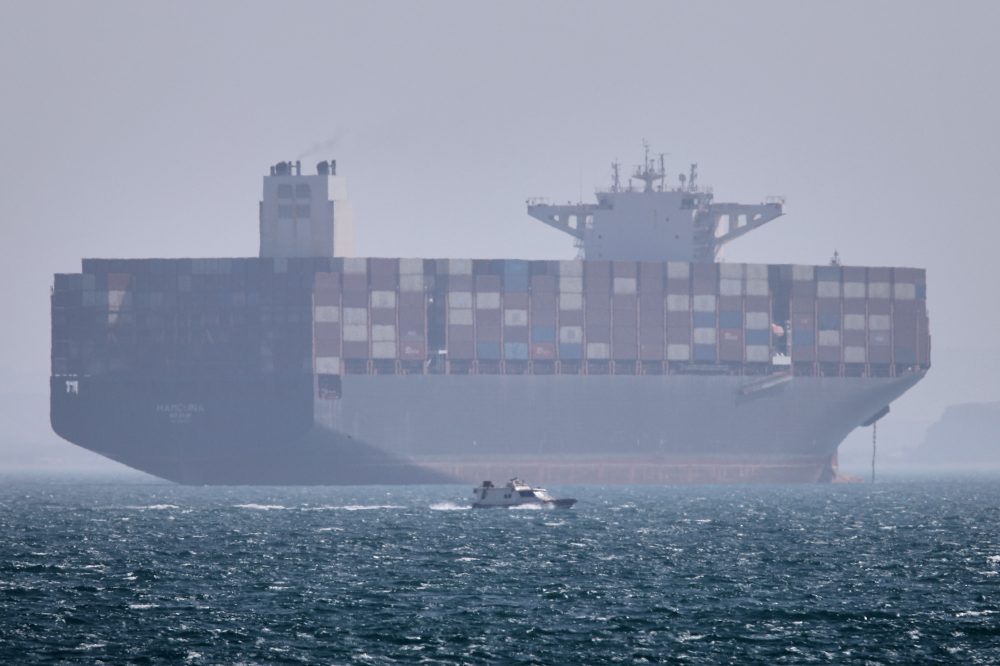

NEW YORK — Maritime companies continue facing enormous challenges as more than 1,550 vessels carrying approximately 22,500 crew members remain trapped in the Persian Gulf, with no clear timeline for when the Strait of Hormuz will fully reopen following two months of conflict with Iran.
President Donald Trump launched “Project Freedom” on Sunday as a U.S.-led initiative to escort ships through the strategic waterway. While two vessels successfully made the journey, Trump suspended the program by Tuesday to provide space for potential diplomatic negotiations to resolve the conflict.
The dangers for maritime traffic persist despite these efforts. A container vessel operated by CMA CGM Group sustained damage during an attack while trying to navigate the strait, the French shipping company reported Wednesday. Concerns about Iranian speedboats and unmanned aircraft continue prompting major shipping operators to declare the passage too hazardous for regular transit.
“Ultimately, it’s still going to come back to the primary issues of risk and safety,” maritime lawyer Sean Pribyl from Holland & Knight in Washington, D.C. explained regarding shipping companies’ calculations. “It seems as though we’re not anywhere near to returning to a free flow of traffic and navigation through the strait,” Pribyl noted.
Prior to the Iranian conflict, between 100 and 135 ships traveled through the Strait of Hormuz each day, data from Lloyd’s List Intelligence shows. That volume has dropped dramatically as Iran requires vessels to undergo approval procedures managed by the Islamic Revolutionary Guards Corps, including routing near Iranian waters, providing crew and cargo details, and in some instances making payments. However, any transactions with the IRGC could violate U.S. and European Union sanctions, as both have classified the organization as a terrorist group.
The stranded cargo encompasses oil and petroleum-based products like fertilizer, along with thousands of maritime workers. Air Force General Dan Caine, who chairs the Joint Chiefs of Staff, confirmed Tuesday that over 1,550 ships with roughly 22,500 sailors aboard remain stuck inside the Persian Gulf.
As part of its pressure campaign against Iran, the U.S. Navy has established a blockade of Iranian ports, maintaining enforcement positions outside the strait in the Gulf of Oman and Arabian Sea.
According to Holland & Knight’s Pribyl, shipping companies and their insurers continue evaluating the strait’s conditions. Vessels typically maintain two primary insurance types: protection and indemnity coverage for property and third-party responsibilities, plus war risk policies during conflicts that address combat-related damage and losses.
Insurance expenses for regional vessels have surged dramatically due to attack risks, climbing from under 1% of cargo value to between 3% and 10% during the current crisis, explained Ed Anderson, who teaches supply chain and operations management at the University of Texas McCombs School of Business. Despite insurance availability, most shipping companies consider the crossing too dangerous to attempt.
“Ferrying out a couple of ships has not really affected the shipping industry in any way whatsoever,” Anderson observed.
Hapag-Lloyd AG, among the globe’s largest container shipping operations, reports the Hormuz crisis costs the company $60 million weekly, primarily through skyrocketing fuel and insurance expenses. With a 301-ship fleet including four vessels stranded in the Persian Gulf, the company has suspended certain transportation services while seeking alternative routes through safe ports or overland options. “These options are however limited in capacity and cannot completely replace the regular maritime routes through the region,” the company stated.
Maersk confirmed its U.S.-flagged Alliance Fairfax vehicle carrier successfully departed the Persian Gulf through the Strait of Hormuz “accompanied by U.S. military assets” Monday. “The transit was completed without incident, and all crew members are safe and unharmed,” the company announced.
Oil markets and shipping operations will likely remain unstable until attack risks in the Strait of Hormuz clearly diminish, warned Kaho Yu, who leads energy and resources analysis at risk intelligence firm Verisk Maplecroft.
“Even with diplomatic engagement continuing, energy markets are unlikely to return quickly to pre-crisis assumptions,” Yu stated. “Refiners, shippers, and commodity traders will remain cautious until there is clearer evidence that Hormuz disruptions will not re-escalate.”
Wednesday’s diplomatic discussions between Iranian and Chinese officials focused on reducing tensions. However, “Hormuz remains the real metric that will be watched,” Yu emphasized. “Tanker traffic and energy flows over the coming weeks and months are likely to matter more than diplomatic language in assessing whether Beijing can translate influence with Tehran into practical stability.”
Even if ceasefires hold and ships gradually resume Strait of Hormuz passages, shipping operations won’t “snap back overnight,” cautioned Razat Gaurav, CEO of supply chain management firm Kinaxis.
“Even when conditions improve, carriers, insurers, and shippers need confidence that stability will hold before capacity and routes fully normalize,” Gaurav explained. “Air cargo can recover relatively quickly, but ocean shipping typically takes weeks or months because of longer lead times and contractual constraints.”
Gaurav predicted shipments of specific commodities like liquid natural gas and sulfur, where Middle Eastern sources dominate supply chains, may resume more rapidly as backlogs clear. However, “most shippers will remain cautious until stability proves durable,” he concluded.