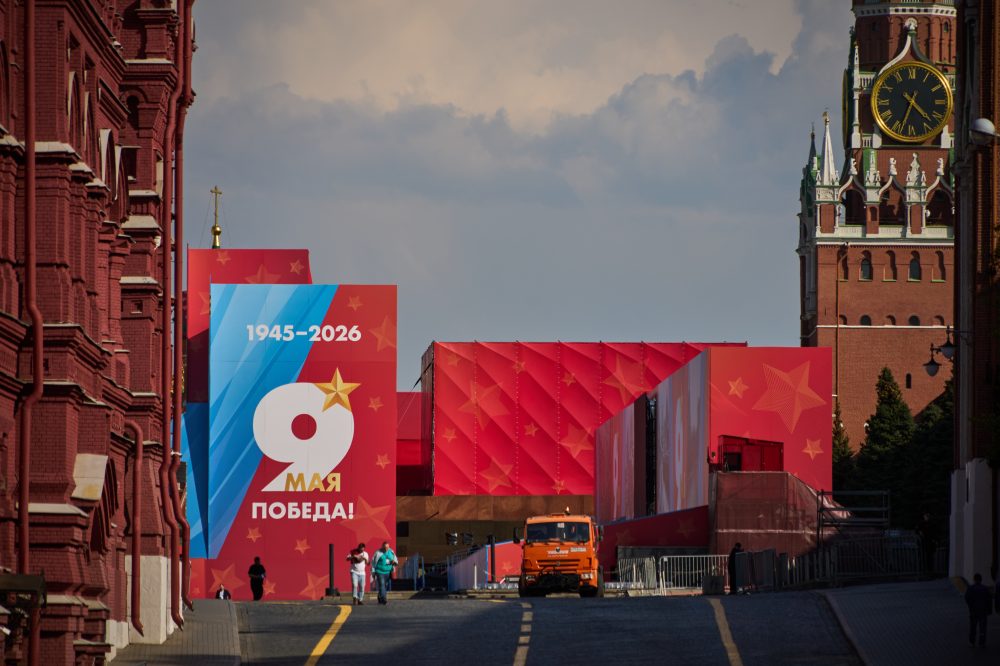

Moscow’s defense forces intercepted 347 Ukrainian drones during an extensive nighttime assault, Russian military officials announced Thursday, marking what appears to be a substantial offensive following Russia’s rejection of a ceasefire proposal earlier this week as tensions escalate before Russia’s Victory Day commemorations.
The intercepted aircraft targeted 20 different Russian territories, including the capital city, defense officials reported, representing Ukraine’s second-largest aerial offensive since Russia began its full-scale invasion over four years ago. The most extensive previous attack occurred in March when Ukraine deployed 389 drones.
The strike preceded Russia’s most significant national holiday, commemorating the end of World War II and Nazi Germany’s defeat. Russian leadership had announced a unilateral halt to military operations in Ukraine for Friday and Saturday.
Ukraine had initially agreed to pause hostilities starting Tuesday at midnight. However, Ukrainian President Volodymyr Zelenskyy stated that Moscow ignored this peaceful gesture and continued launching attacks.
“Russia has not stopped any type of its military activity. Unfortunately, it has not stopped. Ukraine will act symmetrically,” Zelenskyy said in his regular evening video address Wednesday.
Tensions have escalated as Russia’s Victory Day observances draw near while U.S.-sponsored peace initiatives remain stalled.
Moscow will disable all mobile internet connectivity and text messaging on May 9, state media announced Thursday, according to the Ministry of Digital Development, Communications and Mass Media.
Additionally, the traditional Moscow parade will exclude its customary display of tanks, missiles and other military hardware for the first time in almost twenty years.
Russian officials express concern about potential Ukrainian strikes, as Kyiv has enhanced its long-distance drone and missile technology.
The Russian Defense Ministry referenced the “current operational situation” when explaining the decision to remove military equipment. Kremlin representative Dmitry Peskov attributed the reduced celebrations and heightened Moscow security to Ukraine, accusing Kyiv of “terrorist activity,” apparently referring to the drone attacks.
The communication restrictions will affect websites on Russia’s designated “white list,” a collection of government-approved online platforms maintained during the nation’s frequent internet blackouts.
Residential internet and Wi-Fi connections will remain operational, authorities confirmed.
Ukraine’s defensive systems eliminated 92 of 102 drones that Russia deployed overnight, military sources reported.
Russia continues to hold a substantial drone advantage, frequently launching hundreds in individual strikes.