
KINSHASA, Congo — The Democratic Republic of Congo’s leader declared Wednesday that his nation cannot conduct scheduled elections following his presidency unless devastating warfare plaguing the country’s eastern regions comes to an end and peace is restored.
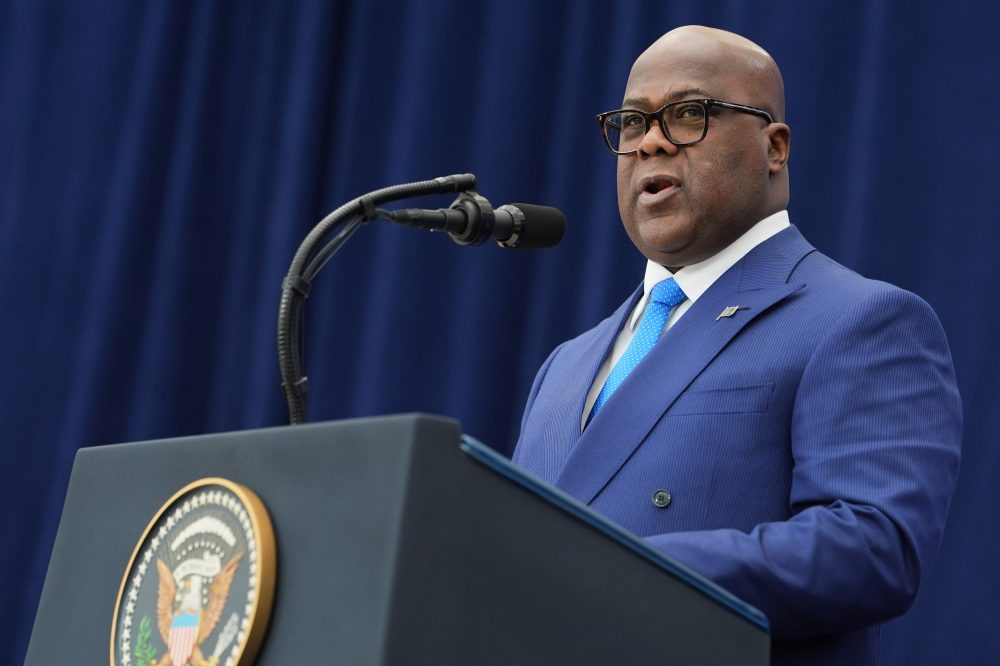
President Félix Tshisekedi made these statements during a nationally broadcast speech where he addressed multiple issues, including migrant deportation agreements with the Trump administration. Tshisekedi’s current presidential term concludes in December 2028.
Violence that has persisted for decades in Congo intensified dramatically in January 2025 when M23 rebels, supported by Rwanda, launched an offensive capturing the crucial city of Goma. The militant group subsequently seized Bukavu in February as part of their territorial expansion campaign. This recent surge in combat has claimed approximately 3,000 lives and has deepened an already catastrophic humanitarian emergency affecting roughly 7 million displaced individuals.
Attempts at peace negotiations facilitated by the United States and other diplomatic initiatives have failed to achieve lasting results.
“If we cannot end this war, unfortunately we will not be able to organize elections in 2028,” said Tshisekedi.
“But it will not be because I refused to organize them, the resources are there we can do it, but we cannot organize them without North Kivu and South Kivu,” he added, referring to two eastern provinces.
Prior to this year’s military escalation, eastern Congo had endured prolonged instability, with national armed forces battling over 100 different militant organizations — with M23 representing the most significant threat — frequently competing for control over the region’s valuable mineral deposits.
Tshisekedi, currently serving his second presidential term which represents the constitutional maximum, hinted at potentially seeking additional time in office.
“I have not sought a third term, but I tell you: If the people want me to have a third term, I will accept,” he said, adding that a referendum on the constitution would have to take place first to approve an amendment allowing a president to seek more than two terms.
Political opposition figures immediately condemned Tshisekedi’s televised remarks. Congolese politician André Claudel Lubaya accused Tshisekedi of invoking supposed popular support “to justify a fraudulent intention.”
Seth Kikuni, who has run for president twice previously, posted on social media platform X that if Tshisekedi “threatens to seize power” in 2028, opposition forces would have only one remaining choice — “to cross the Rubicon and throw the dice.”