
Israeli Prime Minister Benjamin Netanyahu delivered a stark warning Thursday that enemy combatants cannot expect protection anywhere, following his military’s assassination of a senior Hezbollah leader in the group’s Beirut stronghold.
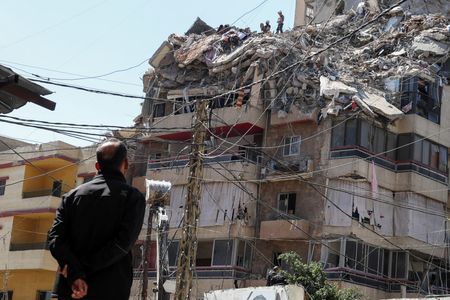
The targeted killing Wednesday represented Israel’s first military action against Beirut’s southern neighborhoods since a fragile ceasefire took effect last month, according to military officials.
Israeli forces confirmed they eliminated the leader of Hezbollah’s specialized Radwan unit, though the Iran-supported organization has remained silent about the attack or their commander’s fate.
“He likely read in the press that he had immunity in Beirut. Well, he read it and it is no longer the case,” Netanyahu declared in his public remarks.
Fighting between Israeli forces and Hezbollah resumed March 2nd after the militant group launched attacks following a joint U.S.-Israeli operation against Tehran.
Wednesday’s assassination threatens the Lebanese ceasefire agreement that developed alongside broader Middle Eastern peace efforts, particularly since halting Israeli operations in Lebanon remains a central Iranian requirement in ongoing Washington negotiations.
President Donald Trump revealed the Lebanese ceasefire arrangement April 16th, which initially reduced regional violence significantly. Beirut had remained untouched by Israeli military action for weeks before Wednesday’s operation.
However, both sides have maintained combat operations in southern regions, where Israeli forces established what they term a protective buffer zone.
Netanyahu identified the eliminated Hezbollah official as Ahmed Ali Balout, stating the commander “thought he could continue to direct attacks against our forces and our communities from his secret terrorist headquarters in Beirut.”
“I say to our enemies in the clearest possible way: No terrorist has immunity,” the Israeli leader emphasized.
Lebanese health authorities report over 2,700 fatalities since fighting resumed March 2nd, with approximately 1.2 million Lebanese citizens displaced from their residences, particularly from southern territories.
Israeli military casualties include 17 soldiers killed during southern Lebanon operations, plus two civilian deaths in northern Israel.
Wednesday alone saw 11 Lebanese deaths from Israeli military strikes across three separate southern locations, based on health ministry records.
Hezbollah claimed responsibility for 17 separate attacks against Israeli positions in southern Lebanon Wednesday, while Israeli commanders reported destroying more than 15 militant facilities the same day.
Israeli military intelligence indicates Hezbollah has launched hundreds of rockets and unmanned aircraft toward Israel since March 2nd.
Hezbollah maintains they possess legitimate authority to oppose Israeli forces controlling southern territories.
Israel’s security perimeter extends up to 10 kilometers into southern Lebanon, with officials claiming the zone protects northern Israeli communities from militants operating within civilian populations.
The Lebanese ceasefire initially covered 10 days before receiving a three-week extension during discussions between Lebanese and Israeli diplomatic representatives in Washington, facilitated by Trump at the White House.
Hezbollah sharply criticizes the Lebanese government’s Israeli communications, highlighting significant internal Lebanese political divisions regarding the militant organization.
Trump previously expressed enthusiasm about hosting both Netanyahu and Lebanese President Joseph Aoun soon, suggesting strong possibilities for a comprehensive peace agreement this year.
However, Lebanese Prime Minister Nawaf Salam stated Wednesday that discussing high-level Lebanese-Israeli meetings remains premature, emphasizing that strengthening ceasefire arrangements must precede any future diplomatic negotiations between government representatives in Washington.