
WASHINGTON — American military forces struck an Iranian oil vessel on Wednesday in the Gulf of Oman while President Donald Trump continues diplomatic efforts to pressure Tehran into accepting a peace agreement to conclude the current conflict, according to officials.
U.S. Central Command reported through social media that an American fighter aircraft disabled the tanker’s steering system as the vessel attempted to break through the naval blockade surrounding Iranian harbors.
The military action took place during an ongoing ceasefire between the two nations. Trump has warned Tehran of renewed aerial bombardments unless they agree to terms that would reopen the strategically vital Strait of Hormuz.
In a social media message, Trump indicated the two-month conflict might conclude soon, potentially allowing disrupted petroleum and gas exports to resume. However, he emphasized this outcome hinges on Iran’s acceptance of a proposed settlement he did not elaborate on.
“If they don’t agree, the bombing starts,” Trump wrote.
In a separate development, Israeli forces launched their first attack on Beirut’s southern districts since the April 17 ceasefire agreement with the Iranian-supported Hezbollah organization. Combat operations have persisted in southern Lebanon despite the truce.
The most recent Beirut bombardments occurred April 8, when extensive Israeli military operations resulted in over 350 deaths. Lebanese casualties have exceeded 2,500 since hostilities commenced March 2, just two days following the joint Israeli-American military campaign against Iran.
Netanyahu’s administration stated Wednesday’s unannounced assault aimed at a Hezbollah Radwan Force leader. The militant group has not yet responded to the strike.
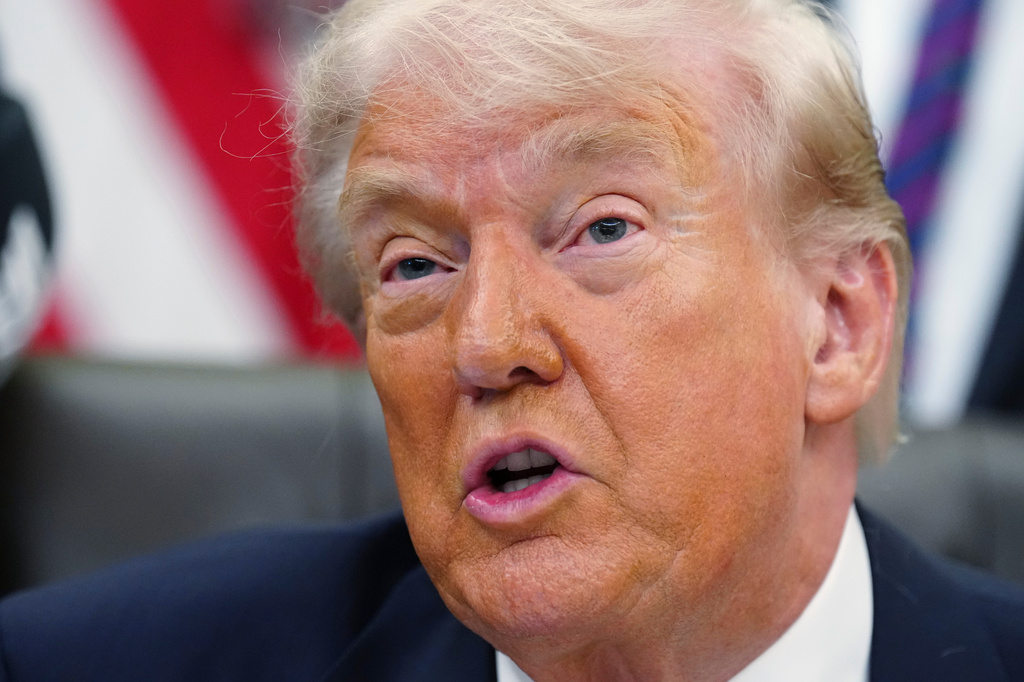
Trump maintained Wednesday that Iranian leadership desires to conclude the war.
“We’re dealing with people that want to make a deal very much, and we’ll see whether or not they can make a deal that’s satisfactory to us,” the president stated.
Speaking from the White House and through social media, Trump indicated America might ultimately impose a resolution.
“If they don’t agree, the bombing starts,” Trump posted online, “and it will be, sadly, at a much higher level and intensity than it was before.”
According to Axios reporting, the White House believes it’s approaching an agreement with Iran involving a single-page document to terminate hostilities. While no final deal exists, potential terms reportedly include halting Iranian uranium processing, removing American economic sanctions, releasing frozen Iranian assets, and reopening the strait to maritime traffic.
White House officials have not responded to inquiries regarding the potential settlement.
Iranian Foreign Ministry representative Esmaeil Baghaei informed state television that Tehran had “strongly rejected” the American proposals mentioned by Axios, while continuing to review the most recent proposed framework.
The fragile ceasefire between Washington and Tehran has remained mostly intact since beginning April 8. Pakistan facilitated direct negotiations between both countries last month, though they failed to produce an agreement.
Iranian Foreign Minister Abbas Araghchi’s diplomatic mission to China preceded Trump’s scheduled visit to Beijing.
Trump plans to participate in a significant summit May 14-15 with Chinese leader Xi Jinping. Trump was the most recent American president to visit China in 2017.
“We believe that a comprehensive ceasefire is urgently needed, that a resumption of hostilities is not acceptable,” Wang stated in recorded remarks from the meeting.
China’s foreign minister described the conflict as having “not only caused serious losses to the Iranian people, but also had a severe impact on regional and global peace.”
Araghchi informed Iranian state media that his visit encompassed discussions about the Strait of Hormuz, Iran’s atomic energy program, and economic penalties imposed on Tehran.
Trump has insisted on significant reductions to Tehran’s controversial nuclear activities.
An official statement from China’s Foreign Ministry website indicated China recognizes Iran’s commitment to avoid developing nuclear weapons while supporting its “legitimate right to the peaceful use of nuclear energy.”