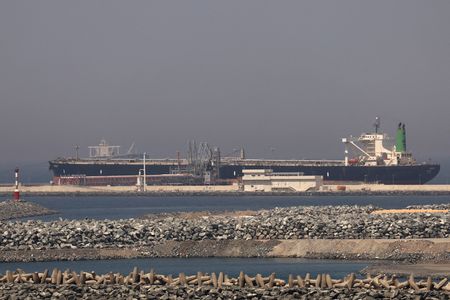

The United Arab Emirates has been secretly transporting oil tankers through the volatile Strait of Hormuz with their tracking systems turned off to evade potential Iranian strikes, according to industry insiders and maritime data.
These covert operations represent just a small portion of the UAE’s normal oil export volumes before the current U.S.-Israeli conflict with Iran began. However, they highlight the dangerous lengths that oil producers and purchasers will go to in order to maintain crude sales amid regional turmoil. Meanwhile, other Gulf nations including Iraq, Kuwait, and Qatar have either stopped exports entirely, slashed prices dramatically to attract reluctant buyers, or shifted to Red Sea shipping routes like Saudi Arabia.
During April, Abu Dhabi National Oil Company successfully moved at least 4 million barrels of Upper Zakum crude and 2 million barrels of Das crude using four tankers departing from Gulf terminals, according to three industry sources and data from maritime tracking firms Kpler and SynMax.
The oil shipments were handled through various methods: some cargo was transferred ship-to-ship to vessels bound for Southeast Asian refineries, other loads went into Omani storage facilities, while some tankers sailed directly to South Korean processing plants, the sources revealed.
This marks the first time Reuters has documented this export system in operation.
ADNOC representatives chose not to provide comments regarding these shipments.
Iran’s response to the U.S.-Israeli military actions that started February 28 has essentially blocked the Strait of Hormuz to all exports except their own, trapping approximately one-fifth of the world’s oil and gas supplies. This blockade, combined with a U.S. embargo that has stopped Iranian exports recently, has driven global oil prices above $100 per barrel.
Since the conflict began, ADNOC has been forced to reduce exports by over 1 million barrels daily from the 3.1 million barrels per day shipped in the previous year, according to Kpler tracking data. The majority of its exports consist of Murban grade oil transported via pipeline from inland fields to Fujairah.
DANGEROUS VOYAGES
These ADNOC shipments face the constant threat of Iranian attacks. This danger became evident when the UAE accused Iran on Monday of using drone strikes against an empty ADNOC vessel, the Barakah, while it traveled through the Strait of Hormuz.
The tankers operate with their automatic identification transponders switched off, decreasing the likelihood of detection by Iranian military forces. This same strategy is regularly used by Iran to circumvent U.S. sanctions on their oil exports.
This tracking blackout also complicates efforts to monitor the complete volume of ADNOC’s Gulf exports through standard shipping databases, suggesting April’s actual shipment totals could be even higher.
However, Kpler records showed the very large crude carrier Hafeet took on 2 million barrels of Upper Zakum crude within the Gulf on April 7 and successfully passed through the strait by April 15.
Beyond the strait, this cargo was moved to the Greek-registered VLCC Olympic Luck between April 17-18 and transported to Malaysia’s Pengerang refinery, a partnership between Malaysia’s state oil company Petronas and Saudi Aramco, based on Kpler and SynMax analysis.
The Hafeet operates under ADNOC’s Logistics and Services division, which declined comment. Greece-based Olympic Shipping & Management, operators of the Olympic Luck, and Petronas did not respond to comment requests.
Breaking up oil shipments through ship-to-ship transfers enables ADNOC to market smaller cargo lots and allows the large tankers to return quickly to Gulf terminals for additional loading.
One divided Upper Zakum cargo that reached a Northeast Asian refinery sold at an unprecedented premium of $20 per barrel above ADNOC’s official pricing, according to the directly informed source.
For Abu Dhabi’s Das crude variety, the VLCC Aliakmon I collected 2 million barrels on April 27 and cleared the strait by May 2, delivering to Oman’s Ras Markaz storage facility on May 3, Kpler data indicated.
Kpler and SynMax also tracked two Suezmax vessels — the Odessa and Zouzou N. — each carrying 1 million barrels of Upper Zakum crude, heading toward South Korea after strait passage.
All three vessels operate under Greece-based Dynacom Tankers Management. The identity of who chartered these Dynacom tankers remains unclear, and the company did not respond to comment requests.
ADNOC plans to maintain oil sales from within the strait, informing select customers in late April that they could receive Das and Upper Zakum crude starting in May through ship-to-ship transfers at ports beyond the Gulf, including Fujairah and Oman’s Sohar.
The company is currently negotiating with Asian refineries to market May-loading Das and Upper Zakum shipments, according to the source with direct knowledge of ADNOC’s strategy and an Indian refining contact, who requested anonymity as they lack authorization to speak with media.