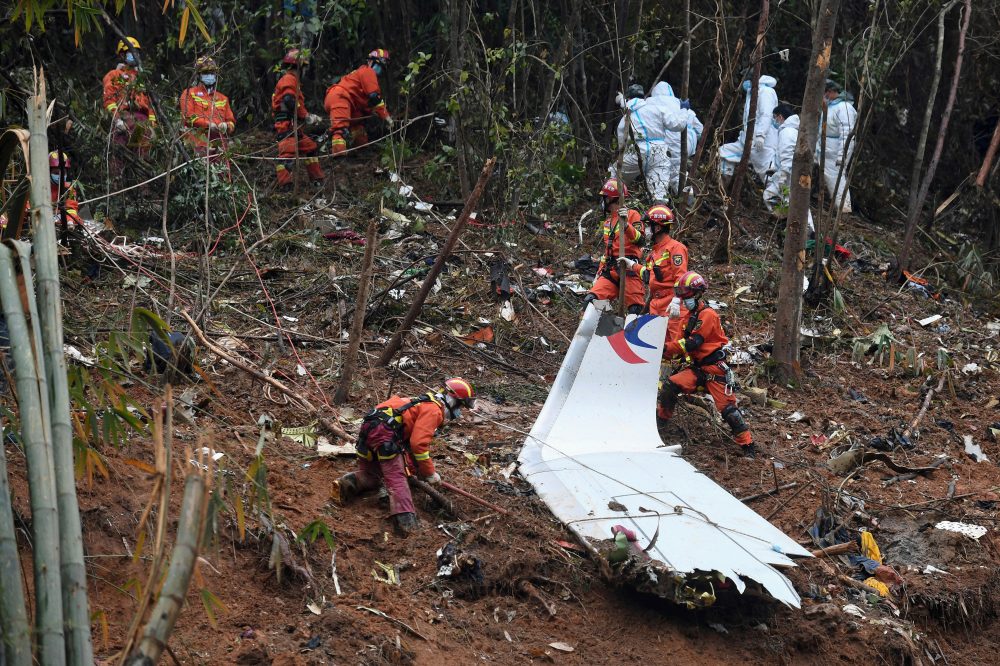

Flight data recently made public indicates that fuel was deliberately shut off to both engines of a China Eastern Airlines aircraft before it crashed into a mountain in 2022, claiming the lives of all 132 passengers and crew members.
The National Transportation Safety Board disclosed findings from the Boeing 737-800’s flight data recorder following a public records request. U.S. investigators joined the Chinese probe since American manufacturers built both the aircraft and its engines, with the NTSB recognized globally for its expertise in black box analysis following aviation disasters.
While aviation safety specialists concur that the information demonstrates both engines failed and someone forced the aircraft into a steep dive plus a complete 360-degree rotation, definitive conclusions remain elusive. China’s Civil Aviation Administration has not yet published its final investigation findings more than four years after the incident, despite international protocols recommending crash reports be completed within approximately one year.
The NTSB document bears a July 1, 2022 date and was made public on May 1, though media coverage only emerged this week.
John Cox, CEO of Safety Operating Systems, explained that Boeing 737 fuel controls are engineered to prevent accidental activation. “The levers lock into place, so it’s likely that someone deliberately moved them both to the cutoff position,” Cox stated. Operating these controls requires pulling them outward first to unlock them before movement is possible.
Recording ceased while the aircraft remained at 26,000 feet after the flight recorder and hydraulic systems lost power, but the preceding 12 minutes of data provide crucial insights into the sequence of events.
Though the cockpit voice recorder continued functioning on battery power, the NTSB has not released transcripts from those recordings, leaving that disclosure to Chinese authorities.
Former NTSB and Federal Aviation Administration crash investigator Jeff Guzzetti believes the flight information points to a cockpit confrontation and potential pilot suicide, similar to previous incidents including a 2015 Germanwings crash in the French Alps that killed everyone aboard.
“Typically when you want to roll an airplane, it’s a smooth movement of the control wheel in one direction. But here you have it moving back and forth, back and forth, as if someone is trying to counter the initial movement of the roll,” Guzzetti explained. “So it’s not conclusive, but it sure has the earmarks of a struggle in the cockpit.”
These revelations highlight ongoing aviation industry worries about pilot mental health support. Many aviators hesitate to seek psychological assistance due to fears of losing medical certification and being prohibited from flying. Recertification processes can extend for months without pay, while some nations ban pilots from using standard psychiatric medications like antidepressants.
“Clearly pilots — and very understandably so — are oftentimes reluctant to come forward, knowing that to get recertified after having gone through a mental health evaluation, it can be very arduous and very lengthy,” Cox noted.
Guzzetti referenced an Egypt Air co-pilot suspected of deliberately crashing his aircraft into the ocean near New York in 1999. More recently in 2023, an off-duty pilot who had consumed psychedelic mushrooms attempted to disable engines on a Horizon Air flight while occupying the cockpit jump seat.
The March 21, 2022 disaster occurred as the jet traveled from Kunming in southwestern China to Guangzhou near Hong Kong. The aircraft entered a steep descent from approximately 29,000 feet, briefly appeared to recover, then struck the mountainside. Impact created a 65-foot crater and ignited surrounding forest.
Flight crew members reported no difficulties before losing communication with air traffic controllers. Chinese investigators found no mechanical defects with the aircraft or crew issues, nor adverse weather conditions.
Cox confirmed the NTSB findings show no indication of aircraft malfunction.
The tragedy marked an unusual safety failure for China’s airline industry, which significantly enhanced its safety record following fatal accidents during the 1990s. China Eastern operates as one of four major government-owned carriers in the nation.