
WASHINGTON (AP) — Over the last day, the Trump administration has delivered wildly inconsistent messages about the Iran conflict, oscillating between claims that a fragile ceasefire remained intact and military actions had ended, to fresh threats of bombing the Islamic Republic.
Tuesday began with Defense Secretary Pete Hegseth describing how American forces were safeguarding trapped vessels so they could navigate through the Strait of Hormuz. He maintained this was a defensive mission and the truce remained valid despite Iran firing missiles and drones at American forces, which destroyed Tehran’s small naval vessels.
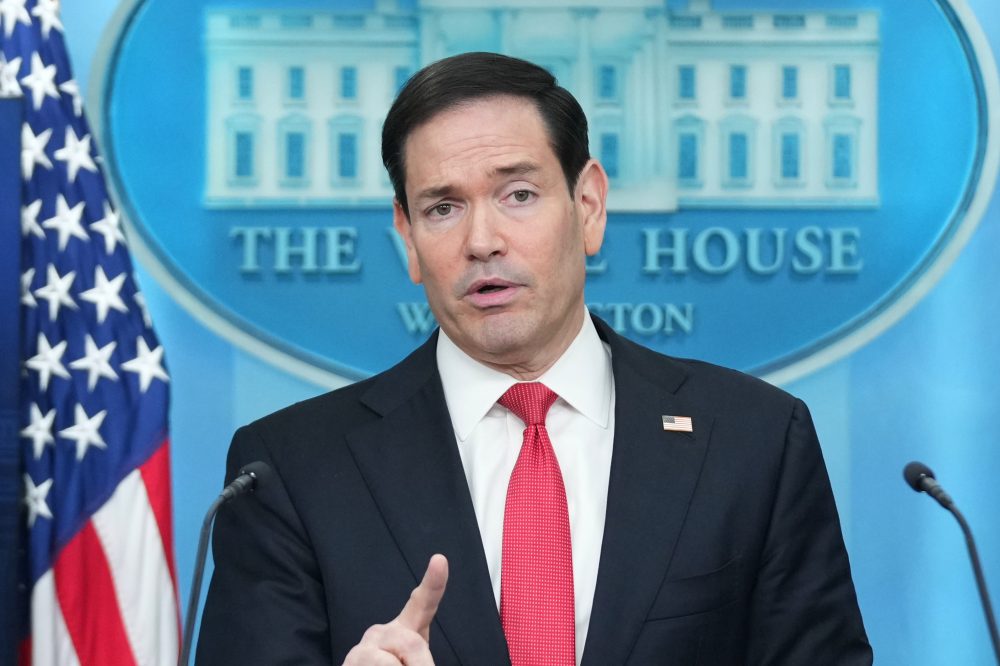
That same afternoon, Secretary of State Marco Rubio informed White House reporters that the military mission had “concluded” and America had accomplished its goals. However, in nearly the same statement, he indicated President Donald Trump was still pursuing a “path of peace” that demanded Iran accept a deal to reopen the crucial oil transport channel.
By Tuesday night, Trump declared the ship protection effort was suspended to allow time for potential negotiations. Then Wednesday morning brought another warning that bombing would continue if Tehran rejected American conditions.
The administration’s fluctuating and frequently conflicting communications during the Iran conflict has created additional confusion this week as the president and his team offered a bewildering account of American strategy to clear the Strait of Hormuz and conclude the war that changed dramatically within just hours.
Government officials have attempted to balance maintaining the ceasefire while reopening the strait, through which 20% of global oil typically passes. Economic consequences are mounting as fuel costs climb, with Republicans under growing pressure to address higher expenses before midterm congressional elections.
The Trump administration has faced messaging challenges because the conflict lacked proper planning, according to Elizabeth Dent, a senior fellow at the Washington Institute for Near East Policy.
“Because it happened very quickly, it wasn’t sold to the American public in a way that I think was palatable,” said Dent, a former official in the State Department and Pentagon. “Now I think Trump is sort of doing everything he can to prevent a return of hostilities because he saw how unpopular the war was.”
During the entire conflict, the president has changed his priorities and views on success. He has offered an unclear definition of a ceasefire. And he has provided his own understanding of legislation requiring congressional approval for military actions after 60 days.
The confusion stems partly from Trump’s habit of making spontaneous statements that effectively create policy, Dent explained. Staff members like Rubio and Hegseth must then clarify Trump’s remarks.
The chaotic 24 hours of Trump administration decision-making also shows recognition that any alternative to an agreement “is going to range from unpalatable to outright ugly” during a politically crucial time for the Republican president, said Ali Vaez, Iran director at the International Crisis Group.
“This is not an administration that operates based on a policy process. It operates based on impulse. And the president seems now both tired of this war and reluctant to continue investing his political capital into it,” Vaez said.
Recent days have exemplified how the Trump administration’s communications can appear disconnected and difficult to understand.
The president announced Sunday that American forces would safely escort hundreds of stranded commercial ships from the strait, which Iran has essentially blocked by attacking vessels near its coastline.
On Tuesday, Hegseth and Joint Chiefs of Staff chairman Gen. Dan Caine reported two American-flagged cargo ships passed through the waterway to begin the effort, but Iran attacked U.S. vessels and the military destroyed six Iranian small attack boats.
When questioned about exchanges of fire from both sides, Hegseth responded, “No, the ceasefire is not over.” Caine also stated Iranian attacks did not constitute “restarting major combat operations.”
Rubio later emphasized Trump’s preference for diplomacy.
“Operation Epic Fury is concluded. We achieved the objectives of that operation,” he stated, using the code name for the U.S.-Israeli strikes on Iran. “What the president would prefer is a deal.”
An agreement appeared more likely when Trump posted Tuesday evening on social media that he was stopping the strait operation to observe negotiation progress. But Wednesday morning brought another Iranian threat from Trump.
“If they don’t agree, the bombing starts, and it will be, sadly, at a much higher level and intensity than it was before,” he posted on Truth Social.
The U.S. military reported Wednesday that it fired upon and disabled an Iranian oil tanker attempting to break through Iran’s shipping blockade.
Another puzzling aspect involves the administration’s attempts to convince allies to send warships to help reopen the Strait of Hormuz.
Trump has criticized countries unwilling to contribute more, telling them to “go get your own oil” and stating America shouldn’t secure the strait alone. But administration officials have begun actively seeking assistance while moderating their rhetoric.
Rubio said the problem isn’t lack of interest, but that many cannot provide necessary resources.
“A lot of countries would love to do something about it. But they don’t have a navy, right? Or they can’t get there in time,” he explained.
Following Trump’s sudden initiative suspension, two U.S. officials said the administration was still determining whether and how to continue planning, after the State Department’s formal support request to countries last week.
The officials, speaking Wednesday anonymously to discuss internal discussions, said Trump’s announcement was unexpected and they received no detailed guidance about withdrawing support requests.
American allies including Britain and France have rejected Trump’s intermittent suggestions for military involvement, but they have formed a separate international maritime coalition to secure the strait — only after shipping threats end. France’s aircraft carrier group is moving south of the Suez Canal into the Red Sea preparing for a potential French-British strait mission.
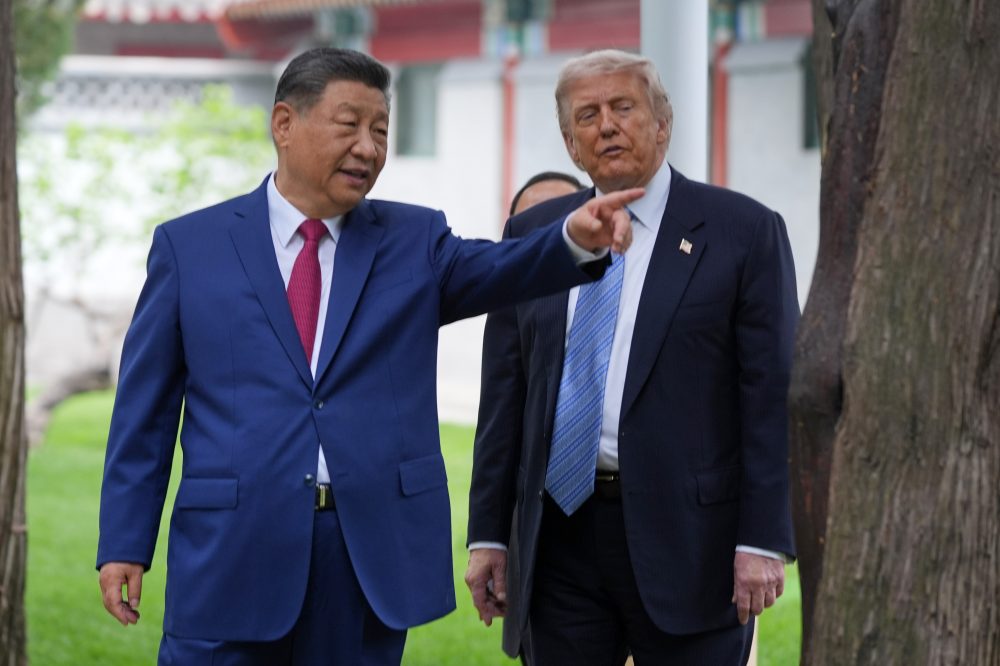
The situation has been further complicated by Trump’s scheduled Beijing trip next week.
“Going to China while the strait remains closed is humiliating for President Trump and puts China in a position of strength vis-a-vis the United States, because President Trump would have to, as he has done recently, ask for China’s help to resolve a problem that didn’t exist before he launched a war,” Vaez said.