
MANILA, Philippines — Officials from Southeast Asian nations are preparing to release a strategic response plan emphasizing respect for international law, national sovereignty, and maritime navigation rights in what appears to be an indirect criticism of the United States, Israel, and Iran regarding the ongoing Middle East conflict that has affected their region, according to a preliminary document obtained Thursday by The Associated Press.
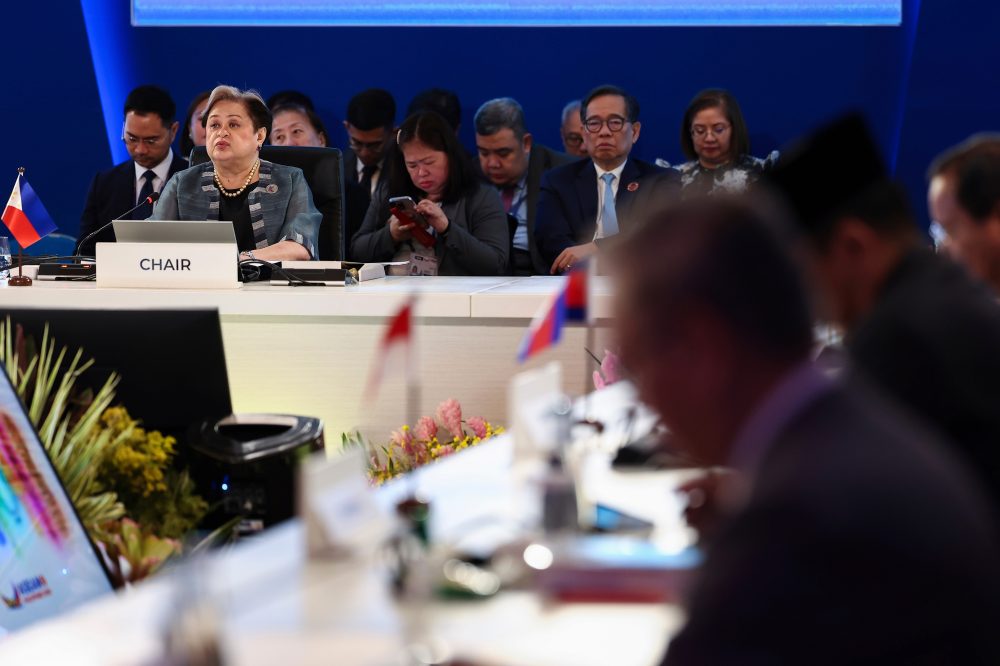
The statement will be released when Association of Southeast Asian Nations officials convene for their yearly conference this Friday on the central Philippine island of Cebu.
The document also details emergency measures to address energy supply disruptions and other worldwide challenges stemming from the conflict.
Philippine President Ferdinand Marcos Jr., serving as this year’s host, has indicated the conference with 10 fellow national leaders plus a junior representative from Myanmar will concentrate on regional energy stability, food distribution, and safeguarding citizens, including over one million Southeast Asian employees and maritime workers stationed in the Middle East.
Marcos has directed that the meeting be conducted without its customary ceremonial elements due to global economic uncertainties.
Southeast Asia, a turbulent yet rapidly developing area home to approximately 680 million residents, faces numerous significant tension points, such as longstanding territorial conflicts with China, Myanmar’s five-year internal war, and recent boundary disputes between Thailand and Cambodia.
However, regional officials have voiced substantial worry about a conflict that has triggered worldwide economic consequences and put many of their nationals at risk.
Multiple workers in the Middle East, including two Philippine citizens, have lost their lives in the ongoing violence, while thousands of Southeast Asian workers have either returned home voluntarily or been removed by their governments from the unstable area.
The Asian Development Bank issued a warning in March, roughly one month following the start of Middle Eastern hostilities, that extended disruptions from the war might restrict economic growth and increase inflation across Asia and the Pacific, regions that rely heavily on Middle Eastern oil and natural gas.
“We emphasized the importance of upholding international law and ensuring that regional cooperation remains anchored in dialogue, trust and respect for sovereignty,” the draft statement says.
Southeast Asia will “maintain open, transparent and predictable markets as well as secure and open sea lanes, and ensure freedom of navigation, the safe, unimpeded and continuous transit passage of vessels and aircraft in straits used for international navigation,” it says.
That will “preserve the unimpeded flow of essential goods, including food, energy and key inputs, in accordance with international law, particularly the 1982 United Nations Convention on the Law of the Sea,” it says.
The ASEAN officials will confirm their “shared resolve” to strengthen regional stability.
The emergency strategy includes measures such as potentially approving an agreement this year to enable coordinated emergency fuel distribution, developing a regional electrical network, expanding the area’s crude oil supply sources, encouraging electric vehicle adoption, and researching new technologies, including peaceful nuclear power.
They are also pursuing “a possible ASEAN crisis communication and coordination protocol to ensure a coherent, timely and coordinated regional response to crises.”
Beyond the Philippines, ASEAN includes Brunei, Cambodia, Indonesia, Laos, Malaysia, Myanmar, Singapore, Thailand, and Vietnam. East Timor gained full membership status in October of last year.