
Democratic Republic of Congo’s President Felix Tshisekedi has sparked controversy by expressing willingness to pursue a third presidential term, drawing fierce opposition from political rivals who accuse him of attempting to circumvent constitutional term limits.
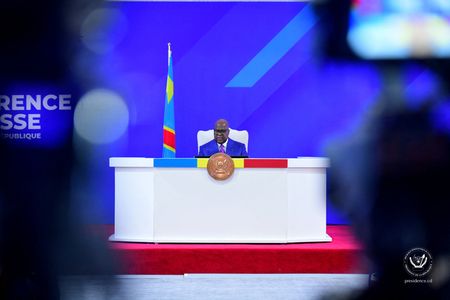
During a Wednesday evening press conference, Tshisekedi responded to questions about recent constitutional revision proposals from his supporters by stating: “I have not asked for a third term, but if the people want a third term, I will accept.”
The president also warned that continuing violence in eastern Congo could prevent the scheduled 2028 presidential election from taking place as planned. “If this war cannot be ended, unfortunately we will not be able to organise elections in 2028,” Tshisekedi explained. “You cannot hold elections when parts of the country are occupied.”
Congo’s current constitution restricts presidents to serving two terms maximum. Any modification would require constitutional amendments approved through a public referendum, according to Tshisekedi.
Political opposition leaders have condemned the president’s statements, warning they could trigger fresh political instability in the mineral-wealthy nation that has suffered through decades of armed conflict.
Former presidential candidate Delly Sesanga responded on social media platform X, writing: “The DRC cannot enter a new cycle of institutional tensions and the personalization of power. All democrats must stand against this slide.”
The controversy echoes Congo’s previous political crisis under ex-president Joseph Kabila, who postponed elections past his constitutional mandate’s expiration in 2016, leading to fatal demonstrations and international criticism.
Tshisekedi, whose father Etienne Tshisekedi was a prominent opposition figure, secured re-election for his second term in December 2023. He initially suggested constitutional changes in late 2024, arguing the existing document was primarily written by foreign legal advisors and needed modernization.
Recent weeks have seen intensified calls for constitutional reform. In April, Andre Mbata from the Sacred Union coalition invited political parties, civil society organizations, religious groups, labor unions and legal scholars to submit revision proposals.
Mbata announced plans to establish a technical commission after May 20 to review these submissions before presenting recommendations to the president.
The constitutional debate occurs amid ongoing security challenges in eastern Congo, where the AFC/M23 rebel coalition, allegedly supported by Rwanda, maintains control over extensive territory. Rwanda has rejected accusations from the United Nations and Western nations regarding its backing of the insurgent group.
Despite mediation attempts by the United States and other international actors, fighting has persisted in the region.