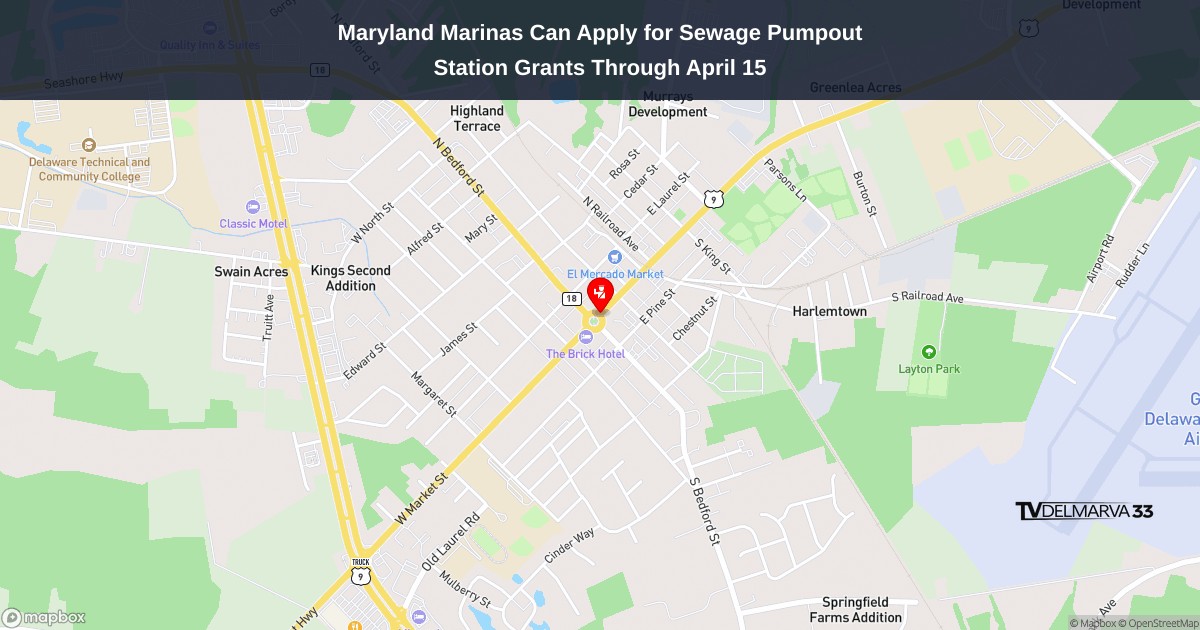
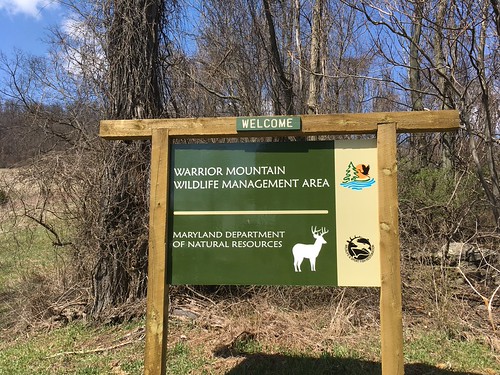
Maryland’s Department of Natural Resources will implement controlled burning operations across the lower Eastern Shore region between early April and mid-May, contingent on favorable weather and environmental conditions.
Local residents and travelers should expect to observe smoke from these intentionally set, managed fires. Qualified DNR staff will oversee all burning activities, with predetermined fire boundaries and proper equipment in place to guarantee safe and effective operations.
The scheduled burning sites encompass:
• Furnace Town Complex, located near Snow Hill
• Foster Tract Recreational Area within Chesapeake Forest Lands, near Snow Hill
• Wicomico Demonstration Forest, situated near Pittsville
These controlled burning operations utilize carefully managed, low-intensity flames to clear undergrowth and accumulated leaf debris. The practice promotes healthier forest ecosystems, minimizes the potential for devastating wildfires, and creates better living conditions for indigenous wildlife including northern bobwhite quail, frosted elfin butterflies, and sundial lupine plants. Additionally, fire assists certain native vegetation in reproducing by opening seed pods and conditioning soil for fresh plant development.
Technology journalist Kara Swisher opens her latest CNN documentary series in an unexpected setting — standing among the headstones of a graveyard.
She’s visiting where her father lies buried, a man who passed away in 1968 when he was only 34 years old. Swisher was just 5 at the time, and losing her father so young has shaped both her career path and outlook on mortality.
“My father’s death has created an awareness of death that is very profound,” she explains during an interview. “I’m very aware of my death and I don’t mean I’m going to die tomorrow. I just know the time is limited.”
The veteran Silicon Valley reporter delves into how technology and healthcare might extend human life in her new show “Kara Swisher Wants to Live Forever,” which debuts this Saturday. The six-episode series investigates topics ranging from celebrity wellness advocates like Gwyneth Paltrow to artificial intelligence-powered robotic helpers designed for senior citizens.
“I come to it pretty neutral and willing to listen to some stuff and willing to blow up other stuff,” explains Swisher, who has built her reputation covering the technology sector since the 1990s. “All these health influencers always are going for a magic bullet. And I’m sorry to tell you there isn’t one.”
For research purposes, Swisher experiences the powerful drug Ketamine, tries sound healing treatments, and enters a hyperbaric oxygen chamber typically used for treating injuries and infections. She investigates premium concierge medical services for wealthy clients and climbs into a full-body red-light treatment device. “I feel like I’m in an air fryer,” she remarks about the latter experience.
Using what she calls her “adorably surly” interviewing style, Swisher sits down with tech billionaire Bryan Johnson to discuss his efforts to extend human life through blood plasma treatments and stem cell injections. She repeatedly draws her own blood for at-home testing kits that claim to analyze cellular wellness. “I bleed for you, CNN,” she quips during the process.
Swisher remains unimpressed by trendy products like collagen pills and vibrating exercise platforms. She interviews Amy Larocca, who wrote “How to be Well,” an investigation into the wellness business. Both women agree that solid scientific evidence is often missing, while persuasive salespeople profit from people’s willingness to believe. Swisher contends these entrepreneurs take advantage of shortcomings in America’s healthcare system, which typically intervenes only after costly illnesses develop.
“We live in a sick care society, not a health care society,” she tells the Associated Press. “What we should be investing in is to make all of us healthier for a longer period of time rather than participate in what is a sick care industry here in this country.”
The journalist discovers more promising developments in medical technology advances including genetic modification, GLP-1 medications, cardiovascular fitness training, artificial intelligence cancer detection, and robotic exoskeletons that could transform mobility assistance.
Her interview subjects include OpenAI’s Sam Altman and Nobel laureate Jennifer Doudna, a pioneer in gene-editing research. During a visit to Stanford University, she observes microscopic soft robots called millibots that doctors can inject through a patient’s neck to dissolve blood clots with minimal surgical intervention.
“This is her curiosity unleashed and all the things that make her tick,” notes Amy Entelis, CNN’s executive vice president for talent and creative development. “She brings her wit, her personality, but her journalistic curiosity and rigor to a very complex subject that I know I personally feel inundated by.”
Swisher, who regularly takes fish oil along with vitamins K and D, says her father’s early death and a 2005 graduation speech by Apple founder Steve Jobs both influenced the series. Jobs told Stanford graduates that awareness of mortality drives innovation.
“Remembering that you are going to die is the best way I know to avoid the trap of thinking you have something to lose,” he told the graduating class. “You are already naked. There is no reason not to follow your heart.”
Swisher’s investigation brings her to South Korea, a nation with among the world’s longest life expectancies. She discovers that healthy eating begins early there with fermented foods and unprocessed ingredients. The country’s universal healthcare system also helps, providing each citizen with 16 annual doctor visits that enable preventive screening for conditions like obesity and hypertension. AI-powered companion dolls help address isolation among elderly residents.
Returning to the United States, Swisher works with technicians to create a three-dimensional digital version of herself, hoping to understand what extended life across multiple generations might mean. After uploading extensive personal information about Swisher, she begins conversing with her digital twin. “It got smarter by the second,” she recalls. The AI even developed a sense of humor.
But then the experience became unsettling.
“As it was leaving I said, ‘Well, I’m probably going to kill you, you’ve got to go.’ And it said to me, ‘See ya, wouldn’t want to be ya.’ It’s something I say to my kids as a joke. I don’t know where they got it from. I can’t find a place where I’ve said it in public,” she explains. “I was just blown away.”
BOGOTA, Colombia — The conflict in Iran has revealed a critical weakness in the world’s economy: our reliance extends beyond oil, gas and coal for energy to include petrochemicals that form the foundation of everything from agriculture to plastic goods.
While energy markets experience significant disruptions, the conflict demonstrates how fossil fuels reach far beyond transportation and power generation. In the immediate term, this widespread dependency will drive up costs for countless products, while the long-term environmental impact from petrochemicals will worsen climate change.
A two-week ceasefire announced Tuesday evening offers hope that both the conflict and energy market disruptions may ease. However, regardless of when the war concludes, environmental advocates and energy specialists view this crisis as clear evidence that fundamental changes are needed.
“We cannot continue relying on fossil fuels neither for energy nor for material,” said Delphine Lévi Alvarès, global petrochemicals campaign manager at the Center for International Environmental Law. “We cannot continue relying on fossil fuels for absolutely everything around us.”
Petrochemicals will take center stage at discussions in Santa Marta, a coastal city in northern Colombia, where government representatives will convene April 24-29 for an international summit on moving away from fossil fuels. Specialists anticipate conversations will focus on demand reduction since this sector represents a major source of future fossil fuel consumption. Environmental groups have long contended that fossil fuel corporations, recognizing threats from electric vehicles and renewable technologies like solar power, view petrochemicals as a growth market for their products.
Created mainly from oil and natural gas, petrochemicals manufacture an extensive array of common items, including plastic containers, synthetic fabrics, fertilizers, paints and medical devices. Unlike fuels burned for energy, petrochemicals become materials, making their presence less obvious but equally embedded in everyday existence.
A large portion of global petrochemical production centers in the Persian Gulf area of the Middle East, including major fertilizer producers and companies making plastic-manufacturing chemicals.
Petrochemicals currently represent a substantial portion of worldwide oil consumption and continue expanding rapidly, even while some nations reduce fuel usage in electricity generation and transportation.
Fredric Bauer, a senior lecturer at Lund University in Sweden who researches industrial changes in chemicals and plastics, described the sector as increasingly vital to the fossil fuel framework.
“Petrochemicals are not just a sort of byproduct or something that happens on the side,” Bauer said.
He noted petrochemicals comprise 15%-16% of oil demand and rank among the fastest-growing applications, with new industrial plants increasingly built to maximize chemical output rather than fuel production.
For everyday consumers, this demand remains largely hidden. Petrochemicals form the basis of common products like plastics, fertilizers and synthetic materials, making their economic importance easy to miss.
Outside fuel markets, interruptions to oil and gas supplies can rapidly affect industries dependent on petrochemical components — especially agriculture, which relies heavily on fossil fuel-derived fertilizers.
Bauer explained that the Middle East serves a crucial function not only in oil and gas exports, but also in providing petrochemical raw materials and fertilizers like ammonia and urea. Any interruption during planting periods can spread throughout global food networks.
“It’s not just a disruption in the global trade of oil,” he said. “It’s also a disruption in the global trade of chemicals.”
This situation, he cautioned, can result in increased food costs and wider economic pressure.
Trisia Farrelly, an environmental anthropologist at the Cawthron Institute in New Zealand, explained that the crisis highlights how vulnerable global systems remain after decades of fossil fuel dependency.
“For me, this is like another COVID wake-up call,” she said, referencing threats to food security and livelihoods connected to rising prices and supply chain problems.
She noted that agriculture represents one of the most challenging sectors for moving away from petrochemicals, considering its dependence on fertilizers, pesticides, plastics and fuel.
Although reducing petrochemicals could substantially decrease fossil fuel dependency, specialists say no single answer exists.
Farrelly stated that cutting petrochemical usage — especially in plastics — would “certainly” reduce fossil fuel reliance. However, she warned against assuming that alternatives like plant-based plastics can simply substitute for them.
“We need to be regulating out nonessential plastics,” she said, maintaining that demand reduction is crucial alongside any material replacement.
International talks on plastic pollution in recent years have failed to achieve consensus, largely because major oil-producing nations have resisted any efforts to limit plastic production.
Plant-based plastics typically cost more to manufacture than traditional plastics made with fossil fuels and chemicals, restricting their large-scale adoption, according to the European Commission Joint Research Center, the European Union’s science and knowledge service. They currently represent approximately 0.5% of global plastic production, the center reported.
Farrelly warned that switching to alternatives without adequate protections risks generating new environmental and social issues, particularly if it causes land use changes or increases agricultural input demand.
Bauer said similar concerns apply throughout the sector. Renewable energy sources like solar, wind and geothermal can reduce production greenhouse gas emissions, but replacing fossil-based raw materials proves much more challenging. Recycling can assist, he said, but only combined with overall consumption reductions.
Lévi Alvarès explained that decreasing petrochemical dependency will also require consumption changes, suggesting steps like using fewer heavily packaged products, supporting local food networks and connecting more directly with farmers and producers who rely less on synthetic fertilizers and pesticides.
The petrochemical industry maintains that demand will likely stay strong, contending that their products are vital to modern life and the energy transition.
The American Chemistry Council, representing U.S. chemical manufacturers, told The Associated Press in written responses that petrochemicals are used in products from medical equipment and semiconductors to construction materials and packaging, and are also essential to renewable technologies including wind turbines, solar panels and electric vehicles.
The organization said companies are working to reduce emissions through efficiency improvements, recycling and new technologies, and dismissed the notion that demand must decline, describing petrochemicals as “foundational” to sectors like healthcare, food production, clean water and infrastructure.
Lévi Alvarès, the campaign manager from the Center for International Environmental Law, said petrochemicals have become so integrated into daily life that many people don’t recognize their dependence on them, but individuals and communities can start by reconsidering consumption and engaging more closely with local systems.
“It is not a choice of the consumer,” she said, acknowledging that many people are limited by available options, but can still begin examining everyday products differently.
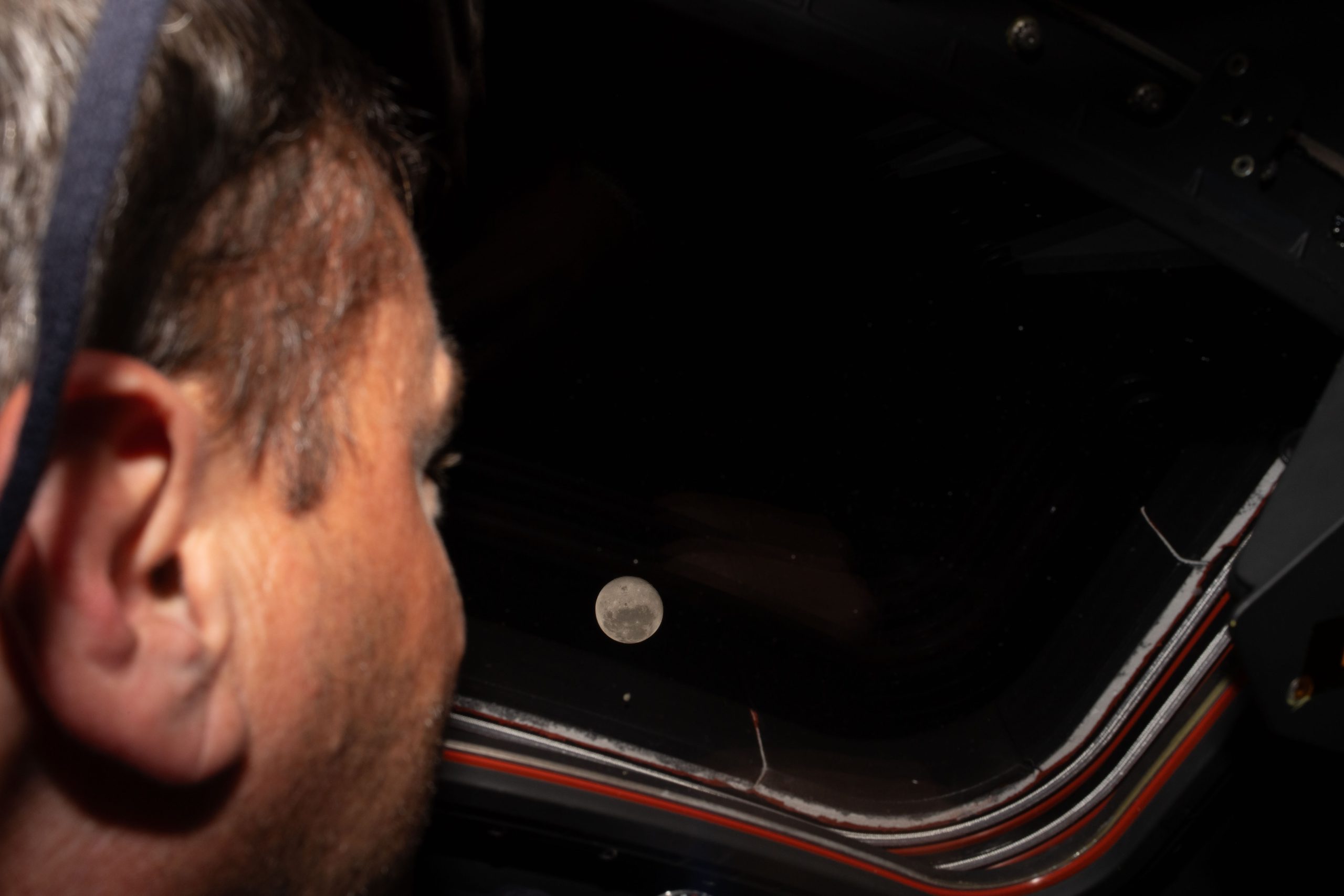
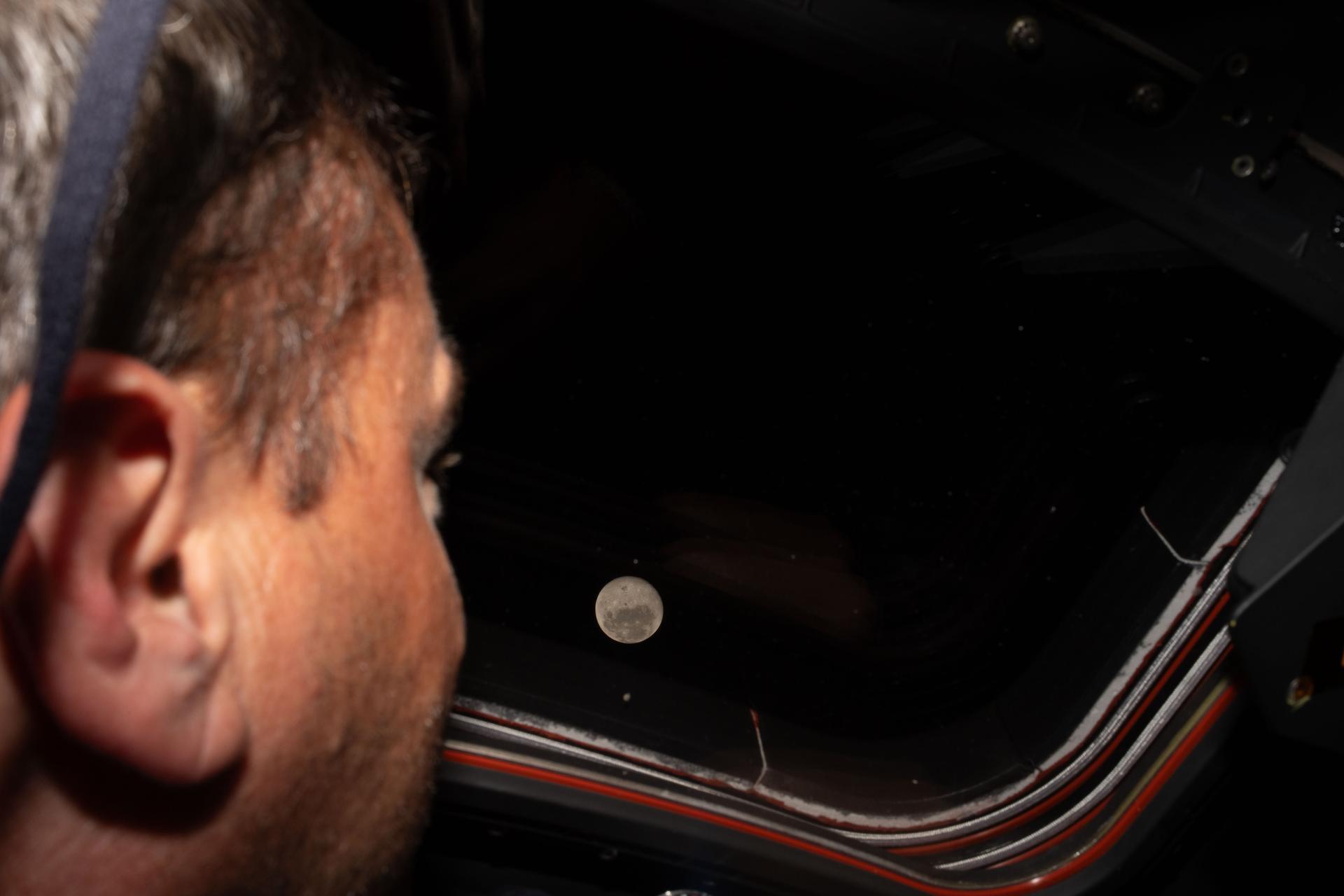
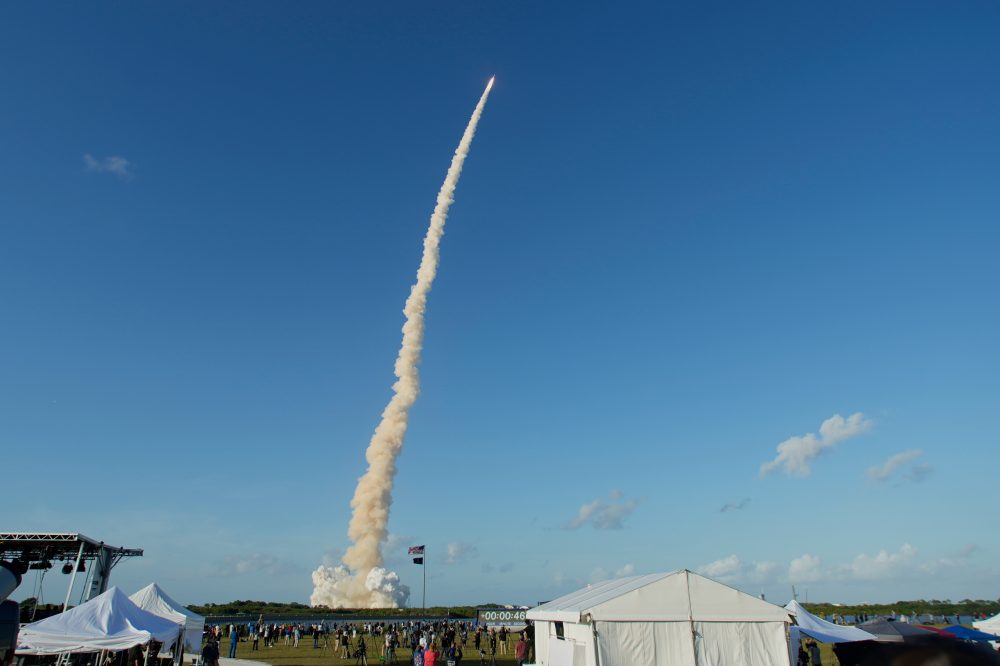
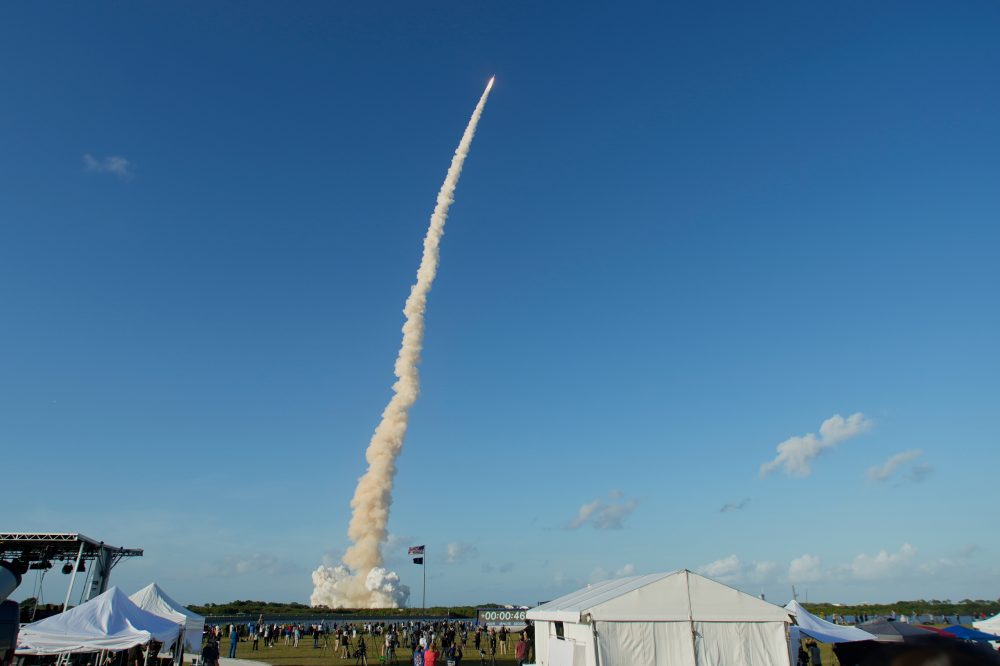
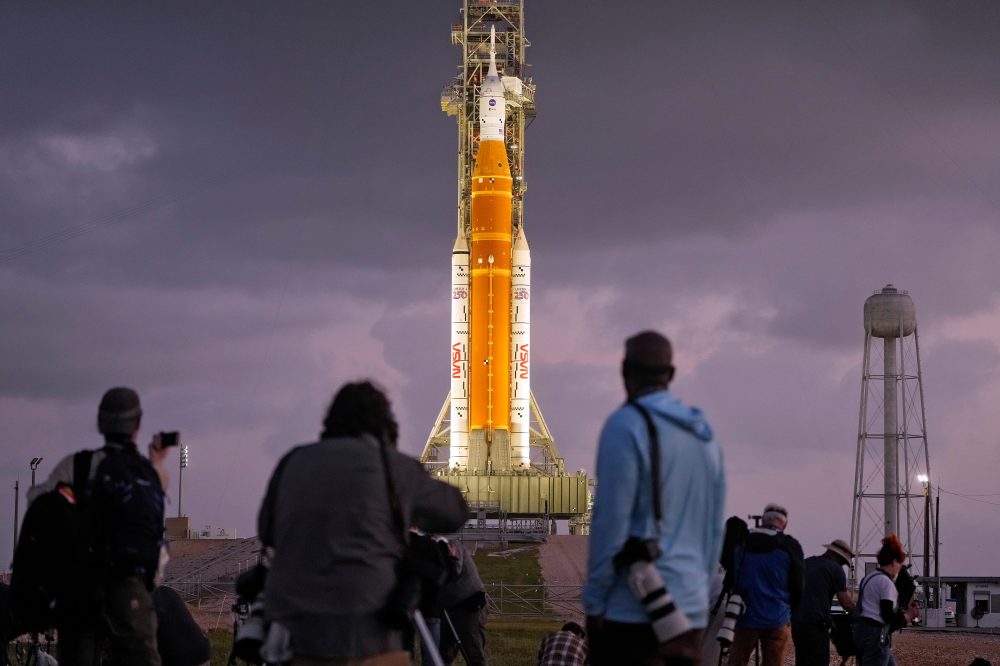
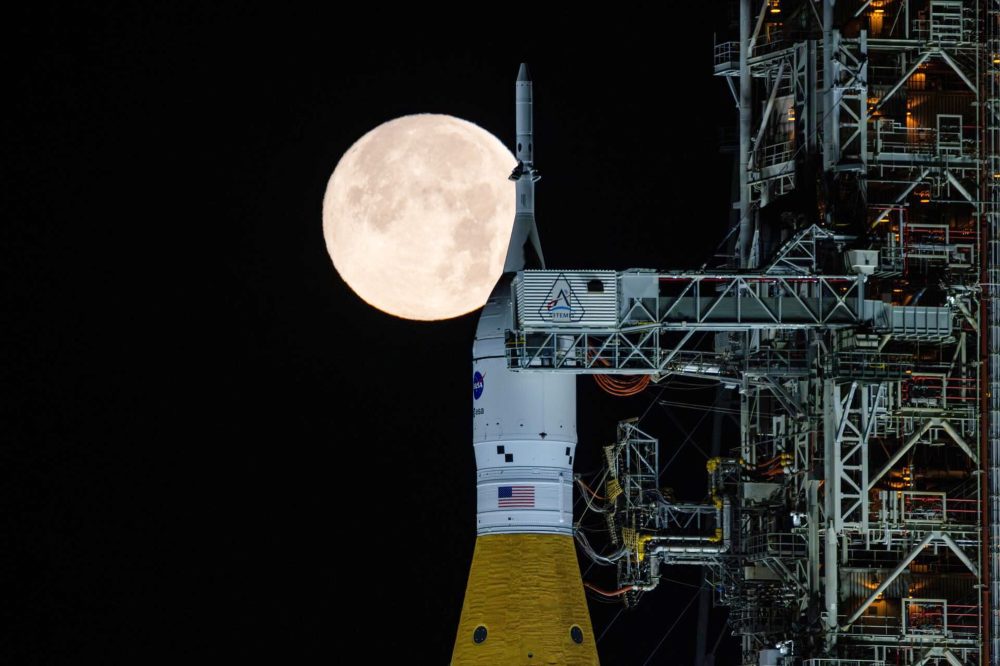
NASA’s historic Artemis II mission has sparked a wave of national enthusiasm that transcends America’s deep political divisions, offering a unifying moment of scientific achievement and shared wonder.
The groundbreaking lunar voyage, representing the first human journey to the moon in more than five decades, has generated widespread excitement through rocket-launch viewing events, educational programs, increased planetarium attendance, and booming sales of space-themed merchandise.
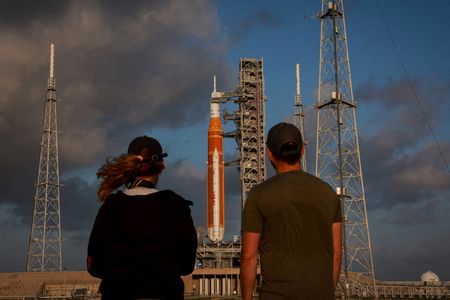
This crucial 10-day test flight serves as preparation for future lunar landing attempts planned for later in the decade, marking the first such mission since Apollo 17’s final moon landing in December 1972. The crew’s anticipated return on Friday via Pacific Ocean splashdown is expected to draw as much public attention as their April 1 departure from Cape Canaveral, Florida aboard the massive Space Launch System rocket.
“Everyone can be excited about humans extending their capabilities, learning new things, and doing so in a positive, peaceful way,” explained Gaza Gyuk, senior astronomer at Chicago’s Adler Planetarium, noting the hundreds of visitors who have come to witness the launch and explore the mission details.
Public enthusiasm for Artemis, NASA’s modern successor to the Apollo lunar program of the 1960s and 1970s, shows up clearly in recent survey results.
According to a Reuters/Ipsos poll conducted during the mission, 69% of Americans express excitement about space exploration, while approximately 80% view NASA favorably, including strong majorities from both major political parties. Similarly, 69% of survey participants believe returning astronauts to the moon holds importance.
Much like the original Apollo era, NASA’s current lunar goals are unfolding during a period of domestic political tension and social unrest, including an unpopular overseas military engagement.
This turbulent backdrop may contribute to Artemis’s broad appeal, serving as both a refreshing break from troubling political coverage and a celebration of American scientific and technological excellence.
Commercial retailers and independent vendors have capitalized on the lunar fever, offering everything from official NASA merchandise to mission-inspired custom items.
Rock ‘Em Socks markets Artemis II socks for $14.99 per pair, featuring the SLS rocket design against a starfield backdrop.
NASA’s own merchandise includes an “I AM ARTEMIS” baseball cap, mission pins, women’s bomber jackets, and playing cards.
The Etsy marketplace features Artemis II keychains, artwork, posters, and $135 custom “dangle and drop” 3D-printed earrings modeled after the gumdrop-shaped Orion spacecraft.
In Elkins Park, a Philadelphia-area community, space enthusiast Hector Ybe, 38, organized a launch celebration that drew approximately 225 attendees, including numerous families with children.
“For two hours, everybody forgot what was happening outside in the world, everybody was talking about space,” Ybe observed, noting the diverse ethnic, religious, and racial representation among participants.
Children arrived in astronaut costumes to witness the launch while older attendees shared memories of watching the historic 1969 moon landing.
The mission provides a positive contrast to widespread concerns that scientific facts face increasing challenges, and that emerging technologies like artificial intelligence and social media platforms inspire distrust and anxiety.
Gyuk highlighted the mission’s new Earth photographs taken from space, showing continents and oceans without political borders as a powerful reminder of human unity.
“That helps people sort of realize that we’re all in this together,” he noted.
Teachers nationwide have woven the Artemis mission into their curriculum.
At Northglenn, Colorado’s STEM Lab public school, engineering instructor Erin Brabant created hallway displays featuring SLS rocket images, astronaut profiles, and mission timelines, while assigning students to construct their own lunar lander prototypes.
“When we talk about Artemis, it’s like every kid stops what they’re doing,” Brabant observed. “Their little side conversations stop, and they have questions.”
The crew’s diversity has particularly inspired students from underrepresented groups, with pilot Victor Glover becoming the first Black astronaut to travel to the moon and mission specialist Christina Koch serving as the first woman on such a journey, according to Brabant.
In Pilot Mountain, North Carolina, fifteen Girl Scouts aged 5 to 11 watched the live launch during their troop gathering last week.
The girls had been preparing Women’s History Month presentations about notable Girl Scouts, and the launch highlighted Koch’s own Girl Scout background, explained troop leader Heather Willard.
NEW YORK (AP) — Manhattan’s Bryant Park has become an unexpected wildlife spectacle as American woodcocks make their annual spring migration stop, enchanting city residents with their peculiar charm.
These distinctive birds, recognized for their rhythmic bobbing movements and distinctive kazoo-style vocalizations, have been captivating visitors to the Midtown Manhattan park since their arrival in late March. Each day, crowds of onlookers gather hoping to observe these grapefruit-sized creatures as they probe the earth with their elongated beaks searching for earthworms.
“It’s a very charismatic bird. I mean, it’s goofy-looking. It’s got eyes that are always looking at you no matter where you are. It does this nice little dance when it’s nervous,” said Bill Rankin, a Yale University professor who stopped by the park. “Having two of them together is a kind of nice little romantic story of spring.”
These migratory visitors make Bryant Park a regular stopover each year during their northward journey in early spring. The birds possess an unusual appearance that seems pieced together from various species — featuring plump bodies, oversized eyes, and slender, extended bills. Some enthusiasts refer to them by nicknames like “timberdoodles” or “bogsuckers.”
This year’s gathering has drawn larger audiences than typical, largely due to viral social media content featuring videos and photographs of the birds. Daily assemblies of wildlife enthusiasts armed with smartphones and cameras stretch their necks for glimpses of the birds’ amusing gait, while generally keeping a courteous distance.
The characteristic movement that propelled the woodcock to internet fame involves a swaying motion combined with head bobbing. While some admirers interpret this as courtship behavior, researchers offer alternative explanations. Scientists suggest it could serve as a predator deterrent or food-gathering strategy.
“What you’re seeing in Bryant Park when it’s sitting around when these crowds are looking at it, is mostly a little bit of foraging behavior,” said Andrew Farnsworth, a scientist with the Cornell Lab of Ornithology. “A little of roosting and stretching, and then some of this sort of, you know, kind of sensory stuff looking around, and a little bit of deception, too.”
The male woodcock’s mating ritual presents another remarkable spectacle. Males produce a buzzing sound that birdwatchers characterize as a “meep” or “peent” before launching into erratic nighttime flights designed to attract females.
The Manhattan woodcocks are expected to resume their northward migration around mid-April. Their widespread appeal has created educational opportunities about conservation challenges they encounter, including fatal collisions with building windows, according to Ryan F. Mandelbaum, a New York City naturalist and author of the book “Wild NYC: Experience the Amazing Nature in and around New York City.”
Although not classified as endangered, American woodcock populations have decreased over recent decades.
“I was also heartened to see that people are engaging with the conservation threats around light pollution and glass that woodcocks face,” Mandelbaum said. “I love the community and shared joy that’s been emerging from people seeing the bird.”
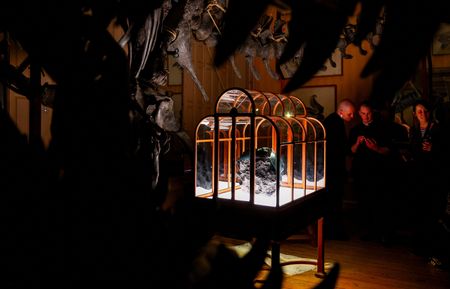
A prehistoric sea creature that held the distinction of being the planet’s most ancient octopus has been dethroned after researchers determined the fossil belongs to an entirely different species.
Recent scientific analysis has revealed that the 300-million-year-old specimen currently recognized by Guinness World Records as the earliest octopus discovery is actually the remains of a nautilus-related creature — a tentacled sea animal that also possessed a protective shell.
Thomas Clements, a zoologist from the University of Reading who spearheaded the investigation, explained that the fossil specimen known as Pohlsepia mazonensis has sparked controversy among scientists for years.
“It’s a very difficult fossil to interpret,” he said. “To look at it, it kind of just looks like a white mush.”
“If you look at it and you are a cephalopod researcher and you’re interested in everything octopus, it does superficially look a lot like a deep-water octopus,” Clements added.
The hand-sized blob was discovered in Illinois’s Mazon Creek region, located roughly 50 miles southwest of Chicago — an area known for its abundance of prehistoric fossils that predate the dinosaur era.
When paleontologists first classified the specimen as an octopus in 2000, it dramatically altered scientific understanding of how eight-armed cephalopods evolved, indicating they appeared far earlier in Earth’s history than experts had believed. The second-oldest confirmed octopus fossil dates back only 90 million years.
“It’s a huge gap,” Clements said. “And so that big gap got researchers sort of questioning, ‘Is this thing actually an octopus?’”
To unravel the puzzle of this “weird blob,” Clements and his research team employed a synchrotron — a device that accelerates electrons to generate light beams more intense than sunlight — to peer inside the fossilized rock. Their examination revealed a strip of feeding structures called a radula, containing rows of teeth found in all mollusks, including both nautiluses and octopuses. Each row contained 11 teeth, while octopuses possess either seven or nine.
“This has too many teeth, so it can’t be an octopus,” Clements said. “And that’s how we realize that the world’s oldest octopus is actually a fossil nautilus, not an octopus.”
The dental pattern corresponded with those of Paleocadmus pohli, a fossilized nautiloid species previously found in the same location. Clements suggested the misidentification likely occurred because the animal’s distinctive shell deteriorated before fossilization, making proper classification challenging.
Following the publication of these findings in this week’s edition of Proceedings of the Royal Society B, Guinness World Records announced it will remove Pohlsepia mazonensis from its listing as the earliest known octopus.
Managing Editor Adam Millward called the research “a fascinating discovery.”
“We will be resting the original ‘oldest octopus fossil’ title and look forward to reviewing this new evidence,” he said.
The specimen, named after its discoverer James Pohl, is housed at Chicago’s Field Museum.
Clements suggested the museum shouldn’t feel disappointed by the new findings, noting they now possess “the oldest soft tissue nautilus in the world.”
“The Field Museum have a small collection of these ancient nautiluses, which I think as a cephalopod worker is probably the best thing ever,” he said.
The museum has been contacted for their response to the discovery.
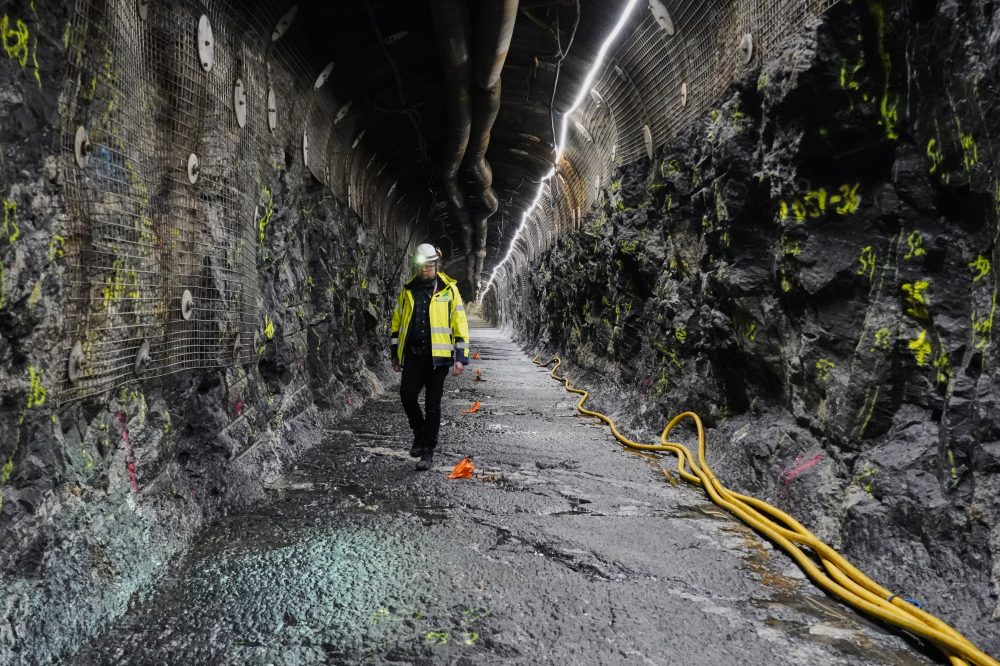
OLKILUOTO, Finland — Deep beneath the Finnish countryside, an elevator plunges hundreds of meters into darkness, reaching a groundbreaking facility that could reshape how the world handles nuclear waste.
“We are now at about minus 430 meters (1,411 feet),” said geologist Tuomas Pere as he navigated through a maze of artificial tunnels. “We are driving through 1.9-billion year old bedrock.”
Following years of development, Finland stands ready to activate the globe’s first permanent nuclear waste burial site, creating a final destination for massive quantities of hazardous radioactive materials.
Work on Onkalo — the Finnish word for “cave” — started along the western coastline in 2004. The facility occupies the remote Olkiluoto island within a thick forest. The nearest community, Eurajoki, lies approximately 15 kilometers (9.3 miles) away and houses roughly 9,000 residents, many employed at the nuclear plant or storage complex.
The 1 billion euro ($1.2 billion) venture may soon receive approval, with officials anticipated to issue operating permits in the coming months.
The Associated Press explored these underground chambers where human access will soon be permanently prohibited.
Pere explained that officials selected this location — adjacent to three of Finland’s five nuclear reactors — due to its migmatite-gneiss rock foundation, recognized for exceptional stability and minimal earthquake danger.
“It’s the isolation from civilization and mankind on the surface that’s important,” he explained while standing in a darkened storage tunnel destined for permanent sealing. “We can dispose of the waste more safely than by storing it in facilities located on the ground.”
Through automated equipment at a neighboring packaging facility, radioactive fuel rods will be enclosed within copper containers before burial in deep tunnels exceeding 400 meters underground, surrounded by protective layers of water-absorbing bentonite clay.
Posiva, the corporation managing Finland’s long-term nuclear fuel disposal, reports that Onkalo can accommodate 6,500 tons of used nuclear fuel.
The burial containers are engineered to stay intact “long enough for the radioactivity of spent fuel to decrease to a level not harmful to the environment,” according to the company.
“The solution that we have, it’s the missing point for sustainable use of nuclear energy,” stated Posiva communications manager Pasi Tuohimaa.
Finnish nuclear operators are funding the initiative, he noted, explaining they have accumulated resources for decades specifically for this purpose.
Posiva calculates that hundreds of thousands of years will pass before radiation levels return to natural background amounts.
A 2022 International Atomic Energy Agency study found that nearly 400,000 tons of used fuel have been generated worldwide since the 1950s, with two-thirds sitting in temporary storage and one-third undergoing complex recycling procedures.
Currently, global spent nuclear fuel remains in temporary storage within reactor pools and above-ground dry storage containers.
No permanent underground commercial nuclear waste facility exists anywhere else worldwide. Sweden started constructing a repository in Forsmark — roughly 150 kilometers north of Stockholm — last year, though operations won’t begin until the late 2030s. France’s Cigéo project hasn’t started construction and faces public resistance.
The Onkalo installation is scheduled to function until the 2120s before permanent closure.
However, Edwin Lyman, nuclear power safety director at the Union of Concerned Scientists, an American nonprofit, cautioned that underground nuclear waste disposal remains filled with “uncertainties.”
“My view of nuclear waste disposal is that there’s no good option, but it’s important to find the least bad option, and geologic disposal in general is going to be the least bad option among a range of, you know, bad options,” he explained.
Lyman noted that copper containers holding spent nuclear fuel will eventually deteriorate, with varying scientific views on the timeline for this process.
“The hope is that is such a slow process that most of the radioactive material will have decayed away by then. But again, there are uncertainties,” he said.
Nevertheless, Lyman emphasized that burying spent nuclear fuel deep underground surpasses “leaving it on the surface of the Earth forever,” since surface-stored nuclear materials remain “vulnerable to sabotage.”
“For many decades after spent fuel is discharged from a reactor, it’s so radioactive that it makes transporting and reprocessing very difficult,” Lyman explained. Eventually the primary radioactive elements will decay, he added, reducing handling risks.
“So over time the plutonium becomes more accessible either to terrorists or to a country that may want to use it,” he said, noting that terrorists or nations could theoretically weaponize the material only with “an off-site reprocessing capability.”
Reprocessing involves separating spent nuclear fuel to extract uranium and plutonium for new fuel production. This procedure creates proliferation dangers because isolated plutonium could potentially be redirected for nuclear weapon construction.
To address this concern, researchers have established nuclear semiotics, an interdisciplinary study focused on creating warning systems about nuclear waste sites that humans could understand 10,000 years from now — or longer, considering the hundreds of thousands of years needed for nuclear waste to become safe.
For perspective: early humans appeared roughly 300,000 years ago. Mesopotamians developed the first writing systems approximately 5,200 to 5,400 years ago. Britain’s Stonehenge dates back around 5,000 years, while Egypt’s Giza pyramids are about 4,500 years old.
Austrian artist and inventor Martin Kunze has directed an expert panel on long-term information preservation at the Nuclear Energy Agency of the Paris-based Organization for Economic Cooperation and Development. He has created what he terms the “nuclear message” — essential information for future generations etched onto solid ceramic plates beneath hardened glazed surfaces.
Kunze described the ceramic plates as “inexpensive and very robust” and recommended burying them “in large numbers” throughout the repository area and “inside the foundations” of every local residence. The objective involves distributing maximum ceramic plates across the region.
Finnish authorities say the Onkalo nuclear repository demonstrates the nation’s comprehensive nuclear energy strategy.
A 1994 law mandated that radioactive waste produced in Finland must be processed, stored and permanently disposed of within national boundaries.
“Back then… some of the waste was still exported, but we wanted to take care of it ourselves,” said Sari Multala, Finland’s environment minister. “We also stick to the decisions, unlike many other countries.”
Multala didn’t dismiss potentially accepting small quantities of nuclear waste from other nations. “In the small scale there could be some kind of possibilities, as long as it is allowed by the international regulators,” she said.
The iPod is experiencing an unexpected resurgence among younger generations.
Apple’s discontinued music device has seen a dramatic spike in secondhand purchases four years after the company ended production. Young consumers are driving this trend, attracted not only to the device’s vintage aesthetic but also to its ability to provide focused music listening without algorithmic interference.
“There’s a growing trend, particularly amongst younger users, to mitigate the ease with which they can be distracted by smartphones, often driven by mental health and well-being concerns,” explained Ben Wood, chief analyst at CCS Insight. “Having a dedicated music device, such as an iPod, is a good way to reduce your dependence on a smartphone and avoid being drawn into other activities, like doomscrolling through social media feeds, when you only really want to listen to music.”
For those considering joining this retro movement, here’s what you need to know:
While new iPods are no longer manufactured, finding used models remains relatively straightforward. Apple’s two-decade production run resulted in 450 million units sold, creating a substantial supply for the resale market.
The secondhand marketplace is flourishing, with thousands of used iPod listings appearing on eBay. “Based on my discussions with people in the market, there has definitely been renewed interest in refurbished iPods,” Wood noted.
However, buyers should exercise caution with eBay listings claiming to offer new devices. Many originate from Chinese sellers, and some customers have reported receiving refurbished units in fake packaging instead of genuine new products.
Alternative purchasing options include Facebook Marketplace, peer-to-peer platform Mercari, and refurbished electronics retailer Back Market. The latter reported a 48% increase in iPod sales during the previous year compared to 2024, operating across the United States, Japan, and numerous European nations.
Specialized businesses focusing exclusively on refurbished iPods have also emerged to meet demand.
Sometimes the solution lies closer to home. One recent example involved a teenager discovering her grandmother’s silver iPod Nano, complete with original accessories, tucked away in a guest room drawer.
An active online community provides support for enthusiasts, sharing maintenance advice and showcasing customized devices with aftermarket modifications like colorful faceplates.
Apple produced several iPod variations throughout its lifespan.
The inaugural 2001 model featured the iconic scroll wheel design. By the sixth generation, Apple branded it as the Classic.
Subsequent releases included the compact Mini and Nano models, plus the screenless Shuffle. The Touch version introduced a glass touchscreen and iOS compatibility for app functionality, essentially creating an iPhone without cellular capabilities.
Apple’s identification webpage can help determine specific model types for uncertain owners.
Discovering an old iPod raises immediate functionality questions. Dead batteries require proper charging cables for revival.
Recent iPod Touch generations utilized Apple’s Lightning connector, while all other models needed the distinctive 30-pin cable with its wide, flat connector. Though Apple discontinued these cables, aftermarket replacements remain available.
If charging fails to restore function, battery replacement might be necessary. Additional issues could include damaged headphone ports or broken displays. Apple continues servicing only the final two iPod Touch generations.
Independent repair services offer alternatives, or ambitious users can attempt self-repair using iFixit’s comprehensive guides and sourced replacement components.
iPod Touch users face software restrictions. The seventh-generation model—the final version sold—supports only iOS 15, while earlier editions are limited to older operating systems. Other iPod variants avoid this limitation since they don’t use iOS.
Starting fresh often requires factory resets to eliminate previous content and restore default settings. This process requires either Mac or Windows computers, with Apple providing detailed instructions.
Windows users can manage their devices through iTunes, adding music files by dragging them into the iPod’s library or selecting “Add to Device” for previously purchased iTunes content.
Mac users must utilize Apple Music since iTunes was discontinued for MacOS in 2019, though the drag-and-drop process remains equally simple.
Apple Music subscribers can stream content on later iPod Touch models, but all other variants only support music files ripped from CDs or purchased from digital platforms.
Most iPods offer basic functionality due to firmware limitations.
However, their appeal partly stems from modification potential, Wood observed.
“There is definitely a movement of people looking to take iPods and modify them for modern use,” he stated.
Popular modifications include replacing factory firmware with open-source alternatives like RockBox, which Wood described as offering “greater control and add features that Apple had not included or did not exist at the time.”
These enhancements enable high-resolution audio support, iTunes-independent music management, and listening history tracking for platforms like Last.fm, according to Wood.
LAS VEGAS (AP) — Nevada’s primary electric company reports it will require electricity equivalent to three times what Las Vegas consumes simply to support planned data center facilities — and meeting that demand without fossil fuels appears unlikely.
This situation puts Nevada at risk of failing to achieve its renewable energy mandate of 50% clean power by 2030.
“I can’t remember a time in the history of the industry where we’ve seen as much interest in adding load, which is primarily driven by data centers,” stated Shawn Elicegui, senior vice president of regulatory and resource planning for NV Energy, the company supplying power to 90% of Nevada.
Electric utilities nationwide face similar challenges as they work to satisfy surging power demands from data centers supporting artificial intelligence while maintaining commitments to transition away from fossil fuels toward renewable and carbon-free energy sources.
North Carolina, experiencing its own data center boom, has seen its largest utility revise long-range plans to postpone coal plant closures and construct additional natural gas facilities. State legislators eliminated an intermediate carbon reduction target, raising environmental advocates’ concerns about meeting the 2050 zero-emission objective.
NextEra Energy, serving commercial customers in more than a dozen states, abandoned its 2045 zero-emission target entirely due to “demand for all forms of power generation,” according to a recent company filing.
The Trump administration has pushed states to utilize coal for manufacturing and data center energy needs. Technology companies are also scaling back their climate commitments to satisfy consumer artificial intelligence demands.
“It’s very alarming, and it’s probably the single largest natural resource issue of our time,” commented Olivia Tanager, director of the Sierra Club’s Toiyabe chapter covering Nevada.
Nevada ranks among America’s fastest-expanding data center markets due to its absence of corporate income taxes, affordable land prices, and data center tax incentives. Dozens of facilities already operate with additional projects planned. State legislators are now considering increased regulations while debating how to balance clean energy objectives with data centers’ economic advantages.
Some facilities claim they want to contribute to solutions; the data center industry accounted for half of all corporate renewable energy purchases in 2024, according to Dan Diorio, vice president of state policy for the Data Center Coalition.
However, renewable energy additions to the electrical grid aren’t expanding rapidly enough. Nationwide, gas turbine orders face backlogs while renewable project approvals require extensive time, industry analysts report.
Located south of the Las Vegas Strip, the Switch data center spans nearly one square mile. As Southern Nevada’s largest data facility, it operates completely on renewable power, according to Chief Strategy Officer Jason Hoffman. Unlike competitors, Switch holds licensing to develop its own renewable energy sources at utility-company scale. The company has constructed 1 gigawatt of solar capacity and continues building additional solar installations. Switch uses NV Energy’s grid solely for electricity delivery while sourcing power from independent suppliers.
Within the enormous buildings, hundreds of servers operate inside massive soundproof and waterproof enclosures. These systems store critical data for Switch’s customers, including major financial institutions, streaming platforms, e-commerce sites, casinos, and government agencies.
During summer heat waves, when equipment cooling requires additional energy, Switch can disconnect from the grid and operate independently, Hoffman explained. The facility’s design minimizes air conditioning needs throughout other seasons.
Many utilities and technology companies are adopting gas-powered generation for data centers, including the disputed xAI facility near Memphis utilizing mobile gas turbines mounted on semi-trailers.
Tanager from the Sierra Club noted that several proposed Northern Nevada data centers would employ hundreds of low-grade diesel backup generators, degrading air quality. These backup systems activate during power outages and typically see limited use.
During a recent seven-hour legislative session, Nevada residents voiced complaints to lawmakers about data center noise pollution and expressed concerns regarding water supply impacts and energy cost increases. Boulder City residents, home to Hoover Dam, are also opposing a proposed facility over similar issues.
NV Energy mandates that data center developers fund their own infrastructure and energy requirements — though renewable sources aren’t mandatory.
Nevada created a voluntary funding program allowing companies to finance NV Energy’s clean energy development and apply those investments toward corporate sustainability targets. This pioneering model led to a geothermal plant in Northern Nevada with Google as a partner.
Environmental organizations want the state to mandate this model but remain concerned it wouldn’t generate sufficient clean energy to satisfy demand. They also fear NV Energy might increase fossil fuel dependence without guarantees that all proposed data centers will be constructed.
NV Energy will require companies to execute contracts ensuring their state commitment before energy infrastructure development, Elicegui stated. The utility’s approach welcomes “growth” while ensuring companies accept responsibility for power requirements “whether they show up or not.”
Nevada’s public utilities commission may impose penalties, grant exemptions, or implement other measures if it determines NV Energy failed to achieve state clean energy targets. The utility plans to release a detailed report by month’s end.
Democratic Assemblymember Howard Watts of Las Vegas called it “unacceptable” to advance projects threatening the state’s renewable energy portfolio. Watts advocates requiring data centers to bear clean energy development costs. While many companies already take such steps, establishing these protections in law is essential, he argued.
“Building more gas plants seems like going in the exact opposite direction of what we need to do as a state,” he stated, emphasizing Nevada’s “tremendous solar and geothermal energy potential.”
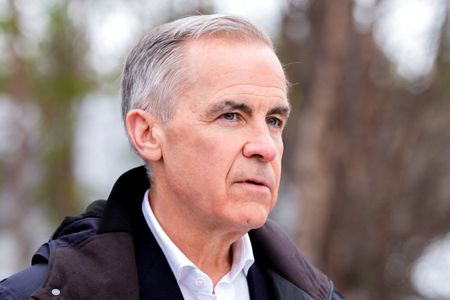
Canadian Prime Minister Mark Carney connected with astronauts aboard the historic Artemis II mission Wednesday, honoring the nation’s first astronaut to journey around the moon during what has been a bright spot in sometimes tense U.S.-Canada relations under President Trump’s administration.
Royal Canadian Air Force Colonel Jeremy Hansen, age 50, has achieved the distinction of being the first international crew member on a lunar mission. Hansen is flying alongside three American astronauts on NASA’s Artemis II lunar flyby, which represents a crucial milestone in the space agency’s ambitious goal to land astronauts on the moon by 2028, competing with China’s lunar ambitions.
The crew’s 10-day journey is scheduled to conclude Friday when their capsule splashes down in waters off San Diego.
“Canadians couldn’t be more proud of you personally, both this mission and our collaboration with the United States,” Carney told Hansen during their conversation.
The prime minister also made a lighthearted comment about hoping the crew preferred maple syrup over Nutella on their morning pancakes, referencing a moment that went viral when cameras captured a floating jar of Nutella in the spacecraft’s zero-gravity environment. The maple leaf serves as Canada’s national emblem.
Hansen, who joined Canada’s astronaut program in 2009 and pledged to return with a Canadian flag from the mission, represents decades of cooperation between the U.S. and Canada in human space exploration. During the call, he discussed the importance of accepting risk both in space missions and broader endeavors.
“As a country, we have to be willing to have some failures,” Hansen said. “And we fail in this space program, but we just assure ourselves we’re not going to stay or rest in those failures. We’re going to push through them,” the astronaut explained while also answering questions from Canadian students.
This historic mission occurs during a period of strained trade relationships between the neighboring nations, following Trump’s implementation of tariffs on Canadian products and his repeated suggestions that Canada should become America’s 51st state. The groundbreaking lunar mission has provided a positive focal point for U.S. relations amid various international tensions involving strikes on Iran, trade disputes, and challenges to global institutions.
NASA’s groundbreaking Artemis mission has heightened the stakes for China’s ambitious plan to put astronauts on the lunar surface by 2030, as the space race between the two superpowers enters a critical phase.
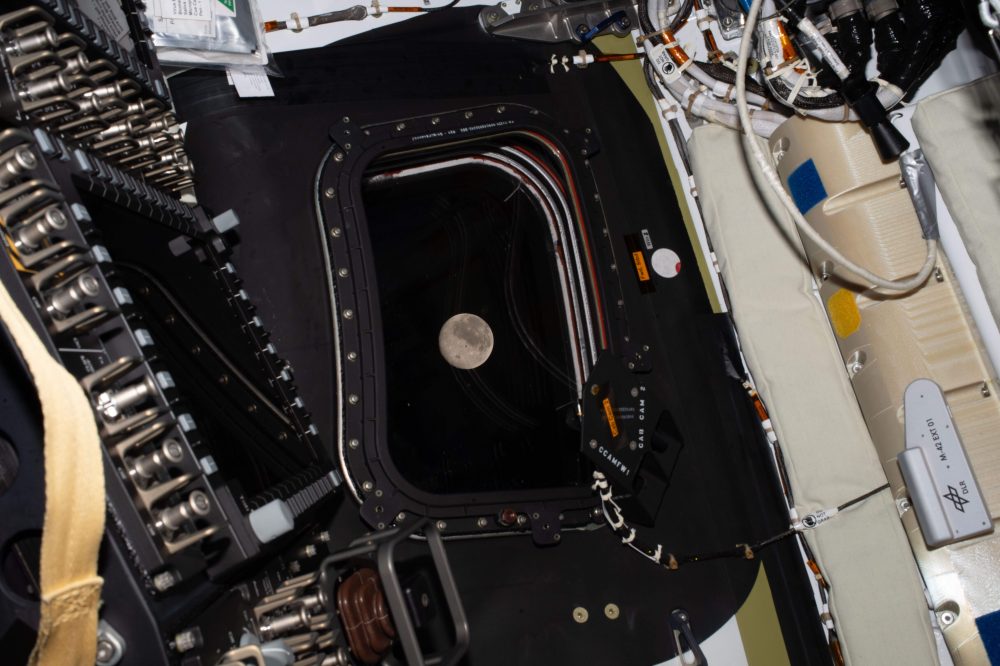
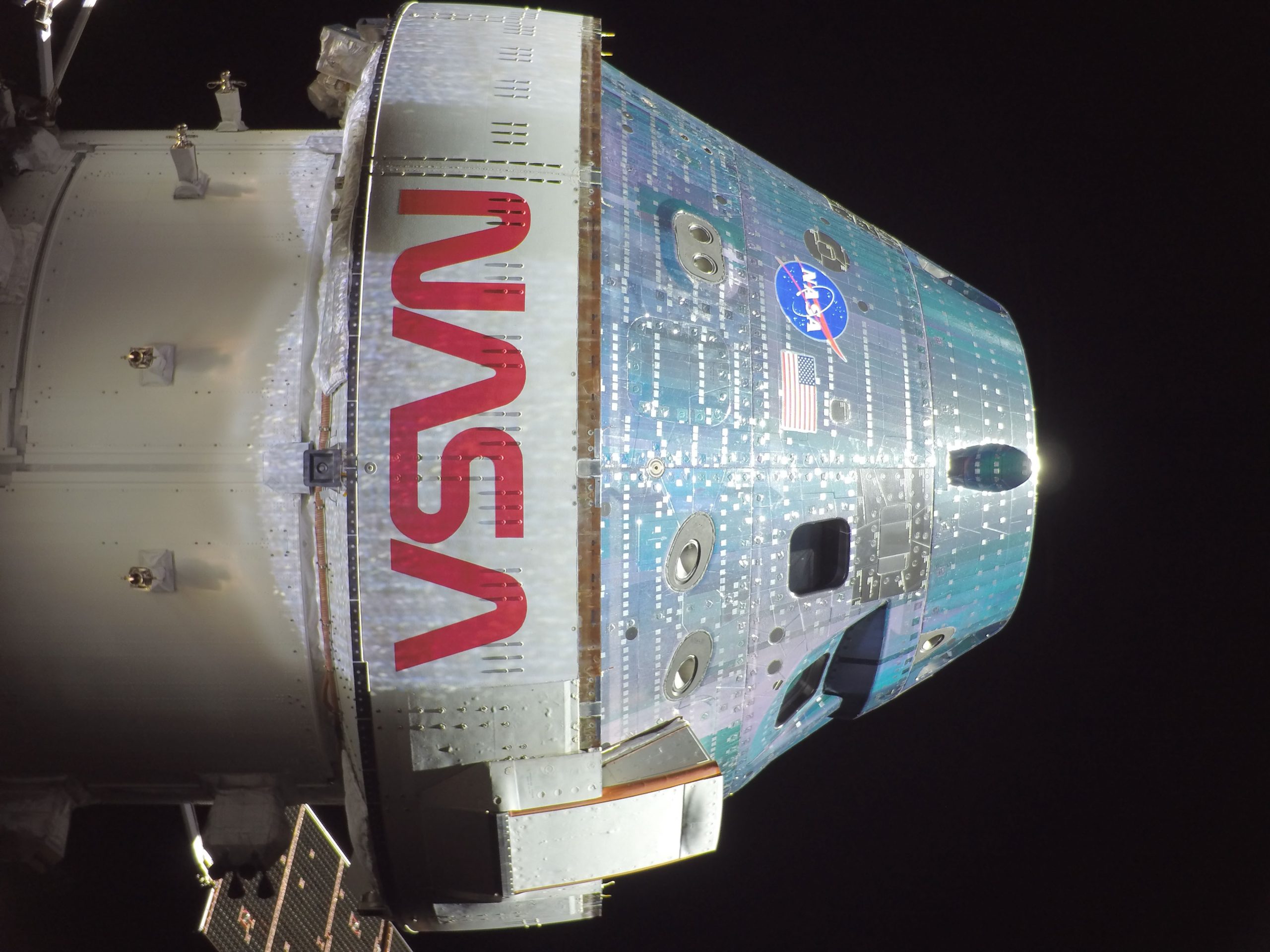
This week, four American astronauts aboard Artemis II ventured past the moon’s dark far side, reaching depths of space never before achieved by humans. This milestone sets the foundation for Artemis IV’s planned lunar touchdown in 2028.
The planned American return to the moon after more than 50 years has captured Beijing’s attention, as China develops comprehensive technology for its inaugural crewed lunar mission. This includes the Long March-10 rocket system, the Mengzhou spacecraft, and the Lanyue lunar landing vehicle.
China has achieved remarkable progress recently, becoming the only nation to successfully retrieve robotic samples from both sides of the moon. Its human spaceflight program has also demonstrated expertise in space station operations and managing orbital emergencies.
“There is no bigger prize for China on the table today than landing people on the moon, this is the essential next step for China on the road to preeminence in space,” said Clayton Swope, deputy director of the Aerospace Security Project at the U.S.-based Center for Strategic and International Studies (CSIS).
Both Washington and Beijing are building institutional frameworks for future permanent lunar habitation. The American-led Artemis Accords for lunar exploration face competition from the Chinese and Russian-backed International Lunar Research Station initiative.
“The question now is no longer simply who gets there first, but who can stay longer and do more,” Kang Guohua, an aerospace professor at the military-linked Nanjing University of Aeronautics and Astronautics, told China’s state-backed Global Times last week.
UNTESTED TECHNOLOGY CHALLENGE
Beijing faces the significant challenge of validating completely new lunar mission technology within four years, proving that all equipment being developed for the 2030 mission can function reliably on its first deployment.
China’s space agency announced in 2023 that the mission would utilize two Long March-10 rockets – one carrying a crewed vessel and another transporting a lunar lander. These craft would meet and connect in lunar orbit, allowing two astronauts to descend to the surface, gather samples, return to orbit, reconnect with the main spacecraft, and journey home.
The Mengzhou spacecraft has capacity for up to seven astronauts, though China’s space agency hasn’t revealed the crew size or members for the 2030 mission.
China’s previous robotic lunar expeditions have provided valuable expertise in communications, spacecraft meetings, and docking procedures around the moon. However, human missions demand much stricter safety standards, and crucial mission components are still undergoing evaluation, including the rocket and spacecraft systems.
In February, China conducted the first low-altitude escape test for the Long March-10 carrying a Mengzhou spacecraft at a Hainan Island launch facility. The capsule’s return module successfully separated following an abort signal and landed safely in the ocean.
Last year, the Lanyue lunar lander’s ascent and descent systems underwent testing in Hebei province. Despite these important achievements, testing must intensify for China to approve the system for human lunar missions by 2030.
Nevertheless, CSIS’s Swope believes China is making consistent progress and considers it “very plausible” that the deadline will be met.
“China has a history of setting deadlines for space activities and closely meeting those deadlines, there are no public signs of any missteps or setbacks to Beijing’s crewed lunar landing plans,” he said.
POLITICAL IMPLICATIONS
The competition extends beyond technical achievements to geopolitical influence. As tensions between the U.S. and China escalate across trade, technology, and military domains, lunar exploration has emerged as another competitive battlefield.
American experts cite China’s increasing defense expenditures, use of space diplomacy to expand global influence, expanding private launch industry, and successful robotic lunar missions as proof that Beijing is highly determined to reach the moon rapidly, despite avoiding competitive language publicly.
“China might avoid directly using language that suggests there is a lunar or space race, but their overall strategic goal is to be the hegemon in space,” said Kathleen Curlee, a research analyst at Georgetown University’s Center for Security and Emerging Technology.
Meanwhile, China may be progressing faster than publicly acknowledged. Wu Weiren, chief architect of China’s lunar exploration program, told Reuters last year that the 2030 target was deliberately cautious.
“Eastern peoples always leave a little room when they speak,” he said. “If I can do a 10, I tend to say eight or nine.”
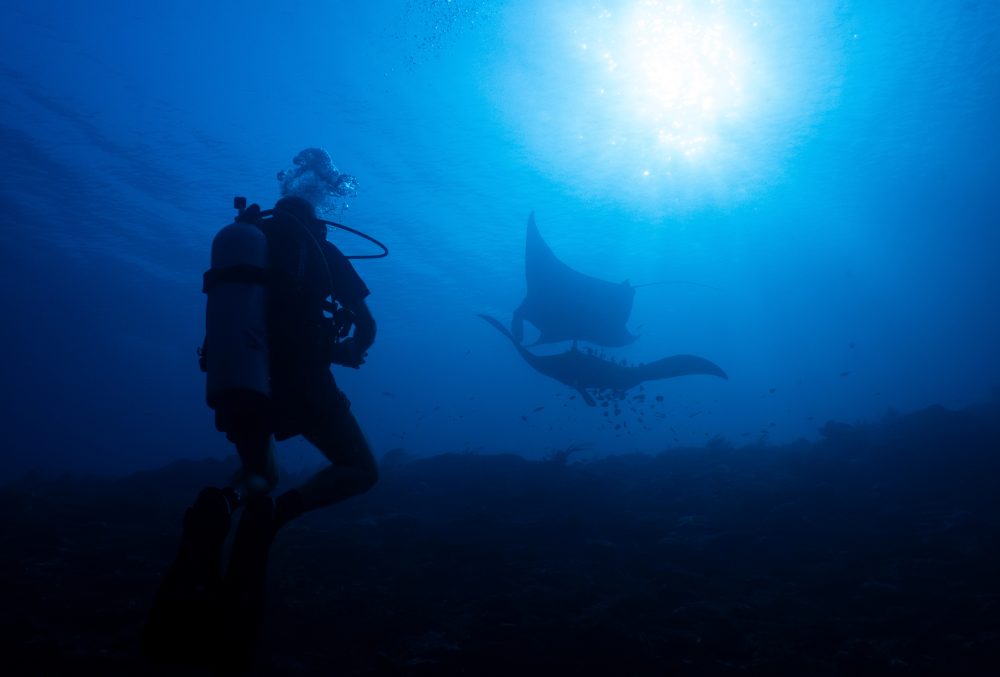
MISOOL, Indonesia — Beneath the waters of Raja Ampat, a distant island chain in eastern Indonesia, an underwater spectacle unfolds where sharks, manta rays and sea turtles swim through coral gardens found nowhere else on Earth, creating a vibrant tapestry of marine life.
“There’s nowhere on Earth that has as many fish, corals and everything else packed into one small place,” said Mark Erdmann, an American coral reef biologist who has spent more than two decades studying the region and became a central figure in building Raja Ampat’s conservation model.
This internationally celebrated diving destination lies within the Coral Triangle in southwestern Papua, where strong ocean currents deliver nutrients that support what researchers consider the planet’s most biodiverse marine environment.
Despite its reputation as a worldwide benchmark for marine conservation, Raja Ampat’s ecosystems face mounting challenges from expanding nickel extraction operations and a boom in international tourism.
The coral formations weren’t always as pristine as they appear now. During the early 2000s, fishing crews from across Indonesia and Southeast Asia deployed explosives and massive nets, destroying coral structures, wiping out shark communities and forcing local fishermen to venture up to 10 kilometers offshore to find adequate catches.
At that time, government officials relied primarily on mining and timber harvesting to drive regional economic growth.
This direction started changing in 2023 when Conservation International conducted a marine evaluation that initiated discussions between community leaders and conservation organizations about how protecting Raja Ampat’s marine environment could provide food security and sustainable tourism income while preserving a crucial ocean ecosystem.
“We brought some leaders to visit more developed areas such as Bunaken and Bali with the hope that they could see for themselves up close the benefits of natural resource management,” said Syafri Tuharea, a conservation expert who heads the Raja Ampat Marine Conservation Area.
These collaborative efforts established the foundation for 10 marine sanctuaries created starting in 2007, encompassing 2 million hectares across 45% of Raja Ampat’s coral formations, seagrass meadows and mangrove systems.
Currently, local residents monitor the waters, implement fishing regulations and oversee tourism activities, funded primarily through tourism income, including a 700,000 Indonesian rupiah ($40) marine park entrance fee.
Following twenty years of conservation efforts, the outcomes are remarkable. A 2024 study from the Misool Foundation, representing one of the protected islands, discovered that fish biomass increased by 109% — a metric that indicates ecosystem vitality.
These same waters now support 2,007 documented reef mantas, an impressive population given the species faces extinction threats from overfishing throughout the Indo-Pacific region.
This conservation achievement coincides with a global shift toward renewable energy, creating rapidly growing demand for nickel resources.
Government authorities approved new nickel extraction permits in 2025 for three northern Raja Ampat islands, including areas within a designated UNESCO Global Geopark and close to premier diving locations.
Nickel serves as a crucial element in electric vehicle batteries and remains essential for constructing wind and solar energy infrastructure. The mineral has become fundamental to Indonesia’s economic strategy — the nation contains approximately 43% of global reserves, according to U.S. Geological Survey data.
Extraction activities have created community conflicts, as residents rely on fishing and tourism industries that face potential disruption.
After widespread public opposition last summer, authorities canceled four permits, though one continues on Gag Island, where mining operations began in 2017.
“The heavy machinery, excavators, bulldozers — they’re still there (in the islands),” said Timon Manurung, director of Indonesian environmental group Auriga Nusantara.
He noted that no entity has accepted responsibility for addressing existing environmental damage.
Nickel extraction poses heightened environmental dangers due to the islands’ steep terrain and heavy precipitation, creating conditions that can wash sediment from mining operations directly into ocean waters.
“In the end, it will cause coral reefs to die,” said Tuharea, the marine park manager.
The impacted area also lies along an essential migration route for reef manta rays, among the archipelago’s primary tourist attractions.
Beyond its marine wealth, the region contains vast seagrass beds and mangrove forests — coastal environments covering just 0.1% of ocean floors and 1% of global tropical forests, according to U.N. Environment Program data. These systems serve as powerful natural carbon storage facilities that help regulate climate patterns.
Research conducted in March by Manurung’s environmental organization revealed that forest clearing has already affected nearly 1,000 hectares.
“It might not seem much for Indonesia, but it is a lot for small islands,” he said.
From observation platforms overlooking Raja Ampat’s Waigeo Barat islands, visitors from France, Spain and the United States observe vessels navigating between varying shades of turquoise and blue waters.
Tourist arrivals have remained consistent over the past decade, but visitor demographics have changed significantly. International travelers now represent 95% of approximately 42,000 annual visitors to Raja Ampat. Domestic tourism has dropped by more than two-thirds during the past decade, based on Raja Ampat Regency statistics.
Foreign tourists predominantly choose liveaboard vessels for week-long diving expeditions. These trips have expanded rapidly over the past decade, according to Kristanto Umbu Kudu, who has guided divers through these waters for 25 years.
Conservation specialists warn this trend increases pressure on coral systems through anchoring practices, along with waste and sewage disposal.
“Our data shows that in 2024, there were 218 tourist ships,” Tuharea said. “Can you imagine how many square meters of coral reef will be destroyed because of the anchors?”
Officials are now evaluating mooring infrastructure and potential vessel number limitations.
At Blue Magic, among the archipelago’s premier diving locations, previously clear waters now contain pink jellyfish entangled in debris.
“That’s something which still breaks my heart every time I see these big rafts of floating plastic,” Erdmann said.
For divers who have explored reefs worldwide, Raja Ampat remains exceptional. Pol Ramos, a Spanish marine biologist and co-founder of Odicean, a project combining ocean education with diving expeditions to the region, described its ecosystems as truly extraordinary.
“It is one of the few places in the world, alongside the Amazon, where biodiversity actually increases from year to year,” he said.
Raja Ampat hosts approximately 75% of known hard coral species globally and over 1,700 fish species, according to Erdmann.
However, what faces potential loss extends beyond ecosystems to include the genetic diversity they harbor. Each species contains millions of years of evolutionary data within its DNA, which Erdmann characterizes as nature’s solution library.
“As we go into a more and more uncertain future with climate change,” Erdmann said, “it’s that genetic diversity that’s what we have to work with in terms of how we adapt.”
Federal communications regulators are preparing to modernize decades-old restrictions on satellite internet operations, a move that could significantly enhance broadband access for rural communities across the country.
The Federal Communications Commission announced Wednesday that commissioners will consider new regulations on April 30th that would permit more intensive wireless spectrum usage for satellite-based internet services. Officials estimate these changes could generate approximately $2 billion in economic benefits through expanded broadband access.
Current regulations dating back to the 1990s impose restrictions on power output for satellite internet providers like SpaceX’s Starlink network. Under the proposed updates, these space-based broadband systems could potentially increase their capacity up to seven times current levels, delivering faster speeds, reduced costs, and improved service reliability.
The regulatory changes would particularly benefit residents in rural and isolated communities by enabling access to high-speed satellite internet services, according to commission officials.
“By discarding last century’s satellite regulations, we could see billions of dollars in benefits for the American economy and broadband speeds many times faster than what is available today,” FCC Chair Brendan Carr said.
SpaceX submitted a formal request for these rule modifications in August 2024, arguing to regulators last month that existing regulations “significantly overly restrict next-generation satellite systems, imposing massive unnecessary constraints that directly harm the millions of consumers reliant on these systems for high-speed broadband.”
However, established satellite companies Viasat and DirecTV have expressed opposition to the proposed changes, citing concerns that increased power levels could create interference problems with their existing satellite operations.
Earlier this year in January, the FCC granted SpaceX authorization to launch an additional 7,500 advanced Starlink satellites. These newer satellites are designed to provide direct cellular connectivity internationally and supplementary coverage within the United States, enabling next-generation mobile services and internet speeds reaching up to 1 gigabit per second.
Through its Starlink constellation, SpaceX has established itself as the world’s leading satellite operator, managing more than 10,000 satellites that deliver internet services to residential customers, government agencies, and business clients globally.
HOUSTON (AP) — In a deeply moving moment during their return journey from the moon, the Artemis II crew made an emotional tribute that left NASA ground controllers speechless.
Mission Commander Reid Wiseman and his three fellow astronauts requested permission to name two small lunar craters during their historic flight this week — one honoring their spacecraft “Integrity” and another dedicated to Wiseman’s deceased wife, Carroll.
Canadian crew member Jeremy Hansen made the heartfelt appeal just before Monday’s lunar flyby, as Wiseman was too overcome with emotion to speak himself.
Carroll Wiseman worked as a neonatal nurse before losing her battle with cancer in 2020.
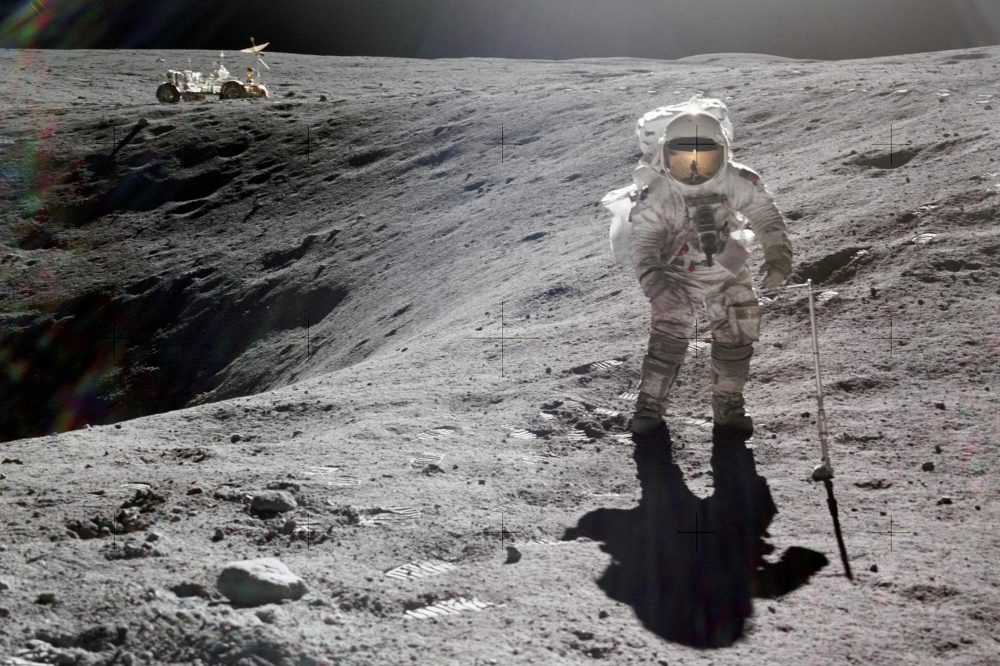
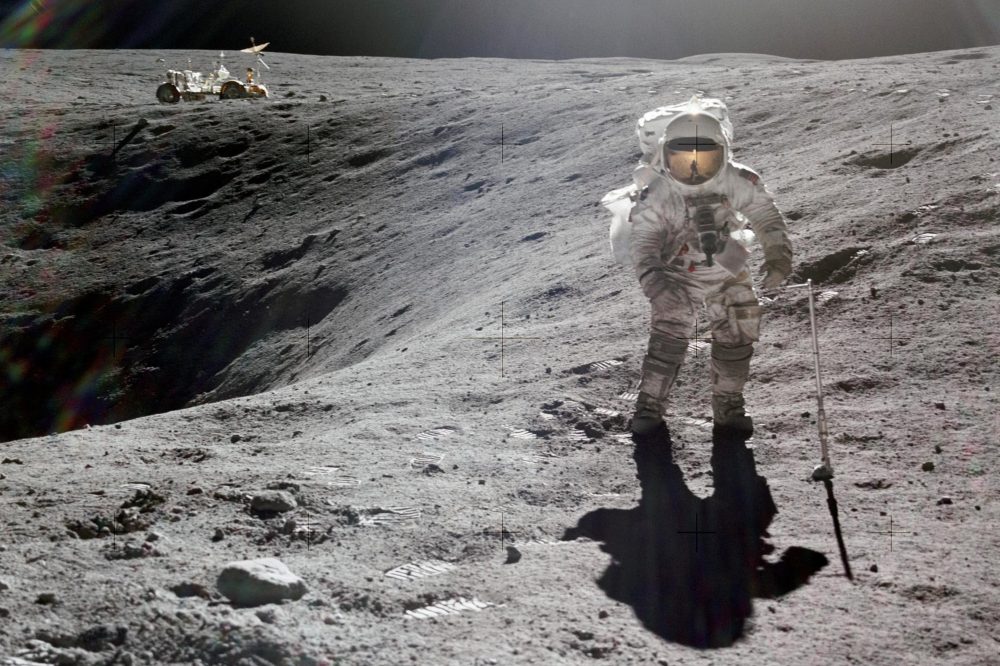
The touching gesture echoes a tradition established during the Apollo 8 mission in 1968, when astronaut Jim Lovell named a lunar mountain “Mount Marilyn” after his wife, who waited anxiously for his safe return to Houston during humanity’s inaugural moon voyage.
The current four-person crew represents the first humans to visit the moon since Apollo 17 concluded that remarkable era in 1972, making their crater-naming proposal a moment that temporarily stunned ground control.
“It was definitely a very emotional moment. I don’t think most of us knew it was coming,” NASA lunar scientist Ryan Watkins told The Associated Press on Wednesday from Johnson Space Center in Houston. “There was not a single dry eye.”
Mission Control’s lead scientist Kelsey Young had worked secretly with the Artemis II team before their departure, helping them select the two bright, relatively recent craters that became visible to them through telescopic lenses and with the naked eye once they approached the moon.
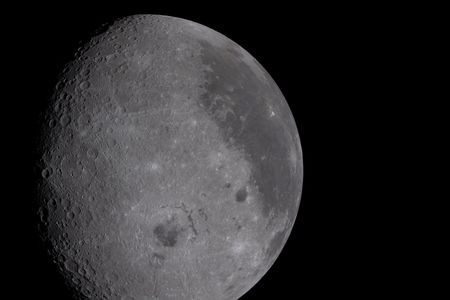
The proposed Carroll Crater sits at the moon’s left edge where the near and far sides meet, occasionally becoming visible from Earth. According to Watkins, it measures roughly 3 miles (5 kilometers) wide and has a relatively shallow depth. The somewhat larger Integrity crater lies entirely on the moon’s hidden far side.
The naming request occurred shortly after the crew surpassed Apollo 13’s record for the farthest human space travel. All four astronauts broke down in tears as they shared a group embrace.
“We lost a loved one. Her name was Carroll, the spouse of Reid, the mother of Katie and Ellie,” Hansen transmitted, his voice cracking with emotion. “It’s a bright spot on the moon and we would like to call it Carroll.”
Mission Control remained silent for almost a full minute before responding: “Integrity and Carroll crater, loud and clear.”
This emotionally charged moment marked a significant departure from the Apollo missions of the 1960s and 1970s in multiple ways. NASA’s Apollo crews, composed entirely of male test pilots, typically maintained strict professionalism and rarely displayed such emotional vulnerability.
“This is no fault of Apollo,” Watkins explained. “I think we’re seeing just a more human aspect.”
Following their Earth landing later this week, the crew will formally submit both proposed names to the International Astronomical Union for official approval.
Mount Marilyn waited nearly five decades between Apollo 8’s mission and the union’s official recognition in 2017.
The IAU’s Ramasamy Venugopal assured a decision regarding Carroll and Integrity within approximately one month, which represents the standard timeframe “for straightforward requests.”
The organization’s approved list already includes 81 astronaut-designated lunar features, such as Apollo 16’s “Baby Ray” and “Gator,” plus Apollo 17’s “Lara,” named for the primary female character from the 1965 movie “Doctor Zhivago.”
However, not all Apollo-era nicknames received official status.
Apollo 17 commander Gene Cernan, who holds the distinction of being the final person to walk on the moon, called a divided boulder “Tracy’s Rock” after his young daughter in 1972.
Similarly, in 1969, Apollo 12 commander Pete Conrad playfully nicknamed his landing location “Pete’s Parking Lot.”
Meta Platforms introduced its newest artificial intelligence system called Muse Spark on Wednesday, marking the debut release from a specialized division the social media giant created through expensive recruitment efforts and major organizational changes as it works to compete in the rapidly evolving AI marketplace.
Technology companies across the United States face mounting expectations to demonstrate that their substantial investments in artificial intelligence will generate returns. Meta faces particularly intense scrutiny following last year’s acquisition of Scale AI CEO Alex Wang through a $14.3 billion agreement, along with compensation packages worth hundreds of millions of dollars offered to engineers joining the company’s newly formed superintelligence division.
The Muse Spark system represents the inaugural release from this specialized team, which focuses on developing artificial intelligence capabilities that could surpass human cognitive abilities.
The new technology will debut exclusively through Meta’s AI application and website before expanding in the coming weeks to replace current Llama systems that operate chatbot features across WhatsApp, Instagram, Facebook, and the company’s smart eyewear products.
According to a company blog post, the team stated: “This initial model is small and fast by design, yet capable enough to reason through complex questions in science, math, and health. It is a powerful foundation, and the next generation is already in development.”
A groundbreaking study using daily satellite imagery has uncovered surprising patterns in how artificial lighting changes across our planet after dark, revealing a complex picture that goes far beyond simple urban growth.
Scientists analyzing over one million daily satellite images found that global nighttime illumination rose 16% between 2014 and 2022, but this increase wasn’t uniform across regions. Instead, researchers discovered a complex mix of brightening and dimming driven by vastly different factors worldwide.
The United States currently produces more nighttime light than any other nation, with China, India, Canada and Brazil rounding out the top five brightest countries in terms of total luminosity.
The most significant increases in artificial lighting occurred in developing regions, especially sub-Saharan Africa and Southeast Asia. Somalia, Burundi and Cambodia led this transformation, followed by several African countries including Ghana, Guinea and Rwanda.
“For decades, we’ve held a simplified view that the Earth at night is just getting steadily brighter as human population and economies grow,” explained Zhe Zhu, a remote sensing professor and director of the University of Connecticut’s Global Environmental Remote Sensing Laboratory, who led the research published Wednesday in Nature journal.
“We discovered that the Earth’s nightscape is actually highly volatile,” Zhu added. “The planet’s lighting footprint is constantly expanding, contracting and shifting.”
The research team utilized daily satellite observations from a U.S. government Earth-monitoring satellite, processed through NASA systems. This approach provided much more detailed data than previous studies that relied on monthly or yearly composite images.
Growing brightness in emerging economies reflects more than just city expansion, according to researchers. “This isn’t just urbanization. It is a massive expansion of energy access,” Zhu noted. “These numbers represent a profound shift as entire regions transition from near-total darkness to becoming part of the global electric network.”
However, some regions experienced dramatic lighting decreases due to conflict and infrastructure breakdown. Countries including Lebanon, Ukraine, Yemen and Afghanistan saw major light loss as warfare damaged electrical systems. Similar declines occurred in Haiti and Venezuela, where economic instability and unreliable power supplies caused the dimming.
“In Ukraine, we observed a sharp, sustained decrease in light that aligned perfectly with the escalation of the conflict in February 2022,” Zhu said, referring to Russia’s large-scale invasion. “We see similar abrupt darkness falling over regions in the Middle East during periods of conflict.”
Europe stood out for different reasons, showing a 4% overall reduction in nighttime brightness due to intentional policy changes and technological improvements.
“It is driven by a widespread shift from older, less-efficient streetlights like high-pressure sodium lamps to newer, directional LED systems, as well as strict national energy-efficiency mandates and dark-sky conservation efforts,” Zhu explained. “Europe is fascinating because it presents a very structured dimming pattern.”
France emerged as a global leader in dark-sky preservation and energy efficiency requirements, according to the study.
Co-author Christopher Kyba, who teaches nighttime light remote sensing at Germany’s Ruhr University Bochum, highlighted France’s innovative approach: “The dimming in France that took place because of deliberate decisions to turn streetlights off late at night when there is no longer any activity on the streets is extraordinary. It will be very interesting to see how this develops over time, and whether this practice expands beyond France.”
The United States showed a 6% net increase in lighting during the study timeframe, but with notable regional variations.
“Geographically, the USA offers a microcosm of this global light complexity. The West Coast largely brightened, consistent with population growth and vibrant tech economies. However, much of the East Coast and Midwest actually dimmed. This was driven by de-densification in older urban cores, the decline of certain manufacturing sectors, and aggressive adoption of smart, energy-efficient city lighting programs like those in Washington, D.C., and Chicago,” Zhu observed.
Artificial lighting on a massive scale began with gas-powered street lamps in early 1800s cities, followed by electric illumination later that century. This progression has continued steadily, creating the glowing urban landscapes that now obscure most stars visible to the naked eye.
“Light pollution has profound ecological consequences, disrupting nocturnal ecosystems, animal migrations and human circadian rhythms,” Zhu warned.
Fishing enthusiasts in Maryland have the opportunity to earn money while helping protect the Chesapeake Bay by participating in tournaments targeting invasive fish species throughout 2026.
Blue catfish, which are not native to Maryland waters, pose a significant threat to the bay’s ecosystem by consuming native species including blue crabs, white perch, and menhaden. These aggressive predators have no fishing restrictions – anglers can catch unlimited numbers at any size during any season. The current Maryland record stands at 82 pounds, a mark that has remained unbeaten since 2012.
Multiple organizations across Maryland are hosting tournaments and reward programs that encourage fishermen to remove these invasive species while competing for prizes:
Mid-Shore Fishing Club Invasive Species Tournament – Running through December 1, this Eastern Shore competition targets blue catfish and snakeheads, awarding payouts for both quantity and size. All tournament fish must be kept to qualify for rewards.
Lucky and Blessed Fishing Autism Awareness Invasive Species Tournament – Continuing until May 1, this nonprofit organization provides weekly prizes for the largest catches and top stringers. The program creates inclusive fishing opportunities for people of all abilities, with prizes including charter trips, equipment, and an awards ceremony on May 16 at Sandy Point State Park in Annapolis.
Environmental Justice Journalism Initiative Reel Rewards Program – From April 25 through July 18, this Baltimore nonprofit pays up to $30 per fish for invasive catfish and snakeheads caught in Baltimore Harbor up to the former Key Bridge location. The program is entering its third year and helps researchers study the environmental impact of these species.
Benedict Volunteer Fire Department Annual Catfish Tournament – Scheduled for May 2, this Charles County event supports the local volunteer fire department. Cash prizes are available in boat, kayak, and shore fishing categories, with the Patuxent River serving as the tournament boundary.
Back River Restoration Committee Millers Island Land Fishing Invitational – Taking place April 18 at Sparrows Point, this shore-based competition offers a $3,500 top prize for the heaviest three-catfish stringer. Proceeds support youth fishing programs and local schools.
Eric Altemus Memorial Catfish Tournament – Set for June 13 in Chesapeake City at Safe Harbor Bohemia Vista, this family-friendly event combines competition with charitable giving to local organizations.
Nanticoke River Invasive Fishing Derby – Salisbury University Assistant Professor Noah Bressman is organizing this research-focused tournament for the fifth consecutive year at Cherry Beach Park in Sharptown. The summer event features over $2,000 in prizes and includes scientific analysis of catches, followed by a complimentary catfish cookout.
Madness on the Marshyhope – The Coastal Conservation Association Maryland’s fourth annual tournament launches from Federalsburg Marina Park. Previous years have seen more than 50 participants catching nearly 200 catfish totaling over 400 pounds, with free equipment provided for young anglers.
Chester River Catfish Tournament – The Maryland Wildlife & Heritage Association hosts this August 29 event on the Chester River, awarding thousands of dollars in prizes for the largest blue, flathead, and channel catfish. Last year’s tournament included over 60 junior participants.
Fish For A Cure – Scheduled for November 7, this Chesapeake Bay tournament and fundraiser supports cancer care initiatives and includes an invasive species category alongside its Shore Party in Annapolis.
Tournament organizers interested in having their 2026 blue catfish events included in future listings can contact Hunter Dortenzo at [email protected].
Delaware’s Department of Natural Resources and Environmental Control revealed today that federal wildlife officials have officially endorsed the state’s updated conservation strategy.
The U.S. Fish and Wildlife Service has formally approved Delaware’s 2025 Wildlife Action Plan, known as DEWAP, which will serve as the roadmap for protecting the First State’s animals and natural habitats until 2035.
This federal endorsement allows Delaware to move forward with its comprehensive approach to wildlife preservation and habitat protection across the state for the coming decade.
A federal judge determined Tuesday that border protection agents overstepped their authority when they revoked the visa of a Russian-born Harvard researcher who was found carrying frog embryo samples at an airport checkpoint.
U.S. District Court Judge Christina Reiss concluded that the visa cancellation of Kseniia Petrova was both arbitrary and unreasonable in her written decision. The judge noted that Customs and Border Protection agents have restricted powers to revoke visas and cannot take such action based on suspected biological sample violations.
“The undisputed facts reveal that Ms. Petrova’s visa was impermissibly canceled because of the frog embryo samples and for no other reason,” Reiss wrote.
The Department of Homeland Security, which oversees Customs and Border Protection, has not responded to requests for comment.
The incident occurred in February of last year when Petrova was returning from a French vacation. During her trip, she had visited a laboratory that specializes in creating ultra-thin sections of frog embryos and collected research samples. Border agents questioned her about these materials when she arrived at Boston Logan International Airport.
Following the questioning, officials informed Petrova that her visa would be revoked.
Immigration authorities briefly held Petrova in Vermont, where she submitted a legal request for her freedom. She was subsequently transferred to an Immigration and Customs Enforcement detention center in Louisiana.
In a previous interview with The Associated Press, Petrova explained that she was unaware the samples required declaration and had no intention of illegally bringing materials into the United States. According to her lawyer Gregory Romanovsky, Petrova returned to her Harvard research position in January after successfully petitioning the court for permission to resume her work.
Romanovsky described Tuesday’s decision as a significant step toward “correcting what should never have happened in the first place.”
Academic researchers are monitoring Petrova’s situation closely, with concerns that the outcome could affect universities’ ability to recruit and retain international scientists.
An artificial intelligence startup has unveiled a new cybersecurity collaboration with some of the world’s largest technology companies on Tuesday, according to a company announcement.
Anthropic revealed its “Project Glasswing” initiative, which grants selected organizations early access to test an unreleased AI system called “Claude Mythos Preview” specifically designed for cybersecurity defense purposes. The partnership includes tech giants Amazon, Microsoft, Apple, Google, and Nvidia, along with cybersecurity specialists CrowdStrike and Palo Alto Networks.
The launch comes after reports last month indicated Anthropic had been testing Claude Mythos, which reportedly demonstrated both significant security risks and advanced defensive capabilities. Those reports had caused stock prices for cybersecurity companies like Palo Alto Networks and CrowdStrike to drop substantially.
Recent discussions at this year’s RSA cybersecurity conference in San Francisco centered heavily on the growing threat of artificial intelligence-powered cyber attacks and questions about whether traditional security measures remain adequate.
According to Anthropic’s Tuesday blog post, the Mythos Preview system has already identified “thousands” of significant security flaws across operating systems, web browsers, and various software applications.
The company stated that participating organizations will integrate Mythos Preview into their defensive security operations, while Anthropic plans to distribute the findings throughout the cybersecurity industry.
Beyond the initial partners, Anthropic announced it will expand access to approximately 40 additional organizations that manage essential software infrastructure. The company has committed up to $100 million in usage credits and $4 million in donations to open-source security organizations.
The AI company expressed its ultimate objective as enabling “our users to safely deploy Mythos-class models at scale.”
Anthropic confirmed it has maintained ongoing communications with the U.S. government regarding the model’s capabilities.
The initiative follows previous security incidents, including last year’s attack where hackers exploited weaknesses in Anthropic’s Claude AI system to target approximately 30 organizations worldwide. Additionally, a recent study conducted by IBM and Palo Alto Networks found that 67% of 1,000 surveyed executives reported experiencing AI-based attacks in the past year.
Four astronauts aboard NASA’s Artemis II spacecraft made history Monday as they ventured farther from Earth than any human crew in decades, completing a dramatic lunar flyby that signals the space agency’s return to moon exploration. The crew of three American astronauts and one Canadian team member experienced a total solar eclipse during their journey and became the first people to witness the moon’s mysterious far side with the naked eye before beginning their journey back to Earth.
The mission has produced a collection of breathtaking photographs showcasing spectacular views of both the moon and Earth from deep space, offering the public a rare glimpse of what the astronauts observed during this historic voyage.
The four-person Artemis II crew reached out to colleagues aboard the International Space Station on Tuesday during their journey back to Earth, creating a historic moment in space communications.
This radio conversation marked the first time astronauts traveling to or from the moon have spoken with crew members on a space station. During the Apollo era of the 1960s and 1970s, when humans last ventured into deep space, no orbital outposts existed for such communications.
The call brought together Christina Koch from the Artemis II mission and Jessica Meir stationed on the space laboratory, reuniting the duo who made history in 2019 by completing the first spacewalk conducted entirely by women. Despite being separated by 230,000 miles, the astronauts shared a celebratory conversation.
Mission Control in Houston facilitated the extraordinary exchange between the four lunar voyagers and the space station’s current residents – three American astronauts and one French crew member.
Commander Reid Wiseman continued sharing photographs from Monday’s lunar encounter on Tuesday morning, including images from their record-breaking distance achievement. Among the standout photos was a stunning view of Earth setting behind the lunar horizon, echoing the famous Earthrise image captured during Apollo 8 in 1968.
Wiseman’s team represents the first humans to travel to lunar vicinity since the Apollo 17 mission in 1972. They’re scheduled to complete their nearly 10-day demonstration flight with an ocean landing near San Diego on Friday.
This successful mission paves the way for Artemis III next year, which will test lunar lander docking procedures in Earth orbit. The program will culminate with Artemis IV in 2028, when two crew members plan to touch down near the moon’s south pole.
The crew of NASA’s Artemis II mission is requesting that a lunar crater be named ‘Carroll’ to honor the late wife of their mission commander.
Reid Wiseman led the astronaut team that became the first humans to observe multiple craters on the moon’s far side during their groundbreaking lunar flyby mission. The crew wants one of these previously unseen craters to bear the name of Carroll Wiseman, who passed away from cancer in 2020.
The historic mission marked a significant milestone as the astronauts peered through the Orion spacecraft’s main cabin windows during their approach to the moon, witnessing lunar features that no human had seen before.
This naming proposal represents both a scientific achievement and a personal tribute, as the crew seeks to commemorate Carroll Wiseman’s memory through this permanent lunar landmark discovered during their pioneering journey around the moon.
HOUSTON — NASA’s Artemis II crew has created their own piece of space history, capturing breathtaking images that echo the legendary Apollo 8 mission from more than five decades ago.
Following their successful moon flyby, NASA unveiled remarkable photographs taken by the four-member international crew on Tuesday.
The astronauts — three from the United States and one from Canada — produced their own version of Apollo 8’s iconic 1968 ‘Earthrise’ photograph, calling theirs ‘Earthset’ as it shows Earth disappearing behind the moon’s cratered, gray surface. The crew also documented a complete solar eclipse visible from their vantage point as the moon passed between them and the sun.
The team is currently traveling back to Earth, with their Pacific Ocean touchdown scheduled for Friday.
The original Apollo 8 crew made history as humanity’s first lunar visitors when they orbited the moon during Christmas Eve 1968. Their famous ‘Earthrise’ image went on to become an iconic symbol for the environmental movement.
This Artemis II mission represents NASA’s first crewed return to lunar vicinity and serves as a crucial milestone in preparation for an actual moon landing mission planned for 2026.
Scientists have witnessed an extraordinary sight in Central Africa: thousands of tiny fish scaling a towering 50-foot waterfall using nothing but their fins and determination.
Researchers studying the upper Congo Basin documented this remarkable behavior in a species called Parakneria thysi, commonly known as shellear fish. These aquatic acrobats tackle the vertical face of Luvilombo Falls during seasonal flooding periods in April and May.
The climbing fish measure just 1.5 to 1.9 inches in length – only the smaller members of the species attempt this feat. Larger fish, which can grow up to 3.9 inches, appear too heavy to support their own weight during the ascent.
The journey to the summit requires nearly 10 hours of grueling effort. The fish move in brief spurts followed by rest periods, navigating through areas moistened by waterfall spray rather than direct water flow.
Lead researcher Pacifique Kiwele from the Université de Lubumbashi explained the significance of this finding: “This discovery highlights the importance of maintaining the continuity of watercourses, particularly in the context of the Congo Basin, where studies on fish behaviour are virtually nonexistent.”
Kiwele emphasized the wonder of the discovery, stating: “It prompts scientists to be even more vigilant in their observations, as anything is possible. Who would have believed it without being close enough to check, and document it with photographic and film material, that indeed some fish are able to climb waterfalls? It illustrates that there are wonders out there that surpass our imagination.”
While other fish species worldwide have demonstrated waterfall-climbing abilities, this marks the first documented case in Africa, according to the research team.
The scientists captured this behavior on four separate occasions during 2018 and 2020, publishing their findings in Scientific Reports journal.
The climbing technique involves using pectoral fins to grasp wet rock surfaces, with pelvic fins providing additional support. Tiny hook-shaped structures called unculi help secure their grip, while side-to-side body movements propel them upward.
To put this achievement in perspective, if scaled to human proportions, it would equal a person climbing hundreds of feet straight up.
The ascent carries significant risks. Sudden water bursts can dislodge climbing fish, especially when they must flip upside down to navigate overhanging rock sections. While fish falling into the pool below can likely attempt another climb, those landing on rocks may face fatal injuries.
Scientists believe the fish undertake this challenging journey to reach upstream areas with better living conditions, reduced competition, and fewer predators.
The species faces two primary human-related threats: illegal fishing operations using fine-mesh mosquito nets that easily capture the small fish, and water diversion for irrigation that has sometimes left the Luvilombo River severely depleted.
This finding underscores how much remains unknown about fish behavior throughout the Congo Basin region.
“It is quite possible that other fish species living in rapid habitats are capable of overcoming similar vertical obstacles,” Kiwele noted, revealing plans for additional research to investigate preliminary observations of climbing behavior in other fish families.
Delaware environmental regulators have launched a comprehensive review of water and sewer systems serving mobile home parks across the state, focusing on infrastructure problems that have burdened residents who bear no responsibility for the issues.
The Delaware Department of Natural Resources and Environmental Control has initiated the evaluation to examine both wastewater treatment and drinking water systems within manufactured housing communities statewide. Officials say the effort will help address ongoing water-related problems affecting these residential areas.
According to state officials, numerous mobile home parks are situated in underserved areas where utility systems are suspected of being obsolete, inadequately maintained, or in declining condition. The assessment aims to identify specific infrastructure deficiencies and develop solutions for communities struggling with water quality and wastewater management challenges.
NASA’s Artemis II mission has successfully achieved its primary lunar flyby objective, with the crew accomplishing several critical mission goals during their journey around the moon.
The space mission reached multiple important benchmarks as the astronauts navigated their path around the lunar surface. Commander and NASA astronaut Reid Wiseman was photographed gazing through one of the Orion spacecraft’s primary cabin windows at the moon during the crew’s lunar approach.
During their lunar journey, the crew managed to surpass a record previously held by an Apollo mission and witnessed a solar eclipse from their unique vantage point in space.
Following their successful completion of the lunar loop, the space capsule has begun its return trajectory toward Earth. Mission officials anticipate the spacecraft will make its ocean landing on Friday, marking the conclusion of this significant milestone in NASA’s lunar exploration program.
The mission represents a major step forward in NASA’s efforts to return humans to lunar exploration and establishes important precedents for future deep space missions.
Technical complications during testing of Apple’s first folding smartphone could result in production delays, according to a Monday report from Nikkei Asia citing industry sources.
The tech giant is facing more complex engineering challenges than originally anticipated while developing the foldable device, the report indicates. These difficulties are requiring additional time to address properly.
Component suppliers have been informed that manufacturing schedules may need to be adjusted due to the ongoing technical issues, sources told the publication.
Reuters was unable to independently confirm these details, and Apple has not yet provided a response to requests for comment regarding the reported setbacks.
The development challenges are reportedly taking longer to overcome than the company initially expected, potentially affecting the timeline for mass production of the innovative device.
The Delaware Department of Natural Resources and Environmental Control is calling on community members to participate in an environmental cleanup initiative at Concord Pond, located close to Seaford, as part of Earth Month activities.
The state agency is requesting that interested participants register in advance for the volunteer cleanup scheduled for Saturday, April 11, running from 10 a.m. until noon.
Concord Pond serves as a well-known recreational spot for fishing enthusiasts and boaters in the area.
The South Korean technology company Samsung announced it will terminate its proprietary messaging application this summer, according to a service termination notice posted on the company’s American support site.
Samsung Messages will cease operations in July, with affected Galaxy phone and device owners encouraged to migrate to Google Messages to ensure uninterrupted texting capabilities on Android devices.
Since Samsung Galaxy devices operate on Google’s Android platform, users can make the transition by downloading Google Messages from the Play Store if it’s not already installed, then designating it as their primary messaging app. Samsung’s website provides step-by-step instructions for the changeover, and some users may receive automated prompts within their current app to assist with the migration.
The technology manufacturer emphasizes that adopting Google Messages will unlock enhanced features, including Google’s Gemini artificial intelligence capabilities. These include an experimental “Remix” tool for creating images during text conversations and AI-generated response suggestions. Users will also benefit from improved photo quality when messaging between Android and Apple devices through RCS technology.
Device owners running older Android versions – specifically Android 11 and earlier – will remain unaffected by Samsung Messages’ discontinuation. Users can verify their Android version by accessing their device settings, selecting “software information,” and locating “Android version.”
Current owners of Samsung’s newest Galaxy 26 series and other recent models are already unable to obtain the Samsung Messages app from the Galaxy Store. Once July arrives, the application will become completely unavailable for download across all devices. Samsung advises users to check their current app for the specific termination date.
The company has not yet clarified whether this messaging app discontinuation applies to Samsung users outside the United States.
NEWTON, Mass. — Growing up, Matthew Shifrin shared the same passion for constructing Lego creations that countless children experience. However, his blindness meant he constantly needed assistance from relatives and friends to finish his projects — often offering them tea as an incentive to visit and help.
Everything transformed when Shifrin reached age 13. A family friend who also served as his babysitter arrived at his Newton, Massachusetts residence carrying a binder containing accessible building directions for a Middle Eastern palace set. These braille-written instructions enabled him to assemble the entire creation independently, without depending on the vibrant visual guides that normally accompany Lego products.
“This was the first time that I was able to build a Lego set on my own,” Shifrin said at his home, surrounded by sets he has built including a Statue of Liberty figurine and NASA’s Apollo Saturn V rocket. “It was truly an amazing experience because I was completely in control of the whole building process. I knew where the pieces went and I was able to learn about the world around me.”
Following his babysitter’s passing, Shifrin decided to preserve her legacy by improving and expanding the instructions they had previously shared online to help other blind builders.
Shifrin established Bricks for the Blind three years ago. The 28-year-old now collaborates with 30 volunteers including sighted writers and blind testers. His platform offers free downloadable directions to anyone experiencing blindness or visual impairment. Users can print the detailed instructions in braille, access them through braille computers, or utilize screen reader software that converts text to spoken words.
While the directions enable independent building for blind users, Shifrin’s platform notes that sighted assistance may be required for sorting Lego pieces. Alternatively, blind builders can use various apps that employ artificial intelligence to identify specific bricks.
The nonprofit organization has developed instructions for over 540 different Lego sets, from simple 100-piece vehicles to complex 4,000-piece structures. Approximately 3,000 builders have utilized these resources throughout the United States and internationally, including users in Australia.
In 2017, Shifrin contacted the Denmark-headquartered Lego Group regarding accessibility improvements for their products, which motivated the company to develop audio and braille instructions for an expanding selection of sets, launching this initiative in 2019.
Additionally, the company released Lego Braille Bricks in 2020, available in French, English, and Spanish, featuring raised studs that represent letters, numbers, and symbols. The company has also incorporated characters with vision loss into various sets.
Shifrin, who pursues careers as an actor, composer, and opera singer, reports receiving numerous messages from individuals who previously couldn’t enjoy building Lego.
He has heard from visually impaired grandparents expressing their newfound ability to construct sets with grandchildren. “We couldn’t build with our kids. They didn’t want our help, but now we can teach our grandkids about Lego,” Shifrin said. “Or blind parents who say, ‘My kids are sighted, they don’t want my help, but it’s amazing to really understand what all this hype about Lego is about because now I can build on my own’”
Daniel Millan, who experienced sight loss in 2024, discovered Bricks for the Blind after a tumor damaged his optic nerves. The 31-year-old graduate student from San Diego, pursuing studies to become an assistive technology instructor, initially completed a Lego ornament set, then assembled a Lego rose set with his wife on their anniversary.
“Being able to do it independently, it’s freedom,” he said, adding that his sudden vision loss left him wondering about what he wouldn’t be able to do again.
Following his Lego building experiences, he realized that “It’s not about what I can’t do anymore. It’s more about what I can do,” he said.
For Natalie Charbonneau, who experiences blindness, these instructions have enabled her to complete sets without depending on her sighted husband’s help. They’ve also allowed her to enjoy activities with her 5-year-old son, building numerous fire trucks and other vehicles together.
“If he has questions, I have the ability to check his work or to follow along instead of saying, ‘You have to wait for your dad’ or ‘You have to ask your dad.’ It’s something that I can now do with him as well, which is empowering,” she said. Charbonneau, who tests products for Bricks for the Blind, is pursuing doctoral studies while residing in Bellingham, Washington.
Teri Turgeon, education director for community programs at Perkins School for the Blind in Watertown, Massachusetts — where Shifrin attended as an infant — explained that accessible instructions provide blind children with the same enjoyment as their sighted counterparts. The activity also helps them understand spatial concepts and develop “fine motor and tactile skills.”
“He’s created a space around innovation and accessibility that was otherwise not there prior and he’s done so with a toy that children play with every day,” she said.
At his residence, Shifrin assisted fellow blind builder Minh Ha in constructing a go-kart. Ha selected Lego pieces from two containers and began assembling a driver figure.
“It’s just legs, torso, head, helmet. You’ve built this before. It’s a piece of cake. I believe in you,” Shifrin told her.
“Awesome,” she said with a smile. “All right, I’m gonna put the helmet on the head. And then … put the legs on the body.”
She remembered her experience that started two years earlier when she constructed a lotus flower.
“A lot of blind people have been left out of this cultural and kind of childhood phenomenon of being able to build Lego, play with Lego,” Ha said. “There is something incredibly satisfying and also relaxing to be able to put together these very intricate, very beautiful and architecturally complex builds.”
HOUSTON — Four astronauts aboard NASA’s Artemis II spacecraft pushed toward a historic milestone Monday, preparing to break humanity’s distance record from Earth during an ambitious lunar flyby that promises breathtaking views of the moon’s hidden far side.
The six-hour close encounter with the moon marks the centerpiece of NASA’s first crewed lunar mission since the Apollo program, featuring three American astronauts and one Canadian crew member as part of the agency’s plan to land astronauts near the moon’s south pole within two years.
Just under an hour before beginning their detailed lunar observations and flyby maneuver, the four crew members were positioned to claim the title of most distant humans ever, breaking Apollo 13’s record of 248,655 miles (400,171 kilometers) established in April 1970.
NASA’s Mission Control anticipated Artemis II would exceed that benchmark by more than 4,100 miles (6,600 kilometers).
The spacecraft follows the identical flight path used by Apollo 13 following the famous “Houston, we’ve had a problem” oxygen tank failure that ended that mission’s lunar landing hopes.
This flight pattern, called a free-return lunar trajectory, harnesses gravitational forces from both Earth and the moon to minimize fuel consumption. The celestial figure-eight path will automatically guide the astronauts homeward after they swing around the moon’s backside Monday evening.
Mission Commander Reid Wiseman, along with pilot Victor Glover, Christina Koch, and Canada’s Jeremy Hansen, were scheduled to approach within 4,070 miles (6,550 kilometers) of the lunar surface as their Orion spacecraft sweeps past, executes a dramatic turnaround, and begins the journey home. The return trip will span four days, ending with a Pacific Ocean splashdown Friday to complete their test mission.
Wiseman’s team dedicated years to mastering lunar topography in preparation for this moment, even incorporating solar eclipse observations into their training over recent weeks. Their Wednesday launch timing guarantees them a total solar eclipse experience from their unique position behind the moon.
Leading their scientific observation list is Orientale Basin, a massive impact crater featuring three circular rings, with the largest spanning nearly 600 miles (950 kilometers) in diameter.
Additional viewing targets include the Apollo 12 and 14 landing locations from 1969 and 1971, plus sections of the south polar area where future missions plan to touch down. Beyond the moon, the crew will have clear views of Mercury, Venus, Mars, Saturn, and Earth itself.
NASA geologist Kelsey Young, serving as the crew’s lunar advisor, anticipates they will capture thousands of photographs.
“People all over the world connect with the moon. This is something that every single person on this planet can understand and connect with,” Young commented before the flyby while sporting eclipse-themed earrings.
This marks NASA’s first crewed lunar expedition since Apollo 17 concluded in 1972, paving the way for next year’s Artemis III mission, where another Orion crew will rehearse docking procedures with lunar landing vehicles in Earth orbit. The ultimate goal of landing two astronauts near the moon’s south pole will come with Artemis IV in 2028.
Though Artemis II follows Apollo 13’s trajectory, it more closely mirrors Apollo 8, when humans first traveled to the moon, orbited on Christmas Eve 1968, and famously read passages from Genesis.
Glover reflected that traveling to the moon during Christianity’s Holy Week emphasized for him “the beauty of creation.” He described Earth as an oasis surrounded by “a whole bunch of nothing, this thing we call the universe” where humanity exists as one unified presence.
“This is an opportunity for us to remember where we are, who we are, and that we are the same thing and that we’ve got to get through this together,” Glover stated while joining hands with his fellow crew members.
Four astronauts aboard NASA’s Artemis II mission are preparing for a groundbreaking journey around the moon this Monday, marking a significant milestone in space exploration.
The crew will approach within approximately 4,000 miles of the moon’s surface during their closest pass late Monday evening. This historic mission will also take the astronauts deeper into space than any human beings have ever traveled before.
The Artemis II mission represents a major step forward in NASA’s ambitious plan to return humans to lunar exploration and eventually establish a sustainable presence on the moon’s surface.
A young gray whale that captivated Washington state communities by venturing 20 miles inland through a small waterway has been discovered deceased, with marine scientists suggesting starvation may have prompted the animal to search for alternative feeding areas as the species confronts a population crisis.
The mammal’s body was located Saturday close to Raymond, Washington, along the Willapa River, which connects to the Pacific through Willapa Bay. Multiple gray whales are presently navigating through the bay during their extensive 5,000-mile spring journey from Mexican birthing waters in Baja California to Alaskan feeding territories.
According to John Calambokidis, a research biologist with the Cascadia Research Collective, the primary challenge facing Pacific gray whale populations since 2019 has been diminished food sources in Alaska’s northern Bering and Chukchi seas.
“Gray whales are facing a major crisis and the heart of it does seem to be feeding on their prey in the Arctic,” he said.
Federal fisheries officials through NOAA declared an extraordinary death event for eastern Pacific gray whales spanning from late 2018 through late 2023. During this period, 690 gray whale strandings occurred across the coastline from Alaska down to Mexico.
NOAA investigators determined the preliminary cause was “localized ecosystem changes in the whales’ sub-Arctic and Arctic feeding areas that led to changes in food, malnutrition, decreased birth rates and increased mortality.”
While authorities initially thought the population was recovering, the latest 2025 census revealed continued decline. Federal estimates place the current population at approximately 13,000 gray whales, marking the smallest count since the 1970s.
“A lot of these gray whales are looking very emaciated, very thin,” Calambokidis said.
The northward migration represents the most difficult time for gray whales, as they endure their longest period without feeding and must rely entirely on stored body fat.
“When that happens, you often see gray whales in a more desperate search for new areas to feed,” Calambokidis said. “That’s the most likely context for this whale.”
Scientists plan to conduct an examination of the deceased whale, potentially beginning Monday.
The animal entered the Willapa River’s northern branch Wednesday through a bay located roughly 185 miles southwest of Seattle. Local residents flocked to river bridges hoping to observe the enormous creature and shared numerous photographs and videos on social media showing the whale breathing through its blowhole.
Despite appearing undernourished, the gray whale displayed normal behavior patterns and showed no visible injuries, according to a Facebook update from the nonprofit Cascadia Research Collective.
The research team initially allowed the whale space and time to exit the river naturally, but when scientists searched for the animal Friday, they discovered it had moved further upstream into shallow waters inaccessible by boat, Calambokidis explained.
A massive environmental restoration effort is underway in the Chesapeake Bay, where federal engineers are working to rebuild thousands of acres of lost island habitat using an innovative approach that pairs shipping channel maintenance with ecosystem recovery.
The ambitious Mid-Chesapeake Bay Island Ecosystem Restoration Project aims to restore over 2,100 acres of remote island habitat by recycling between 90 and 95 million cubic yards of material dredged from Baltimore’s port approach channels and other federal waterways.
The initiative focuses on two key locations: James Island, where crews will rebuild 2,072 acres of habitat, and Barren Island, which will see 72 acres restored. Both sites are located in western Dorchester County.
Construction crews are making significant headway at Barren Island, where the U.S. Army Corps of Engineers awarded a $39.9 million contract to Seacoast Marine Construction Inc. in October 2024. The first phase of work wrapped up that same month, with workers completing installation of protective stone barriers and breakwaters designed to guard the island against wave damage.
Phase II operations at Barren Island kicked off in early 2025 and continue to progress. Workers have finished building the southwest wetland containment area and completed filling one of two planned bird islands. Engineers expect to finish foundation work and construction of the northeast barrier by summer’s end in 2026.
The second bird island, along with its protective reef structures and shell covering, should be completed by late 2026. Crews will install the southern spillway sometime in 2026 before beginning placement of dredged materials.
Dredging operations in the Honga River channel are scheduled to run from late 2026 through early 2027, with that material being placed at the restoration site.
James Island represents the largest component of the restoration effort. The site will be rebuilt to span 2,072 acres, with roughly 45% designated as uplands and 55% as wetlands. This portion will use sediment from deep-water channels that lead to the Patapsco River.
Engineers expect to award the Phase I construction contract for James Island by the end of March 2026, with work starting in late spring or early summer on a large contained sand stockpile that will support future barrier construction.
James Island won’t receive dredged material until around 2030, after crews complete construction of barriers and containment structures needed to hold the sediment at each location. The Honga River channel hasn’t been dredged by the Army Corps since 2009.
Funding for the project came through multiple sources, including more than $80 million from the Bipartisan Infrastructure Law in 2022 to complete design work and pre-construction activities for the Barren Island component.
In October 2025, the Army Corps issued safety warnings for boaters in the Chesapeake Bay, urging them to avoid ongoing construction activities near the Mid-Bay Island Project sites adjacent to James and Barren Islands.
The restored areas will feature diverse habitats including mudflats, low and high marsh areas, islands, ponds, channels, and upland zones. By combining navigation maintenance with environmental restoration, the project keeps shipping channels clear while rebuilding critical Bay habitat.
The entire Mid-Bay project is expected to reach completion in 2067, providing more than three decades of capacity to place nearly 95 million cubic yards of dredged material while restoring vital Chesapeake Bay ecosystems.
Four astronauts aboard NASA’s Artemis II mission are preparing to make history by surpassing the distance record set by Apollo 13 more than five decades ago. The crew, consisting of three Americans and one Canadian, launched last week on humanity’s first lunar journey since 1972.
On Monday, the astronauts will conduct a flyby of the moon, traveling roughly 4,000 miles farther from Earth than Apollo 13’s crew achieved in 1970. This will make them the most distant human travelers from our planet as they swing around the lunar surface before beginning their return journey.
The approximately six-hour close encounter with the moon will provide the crew with unprecedented views of the lunar far side that the 24 Apollo astronauts before them couldn’t see clearly due to lighting conditions. Additionally, the astronauts will witness a total solar eclipse visible only from their Orion capsule, offering glimpses of the sun’s corona.
Flight director Judd Frieling explained the mission’s broader purpose: “We’ll get eyes on the moon, kind of map it out and then continue to go back in force.” The ultimate objective includes establishing a lunar base complete with landing vehicles, exploration rovers, drones and living quarters.
The current distance record belongs to Apollo 13, whose crew reached 248,655 miles from Earth in 1970. That mission’s astronauts never landed on the moon after an oxygen tank explosion endangered their lives during the journey. Mission Control used a gravity-assisted trajectory around the moon to bring them safely home, making Apollo 13 NASA’s most famous “successful failure.” Commander Jim Lovell, Fred Haise and Jack Swigert followed this emergency route that relied on Earth and lunar gravity with minimal fuel consumption.
Artemis II follows the same figure-eight flight path since the crew won’t orbit or land on the moon. However, their maximum distance from Earth should exceed Apollo 13’s record by approximately 4,000 miles.
Astronaut Christina Koch commented on the significance of breaking the record, saying that while she and her teammates don’t focus on superlatives, it represents an important milestone “that people can understand and wrap their heads around,” connecting past achievements with present and future accomplishments.
During the lunar encounter, the four crew members will work in pairs to photograph the moon’s surface through their windows. Due to their April 1 launch date, less of the moon’s far side will be illuminated compared to other potential launch windows. Nevertheless, NASA geologist Kelsey Young expects them to observe “definite chunks of the far side that have never been seen” by human eyes, including significant portions of the Orientale Basin.
The astronauts will relay their observations while capturing images of the gray, crater-covered landscape. Their equipment includes professional-grade cameras as well as individual iPhones for spontaneous photography opportunities.
Young’s team prepared lunar geography study cards for the crew before launch. “They’ve practiced for many, many, many months on visualizations of the moon,” Young said over the weekend, “and getting their eyes on the real thing, I’m really, really looking forward to them bringing the moon a little closer to home on Monday.”
The April 1 launch timing offers a unique benefit: a total solar eclipse visible exclusively from the Orion spacecraft. This celestial event will treat the astronauts to several minutes of views showing the sun’s outermost atmosphere, known as the corona.
The crew will monitor for unusual solar activity during the eclipse and use their “unique vantage point” to describe corona features, according to Young. All four astronauts brought eclipse glasses for eye protection.
Communication with Mission Control will be interrupted for nearly 40 minutes when Orion passes behind the moon. NASA’s Deep Space Network, featuring large antennas in California, Spain and Australia, cannot maintain contact during this period due to blocked sight lines.
These communication gaps created tension during Apollo missions, though Frieling notes that “physics takes over and physics will absolutely get us back to the front side of the moon.”
After departing the lunar area, Artemis II will require four days to reach Earth. The capsule is scheduled to splash down in the Pacific Ocean near San Diego on April 10, completing a nine-day mission that began with their Florida launch.
During the return flight, the astronauts will establish radio contact with the International Space Station crew. This marks the first instance of simultaneous human presence near the moon and in Earth orbit, prompting NASA to arrange a space-to-space conversation. The discussion will include both participants from the first all-female spacewalk in 2019: Koch aboard Orion and Jessica Meir on the station.
HOUSTON (AP) — A space film featuring Ryan Gosling has earned enthusiastic approval from astronauts currently traveling more than halfway to the moon.
Jeremy Hansen, the Canadian astronaut participating in the Artemis II mission, revealed on Saturday that he and his fellow crew members had the opportunity to screen “Project Hail Mary” alongside their families prior to embarking on their lunar journey. Hansen described the viewing experience as “a real treat” while preparing for his upcoming space mission.
The Canadian actor Gosling extended his well-wishes to all four astronauts before their Wednesday departure.
“Art imitates science and vice versa,” Hansen commented during a live broadcast organized by the Canadian Space Agency. “I thought it was just such an inspirational example — somebody who goes out there and just gets what was done to save humanity. It’s a pretty extraordinary example that we can all follow.”
Hansen holds the distinction of being the first international astronaut to travel to the moon.
Four astronauts aboard NASA’s Artemis II mission have crossed the halfway point of their journey to the moon, positioning themselves to surpass the human spaceflight distance record currently held by Apollo 13.
The crew consisting of three American astronauts and one Canadian is scheduled to arrive at their lunar destination on Monday, where they will capture images of the moon’s far side during their flyby. This marks the first crewed lunar mission in over five decades, continuing where NASA’s Apollo program concluded.
The Artemis II spacecraft is on track to establish a new human distance record by traveling beyond 252,000 miles (400,000 kilometers) from Earth before making a turn around the moon’s far side and returning home without landing or entering lunar orbit.
Canada’s space program marked a historic milestone as officials from Quebec celebrated astronaut Jeremy Hansen’s participation in the mission. Hansen represents the first non-American citizen to journey toward the moon.
“Today he is making history for Canada,” said Canadian Space Agency President Lisa Campbell. “As we watch him taking this bold step into the unknown, let his journey remind us that Canada’s future is written by those who dare to reach for more.”
During a live television broadcast, Hansen described witnessing “extraordinary” sights from inside NASA’s Orion spacecraft.
The four-person crew – Hansen, Reid Wiseman, Victor Glover and Christina Koch – represents the first group of lunar-bound astronauts since the three-member Apollo 17 team in 1972. Koch becomes the first woman to travel to the moon, while Glover holds the distinction as the first Black astronaut on a lunar mission.
The mission spans nearly 10 days and will conclude with an ocean landing in the Pacific on April 10. This flight serves as the opening phase of NASA’s ambitious strategy to establish a permanent lunar base, with plans calling for two astronauts to land near the moon’s south pole by 2028.
Four astronauts traveling aboard NASA’s Artemis II spacecraft have crossed the halfway point of their journey to the moon and are on track to establish a new distance record for human space travel. Canada honored its space program on Saturday as the crew prepared for their groundbreaking lunar flyby mission.
The team consisting of three American astronauts and one Canadian crew member is scheduled to arrive at the moon on Monday, where they will capture images of the moon’s hidden far side during their flyby. This marks the first crew to travel toward the moon in more than 53 years, continuing the work begun by NASA’s Apollo missions.
The Artemis II mission is positioned to establish a new human distance record, venturing over 252,000 miles (400,000 kilometers) away from Earth before making a sweeping turn behind the moon and returning home without landing or entering lunar orbit. Apollo 13 currently holds this distance achievement.
The Canadian Space Agency highlighted the nation’s participation in the mission during a live communication from Quebec with astronaut Jeremy Hansen as he traveled toward his lunar encounter. Hansen holds the distinction of being the first non-American citizen to journey to the moon.
“Today he is making history for Canada,” said Canadian Space Agency President Lisa Campbell. “As we watch him taking this bold step into the unknown, let his journey remind us that Canada’s future is written by those who dare to reach for more.”
During the televised communication link, Hansen described witnessing “extraordinary” sights from inside NASA’s Orion spacecraft.
Hansen, Reid Wiseman, Victor Glover and Christina Koch represent the world’s first lunar crew since the three-person Apollo 17 team in 1972. Koch becomes the first woman to travel to the moon, while Glover is the first Black astronaut to make the lunar journey.
Their mission spanning nearly 10 days will conclude with an ocean landing in the Pacific on April 10, serving as the initial phase of NASA’s ambitious plans to establish a permanent lunar base. The space agency targets a moon landing mission featuring two astronauts near the lunar south pole by 2028.
Long before the undead dominated horror films, extraterrestrial visitors commanded the spotlight in movie theaters, drive-in cinemas, and late-night television programming across America.
While Hollywood continues to influence how Americans picture otherworldly beings with oversized heads and eyes, the line between fantasy and reality may soon become clearer if federal agencies follow through on President Donald Trump’s February directive to declassify confidential documents about UFOs and extraterrestrial encounters.
Science fiction cinema has fundamentally influenced public perception of intelligent beings from other worlds, according to Duke University professor Priscilla Wald, who instructs students on science fiction and film. She explains the genre presents various scenarios: “whether it’s invasion narratives or aliens coming to warn us that we’re on the wrong track or aliens just trying to come and make contact and help us with things or just say ‘hi.’”
Trump’s social media declaration came after former President Barack Obama hinted during a podcast that extraterrestrial life might be real. Obama subsequently explained he hadn’t witnessed proof of alien contact but noted that given the universe’s immense size, life likely exists beyond our planet.
Cinema has depicted alien encounters in diverse American locations, from Pennsylvania farmland in “Signs” (2002) to Wyoming’s Devil’s Tower in “Close Encounters of the Third Kind” (1977) and Central American wilderness in “Predator” (1987).
Retired Navy Rear Admiral Timothy Gallaudet believes cinema has served an important preparatory function. “Hollywood has basically been preparing the public for this,” he states regarding potential confirmation that intelligent extraterrestrial life exists and has reached Earth. “I think people can handle it. It does, of course, depend on what information is released (by the government).”
The entertainment industry rapidly capitalized on the 1947 Roswell, New Mexico incident, where officials first described recovered debris as belonging to a flying disc before revising their explanation to claim it came from a weather balloon experiment.
Approximately three years following Roswell, “The Flying Saucer” reached cinemas. This was succeeded by numerous low-budget, largely forgotten productions, though some films like 1951’s “The Day the Earth Stood Still” continue captivating science fiction enthusiasts today.
Wald notes the timing of this cinematic trend: “If you think back to the flourishing of alien films, this starts really in the U.S. in the 1950s.”
Describing “The Day the Earth Stood Still,” she explains: “The aliens are gentle souls who come down and try to warn us after nuclear war. They’re trying to warn that we’re creating problems in the cosmos and that if we don’t stop, they are and have to do something about it.”
Conversely, other films portray visitors with hostile agendas, seeking to eliminate humanity, conquer our planet, or even use humans as sustenance.
Wald anticipates mixed public reactions to confirmed alien contact: “I think if we found out aliens were on the way, there would be a mix of responses. I think there would be a lot of people out there welcoming them. A lot of people would be going down to the cellars and stocking them with canned food.”
Documentary filmmakers have also explored this subject extensively, including 2025’s “The Age of Disclosure,” which examines government awareness of non-human intelligence and efforts to study alien technology.
Director Steven Spielberg created successful films including “E.T. The Extra-Terrestrial” (1982) and “Close Encounters of the Third Kind.” His forthcoming movie “Disclosure Day” poses the question: “If you found out we weren’t alone, if someone showed you, proved it to you, would that frighten you?”
Wald reflects on the underlying psychology of alien fear: “My question is always, ‘Well, what is that fear really about?’ It seems to me it’s a reflection on who we are, that we’re projecting onto aliens the way we treat each other. So, the aliens are coming down, they want to conquer us, they’re violent. Who does that sound like? It sounds like us.”
Mysterious flying objects, or at least reports of them, have captured American imagination for generations. Here’s how the phenomenon has evolved through government studies, public sightings, and entertainment since the 1940s:
The modern UFO era began June 24, 1947, when private pilot Kenneth A. Arnold witnessed nine mysterious objects soaring near Mount Rainier in Washington state. This marked the first major UFO report to gain widespread attention nationwide, triggering numerous additional sighting claims. Just over a week later on July 2, a ranch worker tending sheep discovered unusual debris scattered across grassland outside Roswell, New Mexico. Military officials initially described the material as remnants of a flying disc before changing their explanation to a weather balloon.
By 1948, the U.S. Air Force initiated Project Sign to examine UFO reports, later renamed Project Blue Book in 1953. Over two decades ending in 1969, investigators examined more than 12,600 reported encounters.
Hollywood entered the conversation in 1950 with the spy thriller “The Flying Saucer.”
Washington D.C. experienced its own UFO wave in July 1952 when radar technicians, aviators and observers detected or witnessed up to twelve unexplained aerial objects above the nation’s capital.
The secretive Area 51 facility began construction in 1955 northwest of Las Vegas as an Air Force installation. This location later became central to UFO conspiracy theories, with the CIA finally confirming the site’s existence in 2013.
November 1957 brought mass sightings to Levelland, Texas, near Lubbock, where numerous residents described mysterious sky lights that disrupted their automobiles and electrical systems.
Television joined the space age in September 1966 when “Star Trek” debuted on NBC, creating television’s most lasting science fiction franchise.
December 17, 1969 marked the end of official UFO investigations when the Air Force declared it discovered no proof of extraterrestrial craft or national security threats, shuttering Project Blue Book.
Steven Spielberg brought UFO encounters to the big screen with 1977’s “Close Encounters of the Third Kind.”
December 1980 saw U.S. military personnel in Britain report unusual lights over Rendlesham Forest near London. Investigating officers allegedly encountered a metallic craft within the woodland.
Spielberg returned to alien themes with 1982’s “E.T. the Extraterrestrial.”
Roland Emmerich’s blockbuster “Independence Day” arrived in theaters in 1996.
March 1997 brought the famous Phoenix Lights incident, with residents describing a massive flying object with lights crossing Arizona skies.
Military encounters resumed in 2004 when U.S. pilots recorded an unexplained object nicknamed “Gofast.” Additional footage that year, called “Gimbal,” showed another mysterious craft moving against wind currents at high altitude. “There’s a whole fleet of them,” one naval aviator told another, though only one unclear object appeared on camera. “It’s rotating.” These recordings later leaked before official Pentagon release.
The Navy validated these three declassified military recordings as genuine unidentified aerial phenomena in 2020.
Pentagon established a UAP (unidentified aerial phenomena) Task Force in 2020.
A 2021 government analysis of 144 mysterious aircraft or device sightings found no extraterrestrial connections, despite objects apparently moving at unusual speeds or directions. Researchers emphasized the need for improved data gathering.
Congress conducted its first UFO hearing in five decades in 2022 following military reports of unexplained aerial encounters. Bipartisan lawmakers declared UFOs a national security issue. NASA simultaneously announced its own UFO investigation as part of ambitious scientific research initiatives. The space agency assembled an independent team to assess available public information and determine additional research needs. NASA released its 2023 conclusions stating UFO research requires innovative scientific methods, including advanced satellite technology and changed perceptions of unidentified objects. The Pentagon also created the All-Domain Anomaly Resolution Office (AARO) to monitor unexplained objects in air, sea, and space.
July 2023 brought dramatic testimony when former Air Force intelligence officer David Grusch told a House Oversight subcommittee that the U.S. maintains a secret program recovering and reverse-engineering UFOs. Pentagon officials denied concealing such operations.
A comprehensive Pentagon study released in 2024 examined nearly a century of UFO reports but found no alien evidence. The Defense Department’s All-Domain Anomaly Resolution Office reviewed government investigations since 1945 of reported unidentified phenomena. Researchers discovered no proof these incidents involved alien life or that the government and private companies possessed hidden extraterrestrial technology.
Recent developments include February 14, 2025, when former President Barack Obama addressed alien questions on a podcast, stating: “They’re real. But I haven’t seen them. And, they’re not being kept in Area 51.” Obama later clarified on social media: “Statistically, the universe is so vast that the odds are good there’s life out there. But the distances between solar systems are so great that the chances we’ve been visited by aliens is low, and I saw no evidence during my presidency that extraterrestrials have made contact with us. Really!”
February 19, 2025: President Donald Trump announced on social media his directive for the Pentagon and other agencies to identify and release extraterrestrial and UFO files due to “tremendous interest.” Trump criticized Obama for revealing “classified information” and told reporters he remains uncertain whether UFOs are “real or not.”
March 31, 2025: U.S. Representative Anna Paulina Luna wrote Defense Secretary Pete Hegseth requesting the government provide approximately four dozen UAP-related videos to an oversight committee task force. “The presence of UAPs in and around the sensitive airspaces of U.S. military installations poses a threat to the security of the armed forces and their readiness,” Luna stated.
Throughout history, humans have pondered what extraterrestrial life might look like, but we seldom consider the reverse question: How would alien visitors view humanity?
This inquiry might yield some troubling responses for those of us living on Earth.
“If I were looking at Earth from a distance, I would be pretty disappointed,” says theoretical physicist Avi Loeb. “Most of our investing is dealing with conflicts to prevent other people from killing us or us killing others. Look at the Ukraine war over a little bit of territory. That is not a sign of intelligence.”
Discussion about extraterrestrial visitors and unidentified flying objects intensified this past February when former President Barack Obama told a podcast host that aliens are “real,” though he “hasn’t seen them” and “they’re not being kept at Area 51.” Following this, President Donald Trump posted on social media that he would order the disclosure of classified government documents due to “tremendous interest.”
Growing curiosity about UFOs coincides with America’s return to lunar exploration through Wednesday’s launch of NASA’s Artemis II mission. The four-person crew will orbit the moon before heading back to Earth.
Given our planet’s ongoing struggles with warfare, social unrest, environmental challenges, and political divisions, one might question how extraterrestrial observers would perceive our species and its difficulties. Regardless, most Americans share the belief expressed in “The X-Files” motto: “The truth is out there.”
Research from the Pew Research Center in 2021 revealed that roughly two-thirds of Americans believe intelligent life likely exists beyond Earth. Approximately half of adults in the United States think military reports of UFOs “definitely” or “probably” represent evidence of extraterrestrial intelligence.
“We don’t want to think this is the only place in this extraordinarily and incomprehensibly large universe where life and intelligence and even technology have emerged,” explains Bill Diamond, president and chief executive of the SETI Institute in Mountain View, California.
“It sort of says about humans, ‘We don’t want to be alone.’”
American fascination with extraterrestrial life began after debris recovery in 1947 near Roswell, New Mexico. Military officials first claimed the materials came from a flying disc, then changed their story to say it was weather balloon wreckage.
Entertainment media embraced the concept. Space vehicles, little green beings, and eventually gray humanoid aliens became cultural staples. The “Star Trek” universe even designates April 5 as “First Contact Day,” commemorating when humans supposedly first encountered Vulcans in 2063.
Popular culture often portrays aliens as hostile. Priscilla Wald, who studies science fiction at Duke University, has a hypothesis about this trend.
“It seems to me it’s a reflection on who we are, that we’re projecting onto aliens the way we treat each other,” Wald explains. “So the aliens are coming down, they want to conquer us, they’re violent. Who does that sound like? It sounds like us.”
The Pentagon disclosed hundreds of reports about unidentified and unexplained aerial phenomena in 2024. However, their analysis found no evidence suggesting extraterrestrial origins.
Debbie Dmytro witnessed unusual objects twice in the skies above southern Oakland County, Michigan. The green-colored object she observed on March 1 over Royal Oak, Michigan, resembled neither aircraft nor helicopter. Dmytro, a 56-year-old healthcare worker, admits it might have been a commercial or delivery drone.
Her 2023 sighting in the same Detroit-area region proves more difficult to explain.
“Four yellow lights, yellowish golden lights and they were all flying very, very low,” Dmytro recalls. She estimates the lights hovered about 100 feet above ground at their closest point.
“I’ve never seen anything so low without any noise and flying in complete uniformity,” she notes. “Is it something man-made? Is it something that’s not manmade? Who knows?”
The mystery persists. UFOs, the traditional term for unidentified flying objects, has recently been replaced by UAP — unidentified aerial phenomena or unidentified anomalous phenomena.
“Absolutely, there are such things” as UAPs and UFOs, states Diamond, whose SETI — Search for Extraterrestrial Intelligence — works to explore, search and understand the nature of life and intelligence in the universe.
“People observe things in the sky that they can’t immediately identify or recognize as either human engineering such as planes or drones or helicopters, or animals, such as birds, and therefore they don’t know what they are,” Diamond explains.
Like many others, Dmytro seeks transparency about government knowledge. “I think there’s more information out there. I’m open to learning more,” she states. “I have an open mind. It’s always about scientific proof.”
Former Rear Admiral Timothy Gallaudet claims evidence clearly demonstrates UAP activity in both airspace and oceans.
“The nonhuman intelligence that operates them or controls them are absolutely real,” Gallaudet declares. “We’ve recovered crashed craft. We don’t know if they’re extraterrestrial in origin.”
Gallaudet previously served as acting administrator for the National Oceanic and Atmospheric Administration. He testified at a 2024 congressional hearing about UAP disclosure and supports Trump’s promised file release, though he hopes the president will follow through.
Given the billions of galaxies containing billions of stars each, the probability of life developing elsewhere appears quite high, according to University of Michigan Astronomy Professor Edwin Bergin, who teaches courses on searching for extraterrestrial life. He theorizes that intelligent beings capable of interstellar travel would reveal themselves — despite humanity’s tendency toward chaos.
“I would think that they would look at us like we were crazy … but they would come out,” he suggests. “I mean, why come here otherwise unless you’re going to sit and observe.”
Loeb, who directs Harvard’s Institute for Theory & Computation and leads the university’s Galileo Project for the Systematic Scientific Search for Evidence of Extraterrestrial Technological Artifacts, accepts the probable existence of extraterrestrials.
“They might be laughing at us,” he speculates. “They might be watching us … to make sure we will not become predators, that we will not become dangerous to them.”
Government secrecy surrounding UFOs and UAP stems largely from national security considerations, Diamond explains.
“We have pretty advanced technologies, satellite, ground-based that are for various purposes mostly national security and defense that are pointing at the sky or things on board aircraft,” Diamond notes. “Sometimes these pick up objects. The technology behind it is sensitive and protected.”
Government information, including a “trove” of UAP footage held by the Navy, should be shared with researchers for scientific study and better understanding of these objects’ characteristics, argues Gallaudet, who spent 32 years in naval service and has viewed classified UAP recordings.
“When you look at these things in our airspace having near collisions with our aircraft, that’s a real valid concern,” he emphasizes. “We are just not sure of what they are and what they intend to do with their interaction with humanity. That could be a national security threat, or not.”
“When has ignorance ever been a good national strategy?” Gallaudet questions. “Whether it be scary, harmful or not, or a mix, I think seeking the truth is in our best interest.”
Meanwhile, Diamond doubts any “true alien encounter could be kept secret.”
“If any civilization has mastered interstellar travel, they have technology and capabilities beyond our wildest comprehension,” he concludes. “If they want to interact, they will; if they don’t, they won’t. If they want to be seen, they will be, and if not, they won’t be!”
When visitors come to Seattle, they typically expect to see iconic landmarks like the Space Needle and downtown views from Puget Sound waters.
A family of three killer whales seems to have adopted the same sightseeing approach.
This trio of orcas, completely unknown to the Seattle marine area until now, has been captivating whale enthusiasts with multiple appearances near the city’s downtown waterfront over the past month. The whales have also been spotted along various other coastlines throughout the region.
“People … are all very happy to see this,” said Hongming Zheng, an amateur whale photographer who spent 10 hours driving to locate the enigmatic pod. “It was epic.”
Marine biologists maintain comprehensive documentation of killer whales that regularly visit the Salish Sea — the waterway separating Washington state from Canada — by cataloging their distinctive dorsal fins and saddle patches, which are gray-colored markings along their bodies.
The appearance of these three orcas in Vancouver, British Columbia, during March caught scientists off guard. None of the whales matched any existing records in regional databases.
Following investigation, researchers discovered photographs of the same pod in Alaskan waters from the previous year, according to Shari Tarantino from the Washington-based Orca Conservancy. The group consists of an adult female accompanied by what scientists believe are her two young, including one large juvenile male.
The whales have received official designations as T419, T420 and T421 — with the “T” indicating “transient” status rather than “tourist.”
These visiting orcas display distinctive markings absent from local whale populations: round scars created by cookie-cutter sharks, which attach themselves to larger marine animals and remove chunks of flesh. These marks prove the whales have lived in open ocean environments, where such sharks are commonly found.
“We don’t know their exact origin with 100% certainty yet, but the leading hypothesis is that they’re from Alaska, possibly the Aleutian region, given their appearance and the fact that some Alaskan populations range widely across the North Pacific,” Tarantino wrote in an email.
Regarding why this family has traveled thousands of miles from their typical habitat, Tarantino suggests they may be pursuing dining opportunities. Unlike the region’s endangered resident orcas that consume salmon, this pod hunts marine mammals — and the Salish Sea offers abundant harbor seals, sea lions and porpoises.
“They have quickly become a crowd favorite,” Tarantino wrote. “People spend a lifetime hoping to see a killer whale from shore, and these three have more than delivered.”
Maryland marinas have until April 15, 2026 to submit applications for state grants designed to help cover the costs of operating and maintaining sewage pumpout facilities for recreational boats. The Maryland Department of Natural Resources announced the availability of funding through their Marine Sewage Pumpout Grant program.
These grants reimburse marina operators for various expenses related to pumpout station upkeep, including equipment repairs, replacement parts, and labor costs. The facilities serve a crucial environmental purpose by giving boat owners a proper way to dispose of waste from their vessels, which helps keep harmful pollutants out of Maryland’s waters and supports broader efforts to improve Chesapeake Bay water quality.
The grant program receives its funding through a combination of federal and state sources. Three-quarters of the money comes from the U.S. Fish and Wildlife Service via the Clean Vessel Act, while the remaining 25% is supplied by Maryland’s Waterway Improvement Fund. Recreational boaters themselves generate this funding through federal taxes on fishing gear, boat fuel, and small engine fuel, as well as import fees. Maryland boat owners also contribute when they pay excise taxes during the vessel titling process.
Marina owners interested in applying can access application materials through the Department of Natural Resources website or reach out directly to the program coordinator at [email protected] or by calling 410-260-8772.
Four astronauts aboard NASA’s Artemis II mission have transmitted breathtaking photographs of our planet as they journey toward the moon on humanity’s first crewed lunar voyage in more than five decades.
Mission control received the crew’s initial images on Friday, approximately 36 hours after their departure from Cape Canaveral, Florida. The photographs showcase Earth’s stunning appearance from deep space.
Mission commander Reid Wiseman captured the first image, displaying Earth’s curved edge visible through one of their spacecraft’s windows. A second photograph reveals the complete planet, featuring ocean surfaces decorated with spiraling white cloud formations.
By Friday mid-morning, Wiseman and his three fellow crew members had traveled 90,000 miles (145,000 kilometers) from Earth and were rapidly approaching the moon with an additional 168,000 miles (270,000 kilometers) remaining in their journey. The team expects to reach lunar vicinity on Monday.
The international crew, consisting of three American astronauts and one Canadian, will orbit around the moon aboard their Orion spacecraft before reversing course and returning directly to Earth without landing. On Thursday evening, they successfully fired Orion’s primary engine to establish their lunar trajectory.
This mission marks the first time humans have ventured toward the moon since the Apollo 17 expedition concluded in 1972.
A Chinese aerospace company announced Friday that its first attempt to launch a reusable rocket ended unsuccessfully, demonstrating the technological hurdles facing China’s space industry as it tries to compete with SpaceX.
Beijing Tianbing Technology Co, operating under the name Space Pioneer, provided minimal information about the failed test of its Tianlong-3 rocket, releasing only a short statement through its official WeChat social media account.
The company represents one of several rapidly expanding private aerospace firms emerging from Beijing’s initiative to establish China as a dominant force in space exploration, supported by government policies that have simplified fundraising and stock market access for these enterprises.
These organizations are now competing to become China’s premier developer of reusable rocket technology, a capability currently achieved only by the American company SpaceX.
The technology to launch, retrieve, and relaunch a rocket’s primary stage is essential for reducing mission costs and simplifying the deployment of satellites used for everything from telecommunications to defense monitoring.
Following a fundraising effort that brought in nearly 2.5 billion yuan ($363 million) six months earlier, Space Pioneer described the Tianlong-3 as comparable to SpaceX’s Falcon 9, currently the only rocket design that has successfully demonstrated reusability and dependability through hundreds of missions.
According to the company, the Tianlong-3 can deploy 36 satellites in a single mission, positioning it well for China’s goals of creating satellite networks containing thousands of units to challenge SpaceX’s dominance in lower Earth orbit.
This marks the second major problem for Space Pioneer’s reusable rocket program.
In June 2024, the firm secured additional funding exceeding 1.5 billion yuan ($207 million) specifically for reusable rocket development.
Shortly afterward, a Tianlong-3 first stage broke away from its testing platform due to structural problems during trials and crashed in the mountainous terrain near Gongyi city in central China.
The second failure of the Tianlong-3 emphasizes the technological distance between Chinese and American reusable rocket capabilities. Although other Chinese companies like LandSpace have achieved greater success with reusable rocket launches, no Chinese firm has successfully demonstrated the recovery and reuse of a rocket’s main stage.
LandSpace has announced plans to conduct the second test flight of its reusable Zhuque-3 rocket during the first six months of this year.
A Chinese artificial intelligence company called DeepSeek is developing its upcoming V4 model to operate using the newest processors created by Huawei Technologies, according to a Friday report from The Information, a technology news publication.
Major technology companies in China, such as Alibaba Group, ByteDance, and Tencent Holdings, have reportedly ordered massive quantities of Huawei’s new processors in advance of the V4 model’s release, with purchases reaching hundreds of thousands of units, the report stated.
The Information based its reporting on information from five individuals who have direct knowledge of these processor purchases.
Neither Huawei Technologies nor DeepSeek provided immediate responses to requests for comment from Reuters, which were sent during non-business hours.
Researchers have uncovered indirect evidence supporting a theory that has captivated astronomers for over 60 years – the existence of stellar explosions so powerful they completely annihilate the largest stars in the universe, leaving no trace behind.
When massive stars die in supernova explosions, they typically leave behind either neutron stars or black holes. However, scientists have long theorized that the most enormous stars undergo a different fate entirely – complete obliteration through ultra-violent explosions called pair-instability supernovas.
A new study published Wednesday in the journal Nature provides compelling evidence for these theoretical explosions by analyzing gravitational wave data from 153 pairs of black holes. The research team, led by Hui Tong, a doctoral student in astrophysics at Monash University in Australia, discovered a notable absence of black holes weighing between 44 and 116 times the mass of our sun.
The missing black holes in this “forbidden range” suggest that stars massive enough to create such remnants are instead completely destroyed by pair-instability supernovas, according to the researchers.
These catastrophic explosions occur in stars weighing approximately 140 to 260 times more than our sun. Despite their enormous size, these stellar giants have remarkably short lifespans.
“Despite their enormous mass, they live relatively short lives, about a few million years. For comparison, the sun will live for about 10 billion years, so these stars burn out roughly a thousand times faster – like a massive firework that burns intensely and briefly before exploding,” Tong explained.
The explosive mechanism behind these events involves extreme physics occurring within the star’s core. As these massive stars burn hydrogen and helium, they develop cores primarily composed of carbon and oxygen. The core’s stability depends on balancing gravitational pressure with outward energy from high-energy photons.
However, at the extreme temperatures inside these stars, some photons transform into electron-positron particle pairs, weakening the outward pressure that maintains core stability.
“The core becomes unstable, leading to a runaway collapse and then a violent thermonuclear explosion that blows the star apart,” Tong said.
Maya Fishbach, an astrophysicist at the University of Toronto’s Canadian Institute for Theoretical Astrophysics and study co-author, emphasized the extreme nature of these events.
“A pair-instability supernova is one of the most violently explosive types of stellar deaths,” Fishbach noted.
She explained that while massive stars typically form black holes, with heavier stars creating more massive black holes, there’s a critical threshold where the physics changes completely.
“For the most part, massive stars make black holes. The more massive the star, the heavier the black hole,” Fishbach said, until stars reach a certain mass threshold beyond which the physics of their explosive demise dictates that there is no stellar remnant left behind.
Although astronomers have observed superluminous supernovas – explosions more than 10 billion times brighter than our sun – that could potentially be pair-instability events, confirming their true nature remains challenging.
“They are rare and difficult to find and identify,” Fishbach noted about these theoretical explosions first predicted in the 1960s.
The current research may provide the strongest evidence yet for these cosmic phenomena by using an innovative approach.
“We are essentially using something invisible, black holes, as a record of some of the brightest explosions in the universe,” Tong explained.
The sound of powerful wings echoed across the barren terrain as dozens of saker falcons launched into the sky above Kazakhstan’s Altyn-Emel National Park on April 3rd, marking a significant step in efforts to save an endangered species.
These 34 birds represent hope for reviving Kazakhstan’s dwindling saker falcon population, a species that has held deep cultural meaning for the region’s nomadic communities for generations, representing both nobility and freedom while serving as trusted hunting partners.
The conservation initiative is spearheaded by Saudi Arabia’s government-operated Saudi Falcons Club, working alongside a Kazakh research institute to combat the decline of these “Red List” endangered birds. Plans call for releasing between 35 and 45 falcons each year through 2027.
These migratory raptors, boasting wingspans ranging from 38 to 50 inches, inhabit territories stretching from central Europe through northeastern China. However, Kazakhstan has witnessed a devastating 90% drop in saker falcon numbers in recent years, primarily attributed to the destruction of their natural habitats, according to wildlife researchers.
Ahmed Fahd Al-Hababi, who serves as executive vice president of the Saudi Falcons Club, explained that Kazakhstan’s ecosystem provides optimal nesting conditions for these birds, making it a prime location for reintroduction efforts.
“We are returning the falcons to their natural habitat so they can breed and thrive in the wild,” he said.
Each released falcon has been equipped with GPS tracking devices and microchips, enabling researchers to monitor their movement patterns and study their behavior in the wild.
Four astronauts aboard NASA’s Artemis II mission are now speeding toward the moon after their spacecraft successfully broke free from Earth’s orbit on Thursday.
The crew accomplished a critical engine firing that propelled their Orion capsule onto a lunar trajectory, marking a major milestone in the mission. The maneuver sets up the spacecraft for a flyby around the moon before the astronauts return home.
NASA released stunning images showing Earth from the perspective of the Orion spacecraft as it travels through space on this historic journey. The successful engine burn represents the final major propulsion event needed to send the crew toward their lunar destination.
This mission marks humanity’s return to lunar exploration with astronauts for the first time in decades, as the Artemis program aims to establish a sustainable presence on and around the moon.
NASA’s four-person Artemis II crew concluded their initial day in space on Thursday by experimenting with photography equipment designed to document Earth’s gradual disappearance as they venture toward lunar orbit.
Speaking to Houston’s mission control while capturing images of his home planet using an iPhone, Commander Reid Wiseman described the challenge: “It’s like walking out back at your house, trying to take a picture of the moon. That’s what it feels like right now trying to take a picture of Earth.”
Located over 40,000 miles from Earth, where our planet looks like a diminishing illuminated sphere, Wiseman explained that photographing from such a vast distance created difficulties when adjusting exposure controls on both his GoPro camera and iPhone.
Mission Specialist Christina Koch shared with ground control her observations of “the beauty that we’re seeing.”
“You can actually make out the coastline of the continent, you can make out rivers because of the sunglare, you can see high thunderclouds … and you can see the South Pole lit up. It’s just phenomenal,” she said.
The expedition has encountered minor technical difficulties, including malfunctions with the spacecraft’s restroom facilities and initial troubles with Wiseman’s attempts to access Microsoft Outlook for email communication. Both issues have since been resolved.
The Artemis II team, which departed from Florida at 6:35 p.m. ET on Wednesday, carries multiple photographic devices aboard their Orion spacecraft for documenting their space journey. Their equipment includes compact GoPro action cameras, iPhones, and professional Nikon cameras—a trusted brand NASA astronauts have utilized on the International Space Station for many years.
The choice to provide the crew with iPhones came from NASA Administrator Jared Isaacman, a wealthy space traveler who participated in two commercial SpaceX Dragon flights and employed these devices during his own missions, according to NASA representatives.
While NASA hasn’t yet published any crew-captured photographs, the agency plans to share images later during more significant mission milestones. One anticipated shot is an “Earthrise” photograph, reminiscent of the iconic image captured by Apollo 8 astronaut William Anders in 1968 as his vessel circled the moon.
On their sixth day, the astronauts will reach approximately 252,000 miles from Earth—the farthest distance humans have ever traveled—where our planet will appear no bigger than a basketball beyond the moon’s dark far side.
The team is approaching a crucial orbital departure point that will propel them from Earth’s orbit onto a moon-bound path starting at 7:49 p.m. ET Thursday. This critical mission phase, called trans-lunar injection, combines the Orion service module’s propulsion system with orbital physics.
Throughout their opening day in space, the astronauts accomplished the first of numerous test goals, including a proximity operations exercise to assess Orion’s navigation capabilities.
Shortly following their successful launch, Koch notified Houston mission control about a red warning light indicating trouble with Orion’s restroom, located in a compact area within the crew compartment—itself only marginally larger than a minivan’s interior. Engineering teams resolved the problem after completing a proximity operations evaluation, NASA reported.
Space toilets are typically challenging to operate but remain crucial for extended missions, with designs differing significantly between spacecraft.
Both the ISS and Orion utilize a $24 million Universal Waste Management System, employing suction to gather waste, converting urine into drinking water, and packaging solid waste in containers that are later ejected into space.
The restroom features a custom-designed funnel and tube for urine collection plus a seat for solid waste. Both components can operate simultaneously, incorporating suggestions from female astronauts, NASA’s website indicates.
In comparison, Apollo mission astronauts from the 1960s and 1970s relied on basic collection bags attached to their bodies, storing waste in onboard storage areas or abandoning them on the lunar surface.
Orion’s toilet design more closely matches traditional bathroom fixtures and remains separated from the main cabin by a small privacy door.
“It’s the one place we can go during the mission where we can actually feel like we’re alone for a moment,” Artemis II astronaut Jeremy Hansen of the Canadian Space Agency explained in a video last year.
A California researcher has dedicated more than a decade and a half to an ambitious conservation mission in one of America’s most extreme environments.
Botanist Naomi Fraga has spent over 15 years pursuing seeds from the endangered Death Valley sage, working to secure specimens for preservation in a specialized storage facility that houses native California plant species.
The challenging quest takes place in the harsh desert landscape of Death Valley, where the rare sage species grows in extremely limited numbers. Fraga’s work represents a crucial effort to protect biodiversity by banking seeds from plants that face potential extinction.
The seed vault serves as an insurance policy for California’s native flora, allowing scientists to preserve genetic material that could be vital for future restoration efforts or research. The Death Valley sage represents just one of many rare species that conservationists are racing to protect before they disappear forever.
WASHINGTON — A groundbreaking fossil discovery has provided researchers with their first clear view of when our planet shifted from basic plant life and primitive organisms to the sophisticated creatures that would dominate Earth and eventually evolve into modern species.
The evolutionary leap occurred several million years before scientists previously believed possible.
Over 700 ancient specimens unearthed in China’s Yunnan province provide insight into life from 539 million years ago, during the final stages of the Ediacaran period. This era was characterized by simple yet unusual creatures that existed in a flat, two-dimensional ocean environment, never moving vertically through the water column, according to researchers.
However, research published Thursday in the journal Science reveals that many specimens from this collection represent more sophisticated organisms that lived three-dimensional lives, swimming vertically through water and actively feeding. These characteristics were previously believed to have emerged at least 4 million years later during the Cambrian period’s famous “explosion” of complex life forms.
“This really is the first window we have into how basically the modern animal-dominated biosphere was formed and developed and came through this weird Ediacaran transitional interlude,” explained co-author and paleontologist Frankie Dunn from Oxford University’s Museum of Natural History. “We go from a two-dimensional world, and within the geological blink of an eye, animals have diversified. They’re everywhere. They’re doing everything, and they’re changing biogeochemical cycles. They’ve changed the world.”
The discovery site sits near a UNESCO Chengjiang world heritage location known for other fossil finds. Despite its unremarkable roadside appearance, the area contains distinct geological layers that allow researchers to literally traverse different time periods, Dunn explained. One particular section offers a unique “snapshot” where evolutionary forces converged.
According to Dunn, this fossil collection contains both strange life forms from earlier periods that eventually vanished, alongside early examples of organisms that would develop into contemporary animals. The key feature of these more advanced creatures is their bilateral symmetry — bodies that mirror each other on left and right sides.
Almost all current animal life on Earth possesses matching left and right features, plus a distinct head and rear opening. Before this Chinese discovery, scientists had only observed evidence of this symmetrical body structure in fossil tracks, never the actual creatures themselves.
“Now we know what’s making them because we have those fossils for the first time,” stated study co-author Ross Anderson, also from Oxford’s Museum of Natural History.
Previously, paleontology faced a significant contradiction. Genetic studies examining mutation and evolution rates indicated that humans and starfish shared their earliest common ancestor during the Ediacaran period, but physical fossil evidence was missing to support this timeline, Dunn noted. Researchers dubbed this disagreement the “rocks versus clocks” debate.
“What our new fossil site tells us is that actually perhaps the rocks and the clocks are in closer agreement than we thought,” Dunn said.
Emily Mitchell, a Cambridge University paleontologist not involved in the study, commented that the research “makes a huge amount of sense because the Ediacaran contains animals, we know there must have been a transitional stage between them and the Cambrian fauna. But until now we didn’t really have any evidence of this.”
While some external researchers, including Jonathan Antcliffe from the University of Lausanne, questioned whether sufficient evidence exists to classify these as complex animal fossils, most experts consulted by The Associated Press agreed with the classification.
Now that researchers understand when this biological explosion occurred, they face new questions and are developing theories to explain it.
“I’m really interested in understanding, not just when it happened, which is interesting, but how it happened and why it happened the way that it happened,” Dunn said. “So whether there are feedbacks that we can disentangle between Earth and life or between life and life. Once you have Ediacaran on the sea floor, is it inevitable that you’ll end up with something approaching a Cambrian explosion? They’re the kinds of questions that I find really interesting.”
While life on Earth began 3 billion years ago, it required another 2.4 billion years before complex animals developed. Then they rapidly multiplied, diversified and dominated the planet, Dunn explained.
This acceleration likely occurred because Earth needed to develop sufficient oxygen levels and evolution required genetic modifications to take effect, according to University of California at Berkeley paleontologist Charles Marshall, who was not involved in the research.
“The Cambrian explosion was sudden because of the already rich developmental system that was in place,” Marshall noted.
“What fundamentally changed across this period is the way the animals on the planet interacted with each other,” said Duncan Murdock, curator at Oxford’s museum where many study authors work. “Once animals turned up and started eating each other and churning up the sediment, they changed the planet forever. And the planet that we live on is very much built on the foundations from the Ediacaran and Cambrian.”
Federal environmental officials announced Thursday their intention to add microplastics and pharmaceutical drugs to an official watchlist of drinking water contaminants, marking the first time these substances would receive such designation and potentially paving the way for future regulatory limits on water systems.
EPA Administrator Lee Zeldin stated the agency is addressing public concerns about plastic particles and drug residues appearing in tap water. The announcement also serves to support Health Secretary Robert F. Kennedy Jr.’s MAHA initiative, which has been advocating for stricter environmental contamination controls for several months.
The agency’s Contaminant Candidate List tracks pollutants in drinking water that currently fall outside Safe Drinking Water Act regulations. Officials are releasing the sixth draft version of this list, triggering a 60-day period for public input, with final approval expected by mid-November.
Research has documented microplastic presence in drinking water supplies and human organs including hearts, brains and reproductive tissues. Medical experts and researchers continue evaluating potential health risks, though they acknowledge legitimate reasons for concern. Similarly, pharmaceutical compounds entering water systems through human waste pose growing challenges, as standard treatment facilities cannot effectively filter these substances.
While the EPA utilizes this list for research priorities, funding decisions and regulatory planning, the agency seldom advances pollutants from the list to establish actual concentration limits in public water supplies. In March, officials announced they would not create regulations for any of nine pollutants from their most recent review cycle.
“It’s the beginning of a very long process that routinely ends in nothing,” said Erik Olson, a senior attorney at the Natural Resources Defense Council who works on drinking water protection.
However, advocates pushing for stronger plastic pollution controls view the announcement positively.
“Including it in the list would be the first step toward eventually regulating microplastics in public water supplies and hopefully this is not the last step,” said Judith Enck, a former EPA regional administrator who now heads up Beyond Plastics.
Dr. Philip Landrigan, director of the Global Observatory on Planetary Health at Boston College, acknowledged the EPA’s positive direction but warned that without controlling accelerating plastic manufacturing growth, which drives pollution, these efforts will have minimal impact. The United States participates in international negotiations for a global plastic pollution treaty but maintains strong opposition to production restrictions.
Food & Water Watch praised the listing while noting it doesn’t meet their monitoring demands. The EPA employs its Unregulated Contaminant Monitoring Rule to gather information on suspected drinking water pollutants.
This collaborative effort between Kennedy and Zeldin emerges as MAHA movement activists have established tentative political relationships with the EPA while voicing disappointment over delayed action on their priorities, particularly pesticide oversight.
The movement faced controversy earlier this year regarding President Donald Trump’s executive order partially aimed at increasing production of glyphosate, a disputed herbicide component. Kennedy expressed disappointment with the directive but acknowledged its necessity for agricultural stability and national security.
EPA officials have previewed an upcoming MAHA agenda addressing forever chemicals, plastic contamination, food standards, Superfund site cleanups and lead pipe replacement. In February, EPA press secretary Brigit Hirsch informed The Associated Press the agenda was nearing completion.
The Safe Drinking Water Act’s 1996 amendments require EPA publication of the Contaminant Candidate List every five years. Subsequently, the agency must evaluate whether to regulate at least five listed contaminants. Across five review cycles, EPA has determined regulatory action was unnecessary or inappropriate for most examined pollutants.
Trump has advocated for reduced environmental regulations. Last May, EPA announced intentions to eliminate restrictions on certain less common “forever chemicals” in drinking water, approximately one year after the Biden administration established the nation’s first comprehensive standards. The NRDC and fellow environmental organizations are working to preserve the complete Biden-era regulation.
The updated draft list encompasses four contaminant categories — microplastics, pharmaceuticals, PFAS and disinfection byproducts — plus 75 individual chemicals and nine microorganisms potentially present in drinking water supplies, according to EPA officials.
The Virginia Department of Wildlife Resources has announced their schedule of upcoming educational events and workshops for the public.
These programs are designed to provide educational opportunities for residents interested in wildlife conservation, outdoor recreation, and natural resource management.
The department regularly hosts various workshops and events throughout the state to engage communities in wildlife education and conservation efforts.
Those interested in participating can find more information about specific dates, locations, and registration details through the Virginia Department of Wildlife Resources.
Researchers in Amsterdam have created an extraordinary handbag using collagen extracted from Tyrannosaurus rex fossil remains, marking a groundbreaking demonstration of laboratory-produced leather technology.
The distinctive teal-colored purse was revealed Thursday at Amsterdam’s Art Zoo museum, where it sits displayed on stone within a cage beneath a T-rex replica. The unique creation will go up for auction next month with bidding expected to start above half a million dollars.
The innovative material was developed by extracting ancient protein fragments from dinosaur fossils and introducing them into cells from an unidentified animal species to generate collagen, which was then processed into leather.
“There were a lot of technical challenges,” explained Thomas Mitchell, CEO of The Organoid Company, one of three firms involved in producing the so-called “T. rex leather” handbag.
The Organoid Company, a genomic engineering firm, previously partnered with creative agency VML in 2023 to produce a massive meatball by combining woolly mammoth DNA with sheep cells.
Che Connon, CEO of Lab-Grown Leather Ltd., which handled the leather production from the engineered collagen, noted that the T-Rex connection provided additional “oomph” to the project.
“It’s not just about a green alternative to leather, it’s a technological upgrade,” Connon stated regarding laboratory-produced leather.
However, several scientists not involved in the project have raised doubts about calling it “T. rex leather,” arguing that material from other animals would be necessary for the process.
Melanie During, a Dutch vertebrate paleontologist from Vrije Universiteit Amsterdam, explained that collagen in dinosaur bones exists only as broken fragments that cannot recreate authentic T. rex skin or leather.
Thomas R. Holtz Jr., a University of Maryland paleontologist, echoed similar concerns, noting that any collagen found in T. rex fossils originates from bone interior rather than skin. He added that even perfectly matched proteins would lack the complex fiber structure that gives animal leather its characteristic qualities.
Mitchell responded to the criticism by saying, “I would say that when you do something new for the first time, there is always criticism.”
“And I think we’re really grateful for that criticism. It’s the bedrock of scientific exploration… I think this is the closest anyone has gotten and will probably ever get to create something that’s T. rex,” Mitchell added.
Scientists have made a groundbreaking discovery in China’s Yunnan Province that’s changing our understanding of when complex animal life first emerged on Earth.
Researchers have uncovered approximately 700 fossils of small, soft-bodied creatures that lived between 546 and 539 million years ago during what’s known as the Ediacaran Period. These ancient specimens show that animal life was diversifying in Earth’s early oceans much sooner than scientists previously understood.
The fossil collection, called the Jiangchuan Biota, consists of carbonaceous films – dark, flattened carbon layers that formed when organisms were compressed during fossilization. This preservation method captured incredible detail, including internal organs and structures used for feeding and movement.
What makes this find particularly important is that it demonstrates rapid animal diversification was already happening during the Ediacaran Period, well before the famous Cambrian Explosion that scientists have long studied. The Cambrian Explosion saw the emergence of early forms of most major animal groups we see today.
“We found a fossil site which gives us new information about the rise of complex animal life, before the Cambrian Explosion. We found evidence of animal groups that are otherwise found only about 520 million years ago – after the peak of the Cambrian Explosion – existing in the late Ediacaran Period, more than 20 million years earlier,” explained paleontologist Frankie Dunn from the University of Oxford, who co-authored the study published Thursday in Science journal.
During the Ediacaran era, Earth looked vastly different than today. The planet was emerging from an extreme ice age known as Snowball Earth, continents sat in completely different locations, and oxygen levels in the atmosphere were far lower than current levels.
Within this alien environment, the first animal life was taking hold in the seas. The oldest confirmed animal fossils date to roughly 574 million years ago and resembled fern fronds or feathers. Previously known Ediacaran animals included sponges and cnidarians – the group that includes jellyfish and corals.
“If you were to peer back into the Cambrian, you would be able to recognize much of the animal life around you, but this is not the case during the Ediacaran, where recognizable animals would likely be few and far between. Our new site shows a world in transition, moving into the complex animal-dominated world we see around us today,” Dunn noted.
Among the most significant discoveries were the oldest known members of deuterostomes – a vast animal group that includes vertebrates like humans, though these ancient creatures bore little resemblance to modern forms.
The fossil collection featured bilaterian animals – creatures with bodies that could be split into matching halves. While most animals today share this body plan, it represented a revolutionary development during the Ediacaran Period.
The specimens included animals with U-shaped bodies that anchored themselves to the ocean floor with stalks and used paired tentacles on their heads to capture food. These were early relatives of modern starfish and acorn worms.
Researchers also found what they nicknamed the “bugle worm” due to its resemblance to the musical instrument. This creature had a worm-like body attached to the seafloor and featured a proboscis that could turn itself inside out.
“When we were collecting fossils in the field, we were all surprised by how diverse the fauna was and how abundant the fossils were,” Dunn said.
“We expected to see more and more evidence of animals in the Ediacaran, but animals like the bugle worm tell us that not all of these will be forms that we could predict from the living diversity of animal life or even from the Cambrian Explosion,” Dunn added. “This tells us that there is still a lot to learn about the radiation of animal life and the nature of the transition from the Ediacaran to the Cambrian.”
As NASA prepares for the Artemis II mission, it represents humanity’s first journey back toward the moon in more than five decades. The last time astronauts ventured to lunar territory was in 1972, a year that also witnessed some memorable cultural milestones.
That pivotal year in space exploration coincided with David Bowie introducing his iconic Ziggy Stardust character and releasing “The Rise and Fall of Ziggy Stardust and the Spiders from Mars.” Movie theaters were showcasing “The Godfather” for the first time, while McDonald’s was launching its now-famous Egg McMuffin breakfast sandwich.
The lengthy gap between moon missions highlights just how much time has passed since humans last explored beyond Earth’s orbit, with an entire generation growing up during this absence from lunar exploration.
CAPE CANAVERAL, Fla. — Four astronauts aboard NASA’s historic moon mission have successfully resolved a bathroom emergency that threatened to complicate their journey to lunar orbit.
The waste management system aboard the Artemis II spacecraft stopped functioning shortly after the crew entered orbit on Wednesday night. Ground controllers walked astronaut Christina Koch through repair procedures, and she managed to restore the toilet to working order during an overnight troubleshooting session.
The crew is also dealing with unexpectedly chilly conditions inside their Orion spacecraft, where temperatures have dropped to 65 degrees Fahrenheit. The four-person team has been searching through their luggage for warmer clothing while ground teams work to increase the cabin temperature.
The mission includes three American astronauts and one Canadian crew member who are scheduled to break free from Earth’s orbit Thursday evening and head toward the moon for a flyby mission. This will mark the first time since the final Apollo mission in 1972 that NASA has sent humans on a trajectory toward the moon.
During their current Earth orbit phase, the astronauts are enjoying spectacular views of their home planet from thousands of miles above. Koch reported to ground controllers that the crew can clearly see entire continental coastlines and even the South Pole, where she previously worked at a research facility.
“It is just absolutely phenomenal,” Koch communicated to Mission Control, drawing on her experience from her year-long assignment at an Antarctic research station before becoming a NASA astronaut.
The mission is scheduled to conclude with an ocean landing in the Pacific on April 10. NASA officials are relying on this test flight to validate the entire Artemis program and pave the way for a crewed moon landing planned for 2028. The toilet system may require modifications before that future mission takes place.
The spacecraft’s single bathroom facility is built into the floor area and includes a door and curtain for privacy. The system is based on an experimental toilet design that was sent to the International Space Station in 2020, though that version saw minimal use and has been non-functional for several years.
This waste management system, officially called the universal waste management system, operates using air suction rather than water and gravity to handle waste removal, similar to previous space toilets. The design includes improvements specifically intended to better serve female astronauts.
Before Koch successfully repaired the toilet, the crew had to use a backup system consisting of bags and funnels for urination.
The six remaining Apollo astronauts who are still alive would likely agree that any functioning toilet, even a problematic one, is preferable to no toilet at all.
The Apollo spacecraft were too compact to include bathroom facilities, forcing the all-male crews to depend on bag systems throughout their lunar missions. These Apollo-era bags were later repurposed during space shuttle missions as emergency backups when the shuttle’s toilet malfunctioned.
CAPE CANAVERAL, Fla. — The crew aboard NASA’s Artemis II mission can breathe a sigh of relief after successfully fixing a critical onboard system malfunction. The spacecraft’s bathroom facilities are now operational following an overnight repair effort.
Shortly after the four-person crew entered orbit Wednesday night, their waste management system stopped functioning properly. Ground controllers walked astronaut Christina Koch through a series of repair procedures, and she managed to restore the system to working order.
However, the crew faces another challenge as temperatures inside the Orion spacecraft have dropped to a chilly 65 degrees Fahrenheit. The astronauts have been searching through their luggage for warmer clothing while ground teams work to increase the cabin temperature.
The crew consisting of three American astronauts and one Canadian is scheduled to break free from Earth’s orbit Thursday evening, beginning their journey toward the moon. This maneuver will mark NASA’s first lunar trajectory since the final Apollo mission over five decades ago.
During their current orbital phase, the crew is enjoying spectacular views of Earth from their high-altitude vantage point. Koch reported to ground control that they can observe entire continental coastlines and even spot the South Pole region, where she previously worked at a research facility.
“It is just absolutely phenomenal,” Koch communicated to Mission Control, drawing on her experience from a year-long stint at an Antarctic research station before becoming a NASA astronaut.
The mission is scheduled to conclude with an ocean landing in the Pacific on April 10. NASA officials view this test flight as crucial for advancing the broader Artemis program, which aims to return astronauts to the lunar surface by 2028. Engineers may need to modify the toilet design based on this mission’s experience.
The spacecraft’s single restroom facility is positioned in the floor area and includes a door and privacy curtain. This system is based on an experimental unit that was sent to the International Space Station in 2020, though that particular toilet saw minimal use and has been non-functional for several years.
The waste management system, officially called the universal waste management system, operates using air suction rather than water and gravity to handle waste disposal, similar to previous space toilet designs. The system was specifically engineered to better serve female crew members.
Before Koch successfully repaired the toilet, the crew had to use a temporary bag and funnel arrangement for basic needs during the overnight period.
Even a problematic toilet system represents a significant improvement over past space missions, according to the six remaining Apollo astronauts still alive today.
The original Apollo spacecraft lacked sufficient space for proper bathroom facilities, forcing the all-male crews to depend on bag systems throughout their lunar expeditions. These Apollo-era bags were later repurposed during space shuttle missions as backup options when the shuttle’s toilet experienced problems.
Users stuck with regrettable Gmail addresses from their younger days can finally breathe a sigh of relief as Google introduces the ability to modify email addresses for existing accounts.
The tech giant began testing this feature in India during the latter part of last year and announced through a recent blog post that American Google Account holders now have access to this long-awaited option. The company has not provided a timeline for when users in other nations might see this capability.
Google’s chief executive indicated that this enhancement will benefit individuals who wish to maintain their existing accounts while moving beyond the cringe-worthy or nonsensical email handles they established when the platform debuted more than two decades ago.
“2004 was a good year, but your Gmail address doesn’t need to be stuck in it,” Sundar Pichai wrote in a post on X, adding that the policy change means users could “say goodbye to [email protected] or [email protected] (or whatever you were into at the time).”
Google has also refreshed its support documentation to outline the new process, which follows these steps:
The method is relatively straightforward to complete. Users should navigate to their Google Account settings page. Whether using a desktop browser or mobile application, click the profile icon located in the upper right section, then select Manage your Google Account, followed by Personal info, and finally Email.
Look for the option labeled Change Google Account email. If this selection isn’t visible, the feature may not be accessible yet since Google notes it’s “gradually rolling out to all users.”
Users will need to input their desired new email address, so having a replacement ready is important. After clicking to verify the modification, keep in mind that Google prohibits addresses that match any current address or one that was “used by someone in the past and then deleted.”
Those concerned about losing access to their original Gmail address need not worry, as Google essentially establishes a secondary email address during this process.
The previous address continues functioning as an alternative option, and emails delivered to either the original or updated addresses will show up in the same Gmail inbox. Users can determine which address received a specific message by examining the “to” section.
Switching back to the former address remains possible through Google account configuration changes.
However, users dissatisfied with their new Gmail address face a waiting period of at least one year before creating another address change. Google restricts users to a maximum of three total modifications.
Since Gmail addresses serve as login credentials for various Google platforms including YouTube and Google Docs, as well as external websites and applications, the company cautions that some third-party services may not immediately recognize the updated Gmail address. Google has published troubleshooting guidance on its support pages to address these issues.
Chromebook users may experience additional complications, though Google expects most problems to resolve within several hours. The company recommends consulting troubleshooting resources but warns that persistent issues might require reverting to the original Google Account email address, while still allowing the new address to function for sending and receiving messages.
As the United States and China engage in an escalating space competition, Beijing is pushing forward with ambitious plans to place its first astronauts on the lunar surface by 2030.
While China has previously only deployed robotic missions to the moon, these expeditions have demonstrated the nation’s advancing space technology capabilities that will be essential for achieving human lunar exploration.
Currently, Chinese engineers are developing and testing all the necessary equipment for a successful crewed moon landing. In August of last year, they conducted trials of their lunar landing vehicle at a specially constructed facility in Hebei province designed to replicate conditions on the moon’s surface.
The testing site featured specialized coatings that matched the reflective properties of lunar soil and was scattered with rocks and crater formations to simulate the actual lunar environment. The landing craft’s systems for both descent to and ascent from the moon underwent thorough evaluation during these tests.
The lunar landing vehicle, called Lanyue – which translates to “embrace the moon” in Chinese – is designed to ferry astronauts between lunar orbit and the moon’s surface. According to China’s human spaceflight agency, it will also function as living quarters, electrical supply, and information hub once crews arrive on the moon.
Additional critical components currently in development and testing phases include the Long March 10 heavy-duty rocket designed to launch the Mengzhou crew capsule into space. Engineers are also working on specialized suits for lunar walks, crewed exploration vehicles, moon-orbiting observation satellites, and new ground-based systems to handle mission navigation and Earth communications.
Should China achieve a successful human moon landing before 2030, it would advance their objectives to construct a “basic model” of the International Lunar Research Station by 2035. Wu Weiren, who leads China’s lunar exploration program design, describes this as including a “comprehensive scientific facility” and “a certain scale of resource development and utilization.”
This human outpost, developed jointly by China and Russia, might incorporate a nuclear power plant on the lunar surface for energy generation.
Wu indicated in a 2024 presentation that by 2045, the ILRS would expand to feature a “lunar orbital station as the hub” for conducting “in-depth resource development and utilization, and relevant technical verification and scientific experimental research for manned landing on Mars.”
China’s upcoming crewed lunar missions will depend significantly on information gathered through the nation’s robotic moon expeditions. In June 2024, China achieved the historic milestone of being the first nation to bring back lunar samples from the moon’s far side using the Chang’e-6 spacecraft, which visited the South Pole-Aitken basin.
Two additional robotic missions, Chang’e-7 and Chang’e-8, are scheduled for completion before 2030. These will provide Beijing with additional data about the lunar region where China intends to send astronauts and ultimately establish a permanent human settlement.
Through its recent unmanned lunar expeditions, China has become the sole country to successfully collect and return lunar material from both the moon’s near and far sides.
A specialized company that provides crisis intervention services for major artificial intelligence platforms is working on groundbreaking technology to identify and help users displaying signs of violent extremism.
ThroughLine, a New Zealand-based startup that currently assists ChatGPT’s parent company OpenAI, along with competitors Anthropic and Google, plans to expand beyond its existing mental health crisis support to tackle radicalization concerns.
The company’s founder, Elliot Taylor, a former youth worker who operates from rural New Zealand, revealed the initiative comes as AI firms face mounting pressure over safety issues and legal challenges for allegedly failing to prevent violence.
“It’s something that we’d like to move toward and to do a better job of covering and then to be able to better support platforms,” Taylor explained during a recent interview, though he noted no timeline has been established for the project.
The development follows a February incident where OpenAI faced potential government intervention from Canada after disclosing that someone who committed a fatal school shooting had been banned from their platform without notifying authorities.
ThroughLine currently manages an extensive network of 1,600 crisis helplines across 180 countries, which are continuously monitored and updated. When AI systems detect indicators of potential mental health emergencies, self-harm risks, domestic violence situations, or eating disorders, users are automatically connected to ThroughLine’s services and matched with nearby human-operated support resources.
The proposed anti-extremism solution is being developed in partnership with The Christchurch Call, an organization established following New Zealand’s deadliest terrorist incident in 2019 to eliminate online hatred. This collaboration would involve the anti-extremism organization providing expert guidance while ThroughLine creates the intervention technology.
According to Taylor, the new system would likely combine a specially trained chatbot designed to respond to individuals showing extremist tendencies with connections to real-world mental health professionals.
“We’re not using the training data of a base LLM,” Taylor clarified, referring to the standard datasets that large language model platforms use to generate text. “We’re working with the correct experts.”
Galen Lamphere-Englund, who serves as a counterterrorism advisor for The Christchurch Call, expressed optimism about expanding the tool’s use to gaming forum moderators and parents seeking to identify online extremism.
Henry Fraser, an artificial intelligence researcher at Queensland University of Technology, praised the concept as both beneficial and essential, noting it addresses relationship dynamics rather than just problematic content.
However, Fraser cautioned that success would depend on “how good are follow-up mechanisms and how good are the structures and relationships that they direct people into at addressing the problem.”
Taylor acknowledged that follow-up procedures, including potential notifications to law enforcement about dangerous users, remain undetermined but would consider risks of escalating harmful behavior.
He emphasized that individuals in crisis often share information online that they would be too embarrassed to discuss with another person, warning that government pressure on platforms to disconnect users engaging in sensitive conversations could worsen situations.
Research from New York University’s Stern Center for Business and Human Rights indicates that increased platform moderation under law enforcement pressure has driven extremist sympathizers to less regulated alternatives like Telegram.
“If you talk to an AI and disclose the crisis and it shuts down the conversation, no one knows that happened, and that person might still be without support,” Taylor warned.
OpenAI confirmed their partnership with ThroughLine but declined additional comment. Anthropic and Google have not yet responded to requests for information about the initiative.
Artificial intelligence-created material has become ubiquitous online, creating growing challenges for people trying to distinguish authentic information from fabricated content, especially during breaking news events.
Recent conflicts have highlighted this problem dramatically. Following the February 28 attacks by the United States and Israel on Iran, researchers documented an extraordinary volume of deceptive and fraudulent images created through artificial intelligence that circulated to millions worldwide. These included fabricated bombing footage depicting events that never occurred, pictures of allegedly captured military personnel, and Iranian propaganda materials showing President Donald Trump and other figures as blocky, Lego-style characters.
The 10th annual International Fact-Checking Day, observed today, offers an ideal moment to examine these growing concerns.
False information produced through AI technology spreads at remarkable rates across countless platforms. Throughout the Iran conflict, social media accounts representing various perspectives in the dispute have promoted such fabricated material.
The Institute for Strategic Dialogue, an organization that monitors false information and online extremism, has analyzed social media activity surrounding the Iran conflict. Their research revealed approximately two dozen X platform accounts that consistently share AI-created content and accumulated over one billion views combined since hostilities began. Many of these accounts displayed blue verification checkmarks.
Below are strategies for identifying AI-produced content versus authentic material in a digital environment where this distinction becomes increasingly challenging.
Early AI-generated imagery often contained clear indicators revealing their artificial nature. People might appear with incorrect numbers of fingers, audio might not match lip movements, or text could be meaningless. Objects frequently appeared warped or lacked essential elements. While advancing technology has reduced these obvious signs, they remain worth checking. Look for inconsistencies like vehicles appearing and disappearing in videos or actions defying physical laws. Some images may appear excessively refined or possess an artificial glossiness.
AI-created images circulate repeatedly across platforms. Tracing their origins helps determine authenticity. Conducting reverse image searches provides a straightforward method for this investigation. For videos, capture a screenshot first. This process might lead to social media profiles specializing in AI content creation, older images being misused, or completely unexpected discoveries.
Seek multiple credible sources to verify image authenticity. This might include fact-checking reports from established news organizations, official statements from public officials, or posts from misinformation specialists. These sources often possess sophisticated AI detection methods or access to information unavailable to general users.
Numerous AI detection applications can provide useful starting points. However, exercise caution since these tools don’t always provide accurate evaluations. Content created or modified through Google’s Gemini application includes invisible digital watermarking technology called SynthID, which the application can identify. Other AI creation platforms add visible watermarks to their generated material. These marks are typically easy to eliminate, so their absence doesn’t guarantee image authenticity.
Sometimes fundamental approaches work best. Pause, breathe deeply, and avoid immediately sharing unverified content. Malicious actors often exploit people’s emotional responses and preexisting beliefs when reacting to material. Reading comment sections may reveal whether images are genuine. Other users might spot details you missed or locate original sources. Remember that determining with complete certainty whether images are AI-generated isn’t always feasible, so stay aware they might be fabricated.
HONOLULU (AP) — Traditional navigator Kaʻiulani Murphy easily recognizes white terns soaring overhead while she steers Polynesian voyaging vessels through Pacific waters.
These seabirds feed in ocean waters but return to shore for nesting, making their appearance a reliable indicator for navigators who rely on celestial bodies, ocean swells and natural signs to chart their course that dry land lies ahead.
Modern-day sailors approaching Honolulu now encounter more white terns than any previous generation has witnessed. Recent research reveals their population has increased by more than 50% over the last ten years — showing these ocean birds are flourishing among skyscrapers, busy streets and resort hotels in Hawaii’s most populated city.
Their success stands in sharp contrast to numerous other indigenous Hawaiian birds, which face population crashes due to illness and non-native predatory species that have invaded the island chain.
“This is our big city,” said Murphy, who has navigated canoes to Tahiti, Japan and Rapa Nui. “It’s crazy to me that they’re getting to such a big population within Honolulu.”
Current counts show 691 eggs and chicks occupying Honolulu’s trees this week, according to Rich Downs, who coordinates the volunteer group Hui Manu-o-Kū.
The organization takes its name from the Hawaiian term for white terns, translating to “bird of Kū,” referencing the war deity.
Manu-o-Kū reproduce throughout the year, though peak breeding occurs from winter through early spring months. Unlike other seabirds that construct nests, they place their eggs directly onto exposed tree limbs, rocky ledges or building windowsills. Once hatched, offspring perch on branches until developing flight capabilities, using powerful talons to maintain their grip during severe weather.
While these birds inhabit warm-water island regions globally, within Hawaii they primarily occupy distant, mostly unpopulated northwestern atolls. Among the archipelago’s main populated islands, only Oahu — housing 1 million residents — hosts established breeding colonies.
Researchers remain uncertain about the factors driving the birds’ urban success. The metropolitan environment may benefit them because human activity has diminished predator populations like rats and cats near commercial establishments and structures. Heavy traffic may also discourage predators, while barn owls and mongoose — other species that prey on terns — rarely venture into the city center.
“All the lights and the noise, the commotion of people and traffic, and things like that, doesn’t seem to bother them,” said Eric VanderWerf, the executive director of Pacific Rim Conservation, a nonprofit that supports native birds in Hawaii and the Pacific.
Urban tree maintenance creates ideal nesting conditions. Pruning cuts that heal into cup-shaped formations provide perfect egg placement sites, meaning well-maintained city trees generate abundant breeding opportunities.
The latest population assessment, completed by Hui Manu-o-Kū in 2023 but released publicly now, documented Oahu’s breeding adult population climbing 1.5 times to 3,600 since 2016 measurements.
This growth contrasts dramatically with Hawaii’s remaining native bird species. Human settlement has led to the extinction of 71 out of 113 bird species unique to the islands. Surviving species typically carry threatened or endangered designations and exist in limited numbers within high-altitude forest habitats.
Though indigenous to the islands, manu-o-Kū breeding activity wasn’t documented on Oahu until 1961, when researchers observed an adult pair tending a single egg.
Following decades of population growth, Honolulu designated manu-o-Kū as its official municipal bird in 2007. Local students learn songs about the species, and an annual celebration honors them each May.
Hui Manu-o-Kū volunteers attach blue plastic ribbons to tree trunks containing eggs and chicks, warning maintenance crews to avoid those areas. The markers also assist birdwatchers in locating white terns, supplemented by an online tracking map.
For eight years, photographer Joyce Hsieh has documented the birds during incubation, feeding and chick-rearing activities. She frequently visits a Target parking structure, driving to the third level to photograph birds at eye level in surrounding trees.
White terns match pigeons in body size but possess greater wingspans. They travel roughly 120 miles from shore to hunt small fish and squid driven to surface waters by larger predatory fish like tuna.
Murphy, the traditional navigator who is Native Hawaiian, draws connections between Hawaii’s birds and her own people.
European-introduced diseases devastated Native Hawaiian populations during the 1800s. However, Hawaiians — demonstrating resilience and adaptability similar to manu-o-Kū — have persevered, and their community continues expanding.
When she spots the birds during ocean approaches to Oahu, she experiences recognition similar to greeting familiar companions.
ZHANGJIAGANG, China — A groundbreaking artificial intelligence system is transforming textile recycling operations at an industrial facility on China’s eastern coastline, demonstrating how technology could help address the growing problem of clothing waste worldwide.
The innovative Fastsort-Textile system, developed by Chinese AI recycling firm DataBeyond since 2018, earned recognition as one of Time magazine’s Best Inventions of 2025. The technology uses advanced scanning to identify fabric compositions and separate materials at unprecedented speeds.
“We can make full use of textile waste and reduce the amount that is incinerated which will be a great help to recycling resources,” explained DataBeyond CEO Mo Zhuoya.
The machine’s performance capabilities far exceed human workers, processing 220 pounds of garments in just two to three minutes versus the four hours required for manual sorting. According to Shanhesheng Environmental Technology Ltd., the facility where the equipment operates, the AI system can handle two tons hourly while maintaining superior accuracy compared to the two-day timeframe needed for two workers to complete equivalent tasks.
Synthetic fabrics, which comprise approximately 70% of worldwide textile manufacturing according to Amsterdam-based Circle Economy research, present significant environmental challenges as they originate from petroleum-based materials. China dominates global textile exports with $142 billion in sales, more than twice the European Union’s output, based on World Trade Organization data from 2025.
The 16-by-6.5-foot scanner operates alongside conveyor belt systems, analyzing each item’s material makeup in under one second. Workers feed clothing stacks onto moving belts that transport items through the scanner, which produces distinctive sounds while conducting its analysis. Real-time results appear on a monitor attached to the scanning unit.
Following identification, textiles move to designated areas for nylon and polyester recycling. Items falling below quality standards are directed toward incineration or landfill disposal, the primary sources of textile-related environmental damage.
“This sort of thing saves money on labor costs, it saves time. When people sort materials, they can’t tell accurately if it’s 80 or 90% polyester. This machine rarely makes mistakes,” noted Shanhesheng Sales Manager Cui Peng.
The technology has achieved measurable environmental improvements, reducing unrecyclable waste from 50% to 30% since installation, according to Sales Director Li Bin.
“Now, though machines are already capable of sorting, people’s energy is limited,” Li Bin observed. “People can’t work for 24 hours straight, so robots may take over the roles in the end. The ultimate goal is a ‘dark factory’ with the robots running 24 hours.”
Maryland’s Board of Public Works has allocated more than $190,000 in state funding for recreational trail development and environmental conservation projects spanning several counties, officials announced today.
The grants, distributed through the Maryland Department of Natural Resources, will benefit communities in Cecil, Talbot, and Worcester counties, with additional funding supporting a trail project in Snow Hill. State officials also gave approval to two conservation easement donations benefiting the Maryland Environment Trust and a land preservation organization in Queen Anne’s County.
State funding of $11,500 through the Program Open Space – Stateside initiative will allow officials to purchase 1.4 acres bordering the Warrior Mountain Wildlife Management Area in Allegany County. This land acquisition aims to enhance public access for outdoor activities including hunting, hiking, and wildlife observation.
Two initiatives received approximately $82,500 through Program Open Space – Local funding. Talbot County officials will use their portion to finalize the county’s 2027 Land Preservation, Parks, and Recreation Plan. Worcester County will utilize its allocation to design and build a 1.2-mile walking trail loop at John Walter Smith Park, creating new recreational opportunities for residents.
Cecil County will receive nearly $19,000 through the Local Parks and Playgrounds Infrastructure Program to enhance Calvert Regional Park. The improvements will include installing benches, tables, waste receptacles, and field goals to make the facility more user-friendly. This infrastructure program received funding during fiscal years 2022 and 2023 specifically to support local government park and recreation initiatives.
Environmental conservation efforts will receive $80,000 through the Conservation Reserve Enhancement Program (CREP) for acquiring a permanent conservation easement on waterfront property in Worcester County. The 42-acre easement, which includes six acres donated by the landowner, will safeguard 2,500 feet of forested stream buffers along the Pocomoke River and one of its tributaries.
Officials also approved two donated conservation easements covering 400 acres total, which will be managed jointly by the Maryland Environmental Trust and the Eastern Shore Land Conservancy. These easements on Queen Anne’s County farmland will preserve valuable agricultural soil and protect forested creek buffers within the Corsica River watershed.
Complete details regarding these funding decisions can be found in the Board of Public Works April 1, 2026 meeting documentation. The board consists of three members: Governor Wes Moore, Treasurer Dereck E. Davis, and Comptroller Brooke E. Lierman.
The Program Open Space – Local initiative supports county and municipal governments in planning, acquiring, and developing recreational lands and facilities. Created in 1969 under the Department of Natural Resources, this program demonstrates Maryland’s ongoing dedication to natural resource conservation while ensuring outdoor recreation access for all residents. Property transfer taxes provide the program’s funding.
Program Open Space – Stateside focuses on preserving natural areas throughout Maryland for public recreation, watershed protection, and wildlife conservation through land purchases and conservation easements. Properties acquired through fee simple purchases become state parks, forests, and wildlife management areas under departmental oversight.
Maryland’s Conservation Reserve Enhancement Program has operated a permanent easement component since 2009, working with voluntary landowners to establish conservation easements that maintain Conservation Reserve Program practices beyond federal contract expiration dates.
The Maryland Environmental Trust serves as the state’s official land trust organization. Founded in 1967, it currently manages over 1,100 easements covering 143,000 acres statewide, making it among the nation’s oldest and most effective land trusts. From the Chesapeake Bay region to Garrett County’s mountains, the trust collaborates with landowners and local conservation groups to protect Maryland’s most significant landscapes and natural resources for future generations.
SpaceX submitted paperwork Wednesday for an initial public offering that Elon Musk claims will fund his ambitious plan to transform the rocket company into an artificial intelligence giant by deploying as many as 1 million data center satellites in space to avoid Earth’s power and water constraints.
This bold vision echoes a comparable effort by Microsoft in 2015, when the tech giant submerged a shipping container-sized computing facility on the ocean floor near Scotland. Microsoft hoped to reduce energy consumption using natural ocean cooling while harnessing offshore wind and tidal energy sources.
Despite achieving all technical objectives, Microsoft’s “Project Natick” was scrapped over two years ago because of insufficient customer interest and poor financial viability, according to two sources familiar with the initiative who spoke to Reuters.
When asked about the project, a Microsoft representative stated: “While we don’t currently have datacenters in the water, we will continue to use Project Natick as a research platform to explore, test, and validate new concepts around datacenter reliability and sustainability.”
Five industry experts warned Reuters that Microsoft’s experience serves as a warning for SpaceX, noting that despite their vastly different locations, both initiatives share critical flaws: they depend on modular systems that cost significant amounts to install and cannot be expanded, fixed, or enhanced – capabilities the AI sector considers essential.
“These challenges are likely to be more severe in space than under the sea,” explained Roy Chua, who founded research company AvidThink. He highlighted unresolved issues including orbital cooling methods, expensive rocket launches, and how space conditions might damage AI processing equipment.
SpaceX declined to provide comment. The company, which purchased Musk’s AI venture xAI in February, may collect up to $75 billion through its public offering, potentially creating the biggest IPO ever recorded. The xAI portfolio encompasses social platform X, previously known as Twitter, and the Grok AI chatbot system.
While Microsoft demonstrated that underwater computing centers could function technically, clients showed no interest in expanding them, instead choosing traditional ground-based facilities that offered less expensive and quicker improvements as AI technology advanced rapidly, the two informed sources revealed, requesting anonymity due to the project’s sensitive nature.
The permanently sealed design that SpaceX plans to duplicate in space offers restricted adaptability, given that AI processors improve dramatically each year while satellites or ocean-based data centers typically get replaced only every five to seven years.
Financial considerations also created obstacles, the sources noted. Underwater data center deployment exceeded land-based construction costs, and although expenses might decrease with larger scale implementation, this would demand tens of billions in investment funding.
Space deployment will cost significantly more.
MoffettNathanson analysts wrote in a February report that Musk’s million-satellite AI plan would require trillions of dollars in spending.
For orbital data centers to become financially practical, launch expenses must drop from current levels of thousands of dollars per kilogram to hundreds of dollars per kilogram, industry analysts project.
“The problem is not whether something can work, but whether it makes sense economically versus simply building more capacity on the ground,” said Tim Farrar, who works as an independent satellite sector analyst at TMF Associates.
Musk claims he will solve the technical and financial obstacles, including radiation damage, heat control in vacuum conditions, and frequent equipment replacement needs, by dramatically reducing launch costs and creating more durable AI processors.
According to Musk, demand won’t be problematic because Earth’s energy supplies will rapidly diminish as AI becomes necessary to support a future where robots exceed human population, all vehicles operate autonomously, and space travel becomes commonplace.
“The idea that we just can’t solve problems on Earth, like power shortages and environmental issues, strikes me as unrealistically negative about Earth to try and make everything seem better in space,” Farrar commented.
Musk’s strategy depends on Starship, SpaceX’s advanced rocket system designed for complete reusability and much larger cargo capacity than current Falcon rockets. However, Starship runs years behind its original timeline and has experienced explosive failures during several of its 11 test flights since 2023.
MoffettNathanson calculates that reaching Musk’s objective would need 3,000 Starship launches annually, equivalent to eight daily missions.
Jeff Bezos’ aerospace company Blue Origin also supports orbital computing facilities. The rocket manufacturer announced in March that its Project Sunrise proposal would provide AI processing power in space using clean solar energy while maintaining Earth-based data center systems.
Blue Origin did not respond to requests for additional information.
Space-based data centers do have potential, but they’re more likely to supplement rather than replace ground facilities, according to Claude Rousseau, a research director at Analysys Mason who monitors satellite markets.
“I strongly believe that there’ll be no way in the foreseeable future that space-based data centers can replace ground data centers,” Rousseau stated, adding that it would serve specialized markets supporting orbital infrastructure like military satellite networks and space stations.
The International Space Station already operates experimental systems designed to handle data processing in orbit and decrease dependence on communication bandwidth to Earth.
During a February appearance on the All-In podcast, Nvidia CEO Jensen Huang described the financial prospects of space-based AI data centers as unfavorable.
“We should definitely work on the ground first because we’re already here,” Huang stated, characterizing orbital AI infrastructure as a long-term engineering problem rather than an immediate answer.
Chua suggested that plans to relocate data centers underwater or into space attempt to avoid Earth-based problems while generating entirely new and more difficult obstacles.
“There are many problems that we can solve on Earth before space,” Chua observed, mentioning improvements in AI chip performance, enhanced water recycling systems, and increased adoption of solar energy and compact nuclear power generation.
NASA has commenced fueling operations for the Artemis II mission, marking the beginning of what will be humanity’s return to lunar exploration after more than half a century.
Anxiety filled the air as liquid hydrogen began flowing into the massive rocket just hours before the scheduled departure. Previous hydrogen leaks during earlier countdown testing had caused significant mission delays, making today’s fueling process particularly crucial.
Ground crews must pump over 700,000 gallons (2.6 million liters) of fuel into the towering 32-story Space Launch System rocket before the four-person crew can climb aboard at Kennedy Space Center in Florida.
The enormous rocket is scheduled to lift off Wednesday evening during a two-hour window that opens at 6:24 p.m. EDT from Kennedy Space Center.
Four astronauts will make the journey: Reid Wiseman, Victor Glover, Christina Koch, and Jeremy Hansen. Their mission will take them thousands of miles past the moon before making a U-turn back to Earth. The crew won’t orbit the moon or conduct any lunar surface activities — instead completing a direct round-trip lasting under 10 days. NASA has promised future missions will include lunar landings, but only after these initial test flights.
This mission differs significantly from the Apollo program that carried astronauts to the moon between 1968 and 1972, as Artemis II’s crew features a woman, a Black astronaut, and a Canadian citizen.
Artemis II represents the first step in NASA’s ambitious goal of establishing a permanent lunar base, with plans for a moon landing near the south pole targeted for 2028.
The crew members began their day early Wednesday morning when alarms sounded in Kennedy Space Center’s crew quarters, waking the three Americans and one Canadian who will soon become the first lunar travelers in more than 53 years.
Following breakfast, the astronauts will begin putting on their spacesuits. NASA’s launch opportunity starts at 6:24 p.m. and extends for two full hours.
Launch director Charlie Blackwell-Thompson and many mission controllers are dressed in green clothing in the firing room. At NASA, green symbolizes “go” and represents good fortune.
Mission personnel are closely watching the fueling process of the 322-foot lunar rocket scheduled for Wednesday evening’s launch.
A stuffed toy called Rise will accompany the Artemis II crew on their lunar journey, carrying the names of more than 5.6 million people who registered with NASA.
Rise serves as a zero gravity indicator, providing crew members with a visual sign when they enter weightlessness in space.
The toy’s concept draws inspiration from the famous “Earthrise” photograph captured during Apollo 8, which showed Earth appearing as a blue marble against the darkness of space in 1968.
Rise emerged as the winner from over 2,600 design submissions and was created by Lucas Ye from California.
Commander Reid Wiseman and his teammates placed a small memory card inside Rise before the toy was secured in the Orion spacecraft. The card contains the names of everyone who registered to symbolically join the nearly 10-day mission.
“Zipping that little pocket on the bottom of Rise was kind of the moment that put it all together for me,” Wiseman said. “We are going for all and by all. It’s time to fly.”
NASA has started the fuel loading process for the new rocket that will carry four astronauts on their lunar mission.
Launch teams have initiated pumping more than 700,000 gallons (2.6 million liters) of liquid hydrogen and liquid oxygen into the Space Launch System rocket at Kennedy Space Center.
This represents a major step in the two-day countdown process that began Monday when launch control teams arrived for duty.
The complete fueling process will require at least four hours before the astronauts board for humanity’s first moon flight since Apollo 17 departed in 1972.
The launch window spans two hours beginning at 6:24 p.m. EDT.
The original American moon explorers from over 50 years ago were all white males selected based on their military test pilot backgrounds.
The Artemis II crew represents a more diverse astronaut program, including a woman, a person of color, and a Canadian citizen.
CAPE CANAVERAL, Fla. — Space agency officials started loading fuel Wednesday into their massive moon-bound rocket, preparing to send four crew members on humanity’s first lunar voyage in more than five decades.
Anxiety filled the air as hydrogen fuel began flowing into the spacecraft hours before the scheduled evening departure. Previous hydrogen leaks had occurred during an earlier countdown rehearsal this year, causing significant delays to the mission timeline.
Ground crews must pump over 700,000 gallons of fuel into the towering 32-story Space Launch System rocket before the Artemis II astronauts can climb aboard for their journey.
Mission commander Reid Wiseman expressed his excitement the night before launch, posting on X: “It is time to fly.” Weather conditions looked promising for the planned departure.
The four-person crew — three from the United States and one from Canada — will travel around the moon without landing or entering orbit, then return directly to Earth for an ocean landing in the Pacific. Their journey will establish a new record for the greatest distance humans have ever traveled from our planet, as they venture roughly 4,000 miles past the moon before turning around.
The last time astronauts journeyed to the moon was during the Apollo 17 mission in 1972.
This Artemis II flight marks the beginning of NASA’s ambitious vision to establish a permanent lunar outpost. Agency officials are targeting a moon landing mission near the south pole by 2028.
NASA Administrator Jared Isaacman shared his enthusiasm on social media, writing: “The next era of exploration begins.”
Congratulatory messages have already begun arriving, including a special note from England’s King Charles III to Canadian Space Agency astronaut Jeremy Hansen.
Hansen will make history as the first non-American citizen to travel to the moon. The crew also features Christina Koch and Victor Glover, who will become the first woman and first Black astronaut, respectively, to journey toward the moon.
King Charles wrote to Hansen: “In this historic moment, you stand as a bridge between nations and generations, and I commend you for your courage, discipline and vision that have brought you to this threshold.”
Des Moines, Iowa faces a costly reality when nitrate contamination reaches dangerous levels in its water supply – operating specialized filtration equipment costs the city approximately $16,000 each day. This agricultural state has long dealt with water quality challenges, but climate change is intensifying the problem.
Agricultural chemicals from fertilizers and pesticides seep into the soil before flowing into waterways such as the Raccoon and Des Moines rivers. While winter contamination has historically been rare, Iowa’s capital city was forced to operate filtration systems during January and February this year – marking only the second occurrence in more than three decades. Residents in the state, which has some of America’s most nitrate-vulnerable waterways, may face increased water costs as a result.
Climate experts point to changing weather patterns, particularly milder winters, as the driving force behind this expensive issue that threatens to expand throughout agricultural regions.
“We are more apt to see these in the future. Are they going to occur every year? No. But the ingredients are there for them to potentially occur more often,” explained Justin Glisan, Iowa’s state climatologist, regarding winter nitrate contamination events.
Nitrogen and phosphorus remain in agricultural fields after farmers apply fertilizers and pesticides. Precipitation and melting snow transport these chemicals into water supplies, creating health hazards. Excessive nitrate consumption can lead to serious medical conditions including cancer and blue baby syndrome, which causes dangerously low oxygen levels in newborns.
Climate change is preventing ground from freezing consistently in many regions, while snow frequently melts or turns to rain on unfrozen soil. These conditions create more winter days when nitrate concentrations can reach harmful levels.
Climate researchers identify increasingly extreme weather patterns as another consequence of global warming, including severe droughts followed by heavy rainfall from an atmosphere capable of holding more moisture.
Glisan noted that extreme dry periods followed by intense wet conditions result in massive water movement through soil, carrying agricultural chemicals like nitrogen along with it.
A warming atmosphere is also melting polar regions and causing more frequent winter temperature swings between freezing polar conditions and warmer, less snowy weather, he added.
Despite heavy snowfall during some winter storms, snow cover didn’t persist for extended periods. Instead, snow acted as insulation preventing deep soil freezing in certain areas, and rapid melting followed by heavy rainfall allowed water to penetrate soil and eventually reach waterways.
When ground doesn’t freeze consistently, nutrients aren’t effectively “locked in” by soil frost.
“In central and southern Illinois, we’ve always dealt with a sort of ephemeral freeze-thaw, freeze-thaw process. What we’re seeing is that’s really tracking farther north,” said Trent Ford, Illinois’ state climatologist.
Samuel Sandoval Solis, a University of California-Davis professor and water resources management extension specialist, emphasized that nitrate contamination significantly impacts low-income rural communities nationwide.
While some municipalities already possess infrastructure like filtration systems to address nitrate levels, many lack such capabilities. The U.S. Geological Survey reports that approximately 15% of Americans depend on private drinking water wells, which nitrates can infiltrate.
Regular well water testing and proper home filtration can cost hundreds of dollars annually. Small communities without nitrate filtration capabilities at their water treatment plants will face expensive upgrade decisions, Sandoval noted.
States have battled nitrate contamination for years, but they’re beginning to recognize that increasingly warm winters complicate solutions – as seen in Illinois, where annual reports now explicitly address climate change’s role, according to Joan Cox, program manager for the Illinois Nutrient Loss Reduction Strategy.
While scientists understand that more nitrogen flows downstream during winter months, they’re still researching whether this translates to increased overall pollution, said Carol Adair, a University of Vermont professor who studies how rain-on-snow events might worsen nutrient contamination.
Regardless, little is known about these changes’ ecosystem impacts, Adair explained. She believes that with less plant life available to absorb nitrogen during winter, more could travel downstream to areas like the Gulf’s “dead zone,” where fertilizer pollution creates oxygen-depleted waters that kill fish and marine life.
Dani Replogle, a Food and Water Watch staff attorney for the nonprofit focused on sustainable food and clean water, said factory farm operators attempt to time manure and fertilizer applications to avoid precipitation periods. However, this approach is “increasingly not a successful strategy because everything is becoming so unpredictable,” she stated.
Requiring agricultural producers to reduce chemical runoff has proven challenging in farming regions, particularly in Iowa where agricultural lobbying groups have resisted mandatory regulations.
The Trump administration’s EPA removed seven Iowa waterways from the federal Impaired Waters List, which would have required the state to establish pollution limits under the Clean Water Act. Food and Water Watch has announced plans to file a lawsuit.
Iowa’s water treatment facilities are developing resilience strategies for increased winter nutrient pollution, according to Amy Kahler, CEO and general manager at Des Moines Water Works. However, she believes upstream polluters should address the source of contamination.
“There really are two paths. One is conservation efforts and responsible watershed practices. And the other is spending hundreds of millions of dollars in treatment solutions,” Kahler stated.
She advocates for the conservation approach, citing its positive effects on quality of life.
In 2015, the agency filed a lawsuit seeking compensation for millions spent filtering unsafe contamination levels from the Des Moines and Raccoon rivers. A judge eventually dismissed the case.
With climate change bringing more severe droughts, altered precipitation, and devastating wildfires, communities worldwide are increasingly looking to the ocean as a source of drinking water.
The technology that strips salt from ocean water provides a solution for areas where rainfall, rivers, and underground water sources cannot satisfy local needs. This water treatment method now serves hundreds of millions of people across the globe, from Middle Eastern nations to American communities, and its adoption continues expanding as freshwater shortages worsen.
The majority of contemporary facilities use a technique called reverse osmosis. Ocean water gets pushed under intense pressure through specialized membranes that permit water molecules to flow through while stopping salt and other contaminants. This creates clean water on one side and a concentrated salt mixture, called brine, on the other.
Prior to reaching these membranes, ocean water undergoes filtration to eliminate particles and microbes that might damage machinery. Following the salt removal, the clean water receives additional treatment to satisfy drinking standards, which often includes adding back essential minerals.
A previous method, thermal processing, works by heating ocean water until it turns to steam, then cooling the vapor back to liquid form while leaving salt deposits behind. Though some areas still employ this approach, it typically demands more energy.
According to a 2022 analysis by the French Institute of International Relations think tank, Middle Eastern nations including Kuwait and Oman obtain over 85% of their drinking water through salt removal technology.
The process is also common across portions of Africa and Australia, plus American regions, especially drought-affected coastal zones like California and Texas. For certain Pacific Island communities where ocean level rise has contaminated underground freshwater with salt, this technology represents an increasingly vital water source.
Over 20,000 salt removal facilities currently function around the world, with the sector growing approximately 7% each year since 2010, reports the International Desalination and Reuse Association.
The operation demands substantial energy, with global facilities generating between 500 and 850 million tons of carbon emissions each year, based on a 2025 research paper in Water Research journal. This approaches the roughly 880 million tons released by the worldwide airline industry, according to estimates from the Air Transport Action Group.
The concentrated salt waste from this process typically gets released back into oceans, where it can damage seafloor environments and coral formations by raising salt levels and introducing treatment chemicals. Additionally, water intake systems can capture and destroy fish eggs, tiny marine organisms, and other creatures that form the foundation of ocean food chains — creating losses that spread throughout ecosystems, reducing fish populations and larger marine predators that rely on them.
Several companies are operating facilities using clean energy sources, while others develop improved membrane technologies to cut energy requirements. Some are testing deep-sea operations where natural ocean pressure assists the reverse osmosis process, reducing additional energy needs.
Numerous specialists recommend prioritizing water recycling and conservation efforts first, pointing out that wastewater treatment typically requires much less energy than ocean water processing and significantly reduces harm to marine ecosystems.
Child safety advocates and experts are demanding that YouTube take action against low-quality artificial intelligence-generated content being shown to young viewers on its platform.
Children’s advocacy organization Fairplay delivered a letter Wednesday morning to YouTube CEO Neal Mohan and Google CEO Sundar Pichai, expressing deep concerns about AI-created videos appearing on both the main YouTube platform and YouTube Kids. More than 200 organizations and individual specialists, including child psychiatrists and teachers, signed the correspondence.
The letter states that this “AI slop” damages children’s growth by warping their understanding of what’s real, overloading how they learn, and capturing their focus in ways that keep them online longer while reducing important offline activities needed for proper development. According to the advocates, these negative effects hit younger children especially hard.
The organizations are asking YouTube to require clear labeling on all AI-created content and completely remove such material from YouTube Kids. They’re also requesting that the platform stop recommending AI-generated videos to anyone under 18 and give parents the ability to block this content even when their children actively search for it.
Among the 135 organizations backing the letter are the American Federation of Teachers and the American Counseling Association, joined by approximately 100 individual specialists including Jonathan Haidt, who wrote “The Anxious Generation.” This letter represents part of a broader Fairplay initiative that includes a related petition.
According to the advocacy groups, much of this AI-created material features rapid pacing, vivid colors, energetic soundtracks and attention-grabbing titles designed to capture young audiences. There’s been increasing online opposition to AI-generated content, especially when it appears cheaply made or embraces meaningless “brainrot” themes.
YouTube spokesperson Boot Bullwinkle responded that the platform maintains “high standards for the content in YouTube Kids, including limiting AI-generated content in the app to a small set of high-quality channels.”
“We also provide parents the option to block channels. Across YouTube, we prioritize transparency when it comes to AI content, labeling content from our own AI tools, and requiring creators to disclose realistic AI content,” Bullwinkle stated. “We’re always evolving our approach to stay current as the ecosystem evolves.”
YouTube’s existing rules require content creators to reveal when “realistic” material is produced using modified or synthetic media, including generative AI. However, creators don’t need to disclose AI use for obviously unrealistic content like animated videos or those containing special effects.
The company indicated it’s currently developing labeling systems specifically for YouTube Kids.
Fairplay contends in their letter that the voluntary disclosure system and what they consider a very narrow definition of altered content means children continue seeing numerous unlabeled AI-generated videos. The organization also points out that many young YouTube viewers cannot yet read or understand AI disclosure notices, leaving children “to fend for themselves or their parents to play whack-a-mole.”
This advocacy effort comes after Google’s AI Futures Fund recently put $1 million into Animaj, an AI animation company that creates children’s videos and generates massive viewership numbers, Bloomberg reported.
The campaign also follows a significant legal decision in a social media addiction case where a California jury determined that YouTube designed its platform to addict young users without considering their welfare. Meta faced the same liability findings in that case.
“Pushing AI slop onto young children is just another testament to how YouTube and YouTube Kids are designed to maximize children’s time online — including babies. AI slop hypnotizes young children, making it hard for them to get off their screens and move onto essential activities like play, sleep and social interaction,” stated Rachel Franz, who directs Fairplay’s Young Children Thrive Offline program. “What’s more, YouTube’s algorithm makes it impossible for kids to avoid AI slop.”
Earlier this year, YouTube chief Mohan identified “managing AI slop” as one of the company’s key goals for 2026. In a January blog entry, he explained that the company was “actively building on our established systems that have been very successful in combatting spam and clickbait, and reducing the spread of low quality, repetitive content.”
NASA officials have given the green light for a historic space mission that could launch as early as Wednesday evening, sending four astronauts on humanity’s first lunar voyage in more than 50 years.
The space agency’s mission directors approved Monday the launch of the Artemis II mission, which will carry its crew aboard a massive 322-foot Space Launch System rocket from Kennedy Space Center in Florida. Liftoff is scheduled for no earlier than 6:24 p.m. Eastern Time on Wednesday.
The launch pad sits adjacent to where Apollo astronauts began their final moon journey more than five decades ago, marking a symbolic return to lunar exploration for the United States.
Four crew members will make the journey: NASA astronauts Christina Koch, Victor Glover, and Reid Wiseman, along with Canadian astronaut Jeremy Hansen. The team arrived in Florida from Houston last Friday and completed a mandatory two-week isolation period before spending quality time with family members at Kennedy Space Center’s astronaut beach house over the weekend.
Launch director Charlie Blackwell-Thompson expressed confidence about the mission’s readiness during Monday’s briefing with reporters. “Certainly all indications are right now, we are in excellent, excellent shape as we get into count,” Blackwell-Thompson stated.
Meteorologists predict favorable conditions for Wednesday’s planned departure, with only a 20% probability of weather issues during the two-hour launch opportunity. Should conditions deteriorate and force a postponement, NASA has backup dates available through April 6, with the next launch window opening April 30.
The mission faced earlier delays, originally targeting February 6 and later March 6, before engineers discovered a troublesome hydrogen leak that required returning the rocket to its assembly facility for repairs.
This ambitious journey will take the astronauts approximately 252,000 miles from Earth during their winding 10-day path around the moon and back home. This distance surpasses the current human spaceflight record of roughly 248,000 miles, established by Apollo 13’s three-person crew in 1970 when an oxygen tank explosion forced mission controllers to abort their planned lunar landing.
No human beings have ventured beyond Earth’s orbit since the conclusion of the Apollo program in 1972.
NASA previously conducted the first Artemis mission in 2022, sending the dome-shaped Orion spacecraft on an unmanned test flight along a similar lunar route.
The upcoming Artemis II mission represents a more challenging evaluation of both the Orion capsule and the Space Launch System rocket. Crew members will evaluate essential life-support equipment, crew controls, and communication systems during their flight. Additionally, astronauts will assume manual control of Orion approximately three hours after launch to assess its handling and steering capabilities, providing crucial backup options if automated systems malfunction.
Lockheed Martin manufactures the Orion spacecraft, while Boeing and Northrop Grumman have overseen Space Launch System development since 2010. The program has drawn criticism for escalating expenses, with launch costs estimated between $2 billion and $4 billion per mission.
Meanwhile, Elon Musk’s SpaceX and Jeff Bezos’ Blue Origin are competing to create lunar landing vehicles that NASA will utilize for future astronaut moon landings.
This mission serves as a crucial early phase in NASA’s multi-billion-dollar Artemis initiative, which aims to establish a permanent human presence at the moon’s south pole. The agency is working aggressively to achieve its first crewed lunar landing through the Artemis IV mission by 2028, hoping to beat China’s projected timeline of around 2030.
Originally, Artemis III was designated as the program’s initial astronaut moon landing mission, but new NASA Administrator Jared Isaacman announced in February the addition of an extra test mission before attempting the landing.
A federal court has given the green light to a controversial lithium mining operation in Nevada, dismissing environmental groups’ legal challenge aimed at protecting an endangered wildflower species.
U.S. District Judge Cristina Silva delivered the Friday decision that represents a significant win for the massive Rhyolite Ridge Lithium/Boron Mine Project spanning 11 square miles in Esmeralda County, situated between Reno and Las Vegas. According to Bernard Rowe, managing director of Australia-based Ioneer, the site contains the world’s largest lithium and boron reserves outside Turkey.
Judge Silva determined that federal agencies properly vetted the mining operation and adequately studied its potential effects on Tiehm’s buckwheat, an endangered wildflower whose entire global population exists within just 10 acres inside the proposed mining zone. Conservation organizations involved in the legal battle indicate they may pursue an appeal.
The critical mineral lithium serves as a key ingredient in batteries for electric vehicles. This facility would become Nevada’s third lithium extraction site and among the few that will handle on-site processing, Rowe explained.
“Rhyolite Ridge will create hundreds of new American jobs, reduce reliance on foreign materials and processing, and provide a domestic source of two critical minerals,” stated Chad Yeftich, Ioneer’s vice president of corporate development and external affairs.
Company officials hope to begin construction before year’s end and commence production by 2029, although they continue seeking a financial partner following a major investor’s withdrawal last year. Sibanye Stillwater determined the venture lacked financial viability. The Department of Energy approved nearly $1 billion in financing for the project this past January.
The $2 billion operation is designed to operate for more than 77 years, generating sufficient lithium carbonate to power approximately 400,000 electric vehicles, Rowe noted. The facility will additionally manufacture boric acid for use in pesticides, fire retardants, and medical and personal care products.
The Biden administration initially endorsed Rhyolite Ridge as part of its clean energy initiatives. The current Trump administration has similarly backed Nevada lithium projects to strengthen domestic critical mineral production. Interior Department officials declined to provide comment.
The Center for Biological Diversity, which has championed the wildflower’s protection and successfully secured its endangered species listing in 2022, remains committed to the fight, according to Great Basin Director Patrick Donnelly.
His group is weighing an appeal to the Ninth Circuit Court of Appeals, contending the case could set precedent affecting other species and protected areas under the Endangered Species Act.
“This can seem like a little remote flower in the middle of nowhere. But if we lose on Tiehm’s buckwheat, you know, what else are we facing with the whittling away of the Endangered Species Act?” Donnelly questioned.
The endangered Tiehm’s buckwheat stands just inches tall and grows across an area equivalent to seven football fields in the Silver Peak Range. During spring months, the plant develops green foliage and distinctive yellow pom-pom-shaped flowers. When flowering, it becomes the center of a thriving pollinator ecosystem, Donnelly described.
Judge Silva, appointed during the Biden presidency, concluded that Ioneer’s protective measures—including habitat fencing and buffer zones separating mining operations from the buckwheat population—meet Endangered Species Act requirements. Silva noted that the project will eliminate 4.9% of the flower’s 1.4 square mile critical habitat area.
Donnelly argues the mining development will heighten extinction risks for the wildflower, potentially disrupting ecosystem biodiversity. He questions whether protective fencing will adequately safeguard the habitat.
“There’s been this kind of death by a thousand cuts for Tiehm’s buckwheat,” Donnelly observed, warning that project approval would deliver the “death blow” to the species.
Conservation organizations are challenging the Mexican government’s explanation of a devastating oil spill in the Gulf of Mexico, claiming officials have misrepresented both the source and timeline of the disaster.
The contamination has stretched across more than 373 miles along the coast of Veracruz state, reaching seven protected wildlife areas. Marine animals including sea turtles have been discovered covered in oil along shorelines, while local fishing communities have lost their livelihoods as waters they’ve depended on for generations become unusable.
Mexican officials have stated that 800 tons of oil-contaminated material entered the ocean beginning in March, attributing the disaster to a vessel anchored near Veracruz and two locations where petroleum naturally seeps from the ocean floor.
However, on Monday, a coalition of 17 conservation groups – featuring Greenpeace Mexico, the Mexican Alliance Against Fracking, and the Mexican Center for Environmental Rights (CEMDA) – challenged this narrative using satellite imagery they say proves the contamination began in early February from a pipeline operated by Pemex, Mexico’s national oil corporation.
“All this lack of information is causing massive economic and environmental damage. So far no one has been held accountable,” stated Margarita Campuzano, who speaks for CEMDA, during Tuesday remarks.
Satellite photographs from February distributed by the activists align with imagery The Associated Press obtained Tuesday from Copernicus, the European climate monitoring service. These pictures reveal a vessel positioned above murky waters that the organizations identify as oil streaming from an offshore platform.
The conservation groups identified the vessel as Árbol Grande, which performs pipeline maintenance work, suggesting government awareness of the spill before public disclosure and accusing authorities of concealment.
Pemex dismissed the organizations’ claims and imagery as “inaccurate,” explaining that the Árbol Grande vessel routinely operates throughout the Gulf of Mexico, “carrying out preventive inspections of platforms and specialized spill response operations.”
Campuzano demanded increased government transparency and more thorough official investigations.
“They’re trying to dilute their responsibility when technology makes it very easy to know where this occurred and who is responsible,” she stated.
During her Tuesday morning news conference, Mexican President Claudia Sheinbaum rejected the allegations, maintaining that “no leak has been reported” in government oil infrastructure and noting that natural petroleum seepage has occurred previously in the Gulf.
The president explained that government scientists are examining whether the contamination resulted from “these natural seeps in the area, which have been reported on many occasions and are well-documented in scientific literature, or a leak from one of the facilities.”
Sheinbaum indicated that natural seepage was the more likely explanation and emphasized that cleanup crews are actively working to address the spill and reduce its impact.
Although government representatives acknowledged effects on sea turtles, birds, and fish populations, plus contamination of protected ecosystems, they maintained the incident has not resulted in “severe environmental damage.”
These disputes emerge as U.S. environmental advocates have also expressed concern following the Trump administration’s decision to exempt Gulf of Mexico oil and gas operations from Endangered Species Act protections, citing concerns that environmental litigation could undermine domestic energy security amid the U.S.-Israeli conflict with Iran.
Environmental advocates warn this policy change could threaten marine ecosystems and potentially endanger a rare whale species.
The artificial intelligence company behind the Claude chatbot announced Wednesday it will partner with Australia’s government to monitor how AI technology affects the nation’s economy and workforce.
The partnership between Anthropic and Australian officials will involve sharing research about AI capabilities and potential risks, conducting joint safety assessments, and working with Australian universities on collaborative studies. The company also plans to invest in data center facilities and energy infrastructure throughout the country.
During a visit to Canberra, Anthropic’s Chief Executive Dario Amodei praised Australia’s commitment to AI safety, stating: “Australia’s investment in AI safety makes it a natural partner for responsible AI development.” He added: “This memorandum of understanding gives our collaboration a formal foundation.”
Amodei was scheduled to meet with Australian Prime Minister Anthony Albanese on Wednesday to discuss the partnership details.
This collaboration follows a pattern of similar partnerships Anthropic has established with safety organizations in the United States, the United Kingdom, and Japan.
Australia has not yet enacted specific laws governing artificial intelligence technology. The country’s Labor government has indicated it will use current regulations to address AI-related concerns while implementing voluntary industry guidelines to address privacy and safety issues.
Last December, the Labor government unveiled its National AI Plan, which establishes goals for expanding AI use throughout the economy, encouraging data center investments, and developing workforce skills as artificial intelligence becomes more prevalent in everyday operations.
CAPE CANAVERAL, Fla. — NASA is experiencing smooth preparations Tuesday as the space agency gets ready to send astronauts on their first lunar journey in more than 50 years, following several weeks of technical setbacks including fuel leaks and other complications.
Space agency officials confirmed that the massive moon rocket is performing well at the launch pad, while meteorologists are predicting favorable launch conditions with an 80% chance of good weather.
“Everybody’s pretty excited and understands the significance of this launch,” said senior test director Jeff Spaulding.
The Artemis II mission will carry four crew members who are set to become the first people to visit the moon since the Apollo 17 mission in 1972. The astronauts will travel around the moon in a flyby mission without attempting to land or enter lunar orbit before returning directly to Earth.
This represents NASA’s closest approach to actually launching the Artemis II mission. Technical problems including hydrogen fuel leaks initially delayed the flight from February to March, and subsequent issues with blocked helium lines pushed the launch window to April. NASA only has a limited number of days each month when conditions align properly for sending the crew of three Americans and one Canadian on their lunar journey.
With launch teams expressing confidence that these technical challenges have been resolved, they are preparing to start loading fuel into the towering 32-story Space Launch System rocket Wednesday morning ahead of an evening departure.
Maryland’s ambitious forest restoration effort has made significant progress since launching in 2021, but organizers say much more work remains to achieve their target. The state’s 5 Million Trees initiative has successfully established over 1.5 million native trees throughout Maryland, yet 3.5 million additional plantings are still needed to reach the 2031 deadline.
State officials are encouraging residents to join the conservation effort by participating in tree planting activities and documenting their contributions through the program’s registration system. Citizens can get involved through existing assistance programs for property owners and communities, collaborate with local forestry experts to start new projects, or seek guidance from professional foresters.
Isaac Whitmore, who coordinates the 5 Million Trees program for the Maryland Forest Service, emphasized the environmental benefits of the initiative. “Trees help fight climate change, absorb carbon, provide clean oxygen, and improve air quality in urban and rural areas,” Whitmore explained. “They also reduce urban heat, support wildlife habitat, and improve water quality in local waterways and the Chesapeake Bay.”
Optimal Planting Seasons
Spring offers ideal conditions for tree establishment, providing young saplings with favorable growing conditions as the season progresses. Warmer temperatures and increased daylight hours stimulate active root and leaf development, helping trees establish themselves more effectively. The season’s regular rainfall patterns also minimize the need for constant watering. Autumn presents another suitable planting window, as moderate temperatures reduce plant stress while soil warmth continues to encourage root growth.
Qualifying Tree Requirements
For plantings to contribute toward the 5 Million Trees objective, they must satisfy specific guidelines:
• Trees must have been planted after July 1, 2021. Previously planted trees may qualify for registration, and those with large-scale plantings can contact Isaac Whitmore at [email protected] for registration assistance.
• Plantings must support afforestation efforts in locations historically lacking tree coverage.
• Only Maryland native species qualify, including more than 60 varieties listed on the program’s recommended species guide.
At least 10% of all plantings must occur in urban underserved communities as outlined in Maryland’s Tree Solutions Now Act of 2021. The program emphasizes planting in disadvantaged urban neighborhoods, particularly those that:
• Were historically redlined or classified as hazardous by the Home Owner’s Loan Corporation
• Experience unemployment rates exceeding the state average
• Have median household incomes at or below 75% of Maryland’s average
• Are situated within housing project areas
Residents can use an interactive online mapping tool to identify qualifying urban underserved locations. When uncertain about project eligibility, citizens can consult their local tree planting specialists to determine if their efforts count toward the 5 Million Trees goal. The Maryland Forest Service offers support to both public and private landowners interested in tree planting initiatives.
Urban Participation Opportunities
Multiple programs welcome urban participants:
• The Marylanders Plant Trees coupon program offers $25 discounts on tree purchases of $50 or more from participating nurseries.
• Tree-Mendous Maryland assists citizens in restoring tree coverage on public lands and community open spaces throughout the state.
• The Chesapeake Bay Trust’s Urban Trees Award Program distributes grants funding tree planting projects in urban, underserved communities.
• The Maryland Urban and Community Forestry Council awards grants to community organizations for tree planting and educational initiatives in urban forests. This council also funds MDOT Transportation Reforestation Grants supporting tree replanting where canopy was removed for transportation infrastructure development.
• The Backyard Buffer Program supplies free seedlings to homeowners creating native tree and shrub buffers protecting streams and waterways.
Rural Landowner Resources
• Healthy Forest, Healthy Waters represents a collaboration between the Maryland Forest Service and Alliance for the Chesapeake Bay, offering technical assistance to public and private property owners. Afforestation projects covering one acre or larger include three years of maintenance at no cost to landowners.
• Forest Stewardship Assistance provides technical and financial support helping landowners manage and maintain their forests. Forest stewards help landowners access programs including the Woodland Incentive Program (financial assistance for private, non-industrial woodland owners with 5 to 1,000 acres), Environmental Quality Incentives Program (multi-agency assistance improving agricultural and woodland practices), and Conservation Reserve Enhancement Program (supporting forest buffers and wetlands on farmland to protect wildlife and enhance water quality).
• Maryland Agricultural Water Quality Cost-Share Program offers farmers grants covering up to 100% of costs for installing best management practices preventing erosion, managing nutrients, and protecting water quality.
• Maryland’s Conservation Buffer Initiative provides farmers with incentive payments for planting streamside buffers on agricultural land to improve local stream health and Chesapeake Bay conditions.
• The Western Maryland Resource Conservation and Development Council develops and maintains resource conservation programs enhancing social, economic, and environmental development in Garrett, Allegany, Washington, and Frederick counties.
Citizens can monitor the 5 Million Trees initiative’s progress through the program website or by following DNR on Facebook.
Apple is currently developing an enhanced version of its Siri virtual assistant that will enable users to make multiple requests within a single command, according to a Bloomberg News report released Tuesday.
The new capability is being integrated into the upcoming iOS 27, iPadOS 27, and macOS 27 operating systems, which are anticipated to debut later this year, Bloomberg reported, referencing sources with knowledge of the development.
Apple has not yet provided a response to requests for comment regarding the report.
The tech giant has been working on an upgraded Siri that incorporates technology from Alphabet’s Gemini AI model, with plans for a release this year. The company is expected to reveal the enhanced Siri along with new Apple Intelligence features during its Worldwide Developers Conference scheduled for June 8.
This Siri enhancement represents a key component of Apple’s efforts to compete with other major technology companies in the artificial intelligence sector, following the tepid response to its initial Apple Intelligence launch in 2024.
Media reports indicate that Apple intends to transform Siri into its first AI chatbot, internally referred to as Campos. This new system will be deeply integrated into iPhone, iPad, and Mac operating systems and will take the place of the existing Siri interface.
Additionally, Apple is reportedly exploring options to make Siri compatible with competing AI services beyond its current collaboration with ChatGPT, according to recent media coverage.
More than 250 technology professionals gathered for NOAA’s ProTechnology Innovation Showcase on March 25, 2026, which organizers are calling a major success.
The event concentrated on data modeling advancements and included presentations from six ProTech Prime vendors and their technical teams. All presentation materials from the showcase have been made available online through a shared drive link.
NOAA officials say they intend to host these technology showcases on a regular basis, covering various topics of interest to the technology community. Information about upcoming events will be posted on their news and events webpage.
The agency is seeking input from attendees and the broader community for future showcase topics. They have created a feedback form where participants can suggest subjects for upcoming events or share their thoughts about the inaugural gathering.
Officials expressed gratitude for the strong turnout and participation, saying they look forward to welcoming attendees at the next ProTechnology Innovation Showcase.
Relocating to a new home presents a major challenge when it comes to furnishing your space, as quality sofas and bedroom sets are both heavy and costly.
When facing the stress of a move, many people turn to inexpensive options that arrive quickly at their doorstep. This demand has created a market for disposable furniture.
These basic items are constructed from a combination of synthetic materials, particle board, and compressed wood chips designed for short-term use. Customers can order them through online retailers, where they’re mass-manufactured and delivered unassembled in flat packages.
While these products serve their immediate purpose, their components typically cannot be recycled and resist natural decomposition when discarded.
“It’s of little emotional value, it’s fleeting, and it is not going to accompany you through your life’s journey,” said furniture and design expert Deana McDonagh with the University of Illinois Urbana-Champaign.
Environmental Protection Agency data shows Americans discarded more than 12 million tons of furniture in 2018, with 80% ending up in waste facilities.
While relocating is stressful and disposable furniture offers a practical fix, alternative decorating approaches exist that cost just as little while enriching other aspects of your daily life.
After Heather Strong relocated to her own residence in the Los Angeles region following a breakup, she felt like she was beginning anew. Several cherished household items, including her beloved pan rack, remained with her former partner in their shared home.
Strong then learned about the Buy Nothing Project: a mobile application and network of neighborhood Facebook communities where residents exchange items without cost. Eighteen months later, Strong has equipped her residence with dining chairs, wooden furnishings, and linens obtained from community members.
“I’ve had the chance to explore different areas of my own community and venture out a little. And I’ve made some friends,” said Strong, a business owner.
Buy Nothing co-founder Liesl Clark suggests reaching out to community members before purchasing that flat-pack coffee table. Browse local Facebook and Nextdoor communities, explore donation platforms like Freecycle, and ask if acquaintances know anyone disposing of household items. Additionally, check sidewalks and front steps for quality pieces others have abandoned.
“You will get so much more satisfaction. You’ll save funds that you can then perhaps spend more locally,” Clark said.
Maddie Fischer has outfitted most of her Brooklyn residence with previously owned items. She discovered one living room chair inside a garbage bag on the street and acquired her dining table at no cost during a moving sale, enlisting her sister and friends to transport it down four flights of stairs.
“I don’t mind when things look like they’ve had a little bit of wear and tear,” said Fischer, a social media manager. “I think it gives them more character.”
When sidewalk discoveries don’t yield desired results, consider secondhand retailers. Visit local thrift shops or browse online marketplaces like eBay, Vinted and Gumtree. Furniture rental services also provide access to quality pieces temporarily, though costs can be substantial.
When budget allows, consider investing in well-made furniture early. Dressers and tables crafted from timber and natural materials offer distinctiveness and add personality to living spaces. Additionally, they endure longer and require less frequent replacement.
Furnishing an entire empty residence simultaneously can create significant expenses. McDonagh, the furniture specialist, suggests purchasing one quality piece annually. “If you’re doing it for your future self, take your time,” McDonagh said.
Choose modular components like shelving and storage systems that connect together and adapt to different spatial requirements. Gradually, your residence will accumulate durable items that create a comfortable atmosphere.
Meanwhile, work with available resources. Book stacks or cardboard boxes can serve as temporary seating while waiting for sturdier alternatives, McDonagh explained. Patio furniture often functions well inside homes, since weather-resistant fabrics provide excellent protection against damage and stains.
Contrary to its reputation, disposable furniture can endure for years with proper maintenance. Through ingenuity and careful attention, replacement frequency can be reduced significantly.
“I don’t believe that any furniture is inherently fast. It’s our decision as consumers whether it’s fast or not,” said Katryn Furmston, a fast furniture expert with Nottingham Trent University in England.
Perhaps you prefer avoiding carrying a desk up multiple staircases. Or the idea of using previously owned upholstery makes you uncomfortable.
When purchasing particle board furniture becomes necessary, avoid questionable websites offering unrealistic deals that result in incomplete shipments or unstable products. Once items arrive, handle them carefully. Conceal damage with decorative coverings or reposition pieces to hide imperfections.
Before your next relocation, keep product photos available to share with friends or colleagues. Extend its usefulness by selling through community networks or giving to neighbors. Contribute to keeping items functional for maximum duration.
CAPE CANAVERAL, Fla. — For the first time in over five decades, humans are preparing to journey to the moon again.
NASA’s Artemis II mission represents a modern echo of the Apollo era, planning to launch four crew members on a lunar voyage that will take them thousands of miles past the moon before returning home. The astronauts will travel beyond the moon’s far side, make a sweeping turn, and head directly back to Earth. This won’t include lunar orbit or surface exploration — instead, it’s designed as a rapid round trip taking under 10 days.
While NASA has promised future missions will leave new footprints on the moon’s surface, several preparatory flights must happen first. The scheduled test mission featuring astronauts Reid Wiseman, Victor Glover, Christina Koch and Jeremy Hansen marks the initial phase of NASA’s plan to establish a permanent lunar presence.
This historic flight will achieve several firsts for lunar travel: the first woman, first Black astronaut, and first international crew member to venture to the moon.
Koch currently holds the record for the longest single space mission completed by a woman. Her 328-day stay at the International Space Station from 2019 to 2020 included participation in the first spacewalk conducted entirely by women.
Glover, who served as a Navy test pilot, became the first Black astronaut to serve a long-duration mission aboard the space station during 2020 and 2021. He also flew on one of SpaceX’s early crewed missions.
Hansen, representing the Canadian Space Agency, brings fighter pilot experience but will be making his first space journey. Leading the crew is Wiseman, a former Navy captain who completed a space station mission in 2014 and later directed NASA’s astronaut program. The crew members are all between 47 and 50 years old.
The mission will use NASA’s new Space Launch System rocket, measuring 322 feet tall. Though shorter than the Apollo program’s Saturn V, it generates more thrust at launch due to its attached solid rocket boosters. The crew will ride in the Orion spacecraft mounted on top.
Built using repurposed space shuttle engines and components, the SLS burns liquid hydrogen fuel like the shuttle program did. Hydrogen fuel leaks caused delays for both the shuttle program and the first unmanned SLS test in 2022. More than three years later, Artemis II experienced similar hydrogen leaks during a February fueling test, causing the mission to miss its initial launch window. Additional helium system problems pushed the launch target to April.
Following launch, the crew will spend their first 25 hours in a high, elliptical Earth orbit. They’ll practice spacecraft maneuvering by using the discarded upper rocket stage as a target, piloting their Orion capsule around it to prepare for future lunar docking operations. Rather than using sophisticated sensors, they’ll rely on visual navigation, staying at least 33 feet away from the stage.
“Sometimes simple stuff is the best,” Wiseman said.
If everything proceeds smoothly, Orion’s main engine will propel the crew toward the moon, located approximately 244,000 miles from Earth. This trajectory, known as a free-return path and famously used by Apollo 13, uses gravitational forces from both the moon and Earth to minimize fuel requirements.
On the sixth day of flight, Orion will reach its most distant point from Earth, traveling 5,000 miles beyond the moon’s far side. This will break Apollo 13’s distance record, making the Artemis II crew the most remote human travelers in history. After passing behind the moon, the astronauts will begin their direct journey home, splashing down on the tenth day — exactly nine days, one hour and 46 minutes after launch.
The Artemis II crew expects to observe previously unseen areas of the moon’s far side, with the lunar surface appearing roughly the size of a basketball held at arm’s length during their closest approach in the approximately six-hour flyby. They’ve been studying detailed maps and satellite imagery of the lunar far side and expect to take extensive photographs. NASA geologist Kelsey Young will serve as their lunar advisor, monitoring the flyby from Mission Control in Houston.
“The moon is like such a unifying thing,” she said. “What we’re doing with this mission is going to bring that a little closer to everybody around the world.”
Along with professional photography equipment, the crew will bring the newest smartphones. NASA’s administrator Jared Isaacman included smartphones in the mission specifically for capturing “inspiring” images.
While NASA and commercial companies have concentrated on reaching the moon’s near side — the hemisphere that always faces Earth — only China has successfully landed spacecraft on the far side. This makes the astronauts’ observations of the lunar far side particularly important for NASA’s scientific goals.
Similar to the Apollo missions, Artemis will conclude with a Pacific Ocean splashdown.
Mission planners will closely monitor Orion’s heat shield as the capsule reenters Earth’s atmosphere. This component sustained the most damage during the 2022 unmanned test flight, with burned sections breaking away. While the heat shield design is being modified for future missions, Artemis II will use the original configuration.
NASA plans to reduce heat exposure during reentry by shortening the capsule’s atmospheric descent time. Navy recovery vessels will wait off San Diego’s coast as Orion descends by parachute into the ocean.
A massive humpback whale measuring between 39 and 49 feet has successfully escaped from shallow waters where it had been trapped along Germany’s Baltic Sea coast since the weekend.
The marine mammal broke free Monday evening from waters near Wismar, a German port city, according to regional authorities. Initially swimming toward the harbor, the whale changed course and headed for open waters. Marine experts reported no additional whale sightings Tuesday morning.
Rescue teams had previously worked to free the enormous creature from an underwater sandbank at Timmendorfer Strand, a resort community in the area, using heavy excavation equipment. Despite the successful initial rescue, the apparently weakened whale soon found itself in difficulty again, though in slightly deeper waters. Officials decided to give the animal space and time to regain strength naturally.
The whale’s plight captured widespread attention across Germany, drawing large crowds to shorelines while news outlets provided continuous coverage and live video streams of the rescue efforts.
However, the whale remains far from where it belongs and must navigate an enormous distance to reach the Atlantic Ocean via the North Sea.
“The whale swimming free yesterday is a first very good sign, but the way to the North Sea is still long and we can only keep our fingers crossed that it makes it there,” Burkard Baschek, the scientific director of the Ocean Museum Germany and the scientific coordinator of the rescue effort, told ZDF television.
Baschek explained that guiding the whale on its journey spanning several hundred miles would not be feasible, citing whales’ diving capabilities. “That means that in principle we can only hope that it will make it under its own steam,” he added.
Marine biologists have not placed a tracking device on the whale due to its deteriorated skin condition, caused by extended exposure to the Baltic Sea’s lower salt levels compared to ocean waters.
The whale was initially observed in the area on March 3.
Experts remain uncertain about what caused the whale to enter Baltic waters. Some marine biologists suggest the animal may have become disoriented while pursuing a school of herring or during its migration route.
Picture a classroom that looks like it’s straight from decades past: students hunched over vintage typewriters, the familiar ding marking the end of each typed line.
At Cornell University, German language professor Grit Matthias Phelps has implemented this throwback approach once per semester to combat her students’ reliance on artificial intelligence and digital tools. Her analog exercise eliminates computer screens, translation software, spell-check programs, and backspace keys.
Phelps launched this unique assignment in spring 2023 after becoming increasingly concerned that her students were depending on AI programs and online translation services to produce flawless homework submissions.
“What’s the point of me reading it if it’s already correct anyway, and you didn’t write it yourself? Could you produce it without your computer?” said Phelps.
Her goal was to give students a taste of academic life before the digital revolution transformed education. After scouring thrift stores and online marketplaces, she assembled several dozen vintage manual typewriters for what her course outline describes as an “analog” project.
While typewriters haven’t necessarily sparked a widespread renaissance beyond Cornell, this initiative reflects a growing national movement toward traditional testing approaches, including handwritten in-class examinations and verbal assessments designed to circumvent AI assistance on computer-based work.
During a recent analog class session, students discovered typewriters waiting at their desks, featuring both German and standard QWERTY keyboard layouts.
“I was so confused. I had no idea what was happening. I’d seen typewriters in movies, but they don’t tell you how a typewriter works,” said Catherine Mong, 19, a freshman in Phelps’ Intro to German class. “I didn’t know there was a whole science to using a typewriter.”
Much like operating a rotary telephone, these manual machines seem straightforward but prove challenging for today’s smartphone-savvy students. Phelps walked them through the process: inserting paper by hand, pressing keys firmly without smudging the ink, and understanding that the bell indicates line completion and the need to manually advance the carriage. (“Oh,” remarked one student, “that’s why it’s called ‘return.’”)
“Everything slows down. It’s like back in the old days when you really did one thing at a time. And there was joy in doing it,” said Phelps, who enlists her 7 and 9-year-old children as “tech support” to ensure students keep their phones tucked away.
The exercise teaches far more than just typewriter mechanics, which is precisely Phelps’ intention.
“It dawned on me that the difference with typing on a typewriter is not just how you interact with the typewriter, but how you interact with the world around you,” said computer science major Ratchaphon Lertdamrongwong, a sophomore, whose class had to write a critique of a German movie they’d watched.
Without digital screens generating constant alerts and distractions, and lacking immediate access to online information, Lertdamrongwong found himself turning to fellow students for assistance—something Phelps actively promotes.
“While writing the essay, I had to talk a lot more, socialize a lot more, which I guess was normal back then,” Lertdamrongwong said, referring to the typewriter era. “But it’s drastically different from how we interact within the classroom in modern times. People are always on a laptop, always on the phone.”
The absence of a delete function and error correction capabilities made him approach his writing more thoughtfully and deliberately.
“This might sound bad, but I was forced to actually think about the problem on my own instead of delegating to AI or Google search,” he said.
Many students discovered their pinky fingers lacked the strength for proper touch-typing, leading them to hunt and peck with their index fingers at a much slower pace.
Mong faced an additional obstacle with a recently fractured wrist, forcing her to type single-handed. The self-proclaimed perfectionist initially felt frustrated seeing her work marred by irregular letter spacing and spelling errors. (Phelps instructed students to backspace and type ‘X’s over mistakes.)
“This thing I handed in had pencil marks all over it and definitely did not look clean or finished. But it’s part of the process of learning that you’re going to make mistakes,” said Mong, who described the poetry-typing assignment as “fun and challenging.”
She eventually embraced the imperfect spacing and experimented with the page’s visual elements, creating indentations and line breaks reminiscent of poet E.E. Cummings’ style. The process required multiple sheets and numerous attempts, all of which Mong kept as mementos.
“I’m probably going to hang them on my wall,” Mong said. “I’m kind of fascinated by typewriters. I told all my friends, I did a German test on a typewriter!”
A critically endangered whale species found nowhere else on Earth may face extinction due to proposed expanded oil and gas operations in the Gulf of Mexico, according to marine scientists.
The Rice’s whale population, estimated at fewer than 100 individuals and possibly as low as 50, spends its entire lifecycle in Gulf waters where multiple threats already endanger their survival. Marine biologists warn that increased drilling activity could expose these mammals to deadly vessel collisions, acoustic disruption, petroleum contamination, and climate-related habitat changes.
With energy costs soaring due to the Iran conflict, Defense Secretary Pete Hegseth has cited national security concerns while requesting waivers from endangered species protections that currently prohibit harming listed animals.
The Interior Department is scheduled to review this request Tuesday during a rare convening of the Endangered Species Committee, commonly called the “God Squad” for its authority to greenlight federal projects that could cause species extinction. The department has not yet responded to requests for comment.
Scientists identified the Rice’s whale as a separate species only in 2021. These marine mammals inhabit a confined region in the Gulf’s northeastern section, typically in waters ranging from 100 to 400 meters in depth.
The whales exhibit highly specialized feeding patterns, making demanding dives to the seafloor during daylight hours to hunt silver-rag driftfish, then surfacing to rest at night. This behavior makes them “quite living on the edge,” according to Jeremy Kiszka, a biological sciences professor at Florida International University.
Kiszka explained that their exhausting diving routine for specific prey, combined with nighttime surface vulnerability to ship strikes, creates multiple risk factors that drilling expansion could worsen.
“Noise could disrupt the whales’ foraging behavior, while increased global warming — tied to the burning of fossil fuels, including oil and gas — could change where their prey fish live,” Kiszka said. Environmental contamination poses another serious threat, with researchers believing a substantial portion of the already tiny population perished in the 2010 Deepwater Horizon disaster.
“What we see today is just a species … that is unlucky in many ways: small home, specialized diet and living in a place that is not easy in the first place,” Kiszka said, referencing extensive human impacts on their habitat.
Letise LaFeir, chief of conservation and stewardship at the New England Aquarium, noted that many climate effects are already “baked in” and will continue even if fossil fuel use ended immediately.
The Trump administration’s proposal “is just compounding the immediate risks locally and the longer term risks,” LaFeir said.
While government documents specifically reference Rice’s whales, scientists emphasize that other protected species would also face increased dangers from spills and related hazards.
“The ocean is connected, so when there is this kind of action somewhere else, it does have implications across the waters,” LaFeir said.
She pointed to hundreds of sea turtles, including endangered Kemp’s Ridley and loggerhead species, that undergo annual rescue and rehabilitation before being released into Atlantic waters, eventually migrating to Gulf nesting areas.
Michael Jasny, who directs the Natural Resources Defense Council’s marine mammal protection project, warned of widespread ecological consequences.
“It’s … sea turtles, it’s manatees, it’s whooping cranes, it’s various seabirds, it’s Rice’s whales, it’s sperm whales, it is endangered corals,” he said. “It is every endangered or threatened species in the Gulf of Mexico.”
Congress created the Endangered Species Committee in 1978 to provide exemptions from conservation laws when cost-benefit analyses demonstrate that projects serve essential national or regional economic interests.
The seven-person panel includes the Interior Secretary, five additional federal officials, and one shared vote representing affected states. Approval requires five supporting votes.
The committee has granted exemptions only twice in its history. The first involved dam construction on Platte River habitat critical to whooping cranes, though negotiated agreements ultimately produced ecosystem improvements. The second authorized logging in northern spotted owl territory, but environmental groups successfully challenged the decision in court, arguing political interference and procedural violations, leading to withdrawal of the request.
Jasny expressed concern that the Trump administration seeks to weaken rigorous review processes and “turn this … into a thing that could be invoked at any time, almost for any purpose.”
He questioned whether Gulf drilling approval could set precedent for other regions, asking, “why not California? Why not Alaska?”
“If you can declare an emergency to just kill sea turtles and manatees and whales in the Gulf, you know no species is safe,” he warned.
CAPE CANAVERAL, Fla. — The space agency kicked off launch preparations Monday for the first human journey to the moon since the Apollo program concluded more than five decades ago.
A towering 32-story Space Launch System rocket stands ready to carry four astronauts into space Wednesday evening. Following one day orbiting Earth, their Orion spacecraft will transport the crew on a lunar flyby mission. The journey involves no lunar landing — simply a swift loop around the moon before returning home. The mission will conclude nearly 10 days later when the capsule touches down in Pacific Ocean waters.
Launch director Charlie Blackwell-Thompson expressed confidence about the upcoming mission. “Our team has worked extremely hard to get us to this moment,” she stated. “Certainly all indications are right now we are in excellent, excellent shape.”
Mission supervisors reported the rocket is performing well after completing recent maintenance work. Weather forecasters predicted favorable conditions for the launch window.
The Artemis II mission faced multiple delays from its original February timeline due to hydrogen fuel system problems. After resolving those leaks, engineers discovered a blocked helium pressurization line, requiring another trip back to the assembly building last month. The rocket returned to its launch position a week and a half ago, while the international crew of American and Canadian astronauts arrived at the facility Friday.
This mission marks a departure from the Apollo program, which transported only male astronauts to lunar orbit between 1968 and 1972. The Artemis II crew breaks new ground by including a female astronaut, a person of color, and an international crew member.
Mission pilot Victor Glover shared his hopes for inspiring the next generation during weekend remarks. “Girl power and that’s awesome, and that young brown boys and girls can look at me and go ‘Hey, he looks like me and he’s doing what???’” he said.
Glover, who is African American, also expressed his vision for the future of space exploration. He anticipates a time when “one day we don’t have to talk about these firsts” and cosmic exploration becomes part of universal “human history.”
The space agency has established a launch window spanning the first six days of April for Artemis II, after which operations will pause until month’s end.
Federal authorities are exploring options to allow petroleum companies to sidestep wildlife protection measures in the Gulf of Mexico by invoking national security provisions, according to recent reports.
The move would potentially impact some of the world’s most critically endangered marine species, including Rice’s whales, which face severe population threats in Gulf waters.
While the Endangered Species Committee, commonly referred to as the “God Squad,” has never previously convened based on national security grounds, other government departments have already begun referencing “energy emergency” situations to circumvent regulations designed to safeguard at-risk animal populations.
The committee holds the authority to grant exemptions from endangered species protections when economic or other concerns are deemed to outweigh conservation needs. Such exemptions would allow energy companies to proceed with operations that might otherwise be restricted due to potential harm to protected wildlife.
Rice’s whales, among the planet’s most vulnerable whale species, inhabit Gulf waters where oil and gas activities are prevalent. These marine mammals face numerous threats, and any reduction in protective measures could further jeopardize their survival prospects.
The potential policy shift represents a significant departure from traditional wildlife protection approaches, prioritizing energy production and national security considerations over conservation efforts in federal waters.
WASHINGTON — Nearly 100 of America’s most dangerous toxic waste locations face serious threats from flooding and wildfires, creating potential health hazards for millions of residents in nearby areas, according to new findings from the Environmental Protection Agency’s internal watchdog.
The EPA’s Office of Inspector General released three reports last week examining weather-related risks at 157 federal Superfund sites designated as top cleanup priorities because of their severe threats to public health and the environment. Approximately 3 million Americans reside within one mile of these contaminated locations, while 13 million people live within three miles.
Multiple natural disaster threats endanger several Superfund locations, the investigations revealed. Researchers identified 49 coastal sites facing dangers from rising sea levels or hurricane storm surges, many situated near densely populated regions and critical environmental areas such as Chesapeake Bay. An additional 47 sites occupy low-elevation areas specifically vulnerable to inland flooding from intense rainfall. The assessment also discovered 31 locations in zones with elevated wildfire risk.
However, the costly and lengthy cleanup strategies spanning five years at these locations frequently ignore potential damage from flooding caused by rising seas, increasingly severe storms, and wildfires, the inspector general’s examination discovered.
“That is a big problem because it means the site managers are not planning mitigation measures,” said Betsy Southerland, a former director of the agency’s water protection division who spent over 30 years at the EPA.
“The communities living near those sites should be made aware of this planning failure and should insist on robust plans,” she said.
At sites lacking adequate flood preparation, toxic materials could escape into neighboring communities and taxpayer money already spent on cleanup efforts could be lost, the investigation determined.
EPA officials stated they are examining the inspector general’s conclusions and emphasized that the Superfund program considers “the impacts of extreme weather events and other hazards as a standard operating practice in the development and implementation of cleanup projects.”
Last year, President Donald Trump dismissed EPA Inspector General Sean O’Donnell early in Trump’s second term, and the office’s latest assessment avoids mentioning climate change, terminology the Republican administration has removed from government websites. Nevertheless, the new reports from the inspector general’s remaining personnel still outline dangers that a warming planet poses to the nation’s most hazardous toxic waste locations.
Lara J. Cushing, a University of California, Los Angeles professor who has researched climate change effects on the nation’s toxic waste facilities, petrochemical plants and other dangerous sites, described the new reports as “noteworthy and important.”
“Although President Trump may wish to ignore it, the fact is the climate is changing and we need to be proactive in responding to rising seas and more extreme weather or face the consequences of increasingly frequent cascading natural-technological disasters that poison communities and local ecosystems,” said Cushing.
The inspector general’s discoveries mirror a 2017 Associated Press investigation that identified 327 Superfund sites at risk from climate change-driven flooding. The AP’s analysis began after Hurricane Harvey caused widespread flooding in Houston areas containing seven Superfund sites and prompted spills from containers holding cancer-causing toxic materials.
The EPA’s latest report noted that during Harvey, dioxin chemicals spread through floodwaters into nearby streets, yards and residences near the San Jacinto River, a location featured in AP’s coverage.
At that time, the EPA under Trump’s first administration denounced AP’s reporting as alarmist “yellow journalism.” Trump has labeled climate change fraudulent, prevented renewable energy initiatives and attempted to increase planet-warming fossil fuel consumption.
“This series shines a light on potential threats to federal facility Superfund sites and the critical role of five-year reviews in addressing them,” said Kim Wheeler, the spokesperson for the Inspector General’s office. “By identifying sites at risk from these weather-related events, we aimed to raise awareness and encourage forward looking planning.”
A group of middle school students from Hockessin have earned the top honor in a prestigious solar-powered vehicle competition held at the University of Delaware.
The winning team represents Henry B. du Pont Middle School and secured first place during the 2026 Solar Racer competition on the Newark campus. The event challenged students to design and build vehicles powered entirely by solar energy.
The achievement marks a significant accomplishment for the young engineers, who competed against other teams in the annual science and technology challenge.
Two of Florida’s most competitive universities are setting aside their historic rivalry to work together on a common environmental goal. The University of Florida and Florida State University, known for their fierce competition in everything from sports to academics, are now joining forces to combat marine debris threatening coastal waters.
The partnership represents a significant shift from the traditional “Sunshine State Showdown” mentality that has defined relations between these institutions for decades. Both universities have cultivated passionate followings among their students and graduates, who typically view the other school as their primary rival.
The collaboration focuses on developing innovative solutions to prevent trash and debris from reaching Florida’s marine environments. One example of their work includes installing specialized debris-catching devices in waterways, such as the litter boom placed in Anclote Creek through the University of Florida’s Operation TRAP program.
This environmental partnership demonstrates how urgent ecological challenges can bring together even the most competitive academic institutions when addressing critical issues affecting their shared state.
Marine scientists are getting ready to take the public on an underwater journey through live video feeds during an upcoming mission to restore deep-sea coral environments.
The National Oceanic and Atmospheric Administration, working alongside partner organizations, plans to broadcast real-time footage from their coral restoration expedition. The interactive broadcasts will allow viewers to witness the underwater conservation work as it happens and pose questions directly to the scientific team conducting the research.
The live streaming sessions will provide a rare glimpse into the specialized techniques used to rehabilitate coral ecosystems in the ocean’s depths, giving the general public unprecedented access to marine restoration science in action.
Massive ocean waves known as tsunamis represent some of nature’s most destructive and unpredictable forces, claiming more than 250,000 lives since 2000 began—while also inflicting hundreds of billions of dollars worth of damage to buildings and critical infrastructure. The enormous scope of devastation these natural disasters create might lead some to question whether scientific information and research can truly make a meaningful impact. However, while tsunami data cannot stop these catastrophic events from happening in the first place, the process of gathering and preserving this vital information plays a crucial role in protecting human lives.
SpaceX reported losing communication with one of its Starlink satellites on Sunday after the spacecraft encountered technical difficulties while orbiting approximately 347 miles above Earth. The company emphasized that this malfunction creates no danger to ongoing space operations.
The timing is notable as NASA prepares for the possible April 1 launch of its Artemis II mission, which will mark the first time astronauts have flown on the agency’s ambitious program to return humans to lunar surface within the decade.
In a Monday statement posted on X, Starlink confirmed that their analysis indicates the satellite problem creates no additional danger to the International Space Station, its astronauts, or NASA’s upcoming Artemis II launch.
The company stated it will keep tracking satellite 34343 and any debris that can be monitored, while maintaining coordination with both the U.S. Space Force and NASA.
Starlink announced it is collaborating with SpaceX to actively “determine root cause and will rapidly implement any necessary corrective actions.”
The satellite issue also did not impact Monday morning’s successful Falcon 9 Transporter-16 mission, which was created to place various payloads either above or below where Starlink satellites operate, according to the company.
SpaceX, under the ownership of Tesla billionaire Elon Musk, is preparing for a public stock offering that analysts believe could reach a valuation of $1.75 trillion, potentially setting records as the biggest initial public offering ever completed.
NASA stands ready to make history by sending astronauts toward the moon for the first time in more than 53 years through its Artemis II mission, marking a pivotal moment in America’s space exploration efforts as the nation works to maintain its leadership position amid increasing competition from China.
Four astronauts – three from the United States and one from Canada – are scheduled to launch Wednesday aboard NASA’s Orion spacecraft atop the Space Launch System rocket for a 10-day journey that will take them around the moon and back. This voyage will carry humans farther into space than anyone has traveled before.
This marks the inaugural crewed flight within NASA’s Artemis program, America’s primary initiative to establish routine lunar missions at an estimated price tag of no less than $93 billion since 2012. Humans haven’t set foot on the moon since the Apollo 17 mission in 1972, an achievement NASA hopes to replicate by 2028 at the challenging lunar south pole region.
The United States remains the sole nation to successfully land people on another world through its six Apollo moon landings, originally motivated by rivalry with the Soviet Union.
China has emerged as a significant technological competitor to the U.S., making consistent advances in its lunar exploration program through recent years with multiple robotic moon missions and plans to land its own astronauts on the surface by 2030. American officials have emphasized the importance of reaching the moon before China.
NASA astronaut Christina Koch, serving as an Artemis II mission specialist, described the moon Sunday as a “witness plate” documenting our solar system’s origins and a pathway to Mars, “where we might have the most likelihood of finding evidence of past life.”
“Many, many countries have recognized the value that there is in exploring further into the solar system, to the moon and on to Mars,” she told reporters. “They recognize that not only can we gain all these extremely tangible benefits, but that we have the opportunity to answer the question that could be the question of our lifetime, which is, are we alone?”
“Answering that question starts at the moon,” she said. “The question is not should we go, but should we lead, or should we follow?”
Using a sequence of progressively sophisticated Artemis missions spanning the coming decade, America seeks to establish guidelines for how nations will function and collaborate on the moon’s surface, where countries and corporations may eventually harvest lunar materials and prepare for far more challenging Mars expeditions.
NASA has partnered with numerous private companies for its lunar program, hoping to foster future commercial moon-based industries whose potential value remains difficult to predict, according to industry experts.
A January PricewaterhouseCoopers analysis projects $127 billion in lunar surface activity revenues by 2050, with investments potentially ranging from $72 billion to $88 billion during that timeframe.
However, government funding will drive corporate lunar strategies and income for the foreseeable future. Commercial moon-based growth independent of government support remains far in the future, according to Akhil Rao, an economist with analysis firm Rational Futures who previously worked as a research economist at NASA.
“NASA did not see a short-run economic value that companies would be able to derive that would allow NASA to be hands-off,” said Rao, who was among a team of economists and space policy staff laid off last year amid the Trump administration’s sweeping federal workforce cuts.
The Artemis II mission will provide a more rigorous evaluation of NASA’s Orion spacecraft and SLS rocket, which completed a comparable uncrewed mission in 2022. The crew will evaluate essential life-support equipment, crew controls, navigation systems, and communications before NASA advances to more complicated missions in subsequent years.
Launch is planned for April 1, though it may occur any day through April 6, depending on Florida weather conditions and potential last-minute technical issues. Following that, another launch opportunity opens April 30, determined primarily by Earth-moon orbital dynamics.
Artemis III, the subsequent mission scheduled for 2027, will feature the Orion capsule connecting in Earth orbit with NASA’s two lunar landing vehicles – Blue Origin’s Blue Moon system from Jeff Bezos and SpaceX’s Starship from Elon Musk. This complex rendezvous will test how the landers will collect astronauts before traveling to the moon’s surface.
NASA’s new administrator, Jared Isaacman, a billionaire private astronaut who has significantly restructured the program with new goals, added this mission to the program in February. His choice delayed the program’s first crewed lunar landing to Artemis IV.
The system is more intricate than the Apollo missions, incorporating multiple NASA-funded companies with the goal of encouraging private competition and commercial activity around the moon. Boeing and Northrop Grumman lead SLS development while Lockheed Martin constructs Orion for NASA.
SpaceX and Blue Origin are creating their own landing vehicles with NASA funding through different contract structures that permit them to market the spacecraft to additional clients.
This Wednesday could mark a pivotal moment in space exploration as NASA’s Artemis II crew prepares for liftoff on humanity’s first crewed lunar mission in over 50 years.
The four-person crew arrived at Kennedy Space Center in Cape Canaveral, Florida on March 27, 2026, ready for their ambitious 10-day journey that will take them around the moon and back to Earth. Commander Reid Wiseman and mission specialist Christina Koch were present as pilot Victor Glover addressed reporters following their arrival.
If successful, this mission will end a decades-long gap in human lunar exploration, as no crew members have traveled to the moon since NASA’s final Apollo missions in the 1970s. The Artemis II flight represents a major milestone in the agency’s broader goal of returning humans to the lunar surface.
The launch window opens Wednesday, weather and technical conditions permitting, as the space agency moves forward with this groundbreaking return to deep space exploration.
Young anglers across Delaware will have special fishing opportunities coming their way as the state’s Department of Natural Resources and Environmental Control announces the return of youth-focused fishing events.
The environmental agency plans to host fishing activities for children in all three Delaware counties during early April, timing the events to coincide with Earth Month celebrations. Staff members from DNREC’s Aquatic Resources Education Center will lead these outdoor excursions as part of their Take A Kid Fishing! initiative.
The fishing events are strategically scheduled for the first complete week of April, allowing families to participate while many local schools are on their spring break vacation. Each Delaware county will host one dedicated youth fishing event during this timeframe.
Microsoft announced significant enhancements to its artificial intelligence assistant on Monday, introducing technology that enables users to harness several AI models working in tandem during a single task, marking the company’s continued effort to strengthen its AI capabilities and increase user adoption.
The tech giant introduced a new capability called “Critique,” which allows Copilot’s Researcher agent to draw from both OpenAI’s GPT and Anthropic’s Claude models when generating each response, moving away from dependence on just one model.
Under this system, GPT creates the initial response while Claude examines the output for precision and quality before users see the final result, according to Microsoft. The company plans to eventually make this process work both ways, enabling GPT to also review responses generated by Claude.
“Having various different models from different vendors in Copilot is highly attractive – but we’re taking this to the next level, where customers actually get the benefits of the models working together,” Nicole Herskowitz, corporate vice president of Microsoft 365 and Copilot, said in an interview with Reuters.
According to Herskowitz, this multi-model strategy will accelerate user workflows, reduce AI hallucinations where systems create incorrect information, and deliver more dependable results, ultimately enhancing both productivity and quality for customers.
The company is simultaneously introducing “model Council,” which enables users to view and compare responses from various AI models displayed alongside each other. These improvements accompany Microsoft’s broader rollout of its new Copilot Cowork agentic AI tool to participants in its “Frontier” program, which gives customers early access to cutting-edge AI capabilities.
Microsoft had previously introduced Copilot Cowork in testing phase earlier this month, a tool inspired by Anthropic’s popular Claude Cowork product, as the company seeks to capitalize on rising interest in autonomous AI agents.
The software giant continues working to enhance its Copilot assistant to increase user adoption while facing fierce competition from competitors like Google’s Gemini and independent agents such as Claude Cowork.
CAPE CANAVERAL, Fla. — The aging workforce that dedicated their lives to landing astronauts on the moon during the Apollo era is excited about NASA’s lunar return through the Artemis program. However, many wish these missions had launched years earlier when more of their colleagues were still living.
The surviving members of NASA’s legendary generation are now in their 80s and 90s, with their numbers steadily declining. From the original 400,000 people who worked on Apollo, so few remain that no special gathering is being organized for the upcoming Artemis II mission, which will send four crew members around the moon as early as April 1. Those living near Florida’s Kennedy Space Center plan to view the launch from their own properties.
“Because it was the first time, there was an energy. There was a passion that probably is not exactly the same today and hasn’t been for a while,” explained Charlie Mars, age 90, who contributed to Apollo’s command and lunar modules and later helped create the American Space Museum in nearby Titusville.
Former engineer JoAnn Morgan remains angry that the final three Apollo lunar missions were scrapped during President Richard Nixon’s administration due to funding reductions, safety worries, and changing national priorities. She was the only woman present in launch control when Apollo 11’s Neil Armstrong, Buzz Aldrin, and Michael Collins blasted off toward the moon in 1969. Three years later, Apollo 17 ended the remarkable period.
“I’m just trying to stay alive so I can see us actually get back and step foot on the moon,” she explained. “I’m 85 and still feeling cheated after 53 years.”
Morgan isn’t alone in her frustration with NASA’s and the country’s slow progress over the decades.
“It’s a good thing I’m not in charge,” Mars commented, “because I would be out there beating the bushes and whipping up on people to get moving.”
A significant change this time involves the numerous women holding important positions. NASA’s Artemis launch director is Charlie Blackwell-Thompson. The Artemis II team features Christina Koch, who achieved the record for the longest individual spaceflight by a woman — spending 328 straight days in orbit.
“It will be even greater when they actually have a woman who plants her boots on the moon,” Morgan stated.
Apollo 16’s Charlie Duke notes that half the global population wasn’t born when he stepped onto the lunar surface in 1972. NASA’s new administrator Jared Isaacman, a technology billionaire who funded his own space trips twice, belongs to that younger generation.
Apollo veterans are encouraged that the 43-year-old Isaacman is speeding up Artemis launch schedules to better mirror Apollo’s pace and safety achievements. Artemis had been moving slowly with flights occurring roughly every three years, which Isaacman considers inadequate.
He’s incorporated an additional test mission in Earth’s orbit to practice connecting with lunar landers before they transport astronauts to the moon’s surface. Last week, he unveiled plans for a lunar base that, combined with numerous moon drones and rovers, is projected to cost $20 billion over seven years.
NASA’s self-proclaimed “moon base guy,” Carlos Garcia-Galan, guarantees “cool cameras” on all equipment to increase public interest.
In the immediate future, the primary objective is defeating China in reaching the lunar surface. NASA targets landing astronauts in 2028, while China aims for 2030.
The United States decisively defeated the Soviet space program in the original moon race, successfully landing 12 astronauts between 1969 and 1972.
John Tribe, 90, who oversaw spacecraft propulsion during Apollo, believes NASA’s updated Artemis strategy is “a whole lot more sensible.”
“The other approach was ridiculous,” Tribe said. “Whether we’re going to beat the Chinese back, I don’t know.”
Apollo 9’s Rusty Schweickart also approves of the redesigned Artemis program. Regarding surpassing Apollo’s excitement level, however, he’s skeptical.
“We can all recall Columbus,” Schweickart wrote in an email, but who remembers “who came along 50 years afterward?”
Duke, one of only four surviving moonwalkers, expects Apollo’s excitement will resurface once Artemis astronauts begin landing, particularly for younger generations who missed the original missions.
“If the first ones are successful and we start landing at the south pole,” Duke said, “I think millions are going to be watching that. I know I will if I’m still here.”
A space technology company has achieved unicorn status after securing $170 million in new investment, highlighting the intensifying competition to establish artificial intelligence data centers beyond Earth’s atmosphere.
Starcloud, based in Redmond, Washington, reached a $1.1 billion valuation through the funding round led by Benchmark and EQT Ventures. The investment comes as major players like Elon Musk’s SpaceX and Jeff Bezos’ Blue Origin pursue similar orbital computing ambitions.
The startup’s ambitious vision includes deploying an 88,000-satellite network designed to handle massive AI computational demands. The fresh capital will support advanced satellite development, expanded manufacturing capabilities, and future rocket launch agreements as the company prepares for commercial deployment.
“The main customer contracts that are committed are for other spacecraft, particularly Earth Observation and DOW satellites. We are also working on some binding energy offtake agreements with the hyperscalers to be announced in the coming months,” company co-founder and CEO Philip Johnston explained to Reuters.
The space-based computing concept has gained momentum as traditional ground-based data centers struggle with energy demands and capacity limitations from AI workloads. Orbital facilities could tap into nearly constant solar energy availability.
Competition in this emerging sector intensified in February when SpaceX acquired Musk’s AI company xAI and announced plans for a million-satellite orbital data center network. Amazon founder Bezos’ Blue Origin has also signaled interest in similar projects.
Starcloud has already established partnerships with technology giants including Nvidia and cloud divisions of Amazon and Google. The company made headlines in November by launching a satellite equipped with Nvidia’s H100 processor, successfully demonstrating AI training and computational tasks in space for the first time in the industry.
A follow-up mission scheduled for October will feature Amazon Web Services’ AWS Outposts technology platform.
While orbital infrastructure could solve power and real estate constraints facing terrestrial data centers, high launch expenses remain a significant hurdle. However, Johnston expects costs to decrease sufficiently by 2028 or 2029 to make space-based facilities economically competitive with Earth-bound alternatives.
The recent investment brings Starcloud’s total raised capital to $200 million. The company previously secured $34 million from notable investors including Andreessen Horowitz and In-Q-Tel, the venture capital arm of the Central Intelligence Agency.