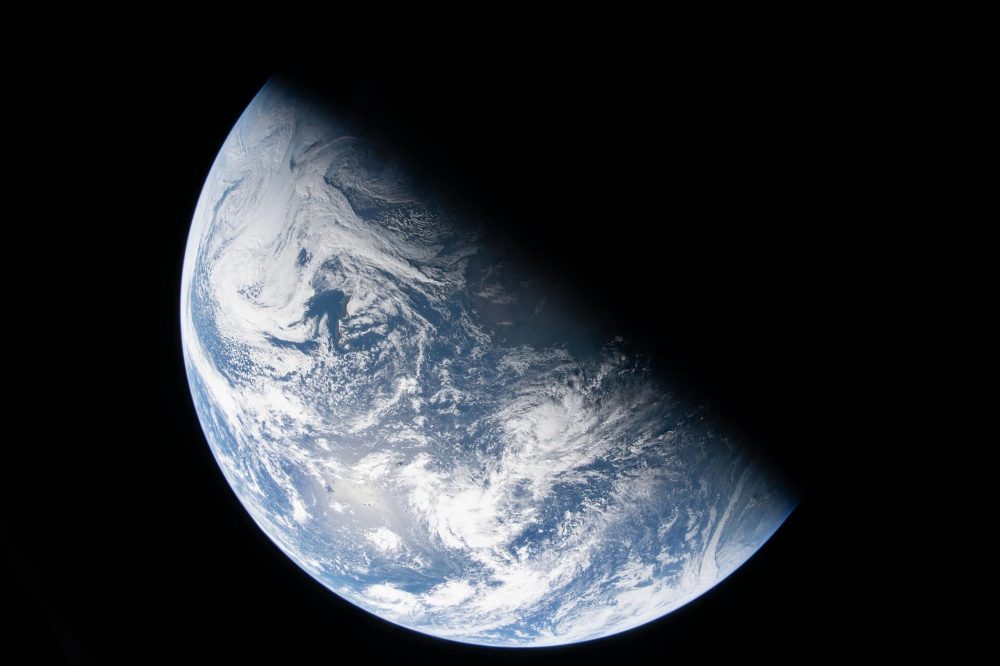

Four astronauts traveling aboard NASA’s Artemis II spacecraft have crossed the halfway point of their journey to the moon and are on track to establish a new distance record for human space travel. Canada honored its space program on Saturday as the crew prepared for their groundbreaking lunar flyby mission.
The team consisting of three American astronauts and one Canadian crew member is scheduled to arrive at the moon on Monday, where they will capture images of the moon’s hidden far side during their flyby. This marks the first crew to travel toward the moon in more than 53 years, continuing the work begun by NASA’s Apollo missions.
The Artemis II mission is positioned to establish a new human distance record, venturing over 252,000 miles (400,000 kilometers) away from Earth before making a sweeping turn behind the moon and returning home without landing or entering lunar orbit. Apollo 13 currently holds this distance achievement.
The Canadian Space Agency highlighted the nation’s participation in the mission during a live communication from Quebec with astronaut Jeremy Hansen as he traveled toward his lunar encounter. Hansen holds the distinction of being the first non-American citizen to journey to the moon.
“Today he is making history for Canada,” said Canadian Space Agency President Lisa Campbell. “As we watch him taking this bold step into the unknown, let his journey remind us that Canada’s future is written by those who dare to reach for more.”
During the televised communication link, Hansen described witnessing “extraordinary” sights from inside NASA’s Orion spacecraft.
Hansen, Reid Wiseman, Victor Glover and Christina Koch represent the world’s first lunar crew since the three-person Apollo 17 team in 1972. Koch becomes the first woman to travel to the moon, while Glover is the first Black astronaut to make the lunar journey.
Their mission spanning nearly 10 days will conclude with an ocean landing in the Pacific on April 10, serving as the initial phase of NASA’s ambitious plans to establish a permanent lunar base. The space agency targets a moon landing mission featuring two astronauts near the lunar south pole by 2028.