
A massive environmental restoration effort is underway in the Chesapeake Bay, where federal engineers are working to rebuild thousands of acres of lost island habitat using an innovative approach that pairs shipping channel maintenance with ecosystem recovery.
The ambitious Mid-Chesapeake Bay Island Ecosystem Restoration Project aims to restore over 2,100 acres of remote island habitat by recycling between 90 and 95 million cubic yards of material dredged from Baltimore’s port approach channels and other federal waterways.
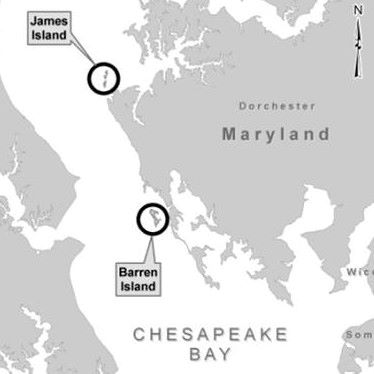
The initiative focuses on two key locations: James Island, where crews will rebuild 2,072 acres of habitat, and Barren Island, which will see 72 acres restored. Both sites are located in western Dorchester County.
Construction crews are making significant headway at Barren Island, where the U.S. Army Corps of Engineers awarded a $39.9 million contract to Seacoast Marine Construction Inc. in October 2024. The first phase of work wrapped up that same month, with workers completing installation of protective stone barriers and breakwaters designed to guard the island against wave damage.
Phase II operations at Barren Island kicked off in early 2025 and continue to progress. Workers have finished building the southwest wetland containment area and completed filling one of two planned bird islands. Engineers expect to finish foundation work and construction of the northeast barrier by summer’s end in 2026.
The second bird island, along with its protective reef structures and shell covering, should be completed by late 2026. Crews will install the southern spillway sometime in 2026 before beginning placement of dredged materials.
Dredging operations in the Honga River channel are scheduled to run from late 2026 through early 2027, with that material being placed at the restoration site.
James Island represents the largest component of the restoration effort. The site will be rebuilt to span 2,072 acres, with roughly 45% designated as uplands and 55% as wetlands. This portion will use sediment from deep-water channels that lead to the Patapsco River.
Engineers expect to award the Phase I construction contract for James Island by the end of March 2026, with work starting in late spring or early summer on a large contained sand stockpile that will support future barrier construction.
James Island won’t receive dredged material until around 2030, after crews complete construction of barriers and containment structures needed to hold the sediment at each location. The Honga River channel hasn’t been dredged by the Army Corps since 2009.
Funding for the project came through multiple sources, including more than $80 million from the Bipartisan Infrastructure Law in 2022 to complete design work and pre-construction activities for the Barren Island component.
In October 2025, the Army Corps issued safety warnings for boaters in the Chesapeake Bay, urging them to avoid ongoing construction activities near the Mid-Bay Island Project sites adjacent to James and Barren Islands.
The restored areas will feature diverse habitats including mudflats, low and high marsh areas, islands, ponds, channels, and upland zones. By combining navigation maintenance with environmental restoration, the project keeps shipping channels clear while rebuilding critical Bay habitat.
The entire Mid-Bay project is expected to reach completion in 2067, providing more than three decades of capacity to place nearly 95 million cubic yards of dredged material while restoring vital Chesapeake Bay ecosystems.