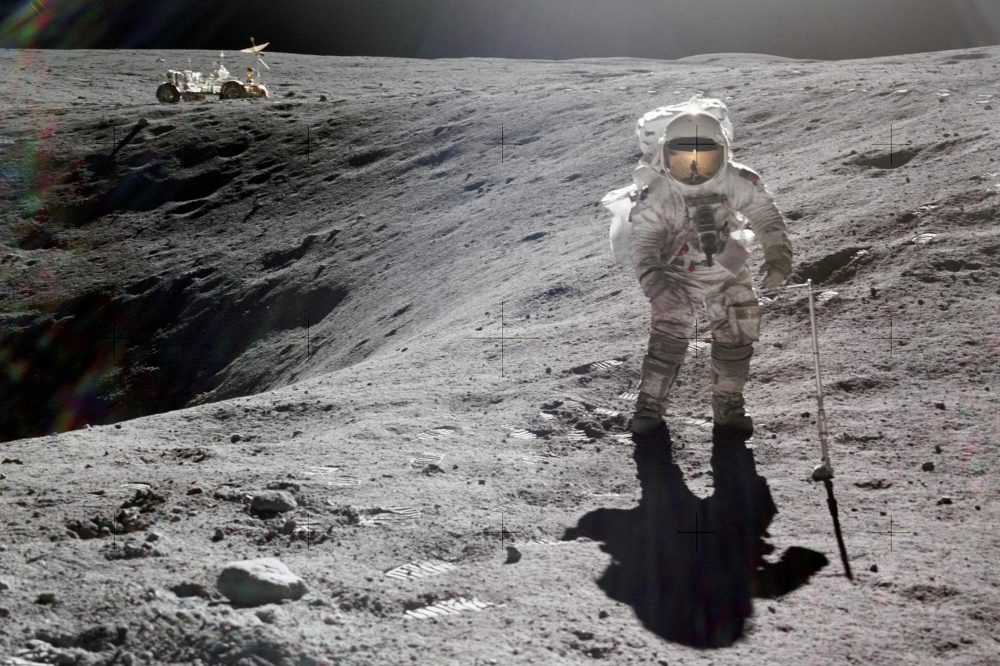

CAPE CANAVERAL, Fla. — The space agency kicked off launch preparations Monday for the first human journey to the moon since the Apollo program concluded more than five decades ago.
A towering 32-story Space Launch System rocket stands ready to carry four astronauts into space Wednesday evening. Following one day orbiting Earth, their Orion spacecraft will transport the crew on a lunar flyby mission. The journey involves no lunar landing — simply a swift loop around the moon before returning home. The mission will conclude nearly 10 days later when the capsule touches down in Pacific Ocean waters.
Launch director Charlie Blackwell-Thompson expressed confidence about the upcoming mission. “Our team has worked extremely hard to get us to this moment,” she stated. “Certainly all indications are right now we are in excellent, excellent shape.”
Mission supervisors reported the rocket is performing well after completing recent maintenance work. Weather forecasters predicted favorable conditions for the launch window.
The Artemis II mission faced multiple delays from its original February timeline due to hydrogen fuel system problems. After resolving those leaks, engineers discovered a blocked helium pressurization line, requiring another trip back to the assembly building last month. The rocket returned to its launch position a week and a half ago, while the international crew of American and Canadian astronauts arrived at the facility Friday.
This mission marks a departure from the Apollo program, which transported only male astronauts to lunar orbit between 1968 and 1972. The Artemis II crew breaks new ground by including a female astronaut, a person of color, and an international crew member.
Mission pilot Victor Glover shared his hopes for inspiring the next generation during weekend remarks. “Girl power and that’s awesome, and that young brown boys and girls can look at me and go ‘Hey, he looks like me and he’s doing what???’” he said.
Glover, who is African American, also expressed his vision for the future of space exploration. He anticipates a time when “one day we don’t have to talk about these firsts” and cosmic exploration becomes part of universal “human history.”
The space agency has established a launch window spanning the first six days of April for Artemis II, after which operations will pause until month’s end.