
Conservation organizations are challenging the Mexican government’s explanation of a devastating oil spill in the Gulf of Mexico, claiming officials have misrepresented both the source and timeline of the disaster.
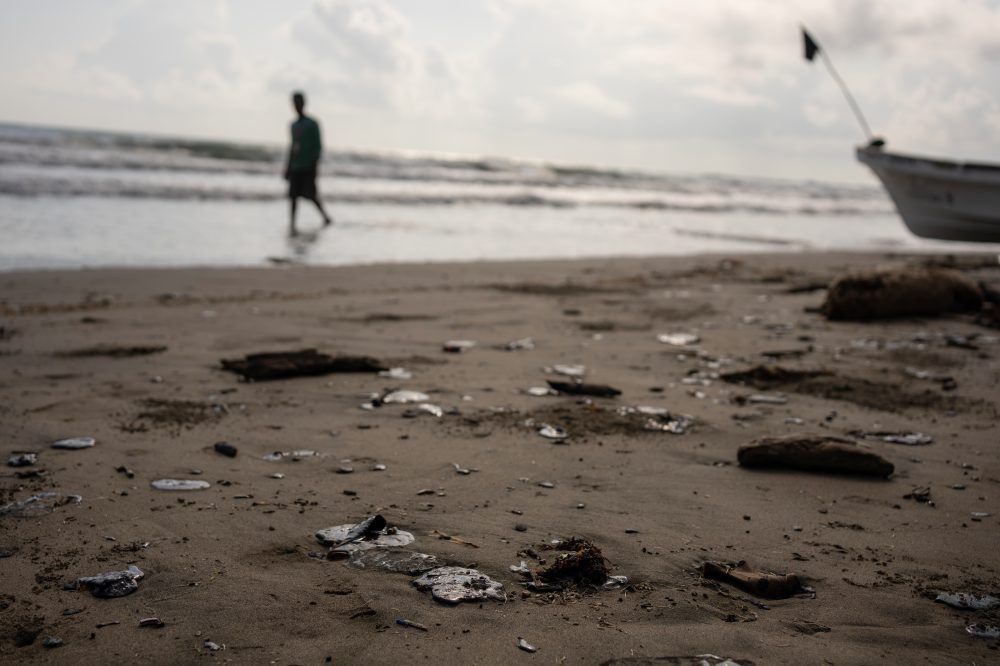
The contamination has stretched across more than 373 miles along the coast of Veracruz state, reaching seven protected wildlife areas. Marine animals including sea turtles have been discovered covered in oil along shorelines, while local fishing communities have lost their livelihoods as waters they’ve depended on for generations become unusable.
Mexican officials have stated that 800 tons of oil-contaminated material entered the ocean beginning in March, attributing the disaster to a vessel anchored near Veracruz and two locations where petroleum naturally seeps from the ocean floor.
However, on Monday, a coalition of 17 conservation groups – featuring Greenpeace Mexico, the Mexican Alliance Against Fracking, and the Mexican Center for Environmental Rights (CEMDA) – challenged this narrative using satellite imagery they say proves the contamination began in early February from a pipeline operated by Pemex, Mexico’s national oil corporation.
“All this lack of information is causing massive economic and environmental damage. So far no one has been held accountable,” stated Margarita Campuzano, who speaks for CEMDA, during Tuesday remarks.
Satellite photographs from February distributed by the activists align with imagery The Associated Press obtained Tuesday from Copernicus, the European climate monitoring service. These pictures reveal a vessel positioned above murky waters that the organizations identify as oil streaming from an offshore platform.
The conservation groups identified the vessel as Árbol Grande, which performs pipeline maintenance work, suggesting government awareness of the spill before public disclosure and accusing authorities of concealment.
Pemex dismissed the organizations’ claims and imagery as “inaccurate,” explaining that the Árbol Grande vessel routinely operates throughout the Gulf of Mexico, “carrying out preventive inspections of platforms and specialized spill response operations.”
Campuzano demanded increased government transparency and more thorough official investigations.
“They’re trying to dilute their responsibility when technology makes it very easy to know where this occurred and who is responsible,” she stated.
During her Tuesday morning news conference, Mexican President Claudia Sheinbaum rejected the allegations, maintaining that “no leak has been reported” in government oil infrastructure and noting that natural petroleum seepage has occurred previously in the Gulf.
The president explained that government scientists are examining whether the contamination resulted from “these natural seeps in the area, which have been reported on many occasions and are well-documented in scientific literature, or a leak from one of the facilities.”
Sheinbaum indicated that natural seepage was the more likely explanation and emphasized that cleanup crews are actively working to address the spill and reduce its impact.
Although government representatives acknowledged effects on sea turtles, birds, and fish populations, plus contamination of protected ecosystems, they maintained the incident has not resulted in “severe environmental damage.”
These disputes emerge as U.S. environmental advocates have also expressed concern following the Trump administration’s decision to exempt Gulf of Mexico oil and gas operations from Endangered Species Act protections, citing concerns that environmental litigation could undermine domestic energy security amid the U.S.-Israeli conflict with Iran.
Environmental advocates warn this policy change could threaten marine ecosystems and potentially endanger a rare whale species.