
Relocating to a new home presents a major challenge when it comes to furnishing your space, as quality sofas and bedroom sets are both heavy and costly.
When facing the stress of a move, many people turn to inexpensive options that arrive quickly at their doorstep. This demand has created a market for disposable furniture.
These basic items are constructed from a combination of synthetic materials, particle board, and compressed wood chips designed for short-term use. Customers can order them through online retailers, where they’re mass-manufactured and delivered unassembled in flat packages.
While these products serve their immediate purpose, their components typically cannot be recycled and resist natural decomposition when discarded.
“It’s of little emotional value, it’s fleeting, and it is not going to accompany you through your life’s journey,” said furniture and design expert Deana McDonagh with the University of Illinois Urbana-Champaign.
Environmental Protection Agency data shows Americans discarded more than 12 million tons of furniture in 2018, with 80% ending up in waste facilities.
While relocating is stressful and disposable furniture offers a practical fix, alternative decorating approaches exist that cost just as little while enriching other aspects of your daily life.
After Heather Strong relocated to her own residence in the Los Angeles region following a breakup, she felt like she was beginning anew. Several cherished household items, including her beloved pan rack, remained with her former partner in their shared home.
Strong then learned about the Buy Nothing Project: a mobile application and network of neighborhood Facebook communities where residents exchange items without cost. Eighteen months later, Strong has equipped her residence with dining chairs, wooden furnishings, and linens obtained from community members.
“I’ve had the chance to explore different areas of my own community and venture out a little. And I’ve made some friends,” said Strong, a business owner.
Buy Nothing co-founder Liesl Clark suggests reaching out to community members before purchasing that flat-pack coffee table. Browse local Facebook and Nextdoor communities, explore donation platforms like Freecycle, and ask if acquaintances know anyone disposing of household items. Additionally, check sidewalks and front steps for quality pieces others have abandoned.
“You will get so much more satisfaction. You’ll save funds that you can then perhaps spend more locally,” Clark said.
Maddie Fischer has outfitted most of her Brooklyn residence with previously owned items. She discovered one living room chair inside a garbage bag on the street and acquired her dining table at no cost during a moving sale, enlisting her sister and friends to transport it down four flights of stairs.
“I don’t mind when things look like they’ve had a little bit of wear and tear,” said Fischer, a social media manager. “I think it gives them more character.”
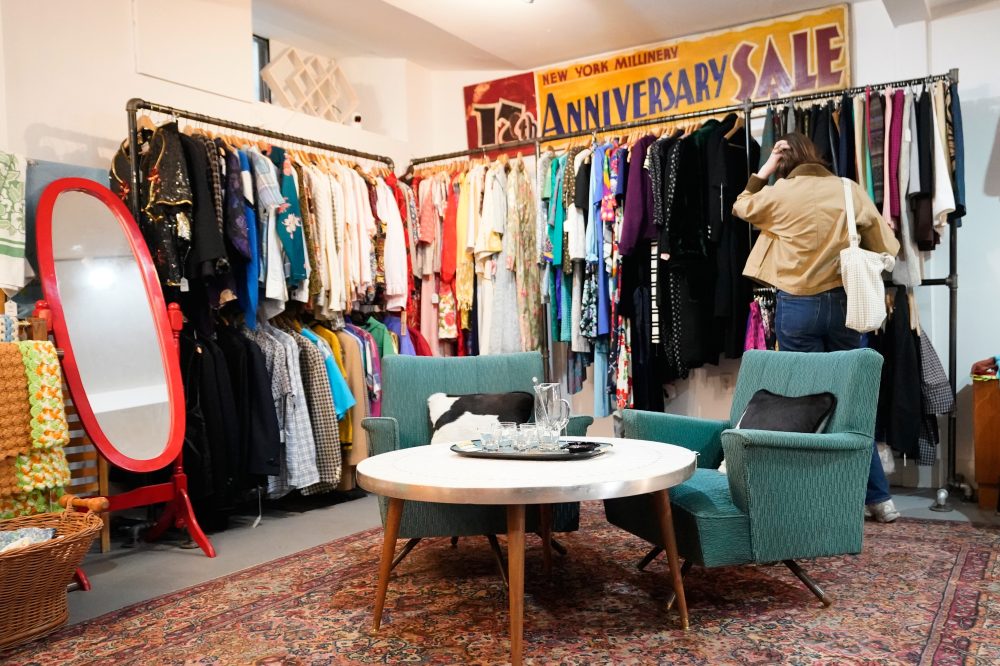
When sidewalk discoveries don’t yield desired results, consider secondhand retailers. Visit local thrift shops or browse online marketplaces like eBay, Vinted and Gumtree. Furniture rental services also provide access to quality pieces temporarily, though costs can be substantial.
When budget allows, consider investing in well-made furniture early. Dressers and tables crafted from timber and natural materials offer distinctiveness and add personality to living spaces. Additionally, they endure longer and require less frequent replacement.
Furnishing an entire empty residence simultaneously can create significant expenses. McDonagh, the furniture specialist, suggests purchasing one quality piece annually. “If you’re doing it for your future self, take your time,” McDonagh said.
Choose modular components like shelving and storage systems that connect together and adapt to different spatial requirements. Gradually, your residence will accumulate durable items that create a comfortable atmosphere.
Meanwhile, work with available resources. Book stacks or cardboard boxes can serve as temporary seating while waiting for sturdier alternatives, McDonagh explained. Patio furniture often functions well inside homes, since weather-resistant fabrics provide excellent protection against damage and stains.
Contrary to its reputation, disposable furniture can endure for years with proper maintenance. Through ingenuity and careful attention, replacement frequency can be reduced significantly.
“I don’t believe that any furniture is inherently fast. It’s our decision as consumers whether it’s fast or not,” said Katryn Furmston, a fast furniture expert with Nottingham Trent University in England.
Perhaps you prefer avoiding carrying a desk up multiple staircases. Or the idea of using previously owned upholstery makes you uncomfortable.
When purchasing particle board furniture becomes necessary, avoid questionable websites offering unrealistic deals that result in incomplete shipments or unstable products. Once items arrive, handle them carefully. Conceal damage with decorative coverings or reposition pieces to hide imperfections.
Before your next relocation, keep product photos available to share with friends or colleagues. Extend its usefulness by selling through community networks or giving to neighbors. Contribute to keeping items functional for maximum duration.