
WASHINGTON — A groundbreaking fossil discovery has provided researchers with their first clear view of when our planet shifted from basic plant life and primitive organisms to the sophisticated creatures that would dominate Earth and eventually evolve into modern species.
The evolutionary leap occurred several million years before scientists previously believed possible.
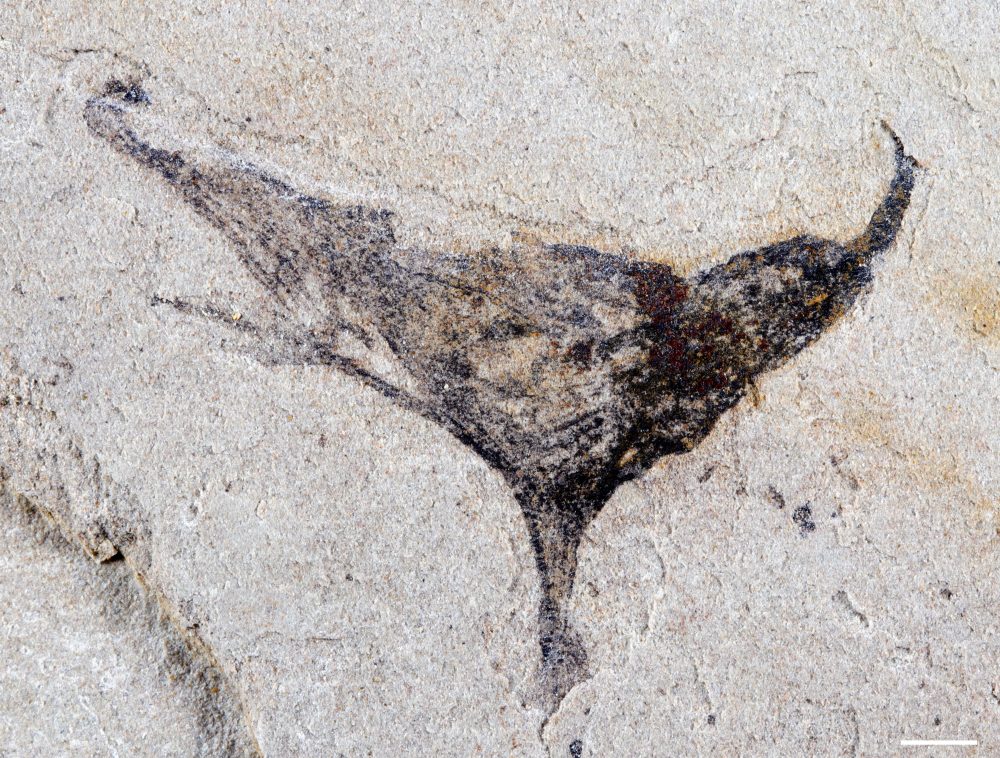
Over 700 ancient specimens unearthed in China’s Yunnan province provide insight into life from 539 million years ago, during the final stages of the Ediacaran period. This era was characterized by simple yet unusual creatures that existed in a flat, two-dimensional ocean environment, never moving vertically through the water column, according to researchers.
However, research published Thursday in the journal Science reveals that many specimens from this collection represent more sophisticated organisms that lived three-dimensional lives, swimming vertically through water and actively feeding. These characteristics were previously believed to have emerged at least 4 million years later during the Cambrian period’s famous “explosion” of complex life forms.
“This really is the first window we have into how basically the modern animal-dominated biosphere was formed and developed and came through this weird Ediacaran transitional interlude,” explained co-author and paleontologist Frankie Dunn from Oxford University’s Museum of Natural History. “We go from a two-dimensional world, and within the geological blink of an eye, animals have diversified. They’re everywhere. They’re doing everything, and they’re changing biogeochemical cycles. They’ve changed the world.”
The discovery site sits near a UNESCO Chengjiang world heritage location known for other fossil finds. Despite its unremarkable roadside appearance, the area contains distinct geological layers that allow researchers to literally traverse different time periods, Dunn explained. One particular section offers a unique “snapshot” where evolutionary forces converged.
According to Dunn, this fossil collection contains both strange life forms from earlier periods that eventually vanished, alongside early examples of organisms that would develop into contemporary animals. The key feature of these more advanced creatures is their bilateral symmetry — bodies that mirror each other on left and right sides.
Almost all current animal life on Earth possesses matching left and right features, plus a distinct head and rear opening. Before this Chinese discovery, scientists had only observed evidence of this symmetrical body structure in fossil tracks, never the actual creatures themselves.
“Now we know what’s making them because we have those fossils for the first time,” stated study co-author Ross Anderson, also from Oxford’s Museum of Natural History.
Previously, paleontology faced a significant contradiction. Genetic studies examining mutation and evolution rates indicated that humans and starfish shared their earliest common ancestor during the Ediacaran period, but physical fossil evidence was missing to support this timeline, Dunn noted. Researchers dubbed this disagreement the “rocks versus clocks” debate.
“What our new fossil site tells us is that actually perhaps the rocks and the clocks are in closer agreement than we thought,” Dunn said.
Emily Mitchell, a Cambridge University paleontologist not involved in the study, commented that the research “makes a huge amount of sense because the Ediacaran contains animals, we know there must have been a transitional stage between them and the Cambrian fauna. But until now we didn’t really have any evidence of this.”
While some external researchers, including Jonathan Antcliffe from the University of Lausanne, questioned whether sufficient evidence exists to classify these as complex animal fossils, most experts consulted by The Associated Press agreed with the classification.
Now that researchers understand when this biological explosion occurred, they face new questions and are developing theories to explain it.
“I’m really interested in understanding, not just when it happened, which is interesting, but how it happened and why it happened the way that it happened,” Dunn said. “So whether there are feedbacks that we can disentangle between Earth and life or between life and life. Once you have Ediacaran on the sea floor, is it inevitable that you’ll end up with something approaching a Cambrian explosion? They’re the kinds of questions that I find really interesting.”
While life on Earth began 3 billion years ago, it required another 2.4 billion years before complex animals developed. Then they rapidly multiplied, diversified and dominated the planet, Dunn explained.
This acceleration likely occurred because Earth needed to develop sufficient oxygen levels and evolution required genetic modifications to take effect, according to University of California at Berkeley paleontologist Charles Marshall, who was not involved in the research.
“The Cambrian explosion was sudden because of the already rich developmental system that was in place,” Marshall noted.
“What fundamentally changed across this period is the way the animals on the planet interacted with each other,” said Duncan Murdock, curator at Oxford’s museum where many study authors work. “Once animals turned up and started eating each other and churning up the sediment, they changed the planet forever. And the planet that we live on is very much built on the foundations from the Ediacaran and Cambrian.”