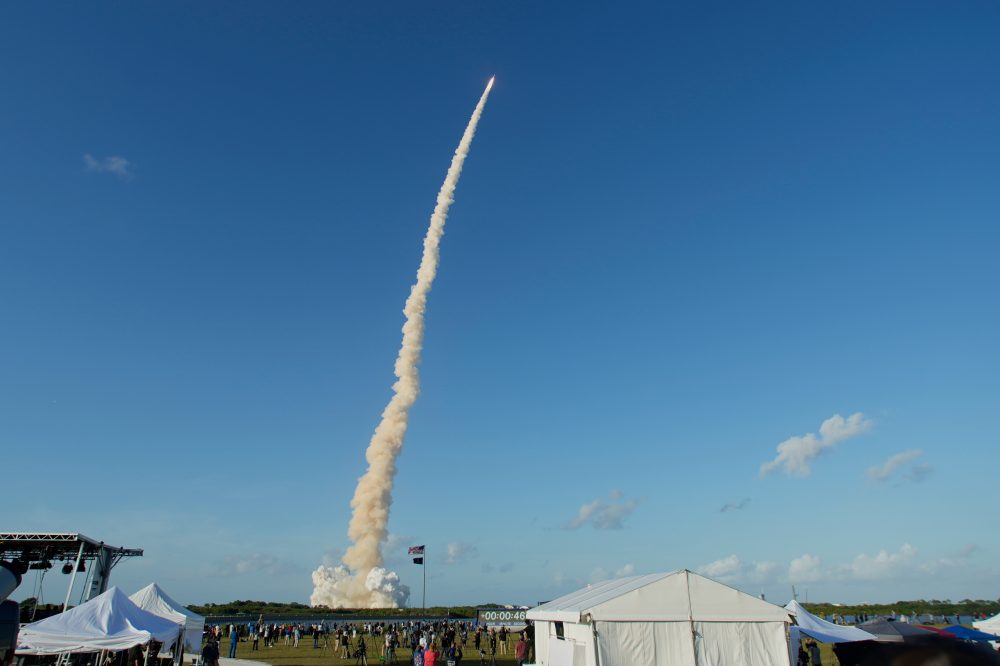

CAPE CANAVERAL, Fla. — Four astronauts aboard NASA’s historic moon mission have successfully resolved a bathroom emergency that threatened to complicate their journey to lunar orbit.
The waste management system aboard the Artemis II spacecraft stopped functioning shortly after the crew entered orbit on Wednesday night. Ground controllers walked astronaut Christina Koch through repair procedures, and she managed to restore the toilet to working order during an overnight troubleshooting session.
The crew is also dealing with unexpectedly chilly conditions inside their Orion spacecraft, where temperatures have dropped to 65 degrees Fahrenheit. The four-person team has been searching through their luggage for warmer clothing while ground teams work to increase the cabin temperature.
The mission includes three American astronauts and one Canadian crew member who are scheduled to break free from Earth’s orbit Thursday evening and head toward the moon for a flyby mission. This will mark the first time since the final Apollo mission in 1972 that NASA has sent humans on a trajectory toward the moon.
During their current Earth orbit phase, the astronauts are enjoying spectacular views of their home planet from thousands of miles above. Koch reported to ground controllers that the crew can clearly see entire continental coastlines and even the South Pole, where she previously worked at a research facility.
“It is just absolutely phenomenal,” Koch communicated to Mission Control, drawing on her experience from her year-long assignment at an Antarctic research station before becoming a NASA astronaut.
The mission is scheduled to conclude with an ocean landing in the Pacific on April 10. NASA officials are relying on this test flight to validate the entire Artemis program and pave the way for a crewed moon landing planned for 2028. The toilet system may require modifications before that future mission takes place.
The spacecraft’s single bathroom facility is built into the floor area and includes a door and curtain for privacy. The system is based on an experimental toilet design that was sent to the International Space Station in 2020, though that version saw minimal use and has been non-functional for several years.
This waste management system, officially called the universal waste management system, operates using air suction rather than water and gravity to handle waste removal, similar to previous space toilets. The design includes improvements specifically intended to better serve female astronauts.
Before Koch successfully repaired the toilet, the crew had to use a backup system consisting of bags and funnels for urination.
The six remaining Apollo astronauts who are still alive would likely agree that any functioning toilet, even a problematic one, is preferable to no toilet at all.
The Apollo spacecraft were too compact to include bathroom facilities, forcing the all-male crews to depend on bag systems throughout their lunar missions. These Apollo-era bags were later repurposed during space shuttle missions as emergency backups when the shuttle’s toilet malfunctioned.