
A young gray whale that captivated Washington state communities by venturing 20 miles inland through a small waterway has been discovered deceased, with marine scientists suggesting starvation may have prompted the animal to search for alternative feeding areas as the species confronts a population crisis.
The mammal’s body was located Saturday close to Raymond, Washington, along the Willapa River, which connects to the Pacific through Willapa Bay. Multiple gray whales are presently navigating through the bay during their extensive 5,000-mile spring journey from Mexican birthing waters in Baja California to Alaskan feeding territories.
According to John Calambokidis, a research biologist with the Cascadia Research Collective, the primary challenge facing Pacific gray whale populations since 2019 has been diminished food sources in Alaska’s northern Bering and Chukchi seas.
“Gray whales are facing a major crisis and the heart of it does seem to be feeding on their prey in the Arctic,” he said.
Federal fisheries officials through NOAA declared an extraordinary death event for eastern Pacific gray whales spanning from late 2018 through late 2023. During this period, 690 gray whale strandings occurred across the coastline from Alaska down to Mexico.
NOAA investigators determined the preliminary cause was “localized ecosystem changes in the whales’ sub-Arctic and Arctic feeding areas that led to changes in food, malnutrition, decreased birth rates and increased mortality.”
While authorities initially thought the population was recovering, the latest 2025 census revealed continued decline. Federal estimates place the current population at approximately 13,000 gray whales, marking the smallest count since the 1970s.
“A lot of these gray whales are looking very emaciated, very thin,” Calambokidis said.
The northward migration represents the most difficult time for gray whales, as they endure their longest period without feeding and must rely entirely on stored body fat.
“When that happens, you often see gray whales in a more desperate search for new areas to feed,” Calambokidis said. “That’s the most likely context for this whale.”
Scientists plan to conduct an examination of the deceased whale, potentially beginning Monday.
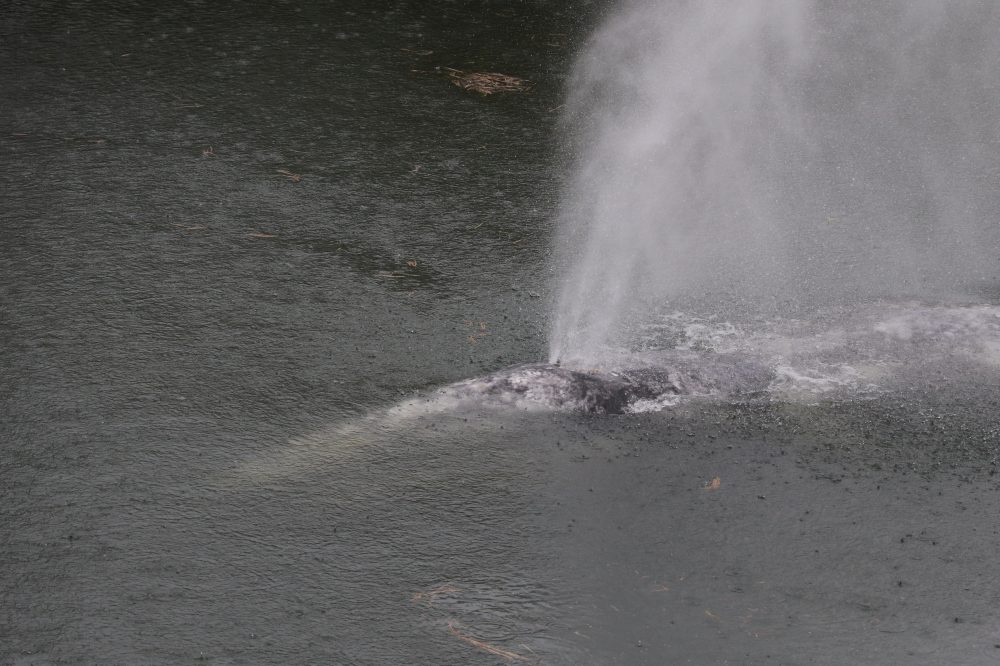
The animal entered the Willapa River’s northern branch Wednesday through a bay located roughly 185 miles southwest of Seattle. Local residents flocked to river bridges hoping to observe the enormous creature and shared numerous photographs and videos on social media showing the whale breathing through its blowhole.
Despite appearing undernourished, the gray whale displayed normal behavior patterns and showed no visible injuries, according to a Facebook update from the nonprofit Cascadia Research Collective.
The research team initially allowed the whale space and time to exit the river naturally, but when scientists searched for the animal Friday, they discovered it had moved further upstream into shallow waters inaccessible by boat, Calambokidis explained.