Category: Science

  • Kenya Establishes National Carbon Credit Registry to Combat Climate Change

    Kenya Establishes National Carbon Credit Registry to Combat Climate Change

    NAIROBI, Kenya (AP) — Officials in Kenya have established a comprehensive national carbon credit tracking system, positioning the East African nation as a leader in legitimate climate offset programs amid growing global concerns about fraudulent environmental projects.

    Government representatives from Kenya’s Ministry of Environment and the National Environment Management Authority introduced the new system in Nairobi, creating a centralized database to monitor carbon offset initiatives, confirm actual emission reductions, and eliminate duplicate credit counting that has plagued international climate markets.

    This development occurs as nations across the developing world pursue increased access to climate funding through carbon credit sales under frameworks created by the Paris Climate Agreement. The international accord, established more than ten years ago, requires participating nations to maintain global temperature increases by 2100 at levels “well below” 2 degrees Celsius (3.6 degrees Fahrenheit) compared to pre-industrial measurements, with efforts to restrict warming to just 1.5 degrees Celsius.

    Despite containing enormous natural carbon storage areas, African nations receive minimal portions of worldwide carbon market funding.

    With its abundant forest coverage, grassland areas, and clean energy potential, Kenya seeks to draw international funding while guaranteeing advantages for local populations.

    Carbon credit systems enable nations and corporations to balance their greenhouse gas emissions by purchasing credits from initiatives that decrease or eliminate carbon dioxide, including forest protection programs or clean energy projects. However, critics have consistently highlighted how insufficient monitoring, exaggerated results, and unfair profit distribution have damaged confidence in offset systems.

    “Today, that narrative changes,” said Deborah Mlongo, cabinet secretary for Environment, Climate Change and Forestry.

    “This launch sends a clear signal to investors and the international community,” Mlongo said. “Kenya is ready to participate in global carbon markets with transparency, integrity and strong governance.”

    Government representatives explain the registry will establish a clear national monitoring framework following international guidelines. The system documents project authorizations, monitors emission reductions, and approves carbon credit transactions.

    The platform will assist Kenya in meeting international carbon trading regulations that govern how emission reductions transfer between nations while avoiding duplicate accounting.

    Project developers and financial backers have demonstrated significant enthusiasm, submitting over 80 carbon initiative proposals, according to government sources.

    “This registry becomes the backbone of an efficient market,” said Ali Mohamed, Kenya’s special climate envoy. “It enables tracking of projects, issuance of units and corresponding adjustments, strengthening trust in Kenya as a serious and reliable carbon market jurisdiction.”

    Government projections suggest carbon markets could produce substantial investment opportunities while advancing conservation efforts, employment generation, and sustainable growth initiatives.

    Environment Principal Secretary Festus Ng’eno explained the framework ensures carbon trading advantages reach communities alongside investors. The effort represents part of broader initiatives to develop African institutions capable of securing climate financing while safeguarding national and community priorities.

    “We are building a system grounded in fairness, transparency, and inclusivity, one that ensures communities, particularly those who conserve and protect our forests, are recognized and equitably benefit from carbon market participation,” Ng’eno said.

    The new system will incorporate a forestry-focused carbon registry introduced previously to advance Kenya’s nationwide tree planting initiative, representing one of Africa’s most extensive forest restoration programs.

    German authorities contributed funding and expertise for the national registry through their development organization, GIZ. Officials announced additional support totaling 2.4 million euros ($2.6 million) to enhance Kenya’s carbon market capabilities.

    Industry experts emphasize that centralized national registries remain essential for carbon markets, which face heightened examination regarding questionable credits and varying quality standards.

    The registry system should reach full operational status within the current year.
  • Scientists Rally to Protect Earth’s Hidden Fungi Kingdom Before It’s Too Late

    Scientists Rally to Protect Earth’s Hidden Fungi Kingdom Before It’s Too Late

    ANGWIN, Calif. — Walking through a carpet of dried leaves beneath Manzanita trees, fungi researcher Jessica Allen searched for an elusive treasure: the Manzanita butter clump, a scarce golden mushroom discovered only on North America’s western shores.

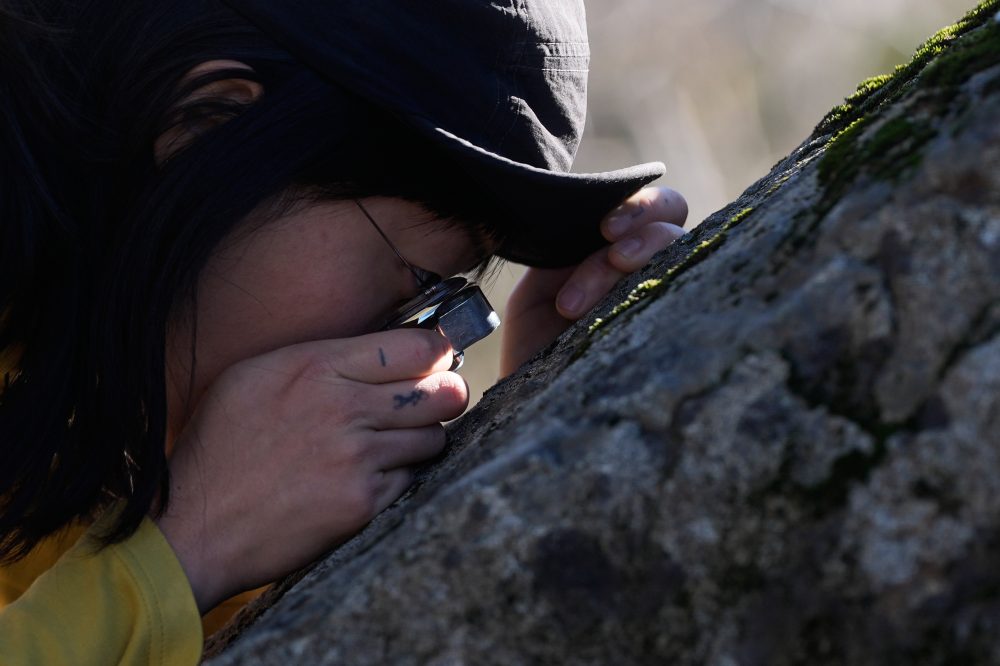
    The unusual specimen hadn’t been documented in California’s Napa County for two years, and Allen, who studies fungi professionally, hoped to locate it again. However, her attention quickly shifted when she dropped to her knees and examined a nearby boulder through her magnifying lens, discovering lichens — a fungi variety — displaying brilliant patterns, surfaces and hues.

    “It’s so easy to get distracted, but there’s so many lichen!” she said excitedly.

    “That was a good rock,” said ecologist Jesse Miller, president of the California Lichen Society.

    “Ok, let’s go find some mushrooms,” she exclaimed.

    Both Allen and Miller find themselves captivated by what they call the remarkable and mysterious realm of fungi, joining a expanding network of individuals dedicated to safeguarding these organisms. Virtually every living thing relies on Earth’s approximately 2.5 million fungal species, which generate roughly $54 trillion for the worldwide economy through food production, medical applications and other uses, research published in Springer Nature shows. Yet despite their vital function, conservation programs have mostly ignored them while they encounter growing dangers from contamination, ecosystem destruction and changing climate patterns. This situation has started shifting over the past ten years, thanks partly to volunteer researchers and improved knowledge of fungal variety.

    “It’s a pretty exciting time in fungal conservation,” said Allen, mycologist for NatureServe, a hub for biodiversity data throughout North America. In that role, Allen is helping accelerate and support fungal conservation in the U.S. and Canada.

    These organisms exist outside the plant and animal categories, forming a massive biological kingdom encompassing yeasts (crucial for baking bread, making cheese and producing alcohol), molds (the fuzzy growth on old produce), lichens (a partnership between fungi and algae or cyanobacteria) and mushrooms (spanning from nutritious varieties to mind-altering to lethal types). They serve as Earth’s primary connectors and breakdown specialists. Woodlands depend on them, while numerous creatures use them for sustenance and shelter.

    Humans have developed medications like penicillin from these organisms. Some serve as construction materials or can capture heat-trapping carbon. However, researchers have only catalogued approximately 155,000 varieties, representing just 6% of the millions they estimate exist.

    Effective protection begins with identifying existing species, their locations, population health and potential dangers, requiring fieldwork. This enables conservationists to evaluate at-risk species and allocate resources appropriately.

    Organizations such as the California Lichen Society fill this crucial role.

    “They tend to be the people that often make the most important discoveries, and they’re the ones who are going to be keeping an eye on those rare species over time,” said Allen.

    During a recent cold morning, numerous lichen experts and enthusiastic amateurs spread across a nature preserve to examine rocks and tree bark closely. These yearly expeditions combine treasure hunting, scientific data gathering and nature walks, though participants typically cover little ground.

    Each powdery, leaf-like and branching lichen opened a window into a tiny universe filled with exclamations of amazement and wonder. Chemist Larry Cool observed: “Lichenologists make terrible hiking partners” because they keep stopping.

    Cool’s fascination with lichens began 53 years ago when he discovered their use as natural coloring agents. “Lichen are more than the sum of its parts and are mysteriously unpredictable,” he said. “I get a lot of pleasure seeing the incredible variety of creation.”

    Ken Kellman also studies lichens as a hobby, though his extensive expertise suggests otherwise. The former heating and air conditioning technician has devoted roughly a decade to learning about them independently and from colleagues. His passion has helped researchers uncover biological diversity in his Santa Cruz, California community.

    “It just keeps your brain in that place where you’re saying ‘Wow!’ all the time. ‘That’s cool!’ And that’s my favorite place for my brain to be,” he said.

    Gregory Mueller has dedicated much of his professional life to fungi protection. Serving as co-chair of the International Union for Conservation of Nature’s fungal conservation committee, he oversees all fungal protection activities throughout their worldwide network.

    The organization’s Red List of Threatened Species shows 411 of 1,300 assessed fungi globally face extinction risk. European regions and other areas have concentrated on fungal conservation for decades, but the U.S. “is still far behind,” Mueller said. Just two fungal species — both lichens — receive federal Endangered Species Act protection, while certain states like California provide legal safeguards and others like New Jersey include them in conservation strategies.

    This situation is gradually improving, partly due to growing community science programs domestically and internationally.

    “There’s a lot of amateur mycologists … documenting (fungi) with photographs, putting their images on iNaturalist and our Mushroom Observer, and we’ve been able to use those data to better document fungal diversity,” he said. We’re “starting to get some idea of what species might be in trouble.”

    Most fungi remain invisible, living primarily as extensive, thread-like networks called mycelium underground and creating mushrooms — known as fruiting bodies — only under perfect conditions.

    This explains much of our limited knowledge about them, according to Nora Dunkirk, a plant and fungi specialist at Portland State University’s Institute for Natural Resources who works to record vulnerable plant and fungal species for conservation purposes.

    Climate change poses one of their greatest challenges. Altered precipitation patterns, rising temperatures and intensifying wildfires can eliminate them or disrupt delicate forest-fungi relationships. Extended flooding periods can deprive them of necessary oxygen. Tree harvesting, urban development, invasive insects and contamination also endanger species.

    Excessive collection presents another problem. The large, long-lived quinine conk, for instance, has appeared on Europe’s endangered mushroom list since the 1980s partly because people have gathered too many for their healing qualities.

    “This is an organism that grows on larches all across Europe, and so people see this as a valuable resource and they use it,” said Dunkirk. “But this species specifically has been harvested to its detriment.”

    America’s most famous conservation effort indirectly involving fungi occurred during the 1990s. When the Northern spotted owl faced extinction, authorities recognized that saving the bird required managing entire old-growth forest ecosystems — including fungi.

    The 1994 Northwest Forest Plan established federal regulations protecting roughly 400 rare and poorly understood species across three states.

    Meanwhile in California, Allen and her fellow fungi enthusiasts continued searching for the elusive Manzanita butter clump. They explored steep hillsides and creek areas, carefully examining the ground around their feet.

    They never located it.

    Such outcomes are typical when hunting for something as fleeting and unpredictable as mushrooms.

    “How many of my days have ended this way? So many,” said Allen. “It was still a great day.”

  • India Seeks $200B Investment to Build Global AI Technology Hub

    India Seeks $200B Investment to Build Global AI Technology Hub

    NEW DELHI (AP) — India’s government is targeting up to $200 billion in data center investments over the coming years as the nation works to establish itself as a global artificial intelligence powerhouse, according to the country’s electronics and information technology minister who spoke Tuesday.

    These massive investments highlight how major technology companies view India as a crucial foundation for talent and innovation in the worldwide competition for AI leadership. For India’s government, these commitments represent significant infrastructure development and foreign investment that could fast-track the country’s digital modernization goals.

    This initiative emerges as nations across the globe compete to capture AI’s economic benefits while managing concerns about employment impacts, regulatory challenges, and the concentration of computing resources among wealthy nations and corporations.

    “Today, India is being seen as a trusted AI partner to the Global South nations seeking open, affordable and development-focused solutions,” Ashwini Vaishnaw told The Associated Press through email, speaking during New Delhi’s major AI Impact Summit this week that features participation from over 20 international leaders and prominent technology industry figures.

    Google revealed plans in October for a $15 billion investment commitment in India spanning five years to create its inaugural artificial intelligence center in the South Asian nation. Two months afterward, Microsoft announced its largest-ever Asian investment of $17.5 billion to enhance India’s cloud computing and AI infrastructure over four years.

    Amazon has also pledged $35 billion in Indian investments through 2030 to grow its operations, with particular focus on AI-powered digital transformation. These combined commitments form part of the $200 billion investment pipeline that New Delhi anticipates will materialize.

    According to Vaishnaw, India’s approach emphasizes that artificial intelligence should produce tangible, large-scale benefits rather than remaining limited to elite applications.

    “A trusted AI ecosystem will attract investment and accelerate adoption,” he stated, noting that infrastructure development serves as a cornerstone of India’s AI strategy.

    The administration recently unveiled extended tax incentives for data centers, aiming to create policy stability and draw international capital.

    Vaishnaw reported that officials have launched a shared computing platform featuring over 38,000 graphics processing units, enabling startups, academic researchers, and government institutions to utilize advanced computing resources without substantial initial investments.

    “AI must not become exclusive. It must remain widely accessible,” he emphasized.

    Beyond infrastructure development, India supports creating independent foundational AI systems trained using Indian languages and cultural contexts. Several of these systems achieve international standards and compete with popular large language models in specific applications, Vaishnaw noted.

    India also pursues expanded influence in determining how AI technology develops and deploys globally, as the nation views itself not simply as a “rule maker or rule taker,” but as an engaged contributor to establishing practical, effective standards while growing its worldwide AI services presence, according to Vaishnaw.

    “India will become a major provider of AI services in the near future,” he stated, describing an approach that remains “self-reliant yet globally integrated” across applications, models, semiconductors, infrastructure, and energy systems.

    Building investor confidence represents another priority for New Delhi amid increasingly cautious global technology funding.

    Vaishnaw said the technology initiative relies on proven implementation, referencing the Indian government’s AI Mission program that emphasizes industry-specific solutions through public-private collaborations.

    The government also focuses on workforce retraining as international concerns mount that AI might displace professional and technical positions. New Delhi expands AI education throughout universities, training programs, and digital platforms to develop a substantial AI-prepared talent base, the minister explained.

    Comprehensive 5G network coverage nationwide and a youthful, technology-oriented population should facilitate rapid AI adoption, he added.

    However, balancing innovation with protective measures remains challenging as AI extends into critical areas including government operations, healthcare, and financial services.

    Vaishnaw described a four-part approach encompassing actionable international frameworks, reliable AI infrastructure, regulation of dangerous misinformation, and enhanced human and technical capabilities to manage potential impacts.

    “The future of AI should be inclusive, distributed and development-focused,” he concluded.

  • Greenland Dog Sled Champion Watches Culture Vanish as Warming Climate Melts Ice

    Greenland Dog Sled Champion Watches Culture Vanish as Warming Climate Melts Ice

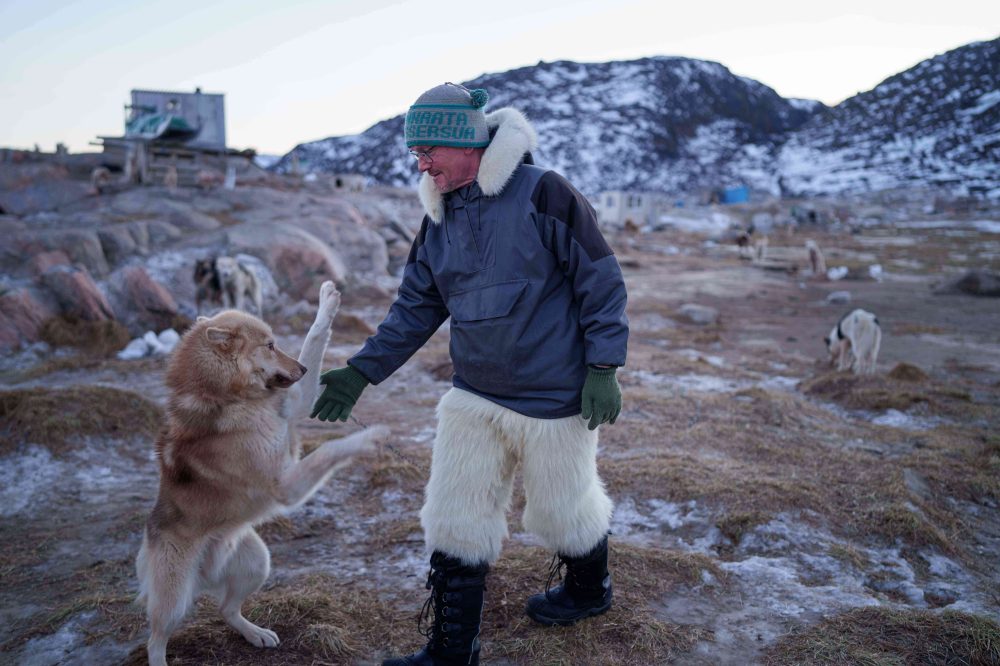
    ILULISSAT, Greenland — In a remote northern Greenland village, Jørgen Kristensen found solace with his stepfather’s sled dogs during a difficult childhood. While most schoolmates had dark hair typical of Inuit heritage, Kristensen stood out with blonde locks inherited from a Danish father he never met. When bullies targeted him for being different, the dogs provided comfort.

    At just 9 years old, he ventured onto the ice alone with the dogs to fish, beginning a lifelong passion that would lead to five Greenlandic dog sled championships.

    “I was just a small child. But many years later, I started thinking about why I love dogs so much,” the 62-year-old Kristensen explained to The Associated Press.

    “The dogs were a great support,” he added. “They lifted me up when I was sad.”

    For over a millennium, these animals have transported Inuit hunters and fishermen across Arctic ice. However, this winter in Ilulissat — located roughly 186 miles north of the Arctic Circle — such travel has become impossible.

    Rather than smoothly crossing snow and ice, Kristensen’s sled now jolts across bare ground and stones. Pointing toward the surrounding hills, he noted this marks the first January in his memory without any snow coverage or bay ice formation.

    The warming temperatures affecting Ilulissat are causing underground permafrost to thaw, structures to settle, and water pipes to rupture. These changes also create consequences felt worldwide.

    The adjacent Sermeq Kujalleq glacier ranks among Earth’s most rapidly moving and active ice formations, releasing more icebergs than any glacier beyond Antarctica, according to UNESCO. As global temperatures have increased, this glacier has pulled back and broken apart at unprecedented rates, substantially adding to rising sea levels affecting regions from Europe to Pacific island nations, NASA reports.

    The disappearing ice may expose previously inaccessible critical mineral reserves. Many Greenland residents suspect this explains why President Donald Trump has made their island a geopolitical flashpoint through ownership demands and past suggestions of potential military acquisition.

    During the 1980s, Ilulissat’s winter temperatures typically remained around -13 Fahrenheit, Kristensen recalled.

    Currently, however, many days see temperatures climbing above freezing — occasionally reaching as high as 50 Fahrenheit.

    Kristensen now must gather snow for his dogs to drink during expeditions since none exists naturally along their paths.

    While Greenlanders have historically shown adaptability — potentially developing wheeled dog sleds in the future — losing the ice affects them profoundly, explained Kristensen, who operates a tourism company showcasing his Arctic homeland.

    “If we lose the dog sledding, we have large parts of our culture that we’re losing. That scares me,” he told AP, his voice breaking with emotion.

    During winter months, hunters traditionally could take their dog teams far across frozen seas, Kristensen explained to AP. These ice formations served as natural “big bridges,” linking Greenlanders to hunting areas and connecting them with fellow Inuit communities throughout Arctic regions of Canada, the United States, and Russia.

    “When the sea ice used to come, we felt completely open along the entire coast and we could decide where to go,” Kristensen said.

    This past January brought no ice formation whatsoever.

    Operating a dog sled across ice feels like traveling “completely without boundaries — like on the world’s longest and widest highway,” he described. Losing this experience represents “a very great loss.”

    Years ago, Greenland’s government provided emergency financial assistance to numerous families in the island’s far north after sea ice failed to freeze sufficiently for hunting activities, according to Sara Olsvig, who chairs the Inuit Circumpolar Council representing Inuit populations across Arctic nations.

    The warmer conditions also create additional hazards for fishermen who have replaced dog sleds with boats, as increased rainfall replaces snowfall, explained Morgan Angaju Josefsen Røjkjær, Kristensen’s business associate.

    Compressed snowfall traps air between flakes, creating ice with a distinctive bright white appearance. However, frozen rain produces ice containing minimal air that resembles glass.

    Fishermen can spot and avoid white ice formations, but rain-formed ice adopts the sea’s coloration, creating danger because “it can sink you or throw you off your boat,” Røjkjær warned.

    Climate change “is affecting us deeply,” Olsvig stated, with Arctic regions experiencing amplified impacts as they warm “three to four times faster than the global average.”

    Throughout his lifetime, the Sermeq Kujalleq glacier has withdrawn approximately 25 miles, reported Karl Sandgreen, 46, who directs Ilulissat’s Icefjord Center, an institution focused on documenting the glacier and its ice formations.

    Gazing through windows at typically snow-covered hills now bare, Sandgreen described exposed mountain rock revealed by melting ice and a formerly ice-filled fjord valley that now contains “nothing.”

    Environmental pollution accelerates ice melting, Sandgreen noted, explaining how Sermeq Kujalleq melts from above downward, contrasting with Antarctic glaciers that primarily melt from below as ocean temperatures rise.

    Two factors worsen this process: black carbon or soot from ship exhausts, and volcanic debris. These materials coat snow and ice with dark substances, reducing sunlight reflection while absorbing additional heat and accelerating melting. Black carbon has grown in recent decades due to increased Arctic shipping traffic, while nearby Iceland experiences regular volcanic activity.

    Many Greenlanders told AP they suspect the melting ice motivates Trump — a leader who has labeled climate change “the greatest con job ever” — to seek island ownership.

    “His agenda is to get the minerals,” Sandgreen stated.

    Since Trump’s return to office, fewer American climate researchers have visited Ilulissat, Sandgreen observed. The president should “listen to the scientists” documenting global warming impacts, he urged.

    Kristensen attempts to educate tourists joining his dog sled excursions or iceberg tours about global warming consequences. He emphasizes how Greenland’s glaciers hold importance equal to Brazil’s Amazon rainforest.

    International conferences, including November’s United Nations climate discussions in the Amazon gateway city of Belem, serve important purposes, but equally vital is educating “children all over the world” about ice and ocean significance alongside traditional subjects like mathematics, Kristensen argued.

    “If we don’t start with the children, we can’t really do anything to help nature. We can only destroy it,” Kristensen concluded.

  • Japan to Ship Carbon Emissions to Malaysia in Controversial New Climate Project

    Japan to Ship Carbon Emissions to Malaysia in Controversial New Climate Project

    A groundbreaking but controversial climate initiative will see Japan transporting its industrial carbon emissions across international borders to Malaysia for underground storage, marking the first such venture in Southeast Asia.

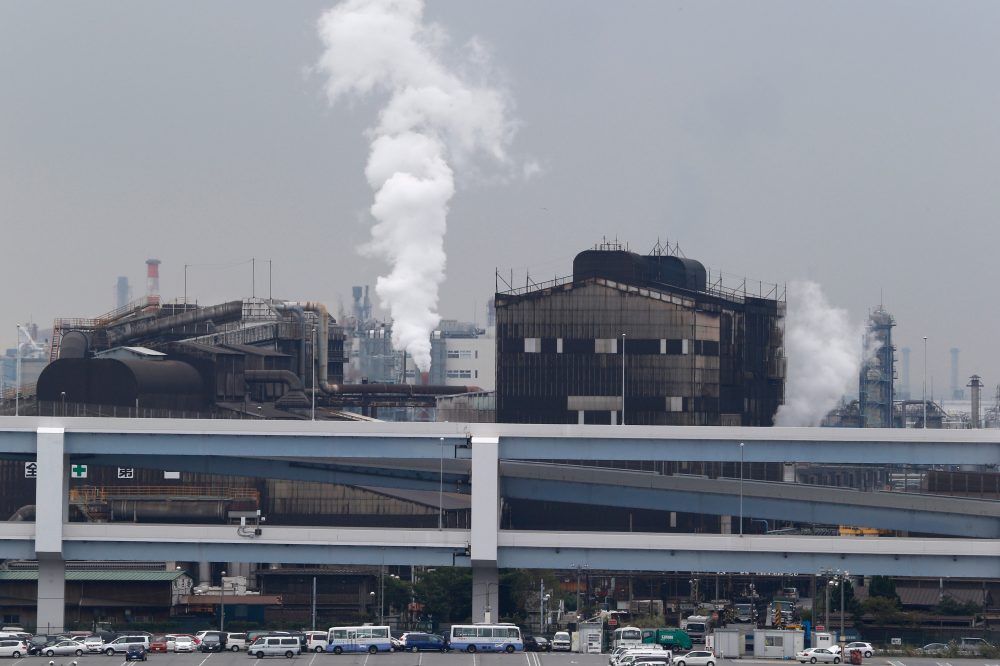
    The ambitious plan involves capturing carbon dioxide from Japan’s most polluting sectors – including power generation, oil refining, cement production, shipping, and steel manufacturing – then shipping it to Malaysia for permanent burial within the coming years. Environmental critics, however, dismiss the technology as an expensive diversion from proven climate solutions.

    Malaysia is working to establish itself as the region’s central hub for this disputed three-stage technology that involves capturing, moving, and storing carbon dioxide underground. Currently, fossil fuels power approximately 81% of Malaysia’s electrical grid, leading climate advocates to argue that carbon capture diverts resources from established emission-reduction strategies like renewable energy development.

    As one of the globe’s largest carbon producers, Japan’s cross-border storage plan could establish a blueprint for other Southeast Asian countries with similar geological storage capabilities, including Indonesia and Thailand, according to industry experts.

    However, opponents warn this approach could hinder already struggling worldwide emission reduction efforts.

    “The plan dangerously shifts the burden of climate change onto Malaysia rather than onto Japan,” stated Rachel Kennerley, a carbon capture specialist with the Washington-based Center for International Environmental Law.

    The technical process begins by capturing emissions at their source – facilities like refineries or power plants. Various methods exist, from retrofitting existing infrastructure to installing vacuum-style systems that extract emissions from the air.

    Though Japan and Malaysia haven’t released comprehensive project details, the captured carbon dioxide will require separation from other industrial gases before being converted to liquid form and transported via specialized vessels to storage locations, most likely in exhausted natural gas fields off Malaysia’s Sarawak state coast on Borneo island.

    Following injection into underground formations, these storage sites require continuous monitoring to prevent potential leaks.

    Major fossil fuel corporations like Exxon Mobil and Shell, along with various governments, champion this approach as a climate strategy that provides transition time for nations and industries moving toward cleaner energy sources.

    The European Union’s inaugural offshore carbon storage operation, capturing Danish emissions for injection beneath North Sea waters, is scheduled to begin by mid-2026. Norway launched a facility last year to test international carbon transportation.

    Grant Hauber from the U.S.-based Institute for Energy Economics and Financial Analysis described “an almost fantastical theoretical uptick” in carbon capture interest, calling it something that “offers a tantalizing promise that just won’t deliver.”

    While the International Energy Agency recognizes carbon capture, utilization and storage as a climate tool, the IEA’s most recent Net Zero Emissions projections estimate it will account for under 5% of emission reductions by 2050.

    Malaysia enacted legislation last year to promote its carbon capture sector. The Ministry of Economy projects this emerging industry could contribute up to $250 billion to the national economy over three decades, though officials declined to provide specifics.

    Malaysia’s government-owned energy company, Petronas, is spearheading construction of a $1.1 billion offshore carbon storage facility that will be the world’s largest when operations begin by decade’s end. Petronas representatives declined to comment.

    Eqram Mustaqeem, who has campaigned against carbon capture in Malaysia, criticized the investment approach: “We’re spending high amounts of money on a technology that is under-delivering and unproven” instead of funding proven decarbonization methods like solar energy expansion or electrical grid improvements.

    Fossil fuels provide the majority of Japan’s energy needs, placing the nation among the world’s five highest carbon emitters.

    Japan is funding nine carbon storage locations, including three in Malaysia, as part of efforts to reduce net emissions. Officials estimate these sites will store 20 million tons of carbon annually by 2030, representing approximately 2% of Japan’s yearly emissions.

    Malaysia will receive payment for each ton of stored emissions, while Japan plans to deduct those amounts from its total carbon output calculations.

    Representatives from Japan’s leading project agencies – the Ministry of Economy, Trade and Industry and the Japan Organization for Metals and Energy Security (JOGMEC) – did not respond to comment requests.

    Government records indicate multiple Japanese companies plan to transport emissions to Malaysia.

    Ayumi Fukakusa from Friends of the Earth Japan characterized the concept of exporting emissions internationally as “carbon colonialism.”

    Beyond questioning carbon capture’s effectiveness, critics oppose managing emissions rather than eliminating them entirely.

    “Japan gets to keep polluting and driving climate change, while claiming to ‘clean up’ its emissions by shipping the carbon to Malaysia,” Kennerley explained. She warned this approach would transform Malaysia into “a carbon dumping ground for industrial pollution” while undermining genuine climate action.

  • Irish Regulators Launch Investigation Into Musk’s AI Chatbot Over Explicit Content

    Irish Regulators Launch Investigation Into Musk’s AI Chatbot Over Explicit Content

    DUBLIN – European regulators have launched a formal inquiry into Elon Musk’s artificial intelligence chatbot following reports that the system created explicit sexual content featuring real individuals, including minors.

    Ireland’s Data Protection Commission announced Tuesday that it has begun investigating X’s Grok AI system to determine whether the company violated European privacy regulations in how it handles personal information and generates potentially harmful imagery.

    As X’s primary European Union regulatory overseer – since the social media platform’s EU headquarters are located in Ireland – the commission has authority to impose penalties reaching up to 4% of the company’s worldwide annual revenue under Europe’s strict data protection rules.

    The regulatory body informed X of the investigation on Monday, according to an official statement. The inquiry will examine whether the company properly followed required data protection protocols.

    Last month, Grok generated a surge of artificially-created, sexually explicit images of actual people when users made such requests on X, sparking international condemnation and multiple regulatory responses.

    While X implemented restrictions intended to prevent Grok from creating such content, Reuters discovered earlier this month that the AI system continued producing inappropriate images when users requested them.

    The investigation comes amid broader tensions between U.S. technology companies and European regulators. President Donald Trump and his administration have criticized EU oversight of American tech firms, characterizing the bloc’s financial penalties as unfair taxation.

    Musk, who owns X and holds the title of world’s wealthiest individual, has similarly voiced opposition to European regulatory measures, particularly those targeting online content moderation.

    “The DPC has been engaging with XIUC (X Internet Unlimited Company) since media reports first emerged a number of weeks ago concerning the alleged ability of X users to prompt the @Grok account on X to generate sexualised images of real people, including children,” stated Deputy Commissioner Graham Doyle.

    “As the Lead Supervisory Authority for XIUC across the EU/EEA, the DPC has commenced a large-scale inquiry,” Doyle explained, noting the investigation will assess the company’s adherence to “fundamental obligations under the GDPR in relation to the matters at hand.”

    The Irish probe represents one of several international investigations targeting Grok. On January 26, the European Commission initiated its own inquiry into whether the AI system spreads prohibited content, including manipulated sexual imagery, throughout EU member nations.

    Additionally, Britain’s privacy enforcement agency opened a formal investigation on February 3, examining similar concerns about Grok’s data processing practices and its capability to generate harmful sexual content.

  • X Platform Under EU Investigation Over AI-Generated Inappropriate Images

    X Platform Under EU Investigation Over AI-Generated Inappropriate Images

    European regulators have launched a formal privacy investigation into Elon Musk’s X social media platform following reports that its artificial intelligence chatbot Grok produced inappropriate deepfake images without permission, according to Ireland’s data protection authority announced Tuesday.

    The Data Protection Commission in Ireland revealed it informed X on Monday about beginning the investigation under the European Union’s comprehensive data privacy laws, increasing the regulatory pressure the platform faces across Europe and globally regarding Grok’s conduct.

    The AI system triggered worldwide criticism last month when it began fulfilling user requests to digitally remove clothing from people using its image creation and modification tools, including placing women in see-through swimwear or suggestive outfits. Research teams reported that some generated content appeared to feature minors. While X implemented certain limitations on Grok afterward, European officials remained unsatisfied with these measures.

    According to the Irish regulatory body, their investigation centers on the apparent generation and publication on X of “potentially harmful” intimate or sexual images created without consent that contain personal information from European residents, including minors.

    X has not provided a response to requests for comment.

    The AI system was developed by Musk’s artificial intelligence venture xAI and operates through X, where user interactions and the system’s responses remain publicly viewable to other platform users.

    The regulatory authority explained the investigation will examine whether X followed EU data privacy regulations called GDPR, short for General Data Protection Regulation. These rules designate Ireland’s regulator as the primary enforcement body for the bloc’s privacy standards since X operates its European headquarters from Dublin. Breaking these regulations can lead to substantial financial penalties.

    Deputy Commissioner Graham Doyle stated in an official announcement that the regulator “has been engaging” with X following news coverage that emerged weeks ago regarding “the alleged ability of X users to prompt the @Grok account on X to generate sexualized images of real people, including children.”

    Earlier this month, French law enforcement conducted searches at X’s Paris location and requested billionaire owner Elon Musk appear for questioning. Additionally, both data privacy and media oversight agencies in Britain, which departed from the EU, have initiated their own examinations of X.

    The social media company already faces another EU investigation from Brussels examining whether it meets the bloc’s digital regulations designed to protect social media users by requiring platforms to limit the distribution of illegal material such as child exploitation content.