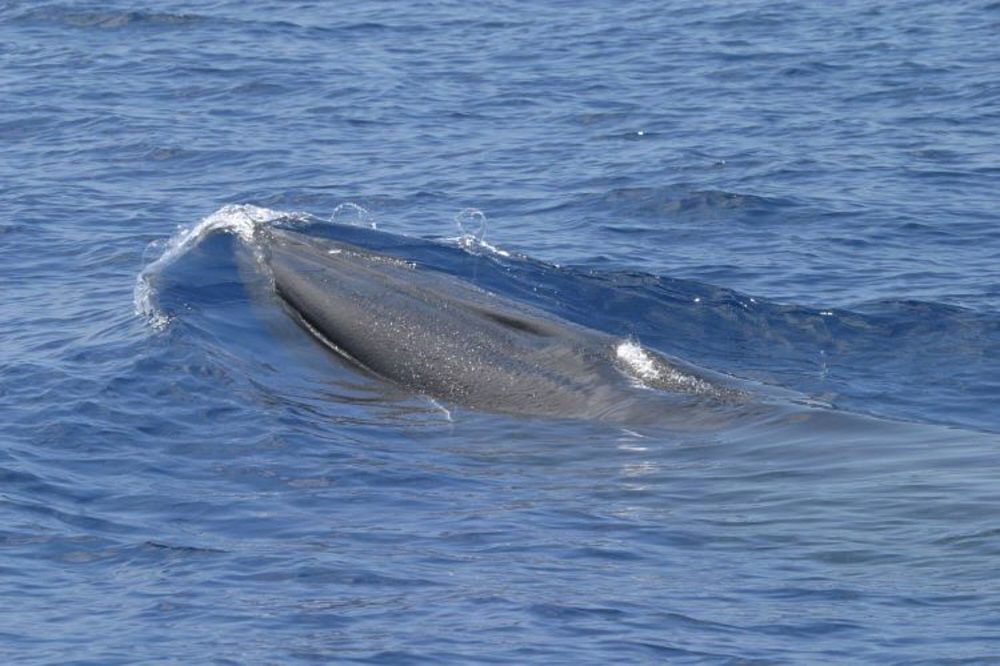

A critically endangered whale species found nowhere else on Earth may face extinction due to proposed expanded oil and gas operations in the Gulf of Mexico, according to marine scientists.
The Rice’s whale population, estimated at fewer than 100 individuals and possibly as low as 50, spends its entire lifecycle in Gulf waters where multiple threats already endanger their survival. Marine biologists warn that increased drilling activity could expose these mammals to deadly vessel collisions, acoustic disruption, petroleum contamination, and climate-related habitat changes.
With energy costs soaring due to the Iran conflict, Defense Secretary Pete Hegseth has cited national security concerns while requesting waivers from endangered species protections that currently prohibit harming listed animals.
The Interior Department is scheduled to review this request Tuesday during a rare convening of the Endangered Species Committee, commonly called the “God Squad” for its authority to greenlight federal projects that could cause species extinction. The department has not yet responded to requests for comment.
Scientists identified the Rice’s whale as a separate species only in 2021. These marine mammals inhabit a confined region in the Gulf’s northeastern section, typically in waters ranging from 100 to 400 meters in depth.
The whales exhibit highly specialized feeding patterns, making demanding dives to the seafloor during daylight hours to hunt silver-rag driftfish, then surfacing to rest at night. This behavior makes them “quite living on the edge,” according to Jeremy Kiszka, a biological sciences professor at Florida International University.
Kiszka explained that their exhausting diving routine for specific prey, combined with nighttime surface vulnerability to ship strikes, creates multiple risk factors that drilling expansion could worsen.
“Noise could disrupt the whales’ foraging behavior, while increased global warming — tied to the burning of fossil fuels, including oil and gas — could change where their prey fish live,” Kiszka said. Environmental contamination poses another serious threat, with researchers believing a substantial portion of the already tiny population perished in the 2010 Deepwater Horizon disaster.
“What we see today is just a species … that is unlucky in many ways: small home, specialized diet and living in a place that is not easy in the first place,” Kiszka said, referencing extensive human impacts on their habitat.
Letise LaFeir, chief of conservation and stewardship at the New England Aquarium, noted that many climate effects are already “baked in” and will continue even if fossil fuel use ended immediately.
The Trump administration’s proposal “is just compounding the immediate risks locally and the longer term risks,” LaFeir said.
While government documents specifically reference Rice’s whales, scientists emphasize that other protected species would also face increased dangers from spills and related hazards.
“The ocean is connected, so when there is this kind of action somewhere else, it does have implications across the waters,” LaFeir said.
She pointed to hundreds of sea turtles, including endangered Kemp’s Ridley and loggerhead species, that undergo annual rescue and rehabilitation before being released into Atlantic waters, eventually migrating to Gulf nesting areas.
Michael Jasny, who directs the Natural Resources Defense Council’s marine mammal protection project, warned of widespread ecological consequences.
“It’s … sea turtles, it’s manatees, it’s whooping cranes, it’s various seabirds, it’s Rice’s whales, it’s sperm whales, it is endangered corals,” he said. “It is every endangered or threatened species in the Gulf of Mexico.”
Congress created the Endangered Species Committee in 1978 to provide exemptions from conservation laws when cost-benefit analyses demonstrate that projects serve essential national or regional economic interests.
The seven-person panel includes the Interior Secretary, five additional federal officials, and one shared vote representing affected states. Approval requires five supporting votes.
The committee has granted exemptions only twice in its history. The first involved dam construction on Platte River habitat critical to whooping cranes, though negotiated agreements ultimately produced ecosystem improvements. The second authorized logging in northern spotted owl territory, but environmental groups successfully challenged the decision in court, arguing political interference and procedural violations, leading to withdrawal of the request.
Jasny expressed concern that the Trump administration seeks to weaken rigorous review processes and “turn this … into a thing that could be invoked at any time, almost for any purpose.”
He questioned whether Gulf drilling approval could set precedent for other regions, asking, “why not California? Why not Alaska?”
“If you can declare an emergency to just kill sea turtles and manatees and whales in the Gulf, you know no species is safe,” he warned.