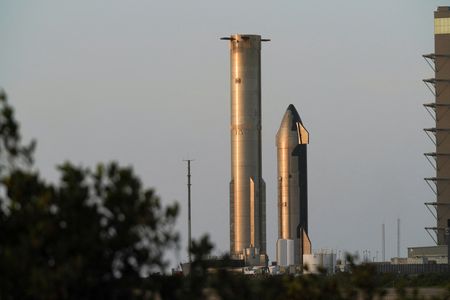

SpaceX submitted paperwork Wednesday for an initial public offering that Elon Musk claims will fund his ambitious plan to transform the rocket company into an artificial intelligence giant by deploying as many as 1 million data center satellites in space to avoid Earth’s power and water constraints.
This bold vision echoes a comparable effort by Microsoft in 2015, when the tech giant submerged a shipping container-sized computing facility on the ocean floor near Scotland. Microsoft hoped to reduce energy consumption using natural ocean cooling while harnessing offshore wind and tidal energy sources.
Despite achieving all technical objectives, Microsoft’s “Project Natick” was scrapped over two years ago because of insufficient customer interest and poor financial viability, according to two sources familiar with the initiative who spoke to Reuters.
When asked about the project, a Microsoft representative stated: “While we don’t currently have datacenters in the water, we will continue to use Project Natick as a research platform to explore, test, and validate new concepts around datacenter reliability and sustainability.”
Five industry experts warned Reuters that Microsoft’s experience serves as a warning for SpaceX, noting that despite their vastly different locations, both initiatives share critical flaws: they depend on modular systems that cost significant amounts to install and cannot be expanded, fixed, or enhanced – capabilities the AI sector considers essential.
“These challenges are likely to be more severe in space than under the sea,” explained Roy Chua, who founded research company AvidThink. He highlighted unresolved issues including orbital cooling methods, expensive rocket launches, and how space conditions might damage AI processing equipment.
SpaceX declined to provide comment. The company, which purchased Musk’s AI venture xAI in February, may collect up to $75 billion through its public offering, potentially creating the biggest IPO ever recorded. The xAI portfolio encompasses social platform X, previously known as Twitter, and the Grok AI chatbot system.
While Microsoft demonstrated that underwater computing centers could function technically, clients showed no interest in expanding them, instead choosing traditional ground-based facilities that offered less expensive and quicker improvements as AI technology advanced rapidly, the two informed sources revealed, requesting anonymity due to the project’s sensitive nature.
The permanently sealed design that SpaceX plans to duplicate in space offers restricted adaptability, given that AI processors improve dramatically each year while satellites or ocean-based data centers typically get replaced only every five to seven years.
Financial considerations also created obstacles, the sources noted. Underwater data center deployment exceeded land-based construction costs, and although expenses might decrease with larger scale implementation, this would demand tens of billions in investment funding.
Space deployment will cost significantly more.
MoffettNathanson analysts wrote in a February report that Musk’s million-satellite AI plan would require trillions of dollars in spending.
For orbital data centers to become financially practical, launch expenses must drop from current levels of thousands of dollars per kilogram to hundreds of dollars per kilogram, industry analysts project.
“The problem is not whether something can work, but whether it makes sense economically versus simply building more capacity on the ground,” said Tim Farrar, who works as an independent satellite sector analyst at TMF Associates.
Musk claims he will solve the technical and financial obstacles, including radiation damage, heat control in vacuum conditions, and frequent equipment replacement needs, by dramatically reducing launch costs and creating more durable AI processors.
According to Musk, demand won’t be problematic because Earth’s energy supplies will rapidly diminish as AI becomes necessary to support a future where robots exceed human population, all vehicles operate autonomously, and space travel becomes commonplace.
“The idea that we just can’t solve problems on Earth, like power shortages and environmental issues, strikes me as unrealistically negative about Earth to try and make everything seem better in space,” Farrar commented.
Musk’s strategy depends on Starship, SpaceX’s advanced rocket system designed for complete reusability and much larger cargo capacity than current Falcon rockets. However, Starship runs years behind its original timeline and has experienced explosive failures during several of its 11 test flights since 2023.
MoffettNathanson calculates that reaching Musk’s objective would need 3,000 Starship launches annually, equivalent to eight daily missions.
Jeff Bezos’ aerospace company Blue Origin also supports orbital computing facilities. The rocket manufacturer announced in March that its Project Sunrise proposal would provide AI processing power in space using clean solar energy while maintaining Earth-based data center systems.
Blue Origin did not respond to requests for additional information.
Space-based data centers do have potential, but they’re more likely to supplement rather than replace ground facilities, according to Claude Rousseau, a research director at Analysys Mason who monitors satellite markets.
“I strongly believe that there’ll be no way in the foreseeable future that space-based data centers can replace ground data centers,” Rousseau stated, adding that it would serve specialized markets supporting orbital infrastructure like military satellite networks and space stations.
The International Space Station already operates experimental systems designed to handle data processing in orbit and decrease dependence on communication bandwidth to Earth.
During a February appearance on the All-In podcast, Nvidia CEO Jensen Huang described the financial prospects of space-based AI data centers as unfavorable.
“We should definitely work on the ground first because we’re already here,” Huang stated, characterizing orbital AI infrastructure as a long-term engineering problem rather than an immediate answer.
Chua suggested that plans to relocate data centers underwater or into space attempt to avoid Earth-based problems while generating entirely new and more difficult obstacles.
“There are many problems that we can solve on Earth before space,” Chua observed, mentioning improvements in AI chip performance, enhanced water recycling systems, and increased adoption of solar energy and compact nuclear power generation.