
LAS VEGAS (AP) — Nevada’s primary electric company reports it will require electricity equivalent to three times what Las Vegas consumes simply to support planned data center facilities — and meeting that demand without fossil fuels appears unlikely.
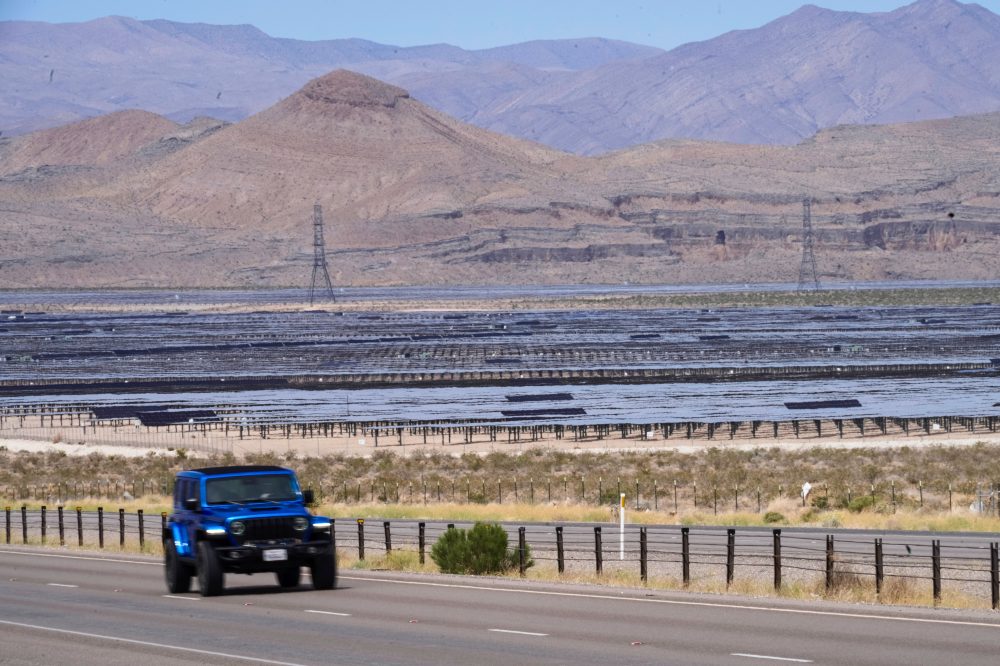
This situation puts Nevada at risk of failing to achieve its renewable energy mandate of 50% clean power by 2030.
“I can’t remember a time in the history of the industry where we’ve seen as much interest in adding load, which is primarily driven by data centers,” stated Shawn Elicegui, senior vice president of regulatory and resource planning for NV Energy, the company supplying power to 90% of Nevada.
Electric utilities nationwide face similar challenges as they work to satisfy surging power demands from data centers supporting artificial intelligence while maintaining commitments to transition away from fossil fuels toward renewable and carbon-free energy sources.
North Carolina, experiencing its own data center boom, has seen its largest utility revise long-range plans to postpone coal plant closures and construct additional natural gas facilities. State legislators eliminated an intermediate carbon reduction target, raising environmental advocates’ concerns about meeting the 2050 zero-emission objective.
NextEra Energy, serving commercial customers in more than a dozen states, abandoned its 2045 zero-emission target entirely due to “demand for all forms of power generation,” according to a recent company filing.
The Trump administration has pushed states to utilize coal for manufacturing and data center energy needs. Technology companies are also scaling back their climate commitments to satisfy consumer artificial intelligence demands.
“It’s very alarming, and it’s probably the single largest natural resource issue of our time,” commented Olivia Tanager, director of the Sierra Club’s Toiyabe chapter covering Nevada.
Nevada ranks among America’s fastest-expanding data center markets due to its absence of corporate income taxes, affordable land prices, and data center tax incentives. Dozens of facilities already operate with additional projects planned. State legislators are now considering increased regulations while debating how to balance clean energy objectives with data centers’ economic advantages.
Some facilities claim they want to contribute to solutions; the data center industry accounted for half of all corporate renewable energy purchases in 2024, according to Dan Diorio, vice president of state policy for the Data Center Coalition.
However, renewable energy additions to the electrical grid aren’t expanding rapidly enough. Nationwide, gas turbine orders face backlogs while renewable project approvals require extensive time, industry analysts report.
Located south of the Las Vegas Strip, the Switch data center spans nearly one square mile. As Southern Nevada’s largest data facility, it operates completely on renewable power, according to Chief Strategy Officer Jason Hoffman. Unlike competitors, Switch holds licensing to develop its own renewable energy sources at utility-company scale. The company has constructed 1 gigawatt of solar capacity and continues building additional solar installations. Switch uses NV Energy’s grid solely for electricity delivery while sourcing power from independent suppliers.
Within the enormous buildings, hundreds of servers operate inside massive soundproof and waterproof enclosures. These systems store critical data for Switch’s customers, including major financial institutions, streaming platforms, e-commerce sites, casinos, and government agencies.
During summer heat waves, when equipment cooling requires additional energy, Switch can disconnect from the grid and operate independently, Hoffman explained. The facility’s design minimizes air conditioning needs throughout other seasons.
Many utilities and technology companies are adopting gas-powered generation for data centers, including the disputed xAI facility near Memphis utilizing mobile gas turbines mounted on semi-trailers.
Tanager from the Sierra Club noted that several proposed Northern Nevada data centers would employ hundreds of low-grade diesel backup generators, degrading air quality. These backup systems activate during power outages and typically see limited use.
During a recent seven-hour legislative session, Nevada residents voiced complaints to lawmakers about data center noise pollution and expressed concerns regarding water supply impacts and energy cost increases. Boulder City residents, home to Hoover Dam, are also opposing a proposed facility over similar issues.
NV Energy mandates that data center developers fund their own infrastructure and energy requirements — though renewable sources aren’t mandatory.
Nevada created a voluntary funding program allowing companies to finance NV Energy’s clean energy development and apply those investments toward corporate sustainability targets. This pioneering model led to a geothermal plant in Northern Nevada with Google as a partner.
Environmental organizations want the state to mandate this model but remain concerned it wouldn’t generate sufficient clean energy to satisfy demand. They also fear NV Energy might increase fossil fuel dependence without guarantees that all proposed data centers will be constructed.
NV Energy will require companies to execute contracts ensuring their state commitment before energy infrastructure development, Elicegui stated. The utility’s approach welcomes “growth” while ensuring companies accept responsibility for power requirements “whether they show up or not.”
Nevada’s public utilities commission may impose penalties, grant exemptions, or implement other measures if it determines NV Energy failed to achieve state clean energy targets. The utility plans to release a detailed report by month’s end.
Democratic Assemblymember Howard Watts of Las Vegas called it “unacceptable” to advance projects threatening the state’s renewable energy portfolio. Watts advocates requiring data centers to bear clean energy development costs. While many companies already take such steps, establishing these protections in law is essential, he argued.
“Building more gas plants seems like going in the exact opposite direction of what we need to do as a state,” he stated, emphasizing Nevada’s “tremendous solar and geothermal energy potential.”